Tag Archives: Positive News of Muslims of Sholapur

Motivational Speaker Extraordinaire Saeed Ahmed Changes Lives of Depressed Individuals

Sholapur / Pune, MAHARASHTRA :

Meet the man who is on a mission. He even gave up his lucrative job to completely devote himself to this cause. His goal is to inspire the next generation to become responsible and productive citizens by raising their level of awareness about education. He has been crisscrossing the length and breadth of the country since 2006.

The man is Syed Saeed Ahmed, a distinguished motivational speaker with a multifaceted personality who inspires and motivates others and unearths their hidden potential. He has an amazing sense of spontaneity, an inquisitive mind, and a captivating personality.

Throughout India, he has conducted countless personality development programs for the student fraternity, diverse academic community stakeholders involved in the teaching-learning process, the corporate sector, workers in extremely stressful work environments, and the group of people who accept their fate as pseudo-failures.

Saeed Ahmed’s workshops are widely recognized for their great content and distinctive, compelling style of delivery.

Ranked as one of the leading motivational speakers in India, Saeed Ahmed’s workshops are widely recognized for their great content and distinctive, compelling style of delivery. His energizing classes are intuitive, inspiring participants to realize their full potential, release their innate energy, and develop a burning drive for achievement and personal excellence. They are intended to provide participants with a great deal of energy and vitality, enabling them to advance both personally and professionally.

His successful endeavors to bring back to life pseudo-failures, particularly those with low motivational factors and a criminal past, have grabbed significant media attention. The last few years have seen the frequent publication of pieces celebrating these accomplishments in prominent newspapers, and multiple news channels have aired his pre-recorded interviews on the subject.

Born in Sholapur, a textile town in Maharashtra, Saeed Ahmed did his schooling through the Urdu medium and graduated in geography and political science. He went on to pursue higher learning. After completing his studies in library and information science, he did his post-graduation in the Urdu literature from Shivaji University in Kolhapur. He started his career in a modest capacity as an assistant librarian at a reputable college in Pune.

His early and modest profession served as a palette for shaping him into a multifaceted personality, as he was surrounded by antique and modern books, newsletters, and printed reference material of inter-disciplinary content. Gradually and steadily, he began to embody the roles of an actor, director, dramatist, journalist, writer, peace activist promoting global fraternity, and, most recently, a student. He is currently pursuing a doctorate at Pune University on the extremely relevant subject of “Hindustani stage and tradition of Urdu drama in Maharashtra.”

He is an expert at improving life skills, including stress management, time management, positive thinking, emotion management (for overcoming fear, grief, sorrow, rage, boredom, etc.), and a number of other crucial areas that participants may reveal themselves in. The contents change based on the situation, the amount of time available for engagement, and the participants’ overall characteristics, expectations, and concerns.

The evolution of a nationally renowned motivational speaker can be summed up by examining the thirty years of his career. This shows how a person’s life experiences, some natural and some others artificially created, play a crucial role in shaping a flexible personality that can handle any circumstance with ease. What makes the one and only “Saeed Ahmed” is a combination of his varied experiences with controversial topics and his recording of the algorithms used to address them.

Having spent a significant portion of his career working for an organization, he has encountered the typical challenges that all workers face in today’s cutthroat and materialistic workplace. As he began his dazzling career, he experienced moments of rivalry, envy, and unpleasant camaraderie from coworkers, superiors, and even higher authorities. To nearly all of them, he answered with forbearance, patience, and strengthened willpower. In actuality, they functioned as an oven to solidify his supple clay and imparted to him free psychological counseling, stress management techniques, and elegant interpersonal interactions.

Saeed Ahmed is not just a motivator of the highest caliber; he is also an actor, director, writer, documentary filmmaker, and journalist.

He was connected to several prominent theaters in Lahore, Pakistan, as well as Prithvi (Mumbai), Nehru Centre (Mumbai), Rangshankara (Bangalore), Hamdard University, Delhi, Balgandharva (Pune), and Punjab Naat-shala (Amritsar). He performed widely for an Indian audience with these theater groups, and three of his shows, which were shown consecutively for three years in a row at the “World Performing and Visual Arts Festival” in Lahore, were acclaimed internationally (2004, 2005, 2006). These were “Naquab” by Rafi Peerzada, “Jis Lahore Naee Dekhya” by Dr. Asghar Wajahat, and “Portrait” by Ratnakar Matkari.

Prior to this, most of the plays he directed and performed across the country were “Dhilli Khaat” by Naseem Mannan, “Portrait” by Ratnakar Matkari, “Najat” by Abdul Wahab Lunje, “Nafrat ke Rang” by Kazi Mushtaque Ahmed, and a few plays he wrote himself, including “Sir Sayyed Ahmed Khan (Founder of Aligarh Muslim University)”, “Toba Tek Singh,” a drama based on Saadat Hassan Monto, “Kahain Hai,” and “Dilli Ka Thagh” have received favorable reviews from critics and audiences alike. He made his acting debut as a character actor in the “Sunita” serial that was broadcast on Doordarshan. His drama “Sare Jahan Se Accha” had more than forty performances in Maharashtra.

An audio presentation in the form of an audio cassette, followed by audio CDs, and is currently in the process of creating a documentary directed, produced, and narrated by him about the life of Sir Sayyed Ahmed Khan. He also wrote the book “Sare Jahan Se Accha,” released by the Haji Ghulam Mohammed Azam Educational Trust, Pune.

In addition, he has contributed his expertise to the production of multiple documentaries for Pune-based organizations and cable networks.

Alongside his involvement in theater and the arts, he pursued a career as a professional journalist. From 1995 to 2001, he worked as a correspondent for Mumbai’s daily Inquilab and Munsif of Hyderabad and  Pune’s Urdu fortnightly Usool. He had also interviewed prominent figures.

When asked what inspired him to pursue a career in motivational speaking, he admitted with honesty that I was a shy boy in school with an inferiority complex who was accustomed to self-analysis.

Life is a “give and take” proposition, and the previous decades of my diverse work helped me learn enough to be ready for a “second innings” or platform change, in which I now hope to “give,” and in 2002, I made a lifestyle change, he said. In the year 2006, I left the well-secured job to venture into the turbulent waters of lending my ‘know-how’ for the personality development of all, he added.

About his experiences, he pointed out that materialism is prevalent in Muslim society, and there is a wrong notion prevailing in the society that education is for seeking a job. He stresses the need for “Taleem ke saath Tarbiat.”

Under his All India Educational Awareness 93-day tour, last year he traveled 10,000 km across the seven states and conducted 179 workshops in 134 cities. In the second part of the tour, starting on November 11, 2023, he will travel to 13 states.

source: http://www.radiancenews.com / Radiance News / Home> Focus> Pride of the Nation / by Abdul Bari Masoud / November 01st, 2023
“I will serve community as there are few Muslim women doctors” says Arshiya, second ranked in Maharashtra Medical Entrance

Solapur, MAHARASHTRA :

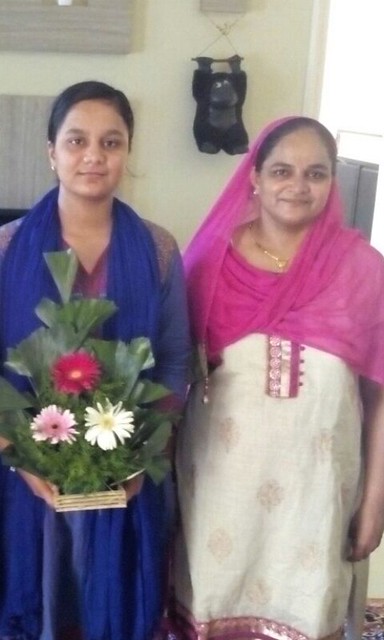
Arshiya with her mother Dr Nusrat Choudhari

Solapur: 

It was a moment of joy and ecstasy for 18 years old Arshiya Choudhari of Solapur when she was announced second topper in Maharashtra state conducted Common Entrance Test MHT-CET 2016 for admissions to Medical courses and can now choose college of her choice for MBBS admission.

The Maharashtra Common Entrance Test (MH CET) exam was held on May 5, 2016 for which results were declared on Wednesday.

A student of A D Joshi College, Arshiya scored 199 marks out of 200 and declared second topper. She has also topped HSC exams in the state this year by scoring 97.85% (636 out of 650 marks).

The feat is very special for Arshiya because she herself prepared for the exam by dedicating 6-7 hours daily for study at home after HSC exams. “I did not join any private classes but relied upon self study at home. I am happy that I could score this much and prove people that private coaching is not always required if you have dedication”, Arshiya told TwoCircles.net.

She is now aiming to complete MBBS course and then she will decide about specialization or masters.

“I want to pursue MBBS from KEM College in Mumbai. After completing degree I will decide whether to go for administrative services or masters”, She added.

However, in any case she wants to connect with the people and serve them. “I am very eager to serve people. I see there are very few Muslim woman doctors and therefore I decided to become a doctor”, she told when asked why she chose to become a doctor.

Speaking with TwoCircles.net Yunus Choudhary, father of Arshiya expressed delight and said she is free to take admission into the college of her choice.

Yunus, who is a Jr. Engineer in water supply department in Solapur told, “I was confident that she will clear CET with excellent marks as she is a hard working girl. I will not restrict her from joining any college for MBBS”.

Nusrat, mother of Arshiya is a practicing doctor and wish to see her daughter serving the community by becoming a doctor. “I want Arshiya to become a successful doctor”, she told.

The Maharashtra Common Entrance Test (MH CET) is an entrance examination conducted by the Directorate of Medical Education and Research with an intention to provide admissions into various graduation courses for Engineering and Medicine streams.

The medical entrance examination has been in news since May 4 when a Supreme Court order made it mandatory for medical aspirants to take the National Eligibility-cum-Entrance Test (NEET). However, following several protests from parents and state education ministers, the President passed an ordinance that reversed the Supreme Court verdict partially.

Therefore for Maharashtra, admissions to medical and dental colleges will be done through the MHT-CET scores for this year.

source: http://www.twocircles.net / TwoCircles.net / Home> India News> Indian Muslim> Women> Youth / by A Mirsab, TwoCircles.net / June 04th, 2016

Jahangir Shaikh: A guardian of unclaimed dead bodies

Solapur, MAHARASHTRA :

For most people, social activities is defined as work carried out by people with the aim of alleviating the living conditions of those people in a community suffering from social deprivation. They strive for helping the poor and deprived people to live a better life. By this definition, it also implies that social work is for the living.

But what about people who are dead?

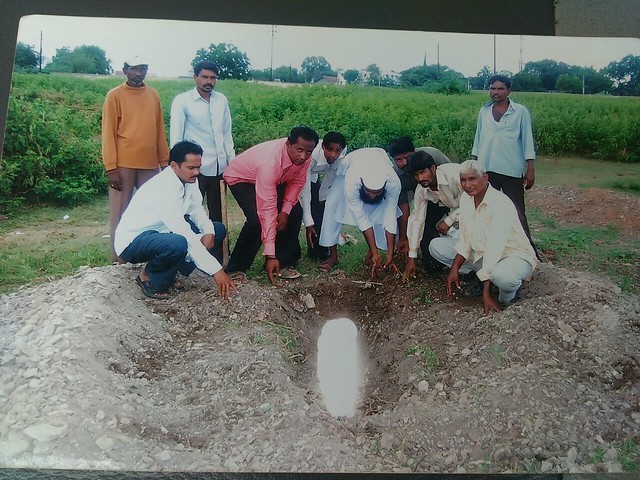
This question, and the answer to it, is what makes Jahangir Shaikh, a 47-year-old resident of Solapur, an exception. His social activity starts after he finds an unclaimed dead body. Once he discovers an unclaimed body, he assumes its guardianship and lays the body to its final abode.

“Initially I started to give gusl (bath) to unclaimed Muslim bodies on the request of Police. Later, I started doing it for people of other religions too”, Jahangir shares his journey of the past ten years; about a cause rarely undertaken by people.

Jahangir, a devout Muslim, first received a phone call in 2007 from a Muslim policeman who knew he can give gusl to unclaimed dead body. Jahangir had rushed to the spot and completed funeral right of a fellow Muslim.

“That was the first instance after which devotion for performing last right of unclaimed body arose inside me and thereafter I made it a duty to attend such bodies”, he recalls.

Jahangir’s strange choice of social work iniitally caught people by surprise, but he never doubted his commitment. “People disliked my work and they would treat me as an inferior individual but that did not stop me from carrying out the work that I supposed as my duty. I would pray to the almighty to strengthen me so that people’s objections do not hold me back,” Jahangir says, when talking about the initial days.

His family also strongly objected to this kind of work but he managed to convince them to allow him to continue doing it.

“I told them that I don’t do it for earning money; burying these bodies gives me pleasure as I became a guardian for them. They felt awkward initially, but gradually they got accustomed “, Jahangir explains how he convinced his family.

Till today Jahangir has performed last rites of as many as 1,600 people, out of which 1,400 were non Muslims. As he is used to of giving gusl, he is also called by people for giving gusl to their relatives. In return, they give him hadiya (gift).

But one might wonder; what is his main profession and source of living? For that, he cooks food in social functions. However, he is always on his toes when he gets to know about any unclaimed dead body either at a hospital or the police station.

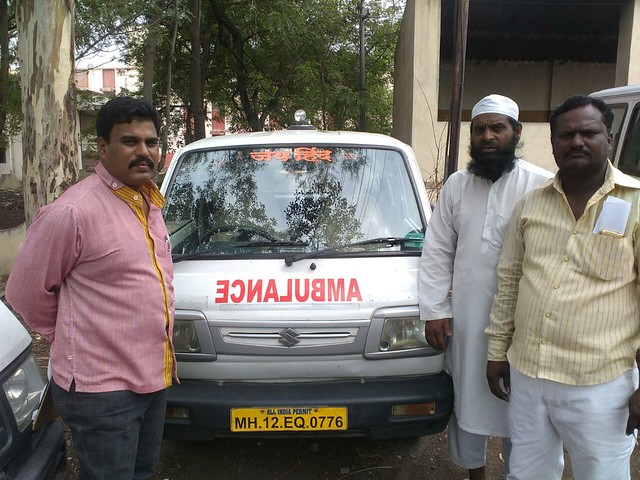
Jahangir’s dedication to what he called his ‘duty’, and his sincerity towards this soon made him famous in Solapur. He started receiving phone calls from police stations and hospitals for burying unclaimed bodies. His amazing sense of kindness towards the unattended also moved many people; a few years ago, a young Muslim businessman Salman Shaikh took notice of his noble service and donated a second-hand Ambulance to help him carry out the work more efficiently.

“I was impressed with his dedication towards the work. The charred and blood-soaked bodies that a normal man don’t even look at, he would offer them a bath and bury them”, a bewildered Salman explains why he donated ambulance to him.

However, a couple of years after he got the ambulance, it met with an accident while carrying a body of little girl. This damaged the vehicle substantially and Jahangir too was injured in the accident. However, this did not break his determination and he bought two ambulances on loan and again started his service to the community. He got support from his son, who took a loan to buy an ambulance for Jahangir.

With some likeminded friends, he also formed the Baitul maal Shifa Committee through which he raises fund by collecting zakat (compulsory charity) or sadqa (voluntary charity) from people. However, he does not use this fund for performing last rites. Instead, he and friends pay money from their pockets for funerals and use the fund raised for poor patients admitted in hospitals.

“We use collected fund to help patients in buying medicines and other medical expenses”, Jahangir says with cheerful face.

When asked if police or hospitals pay him for carrying and burying bodies, he says, “They give Rs 300 but we give this money to the boys who help in carrying bodies to ambulance and dig holes for burial.”

For other expenses related to performing last rites: kafan (white cloths) and attar (perfume), Jahangir and his friends spend money from their own pocket.

His dedication has led to many people offering him voluntary service whenever needed. Currently, his Shifa committee has some active members: Gulam Shaikh, Zainuddin Nadaf, Sameer Shaikh, Daula Kumthe, Babulal Phaniband, Rashid Chaudhari and Shakila Shaikh are always ready to join hands with Jahangir.

Irfan S.M, a social activist and an educational personality from Solapur has nothing more than praises for Jahangir for his distinguished work.

“He is into this task of voluntary work and selfless service to humanity, it is really remarkable. Thousands of people are engaged in different social and religious activities but this is unique. There should be one Jahangir in every city”, Irfan says.

Imran Inamdar contributed to this story

source: http://www.twocircles.net / TwoCircles.net / Home> Indian Muslim> Youth / by A Mirsab, TwoCircles.net / October 07th, 2016

Khwaja Tamboli’s Inspiring Journey from Village Cricket Lover to Bat-Making Entrepreneur

Wadala Village (Solapur), MAHARASHTRA :

Solapur man turns passion into business, crafting custom Cricket Bats for players across India.

Wadala Village (Solapur) :

Khwaja Tamboli’s story is one of grit, determination, and an unshakable belief in hard work. Hailing from a modest family in Wadala village, North Solapur, the 28-year-old entrepreneur has turned his childhood love for cricket into a thriving business—’KT Bats’—producing high-quality tennis ball cricket bats tailored to players’ needs across India.

Khwaja’s journey was far from easy. His father, Ajmuddin Tamboli, had to stop working 14 years ago due to mental illness, leaving his mother, Rashad, as the sole breadwinner. “I’ve seen many difficulties,” Khwaja recalls. “My mother sold household items and managed weekly markets just to keep us afloat. Poverty doesn’t stop dreams, but hard work is needed to fulfil them.”

After completing a B.Sc in Chemistry, Khwaja developed an allergy to chemicals, closing doors to traditional employment. But his passion for cricket opened another. “I was always fascinated by bats,” he says. “When I couldn’t find a job, I decided to start small—selling sports goods from a shop given by the Gram Panchayat.”

Initial struggles tested his resolve. Big companies refused to supply goods without bulk orders, and his first attempt at rebranding cheap bats with his own stickers failed. “Customers didn’t like them, and I faced losses,” he admits. Undeterred, Khwaja travelled to Kashmir to study wood types and bat-making techniques.

Returning with newfound knowledge, he invested in a machine and began crafting bats himself. “I realised if market bats weren’t good, I’d make better ones,” he says. The gamble paid off—his business took off, with players appreciating the customised quality.

Khwaja doesn’t just sell bats; he engineers them. Studying player preferences, he adjusts weight and balance based on playing style. “A 970-gram bat suits aggressive players hitting all around the ground,” he explains. “For those who play ‘V’ shots, a heavier bat (1030-1050g) with weight at the bottom works best.”

His bats now cater to players in Maharashtra, Karnataka, Uttar Pradesh, Chhattisgarh, Gujarat, and Jharkhand. But success hasn’t made him forget his struggles. “I’ve seen poverty, so if a player can’t afford a bat, I give it at a lower price,” he says, recalling how he recently gifted a ‘Player Edition’ bat to a needy cricketer from Gujarat.

Rashad Tamboli, Khwaja’s mother, beams with pride. “He loved cricket since childhood. I invested my savings in his dream, and he proved himself,” she says.

Today, ‘KT Bats’ sells 100-200 bats monthly, priced from ₹2,000 to ₹3,500. But Khwaja dreams bigger. “I want ‘KT Bats’ stores across India,” he says. “My brand should be recognised in every state.”

From a struggling student to a role model for young entrepreneurs, Khwaja Tamboli’s journey proves that with perseverance, even the most humble beginnings can lead to extraordinary success.

source: http://www.clarionindia.net / Clarion India / Home> India> Indian Muslim / by Team Clarion / April 04th, 2025