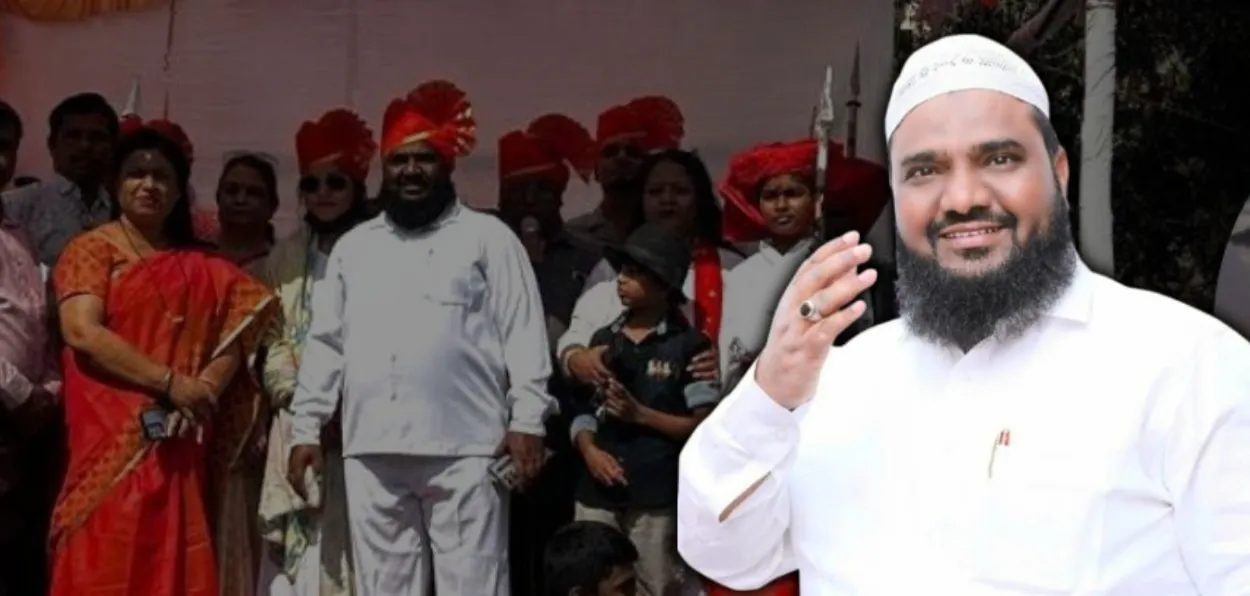
Corporator Haji Ghafoor Pathan, elected from the Muslim-majority Kondhwa Khurd-Kausarbaug ward of the Pune Municipal Corporation, invoked the legacy of Shivaji Maharaj in his very inaugural speech.
Speaking in the Chhatrapati Shivaji Maharaj Hall, he chanted the name of Shivaji Maharaj and delivered a message of inclusive politics. The video of his speech is currently going viral on social media.
Haji Ghafoor Pathan won the mandate from the Muslim-majority populace due to his years of campaigning for Shivaji’s ideals and his progressive stance.
Haji Ghafoor Pathan caught the attention of the house by invoking the name of the Maratha warrior. He congratulated the new office bearers on behalf of all Punekars and his ward. “This house belongs to Chhatrapati Shivaji Maharaj. The Honourable Mayor and Deputy Mayor should take progressive thoughts forward like an ideal King and give justice to all. Opinions, justice, equality, and brotherhood were the main principles of Shivraya’s Swarajya, and I express my wish that the same should be implemented in this house.”
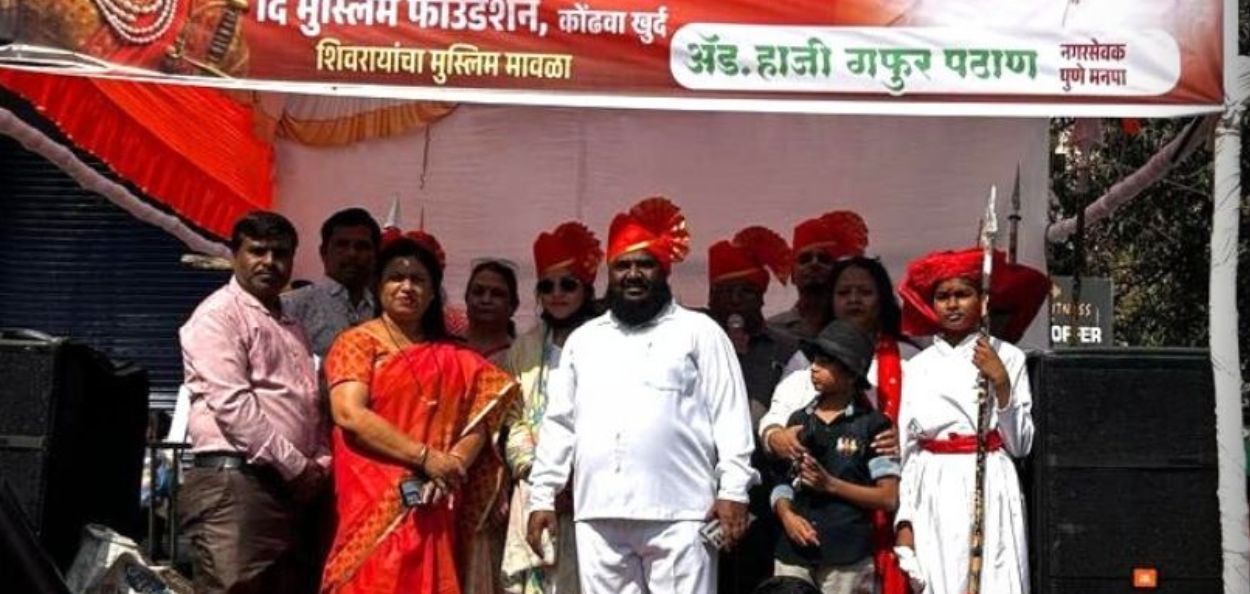
He introduced himself as ‘Chhatrapati Shivaji Maharaj’s Muslim Mavala’ (Muslim soldier/Loyalist of Shivaji Maharaj).
He said, “We always consider welfare for people of all castes and religions in this house. I will always fight for the development of the Kondhwa area. Just as Mavalas of all religions worked in Shivraya’s army, we will continue to serve the city with the same loyalty.”
Ghafoor Pathan has been celebrating Shivjayanti with great pomp in his Muslim-majority Kondhwa area for many years.
The day is celebrated with a statue of the King, a traditional palanquin, a chariot decorated with flowers, and the beats of Dhol-Tasha and Tutari.
Corporator Ghafoor Pathan
This all-faith ceremony is organised on behalf of the ‘Muslim Mavala Foundation’ led by Ghafoor Pathan. Women and school students participate enthusiastically in this. Notably, naming the flyover in Kondhwa after Chhatrapati Shivaji Maharaj was also part of his initiative. Recalling old memories, Corporator Pathan commented on the struggle for development. He said, “Earlier, we all used to be adamant about work in our ward. We have struggled for that. Now conflict must not come in the way of development.”
He requested the administration and group leaders to cooperate for the interest of Punekars and the holistic development of the city. He was particularly insistent that pending works in Kondhwa and the surrounding areas should be accelerated.
Haji Ghafoor Pathan also mentioned his mentor in politics, Ajit Pawar. “We will follow the ideals and precedents set by Respected Dada for five years. We will try to conduct ourselves in this house with Ajit Dada’s thoughts,” he promised the house.
Ghafoor Pathan’s speech in the historic hall of the Pune Municipal Corporation has set a new direction for social harmony and development. By invoking the name and ideals of Chhatrapati Shivaji Maharaj, he has started his journey as a public representative, on an inclusive note.
source: http://www.awazthevoice.in / Awaz, The Voice / Home> Stories / by Bhakti Chalak, Pune / February 16th, 2026
Meet the man who is on a mission. He even gave up his lucrative job to completely devote himself to this cause. His goal is to inspire the next generation to become responsible and productive citizens by raising their level of awareness about education. He has been crisscrossing the length and breadth of the country since 2006.
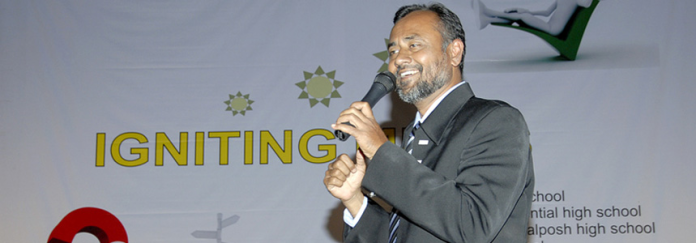
The man is Syed Saeed Ahmed, a distinguished motivational speaker with a multifaceted personality who inspires and motivates others and unearths their hidden potential. He has an amazing sense of spontaneity, an inquisitive mind, and a captivating personality.
Throughout India, he has conducted countless personality development programs for the student fraternity, diverse academic community stakeholders involved in the teaching-learning process, the corporate sector, workers in extremely stressful work environments, and the group of people who accept their fate as pseudo-failures.
Saeed Ahmed’s workshops are widely recognized for their great content and distinctive, compelling style of delivery.
Ranked as one of the leading motivational speakers in India, Saeed Ahmed’s workshops are widely recognized for their great content and distinctive, compelling style of delivery. His energizing classes are intuitive, inspiring participants to realize their full potential, release their innate energy, and develop a burning drive for achievement and personal excellence. They are intended to provide participants with a great deal of energy and vitality, enabling them to advance both personally and professionally.
His successful endeavors to bring back to life pseudo-failures, particularly those with low motivational factors and a criminal past, have grabbed significant media attention. The last few years have seen the frequent publication of pieces celebrating these accomplishments in prominent newspapers, and multiple news channels have aired his pre-recorded interviews on the subject.
Born in Sholapur, a textile town in Maharashtra, Saeed Ahmed did his schooling through the Urdu medium and graduated in geography and political science. He went on to pursue higher learning. After completing his studies in library and information science, he did his post-graduation in the Urdu literature from Shivaji University in Kolhapur. He started his career in a modest capacity as an assistant librarian at a reputable college in Pune.
His early and modest profession served as a palette for shaping him into a multifaceted personality, as he was surrounded by antique and modern books, newsletters, and printed reference material of inter-disciplinary content. Gradually and steadily, he began to embody the roles of an actor, director, dramatist, journalist, writer, peace activist promoting global fraternity, and, most recently, a student. He is currently pursuing a doctorate at Pune University on the extremely relevant subject of “Hindustani stage and tradition of Urdu drama in Maharashtra.”
He is an expert at improving life skills, including stress management, time management, positive thinking, emotion management (for overcoming fear, grief, sorrow, rage, boredom, etc.), and a number of other crucial areas that participants may reveal themselves in. The contents change based on the situation, the amount of time available for engagement, and the participants’ overall characteristics, expectations, and concerns.
The evolution of a nationally renowned motivational speaker can be summed up by examining the thirty years of his career. This shows how a person’s life experiences, some natural and some others artificially created, play a crucial role in shaping a flexible personality that can handle any circumstance with ease. What makes the one and only “Saeed Ahmed” is a combination of his varied experiences with controversial topics and his recording of the algorithms used to address them.
Having spent a significant portion of his career working for an organization, he has encountered the typical challenges that all workers face in today’s cutthroat and materialistic workplace. As he began his dazzling career, he experienced moments of rivalry, envy, and unpleasant camaraderie from coworkers, superiors, and even higher authorities. To nearly all of them, he answered with forbearance, patience, and strengthened willpower. In actuality, they functioned as an oven to solidify his supple clay and imparted to him free psychological counseling, stress management techniques, and elegant interpersonal interactions.
Saeed Ahmed is not just a motivator of the highest caliber; he is also an actor, director, writer, documentary filmmaker, and journalist.
He was connected to several prominent theaters in Lahore, Pakistan, as well as Prithvi (Mumbai), Nehru Centre (Mumbai), Rangshankara (Bangalore), Hamdard University, Delhi, Balgandharva (Pune), and Punjab Naat-shala (Amritsar). He performed widely for an Indian audience with these theater groups, and three of his shows, which were shown consecutively for three years in a row at the “World Performing and Visual Arts Festival” in Lahore, were acclaimed internationally (2004, 2005, 2006). These were “Naquab” by Rafi Peerzada, “Jis Lahore Naee Dekhya” by Dr. Asghar Wajahat, and “Portrait” by Ratnakar Matkari.
Prior to this, most of the plays he directed and performed across the country were “Dhilli Khaat” by Naseem Mannan, “Portrait” by Ratnakar Matkari, “Najat” by Abdul Wahab Lunje, “Nafrat ke Rang” by Kazi Mushtaque Ahmed, and a few plays he wrote himself, including “Sir Sayyed Ahmed Khan (Founder of Aligarh Muslim University)”, “Toba Tek Singh,” a drama based on Saadat Hassan Monto, “Kahain Hai,” and “Dilli Ka Thagh” have received favorable reviews from critics and audiences alike. He made his acting debut as a character actor in the “Sunita” serial that was broadcast on Doordarshan. His drama “Sare Jahan Se Accha” had more than forty performances in Maharashtra.
An audio presentation in the form of an audio cassette, followed by audio CDs, and is currently in the process of creating a documentary directed, produced, and narrated by him about the life of Sir Sayyed Ahmed Khan. He also wrote the book “Sare Jahan Se Accha,” released by the Haji Ghulam Mohammed Azam Educational Trust, Pune.
In addition, he has contributed his expertise to the production of multiple documentaries for Pune-based organizations and cable networks.
Alongside his involvement in theater and the arts, he pursued a career as a professional journalist. From 1995 to 2001, he worked as a correspondent for Mumbai’s daily Inquilab and Munsif of Hyderabad and Pune’s Urdu fortnightly Usool. He had also interviewed prominent figures.
When asked what inspired him to pursue a career in motivational speaking, he admitted with honesty that I was a shy boy in school with an inferiority complex who was accustomed to self-analysis.
Life is a “give and take” proposition, and the previous decades of my diverse work helped me learn enough to be ready for a “second innings” or platform change, in which I now hope to “give,” and in 2002, I made a lifestyle change, he said. In the year 2006, I left the well-secured job to venture into the turbulent waters of lending my ‘know-how’ for the personality development of all, he added.
About his experiences, he pointed out that materialism is prevalent in Muslim society, and there is a wrong notion prevailing in the society that education is for seeking a job. He stresses the need for “Taleem ke saath Tarbiat.”
Under his All India Educational Awareness 93-day tour, last year he traveled 10,000 km across the seven states and conducted 179 workshops in 134 cities. In the second part of the tour, starting on November 11, 2023, he will travel to 13 states.
source: http://www.radiancenews.com / Radiance News / Home> Focus> Pride of the Nation / by Abdul Bari Masoud / November 01st, 2023
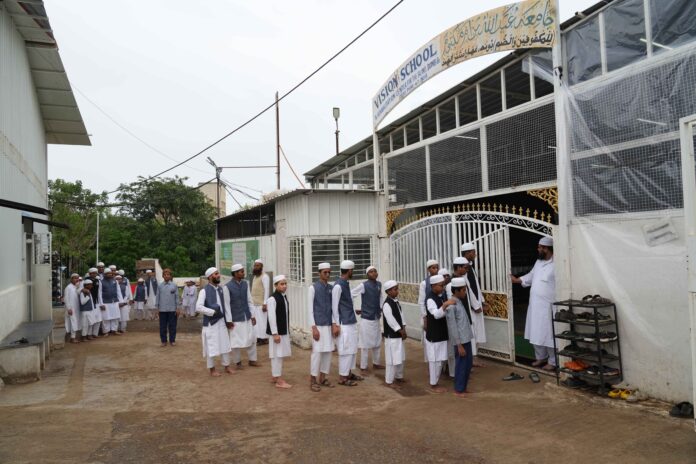
Students at Jamia Abdullah Ibne Umme Maktoom, India’s first inclusive madrasa for differently-abled children in Pune, Maharashtra, walk in a queue as they enter the Vision School campus. The madrasa provides free Islamic and contemporary education to mute, deaf and visually impaired students from 17 states across India.
In Pune, Maharashtra, Jamia Abdullah Ibne Umme Maktoom offers free Islamic and contemporary education to mute, deaf, and blind children from across 17 states—proving that disability is no barrier to dignity, faith, or ambition.
Pune (Maharashtra):
In a small park in Maharashtra’s Pune, on a Thursday morning in May, a group of well-dressed uniformed students stood barefoot, wearing white skull caps. Many of them were mute or visually impaired. As the national anthem played in the background, the students stood in solemn attention, while others – mute and deaf – used sign language to express the lyrics. It turned the moment into a display of patriotism and unity.
This is the usual beginning of the day at Jamia Abdullah Ibne Umme Maktoom (a religious seminary in Pune), where hundreds of mute, deaf and blind students receive free Islamic and contemporary education.
“It took us years to convince families of the importance of education for their special children,” says Nayeem Ahmad Qasmi, a secretary of the madrasa.
The institution was founded in 2013 with only two children with the vision to uplift differently abled children from across India through inclusive education.
According to the Census of 2011, approximately 2.2% of the population, around 26.8 million people, were identified as living with disabilities.
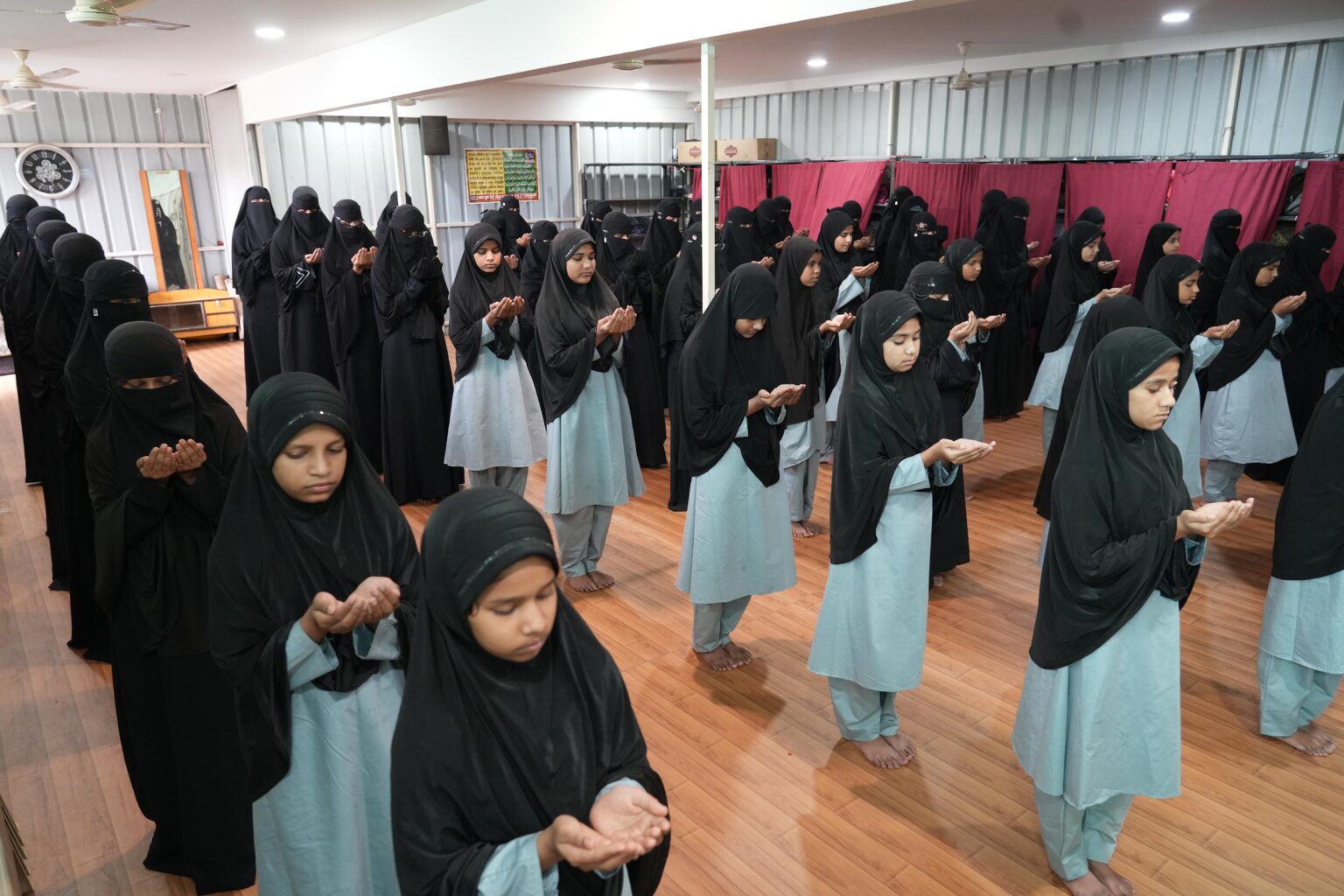
Female students at Jamia Abdullah Ibne Umme Maktoom in Pune, Maharashtra, offer prayers during school hours. The madrasa currently educates over 70 differently-abled girls – many of whom are mute, deaf or visually impaired – providing them with a safe and inclusive environment for both Islamic and contemporary learning.
Unfortunately, many families abandon differently abled children or keep them confined at home – considering them a burden.
“It is the duty of every person to support differently abled children so they can prove their capabilities,” he adds.
Many students come from rural areas in different states, where families often do not know the value of education or the opportunities available to them.
“Before coming to Jamia, I did not know anything about Islamic and contemporary education,” says 18-year-old Rehan Saleem from Jalgaon in Maharashtra.
Many students have received opportunities to present their skills on different platforms across India. Several have represented their school and secured positions in various sectors.
“By the grace of God, I have completed the Hifz-e-Quran (memorisation of the entire holy Quran) at this Jamia and got the opportunity to perform Umrah,” says Rehan.
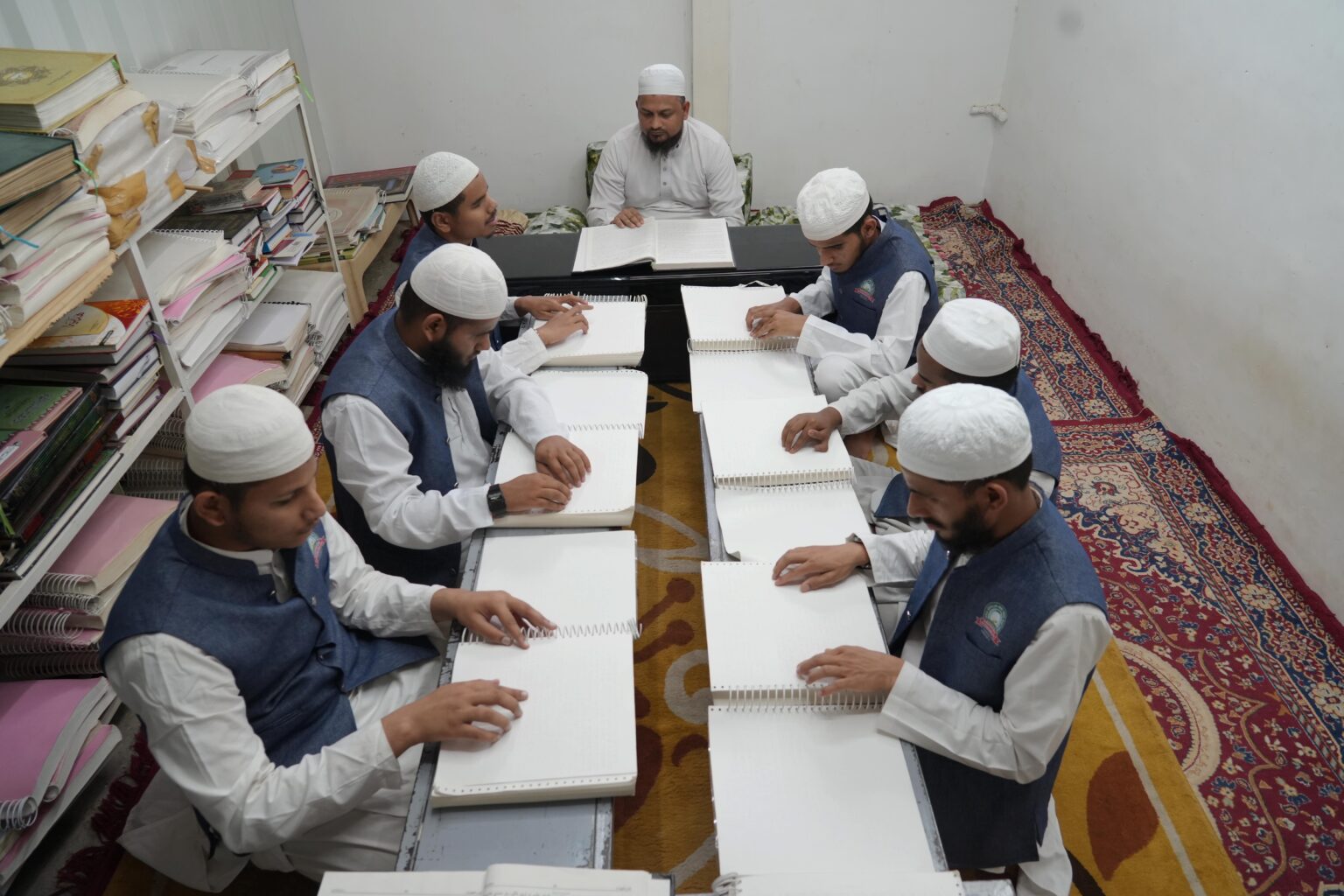
Students at Jamia Abdullah Ibne Umme Maktoom in Pune attend a classroom session where they receive both Islamic and contemporary education, guided by their teacher.
Today, the Jamia hosts 210 mute, deaf and blind students from 17 states across India. The seminary provides free education from Grade 1 to Grade 12, including subjects like science, computers, Islamic studies and advanced education.
Many students have gone on to study at various universities and colleges. For those unable to attend in person, the madrasa has launched an online education programme. Children here are provided with education, food, accommodation and even uniforms free of cost.
“Our mission is to see these children represent the country on every platform one day,” says Qasmi.
Despite the struggle, they have succeeded in building a thriving institution. In 2021, the madrasa launched separate sections for mute, blind and deaf women to ensure inclusive learning environments. Women’s education is just as important as men’s, and this initiative reflects that commitment.
Mubashira Sadiya Khan, who teaches specially abled girls at the madrasa, says, “Women’s education is equally important as male education. These girls are usually occupied with household work at their homes, but we are giving them better education and showing them the purpose of life.”
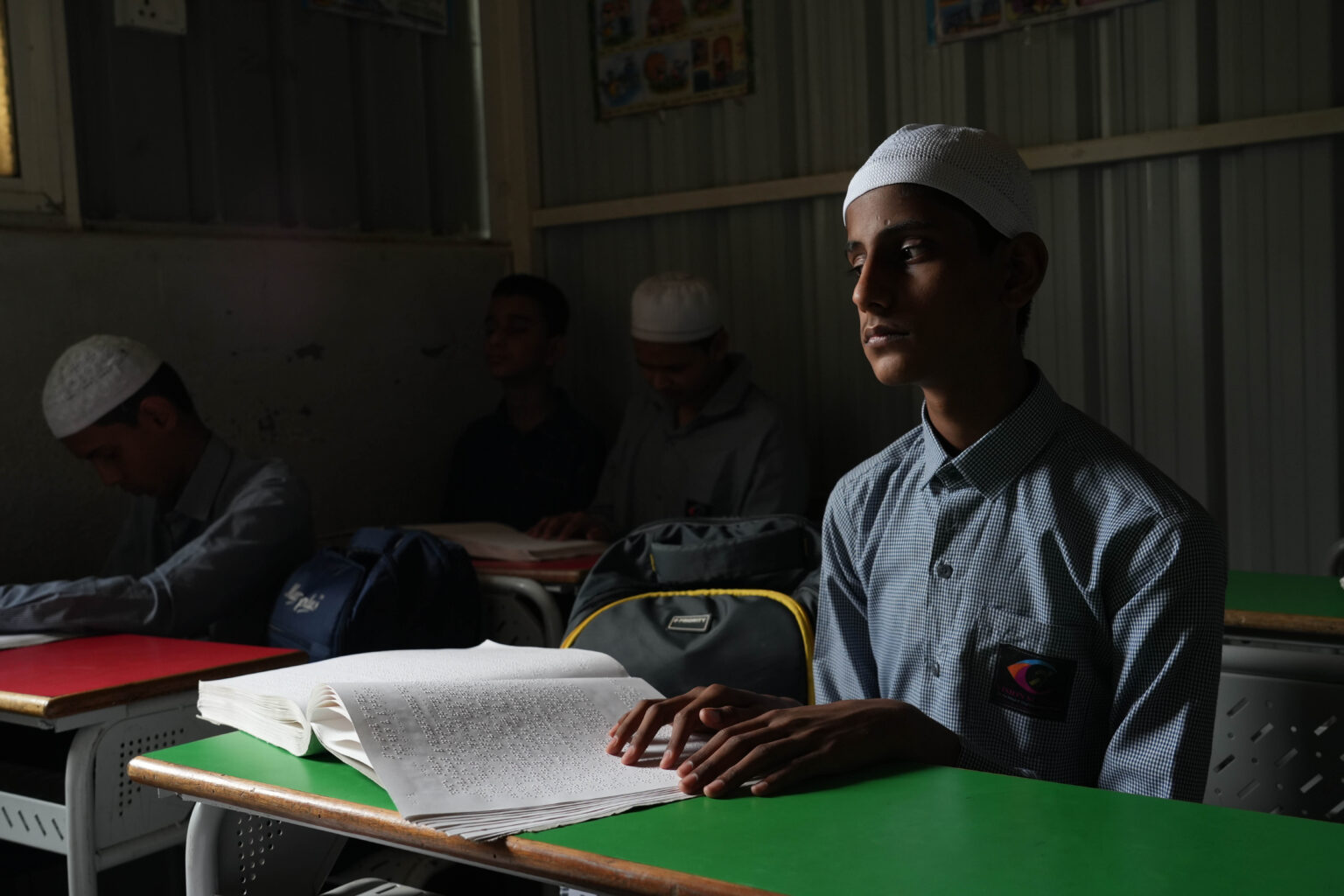
A young visually impaired student sits attentively in class, beside a Braille slate and stylus used for writing. At Jamia Abdullah Ibne Umme Maktoom, visually impaired children are given tools and support to receive religious and formal education in an inclusive environment.
Since safety is a major concern for women in the country, the madrasa has provided separate rooms for them, with all female helpers to ensure a secure learning environment.
Mubashira adds, “Usually, women are not safe in the country, but here we have created a safe space where they can learn and grow with confidence.”
Despite progress in education, children with disabilities in India often remain invisible – excluded from schools, denied opportunities and treated as burdens. Many end up begging or isolated at home, not by choice, but because society offers them no alternatives.
“We often see them begging on the roads, not because they want to, but because the society has failed to give them a chance,” says Qasmi.
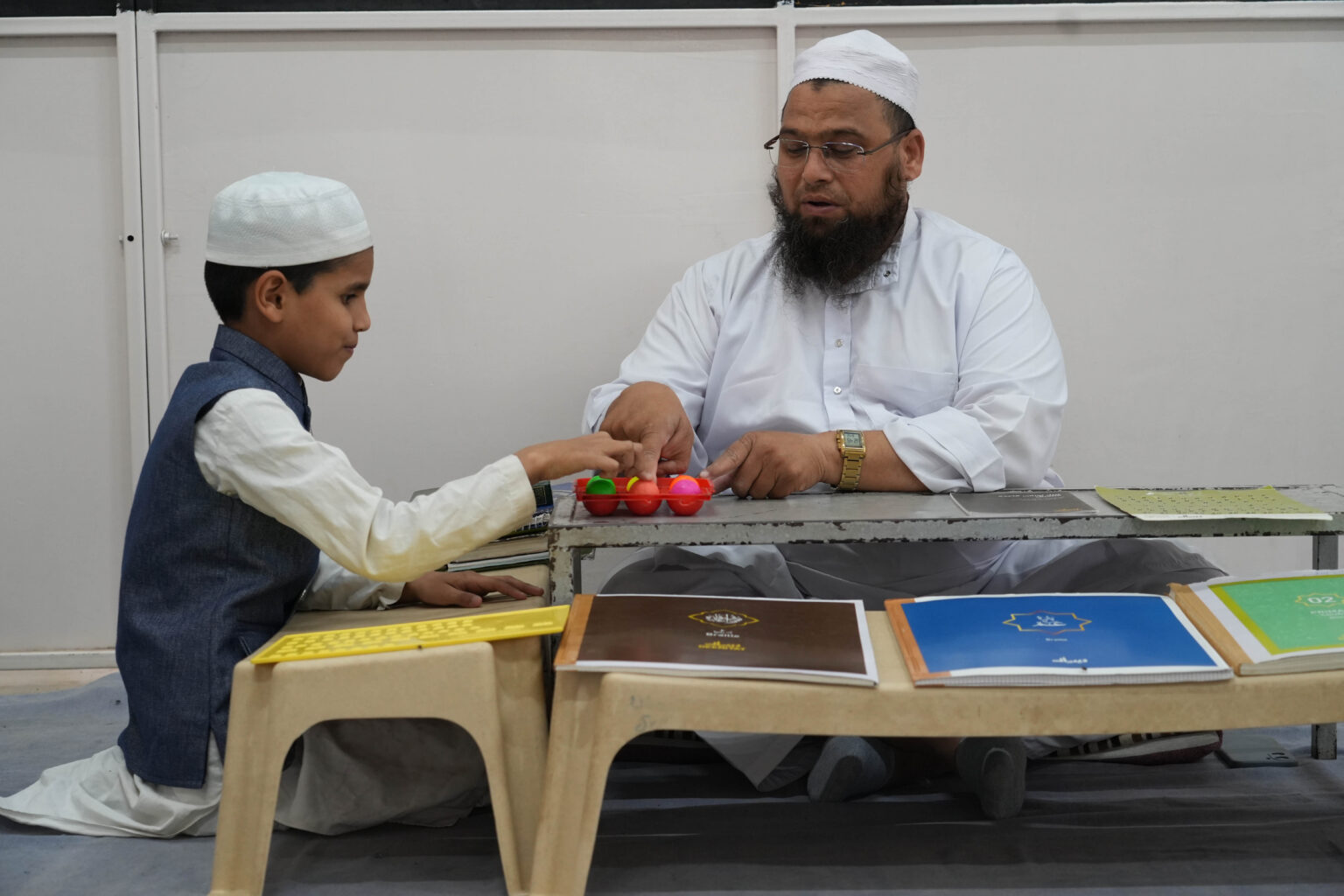
Students in uniform attend class at Jamia Abdullah Ibne Umme Maktoom in Pune, where multiple sessions are held simultaneously in a shared hall to support inclusive learning.
The Jamia has been working to ensure that students with disabilities receive quality education, access to proper infrastructure and opportunities to engage in play and creative activities on campus. Its vision is to provide them with equal opportunities so they can compete and thrive like any other student.
“Our goal was simple – give them dignity, knowledge and a future,” Qasmi explains.
The Jamia is already offering digital learning tools, smart boards and inclusive facilities to ensure that the students receive a modern and accessible education. The institution continues to innovate and expand its reach through technology and tailored teaching methods.
“We have introduced smart boards, digital tools and inclusive classrooms because every child no matter their ability deserves access to quality, modern education,” says Qasmi.
In the current political climate in India, the Muslim community has often been portrayed in a negative light, and madrasa education is frequently misunderstood or dismissed. Despite these challenges, Jamia Abdullah Ibne Umme Maktoom continues to provide quality Islamic and contemporary education to differently-abled children, aiming to empower them with knowledge and confidence.
source: http://www.twocircles.net / TwoCircles.net / Home> Disability / by Suhail Bhat, TwoCircles.net / June 21st, 2025