Tag Archives: Positive Stories of Muslims of India

AMU Alumnus Dr. Waliur Rahman Named for Rashtriya Vigyan Yuva Puraskar 2025

Aligarh, UTTAR PRADESH :

Aligarh :

Dr. Waliur Rahman, an alumnus of the Department of Geology, Aligarh Muslim University (AMU), has been named for the prestigious Rashtriya Vigyan Yuva-Shanti Swarup Bhatnagar 2025, announced by the Government of India on October 26, 2025.

Currently serving as Scientist-E at the National Centre for Antarctic and Ocean Research (NCAOR), Ministry of Earth Sciences, Government of India, Vasco-da-Gama, Goa, Dr. Rahman has been recognised for his outstanding contributions in the field of isotope geochemistry and Antarctic climate research.

A distinguished earth scientist, Dr. Rahman’s research spans a wide range of topics, including Antarctic climate variability through ice core records, trace element and isotope studies in oceans, paleo-oceanography using radiogenic and stable isotopes, and Himalayan weathering and erosion processes. His pioneering work in developing non-traditional isotope measurements has contributed significantly to understanding global climatic and oceanic processes.

Dr. Rahman earned his B.Sc. (Geology Hons.) and M.Sc. (Applied Geology) degrees from Aligarh Muslim University in 2002 and 2004 respectively, and later obtained his Ph.D. in Geochemistry from the Physical Research Laboratory, Ahmedabad.

His illustrious career includes research fellowships and international recognition such as the Alexander von Humboldt Fellowships (Germany), the Certificate of Merit in Polar Science and Technology (2019), the Young Researcher Award (2021) from the Ministry of Earth Sciences, and the National Geoscience Award (2023) from the Ministry of Mines, Government of India.

Dr. Rahman has authored over 50 peer-reviewed research papers in leading international journals including Nature CommunicationsGeophysical Research LettersMarine Chemistry, and Science of the Total Environment. His contributions have enhanced India’s global standing in the fields of Antarctic and oceanic research.

Congratulating Dr. Rahman on his achievement, AMU Vice-Chancellor Prof. Naima Khatoon said that the university takes pride in its alumni who continue to bring laurels to their alma mater through excellence in research and national service, and Dr Rahman’s achievement will work as an impetus for young students who wish to make a career in the field of earth sciences.

source: http://www.amu.ac.in / Aligarh Muslim University / Home> AMU News / by Public Relations Office / October 07th, 2025

Syed Tanveer Urges Teachers to Build Active Learning Classrooms at MTB–IISER Workshop

NEW DELHI :

New Delhi:

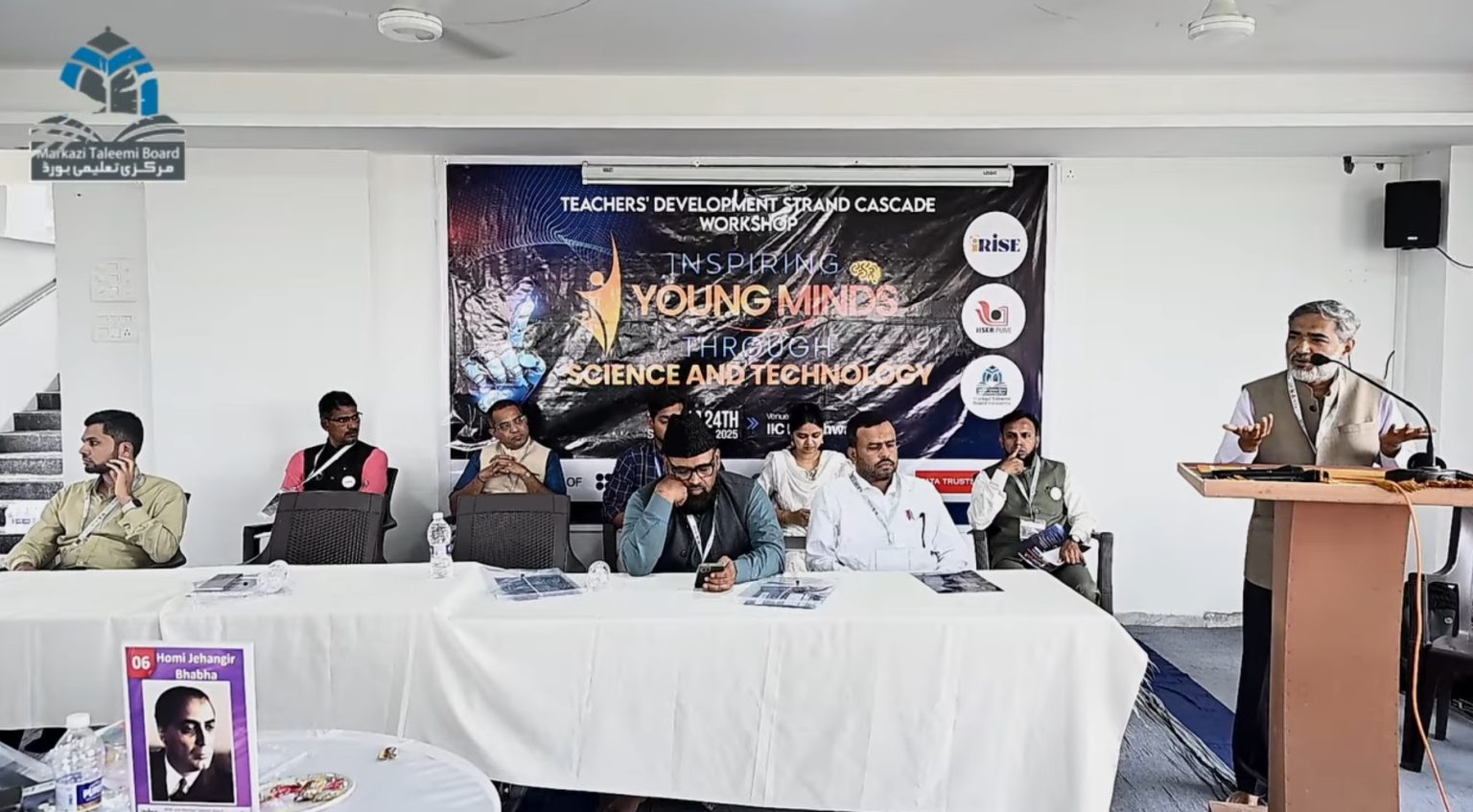
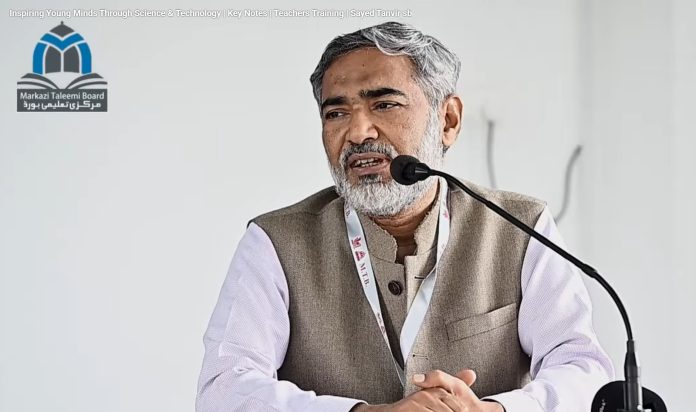
Syed Tanveer, Secretary of the Markazi Taleemi Board (MTB), urged teachers to transform science and mathematics education during his keynote address at the Teachers Development Strand Cascade Workshop. The event was organised by Markazi Taleemi Board Maharashtra in partnership with IISER Pune. The session focused on methods to align classroom practice with the National Education Policy 2020.

Syed Tanveer began by welcoming the IISER Pune team and thanking the organisers for arranging training across Maharashtra and other states. He told participants that the workshop aims to shift teaching from rote memorisation to active, hands-on learning. He said teachers must make classrooms places where students observe, experiment, and think.

He pointed out a common issue: society often dislikes maths teachers, and science teachers face similar bias. Many students avoid science because it is considered difficult. Tanveer argued that this perception arises from how teachers teach. “We have treated maths and science as fact-transfer subjects,” he said, adding that this has made learning mechanical instead of meaningful.

Syed Tanveer explained Bloom’s taxonomy as a guide to moving students from lower-order to higher-order thinking. He described six cognitive levels. “Most of our classrooms are stuck at the first stage—knowing or memorising,” he said. The next stage is understanding, achieved when students learn by hearing, seeing, and doing. The workshop, he added, would train teachers to conduct hands-on experiments that encourage conceptual understanding.

The third level is applying. Tanveer urged teachers to help students connect formulas and scientific principles to real-life applications. The next levels—analysis and evaluation—involve breaking concepts into smaller parts and examining their relationships. The final stage is creation, where learning leads to innovation. “Education is not about memorising facts. It is about creating something new,” he said.

Giving examples, Syed Tanveer said a short experiment could teach photosynthesis better than hours of memorisation. A paper plane can explain mechanics, and observing local water pollution can connect science with social responsibility. He praised simple, observation-based teaching models such as those promoted by educator Arvind Gupta and scientists like C.V. Raman.

Syed Tanveer also highlighted the moral role of science. “Scientific temperament must not remain limited to exams,” he said. “It should guide ethics and social responsibility.” He explained that true education transforms human beings into moral, thoughtful individuals, not mere human resources for the market.

He concluded with five key tasks for educators: raise awareness of civic responsibility, reject divisive politics, support independent educational institutions, revive critical thinking in academia, and promote debate and dialogue among youth and women.

“Do not make students pen drives filled with memorised data,” Tanveer said. “Make them thinkers, creators, and problem-solvers.” He prayed for the success of the workshop and called on teachers to inspire young minds through curiosity and experimentation.

source: http://www.radiancenews.com / Radiance News / Home> Education> Latest News> Report / by Radiance News Bureau / October 16th, 2025

Maulana Mohammad Ismail Sambhali: Scholar, Freedom Fighter and Politician

Sambhal (Moradabad District) , UTTAR PRADESH :

One of the oldest places in Uttar Pradesh is Sambhal in District Moradabad, has a long list of people in its history who confronted with British and posed great resistance with their historic acts of gallantry. Abdul Qaiyyum, Lala Prem Pal, Qari Abdul Haq, Maqsood Turki, Chaudhary Riyasat Ali, Lala Chandulal, Lala Roop Kishor, Maulvi Noorul Hasan, Sheikh Abdul Raheem, Chetan Swaroop, Radhey Lal Poddar, Munshi Moinuddin, Ml. Sultan Ahmad,Maulvi Abdul Waheed are prominent among such people.

The exact date of birth of Maulana Ismail Sambhli is not known however, he might have taken birth in 1899 at Mohallah Deepa Sarai. He belonged to the Sarwar Waley family of Turk community. His father, Munshi Kifayatullah was considered among the educated people of the area and was famous with the nickname ‘Munshiji’. His grandfather’s name was Sarwar Husain who was a native to village Mundha in J. P. Nagar. Later he shifted to Sambhal. His family surname, Sarwar Waley was due to his grandfather’s name.

He received primary education at Madrasatul Mohammadia, Deepa Sarai and was admitted to class VI to continue further education in English against his mother’s wish. She wanted him to get Arabic education and finally her will prevailed. Meanwhile, his father passed away and he was sent to his elder brother at Bahawalpur where he had the honour to receive education from Maulana Farooq Ahmad, Sheikhul Hadees and Head, Jamia Usmania.

Maulana Farooq Ahmad was the disciple of Shaikhul Hind Maulana Mahmoodul Hasan and relative of Maulana Mansoor Ansari who was put on exile on the pretext of abetting and participating in the freedom movement. He was extremely unhappy with British and a staunch supporter of freedom struggle. It was his company that helped instill a sense of nationalism in the heart of Maulana Ismail Sambhli and inspired him to participate in the freedom struggle.

After completing education at Bahawalpur, Maulana Ismail Sambhli returned back to his native place, Sambhal and continued with his education at Madrasa Sirajul Uloom. In the meantime the barbaric incident of Jalianwala Bagh took place that put the whole of India on fire. A protest strike was observed in Sambhal as well and a mass gathering of all communities was organized at the gardens of Gul Chhatar. Maulana Ismail Sambhli delivered a very inspiring lecture at the mass convention. Maulana was the youngest among all orators yet his oration impressed the public most and thus his national and political life began. Maulana gained popularity as Raees-ul Muqarrareen (master orator).

When the British defeated Turkey, the resulting loss and the sense of defeat made the Muslims furious. On November 22, 1919 the Khilafat Committee was founded and the Jamiatul Ulema-e-Hind took birth in Delhi. The Khilafat Movement was pronounced through out the country. Just months after the sad demise of Sheikhul Hind Maulana Mahmoodul Hasan, Maulana Ismail Sambhli took admission in Darul Uloom Deoband where his nationalist ideas and concepts received firmness. He started partaking in the nationalist activities with much vigour and zeal and despite him being a student he was arrested on February 22, 1921 for his radical ideas and inflammatory speeches. After two – three days his case was heard at Moradabad Jail and he was sentenced to two years’ rigorous imprisonment. Then the political detainees were generally subject to extreme brutalities. Maulana and his companions borne all types of atrocities. They were put under penal servitude, were imprisoned in small cages and were compelled to sleep handcuffed. Precisely, they were put to all types of brutalities but did not tender apology. Finally, he was released after the term of his punishment was over. Back to home he concentrated on completing his education. After completing courses at Darul Uloom Deoband he joined Jamia Qasmia Madrasa Shahi, Moradabad as a teacher in later 1924. The country’s condition had changed by the time, Khilafat had come to an end, there were communal disturbances through out the country and Congress had suspended its Civil Disobedience Movement. Mahatma Gandhi was imprisoned for six years. People were feeling let down but Maulana Sambhali kept moving ahead with full confidence.

In 1930 when Congress proclaimed for complete freedom. On March 13 Mahatma Gandhi commenced his famous Dandi march in violation of the laws of salt. A Civil Disobedience Movement was also commenced.

The Britishers put the nationalist people to extreme brutalities. They were mercilessly beaten, shot by guns and imprisoned. The Jamiatul Ulema sense the need of the hour and vowed to support Congress in its Civil Disobedience Movement. It established a Daira-e-Harabia (Circle of War). Mufti Kifayatullah, Maulana Ahmad Saeed, Maulana Husain Ahmad and Maulana Mubarak Husain Sambhli were arrested one by one. Maulana Mohammad Ismail Sambhli was the seventh in this order to be arrested and was sentenced to six months’ rigorous imprisonment.

When the time came for Provincial Assembly elections, the Muslim League Parliamentary Board came to existence. On behalf of Maulana Ahmad Saeed, Nazim of Jamiatul Ulema Mohammad Ali Jinnah was given the right to nominate members to the parliamentary board. Mr. Jinnah nominated 22 members from 56 out of which 20 were of Jamiatul Ulema and two of Ahrar. The Provincial Boards were under the control of Central Board. Maulana Ismail Sambhli was admitted to UP Board. He was also declared candidate from Sambhal of Moradabad and Tehsil Bilari constituencies. Those days the land lords, nawabs, kings and English title holders enjoyed great immunity and British supported people were considered prominent in the society. The nationalists participated in the election to defeat the pro-British candidates.

In 1939, the war in Europe started and the Indian government without taking the members in confidence sent the Indian army to war. The Congress opposed the move and boycotted the Assembly. It convened its session at Ramgarh on March 20-21, 1940 under the president ship of Maulana Abul Kalam Azad. The Civil Disobedience Movement was pronounced in the session and finally in the last of 1940 the non-violent civil disobedience movement commenced. A programme was chalked out for individual speeches. Maulana Ismail Sambhli was arrested in Moradabad during the movement and was sentenced for nine months’ imprisonment. In August 1942, Congress gave the famous ‘Leave India’ slogan. Mahatma Gandhi was arrested and sent to Sabarmati Jail. There were arrests every where in the country. Maulana Ismail Sambhli was again arrested in Sambhal and was put under house arrest at Moradabad Jail for indefinite period. Later he was released after one year.

In 1946, when elections were declared, the tussle between Congress and Muslim League was at its peak. Maulana Sambhli was elected, remained MLA till 1952.

Maulana Ismail Sambhli did not participate in the 1952 elections and stationed at Delhi as the Nazim-e-Ala of Jamiatul Ulema. He served Jamiat for four years and remained busy in social and political affairs. In 1957 he resigned from Jamiat and returned to Sambhal.

In 1962, he was appointed as Sheikhul Hadees at Madrasa Imdadia, Moradabad and served there for about three years.. In 1974, he shunned the idea of service and returned back to Sambhal and engaged himself in the literary work only to complete the half hatched books. “Maqalat-e-Tasawwuf”, “Akhbarul Tanzeel” (the Quranic prophesies) and “Taquleed-e-Aimma” are some important books authored by him.

Meanwhile he went to Mawana, Meerut and taught Quran’s translation for eight months. In his last age, he spent a few Ramadhan months in Bombay delivering lectures on the translation and analysis of Quran every night after Taraweeh. He fell sick in the last Ramadhan of his life yet, and after returning to Sambhal he breathed his last on 23rd November 1975 after one and half months’ prolonged illness. (deoband.net)

source: http://www.milligazette.com / The Milli Gazette / Home> News> Family & Kids / by Mohammad Najeeb Qasmi / May 22nd, 2016

NGO supplies 50,000l of water in tanks to slums in North Bengaluru

Bengaluru, KARNATAKA :

The residents of these slums are prone to infection. Lack of water could cause dehydration in residents. Hence, we took up this initiative.”

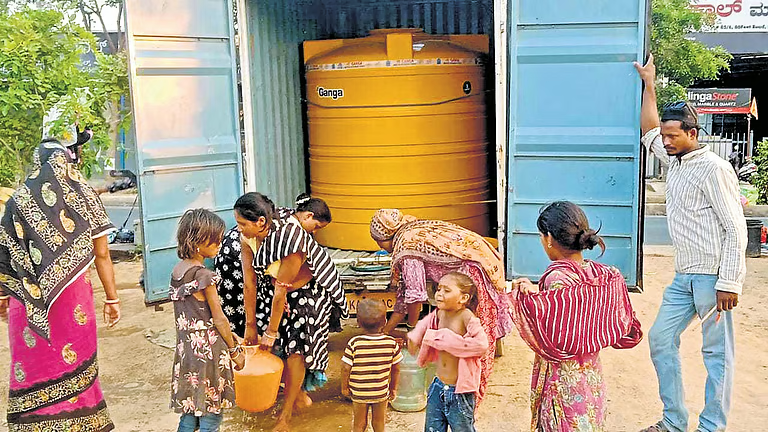
‘Active Bengaluru’ supplies water to a slum in North Bengaluru. It has come as a saviour to the residents of several slums in the city Photo | Express

Bengaluru :

‘Active Bengaluru’, a non-profit organisation, has come as a saviour to the residents of several slums in the city this summer. The organisation is supplying water to these residents to tide over this harsh summer.

‘Active Bengaluru’ is supplying 50,000 litres of water at the doorsteps of the residents of slums in North Bengaluru, including in areas like Thanisandra, Hegde Nagar, and Saraipalya, every alternate day.

Like other parts of the city, close to 6,000 public borewells in these areas have gone dry this year. Members of ‘Active Bengaluru’ supply water in four water tanks (2,500-litre capacity each) mounted on mini-tempos.

Speaking to The New Indian Express, Tauseef Ahmed, a volunteer with ‘Active Bengaluru’, said, “Under ‘Project Zam Zam’, the slum population in North Bengaluru is being supplied water free of charge. The project began in March, and till date, over 12 lakh litres of borewell water has been supplied. The residents of these slums are prone to infection. Lack of water could cause dehydration in residents. Hence, we took up this initiative.”

“The water is collected from good Samaritans from their borewells, and the same is then supplied to the slums. The residents have been told to call the emergency number of the NGO to place a request. Based on the number of calls received from an area, a vehicle is sent. In each tank, about four taps are fixed, and residents are asked to come in a queue and collect water,” said another member of ‘Active Bengaluru’.

“The NGO mostly deals with policy issues, women’s empowerment, health, and education. Shortage of water directly impacts the health and education of children. We decided to do our bit to address the same and joined hands to supply water to the needy,” said another member of the organisation.

source: http://www.newindianexpress.com / The New Indian Express / Home> Karnataka / by Mohammed Yacoob / April 23rd, 2024

.

Madrasa with Jewish roots lights up a new path in western UP

Sambhal District, UTTAR PRADESH :

New Delhi : 

A family of Bani Israel (Sons of Israel), running one of the oldest madrasas in India may sound unbelievable. But in Sambhal district of West Uttar Pradesh, a nondescript locality, Hilali Sarai, boasts of such a seminary run by a family that has roots in ancient Israel.

Madrasa Sirajul Uloom, named after Maulana Siraj Ahmed Israili, who was a renowned aalim of his time and among few Islamic scholars who backed Sir Syed Ahmed Khan, the founder of a modern madrasa (later Aligarh Muslim University), is run by Mohammed Mian Israili Qasmi, the representative of living generation of his family.

The madrasa is affiliated to UP Madrasa Board and runs both traditional Dars-e-Nizami syllabus and modern curriculum prescribed by the board that includes compulsory study of maths, english, hindi and science. Such madrasas are also called ‘model madrasas’ as they are following the government model of madrasa modernisation.

The Israili family traces its lineage to the Jewish companion of Prophet Muhammed, Abdullah bin Salam, who had converted to Islam during the lifetime of the Prophet. Nevertheless, the family has been maintaining its Bani Israel cultural identity all through history.

“The historical records say that our ancestor Abu Ishaque Abul Aja’ib Shah Muhammad Hilali came to India during the time of Mughal Emperor Akbar when the latter started Deen-e-Ilahi and a horde of Islamic scholars descended from Arabia to guide the ‘misguided’ Emperor.

Historian Abdul Qadir Badayuni has mentioned Shah Hilali. He initially settled in Fatehpur Sikri near Agra and later on the insistence of Akbar himself, he moved to Sambhal. Thus, this place came to be known as Hilali Sarai. He had established his maktab (school) here, as was the tradition of the time that scholars used to start learning centres wherever they settled. Since then, our family has been running an educational house here,” says Mian Israili Qasmi, detailing the family history of the Israilis.

A research paper in the Interdisciplinary Journal of Jewish Studies by researcher on Jews in South Asia, Navras Jat Aafreedi, proves the authenticity of Mian Israili’s claim.

“There is a Sunni Muslim clan called Bani Israil in Sambhal (District Mo-radabad) and Aligarh in Uttar Pradesh, members of which consider themselves to be descendants of a Jewish sahaabi (companion of the prophet Muhammad) Hazrat Abdullah Ibn-i-Salaam. They claim that their ancestors settled in India a millennium ago to propagate Islam. Members of this clan generally use Israili as their last name. They reside, in both Sambhal and Aligarh, in a locality, each called Bani Israil Mohalla or Mohalla Bani Israilaan. Many from this clan migrated to Pakistan after its creation in 1947…” writes Aafreedi.

Similarly, one more scholar Joshua M. Benjamin, the author of The Mystery of Israel’s Ten Lost Tribes and the Legend of Jesus in India (2001), mentions having met an Aligarh Muslim University Professor with the Hebrew sounding name Shimoni Israili, a member of this clan.

Similarly classical historian Abdul Qadir Badayuni, writer of notable Muntakhab-ut-Tawarikh, the history of early Mughal period, mentions Shah Hilali Israili as a renowned Islamic scholar of Mughal period. Shah Hilali in Sambhal in fact taught him in the same maktab, which is today Sirajul Uloom.

Narrating more history of the madrasa, Mian Israeli says that as the Mughal rule went into sunset, the madrasa was patronised by Nawab of Hyderabad. The patronage lasted till the fall of Nawab’s Nizamat after the Partition of India.

“Meanwhile, one notable change took place. When Maulana Siraj Ahmed Israeli refused to sign a fatwa against Sir Syed Ahmed Khan, he became very pleased with Maulana and offered him to join as faculty in newly opened Mohammedan Anglo Oriental (MAO) College. Maulana didn’t go himself but sent his son Maulana Khalil Ahmed Israeli to join the college as Professor of Arabic. Maulana Khalil was later conferred the title of Shamsul Ulema (a coveted honour) by the Colonial British government for this contribution in the field of education. While at MAO college, Maulana established the madrasa in a formal registered body in 1902. Since then, it’s been running in a similar fashion,” says Mian Israeli.

Mian Israeli maintains that the madrasa has always maintained a progressive outlook and has guided the Muslim community in very practical way.

“The scholars and patrons of the madrasa have always taken the lead in advising Muslims of siding with rationality and minimising both personal and social conflict. That’s you will not find any controversy ever attached with this seminary. In fact, the stellar history of the madrasa has remained obscured because we haven’t chased limelight and few curious minds have cared to know the silsila (lineage) of scholarship,” says Mian Israili.

Mian Israili lists Moulana Muhammad Manzoor Nomani, Moulana Muhammad Hayat Sambhli, Ghazi Muhammad Aazam, and freedom fighter politician Maulana Ismail Sambhali, among others as part of the blood-line.

Maulana Ismail Sambhali was a noted figure of Jamiat Ulema- e Hind, a body of Indian Islamic scholars who were against division of India on religious lines. Maulana Ismail even fought 1946 election against Muslim League candidate and was among the chosen few who won on the Congress ticket from a reserved Muslim seat.

Maulana Manzoor Nomani, however, however, adopted a different way. He is credited to have turned Syed Abul Ala Maududi, who was a progressive and modern Muslim journalist-writer, into Maulana Maududi, a hardcore religious figure and both of them floated Jamaat- e-Islami. Manzoor Nomani also emerged as one of the tallest Islamic scholars of India in 20th century, and is regarded as an authority on Hadith. Unlike Maududi, he didn’t go to Pakistan and got himself attached with Lucknow-based seminary Nadwatul Ulema. In late 1970’s and 1980’s, his books on Ayatollah Khomeini and Islamic Revolution created a storm in the Indian Muslim community and they are said to be one of the causes of sectarian violence in Lucknow.

Mian Israili did not comment on Nomani’s views, as “they were personal to him”. “As I said, our seminary has always propagated the route of bridging gaps and persuading people to come closer rather than splitting apart. People can do anything in their individual capacity and scholarship,” says Mian Isarili.

He insists that the seminary must be viewed through his views on burning subjects such as triple talaq, halala, etc. So, what are his views? “I think the arbitrary manner of triple talaq is absolutely contrary to the spirit of Quran and is malignant. Halala is haram,” he stresses.

Coming back to the history of the madrasa, Mian Israili says that after the end of Hyderabad’s Nizamat, the madrasa was recognised by the government of India. “However, it was only in 1990’s that it was properly affiliated to the UP-Madrasa Board and it started getting government aid as slated for the seminaries,” says Mian Israil.

According to him, as part of the Madrasa Board, the seminary has to teach compulsory subjects like hindi, maths, english and science. “As part of the Board affiliation, the government also appoints 12 teachers for primary and junior high school level. All these teachers have to have knowledge of Urdu as compulsory as the medium of the madrasa is Urdu,” he says.

When reminded that how come the students taught in Urdu medium compete with those being taught in Hindi or English mediums, he says that keeping this in mind, the teachers are urged to teach Science and Maths in English so that students who want to pursue further studies in a science subject and they might join other schools. Only those who want to pursue religious studies and languages such as Arabic and Persian may stay in the seminary.

“Most of our students pass out after Class 8 and opt for mainstream education in regular government and private schools. Only those boys and girls who want to pursue Theology and languages go for further classes,” says Mian Israili.

According to Israili, there are around 800 students enrolled with the madrasa. Out of them, 250 are girls. The madrasa has residential facilities for 50 students.

“For a modern madrasa, the basic requirement is resources. As being a government-aided institution, we certainly get some teachers on government pay scale, but we don’t get other facilities like building, hostel, classroom, ground and other facilities. For that, we have to depend on chanda (collection and donation from the community),” says Mian Israili.

source: http://www.daijiworld.com / DaijiWorld.com / Home> National-World / by Mohammed Anas / March 15th, 2022
Taiyba Afroz: The Muslim girl from Bihar can fly planes

Saran District, BIHAR :

Taiyba Afroz

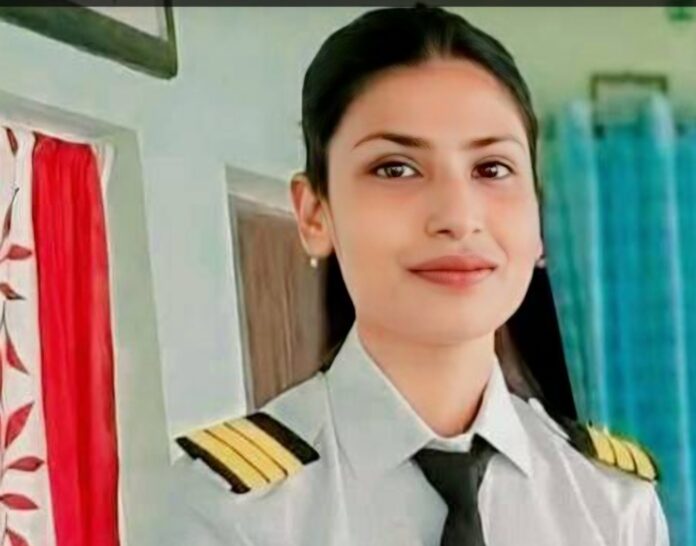
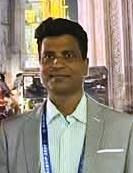
Taiyba Afroz created history by becoming a commercial pilot. The Muslim girl hails from a modest family. Her father Motiul Haq runs a ration shop in the Madhoura locality in the Saran district of Bihar and her mother Samsun Nisha is a homemaker.

Despite such challenges, Taiyaba remained determined to achieve her dream of becoming a commercial pilot. Her journey began in 2019 when she joined the Government Aviation Training Institute in Bhubaneswar. There she logged 200 grueling flight hours, battling storms, monsoons, and self-doubt.

Taiyaba’s training was marathon-2-3 years of theory exams (scoring 70%+ in DGCA papers), simulator drills, and mastering the art of safe landings.

“Flying solo for 100 hours was terrifying but fear never griped my mind,” she recalls.

Later, in 2023, she completed 120 hours of training at Indore Flying Club. After all this, Taiyaba finally obtained her license from the DDCA. She was certified to become a commercial pilot and can fly any commercial plane.

As a Muslim woman in a crisp pilot’s uniform, Taiyaba faced catcalls: “Shouldn’t she be in a Burqa?” To this, she retorts: “The cockpit has no dress code. The aircraft doesn’t care about your surname.”

A pilot’s salary starts at ₹1.5 lakh,” but that’s not the trophy, Taiyaba aimed to achieve. Her real achievement is being a Muslim girl, coming from a backward region of Bihar, hailing from a weak financial family; she endured all these odds and has come out with flying colors. Her message is; “Look at this Muslim girl, she can fly planes.”

Taiba Afroz is not just a pilot; she’s a beacon for every Muslim girl who is told to shrink their dreams. Her success story is a matter of pride as she inspires many young Muslim girls to follow her career path. She is a role model for them.

Taiyaba’s achievement testifies that with perseverance and determination, any goal can be achieved.

Her story screams that; the sky is not the limit, it’s the beginning.

Syed Ali Mujtaba is a journalist. He can be contacted at syedalimujtaba2007@gmail.com

source: http://www.muslimmirror.com / Muslim Mirror / Home> Positive Story / by Muslim Mirror Network / March 05th, 2025

Burned but brave: Conductor Rafiq Khan’s heroic act saves lives in Rajasthan bus tragedy

Thaiyat Village, RAJASTHAN :

Twenty passengers burnt alive, 16 critically injured in Jaisalmer-Jodhpur bus fire Tuesday.

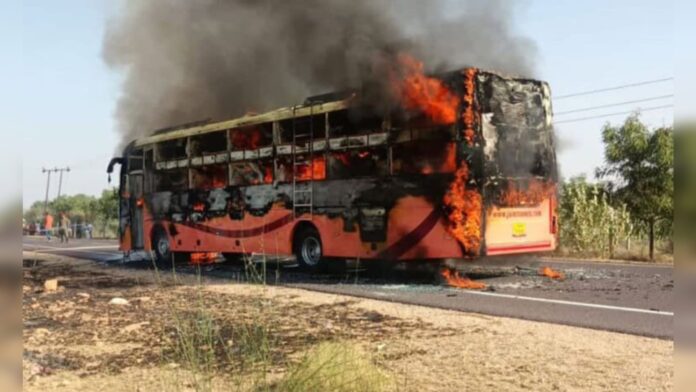
A devastating tragedy unfolded on the Jaisalmer–Jodhpur highway on Tuesday evening when a private air-conditioned sleeper bus carrying nearly 50 passengers went up in flames near Thaiyat village in Rajasthan.

Amid the panic, bus conductor Rafiq Khan displayed extraordinary bravery. Positioned near the back when the smoke appeared, he rushed forward to open the main gate and allow passengers to flee. As he moved toward the front, the ceiling burst into flames and an explosion knocked him down.

Despite sustaining severe burns, Khan crawled through the aisle, managed to unlatch the door, and helped several passengers escape before collapsing. He is now battling for his life at Dr. S. N. Medical College in Jodhpur, where doctors say he has suffered extensive burn injuries.

The fire, which is believed to have started from the rear of the vehicle, spread rapidly, trapping dozens inside. At least 21 people have been confirmed dead, while several others sustained critical burns and remain hospitalized.

According to preliminary reports, the incident occurred shortly after the bus left Jaisalmer for Jodhpur. Passengers noticed smoke rising from the back, prompting the driver to stop on the roadside. However, before most could react, a sudden blast shook the bus and flames engulfed the upper berths. Survivors described chaotic scenes as people screamed for help, some breaking windows in a desperate attempt to escape. The situation was worsened by the fact that the bus had only one functional exit door, which became jammed as the fire spread, leaving passengers trapped inside.

Medical officials confirmed that fifteen injured passengers were brought from Jaisalmer late Tuesday night. Five of them, including Khan, are on ventilator support with burns exceeding 70 percent of their bodies. The remaining have burns between 40 and 50 percent. Identification of the deceased has been difficult due to the extent of the burns, and DNA testing is being carried out to help families claim the bodies. Ten bodies have been kept at the S. N. Medical College mortuary, while others are at AIIMS Jodhpur.

Eyewitnesses and local residents who rushed to the scene recalled horrific visuals of the burning bus and passengers trapped inside. One survivor, Peer Mohammad, managed to smash a window to rescue his wife, sister-in-law, and a child but lost two of his young children who were asleep on the upper berth. “I could see them burning, but the flames were too strong. I tried to go back, but I couldn’t,” he said, breaking down.

Officials suspect that an electrical short-circuit in the air-conditioning system may have triggered the fire, though a detailed forensic and mechanical investigation is underway. The bus owner, driver, and the vehicle body-builder have been detained for questioning, while a technical team from the Central Institute of Road Transport (Pune) has been called to examine possible safety lapses. Authorities are also probing whether the bus had been illegally modified and if its emergency exits met regulatory standards.

The Rajasthan government has announced financial compensation for the victims’ families and injured passengers, but the relief policy has already drawn criticism over the cap imposed on payments to households that lost multiple members. District Collector Pratap Singh stated that a helpline has been set up for the families and that DNA matching and identification will be expedited.

As the state mourns one of its worst transport tragedies in recent years, questions are being raised about the enforcement of passenger safety rules, particularly in private buses converted into AC sleepers. Critics say the incident highlights the urgent need for mandatory fire-safety mechanisms, functional emergency exits, and stricter monitoring of vehicle modifications.

In the midst of this overwhelming loss, the courage of conductor Rafiq Khan stands out.  A man who risked his own life so others could live. His selfless act amid the chaos has earned him praise across the state and beyond, a rare moment of humanity in an otherwise grim tragedy that exposed fatal gaps in India’s passenger transport safety system.

source: http://www.muslimmirror.com / Muslim Mirror / Home> Indian Muslim> Positive Story / by Muslim Mirror Network / October 18th, 2025

Aurangabad Chapter of Innocence Network India Launched to Combat Wrongful Incarceration

Aurangabad, MAHARASHTRA :

Advocate Faiz Syed leads new regional initiative inspired by Abdul Wahid Shaikh’s movement for justice and reform.

On 28th September, the Aurangabad (Chhatrapati Sambhaji Nagar) chapter of the Innocence Network, India was formally established, with an ad-hoc committee of 14 advocates led by Advocate Faiz Syed.

Speaking to Muslim Mirror, Syed said, “We felt the urgent need to start this chapter due to the widespread issues of wrongful incarceration, false implication, filing of bogus cases, and arbitrary arrests across the country. When a sole breadwinner or a poor individual is drawn into this legal labyrinth, it becomes incredibly difficult for them to navigate their freedom.”

He added, “Our aim is to provide legal aid and guidance across the Marathwada region and ensure that no instance of wrongful implication goes unchallenged.”

The Innocence Network was founded by Abdul Wahid Shaikh, one of the accused in the 2006 Mumbai train bombings (7/11 case), following his acquittal by the Maharashtra Control of Organised Crime Act (MCOCA) court in 2015. Shaikh spent nine years in Arthur Road Jail before being acquitted. “We had fought the case to the best of everyone’s ability,” he recalled. “Yet, we were convicted. That experience made me question the limits of legal struggle alone.”

As he was released, Shaikh’s co-accused urged him to continue the fight for their freedom—a moral responsibility that, he says, became his life’s mission. After returning to work as a teacher, Shaikh began assisting Advocate Yug Mohit Chaudhry, who led the 7/11 defense in the Bombay High Court. It was during this time that he met Advocate Pari Jata and researcher Sharib Ali, both deeply involved in civil rights work.

Inspired by the global Innocence Network movement, Ali proposed launching an Indian chapter. Together, they began mobilizing civil society to challenge wrongful convictions, especially in terrorism cases. Their first public gathering in Delhi—attended by lawyers, students, scholars, and activists—marked the formal establishment of the Innocence Network India.

The Network describes itself as “an all-India collective of individuals and organisations working for the rights of those wrongfully prosecuted or convicted, especially under charges of terrorism.” Led by exonerees and supported by lawyers, researchers, and civil rights groups, it focuses on criminal justice reform, rehabilitation, and policy advocacy. Its website also archives documents related to the 7/11 case.

Shaikh’s first book, “Innocent Prisoners,” exposed what he described as fabricated evidence by the Anti-Terrorism Squad (ATS) in framing 13 innocent men. The book was widely discussed as a crucial work highlighting the pattern of false implication of young Muslims in terrorism cases.

In 2016, the Network organized its first Innocent People’s Tribunal at the Constitution Club of India, where 16 wrongfully prosecuted individuals testified publicly about their ordeal. The report from this tribunal later informed the Law Commission’s Report No. 277. Another tribunal followed in Kolkata in 2018.

Since 2017, the Network has hosted two annual programs in Mumbai—one on the anniversary of the 7/11 bombings and another, the Shahid Azmi Memorial Lecture, in memory of the lawyer who represented the 7/11 accused. These events feature legal experts, journalists, and filmmakers such as Justice Abhay Thipsay, Hansal Mehta, Yug Mohit Chaudhry, Susan, Nazia Sayed, and Faisal Qazi, among others.

Shaikh has also used books, media, and digital platforms to expand his advocacy. His YouTube channel “Begunah Qaidi” features over 250 videos documenting cases of wrongful incarceration. His “Mobile Legal Aid” helpline operates 24×7, offering immediate support to those facing fabricated charges. “It has already helped prevent several cases of wrongful incarceration,” he noted.

Beyond advocacy, Shaikh continues to assist exonerees with legal representation, education, and rehabilitation. His upcoming books include an autobiography with Roli Books and a collaborative work profiling his co-accused.

Recently, the Innocence Network launched a think-tank to document wrongful incarcerations and misuse of draconian laws. “Our team includes researchers, professors, and lawyers,” Shaikh said, adding that a detailed report is in progress.

Sohail Shaikh, one of the 7/11 exonerees, told Muslim Mirror: “The Innocence Network may have been formally established in 2016, but its roots go back to Arthur Road Jail. Shaikh has only continued the work we all started in prison. The Network’s work made it possible for society to finally recognize our innocence.”

Advocate Shruti, a researcher with the network, emphasized, “The kind of miscarriage of justice in the 7/11 case represents a double injustice—innocent people are tortured while real perpetrators remain free. The Network’s work is vital to restoring ordinary citizens’ faith in justice.”

Shaikh revealed that new chapters of the Innocence Network are being planned in Bangalore, Jalgaon, Jalna, and Hyderabad, set to be launched later this month.

source: http://www.muslimmirror.com / Muslim Mirror / Home> Human Rights> Indian Muslim> Positive Story / by Osama Rawal / October 20th, 2025

Historic GIO Cadre Meet Held in Guwahati

Guwahati, ASSAM :

Guwahati:

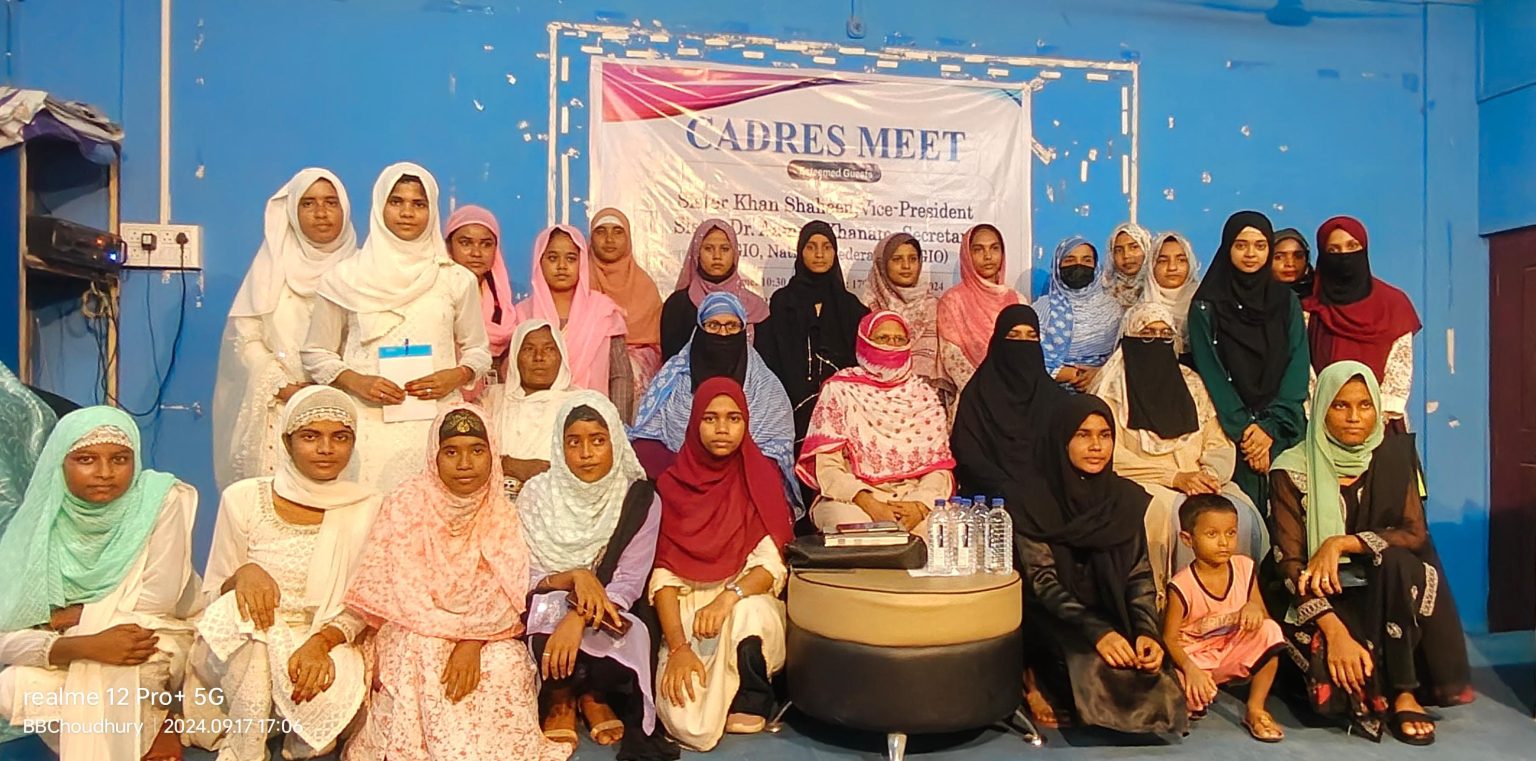
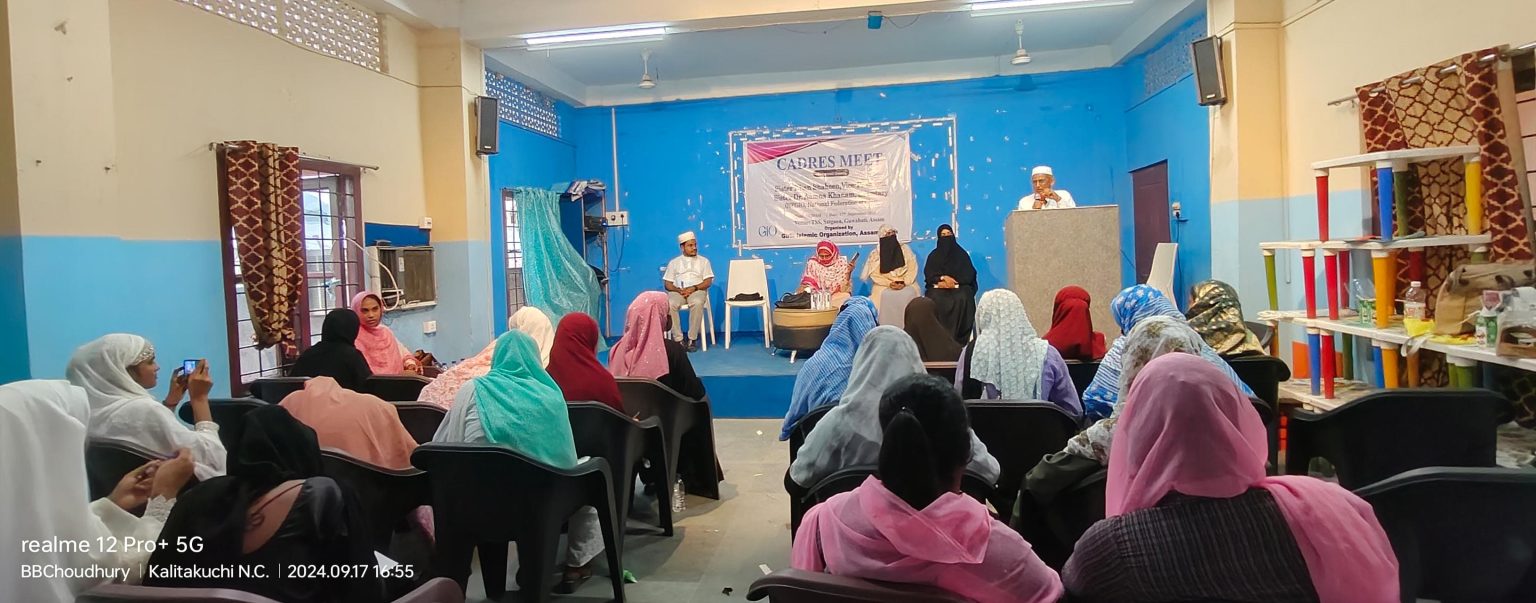
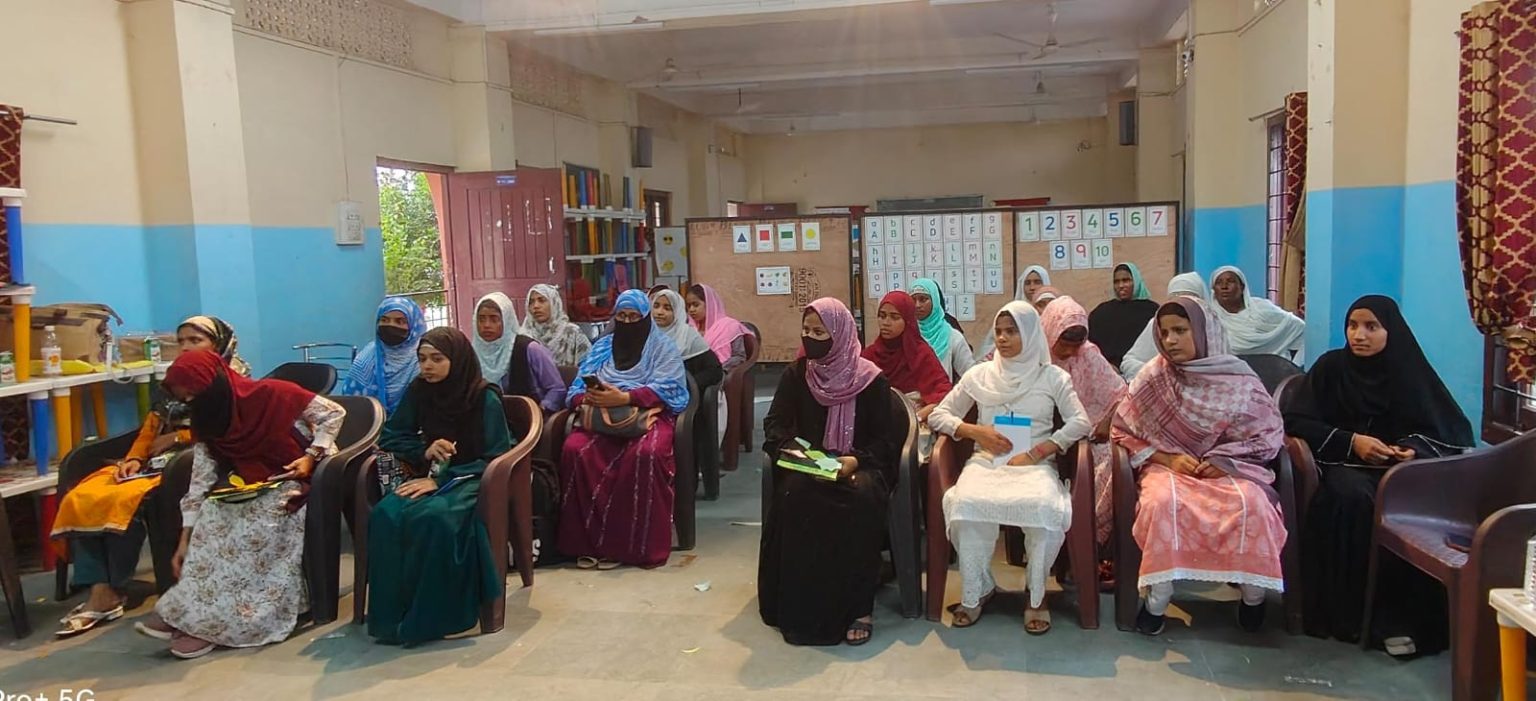
In a milestone for the Girls Islamic Organisation (GIO), the first-ever cadre meet for GIO Assam North took place in Guwahati, marking a new chapter in the organization’s efforts to empower young women in the region.

Under the patronage of Zahida Batul, Secretary of JIH Assam North Women’s Wing, GIO has been making strides in Assam over the past few years. The event commenced with the recitation of the Quran by Sumiya Begom, setting a spiritual tone for the day-long program.

Zahida Batul, the GIO Assam North Coordinator, delivered the inaugural speech, emphasizing the organization’s commitment to fostering leadership among young women. The gathering featured an invaluable address on the “Purpose of Life” by Khan Shaheen, Vice-President of the National Federation of Girls Islamic Organisation (NFGIO).

Dr. Aamna Khanam, Secretary of NFGIO, followed with a presentation on “GIO: Aims and Objectives & Organisational Setup,” outlining the structure and mission of the GIO.

Khan Shaheen further introduced the NFGIO, detailing its functions and activities, which aim to promote education and empowerment for girls across the nation.

Dr. Aamna Khanam also delivered a speech on the “Etiquette of Organisational Life,” highlighting the importance of discipline and collaboration within the GIO framework.

The open session featured esteemed guests, including Prof. Zohurul Islam Mullah, Ameer-e-Halqua; and Bazlul Basit Choudhury, Halqa Office Secretary and HRD Secretary, who delivered valuable insights.

Ameer-e-Halqua JIH Assam North congratulated the newly elected Convener and Core Committee Members, encouraging them to lead with dedication and vision.

Following detailed discussions, an Ad-hoc Coordination Committee for GIO Assam North was formed to advance the organization’s objectives.

The committee includes:

Convener: Jubaida Khatun (Tezpur) – MA in Political Science and Sociology, currently a lecturer at a private college.

Co-convener: Sujana Sultana (Guwahati) – Bachelor of Optometry, working in primary eye care.

Core Committee Members:

Selima Akhtara (Goalpara) – MA (Double), M.Ed., currently principal of a private HS school.

Jinnatara Yeasmin (Darrang) – BDS First Year student.

Sumaiya Begom (Hojai) – HS Final Year student.

The concluding remarks were delivered by Khan Shaheen, who reiterated the importance of unity and proactive engagement in the community.

This historic gathering not only strengthened the foundation of GIO in Assam but also ignited a sense of purpose among the participants, paving the way for future initiatives aimed at empowering girls across the region.

source: http://www.radiancenews.com / Radiance News / Home> Latest News> Report / by Radiance News Bureau / September 29th, 2024

Islamic Heritage Exhibition “Durrat-ul-Iman” Showcases Creativity and Faith in South Andaman

Andaman, ANDAMAN & NICOBAR ISLANDS :

Sri Vijay Puram (Port Blair):

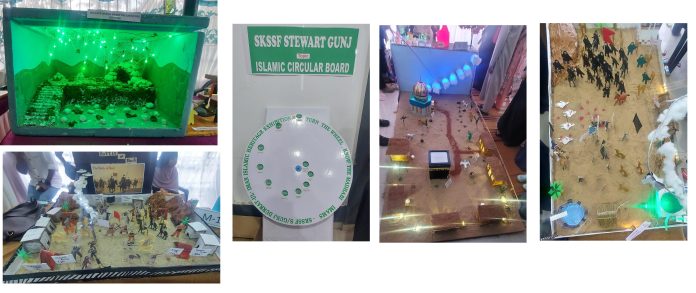
An Islamic Heritage Exhibition titled “Durrat-ul-Iman” was organised by the SKSSF Stewart Gunj Unit in South Andaman between 17 to 19 October, with the active participation of all Madrassas under ARJM . The event served as a vibrant platform for students to present creative and educational displays reflecting Islamic history, knowledge, and spirituality.

The exhibition featured a range of thematic models and interactive setups, including an artificial Qabr (grave) designed by youth members, a matching board circuit highlighting the teachings and details of the four Imams of Islam, a quiz corner, a selfie point, and a video presentation on “The Signs of Qayamat.”

Among the exhibits, the Isra-wal-Meraj display drew particular attention for its detailed depiction of the Prophet’s journey from Mecca to the heavens. Visitors praised the effort and imagination that went into the presentation, which combined learning with deep spiritual reflection.

The exhibition was organized to foster Islamic education, encourage creativity among students, and strengthen community engagement through faith-based learning. With overwhelming response from people, the exhibition was widely appreciated by the public for its innovative displays and spiritually enriching atmosphere.

source: http://www.radiancenews.com / Radiance News / Home> Latest News> Report / by Radiance News Bureau / October 23rd, 2025