Ghulam Mohammad Zaz is the last of eight generations of craftsmen specialising in making classical musical instruments in Kashmir’s Srinagar city.
In the heart of Srinagar’s old city, lives Ghulam Mohammad Zaz, an octogenarian whose expertise lies in hand-crafting musical instruments.
Zaz lives in a small house that’s built on the banks of river Jhelum, and the place where he works stands on the same block, just a few footsteps away.
However, when temperatures plummet to sub-zero in the Himalayan region during winter, Zaz does not go to his workshop — a small confined room, on the second floor of the 300-year-old building, roughly spread across 80 square feet, with mud-plastered walls and half-broken windows. The dimly lit staircase leading to the artisan’s workshop is so narrow that another person can not pass at the same time.
Zaz crafts and styles an array of traditional stringed instruments like Rababs, Sitars and Santoors. Some of his masterpieces have been played by acclaimed Kashmiri musicians like the legendary Pandit Shivkumar Sharma. Sharma has received several national and international awards, including India’s highest civilian awards like Padma Shri and the Padma Vibhushan.
Zaz inherited the craft from his ancestors, who have been making instruments for seven generations. He belongs to the eighth generation, and inevitably the last, as his ancestral legacy has run its course: Zaz has three daughters who have chosen different lines of work, and his art will likely one day fade into the abyss.
“This trade has given me livelihood and contentment. I have no remorse that there’s no one after me,” said Zaz.
During the second wave of the pandemic, Zaz contracted the Covid-19 virus and was bedridden for nearly three months. And since then, he finds it difficult to work as industriously as he would before.
Although his working hours have gone down, Zaz, the last Santoor-maker of Kashmir’s capital city, is not disillusioned.
“I am happy, and will keep on doing this as long my health allows,” added the old man, who started his journey as an apprentice in 1953 when he was just 12 years old.
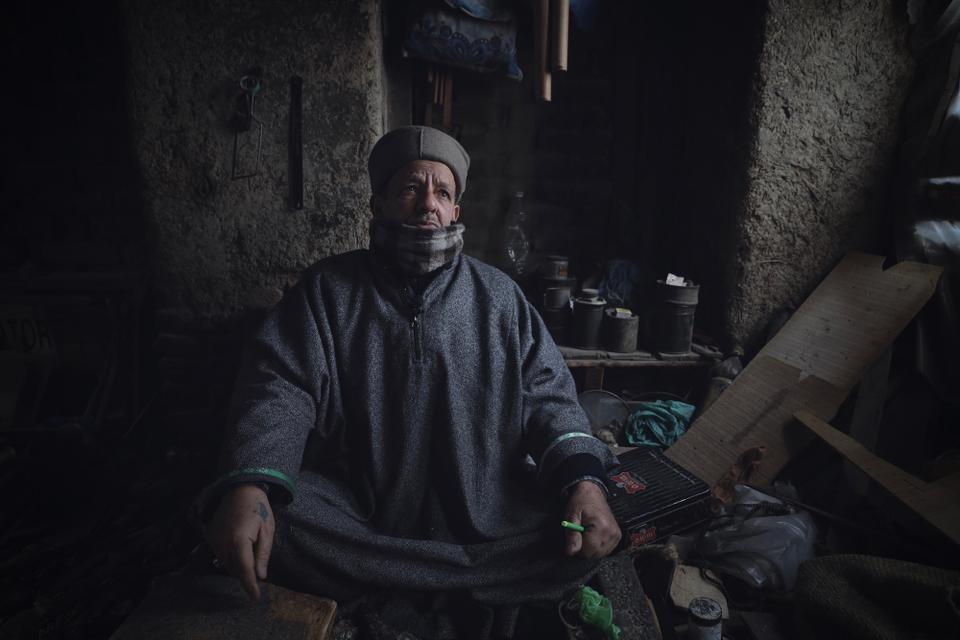
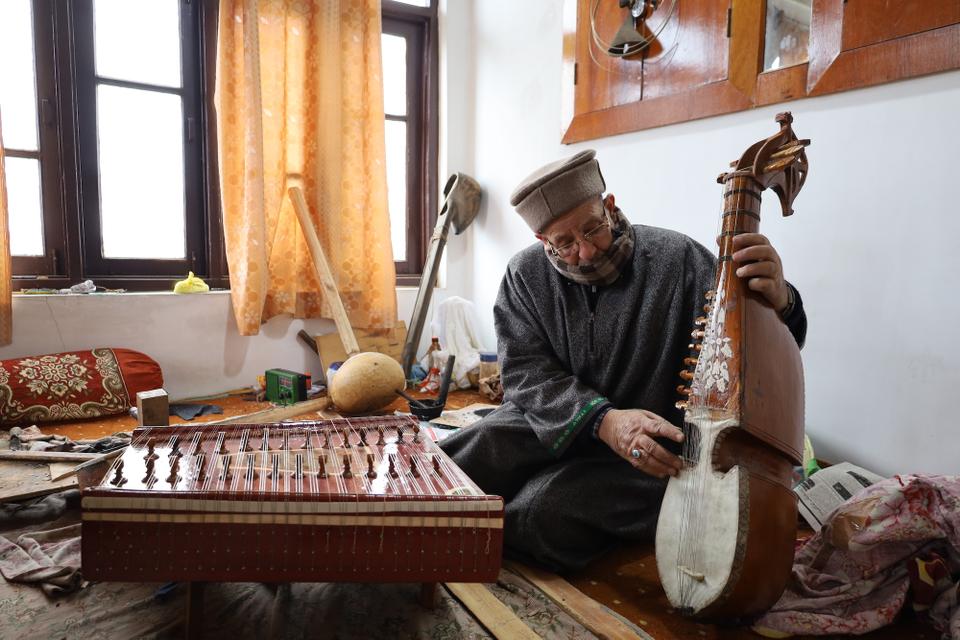
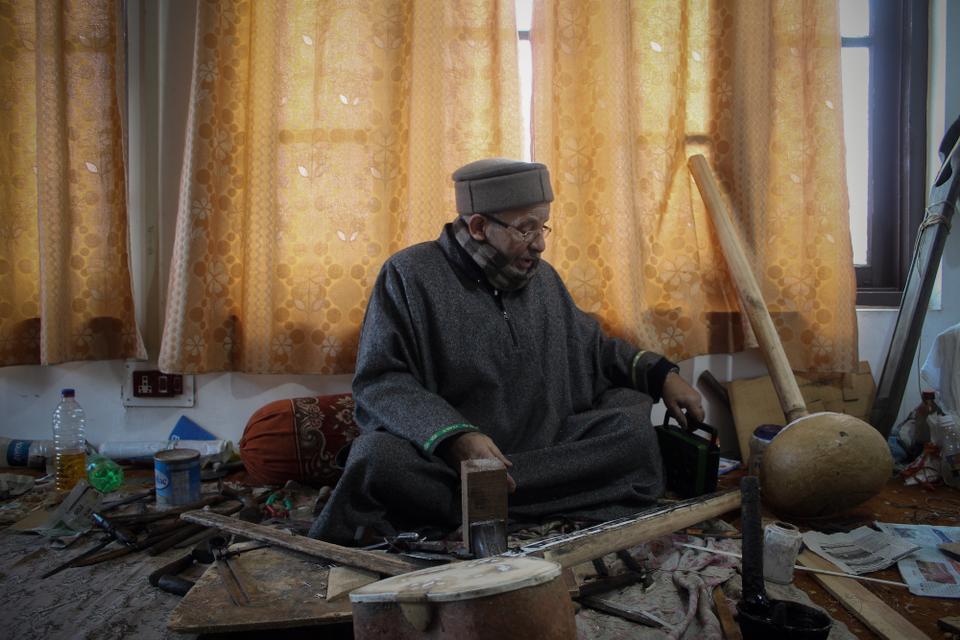
Ghulam Mohammad Zaz, 80, the last Santoor maker of Kashmir’s capital city, sits quietly in the confines of his workshop. (Shah Umar / TRTWorld) (Shah Umar / TRTWorld)Zaz busy tuning the Rabab he has made for a client based in the South Indian city of Bangalore. In front of him lies another handmade instrument called the Santoor, which he has crafted for a client based in Dubai. (Shah Umar / TRTWorld)
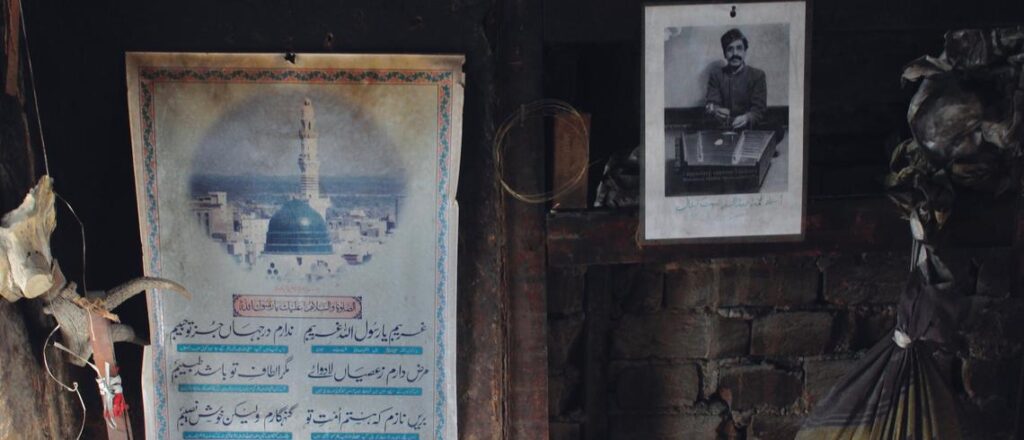
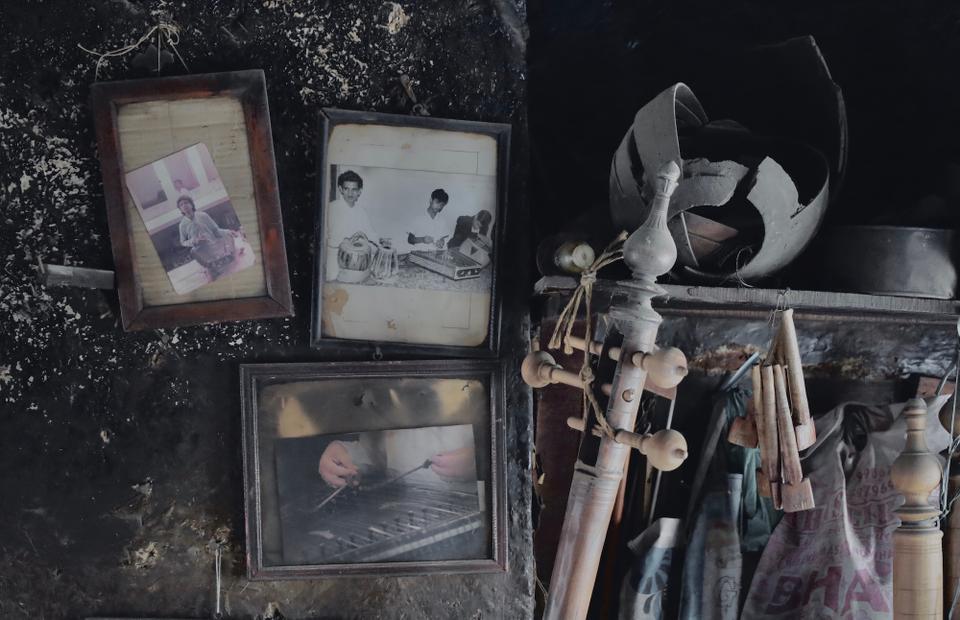
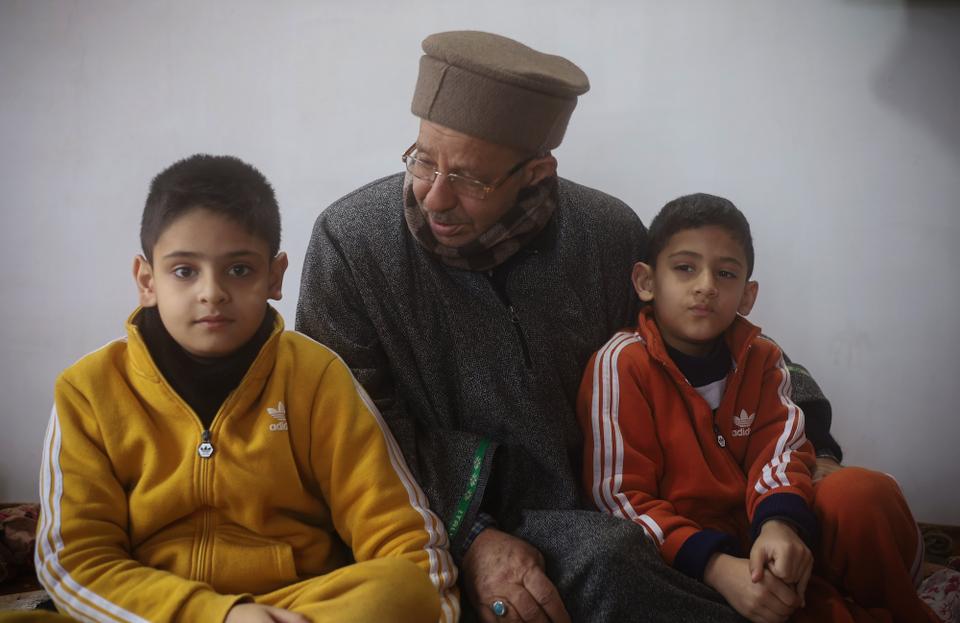
Pandit Shivkumar Sharma’s photo (top left) hangs on the grime-covered wall of Zaz’s workshop. Sharma is a globally acclaimed musician who was born in Jammu and has received awards like Padma Shree and Padma Vibhushan, considered as the fourth and the second highest civilian honours conferred by the Indian Republic. (Shah Umar / TRTWorld) Zaz sits in a makeshift workspace— a hall on the second floor of his house. Owing to the harsh winter, Zaz finds the hall warmer than the workshop where he would usually work. (Shah Umar / TRTWorld) Zaz lives in Srinagar’s old city. A skyline of Zaz’s hometown is seen in the picture. The wooden bridge, Zaina Kadal, seen in the picture was built by Sultan Zainul Aabideen in the 15th century, and hence the name ‘Zaina’ Kadal. (Shah Umar / TRTWorld)Zaz with his grandsons Saadat (left) and Hassan (right). (Shah Umar / TRTWorld)
source: http://www.trtworld.com / TRT World / Home> News-Magazine / by Peerzada Sheikh Muzamil (text edited) / Pics: Shah Umar / February 02nd, 2022
Meet 108-year-old Imamuddin Qureshi who had slapped a British officer during a protest in Agra, only a few days before India got its independence.
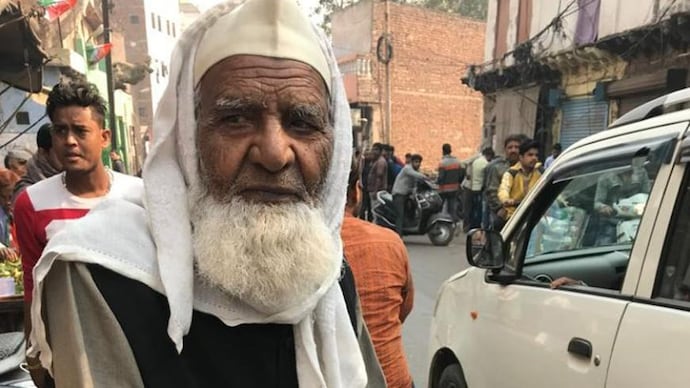
Imamuddin Qureshi, the man who had slapped a British officer, during a protest in Agra. (Photo: India Today/Siraj Qureshi)
While Independence was primarily won through the non-violent means adopted and propagated by Mahatma Gandhi, a lot of people had to lay their lives and suffer pain in achieving this. Those fearless freedom fighters were not afraid of sticks or bullets, and defied the British officials at every turn, to show them that Indians have had enough.
One such person is Imamuddin Qureshi, who had even slapped a British officer just days before independence. Imamuddin had fought alone with the British without caring for his life. Whenever the topic of Indian independence is discussed, 108-year-old Imamuddin Qureshi gets lost in the memories of those days when the country became independent.
Imamuddin told India Today that back in August 1947, the country was about to get independence. Everyone was full of enthusiasm. The elders and the children had the tricolor in their hands and happiness in their hearts. People used to take out rallies in the streets, localities, and markets with the Tricolor in their hands. Angered by this, the British officers used to rain batons on them.
He recalled the day he slapped a British officer and said, on August 12, three days ahead of the independence, Hindu and Muslim brothers from Lohamandi, Syedpada area were taking out a rally with the Tricolor in their hands. Then a British officer came there and lathi-charged the people. Many innocent people were arrested. Seeing this, Imamuddin’s blood boiled and he attacked the British officer in anger. He slapped the officer on the cheek several times and escaped after freeing his arrested comrades. The police kept looking for him, but in three days, the country had become independent, and he was able to return home.
Imamuddin said that when the country was nearing independence, he was made a member of the Khaksar committee. At that time, no one dared to speak against the British and members of the Khaksar committee had their own separate dress. He said that at that time, he was about 24 years old and used to do wrestling, so he was made a member of the Khaksar Committee due to his physical prowess.
source: http://www.indiatoday.in / India Today / Home> News> India / by Siraj Qureshi / August 15th, 2022
This school built in the middle of a graveyard offers education to the poor in Uttar Pradesh’s Agra. The unique school teaches all subjects to students from class 1 to class 8.
The high school conducts classes for around 75 students inside the graveyard. (Photo: Siraj Qureshi/India Today)
A school, built in the middle of a cemetery area, offers education to the poor in Uttar Pradesh’s Agra. Built almost 50 years ago, Islamia junior high school conducts classes for around 75 students inside the graveyard. This unique school teaches all subjects to students from class 1 to class 8.
Nilofar, a class 5 student, told India Today that the school is closer to her home and a fee of Rs 50 keeps her fears away while visiting the graveyard to seek education.
“When everyone has to come to the graveyard at one point, why be afraid of the graves,” Mohammed Kaif, a class 7 student who aspires to become a doctor, told India Today.
Similar sentiments were echoed by another student, Farida, who said her father works as a labourer and cannot afford to pay the high fees in other private schools.
School principal Syed Shaheen Hashmi told India Today that the school is registered with the education department but there is no grant provided to the school, which is why the school charges Rs 50 from the students as fees. The unique school also doesn’t charge fees for orphan children.
Apart from this, people also donate to the school, which is used to pay the salaries of the teachers and to meet other expenses. Some also donate books to the students.
The school principal is of the opinion that the school welcomes students from all religious, but most of the students enrolled currently belong to the Muslim community. He said that students from the Hindu community stopped coming to school probably because the school was built inside a Muslim cemetery.
“At present there are six female teachers in the school who come from nearby areas. If the government provides books for the kids, it will become easier to run the school,” he added.
source: http://www.indiatoday.in / India Today / Home> News> Cities> Agra / by Siraj Qureshi / October 08th, 2022
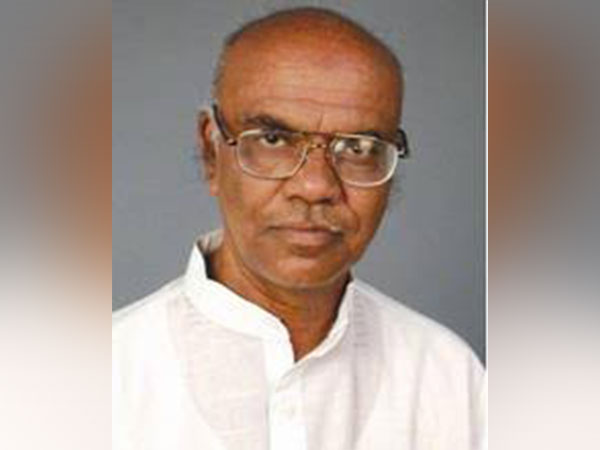
Jabbarkhan Honnalli, a former minister for the state of Karnataka, passed away on Friday morning at the age of 80. Honnalli had been experiencing health issues for some days as well as also was receiving treatment in a specialized hospital when he passed away this morning.
In 1989, Janata Dal put him forward for the Karnataka Legislative Council.
Later, he joined the Congress party and twice won election to the Hubli City constituency. He was the minister of youth development and sports in the coalition government of the Congress and JDS in 2004.
He also served as the president of Hubli Anjuman E Islam.
Following are his works.
1. From 1966 to 1980, I spent 18 years as a teacher at Model Urdu Girls School No. 1.
2. He was actively working on behalf of society’s poor and needy, particularly those from marginalised and minority communities.
3. Established in Hubli in 1984 the Alfarah Education as well as Cultural Association.
4. In 1962, the Youth Muslim Academic Association was founded in Hirekerur, Dharwar District.
5. This Association established a primary girls school in Hirekerur.
6. From 1975 to 1978, acted as joint secretary of the Karnataka Muslim Academy in Hubli.
7. Muslim Jamat, Keshwapur, Hubli, established and built an Arabic school at its own expense.
8. Spent two years in Dandeli serving as an executive member of the Muslim Educational Association of North Karnataka.
9. From 1964 to 1966, I worked as the Poor Boys General Hostel’s secretary in Hubli.
10. Initiated the Hubli Taj Nagar Co-operative Residential Society in 1972. Distributed fully completed plots to minority communities and the society’s poorer members. Serving as president ever since it began.
11. Since 1980, serving as the honorary secretary of the Sri Kadasiddeshwar Cooperative Housing Society. Has given worthy underprivileged people from all facets of society house sites.
12. Since 1985, has served as president of Diyanat Urban Co-operative Finance Society in Hubli.
13. Founded Kamadhenu Cooperative Housing Society in Hubli and served as its honorary secretary from 1978 to 1980.
14. From 1978 to 1981, he served as the director of the Hubli-based Forest Labour Cooperative Society.
source: http://www.en.bebaak.in / Bebaak.in / Home> Karnataka / by Hritik Mishra / October 07th, 2022
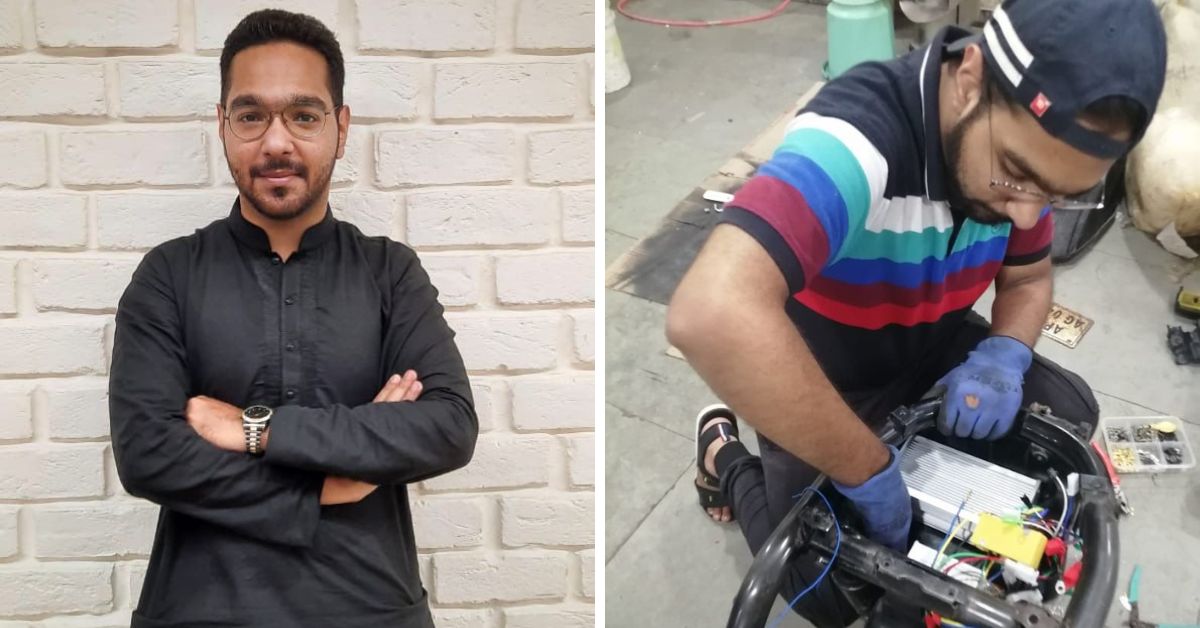
Hyderabad engineer Maaz Ahmed Khan founded his startup Torq Electric to convert old two-wheelers into electric vehicles.
In 2021, Maaz Ahmed Khan was still a mechanical engineering student when his interest in electric vehicles began brewing . “It started when I got into the EV subject of the syllabus in final year,” he recalls, adding that he would look closely into the working of these machines and formulate his own ideas to make his own version of them.
But the 23-year-old’s idea was not to build a new design. Instead, it was to convert existing fuel vehicles — which would otherwise be turned to scrap — into fully functioning EVs.
The then final year student of Methodist College of Engineering and Technology, Telangana, started looking for someone’s help to start building on his vision. This brought him to a non-academic startup incubator EdVenture Park, which focuses on student innovations. He applied for a job here and was selected.
With their support, the youngster began working on his dream project, eventually founding Torq Electric in March 2021.
“A few years ago, I happened to attend the launch of Tata Nexon. Even though the vehicle excited me, I also thought, ‘Why should we buy a new EV if there exists a technology to convert existing vehicles?’,” he tells The Better India.
He continues, “I also had ‘electric vehicles’ as a subject in college. I learned that after 15 years of running, the fuel usage of any vehicle goes up and it contributes to greater pollution. Instead of turning it to scrap, you can convert it.”
On 27 August 2021, Maaz came up with the prototype of a two-wheeler EV, which he built by transforming an old petrol scooter and spending Rs 60,000. The model was covered widely by the media and popularised further through the internet, he recalls.
The EV by Torq Electric.
“Even then, it took time to gain people’s trust. A few months later, I managed to get some customers. A majority of them were unwilling to let go of their two-wheelers due to emotional attachments and similar reasons. Converting these into electric vehicles seemed like a great idea to keep your old favourite bike,” he explains.
Maaz says he has so far converted seven bikes, and received orders for 15 more.
Additionally, he helps engineering students to take up college projects related to EV and supports them with the related technical know-how.
For a greener future
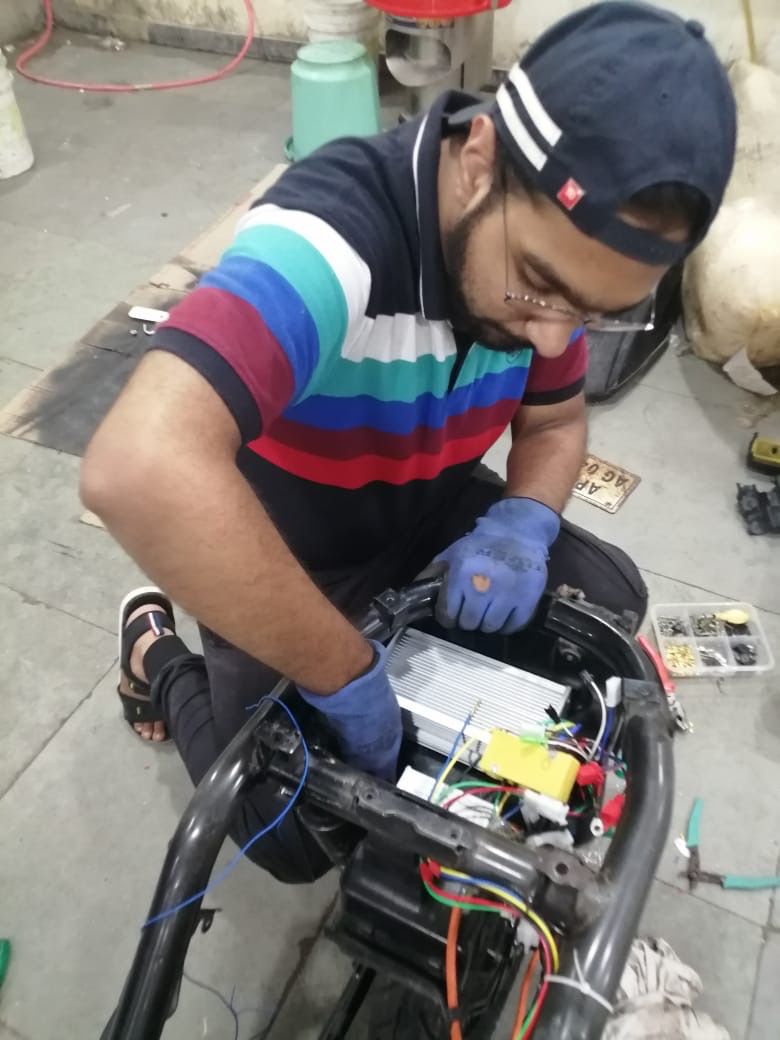
Even though it takes just 5-7 hours to convert a two-wheeler into an EV, Maaz asks for two days to check and ensure the vehicle’s safety after riding.
Maaz busy at work.
He provides two types of models — fully electric and hybrid vehicles. Those who wish to keep fuel as an option can opt for the latter. He says the price to convert any type of two-wheeler into a fully electric EV is Rs 50,000. For hybrid, he charges Rs 55,000.
“In fully electric two-wheelers, the engine and fuel tank are replaced with a powerful motor and batteries. In hybrid conversion, a motor and battery are added to the existing engine. This gives the flexibility of driving on both electric power and engine power,” says the engineer.
The base variant of the vehicle takes about three to four hours to charge, and can run up to 75 km at an average speed of 45 km/hr, Maaz says. Customers can also give their preferences, for which prices may differ.
“EVs are in their early days in India. But undoubtedly, they are the future. It is important to be aware of the pollution from fuel vehicles. Soon, we might be living in a country where breathing feels like smoking a cigarette. But we can prevent this by showing responsibility. Like shifting from plastic bags to cloth bags, or using public transport, opting for an EV is a great step,” Maaz says.
The electric vehicle built by Maaz.
Through his company, he aims to create sustainable living through automotive manufacturing, with the vision to create an eco-friendly world.
Even though his current innovation is receiving great response, the engineer’s dream is to launch his own design of an EV, exclusively for Indians. He also plans to extend the current innovation to three and four-wheelers.
Maaz Ahmed Khan — the engineer.
“The rise in fuel prices has most affected the auto drivers of the country. After a little research, I discovered that if they switch to EVs, they can save around Rs 400 a day. This accounts for Rs 12,000 a month. Thus, my plan is to launch an innovation pertaining to three-wheelers,” he shares.
Visit his website www.torqelectric.com
Edited by Divya Sethu
Photo Credits: Maaz Ahmed Khan
source: http://www.thebetterindia.com / The Better India / Home> English> Electric Vehicles – Sustainability / by Anagha R Manoj / September 20th, 2022
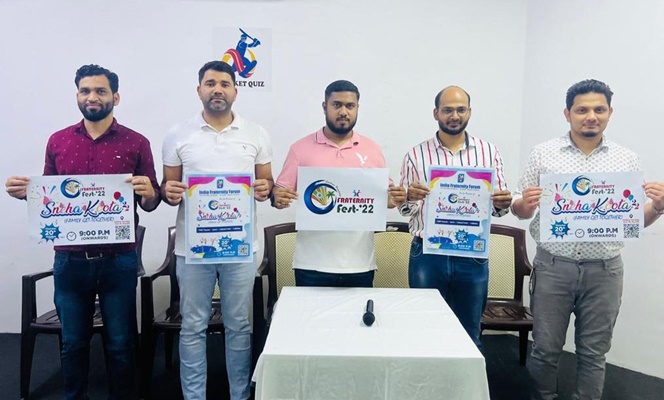
India Fraternity Forum is organizing an annual “Fraternity Fest” to bring together non-resident Indians through a socio-cultural program on October 20.
The poster launch of “Snehakoota-22″ event was held in Riyadh. A family reunion and expatriates get-together event named Fraternity Fest is being held by India fraternity forum across Saudi Arabia.
Whilst releasing the poster of the event, Tajuddin, president of India Fraternity Forum, Karnataka chapter, Riyadh, invited all NRIs to participate in the event.
Various cultural and social events will be held at the get-together on October 20 at Sa-Ada Istirah in Exit-18, Riyadh. The colorful event will feature different activities like public speaking, sports, quiz, public awareness programs etc.
India Fraternity Forum, Riyadh Karnataka chapter general secretary Muhammed Naveed, state committee members Sabith Hassan, Muhammed Shareef and Nizamuddin were present at the press meet.
source: http://www.daijiworld.com / Daijiworld.com / Home> Middle East / by Media Release / Riyadh, September 18th, 2022
Mumtaz Khan was India’s top scorer in the 2022 women’s junior hockey World Cup and at the FIH Hockey5s Lausanne.
Picture by Hockey India
Teenager Mumtaz Khan was named the FIH Rising Star of the Year 2021-22 in the women’s category, the international hockey federation (FIH) announced on Tuesday.
Mumtaz Khan scored eight goals, including a hat-trick against Malaysia in the group stages, as the Indian hockey team finished fourth in the 2022 women’s junior hockey World Cup in South Africa. She was India’s top scorer in the tournament and the third-highest scorer overall.
The 19-year-old Mumtaz was also the leading goal scorer for the Indian women’s hockey team that played in the FIH Hockey5s Lausanne 2022. She netted five goals in four games, including a hat-trick against hosts Switzerland.
“I cannot believe that I have won this award. It is the hard work of our entire team over the year that has paid off, and I dedicate the win to my team,” Mumtaz Khan said.
“I feel the award is a sign that the hard work that I have put over the past year on the training grounds has helped me improve a lot as a player. But this is just the beginning of my career. I wish to continue the learning process and will continue the hard work to improve upon my game.”
Mumtaz Khan won 32.9 points in the final standings for the FIH Rising Star of the Year award, edging out Belgium’s Charlotte Englebert, who finished with 29.9 points.
Mumtaz Khan is the third Indian woman to win the award after Lalremsiami in 2019 and Sharmila Devi in 2020-21. In the men’s category, Vivek Sagar Prasad has won the honour in both 2019 and 2020-21.
France’s Timothée Clément was named the FIH Rising Star of the Year 2021-22 in the men’s category.
source: http://www.olympics.com / Olympics.com / Home> English> News / by Rahul Venkat / October 04th, 2022
Former Jammu and Kashmir chief minister and National Conference vice president Omar Abdullah condemned the attack.
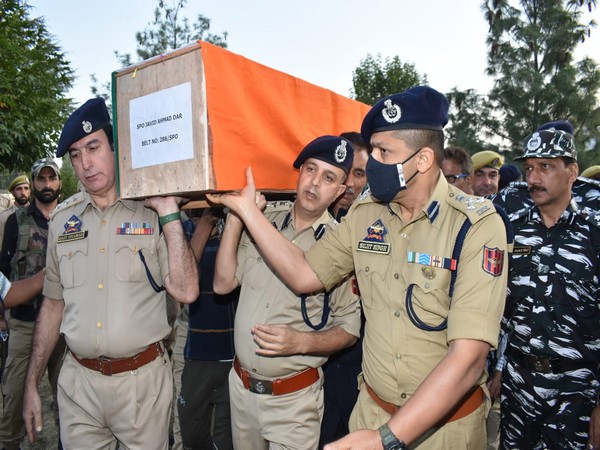
Wreath laying ceremony held for SPO Javaid Ahmad (Image/ANI)
Srinagar :
A policeman was killed and a CRPF personnel injured when militants attacked a security forces team in Pulwama district of Jammu and Kashmir on Sunday, police said.
The attack took place in Pinglana area of the south Kashmir district.
“Terrorists fired upon a joint Naka party of CRPF & Police at Pinglana, Pulwama. In this terror attack, 01 Police personnel got martyred & 01 CRPF personnel got injured,” Kashmir Zone Police said in a tweet.
The police said reinforcements were rushed to the area and a search operation was launched.
A police spokesman identified the slain policeman as Javid Ahmad Dar.
He said the injured CRPF personnel was evacuated to a hospital for treatment.
Senior police officers along with reinforcement reached the terror crime spot, the spokesman added.
“We pay our rich tributes to the martyr for his supreme sacrifices made in the line of duty. We standby the family of the martyr at this crucial juncture and pray for the speedy recovery of the injured personnel,” the spokesperson said.
Police has registered a case, the investigation is in progress and officers are working to establish the full circumstances of this terror crime, he said.
The area has been cordoned off and a search is going on there, he added.
Meanwhile, former Jammu and Kashmir chief minister and National Conference (NC) vice president Omar Abdullah condemned the attack.
“While condemning this attack I send my condolences to the family of the J&K police personnel who laid down his life in the line of duty today. I also send my best wishes for the speedy recovery of the injured CRPF personnel,” Abdullah wrote on Twitter.
The Peoples Conference too condemned the attack.
“We strongly condemn the militant attack upon the joint naka party of Police & CRPF at Pinglana (Pulwama) in which 1 Police personnel lost his life & 1 CRPF personnel got injured. Heartfelt condolences & sympathies with the family of the deceased and prayers for the injured,” it said in a tweet.
source: http://www.newindianexpress.com / The New Indian Express / Home> Nation / by PTI / October 02nd, 2022 / (image edited by ANI )
The idea for creating the app came to Hana while watching a documentary about the importance of the parent-child relationship.
Abu Dhabi:
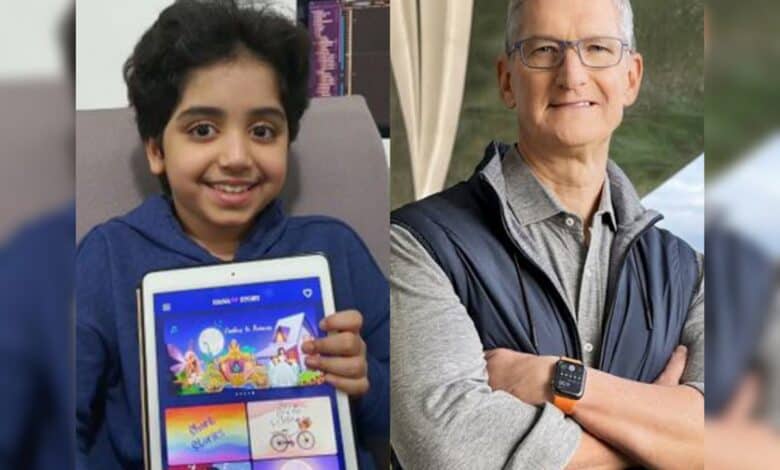
A 9-year-old Dubai-based Indian girl who developed an iOS app receives appreciation from Apple CEO Tim Cook for her achievement at such a young age.
Hana Muhammad Rafeeq had initially emailed Tim Cook claiming to be the youngest iOS developer.
In his reply, Tim Cook wrote to her “Congratulations on all of your impressive achievements at such a young age. Keep at it and you will do amazing things in the future.”
Hana Muhammad Rafeeq, when she was 8-year-old developed ‘Hanas’— storytelling app, which allows parents to record stories in their voices for their kids, Hana handwrote more than 10,000 lines of code.
The idea for creating the app came to Hana while watching a documentary about the importance of the parent-child relationship. “If the parents are busy with work, they can record the stories so that the children can listen to them before bed,” Hana told Gulf News.
source: youtube.com / Hanas iOS Mobile App preview
Hana and her 10-year-old sister Leena are both self-taught coders who got inspired by their parents.
As per reports, sisters are now experts in coding languages HTML, CSS, C, C++, Swift and the latest SwiftUI. They are also learning human languages English, Spanish German, Arabic, Hindi and Malayalam.
source: http://www.siasat.com / The Siasat Daily / Home> News> Middle East / by Sakina Fatima / September 24th, 2022
Bridlen, a family owned business from Chennai, on its Indo-Japanese collaboration to craft Goodyear welted shoes
Leather shoes, made to order, that fit like a glove, and look like a dream.
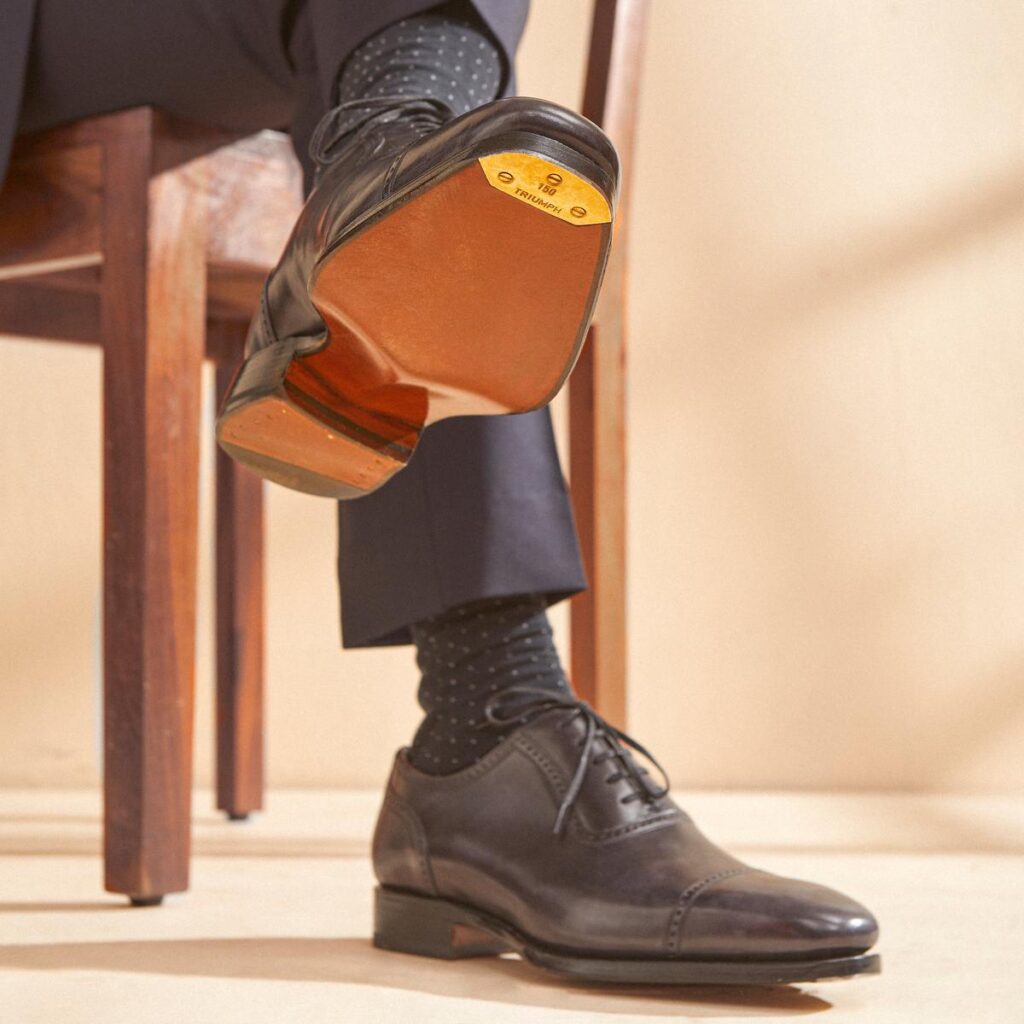
That is a rare luxury in a market dominated by e-commerce, where even designer brands are churning out collections by the season. For the true shoe connoisseur, only a customised product, can fashion a sartorial statement. So following slow food and slow fashion, now there’s a focus on slow manufacturing. At Bridlen, a shoemaking enterprise in Chennai that started in 1986, making Goodyear welted shoes the old-school way is a rich legacy that has continued into the 21st Century.
Started by the late K Mohamed Hasan, who began his career in shoemaking with solely creating uppers , he then turned his eye to create not just custom shoes, but footwear that would please, whom he considered the most discerning customers — the Japanese. As a first-generation shoemaker with clients in the UK, France, Italy, Germany, Switzerland, Spain and Portugal, he found a friend in Jose Maria Watanabe, a Japanese shoemaker with four decades of experience in the business. What started as a unique friendship, then turned into a partnership that coalesced the best of Japanese design and Indian craftsmanship.
Founder of Bridlen shoes K Mohamed Hasan
_____________________
How its made…
A Goodyear welt is a strip of leather, rubber, or plastic that runs along the perimeter of a shoe outsole. The machinery used for the process was invented in 1869 by Charles Goodyear Jr., the son of Charles Goodyear, American engineering manufacturer and inventor of vulcanised rubber. Charles’s son followed in his father’s footsteps and came up with a manufacturing process that could be used to assemble various parts of a shoe. Using a process called hand welting the upper portion of the shoe would be sewn together with the sole using a boar’s bristle needle and waxed thread.
__________________
The Japanese connect
Following the untimely demise of its founder in 2019, Bridlen is now managed by his son, Mohamed Affan Kolandaiveedu. Affan explains why their Goodyear welt design is a cut above the standard, “ We don’t attach a cotton rib to the insole. We take a channel on a much thicker insole and stitch the welt to that. This is what separates us from most other brands at our price point or even a few brackets above. A search on the authorities of the classic shoe world from Simon Crompton at Permanent Style or Jesper of shoegazing.com have singled out this feature as a point of strength, something that you don’t normally find on factory made shoes,” explains Affan.
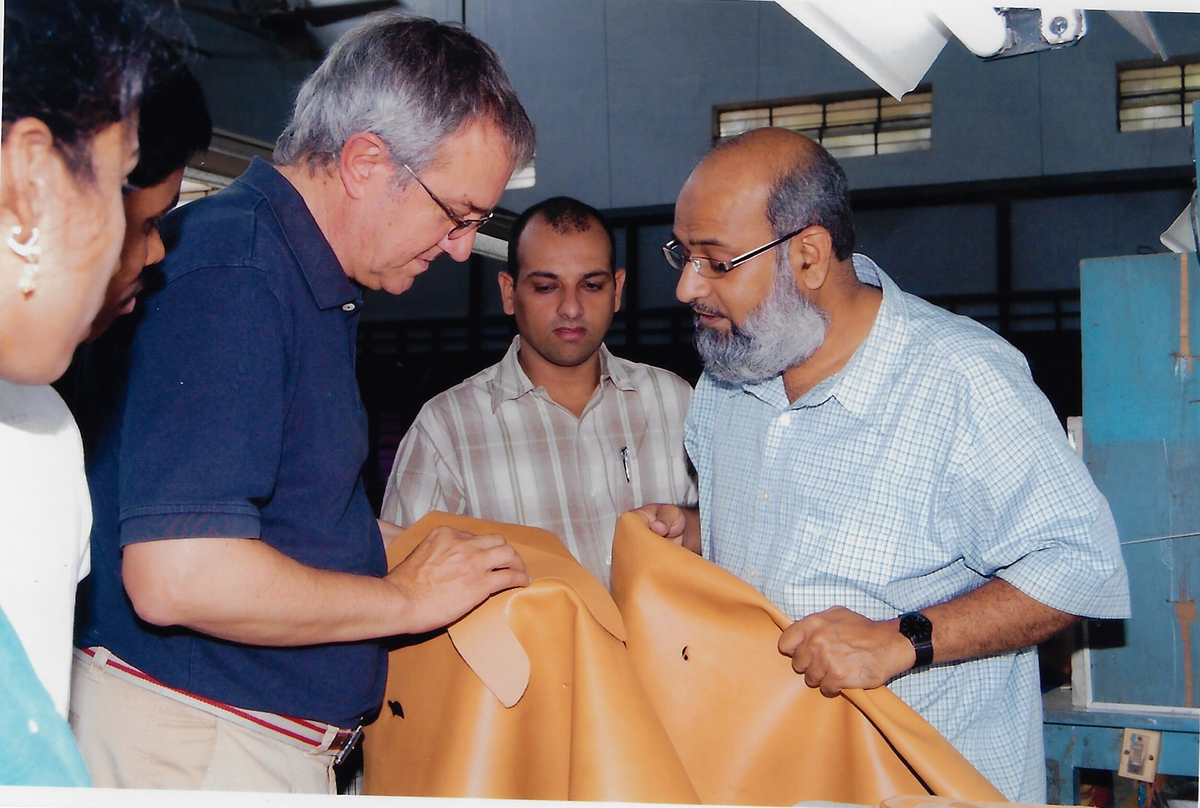
The story of Bridlen is fashioned by an Indian team guided by Watanabe. A Goodyear welted shoemaker based in Spain, he worked with a European partner, and was looking for a manufacturing capacity closer to Japan, when he heard about a small factory in India and came to visit. “Watanabe and Hasan really hit it off with their philosophy for quality, ethics in business and demeanour that they decided to do something together even though the original plan to move the Spanish production to India did not work,” states Affan.
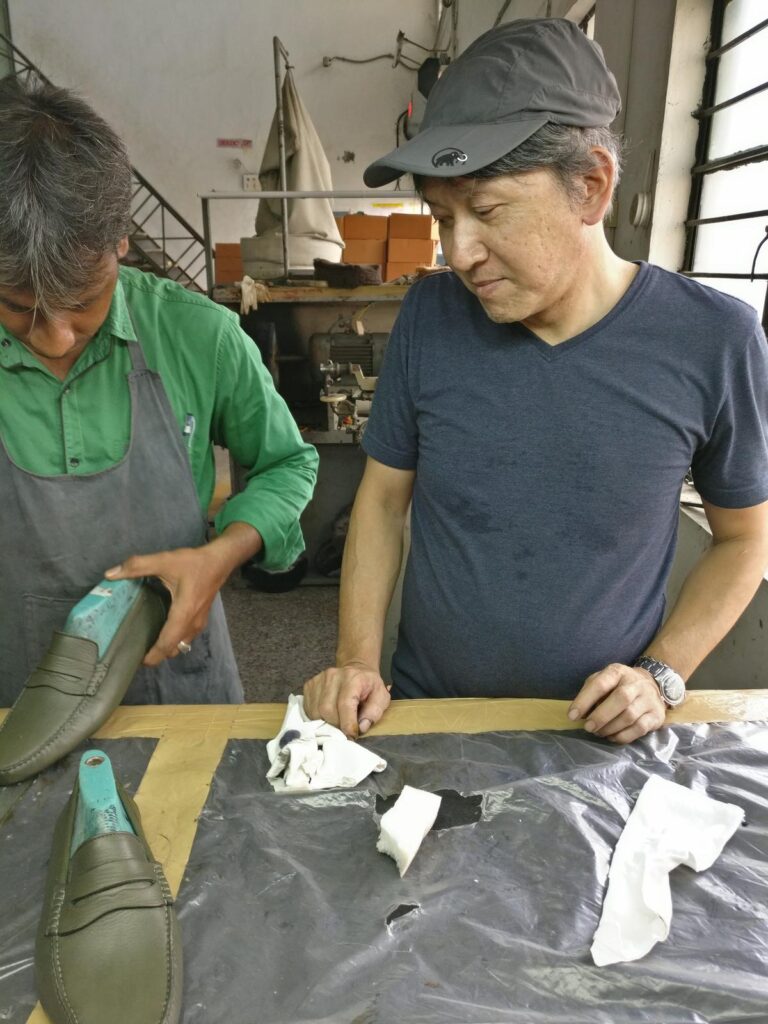
Watanabe looked to pass on his skills, to Indian craftsmen who were serious about preserving the trade. “My project with Affan Shoes was the production of a finished shoe, something they had never experienced before, and at the same time it was a quality standard that was accepted worldwide.” Explaining how his mentor acclimatised to the new workspace, he adds, “Watanabe took great pains in the early days to get along with the workforce in our factory. He learnt a bit of Tamil and taught basic Japanese to some of the staff and their children on weekends. He would spend half the year in Chennai, and loved to partake in social gatherings, our festivals, and cultural practices.”
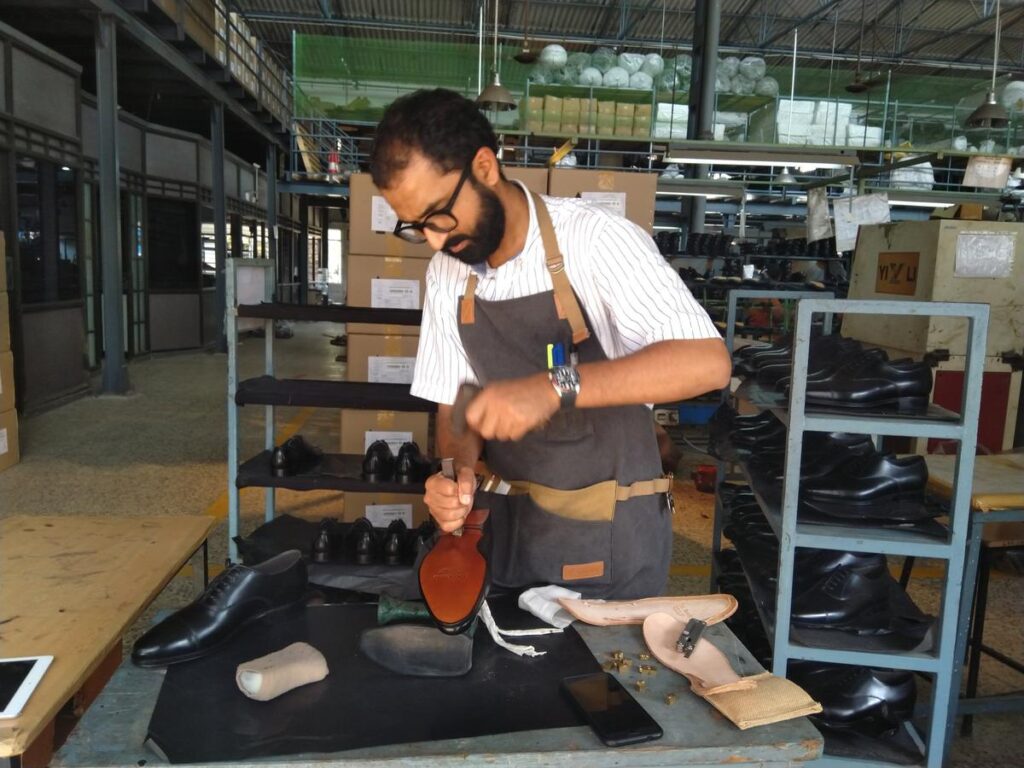
Mohamed Affan Kolandaiveedu at the factory
Pandemic pivot
Watanabe has continued his association with Bridlen, even during the pandemic. Until three days before the first lockdown came into effect in March 2020, Watanabe was in Chennai, and managed to get one of the last scheduled flights out of New Delhi to Tokyo. “We were in touch with him at least once or twice a week through video calls,“ says Affan, adding how the pandemic forced Bridlen to look at doing fittings remotely. The brand took to e-consultations where a potential client could book a video consultation to understand fitting. For clients who ordered a pair of Goodyear welted shoes online, a pair of fit-trial shoes would be shipped to them, to ensure the sizing was right before making it in their preferred style/ colour. “This gave clients a much needed boost in confidence to try a new brand and to speak with someone from the team about the intricacies of wearing them, the break-in period, shoe care etc,” states Affan. Post lockdown, the styling at the brand has pivoted as well, from classic to casual classics, bringing sustainable Goodyear construction to a wider variety of footwear styles: chukka boots, derbies, or semi-formal loafers.
Watanabe, who is currently in Tokyo, says working in India has been a rewarding journey. “Even though we made small batch production runs, it was important for Watanabe that these shoes should be available to a wider audience in terms of affordability.”
While the goodyear welted shoes range between ₹15,000 ($200) and ₹25,000 ($310) depending on specification, the construction remains the same.
A pair by Bridlen
All eyes on India
The craft on display at Bridlen, has kept the shoemakers competitive in the luxury shoe segment in India and Japan, followed by USA, France and Germany, a testament to the foresight of its founder, Affan states. Affan, who calls himself a shoemaker at Bridlen, has carried forward his father’s legacy and is optimistic of his business prospects across the globe, adding, “Our economy and labour market, now, and going into the future, are geared more towards higher value-added manufacturing or services. If you want good quality production, limited batch runs, attention to detail, then India could still prove to be a good place for international brands.”
With international travel picking up steam, Bridlen has been showing its collections at trunk shows in New Delhi in March and London in May. The tour continues with Mumbai in July, Bengaluru and Hyderabad in August, Stockholm and Paris in September and Amsterdam and Kolkata in October.
Japanese shoemaker Jose Maria Watanabe training a staff member
As India’s upwardly mobile middle class looks to buy custom footwear, with wearability, quality, sustainability and longevity guiding purchases, Affan wants his shoes to be the natural choice. “In Australia, you have RM Williams as a rights-of-passage bootmaker. In England, there are Crockett and Jones, Churchs, in the USA, there is Alden; that when you come of age, get to a certain job profile or income level then you aspire to own a few pairs of these shoes. We want to be that brand for Indians!
Box- ALL ABOUT THE LEATHER
Almost all the leathers used at Bridlen are imported from France, Italy or the UK “where strict norms for effluents are followed, source-tracing is available, and all compliance norms are met. Where made locally, like the lining leathers, we use LWG (Leather Working Group) certified, owner- driven micro tanneries where we know they are serious about meeting our local statutory environmental and sustainability laws.
“In Europe, the demand for high quality shoes, by extension for high quality leather has been there for a long time. So tanneries have been catering to this demand for quality for decades. Minimum order quantities are not as high when compared to the good tanneries in India where their expectation is much higher. In India it’s an uphill task to convince a tanner to do smaller quantities of higher quality because the industry is geared towards making more volumes to feed the bulk production shoe factories,” says Affan.
source: http://www.thehindu.com / The Hindu / Home> Life & Style> Fashion / by Anisha Menezes / September 17th, 2022