INDIA :
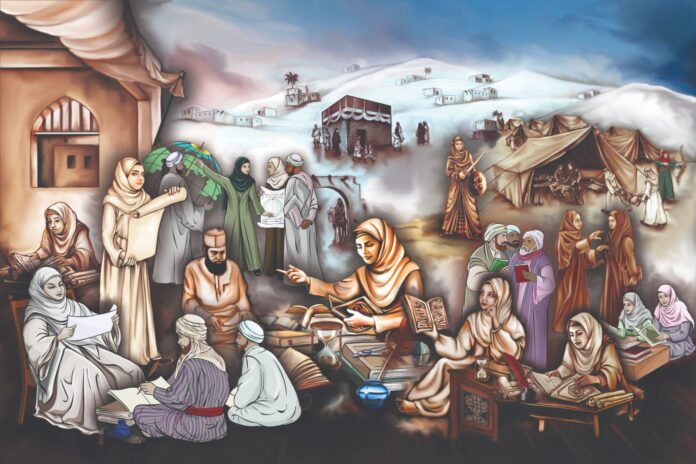
A New Law, A Timeless Legacy
The Waqf Amendment Act 2025, recently passed by the Government of India, has stirred a wave of public discourse. Promising to regulate and modernize the administration of waqfproperties across the country, the law is being introduced as a means to improve transparency and benefit marginalized communities, especially Muslim women.
However, in this swirl of policy language, governance reform, and bureaucratic oversight, we must not forget a foundational truth: Muslim women have always been central to the waqftradition—not as passive recipients, but as active architects of community transformation.
Waqf as a Tool of Empowerment—Before the State Claimed It
Before governments created waqf boards, before institutional frameworks shaped their regulation, and long before women were officially recognized in policy narratives, Muslim women in India were shaping societies through charitable endowments.
They:
• Founded schools and madrasas for girls and boys alike
• Donated lands and properties for the construction of mosques, shrines, and Sufi lodges
• Built hospitals, water fountains, and orphanages
• Funded scholarships, welfare kitchens, and even public rest-houses for travelers.
This was not mere charity—it was strategic social intervention, embedded in Islamic ethics and guided by a vision of communal upliftment.
👑 Queens of Waqf: A Glimpse into Heroines of Charity and Community Leadership
🏛️ Razia Sultana (1205–1240, Delhi)
India’s only woman Sultan, Razia established educational and civic institutions supported by state waqf. Her leadership emphasized justice, learning, and infrastructure.
🏛️ Jahanara Begum (1614–1681, Delhi)
Daughter of Shah Jahan, she created waqf endowments for Sufi shrines, caravanserais, and public gardens. Her waqf documents are among the earliest female-authored ones preserved in India.
🏛️ Roshanara Begum (1617–1671, Delhi)
Sister to Jahanara, she built Roshanara Garden and a Sufi lodge. She maintained religious institutions through royal waqf.
🏛️ Sultan Jahan Begum (1858–1930, Bhopal)
The last Begum of Bhopal, she modernized education, built hospitals, supported madrasas, and legally registered many waqf properties to support her reforms.
🏛️ Begum Hazrat Mahal (1820–1879, Lucknow)
Regent of Awadh, she protected the city’s religious institutions and supported waqf-based welfare during the 1857 Rebellion.
🏛️ Khair-un-Nissa Begum (18th c., Hyderabad)
Established Khairtabad Mosque and other public works through her waqf. One of the early noblewomen to invest in education and water supply systems.
🏛️ Begum Rokeya Sakhawat Hossain (1880–1932, Kolkata)
A visionary educationist, she established the Sakhawat Memorial Girls’ School using her own resources and informal waqf practices. A true reformer of women’s rights.
🏛️ Begum Sughra Humayun Mirza (1884–1958, Hyderabad)
Urdu novelist and educationist who established the Safdariya Girls School through personal endowment. One of India’s earliest women school founders.
🏛️ Princess Durru Shehvar (1914–2006, Hyderabad)
Ottoman princess and daughter-in-law of the Nizam. Founded the Durru Shehvar Hospital, a major maternity and child-care waqf.
🏛️ Princess Niloufer (1916–1989, Hyderabad)
Ottoman royal by birth and philanthropist. Established Niloufer Hospital for women and children in response to maternal health tragedies.
🏛️ Dr. Uzma Naheed (Contemporary, Mumbai)
Thinker and leader who founded the IQRA International Women’s Alliance. Created vocational and educational centers for women through charitable trusts and waqf-like models.
🏛️ Begum Abadi Bano (Bi Amma) (1850–1924)
Mother of freedom fighters Maulana Mohammad Ali and Shaukat Ali, she supported the Khilafat movement and women’s education through charity and informal waqf support.
🏛️ Begum Qudsia Aizaz Rasul (1909–2001)
Only Muslim woman member of the Indian Constituent Assembly. Promoted educational waqfs and women’s legal rights in independent India.
🏛️ Hamida Habibullah (1916–2018, Lucknow)
Educator, politician, and philanthropist who helped establish Talimgah-e-Niswan, a leading girls’ school, partially supported by endowments and community waqf models.
🏛️ Tayyaba Begum (early 1900s, Hyderabad)
Co-founder of Anjuman-e-Khawateen-e-Deccan, she organized women’s welfare through educational trusts and neighborhood charities alongside Sughra Humayun Mirza.
These women are not anomalies in history. They are evidence of a forgotten mainstream—a rich legacy of Muslim women using waqf, education, and philanthropy to shape the public sphere.
What the Law Misses
The 2025 Amendment claims to create better access for women and transparency in waqfgovernance. Yet, many community members raise concerns about:
• Increased government control over waqf boards
• Reduced autonomy of local Muslim stakeholders
• Weak representation of women in decision-making roles
If reform is truly meant to benefit women, it must not just focus on current access. It must honor and preserve the legacy of those women who built the system through vision, sacrifice, and faith.
Reclaiming the Narrative
As students of history and as researchers in the contributions of Muslim women across disciplines—al-Muhaddithat, scholars, judges, educators, warriors, nurses, and philanthropists—we find it essential to reclaim and highlight this tradition in the current discourse.
This document delves into the intersections of gender, history, law, and social development, spotlighting women’s roles in charitable work and community building through waqf and related institutions.
Our goal is not just to preserve history, but to activate it: to inspire current and future generations to recognize the power of service, leadership, and waqf in reshaping communities. The struggle for recognition today stands on the shoulders of those who built with purpose and gave with dignity.
Conclusion: From Past to Future
Muslim women in India have been pioneers of welfare through the waqf system for centuries. Their work wasn’t performed for applause or public acclaim. It was done with quiet resolve, deep faith, and a vision for lasting impact.
As new policies reshape the landscape of waqf, let us not merely react—we must respond with wisdom, rooted in history and hope. Let the legacy of women like Razia, Jahanara, Durru Shehvar, Niloufer, Sughra, and Uzma guide us in reimagining waqf as a tool not only for preservation—but for progressive, inclusive development.
The author is a Social Worker, Student of History and Educator
source: http://www.muslimmirror.com / Muslim Mirror / Home> Education> Positive Story> Waqf> Women / by M A Lateef Atear / June 04th, 2025