Tag Archives: Rakshanda Jalil

Aligarh and Women’s Education: A Brief Overview

Aligarh, UTTAR PRADESH :
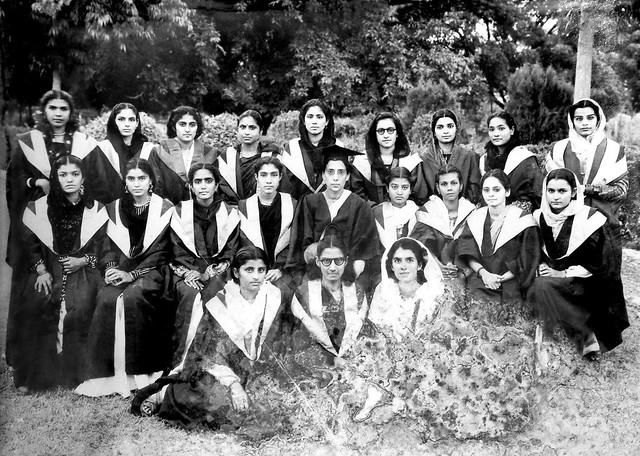
Women’s education in nineteenth-century India was no easy task. In the case of Muslim women, the task was even more difficult due to their triply marginal identity: as colonial subjects, as women, and as Muslims. Not only did the custom of purdah added to their seclusion from the social and cultural changes, their men hated everything about the western cultural influence (being displaced as rulers by the British). As a result, the middle class (the initiators of reform) was to develop late among the Indian Muslims than their Hindu counterparts. Nevertheless, by the late nineteenth century, a middle-class among the Indian Muslims was fledging. For this, no institution of the nineteenth-century can be given more commendation than Aligarh Muslim University.

Formed in 1920, the Aligarh Muslim University just completed its hundred years as a modern residential university. There has been a perception that the Aligarh Movement, for whatever reasons, neglected the issue of modern education to Muslim women. But there is more to this argument, some things to be explored, some to be re-interpreted.

This article, therefore, attempts to trace the genesis and trajectory of women’s educational reform in Aligarh through the profile of a woman reformer – Waheed Jahan (1886-1939), wife of Shaikh Abdullah (1874-1965), and the co-founder of Aligarh’s first girls’ school. Waheed Jahan was a pioneer of Muslim women’s education at Aligarh in the early twentieth century. Her role in ending the relative isolation of Indian Muslim women, while at the same time preserving the Muslim identity of the community, is worthwhile to recall. Her biography was published in Urdu by her husband in 1954. [1]

The educational reforms among Indian women were mostly started by men. Such men started with writings advocating women’s education. In this regard, among Muslims, Nazir Ahmad (1833-1912) published his novel, Mirat-ul-Arus, in 1869; Altaf Hussain Hali (1837-1914) published Majlis-un-Nissa, in 1874. Soon, magazines and journals followed, like the Tahzib un-Niswan by Sayyid Mumtaz Ali (1860-1935), the Khatoon by Shaikh Abdullah and Waheed Jahan, and the Ismat by Rashid-ul- Khairi (1868-1936). Gail Minault regards these as ’The Big Three.’ [2] Apart from literary activism, others tried more practical measures, like opening schools for Muslim girls.

As the movement intensified, so did the opposition against it. In such an atmosphere, even the talk of women’s education by a woman herself was quite a chivalry.

Yet, unexpectedly, there were women who defied the odds and broke the ground. Rashid-un-Nissa of Patna, became the first Muslim woman to write an Urdu novel, Islah-un-Nissa in 1881 (published in 1894), when writing was a distant dream for Muslim women. Rokeya Sakhawat Husain (1880-1932), a widow herself, pioneered Muslim women’s education in Bengal. Muhammadi Begam (1878-1908) edited one of the leading ladies’ home journals, Tahzib-un-Niswan. One such icon of women’s education at Aligarh was Waheed Jahan.

Waheed was born in 1874 in a landholding family in Delhi. Her father Mirza Ibrahim Beg was of Mughal ancestry, serving as a minor municipal official in Delhi. Her only brother, Bashir Mirza went to the Mohammadan Anglo-Oriental College (MAO Colege), Aligarh, where he befriended Shaikh Abdulla (a Kashmiri convert to Islam, named Thakur Das before conversion).

As was the custom, Waheed received no formal schooling. She learnt Urdu and Persian from her father and arithmetic and elementary English from a visiting English tutoress.

Ismat Chughtai, in her autobiography, Kagazi hai Pairahan, records, how Waheed Jahan, before her marriage, had dreamt of establishing a school for the girls. She would gather the servants’ children and teach them, and soon the rudimentary school became popular among her neighbours. It is noteworthy that, at a time when others (mostly men) were still imagining a school for girls (that too only in their writings), Waheed, in her own limited capacity, was practically making a difference.

In 1902, Waheed married Shaikh Abdullah – a lawyer at Aligarh, and an ardent supporter of women’s education since his school days. Following the marriage to a woman with some education, he began to consider concrete ways to promote Muslim women’s education. The Mohammadan Education Conference (MEC, founded at Aligarh by Sir Syed Ahmad in 1886) had established a Women’s Education Section (WES) in 1896 to start a Normal School for girls and to train female (zenana) teachers. In 1902, Shaikh became the secretary of WES, which by then had merely achieved anything beyond discussions and debates around women’s education.

Luckily, Waheed’s marriage to a reformist like Abdullah helped her materialize her dream. To champion women’s education, they started an Urdu monthly, the Khatoon, in 1904 with Waheed Jahan as editor. Begum Sultan Jahan (1858-1930) of Bhopal, Binnat Nazir-al-Baqir, Suharwardiya Begum, and Binnat Nasiruddin Haider were some important female contributors to the journal.

The paucity of funds made it impossible to start a Normal School. Waheed Jahan advised her husband to start a primary school for the elite (Sharif) girls. In 1904, the Mohammadan Educational Conference passed a resolution to start a girls’ school in Aligarh. Waheed proved to be an efficient manager and fund-raiser for the cause.

Her capacities as a fund-raiser and organizer were displayed in 1905, when she organized a meeting of Muslim women in Aligarh, with participants from far corners of Lahore and Bombay. Judging from the context of the time when purdah among Muslims was so harsh, even the idea of organizing such an event was quite revolutionary.

Aware of women education in Turkey and Egypt and its benefits to society, she tried to convince other women; she said:

When women meet among themselves, there will be more solidarity. . . Now there is a division between educated and uneducated women. Uneducated women, who do not go out, think that respectability is confined to the four walls of their houses. They think that people who live beyond those walls are not respectable and not worthy of meeting. But God has ordained education for both men and women, so that such useless ideas can be dispensed with. . . [3]

The meeting was a success, the exhibition of women’s craft secured good funds; finally, the women passed a resolution favouring a girls’ school in Aligarh. In October 1906, Aligarh Zenana Madrasa (girls’ school) opened its doors, and seventeen students were enrolled. Urdu, arithmetic, needlework, and the Quran formed the curriculum. Leaving her own children in servants’ care, Waheed took the responsibility of supervising the school. Within six months, the number of students increased to fifty-six. Waheed’s efforts secured the school a cumulative grant of Rs. 15,000 and a monthly grant of Rs. 250. By 1909, the school taught 100 students and shifted to a larger building.

The opposition to girls’ school took new forms. One amusing story is recorded in Shaikh Abdullah’s Urdu memoir (1969), Mushahedaat o Taaassuraat. [4] Maintaining purdah, the girls were carried in daulis (curtained carriages) to school, and some street urchins started harassing the school going girls by lifting the curtains of their daulis. The mischief only stopped when Shaikh gave one of the miscreants a good thrashing. In another incident, Shaikh confronted a tehsildar who had accused the school of making the girls insolent.

When the Abdullahs proposed a girls’ boarding school, it invited opposition from elite corners. The European principal of MAO College, W.A.J Archbold; Ziauddun Ahmad (1873-1947); and Viqar-ul-Mulk (1841-1917) opposed vehemently.

The couple, however, succeeded in 1914, witnessing the transformation of the school into a boarding school. The same year saw the culmination of Muslim women’s activism by the foundation of Anjuman-i-Khavatin-i-Islam (AKI) at the same venue. Begum Sultan Jahan (1858-1930) of Bhopal graced the foundational ceremony of the boarding school, felicitating Waheed; she urged other women to follow her example. Fyzee sisters, Abru Begum, Begum Shafi, and Begum Shah Nawaz were the other dignitaries.

The Begum was already active in various social and educational reform projects. She served as the first chancellor of AMU from 1920 until her death in 1930. Having a woman as the first chancellor was indeed a historic feat.

Only nine girls became the residents, most of them from Waheed’s own family. By the end of the year, the enrollment rose up to twenty-five. This was the result of what the historian Gail Minault calls as Abdullahs’ portrayal of girls’ school as an extension of girls’ families and also of their own. To make the school successful, Waheed used to invite the parents of girls to Aligarh, for a few days stay in the hostel, to convince them that the conditions there were safe enough to let their daughters stay, records Sheikh Abdullah, in his Mushahedaat o Taaassuraat. She supervised everything – housekeeping, laundry, shopping, and even tasted each dish cooked for the girls.

It could be said that Waheed Jahan acted as a foster mother to these girls, counselling, nursing, and treating them as a part of her own extended family. They called each other as Apa (sister), Shaikh Abdullah as Papa Mian, and Waheed Jahan as Ala Bi. This created a sense of sisterhood among the girls.

This familial system of ethos still remains unique to the Aligarh Women’s College.

The boarding school project contained other complex problems, such as maintaining proper purdah. Both Shaikh and Waheed agreed that the purdah practiced in the Sharif society was more restrictive than purdah sanctioned by the Shari’a (Islamic Law). But to secure social acceptance for their school, they chose to go with strict purdah, building fortress-like walls to fend off the male gaze, students’ mails were scrutinized, and only close relatives were allowed inside.

This accommodation of purdah within the gamut of their reformist agenda, to gain social acceptance, was indeed very astute of the Abdullahs. Thus, Waheed Jahan succeeded in preserving both the elite and the “Muslim” identity of herself and her community while simultaneously breaking the relative isolation of Indian Muslim women. The girls’ school became an intermediate college in 1925 and started degree classes in 1937 (with 250 students). Waheed passed away in 1939, only after seeing her school becoming a degree college.

The relation between education and social change is complex, varying from culture to culture and among different classes in the same culture.

True, that Aligarh movement was late to include women’s education in its fold. Even the school founded by the Abdullahs did not fulfil all its expectations – their choosing an exclusively elite (Sharif) clientele limited the impact of their reforms.

But their efforts indeed bore fruits; the educational reforms for Muslim women at Aligarh contributed to many social developments. After the formation of AKI in 1914, the number of meetings and associations (for women-only) increased rapidly in the 1930’s. The growth in the number of educated women created a market for new publications for and by women.

The Aligarh Women’s College produced many women of substance, who made sure to shine above and beyond purdah, some figuratively and others literally. These ladies excelled in various fields, from teaching to medicine to writing.

Rashid Jahan, Waheed Jahan’s daughter, became a successful physician, a radical writer, and a staunch communist. Her short stories in Angare (1932) became the opening salvo of the Urdu Progressive Writers Movement (1936). Rakhshanda Jalil, in her biographical work on Rashid, A Rebel and her Cause: The Life and Work of Rashid Jahan, writes that Angare was a “document of disquiet”; a self-conscious attempt “to shock people out of their inertia, to show how hypocrisy and sexual oppression had so crept in everyday life”. Rashid became an inspiration for a generation of women writers such as Ismat Chughtai, Attia Hosain, Sadia Begum Sohravi, and Razia Sajjad Zaheer, among others.

Like all other reform movements of that time period, the Aligarh movement had its limitations too. For a start, it did prioritize men’s education over women’s, for various reasons (a story that needs to be told elsewhere), but by the early twentieth century, things were changing. The Aligarh movement not only took up the cause of women’s education actively, but it also let women (Like Wahid Jahan) be a part of the process.

Notes

[1] Shaikh Abdullah, Savanih-i- Umri-i- Abdullah Begum, Aligarh, 1954

[2] Gail Minault, Gender, Language, and Learning: Essays in Indo-Muslim Cultural History, Permanent Black Publications, Ranikhet, 2009, p. 87

[3] Khatoon 3, 1 (Jan 1906) “Ladies Conference”, pp 7-8

[4] Shaikh Abdullah, Mushahidat-wa-Ta’asurat, Female Education Association, Aligarh, 1969, pp. 234-6

(Ishrat Mushtaq is PhD Candidate, Centre of Advanced Study in History, Aligarh Muslim University and Sajad Hassan Khan is PhD. Candidate, Centre of Advanced Study in History, Aligarh Muslim University. Article courtesy: Mainstream Weekly.)

Janata Weekly does not necessarily adhere to all of the views conveyed in articles republished by it. Our goal is to share a variety of democratic socialist perspectives that we think our readers will find interesting or useful. —Eds.

source: http://www.janataweekly.org / Janata Weekly / Home / by Ishrat Mushtaq and Saad Hassan Khan / January 24th, 2021

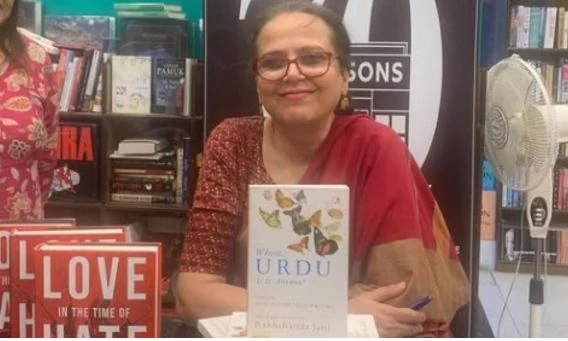
Rakhshanda Jalil Defends Urdu as a Shared Indian Heritage in her new Anthology

NEW DELHI :

New Delhi:

Literary historian Dr Rakhshanda Jalil has once again reminded Indians that Urdu is deeply rooted in the country’s soil and belongs to all communities, not only Muslims. In a detailed interview with the Indian Express about her new anthology Whose Urdu Is It Anyway?, Jalil traced the rise, decline, and contested identity of Urdu in modern India.

She explained that Urdu developed through centuries of cultural exchange, drawing from Persian, Arabic, Turkic, and local dialects, and eventually became the lingua franca of North India. From courtrooms to markets, it was a language spoken across caste and creed. Yet, political movements in the early twentieth century began to link Hindi with Hindu nationalism, sidelining Urdu and associating it exclusively with Muslims.

Jalil underlined how Partition worsened this perception. With Pakistan adopting Urdu as its national language in 1947, Urdu was treated as “enemy property” in India. This shift, she argued, accelerated the decline of Urdu and restricted its public identity. Today, while the government occasionally honours Urdu writers, stereotypes and misinformation continue to reduce Urdu to a religious marker rather than a shared cultural heritage.

Her anthology features sixteen short stories by non-Muslim Urdu writers such as Krishan Chander, Rajinder Singh Bedi, and Gulzar. The collection challenges the misconception that Urdu belongs only to Muslims. Jalil believes that Urdu is “as Indian as anybody or anything can be regarded as Indian” and insists that the language is willing to belong to anyone who values it.

Despite fears about its future, she remains optimistic. Urdu continues to thrive in poetry, Bollywood lyrics, and growing digital platforms. While fewer people read its script, its cultural resonance persists. Echoing Manto, Jalil recalled his words that no human effort can kill a language. Urdu, she said, will remain part of India’s consciousness for years to come.

Dr Rakhshanda Jalil is a noted literary historian, translator, and cultural commentator with over 25 books to her credit. She is widely recognized for her work on Urdu literature and the Progressive Writers’ Movement.

source: http://www.radiancenews.com / Radiance News / Home> Arts & Culture> Focus> Report / by Radiance News Bureau / August 29th, 2025

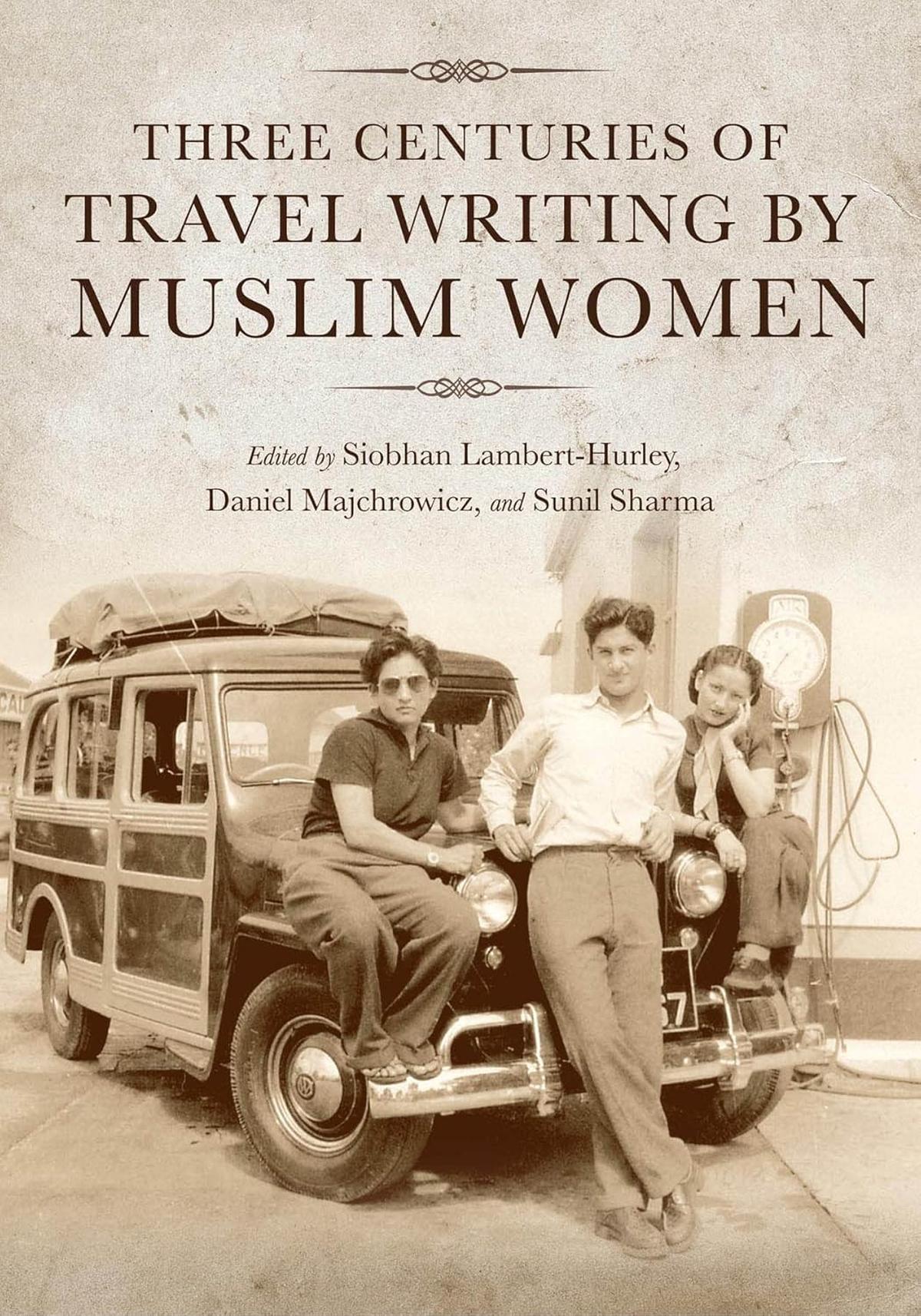
Way in the world: how Muslim women travelled from 17th-20th centuries

INDIA :

In 45 essays, three editors gather multiple travel accounts by Muslim women who, alone or chaperoned, veiled or unveiled, travelling for work or pleasure, bust every stereotype. Apart from records of the new and the unexpected, there are also observations about all aspects of life, including religious and social practices.

For representative purposes. | Photo Credit: AFP

I began reading Three Centuries of Travel Writing by Muslim Women (Zubaan Books) chronologically, hoping rather ambitiously to read it from cover to cover, one essay at a time. That was a mistake, I think. The book is better served, and savoured, if the reader were to dip into it in no particular order. Each essay is so precisely contextualised by the immaculate ‘Introduction’ prefacing each entry and followed by ‘Further Reading and ‘Notes’ that even a casual reader can dip into this richly documented, beautifully translated volume of disparate writings and partake of the spirit behind it.

For the more serious reader/researcher, there is of course the scholarly introduction by Siobhan Lambert-Hurley and Daniel Majchrowicz who edited the book (along with Sunil Sharma). They write: “On the face of it, the premise of this volume is simple: a comparative study of travel narratives by Muslim women who travelled the world before the ‘jet age’ transformed modern mobility. Yet in our contemporary moment, the very juxtaposition of these terms — Muslim, women, travel mobility — instantly raises a number of questions.”

Colonialism, gender, travel, religion, money come together in unexpected ways throughout this book. What is more, these accounts by educated and “privileged” Muslim women also contain descriptions — sometimes empathetic, occasionally derisive — of other Muslim women they meet during their travels who are poor and disadvantaged and, being illiterate, could not have recorded their experiences or left written records of their lives. So, apart from records of the new and the unexpected, there are also observations about the different practices of child-rearing, food, cooking habits, dress, religious and social practices.

Multiple voices

These first-hand accounts, originally written in Urdu, Persian, Arabic, Turkish, Chaghtaai Turki, Punjabi, Bengali, Indonesian, German and English, span the 17th to 20th centuries thus presenting an array of experiences and impressions. Written variously as conventional travelogues (Halide Edib, Zainab Cobbold), excerpts from autobiographies (Salamah Bint Said/Emily Ruete, Huda Shaarawi), diary entries (Muhammadi Begum, Begum Hasrat Mohani), written for limited circulation as magazine articles (Rokeya Sakhawat Hossain, Shams Pahlavi), recorded for family and friends (Begum Sarbuland Jung, Ummat al-Ghani Nur al-Nisa), or with a pronounced political overtone (Suharti Suwarto, Melek Hanim) quite naturally, therefore, present different voices and concerns. Chatty, informal, informed when the writing is for herself or her family members; or formal, structured, detailed, sometimes even didactic when she knows what she is writing is meant for public consumption.

Travel as life

There are 45 accounts in all, grouped under four headings: Travel as Pilgrimage, Travel as Emancipation and Politics, Travel as Education, and Travel as Obligation and Pleasure. While large numbers of Indian women have written haj accounts, there is only one Indian in the second section, Shareefah Hamid Ali, who represented India at the United Nations and travelled by air. Several Indian Muslim women chose to travel for education, sometimes their own, or their husband’s or sons’. There is Mehr-al-Nisa from Hyderabad who joined her doctor husband in Ohio to train as an x-ray nurse, and Zaib-un-Nisa from Karachi writing an account of her 60 days in America as a member of the U.S. Department of State-sponsored Foreign Leader Exchange Programme where she crosses the breadth of the United States in a hired car with her husband.

Safia Jabir Ali, daughter of the esteemed Tyabji clan, married Jabir Ali who travelled extensively for business from their home in Burma to Europe.

Her memoir, written in Urdu, is brimful with an easy confidence: “I had to travel by myself from Bombay to Marseilles, and that was the first time I had occasion to depend entirely on myself and spend more than three weeks among entire strangers. However, as probably some of you know by experience, on board the steamer, one gets to know people very soon. I was lucky in being able to travel on the Loyalty, the steamer of an Indian company where there were a good many Indian passengers, and some of us soon became great friends.”

Connecting the dots

The last part, ‘Travel as Obligation and Pleasure’, has by far the most interesting experiences: Mughal Princess Jahanara’s mystical meeting in Kashmir; Salamah Bint Said, a princess of Zanzibar, who flees her home to unite with her German lover in Hamburg, converts to Christianity and takes the name Emily Ruete; and Rokeya Sakhawat Hossain’s pleasure trip to the Himalayas, among others.

While most women travelled with a male (husband, father, son, brother), some travelled alone: “Safia Jabir Ali travelled alone from Bombay to meet her husband in post-First World War Britain, Sediqeh Dowlatabadi from Tehran in 1923 to study at the Sorbonne in Paris, Selma Ekram from ‘Stamboul’ to New York in 1924 on the promise of work, Muhammadi Begum with her infant child from Bonn to Oxford in the mid-1930s, and Herawati Diah en route to study at Barnard College in New York in 1937.”

Alone or chaperoned, veiled or unveiled, travelling for work or pleasure, these accounts by Muslim women bust every stereotype. In one voice, these women seem to be saying: “only connect”.

Rakhshanda Jalil is a translator and literary historian.

source: http://www.thehindu.com / The Hindu / Home> Books / by Rakshanda Jalil / December 12th, 2024

This book asks why the Indianness of Aligarh Muslim University, Jamia Millia Islamia is questioned

NEW DELHI :

‘Between Nation and Community’ cites primary and secondary sources and oral testimonies to understand what India thinks of the two universities.

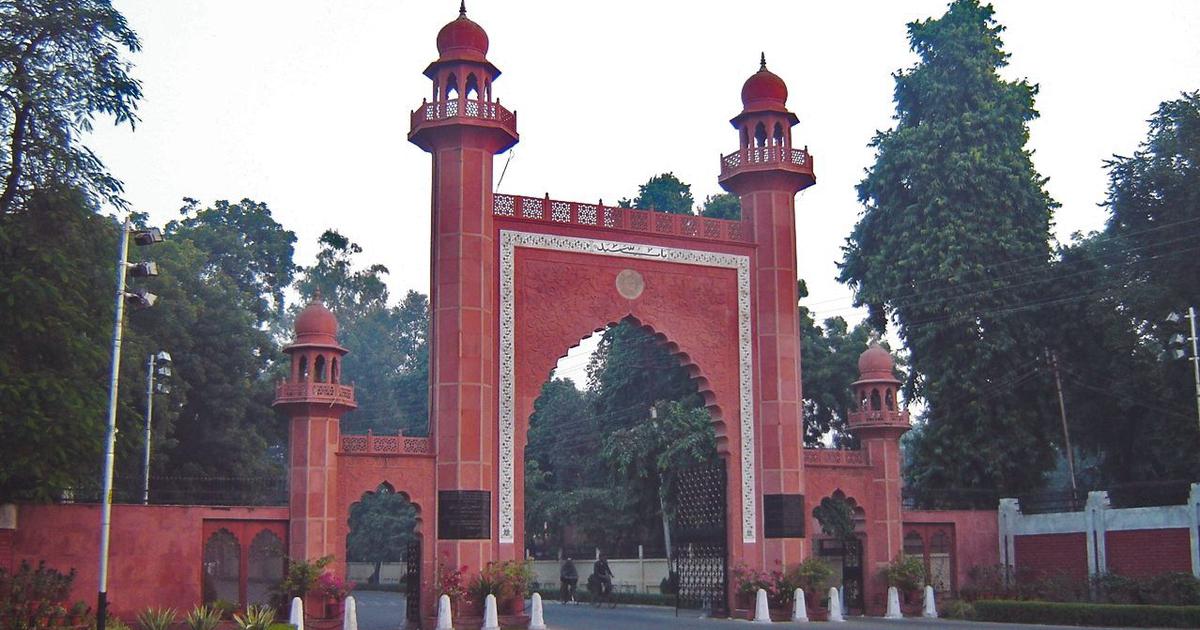
Bab-e-Sayyad, the entrance to Aligarh Muslim University. | Hhkhan / CC BY-SA 3.0

By sheer serendipity, I happened to begin reading Laurence Gautier’s Between Nation and ‘Community’ immediately after TCA Raghavan’s Circles of Freedom, which locates the life and career of the barrister-politician Asaf Ali in the national freedom struggle and probes the challenges of being a moderate Muslim or a nationalist Muslim within the Indian National Congress. Coming close on the heels of Raghavan’s book, I was struck by the opening line of Gautier’s Introduction: “Can a Muslim university be an Indian university?” Clearly, the doubts and apprehensions, the mistrust and suspicion that afflict Indian Muslims similarly afflict Muslim institutions, including universities that Gautier is at pains to clarify at the very outset were “established by Muslim individuals or organisations, primarily – though not exclusively – for Muslim students.”

Between Nation and ‘Community’: Muslim Universities and Indian Politics after Partition, Laurence Gautier, Cambridge University Press.

Having worked briefly at both Aligarh Muslim University (AMU) and Jamia Millia Islamia (JMI) – a few short months at Aligarh and a few years at Jamia – I can say that there is a Muslimness, an unmistakably Muslim character to both: the time table changes during the month of Ramzan, a long break for the Juma namaz, the presence of several mosques on campus, the opening of academic/formal events with recitations from the Holy Quran, and increasingly the presence of ever more hijab-clad women (this was pointed out by mother who studied at AMU in the 1950s and noted that there were very few women in hijab let alone the full burqa in her time). The question, however, is: Does any of this diminish or detract or take away from the Indianness of these universities or, for that matter, from those who study or work here? That would lead us to the larger question: What is Indianness?

We come back to the question posed by Gautier in her very first line when she goes on to cite Gyanendra Pandey, who has compared Hindu nationalists and nationalist Muslims. Hindus are seen as nationalists by default whereas Muslims are often put to an agni pariksha to prove their nationalist credentials. As Gautier puts it: “Indian Muslims are taken to be primarily Muslims, whatever their political stance might be. Unlike Hindus, their commitment to the nation cannot be taken for granted; it has to be proven, for their Muslimness casts doubt on their Indianness.”

Incidents like Batla House in the Jamia neighbourhood or the anti-CAA protests at both JMI and AMU bolster the argument that these universities are nurseries of disaffected anti-nationalists and prompting a politician to famously declare: “Desh ke gaddaron ko…Goli maaro saalon ko.”

Aligarh Muslim University and Jamia Millia Islamia

While there is much to read and reflect on in this richly detailed book that brings together, seamlessly, many primary and secondary sources and oral testimonies, a few things need to be flagged. One is the obvious differences between AMU and JMI, by now both Central Universities though the two have entirely different histories. The reasons and the circumstances behind their establishment and their distinct “historical character” have cast a long shadow on their growth and development. AMU was set up to provide secular, western education to the Muslim qaum in a campus modelled on the colleges at Oxford and Cambridge, and to “develop a strong bond with the colonial authorities in order to preserve their access to power”.

JMI on the other hand clearly had different ideas right from its inception: “Hers was a voice of rebellion, one that highlighted the dissonances within the supposedly unified Muslim community.” A splinter group of ardent nationalists, led by Maulana Mohamed Ali, broke away from the MAO College to set up a new kind of educational institution devoted to the service of the nation. In the heady days of the Khilafat Movement and the high noon of Hindu-Muslim unity, Gandhi pledged instant support to this new venture, famously declaring to go begging bowl in hand, if need be, to support this nationalistic enterprise.

It’s interesting to note the different treatments meted out to the two universities immediately after independence, and their vastly different public perception. While AMU was given Central University status in 1951, one among three central universities, Jamia – that had once been famously called the “lusty of the freedom movement” – struggled financially. It seems as though it quite suited the Congress government of the day and Nehru in particular – who had close personal ties with several of Jamia’s teachers and was a frequent visitor – to view the Jamia as a quaint space where visitors such as the Shah of Iran would be shepherded to view its projects and schemes.

Even the cover photograph on Gautier’s book written with immense empathy though it is, perhaps unintentionally, reinforces this quaintness with gamine-faced boys dressed like grown-ups in shervani and Gandhi caps against a building designed by the German architect Karl Heinz. There are other photographs in the Jamia archives showing several eminent people earnestly poring over rough-and-ready hand-made charts and diagrams. Overall, the picture that emerges is that it suited everyone to have this quaint, charming, idealistic venture in one’s backyard as long as it showed no great ambitions to grow into anything bigger or grander.

The Jamia too, I suspect, chose to live in a shell of its own making, hiding its light under a bushel, making a virtue of frugality and simplicity and service. It seemed content to allow the world to view it as a curiosity, a whimsical other-worldly place, a retreat from the mainstream; for some, it was even a recalcitrant child bent upon being odd and different from others, especially its older sibling, the AMU. For far too long, the serious students and the professional scholars stayed away from the Jamia choosing to go to AMU instead.

The differences

The Jamia biradari – a word constantly used by Prof Mushirul Hasan, the most faithful chronicler of Jamia’s history – was a close-knit community. Being small, much smaller than the sprawling AMU campus, Jamia fostered from its earliest days a sense of fellowship among its students and teachers. We get a sense of that in the oral testimonies and memoirs of its teachers and students frequently referred to by Gautier: the annual Jamia Mela, the idea of selfless service (be-laus khidmat) reinforced by teachers often voluntarily taking cuts in their salaries, the emphasis on community service and shram daan, the sense of community living, the devotion of not just staff but their families to the “idea” of Jamia, all of which was fostered by the compactness of the campus. Also, Jamia was more democratic in its functioning than AMU, again possibly due to its size. In this, it drew inspiration from early Islamic society. There are instances of school functions starting punctually on the dot when the chief guest, Vice Chancellor Dr Zakir Hussain, happened to be running late.

Then there was the presence of female students from its earliest days – in classes, in reading rooms, even on stage – with the earliest students being daughters and sisters of Jamia teachers and workers. However, as Gautier points out, this was “primarily out of practical considerations, not out of ideological principles” and Mujeeb, a long-serving Vice Chancellor, recognised it as a valuable project only in hindsight. Whatever the reason, Jamia offered new opportunities for women in its feeder schools, Balak Mata centres, teacher training courses, and adult literacy classes.

The presence of women on campus seen as a threat in AMU with Islamist groups gaining ascendancy, was much less so in JMI in the 1970s and 80s when debates on “proper” and “improper” mingling of the sexes began to gain ground between the “conservatives” and “progressives” and questions about the presence of women, especially in cultural programmes, began to be raised. While present in JMI, too, these voices were muted and not as strident as in AMU.

Then, there is the rather obvious difference of location and how that has impacted the development of the two universities: Jamia’s location in Delhi compared to AMU’s approx 180 km away. While in the early years, AMU was far more cosmopolitan than the mosquito-infested neck of the woods beside the Yamuna that was home to Jamia, from the 1980s a perceptible change became visible. The establishment of a working women’s hostel in 1982 by AJ Kidwai was possible in Jamia primarily due to its location, followed by the MCRC. We see that change accentuated in recent years in the changing profile of both staff and students with Jamiabeing more open to change and AMU becoming more closed, more insular, more inward-looking.

source: http://www.scroll.in / Scroll.in / Home> Book Review / by Rakshanda Jalil / September 29th, 2024

New book explores how Urdu verses challenge Hindutva’s homogeneity

NEW DELHI :

Rakhshanda Jalil’s latest work examines Urdu poetry’s role in promoting secularism and resisting communal division in contemporary India.

Rakshanda Jalil at India International Centre in New Delhi on September 06, 2004. | Photo Credit: Photo: R. V. Moorthy

Phir roshan kar zehar ka pyaala, chamka nayi saleebain,

Jhuthon ki duniya mein sach ko taabaani de Maula!

(Light up the poison cup again, make new crosses shine,

In this world of lies, illuminate truth, O Lord!)

-A ghazal by Urdu poet Nida Fazli

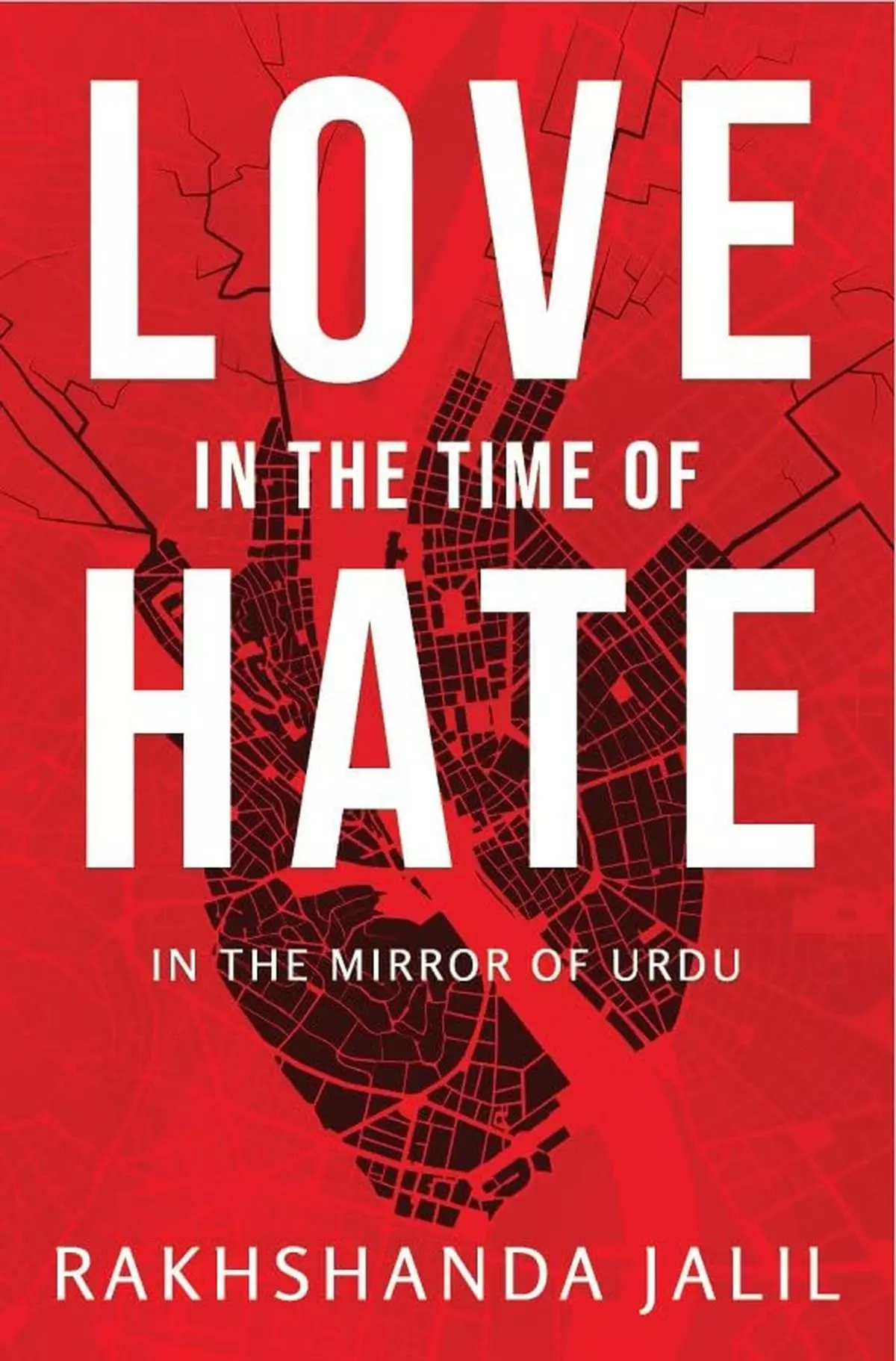
Noted literary historian Rakhshanda Jalil’s latest book, Love in the Time of Hate: In the Mirror of Urdu, recently released in New Delhi, delves into the rich history of Urdu poetry. It demonstrates how the language and its poets are mounting a robust resistance against the spread of right-wing-sponsored hatred and the rising climate of polarisation in India. Divided into sections such as essays, politics, people, and passions and places, the book features insightful Urdu poetry. Anchored in the theme of love for one’s country, the work illustrates how India’s social fabric is fraying and how Urdu verses, with their secular themes, challenge the push for Hindu supremacy.

“Unlike publicists and propagandists, a shayar (poet) rarely falls victim to bigotry, prejudice, and narrow-mindedness,” Rakhshanda told the audience at a book discussion event held by Karvaan India, a multimedia platform promoting pluralism and inclusion, in Delhi on July 7. “Urdu poets have always been known for their liberalism and eclecticism. They have championed the mingling of cultures and communal harmony.”

According to Rakhshanda, in recent years, Urdu has been stigmatised as a language of Muslims. Political representatives have been barred from taking oaths in Urdu, and artists have often been prohibited from creating Urdu graffiti. Also, many everyday Urdu terms are being removed from school textbooks and official communications.

“Urdu is antithetical to what Hindutva preaches. Unlike Hindutva’s obsession with homogeneity, Urdu embodies the essence of a pluralistic India, mirroring a multitude of worldviews,” she told Frontline. Citing the example of Syed Fazl-ul-Hasan (1875-1951), better known as Hasrat Mohani, she noted that the communist freedom fighter performed Hajj 11 times in his life while maintaining devotion to Lord Krishna. Mohani, who wrote the famous ghazal “Chupke-chupke” (later sung by Ghulam Ali), coined the slogan “Inquilab Zindabad” which changed the course of India’s independence movement.

Rakhshanda discussed Nadir Shah’s invasion of India (1739), the Battle of Plassey (1757), and events surrounding 1857 as defining moments in Urdu poetry. “During the Independence movement, as the political climate shifted, Urdu poetry chronicled anti-colonialism, anti-fascism, anti-imperialism, nationalism, feminism, and land reforms,” she said, noting that the recent anti-CAA movement revived public resistance poetry.

While reading from her book, she shared poems about Tipu Sultan (1782-99), the anti-colonial ruler who died fighting the British. She also mentioned dedicating an essay to Urdu poetry about Jawaharlal Nehru, who is currently a pet target of right-wing misinformation campaigns.

In her new book Love in the Time of Hate: In the Mirror of Urdu, Rakshanda Jalil invokes the power of love, inclusivity, and harmony that is the trademark of poetry and literature. | Photo Credit: By Special Arrangement

Rakhshanda discussed the Progressive Writers Movement’s impact on post-independence Indian cinema. “India and Pakistan became independent simultaneously, but their paths diverged. In post-independence India, cinema, literature, and intellectuals effectively interpreted the zeitgeist,” she said, discussing the Nehruvian vision of India. “Nehru’s death marked the end of an age of innocence”.

As Hindutva “hate politics” increases attacks on symbols of Muslim rule in parts of India, some Hindu extremists claim the Taj Mahal was originally “Tejo Mahal, a Shiva temple”.” Rakhshanda mentioned including poets’ descriptions of the Taj Mahal in her book.

Highlighting contradictions between India’s founding vision and Hindutva ideology, she said, “We’ve reached a point where a family can be attacked for storing meat in their fridge. Your name now defines your identity, regardless of economic or educational status.”

Sharing her personal experience as a Muslim, Rakhshanda described difficulty finding decent rental accommodation: “It’s been months. It feels like a Sisyphean task.”

She characterised her book as an expression of depression and fear, adding, “We didn’t learn from the COVID pandemic. Even then, we raised the “Corona-Jihad” issue and called for boycotts of Muslim food vendors.”

Among various poems by notable Urdu poets on Gautam Buddha, Ali Sardar Jafri’s iconic work on communal riots, “Awadh Ki Khaak-e-Hasin” (The Beautiful Land of Awadh), is featured. Two key verses read:

Ram-o-Gautam ki zameen hurmat-e-insaan ki ameen

Baanjh ho jaaegi kya khoon ki barsaat ke baad

Ai watan khak-e-watan woh bhi tujhe de denge

Bach raha hai jo lahu abke fasaddat ke baad

(This land of Ram and Gautam, guardian of human dignity,

Will it turn barren after the rain of blood?

O homeland, we’ll give you what remains,

The blood left after this carnage of riots.)

source: http://www.frontline.thehindu.com / Frontline / Home> Books> Poetry / by Ashutosh Sharma / July 12th, 2024

Delhiwale: Rakhshanda Jalil’s ghararas

NEW DELHI:

A peek into a precious wardrobe of strange outfits that are fast becoming invisible from Delhi evenings.

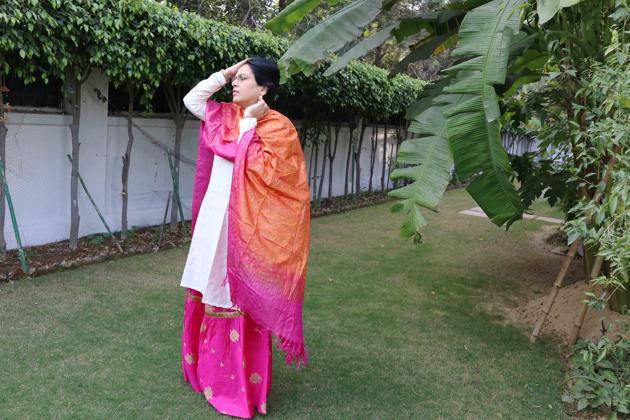
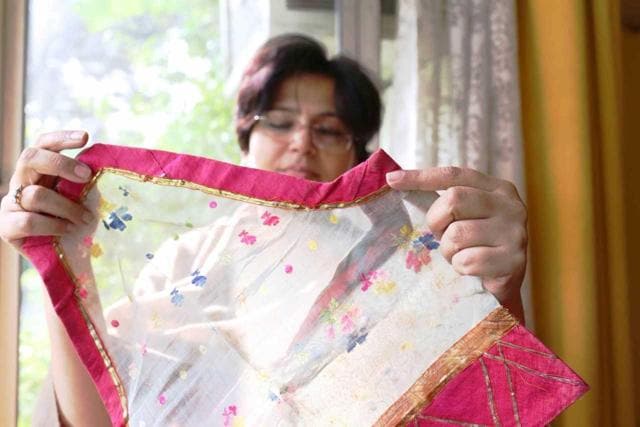
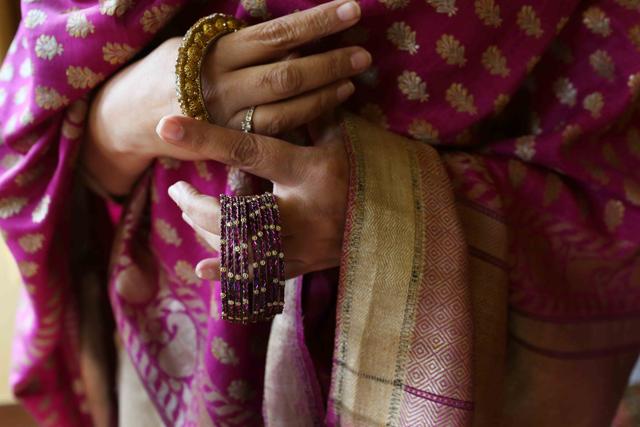
Ghararas, too, are fast becoming invisible from Delhi evenings, although Rakhshanda Jalil is often spotted wearing it in literary gatherings.(Mayank Austen Soofi / HT Photo)

The other day, we spot a strange outfit. It is neither a skirt, nor a gown, and definitely not a sari. It is also not a pajama.

What is it, we ask.

“It is gharara,” says author Rakhshanda Jalil, pronouncing the ‘gh’ from the base of the throat.

We are at Ms Jalil’s home in central Delhi. Her most precious wardrobe is a treasure-house of about two dozen ghararas. Most have been passed on to her from her mother and mother’s mother; a few are even older.

Indeed, Ms Jalil has a fascination for souvenirs of the past. One of her many books is titled Invisible City: The Hidden Monuments of Delhi. Ghararas, too, are fast becoming invisible from Delhi evenings, although Ms Jalil is often spotted wearing it in literary gatherings.

Years ago, she had worn a pink gharara for her wedding. Her two young daughters also wear it on during special occasions such as… well, weddings, particularly in Uttar Pradesh, where more people are likely to be similarly attired.

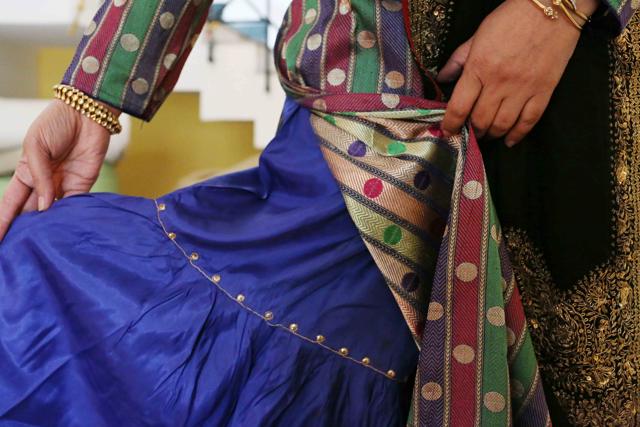
It is not unusual in Delhi weddings to see women in gharara’s sister dresses, such as the lehenga and the sharara — which is like flared pants. The gharara is more complicated. Each leg is comprised of two parts. The first goes down from the waist to the knee, and the second, which is much wider, begins from the knee and goes down to the foot.

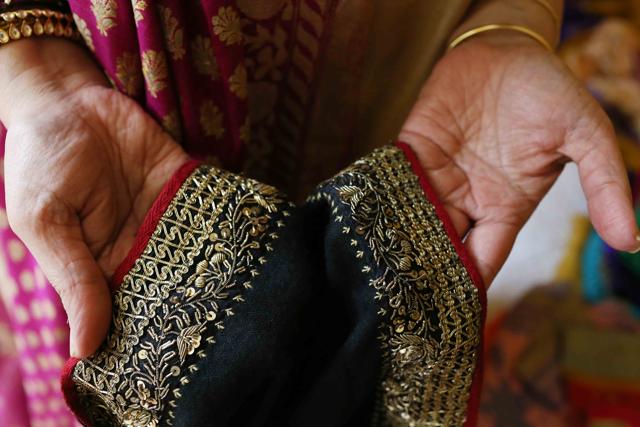
Truth be told, Ms Jalil prefers saris and trousers for ordinary outings. But the gharara was the daily costume of her maternal grandmother, Zahida Suroor, who lived in the university town of Aligarh. “In my grandmother’s time, it was common for women to wear cotton ghararas made of chintz (called chheent by Urdu speakers) at home,” says, Ms Jalil. “Silk or satin ghararas were worn on formal occasions. And the heavy brocade, called kamkhaab, was worn at weddings.”

Each gharara should have its own kameez and dupatta, though these days one has more liberty to mix and match. Ms Jalil says that back in the day an entire gharara was sewn in four or five days. Each piece was stitched by hands. The entire hem was turned in with tiny invisible stitches. Sparkling bits of gold lace were tagged to camouflage the joints at the knees.

Ms Jalil’s mother, Mehjabeen, recently hand-stitched a red gharara for her. The happy daughter gave it a trial run at a dinner in her own home. There was much applause. The gharara came with a short white shirt. The red dupatta was lined with gold frills.

In the old days, women of a family gathered together to sew a gharara if it had to be made for a bride’s trousseau. Neighbours and friends also chipped in. Opinions were eagerly sought on the design, and the leftover cloth was never thrown away — it was used to make an accompanying batua (wallet), or jootis (sandals).

There was a time when a few cities were known to make special types of ghararas, says Ms Jalil. Benares was famous for its brocade ghararas, with master-weavers painstakingly transporting the design to lighter gauzier material for the accompanying dupatta. Lucknow favoured a patchwork design called chatapati. Delhi specialized in something called ‘farshi’, with a long train that women were supposed to hold delicately in their arms.

Perhaps the most ideal way to study this old-world costume is to ask the wearer to sit still. On request, Ms Jalil settles down beside a window with an Eric Segal novel. While the book belongs to her elder daughter, Aaliya, the gharara belongs to her great grandmother. Made of atlas (no relation to the book of maps), the fabric is so fragile that it can tear at the slightest tug. It has a blue background with yellow, orange and pink flowers. At one point, Ms Jalil looks out of the window. Her gharara ceases to be a dying tradition, and seems very much a part of the present.

source: http://www.hindustantimes.com / Hindustan Times / Home> News> Cities>Delhi News / by Hindustan Times / by Mayank Austin Soofi / October 09th, 2017

Armistice Day: Remembering Forgotten Indian Heroes of WW1 Through Urdu Poetry

BRITISH INDIA :

The four years of the World War 1 saw the service of 1.3 million Indians, of whom 74,000 never made it back home.

Armistice Day: Remembering Forgotten Indian Heroes of WW1 Through Urdu Poetry

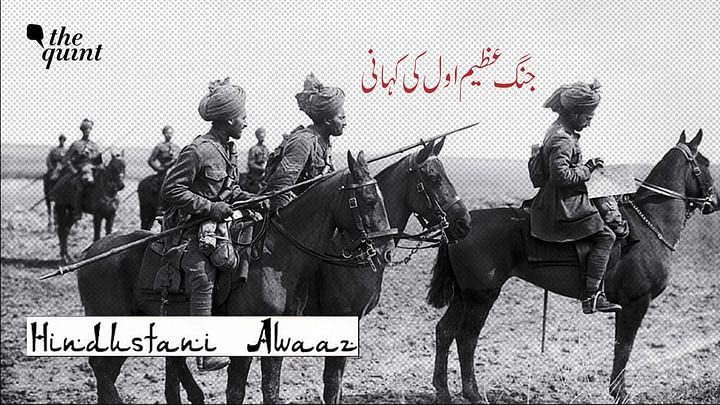
The First World War , or the Great War as it is also called, raged across Europe and several war arenas scattered across the world from 28 July 1914 to 11 November 1918. These four years saw the service of 1.3 million Indians, of whom 74,000 never made it back home. For their families, the war was something they couldn’t quite understand.

Given the large-scale Indian involvement in a war that the majority of Indians could not fully comprehend, we shall once again look into the mirror of Urud to see how the poet viewed the momentous years of the Jang-e Azeem as the Great War came to be called in Urdu.

Several poets, lost in the veils of time and virtually unknown today, made interventions as did the more famous ones who continue to be well known though possibly not in the context of what they had to say about World War I.

Urdu’s Rendition of the Greatest Human Tragedy

Presented below is a sampling of the socially-conscious, politically-aware message of the poets of the times. Not all of these poets are well-known today nor is their poetry of a high caliber yet fragments of their work have been included here simply to illustrate how the poet had his finger to the pulse of his age and circumstance.

Let us begin with Sibli Nomani and his wryly mocking Jang-e Europe aur Hindustani that deserves to be quoted in full:

Ek German ne mujh se kaha az rah-e ghuroor

‘Asaan nahi hai fatah to dushwar bhi nahin

Bartania ki fauj hai dus lakh se bhi kum

Aur iss pe lutf yeh hai ke tayyar bhi nahin

Baquii raha France to woh rind-e lam yazal

Aain shanaas-e shewa-e paikaar bhi nahin’

Maine kaha ghalat hai tera dawa-e ghuroor

Diwana to nahi hai tu hoshiyar bhi nahin

Hum log ahl-e Hind hain German se dus guneh

Tujhko tameez-e andak-o bisiar bhi nahin

Sunta raha woh ghaur se mera kalaam aur

Phir woh kaha jo laiq-e izhaar bhi nahin

‘Iss saadgi pe kaun na mar jaaye ai Khuda

Larhte hain aur haath mein talwar bhi nahin!’

(Consumed with pride, a German said to me:

‘Victory is not easy but it isn’t impossible either

The army of Britannia is less than ten lakh

And not even prepared on top of that

As for France, they are a bunch of drunks

And not even familiar with the art of warfare’

I said your arrogant claim is all wrong

If not mad you are certainly not wise

We the people of Hind are ten times the Germans

Cleary you cannot tell big from small

He listened carefully to what I had to say

Then he said something that can’t can’t be described

‘By God, anyone will lay down their life for such simplicity

You are willing to fight but without even a sword in your hand!’)

That the Urdu poet was not content with mere high-flying rhetoric and was rooted in and aware of immediate contemporary realities, becomes evident when Brij Narain Chakbast declares in his Watan ka Raag (‘The Song of the Homeland’):

Zamin Hind ki rutba mein arsh-e-aala hai

Yeh Home Rule ki ummid ka ujala hai

Mrs Besant ne is aarzu ko paala hai

Faqir qaum ke hain aur ye raag maala hai

Talab fuzool hai kante ki phool ke badle

Na lein bahisht bhi hum Home Rule ke badle

(The land of Hind is higher in rank than the highest skies

All because of the light of hope brought forth by Home Rule

This hope has been nurtured by Mrs Besant

I am a mendicant of this land and this is my song

It’s futile to wish for the thorn instead of the flower

We shall not accept even paradise instead of Home Rule)

Poems Charged With the Spirit of Revolution

Similarly, Hasrat Mohani, in a poem called Montagu Reforms, is scathing about the so-called reforms that were given as SOPs to gullible Indians during the war years, which were mere kaagaz ke phool (paper flowers) with no khushboo (fragrance) even for namesake. The poem ends with a fervent plea that the people of Hind should not be taken in by the sorcery of the reforms.

Ai Hindi saada dil khabardar

Hargiz na chale tujh pe jadu

ya paayega khaak phir jab inse

Iss waqt bhi kuchh na le saka tu

(O simple people of Hind beware

Don’t let this spell work on you

If you couldn’t couldn’t take anything from them now

You’re not likely to get anything at all)

Josh Malihabadi who acquired his moniker of the shair-e- inquilab or the ‘revolutionary poet’ during the war period, talks with vim and vigour of the revolution that is nigh, a revolution that will shake the foundations of the British empire in his Shikast-e Zindaan ka Khwaab (‘The Dream of a Defeated Prison’:

Kya Hind ka zindaan kaanp raha hai guunj rahi hain takbiren

Uktae hain shayad kuchh qaidi aur torh rahe hain zanjiren

Divaron ke niche aa aa kar yuun jama hue hain zindani

(How the prison of Hind is trembling and the cries of God’s greatness are echoing

Perhaps some prisoners have got fed up and are breaking their chains

The prisoners have gathered beneath the walls of the prisons)

Satire, Pain and Passion Punctuate These Poems

The ever-doubting, satirical voice of Akbar Allahabadi— a long- time critic of colonial rule and a newfound admirer of Gandhi, shows us the great inescapable link between commerce and empire that Tagore too had alluded to:

Cheezein woh hain jo banein Europe mein

Baat woh hai jo Pioneer mein chhapey…

Europe mein hai jo jung ki quwwat barhi huwi

Lekin fuzoon hai uss se tijarat barhi huwi

Mumkin nahin laga sakein woh tope har jagah

Dekho magar Pears ka hai soap har jagah

(Real goods are those that are made in Europe

Real matter is that which is printed in the Pioneer…

Though Europe has great capability to do war

Greater still is her power to do business

They cannot install a canon everywhere

But the soap made by Pears is everywhere)

The great visionary poet Iqbal, who is at his most active, most powerful during these years, does not make direct references to actual events in the war arena;

nevertheless, he is asking Indians to be careful, to heed the signs in Tasveer-e Dard (‘A Picture of Pain’):

Watan ki fikr kar nadan musibat aane waali hai

Tiri barbadiyon ke mashvare hain asmanon mein

(Worry for your homeland, O innocents, trouble is brewing

The portents of disaster awaiting you are written in the skies.)

Adopting a fake admiring tone, Ahmaq Phaphoondvi seems to be praising the sharpness of the British brain in Angrezi Zehn ki ki Tezi (‘The Cleverness of the English Mind’) when he’s actually warning his readers of the perils of being divided while the British lord over them.

Kis tarah bapa hoon hangama aapas mein ho kyun kar khunaraizi

Hai khatam unhein schemon main angrezi zehn ki sab tezi

Ye qatl-o khoon ye jung-o jadal, ye zor-o sitam ye bajuz-o hasad

Baquii hii raheinge mulk mein sab, baqui hai agar raj angrezi

(Look at the turmoil and the bloodshed among our people

The cleverness of the English mind is used up in all such schemes

This murder ’n mayhem, wars ’n battles, cruelties ’n malice

The country’s garden is barren, with nothing but dust and desolation)

Towards Freedom and Fervour..

Zafar Ali Khan sounds an early, and as it turns out in the face of the British going back on their promise of self-governance, entirely premature bugle of freedom. While warning his fellow Indians to change with the changing winds that are blowing across the country as the war drags to an end, he’s also pointing our attention to the ‘Toadies’, a dreaded word for the subservient Indians who will gladly accept any crumbs by way of reforms in his poem Azaadi ka Bigul (‘The Bugle of Freedom’):

Bartania ki meiz se kuchh reze gire hain

Ai toadiyon chunne tum innhe peet ke bal jao

(Some crumbs have fallen from the table of Britannia

O Toadies, go crawling on your bellies to pick them)

In the end, there’s Agha Hashar Kashmiri who, in a sarcastic ode to Europe called Shukriya Europe, thanks it for turning the world into a matamkhana (mourning chamber), and for having successfully transformed the east into an example of hell.

Utth raha hai shor gham khakistar paamaal se

Keh raha hai Asia ro kar zaban-e haal se

Bar mazar-e ma ghariban ne chiraghe ne gule

Ne pare parwane sozo ne sada-e bulbule

(A shout is rising from the dust of the downtrodden

Asia is crying out and telling the world at large

On my poor grave there are neither lamps nor flowers

And not the wing of the moth or the sad song of the nightingale.)

(Rakhshanda Jalil is a writer, translator and literary historian. She writes on literature, culture and society. She runs Hindustani Awaaz, an organisation devoted to the popularisation of Urdu literature. She tweets at  @RakshandaJalil

This is an opinion piece and the views expressed above are the author’s own. The Quint neither endorses nor is responsible for the same.)

source: http://www.thequint.com / The Quint / Home> Voices> Opinion / by Rakshanda Jalil / November 11th, 2022

I’m Both Muslim & Indian – My Father Didn’t Take the Train to Pak

NEW DELHI :

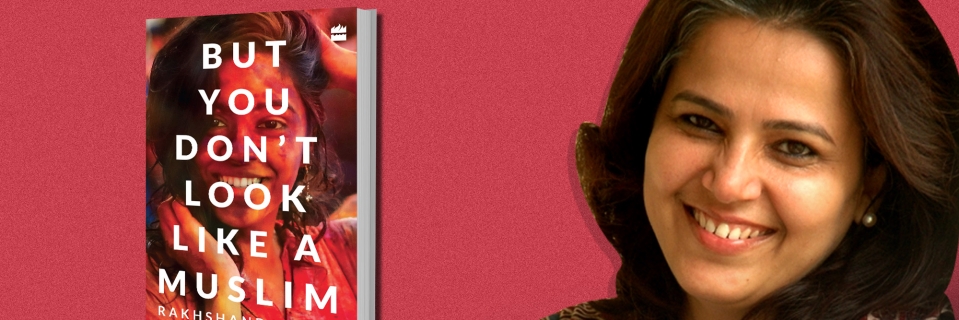
Image of the book cover and the author.(Photo: Altered by Kamran Akhter / The Quint)

(The following has been excerpted with permission, from author Rakhshanda Jalil’s latest book ‘But You Don’t Look Like a Muslim’, published by Harper Collins India. Sub-headers are NOT part of the book, and have been added by The Quint.)

I was eight years old in 1971. I remember the brown paper pasted on our windowpanes, the trenches dug in the park facing our house in a South Delhi neighborhood, and the near-palpable fear of air strikes that held us in thrall.

I also remember being called a ‘Paki’ by other kids in school, as India and Pakistan prepared to go to war against each other yet again, or at least the only time in living memory for my generation.

Being the only Muslim child in class, many of my peers, a Kashmiri Pandit boy in particular, took great delight in grilling me on my Pak connections. I tried, in vain, to explain that I had none. But no one would believe my stoic denials; I was a Muslim after all, I must have relatives in Pakistan. My sympathies must necessarily lie with ‘them’. And this tacit sympathy – taken for granted by my young tormentors – made me as much an enemy as ‘them’.

The Option of Going to Pakistan – And the Choice to Stay Back in ‘Hindustan’

I remember coming home in tears one afternoon. I remember my father, a man of great good sense, sitting down with me and giving me a little spiel. That afternoon chat was to give form and shape to my sense of nationhood in more ways than I could then fathom. It was also to place me squarely on a trajectory that has allowed me to chart my destiny in 21st century India precisely as I wish – not out of defiance or head-on collision, but with self-assurance and poise.

My father started by telling me how he had to leave his home in Pilibhit, a small town in the Terai region bordering the foothills of the Himalayas, and find shelter in a mosque, how many homes in his neighbourhood were gutted, others were vacated almost overnight by families leaving for Pakistan, and his goggle-eyed surprise at the first sight of the Sikh refugees who moved into the houses abandoned by fleeing Muslims.

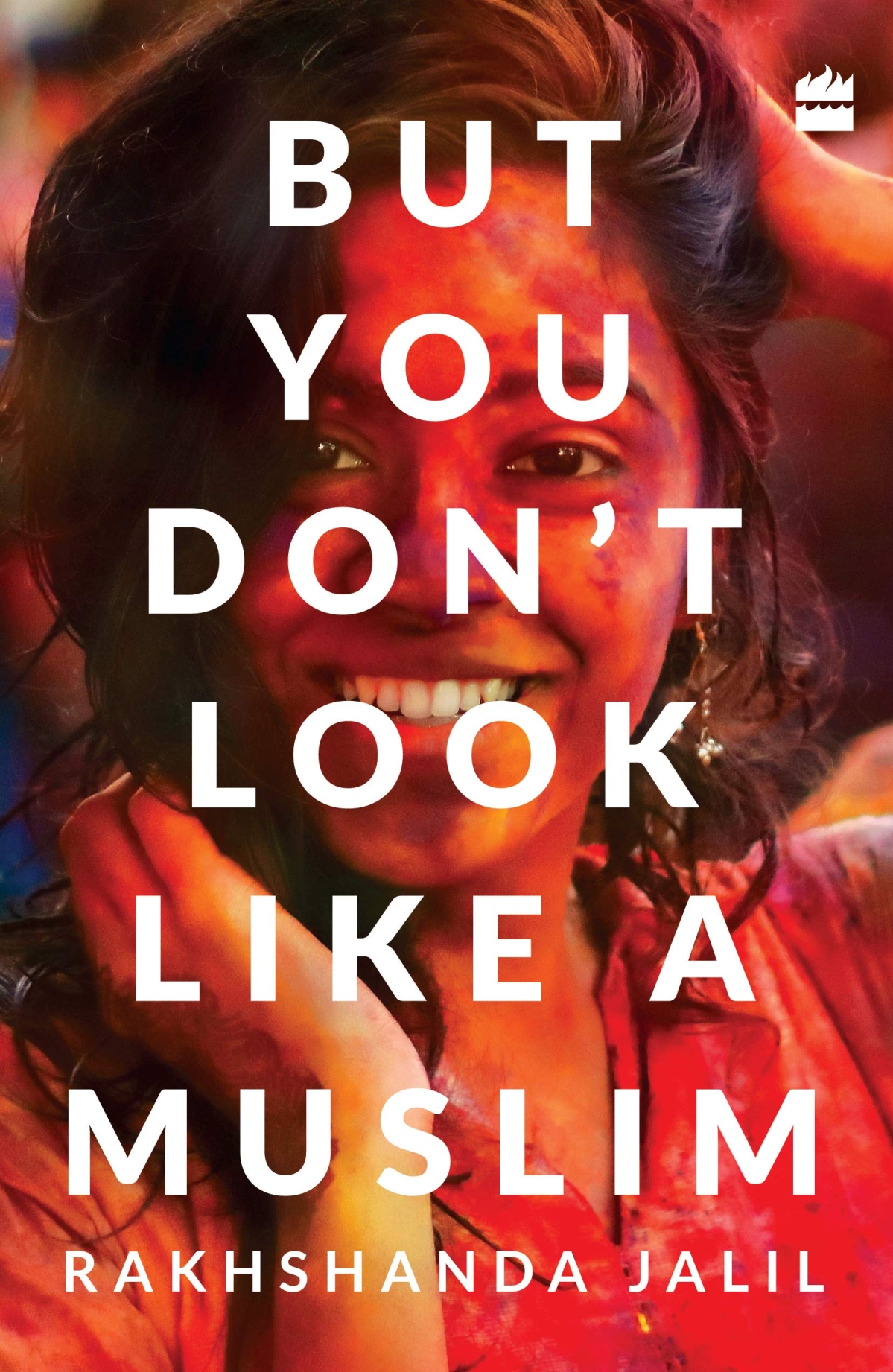
Image of the book cover. (Photo: Harper Collins India)
Image of the book cover.
(Photo: Harper Collins India)

While the option of going to Pakistan was there for him too – a newly-qualified doctor from a prestigious colonial-era medical college in Lucknow – he chose not go. In choosing to stay back and raise a family here in this land where his forefathers had lived and died, he was putting down more roots – stronger and deeper into the soil that had sustained generations before him. ‘Wear your identity, if you must, as a badge of courage not shame’, he said.

Why Muslims Like My Family Chose Nehru Over Jinnah

He also gave the example of my mother’s father, Ale Ahmad Suroor, a well-known name in the world of Urdu letters, and his decision too, to stay put, despite the many inducements that were offered to qualified Muslim men from sharif families. The ‘Land of the Pure’ held out many promises: a lecturer could become a professor, a professor a Vice-Chancellor, sons would get good jobs, daughters find better grooms and there would be peace and prosperity among one’s own sort.

And yet, my mother’s family like my father’s, chose not to go. To be honest, I was later told, my grandmother – a formidably headstrong lady – wanted to go, especially since many in her family had moved to Karachi.

But my grandfather, then a Lecturer at Lucknow University, was adamant: his future and his children’s lay here in ‘Hindustan’. And so they stayed. In the face of plain good sense, some might say. Why? What made them stay when so many were going?

Over the years, I have had many occasions to dwell upon this – both on the possible reasons, and the implications of their decision. I have grappled with my twin identities (am I an Indian Muslim or a Muslim Indian?), or tried not to sound defensive about my so-called liberalism, or struggled to accept the patronising compliment of being a ‘secular Muslim’ without cringing. And I have wondered, why families like mine, in the end, chose Jawaharlal Nehru over Mohammad Ali Jinnah.

How Did Muslims Become the ‘Other’?

Like many Muslims in India, I have often wondered if the cleavage of hearts and land was truly inevitable, or could it have been averted? What would have been the state of the Indian sub-continent today had a pact been reached between the Muslim League and the Congress? What happened to the heady days of 1919, when Hindus and Muslims had come together to fight the common enemy, the British? What went so wrong between the two major communities of the subcontinent? What caused the disenchantment with the Congress? What made some staunch Congressmen rally around the once-derided Muslim League? What cooled the Muslim’s ardour to join nationalistic mainstream politics?

For that matter, why was the Muslim suddenly regarded as a toady and a coward, content to let the Hindus fight for freedom from the imperial yoke? Why was he suddenly beyond the pale? How did he become the ‘other’?

And what of the dream of the ‘Muslim Renaissance’, spelt out in such soul-stirring verse by the visionary poet Iqbal? In turn, why did the Congress balk at the issue of separate electorates, calling it absurd and retrograde? Why did it do nothing to allay the Muslim fear that the freedom promised by the Congress meant freedom for Hindus alone, not freedom for all?

Seen from the Muslim point of view, the Congress appeared guilty of many sins of omission and some of commission. ‘Nationalism’ increasingly began to mean thinking and living in the ‘Congress way’ and none other. Those who lived or thought another way, came to be regarded as ‘anti-national’, especially in the years after Independence.

How the Muslim League ‘Divided’ Muslims

However, to come back to the Muslim League and the extreme reactions it has always evoked among Indian Muslims, it is interesting to explore why the ‘League logic’ enamoured some so completely, and left others cold. When the Leaguers (or ‘Leaguii’ as they were referred to among Urdu speakers) first spoke of protecting the rights of the Muslims by securing fair representation in the legislature, they were giving voice to a long-felt need to recognize the Muslims as a distinct religious and political unit.

On the face of it, these seemed perfectly legitimate aspirations; the problem, I suspect, lay in the manner in which the Muslim League went about its business. It employed a combination of rhetoric and religion to bludgeon its way.

It used fear as a campaign tool, making Muslims view all Hindus as a ‘threat’ to their survival, once Independence was achieved and the ‘protective’ presence of the British removed.

The sentiment behind Choudhry Rahmat Ali’s pamphlet Now or Never: Are We to Live or Perish Forever? was echoed by countless volunteers – clad in the by-now trademark black shervani-white ‘Aligarh-cut’ pajama – who saw themselves as soldiers in the “grim and fateful struggle against political crucifixion and complete annihilation”. They descended in droves on towns and hamlets all across Uttar Pradesh and Bihar, where their speeches – delivered in chaste Urdu and peppered with suitably rousing verses penned by Iqbal and Mohamed Ali and Hafiz Jallundari – found rapt audiences and deep pockets. While a great many began to share their enthusiasm for the Muslim League, and simple country women began to stitch League flags out of every available bit of green fabric, an equal number still held out.

The Pain of Partition

Quite a few were frankly unconvinced by the very notion of Muslims being a homogenised monolithic community that could be brought under the green banner unfurled by that most unlikely of all Muslim leaders – the Karachi-born, English-speaking, ultra-anglicised Jinnah.

Many Muslims began to see the bogey of Hindu domination as exaggerated, others were uneasy with the theocratic underpinnings of the proposed new homeland.

The Muslim League’s final unequivocal demand – a separate homeland – did not appeal to some Muslims for the same reasons of faulty logic. Jinnah’s assurance of providing constitutional safeguards to minorities, appeared humbug in the face of his proclamation of a Pakistan that would be a hundred percent Muslim. As Partition drew near, scores of Muslims who had hitched their star to the wagon of the Muslim League, began to leave for the new homeland. Families began to be divided, often with one sibling opting for Pakistan and – as it were – choosing Jinnah over Nehru – and the other digging their heels in and putting their faith in a new secular nation.

In the end, while it is clear why those who went did so, it is not always entirely evident why those who didn’t go chose to stay back. Was it gross sentiment or astute foresight that kept them back? Was the choice between Nehru over Jinnah made from the head or the heart?

My Grandfather’s Wise Words in ‘Khwaab Baqui Hain’

The generation that could have fully and satisfactorily answered these questions is either dead and gone or too frail to be disturbed by ghosts from a troubled past. Hoping to find some clues, I find myself turning the pages of my grandfather’s autobiography, Khwaab Baqui Hain (‘Dreams Still Remain’). His words bring me solace and hold out hope for my own future and that of my children:

I am a Musalman and, in the words of Maulana Azad, a caretaker of the thirteen hundred years of the wealth that is Islam”. My deciphering of Islam is the key to the interpretation of my spirit. I am also an Indian and this Indianness is as much a part of my being. Islam does not deter me from believing in my Indian identity. Again, to quote Maulana Azad, if anything “it shows the way”.

While it is true that I imbibed religion from my family and the environment in which I grew up, my own experiences and understanding made its foundations stronger. In Badayun, religion was the name for blind faith in traditionalism and age-old orthodoxies, miracles and marvels, faith healing by pirs and fakirs. I believe Belief in One God leads the way to equality among all mankind. Allah is not simply Rabbu’l-Muslimeen [‘the Lord of Muslims’]; He is also Rabbu’l Aalameen [‘the Lord of the World’]. The all-encompassing compactness of the personality of the Prophet of Islam has always drawn me.

Islam doesn’t teach renunciation from the affairs of the world; it teaches us how to fulfill our duties in this world while at the same time instructing us to regard this mortal world as the field in which we sow the seeds for the Other World. There is no obduracy in Islam. I have seldom found obdurate people to be good human beings. The Islam that I know gives more importance to Huqooq-ul ibad [‘rights of the people’] rather than Huqooq-ul Lah [‘rights of God’].

Despite Ayodhya & Gujarat, I’m Glad Families Like Mine Didn’t Choose Pakistan Over India

I am hopeful that Islam will ‘show the way’ as, indeed it did for my grandfather – a much-feted Urdu writer, critic, poet and teacher – and will in no way deter me from believing in my Indian identity as much as in my religious one.

As I clock in a half century and more, I find I have done my share of soul-searching and raking over the ashes. I am done, too, with defensive or aggressive posturing, or the equally ridiculous sitting-on-the-fence. Life has come full circle.

My daughters went to the same school and university as I did. The clamorous unruly Jana Sangh of my childhood has been replaced by the Bharatiya Janta Party, a stronger, more vociferous – yet no less militant – face of the Hindu right-wing. My daughters meet their share of Muslim-baiters. I have told them what my father said to me. As I watch them grow into confident young people, I know that they shall cope, as I did. That they shall enjoy the dual yet in no way conflicting identities – of being Muslim and being Indian in no particular order.

Despite Ayodhya and Gujarat, despite the politicians who come and go spouting venom and spreading biases, despite the many bad jokes about katuas, despite the discrimination that is sometimes overt and often covert, I do feel, it is a good thing that families like mine chose not to hitch their star to the wagon of the Muslim League.

(Rakhshanda Jalil is a writer, translator and literary historian. She runs Hindustani Awaaz, an organisation devoted to the popularisation of Urdu literature. She tweets at@RakhshandaJalil. This is an opinion piece and the views expressed above are the author’s own. The Quint neither endorses nor is responsible for the same.)

source: http://www.thequint.com / The Quint / Home> Books / by Rakshanda Jalil / May 15th, 2019

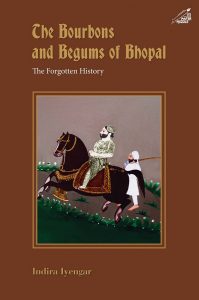
‘Bourbons and Begums of Bhopal’ Flounders Between Academic Research and Family Lore

Bhopal, MADHYA PRADESH :

Indira Iyengar’s book flounders on history, making some foundational conclusions untenable.

Shazi Zaman who has recently written a well-researched book on Akbar and has a detailed account of Akbar’s contact with the Europeans who visited his court, makes no mention of a Bourbon. Credit: Wikipedia

Some books need to be read because they are likely to tell you things you have always wanted to know. Some stories need to be told because they make for riveting narratives or expand your frontiers of knowledge in exciting and dramatic ways.

It is with such noble (and hopeful) intentions that one embarks upon The Bourbons and Begums of Bhopal: The Forgotten History despite its awkward size and substantial weight. In its size and appearance, it is is an unfortunate mix of a book with pictures and copious amounts of running text: too large to carry while travelling and not sufficiently picturesque to qualify as a coffee-table book. Its contents prove to be an awkward mix too, floundering between academic research and family lore.

The Bourbons and Begums of Bhopal: The Forgotten History Indira Iyengar, Niyogi Books Private Limited, 2018.
The Bourbons and Begums of Bhopal: The Forgotten History
Indira Iyengar,
Niyogi Books Private Limited, 2018.

Indira Iyengar’s tale is part family history, part archival research and part anecdotal memoir. It opens with a disarming admission: ‘I am no historian, but I have a story to tell.’ Iyengar’s mother, Magdaline Bourbon traced her lineage to Jean Philippe de Bourbon who left his native France to arrive in Mughal India, sought and received employment in Emperor Akbar’s court, was actively involved in Akbar’s meeting with the Jesuit priests from Goa. For his services, Akbar is said to have gifted him a small principality, Shergarh near Narwar in present-day Madhya Pradesh and the sister of his Christian wife, an Armenian woman (Portuguese by some accounts) by the name of Juliana who apparently also served as a doctor in Akbar’s harem. Thus began the Bourbon line in India which spread its roots from the Mughal court to the princely state of Bhopal where the descendants of this first Bourbon eventually settled down. Being neither Muslim nor Hindu the Frenchmen were viewed as unbiased and loyal to their masters. The stories of their swashbuckling past and alleged purported ‘royal bloodline’ no doubt added to their mystique.

While Iyengar is at pains to establish her ancestor’s descent from the Bourbons of Navarre, historians are divided as to whether Jean Philipe was indeed from the royal house of Bourbon or simply a fugitive Frenchman, a mercenary who found name and fame in distant India, established a lineage and bestowed a legacy. Iyengar seems to be working on the principle that her mother’s version of the family history should suffice and she, as the custodian of that family history, is obligated to tell the story. ‘My mother’s narration of the family was also very interesting,’ Iyengar writes, ‘and I feel it needs to find a place in recorded history’. It is this assertion that proves to be problematic. For, had it been told as a colourful yarn with anecdotes and family portraits or even bits and pieces of trivia and family lore it could have been a charming story – as history it is on decidedly shaky grounds.

Also, while Iyengar’s research in the archives of the Agra Archdiocese may well establish the role of her French forefathers in various administrative capacities, it does not satisfactorily establish Jean Philippe’s link with Duke Charles III de Bourbon (1490-1527), also known as Connetable de Bourbon. The earliest account of Jean Philippe she is able to offer is by Madame Dulhan Bourbon, wife of Balthazar Bourbon; this comes in the form of a testimony made to a British general. Coming from a family member, that too as late as the late-19th century, it carries dubious weight at best. All other accounts, by missionaries, are in the nature of hearsay, urban legends that acquired veneers of half-truths with each telling. Jean Philippe himself is said to have presented a document to Jahangir in 1605 or 1606, according to Iyengar, stating that he was the son of Charles Connetable de Bourbon and that he had to flee France after arranging a mock funeral for himself. Since such a document does not exist, we can only rely on the author’s mother, Magdaline Bourbon’s memory of a ‘certain priest from Bombay’ who possessed the Bourbon family records that were subsequently ‘lost with time’. Shazi Zaman who has recently written a well-researched book on Akbar and has a detailed account of Akbar’s contact with the Europeans who visited his court, makes no mention of a Bourbon.

While Jean Philippe’s relationship with the House of Bourbon may be in dispute, Iyengar’s research in the archives of the Agra Archdiocese shows that there existed a certain Jean Philipe de Bourbon, who was married to a certain Bibi Juliana (referred to in later Jesuit accounts as Dona Juliana Dias da Costa) who helped build the first Catholic church in Agra in 1588 on land gifted by Akbar. Jean Philipe is said to have died in Agra in 1592 leaving behind two sons one of whom, according to Iyengar, was in charge of the seraglio. At the time of Nadir Shah’s invasion, the Bourbons left poor, ravaged Delhi and the clan, by now comprising 300 men and women, sought refuge in the family estate in Shergarh and thence began the southern sojourn of Jean Philippe’s descendents. Mamola Bai, the first woman ruler of Bhopal, offered Salvador Bourbon the position of general in the Bhopal state army. Salvador married a certain Miss Thome and the family then embarked on a long innings serving as confidantes, generals, even Prime Ministers to the Bgeums of Bhopal.

Already carrying two names, a European and a Muslim one, the Bourbons began to wear Bhopali dress and live like the local nobility. However, the fleur de lis in their coat of arms never failed to remind them and their local patrons of their royal past in distant France.

Rakshanda Jalil is a writer, translator and literary historian.

source: http://www.thewire.in / The Wire / Home> Books / by Rakshanda Jalil / October 05th, 2018

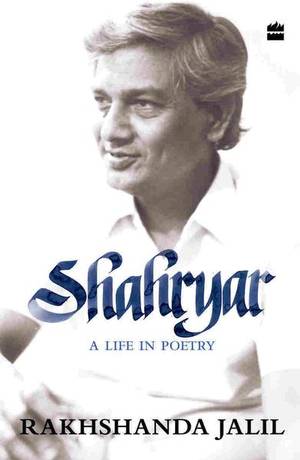
Shahryar — A Life in Poetry review: Dream merchant

Aonia,Bareilly / Aligarh – UTTAR PRADESH :

ShahryarMPOs14oct2018

Why a flag-bearer of modern Urdu poetry chose to be moderate

In 1936, Munshi Premchand made a seminal speech, Sahitya ka Uddeshya(‘The Aim of Literature’), to the Progressive Writers’ Association. While asserting that literature is meant to critique society, the novelist said it can never regress into propaganda. The point applies to the work of Shahryar, who was born, reportedly, in the same year. For, while being a self-avowed Marxist, he refused to be bracketed into the categories of ‘modernism’ or ‘progressivism’. Finding his voice in the post-Nehruvian period of disillusionment in the 1960s, he turned his gaze inward, into the inner struggles of an individual, while not remaining oblivious of the external environment.

Rakhshanda Jalil stresses in Shahryar: A Life in Poetry that his tone was one of moderation. The poet, who was among the flag-bearers of the jadeed (modern) shayari, did not declaim, he whispered into the reader’s ears his thoughts on social issues. One example is Ek Siyasi Nazm (A Political Poem), where he gently chides a neighbour who has passed on his communal hatred to his children.

Some of the leitmotifs that occupied the poet’s imagination were sleep, dreams and night. His most famous collection, Khwab ke Dar Band Hain (The Doorway to Dreams is Closed), paid tribute to his favourite theme, khwab (dream). In its title nazm, he presents the night as freeing the eyes of the protagonist not only of all ‘sins’ but also of dreams, an act that he calls a punishment.

The poet, among the four Urdu writers to have been given the Jnanpith, is remembered outside Urdu literary circles, and especially among cinephiles, for his association with filmmaker Muzaffar Ali. The partnership resulted in Gaman, Umrao JaanAnjuman and the incomplete Daman and Zooni. It is when Jalil delves into this side of Shahryar that her arguments become a bit problematic, especially when she says that there exists a dichotomy between film lyrics and poetry.

Here, Sahir Ludhianvi’s write-up to his fellow poets is instructive. While Ludhianvi acknowledged that a nagma nigar (lyricist) doesn’t have the freedom of an adabi shayar (poet), as he is constrained by the film’s screenplay and characters, he added that his own attempt was to elevate film lyrics to the status of high art. It is when a film’s lyrics rise above its mere narrative that they take the form of art. What Jalil ignores is that a poetry lover would use such lyrics as a trigger to delve deeper into a poet’s corpus. An appreciation of Seene Mein Jalan won’t stop at listening to the song; it would progress to a reading of Ism-e-Azam, the collection from where the ghazal was taken.

Shahryar: A Life in Poetry; Rakhshanda Jalil, HarperCollins, ₹599.

source: http://www.thehindu.com / The Hindu / Home> Books> Reviews / by Hari Narayan / October 13th, 2018