Patna, BIHAR :
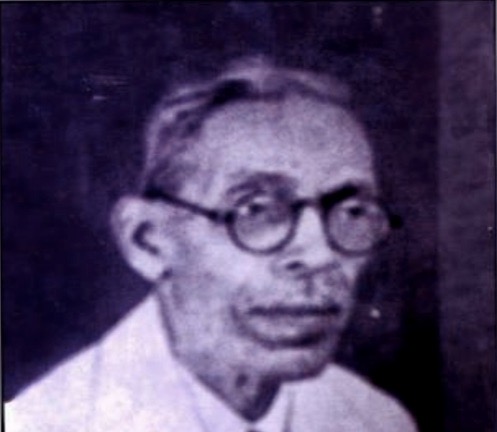
Fasihuddin Balkhi was born in 1885 in Bakshi Mohalla of Patna city. | Picture: Rekhta
Born in Patna, Bihar during the British era, Fasihuddin Balkhi made a tremendous contribution to history-writing in Urdu. Despite this feat, he remains largely unknown to this day.
Many historians have written about the history of Bihar. After taking a cursory overview of the works written by different scholars, one finds that history writing on Bihar, especially in the Urdu language has not yet received due attention in academic circles. Among many others who have written on Bihar and its history, the notable ones include Fasihuddin Balkhi (1885-1962); Taqi Rahim (1921-99); and Shad Azimabadi (1901-1978).
This piece is an attempt to highlight the life and works of Fasihuddin Balkhi. His work has received scant attention from those working in the Bihar region. His contribution remains largely under-acknowledged and under-explored in the existing literature of the Bihar province.
Balkhi was born in 1885, the same year that the Indian National Congress (INC) was founded, in Bakshi Mohalla of Patna city. After receiving his early education at home, he went to Calcutta where he completed his higher education. He became a teacher and initially taught at Poona Military School and later in Calcutta Fort William. Later on, he passed the law examination and was employed in the Bihar government. In 1914, he opted for military service which enabled him to visit different parts of the world like Palestine, Egypt, Iraq and Lebanon.
As India’s independence movement was drawing more followers, Balkhi too joined the movement. In 1921, he became part of the non-cooperation movement. After refusing to accept the post of deputy in Jaunpur, he had to face many hardships. Between 1926-27 he worked as the revenue officer and magistrate in Sarai Kela state.
After retirement, he left his ancestral home and lived the rest of his life till 1962 in his new house in Guzri Bazar Patna city (just behind the present Mohammedan Anglo Arabic school). In the last two years of his life, he worked at Patna University in the department of manuscripts. His hardworking and organizational abilities infused a new spirit in the department.
Although Balkhi was known as a good teacher and a successful officer, he was primarily a historian and researcher, as he stepped into some areas of research that were hitherto almost invisible. Even the noted Bihar-based historian, Syed Hasan Askari (1901-1990) has acknowledged Balkhi’s scholarly and literary abilities. Unfortunately, most of the works of Balkhi could not reach their desired audience. Some of his works remain unpublished even now.
Balkhi’s first book Tarikh-e-Magadh was published by Anjuman-e-Taraqqi-Urdu-Hind (Delhi) in 1944. The second book, Tazkira, was published as Tazkira-e-Niswane Hind (1956).
According to one source, he wrote his first work at the age of 25 in 1910 in Urdu on astrology, a rare case in Urdu, titled as Ilmi-e-Najoom. This work is not easily available or accessible to the readers. A pamphlet on the poetry of Shad Azimabadi titled as Inshad-e-Shad (Qaumi Press Bankipore, Patna, 1939) is his signature piece. The pamphlet demonstrates his power of critique.
Balkhi’s work only gained wider attention after his death. Well-known Urdu publisher Nadeem Bhatti published one of Balkhi’s works Tazkira-e-Hindu Shora-e-Bihar (Poets in Bihar/Urdu) in 1962. Some of Balkhi’s unpublished works such as Dastur-e-Sukhan, a collection of his works on historical places of Bihar province, Aasar-e-Balkhiya, are collected in the book. Several of his scholarly, literary and historical articles are also available in different magazines and journals. A well-researched article on Balkhi’s personality and research guidance was written by Qayyum Khazar for ‘All India Radio Patna.’ Khazar states that “Fasihuddin Balkhi was a great historian and researcher as well as a good poet.”
Balkhi’s work as historian
Tarikh-e-Magadh is the first book that earned Balkhi fame as a historian. This seminal work in Urdu was published in 1944 by Anjuman Taraqqi Urdu (Delhi), which was then under the supervision of Maulvi Abdul Haq (Baab-e-Urdu). The book chronicles the history of Bihar province from the earliest times (642 BC) up to the second World War in 1943. The book contains as many as twenty chapters. The book is considered one of the most reliable accounts of the history of Bihar in the Urdu language. The work was constructed from authentic historical sources.
Patna-based historian Imtiaz Ahmad, commenting on the significance of Tarikh-e-Magadh, has said, “It is written authentically and professionally, with proper references from sources (Persian texts).”
Balkhi also wrote another significant work entitled Wahabi Movement, posthumously published in 1983. This book along with Qeyamuddin Ahmad’s seminal work The Wahhabi Movement in India (1966, reprinted 1994) are the most cited works on the history and role of the Wahhabi movement in India.
Balki’s slim book, despite being confined to the Bihar region, is distinctive in many new ways. The sources he cited are primary and useful, such as letters of Syed Ahmad Shah, Calcutta Review, Indian Muslim by Wilson Hunter, Tazkira-e Sadiqa and biographies of Syed Ismail and Syed Ahmad, the founding fathers of the movement in India.
Emphasizing the legacy left behind by the Wahhabi movement, Balkhi writes, “It is highly interesting to note that the use of three great weapons, namely, non-cooperation, passive resistance and establishing of parallel Govt. which the Congress leaders adopted in their fight against the bureaucracy, was originally advocated and preached by the Wahhabis in 1854.” (p. 16).
Apart from these historical accounts, Balkhi wrote another path-breaking book Tazkirah Niswan-e-Hind (1956) in which he documents the short biographical accounts of the notable women of India. He starts his book with Raziya Sultan of the early 13th century and covers the women from various fields across India such as Askari Begum ‘Hijab’ (Lucknow), Chander Mukhi Bose (Bengal), Lal Ded (Kashmir), Raziya Sajjad Zahir (Rajasthan/Bombay), Bibi ‘Tahira’ (Bihar), etc. This book serves as an important source of information on Indian women and their role in different times of history.
Balkhi has also written about the lesser-known aspects of Bihar. This can be gauged from his book Patna Ke Katbe in Urdu, published by Khuda Bakhsh Library, Patna in 1993. This book is a unique study of inscriptions found on graves, mosques, and tombs located in Patna.
Balkhi has made a tremendous contribution to writing the history of Bihar in Urdu. His work serves as a guiding light on the lesser known and under-explored aspects of Bihar. His work needs to be revisited and re-assessed to throw light on many ignored dimensions of Bihar history.
Mohd Hussain Ganie is a PhD student at Aligarh Muslim University (AMU). He tweets at @GanaiHussain1
source: http://www.twocircles.net / TwoCircles.net / Home> Art-Culture / by Mohd Hussain Ganie, TwoCircles.net / August 12th, 2022