Fatehpur, UTTAR PRADESH :
Hyderabad:
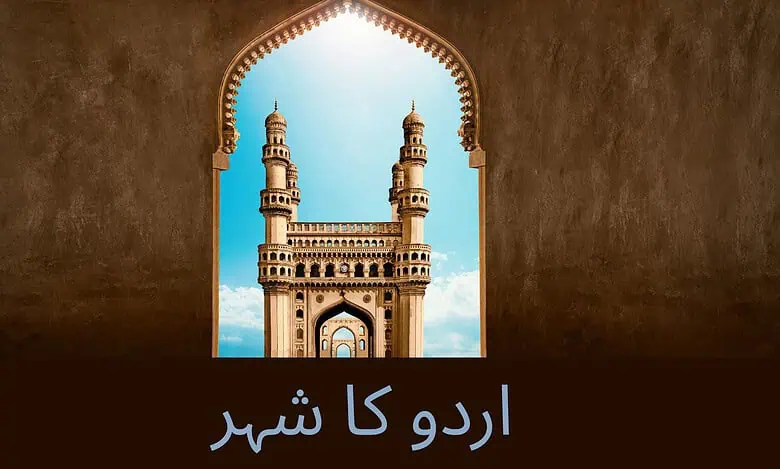
Hyderabad is not merely a dot on the map; it is a vibrant symbol of elegance, culture, and an enduring legacy. Often hailed as the city of domes and minarets, Hyderabad is where history echoes through its majestic palaces, bustling bazaars, and the unmistakable aroma of biryani that fills the air. But beyond its architectural grandeur and culinary delights, the city is known for its Nawabi grace — a heritage shaped by the Nawabs and Nizams, whose generosity and cultural patronage continue to define its identity.
Capturing this soul of Hyderabad is the mission of noted journalist and author Farooq Argali. His upcoming documentary titled ‘Hyderabad: Urdu Ka Shahar’ offers a compelling journey through the city’s layered history — from the Qutb Shahi dynasty to the modern era. In this hour-long film, viewers are treated to glimpses of Hyderabad’s monuments, traditions, cuisine, and the famed tehzeeb — a word that transcends simple etiquette to embody respect, warmth, hospitality, and grace in everyday life.
Over the past three days, Argali has been crisscrossing the city, engaging with its people, documenting their stories, and capturing the sights, sounds, and scents that define Hyderabad. His previous acclaimed documentaries — Delhi: Rangon Ka Shahar and Lucknow: Tamaddun Ka Shahar — stand as testaments to his commitment to preserving cultural heritage through storytelling. His next project is set to focus on Azeembad, the ancient name of Patna.
At 86, Farooq Argali remains remarkably energetic and mentally sharp. Alongside the documentary, he plans to author a book titled Hyderabad Nama, envisioned as an archival treasure for researchers and culture enthusiasts alike. What strikes Argali most about Hyderabad is the thriving presence of Urdu — still seen on shop signs and nameplates, a sight now rare in Delhi and Lucknow.
A man of many talents, Argali is a journalist, playwright, historian, novelist, and poet. Over the last six decades, he has authored more than 500 books, ranging from romantic and detective fiction to literary criticism. In the 1960s, his pulp fiction, written at a breathtaking pace — sometimes a novel in just five days — was immensely popular. Titles like Haye Main Haar Gayee marked the beginning of a prolific writing career. Surprisingly, Argali never studied beyond the third grade in Urdu. When asked about his academic qualifications, he modestly replies, “Fourth failed.”
What, then, is the secret behind such a towering literary output? “Read more than you write,” he says simply. He credits his success to continuous reading and the vibrant literary circles he was part of in Delhi.
Born in Fatehpur, Uttar Pradesh, Argali held various odd jobs before turning to writing full-time. Despite his limited formal education, he calls his gift of writing a divine blessing. Writing under pseudonyms like Hasina Kanpuri in Urdu and Rati Mohan in Hindi, he penned bestsellers such as Ek Toofan Jawani Ka and Chahne Wale, which enjoyed huge success.
However, Argali now views his pulp fiction era as his personal ‘Ayyam al-Jāhiliyya’ — a period of creative indulgence. Over time, he shifted focus to enriching Urdu literature through research, biographies, and literary criticism. His two-volume work Urdu Hai Jis Ka Naam explores the contributions of as many as 400 renowned Urdu writers like Lala Sriram Dehlvi, Firaq Gorakhpuri, Saadat Hasan Manto, Nisar Ahmad Farooqi, and Rahi Masoom Raza to name a few.
Farooq Argali, who also served as the founding editor of the film magazine Rubi, has written extensively on Indian cinema. His historical writings include Bahadur Shah Zafar Ke Dardnaak Halaat, chronicling the last Mughal emperor’s tragic life, the partition story, Dastaan 1947, and Jahan-e-Khusro, a detailed account of the Sufi poet Amir Khusrau.
At a recent felicitation event hosted by Fazil Husain Parvez, Editor of Gawah and Mediaplus Foundation, Argali humbly dismissed the accolades, calling himself a “mazdoor qalam ka” — a laborer of the pen. “I write something broken and incomplete, yet it gets published,” he said with characteristic modesty.
As he continues his journey of literary and cultural documentation, Farooq Argali shares a heartfelt couplet expressing his deepest wish:
Aakhri waqt jab aaye to qalam haath mein ho,
Lafz ‘Allah’ likhoon aur dum nikal jaaye
(When my final moment comes, may the pen be in my hand,
May I write the word ‘Allah’ as I breathe my last)
source: http://www.siasat.com / The Siasat Daily / Home> Featured News / by J S Ifthekhar / May 10th, 2025