Category Archives: Travel & Tourism

The palace of delights

Mandu (Dhar District), MADHYA PRADESH :

ManduMPOs13oct2018

No rainy day can be better spent than roaming around Mandu’s Jahaz Mahal, with Jahangir’s words as guide

“What words of mine can describe the beauty of the grass and green flowers? They clothe each hill and dale, each slope and plain. I know of no place so pleasant in climate and so pretty in scenery as Mandu in the rainy season,” wrote Jahangir in his memoirs.

On a misty morning in July, we entered the hilly kingdom of Mandu with these words echoing in my mind.

In 1401, Dilawar Khan, the governor of Malwa who was appointed by the Delhi Sultans, took advantage of the chaos resulting from Mongol attacks and declared his independence. He shifted the capital from Dhar to Mandu (Mandav) and renamed it Shadiabad, or City of Joy. When Ghiyasuddin Shah (1469-1500 AD) came to the throne, he decided that his father, Mahmud Shah I, had expanded the kingdom enough. All he wanted to do was enjoy life. Handing over the affairs of the kingdom to his son and heir, Nasir Shah, Ghiyasuddin Shah gave himself up to a life of delights. He was a connoisseur of food, and his recipes are sealed in an illustrated book, Nimatnama, that is with the British Library and has been translated into English by Norah M. Tiley as The Sultan’s Book of Delights.

A life of pleasure

Ghiyasuddin Shah wasn’t joking when he declared that he wanted to devote himself to a life of pleasure. He filled his harem with women who were trained in various disciplines for which they had an aptitude. While some were singers, dancers, painters and chefs, others were trained to be his guards and personal soldiers. He established a madarsa and educated the women to be proficient in religious as well as secular subjects. There were Qazis, schoolmistresses, hunters, scholars, embroiderers, and accountants among them.

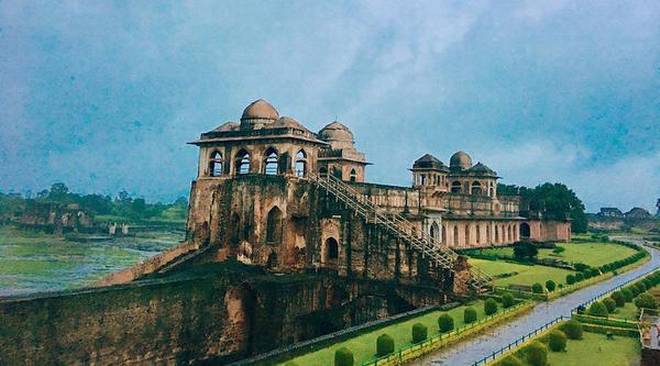
We drove straight to Jahaz Mahal, a stunning building, named as such because its shape, when it fell on the water tanks surrounding it, looked like a ship.

All the guides and stories will tell you that Ghiyasuddin Shah built it to house his harem. A probably exaggerated figure of his harem was given by Jahangir, who wrote it as 15,000. That figure is gleefully quoted by local guides, with perhaps a hint of envy on their faces.

After Dilawar Khan established the Malwa dynasty he got architects and craftsmen from Delhi. The early buildings bear a stamp of the Tughlaq and Khilji architecture of Delhi.

The Jahaz Mahal, however, is a flight of imagination and takes yours along with it. I could see girls dancing and singing in the rain on the rooftop and in the courtyards, their shadows reflecting on the Munj Talao and Kaphur Taloo surrounding it.

The strains of Megh Malhar were flooding my senses, and in my mind’s eye I could see the arcades being lit up by the lanterns and lamps that were floating on the water, glimmering and dipping along with the wind, glowing like fireflies.

I could smell the heavily laden kadhais (woks), with samosas and baras being fried. As the illustrations of the Nimatnama show, the Sultan took a keen interest in, and was perhaps supervising, the correct temperature of the oil, the salt in the filling. How golden was the result?

Who knows? All I know is that I was transported back to the 15th century as soon as I entered the long, double-storied Jahaz Mahal through its main arched, marble entrance. At the back, every arch of the continuous arcaded 360-feet building opens on to Munj Talao. I don’t know how close it was originally to Kaphur (Camphor), now called Kapoor Talao, but now this is quite a distance from it. There are manicured lawns between it.

Initially it was decorated with glazed tiles and colourful friezes. Now we have the unfortunate graffiti that people are wont to inscribe on monuments. The cool corridors and pillared compartments were made for dancing and singing.

Nur Jahan accompanied Jahangir to Mandu in 1617 and the palace complex of Mandu enchanted the royal couple.

A magical bubble

Jahangir sent Abdul Karim in an advance party to repair the buildings. He was so pleased with the result that he rewarded him with the title of Ma’mur Khan (architect Khan). Mandu is a treasure house of water harvesting. There are also bathing tanks. There are two in this palace, on both the floors, shaped like a tortoise with steps going in. Now devoid of water, one can imagine women going to the toilet there, with roses and lotus flowers floating in the perfumed waters.

The roof has a few open pavilions and kiosks on its four corners. While I was there on the wet, open terrace, the mist came and blotted out everything around. We were trapped in our very own magical bubble.

source: http://www.thehindu.com / The Hindu / Home> Opinion – Where Stones Speak / by Rana Safvi / September 03rd, 2017

Mumbaiwale: Four local Islamic landmarks to check out – each with its own colourful history

Mumbai, MAHARASHTRA :

An adult cinema turned mosque, a Muslim home turned film museum, a gorgeous blue masjid & a dargah cops love.

The one that now houses a film museum

National Museum of Indian Cinema, Pedder Road

On Pedder Road, one Muslim-owned mansion has been converted in a someday-to-be-opened museum for the movies. Gulshan Abad, the Victorian-Gothic villa, was built in the mid-1800s (a time when the main entrance itself offered a view of the Arabian sea) and was home to the Gujarati businessman Peerbhoy Khalakdina. The five-acre estate was eventually inherited by a relative Cassamally Jairazbhoy, whose third wife, Khurshid Rajabally, hosted cultural gatherings at the home in the 1920s.

Rajabally’s filming of a Haj pilgrimage makes her one of India’s earliest documentary filmmakers. Her son Nazir Ali made documentaries about Indian classical and folk music.

The home served as a hospital for WWII soldiers and in 1949 was briefly rented out to Jai Hind College before the institution found a permanent campus in Churchgate in 1952. But in 1950, the government confiscated the estate, declaring it an evacuee property after Partition.

The home, now restored, holds artefacts from India’s rich cinematic history. Alas, the launch has been tied up in bureaucratic red tape, and you can only get as far as the entrance.

The one that used to be an adult movie theatre

Deeniyat centre, Mumbai Central

The Deeniyat educational and charitable trust couldn’t be more wholesome. It aims to educate children, men and women in basic Islamic tenets and moral teachings related to the Koran and Sunnah. But the institution and mosque are housed in a building that once screened films of less salubrious taste.

In 1914, Ardeshir Irani and Abdulally Esoofally, both instrumental businessmen in early Indian cinema, bought a theatre near Nagpada junction on Bellasis Road. By 1918, they’d named it Alexandra Cinema and converted it into a movie hall, screening films from India and abroad. The single-screen movie hall screened films through the decades – silent films, new talkies, Technicolor hits, epics, Amitabh’s angry-young-man phase and blockbusters. But by the 80s, it was largely where you’d go to watch a B-grade or adult film.

In 2011, a developer bought the 15,000sqft property, turning it over to the non-profit. Deeniyat has spruced up the interiors, and even added a mosque inside. But the exterior – tiled roofs, wraparound verandahs – stays largely the same.

The one where the cops go to worship

Hazrat Makhdum Fakih Ali Mahimi dargah, Mahim

The scholar-saint who lived between 1372 and 1431, was the first commentator of the Koran in India. His books have focus on the philosophy of time and space. He was the Qazi or judge for the Muslims of Thana district.

But what makes him the patron saint of the Mumbai Police? Because he lived at a time when the Portuguese had possession of Salsette, the islands north of Mahim. A Portuguese sergeant would seek his advice and help on many cases. Many also believe that the site at which the Mahim police station stands is said to have been the saint’s home.

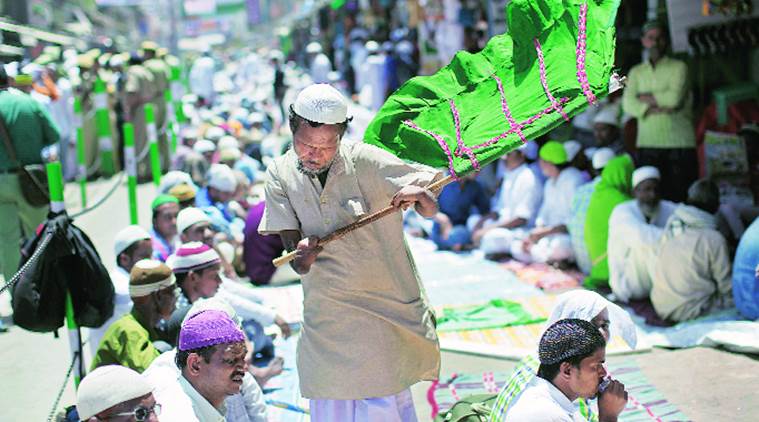
Until today, during the annual urs or fair held in his honour, it’s the policemen who lay the first ornamental sheet over his tomb at the dargah. On the urs days, devotees can also walk into the police station premises to pay their respects.

The blue one that catches the moonlight

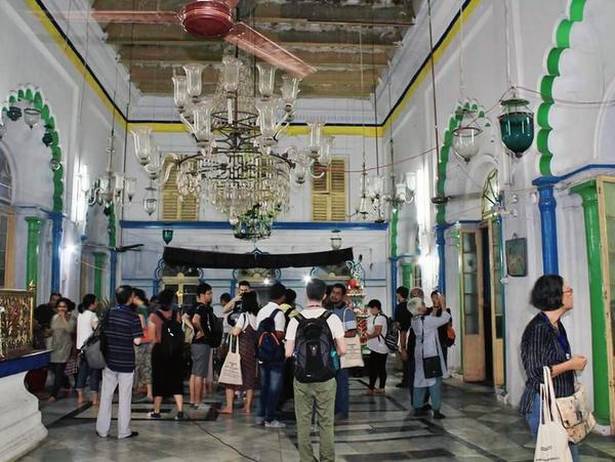
Masjid-E-Iranian, Dongri

I first saw what is locally called the Mughal Masjid on a local-history tour of Bhendi Bazaar back in 2005 (Yes, I was a nerd before it was fashionable). I was lucky. It was a cool full-moon night and the blue tiles seemed to glow in the dark. For a minute, this tiny corner of Mumbai seemed like Morocco.

The mosque is 158 years old, built by a wealthy Iranian merchant, Haji Mohammad Hussain Shirazi, in 1860 and is maintained by a trust set up by his descendants. It has no dome, but two minarets, and a mosaic of blue tiles of every hue and pattern.

Inside, if you do get permission to enter is a lawn, a pond, a fountain, crystal chandeliers in the inner sanctum and Koran verses inscribed on the walls.

source: http://www.hindustantimes.com / Hindustan Times / Home> Mumbai / by Rachel Lopes, Hindustan Times / October 05th, 2018

Mosques in Dravidian-Islamic style: About the Islamic architecture in Tamil Nadu

TAMIL NADU :

The 17th Century Kilakarai Jumma Mosque

The kallupallis are reminders of the region’s cultural and architectural traditions

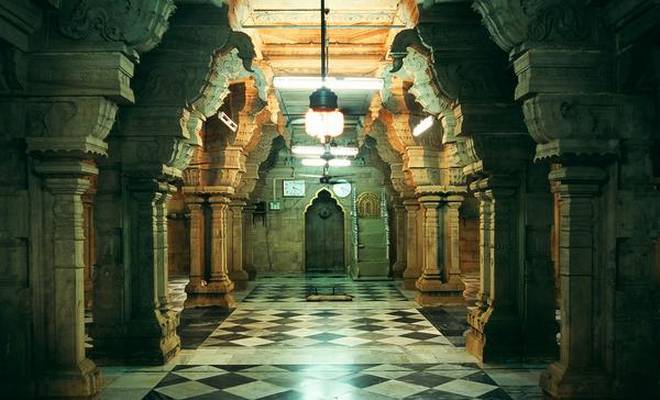
Among the many inscriptions at the Vaishnavite shrine of Adhi Jagannatha Swamy at Thirupullani, about 10 km from Ramanathapuram in southern Tamil Nadu, there is one about a grant for a mosque. This particular inscription of the late 13th Century by the Pandya King Thirubuvana Chakravarthy Koneri Mei Kondan, describes the grant made to the Muslim Sonagar, to build a mosque at Pavithramanikka Pattinam. While no one today has a clue as to the exact location of Pavithramanikka Pattinam, the region has many ancient mosques like the rest of Tamil Nadu. What is unique about these mosques is that they were all built of stone, in the Dravidian architectural style with Islamic sensibilities.

Unlike north India, Islam came to the south through maritime spice trade even as it was spreading across Arabia in the 7th Century. The Muslims who were traders enriched the country with precious foreign exchange, and hence were accorded a special place by the Tamil rulers of the day, and often received grants to build mosques, like the one at the Adhi Jagannatha Swamy temple.

As mosques are called Palli Vaasal in Tamil, and they were built of kal, the Tamil word for stone, they came to be locally known as kallupallis. These kallupalliswere essentially built more like mandapams, better suited to Islamic requirement for the congregation to assemble and stand together in prayer.

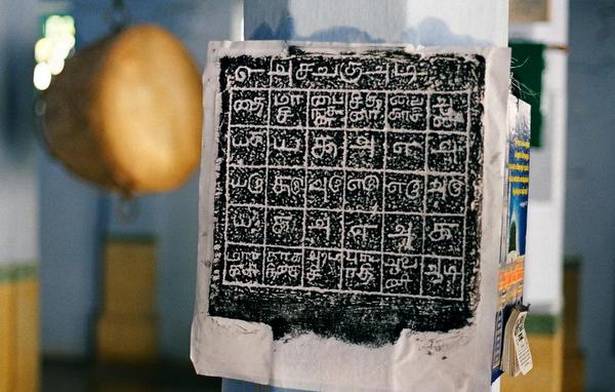
Engraving of Tamil calendar for prayer found inside the mosque

With guidelines for the construction of mosques being simple – such as prayer facing Mecca, no idol worship and clean surroundings, the masons who worked on these mosques under the supervision of religious heads restricted themselves to carving floral and geometrical motifs instead of human figures as in a temple. “While the raised ‘Adisthana’ of the Hindu temple was retained, there were no ‘Garbha Grahas’ and no figurines carved on any of the pillars” says Dr.Raja Mohammad, author of Islamic Architecture in Tamil Nadu.

For more than a millennium, hundreds of such mosques built in the Dravidian Islamic architectural style came up across Tamil Nadu, often with the help of grants from the rulers of the day, ranging from the Cheras, the Pandyas, the Venad kings and the Nayaks to the Sethupathis of Ramanathapuram. Across Tamil Nadu, wherever Tamil Muslims lived in large numbers, from Pulicat near Chennai to Kilakarai, Kayalpatnam, Kadayanallur, Kottar, Tiruvithancode, Madurai, etc., one finds these beautiful kallupallis.

Amongst these kallupallis, though not the oldest, the most beautiful mosque is to be found at Kilakarai, near Ramanathapuram. A medieval port town with a predominant Tamil Muslim population, Kilakarai has many mosques built during different eras spanning many centuries. The one built towards the end of 17th Century is the most beautiful of them all. It is believed to have been built by the great merchant and philanthropist Periathambi Marakkayar, also known as Seethakkathi, whom the Dutch records speak of as a great trader having considerable influence with the Sethupathis, the then rulers of Ramanathapuram.

The mosque built in the Dravidian architectural style of the late Vijayanagara period, has elements that are specific to native traditions. Like many other kallupallis, this mosque too has Podhigai, the floral bud detailing on the pillar corbels, which represent positivity and auspiciousness, an essential part of the cultural beliefs of the land. An interesting engraving found in this mosque is the Tamil calendar for prayer.

What is unusual about this calendar is that, timings for prayers in the various Tamil months are marked in Tamil numerals, a rarity, found in just a few other mosques in southern Tamil Nadu.

These mosques, deeply embedded in the Tamil culture, were also places where Tamil flowered. Further down south, at the Kottar mosque in Nagercoil, an early Tamil Islamic literary work, Mikuraasu Malai, was presented to the assembled congregation by Aali Pulavar in the late 16th Century.

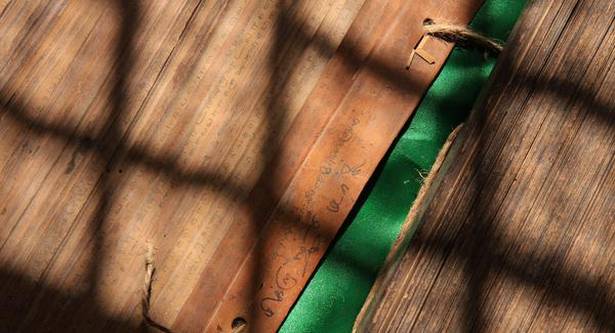
Mikuraasu Malai, a palm leaf work

Mikuraasu is a Tamilised form of Mihraj, and narrates a significant event in the life of Prophet Muhammad (Pbuh), his ascension to the heaven. Even after 400 odd years, the tradition of singing Mikurasu Malai on the eve of Mihraj continues to this day at the Kottar mosque. Other literary works such as Seera Puranam, a Tamil epic on the history of the Prophet, are also recited across mosques in Tamil Nadu.

The Kallupallis in Tamil Nadu stand as proud reminders of not just an architectural tradition but also of cultural traditions, where Islam effortlessly adapted itself to the native customs.

source: http://www.thehindu.com / The Hindu / Home> Society> History & Culture – Anwar’s Trail / by Kombai S. Anwar / November 23rd, 2017

The walls have years

Kutch, GUJARAT :

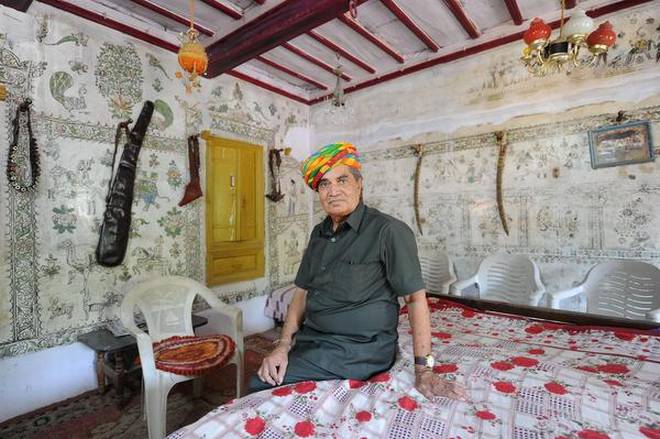
Kalubhai Vaghela in his ancestral house in Mundra. Photo: Vijay Soneji

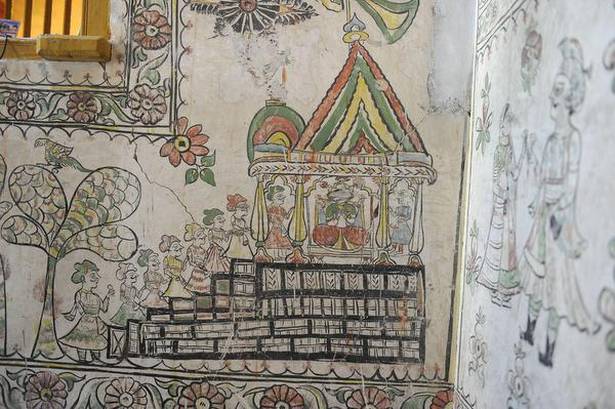
In 18th century Kutch, walls were painted with stories. They survive today in only three places

On the fissured walls of the magnificent Tera fort in Gujarat’s Kutch district the story of the Ramayana springs to life in vivid colour: there is Sita on a pyre, Ram raining arrows on Ravana.

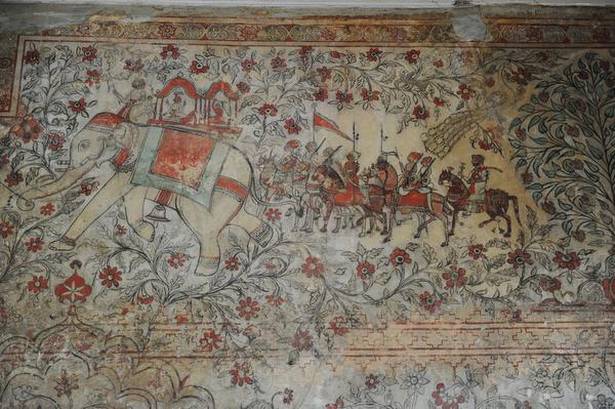
Kamangari bhint chitro or wall paintings was once a thriving art form in Kutch, used to embellish the palaces and homes of the affluent. The themes were as diverse as the patron’s tastes, but were predominantly mythological, with scenes from the Ramayana or Krishna Leela. Royal processions was another favourite. The landscape was another rich source of material, and date palms and peacocks and scenes from everyday life were common.

Kamanagiri01MPOs04oct2018

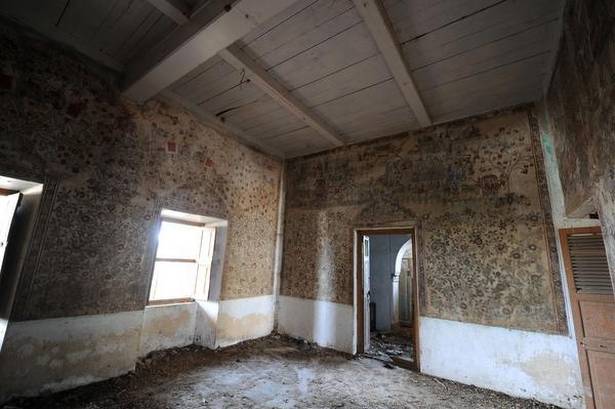
Today, only bits and pieces of this rich art are preserved in a few homes, temples, and on Tera fort. But if you were to string these together chronologically, history would come alive in a lyrical manner.

Back to its origin

Kamangari art originated in the 18th century. “It was a relatively peaceful time; there were no battles, and it was a conducive environment for travel and trade,” says Pradip Zaveri, a Vadodara-based businessman, known for documenting Kamangari. During this time, the Kamangars, a Muslim community from northern Kutch who traditionally made bows and arrows (kaman means bow) and painted shields, travelled to the rest of the region.

Soon the affluent Bhatia and Jain communities commissioned the Kamangars to paint their homes, giving birth to the art form. Such artistic embellishment on walls was traditionally seen as auspicious in Kutch.

A folk art

One of the finest examples of Kamangari art is in Aina Mahal, an 18th century palace in Bhuj. Here, the corridor is painted with a 47 feet scroll titled Nagpanchami Ashwari, by Kamangar artist Juma Ebrahim. The scroll begins with a royal procession with a mounted Arab cavalier, Arab soldiers, a cannon drawn by a pair of bullocks, a chariot of the family deity, and a group of camel riders. In the middle of the scroll is Maharao Shri Pragmalji II on a caparisoned elephant. The ethnicity of every individual is represented by their costume.

The paintbrushes were made from the bark of the local date palm, and the colours sourced from tree bark, flowers and stones. The artists would paint on wet plaster to ensure permanence.

For all its beauty, says Zaveri, Kamangari does not appear to have a consistent style. “If you look at two paintings, you will see the difference in the treatment and rendering. For example, the lines on wall paintings are thicker than those in the scrolls. In some places, flowers are used to fill gaps — like in a temple in Anjar — but in other places this is missing.”

Kamangari artwork at MacMurdo’s bungalow in Anjar. Photo: Vijay Soneji

Artists essentially followed their patron’s instructions. As the rich traders who commissioned this art travelled abroad, the art saw changes too. “The artists were given postcards from these places, and they would then draw characters inspired from the West but wearing a Kutchi pagdi, or the women would have long skirts,” Zaveri says.

In a Jain temple in the Abdasa taluka of Kutch, a man is shown wearing a hat but in a dhoti and long coat. Some later paintings depict British soldiers in uniform. Others have aeroplanes, rail engines, and even a game of cricket.

MacMurdo’s bungalow in Anjar. Photo: Vijay Soneji

At the bungalow of James MacMurdo in Anjar, the first political resident of the East Indian Company in Kutch, you can see Krishna and the Gopis dressed in the traditional attire of the Rabari community, complete with the nath (nose-ring). Much of the work also showed influences of the Mughal and Rajasthani styles.

The decline

According to Zaveri, Kamangari was popular until the early 20th century. Then, around the time of the Great Depression, its patrons began to migrate out of Kutch, and homes were locked up or abandoned. The murals degenerated and new occupants painted over them. The Kamangari artists turned to other livelihoods.

“The 2001 Kutch earthquake dealt another severe blow; many houses that had the last few paintings came down,” says Zaveri. Now there are only three places in Kutch with well-preserved Kamangari — the fort in Tera, MacMurdo’s bungalow in Anjar, and an ancestral home in Mundra, belonging to Kalubhai Vaghela.

There have been some feeble attempts by the government to revive the art, but more promising is a new project. Dalpat Danidharia, a librarian at Bhuj’s Prag Mahal, a 19th century palace, says: “Some of us who are passionate about saving Kamangari from disappearing from public memory are working on commissioning artists to create replicas.” The aim, he says, is to let everyone experience this vibrant Kutchi heritage before it’s lost forever.

When not researching new stories, the Gujarat-based freelance journalist likes spinning tales for her toddler.

source: http://www.thehindu.com / The Hindu / Home> Society> History & Culture / by Azera Parveen Rahman / September 29th, 2018

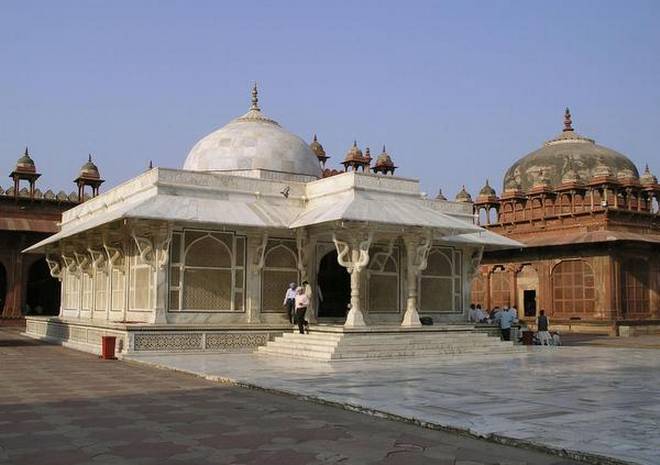
Revisiting Sheikh Salim Chisti’s tomb

Fatehpur Sikri (Agra District), UTTAR PRADESH :

Soothing experience: Sheikh Salim Chisti’s tomb in Fatehpur Sikri | Photo Credit: V_V_Krishnan

Reminiscing a slow but stimulating journey to Akbar’s capital city

When Marion and Sally, two English teachers of St Thomas’ School, Mandir Marg, set out on a trip to Fatehpur Sikri in 1978, they boarded the last train from Delhi. “It sounds ominous, like the last plane from Da Nang, when South Vietnam was overrun by the Viet Minh,” remarked Sally, “Yes,” recalled Marion. “Many struggled to board the plane. Some were left behind but in the melee an enterprising Western reporter was not only able to capture the heart-wrenching scene, but also played the hero by helping a hysterical woman and her kid take his seat on the plane as he jumped down to shoot what later turned out to be award-winning pictures of the airport scramble.”

The last train from Old Delhi station did not cause any such frenzied commotion. Over 40 years ago it was the one that was supposed to leave just before midnight, but the departure was invariably delayed. From Delhi Main station it ran up to Agra Cantt, its destination, and took seven hours to do so, usually even more. The passenger train had a whole lot of policemen travelling in it. As a matter of fact, right from the ticket window they made their presence felt when they pulled suspicious-looking youths out of the queue and slapped and punched them before asking questions like, “Where are you going? Where did you get the money to buy the ticket? Are you drunk? Who else is travelling along with you? Where do you live?” before searching them with their shirts off and pants down,” the two teachers recalled.

A view of Hiran Minar

When they caught the train they didn’t see those young men again. The train made three false starts, provoking someone to remark that the driver was shaking the compartments to fit in more passengers. Finally it started rolling, with several urchins rushing to catch it. By the time the train reached New Delhi station it was nearly 1 a.m. After that the Passenger stopped at every station big or small and as people got down, many were detained and searched by policemen on the platform. But the two girls reached Agra Cantt station safely. From there they were escorted by friends Sam, Lewis and this scribe by car to Sikri.

The shrine at Fatehpur Sikri is one of the most venerated places. Where wild animals once roamed a gem of a monument now greets the eye,” disclosed Sam. “It was here on a hill that Sheikh Salim Chisti dwelt and thither came Akbar the Great to seek his help for the birth of a son and heir apparent. He came on foot, leaving his camels, elephants and horses behind. The hermit sat with a rosary (tasbi) reciting the 99 names of Allah. The emperor’s prayers were heard and his Rajput queen bore a son, Salim, whom Akbar always called Sheikhu Baba, after the saint. Not only that, he built this magnificent city to commemorate the event and dwelt here with his Nine Jewels, like the Nine Worthies of the ancient world. “I have heard about the Nine Jewels,” said Marion, “but who were the Nine Worthies?” “Hector, Alexander the Great, Julius Caesar, Joshua, David, Judas Maccabaeus, King Arthur, Charlemagne and Godfrey of Bouillon,” replied Sam without batting an eyelid.

Akbar’s legacy

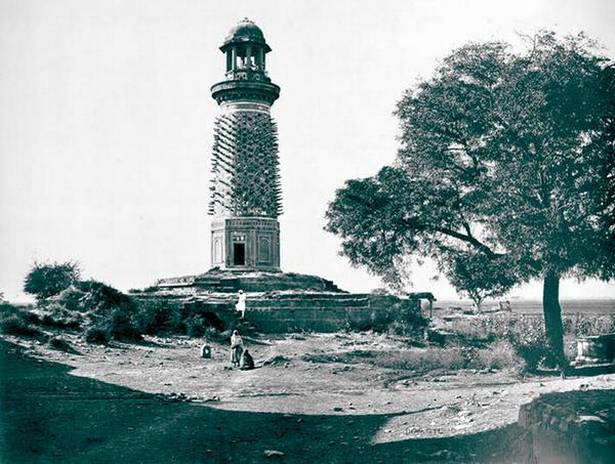
Sam related his tale standing by Sally’s side. She listened, her doe eyes thoughtful. As they approached the trellis of the shrine where people who seek favours tie a thread, she tied one too, making Sam wonder what she had sought. They next went to the Buland Darwaza and saw the town of Sikri spread out before them. Nearby is the water works set up by Akbar and from above the ramparts a man dived 80 feet into the baoli or step-well. They looked aghast. “Just you wait and see,” said Sam as Lewis nodded in approval. Soon a dare-devil emerged and salaam-ed them. They tipped him and he walked away to prepare for another demonstration. “These divers have been continuing the tradition for several centuries. VIPs and common people alike tip them. Perhaps, it will continue so long as there is water in the baoli. But it is a paradox that Akbar, who built a new capital here, had to desert it because of water scarcity.” Sam informed the party. They went down the steps of Buland Darwaza, Sam pointing out the Hiran Minar from where the shikar was shot in Mughal times, though some think that Akbar’s famous elephant was buried there and perhaps that’s why it is also called Elephant Tower.

At Sikri town they had the fabulous 24-layer Mughalia parantha. “Why is this parantha so thick?” enquired Marion. “It could feed one whole family.” “Quite right,” said Sam. “Ask Sally, when we were last here she had to take half the parantha to Delhi where we had it for breakfast the next day and the remainder for lunch.”

“Did Akbar really play with women as chess pieces? “enquired Sally.” Off course he did,” replied Sam. “Don’t talk rubbish. Listening to you one would imagine the great Akbar had nothing else to do but seduce maids of honour”, admonished Lewis. From there the party went to the Taj Mahal and then caught the Taj Express back to Delhi after a memorable day. Marion and Sally are now back in England and Sam works in Bangalore, where Lewis keeps reminding him of the visit whenever he rings up from Kolkata.

source: http://www.thehindu.com / The Hindu / Home> Society> History & Culture – Down Memory Lane / by R.V. Smith / October 01st, 2018

Muslims in Kolkata find a place to call home

Kolkata, WEST BENGAL :

Tanvi Sultana speaks at a gathering organised by Sanghati Abhijan at Jadavpur. Photo: Special Arrangement

Two voluntary groups enable Hindus and Muslims to interact and look beyond communal misconceptions.

After being turned away by several landlords for months, Aftab Alam and his three friends, all of them doctors, finally found a place to rent in south KolkataTheir elation, however, was short-lived. Soon after moving in, a neighbour told their landlord that they ought to be evicted, arguing, “Four Muslim men staying in a predominantly Hindu neighbourhood is problematic.”

Dr. Alam recalls, “It was disheartening. I rented the flat to the rest after strenuous night shifts. Suddenly, the peace was disrupted…[we had] huge expectations from Kolkata.”

His predicament was unexpectedly addressed. When he spoke of it on social media, Dr. Alam was contacted by Sanghati Abhijan (SA), a voluntary group that recently initiated its ‘Open-a-Door’ campaign to stop discrimination against potential Muslim tenants. SA’s volunteers resolved the situation by engaging peacefully with the neighbours, the landlord and the tenants themselves.

“We thank them for their support at a critical time,” says Dr. Alam. The intervention helped him and his friends stay on instead of relocating, as they had first planned.

‘Communal remarks’

In another instance, Tanvi Sultana, an undergraduate student, was allegedly targeted with “communal remarks” while looking for a flat in south Kolkata, at times being instructed not to bring beef to her residence. As with Dr. Alam and his friends, SA helped her live in the same apartment. “I thank them and wish for the initiative to grow,” Ms. Sultana says.

Since February, SA has helped about 30 such home-seekers in dire need via its social media group, ‘People’s Unity’. The platform provides a database of houses, apartments and guest houses, with information such on the location of the property, contact details of owners, and rent. The group’s meetings are eye-openers on the communal tensions between property owners and tenants.

“We only enlist property owners who are keen on letting out accommodation without discriminating against a particular faith or on the basis of marital status,” said Dwaipayan Banerjee, one of SA’s co-founders. However, Mr. Banerjee admits that while “hundreds” of tenants approach them, the property owners are “far fewer” in numbers.

SA’s members say they want to “break the culture of silence” which, in turn, could “curb rising Islamophobia.” Anindya Ray Ahmed, a student, was told openly by brokers, “Muslims are dirty and potential terrorists.”

He was ‘rejected’ by 16 landlords before he could find a place to live, but after accepting a deposit, the landlady telephoned him to say, “My husband has a problem with Muslims, so you cannot stay.” Mr. Ahmed alleges that she lowered his deposit down in a bag from her floor above, declining to “stand near a Muslim.”

SA’s members favour direct mediation, but their Facebook page has witnessed about 150 such disagreements and their resolution through virtual owner-tenant interaction on the social media platform.

In another incident, SA informed the Jadavpur University Teachers’ Association and authorities when two students faced misbehaviour from the superintendent and boarders at their hostel “for being Muslim.” An enquiry committee is looking into this case.

SA member Deborshi Chakraborty calls this “exponential ghettoisation” because, often, Muslim tenants seek proximity to their religious peers so that they will not be judged.

Alongside, SA has been prey to moral policing and expressions of paranoia by potential lessors.

The campaign has apparently irked Tripura’s former Governor Tathagata Roy, now Governor of Meghalaya. On August 11, he re-posted a newspaper article on SA and remarked on social media that the paper was trying to “teach Hindu house-owners of Kolkata that they must rent out their premises to Muslims. Otherwise, they are not sufficiently ‘secular’.”

Along similar lines, the Know Your Neighbour (KYN) campaign aimed at reducing communal tensions between Hindus and Muslims is gaining momentum in Kolkata and several districts, too. On a shoestring budget, KYN has organised meetings, sponsored heritage walks, staged plays, and focussed on food to find common ground.

Participants of the Know Your Neighbour campaign visit to Metiabruz in Kolkata. Photo: Anirban Kar | Photo Credit: Anirban Kar

Food walks

“We arrange food walks as the city has a massive culinary culture developed over centuries,” said Sabir Ahamed, a KYN organiser. “Cultural ignorance brews fear. Financial constraints coupled with little-known practices like the Dastarkhān, a traditional space for meals kept on a yellow cloth featuring Urdu couplets, became the basis for speculation over why Muslims ‘eat in bed’. Such ‘myths’ must be broken, which is why we translate the Muslim ‘jargon’ that often dictates daily routine,” says Mr. Ahamed. His intends to delve deeper into this in his forthcoming Masjidi Kolkata project.

KYN’s walks journey into quintessential ‘Muslim pockets’ of Kolkata — Metiabruz, Khidderpore and parts of central Kolkata around the mosques set up by Muslims from Kutch — are followed by interactions with locals.

“Although I am a resident of Kolkata, I had never been to Khidderpore. I took this opportunity to know more about Bengal’s Islamic culture, and to redeem myself of the guilt of assuming that it is a crime-prone area,” says Sanjukta Choudhury, who participated in a KYN walk.

Novelist, academic and foodie Samim Ahmed, an expert on both the Mahabharata and Nawab Wajid Ali Shah’s Bengal, says visits to areas like the Sibtainabad Imambara, a less ornate grave of the last King of Oudh, Wajid Ali Shah, “adds more excitement to the walk.”

Often, visitors discuss food traditions with locals and learn, for instance, about the German bread distributed in Kolkata during the Second World War, dry fruits, and recipes for delicious haleem and biryani.

Non-Muslims are invited to break bread with their Muslim counterparts in KYN’s ‘Dosti ki Iftari’ get-together.

Linguistic explorations, such as tracing the etymological roots of ‘azaan’ (the Islamic call for worship) ringing within the old architecture of the Nakhoda Masjid, are also encouraged.

“Hindus barely visit these pockets of Kolkata, whereas such paranoia is less intense in the rural areas. We aim to eradicate cultural misconceptions by spreading knowledge on prevalent Islamic practices,” Mr. Ahmed says, adding, “Such walks provide an opportunity for communities to know each other in an atmosphere of unmitigated fun.”

source: http://www.thehindu.com / The Hindu / Home> News> Cities> Kolkata / by Tannistha Sinha / Kolkata – August 25th, 2018

Second Lucknow ‘fixed’ in sepia

WEST BENGAL :

Liveried servants of the Nawab of Oudh wait with a palanquin in one of the rare photographs of Metiabruz, during Wajid Ali Shah’s time. The royal insignia is embroidered on the back of one of them. Copied from the original by Rashbehari Das

A portfolio of fast-fading photographs that provides possibly the only pictorial document of the second Lucknow that Wajid Ali Shah had created in Metiabruz, after he was exiled there, is urgently in need of preservation. The photographs are, moreover, some of the earliest examples of the art as practised the world over.

Amjad Ali Mirza of Garden Reach Road, in his 60s, who is a great-great-grandson of the ruler of Oudh, possesses the photographs. But he doesn’t know how to preserve these friable prints whose sepia has, in some cases, turned a ghostly shadow of its former self. Says Mirza: “I have no doubt about the authenticity of the photographs. The portfolio is ancestral property. It was handed down to me by my uncle, Yaqub Ali Mirza, who died in 1973.” Some of the photographs are captioned in Urdu. But the identity of the photographer shall always remain a mystery. Oscar Mallitte, a French commercial photographer, we know, had captured a view of the village at Garden Reach, circa 1864, but there is no evidence he did this assignment.

Abdul Halim Sharar (1860-1926) tells the story of Oudh in his book Lucknow: The Last Phase of an Oriental Culture. In it, he has also documented the last days of Wajid Ali Shah in Metiabruz, where he set up a city whose splendour surpassed Lucknow’s glory in the pre-Mutiny days. The palaces, pleasure gardens and zoo that the Nawab had created on the banks of the Hooghly come alive in these photographs, not much larger than postcards. It is as if chemicals and light had “fixed” the scenes that Sharar’s readers conjure up in their mind’s eye.

Soon after the Mutiny had fizzled out, the Nawab was released from confinement in Fort William and he returned to Metiabruz. There, while turning abstemious, he developed a passion for animals and for building beautiful houses. Before the Zoological Gardens was established in Alipore in 1876, the Nawab had already acquired a large menagerie that included rare birds, deer, horses and an open-air snake-pit that left visitors awestruck. But after Wajid Ali Shah’s death in 1887, Metiabruz became a hell-hole almost overnight.

The photographs prove that Sharar, when he described Metiabruz, never deviated from reality. Unlike the Lucknow architecture, with its embarrassment of stucco ornaments, the buildings of Metiabruz are constructed on the lines of European bungalows. The lines are simple but no less grand than the palaces of Lucknow.

Overlooking the river or surrounded by expanses of water, they are connected by bridges. Flags flutter on their tiled roofs. There is hardly any Islamic influence in their architecture, save a low-rise with triple minarets. Ostriches, deer, sheep and horses were the showpieces of the Metiabruz parkland. The snake-pit resembles a giant termite hill. One can almost hear the harsh calls of the clumsy pelicans and cranes strutting around the aviary. The liveried servants wait outside the palace gate with a palanquin. The piscine insignia of the royal family of Oudh is stitched on to the back of one man’s coat. There are two significant photographs. In one, the gang of smiling labourers carry construction material on their heads as they create the new Metiabruz. Another shows the buildings of Metiabruz being demolished. An exquisite way of life being wiped away forever.

source: http://www.telegraphindia.com / The Telegraph / Home> West Bengal / by Soumitra Das in Mirza / July 14th, 2003

The Ghazi of Peace

Bahraich, UTTAR PRADESH :

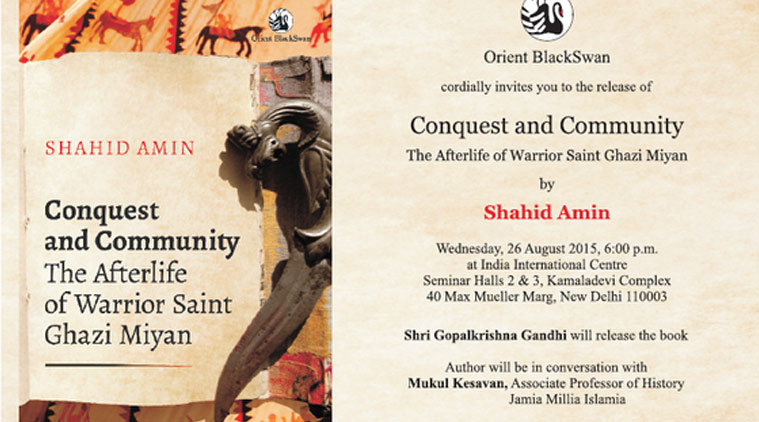
Shahid Amin, one of India’s most creative and learned historians, explores Indian syncretism through the legend of an 11th century warrior-saint.

Dargahs such as the one in Ajmer (above) and Bahraich symbolise India’s syncretic heritage. Vishal Srivastav

Book- Conquest and Community: The Afterlife of Warrior Saint Ghazi Miyan

Author: Shahid Amin

Publication: Orient BlackSwan

Pages: 348

Price: Rs 850

Three decades ago, the historian Shahid Amin wrote a brilliant piece, ‘Gandhi as Mahatma’, which is in many respects the locus classicus of what became the subaltern school of Indian history. What he offered was far more than what is ordinarily called “history from below”, showing that the masses made of Gandhi what they could, stepping outside the role habitually assigned to them by nationalist historiography. The Mahatma, Amin suggested, had been metamorphosed into a floating signifier.

In the present work, Conquest and Community, which cements Amin’s reputation as one of India’s most creative and learned historians, he extends this mode of analysis and turns his attention to Salar Masud or Ghazi Miyan as he is more popularly known, a warrior saint whose cult appears to have been well established by the 14th century.

GhaziMianMPOs26sept2018

The story of Ghazi Miyan begins, we may say, with Sultan Mahmud of Ghazni, whose name is calculated to turn the middle-class Hindu into a figure of rage: this early 11th century warrior made repeated incursions into India, “utterly ruined the prosperity of the country” and desecrated the shrine of Somnath. Folklore would inscribe a place for Salar Masud as Mahmud’s nephew, though contemporary records make no mention of such kinship, and representations of him as a warrior taking up arms on behalf of his uncle until he was felled in battle in 1034 against a confederation of Hindu kings began to proliferate.

More surprising still is the fact that the Ghazi was transformed into a Sufi saint, the extent of whose following and reputation might be gauged by the presence at his dargah of Mohammad bin Tughlaq, the Sultan of Delhi. Abdur Rahman Chishti’s 17th century hagiography, Mirat-i-Masudi, would displace Mahmud with Miyan Ghazi. To this day, the cult of the 11th century Indo-Turkic warrior saint thrives in north India, and Hindus and Muslims continue to be drawn in large numbers to his dargah at Bahraich.

Just how is it that the popular assent to the cult of Ghazi Miyan was garnered across the religious divide, and that too with respect to a figure associated in educated Hindu minds with the image of the rapacious Muslim invader? Amin says rather modestly that his “book eschews definitive explanations” and that he is not interested in asking why a 17th century Sufi wrote the text “at the time that he did,” or why “Hindu castes felt no compunction in installing a Muslim warrior on their domestic altar”.

He sets out, rather, to explore those aspects of the Ghazi Miyan narrative which took hold firmly in Gangetic popular culture. This leads him knee deep into some extraordinary anomalies. The commonplace view of Muslims in India renders them as beef eaters, but the Ghazi Miyan of folklore is a protector of cows, the saviour of oppressed cowherds, and a determined foe of the landlords who claimed as their prerogative the right to impregnate the virgin daughters of the Ahirs. In a similar vein, the ballads celebrate the story of the married Brahmin woman, Sati Amina, at whose home the sandalwood tree has dried up.

The family priest avers that the tree will regenerate upon the Ghazi’s arrival — and so it does. In gratitude, Amina washes the feet of the Ghazi and his followers, the Panchon Pir, and then serves them a lavish meal. What could be more violative of the social order than for a Brahmin woman to cook for a Muslim man? Yet, as the very name Sati Amina signifies — Amina is the Prophet’s mother — this is a story about in-between spaces and the risks (and pleasures) of transgressive and forbidden acts.

By the 19th century, as Amin shows, the cult of the Ghazi had become a source of acute anxiety to British, Muslim, and Hindu elites alike. Colonial ethnographers and officials had set out to clearly differentiate “Hindu” and “Muslim” communities, and the presence of a large number of Hindu worshippers at the sites associated with the Ghazi was immensely bewildering to them. On the specious ground that Bahraich was a “cosmopolitan” site and therefore not deserving to be characterized as a special religious endowment of the Muslims, the British sought to bring the dargah under their control and pocket the considerable donations left by devotees.

To the Ashraf or Muslim elites, their low-class and illiterate brethren who consorted with Hindu devotees were little better than idolaters, and the Muslim clergy had no difficulty in attributing the ignorance of Muslim devotees to their frequent social intercourse with Hindus. The zealots of the Arya Samaj and Hindu revivalists expressed alarm that “their” women were willing to surrender their dignity before a Muslim warrior saint, all too often in the hope of gaining male progeny. Such had been the consummate nature of Muslim dominance that, in Amin’s marvelously elegant and provocative rendering of the revivalist view, Hindus “partaking of holy unction” at “the altars of Muslim saints” were “virtually ingesting the leftovers from their Muslim neighbours’ kitchen.”

Few questions have animated Indian historiography, and discussions in the public sphere, as much as the relations between Hindus and Muslims. Amin’s study is a signal contribution to this literature, and he is particularly enlightening in his suggestion that while we cannot be dismissive of those who have posited a syncretic Indian past, it behooves us to view syncretism not only as a narrative of pluralism and accommodation but also in equal parts as a story of agonism, conflict and clash. His masterful study argues that while our narrative understanding of the Ghazi Miyan saga cannot stop at viewing him as “just a conqueror”, it must also contend with the fabrications and the verisimilitude engendered by local histories, ballads and folklore.

In what Amin calls “the quotidian culture of north India” reside perhaps our best hopes for neutralising those who would seek to homogenise the Indian past in the vain and dangerous quest to create the patriotic and “new Indian national”.

The writer is professor of history, University of California

source: http://www.indianexpress.com / The Indian Express / Home> Lifestyle / by Vinay Lal / October 10th, 2015

Gunning For ‘Gun House’ Once Again!

Mysuru, KARNATAKA :

GunHouse01MPOs26sept2018

Yesterday evening as I was turning the pages of SOM to scan the headlines, I literally jumped out of my skin in excitement upon stumbling on the news that the Gun House Imperial Restaurant that used to once function from the Palace Gun House was soon going to throw its doors open once again to customers after a gap of thirty long years. I do not know what this bit of news is going to mean to other people but to me it perhaps is the beginning of the coming true of a long cherished dream and the end of a sense of anguish that had been gnawing at my heart strings ever since the hotel suddenly shut its doors without as much as a hint that it was going out of business.

My first memory of this once very beautiful landmark of our city is from the early sixties when I used to go there once a year in the company of Prof. M. Salar Masood, the younger brother of my maternal grandfather Alhaj M. Khaleelur Rahman. He was a Professor of Geography at Manasagangothri and it was he who usually took all the children of the large household on frequent excursions to the Palace, the Jagan Mohan Art Gallery, the Zoo, the Brindavan Gardens and Srirangapatna.

The large household that I am talking about was more of a hostel than a home as at any given time it used to have at least a dozen children of all shapes, sizes and ages! This was the result of my grandfather’s penchant for inviting all his relatives, especially those from the Malnad areas, to leave their children under his care here in Mysuru for their education. That is how I became an inmate of this warm and cozy nest of immeasurable happiness when I joined the Good Shepherd Convent School in the year 1960.

Our visits to the Palace Gun House used to be an annual affair to watch the ceremonial firing of the canons housed there to mark the beginning of the Dasara festivities. It used to be a very exciting moment with all of us expectantly staring with unblinking eyes at the red-turbaned guard on horseback at the Southern Gate of the Palace. Upon a cue from the Durbar Commandant that the Maharaja had arrived, he would raise the red flag which used to be the signal for the head of the battery to shout “Fire” at the top of his voice. That was when the gunners in green tunics and red turbans would start touching the firing holes of their loaded canons with smouldering wicks in a sequence. The almost blinding orange flash would be accompanied by a deafening boom followed by a thick cloud of acrid black smoke that I would find intoxicating!

The batch of seven cannons would be reloaded twice to complete the volley of the twenty-one shots that had to be fired for the occasion. And, this reloading had to be done only after thoroughly rinsing the barrels with cold water and brushing them dry once again. This precaution was most essential to ensure that there were no traces of smouldering gunpowder inside that could prematurely set off the powder charge the moment it was rammed down the barrel!

A team of City Armed Reserve (CAR) Police personnel conducting dry practice of cannon firing at the Mysore Palace

Somewhere down the years, for some inexplicable reason, these seven cannons along with their four accompanying ox-drawn powder carriages were shifted to the long verandah of the Palace where they now stand all through the year except when they are taken to the Bannimantap Grounds on Vijayadashami Day for the breathtaking Torchlight Parade that is undoubtedly the pride of our annual Dasara!

Now, it is not just for the annual firing of the cannons that the Palace Gun House had become dear to me. Long after the show had stopped there and well after I had grown up into a man from the school boy that I was, I found myself drawn to it for a completely different reason. Very soon after I joined the Mysore Medical College to do my MD in Medicine the Mysore royal family converted the place into a restaurant. Because of its unique ambience and the excellent food it served, most of our unit get-together and dinners used to take place there. Then, when I got married, soon after passing my MD, it also became the favourite dining-out place for me and my wife, especially on every Saturday evening!

Incidentally, on the days when my practice was unusually good, I would invariably take her to the Metropole Hotel, which was again in a building that was once a royal Guest House. These two places were the ones that served the best chilli chicken and egg fried rice, which accompanied by some chilled Torino and the timelessness of each others’ company  was nothing but pure Nirvana for the two of us!

Gun House also had a live band where Sebastian Deniz, my favourite singer, used to perform with his fellow musicians on weekends. Fondly known to all as ‘Singing Seby,’ he knew all my favourite Jim Reeves and Frank Sinatra numbers so well that without the slightest need to be told he would start singing them the moment he would see us walking in! He had a voice that could make even unwilling hearts melt which was why perhaps we used to see so many boys taking their still undecided lady loves there for dinner!

Along with Seby’s voice the irresistible chilli chicken too perhaps played its part in breaking down any remaining traces of indecision and resistance to the proposals they made! So when the magical Gun House suddenly shut shop, it was sudden heartbreak for my wife and me and ever since then it has always been a bitter-sweet experience to drive past it. Sweetness from the warm recollection of the almost magical time we once had there and bitterness that it was the end of an era that was so dear to us! Hopefully, the clock is now all set to turn back and the good old days of our nostalgia are poised to come back once again!

source: http://www.starofmysore.com / Star of Mysore / Home> Columns: Over A Cup of Evening Tea  / by Dr.K. Javeed Nayeem MD – email:kjnmysore@rediffmail.com / September 21st, 2018

In a masjid during a mutiny

NEW DELHI :

MasjidMPOs21sept2018

In 1857, the mosque built by Shah Jahan’s wife was confiscated by the British

When the city of Shahjahanabad was being built by Mughal emperor Shah Jahan, his wives and daughter were also involved — they built mosques, markets and sarais to embellish the city.

The emperor’s daughter, Jahanara Begum, was the most prolific, and is best known for building the famous Chandni Chowk (moonlit square), a sarai or inn for travellers, and a beautiful garden known as Begum Ka Bagh.

The road to the mosque

Shah Jahan’s wives — Akbarabadi Begum, Sirhindi Begum and Fatehpuri Begum — built mosques in 1650 CE. The Fatehpuri mosque built by Fatehpuri Begum was aligned to the Red Fort — more specifically, to the Diwan-e-Am via the Naqqar khana (drum house) and Lahori Gate. Nobles who came to the court of the public audience had to dismount here and walk up to the court. As this was inconvenient for them, Aurangzeb had a barbican built in front of the Fort’s Lahori Darwaza so that they could dismount closer to it. Shah Jahan, who was then under house arrest in Agra Fort, sent a note to his son saying that the beautiful bride (Qila) had now been veiled.

The road from Fatehpuri mosque to the Fort passed through Chandni Chowk and Urdu Bazar (the original Urdu Bazar was located in front of the Lahori Gate till part of present day Chandi Chowk) and was lined with trees and flowers. These were cut in the beginning of the 20th century. Basheeruddin Ahmed, the writer of Waqeat e Dar ul Hukumat Dehli (1919), lamented that “the trees on both sides of the road provided solace to the inhabitants in the severe Delhi heat with its summer wind, the loo, in which the eagle abandons the eggs and deer become dark.” Today, when you go from the Red Fort to Fatehpuri mosque at the end of Chandni Chowk, you have to navigate your way through the nightmarish traffic, carts with goods, rickshaw-pullers, e-rickshaws, salesmen calling out to passers-by, and busy shoppers.

Crowded outside, peaceful inside

The mosque is next to the Khari Baoli, or spice market, so the entrance is always crowded. However, once inside the masjid, you realise that you’re in a different world — a world in which you feel a sense of peace and which is in stark contrast to the scenes outside.

Apart from the main entrance in the east, there are two other doorways — one in the north and the other in the south. With their arched entrances and parapets, these doorways have obviously seen better days. Shops outside flank them.

In the courtyard, the first thing that catches the eye is the lovely white dome with its longitudinal green stripes and green lotus finial. A masonry finial crowns it. Though the dome is made not of marble but red sandstone, it has been plastered so perfectly that it gives the impression of being made from marble when seen from afar. Red battlemented parapets run all along the roof in front of the dome.

The mosque, too, is built of red sandstone. Its unique feature is that it is the only medieval mosque with a single dome, flanked by two 80 ft tall minarets on both sides.

The mosque is built on a plinth of 3.5 ft. In the centre is a lofty archway with two wings which have three scalloped arches on each side. The central mihrab (in the direction of the qibla) is deep and high, and gives a beautiful appearance to the interior of the mosque. The pulpit next to the mihrab is the only piece of marble in the mosque. A mukabbir, or platform, was added in front of the main arch later, so that the imam’s words could be repeated from there and reach all those gathered in the courtyard.

There is a huge oblong tank for ablution in the courtyard that used to be fed by the famous Faiz Nahar (canal) in the Mughal era. A red sandstone enclosure next to it has graves of religious leaders who lived, prayed and taught in the mosque. There are galleries, with rooms on the ends on both sides.

From 1857 till today

The Indian sepoys, or ‘rebels’ as the British called them, who had risen up against the East India Company in 1857 had used this mosque. After the fall of Delhi in September that year, the mosque was confiscated by the British, and the courtyard, galleries and arcades on the three sides were put up for auction. As the dispossessed and displaced Muslims of Delhi post-1857 were in no position to buy it, Lala Chunnamal, a rich merchant of Delhi, bought it at the cost of ₹29,000.

In 1873, Anjuman Rashidin Sulah e Kul Islamia applied for return of the mosque. The British government agreed and tried to buy it back, but Lala Chunnamal refused. In 1877, the British offered an increased amount as well as four villages and bought it back from Lala Chunnamal’s son and restored it to the Muslims of the city. The masjid was brought back into use as a masjid, and remains so till today.

source: http://www.thehindu.com / The Hindu / Home> Opinion> Columns / by Rana Safvi / September 16th, 2018