‘RISING BEYOND THE CEILING’ releases list of Seventy Inspiring Muslim Women of Kerala
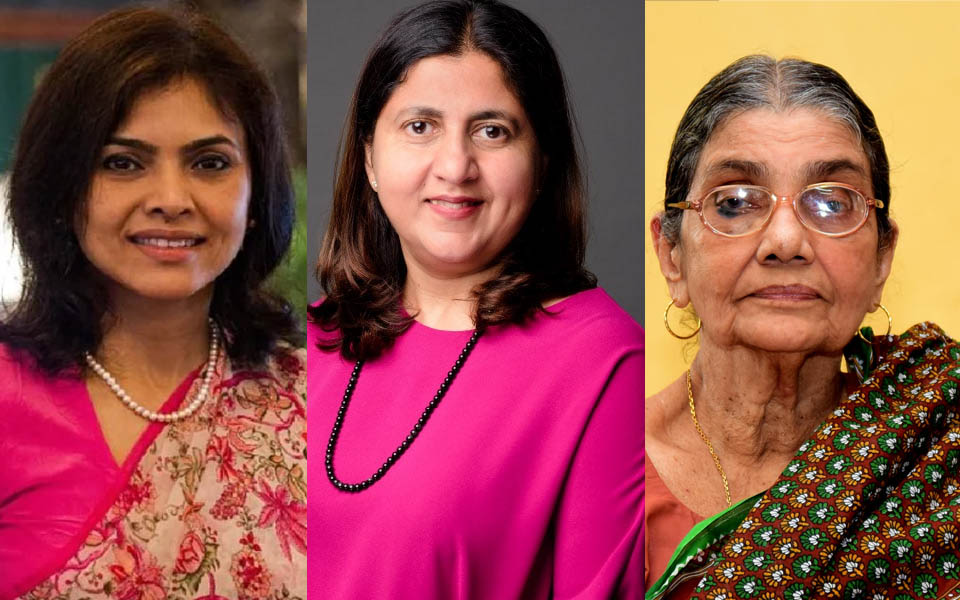
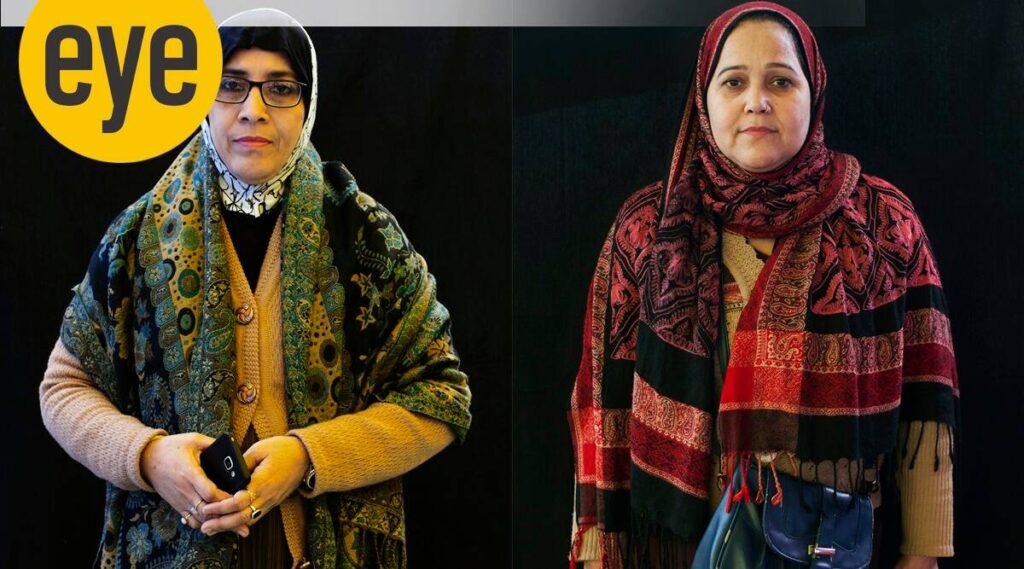
Nagma Mallick(L), Shabana Faizal(M) and Sara Aboobacker(R)
Kerala:
‘Rising Beyond the Ceiling’ (RBTC), an initiative born out of the need to change the stereotypical narrative about Muslim women in India has released its list of seventy Inspiring Muslim Women of Kerala. The list includes names like Shabana Faisal, Nagma Mohamed Mallick, Sara Aboobacker, and others.
“The seventy RBTC Honorees from Kerala celebrated in this book have displayed exemplary accomplishments in various fields. They are flying planes, serving as Civil Police Officers in the state, joining the national Indian Police Service, and leading as District Police Chief. They are contributing to nation-building in the Indian Foreign Service, Indian Administrative Service, and Indian Information Service and as Education Administrators, Directors of Departments of Industry.” RBTC said in its statement.
“They are contributing in leadership positions as managing directors, CEO, vice-chairperson, founders. They are influencers and singers, having an individual social media following of over 1 million and have been recognized in international and national awards including YouTube’s Golden Play Button,” it further added.
Global Inspiration Shabana Faizal:
Shabana Faizal, Chief Corporate Officer (CCO) and Vice-Chairperson of KEF Holdings UAE has been listed in the category of ‘Global Inspirations’.
“Shabana started her entrepreneurial career in 1995, when she set up Sophiya’s World – luxury and special items studio – in Calicut, following her marriage to Faizal E Kottikollon, chairman of KEF Holdings.” RBTC wrote about Shabana.
“Shabana has a driving passion to make a difference in the lives of the underprivileged, which led to the setting up of the Faizal and Shabana Foundation. The Foundation carries out campaigns to improve education, healthcare, sustainable livelihood, humanitarian assistance, youth development, and housing in India and the UAE. Her most recent passion project was the revamp and enhancement of the GVHSS in Nadakkavu, Kerala which has empowered more than 2,400 young girls to believe in themselves and their dreams and impacted the lives of more than 69,000 students across 65 schools in Kerala.” It further added.
Shabana is the daughter of a well-known entrepreneur and philanthropist late B.Ahmed Haji Mohiuddeen from Thumbay, Mangalore.
Impassioned author and writer Sara Aboobacker:
Kannada fiction writer Sara Aboobacker has been listed in the category of ‘Impassioned authors and writers’ adding that her stories narrate Muslim lives in the areas bordering Karnataka and Kerala, focusing on the inequities and injustices meted out to women by the male society.
“Aboobacker’s books largely focus on the lives of Muslim women living in the Kasaragod region, bordering the Indian states of Kerala and Karnataka. She focuses on issues of equality and injustice within her community, critiquing patriarchal systems within religious and familial groups. Her writing style is direct and simple, and she has stated that she prefers a realist approach to literature, prioritizing the expression of social concerns over stylistic embellishments. Her books have dealt with complex subjects such as marital rape, communal and religious violence, and individual autonomy.” RBTC wrote about Aboobacker.
Sara Aboobacker has received many prestigious literary awards, such as the Karnataka Sahitya Akademi Award, 1984; Anupama Niranjan Award, 1987; Rathnamma Heggade Mahila Sahitya Award, 1996, etc. She has seven novels, four collections of short stories, and one collection of essays to her credit. The Library of Congress has acquired eight of her works.
Leader in Administration Nagma Mohamed Mallick:
First Muslim woman in Indian Foreign Service (IFS) Nagma Mallick who is currently serving as Additional Secretary in the Ministry of External Affairs, has been named in the category ‘Leadership in Administration’ for contributing to nation-building in the Indian Foreign Service.
“An IFS officer of the 1991 batch, Nagma Mallick has served as the High Commissioner of India to Brunei from 2015 to 2018, and as India’s Ambassador to Tunisia between 2012 to 2015. Earlier she served as a staff officer to Prime Minister I.K. Gujral, then served as the first woman Deputy Chief of Protocol (Ceremonial). During her career in the IFS, Ms. Mallick has also served in France, Middle East, Sri Lanka, and Nepal.” It wrote about Nagma.
The list features a total of seventy Muslim women from Kerala and their stereotype-shattering stories of courage hard work and resilience. The list includes names like Airline pilot Afra Abdullah, IAS Officer Adeela Abdullah, Student Activist Aysha Renna, Life Coach Sahla Parveen and others.
About RBTC:
Rising Beyond The Ceiling (RBTC) is an initiative born out of the need to change the stereotypical narrative about Muslim women in India. It is a celebration of the achievement, endeavor, and diversity of Indian Muslim women. RBTC shines a spotlight on Muslim women’s contributions to nation-building in a variety of ways and professions. Founded in April 2020 by Dr. Farah K. Usmani, this initiative aims to make Muslim women’s stories more visible, provide positive role models for future generations, nurturing young women’s confidence and ambition in all spheres. RBTC works across various platforms- the website, publications, multimedia as well as an outreach young women’s mentorship programme.
RBTC is putting together inspiring profiles from fourteen states in India that are home to nearly eighty percent of the country’s hundred million Muslim women population. Besides state and national levels, there is also an RBTC 100 list under finalization of Global Inspirations which includes women who have done their initial studies in Indian institutions and are now making their mark in countries across the globe. A compendium of Inspirations from the Past compendium of those amazing Muslim women who are not with us now, but on whose shoulders we stand today. We are also excited about our amazing Under-30 Youth Inspirations list. RBTC will continue to institute annual Muslim women honorees lists to share the stories of achievements, courage and resilience.
source: http://www.english.varthabharati.in / Vartha Bharati / Home> India / by Rising Beyound the Ceiling / January 30th, 2022
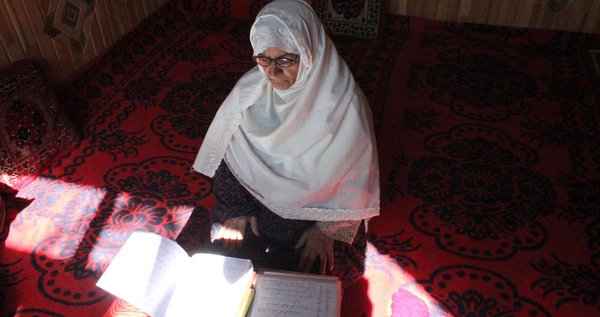
Khatija Begum (75) over the past 40 years has written thousands of poems and has compiled hundreds of books. It was not an easy job for her to do so, being illiterate she could not pen it down by herself. Whenever some verse come to her mind she would call somebody to write it. It was through her dedication to poetry that she was able to compile her couplets into books successfully.
The narrow allies of Zaina Kadal area of Srinagar lead to her house. Every day she looks at the pile of her poetry collection placed on a desk in her room with a deep sigh hoping that her books will be published someday.
“While I was into the journey of my poetic life, It was not easy for me to memorize each verse of my poetry so I asked my son to bring a tape recorder for me”. Heemal (pen name) recalls how she used to wake up at night to offer prayers and on the same prayer mat record the verses that would come up to her mind.
When Khatija took bundles of those recorded cassettes to a writer for transcription he asked for 70 ₹ per page which was a huge amount at that time so she start doing hand embroidery to earn some money. And spend all that money to preserve her poetry.
It took her 7 years to get her first book published through J&K State Cultural Academy by the title “Ser e-Asraar” which means “The secret of Mysticism”.
Khatija says that the journey of her poetic life started when she was 35 years old. At that time she was busy with her ill mother spending all her time with her, praying for her recovery. One day when she brought her mother to visit a doctor she encountered something unusual, some verses came up to her mind but she was not able to apprehend what was happening to her. After returning home she told her niece about it who wrote those verses for her.
She believes that poetry came into her life because of the prayers she got from her ill mother during her ailment. She dedicates her poetry to a Sufi saint whom she was very close to and consider like her father.
“When I took my books to show him, he was overwhelmed and he told me to endure a lot of patience so that I can bear all the hurdles that will come to my path in this journey. Moreover, he told me that what I have achieved is priceless” with teary eyes she said.
When she recites her poetry, everything around gets blurred and one gets lost in those mystic verses. She is a poetess who needs love and support so that she will be always remembered among the great poets of Kashmir.
source: http://www.milligazette.com / The Milli Gazette / Home> Community News / by Urvat Il Wuska / The Milli Gazette Online / April 10th, 2022
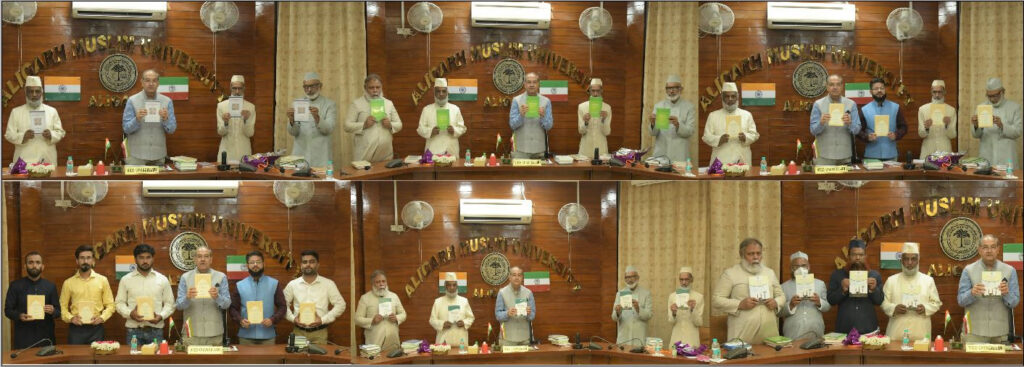
Eight books published by the K A Nizami Centre for Quranic Studies, Aligarh Muslim University (AMU) addressing key themes on the history of South Asian Muslims, diverse responses to the scholarly contributions and rationalist traditions of Islamic scholarship were released today at the Vice Chancellor’s Office.
They are ‘Contemporary Islamic Scholarship in South Asia: An Assessment’, ‘Humanness of Prophets: The Quranic Prophetology’ and ‘Contribution of Dar-ul-Uloom Deoband to Tafasir’ by Dr Abdul Kader Choughley; ‘Dil Jo tha Zulmat Kadah, Ma’ah-e-Munawwar Hogaya’ by Dr Mohammad Haris Mansoor; ‘Qurani Ulum ka Irtiqa Ahd-i-Islami ke Hindustan Mein’ by Prof Zafarul Islam; ‘How to Promote the Study of Quran among Women’, edited by Dr Nazeer Ahmad Ab. Majeed and Dr Arshad Iqbal; ‘Tarjumani Rahmani’ by Prof A R Kidwai and ‘Allah ki Kitab ki Paanch Mangay’ by Prof Fazlur Rahman Gunnouri.
“These books will answer some of the most frequently asked questions about traditions in Islamic faith, offer a new understanding on the works of Islamic scholars, explore key Islamic events and provide an understanding of important traditions in Islamic philosophy and the intellectual movement that emerged from South Asian Islam”, said AMU Vice Chancellor, Prof Tariq Mansoor while releasing the books.
Prof A R Kidwai (Honorary Director, K A Nizami Centre for Quranic Studies) pointed out: “The K A Nizami Centre has published over 80 titles on Quran-related scholarship since 2013. Publications of the Centre represent contemporary literature on furthering Quranic understanding and research in Hindi, English and Urdu by authors from various disciplines including translations from various languages”.
source: http://www.amu.ac.in / Aligarh Muslim University / Home / by Public Relations Department / Aligarh, July 13th, 2022
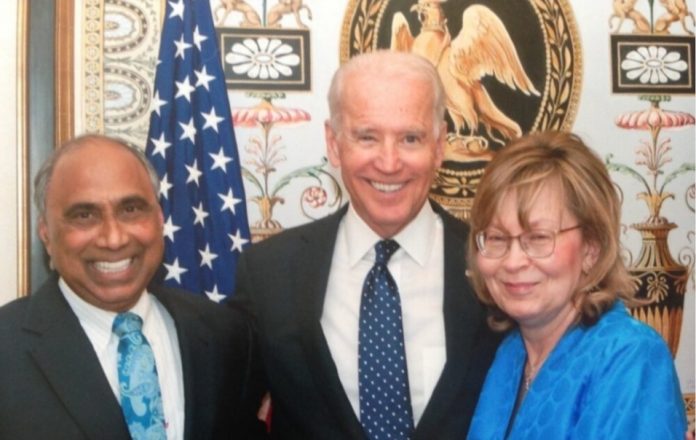
Frank Islam and his wife Debbie Driesman with Joe Biden.
Washington :
President Biden has appointed Dr. Frank Islam as a member of Commission on Presidential Scholars.
The Commission on Presidential Scholars is a group of eminent private citizens appointed by the President to select and honor the Presidential Scholars.
Commissioners are selected from across the country, representing the fields of education, medicine, law, social services, business, and other professions. The Commissioners make the final selection of the 161 Presidential Scholars. The Scholars demonstrate exceptional accomplishments in academics, the arts, career and technical education and an outstanding commitment to public service.
Dr. Frank Islam
Indian born Frank Islam is an entrepreneur, philanthropist, and civic leader with a special commitment to civic, educational, and artistic causes.
He currently heads the FI Investment Group, a private investment holding company that he founded after he sold his information technology firm, the QSS Group, in 2007.
Islam serves and has served on numerous boards and advisory councils including the John F. Kennedy Center for the Performing Arts, the U.N. Foundation, the U.S. Institute of Peace, and the Woodrow Wilson Center. He has also served or serves on boards and councils at several universities including John Hopkins, American University, George Mason University, the University of Maryland, and Harvard University.
An AMU alumnus Islam has written two well-regarded books on the American condition: Working the Pivot Points: To Make America Work Again and Renewing the American Dream: A Citizen’s Guide for Restoring Our Competitive Advantage.
He blogs regularly on Medium and was a contributor to the Huffington Post for nearly a decade.
In 2018, Islam established the Frank Islam Institute for 21st Century Citizenship which maintains a website and publishes a monthly newsletter featuring articles and other material directed at addressing the civic engagement deficit and challenges to democracy in the U.S. and internationally.
Islam received his B.S. and M.S. in Computer Science from the University of Colorado at Boulder.
source: http://www.muslimmirror.com / Muslim Mirror / Home> Education> Indian Muslim> Positive Story / by Muslim Mirror Network (headline edited) / July 16th, 2022
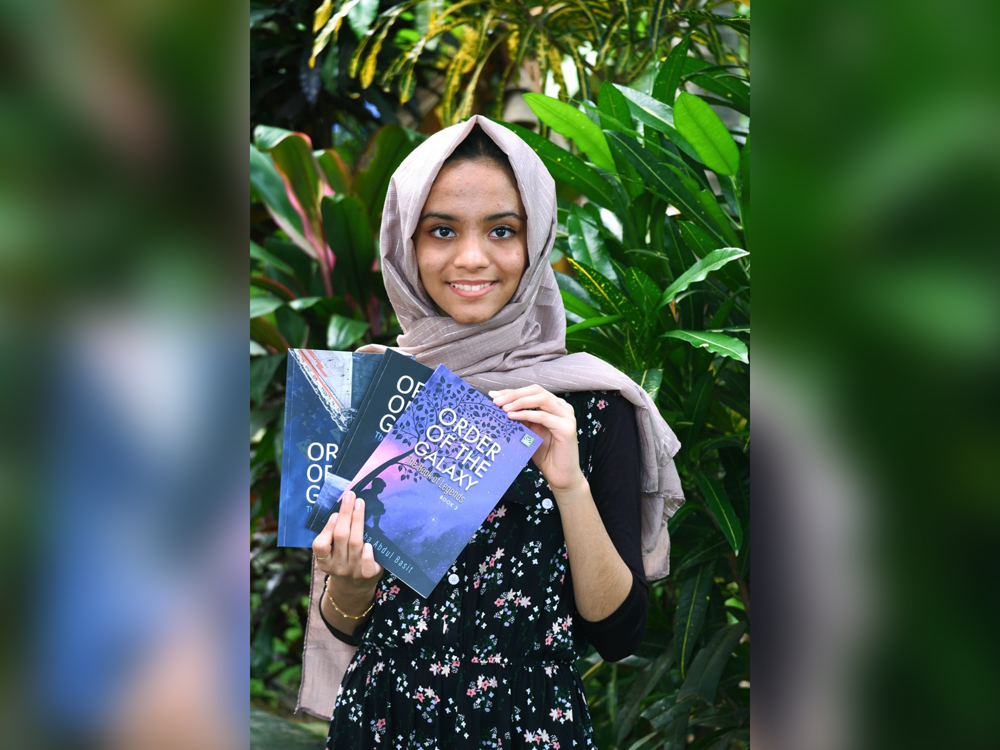
A Qatar-based 11-year-old student Laiba Abdul Basit has won the Guinness World Records as the youngest female person to publish a book series.
Laiba, hailing from the southern Indian state of Kerala, has accomplished this feat after her second book was published on August 29, 2021, while she was 10 years and 164 days old.
Laiba Abdul Basit surpassed the record of Ritaj Hussain Alhazmi of Saudi Arabia, who penned three novels before the age of 12 years 295 days.
Laiba published a three-book series called “Order of the Galaxy”, a fantasy story related to children’s fiction. The first book in this series titled “The War for The Stolen Boy” was published by Amazon and later by Lulu Online. The second book “The Snowflake of Life” was published by the Rome-based Tawasul International, while India-based Lipi Publications brought out the last book in the series, “The Book of Legends”. The second edition of her first and second books was also published by Lipi Publications.
A sixth grade student at the Olive International School, Doha, Laiba has been showing interest in reading and writing since the very young age. She started to write small stories and phrases on pieces of papers and used glue on walls of her house.
An ardent reader of fiction, science, religion, and biographies of prominent personalities, Laiba’s favourite authors include Enid Blyton, J K Rowling, Ann Frank, and Roald Dahl. Laiba inherited her passion for reading from her grandfathers, KM Abdur Raheem and Mohammed Parakkadavu, who were cultural and social activists in GCC. Support from her father Abdul Basit and mother Thasneem Mohammed has encouraged Laiba’s literary skills.
source: http://www.thepeninsulaqatar.com / The Peninsula Qatar /Home> General / July16th, 2022
Islam came to Tamil Nadu in its earliest days when the Arabs became Muslims. The Keelakarai Jumma Masjid, built in the 7th century, with prominent Tamil architectural characteristics, is one of the oldest mosques in Tamil Nadu. So is the mosque near the Kottai (Fort) Railway station in Tiruchi which is dated 743 AD.
The Arabic inscription of A.H. 116/134 AD at Tiruchirappalli and the inscriptions of the ninth century at Kayalpattanam about endowments given to the mosques by Pandya rulers are conclusive pieces of evidence about the presence of Muslims in Tamil Nadu right from the eighth century.
The early Muslims settled in the coastal towns of Tamil Nadu and functioned as a guild for themselves. They were called ‘Anjuvannam’ meaning assembly or congregation. The name ‘Anjuvannam’ is found in some copper plates and inscriptions of the 12-13th centuries AD that is considered to be the merchant guild of the Muslims. An old mosque in Thenkasi, Thirunelveli District is called ‘Anjuvannam Pallivasal’ that exists even today testify that the name ‘Anjuvannam’ is attributed to the Muslims.
Categories of Muslims in Tamil Nadu
If one has to randomly bracket the Muslims of Tamil Nadu, there can be broadly three categories. First, the Muslims of Arab-Tamil ancestry, second local converts to the Islamic faith, and the third Dakani Muslims who migrated from other parts of India to Tamil Nadu.
Muslims of Arab Ancestry
The Muslims of Arab-Tamil ancestries are the Tamil-speaking people who form a distinct category among the Muslims in Tamil Nadu. The prominent groups among them are the Marakkayars, Labbais, Rowthers, Sonaka Mapillas, Kayalars, and Thulukkar.
Marakkayars- Marakkayars are boat people of Arab descent. They are a maritime trading community since the 7th century. They traded in pearls, rubies, and other precious stones. The majority of the Marakayars currently live in coastal areas like Keelakarai, Kayalpatnam, and Nagore. They claim a higher social and economic status than other Muslim communities. They marry within their community from Keala, Sri Lanka, or their folks in Southeast Asian countries. The 11th president of India A. P. J. Abdul Kalam was born in a Marakkayar family. Educationist B. S. Abdur Rahman, the founder of Crescent College which is now B. S. Abdur Rahman University also belonged to the Marakkayar community.
Labbais – Labbais are also descendent of Arab merchants. They brought with them some Arabs as helpers who used to respond to the calls of their masters with the word ‘Labbaik’ which means “Here I Am”. Hence these Muslims and their offspring came to be known as ‘Labbais’. Their children of Arabs through their Indian wives are also known as ‘Labbais’. The word Labbai is also applicable to the Hindu converts to Islam. The Census Report of 1881 says that “the Labbais are distinct from Marakkayars. They are known as Coromandel Moplas, with a slight admixture of Arab blood and native converts. They are thrifty, industrious and enterprising, plucky mariners and expert traders.” Currently, ‘Labbais’ is considered to be a class name of the Muslims for the purpose of educational and job concessions in Tamil Nadu.
Mapillas-The Malayalam-speaking people of Malabar were known as Sonaka Mapillas in Tamil Nadu.The word Sonaka was also the early name of the Tamil Muslims. The word was used to identify Muslims of Indo-Arab descent and the Arab part of their ancestry was Yemen. The word Sonaka got corrupted as “Yavana” that finds mentioned in the ‘Sangam’ literature of the 2nd century AD.
Rowthers- Rowthers is another group of Tamil – Arab descent whose mother tongue is Tamil. They were mainly connected with the horse trade or were horse trainers or cavalrymen in yore. They were also known as “Guthirai Chettigal” meaning horse traders. Rowthers are a prominent and prosperous Muslim community in Tamil Nadu. They are settled in the Thanjavur, Tiruvarur, and Nagapattinam districts.
Kayalars- Kayalars are another major group of Tamil Muslims of Arab descent. They make up the four major sub-groups of the Tamil Muslim community’s Arab ancestry.
Thulukkar – There is a Muslim group referred to as Thulukkar which means people of Turkish origin. Several works of Tamil literature refer to the Muslims as Thulukkar. This term is commonly used by non-Muslims to address all the Muslims in Tamil Nadu.
All these Muslim groups have linked up with Tamil culture and society through marriage alliances with the locals and most of these groups have their occupations as merchants and traders and are currently business people.
Pasmanda Muslims of Tamil Nadu
The second categories of Muslims are converts from Hindu OBC and Dalit communities. These conversions happened over centuries through peaceful preaching by the Sufi saints who came from the Arab lands. The Islamic preachers went to the underprivileged sections of the caste-ridden Hindu society and converted them to Islam to free them from the bondage of caste slavery. The local converts are at the bottom of the social structure. Though their social status may have improved after the conversion to Islam they remain economically deprived and come under the Pasmanda Muslim community in Tamil Nadu. They are a distinct group in the Tamil Muslim society and are in need of social intervention to climb the economic ladder. These converted Muslims face the problem of reservation in government jobs. While converts to Christianity are considered as ‘Backward Classes’, there are no such provisions for Muslims.
Dakini Muslims of Tamil Nadu
The third category of Muslims in Tamil Nadu is the Dakini Muslim community. Dakini Muslims are a distinct community even though this group is only a small minority in the Muslim society. Their importance derives from the fact that they form the political elite among the Muslim community of Tamil Nadu. Dakini Muslims can speak Tamil/Hindi/Urdu and other regional languages. These categories have numerous groups among them namely, the Syeds, Shaikhs, Pathans, Mughals, or Navayats (a subgroup of Konkani Muslims). Among Dakani Muslims one of the notable groups is the ‘Pathans’ the Muslims of Pashtun ancestry. The term “Pathan” sometimes extends to all Urdu-speaking Muslim migrants from North India. They are settled in fortress centers such as Arni, Chanji, and Jinji and in Arcot. The lesser fort-mart towns like Trichy and Madurai also have Pathan settlements. It is also the catchment area for Tamil Muslims in the Indian Armed forces.
Muslim Weavers of Tamil Nadu
The earliest epigraphic evidence of Muslim weavers of Tamil Nadu is from the 16th century which suggests the active role of Muslims in the weaving industry of this Southern State. ‘Pañchu Kotti’ and ‘Achchu Katti’ are the most important Muslim weaver communities of Tamil Nadu. The Pañchu Kottis are densely populated in the modern Trichirappalli and Thanjavur districts. The Achhcu Katti is densely populated in the areas around Salem, Namakkal, Trichy, and Thanjavur districts. These areas are textile centers of Tamil Nadu and Tamil Muslims have a sizable hold over the textile business.
Tamil Muslims are not a homogeneous community
Tamil Muslims are not a homogeneous community. These three broad categories of Muslims are riddled with a maze of groups and subgroups. During British rule, certain Tamil Muslim groups began to be listed as social classes in the official gazettes. Tamil Muslims are divided into various divisions and their class hierarchy exists that has become a caste-based hierarchical division over a period of time. Even though each group has a professional identity the fact is these professional groups have fossilized into caste-like formation, and crossing over from one to another is ruled out.
Rise of Tamil Muslims of Arab Ancestry
The Tamil-speaking Muslims of Arab-Tamil ancestry are mentioned in the Tamil Sangam literature of the 2nd Century AD. The word “Yavana” in the Sangam literature is not used for Greeks but is for Muslims who have come from Yemen.
The Muslims of Arab ancestry were traders and merchants who inherited their dominant position in South and Southeast Asian trade from the Arabs, who had acquired a virtual monopoly of Indian maritime trade and commerce from the third century. The Tamil-speaking Muslims of Arab-Tamil ancestry dominated maritime trade on the Coromandel coastline till the 15th Century. They were the lord and masters of the Indian Ocean region for close to 15 hundred years.
The Chera, Chola, and Pandya rulers patronized them and donated lands for their places of worship. The native Hindu rulers of Tamil Nadu and Kerala encouraged Arab-Muslim traders to settle down in their lands. The Zamorin or the hereditary monarch of the Kingdom of Kozhikode (Calicut) in Kerala issued an edict to get a sufficient number of Arab Muslims to maintain their ships. He issued a decree that the Arab traders can marry a local woman and bring up one or more male children as a Muslim.
The Arab-Tamil-speaking Muslim traders brought much prosperity to India. A 14th-century Arab writer, Ibn Fadbullah ul-Omari, had written that in India, seas were pearls and trees were perfumes! English records describe the ports on the Tamil Nadu coast as “Moor ports,” Cuddalore is mentioned as ‘Islamabad” and Porto Novo or Parangipettai, as “Mohammad Bandar.”
Thousands of records abroad speak about the maritime activities of the Arab-Tamil Muslims, where they are portrayed as shipbuilders, mariners, sailors, traders, pearl divers, pearl merchants, and salt manufacturers. The whole economy of the eastern coast of Tamil Nadu was in the hands of Arab Tamil Muslims, and it was these people who took Islam and Tamil language from Tamil Nadu to Southeast Asian countries.
Tamil – Arabic link language- Lisan Al-Arwi
Arabs had a problem interacting with Tamil, a Dravidian language as their language Arabic was a Semitic language that had no connection with Tamil. So a link language called ‘Arabu Tamil’ (or Lisan al-Arwi ) was developed in Tamil Nadu. It synthesized the two languages where Tamil was written in an adapted Arabic script. This helped Arabic settlers in Tamil Nadu to learn Tamil through Arabic script. This language helped in writing accounts of their business activities. Arab Muslim traders and the native Tamil converts to Islam came into closer contact as a result of this link language. The Arwi language and literature provided a kind of platform for Islamic teachings and learning. In the words of Edgard Thurston, Arabu-Tamil is a language developed for the benefit of the Tamil Muslims of Arab ancestry. Even today, many religious schools (madrassas) teach Arwi language as part of their curricula. Textbooks like ‘Simtus Sibyan’ (a guide for youngsters) are still available in bookstores in Tamil Nadu. The coming of the modern printing press put an end to the spread of the Arwi language.
Fall of Tamil Muslims of Arab Ancestry
The Arab Muslim monopoly over mercantile trade declined around the 15th century, after the arrival of European traders like the Portuguese, the Dutch, the French, and the British into the Indian Ocean region. The power of the Arab Muslim mercantile community declined due to stiff competition from the European seafarers and their reluctance of them to adopt new shipping technology and modern trade practices.
It was the Portuguese who came first, followed by the Dutch the French, and the English. The European merchants introduced the system of monopolies and unfair trade practices based on their military might and political clout. The local rulers, both Hindu and Muslim, were indifferent to the maritime trade. They had no time or interest in maritime trading activities. They did not make any effort to explore trading avenues or make maritime trade grow along healthy lines.
The Indian rulers instead of protecting the interests of the local Muslim traders extended all facilities to the Portuguese and invited them to their ports. The Indian rulers gave the Portuguese the monopoly to trade in spices, gold, and silver. The Portuguese converted Paravas, an oppressed Hindu fishing community to Christianity by 1537. They assisted them to supplant the Muslims from the pearl fishing trade. In this way, the Pearl trade was entirely in the hands of the Muslims and passed into the hands of the Paravas. The Tamil Muslims also lost their monopoly over the horse trade to the Portuguese by 1530.
When the British arrived, they supported the Chettiars, a community of Hindu traders from Karaikudi in Tamil Nadu. This was done systematically to further weaken the Muslim traders of Tamil Nadu. The Chettiars supported the British with their money for their Indian conquest. As a result, the presence of the Chettiars in the economic scene on the Coromandel Coast and South East Asia, increased, while that of the Tamil Muslims declined.
Current Status of Muslims in Tamil Nadu
The Muslim population in Tamil Nadu is 6 percent. Most of the Urdu Muslims are concentrated in Vellore districts like Ambur and Vaniyambadi. In the North Arcot district and present Vellore District, they own the tanneries and are engaged in the leather trade. There is a clear-cut divide between Muslims of north Tamil Nadu and those from the South of the state. In the southern districts, Muslims are concentrated in districts and places like Ramanathapuram, Pudukkottai, Tirunelveli, Nagapattinam Pulicat, Kilakkarai, Kayalpattanam, etc.
The Tamil Muslims in Southern Tamil Nadu are engaged in cotton manufacturing activity and in these districts spinning and weaving cotton is the mainstay of their trade practices. Towns such as Nagore, Kayalpatanam, Kilakkarai, and Adirampatanam in South Tamil Nadu have become centers of wealth generation among the Muslim community. Some of these places have also emerged as centers of Islamic teaching and learning.
Tamil Muslims have contributed their best to the Tamil culture and society. Their manners, customs, dress, food, and festivities have been influenced by Islam and the Tamil language and culture. A true synthesis of Tamil and Islam can be seen in Tamil Nadu.
Tamil Nadu is a very good example of an inclusive society where people of different races and religions and languages are equally respected. In terms of communal harmony, Tamil Nadu is an oasis in India where religious toleration between communities is preached and practiced in the true sense of the word. Here Tamil nationalism and pride in the Tamil language and culture is the rallying point for peaceful coexistence.
——–
Syed Ali Mujtaba is a journalist based in Chennai. He can be contacted at syedalimujtaba2007@gmail.com . This write-up is prepared after reading Dr. J Raja Mohamad,’s book: Maritime History of the Coromandel Muslims, (A Socio-Historical Study on the Tamil Muslims 1750-1900), published by the Government Museum, Chennai, India, in 2004.
source: http://www.muslimmirror.com / Muslim Mirror / Home> Culture> Indian Muslims / by Syed Ali Mujtaba / July 13th, 2022
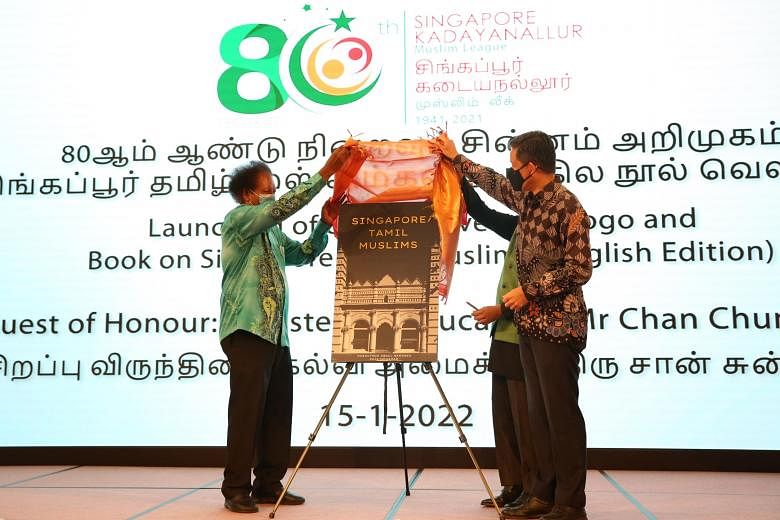
(From left) Co-authors A R Mashuthoo and Raja Mohd with Education Minister Chan Chun Sing at the launch of the English edition of Singapore Tamil Muslims. PHOTO: TAMIL MURASU
Singapore :
The Tamil Muslim community in Singapore has contributed to the Republic’s multiracial and religious harmony, with collective efforts that have strengthened the nation’s social compact, said Education Minister Chan Chun Sing on Saturday (Jan 15).
In 1946, for example, members of the community dedicated a portion of their salaries to help the Singapore Kadayanallur Muslim League (SKML) start the Umar Pulavar Tamil School, the first Tamil-medium secondary school in South-east Asia at the time.
The school played an important role in advancing and shaping Tamil language education here, and many graduates have taken up the baton and become Tamil teachers today, Mr Chan said.
“While the school was closed 40 years ago, its name lives on in today’s Umar Pulavar Tamil Language Centre, which continues the important mission of transmitting Tamil language and culture to the next generation.”
The centre is in Beatty Road.
Mr Chan was speaking at the launch of the English edition of a book titled Singapore Tamil Muslims.
The event was held in conjunction with SKML’s 80th anniversary celebrations in Chui Huay Lim Club in Newton.
The book, which looks to provide a better understanding of the Tamil Muslim community in Singapore, is supported by organisations including the National Heritage Board and Islamic Religious Council of Singapore.
It has forewords by President Halimah Yacob and former senior minister of state Zainul Abidin Rasheed.
The English edition of the book, which was first published in Tamil in 2015, is authored by SKML president Raja Mohamad and deputy president A. R. Mashuthoo.
In his speech, Mr Chan highlighted how the spirit of grit, resilience and service to community has shone brightly among Singapore’s Tamil Muslims.
Many have become successful professionals and leaders of the community, he said.
“But they have all imbibed the spirit of service, and continued to pay it forward to the community and nation.
“Importantly, these collective efforts by your community have also strengthened Singapore’s social compact – where we help the young to have a good start in life, give more to those with less, and enable our people to bounce back from adversity.”
The minister expressed his hope that the book can serve as a reminder, not just for the Tamil Muslim community but also to a broader audience, that Singaporeans must honour and protect what they have, and inspire the next generation to continue paying it forward.
The book can be purchased by contacting SKML, and funds raised will be used for its work to support the disabled community and education needs of children from low-income families.
source:http://www.straitstimes.com / The Straits Times / Home / by Choo Yun Ting / Jan 15th, 2022
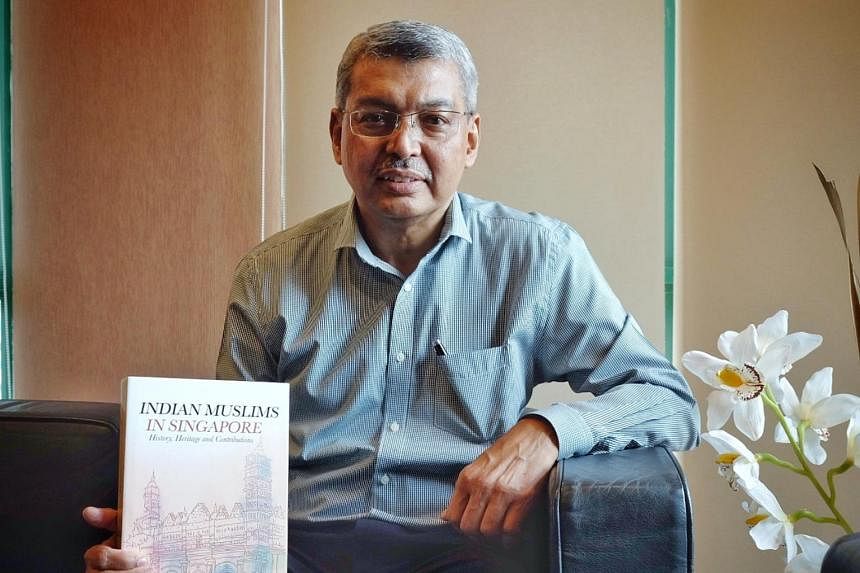
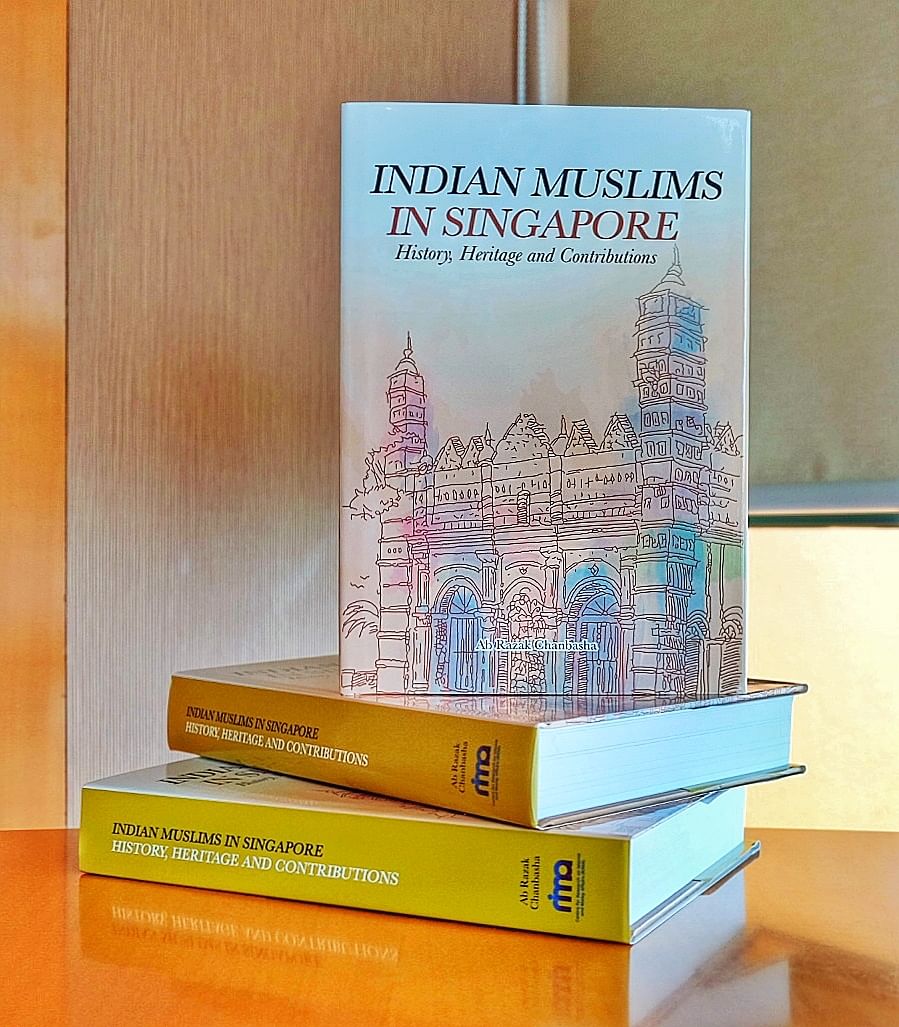
Indian Muslims in Singapore: History, Heritage and Contributions is authored by Dr Ab Razak Chanbasha and published by the Centre for Research on Islamic and Malay Affairs. PHOTO: BERITA HARIAN
Singapore :
A number of Indian Muslims here face a dilemma: To hold on to the languages and customs of their forefathers or to embrace a “practical assimilation” into the wider Muslim community. This issue is raised in the new book Indian Muslims In Singapore: History, Heritage And Contributions, which documents the history, heritage and contributions of the community.
It is authored by Dr Ab Razak Chanbasha and published by the Centre for Research on Islamic and Malay Affairs (Rima). Launched by President Halimah Yacob on Saturday (June 11), the book traces the community’s transition from groups of sojourners who came to colonial Singapore to make a living into a settled community forming a sizeable minority within both the Indian and Muslim populations.
Rima is a subsidiary of AMP Singapore, which raised more than $250,000 for the benefit of the community in conjunction with the book launch.
As at 2020, Indian Muslims constituted about 23 per cent of the Indian community and 13 per cent of the Muslim community.
Speaking to an audience of about 140 at the Islamic Religious Council of Singapore, President Halimah said that while the contributions of some Indian Muslim pioneers like writer Munshi Abdullah are well documented, others have only been remembered in word-of-mouth accounts and are not sufficiently researched and codified.
“This book therefore strives to fill this gap for the Indian Muslim community, so that we can better appreciate the significance of their contributions,” she said. “Let us emulate the pioneers who never viewed their circumstances as limiting, but instead focused on how they could do better for the community and their children; always looking at the possibilities ahead.”
The book begins by tracing the ethnic and geographical origins of the community and the trades they came to work in the growing port city that was Singapore in the 1800s.
Muslims of various ethnicities migrated here from British India, including Tamils from the south and Gujeratis from the west. Some set down roots and began building mosques, including Angullia Mosque and Bencoolen Mosque.
The book details the history of these mosques, the families, institutions and personalities behind them, and the religious and civic contributions of the community, many of whom donated generously to social causes. There is a chapter on prominent figures, including former MP Mohamed Kassim Abdul Jabbar and Singapore’s first attorney-general, Professor Ahmad Ibrahim.
In an interview before the launch, Prof Ahmad Ibrahim’s grandson, Mr Ibrahim Tahir, 48, said he is happy his grandfather’s life and achievements have been recorded in the book.
Mr Ibrahim, who owns bookstore Wardah Books, said: “It is good not just for the community and the family but because stories like his can lift young people’s aspirations. He was at the centre of things, and operating in a multiracial country and system, he was a minority without being marginal and held a seat at the table.”
Dr Razak, 63, who is a physicist by training and a board member at Rima, said the book is meant for the general reader.
“The book is by no means exhaustive or complete, but I hope it can serve as a starting point for more research into the community.”
Speaking of the challenge he raised about contemporary Indian Muslim identity and the choice between tradition and assimilation, he added: “It is all about finding balance. All communities in Singapore face problems like waning language use, but it is important to think about which of our forefathers’ values to hold on to.”
The book is on sale for $60 at this website and selected bookstores.
source:http://www.straitstimes.com / The Straits Times / Home / by Ng Wei Kai / July 13th, 2022
Over the past few years, and particularly after their recent tussle with the government over the statue of Bangabandhu Sheikh Mujibur Rahman, the Ulama’s involvement in politics has come back under scrutiny in Bangladesh. Since the 10th century, the Ulama have been exercising strong authority over religious issues; yet they have been accused of failing to respond to modernity and to the changes in society.
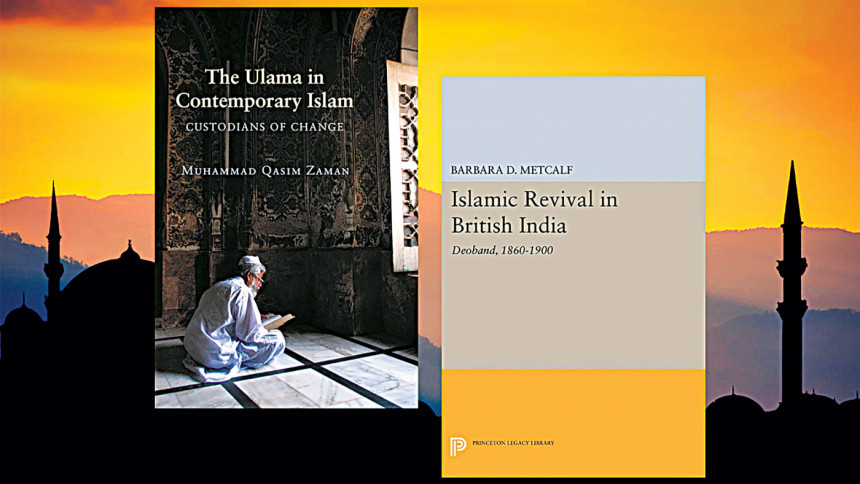
Against this backdrop, the actions, discourses, and history of the Ulama are well worth looking into. Muhammad Qasim Zaman’s The Ulama in Contemporary Islam: Custodian of Change (2002) and Barbara D Metcalf’s Islamic Revival in British India: Deoband, 1860-1900 (2016), both published by the Princeton University Press, are two outstanding studies in this regard. While Metcalf looks into the emergence, proliferation, and responses of the Deobandi Ulama to “modernity” when Muslim power in India was declining, Zaman looks at their strategy to establish authority in British India and Pakistan.
Shifting sands of influence
In pre-British India, religious education was a private enterprise and individual tutelage was the usual mode of the dissemination of religious knowledge. This tradition was to change with the emergence of the Farangi Mahall Ulama as custodians of Muslim intellectual traditions.
The Lucknow-based Farangi Mahall Ulama were known by the family of Mulla Hafiz, who received a land grant from Mughal Emperor Akbar sometime in the sixteenth century. He was the ascendant of Qutbu’d – Din (d. 1691), a Mughal courtier who participated in the collection of Fatawa-yi ‘Alamgiri’. The latter is a collection of Fatwa to be used in the Mughal courts. The family and students who took lessons from this family were known by the name of Farangi Mahall. The activities of the Ulama of Farangi Mahall, however, were confined to producing graduates for princely services. Their most significant contribution was their systemisation of the curriculum—dars-i-Nizami—for religious education. As Metcalf informs us, this curriculum came to Bengal when a Farangi Mahall graduate was appointed as the first principal of the madrasa yi ‘Aliyah’, Calcutta in 1780.
Farangi Mahall’s dominance declined and the centre for religious studies shifted from Lucknow to Delhi by the late 18th century. The person who played a key role in this shift was Shah Waliyu’llah, who advocated for more social and political responsibilities for the Ulama as opposed to those of the Farangi Mahall. Waliyu’llah’s successors had studied legal codes and written fatwa for the Muslim community, which had once become the main tool to disseminate religious instructions when the British were about to establish political authority over India. Besides claiming centrality of the hadith in the interpretation of the sharia, Shah Waliyu’llah discouraged blindly following the rulings of the earlier generations (taqlid). He suggested going back to the Quran or Sunnah for legal solutions.
The 1857 revolution landed heavily upon the revivalist movement initiated by Shah Waliyu’llah. Suspecting the Ulama’s involvement, British colonisers took all religious institutions in Delhi under their control. Fourteen hundred people were shot by British soldiers in Kuchah Chelan, where Shah Abdul Aziz (son of late Shah Waliyu’llah) used to preach, according to Metcalf. The Delhi-based Ulama were forced to move to the countryside and establish a madrasa at Deoband in 1867.
After the revolution, Deoband became the centre for Muslim intellectuals. They introduced formal religious education for Muslims in British India. Students had separate classrooms and a library, and the curricula were organised according to departments, such as Arabic, Persian, and others. A formal examination system was introduced and successful students were issued certificates of award. Graduates came from different corners of India. Most significantly, these graduates went back home and set up madrasas in their respective localities. By the end of the 18th century, nearly every town held the presence of the Deobandi Ulama.
One well known Deobandi Ulama was Muhammad Ashraf Ali Thanawi (1863-1943), who authored Bahishti Zewar (1981)—among the most popular books for Muslims of India, and masterminded the Dissolution of Muslim Marriages Act 1939—the first reformist legislation for Muslims of British India.
In the late 19th century, the Ulama played a crucial role in upholding the pride of their religion and their community through publications and public debate on religious issues. Their intellectual exercise peaked with the invention of print technology, multiplying the scale of the transmission of knowledge all over India. Publishing in local languages such as Urdu, instead of Arabic, was one of their effective strategies to establish authority. This also served as a medium of communication between common Muslims and the Ulama, and helped renew Muslim traditions against local customs. Following the birth of Pakistan on August 14, 1947, the Ulama consolidated their authority and forced the then government not to pass a law against sharia. Over the next few years, their continuous efforts would force the Pakistani government to establish a Supreme Sharia Board to oversee any inconsistencies between sharia and laws passed by the parliament.
The historiography of these two books may be compared with Geoffrey G Field’s Blood, Sweat and Toil: Remaking the British Working Class, 1939-1945 (Oxford University Press, 2011), in which Field understands “class” from multi-dimensional approaches including its relationship with the state, society, and family. Similarly, Barbara Metcalf and Qasim Zaman define the Ulama as a class by providing a social and intellectual history of their presence in South Asia. Metcalf highlights their hardships in the post-1857 revolution and the silent “intellectual” revolution of the Deobandi Ulama. Hers is an excellent cultural history. Despite being published earlier, Zaman fills in what Metcalf’s study left to be addressed: it focuses on how the Ulama have played an active role in different social and political contexts, particularly in post-colonial Pakistan. He disapproves of the allegation that the Ulama are against changes. The common mistake that most studies make, says Zaman, is not to consider the social and political context within which the Ulama work. To him, the flexibility of sharia depends on a socio-political context. Zaman suggested that the Ulama do not respond to changes as not because they do not like it but because of their fear of losing authority over religious issues in a modern state.
None of the above-mentioned studies, however, concerns the Ulama of Bangladesh. The growing presence of the Bangladeshi Ulama in the public sphere, particularly their increasing involvement in the political issues, merits investigation into—in Zaman’s words—their “transformation, their discourses, and their religio-political activism.” Could the Ulama in Bangladesh inherit the wind of the Islamic intellectual traditions? The question deserves to be addressed amongst others.
Dr Md Anisur Rahman is a legal historian at Asian University for Women. His research interests include Islam in Asia and South Asian Islamic Law and Society.
source: http://www.thedailystar.net / The Daily Star / Home> Reviews / by Md. Anisur Rahman / January 28th, 2021
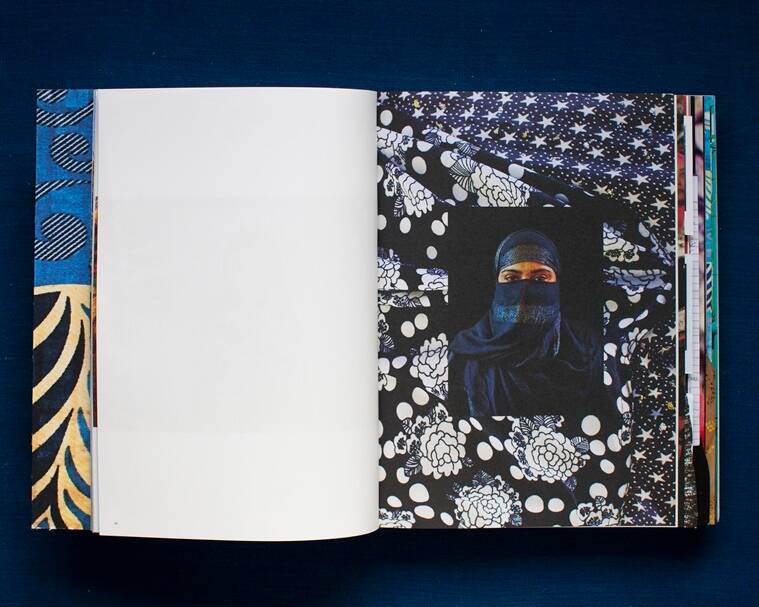
The photo-book ‘Har Shaam Shaheen Bagh’, comprising visual stories of resilience and resistance, isolates individuals from the image of the mass movement as was seen on prime-time news and press photographs.
Portraits from Har Shaam Shaheen Bagh (Credit: Prarthna Singh)
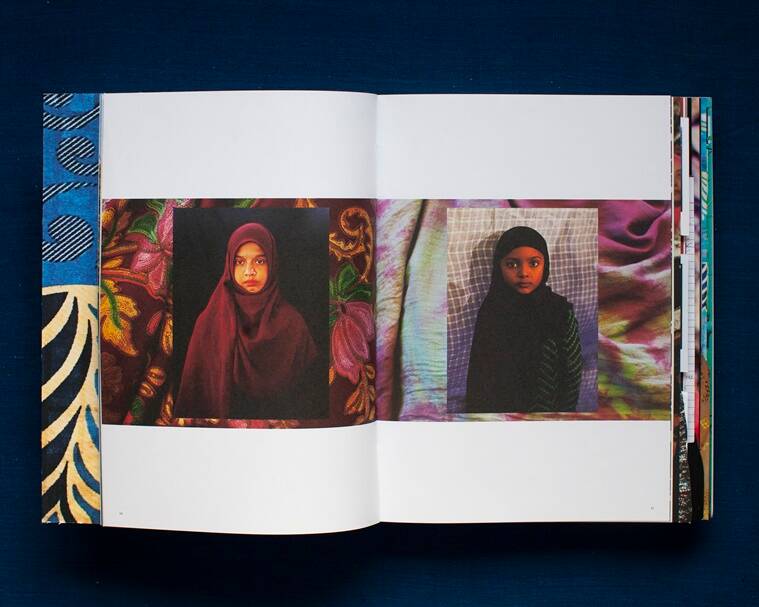
Who is the perfect protester? We imagine raised fists, hurt faces, angry stances. We imagine climbing barricades, braving tear gas. If we go by this visual vocabulary, Har Shaam Shaheen Bagh (Every Evening Belongs to Shaheen Bagh) takes us by surprise. With over 150 portraits of non-violent protesters, the photo-book gently challenges the imagery of contemporary resistance movements.
Har Shaam Shaheen Bagh is Mumbai-based photographer Prarthna Singh’s first solo photo-book (she had earlier teamed up with the authors of Sar: The Essence of Indian Design in 2016). In December 2019, after the Delhi police reportedly assaulted students of Jamia Millia Islamia University who were challenging the Citizenship Amendment Act (CAA), a sit-in protest led by Muslim women started in Shaheen Bagh. Under a tent, with hundreds of women and children on any given day, the peaceful protest lasted for 100 days, until the pandemic struck.
Har Shaam Shaheen Bagh; By Prarthna Singh; 143 pages; Rs 3,300
Singh joined the anti-CAA protest in January 2020, spending most of her time on ground. Known for her women-centric narratives and portraiture work, she taps into her speciality to create portraits in an on-site photo studio, cobbled together with whatever was available at Shaheen Bagh. The result is these portraits of women, either looking directly at the camera or away, but always with a sense of pride. Poised and calm, the unnamed sitters indicate trust in the space, the purpose and the photographer.
Har Shaam Shaheen Bagh is Mumbai-based photographer Prarthna Singh’s first solo photo-book (she had earlier teamed up with the authors of Sar: The Essence of Indian Design in 2016).
Our collective memory of Shaheen Bagh, as is often the case with resistance movements, is of the masses, as seen on prime-time news and press photographs. Indeed, mass resistance movements give rise to the most recognisable images in the documented history of the world. Vulnerability and resilience coalesce into one defining moment — people standing up to power and confrontation, whether it’s one man blocking a row of tanks or a girl offering a flower to an armed soldier. Har Shaam Shaheen Bagh trades the monumental for the intimate, asking us to reconsider what we mean by “iconic”. It isolates individuals from the sea of faces, almost as if to say that a movement’s power lies not in numbers but in the will of its people.
Har Shaam Shaheen Bagh takes the form of a personal diary or a scrapbook.
Har Shaam Shaheen Bagh takes the form of a personal diary or a scrapbook. It contains drawings, a painting by artist Sameer Kulavoor, whose company Bombay Duck Designs has also designed the book, verse and a letter from one of the protesters, available in Urdu, English and Hindi. Some pages are deliberately uneven, recalling the makeshift quality of the Shaheen Bagh tent. While the book’s cost makes it inaccessible to some socioeconomic groups, Singh has shared copies with the protesters. A portion of the book sales goes towards Jeevan Stambh, an NGO working on the rehabilitation of the victims of the Jahangirpuri demolition last month.
During the pandemic, the Delhi police cleared the Shaheen Bagh site, painting over its graffiti and dismantling its art installations. In a country that is determined to erase and rewrite its history, one could say that a photo-book on a citizen protest is as good as an act of protest itself.
source: http://www.indianexpress.com / The Indian Express / Home> Books & Literature / by Benita Fernando / New Delhi – May 21st, 2022