Tag Archives: Fatehpur Sikri

There is no history of India’s freedom without its Muslims

INDIA :

At 80, revisiting the Muslim lives, movements and sacrifices that shaped India’s struggle for freedom, and the politics of forgetting them.

Stroll through the pages of India’s history, because academia has failed to acknowledge some names and contributions in the Indian freedom struggle. From the Taj Mahal, Red Fort, Qutub Minar, Humayun’s Tomb, Gol Gumbaz, Charminar, to Fatehpur Sikri and the bustling lanes of Chandni Chowk, they all speak volumes louder. But the cultural pattern of ‘selectively remembering’ and ‘selectively forgetting’ has downplayed nation’s history into one-dimensional narratives , while external sources of learning like cinemas, textbooks, public places re-branding, etc,  are getting colored with contemporary political dynamics, to legitimize their plans and policies. 

To fathom India’s past sincerely, we must be willing not only to learn but also to unlearn. Learning involves discovering forgotten contributions, while unlearning requires shedding inherited biases, political narratives, and simplified versions of history. Because, as eminent historians have speculated, the past is constantly reinterpreted in the light of new evidence and new questions. Consequently, the framing of our past will affect the present, which will further be read as a past in the future, thus entrusting us with sheer responsibility of weaving a lineage of conscience, not insidious storytelling.

The lost dots of the Indian freedom movements

Revisit in Indian history afresh because erasure never happens all at once, it happens slowly and systematically.

Independence Movements did not count from the very battles fought, but from the conditions laid down before and after to formulate and fixate Indian society and culture altogether. Resistance to the economization, politicisation, and, ultimately, colonization by the Britishers was confronted by the collective plurality which our country possessed with pride. Testifying that resistance was not always born on the battlefield, often it began with communities refusing to harbor animosity for one another. 

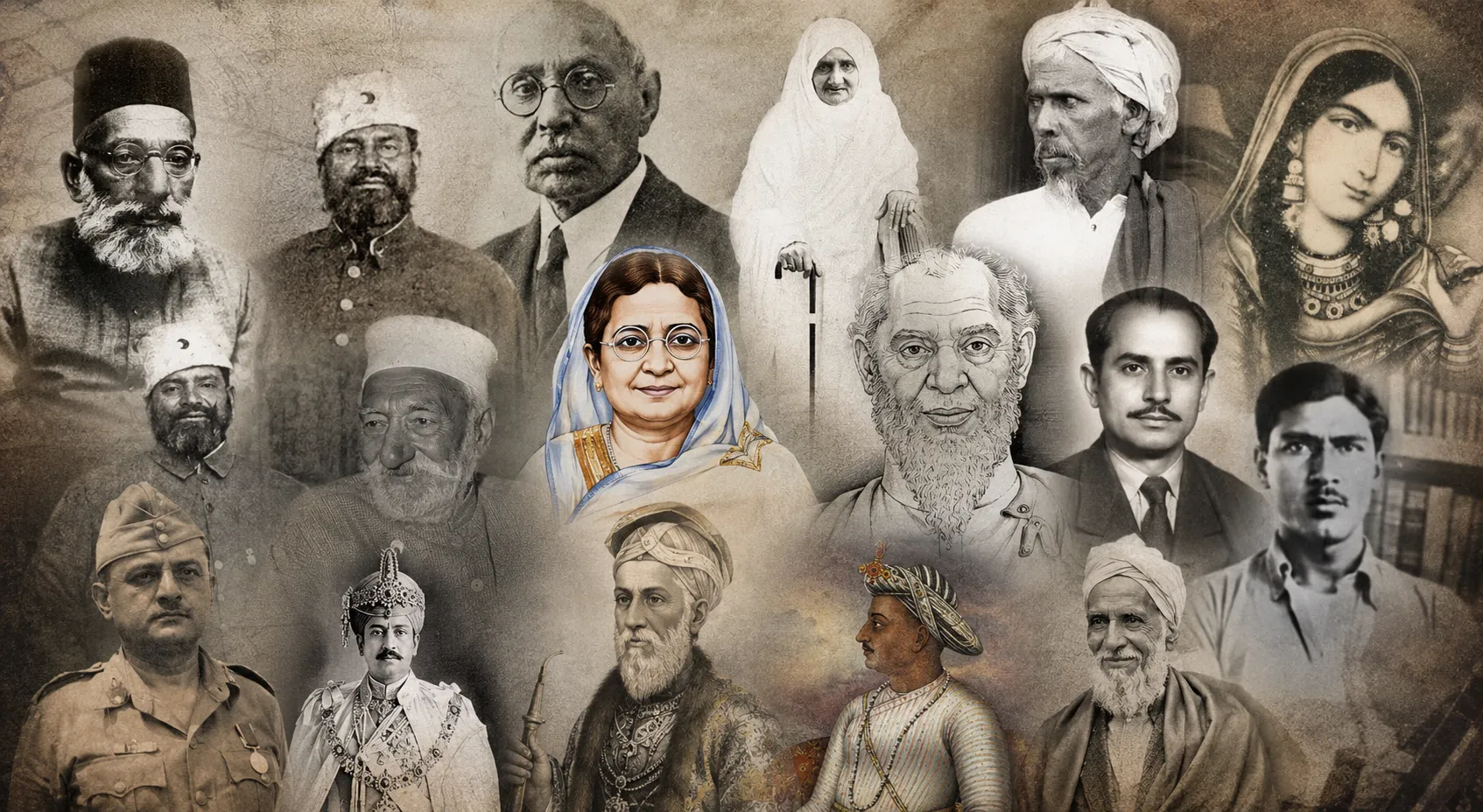
Hindu sanyasis and Muslim fakirs whom the British Company wanted to fragmentalise, chose each other instead. Naga ascetics of the Dashnami order like Pandit Bhabani Charan Pathak stood beside Muslim fakirs of the Madari and Burhana sects, Majnu Shah Fakir, Chirag Ali, Musa Shah, and together resisted the oppressive taxation and economic exploitation the Company had imposed. It was one of the earliest organized rebellions against British rule in India, and yet how many of us have even heard these names?
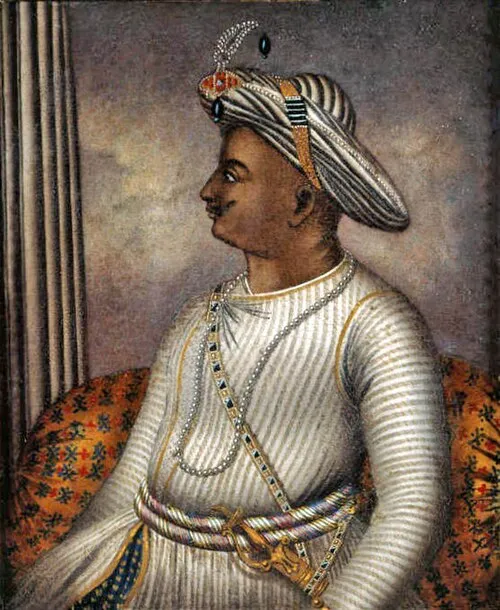
Tipu Sultan

That same defiance carried into Mysore, Tipu Sultan, a name antagonized in recent years that people even slipped away from the fact that he is the man who invented Missiles in India, a ruler who terrified the British. He built iron-cased rockets before most of the world imagined such a weapon, and fought the British across four wars, refusing again and again to let his kingdom bow. And what do we do with that legacy today? 

Islamic gallantry didn’t halt there. Moulvi Ahmadullah Shah, one of the key leaders of the First War of Indian Independence in 1857 was called the lighthouse of rebellion in Awadh, an epitome of the Ganga-Jamuna culture of Faizabad. The rebel army of Awadh was led by Barkat Ahmad and Maulvi Ahmadullah Shah, with Barkat Ahmad declared Chief Army Officer of the rebels after the Battle of Chinhat. ​​​​​​
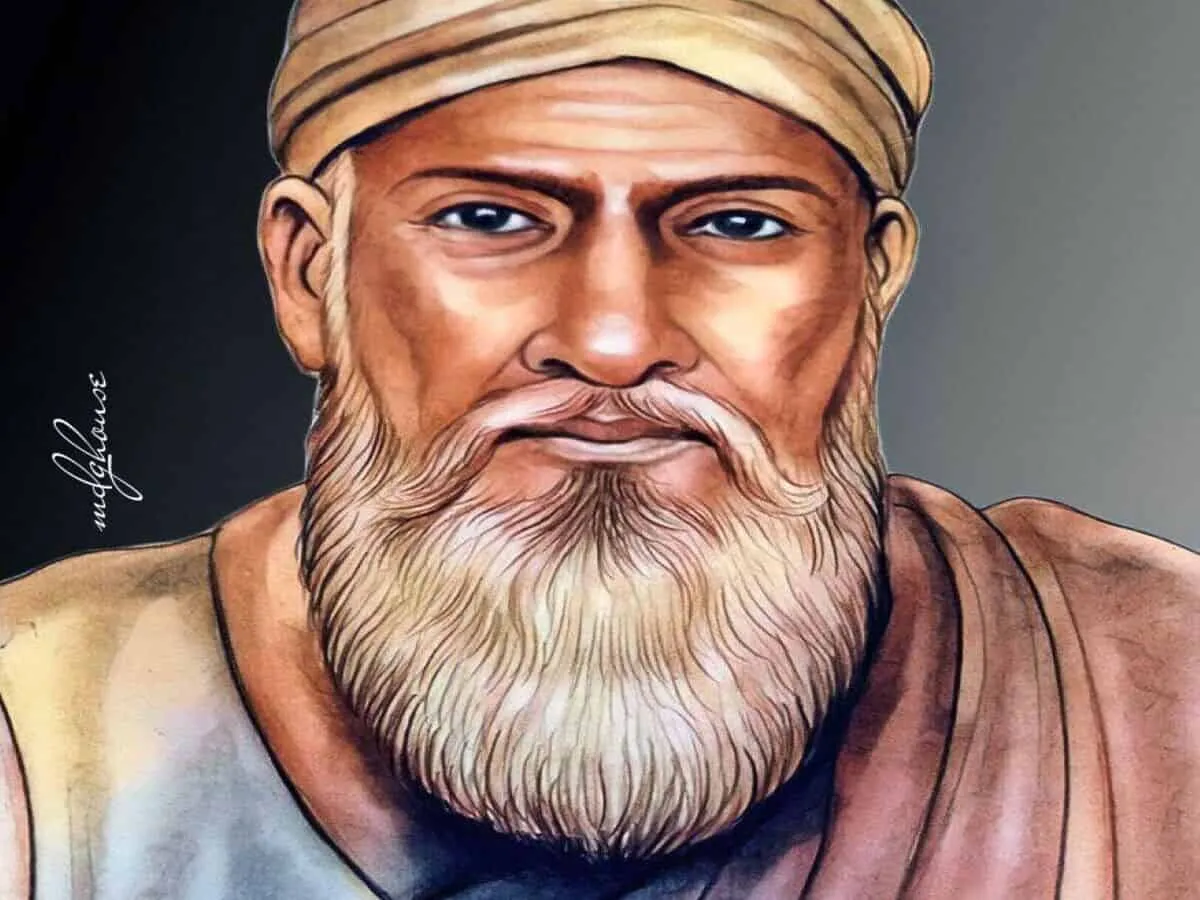
Moulvi Ahmadullah Shah

At the head of that same uprising stood Bahadur Shah Zafar, lending his name and his throne to the rebellion we call the Sepoy Mutiny. He gave everything a king could give, and the British broke him in the cruelest way. After his surrender, his sons Mirza Mughal and Mirza Khizr Sultan, and his grandson Mirza Abu Bakr, were stripped and shot in cold blood by Major William Hodson at what is now called Khooni Darwaza, and their severed heads were brought before their own father as a trophy. So many lives were lost in that struggle, so many families broken, and it is widely said that nearly 5 lakh Muslims were martyred, close to 50,000 of them ullema who chose the battlefield over silence. After rotating around 79 years of India’s independence, we are still cynical over the contributions carved by Indian Muslims.
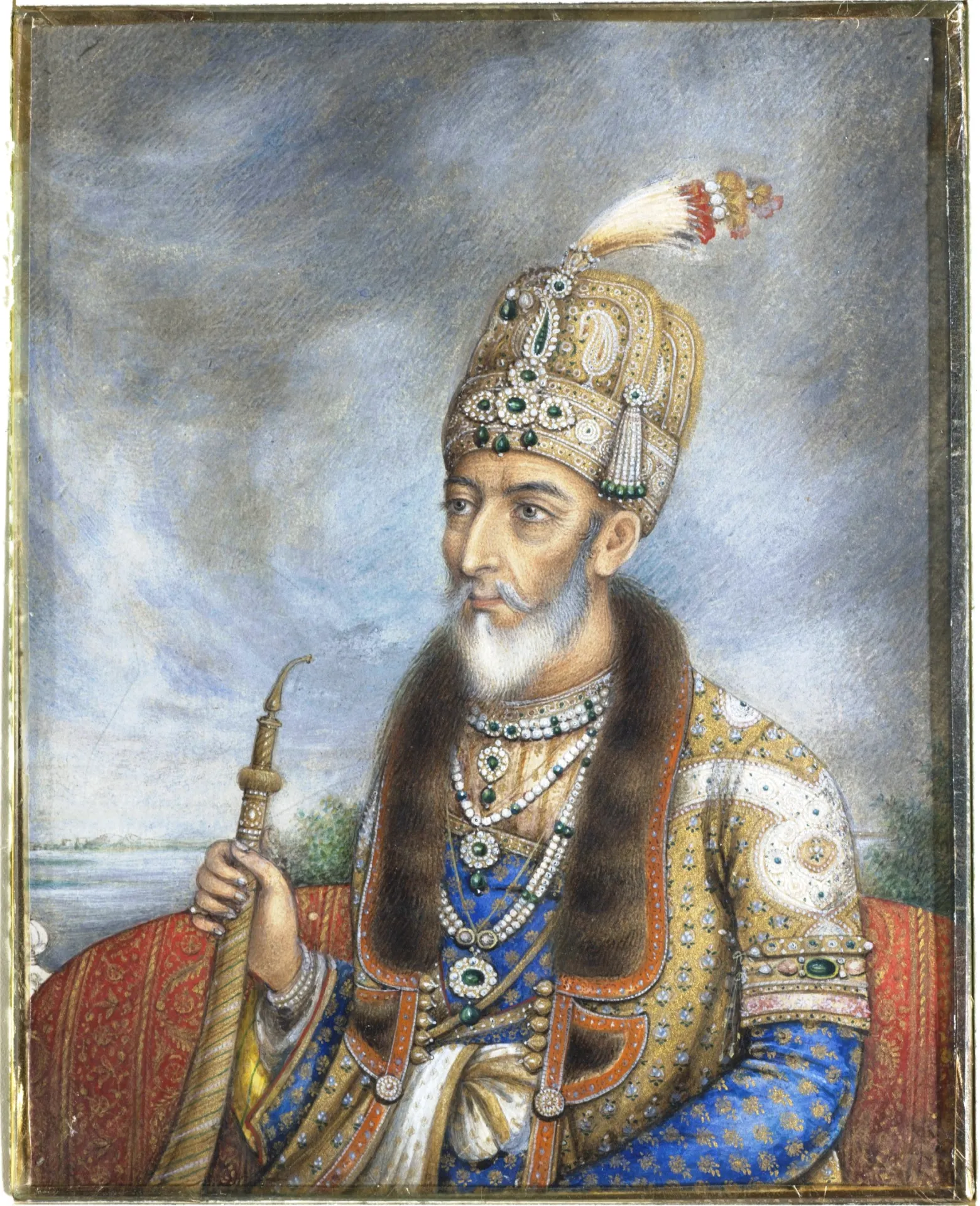
Bahadur Shah Zafar

Another buried name is of, Ashfaquallah Khan, was hanged on 19th December 1927, at just 27 years old, along with other Kakori comrades who were sent to the gallows. This Kakori robbery was to pull back the wealth of Indian soil to channelize it for the national struggle. Khan revolutionized nationalist movement with his participation in Hindustan Republican Association (HRA), founded by Ram Prasad Bismil along with two others. Like Kakori robbery, many other raids were rolled out to confront with required force rather than abstracting the notion of peace towards the gruesome tortures.   Have we ever lent an ear to these lines of Khan’s  ‘Hasrat’ poem- “Kuch aarzoo naheen hai, hai aarzoo to yeh hai, Rakh de koi zara si Khaak-e-watan kafan men” who as his last whim, recited this poem soaked in patriotism. Are we made to remember these lines by a Muslim freedom fighter when we are reminded about the terrified misapplication of the divine slogan “Allah-u-Akbar” to polarize the Islam?
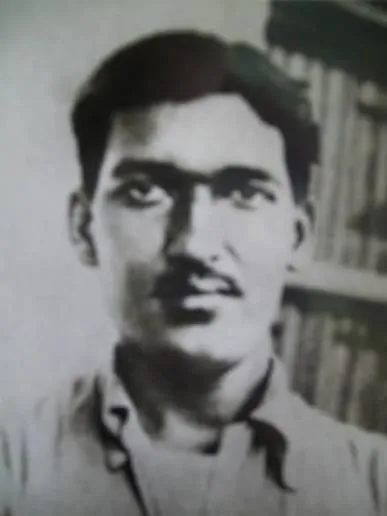
Ashfaqullah Khan

Walking further, Abdul Habeeb Yusuf Marfani, gave away his entire estate for a freedom he’d never see honoured. His courage was never separate from the cause, it was central to it, and it’s long overdue we remember it that way.
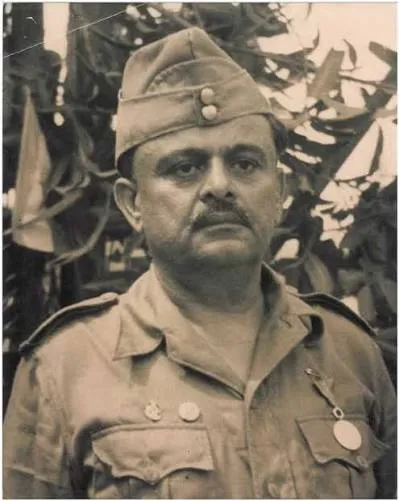
Abdul Habeeb Yusuf Marfani

Muslim participation in India’s freedom struggle was not boxed in a specific time or way, it encompassed armed resistance, societal reforms, mass mobilization, revolutionary events, and non-violent protests. The hurls on the invasions done by Muslims are widely made, but onlookers of the contributions by very same people, are tactfully airbrushed.

Sacrifices for the Indian motherland were proven on silent or loud battlefields,  not by the mere recital of ‘Patriotic Songs’ such as Vande Mataram as a contemporary reference. That is turned down by Indian Muslims lyrically, not soulfully, because of the religiosity which the Indian Constitution guarantees them. When did the recital of patriotic songs begin to outweigh the very acts of sacrifice they were meant to spring up?

Freedom fighters such as Maulvi Ahmadullah Shah, Begum Hazrat Mahal, Fazl-e-Haq Khairabadi (clarified the Jihad term through his war against the British), and Azimullah Khan were also important in the 1857 uprising. Barely, we learn or are made to learn about them? While vilifying other names of this very same community. 
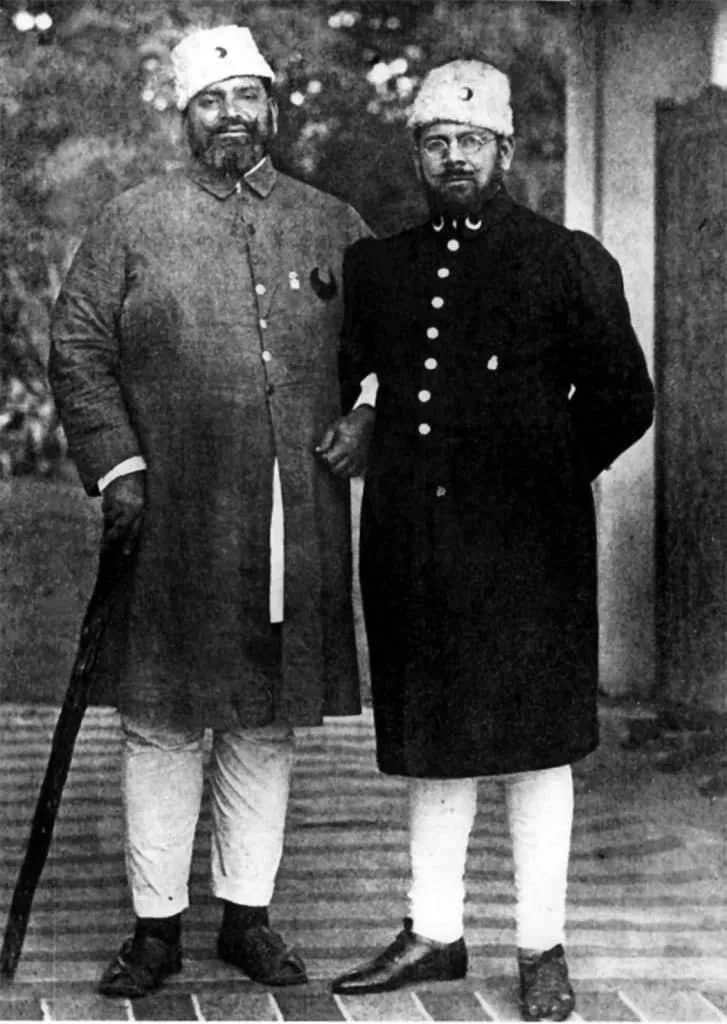
The Ali brothers, Shaukat Ali (1873-1938) and Mohamed Ali Jauhar (1878-1931)

Even the popular moments like the non-cooperation movement and the Khilafat Movement were helmed by some unheeded names: Mohammad Ali Jauhar and Shaukat Ali. Erected on the former’s name, there stands a university in Rampur, U.P. which recently has fallen prey to the communal politics, staking Indian youth’s future at darker stage, thus disregarding the blood of these freedom fighters.
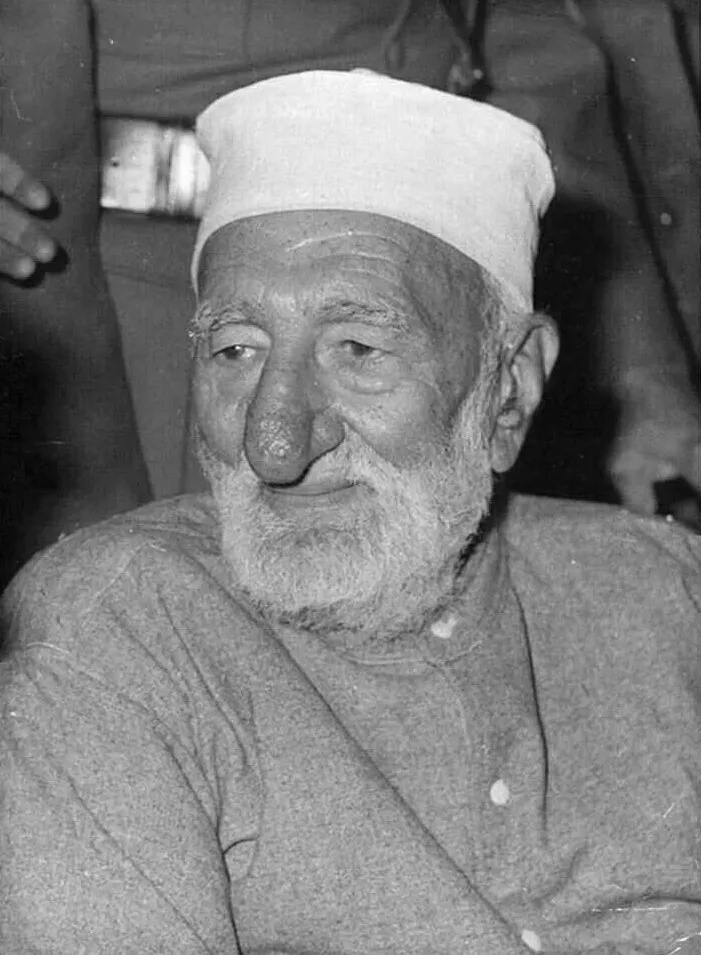
Khan Abdul Ghaffar Khan

Khan Abdul Ghaffar Khan who spent three decades in prison and headed the non-violent Khudai Khidmatgar Movement among Pashtuns against British rule, wherein he combined social reform, service, and discipline. His demise took place during his house arrest in Peshawar. 
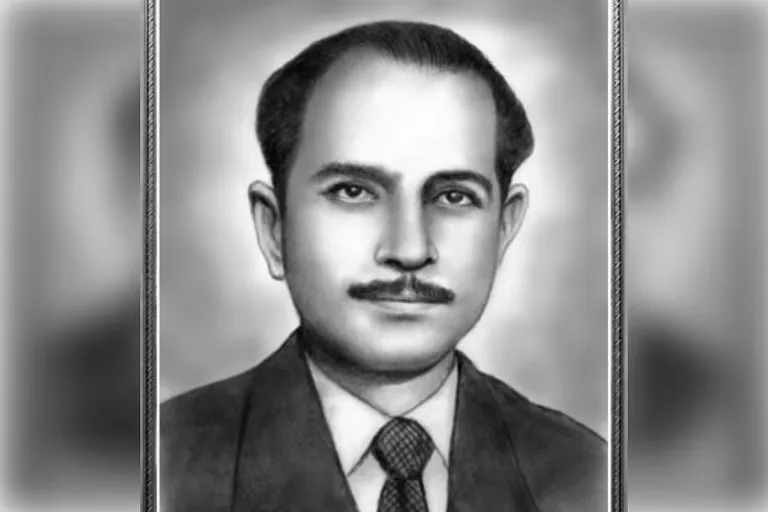
Abid Hasan Safrani

Without a single community-led leader, ideologies often find a loose hand to wrestle for their individual existence rather than collective results. Abid Hasan Safrani,  prominent INA member, mobilized the Muslim youth and committed to Subhas Chandra Bose’s movement (Azad Hind Fauj), which underpinned armed resistance in the Indian Freedom Struggle rather than non-violent means, brewing the unity for winning back the motherland.

Having said that, the famous Ghadar Party, founded in 1913, was pioneered by one more buried name- Maulana Barkatullah Bhopali. He was the first Prime Minister of the Provisional Government of India (Government-in-Exile), which was established in Kabul in 1915. He traversed across Europe, Asia, and North America to usher in the momentum for the Indian freedom struggle. His death took place in the US, leaving him deprived of bidding adieu to his motherland one last time.
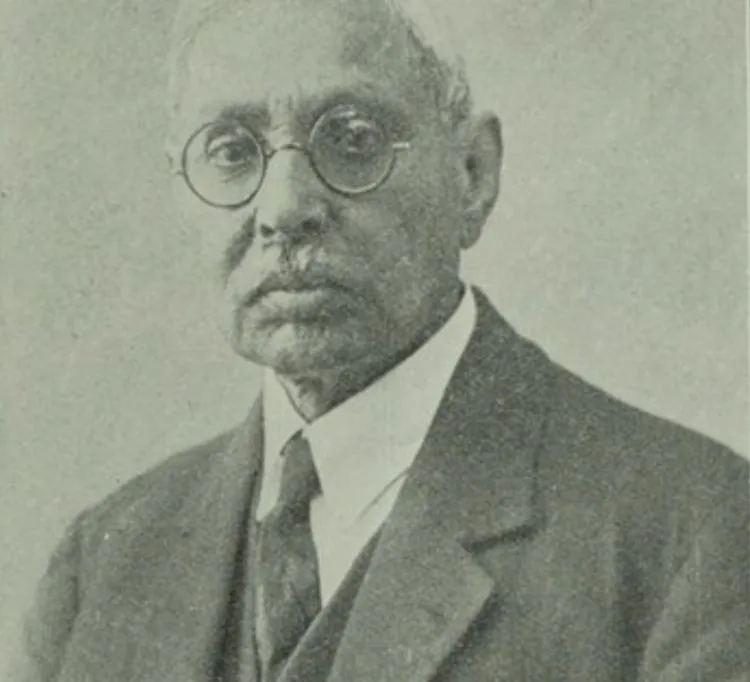
Maulana Barkatullah Bhopali

Then, “Inquilab Zindabad”, the popular hymn echoed at Jantar Mantar very recently, was originally coined by Urdu poet-politician Hasrat Mohani at the Congress’ Ahmedabad session, while Bhagat Singh solely made it popularized. Mohani had been a soulful Krishna Bhakt, leaving him writing eulogies for ‘Hazrat Krishna’ (Hazrat is not a religious tag; it is an honorary title).  He, being the co-prisoner of Gandhi ji, presented him with the USSR idea of federalism for empowering the localized and regional pockets of the agglomerate India. His courage and values proved his patriotism in the debates of the Constituent Assembly and confrontations with the Britishers. 
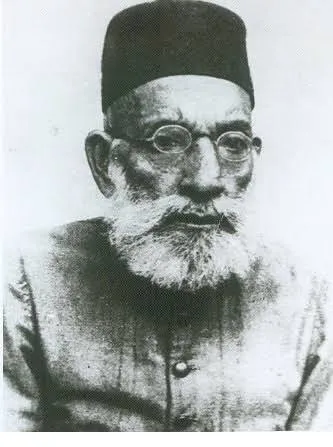
Hasrat Mohani

We remember Mahatma Gandhi more than any other freedom fighter, but are we mindful of the fact that the man who saved him was Batak Mian Ansari during the Champaran Satyagraha in 1917? He was the cook deployed by the Britishers, who then ordered Batak Mian Ansari to serve venomous milk to Gandhi ji. His integrity made him stake his life to save Gandhi ji. He sneakily warned Gandhi ji, and, as anticipated, he was kicked out of his job by the Britishers, further leaving him battered by the villagers and ousting him and his family from his residence. To date, his family couldn’t receive what was promised for his courage by India’s first president, Rajendra Prasad. Questioning how much we have honoured the honorable personalities on the ground?
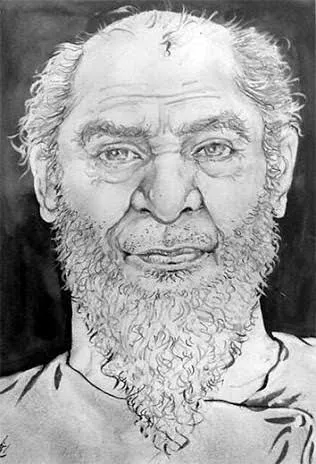
Batak Mian Ansari

The last Nizam of Hyderabad, Mir Osman Ali Khan, is also in this queue of the buried names. Independence movement is not merely the swing between direct confrontation with colonial regime, it too laps over the pre and post period that either nudged the movements or repaired the damages caused to India. He has reportedly granted mammoth donations across educational and religious institutions. From BHU, AMU, IISc, publication of critical editions of Mahabharata, Golden Temple, Amritsar and many more places . We rewind through cruel rulers who demolished Indian structures, to attack their community and make them accountable in the present, but are we awakened with these submerged realities as well? One-sided history or evolving history, rationality comes with the choices citizens make to discern their roots.
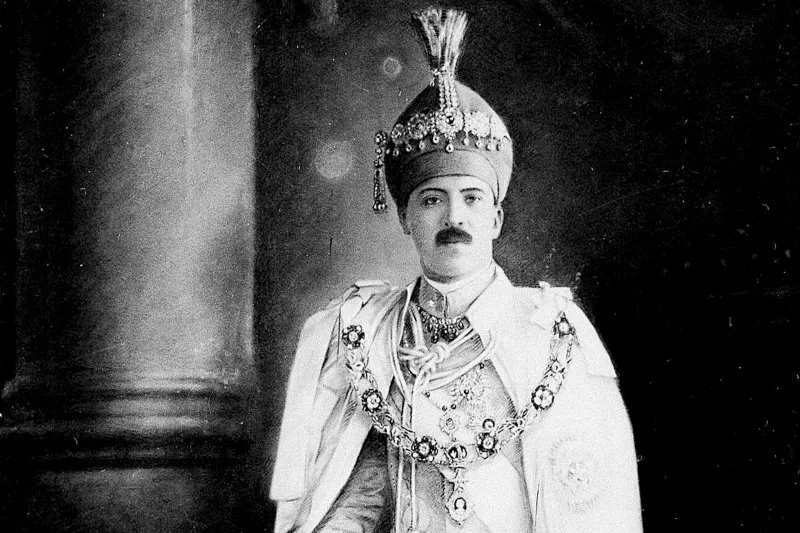
Mir Osman Ali Khan

The history of Muslim resistance to British colonial rule also travelled deep into Malabar in Kerala, where Variyankunnath Kunjahammad Haji, Ali Musliyar , and Sayyid Fazal Pookoya Thangal emerged as formidable names in a long tradition of anti-colonial mobilisation. Fazal Pookoya Thangal, the 19th-century Mappila spiritual leader of Malabar, became an influential voice against British authority and the oppressive agrarian order sustained under colonial rule, eventually being forced into exile in 1852. Decades later, that inheritance of resistance found powerful expression in the 1921 Malabar uprising, with Ali Musliyar, a religious scholar and Khilafat leader, and Variyankunnath Kunjahammad Haji becoming among its most prominent leaders. Haji challenged British authority in parts of Malabar and established a parallel administration in areas under rebel control, while Ali Musliyar mobilised people against colonial rule before being captured and executed by the British. Haji, too, was eventually captured and executed by firing squad in January 1922.
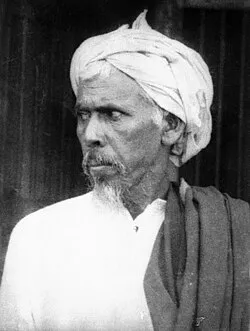
Ali Musliyar

Culture can marginalise women, but religion pours courage 

“Khoob Ladi Mardani thi, Wo Jhansi Wali Rani thi”, Whenever we speak of women who took up arms for this land, Rani Lakshmibai of Jhansi is the name that comes to every tongue, and she deserves every bit of that memory. But here’s what gnaws: she was not alone. There were other women just as fearless, standing in the same fire, and history simply didn’t bother to write their names down. 
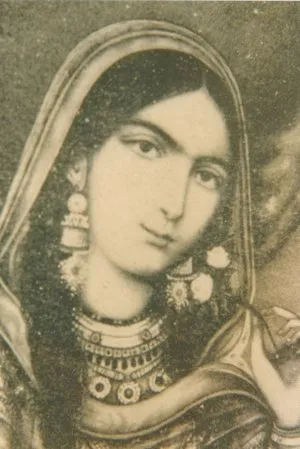
Begum Hazrat Mahal

Begum Hazrat Mahal was one of them, and she wasn’t a side character, she was one of the rebellion’s most formidable forces. Even William Howard Russell, a British correspondent writing for his own side, couldn’t deny her fire. In his My Indian Mutiny Dairy, describing her as a woman of remarkable energy who had stirred all of Oudh into rising for her son’s cause and had herself declared undying war against the British. At Musa Bagh in Lucknow, she didn’t issue orders from a distance, she personally fought alongside and rallied nearly 9,000 rebel soldiers, moving from camp to camp, lifting morale with speeches that set entire camps on fire.
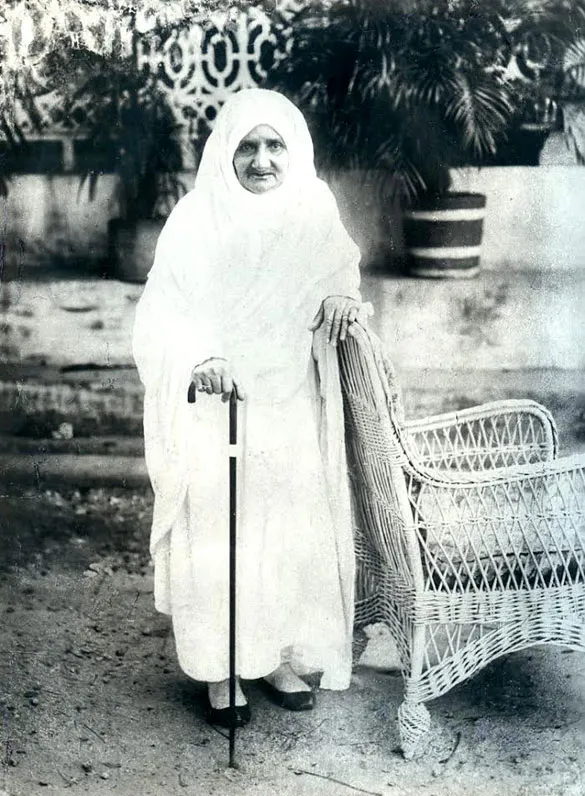
Abadi Bano Begum

And then there’s Abadi Bano Begum- the woman history remembers, if at all, only as “Bi Amma.” A widow with six children, one of the sons Maulana Shaukat Ali, and the other Mohammad Ali Jauhar, above-mentioned together known as the Ali Brothers. She could have used every excuse the world hands a woman to stay silent. widowhood, motherhood, the weight of raising children alone. She used none of them. When the country needed people brave enough to stand up to the British, she stood up too. She became the first woman to address a political rally while wearing a burqa and let that sink in for a moment. She didn’t have to remove a part of her identity to be taken seriously in public life; she broke the idea that a veiled woman couldn’t also be a fighter, a leader, or a voice loud enough to move a crowd. She urged women to stop hiding at home and join the struggle, organizing funds and meetings where they were addressed as political beings for the first time, and taught why boycotting foreign goods mattered. She convinced them to donate to the Tilak Swaraj Fund, set up by Bal Gangadhar Tilak to finance India’s freedom struggle.
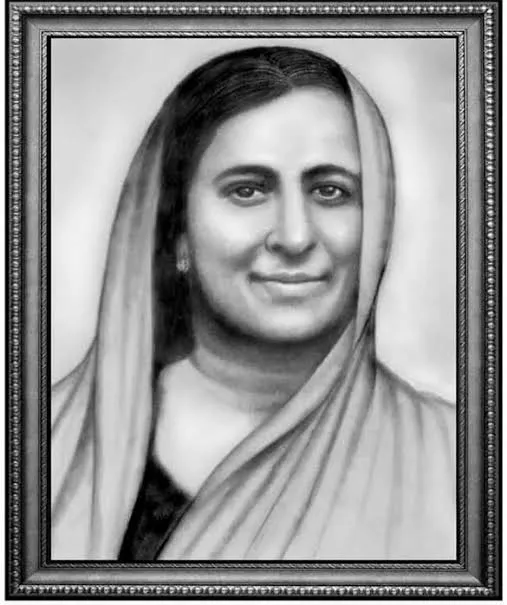
Kulsum Sayani

Not every battle was fought with a sword, some were fought with pen and paper. Kulsum Sayani, awarded the Padma Shri in 1960, waged her own war against illiteracy through the Jan Jagran movement, teaching under “each one, teach one” and leading centres for Muslim women that grew from 50 to 600 by sheer will. Begum Rokeya, a fiercely prolific feminist writer at a time when a woman dreaming was seen as rebellion, imagined a world turned upside down in Sultana’s Dream, then built that vision into reality, founding a girls’ school in 1909 and the Muslim Women’s Association in 1916, giving women space to learn and speak.
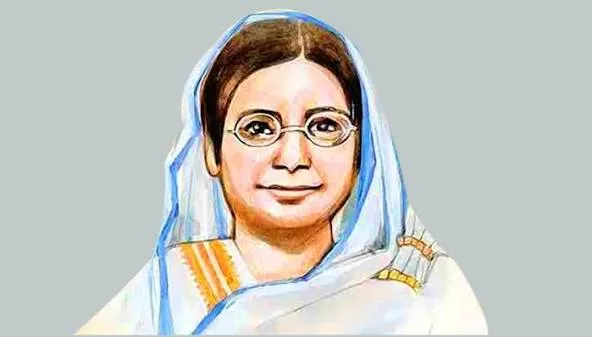
Begum Rokeya

80th Indian Independence Day’s call to unwind the narratives 

As the author of ‘Sare Jahan Sai Achcha, Hindustan Humara’– Allama Iqbal penned- “The freedom lovers of the nation stepped forward with such dignity that even those long imprisoned by deprivation watched in admiration.” It has been shouldered on the present generations to soak in the evolving history to sanitize the present from groans of hatred, rotting the Indian society. 

These lost chapters from Indian history wouldn’t have been possible to muster without the effulgent works of Salim Khan, Romila Thapar, Ramachandra Guha, S. Irfan Habib, Mushirul Hasan, A. G. Noorani, Rana Safvi, etc. Grinning us with the fact that the pluralistic framework of India is not only designed by the constituent makers, but it is also originally earned by all the freedom fighters, from pre- to post-independence.

Adeena Navaid is a law student and writer covering legal, social, and feminist issues, with work published in Maktoob, Bar & Bench, The Quint, Siasat, SheThePeople, and other platforms. Aiman Tabassum is a final-year LL.B. student at the University of Mumbai who writes on constitutional law, legal history, and socio-political issues, with work published in Bar & Bench.

source: http://www.maktoobmedia.com / Maktoob Media / Home> Opinion / by Adeena Navaid & Aiman Tabassum / August 14th, 2026
The mystique of Fatehpur Sikri

Agra, UTTAR PRADESH :

Clothed in layers of legend and folklore, Fatehpur Sikri, the city that Akbar built and made his capital, was an architectural marvel of medieval India. A journey back in time to explore its real historical importance.

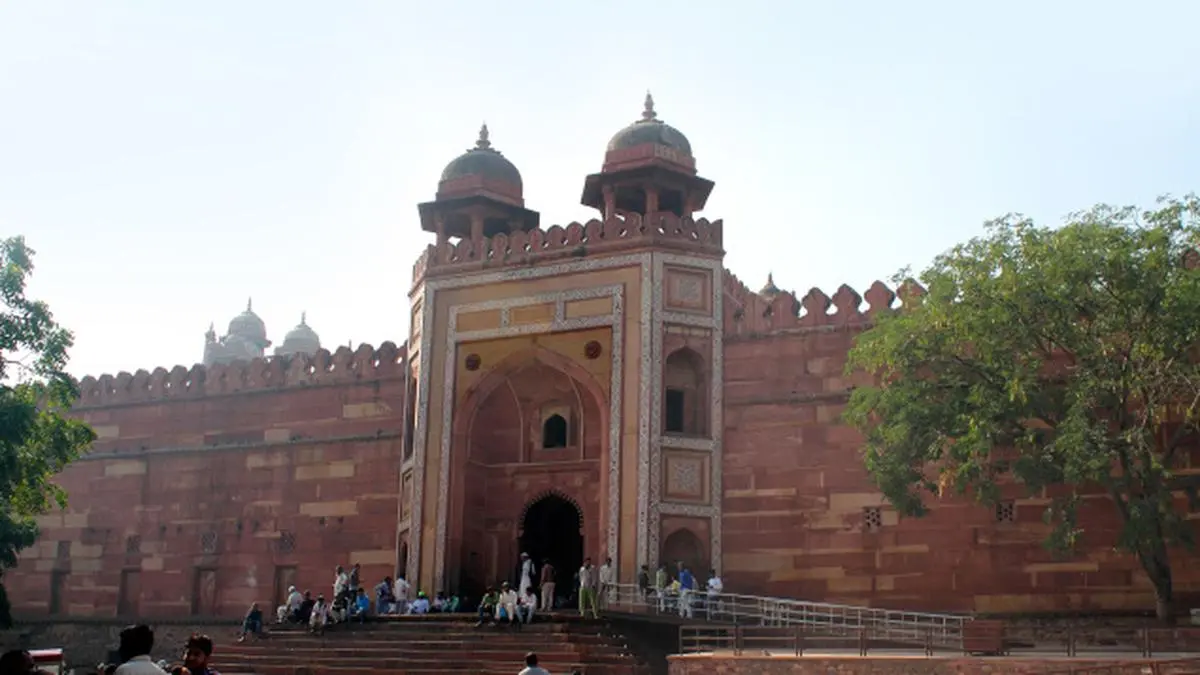
The Badshahi Darwaza through which Akbar entered the Masjid-Dargah complex.

LOCATED around 35 kilometres from Agra, the famous capital of the Mughals, and about 30 kilometres from Bharatpur, the heartland of the Jats, is one of the finest cities of medieval India, Fatehpur Sikri. Nestled on a ridge of the Vindhya mountain range, it represents a unique architectural experiment of the Mughals. Declared a World Heritage Site in 1986, it remains frozen in time and space. In its majesty and grandeur, Sikri is perhaps second to none, but it has always lived in the shadows of its world-famous neighbour, the Taj Mahal.

Connected with the life and times of the famous Mughal emperor Akbar and a crucial period in Indian history, Fatehpur Sikri is of great historical importance but remains one of the less-understood heritage complexes. The popular understandings of the site (and connected histories) are largely informed by guide culture and folk narratives. Some questions continue to haunt visitors. Why was the city built and abandoned within a span of just 14 years? Who was Jodha Bai? Did the Navratnas (“Nine Jewels”, talented and famed courtiers at Akbar’s court) really exist in an institutionalised form? Did the city decline because of shortage of water?

One area where the huge gap between the academic and popular understanding of the site gets reflected starkly is in the nomenclature and functionality of monuments. The nomenclature of the structures is informed by the occurrence of “matching”/“near matching” descriptions of events/anecdotes connected with Akbar in contemporary accounts—principally by Abul Fazl, Badauni and the Portuguese Jesuit missionary Monserrate. Archaeological findings and Mughal paintings also help us reconstruct the history of individual monuments. Two things complicate our understanding of the city and the monument complex. First, as the historian and expert on the site Nadeem Rezavi points out, the names of the structures on plaques put up by the administration are mostly taken from tourist guides of the 19th century who were often local residents with no professional training in archaeology or history. Second, the original architectural designs have, in some cases, been demolished or altered in the process of renovation and restoration.

Early History Though the city was built during Akbar’s time, the place has a history going further back in time. Archaeological findings from the region include painted grey ware sherds, beads and artefacts belonging to the Kushana and Sunga periods, besides pre-medieval rock shelters. A large number of Jaina sculptures (including one Shruti Sarasvati) were excavated around Birchhabili Tila on the eastern bank of the lake in 1999-2000. Sikri and Bayana came under the control of the Sikarwar Rajputs in the 12th century and there is evidence of fortifications built by them. According to one tradition, the word “sikri” comes from them. The region was subsequently taken over by the Delhi Sultans and the remains of mosques and tombs testify to the site being a flourishing township during the Sultanate period. The Mughal connection comes with Babar, who defeated Rana Sangram Singh at the Battle of Khanwa (located 16 km from Sikri). According to legend, he renamed the place “Shukri” (meaning “thanks”) to acknowledge the support of the local populace during the battle. It is said that after capturing Gujarat, Babar’s grandson Akbar built the commemorative monumental gateway called Buland Darwaza (The Lofty Gate) and changed the name from Sikri to Fatehpur, the “City of Victory”. Rezavi, however, prefers to call it Fathpur Sikri, connecting its nomenclature to the garden named Bagh-i Fath (The Garden of Victory) built by Babar. He says this connection later inspired Akbar to rename the area Fathpur or Fathabad.

According to chronicles, Akbar’s decision to build an imperial city was largely based on his reverence for Shaikh Salim Chishti, who had predicted that the heirless emperor would be blessed with three sons. Akbar shifted his pregnant queen to Sikri and later ordered the construction of the city. It is believed that the Rangamahal (which is now closed) was the place where the queen first resided. Under Akbar, this village became the cultural, commercial, and administrative centre of the empire. It is estimated that around 1580, the total population of this city was just short of a quarter million. Ralph Fitch, the English traveller who visited the city around 1585, wrote: “Agra and Fatehpore are two very great cities, either of them much greater than London and very populous.”

Situated strategically close to Agra Fort (located within a day’s march), the town was enclosed with walls, some 6 km long, from north to south-west and protected by a lake (now dry) on the western side. The planning of the city aligned with the contours of the ridge. The mosques, imperial palaces and offices, bureaucratic establishments, and nobles’ mansions were located on top of the ridge. The civic population and the gardens were located around the official zone below the ridge. Access to the city was controlled by a series of eight identical gates (prominent being the Agra and Ajmer Gates) which restricted movement from public spaces into imperial zones.

The Imperial Complex According to Monserrate, the imperial complex consisted of four great royal dwellings—the king’s palace, the palace of the queens, the princes’ quarters and a store house and magazine. The king’s palace, generally known as Daulatkhana (“Abode of Fortune”), was divided into the Daulatkhana-i-Khas (private/restricted space) and the Daulatkhana-i-Aam or the Diwan-i-Aam (Hall of General Audience).

The Diwan-i-Aam is possibly the place Abul Fazl describes as the site of an open court which lasted for four hours. The structure, as it stands now, consists of an extensive courtyard enclosed by cloisters of 114 bays and a centralised raised pavilion. Entry was through the northern gateway opening towards the Hauz-i-Shirin (Sweet Tank) and further to the Hathi Pol, the ceremonial entrance to the imperial complex. The original plan stands modified now, with the addition of a municipal-style garden and the creation of an opening in the wall of the courtyard for visitors entering from the Agra Gate side. The huge stone rings at the foot of the colonnade opposite the imperial pavilion were possibly used for inspection of animals from the royal stable or exhibiting captured war elephants rather than publicly trampling those condemned to death as the guides would say.

The Daulatkhana-i-Khas consists of the Diwan-i-Khas, the two-roomed Diwankhana-i-Khas, the Khwabgah, the Anup Talao, the Turkish Sultana’s Chamber and some minor structures. The Diwan-i-Khas, or “Jewel House”, is a square-shaped chamber with openings on all four sides. The interior has a richly carved pillar at the centre supporting a circular platform connected with four diagonal bridges emanating from four cardinal directions. This is a monument whose functionality is difficult to establish. Historians and scholars have variously identified it as a storehouse for imperial gems and jewels, with the emperor inspecting them from the suspended capital (S.A.A. Rizvi); a place where the emperor, enthroned in the central circular platform, listened to ministers seated at the corners (Y.D. Sharma) or to arguments from different religions—symbolising “Akbar’s Dominion over the Four Quarters” (Percy Brown); or, symbolically, of Akbar ceremonially occupying the axis of the world (represented by the column) in Hindu cosmology and, therefore, wielding supreme power (G.H.R. Tilotsan). Still others have tried to symbolically equate the emperor with a chakravartin sitting or a God-like Vishnu seated on a lotus, or like the sun domineering over all regions (Catherine Asher).

Next to the Jewel House is the so-called Aankh Michauli (literally, “blind man’s buff”—by implication, a place where Akbar played this game with the women of the harem), or the treasury, containing three large aiwan s (porticos). Like the Jewel House, this building also has concealed coffers and lockable doors in the thick walls. Historians have suggested that this was a part of the treasury where gold and silver coins were stored, while the copper coins were kept in the building behind this one which collapsed in 1894. To the south-west of the treasury stands a kiosk known as the “Astrologer’s Seat” modelled on a Cambay-style building, according to the art historian Ebba Koch. This was possibly the site from where the emperor watched the distribution of copper coins to subordinate officers and the needy.

The large red sandstone courtyard between the Diwan-i-Khas and the Anup Talao is known as the Pachisi—after the cruciform board on which this popular Indian board game was played. Local legend has it that the emperor played the game using slave girls as living pieces.

The Diwankhana-i-Khas, containing Akbar’s imperial chambers (Khalwatkada-i-Khas) and resting place (Khwabgah), was a restricted area. The Khalwatkada-i-Khas was also a place where learned discussions and, sometimes, official transactions took place. It had a projecting balcony where the emperor received royal guests such as Mirza Sulaiman of Badakshan. The lower walls of the rooms were hollow with sliding stone panels and were probably used to keep rare books and gifts. A large room behind this chamber contained a platform against the southern wall, with a window above it. Some historians think that the window was used for a practice Akbar instituted at Sikri—Jharokha Darshan, whereby the emperor showed himself to his subjects every day.

The Khwabgah is a beautiful chamber on the first floor of the Diwankhana-i-Khas. This is the place where Akbar rested and also had informal discussions. Badauni narrates the story of a Brahman named Devi who used to be pulled up on a charpai (traditional Indian cot) to instruct the emperor in the myths and legends of Hinduism. A cloistered passage from the west connected the Khwabgah with the principal Haramsara, the Panchmahal, “Mariam House” and the Hathi Pol. This offered a secret and unhindered passage to the emperor and the royal ladies from one palace to another.

The Anup Talao (literally “peerless pool”) has a central island linked by four bridges to its sides. To the north-east of the pool is a beautifully carved structure called Turkish Sultana’s Pavilion. It needs to be clarified that there was no one called Turkish Sultana in Akbar’s court. Further, it would have been impossible to have a zenana (female) pavilion/chamber within the mardana (male) section. The pavilion has beautiful carvings on brackets, pillars and pilasters, and gives the semblance of intricate woodwork rather than stone masonry. Rizvi identified this pavilion (and the cloistered verandah around it) with the Hujra-i-Anup Talao (the room of the Anup Talao)—which Badauni mentioned as a structure where the emperor used to hold religious discussions. In fact, he also mentions a cell which Akbar named Ibadatkhana (House of Worship). Through an insightful reading of Badauni (who talks about an Ibadatkhana with four aiwan s near the new palace), Abul Fazl and Nizamuddin Ahmad, and correlating them with Monserrate, Rezavi persuasively identifies the Ibadatkhana with what is now known as the Daftarkhana (Secretariat/Records Office). This was the place where Akbar’s famous religious discussions or disputations were held until around 1580. The Anup Talao is connected through a pillared verandah to a structure known as the Abdarkhana (again wrongly called the “Girl’s School”), where fruits, water, food and beverages were kept for the emperor.

Between the Daulatkhana and the Haramsara complex are located three intermediate structures: the Panchmahal, Mariam’s House and the “hospital”; the last two can even escape a visitor’s attention. The wall separating the Haramsara from this area was, unfortunately, removed during renovations carried out in the 19th century.

The Panchmahal is a four-storeyed, entirely columnar structure of diminishing sizes surmounted by a domed kiosk. It is screened on all floors except the ground. Interestingly, none of the columns on the first floor are alike (some circular, some octagonal) and they are ornamented with the typical Hindu bell and chain motifs. The building may have served a recreational purpose and offered a good panoramic view of the surroundings.

Mariam’s House is not named after a Portuguese queen called Marie as the guides would have us believe. The structure is also called Sunhara Makan, or “Painted House”, after the beautiful murals and gold-coloured paintings that once decorated it. Rizvi thought it belonged to the queen mother Mariam Zamani (Hamida Banu Begum). After a careful reading of Monserrate, however, Rezavi says it was some kind of a private dining chamber of Akbar. Mariam’s House was connected to the Abdarkhana, where food and beverages were laid out, through a private door. Further, its central hall had portraits of women and angels and the building was profusely painted with court scenes, elephant fights, polo games, and so on. Separated from the zenana Haramsara segment and located outside the mardana Daultakhana area, this may have been a special dining hall where the emperor could be joined by the women of the haram .

The structures that form the Haramsara complex (or Shabistan-i-Iqbal) include the principal Haramsara (the Imperial Haram), popularly known as Jodha Bai’s palace, and Birbal’s house. The former was the private zenana area where Akbar’s wives lived. Accessible through a single gate with a staggered entrance, the double-storeyed structure was once guarded by eunuchs. Its privacy was only partially disturbed by the jharokha windows on the first floor. The principal Haramsara consists of unconnected chambers and porticos on all four sides and a large square courtyard in the middle. The bases, columns and capitals in the central rooms have carvings inspired by Rajput traditions. The monotony of the red sandstone is broken by the azure blue tiles (originally found in Multan) on the ribbed roof of the upper rooms on the northern and southern pavilions.

It is important to clarify here popular misconceptions surrounding Jodha Bai. Her very existence is negated by several historians. Irfan Habib argued in an interview that a historical character called Jodha Bai did not exist. It’s true, he says, that Akbar married the eldest daughter of the Amber ruler Raja Bharmal, but her name is not mentioned anywhere and she was certainly not Jahangir’s mother. “The myth can be attributed to some guide who may have taken British officers around Fatehpur Sikri arbitrarily referring to various palaces as Todar Mal’s, Birbal’s or Jodha Bai’s.” Shireen Moosvi also clarifies that there is no mention of Jodha Bai in Akbarnama or other Mughal documents of the period.

Like Jodha Bai’s palace, “Birbal’s House” is also erroneously named. Rezavi says it is impossible for Birbal to have occupied the building—no male, not even a prince, was allowed to enter the female quarters. The corbels, exquisitely carved brackets, together with the chajja of this palace exhibit typical Hindu influences, while the pilasters have Islamic geometrical patterns. Birbal’s house was one of the earliest palaces to be constructed at Sikri (1571) and has a relatively independent character. It might have been used to house someone holding high esteem at Akbar’s court—probably the queen mother or the senior queens. The other ladies-in-waiting were presumably housed in the so-called Meena Bazar, which could have been the minor Haramsara. The Nagina Masjid (meant for the women of the Haramsara) and the beautiful small garden to the north also formed a part of the Haramsara complex.

Where did the princes stay? Rizvi and V.J.A. Flynn have identified the so-called Tansen Baradari (in front of Curzon’s Dak Bungalow) as Prince Salim’s quarters. On the basis of its vicinity to the Daulatkhana and the royal waterworks, Rezavi has identified the Hakim’s House with the princes’ quarters.

A number of offices and bureaucratic establishments were situated within and around the Daulatkhana complex, such as the departments dealing with kitchen, mints, tents and carpets, translations, paintings, arsenal, etc. The complex was also surrounded by rings of bureaucratic establishments, nobles’ houses, office-residences of bureaucrats and habitations of common people. Among the famous nobles’ houses, we may include what are popularly known as Abul Fazl Faizi House, Hakim’s House, Birbal’s House, Khan-i-Khanan’s House and Tansen Baradari. The presence of waterbodies—lakes, hammam s (public baths), baoli s (stepwells), tanks, garden channels and waterworks—indicates how availability of water was integral to the planning of the city. They served a variety of aesthetic, utilitarian and recreational purposes. Water was brought from the lake and supplied to the official/semi-official areas through a network of storage tanks and aqueducts. Fatehpur Sikri probably constitutes the largest surviving concentration of hammam s in Mughal India.

The Masjid-Dargah Complex

The other part of Sikri is the Masjid-Dargah complex (“private property part” as guides tell visitors), made famous because of the Sufi saint Salim Chishti. Belonging to one of the most influential Sufi sects in India, the Chishtis, he was a descendant of Fariduddin Ganj-i Shakar and had stayed in Mecca for some time before settling down in Sikri. It is said that the local quarrymen working on the ridge for the stone required to build the Agra Fort constructed a red sandstone mosque for the saint around 1565. This came to be known as the Stone Cutters’ Mosque. Akbar later built the Jami Masjid, conceived as one of the largest mosques of its times, and ascribed it to the saint. Legend has it that Akbar himself occasionally cleaned the floor of the mosque and called the azan . The mosque also played an important role in Akbar’s political ascendancy. It was here, in 1579, that Akbar read the khutba (recitation) to proclaim his sovereignty and also issued the mazhar (declaration) by which he arrogated substantive powers in religious matters. The mosque follows the traditional style of a central courtyard, with cloisters on three sides and the west side being the prayer hall or sanctuary. Divided into seven bays, the prayer hall is an arcade of pointed arches. The central dome is dwarfed by the central iwan while the lateral domes get somewhat blurred behind a row of chattri s.

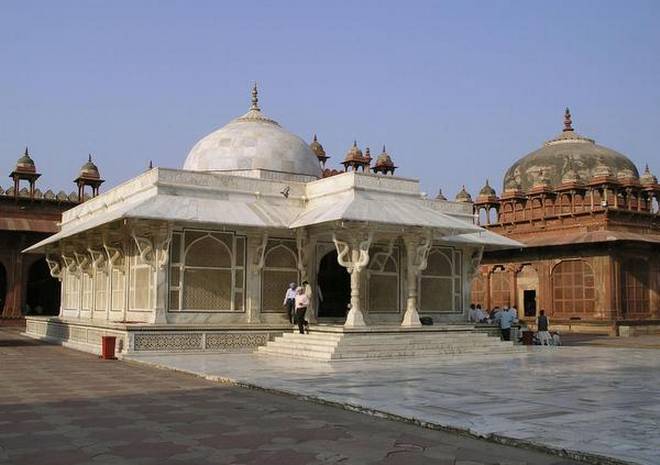
Towards the end of his life, Salim Chishti moved from his house near the Stone Cutter’s Mosque to a new khanqah (hospice) near the Jami Masjid. The present tomb was built over the saint’s zawiya (meditation chamber) around 1580-81 and several additions accrued over a period of time. Known as “an architectural cameo”, the tomb is particularly known for its ornate brackets, chajja s (eaves) and the parapet. Adjoining the saint’s tomb is the Jamatkhana (also called the “Tomb of Islam Khan”), a red sandstone structure encircled by perforated stone screens. Its large dome is surrounded by 36 small-domed kiosks. Originally meant to be a common religious place for Chishti’s distinguished disciplines, it later became a tomb for his descendants. The Masjid-Dargah courtyard is crowned by the famous Buland Darwaza. Measuring 40 metres in height (add to that another 12 metres by way of stairs), it is an imposing structure with a huge arched iwan around a human-scaled doorway similar to the Badshahi Darwaza (emperor’s entrance) and the Masjid’s prayer hall entrance.

The architecture of Sikri

Irfan Habib says that Fatehpur Sikri was the nursery of Mughal architecture. Akbar’s reign not only saw the establishment of the Mughal Empire but the beginnings of a new style of architecture. It saw the amalgamation of the Timurid and Central Asian architectural styles with more indigenous ones of the Delhi Sultanate, Bengal, Rajputana, Malwa and Gujarat.

Two things need to be underscored here. First, Sikri presents a combination of the trabeate (of pillar and bean) and arcuate (using arches and domes) styles. Second, its colonnaded and flat-roofed structures drew inspiration from a Mughal campment and sometimes used the same fluid vocabulary. Rezavi says some buildings are similar in form to tents described in Ain-i-Akbari , with an added architectural feature—the central chambers are vaulted or domed from within but appear flat from the outside.

While accepting that Mughal campment did inspire the development of Fatehpur Sikri’s architecture, the art historian R. Nath says that it also represented an efflorescence in Indian art. He emphasises the role of regional and local influences which were systematically incorporated into classical imperial art. This could be seen in the use of indigenous forms and features in the plan and design of buildings —poli entrance, tibara-dalan , duchhatti rooms in the Raniwas (Haramsara) area; in the facades—arch and lintel entrance, bracket and eave compositions, jharokha windows and khaprel tile-roofs; and, in the superstructure—sloping khaprel , chhatri and chhaparkhat .

He says local idioms were introduced into the Mughal style of architecture by anonymous artisans drawn from areas annexed to the empire, particularly from the Malwa-Gujarat-Rajasthan region and especially from the Jamuna-Chambal region (Delhi, Agra, Fatehpur, Dholpur and Gwalior).

The use of malleable and locally available red sandstone served as some kind of a unifying agent. According to Ebba Koch, it glossed over stylistic clashes resulting from the amalgamation of various forms, besides imparting it the colour of the sovereign. It should be noted that the non-imperial structures were mostly built of rubble held together with lime and gypsum mortar and were covered with lime plaster.

The decline There are several theories regarding the decline of Fatehpur Sikri, the most important being that the city declined because of shortage of water. It is also commonly believed that the city was “abandoned” or “deserted” soon after Akbar left. According to a popular local myth, the waterbodies in the region dried up because of the curse of a dancer named Zarina who was falsely implicated in a case involving the theft of Jodha Bai’s golden bangles. Most guides taking visitors around the monument complex attribute the decline to scarcity of water. This has been systematically countered by historians working on the site. They say the city had enough water. Besides the lake, there were at least 13 step-wells and eight tanks, apart from several others spread across the city. Water was, therefore, not the reason for the decline. It was political expediency.

In July 1585, Akbar’s half-brother Mirza Hakim died in Kabul. The emperor also expected trouble from rivals in the north-west region, including the Shah of Persia and the Uzbek ruler of Badakshan. He, therefore, shifted his base to Lahore and ruled from there for the next 13 years. When he left Lahore in 1598, he came back to Agra instead of Fatehpur Sikri and the fortunes of this imperial city changed.

Rezavi says that Fatehpur Sikri’s “decline” has to be seen in terms of decline in the status of the city from an imperial capital to an ordinary town. It, however, continued to remain an important mercantile centre, flourishing in carpet-making and indigo-manufacturing. It also retained its imperial connection at least until the reign of Shah Jahan, the fifth Mughal Emperor. It has also survived as a pilgrimage centre for the disciples of Salim Chishti. Akbar himself visited the town in 1601 to pay a visit to Maryam Makani, the queen-mother who continued to live there. Both Jahangir and Shah Jahan took refuge in Sikri when Agra was hit by plague. Jahangir ordered the chaugan (polo) ground near the lake adjacent to the Hiran Minar to be enclosed and converted into a reserve for antelopes, while Shah Jahan (who made several visits to this place, including one encampment as the rebellious prince Khurram) got his own palace constructed outside Akbar’s after he became the emperor. Further, in 1719-20, the coronation ceremony of the captive king Muhammad Shah Rangila was also held in the city.

Misconceptions about Akbar and his court continue to haunt Fatehpur Sikri. In 2014-15, newspapers reported the district administration’s plans to install the statues of Akbar’s favourite navratna s at the monument complex. Historians strongly opposed this. It is true that several talented minds existed at Akbar’s court, counselling and helping him immensely in administering various matters. What is also true is that that the legends surrounding Akbar’s famed courtiers were born here. There is no textual evidence for any institutionalised existence of the navratna s in any contemporary Mughal source—a notion which remains embedded in popular imagination. As R. Nath says: “[T]here is no authentic list of nine jewels in any work of a contemporary historian.” The proposal was also opposed on the grounds that the 1958 Ancient Monuments Act did not permit the addition or deletion of any new structures within the complex.

Shashank Shekhar Sinha has taught history in undergraduate colleges in the University of Delhi. He now does independent research on issues relating to culture and heritage.

source: http://www.frontline.thehindu.com / Frontline / Home> Arts & Culture> Heritage / by Shashank Shekhar Sinha / June 22nd, 2016

India’s top 5 revenue generating monuments were all built by Muslim rulers

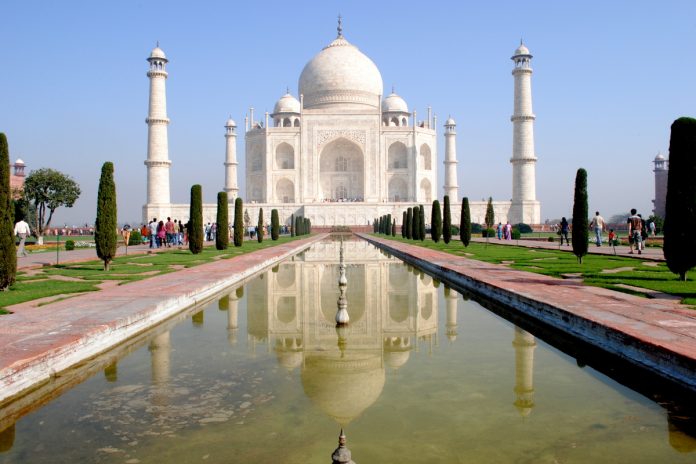
Taj Mahal | Commons
Taj Mahal | Commons

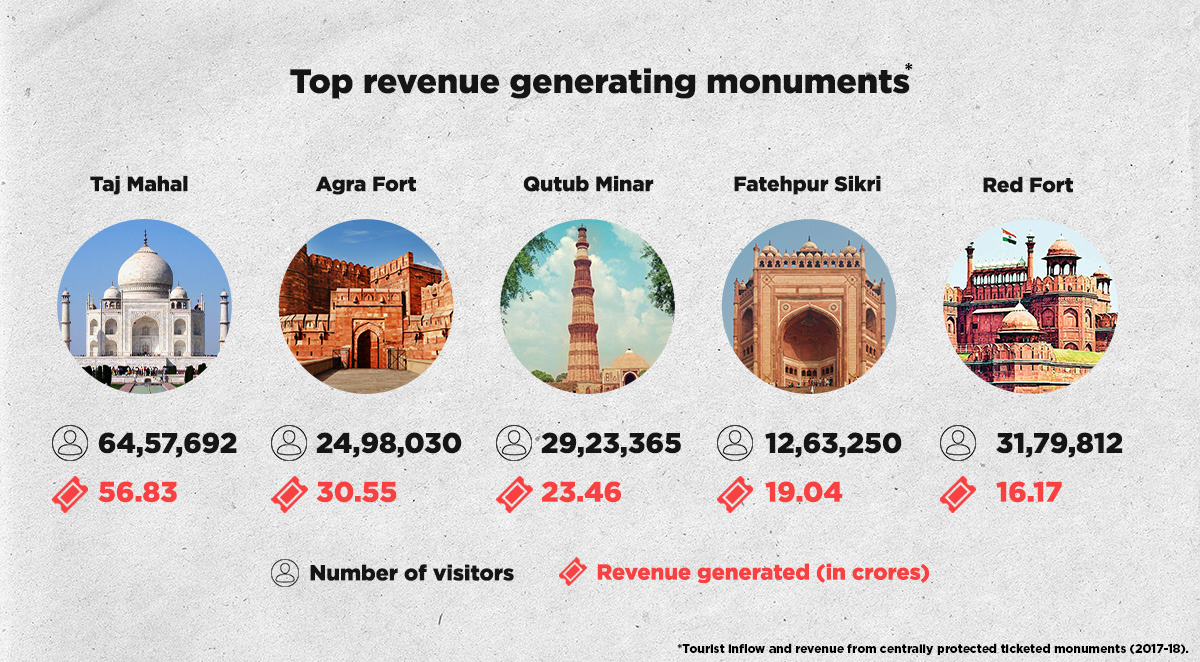
The Taj Mahal and 4 other monuments earned Rs 146.05 crore, more than half the total revenue generated by centrally-protected monuments, in 2017-18.

New Delhi:

 Fringe Hindu groups and even some BJP leaders may have sought to belittle their significance but official data shows that India’s top five revenue generating monuments were all built by Muslim rulers – the Taj Mahal, Agra Fort, Qutub Minar, Fatehpur Sikri and Red Fort.

While Qutub Minar was built by rulers of the Delhi Sultanate, the rest were constructed by the Mughals.

These five monuments together earned the government Rs 146.05 crore in 2017-18, according Archaeological Survey of India (ASI) data. This is more than half the total revenue of Rs 271.8 crore generated by all centrally-protected monuments.

The Print
The Print

The Taj Mahal, which has been in the news for all the wrong reasons in recent years, with the Supreme Court last month pulling up the ASI for its poor maintenance, continued to be the highest earner at Rs 56.83 crore.

While some politicians sparked a controversy last year by arguing that the Mughal-era monument did not represent Indian culture, the number of visitors to it, both Indian and foreign, only increased since 2016-17.

A total of 64.58 lakh people visited the Taj Mahal in 2017-18 compared to 50.66 lakh in 2016-17.

Last year, the UP tourism department had even omitted the Taj Mahal, a UNESCO world heritage site, from a brochure listing the state’s principal attractions.

With total earnings of Rs 30.55 crore, Agra Fort built by Mughal emperor Akbar, another UNESCO world heritage site, was the second highest revenue generator in the last financial year.

While the Konark Sun Temple in Odisha came second after the Taj Mahal in terms of number of visitors (32.3 lakh), it generated only Rs 10.06 crore as revenue. This, officials said, is because the temple is mostly popular only with Indian tourists, with 32.21 lakh domestic visitors making the trip last year.

While Indian tourists are charged Rs 30 per head as entry fee to world heritage monuments across the country, foreign tourists have to pay Rs 500 each.

“It is impossible to communalise the entire Indian population through the meaningless political venom spewed by politicians,” said historian S. Irfan Habib, explaining the increase in visitors to the Taj.

“No matter what they say about the Taj Mahal and Red Fort, Indians will continue going there,” he added.

source: http://www.theprint.in / The Print / Home> India> Governanace / by Sanya Dhingra / June 07th, 2018

Revisiting Sheikh Salim Chisti’s tomb

Fatehpur Sikri (Agra District), UTTAR PRADESH :

Soothing experience: Sheikh Salim Chisti’s tomb in Fatehpur Sikri | Photo Credit: V_V_Krishnan

Reminiscing a slow but stimulating journey to Akbar’s capital city

When Marion and Sally, two English teachers of St Thomas’ School, Mandir Marg, set out on a trip to Fatehpur Sikri in 1978, they boarded the last train from Delhi. “It sounds ominous, like the last plane from Da Nang, when South Vietnam was overrun by the Viet Minh,” remarked Sally, “Yes,” recalled Marion. “Many struggled to board the plane. Some were left behind but in the melee an enterprising Western reporter was not only able to capture the heart-wrenching scene, but also played the hero by helping a hysterical woman and her kid take his seat on the plane as he jumped down to shoot what later turned out to be award-winning pictures of the airport scramble.”

The last train from Old Delhi station did not cause any such frenzied commotion. Over 40 years ago it was the one that was supposed to leave just before midnight, but the departure was invariably delayed. From Delhi Main station it ran up to Agra Cantt, its destination, and took seven hours to do so, usually even more. The passenger train had a whole lot of policemen travelling in it. As a matter of fact, right from the ticket window they made their presence felt when they pulled suspicious-looking youths out of the queue and slapped and punched them before asking questions like, “Where are you going? Where did you get the money to buy the ticket? Are you drunk? Who else is travelling along with you? Where do you live?” before searching them with their shirts off and pants down,” the two teachers recalled.

A view of Hiran Minar

When they caught the train they didn’t see those young men again. The train made three false starts, provoking someone to remark that the driver was shaking the compartments to fit in more passengers. Finally it started rolling, with several urchins rushing to catch it. By the time the train reached New Delhi station it was nearly 1 a.m. After that the Passenger stopped at every station big or small and as people got down, many were detained and searched by policemen on the platform. But the two girls reached Agra Cantt station safely. From there they were escorted by friends Sam, Lewis and this scribe by car to Sikri.

The shrine at Fatehpur Sikri is one of the most venerated places. Where wild animals once roamed a gem of a monument now greets the eye,” disclosed Sam. “It was here on a hill that Sheikh Salim Chisti dwelt and thither came Akbar the Great to seek his help for the birth of a son and heir apparent. He came on foot, leaving his camels, elephants and horses behind. The hermit sat with a rosary (tasbi) reciting the 99 names of Allah. The emperor’s prayers were heard and his Rajput queen bore a son, Salim, whom Akbar always called Sheikhu Baba, after the saint. Not only that, he built this magnificent city to commemorate the event and dwelt here with his Nine Jewels, like the Nine Worthies of the ancient world. “I have heard about the Nine Jewels,” said Marion, “but who were the Nine Worthies?” “Hector, Alexander the Great, Julius Caesar, Joshua, David, Judas Maccabaeus, King Arthur, Charlemagne and Godfrey of Bouillon,” replied Sam without batting an eyelid.

Akbar’s legacy

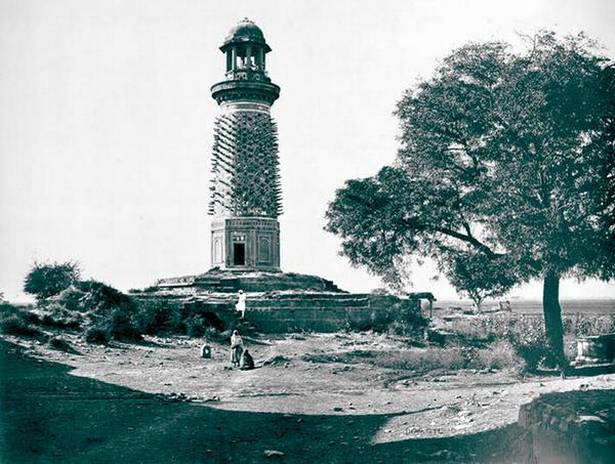
Sam related his tale standing by Sally’s side. She listened, her doe eyes thoughtful. As they approached the trellis of the shrine where people who seek favours tie a thread, she tied one too, making Sam wonder what she had sought. They next went to the Buland Darwaza and saw the town of Sikri spread out before them. Nearby is the water works set up by Akbar and from above the ramparts a man dived 80 feet into the baoli or step-well. They looked aghast. “Just you wait and see,” said Sam as Lewis nodded in approval. Soon a dare-devil emerged and salaam-ed them. They tipped him and he walked away to prepare for another demonstration. “These divers have been continuing the tradition for several centuries. VIPs and common people alike tip them. Perhaps, it will continue so long as there is water in the baoli. But it is a paradox that Akbar, who built a new capital here, had to desert it because of water scarcity.” Sam informed the party. They went down the steps of Buland Darwaza, Sam pointing out the Hiran Minar from where the shikar was shot in Mughal times, though some think that Akbar’s famous elephant was buried there and perhaps that’s why it is also called Elephant Tower.

At Sikri town they had the fabulous 24-layer Mughalia parantha. “Why is this parantha so thick?” enquired Marion. “It could feed one whole family.” “Quite right,” said Sam. “Ask Sally, when we were last here she had to take half the parantha to Delhi where we had it for breakfast the next day and the remainder for lunch.”

“Did Akbar really play with women as chess pieces? “enquired Sally.” Off course he did,” replied Sam. “Don’t talk rubbish. Listening to you one would imagine the great Akbar had nothing else to do but seduce maids of honour”, admonished Lewis. From there the party went to the Taj Mahal and then caught the Taj Express back to Delhi after a memorable day. Marion and Sally are now back in England and Sam works in Bangalore, where Lewis keeps reminding him of the visit whenever he rings up from Kolkata.

source: http://www.thehindu.com / The Hindu / Home> Society> History & Culture – Down Memory Lane / by R.V. Smith / October 01st, 2018