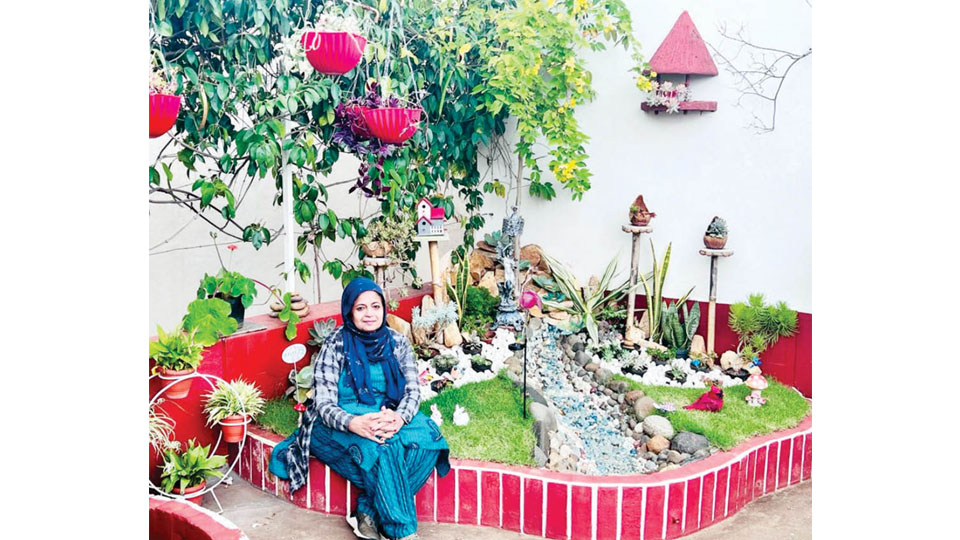
Nishhat Afza, Founder and Director of Curiocity — School of Creative Art and Design, N.R. Mohalla, Mysuru, has bagged first prize in the ornamental terrace garden and 1st prize in waterfalls for the 5th consecutive year in the Dasara Home Garden contest organised by the Horticulture Department.
An active member of Srushti Bonsai Club, she has also participated in women empowerment and other social activities. Besides, she helps people with landscaping and waterfall designing.
source: http://www.starofmysore.com / Star of Mysore / Home> Gallery> Photo News / October 07th, 2022
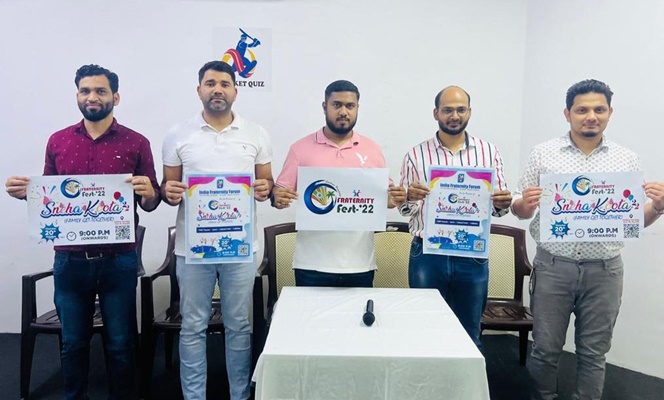
India Fraternity Forum is organizing an annual “Fraternity Fest” to bring together non-resident Indians through a socio-cultural program on October 20.
The poster launch of “Snehakoota-22″ event was held in Riyadh. A family reunion and expatriates get-together event named Fraternity Fest is being held by India fraternity forum across Saudi Arabia.
Whilst releasing the poster of the event, Tajuddin, president of India Fraternity Forum, Karnataka chapter, Riyadh, invited all NRIs to participate in the event.
Various cultural and social events will be held at the get-together on October 20 at Sa-Ada Istirah in Exit-18, Riyadh. The colorful event will feature different activities like public speaking, sports, quiz, public awareness programs etc.
India Fraternity Forum, Riyadh Karnataka chapter general secretary Muhammed Naveed, state committee members Sabith Hassan, Muhammed Shareef and Nizamuddin were present at the press meet.
source: http://www.daijiworld.com / Daijiworld.com / Home> Middle East / by Media Release / Riyadh, September 18th, 2022
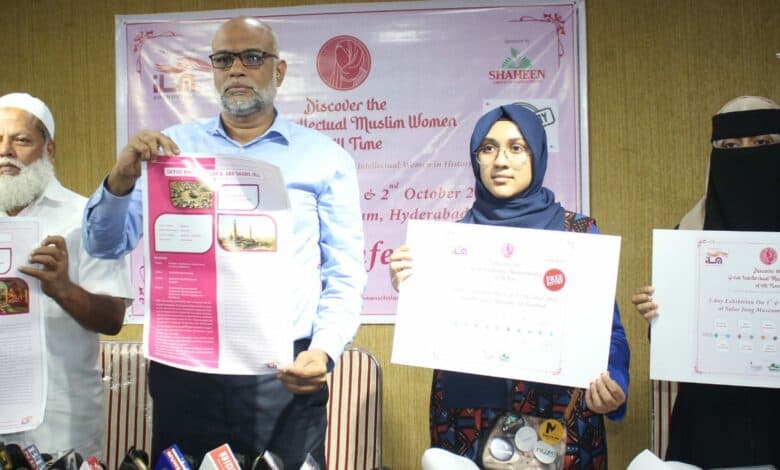
Women are the largest untapped reservoir of talent in the world. There is no limit to what they can accomplish. Now, one can learn all about the achievements of Muslim women at a two-day exhibition being organised at the Salar Jung Museum on October 1 and 2 by the Intellectual Learning Methodologies (ILM) Foundation in association with the Shaheen Group of Educational Institutions, Islah and Asli Talbina.
Maulana Khalid Saifullah Rahmani, general secretary, All India Muslim Personal Law Board, will inaugurate the exhibition which showcases the achievements of 40 women in different fields. Details of their accomplishment will be explained through posters, said Dr Lateef of ILM Foundation.
The main objective of holding the exhibition is to inform the common man about the achievements of women, particularly Muslim women.
A study of early Islamic history showed that women enjoyed the freedom of movement and took an active part in all walks of life. They excelled as rulers, warriors, nurses, scholars, jurists, teachers, traders and companions of the Prophet (Sahabiat).
In fact, they defined success on their own terms and proved that they are the real architects of society. When he started working on the subject some one-and-half years ago, Dr Lateef said, he stumbled upon the names of at least 10,000 women who had made immense contributions in their chosen field of activity.
These details he accessed through four books. They are Al Muhaddthat written by Oxford scholar of Indian origin, Dr Akram Nadvi, Muslim Women Biography Dictionary of Aisha Bewley, Great Women of Islam written by Mehmood Ahmed Ghazanfar and Achievements of Muslim Women in Religious and Scholarly Field by Maulana Qazi Athar Mubarakpuri.
Some of the well-known names whose exploits and achievements are being showcased include Hazrath Aisha, wife of the Prophet Muhammed, who made an enormous contribution to the cause of Islam through her intelligence and scholarship. Besides being an important narrator of Prophetic traditions (Hadith), she proved to be more learned than many men of her period.
Many male companions of the Prophet used to approach her for clarification of Hadith. Similarly, Hazrath Zainab, daughter of Hazrath Ali, was also a great scholar. Eminent Islamic scholar, Ibn Hajar, is stated to have studied under 53 women while Al Suyuti is under 33 women. All this is history now. Other prominent women are Queen Zubaida, Princess Razia Sultana, Durru Shehvar, and Princess Niloufer.
These women could leave their indelible marks as Muslim society gave them their fundamental rights to education and self-development.
“Lives of early Muslim women represent exemplary models, transcending time and boundaries. And they are a great source of inspiration,” Lateef said.
Organisers plan to take the exhibition to other parts of the country after Hyderabad. The exhibition on the inspiring women achievers is the result of the hard work put in by two talented girls -Juveria Sabir and Zoha Ansari. The latter is working at Edventure Park, a start-up incubator.
The two-day exhibition is being held in the eastern block of the Salar Jung Museum from 11 am to 5 pm. Entry is free.
source: http://www.siasat.com / The Siasat Daily / Home> Featured News / by J S Ifthekhar / September 27th, 2022
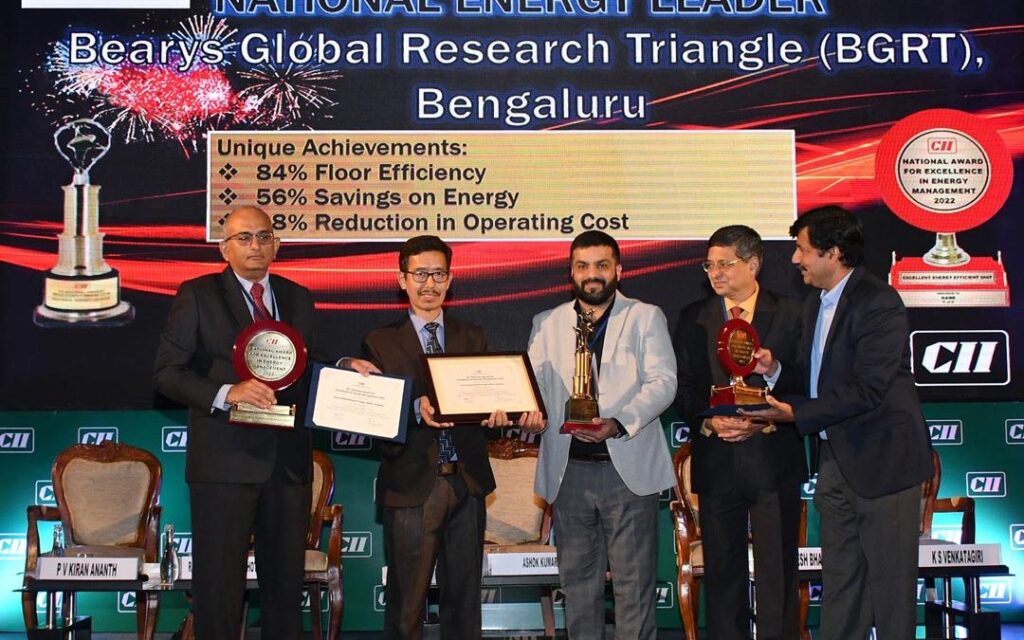
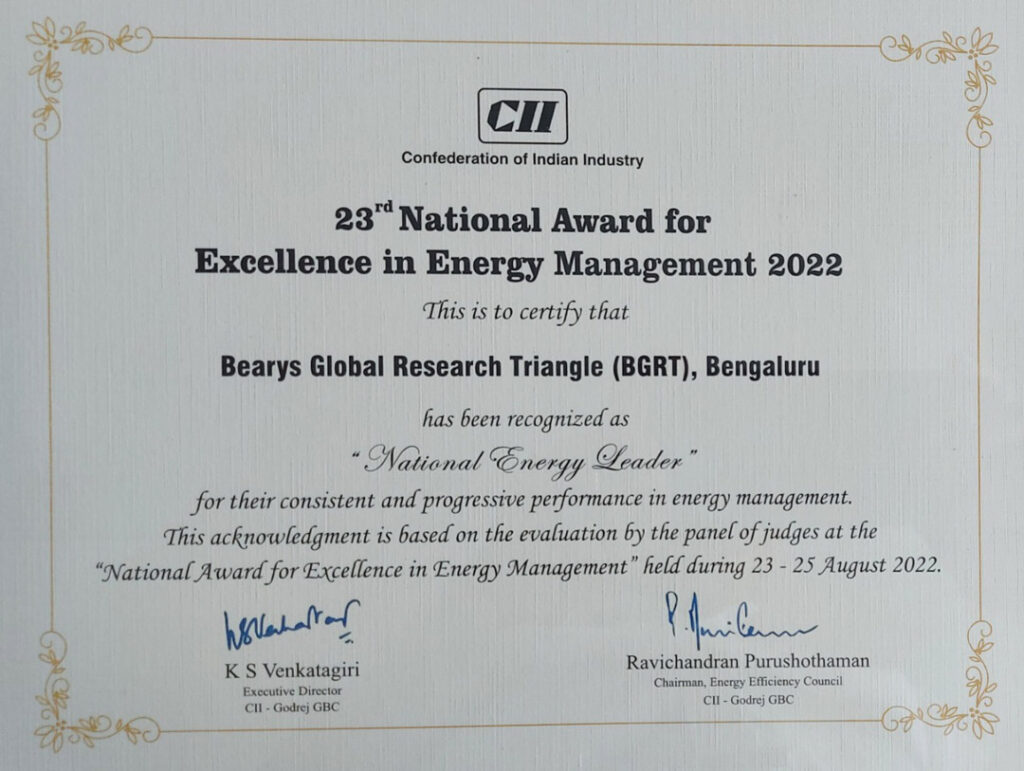
Bearys scores a hat trick by winning the prestigious ‘National Award for Excellence in Energy Management’ by CII for three consecutive years (2020, 21 & 22) for its project Bearys Global Research Triangle (BGRT), Whitefield, Bangalore and was declared the ‘National Energy Leader’.
Bearys was also commended and was awarded another accolade for the ‘Most useful Presentation’ at the award ceremony.
The awards were presented by Dr. Ashok Kumar, Director, Bureau of Energy Efficiency (BEE), Ministry of Power, Govt. of India to Mr. Mazhar Beary, Executive Director, in the presence of other eminent dignitaries at a grand award ceremony held at India Habitat Centre, New Delhi on Wednesday 21st Sept. 2022.
India’s first LEED Platinum R & D Park BGRT is globally recognized by both Industry and Academia as an epitome of sustainable development and an exemplary benchmark project and has become an arche model for sustainable development. A stream of Architects, Consultants, Developers and students from across India are visiting the project to see, learn and understand more about sustainable development and its manifold benefits.
‘We, at Bearys feel elated to receive this award and would like to dedicate this laurel to our mentors the late Dr. Prem C Jain, former Chairman, IGBC and the late Mr. Mahendrarajji, renowned structural consultant, New Delhi, who have inspired and guided us along the way. We now rededicate ourselves to our relentless pursuit to promote Sustainable Development & further the IGBC led ‘Green Building Movement’ in India” proclaims Mr. Syed Mohamed Beary, Founder & CMD.
source: http://www.beads.edu.in / BEADS / Home> News / by BEADS / September 21st, 2022
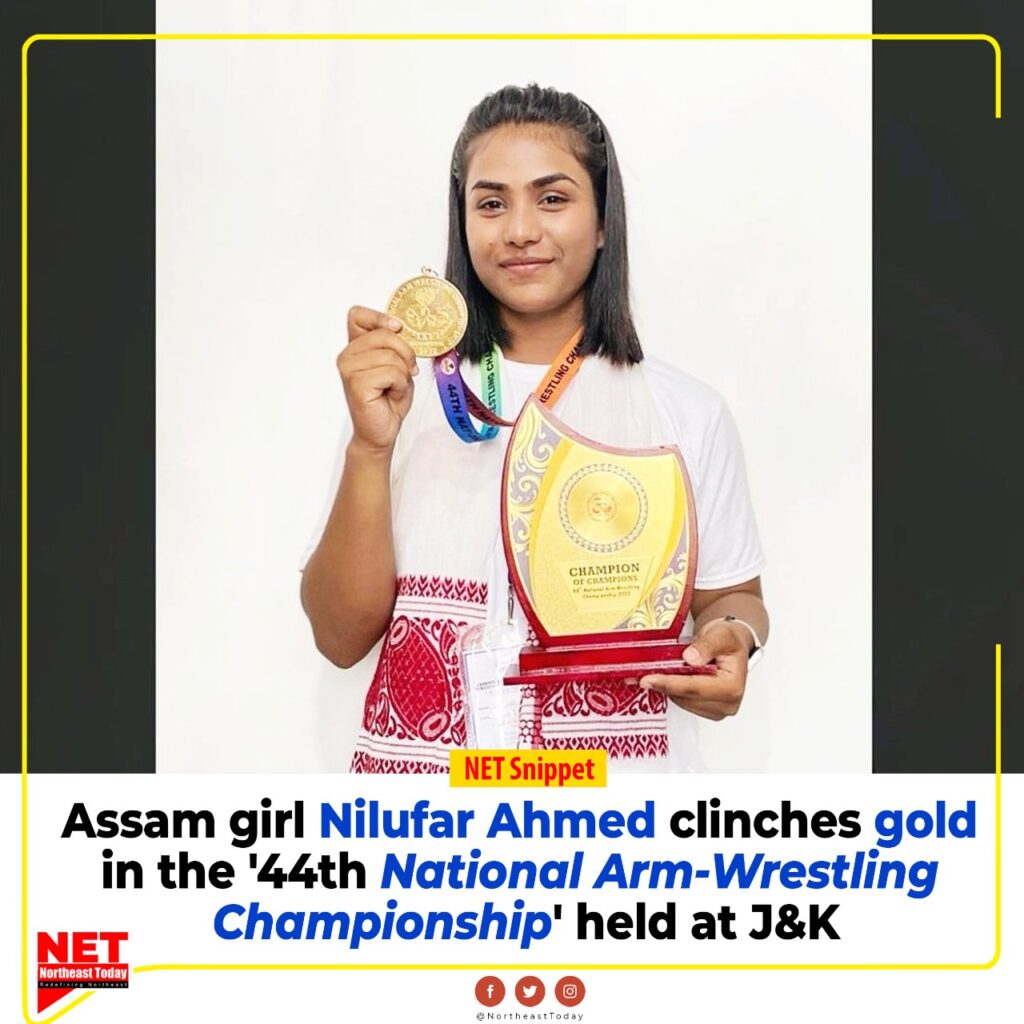
Nilufar Ahmed, a 2nd-semester student of the Bachelor of Computer Application (CT&IS) programme at Assam down town University, scripted history when she emerged victorious with the Gold medal in the 60-65 kg category at the 44th National Arm-Wrestling Championship held in Jammu & Kashmir.
The Championship was organised by the Jammu and Kashmir Arm Wrestling Association. It was held between August 18 – 22 at Ganderbal, J&K.
She also secured the “Champion of the Champions” title in the All-Women’s category at the same event and is, therefore, attained the undisputed No. 1position among all women players of all categories.
The Assam Women’s team was adjudged the best team at this event.
Earlier this year, she participated in the district-level and state-level Arm Wrestling Championships held in Bihdia and Nagaon respectively, where she bagged the Gold in both these events. These victories paved the way for her entry into the National Championships this year.
Before Nilufar ventured into arm wrestling, she was a proficient taekwondo player but had to withdraw due to some injuries. Her entry into the arm wrestling sport has been quite a recent phenomenon and it has been just a few months since she first started practicing the sport on a whim.
Her coach Mr. Debajit Sharma, who is a popular figure in the sport of arm wrestling introduced her to the sport of arm wrestling and trained her. With sheer hard work and a Never Say Die attitude, she has been able to conquer her fears and emerge victorious.
She is the daughter of Mustaque Ahmed and Safia Begum of Guwahati, who are very supportive of her sporting aspirations.
Nilufar is now preparing to achieve greater heights by practicing for forthcoming arm wrestling championships in the international arena.
source: http://www.skilloutlook.com / Skill Outlook (text) / Home> Top News / by Skill Outlook (headline edited) / September 03rd, 2022 / pix: Twitter@NorthEastToday
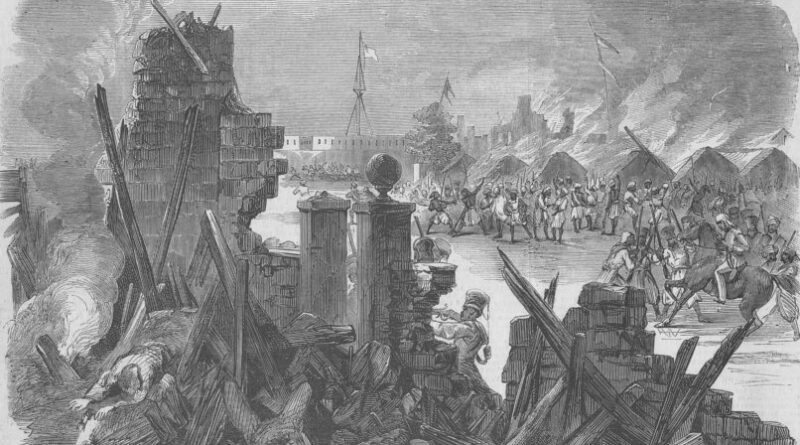
On 24 April, 1857, Colonel G.M.C Smith of 3rd Regiment, Light Cavalry, at Meerut asked his troops to load the cartridges in Enfield rifles. 85 out of the 90 Indian troops of the Regiment declined receiving the cartridges on account of usage of beef or pig fat in those. All the 85 Indians were sentenced to prison and their case was forwarded to Major General Hewit.
We are publishing the name of all these 85 Indian sepoys who defied the English command and thus triggered the first national war of Independence from Meerut.
Mataa-Deen (Havildar)
Naiks:
Sheikh Peer Ali
Ameer Qudrat Ali
Sheikh Hasan ud-Deen
Sheikh Noor Muhammad
Sepoys:
Sheetal Singh
Jehangir Khan
Meer Mosim Ali
Ali Noor Khan
Meer Husain Bakhsh
Muttra Singh
Narain Singh
Lal Singh
Sewdeen Singh
Sheikh Husain Bakhsh
Sahibdad Khan
Bishan Singh
Baldeo Singh
Sheikh Nandoo
Nawab Khan
Sheikh Ramzan Ali
Ali Mohammad Khan
Makhan Singh
Durga Singh
Nasurullah Begh
Meerahib Khan
Durga Singh (2nd)
Nabi Bakhsh Khan
Jurakhan Singh
Nadju Khan
Jurakhan Singh (2nd)
Abdullah Khan
Ehsan Khan
Zabardast Khan
Murtaza Khan
Burjuar Singh
Azimullah Khan
Azimullah Khan (2nd)
Kalla Khan
Sheikh Sadullah
Salar Bakhsh Khan
Sheikh Rahat Ali
Dwarka Singh
Kalka Singh
Raghubir Singh
Baldeo Singh
Darshan Singh
Imdad Husain
Peer Khan
Moti Singh
Sheikh Fazal Imam
Sewa Singh
Heera Singh
Murad Sher Khan
Sheikh Aram Ali
Kashi Singh
Ashraf Ali Khan
Qadardad Khan
Sheikh Rustam
Bhagwan Singh
Meer Imdad Ali
Shiv Baksh Singh
Lakshman Singh
Sheikh Imam Bakhsh
Usman Khan
Maqsood Ali Khan
Sheikh Ghazi Bakhsh
Sheikh Ommaid Ali
Abdul Wahab Khan
Ram Sahai Singh
Parna Ali Khan
Lakshman Dubey
Ramswaran Singh
Sheikh Azad Ali
Shiv Singh
Sheetal Singh
Mohan Singh
Vilayat Ali Khan
Sheikh Muhammad Ewaz
Indar Singh
Fateh Khan
Maiku Singh
Sheikh Qasim Ali
Ramcharan Singh
Daryao Singh
The list is an indication of Hindu Muslim unity during the war of Independence.
source: http://www.heritagetimes.in /Heritage Times / Home> Featured Posts> Freedom Movement / by Mahino Fatima / July 30th, 2021
The Women Education and Empowerment Trust (TWEET), one of the implementing organizations of the ‘Vision 2026’ project, has started a novel national-level year-long campaign ‘Freedom from Illiteracy: Each One Teach Ten’.
The campaign aims at providing illiterate adult women across the country with functional literacy. TWEET launched the campaign while the country is all set to celebrate its 76th Independence Day on 15 August.
TWEET is a national-level NGO based in New Delhi established for executing women empowerment initiatives under ‘Vision 2026’- a flagship project implemented by seven NGOs including TWEET. Vision is a decade-long program to bring about sustainable change in the socio-economic status of marginalized and deprived communities in the country. Right from its inception, Vision has been implementing numerous programs for illiteracy eradication.
The campaign was launched on Sunday by Rahamathunnissa A, Chairperson, TWEET, at the Press Club of India, New Delhi in the presence of Shaista Rafat, general secretary, TWEET, and Dr. Sharnas Muthu, Treasurer, TWEET.
“The major mission of the ‘Freedom from Illiteracy: Each One Teach Ten’ campaign is to engage educated women all over the country to volunteer for the initiative, educating at least 10 illiterate adult women and creating a remarkable impact on their lives,” Rahamathunnissa said, while launching the initiative.
“TWEET also aims to address major issues among the women such as unemployment, poverty, social backwardness and unrest, discrimination, suppression, and many more through the effective execution of the campaign,” said Shaista Rafat, introducing the campaign.
India’s National Literacy Mission defines literacy as acquiring the skills of reading, writing, and arithmetic and the ability to apply them to one’s day-to-day life. According to National Family Health Survey (NFHS-5) 2019-21, the literacy rate amongst adult women (15-49 years) in the country stands at 71.5% while the literacy rate of adult men is 87.4%.
source: http://www.indiatomorrow.net / India Tomorrow / Home> Education / by Admin, India Tomorrow / August 08th, 2022
“The Musalmans of India are, and have been for many years, a source of chronic danger to the British Power in India.” – W W Hunter, an English official posted in India, in his famous book ‘The Indian Musalmans’, published in 1871.
After 1947, Indian scholars wrote a ‘nationalist’ history of the Indian freedom struggle and for unknown reasons, they excluded Muslims. For the last seven decades, we have been reading a history of the Indian Freedom Struggle that has largely overlooked the contribution of Muslims. The generations brought up over this narrative believe that either the Indian Muslims were pro-British or aloof from the freedom struggle.
Such falsehoods propagated in the name of history should be challenged.
The British imperialism in India was resisted by the Indians right from its outset and the Muslims were the flag bearers of this resistance. The British took over Bengal administratively and economically after defeating the royal armies at the Battle of Plassey (1757) and the Battle of Buxar (1764). With their win over the Nawab of Bengal, the British started exploiting the Indians of Bengal province in an unprecedented fashion. Their ruthless loot resulted in a famine in 1770, which accounted for the deaths of one-third of the total population of Bengal.
No wonder the first popular national resistance to foreign colonial rule arose in Bengal. A united front of Hindu Sanyasis and Muslim Fakirs rose up in arms against the British. The man who led this fight was, Majnu Shah, a Muslim sufi from Kanpur (Uttar Pradesh). Majnu was a devotee of Shah Madar, Kanpur, and took up the cause of poor peasants on the advice of another Sufi saint, Hamiduddin. Almost 2000 Fakirs and Sanyasis, under his command, would loot the treasures of the British and British-backed landlords to distribute the money and food among poor exploited masses. From 1763 till his death in 1786, Majnu was the most dangerous threat to the British Empire in India. Fakir and Sanyasi forces killed several officers and soldiers of the British in guerrilla wars. After his death, Musa Shah took up the leadership of the movement. Hindu Sanyasi leaders, like Bhawani Pathak, were also there and fought alongside but the colonial records considered Majnu as the most threatening leader because under him Hindus and Muslims fought a united war. The ruthless British suppressed this movement a few years after the death of Majnu but the spirit of nationalism could not be killed.
The suppression of the movement led by Fakirs in Bengal did not mean that they accepted defeat. Fakirs changed their strategy and joined Marathas and other anti-British forces at the turn of the 18th century. The first major mutiny by the Indian sepoys of the English East India Company Army in 1806 at Vellore, which is said to be the inspiration behind 1857, was planned by Holkars, sons of Tipu Sultan and brother of Nizam of Hyderabad with the help of Fakirs. In every cantonment in South India, Fakirs propagated the message of nationalism through religious sermons, songs and puppet shows. When the revolt broke out at several places including Vellore the Indian revolutionaries were led by Fakirs like Shaikh Adam, Peerzada, Abdullah Khan, Nabi Shah, and Rustam Ali. Scholar Perumal Chinnian writes, “the Southern conspiracy was supported by Fakirs and other religious mendicants. The conspiracy was established in all the army stations by them.”
Within a few years, the British faced another challenge in the form of three distinct movements led by Syed Ahmad Barelvi, Haji Shariatullah and Titu Mir respectively.
Born in Uttar Pradesh, Syed Ahmad toured a large part of the country and gained followers in Bihar, Bengal, and Maharashtra. His followers took up arms against the British and its allies in the areas adjacent to Afghanistan. The movement posed a challenge to the British for decades. The British painted the movement as a work of religious fanaticism while in reality, Syed Ahmad tried to forge an alliance with Marathas against the foreign rulers. After he died in 1831, Enayat Ali and Wilayat Ali, both from Patna, took up the leadership of the movement. The wars they led in the frontier region caused the death of thousands of soldiers of the British army.
Haji Shariatullah and his son Dudu Miyan took up arms in Bengal to resist the tyranny of rich landlords. They led peasants to revolt against the indigo planters and other British agents. The movement they led is known as Faraizi movement.
Titu Mir also led a movement of poor masses against the British-backed landlords. He formed his army and set up a popular administration. In 1831, Titu was killed during a battle with the British. Hundreds of his supporters were arrested and hanged, including his deputy, Ghulam Masum.
Meanwhile, the Movement started by Syed Ahmad remained a grave danger to British rule in India. Enayat Ali, Wilayat Ali, Karamat Ali, Zainuddin, Farhat Husain, and others led an armed struggle against the British. In Patna, as soon as the news of the revolt of 1857 reached, all the prominent leaders were arrested before they could act. Still, Pir Ali launched a revolt in Patna. Though not a part of the larger movement himself the British believed that he had their support. Pir Ali, Waris Ali, and other Muslim revolutionaries were executed in Bihar during the revolt of 1857.
The First War of the National Independence of 1857 had a long history of planning behind it. In 1838, the English government arrested Mubariz ud-Daula for plotting a nationwide revolt against the foreign rule. The investigations revealed that Raja Ranjit Singh, Gaekwars, Satara, Jodhpur, Bhopal, Patiala, Rohilla Pathans, and several nawabs, rajas and zamindars had agreed upon the plan. Raja Ranjit Singh had actually sent his troops to help Mubariz and contacted Persian and French powers for help. The plan, because of a few traitors leaked out, Mubariz was imprisoned where he died in 1854 and the revolt took place two decades later.
The role of Muslims in 1857 is no secret. The unity of Hindus and Muslims in 1857 threatened the British like never before and they resorted to a policy of divide and rule after that. Maulvi Ahmadullah Shah of Faizabad, Fazl-e-Haq of Khairabadi, Imdadullah Muhajir Makki of Muzaffarnagar, and Azimullah Khan, an associate of Nana Saheb, were prominent in propagating the need of taking up the arms against the colonial rule. For years before 1857, they were propagating these ideas among sepoys as well as civilians.
In Bihar, Kunwar Singh was leading the revolt of 1857. Zulfiqar was one of his most trusted comrades with whom Kunwar was discussing every plan. After liberating Arrah the civil government installed by Kunwar had his most trusted allies and there were several Muslims. The government had “Shaikh Ghulam Yahea as Magistrate. Shaikh Muhammad Azimuddin, an inhabitant of Milky Tola in the town of Arrah, was appointed Jamadar (treasurer) of the eastern thana: Turab Ali and Khadim Ali, sons of Dewan Shaikh Afzal, were made Kotwals (Police officers in charge of a city)”
The revolt did not succeed. Bahadur Shah was exiled to Burma, several were hanged and many more were transported for life to Andamans. But, the zeal for freedom did not die.
In 1863, tribals in North West Frontier Province stormed the British territories and entered into a war. The British, though registered a victory, had to face one of the stiffest military challenges. They lost more than a thousand of its English soldiers. Intelligence reports pointed towards a financier in Ambala. The man was Jafar Thanesri. During the raid police found several letters which established him as the principal financier of the war in NWFP. He channelled money, men and arms from different parts of the country to the war front. Yahya Ali of Patna and nine others were also charged for waging the war against the Queen. What followed was a series of arrests and trials across India.
People were arrested in Ambala, Patna, Malda and Rajmahal. Ahmadullah, Yahya Ali, Jafar, Ibrahim Mandal, Rafique Mandal and others were arrested and transported to Andamans. These revolutionaries celebrated martyrdom over life, hence the British decided not to hang them but to send them to the Andamans. In 1869, Amir Khan and Hashmat Khan were arrested in Kolkata. Norman, the Chief Justice, sentenced them to the Andamans. The sentence was avenged by Abdullah by assassinating Norman in 1871 and after a few months Sher Ali killed the viceroy, Lord Mayo, in the Andamans.
Bipin Chandra Pal, in his autobiography, credited these trials and killings as an important influence on his political career. Another famous revolutionary, Trailokya Chakravarty, noted, “the Muslim revolutionary brothers gave us practical lessons of unbending audacity and inflexible will and also advice to learn from their mistakes”.
In Maharashtra, Ibrahim Khan, a Rohilla leader, and Balwant Phadke launched a guerilla war against the British. They provided a tough resistance through the 1860s and 70s, and threatened the British in south India.
Meanwhile, in 1885, Indian National Congress (INC) was formed to voice the apprehensions of the emerging educated middle class. Badruddin Tayyabji and Rahmatullah Siani were two of the earliest members and presidents of Congress. Later on, M.A Ansari, Hakim Ajmal Khan, Hasrat Mohani, Abul Kalam Azad, and others remained associated with the largest political outfit of India.
In 1907, peasants in Punjab started agitation against the canal colonies. Along with Lala Lajpat Rai and Sardar Ajit Singh, Syed Hyder Raza was one of its prominent leaders. The movement is seen as a precursor to later Ghadar movement.
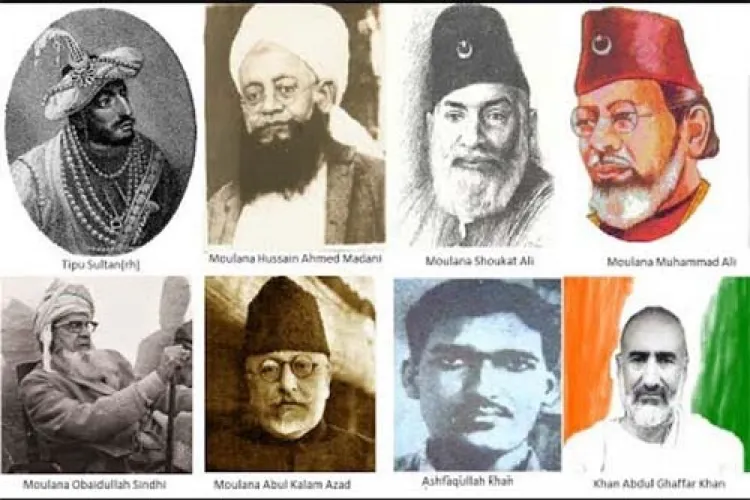
During the First World War (1914 – 18), the British intercepted three letters written on silk cloth. The letters were written by Maulana Ubaidullah Sindhi to Maulana Mahmood Hasan and pointed towards a global plan to overthrow the British rule in India. Ubaidullah was named as one of the most dangerous Indians for the British in the Rowlatt Committee Report. He formed armed groups, preached anti-British ideas and formed a provisional government in Kabul. The Prime Minister of the government was Maulana Barkatullah. The government had to have an army as well, which would attack India to free it. But, the plan failed because of the leaked silk letters and the end of the World War. The plan was called Silk Letter Movement and 59 freedom fighters, mostly Muslims, were charged for waging the war against the Empire. Maulana Abul Kalam Azad, Abdul Bari Firangi Mahli, Ubaidullah Sindhi, Maulana Mahmood, Husain Ahmad Madni and M.A Ansari were few of them. Maulana Mahmood and Madni were arrested in Makkah and imprisoned in Malta.
Maulana Abul Kalam Azad, who is often seen as a token Muslim in a largely Hindu dominated Congress, was a freedom fighter whom the British feared. His name occurred in different CID reports for planning armed revolutions. At least 1700 freedom fighters took oath to die for the cause of freedom as members of Hizbullah, a revolutionary organisation formed by Azad. Al-Hilal, a paper edited and published by him, was banned for propagating the revolutionary nationalist ideas. Azad established Darul Irshad, a madarsa, to popularise the anti colonial ideas. For his organization, Hizbullah, Jalaluddin and Abdur Razzak were prominent recruiters, who also united Hindu and Muslim revolutionaries of Bengal. No wonder, Azad was jailed many times and was the President of INC when the Quit India Resolution of 1942 was passed.
The Silk Letter Movement was not the only resistance movement during the World War. Ghadar Movement was another movement in which several Muslims took part and attained martyrdom. Rehmat Ali was hanged in Lahore for trying to instigate mutiny among soldiers. The efforts bore fruit in Singapore, when, in February, 1915, 5th Light Infantry consisting mostly Muslims from Punjab revolted. The soldiers captured Singapore for a few days. The revolutionaries were later defeated, captured and shot dead.
Another misconception prevalent among Indians is that the Bengali revolutionaries were Hindus. Interestingly, the revolutionary organizations with Hindu religious overtones, like Jugantar and Anushilan had many active Muslim members. Sirajul Haq, Hamidul Haq, Abdul Momin, Maksuddin Ahmad, Maulvi Ghayasuddin, Nasiruddin, Razia Khatun, Abdul Kader, Wali Nawaz, Ismail, Zahiruddin, Chand Miyan, Altaf Ali, Alimuddin, and Fazlul Kader Chowdhury were few of the Bengali Muslim revolutionaries who took up arms along with Hindus. Many of them were sent to Andamans or killed.
After the World War, the British introduced a draconian Rowlatt Act. The Indians protested against the act and many leaders were arrested. At Jallianwala Bagh people were massacred when they were protesting against the arrest of Saifuddin Kitchlew. The proportion of Muslims killed at Jallianwala was quite high. Around this time, 1919 onwards, Abdul Bari Firangimahli, Mazharul Haque, Zakir Husain, Mohammad Ali, and Shaukat Ali emerged as the mass leaders. Women like Bi Amma, Amjadi Begum, and Nishat al-Nisa also jumped into the freedom struggle.
In Tamil Nadu, Abdul Rahim organised the workers during the 1930s against the oppressive colonial rule. V. M Abdullah, Sharif Brothers, and Abdul Sattar were other prominent Muslim leaders in South India who led nationalist movements and braved torture and imprisonments.
Khan Abdul Ghaffar Khan led pathans posed a non-violent challenge to the British. In 1930, the British fired upon a crowd protesting against the arrest of Ghaffar Khan at Qissa Khwani Bazar, Peshawar. Hundreds of pathans laid their lives for the service of the motherland.
Faqir of Ipi, Mirza Ali Khan, and Pir of Pagaro, Sibghatullah, raised their armies in the 1930s in Waziristan and Sindh respectively to fight the British during the World War. In a larger scheme of things, Subhas Chandra Bose and Axis Powers allied with their armies in order to liberate India.
In 1941, Netaji Subhas Chandra Bose escaped from house arrest. The man who played an important role in the escape was Mian Akbar Shah. Netaji reached Berlin and formed a Free India Legion. Abid Hasan, became his confidant here and served as secretary. Abid was his only associate who accompanied him on a famous submarine journey from Germany to Japan. In 1943, Netaji formed Azad Hind Sarkar and Azad Hind Fauj. Here several Muslims like, Lt. Col. Aziz Ahmad, Lt. Col. M.K Kiani, Lt. Col. Ehsan Qadir, Lt. Col. Shah Nawaz, Karim Ghani, and D.M Khan became ministers with important portfolios. Azad Hind Fauj faced reverses in war and its soldiers were taken prisoners by the British. Rashid Ali’s imprisonment became a symbol of Hindu Muslim unity when Hindus and Muslims across the political affiliations came out on Kolkata road demanding his, and other Azad Hind Fauj soldiers, release in 1946. The police fired upon the protesters killing dozens of Indians. Elsewhere, in Mumbai and Karachi, the Royal Navy revolted in support of Azad Hind Fauj. Anwar Husain was one of the prominent martyrs of this revolt as Colonel Khan led the soldiers in revolt at Mumbai port.
India gained independence on 15 August, 1947. It was a costly affair. The cost was the Indian lives. The lives we paid were neither Hindu, nor Muslim. The lives belonged to the Indians. Those who laid their lives were Indians first, and Hindus or Muslims later. Here again, Muslim leaders like Allah Bux Somroo, K. A. Hamied, Faqir of Ipi, Abdul Qayyum Ansari, Abul Kalam Azad and others fought against the divisive communal politics of Muslim League to stop the partition. Tragically, more than seven decades later people have forgotten this important aspect of our freedom struggle and try to divide this great struggle along petty sectarian lines.
(The article is an updated version of an article published last year.)
source: http://www.awazthevoice.in / Awaz, The Voice / Home> Culture / by Saquib Salim / August 15th, 2022
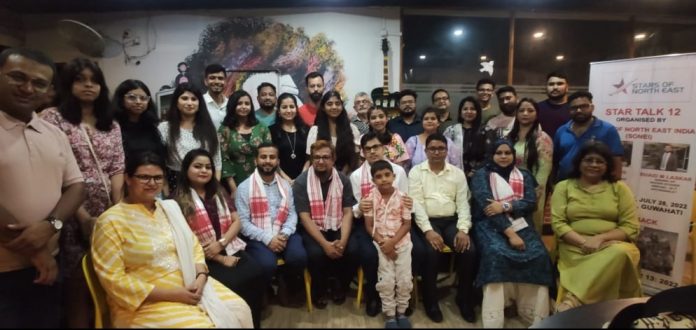
Members of SONEI along with guests pose for a group photo on the sidelines of the ‘Star Talk-12’ event held in Guwahati on Thursday.
Guwahati :
‘Star Talk-12’, an initiative of the Stars of North East India (SONEI), a registered public charitable trust and talent hunt platform, was held in Guwahati on Thursday.
The first appointed speaker of the event was Aman Wadud, a young lawyer who recently got his Masters in Law from the University of Texas under a Fulbright Scholarship. Besides sharing his American experience, Aman Wadud gave a very informative presentation of the evolution of Civil Rights in the USA.
The second appointed speaker, Suaid M Laskar, Head of Pan-India Sales, Admissify made a presentation to clear the common doubts people have about studying abroad. Laskar, who has been instrumental in facilitating overseas studies of more than 350 students from Assam, over the last five years, in countries like Australia, Germany, UK and USA, informed the audience that 93 per cent of the students who go abroad for studies belong to middle class families.
Abhishek Kumar, a graduate from Guwahati Commerce College, who is all set to study his Masters in Supply Chain Management at Cranfield University, UK also shared his experience on the occasion.
Alemoon Nessa of Bongaigaon, who recently received two national MSME awards along with a cash component of Rs eight lakh from the hands of Prime Minister Narendra Modi, was felicitated on the occasion.
Dr Faizuddin Ahmed, a physicist from Dhubri, who has made it to the Stanford list of world’s top 2% scientists, was also honoured on the occasion.
Shahnaz Islam, a budding poet whose book “Midnight’s melancholy” was launched from Sikkim recently, enthralled the audience by reciting a few poems from her book.
Mirza Arif Hazarika’s short film “Sorry” starring Barasha Rani Bishaya and Ravi Sharma is now live on Disney+Hotstar, a rare honour for an Assamese short film. Mirza shared his experiences of making the film.
Priyanka Paul Banerjee, an upcoming PR practitioner, was also felicitated along with other achievers at the event.
SONEI will complete eight years of its existence in September 2022 during which new projects will be announced in addition to its existing programmes in the field of education, promotion of skills, and social service.
The event was hosted by Samima Sultana Ali and Sharique Hussain.
source: http://www.muslimmirror.com / Muslim Mirror / Home> Education> Positive Story / by Special Correspondent / July 29th, 2022
The 23-year-old Ramandeep clocked 3:00.04s and clipped more than 13 minutes from Priyanka Goswami’s earlier national record of 3:13.19s.
Juned Khan of Haryana and Ramandeep Kaur of Punjab. (Photo | Twitter/ ians india)
The 23-year-old Ramandeep clocked 3:00.04s and clipped more than 13 minutes from Priyanka Goswami’s earlier national record of 3:13.19s, set in the World Athletics Race Walking Championships in Muscat last month. Goswami did not take part in the 35km event on Sunday. She had taken part in the 20km event on Saturday but could not finish the race.
Ramdeep’s Punjab team-mate Manju also came inside Goswami’s earlier national mark to take the silver in 3:07.49s.
In the men’s 35km event, 22-year-old Juned pulled away from Ram Baboo and Chandan Singh after the 20km mark to lower the national record by five minutes, clocking 2:40.16s. Eknath Sambhaji Turambekar, who held the earlier national record of 2:45.17s, was among the four who were bunched in the lead till the 20km mark but dropped out after being second with 10km to go.
The 35km race walk event was introduced in India only last year in the wake of World Athletics’ decision to do away with the 50km event after the Tokyo Olympics.
Uttarakhand’s Sachin Bohra edged out Gujarat’s Rohit Kumar Yadav by a mere second to win the men’s U-20 10km crown with a time of 43:12s. Deepika Sharma of Rajasthan won the women’s U-20 10km race with a time of 51:32s
The Results:
Men’s 35km:
1. Juned Khan (Haryana) 2:40.16;
2.Ram Baboo (Uttar Pradesh) 2:41.30;
3. Chandan Singh (Uttarakhand) 2:42.02.
Women’s 35km:
1. Ramandeep Kaur (Punjab) 3:00.04;
2. Manju (Punjab) 3:07.49;
3. Payal (Uttarakhand) 3:15.47.
Men U-20 10km:
1.Sachin Bohra (Uttarakhand) 43:12;
2. Rohit Kumar Yadav (Gujarat) 43:13;
3. Aditya Negi (Uttarakhand) 44:27.
Women’s U-20 10km:
1. Deepika Sharma (Rajasthan) 51:32;
2. Bharti Bhadana (Haryana) 52:23;
3. Indu (Haryana) 52:40.
source: http://www.newindianexpress.com / The New Indian Express / Home> Sports> Others / by PTI / April 18th, 2022