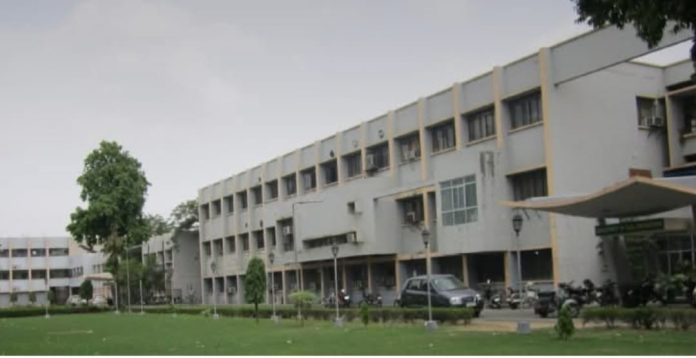
Engineers at Aligarh Muslim University have developed a Ferro Cellular Insulated panel to reduce indoor heat during peak summer. The innovation comes from the Civil Engineering Department and offers an energy efficient alternative to brick walls.
The research team includes Prof Abdul Baqi, Dr Mohammad Rehan Sadiq, and research scholar Yasir Khan. They designed the 90 mm corten cement panel using cement and cardboard. A gap between two layers traps air, which works as insulation. The panel keeps indoor temperatures at 25 to 27°C when outdoor heat reaches 40 to 42°C. This means a drop of nearly 15°C.
Researchers say the panel reduces the need for air conditioners and coolers. It also blocks external noise, improving indoor comfort. Dr Sadiq said the team focused on durability and structural strength while introducing a material not widely used in India.
Cost comparisons show long term savings. Building a 10×10 foot room with bricks costs around ₹1 lakh. Using the insulated panel raises the cost to about ₹1.15 lakh. However, annual electricity expenses for a brick room reach around ₹22,651 due to cooling needs. A panel built room requires about ₹10,251 per year. This results in savings of nearly ₹12,400 annually.
Researchers also found electricity use remains lower throughout the year in panel built rooms. The lighter panels reduce structural load, which improves building safety.
The team plans to introduce the technology to the market. With rising temperatures and higher energy demand, this panel offers a practical option for heat prone regions. It also reduces dependence on bricks and mortar, lowering environmental impact.
source: http://www.radiancenews.com / Radiance News / Home> Uncategorized / by Radiance News Bureau / February 12th, 2026
Assistant Professor Ejaz Ahmed further informed that the carbon nanotubes produced during the separation of hydrogen from methane are a high-strength material.
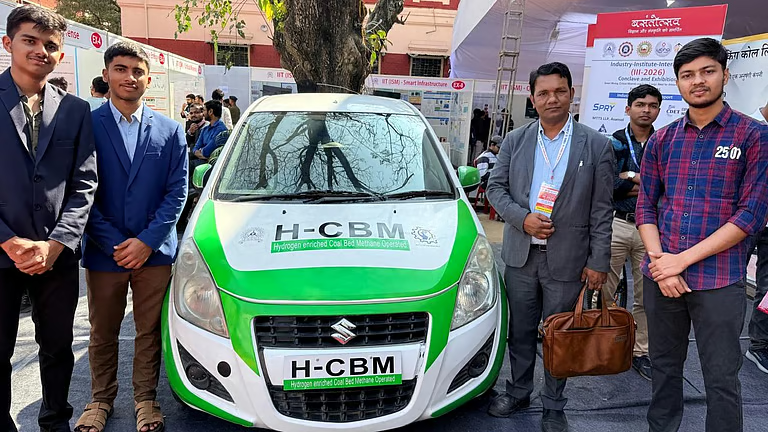
Jharkhand IIT-ISM students develop eco-friendly fuel by enriching coal bed methane with hydrogen.(Photo | Special Arrangement)
Ranchi :
Second-year students of the Chemical Engineering department at IIT-ISM Dhanbad have developed a technology to convert greenhouse gases like coal bed methane into environmentally friendly fuel, which can be used directly in CNG cars.
The eco-friendly fuel has been named as H-CBM (Hydrogen Enriched Coal Bed Methane). Chemical engineering students Kailash Krishna, Nitin Gaur, and Devashish Das, under the guidance of Assistant Professor Ejaz Ahmed, have also developed a hydrogen-enriched coal bed methane-powered car. Professor Alok Das of Mechanical Engineering Department also helped them in research work.
Coal-bed methane gas is released during coal mining. It is a dangerous greenhouse gas, considered to be approximately 25 times more harmful than carbon dioxide.
Ahmed said they are using a waste product that previously polluted the environment and creating an environmentally friendly fuel that can be used in any CNG car without any modifications.
Coal bed methane contains sulphur and methane, he said. “It is purified to produce pure methane. Then, a portion of the methane is cracked, through which hydrogen and carbon nanotubes are obtained. The hydrogen-enriched coal bed methane, produced through this process, can be used directly in cars as a substitute for CNG,” said Ahmed.
He further informed that the carbon nanotubes produced during the separation of hydrogen from methane are a high-strength material. They are used in bulletproof jackets and the steel industry. Its market price is up Rs 500,000 per kilogram, he said. The associate professor said that since carbon nanotubes are produced alongside hydrogen, the cost of the hydrogen becomes virtually zero.
Ahmed informed that the release of coal bed methane significantly increases environmental pollution. However, capturing coalbed methane offers considerable benefits. “Capturing 1 kilogram of coalbed methane is equivalent to reducing pollution by the same amount as 25 kilograms of carbon dioxide, which is crucial for environmental protection,” said the professor. It will prove to be a game-changer in the field of green mining, he added.
Second-year student Devashish Das, who is also a part of the research team, explained that CNG cars emit less carbon dioxide than petrol and diesel vehicles, but the emissions are not completely eliminated.
“Coal bed methane gas, extracted from the coal mines of Dhanbad, is far more dangerous. Considering this, hydrogen fuel has been developed from CBM,” said Das. Because hydrogen has a higher calorific value than CNG, it also provides better fuel efficiency for vehicles, he added.
source: http://www.newindianexpress.com / The New Indian Express / Home> Nation / by Mukesh Ranjan / February 09th, 2026
Scientists at the Indian Institute of Technology Delhi have developed a bio-patch that can reverse the damage caused by a heart attack in humans. The patch can be planted on the heart and it would regrow the damaged tissue and restore health.
The patch made of biomaterials has already been tested on animals and is awaiting human trials before it can be manufactured.
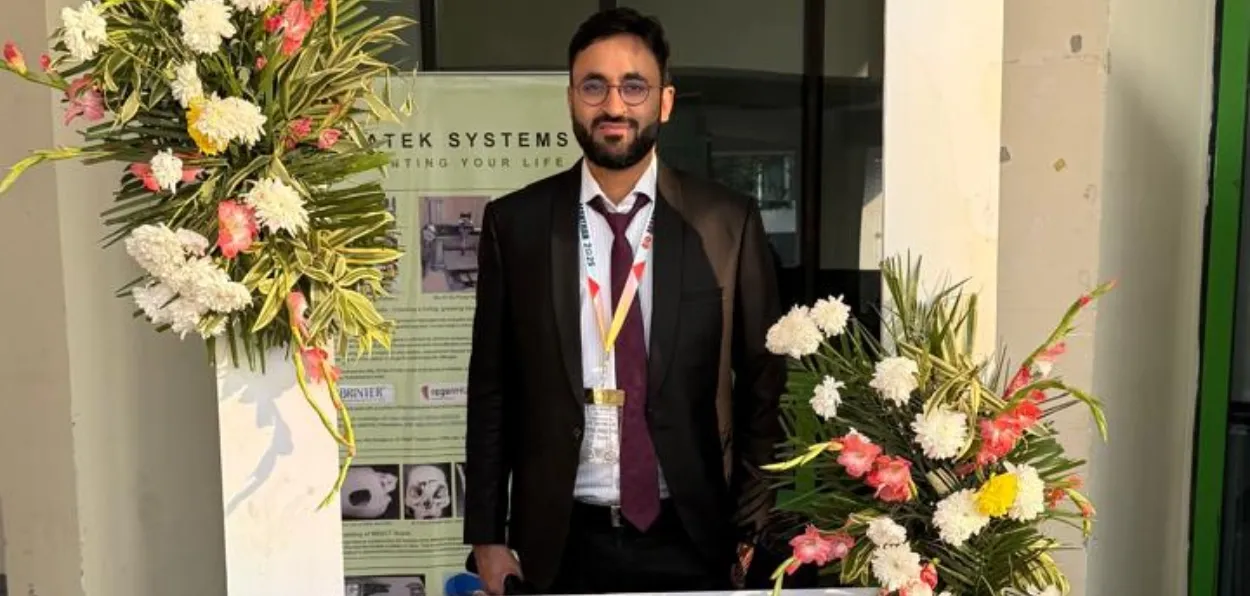
This key medical project is led by the Kashmir-born scientist Dr Sheikh Ahmed Parvaiz at the Sheikh lab for BioMaterial Advances in Regeneration and Therapeutics (SMART), Centre for Biomedical Engineering at the IITD.
“After the attack, a patient’s heart usually work only 40 per cent of its capacity. Such people usually do not live long and are also not energetic and healthy,” Dr Parvaiz said.
Parvaiz A Sheikh with a student
He said the patch can regenerate tissues damaged during a heart attack, and a person can live a normal and good life. The cost of the bio patch would be nominal compared to the costly and invasive surgeries.
Parvaiz A. Shiekh has been heading the Centre for Biomedical Engineering (CBME), IIT-Delhi, as a DST INSPIRE Faculty since 2021.
According to the IIT website, where Dr Parvaiz is a faculty, “He establishes a research area that explores immunomodulatory materials and nanomaterials to develop therapeutic interventions for various biomedical & translational applications. His interests also lie in developing oxygen-based biomaterials and nano-therapeutics to cure cardiovascular diseases, diabetic complications and lung diseases.”
This, in a nutshell, means Parvaiz and his team are working on developing biomaterials that can become easy and inexpensive cure for heart and cardiovascular conditions in humans. He is working on regenerative medicine, where biomaterials and nanotechnology can be used for repairing body parts.
Dr Parvaiz A Sheikh
“We are also developing a bio-patch to cure the diabetic foot,” he told Awaz-the Voice. During his doctoral studies, Parvaiz has developed an oxygen-releasing wound dressing for diabetic foot.
The diabetic foot is a major health issue, and there is a lot of ignorance about it. “In India, many women are diabetic, and they don’t know. Many a time, such women go on pilgrimages barefoot and trek a long distance for faith. Many women develop sores that never heal due to their diabetic condition.”
This patch to regenerate the in a diabetic foot will cost around Rs 2 and save them the pain of gangrene, which leads to amputation of the foot.
Who is Parvaiz A Sheikh?
Parvaiz Sheikh was born in Villgam village in the Kupwara district of north Kashmir, about 30 km from the Line of Control in Northern Kashmir.
He earned his PhD in Bioengineering from IIT Kanpur and “developed functionalized biomaterials and scaffolds to attenuate oxidative stress and hypoxia in diseased conditions with remarkable translational application.”
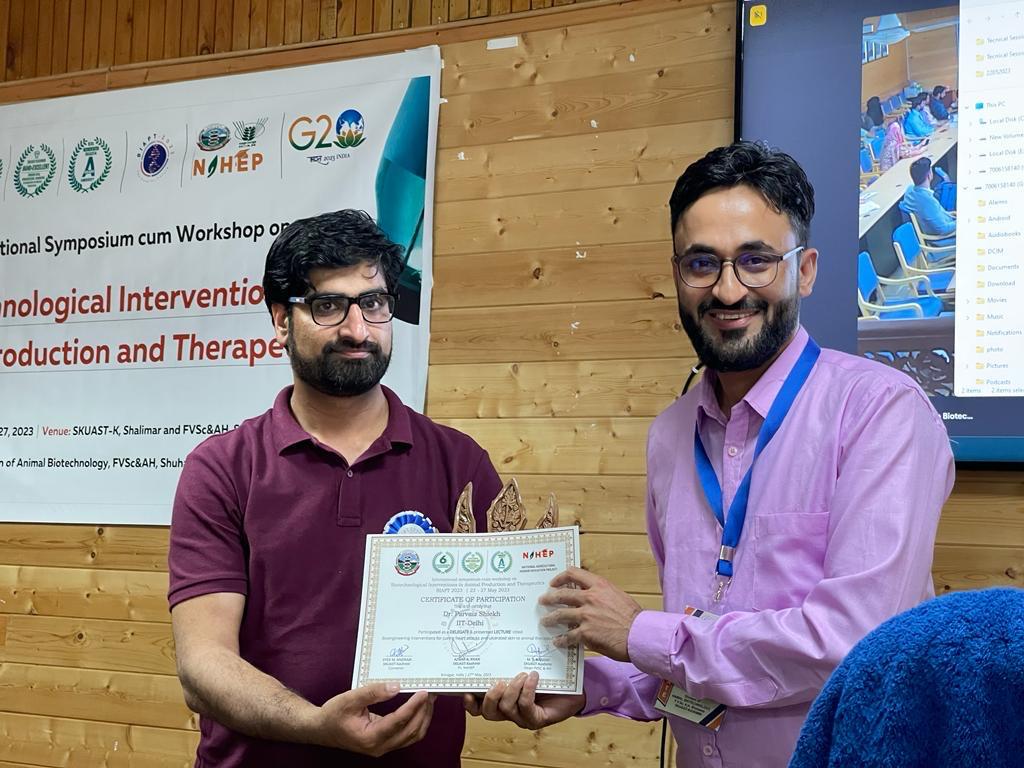
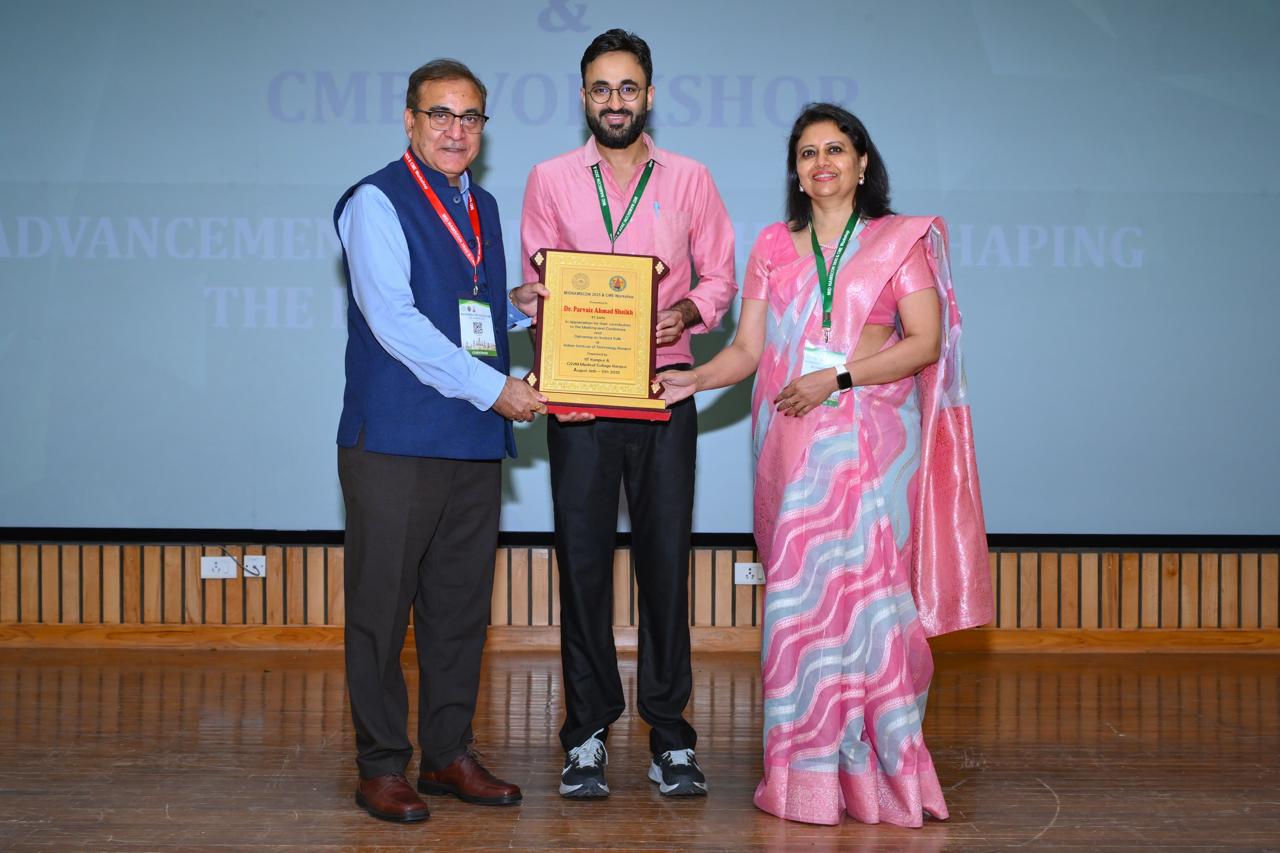
Dr Parvaiz A Sheikh receiving anhonour
“He also explored using stem cell-derived nanovesicles (exosomes) to repair and regenerate diseases like diabetic foot ulcers, myocardial infarction, and diabetic neuropathy. Most notably, he developed an oxygen-releasing wound dressing “OxOBand” for diabetic foot ulcers and a nanofibrous oxygen-releasing cardiac patch for myocardial infarction.”
Having completed his graduation in biosciences from Sri Pratap College, Srinagar, Parvaiz A. Shiekh joined the Central University of South Bihar, Gaya, Bihar, for the Master’s course in Bioengineering, and this was not only a turning point in his career but life too.
Tracing his journey from Kupwara to the Hi-tech labs of India and abroad, Parvaiz Ahmed, who is in his mid-thirties, said that while growing up, he had not even heard of the IIT, let alone studying and working there.
He loved football and also played cricket. He had no particular idea of a carrer and would follow what elders told him.
However, some life-changing and heartwarming interactions with strangers at a young age led him to get admission into the Central University of South Bihar for a Bioengineering degree.
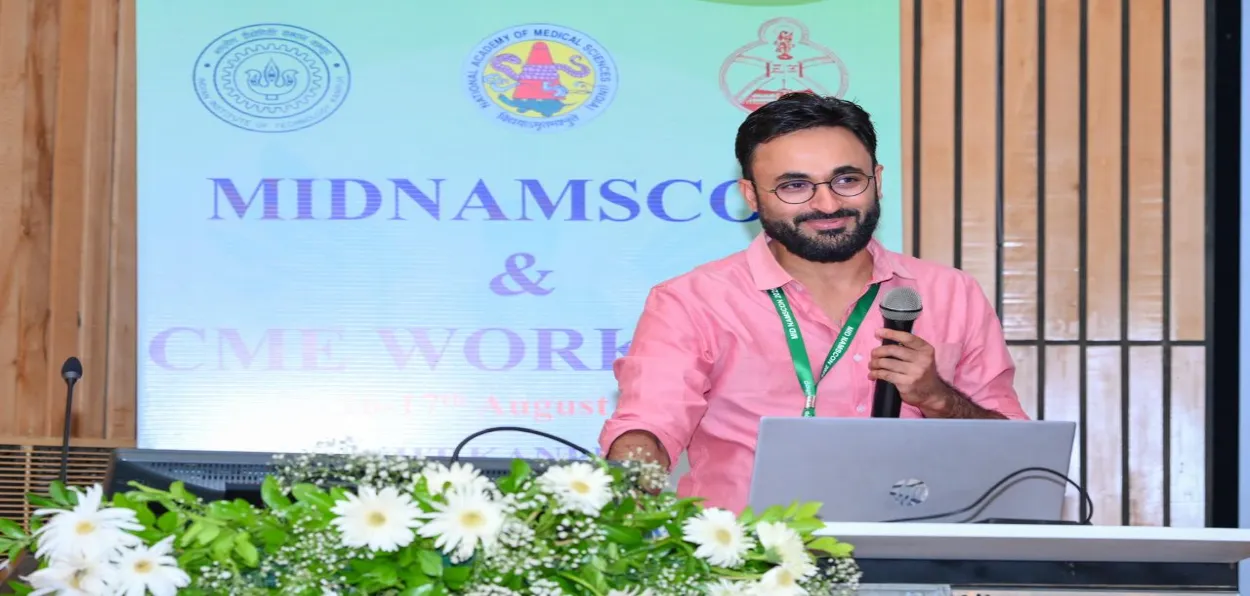
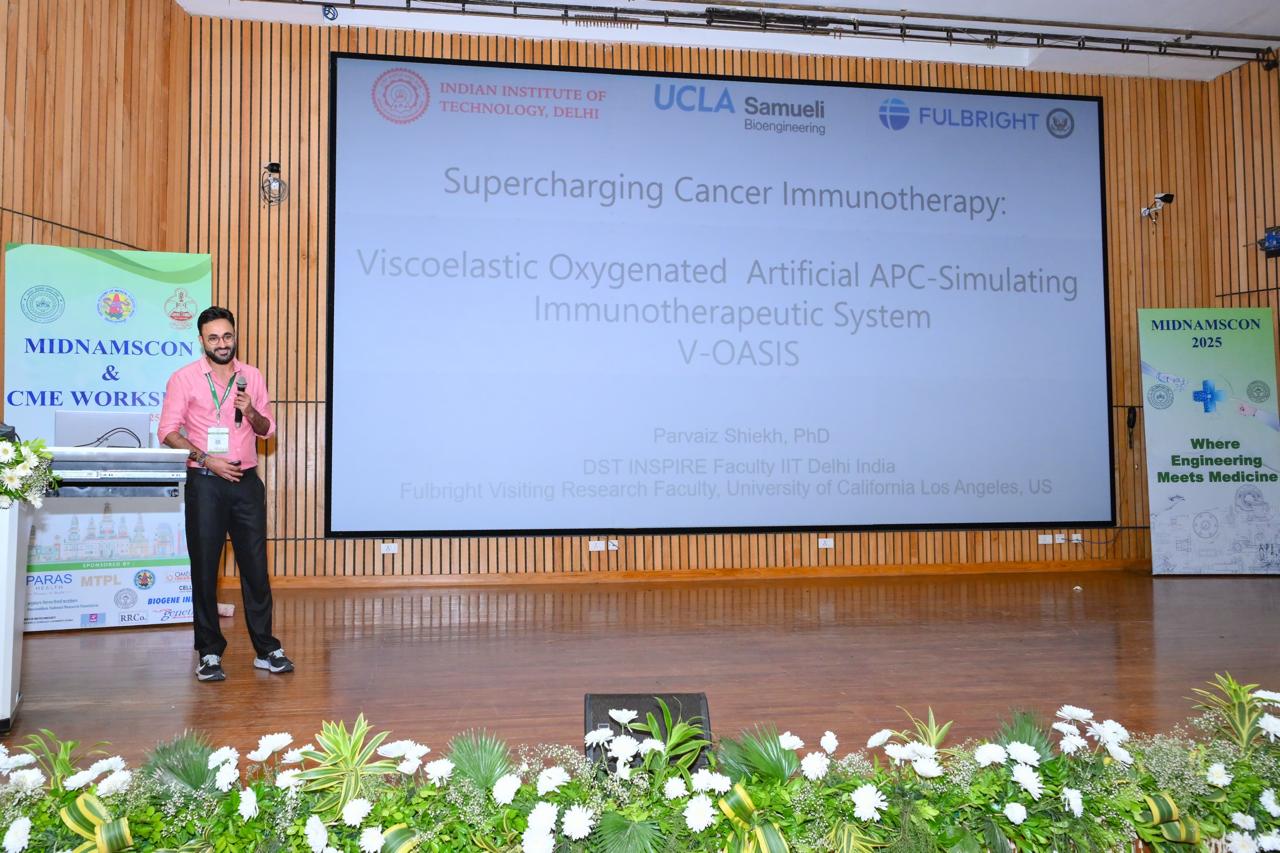
Dr Parvaiz A Sheikh delivering a talk
At the Delhi Railway Station and later in Bihar, he met strangers who helped him not only join the University but also live comfortably away from his home for the first time.
He said, as a 12th-pass, he was supposed to travel by train to Patna for counselling for securing his admission for the a bachelor’s degree in bioengineering in Central University of South Bihar when he found himself in dire straits. He had missed the train and had no money or idea how to reach Patna.
“I was crying while speaking with my brother on the phone when a travel agent spotted me. He bought me an air ticket to Patna and also paid my autorickshaw fare to reach the Airport.”
Those were the days of no mobile phones or ATM cards; people communicated on landlines and withdrew money from bank by visiting them.
Next, he realised that a contact of a local banker in Kupwara had travelled 100 km to receive him at the railway station, while he had landed at the Airport. The administrative staff at the University supported him in submitting the bank draft in time.
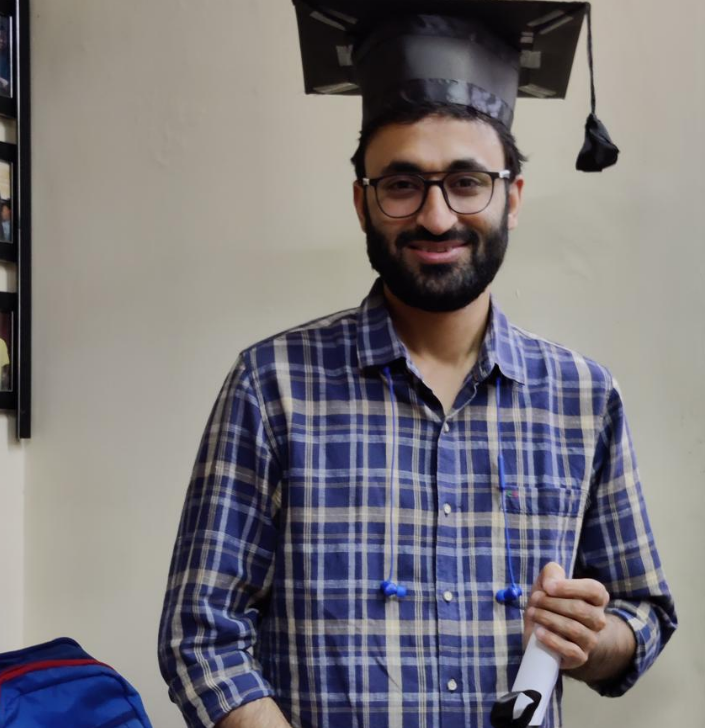
Dr Parvaiz A Sheikh with his doctoral degree
After securing his admission, the Buxur family insisted that he stay with them till the classes started. “They told me why should I travel home and return after 15 days, and waste money. They looked after me like their own,” he says.
Later, he received his PhD in biological sciences and bioengineering from IIT Kanpur (IITK) under the supervision of Prof. Ashok Kumar. There, he designed and evaluated bioactive, oxygen-releasing, and antioxidant polymeric biomaterials for therapeutics and translational medicine.
Today, as head of the Sheikh lab for BioMaterial Advances in Regeneration and Therapeutics (SMART) at the IIRT Delhi, his job involves taking cues from biology to create products based on engineering concepts, and possibly using them in different fields.
Speaking about his background, he said, “When you come from a background where you don’t have much exposure to things, every step becomes a learning experience for you.”
A Podcast with Dr Parvaiz A Sheikh:
source: http://www.awazthevoice.in / Awaz, The Voice / Home> Stories / by Aasha Khosa, New Delhi / January 29th, 2026
The device includes a ‘Help Me’ button that alerts the teacher whenever a student needs intervention, improving classroom management.
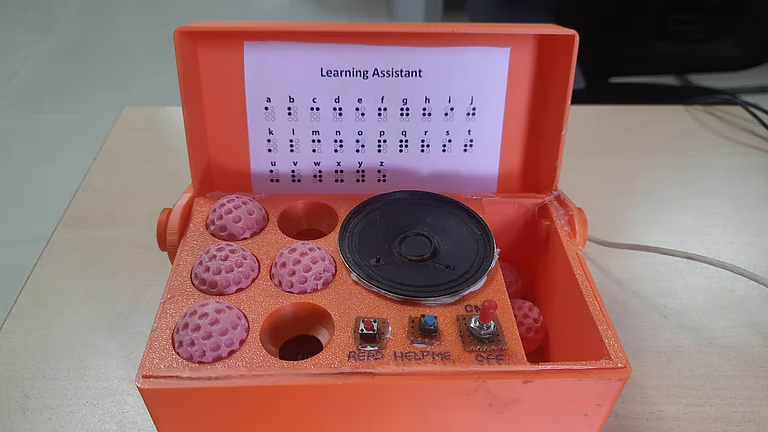
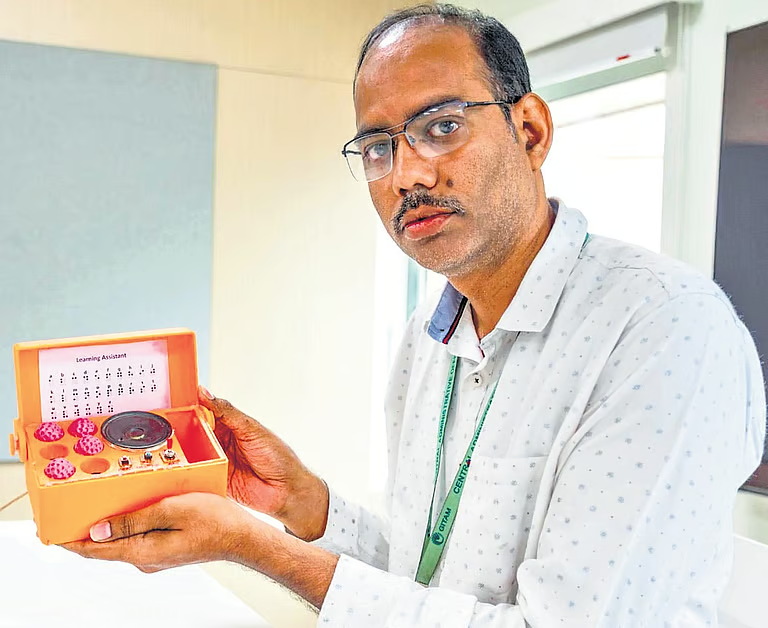
Mohammed Khwaja Muinuddin Chisti, Assistant Professor in the Department of EECE from GITAM Deemed to be University, has developed an embedded Braille Learning Assistant Embedded Kit (LAEK).Photo | G Satyanarayana
Visakhapatnam :
For many visually impaired children, the journey to literacy begins with the touch of a fingertip. But mastering Braille is often a slow and demanding process that requires constant one-on-one support from teachers, a challenge in schools where trained instructors are scarce and classrooms are full. For families living far from specialised schools, opportunities are even fewer, leaving children dependent on others for even the basics of reading and communication.
A faculty member at GITAM Deemed to be University, Visakhapatnam, is hoping to change that. Mohammed Khwaja Muinuddin Chisti, Assistant Professor in the Department of EECE, has developed an embedded Braille Learning Assistant Embedded Kit (LAEK), a simple, sensor-based device that allows visually impaired children to learn Braille independently, either at home or in school.
The device is a 3 × 2 hollow hemispherical Braille cell fitted with sensors that identify the dot patterns placed by the student. Once the pattern is detected, the system decodes it and provides audio feedback by announcing the corresponding letter, number or instruction. This makes it possible for students to practise and revise lessons without waiting for a teacher to guide every step. “In many schools, one teacher has to train 30 or 40 visually impaired children, and each child needs personal attention for Braille practice,” Chisti remarked, adding, “Many students hesitate to ask the same doubt again. I wanted to create something that lets them learn comfortably at their own pace.”
The device includes a ‘Help Me’ button that alerts the teacher whenever a student needs intervention, improving classroom management. The balls used to form patterns are designed to stay within reach even if dropped, and the device is chargeable, eliminating the difficulty of replacing batteries.
“The tool is also aimed at children who cannot attend blind schools due to distance or lack of accessibility. Parents can guide their child’s learning at home using the same pattern-based method followed in classrooms. Depending on the child’s learning ability, all basic Braille alphabets can be learnt within a few weeks,” Chisti stated.
Before developing this tool, Chisti created a ‘Walking Assistant’ device, a wearable tool that alerts visually impaired users about obstacles through vibrations and sound. His interactions with students and teachers during that project sparked the idea for a more focused educational device.
“When I visited blind schools to donate the walking aids, I saw the kind of effort teachers put in, and how much time it takes for each child to grasp Braille,” he said.
“I felt technology could ease that pressure and help children become confident, independent learners.”
The new learning assistant has been filed for patent registration. Chisti hopes to manufacture and distribute multiple units to blind schools using research grants and donor support.
Future upgrades may include computer vision and speech recognition to help students identify people around them and navigate with greater confidence.
source: http://www.newindianexpress.com / The New Indian Express / Home> Good News / by Usha Peri / November 30th, 2025
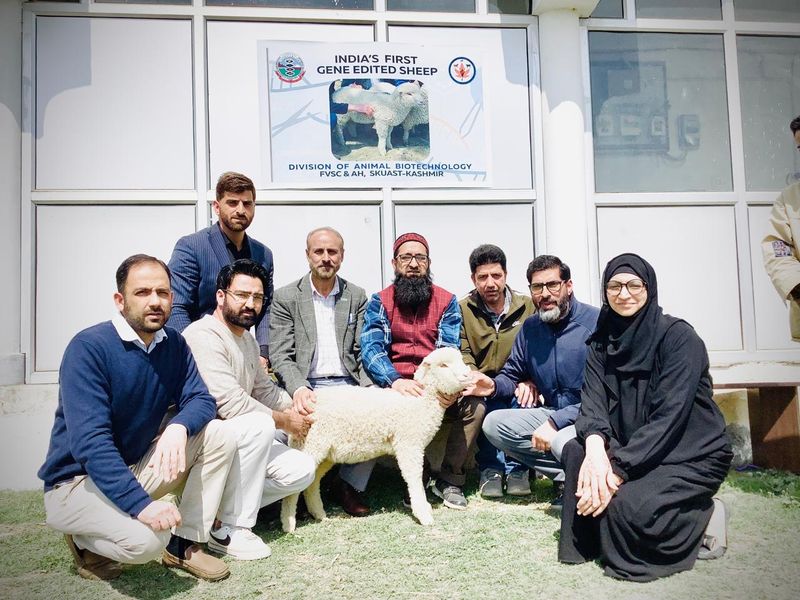
A team from SKUAST-Kashmir with country’s first gene-edited sheep.
In a landmark achievement in the field of animal biotechnology, Sher-e-Kashmir University of Agricultural Sciences and Technology (SKUAST), Kashmir, has successfully produced India’s first gene-edited sheep. University officials are calling it a “historic milestone” in genetic research and livestock development.
“This is a major breakthrough at the national level. It is the first of its kind in India, and everyone at the university is thrilled,” said Dr Riyaz Ahmad Shah, Professor of Animal Biotechnology, who led the expert team behind the project.
Dr Shah revealed that a female gene-edited lamb was born four months ago. The team specifically targeted the myostatin gene, which regulates muscle growth, making changes at the embryonic level. “The gene editing was carried out using CRISPR-Cas9 technology,” Shah explained. This revolutionary tool has broad applications in medicine, agriculture, and biotechnology. Importantly, he noted, “The edited sheep contains no foreign DNA,” distinguishing it from transgenic organisms and easing its path under India’s evolving biotech regulatory framework.
“All international biosafety protocols were strictly followed throughout the process,” he added.
The university views this achievement as a major step in placing India on the global map of advanced genome editing technologies. It also positions SKUAST-Kashmir at the forefront of reproductive biotechnology research.
Experts say the lamb’s muscle growth is expected to be enhanced due to the gene editing, although a few years of observation will be required to fully understand the differences between the edited lamb and a normal one.
Notably, Dr Shah and his team were also behind the creation of “Noori,” India’s first cloned Pashmina goat, in 2012. Noori lived for 11 years before passing away in 2023.
Vice Chancellor of SKUAST-Kashmir, Prof Nazir Ahmad Ganai, recently briefed Lieutenant Governor Manoj Sinha about the development. “This is not just the birth of a lamb, but the birth of a new era in livestock genetics in India,” Prof Ganai remarked.
University officials said the Lieutenant Governor praised the team’s efforts and their contribution to advancing scientific research in the region.
Looking ahead, the university plans to produce more gene-edited sheep. “We’re exploring possibilities in other areas like twin births and disease resistance,” said Shah. “For now, we are closely monitoring the lamb for safety and other parameters. Everything is normal so far.”
The team is also in the process of selecting a name for the pioneering lamb. “We’ll announce it soon,” Shah said.
source: http://www.tribuneindia.com / The Tribune / Home> Jammu & Kashmir / by Adil Akhzer / May 27th, 2025
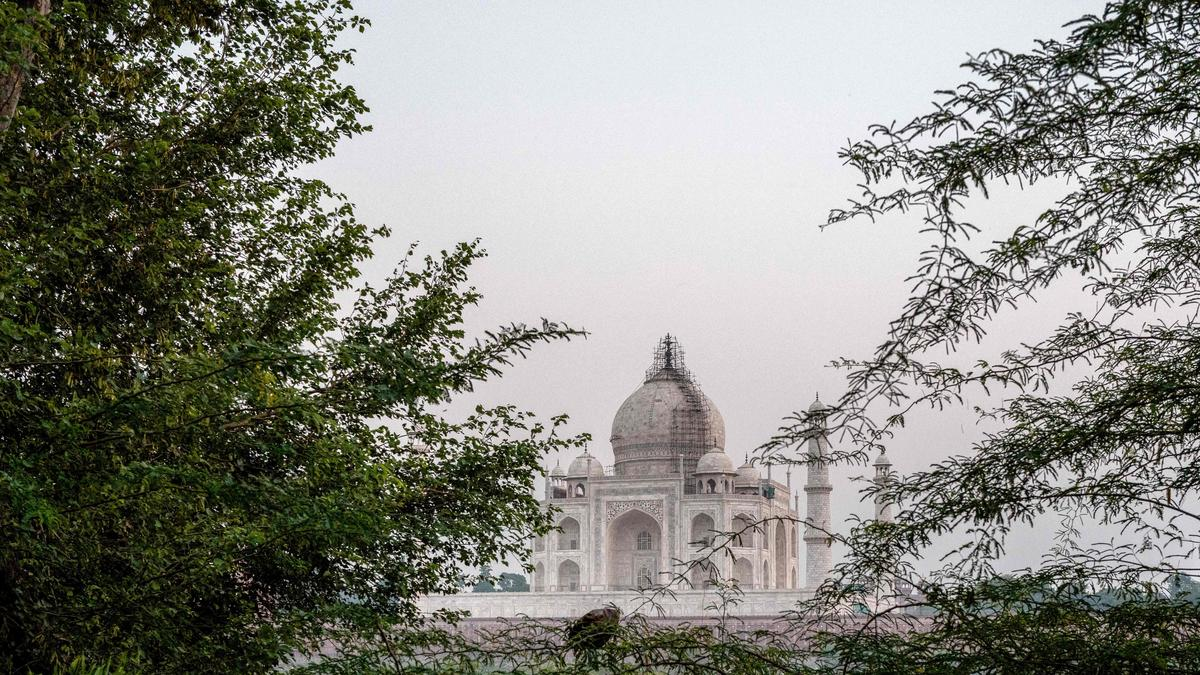
Tushar Goel’s film, ‘The Taj Story’, has reignited controversy over the Taj Mahal’s origins, claiming it is a Hindu temple rather than a mausoleum built by Mughal emperor Shah Jahan. The film’s debut highlights debates about the interplay of history and ideology in contemporary India.
Scaffoldings are pictured as restoration work goes on at the dome of the Taj Mahal in Agra on October 17. | Photo Credit: AFP
A little over 60 years ago, Purushottam Nagesh Oak slept and dreamt. He woke up and claimed that the Taj Mahal in Agra was actually a Hindu palace going back all the way to 4th century. Friends of Mr. Oak, an English teacher-turned-lawyer-turned-journalist but never a historian, told him that the Taj Mahal couldn’t have been a fourth century structure as the technology employed in building the Taj in the 17th century didn’t exist back then. The fantasist turned a pragmatist, and Oak brought his argument forward by a few centuries. The Taj was now claimed to be a Hindu temple. This was in 1989. He wrote articles and a book too, but found no support from historians. Even the Supreme Court dismissed his claims as “a bee in his bonnet” in 2000.
But post-2014, history is like a revolving door, you enter and exit at your ease and pleasure. You pick and choose, you circumvent and invent. Dress it up as a movie and claim you are looking at history anew. That is how we get a movie like Tushar Amrish Goel’s The Taj Story, starring former BJP MP Paresh Rawal; just like we had The Kashmir Files and The Bengal Files, starring Anupam Kher and Mithun Chakraborty, all ideological partners of the Bharatiya Janata Party (BJP).
With The Taj Story, Goel goes where no historian has gone. Proof, evidence and knowledge amount for nothing as the director makes a case for the Mughal monument being actually a Hindu temple, much like the BJP leader Sangeet Som who called it alternately a Shiva temple and a monument built by a man who incarcerated his father. Mr. Som obviously couldn’t make out a Shah Jahan from an Aurangzeb and hence got mixed up. Much like Oak, oops, Goel, who sees no difference between history and mythology, facts and fantasy.
Recorded history
Talking of facts, the Taj Mahal was built by the Mughal emperor Shah Jahan after his favourite wife Arjumand Bano Begum breathed her last after bearing the last of their 14 children. Its chief architect was Ustad Ahmed Lahori. The land for her last resting place was procured from Mirza Raja Jai Singh of Amber who had inherited it from Raja Man Singh, a celebrated general of Akbar, who was Shah Jahan’s grandfather. Shah Jahan compensated Jai Singh with four havelis from the royal property for the massive haveli in which rests Mumtaz Mahal. His firman to Jai Singh, the latter’s agreement and the Mughal emperor’s subsequent letter of granting him four havelis in lieu of one, are all part of history; unlike the claim of The Taj Story which talks in terms of a massacre and genocide of the locals for fulfilling the wishes of an emperor and his consort!
The work on the tomb started in 1632 with the finest craftsmen from across the country and West Asia. The chief mason was Mohammed Hanif from Baghdad who earned ₹1000 a month for his efforts. The pinnacle was built by Qayam Khan of Lahore and its Quranic inscriptions were done by Amanat Khan Shirazi. The mosaic work was done by local Hindu workers. Above all, some 20,000 workmen toiled for 22 years to build the monument to love. Its white marble came from Jaipur, lapis lazuli from Sri Lanka, crystal from China and coral from Arabia. The monument uses the double dome technique, previously seen only in the Humayun’s tomb in Delhi, and never seen in the country before the arrivals of the Turks.
Not the first time
Over the years, many have tried to appropriate credit for its beauty and majesty. In the 17th century, it was claimed by many in the West that the architect of the Taj was Venetian Geronimo Veroneo, a jeweller by profession. Then came the claim by Mughal Beg in Tarikh-e-Taj Mahal that it was designed by Muhammad Effendi, an architect supposedly sent by the Sultan of Turkey. Effendi though was as much an architect as Oak was a historian. In the mid 19th century it was claimed that the monument was the result of the genius of Frenchman Austin de Bordeaux, a jeweller. However, Austin died in 1632, the year the work on the Taj began. With his death all claims of Austin being the Taj’s architect were buried. And facts began to be raised.
As for fantasy, well there is Goel’s film, never mind its claim of presenting the “untold history of the Taj Mahal”. The film, replete with stereotypes of kohl-lined, skullcap-donning Muslims aims at building a nation’s memory on unreasoned mythology, far removed from the well argued debates of history. Much like Oak’s view that Christianity was nothing but Krishan-Niti. Not game for any ridiculous claims in an insipid film which opened with a mere 14% attendance in the first show? Watch M. Sadiq’s 1963-saga Taj Mahal. Sure, you would remember its song, ‘Jo wada kiya woh nibhana padega’, penned by Sahir Ludhianvi and sung with much love by Mohammad Rafi and Lata Mangeshkar. Sadiq’s film with Pradip Kumar and Bina Rai in the lead cast, made no effort at replacing history with mythology.
source: http://www.thehindu.com / The Hindu / Home> Entertainment> Movies> In the limelight / by Zia Us Salam / November 07th, 2025
Sajid Jamal, Founder and Chief Business Architect of BranchX, is redefining India’s retail landscape through advanced artificial intelligence and data-driven solutions. His company aims to empower small and medium retailers by bridging the digital divide that separates local stores from organized retail and e-commerce giants.
BranchX, established in Mumbai, provides AI-powered tools that assist shop owners in managing inventory, predicting customer demand, and enabling seamless digital payments. The platform also supports hyperlocal delivery networks, offering small businesses a competitive edge in fast-changing markets.
Under Jamal’s leadership, BranchX plans to onboard over one million retailers across 500 cities by 2027. The company’s growth roadmap includes a public listing in 2027, signaling strong investor confidence and a clear vision for nationwide expansion. Jamal’s background in finance and technology, with professional experience in the UAE and India, has shaped BranchX into a model of sustainable retail innovation.
Jamal’s vision is rooted in inclusive growth. By offering AI and digital solutions once limited to large corporations, he seeks to democratize retail technology and strengthen the backbone of India’s economy—the kirana stores. His approach combines financial inclusion with smart technology, opening new opportunities for millions of small traders.
BranchX’s rapid rise highlights a broader transformation underway in India’s retail sector, driven by homegrown innovation and a renewed focus on empowering local entrepreneurs.
source: http://www.radiancenews.com / Radiance News / Home> Entrepreneurship> Features / by Radiance News Bureau / October 07th, 2025
Bandipora District / Hazratbal (Srinagar), JAMMU & KASHMIR :
Has 20 patents in his name, winner of 5 medals
Innovation is the process of turning ideas into manufacturer and marketable form and this maxim has been proven by M-Tech degree holder Jahangir Arshid of North Kashmir’s Bandipora district.
He has over 20 patents in his name, out of which five of them have won him gold medals. Jahangir, 27, is currently pursuing Artificial Intelligence and Machine Learning (AIML) at the University of Texas in the United States, and runs an institution called “Kashmir Innovates”, popularly known as KASHOVATIC, in Hazratbal, Srinagar.
Presently, he is working on a unique patent like “Spoon” that would check the concentration of salt in any dish that our womenfolk prepare in their kitchens.
The idea to determine the reading of salt in units was evolved after students often complained of not getting the taste of salt in their meals. Jahangir has six students of 9th to 12th standards assisting him at his Bandipora workshop, besides continuing with their learning.
Giving a reason for taking up the “Spoon” project, Jahangir said that, “In the dishes that our sisters and mothers prepare, the salt content either remains low or more. This encouraged students to create an electric device which will check the concentration of salt on the basics of 10th-level science, which teaches us the basis of conductivity and resistance.” Jahangir further said, “Spoon will show the reading of units of salt when it is put in the utensil containing the meal to be prepared and accordingly the quantity of salt can be added.” Describing it as a prototype, Jahangir said companies that accept it can take it and redesign it as per their requirement before marketing it.
“Presently, it works in battery mode and we are trying to make it battery less so that there is no need to charge it time and again,” Jahangir said, adding that it would take the boys at least two more months to reach perfection.
“We will make it on “Speck Effect”, which reacts to temperature and generates voltage and, when one dips the spoon in any hot dish, it will automatically show the content of salt,” Jahangir, adding, “We will change to super capacitor charge for it to run and work on its own.”
Jahangir said that “Spoon” will not only solve kitchen problems, but also help hypertensive people decide how much salt they should take.
He said that Adnan Farooq, Tabish Mushtaq, Tabasum Manzoor, Amaan, Seerat Jan and Zainab-un-nisa are presently on the job to take “Project Spoon” to its logical conclusion.
Jahangir’s first unique innovation was a “Baby Peace and Foretelling Device”, a diaper-shaped item meant for children and paralytic patients, giving advance signals about a baby or a paralytic patient about to go for a “Peep”. He said a nurse or attendant would get a message in advance when a patient wants to go for a “peep” and accordingly she can move the latter to the washroom.
Different companies from Japan, including Unicharm and Unitear, have shown interest after seeing our patents. “We have signed a Memorandum of Understanding (MoU) with them and are in constant touch rather than being in queue for medical research. Recently, we received an email stating that ‘we found your technology unique throughout the globe,’” said Jahangir.
“With the encouragement from Japanese companies, we have started a chain of innovations and presently we are working on more than 20 patents,” he added.
“Five of these patents are of international level and have won me four gold and one silver medal. We have also won the Medal of Honor from the Association of European Innovators, which are being run by the Republic of Serbia and the Republic of Portugal,” Jahangir said
Gold medals have been won for the baby peace and foretelling device, self-cleaning utensils, brain interface for specially-abled persons and hardware automation system for examinations. The patent for stabilisation and transformation frequency control won a silver medal.
“After achieving success, we started a patent institution where we teach our students how to make these patents and how to apply basic science to remove the problems of common people,” Jahangir said.
“The motive of KASHOVATIC is to develop an innovative culture and scientific temperament in the Kashmir Valley which would help students of 9th and 10th standards to differentiate and find out what is piquant in society and attracts them in a big way. Developing a scientific temperament and attitude will encourage them to innovate, take responsibility and help society deal with its many problems,” he added.
More than 150 students have given us innovations through “KASHOVATICS”. “Recently, we got approval from the Association for Information Communication Technology (AICT),” he said, adding that “our institute is running successfully and our efforts are bearing fruit, as there is a lot of exposure in Srinagar.”
He said that under the National Education Policy (NEP) 2022, the promotion of innovative products needs enhancement of structure and development so that innovators can bring about a revolution in society. Jahangir further said that engineers who have completed their studies have great potential and could be great innovators in society.
“Not only engineers, but every student could be an innovator, but the need of the hour is to look at problems in a way that we can give solutions and that kind of thinking can make us innovators. Only innovation could take us forward in this world,” he concludes.
source: http://www.brighterkashmir.com / Brighter Kashmir / Home / by Qaisar Ahmad / March 10th, 2022
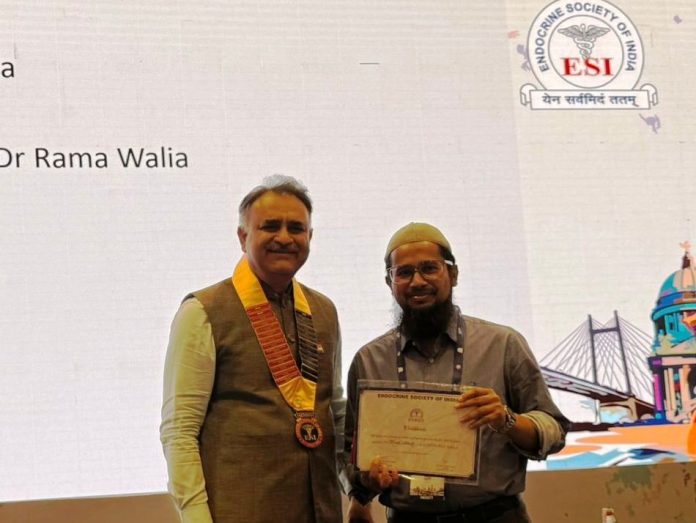
Dr Hamid Ashraf receives the Prestigious A.R. Seth Award for Research on Gestational Diabetes at the 54th Annual Conference of the Endocrine Society of India (ESI), held in Kolkata
Aligarh:
Dr Hamid Ashraf, a distinguished faculty member at the Rajiv Gandhi Centre for Diabetes and Endocrinology, Aligarh Muslim University (AMU), has been honoured with the prestigious A.R. Seth Award at the 54th Annual Conference of the Endocrine Society of India (ESI), held in Kolkata.
The A.R. Seth Award, among the highest recognitions in Indian endocrinology, is conferred annually on researchers and clinicians for outstanding contributions to the understanding and treatment of hormonal and metabolic disorders.
Dr. Ashraf received the award for his pioneering research on maternal health, particularly on identifying early metabolic markers of gestational diabetes mellitus (GDM). His study revealed an alarming trend of dysglycemia in over 40 percent of pregnant women in the region, highlighting the urgent need for reliable predictive markers to ensure early detection and better fetomaternal outcomes.
“This recognition is not mine alone but belongs to the entire team that made this research possible,” Dr. Ashraf said, acknowledging the support of colleagues from the Departments of Obstetrics and Gynecology, and Pediatrics at AMU, along with the contributions of students and patients who participated in the study.
Experts at the conference lauded his findings as a significant step in addressing one of India’s most pressing public health challenges.
source: http://www.radiancenews.com / Radiance News / Home> Pride of the Nation> Awards / by Radiance News Bureau / September 10th, 2025
The Aligarh Muslim University community deeply mourned the sad demise of noted cardiothoracic, vascular surgeon and former Pro-Vice Chancellor of AMU, Prof Mohammad Hanif Beg, 69, who took his last breath early morning today in Moradabad.
Extending condolences to the bereaved family of Prof Beg and the AMU fraternity, the Vice Chancellor, Prof Mohammad Gulrez said, “I offer my deepest condolences to Prof Beg’s family and AMU community and pray for the comfort for his loved ones at this difficult time. He was a selfless soul who earned admiration, respect and esteem as a distinguished surgeon and seasoned academic who anchored a number of developmental works at the J N Medical College and the university.”
“At this moment of sorrow and grief, we share the pain of Prof Beg’s family and pray to the Almighty for giving them strength and courage to bear this loss,” he added.
Prof Azam Haseen (Chairman, Department of Cardiothoracic Surgery) expressed a deep sense of sorrow on his demise and prayed for solace to the bereaved family.
“Prof Beg mentored students with steadfast dedication, inspiring them to achieve their maximum potential. He also guided younger colleagues at key career moments for educational and professional strides,” he added.
Prof Beg served as the Dean, Faculty of Medicine and Chairperson, Department of Surgery, JNMC. He played a key role in the establishment and development of the Department of Cardiothoracic and Vascular Surgery and started the Open-Heart-Surgery procedure in 1988 at the JNMC.
Prof Beg completed his MBBS from K G Medical College, Lucknow in 1976 and attended PGIMER Chandigarh for his MS (Surgery) and M Ch (CVTS) from 1980 to 1982. He joined JNMC as a lecturer in 1983 and became Reader in 1988 and Professor in 1993.
Prof Beg is considered a pioneer in performing endoscopy and endoscopic removal of various foreign bodies from aero-digestive tracts since 1983. He has invented many new techniques such as designing of ‘Intercostal Tube drainage System’, which saves precious lives daily.
Prof Beg is survived by his wife, a daughter and two sons.
source: http://www.amiu.ac.in / Aligarh Muslim University (AMU) / Home / by Public Relations Office, AMU / April 06th, 2023