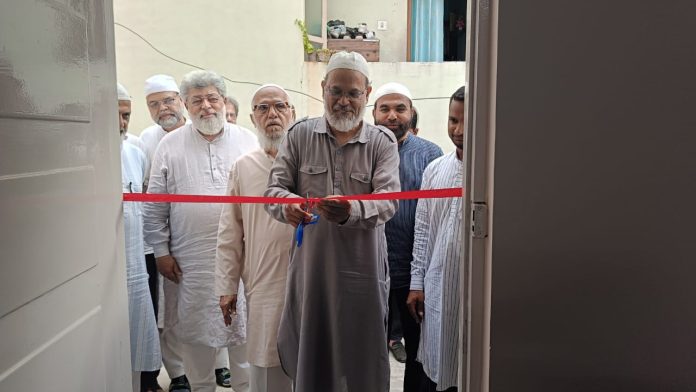
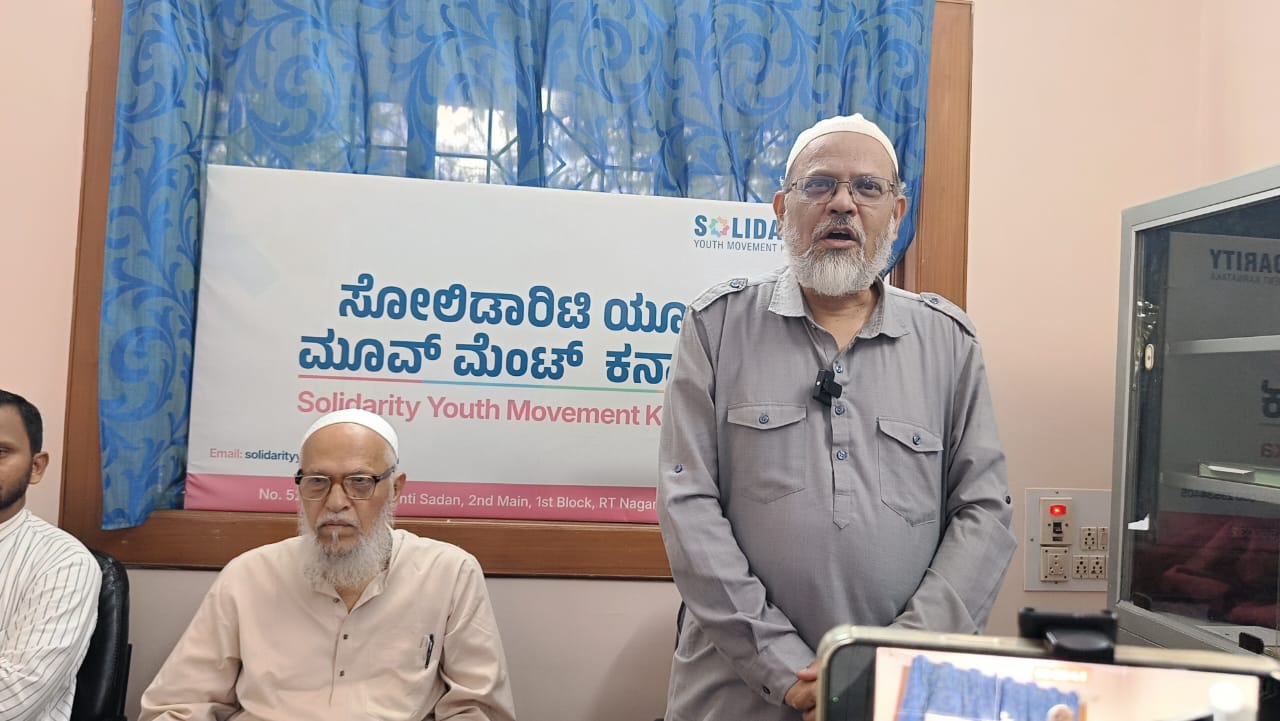
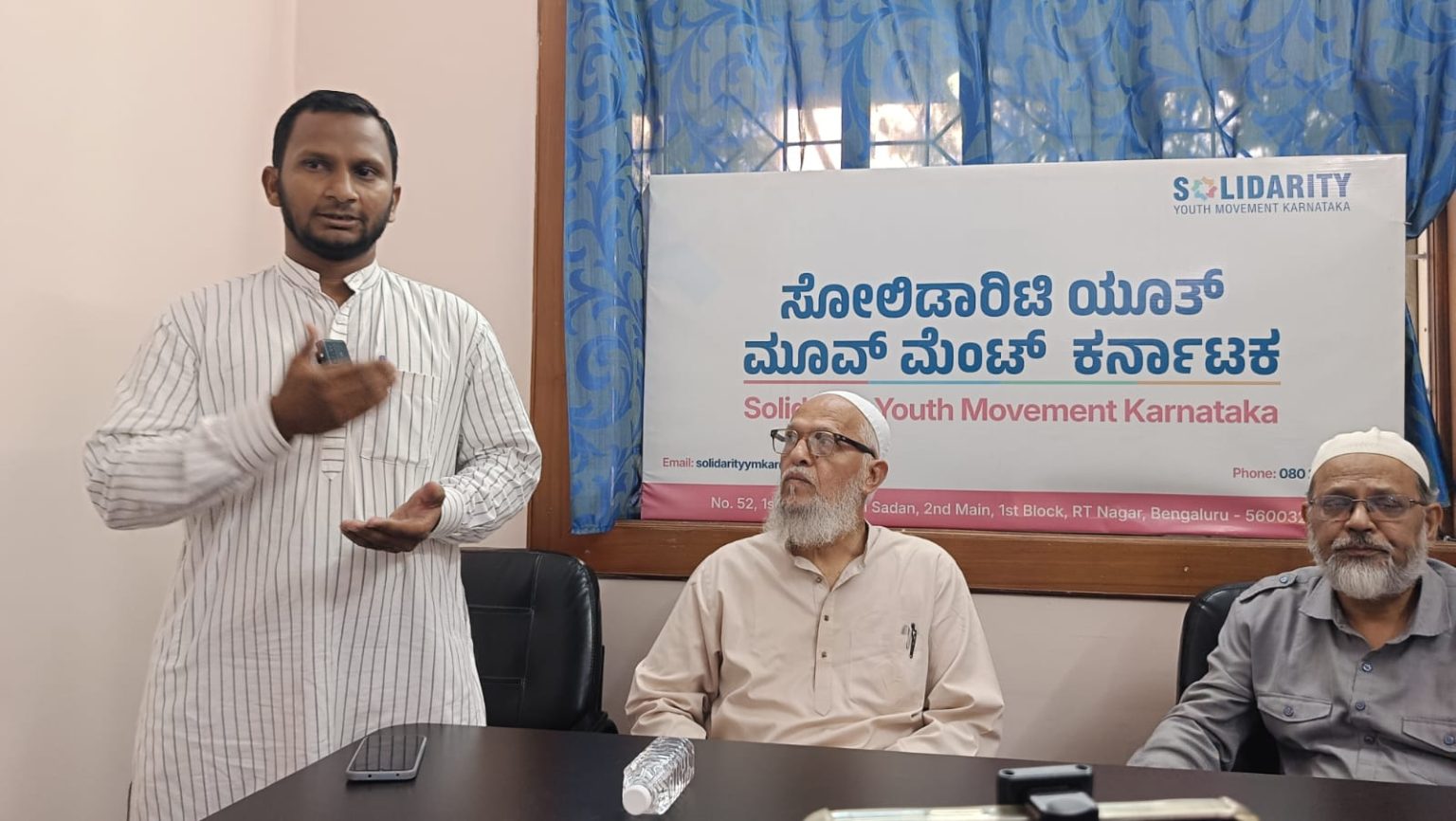
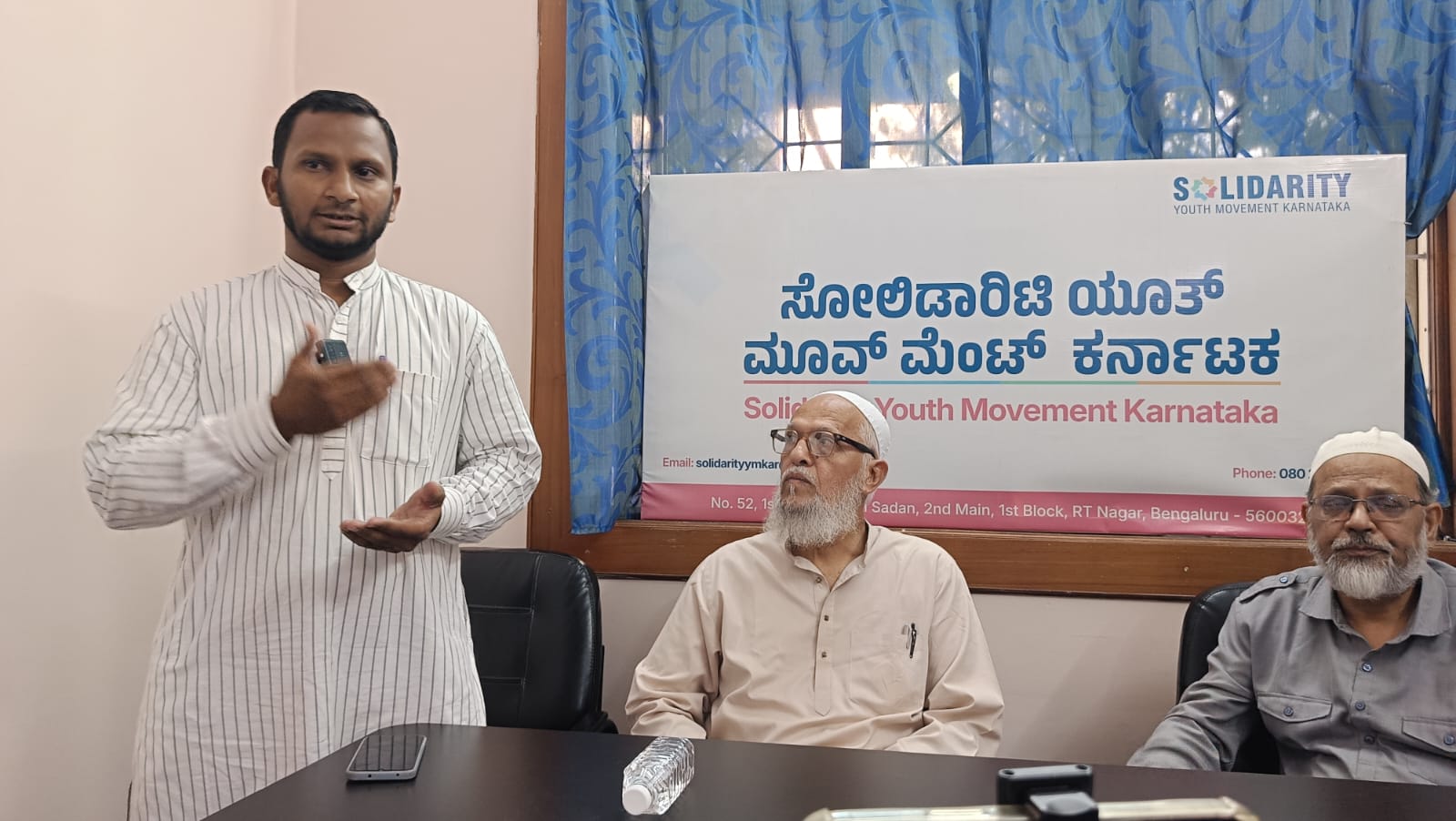
In a bold stride towards structured youth empowerment, the Solidarity Youth Movement Karnataka marked a significant milestone with the inauguration of its new state office in Bengaluru.
The formal opening ceremony was led by Dr. Mohammed Saad Belgami, Ameer-e-Halqa of Jamaat-e-Islami Hind, Karnataka, coinciding with the annual state Shura session.
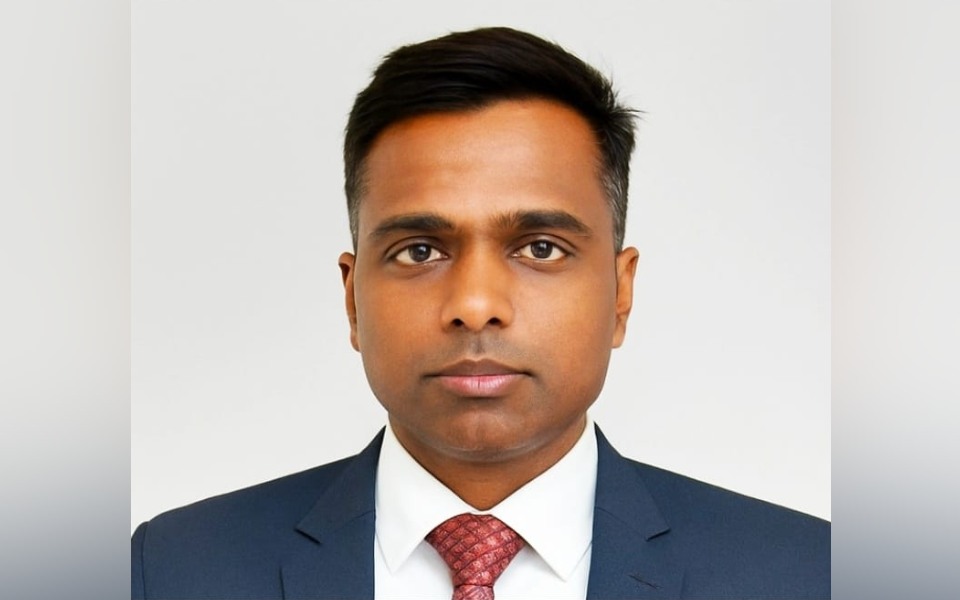
Far from being a mere administrative facility, the new office symbolises the growing institutional presence and ideological clarity of a movement that has evolved from grassroots activism to state-wide influence. Speaking at the event, Dr. Naseem, State President of Solidarity Youth Movement, described the organisation not just as a protest platform, but as “a transformative force for grooming morally conscious and socially responsible youth leaders.”
From a Youth Wing to a Mass Movement What began in 2008 as the “Youth Wing of JIH Karnataka” with just 250 members, formally transitioned into the Solidarity Youth Movement in 2016. Today, it boasts an expansive network across 27 districts with over 80 local units and a membership exceeding 7,000 – out of which more than 900 are actively engaged as trained “Activists.”
According to Dr. Naseem, this journey reflects the urgent need to channel the dynamism of youth towards constructive and long-term social reform. “We envision a generation of youth who are ethically upright and capable of leading society toward peace, progress, and justice,” he said. He emphasised the movement’s focus on skill development, employability training, and intellectual empowerment, aligning with both the constitutional ethos of India and the legacy of Islamic civilizational values.
Leadership Speaks Addressing the gathering, Dr. Saad Belgami remarked, “From its inception, the Islamic movement has placed youth at the centre of its mission. Solidarity Youth Movement is a natural extension of this vision – shaping minds and building character.” He added that the 2022 Youth Convention acted as a catalyst, significantly expanding the movement’s outreach and operational capacity across Karnataka.
The event was also graced by former state presidents of JIH, Mr. Iqbal Mulla and Mr. Atherulla Shariff, along with other senior functionaries from various wings of the organisation.
A Nerve Centre for Change With the establishment of this new state office, Solidarity Youth Movement is poised to further institutionalise its efforts in leadership training, civic engagement, and ideological grounding. The office is envisioned as a nerve centre for nurturing grassroots leadership, mentoring youth activists, and coordinating state-wide programs aimed at social justice and pluralistic harmony.
“This will be more than brick and mortar. It will be a lighthouse for Karnataka’s aspiring youth leadership,” said Dr. Naseem. “And a strategic base for long-term nation-building efforts,” he added with conviction.
As the curtain drew on the inaugural ceremony, the message was loud and clear: Solidarity Youth Movement is not just responding to the times – it is shaping them. And this new office stands as a testament to that mission. A platform today, a movement tomorrow. Indeed, a future-defining institution in the making.
source: http://www.radiancenews.com / Radiance News / Home> Latest News / by Mohammed Talha Siddi Bapa / May 12th, 2025
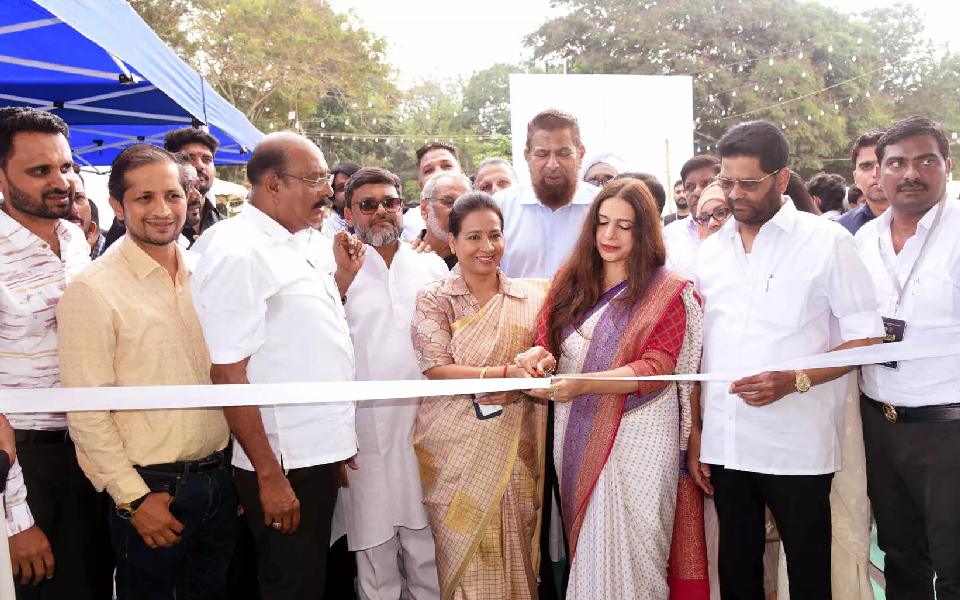
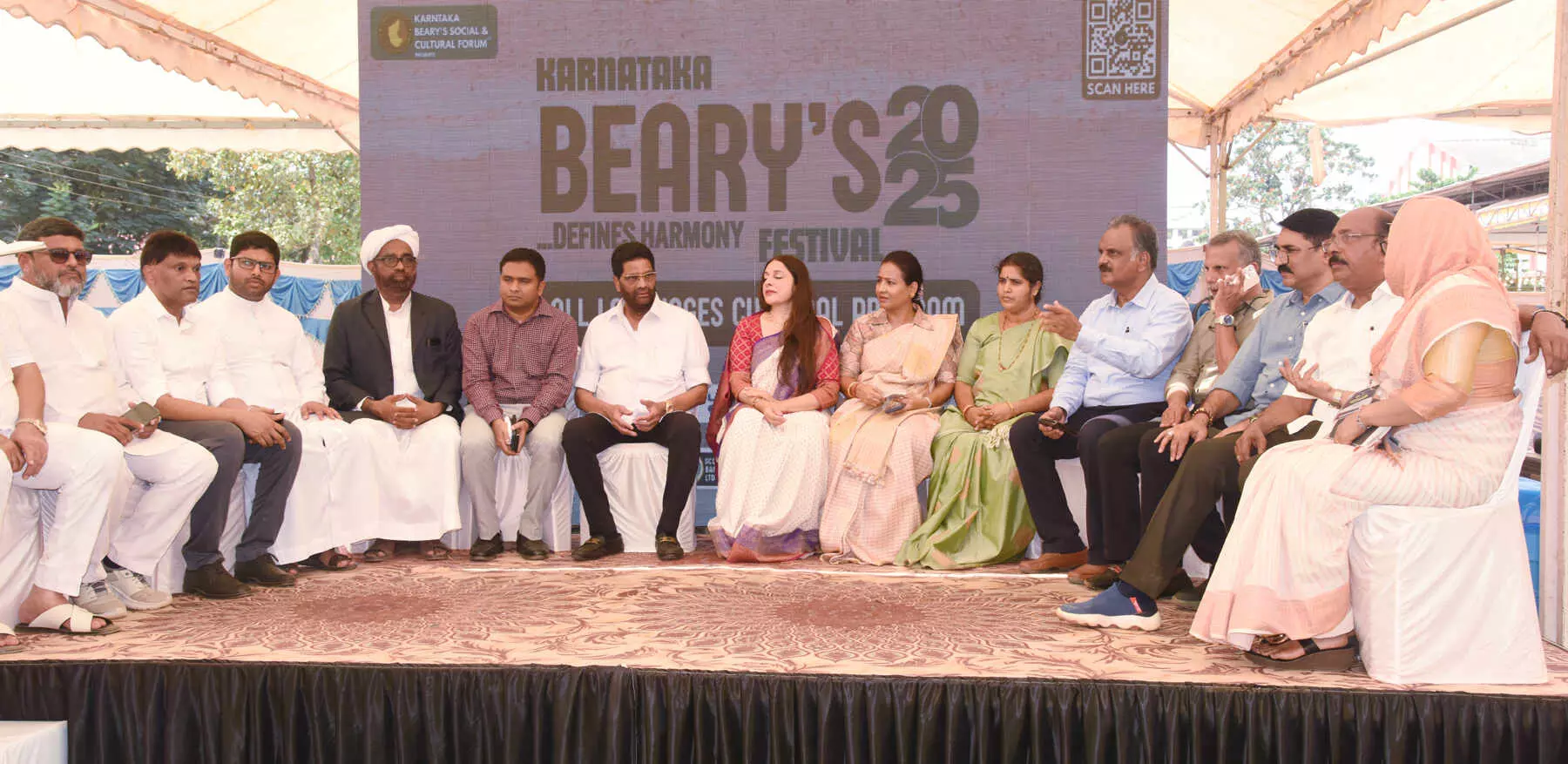
The two-day ‘Beary’s Festival 2025’ was inaugurated by Skill Development Corporation President Kantha Nayak at the Karavali Utsava ground by the Karnataka Bearys Social and Cultural Forum on Saturday.
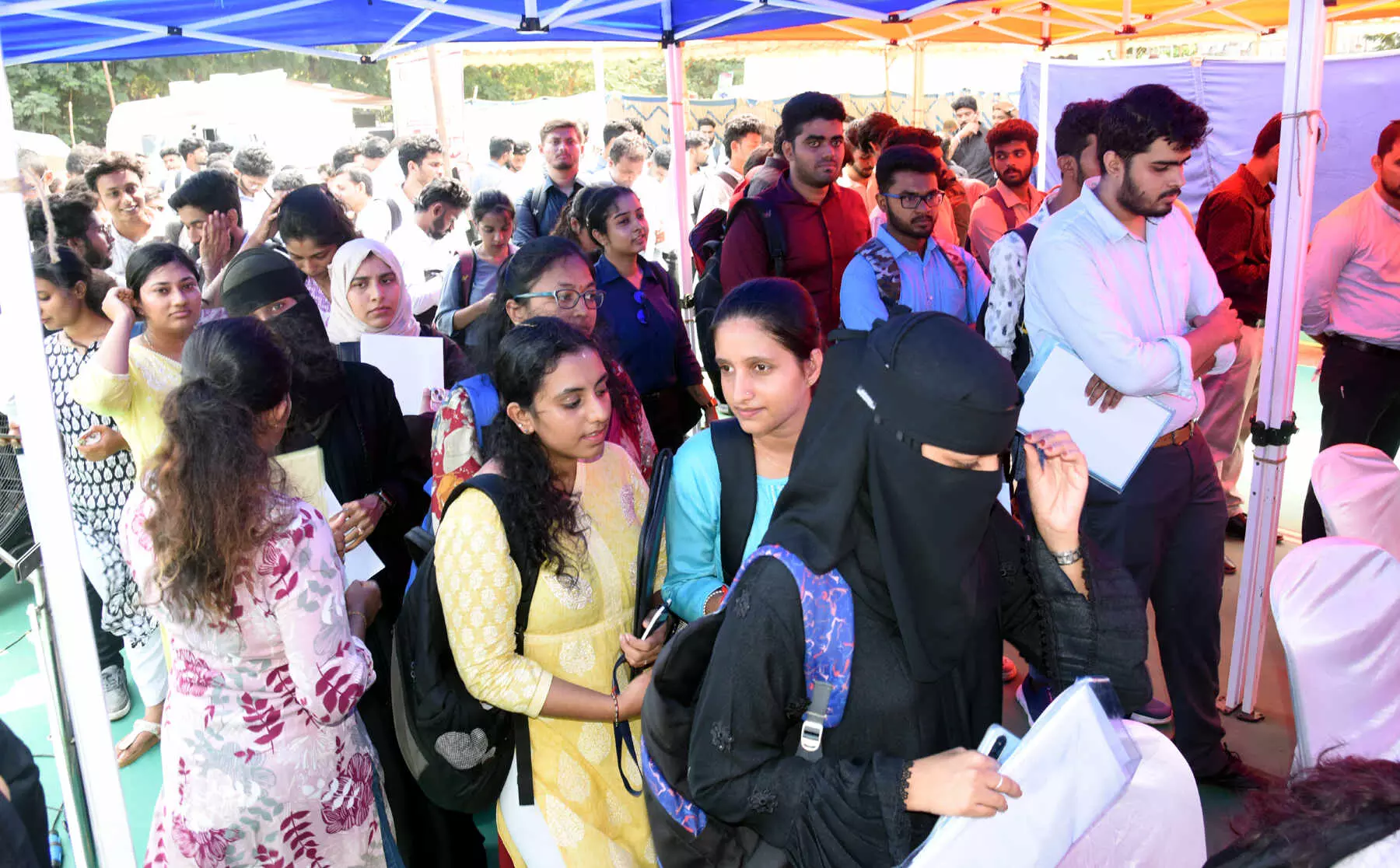
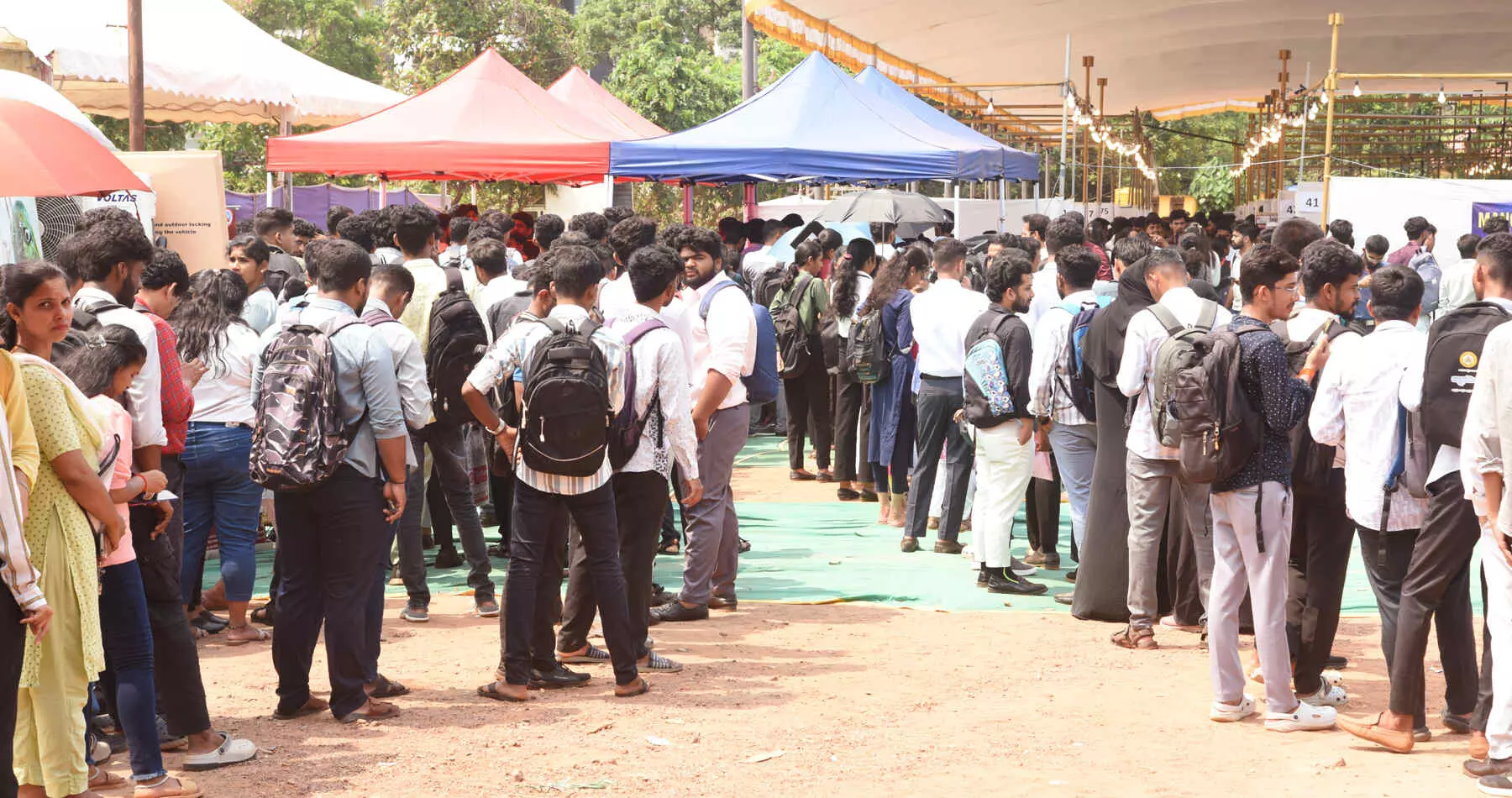
The festival includes a job fest which has attracted more than national and international 100 companies and more than 5,000 job applicants. Educational and career counseling sessions, medical check-up and blood donation camps, business meets, food fests, competitions, discussions on various issues, sessions for the benefit of youth and cultural events are also organized as a part of the festival.
Kantha Nayak, who addressed the gathering, called upon unemployed people to make the best use of the job fair as it would also make the organizers’ efforts worthwhile and advised the candidates who fail to get job not to be disappointed. She explained that it was important for candidates to hone their skills, along with gaining education, as it helps in job-hunting.
Dakshina Kannada Deputy Commissioner Mullai Muhilan lauded the efforts of the organizers for holding the festival aiming for communal harmony.
Pastor of Bejai Church Rev. Fr. Norman D’Souza spoke on the occasion and wished well for the festival.
Entrepreneur and TK Group member Umar TK was honoured with the ‘Motivational Award’.
Retired Superintendent of Police and Chairperson of the Organizing Committee GA Bava made the inaugural address. Moulana SB Mohamman Darimi offered dua for the programme. UT Farzana welcomed the gathering and Rafique Master was the Master of Ceremony.
State Cashew Development Board President Mamatha Gatti, NRI Forum Vice-president Dr. Arati Krishna, Presidency Group of Institutions Bengaluru Vice-chairman Suhail Ahmed, Presidency Group of Institutions Director Kausar Nisar Ahmed, Entrepreneurs Mustafa Bharat, Zakaria Jokatte, Sharief Whitestone, UT Ifthikar and UT Zulfikar Ali, SCDCC Bank Chairman Dr MN Rajendra Kumar, Nasir Luckystar, Musabba Beary, Mustafa Sullia, KM Aboobakar Siddiq, Sheik Irfani, Congress leaders KK Shahul Hamid, Padmaraj R and Pradeep D’Souza and Iqbal Parliya were among those who attended the inaugural event.
source: http://www.english.varthabharati.in / Vartha Bharati / Home> Karavali / by Vartha Bharati / April 19th, 2025
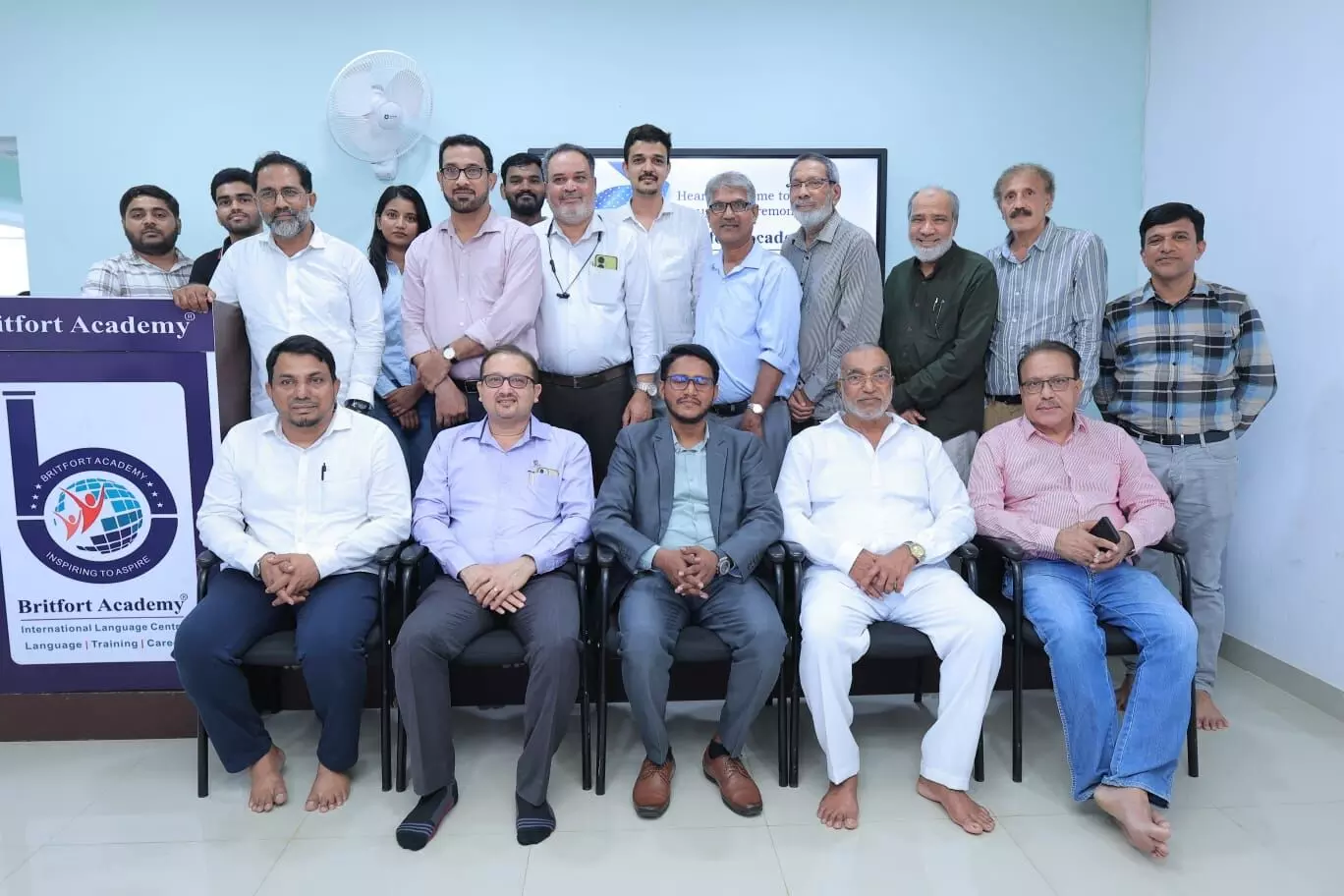
The inauguration of BRITFORT Academy’s Mangalore branch, in collaboration with Ace Foundation, was held on 18th April at the Kankanady Gate Building, Kankanady Bypass Road. The event marked a significant milestone in expanding quality English language education and study abroad services in the coastal region.
BRITFORT Academy is widely recognised for its excellence in Spoken English and Communicative English courses, along with its expert coaching for international English language exams such as IELTS, OET, and PTE. With a growing network of centers across India, BRITFORT continues to empower students with global opportunities through language proficiency and academic support.
The ceremony was formally inaugurated by Noushad, CEO of BRITFORT Academy, who delivered an inspiring keynote address. He shared the remarkable growth of the academy, noting that over 25,000 students have been successfully trained through their programs. The Mangalore branch represents the 16th center in their journey of expansion and the fourth in Karnataka, reinforcing their commitment to making quality education accessible across regions.
Abubacker, President of Ace Foundation, presided over the function and emphasized the importance of collaborations that empower youth through quality education and skill-building initiatives.
The event was further graced by Dr. R.G. D’Souza, Dean of the Engineering Department at Yenepoya University, who attended as the Chief Guest. B.S. Mohd. Basheer, President of Jamiyyatul Falah (Mangalore Corporation Unit), and Anwar Sadath, Managing Director of Hana Beverages Pvt. Ltd., were the Guests of Honour. All dignitaries expressed their appreciation for the initiative and their confidence in the academy’s positive impact on the region’s youth.
Nazeer Ahmed, Director of Ace IAS Academy, welcomed the gathering and highlighted the significance of enhancing language skills for academic and professional growth. The program concluded with a vote of thanks proposed by Imthiaz Khateeb, Secretary of Ace Foundation, expressing gratitude to all guests and participants for their support. The event was compered by Rafik Master.
source: http://www.english.varthabharati.in / Vartha Bharati / Home> Karavali / by Vartha Bharati / April 2Oth, 2025
Kooli Village (Ranebennur, Haveri District), KARNATAKA :
Abu Saliya Khan
Mangaluru/Ranebennur:
Abu Saliya Khan, a former student of Ace IAS Academy in Mangaluru, has cleared the prestigious UPSC Civil Services Examination with an All India Rank (AIR) of 588, bringing pride to the academy and his hometown of Ranebennur in Karnataka’s Haveri district.
Hailing from Kooli village in Ranebennur taluk, Abu Saliya completed his primary education in a Kannada-medium school before joining RTS College, Ranebennur for his pre-university education in 2014. He later pursued his B.Sc in Agriculture at Shivamogga, graduating in 2019. His journey toward UPSC preparation took a significant turn when he shifted to Mangaluru and enrolled at the Ace IAS Academy for intensive training.
Speaking to Vartha Bharati, Abu Saliya credited his success to the foundation laid during his training at the Ace IAS Academy. “It was here in Mangaluru that I got my basics right. The environment at Ace helped me understand the significance of public service and mentally prepared me for this long journey,” he said.
After his training in Mangaluru, he moved to Delhi and continued his preparation at Jamia Millia Islamia’s Residential Coaching Academy. His perseverance paid off in his fourth attempt. He had earlier cleared the prelims in 2023, which gave him a renewed sense of hope and motivation to make one final attempt, resulting in this year’s success.
Coming from a modest background, Abu Saliya’s story is an inspiration to many. His father, the late Hussain Khan Kulkarni, was a bus conductor with NWKRTC and passed away earlier last year. His mother, Arshad Banu, is a homemaker. Despite financial and emotional hardships, the family stood by his side as he pursued his dream of joining the civil services.
On being asked about his preferred service, Abu Saliya shared that while he had aspired to join the Indian Administrative Service or Indian Police Service, he now expects to be allotted the Indian Revenue Service based on his rank. He also revealed that he had been attempting to qualify for the Indian Forest Services.
Reacting to the news of his success, he said, “My family is overjoyed. These are the moments that come once in a lifetime. There was a time I had almost decided to give up and pursue a career in agriculture. But after clearing the prelims in 2023, I decided to try again—and I’m glad I did.”
His success has been hailed by many in Mangaluru’s civil service aspirant community, with Ace IAS Academy calling it a proud moment for the institution.
source: http://www.english.varthabharati.in / Vartha Bharati / Home> Karavali / by Vartha Bharati / April 24th, 2025
In a proud moment for Karkala, Shoukath Azeem from Salmara has secured the 345th rank in the UPSC Civil Services Examination 2024, turning his long-cherished dream of becoming an IAS officer into reality.
Undeterred by repeated setbacks, Azeem attempted the UPSC exam nine times, finally succeeding with an impressive rank in his last attempt, demonstrating unwavering determination and grit.
He is the son of Sheikh Abdulla and Maimoona from Salmara. His father, a truck driver by profession, raised the family with modest means. Despite coming from a humble background, Azeem’s ambition to join the civil services was ignited during his childhood after watching the Kannada movie Prithvi, starring Puneeth Rajkumar.
Azeem completed his early education at the Karkala Government Urdu School and a private school followed by higher education at a private college in Kukkundoor. He later earned his engineering degree a private college in Moodbidri.
In 2022, he had cleared the UPSC exam and was selected for the accounts division of the defence department, currently serving in Pune. Encouraged to try once more, Azeem made a final attempt and achieved his ultimate goal of becoming an IAS officer.
source: http://www.daijiworld.com / Daijiworld.com / Home> Top Stories / by Daijiworld Media Network – Karkala / April 26th, 2025
Pasha Bhai’s journey from the Muslim ghetto of Neelasandra to the posh clubs of Bengaluru is as much a story about his art as about Dakhni Urdu, the language he consciously chooses to rap in, making it both a quest for selfhood and for his mother tongue’s history.
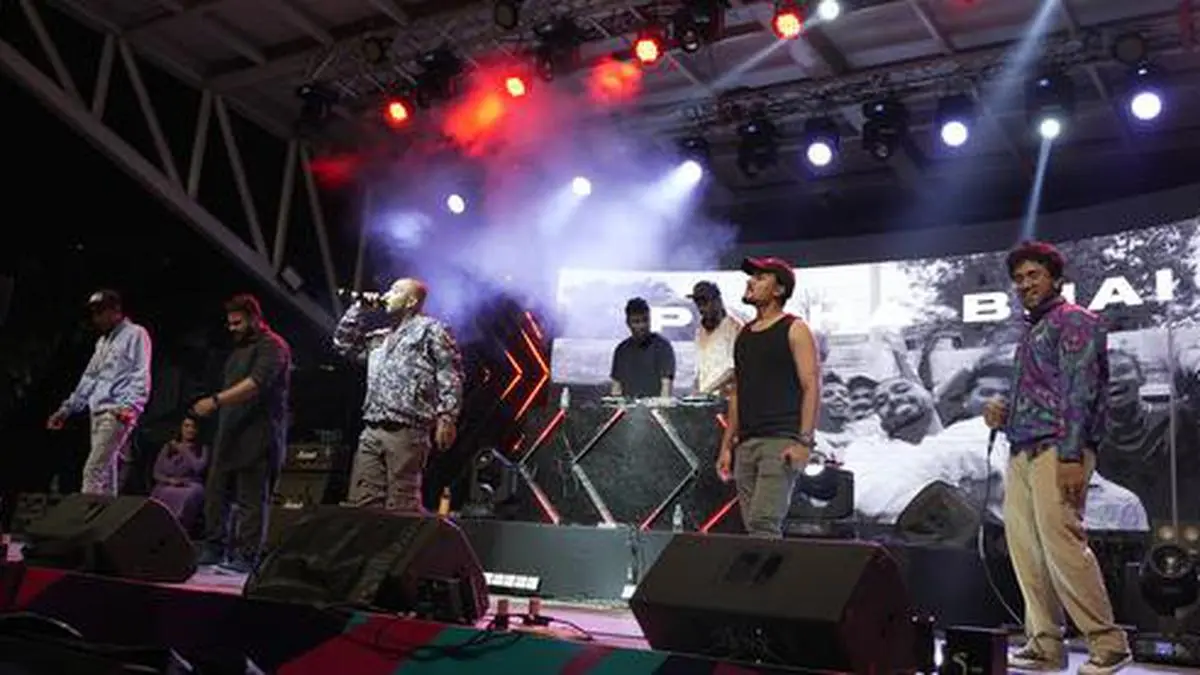
Pasha Bhai and members of Clan Bokka Phod performing at Bowring Club on May 7.
Bowring Institute, one of Bengaluru’s oldest social clubs, is pulsing with energy. Raftaar, a sensation in the Hindi and Punjabi rap scene, is the marquee act. Warming up the audience before he comes on is a bunch of Bengaluru-based rappers with funky monikers such as MC Truth, Ray, and Quake. Third in line is Pasha Bhai and his Clan Bokka Phod (CBP). On the evening of May 7, Bowring
When his turn comes, Pasha Bhai bounds onto the stage with his trademark energy. His hair cropped short and wearing a loose, full-sleeved T-shirt with baggy trousers that hang low on his waist, he opens with ‘Eid ka Chand’ (The Moon of Eid), one of his popular songs. A rousing cheer goes up from the audience, which is familiar with this number that has garnered more than 45,000 views on YouTube.
When Pasha Bhai sings the lines: “ ” (I’m my father’s spoilt brat/ My heart is like wax, but I have the courage of steel), some of his fans hum along. Pasha raps in street-Dakhni, and he raps at warp speed, which means that many in the crowd cannot grasp the lyrics but they are bound up in the frenzied covenant between singer and audience, which is part of the frantic mood of a rap concert. Even his band’s name is a Dakhni phrase for ‘ball-breakers’. Ladila Bawa Ka, Bigda Huwa Beta/ Moum Ka Dil, Par Jigra Loha Mera
Pasha follows up the first song with a few more popular solo numbers such as ‘Haraanya’n’ and ‘Kumbhakarana’. Then he is joined by his gang, the infamous Ball-Breakers, and they rap to ‘Khuda Gawah’.
Pasha screams ‘I love you Bangalore!’ before getting off the stage after his set. T-shirt soaked in sweat, he chugs down a bottle of water as fans walk up to him to take selfies. While the 23-year-old rapper has performed in several spaces in Bengaluru, being part of the opening act for Raftaar has added to the growing reputation of this savvy singer. There are some distinct reasons for Pasha Bhai’s success. First, his originality as a lyricist and his intuitive ability to vocalise in Dakhni; second, his moorings in a marginalised social and economic Muslim stratum in Bengaluru that resonates with the ethos of the early Black rappers who emerged from the ghettos of American cities; and third, his conscious use of Dakhni, his mother tongue, which some linguistic scholars argue is a language on its own but which is often dismissed as a dialect of Urdu.
Spoken mainly by Muslims in Karnataka, Telangana, Andhra Pradesh and parts of Tamil Nadu, Dakhni, translated as ‘Deccani’, traces its provenance to the reigns of the Bahmani and Deccan Sultanates between the 14th and 17th centuries whose territories sprawled across the Deccan plateau from the Arabian Sea to the Bay of Bengal. In certain parts of Hyderabad and Bengaluru and across urban centres in south India (except Kerala), Dakhni continues to be the lingua franca of a wide section of the non-Muslim population as well.
Says Bengaluru-based Arjun Sharma a.k.a Quake, the rapper who curated the event: “Pasha Bhai is one of the best thinkers/ writers out there. He’s talking sense and he’s talking reality. People should start understanding Dakhni to listen to him; that’s the only way our language will grow and get recognition. He is the only person representing Dakhni now.”
Pasha Bhai, whose non-rapping name is Mohammed Affan Pasha, has a simple studio, christened ‘Dakhnistan’, on the fourth floor of a nondescript building in the largely Muslim ghetto of Neelasandra in central Bengaluru. To get there, one has to negotiate a maze of narrow, meandering roads dotted with meat stalls, tiny mosques, and food kiosks. Minimally furnished, the most interesting thing in the dingy hangout is a carrom board around which Syed, Demixx, Nimbu Da, Marwan, Shoaib and Maddy of the CBP gang has gathered.
Pasha was born in 1998 and grew up in Neelasandra. “We are the children of rowdies,” he said, referring not to his father, who was an auto-driver and passed away when Pasha was still in school, but to the grimy milieu of violence that engulfed him and his clan members growing up in Neelasandra. Pasha always had an ear for music and as a high schooler he began to listen to American and Indian rappers such as Eminem, 50 Cent, Yo Yo Honey Singh, Raftaar, IKKA and Machas with Attitude.
The Hindi rappers were a tremendous influence on him. Among his greatest inspirations was Mumbai’s Naezy because he “is also a Muslim from the ghettoes of Mumbai”. Pasha began rapping in Hindi at the same time, and the 2019 film about a rapper also had an impact on his nascent career. At this time, Pasha was doing “chhatri kaaman” (petty jobs) for easy money. Having failed in Class 12 and with a floundering love affair to boot, Pasha began working in a garment factory as a helper. His mother worked there too. It took a year of hard work before he realised the importance of education and enrolled himself in evening college. Gully Boy
Amid this tumult, Pasha’s cachet as a rapper was soaring, as he continued to rap in Hindi and began fledgling attempts at rapping in Dakhni. For Pasha, the hip hop and rap culture was alluring because the genre “does not ask you to be anyone but to be real and true to yourself”. Pasha adds that there were “no restrictions while rapping and there is no structure to the music”. Connoisseurs of rap will disagree with this assessment, but Pasha’s confidence only reiterates the intuitiveness with which he has grasped the technicalities of the medium. Pasha says rap gave him the freedom to become a musician without learning music.
He also started a cypher (a gathering of rappers making music extemporaneously) called ‘Wanandaf’ (a shortening of ‘one and a half’) in 2019, the name inspired by the refrain of Bengaluru auto-drivers demanding an inflated fare. Held weekly in open spaces such as Cubbon Park and Lalbagh, Wanandaf attracted budding rappers, hip hop artists, beat boxers and graffiti artists before the pandemic stepped in. Part of why Pasha began Wanandaf was to democratise hip hop in India.
“Hip hop is owned by marginalised African Americans, but when it came to India it was acquired by the elite. It was a closed group of artists and I couldn’t enter its exclusive space. When we’d go to rap concerts wearing slippers, we weren’t allowed in. It made me hate the culture of rap music,” Pasha said. But by 2019, Pasha had surmounted these class barriers and become a respected member of a network of fellow rappers who appreciated him for his ingenuity, which led to creative collaborations and caught the attention of aficionados. Counting singles and collaborations, Pasha has made almost 30 songs so far. He was also a sought-after act during the anti-CAA (Citizenship [Amendment] Act) protests in Bengaluru.
Pasha is India’s first rapper in Dakhni, and this was not accidental. When he “did not find a representation of his language in the rap industry”, he consciously chose to rap in Dakhni and the exercise has turned into a quest to know more about his mother tongue. “As a child I would proudly speak Dakhni even though it was mocked and patronisingly referred to as ‘Broken Urdu’. I was ignorant that the dialect had a name, unaware of its origins, history or associations. Like others around me, I grew up calling it ‘Bangalori Urdu’. As I researched further, I realised that Dakhni has always been under threat of being erased, misnamed or compelled to become a ‘dialect’ of a larger language and cultural group. The legacy of Dakhni poets and artists has been one fraught with constant struggle to keep Dakhni-ness alive.”
Hyderabad-based journalist and researcher Yunus Lasania argues that it is wrong to describe Dakhni as ‘Urdu’ or ‘Hyderabad Hindi’. “Dakhni (or Deccani) is usually mistaken to be a ‘dialect’ of Urdu, especially among northern Urdu speakers. Both Dakhni and Urdu have roots in Dehalvi (also known as ‘Old Urdu’), which existed in Delhi for around a century before it reached the Deccan in the 14th century through the conquests of Mohammed Tughlaq. Dakhni is a mix of Persian, Old Urdu (Dehalvi), Kannada, Marathi and Telugu. It was created when Dehalvi mixed with the three aforementioned languages,” he said.
Karthik Malli, an independent researcher and writer working on south Indian language histories, said, “Dakhni has, in all likeliness, been part of Bengaluru’s social landscape for many centuries now. Numerous Sufi shrines in Chickpet dating back to the 1700s catered to local Dakhni-speaking Muslims. Tipu Sultan [who was born in Devanahalli on the outskirts of modern Bengaluru] was a Dakhni speaker as well, and even commissioned literary works in the Classical Dakhni register cultivated earlier in Bijapur and Golkonda.”
Malli added, “Despite Dakhni’s presence and history in the city, it has seldom found any serious artistic expression. Digital media is helping change that by giving voice to artists like actor and comedian Danish Sait who utilises Dakhni to great effect in his highly popular comedic skits. Sarah Fazal, an RJ, also makes Dakhni skits on Instagram. There are also a number of social media meme pages that utilise Bangalore Dakhni, directly addressing a large local audience that uses the language in everyday life.” Pasha’s name must be added to this short list as someone who is furthering Dakhni in popular culture through rap.
India Foundation for the Arts (IFA) has awarded Pasha a grant for his project titled “ ”, which seeks to “keep Dakhni language and culture alive through the art practice of rap and hip hop”. Said Sumana Chandrashekar of IFA, “With the privileging of certain cultures to the exclusion of many others, there is always the danger of losing sight of the rich multi-textured nature of experiences, narratives, people and languages that collectively form the fabric of this city. From this point of view, IFA is delighted to implement a project with Pasha to explore and engage with Dakhni expressions in Bengaluru’s popular culture. What is special about this project is that it embraces and embodies Pasha’s deeply personal lived experiences with Dakhni and moves on to excavate the deep cultural bond that this language has with the city. For us, the project is not just a celebration of Dakhni as a language but also a reaffirmation of the many cultures, histories and languages that make our city ” Apnich Bol, Dakhnich Bolnamma Bengaluru.
With his rising popularity and the support of respectable patrons such as IFA, Pasha has made the leap from Neelasandra to exclusive music spaces in the city. Looking at his talent and verve, his journey so far seems like the first chapter of a long book. This cocky segment in the collaborative rap piece ‘56’ illustrates his persona and talent more clearly:Pasha bhi aako hin dekho sabbi jane khamush rhao,Gunna ginne scene ni scene huit’ long uthao,Tada dek’ tadpatin kisse to b uska taaluk rhaoChillar’an ku baazu b ni rakhte, chalo baazuk’ jao.
(Pasha bhai has arrived, everybody pipe down!
A scene breaking out, brandish your swords, strictly
no guns
You’re going to get it good – doesn’t matter who you
know,
Now move, you’re loose change, not worth my time,
now go!)
—Translated by Sahar Adil
Street smart
First rapper in Dakhni
source: http://www.frontline.thehindu.com / The Hindu / Home> Lead Story> Cover Story : Pasha Bhai / by Vikhar Ahmed Sayeed / May 17th, 2022
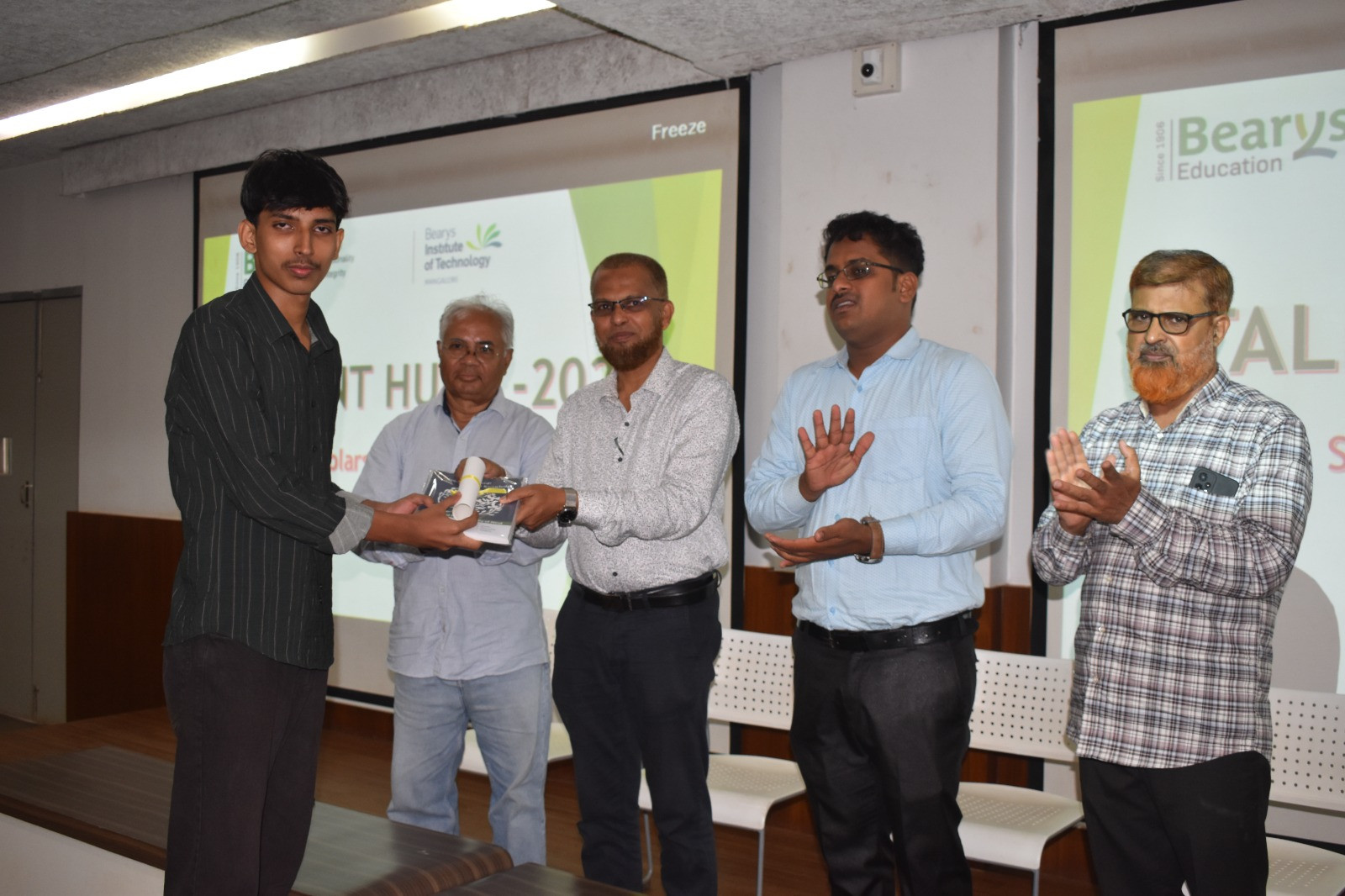
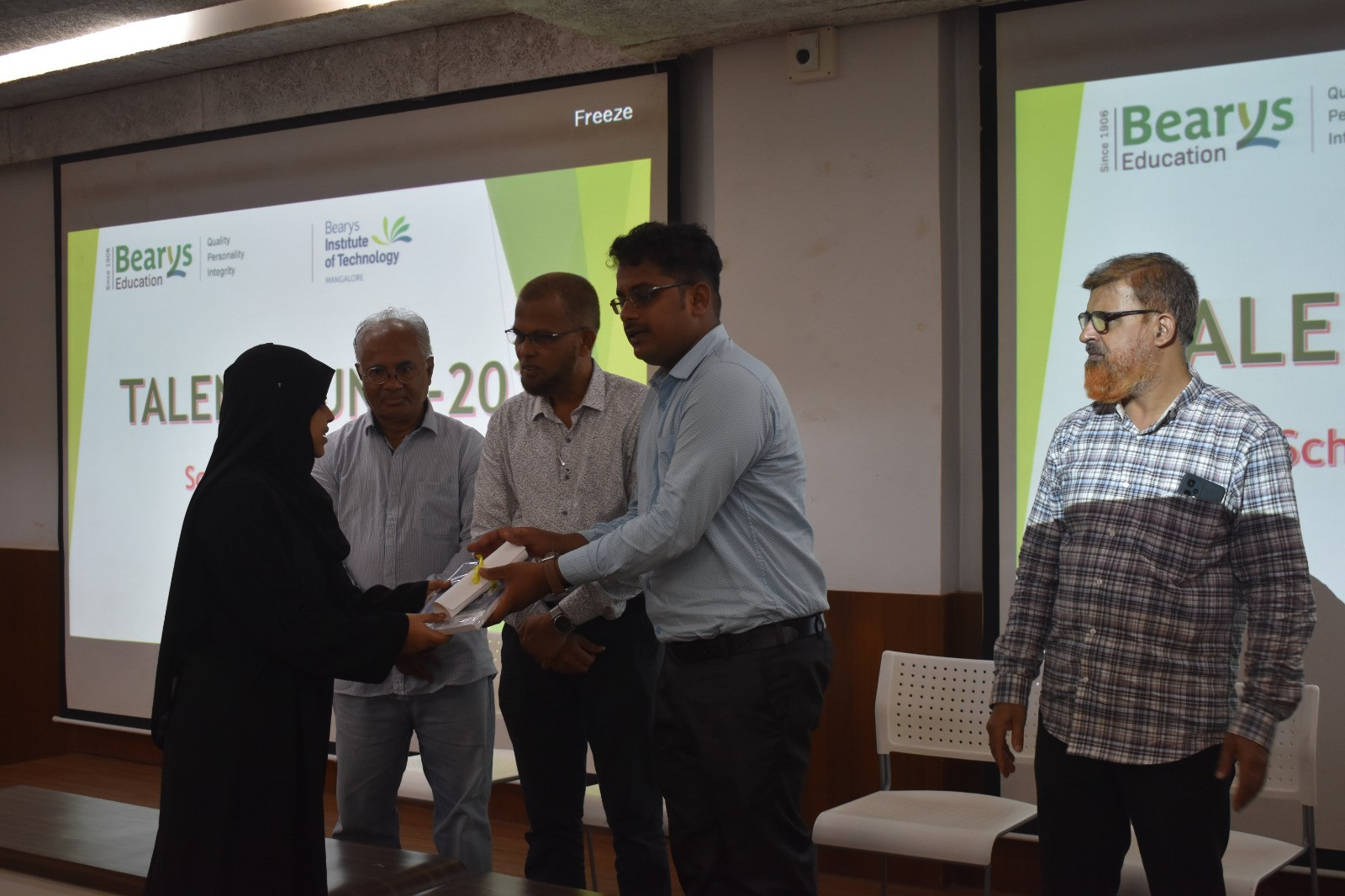
Bearys Institute of Technology (BIT), in association with BEADS, successfully organized the Talent Hunt 2025, an in-house entrance examination aimed at identifying and nurturing young talent among II PUC science students. The event was held on April 12, 2025, at the BIT campus, Bearys Knowledge Campus (BKC), near Mangalore University, Innoli.
The event commenced with a warm welcome address by Dr. Anjum Khan, Faculty of Basic Science, who highlighted the significance of early academic encouragement for budding engineers and architects.
The keynote address was delivered by Dr. S.I. Manjur Basha, Principal of BIT, and Architect Khaleel Abdul Razak, Principal of BEADS. They emphasized the value of integrated learning, innovation, and the vision behind offering generous scholarships to meritorious students through such initiatives.
A large number of students participated in the Talent Hunt exam, and up to 100% scholarships were awarded to the most outstanding performers, with all participants receiving a minimum of 10% scholarship on tuition fees.
The results were officially announced by Heena, HR at BIT.
Among the top achievers, Ibrahim Nasim from Yenapoya PU College, Udyavara, secured a 100% scholarship, while Ayishath Sahla (Anugraha PU College, Vitla) and B U Khadeejath Thabsheera (Dr. APJ Abdul Kalam PU, Ira) were awarded 50% scholarships each.
Seven other students received 25% scholarships for their exceptional performance.
The event concluded with a vote of thanks delivered by Prof. Joyson from the Department of Basic Science.
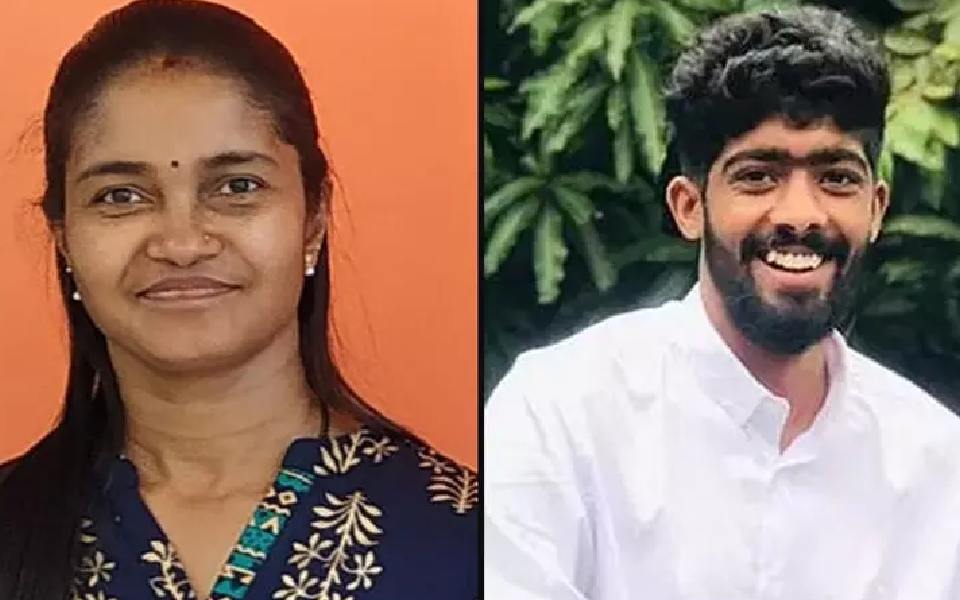
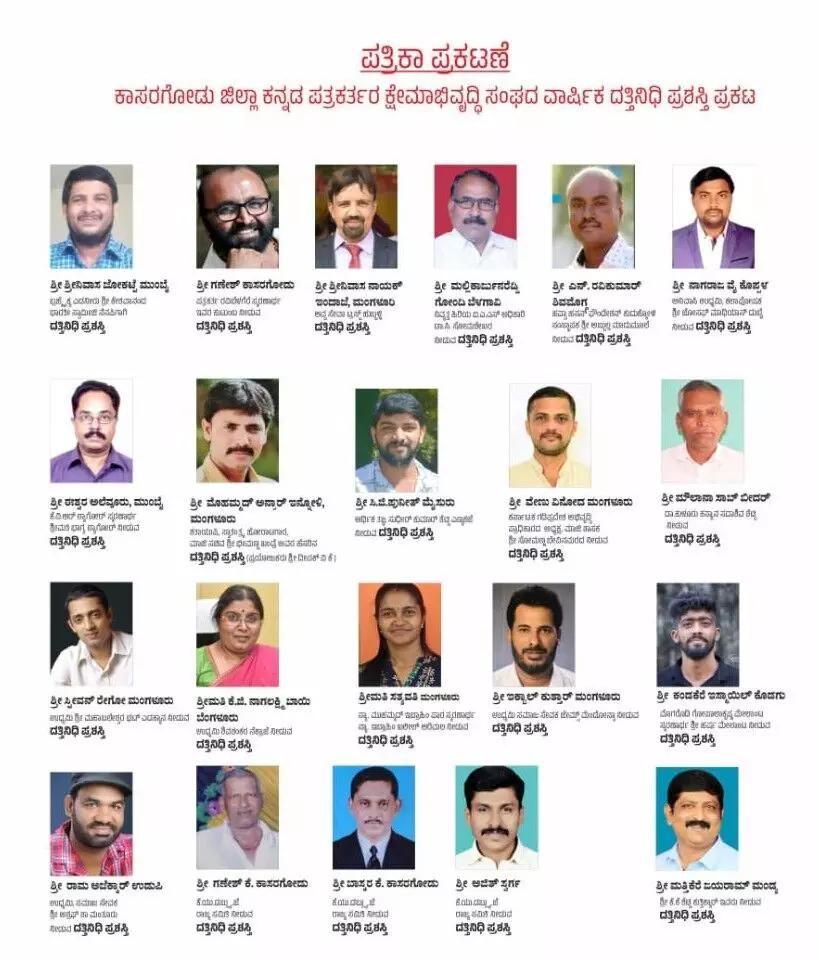
The Kasaragod District Kannada Journalists’ Welfare Association has announced the recipients of its annual Endowment Fund Awards. This year, 21 journalists have been selected for recognition, including Vartha Bharathi Mangaluru Bureau’s senior reporter Satyavati, and Kodagu special correspondent Kandakere Ismail Kodagu.
The award ceremony will take place on May 3 at the Seethangoli Alliance Hall in Kasaragod district. Each endowment award comprises a cash prize, an award certificate, and a memento.
The names of the awardees according to a press release issued by the association are as follows,
Satyavati will be honoured with the Lawyer Muhammad Ibrahim Pare Memorial Award, while Kandakere Ismail Kodagu will receive the Mogarodi Gopalakrishna Melanta Endowment Award. Srinivasa Jokatte from Mumbai, who will receive the Brahmakya Edneer Sri Keshavananda Bharathi Swamiji Memorial Award, and Ganesh Kasaragodu, who will be awarded the Journalist Ravi Belagere Memorial Endowment Award.
Srinivasa Nayak Indaje will be awarded with the Avva Trust Hubballi Endowment, Mallikarjuna Reddy Gondi of Belagavi with Retired senior IAS officer Dr. C. Somashekara Endowment, N. Ravikumar with Hawva Hasan Foundation Kudkoli Endowment, Nagaraja Y. Koppala with Non-resident businessman and art patron Joseph Mathias Dubai Endowment, Iswara Alevoor from Mumbai with KVR Tagore Memorial Award, and Muhammad Ansar Inoli with Freedom Fighter and Former Minister Bhimanna Khandre Endowment.
Others receiving awards include C.J. Puneeth of Mysuru (Economist Sudhir Kumar Shetty Enmakaje Endowment), Venu Vinod of Mangaluru (Somanna Bevinamarad Endowment), Maulana Saab Bidar (Kuluru Kanyana Sadashiva Shetty Endowment), Steven Rego of Mangaluru (Mahabaleshwar Bhat Edakkana Endowment), and KG Nagalakshmi Bai of Bengaluru (Sivashankar Nekraje Endowment).
Also recognized are Iqbal Kuthar (James Mendonsa Endowment), Rama Ajekar (Ashraf Shah Manthur Endowment), Ganesh Kasaragod (KWJ State Committee Endowment), Bhaskar K. Kasaragod (KWJ State Committee Endowment), Ajith Swarga (KWJ Endowment), and Mattikere Jayaram of Mandya, who will be awarded the K.K. Shetty Kuttikar Endowment.
The Kasaragod District Kannada Journalists’ Welfare Association, active for over two decades, works in collaboration with pro-Kannada organizations to promote and preserve Kannada language, culture, and art. The association also acts as a cultural bridge between Kannada and Malayalam-speaking journalists.
The May 3 ceremony will be chaired by the reception committee head K.K. Shetty Kuttikar.
The event will be graced by dignitaries including Karnataka Legislative Council Speaker Basavaraj Horatti, Agriculture Minister Chaluvaraya Swamy, Forest Minister Eshwara Khandre, Karnataka Border Area Development Authority Chairman Somanna Bevinamarada, Chief Minister’s Media Advisor K.V. Prabhakar, Karnataka Working Journalists’ Association President Shivananda Tagadoor, and Kasaragod District Kannada Development Authority President Ravi Naikap, read an official statement.
source: http://www.english.varthabharati.in / Vartha Bharati / Home> Karavali / by Vartha Bharati / April 22nd, 2025
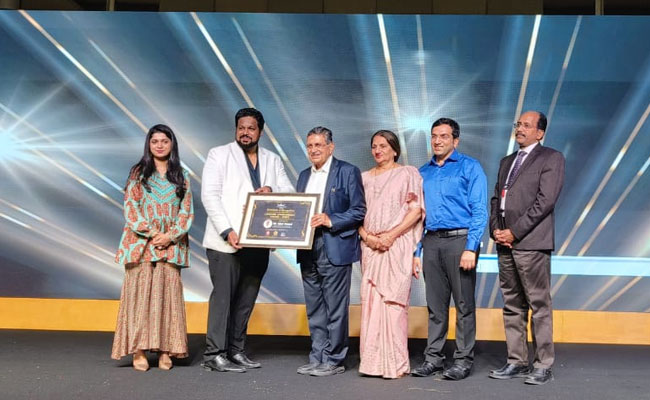
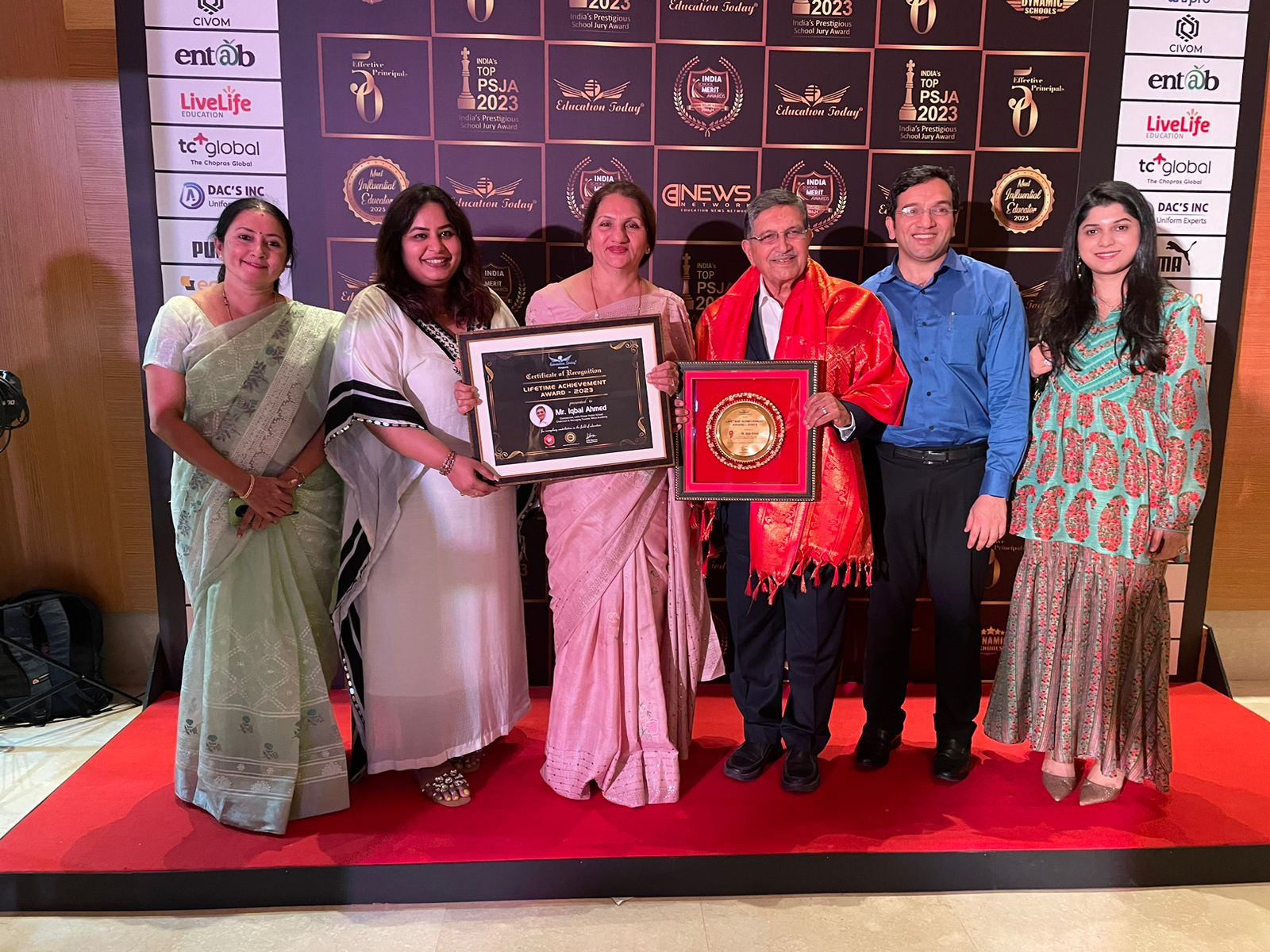
In recognition of his outstanding contributions to the field of education, Iqbal Ahmed, Chairperson of Little Flower Public School and Chairman of Mitra Academy in Bengaluru, was bestowed with the prestigious Lifetime Achievement Award – 2023 by Education Today Magazine.
The ceremony, held at the Taj Hotel Kempegowda International Airport Rd, Bengaluru, on December 11, 2023, celebrated Ahmed’s commitment to educational excellence.
“The accolade is a testament to Mr. Ahmed’s deep-rooted passion for education, driven by a sense of social responsibility. His leadership has not only elevated academic standards within the schools but has also prioritized holistic development, shaping students into well-rounded individuals with both knowledge and character. His dedication to excellence serves as an inspiration to educators and learners alike,” a press release stated.
The Lifetime Achievement Award recognizes Iqbal Ahmed’s impact on the educational landscape, acknowledging his role in providing exceptional education at an accessible cost.
Expressing gratitude upon receiving the award, Iqbal Ahmed attributed the honour to the collective efforts of the school’s faculty, staff, students, and parents.
In addition to Iqbal Ahmed’s Lifetime Achievement Award, the ceremony also celebrated Tanveer Ahmed, CEO of Mitra Academy and Little Flower Public School, and his wife, Nafeesa Ahmed, Director of Presidency Group of Institutions Bengaluru/Mangaluru, who were honoured with the Power Couple Award for 2023 by Education Today Magazine.
source: http://www.english.varthabharati.in / Vartha Bharati / Home> India / by Vartha Bharati / December 12th, 2023
In the bustling city of Bangalore, where the convergence of tradition and modernity creates a unique educational landscape, Dr Nafeesa Ahmed stands as a beacon of transformative leadership in the field of education. Dr Nafeesa has carved out a unique path for herself as the Director of the Presidency Group of Institutions while also carrying on her father, Dr Nissar Ahmed’s legacy of excellence and innovation.
Dr Nafeesa Ahmed, Director, Presidency Group of Institutions, Bengaluru, Karnataka
Dr Nafeesa’s educational journey is nothing short of impressive. A graduate of Mount Carmel College, Bangalore, she holds a Bachelor of Business Management (BBM) degree and pursued postgraduate studies in English literature at Bangalore University. Her commitment to education led her to earn a bachelor’s degree in education from IGNOU. Venturing beyond Indian shores, Dr Nafeesa enriched her perspective with a Master’s in International Management from Royal Holloway, University of London. This international exposure was instrumental in shaping her understanding of global education trends.
Her dedication to continuous learning took her to the prestigious Harvard School, where she honed her skills in management and leadership. Dr Nafeesa’s academic prowess is underscored by her diverse qualifications, including a BBM, a B.Ed., an MA in English Literature, and a Master’s in International Management. Her educational journey serves as an inspiration, reflecting the importance of a broad and holistic approach to learning.
Leadership at the Presidency Group of Institutions
Taking the reins as the Director of the Presidency Group of Institutions, Dr Nafeesa has led the K-12 chain of elite institutions with a commitment to “Equal Opportunity in Diversity.” Her vision is to provide high-quality, affordable education to students from diverse backgrounds. Focusing on aspects like course structure, pedagogical innovation, and outcome-based evaluation, she has fostered a conducive teaching and learning environment.
During the challenging times of the pandemic, Dr Nafeesa displayed exemplary leadership by seamlessly transitioning the education system from physical to virtual and eventually to a mixed classroom approach. Her leadership has been pivotal in ensuring that the team of highly-qualified educators delivers the finest education to students.
Accolades and Achievements: A Trailblazer in Education
Dr Nafeesa’s journey is adorned with prestigious awards and recognitions, attesting to her significant contributions to the field of education. Notably, she received the Economic Times Power Icon Award for “Exceptional Contribution in Education” in 2020 and was honoured as “The Education Icon of the Year 2021” by Education Today. Her recognition as a ‘Speaker’ at the “APAC 5th Global Education & Skill Conclave” and features in Women Entrepreneurs and Education World India showcase her as a thought leader in the education domain.
A crowning achievement in her illustrious career is the conferral of a Ph.D., Philosophiae Doctor Honoris Causa (HC) in Education Management by Ecole Superieure Robert De Sorbon (ESRDS), France, Europe. The recognition, awarded at The House of Lords, London, is a testament to Dr Nafeesa’s global impact and commitment to educational excellence.
As Dr Nafeesa Ahmed continues to shape the future of education, her journey stands as an inspiration, showcasing the transformative power of visionary leadership in the realm of academia. In the words of Dr Nafeesa, “My loved ones have been my rock through thick and thin. Having their back has been crucial to my success.” Indeed, her success radiates not only through personal accolades but also through the positive impact she has had on the lives of countless students and educators.
source: http://www.outlookindia.com / Outlook / Home> Brand Studio / by The Outlook Bureau / March 08th, 2024