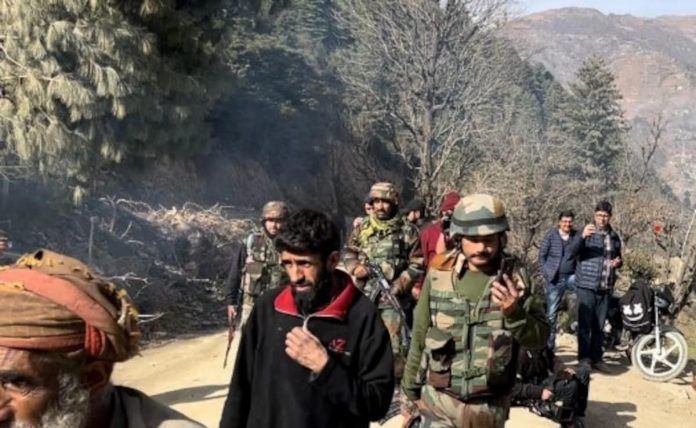
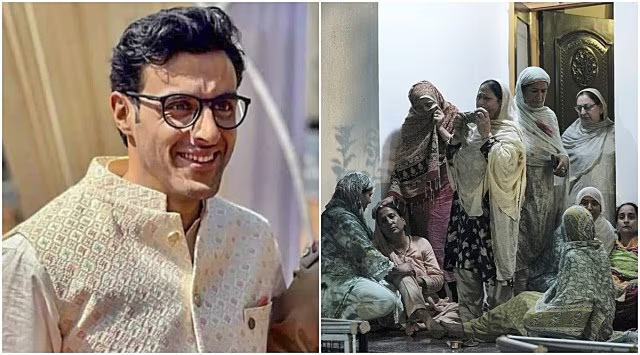
Havildar Majid Hussain, a local hero hailing from Poonch, exemplified the true spirit of a commando through his unwavering commitment to defending his homeland.
The Army said on Friday. “In the challenging terrain of Poonch and Rajauri, he stood as a formidable force against terror, displaying unparalleled courage and determination in the highest traditions of the Indian Army. His supreme sacrifice in the pursuit of peace resonates deeply with the hearts of the people in Poonch and Rajouri,” PRO Defence said in a statement issued here.
The GOC 25 Infantry Division, representing GOC-in-C, NC and GOC 16 Corps, expressed profound gratitude to Havildar Majid Hussain’s family. “In a heartfelt tribute to a local son who went above and beyond in the line of duty, the family of the Braveheart was visited by his seniors and colleagues bestowing the spirit of care for their fallen brother,” the statement said.
The awarding of the Kirti Chakra is a symbol of conspicuous bravery of Havildar Majid Hussain’s selfless sacrifice, the Army said, adding, “Poonch, Rajauri, and the entire population of UT of J&K, stand indebted to this courageous commando. His actions go beyond a single moment in time; they serve as a perpetual source of inspiration for future generations.”
The PRO Defence added, “As the Hero of Poonch, Havildar Majid Hussain’s legacy lives on, becoming an enduring beacon of selflessness and dedication. His story will continue to resonate in the hearts of those from his hometown and across the nation.
The gallantry award bestowed upon him is not just a medal; it is a symbol of honour, bravery, and a reminder of the sacrifices made in the relentless pursuit of peace and security.”
source: http://www.risingkashmir.com / Rising Kashmir / Home / by RK News / January 27th, 2024
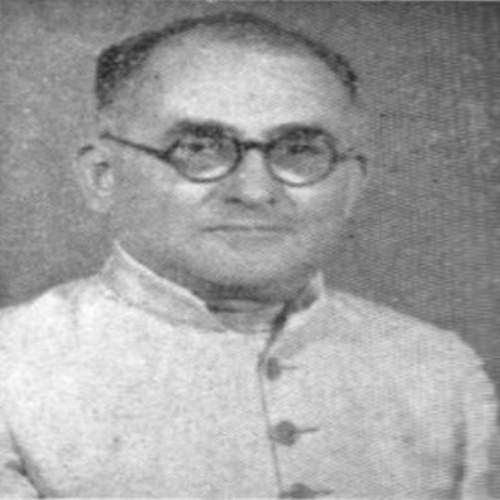
“We are Indians first and we are all Indians and will remain Indians. We shall fight for the honour and glory of India and we shall die for it. (Applause). We shall stand united. There will be no divisions among Indians. United we stand; divided we fall. Therefore we do not want a reservation. It means division. I ask the members of the majority community who are present here today: Will you allow us to stand on our legs? Will you allow us to be a part and parcel of the nation? Will you allow us to be an equal partner with you? Will you allow us to march shoulder to shoulder with you? Will you allow us to share your sorrows grief and joy? If you do, then for god’s sake keep your hands off reservation for the Muslim community.” Tajamul Hussain of Patna told this to the members of the Constituent Assembly in 1949.
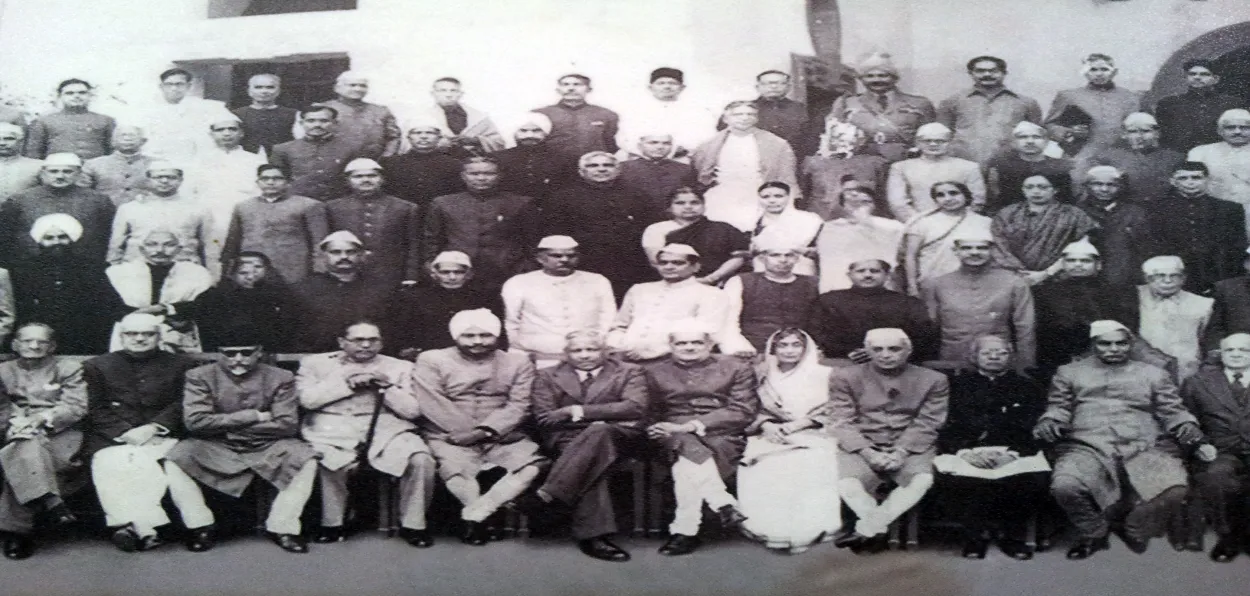
The speech was a befitting reply to the erstwhile rulers of India, the British crown, and the Muslim League. When the Constituent Assembly was formed, in 1946, to frame a constitution of India, the whole exercise was criticised by the colonial rulers and Muslim League alike.
The case made against the assembly was that it was not a representative body of all Indians. To some extent, the allegation was true. The elections were not held under the Universal Adult Franchise; members were not directly elected. Moreover, seats for Muslims, Sikhs, Parsis, Anglo-Indians, Europeans, and Princely States were fixed. Muslims would vote among Muslim candidates, Hindus among Hindu candidates, and so on.
Tajamul Hussain
To make matters worse for the nationalists, the British-backed Muslim League won 73 out of 78 seats reserved for Muslims even when Congress secured 205 of the total 296 seats. Jinnah-led League boycotted the assembly and thus claimed that the Constituent Assembly was a Hindu body where only 4 Muslims (all Congress members) were present. The British Prime Minister Winston Churchill also called the assembly a ‘Hindu body’.
The British government tried to paint the Indian Constituent Assembly as anti-Muslim. It said, “Should a constitution come to be framed by a Constituent Assembly in which a large section of the Indian population had not been represented, the British Government could not, of course, contemplate…..forcing such a constitution upon any unwilling parts of the country.”
Sir Stafford Cripps also expressed a similar opinion when the Muslim League boycotted the assembly. The argument was far from the truth. It was a boycott only by the Muslim League and not by the Muslim community.
In July 1947 after the Partition was finalised at least 27 Muslim members, originally elected on the Muslim League tickets, joined the assembly. They decided not to go to Pakistan and Indian leaders welcomed them.
Naziruddin Ahmad, a former Muslim League member, while joining the assembly declared, “There was no need for any doubt whatsoever regarding the fact that we have come here as loyal and law-abiding citizens of India.” Interestingly one such Muslim League member was later included in a seven-member drafting committee chaired by Dr. Bhim Rao Ambedkar.
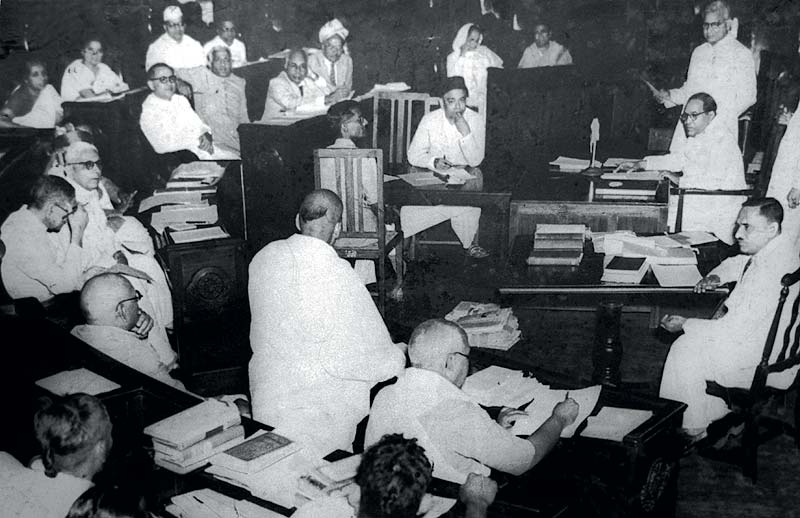
Constituent Assembly in session
Several Muslim members like Maulana Abul Kalam Azad, Mohammed Sadulla, Hasrat Mohani, B. H. Zaidi, B. Pocker Sahib Bahadur, etc. played significant parts in the deliberations of the Constituent Assembly. They were members of several committees, moved amendments, brought resolutions, and debated matters of importance. These members made their presence, and in turn of Muslims, felt in the assembly.
Muslim members raised their voices for the integration of the country. The shock of partition was great and they wanted to give a message that Muslims are as much citizens of India as other community members are.
Hasrat Mohani told the assembly, “Why do you call the Muslims a minority? They can be termed as a minority only when they function as a communal body. So long as Muslims were in the Muslim League, they were in a minority. But if they elect to form a political party without any restriction leaving it open to any community, then you should remember that whenever political parties are formed, the Muslims would fight by forming coalitions. Therefore, I say that Muslims would not like to be called a minority. To say that Muslims are in the minority is to insult them. I cannot tolerate this even for a moment.”
B. H. Zaidi, who represented Rampur, also argued against any special treatment for Muslims. He felt that it would further alienate Muslims from the mainstream. In the assembly, he said, “There has been no occasion in the history of India when the Hindus have persecuted a minority” and affirmative action should be based on economic disparity. He said, “There is one minority in this country which has always been, and which is existing in every country, and will go on existing, and that is the minority of the good and the just, of the people who are humane and liberal-minded, and who work for the regeneration of mankind and the progress of humanity. There is that minority today in this country, and to that minority Sardar Patel and the Prime Minister of India, and you sir, who adorn the Chair, belong, and the Members of this House.”
In the Constituent Assembly Muslims contested the ideas of minority, reservations, and exceptionalism on different occasions. There is no denying that a few Muslims under the leadership of Mohammad Ali Jinnah partitioned India, but it is also a fact that several Muslims played their roles in making India a democratic republic.
source: http://www.awazthevoice.in / Awaz, The Voice / Home> Stories / by Saquib Salim / January 25th, 2024
In total, the President approved 80 gallantry awards, including six Kirti Chakra and 16 Shaurya Chakra on the eve of the 75th Republic Day.
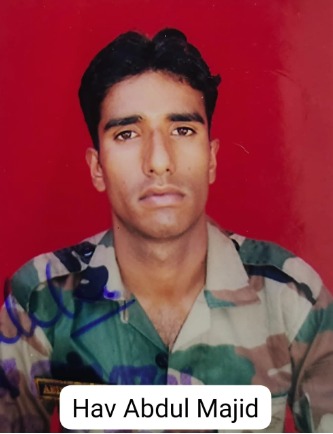
Havildar Abdul Majid has been awarded Kirti Chakra posthumously (HT File)
Four Jammu and Kashmir Police personnel have secured Shaurya Chkara, according to a list approved by President Droupadi Murmu on Thursday.
In total, the President approved 80 gallantry awards, including six Kirti Chakra and 16 Shaurya Chakra on the eve of the 75th Republic Day. Out of the six Kirti Chakra, three were conferred posthumously, and of the 16 Shaurya Chakra, two posthumously.
The Kirti Chakra is India’s second highest peacetime gallantry award after Ashok Chakra. Shaurya Chakra is the country’s third-highest peacetime gallantry award.
Jammu and Kashmir Police personnel Mohan Lal, Amit Raina, Faroz Ahmad Dar and Varun Singh have also been awarded the Shaurya Chakra.
“A proud moment for @JmuKmrPolice! DySP Mohan Lal, ASI Amit Raina, SI Faroz Ahmad Dar, Constable Varun Singh, received Shaurya Chakras from the Hon’ble President of India. I salute the awardees for valiantly performing their duties & fearlessly combating terrorism & other crimes,” lieutenant governor Manoj Sinha said in a post X, formerly Twitter.
Havildar Abdul Majid of the Parachute Regiment’s ninth battalion (special forces), who was killed during an encounter in November last year, has been conferred Kirti Chakra posthumously.
Majid, who hails from Poonch, was among the five soldiers, that included two captains, who lost their lives during the encounter in jungles of Kalakote in Rajouri district on November 22 and 23.
72 gallantry medals to J&K Police, highest among state forces
In total, Jammu and Kashmir Police have secured 72 gallantry medals on the Republic Day.
The officers were awarded for their meritorious work and leading anti-militancy operations and maintaining law-and-order situation under tough circumstance.
According to details available, the list includes Mohammad Rafee Rather, Dy SP; Shammi Kumar, Dy SP; Zakir Hussain, selection grade constable; Ishfaq Ahmad, inspector; Muzaffer Ahmad Bhat, head constable; Sajad Ahmad Malik, Dy SP; Sukh Dev, sub-inspector; Manzoor Hussain Peer, HC; Javaid Ahmad Chopan, HC; Azad Ahmad Bhat, selection grade constable; Farooq Ahmad Bhat, follower; Qazi Shamas-Ul-Muzaffar Amin, Dy SP; Mohinder Singh, ASI; Naseer Ahmad, SgCT; Mohammad Altaf Baghat, SgCT; Tanushree,SP; Muzaffar Ahmad, HC; Mohmad Hussain Sofi, CT; Mukesh Kumar, CT; Rohit Kumar, Dy SP; Mohammad Ashrif, Dy SP; Amit Raina, ASI; Nazir Ahmad, HC; Sudhanshu Verma, IPS SP; Mudasir Bashir Sheergojreey, HC; Mohan Lal, Dy SP; Tariq Ahmad Laloo, ASI; Javid Ahmad Lone, SI; Elyas Ahmad Khatana, SgCT; Yogesh Singh, SgCT; Mohammad Saleem Dar, CT; Aqib Bashir Dar, CT; Irfan Majeed Naik, CT; Faizan Ali, Dy SP; Aftab Ahmad, SgCT;Mudasir Ahmad Malik, CT; Sajad Ahmad Bhat, CT; Rakesh Kumar Singh, probationary sub inspector; Irfan Ahmad Bhat, CT; Aftab Ahmad, SgCT; 1st BAR Dilawar Hassan Magray, SgCT; Shabir Ahmad, SgCT; Mansoor Ahmad Sheikh, CT; Yasir Rashid Bhat, inspector; Mushtaq Ahmad Wani, CT; Abdul Rahman Khan; Farooq Ahmad Awan; Mumtaz Ali, inspector, Farooq Ahmad Awan, HC; Mohammad Ayaz, HC; Aijaz Ahmad Sheikh, CT; Sumit Kumar Sharma, Dy SP; Amit Raina, ASI; Farooq Ahmad Awan, HC; Aijaz Ahmad Khan, HC; Waseem Sulaman Yatoo, SgCT; Omer Hussain Wada, HC; Ghulam Nabi Bhat, CT; Mohmad Maqsood Lone, HC; Azad Ahmad Bhat, SgCT; Zafar Mahdi, Dy SP; Mohd Ashraf Sheikh, SgCT; Mohammad Yousif, SSP; Parmeet Singh, ASI; Ishtaq Ahmed Bhat, CT; Nissar Ahmad Darzi, Dy SP; Azim Iqbal, inspector; Danish Allahi Rather, SgCT; Afaq Ali Dewani, HC; Rajan Kumar, HC; Sajad Ahmad Talee, CT and Mohd Shafi, CT.
Kashmir inspector general of police VK Birdi congratulated the officers.
“IGP Kashmir Shri V K Birdi #congratulates the officers & jawans of J&K Police who have been #awarded with 72 #Gallantry Medals this #RepublicDay eve. Matter of #pride for J&K Police,” police wrote on its official handle on X.
source: http://www.hindustantimes.com / Hindustan Times / Home> News> Cities> Chandigarh / by HTC, Srinagar / January 26th, 2024
In Jammu and Kashmir’s Poonch district, three civilians, previously detained for questioning in connection with a militant ambush on Army vehicles, were found dead in the Topa Pir area. The victims were identified as Safeer Ahmed (48) and his cousins, Mohammad Showkat (28) and Shabir Ahmed (25).
The militant attack, which occurred on Thursday evening, claimed the lives of four Army soldiers and left three others injured.
Noor Ahmed, brother of one of the deceased civilians and a Head Constable in the Border Security Force, expressed profound grief, stating, “This is the prize we have got for working for the nation.”
Details surrounding the civilians’ deaths remain unclear, leading to unprecedented restrictions on movement and the suspension of mobile internet services in affected border districts. The government announced compensation and compassionate appointments for the families of the deceased.
“The death of three civilians was reported yesterday in Baffliaz of Poonch District. The medico-legal formalities were conducted, and legal action has been initiated. The Government has announced compensation for each of the deceased. Further, compassionate appointments to the next of kin of each deceased have also been announced,” informed the Information & PR, J&K in a statement.
While the Army’s Public Relations Officer in Jammu claimed no knowledge of the incident involving the civilians, allegations of torture marks on the bodies surfaced, accompanied by unconfirmed graphic videos circulating on social media. Relatives asserted that the injured were left by security forces on the roadside.
Former Chief Minister and President of the Peoples Democratic Party (PDP), Mehbooba Mufti, expressed concern over the reported civilian killings and called for a comprehensive and unbiased investigation. Mufti highlighted the shocking state of the victims’ mutilated bodies and widespread reports of torture on detained villagers.
“The ongoing miseries faced by the people of Jammu and Kashmir have reached a horrifying peak. Three innocent lives have been snatched away, their bodies said to be bearing brutal marks of torture while authorities have maintained a criminal silence,” Mufti said at a press conference.
In response to the tragedy, the local administration assured financial assistance, government jobs, and other support to the affected families. Poonch Deputy Commissioner pledged Rs 30 lakh to the next of kin of each deceased, along with a 10-marla plot at Surankote and a government job.
source: http://www.muslimmirror.com / Muslim Mirror / Home> India> Indian Muslim> Politics / by Muslim Mirror / December 24th, 2023
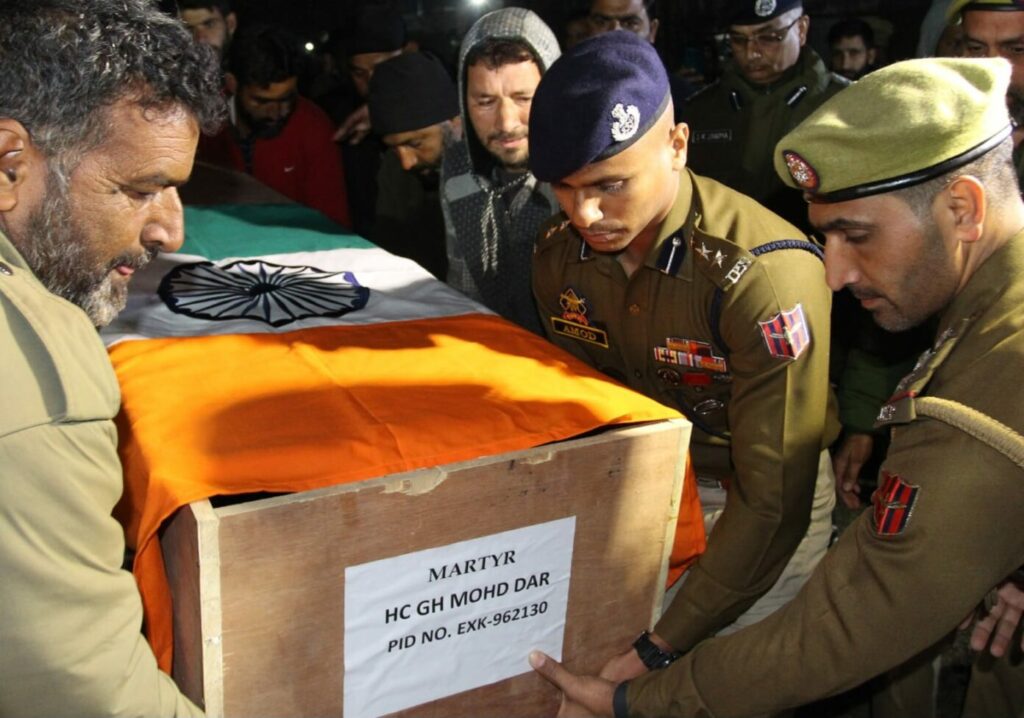
Wreath laying ceremony of Head Constable Ghulam Mohammad Dar who lost his life in a militant attack near his house in Tangmarg area of Baramulla district on October 31, 2023
Srinagar :
Residing in an under-construction house, Ghulam Mohammad Dar, a Jammu and Kashmir Police head constable, was killed outside his residence in Kralpora area of North Kashmir’s Baramulla district. This incident marks the third militant attack within a week in Kashmir. The killing has rendered the family inconsolable as they were expecting a marriage in March.
The Kralpora village transformed into a mourning ground after Dar was shot five times outside his residence. Ghulam Mohammad Dar, a constable in the Jammu and Kashmir Police, had dedicated 25 years of his life to serving in various districts.
On Tuesday, Dar had returned home from his office after two days at the District Police Lines in Srinagar. As he approached his home, with the evening sun casting long shadows, a sudden, inexplicable shout pierced the air. Seconds later, Dar lay on the ground, his life ebbing away.
Dar’s family, particularly his seven daughters, were plunged into despair. Their father, their sole provider, was taken from them in an instant. A cloud of sorrow hung over the household, darkening their lives as they struggled to come to terms with their loss.
“We are doomed. We just had our father, now we have no one,” lamented Dar’s eldest daughter. She vividly recalled that ill-fated evening when her father had been accompanying a labourer to his home. It was meant to be a routine task, but in an instant, their world was shattered.
“When he was coming back, we heard a loud shout and ran outside. In front of us was lying our father, a blood-ridden body, and no breath,” she recounted, the pain etched across her face.
The tragedy was compounded by the impending wedding of one of Dar’s daughters. The joyous anticipation that had filled their hearts was now replaced by sorrow and uncertainty. “I was getting married in a few months, and my father was working day and night to make my wedding easy, but we have nothing left now,” the daughter about to be married said. Dar was the sole breadwinner for his family, with seven daughters and his wife depending on his income. With no sons or brothers to share the burden, the weight of their financial security rested solely on Dar’s shoulders.
Dar’s neighbour, speaking to the media, conveyed the gravity of the situation, “He was shot just outside his house. We took him to the Tangmarg hospital from where they referred him to Baramulla, and he passed away. He is survived by seven daughters and his wife. They had only one person earning in the family. He had no son or brother and was the sole breadwinner for his whole family. He had been working with the police for the last 25 years; he had served in every district and was a noble soul. Targeting innocents is wrong. They were preparing for the wedding of his daughter.”
Day before Dar was shot dead, Inspector Masroor Ahmad, another member of the Jammu and Kashmir Police, was shot in Srinagar. While enjoying a game of cricket on a local ground in Eidgah area, militants approached him and shot him at point-blank range with a pistol. His life now hangs in the balance, as he is battling for survival in a tertiary hospital in Kashmir.
Dilbagh Singh, the Director General of Police for Jammu and Kashmir, who superannuated on Tuesday, expressed his dismay, “The enemy wants to create violence here in the valley. We have lost so many people in the mad era of violence. The incidents that have taken place today and yesterday have to be seen from the same prism as they are failing, and they cannot see peace returning to the valley. These incidents are only and only that they don’t want peace to prevail here. We are working hard to completely stop all kinds of violence in the valley. We have already managed to find out some major proof with regard to yesterday’s attack. If a poor labourer is killed, I don’t think either God or police will forgive the perpetrators of this attack.”
Few days before, In Nowpora village of south Kashmir’s Pulwama district, a labourer named Mukesh from the state of Uttar Pradesh lost his life to a militant attack. The region hadn’t witnessed such a spate of target killings and attacks for over a year, rekindling painful memories of a turbulent past in the Kashmir Valley.
source: http://www.kashmirlife.net / Kashmir Life / Home> Web Exclusive / by Raashid Andrabi (headline edited) / November 01st, 2023
We, The Indian Muslims are proud to be citizens of this great country. We have been an architect of this land all through centuries since the days of dynastic rule. Whether it was construction of world class network of transport facilities like Grand Trunk Road linking major cities, founding new cities of highest standards for that age, huge monumental structures to attract the world, development of living standards and maintain cordial relationships between groups belonging to various religions, languages, castes and cultures, we pioneered justice and maintained the system.
With the passage of years, decades and turn of events, the foreign forces got attracted to it and slowly took over the rein of rule.
We were first to challenge and fight for country’s independence valiantly. Even our clergymen took to streets and fought, thousands laid down their lives. Colonel Balwan Singh Nagial, a third-generation Indian Army officer who retired in 2019 wrote in Times of India (April 23, 2022), thus: “Muslim leadership contributed enormously to divergent phases of the Indian struggle for independence. They (Muslims) played a larger-than-life role and made significant sacrifices in this struggle for independence.
From the last Mughal ruler Bahadur Shah Zafar to nawabs, princes, landlords of all sizes, clergy, ulema and the ordinary people, they all stood for the cause and took on enormous challenges and made supreme sacrifices.
When the INC was formed in 1885, the Muslims responded enthusiastically and supported all its efforts throughout the freedom struggle until India became free. The most enthusiastic support for the INC was from the Muslims of the conservative Ulama of Deoband. Earlier, the Ulama had participated in the 1857 uprising with heart and soul.
They made great sacrifices, and hundreds of them were sent to Andaman-Nicobar and many to Malta, an island to the south of Italy.
Muslim leaders who contributed to India’s struggle for independence were:
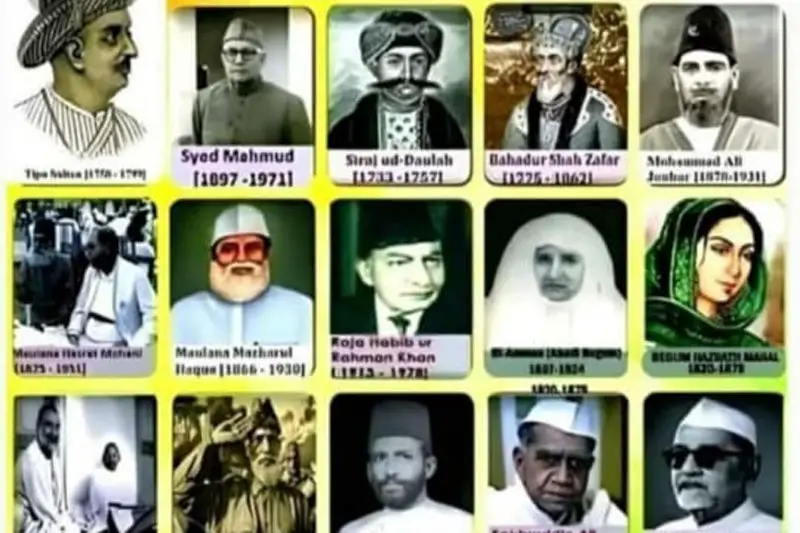
Khan Abdul Ghaffar Khan, Maulana Abul Kalam Azad, Maulana Muhammad Ali, Maulana Shaukat Ali, Allama Iqbal, Muhammad Barkathulla, Bi Amma (mother of Ali brothers), Badarudeen Tyabji, Hakim Ajmal Khan, Mohammad Ali Jinnah, Dr M.A. Ansari, Dr Siafudeen Kichlu, Dr Basheer Ahmad, Syed Ameer Ali, Dr Syed Muhammad, Hasrat Mohani, Nawab Abdul Latheef, Altaf Hussain Hali, Syed Ahmad Sirhindi, Syed Ahmad Bareilly, Maulana Shibli Numani, Munshi Karamat Ali, Munshi Zakaullah.
Hindus and Muslims together fought the foreign forces shoulder to shoulder. A report by the ‘Milli Chronicle’ says that names of 95,300 freedom fighters are etched on the India Gate in Delhi, and remarkably, 61,945 of these names belong to Muslims, signifying that 65% of these brave individuals were Muslims. The significance of this statistic is eloquently captured by the renowned writer Mr. Kushwant Singh, who boldly declared that the story of Indian freedom is etched in the blood of Muslims, emphasizing their large contribution to the freedom struggle, considering their dis-proportionately smaller population percentage.
The annals of history are adorned with the stories of Muslim freedom fighters who put their lives on the line to liberate India from the shackles of British oppression. These individuals, driven by an unwavering determination to secure their homeland’s independence, demonstrated exceptional courage and resilience.
All through ages we find tall personalities like Sultan Haidar Ali, father of Tipu Sultan, (he pioneered the fight against British colonial forces); Tipu Sultan, son of Haider Ali; (he pioneered the use of iron-cased rockets); Ashfaqullah Khan,(noted for his daring attacks on British government trains); Maulana Abdul Kalam Azad, the youngest President of the Indian National Congress,(who rallied Hindus and Muslims alike against British oppression); Maulana Hasrat Mohani, Khan Abdul Ghaffar Khan, (a pivotal figure in the Khilafat movement); was jailed for 13 years by the British), Sirajud Daula, (the last Nawab of Bengal), Badruddin Tyabji (of Indian National Congress); his wife, Suraiya Tayabji, who designed the present Indian flag., Zain-ul-Abideen, an officer of the Indian National Army (INA), coined the iconic patriotic slogan “Jai Hind.”
While recounting the names of every Muslim freedom fighter may be an impossible feat, their contributions and sacrifices in the fight against British colonialism are immeasurable and undeniable. The fact that many chose to remain in India underscores their deep-rooted connection to the land. Despite attempts to distort history, India will forever be the cherished home of its Muslim citizens. We gave the independent India Maulana Abul Kalam Azad, the first Education Minister, Dr. Rafi Ahmed Qidwai, Dr.Zakir Hussain (an Educationist and Vice President), and numerous figures as servants to the country in the form of politicians, officers, industrialists, entrepreneurs, researchers, technocrats etc. in every field.
Our very recent contribution to the nation’s public service has been the world famous Scientist/Technocrat and President Dr.A.P.J. Kalam. He set the highest, un-believable standard of honesty, transparency and clean image in public life. A glimpse into the life he spent in the Rashtrapati Bhavan as President gives a shocking information. The same is as under: Mr. P M Nair, (retired IAS officer, then Secretary to Dr. Abdul Kalam, the President writes in his book “Kalam Effect” that Dr. Kalam used to receive costly gifts whenever he went abroad (as it is part of custom & protocol) used to ask the gifts to be photographed and then catalogued and handed over to the archives. Afterwards, he never even looked at them. He did not take even a pencil from the gifts received when he left Rashtrapathi Bhavan. It was a regular practice for every President to host an Iftar party, a routine. Upon being reminded about it Dr. Kalam asked Mr. Nair why he should host a party to people who are already well fed. Instead he estimated and donated Rs.22 lac being the cost to a few selected orphanages in the form of food, dresses and blankets besides a cheque for Rs.1.lakh from his personal funds. Though himself a devout Muslim, he never organized Iftar parties in President’s house at Public expense. Once Dr. Kalam invited 50 of his relatives to come to Delhi and they all stayed in Rashtrapathi Bhavan. He organized a bus for them to go around the city which was paid for by him.
No official car was used. Their lodging and food bill which came to Rs.2 laks was paid by him as per his instructions. Dr. Kalam’s elder brother stayed with him in his room for the entire one week as Dr Kalam wanted his brother to stay with him. When they left, Dr. Kalam wanted to pay rent for that room also. Imagine the President of a country paying rent for the room in which he is staying. This was any way not agreed to by the staff who thought the honesty was getting too much to handle. When he was to leave Rashtrapathi Bhavan at the end of his tenure, every staff member went and met him and paid their respects. Mr. Nair went to him alone as his wife couldn’t as she was confined to bed due to fracture. Upon noticing her absence and knowing the reason Dr. Kalam visited his house and chatted with her for some time. The following property was left behind by Dr.A.P.J.Abdul Kalam: 16 doctorates, 1 website, 1 twitter account, 1 email id, 2500 books, 1 Padmashri, 1 Padmabhushan, 1 Bharat Ratna, 1 flat (which he has donated), 6 pants & 4 shirts (DRDO uniforms), 3 suits (1 western, 2 Indian). He didn’t have any Car, jewelry, stocks, TV, AC, land or any bank balance. He had even donated the last 8 years’ pension towards the development of his village. He was a real patriot and true Indian Muslim. We are proud of him.
Our character building efforts continued even through the present 21st century in the country with unique results as records vouch. For example, the city of KAYALAPATTANAM (in Tamil Nadu) with 100% Muslim population goes. There is no Police Station, no cinema and no crime in the city because there had been no crime there for decades.
The present day situation in the country may appear to be disheartening and disappointing for some. The irresponsible attitude towards Muslims by some extremist groups in the country belonging to a certain ideology should be viewed as a momentary period. Their efforts to demoralize, degrade, deny civil rights are synonymous with their declared intentions. A great majority of country-men still believe and practice true Hinduism as had been for centuries in the past. True Hindus do not endorse hatred, support arson and distrust.
A long history of peaceful co-existence of Muslims and Hindus for centuries with mutual respect, rejoicing specially the occasion of festivals and long socio-economic ties in every nook and corner of the country is its evidence.
Our country has been an example of ‘Unity in diversity’ for the world for a long time. Nobody from either community can imagine a survival without another. The bond has been and will surely be strong as Steel. The ever increasing social evils like Corruption, nepotism, frauds, woman-bashing and vandalism like termites in the country have made the life of common man miserable.
Decline in the values like increased greediness, and wide spread of dishonesty, revenge, vindictiveness, and non-adherence to law need to be challenged and controlled. The ‘PLEDGE’ we used to read in our text books once in first page is long missing both from the book and in practice.
We the Indian Muslims, whether a common man, clergy, intellectual, and technocrat, worker or even those with any political group should realize that notwithstanding the company or area, we have a responsibility towards the country and duty-bound to work for our own community. We need to understand todays challenging scenario and strengthen its unity. We are the inheritors of a great legacy, and not followers of the ilk of this day. We Muslims should remember that we are ordained by the Almighty Allah to be united, behold his Commands; make efforts to spread virtuous deed and work eradicate evils. The entire country is looking forward for the honest.
As the phrase rightly goes, ‘Service to humanity is service to God’. Our population in the country according to 2011 census stands at about 200 million which constitutes 15%. We need to contain our extravagant life-style especially in matters of functions and festivals.
We should stop depending on politicians, their promises and focus on a self, collective effort. We need to move forward together in the fields of education, employment opportunities generating plans through mutual cooperation. For this purpose and as in the days of our Prophet, we should make our area Masjid a center for gathering, deliberation, planning, guidance and service as per law.Experts and experienced in relevant fields can be roped in for the purpose and the available resources can be put to work.
سبق پڑھ پھر صداقت کا، شجاعت کا، عدالت کا۔۔ لیا جائیگا تجھ سے کام، دنیا کی امامت کا۔۔
source: http://www.muslimmirror.com / Muslim Mirror / Home> Indian Muslim / by Syed Ilyas Basha / October 03rd, 2023
Maulvi Baqir was among the first to be arrested when the British Army entered Delhi on September 14, 1857.
Maulvi Muhammad Baqir was Editor, Founder and Owner of “Delhi Urdu Akhbar“. He was shot dead on September 16, 1857 for writing articles in Nationalist tone. Maulvi Muhammad Baqir was the first journalist to lay his life during the Independence Movement of India and the Freedom Struggle of India.
Maulvi Baqir, his name sometimes also spelled as Maulvi Maqar, started the first Urdu newspaper of Delhi, Delhi Urdu Akhbar, in 1835 – a year after the British government amended the “Press Act” and allowed publications.
“Delhi Urdu Akhbar” survived for nearly 21 years, proving to be a milestone in the field of Urdu Journalism. With the help of this newspaper, Maulvi Muhammad Baqar played key role in highlighting social issues as well as bringing political awakening in public and uniting them against foreign rulers.
When the Indian revolutionaries started the first war of national independence in 1857, he dedicated his newspaper to the national cause. Soon after the revolt or mutiny broke out in Meerut on May 10, 1857, Baqir gave his newspaper a new name “Akhbar uz Zafar” (Paper of Zafar) to pay tribute to Mughal Emperor Bahadur Shah Zafar who was leading the mutinying sepoys and the revolt against the British.
A staunch supporter of Hindu Muslim unity, Journalist Maulvi Baqir on June 04, 1857, printed articles in his newspaper appealing to both the communities to unite and come together, “Don’t miss this opportunity, if missed, no one will come to help, this is a good opportunity for you to get rid of British rule”.
Mohammad Baqir was used to publish his newspaper on Sundays, instead of Saturdays as a mark of his own rebellion and protest against the British, who observed Sabbath – a day of religious observance and abstinence from work, kept by Jewish people from Friday evening to Saturday evening, and by most Christians on Sunday.
Baqir was among the first to be arrested when the British Army entered Delhi on September 14, 1857. Two days later, on September 16, he was produced before Major William S.R. Hudson who ordered to shoot him dead without trial. Major Hudson shot dead Maulvi Baqir on the same day, making him the first Indian Journalist to lay his life for the country.
It is said Maulvi Baqir was tied to the mouth of a cannon which is then fired by Major William Hudson. Some historians however have disputed this claim. Nonetheless his contributions and sacrifice were later immortalised in Russian artist Vasily Vereshchagin ‘Suppression of the Indian Revolt by the English’ painting portraying the woes of freedom fighters and the brutal way Maluvi Baqar was claimed to have been executed.
source: http://www.ummid.com / Ummid.com / Home> Life & Style / by Ummid.com News Network / September 16th, 2023
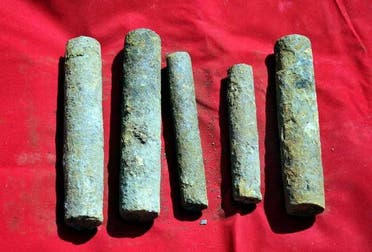
These were the first iron-cased rockets used in the military thus paving the way for rockets use around the world. (Supplied)
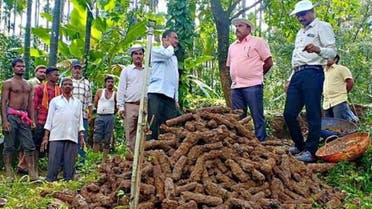
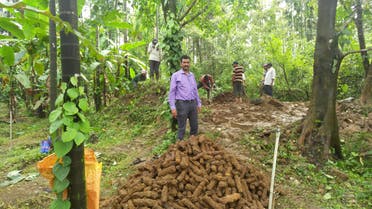
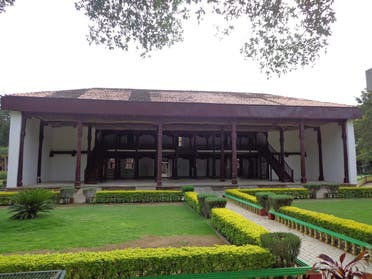
More than 1,000 unused rockets of India’s freedom fighter Tipu Sultan’s era found toward the end of July this year, will now be showcased at a newly created rocket gallery at the museum at Shivappa Nayaka Palace in Shivamogga city in the state of Karnataka.
The gallery, named as Bidanur Rocket Gallery after the famous Bidanur Fort at Nagar in Hosanagar taluk of Shivamogga district, will open to receive visitors in October.
Visitors will be able to feast on the rockets used by Tipu Sultan, the illustrious son of Karnataka, who was known as “Tiger of Mysore” for his daring acts against the British who ruled India then.
India rocket musuem
Bidanur served as an important administrative centre of Mysore State (renamed as Karnataka) and Tipu Sultan had even established a mint and an armory here.
Speaking to Al Arabiya English, R. Shejeshwara, Assistant Director of the Department of Archaeology, Museums and Heritage, said that the findings were discovered during a field excavation at a farmer’s well in Nagara village in Hosnagar Taluk, Shivamogga district, conducted by Department of Archeology, Museums and Heritage.
He said, “the shape of a cylinder and having a fuse at one end reveal that these rockets were used during the eighteenth century AD during Tipu’s time. Each unused rocket is of 7 to 10 inches in length and 1 to 3 meter in diameter and are rusted because of continuous exposure to soil moisture”.
India rocket musuem
Shejeshwara further said that like the earlier rockets found in 2002, those recovered recently also are iron-cased with black powder, a mixture of sulfur, charcoal and potassium nitrate filled inside. The 15-member crew of archaeologists, excavators and laborers took three days to unearth the armory and the ammunition.
Shejeshwara said that after the fourth Anglo-Mysore War, it is likely that Tipu’s army, stationed in Nagara, could have dumped the rockets in the well to prevent them from getting into the hands of the East India Company.
The media spotlight on the recent findings speaks volumes about how this powerful 18th century ruler of Mysore is remembered. Mysore under Tipu stood as a bulwark against the British.
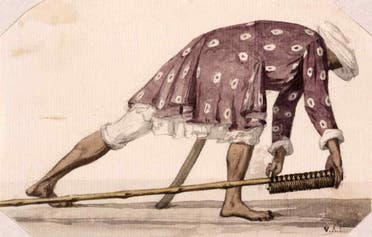
Tipu conceptualized, designed and manufactured cylindrical iron tubes that ensured for great compression of the filled gunpowder and consequently, greater range (nearly 2 km). The brave freedom fighter then fastened them to swords or bamboo poles to provide stability, that would, in turn, lead to better accuracy.
Fitted with sharpnels that traveled a considerable distance, these air-borne weapons would target the enemy with edges of the sharpnels facing them.
India rocket musuem
These were the first iron-cased rockets used in the military thus paving the way for rockets use around the world.
The first rocket, which was fired by Tipu Sultan in 1792 against the British forces, is displayed at the British Museum. Though the British lost the war, they have exhibited the rocket.
After being the victims of these innovative locally-crafted rockets, the British eventually adopted the technology. Tipu Sultan wrote a military manual called Fathul Mujahideen in which he explains that 200 rocket men were assigned to each Mysorean cushoon (brigade).
Little wonder then the credit for developing the first-ever iron-clad rockets goes to Tipu Sultan and they were successfully deployed for military use.
In the Battle of Pollilur (the Second Anglo-Mysore War in 1780), Tipu’s rockets set afire the East India Company’s ammunition dumps. It was the British Army’s one of the worst ever defeats in India.
India rocket musuem
It may be recalled that a set of 24 rare and rediscovered preparatory paintings depicting the Battle of Pollilur was sold to a bidder for £769,250 at the Sotheby’s biannual Arts of the Islamic World Sale in 2010. The Britishers described these rockets filled with gunpowder on swords as “flying plagues”.
Tipu took advantage of them and established four taramandalpets (star-cluster bazaars, a name that refers to the pattern of mid-air explosions of these rockets that then pounded shrapnel on the enemy) at Srirangapatna, Bidanur, Chitradurga, and Bangalore to conduct research on Mysore rocket technology.
The armory in Kalasipalyam in Bangalore was among the four that were constructed by Tipu Sultan to store ammunition. The 18th century armory that housed the famed rockets of Tipu Sultan is hardly known.
After the death of Tipu in 1799, the British Army discovered as many as 600 launchers, 700 serviceable rockets and 9,000 empty rockets at Tipu’s fort.
One of the major beneficiary was the Royal Artillery Museum in Woolwich in the UK. The powerful ruler was killed in the fourth Anglo-Mysore war in 1799 after a slew of victories in battle against the British.
http://www.english.alarabiya.net / AlArabiya News / Home> Life > Travel & Tourism / by Aftab Alam Kola / August 09th, 2018
Uncover the remarkable contributions of Muslim freedom Fighters of India to fight for freedom from British colonial rule.
In present times, Indian Muslims find themselves subjected to demonization and unwarranted questioning of their patriotism. Communal elements seek to manipulate history by intentionally excluding Muslims and disseminating false propaganda against them through social media. The vital contributions and sacrifices made by Indian Muslims in the struggle for India’s freedom from British colonial rule are systematically obscured. However, a closer examination of history reveals that not only did Indian Muslims play an essential role in the freedom movement, but they also made significant sacrifices for the cause of anti-colonial nationalism.
Indian Muslims: Unveiling Their Crucial Role
According to a report by the Milli Chronicle, the names of 95,300 freedom fighters are etched on the India Gate in Delhi, and remarkably, 61,945 of these names belong to Muslims, signifying that 65% of these brave individuals were Muslims. The significance of this statistic is eloquently captured by the renowned writer Mr. Kushwant Singh, who boldly states that the story of Indian freedom is etched in the blood of Muslims, emphasizing their disproportionately larger contribution to the struggle, considering their smaller population percentage.
Profiles of Courage: Muslim Freedom Fighters
The annals of history are adorned with the stories of Muslim freedom fighters who put their lives on the line to liberate India from the shackles of British oppression. These individuals, driven by an unwavering determination to secure their homeland’s independence, demonstrated exceptional courage and resilience.
Sultan Haidar Ali Salabat Jung: The First Freedom Fighter
Sultan Haidar Ali, father of Tipu Sultan, pioneered the fight against British colonial forces. A secular leader, he united both Hindus and Muslims in his quest for freedom, although his efforts were eventually betrayed.
Tipu Sultan: A Trailblazer in Battle
Son of India’s first freedom fighter Haider Ali, Tipu Sultan pioneered the use of iron-cased rockets, utilizing them effectively to defeat British forces in several historic battles over two decades.
Shaheed Ashfaqullah Khan: A Martyr’s Legacy
Member of the Hindustan Republican Association (HRA), Ashfaqullah Khan paid the ultimate price for India’s freedom. Notable for his daring attacks on British government trains, his sacrifice remains etched in history.
Maulana Abul Kalam Azad: A Beacon of Unity
Maulana Azad, a key leader in the anti-colonial nationalist movement, became the youngest President of the Indian National Congress. He rallied Hindus and Muslims alike against British oppression and launched Urdu Weekly Al-Hilal to expose British misrule.
Maulana Hasrat Mohani: Champion of Change
Mohani’s powerful Urdu speeches incited Indians to stand up against British rule. His unyielding spirit saw him arrested and jailed, but his impact on India’s fight for freedom remained profound.
Khan Abdul Ghaffar Khan: The Frontier Gandhi
A pivotal figure in the Khilafat movement, Khan Abdul Ghaffar Khan established the Khudai Khitmatgars, promoting peace and unity. Jailed for 13 years by the British, his dedication was unwavering.
Sirajud Daula: Battling Against Betrayal
The last Nawab of Bengal, Sirajud Daula, fought valiantly against British forces. Despite betrayal, he remained a symbol of resistance against British rule.
Vakkom Majeed: Courage Amidst Oppression
Vakkom Majeed’s resilience during the Quit India movement earned him repeated jail terms, highlighting his unwavering commitment to India’s freedom.
Fazl-e-Huq Khairabadi: Life in Exile
Sentenced to life in the notorious Kalapani jail on Andaman, Fazl-e-Huq Khairabadi continued his fight for freedom despite insurmountable odds.
Badruddin Tayabji: Founding the INC
Badruddin Tyabji and Qamruddin Tyabji were instrumental in establishing the Indian National Congress (INC). Badruddin’s wife, Suraiya Tayabji, designed the present Indian flag.
Shah Nawaz Khan: A Triumphant Act
Major of Azad Hind Force, Shah Nawaz Khan was the first to hoist the tricolor at the Red Fort, symbolizing India’s victorious struggle against British imperialism.
Barrister Saifuddin Kitchlew: A Voice for Justice
Jailed for 14 years by the British for protesting against the Jallianwala Bagh massacre and the Rowlatt Acts, Kitchlew’s opposition to the two-nation theory set him apart.
Bakht Khan: A Gallant Defender
Bakht Khan’s courageous defense against the British in Delhi, Bengal, and Lucknow showcased his unwavering dedication to India’s freedom.
Titu Mir: Bengali Rebel
Titu Mir’s armed resistance against British colonial authorities exemplified his determination to free India from British rule.
Syed Ahmad Barelvi: Organizing Resistance
Syed Ahmad Barelvi’s efforts in uniting native armies against the British from Delhi to Kabul showcased his strategic prowess.
Zain-ul-Abideen: INA Officer’s Patriotic Slogan
Zain-ul-Abideen, an officer of the Indian National Army (INA), coined the iconic patriotic slogan “Jai Hind.”
Empowering Women in the Freedom Struggle
The fight for India’s freedom was not limited to men; several Muslim women also contributed significantly to the struggle.
Begum Hazrat Mahal: A Rebel Leader
Rebelling against the British in 1857, Begum Hazrat Mahal seized control of Lucknow from British forces, showcasing her leadership and courage.
Surayya Tyabji: Designing India’s Flag
Wife of freedom fighter Badruddin Tayyabji, Surayya Tyabji designed the Indian flag that we proudly hoist today.
Abadi Bano Begum: A Pioneer in Politics
Abadi Bano Begum, known as Bi Amma, actively participated in politics, matching her male counterparts in the Indian National Movement. Her sons went on to become prominent leaders.
Azizan: A Warrior’s Spirit
Azizan organized a battalion of warrior women, displaying her remarkable skill in the art of war and refusing to yield to British pressure.
A Timeless Legacy
The contributions and sacrifices of Indian Muslims in the fight against British colonialism are immeasurable. While recounting the names of every Muslim freedom fighter may be an impossible feat, their collective impact remains undeniable. The fact that many chose to remain in India underscores their deep-rooted connection to the land. Despite attempts to distort history, India will forever be the cherished home of its Muslim citizens.
Conclusion
Urdu poet Rahat Indori’s words,
“Sabhi ka khoon hai shamil yaha ki mitti me,
Kisi ke baap ka Hindustaan thodi hai,”
encapsulate the essence of Muslim Freedom Fighters of India’ unyielding commitment to their homeland. The sacrifices and contributions of Indian Muslims in the struggle for independence stand as a testament to their unwavering dedication and indomitable spirit. Their stories deserve to be acknowledged and celebrated, inspiring future generations to honor the diverse tapestry of individuals who fought for a free and united India.
source: http://www.munsifdaily.com / The Munsif Daily / Home> News> Indai> Pan India / by Munsif Web Desk / August 18th, 2023
Officials familiar with the operation said that the terrain in the particular area is difficult and “militants fired from a height upon the approaching party”.
Family members mourn the death of DSP of J&K Police Humayun Bhat , who was killed in a gunfight with terrorists in Anantnag district, during his funeral at his residence in Srinagar on Wednesday.(PTI Photo)
As friends and relatives crowded through the gates of Deputy Superintendent of Police Humayun Bhat’s house, distraught family members could barely say a word through their sobs. The 2018 batch J&K Police officer, who wished to carry forward the tradition of the uniform in the family, was killed along with two officers of the Indian Army as their search party was hit by a volley of terrorist gunfire in the Gadool forest in Anantnag.
Bhat’s father, Ghulam Hassan Bhat, served in the J&K Police until his retirement as DIG Central Kashmir in 2018.
An officer who spent his probation year with him described him as an eager and humble officer. “He was always eager to learn, a friend to all his colleagues. He always led his team and yesterday too he did the same,” said the officer.
Officials familiar with the operation said that the terrain in the particular area is difficult and “militants fired from a height upon the approaching party”.
Another officer who served with Bhat at Srinagar said, “He was an exceptional police officer. I remember when he joined the team, I was greatly impressed by his interest in learning practical policing. He was a dedicated team member, always ready to contribute.”
He said that Bhat was the proud son of a retired police officer and “found great joy in carrying on his father’s legacy by wearing the khaki”. “Gone too soon, his absence leaves a void that words can’t express, and our hearts ache with the loss of such a promising officer,” the officer said.
Bhat studied at Srinagar’s Burn Hall School and trained as an engineer at SSM college of engineering in North Kashmir. The family, originally from Pulwama, had been living in Srinagar for many years. He is survived by his parents, a brother, his wife and a son, who is just over a month old.
After joining the force in 2018, Bhat was posted at Srinagar, then at Pattan in North Kashmir, and he was on his third posting, as Sub Divisional Police Officer (SDPO) at Kokernag, Anantnag.
A senior officer he worked with in the early days of his career described him as brave and compassionate. “His father is one of the most outstanding professionals, a man of principle, and Humayun had those same values. He was passionate about the uniform and never brought his father’s rank into his own professional dealings.” He added that his loss at a time when things are relatively calmer in the Valley “makes this immensely difficult to reconcile with”.
A family friend described Bhat as an “extraordinary officer” and added that he was courageous, conscientious and down to earth. “Similar to his father, his qualities of head and heart endeared him to everyone who came in contact with him. His martyrdom is an irreparable loss to all of us who knew him and his father.”
source: http://www.indianexpress.com / The Indian Express / Home> News> India / by Naveed Iqbal, Srinagar (headline edited) / September 14th, 2023