Author Nuzhat Khan weaves a story of love and loss against the backdrop of Uttarakhand’s forest fire catastrophe in her latest novel.
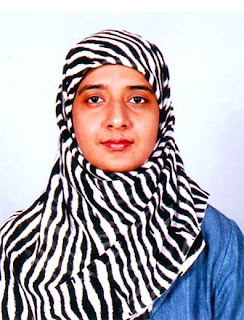
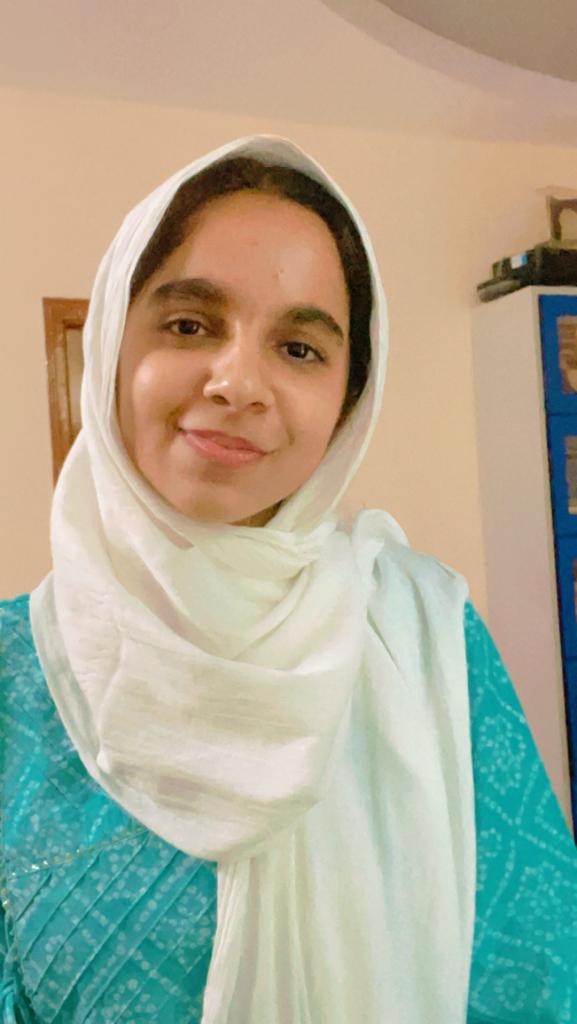
Author Nuzhat Khan | Photo Credit: Special Arrangement
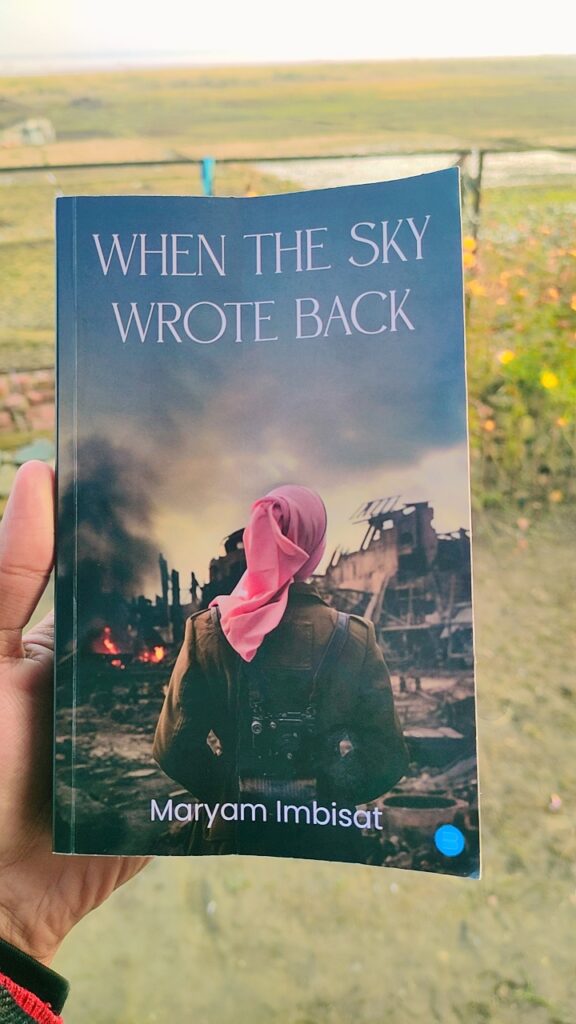
Author Nuzhat Khan is among the growing tribe of writers confronting the world’s most pressing issue — climate emergency and the unfolding weather catastrophe — through a genre of fiction set in natural ecosystems. In her latest novel Whistling Woods (Petals Publishers), she highlights the impact of forest fire on people’s livelihood in Uttarakhand along with the story of two strangers — Akshay and Kaveri — who embark on a journey of self-discovery to the hills.
Nuzhat says the book is her way of doing her bit for Nature and the environment. “Growing up in Almora hill station amidst the snow-capped Himalayan ranges of Uttarakhand, I was blown away by the stunning landscape. This is the case with anyone who belongs to the hills. It pained me to watch forest fires ravage the serene hills.” She decided to act by writing a light-hearted story around the issue to reach out to more people. “I thought presenting plain facts and figures would be drab on topics like, what’s fuelling forest fires that continue to scorch hectares of green cover? I have tried to propose a solution, although it may not be the perfect one,” she says.
Her style of storytelling, both evocative and driven by research, helps readers get a grip of the issue while enjoying the budding romance between the lead characters. “I have attempted to capture a mix of human emotions, complexity of relationships, and the innocence of love. The setting helped me run parallels between urban and rural lives. For people in villages, even access to clean drinking water can be challenging ” explains Nuzhat adding that the book has been in the making for five years which also involved several trips to institutes like Avani Bio-Energy plant in Pithoragarh, the Naula Foundation, an NGO that creates awareness on the problems of dying aquifiers (naulas) in the hills of Uttarakhand.
“My interactions with the locals and forest department officials was an eye-opener. They are constantly working to mitigate the problem. Organisations like the Himalayan Institute For Environment, Ecology & Development have developed fire reporting apps that can alert people on forest fires across various locations.”
She points out that the ashram described in the book that works towards empowering girl children was inspired by the Lakshmi Ashram run by a couple in Uttarakhand. “Some of the characters are not entirely fictional,” she hints.
The book also touches upon excessive tourism in the hills. “Several unplanned constructions in the form of resorts have come up usurping the forest cover and triggering landslides. The region is also prone to earthquakes.” She wants people to sit up and take note of Uttarakhand. “Everyone wants to live in the hills. I want to tell them it is beautiful, but everyday life can be challenging.”
source: http://www.thehindu.com / The Hindu / Home> Books / by K Jeshi / December 26th, 2023
Muslim Women Study Circle’s Team Kolkata offering namaz at Botanical Garden, Kolkata
A Kolkata-based collective Muslim Women Study Circle is working towards reclaiming the agency of Muslim women at a time when Islamophobia has been reared into the country’s social and political fabric.
New Delhi:
In April 2019, a collective of Muslim women predominantly belonging to Metiabruz, a suburb in Kolkata, came together to understand the Quran, Hadith, and contemporary news events. As the year progressed, the group actively participated in the protests against the contentious Citizenship Amendment Act. This prompted the realization of a need for a more extensive network of Muslim women from across India, which marked the beginning of the Muslim Women Study Circle (MWSC).
The formation of the MWSC comes at a time of unprecedented rise of islamophobia in India with Indian Muslim women, a regular target of the Hindu right wing. For instance, in 2021, Hindu right-wing men scraped the internet for pictures of prominent Indian Muslim women and uploaded them to an app called Sulli Deals, hosted on GitHub, listing them on “sale” with the intent to humiliate them. A year later they held a similar “auction” with pictures of Muslim women posted on another app called Bulli Bai. Same year, the high court in India’s Karnataka state ruled that the hijab is not “essential” to Islam. Amidst this, digital platforms such as Twitter, Facebook, WhatsApp, YouTube, and Reddit have accelerated the spread of anti-Muslim hate.
However, as COVID-19 spread in India, MWSC transitioned to the online platform, broadening its reach and significantly enhancing engagement. This transition facilitated the systematic recording, archiving, and dissemination of their sessions through various social media platforms.
MWSC operates as a porous organisation. Volunteers from across the country, including Islamic reverts participate in discussions that are conducted mainly in English, Urdu, and Hindi. Sessions with experts are conducted by the core team or MWSC Chat group, comprising around seven people. Beyond that, MWSC dedicates time to its Muslim Women Mental Health Support Group. These sessions provide a safe space to delve into issues pertinent to Muslim women, addressing challenges and solutions.
In day-to-day functioning, the organisation remains active on multiple fronts. WhatsApp chat groups buzz with conversations spanning the Muslim Women Book Club readings, subjects such as domestic violence, secularism, caste, creative writing politics, citizenship, legal rights, academic scholarships, etc., and the creation of materials for social media platforms.
“We explored ideas at the intersection of politics and spirituality, which were never previously discussed before, and were often overlooked in the context of Muslim women. Moving to an online platform helped us connect with other Muslim women specialising in different fields, such as academics, journalists, mental health professionals, religious scholars, etc. While sharing their knowledge, they also got to amplify their voices. Once we got that momentum, it just kept going,” said Sania Mariam, a MWSC founder and a research scholar of Political Science and Governance at IIT Bombay’s Monash Research Academy.
Bringing Muslim Women to Mosques
Women praying together at Ishat-e-Islam Mosque, New Delhi as a part of the Masjid Project
Despite the global historical prevalence of Muslim women praying in mosques, such spaces are noticeably lacking in India. MWSC’s ‘Muslim Women Masjid Project’, inspired by Al-Masjid-an-Nabawi (The Prophet’s Mosque), not only served as a palace of prayer for both men and women but also sheltered the homeless and the hungry.
The project started by making a catalog of existing women-friendly mosques. Along with open- discussions on “Women in masjids” online, MWSC started with Quranic dars on the importance of women in prayer spaces. They found that a huge number of women longed for offering namaz in Eidgah, instead of being at home waiting for the men to come back.
Aisha Masooma, a volunteer with MWSC from Guwahati said, “It is common to find women’s prayer areas confined to small rooms or basements of the mosques. When I was volunteering for the Assam chapter of this project, I was astonished to find women who had never been acquainted with the idea of visiting a mosque. So many Muslim women told me that the very idea of attending a mosque is an alien concept to them.”
Women the organisation visited different mosques to inquire about spaces for women to pray. “We made a list of such mosques and talked to the Imams. In Kolkata, for example, we had a one-on-one conversation with Imams, and they appreciated the ideas. Even if there was no separate place for women to pray, they allowed women to come, designating them an area in the mosque and promised to make a separate space for women in the future,” said Mariam.
A Petition Challenging the Hijab-Ban
In 2022, with the Hijab ban issue in Karnataka and court proceedings, MWSC recognized that among the arguments and counter-arguments by different parties, the most critical voice of the discourse was silenced, that of young Muslim women who chose to pursue their education as well as their faith.
They believed that the Hijab-row in Karnataka was essentially infantilising, and dismissing Muslim women, forcing them to choose between non-existing binaries such as education or hijab, Indianness or Muslimness, especially at a time when Muslim women are one of the lowestliteracy rates in the country.
Therefore, in July 2022, MWSC challenged the Karnataka High Court’s decision to ban Hijabs in educational institutes in the Supreme Court. Prominent lawyer-activist Prashant Bhushan pro-bono represented the organisation.
While the petition challenged the idea that the two, Hijab and education are antagonistic in principle, it was also meant to create awareness that oppositional forces exist to the country’s increasing saffronisation. As a result, MWSC aimed to create an active role for Muslim women in the public sphere, and demand to creation of more such spaces. “There is a lot of skepticism related to Muslim women owning their agency from the existing political scenario. People always think, about who’s funding them, and which political arm they belong to. There is skepticism from within the community,” said Mariam.
She said that as Muslim women trying to create a forum like MWSC, they are often boxed into distinct categories such as secular Muslims, feminist Muslims, and religious Muslims. “It is difficult for them to imagine that there are Muslim women who want to be committed to their Deen [religion] while achieving a lot in this world,” she told Two Circles.
Backlash and Targeting From Hindu Right-Wing
In India, Muslims have been experiencing discrimination across various spheres, such as employment, education, housing, law, and justice among others. This pattern of discrimination has notably marginalised Muslim women, materialising in their isolation, for instance, a recent study revealed that Muslim women in India are half as likely to get callbacks for entry-level jobs as compared to Hindu women. Another study underscores the compounded disadvantage faced by Muslim women, positioning them as one of the least empowered segments of society. This disadvantage stems from their dual status as women and as members of the minority community in India.
During the Sulli deals incident, certain members of MWSC were subjected to an “online auction” due to their outspoken political views on social media. The organization has consistently encountered online trolling, with a notable example being a video addressing Hindu nationalism that attracted numerous offensive comments. The backlash has emanated from both inside and outside the Muslim community.
Ghazala Jamil, assistant professor at the Centre for the Study of Law and Governance, Jawaharlal Nehru University said, “Muslim Women’s organisations like the MWSC can be seen as a corner in the larger public sphere or a satellite public sphere, which can give Muslim women a chance to express their views without feeling they have to maintain silence about or hide their Muslim identity.”
Across the subcontinent, a dynamic wave of Muslim women’s rights networks is actively challenging essentialist perceptions of Muslim womanhood. Situated within the burgeoning Islamic feminist movement, these organisations articulate the multiple identities of Muslim women, cultivating a unique Islamic feminist consciousness as opposed to the idea of ‘universal sisterhood.’
“Instead of criticising these spaces as regressive or causing division, we should recognise them as opportunities for learning within the larger movement for gender equality. Organisations specifically for Muslim women provide a valuable place for them to express themselves without feeling overshadowed by dominant perspectives of Hindu or liberal feminists,” Jamil added.
The founders do not intend to convert the organisation into an NGO but rather see it as a diversified environment where Muslim women may freely express themselves and share their perspectives. “We just wanted to be a collective where women can come, speak, and put their views forward. They develop their agency, they get inspired. We aim to be better Muslims, better Muslim women, more confident Muslim women,” said Mariam.
Tasneem Khan is a student of History at Delhi’s St. Stephens College.
Nuzhat Khan is an independent reporter based in Delhi.
source: http://www.twocircles.net / TwoCircles.net / Home> Indian Muslim / by Tasneem Khan and Nuzhat Khan / January 11th, 2024
Kalpakancheri (Malappuram District), KERALA / Dubai, U.A.E:
Indian recalls journey from being a fundraiser to rebuild a mosque to emerging a tycoon.
A young Azad Moopen at the inauguration of one of his clinics / Image Credit: Supplied
HIGHLIGHTS
Dr Azad Moopen came to the UAE in February 1987 to raise money for the renovation of a mosque in his hometown, Kalpakancheri in Malappuram district, Kerala.
Dr Moopen leased a two-bedroom apartment in Bur Dubai to start a clinic
In 2008, Dr Moopen invited a private equity firm to invest in the company and they valued Aster DM Healthcare at $100 million.
In 2010 and 2011, Dr Moopen was awarded the Pravasi Bharatiya Samman and Padma Shri, respectively, by the Government of India.
Aster DM is listed at NSE and BSE
Dubai:
Azad Moopen came to Dubai 34 years ago to raise money for the renovation of a mosque in his hometown, Kalpakancheri, in the Malappuram district, Kerala. He needed Rs1 million then, or Dh250,000 as per the currency exchange rate in 1987. The plan was just to collect the funds and return home. He had no intention to settle in the UAE.
Destiny, however, had other plans for Moopen – a gold medallist in general medicine and a lecturer at the Calicut Medical College at the time. Looking back, Moopen said it was this noble intention that perhaps set the background for something big to happen in his life.
Fast forward to today, he is now a household name in the UAE. Just about everybody in the region knows him well as the multi-billion dollar businessman and developer of health-care facilities in the UAE and Asia-Pacific region. He is the chairman and managing director of Aster DM Healthcare, a conglomerate in the Middle East and India that Moopen founded in December 1987, just ten months after arriving in the UAE to raise funds for a mosque.
According to a report published in September 2018, he owned and managed 21 hospitals, 113 clinics and 216 pharmacies. The health-care company serves 50,000 patients a day in nine countries. In 2018, Aster treated 17 million patients across all its facilities. Of this these, 15 million patients were from the Gulf Cooperation Council (GCC) countries, while two million were from India.
In 2017, Forbes ranked him sixth on the ‘Top 100 Indian Leaders in UAE’ list and his total wealth was estimated at approximately $5.9 billion (Dh21.7 billion).
How it all started
“When I finished collecting money for the mosque reconstruction, my job was over in the UAE. It was time to return home, but when I went home, I was not happy. There was something pulling me back to this country as there was magic here,” said Moopen. “In June (1987), I came back on a visit to the UAE. I stayed with a friend in Ajman who was a doctor as well. There were plenty of opportunities for a doctor like me and I was raring to tap into some of them.”
Azad Moopen receives a Lifetime Achievement Award / Image Credit: Supplied
Moopen’s friend was setting up a clinic in Ajman and he invited him to join there as a physician. Back in the day, there were no post-graduate doctors practising in Ajman and Moopen, who was a Bachelor of Medicine and Surgery (MBBS) and a Doctor of Medicine, with a a Diploma in treating Tuberculosis and Chest Diseases (DTCD), was already highly qualified. In fact, his varied degrees made him quite a sought-after doctor in Ajman.
“But my friend bowled me a googlie, as we say in cricketing terms! He turned around one day and told me to start a clinic in Dubai. To be honest, I thought he did not like me and that’s why he was pushing me away to Dubai. But I took his advice and today, I believe he is my guardian angel. That moment, when I heeded his advise and came to Dubai, it was the turning point in my life. I know now he was a friend, he was a God-sent and he is ‘the person’ in my life.”
No matter how successful you become in life, you never forget the people who helped you along the way. And this, to me, has been the biggest reason for my success.
– Azad Moopen
In December 1987, Moopen leased a two-bedroom apartment in Bur Dubai close to the Port Rashid area. “Port Rashid was one of the main areas in Dubai where there were many ongoing activities. A lot of people worked here and I wanted to serve them.”
He said the consultation charges were between Dh10 and 15. Some people got reimbursement from their companies while others paid the bills from their pocket.
“The challenge, however, was collecting money from some blue collared workers who could not afford to pay even this amount. So every Tuesday we started offering free consultations for half a day. We also kept sample medicines which we gave to these workers.”
Within a year, the clinic started receiving 100 patients a day. There were just two doctors – Moopen and a gynaecologist.
Dr. Azad Moopen receiving an award from late Indian President APJ Kalam / Image Credit: Supplied
“I myself worked from 8 in the morning until mid-night. But it was becoming very congested and we needed to move to a bigger place,” he said. “I found a three-bedroom apartment in Al Rafa and we moved there. We hired two more doctors – both paediatricians. We were able to see more patients as a result.”
By that time in 1988, Moopen was getting a hang of running a health-care facility. “One of the things we discovered early on was that people came to us for consultation, but were picking up medicines from another pharmacy. So, we thought why not make this in-house? And that is how Al Rafa Pharmacy was born.”
Moopen said that in 2008, he had his real brush with success. “Until then, I was just doing my job of opening clinics, hospitals and pharmacies. I was not really counting or sitting down to see and evaluate the success of my business. In 2008, as part of our expansion plans, we invited a private equity firm to invest with us. They valued our company at $100 million and that reality hit me. We had grown and how! It was an emotional moment for me, reading the valuation report and made me think of how hard the company staff and me had worked to bring it that far,” he said.
Dr. Azad Moopen with his youngest daughter Zeba Moopen who is now a practicing doctor / Image Credit: Supplied
In 2012, a second private equity firm came on board and they valued Aster DM Healthcare at $400 million. “This means we had grown four times in four years. It was massive.”
Today, Aster DM is listed at the National Stock Exchange of India (NSE) and the company’s total revenue in 2019 was fixed at a massive $1.4 billion.
Reason behind this phenomenal success
“Without batting an eyelid I will say that it is my staff, my people, my doctors who have made this company successful. I am blessed and lucky to have these people working for me for decades. Our doctor turnover at the consultant level is as low as five per cent. This means our doctors practically never leave us. And, because of this, our patients never leave us.
Azad Moopen with cricketer Sachin Tendulkar during the latter’s book launch. / Image Credit: Supplied
“No matter how successful you become in life, you never forget the people who helped you along the way. And this, to me, has been the biggest reason for my success. To give you an example, the other day, one of my CEOs brought me a staff member’s performance report. He wanted me to fire him as he was not performing well. When I saw the report I realised he was an old friend’s son. This friend, I remember, had loaned me Dh500 when I had come to the UAE for the first time.”
“As the memories flooded me, I simply refused to sign the sack letter. Instead, I called this young boy and his father and told them about the report. From my part, I have given this boy a second chance. I pray he will make use of the opportunity given to him.”
Challenges
Dr. Moopen during one of his philanthropic activities / Image Credit: Supplied
“There are always challenges in business. If you want your career graph to have a smooth ride, then you must not pick business as your profession. Success in business lies in finding your challenges and meeting them head-on,” said Moopen.
“For example, the UAE’s mandatory insurance has proved to be beneficial for the consumer, but for health-care providers like us, it is a challenge. People would come to us because of our credibility. Now, it has to do with the kind of insurance coverage they have.”
Philanthropy the way to life
Moopen has pledged to give 20 per cent of his wealth to charity. An off-shoot of this has been the ‘Aster Volunteers’ programme to help patients with free consultations, treatment and surgeries. More than 900,000 lives have been touched by the programme.
Dr. Moopen with his family in an earlier picture / Image Credit: Supplied
In 2010 and 2011, Moopen was awarded the Pravasi Bharatiya Samman and Padma Shri, respectively, by the Government of India.
Dr. Azad Moopen awarded the coveted Padma Shri in 2011 / Image Credit: Supplied
“By God’s grace, I have everything in life. Name, fame, wealth, a great family. It is my duty and responsibility now to help others. When I started out, I was in the right place at the right time with the right people. I want others to be in my shoes. I am nearing retirement and my only dream now is to hand over my business to my team of professionals who, I believe, will do a better job than me.”
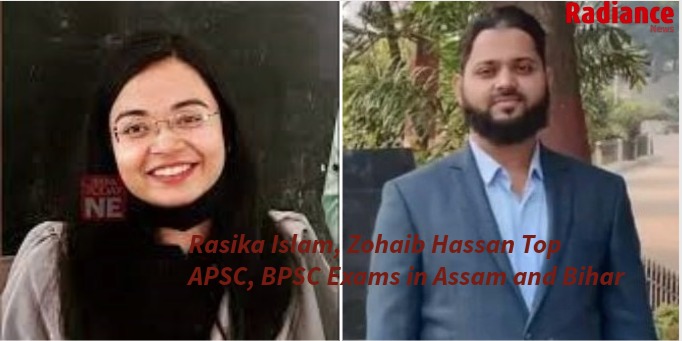
Rashika Islam has topped the Combined Competitive Examination (CCE), 2022 conducted by the Assam Public Service Commission (APSC). The results of the CCE which were declared on Wednesday also saw 54 Muslim candidates crack the tough examination to become civil servants, police officials, and administrators in allied State services. Rashika Islam, daughter of Colonel (Retd) Saidul Islam and Raihana Islam, of Matiabag, Gauripur in Dhubr district, has secured the highest marks in the CCE exam conducted by the APSC. Rashika’s achievement has delighted the residents of Gaurpur and the entire Dhubri district.
“I am elated after seeing my name on the top of the APSC results. In 2020 I had cleared the final of the CCE. But my rank was low and I got the job of a Tax Inspector posted in Dhubri district. However, I was not happy and wanted to improve my rank in the APSC exam. Though it was tough to study for such a tough exam while serving the job of tax inspector, my husband and parents were supportive. I took no coaching in any institute to prepare for the CCE 2022. I prepare a lot for the exam by watching free YouTube channels and websites on success mantra in civil service examination,” Rashika Islam told Awaz-The Voice soon after the results were declared on Wednesday evening.
Rashika Islam has been selected for the Assam Civil Service (ACS) category. When asked about study tips to crack the exam like CCE Rashika said there is no definite answer to such a question.
“There is no shortcut but to study hard for the exam. Despite my hectic schedule as the tax inspector I managed to study four to five hours a day before the CCE-2022,” Rashika said.
Raashika’s husband who is also a bureaucrat with the Assam Government had been very supportive of his wife’s success. Due to her father’s pan-India job, Rashika studied in different army schools in different parts of the country, including the Army Public School, Narengi, Guwahati.
Besides Rashika, 53 other Muslim students cracked the APSC exam and have made it to the civil police and allies services of the government of Assam.
The Muslim candidates selected for the Assam Civil Services are Rashika Islam, Wahiduz Zaman, Zamanur Islam, Asfaq Laskar, Benazir Ilyas, Abu Saeed Mohammad, Golzar Hussain, Affan Khan, and for the Assam Police Service: Fayez Ahmed, Rubina Begum, Arshad Wasim Ahmed and SK Sajidur Islam.
Rashika islam
Shabnu Rahman and Shahjahan Ali have been selected as Superintendent of Taxes while Mohammad Abdul Wakil has been selected for the Assam Finance Services.
Others selected candidates are:
Block Development Officers: Mohsin Siddiqui, Zahid Hussain Hazarika Khorshida Khanam, and Antra Hussain.
Assistant Manager, District Industries Center: Farida Yasmin.
Assistant Registrar of Co-operative Societies: Pinaj Rahman. Tax Inspectors
Pakiza Begum and Javed Akhtar Laskar.
For Inspector of Excise posts Mohammad Tazim Ahmed, Imran Hussain, Sarnaz Mehboob. Sub Register, Mudrika Jhabiullah Hindi. Assistant AuditOfficers Shabiha Shabnam, Tanveer, Parvez, Hamidur Rahman, Salim Majid, Anjum Parbin, and Jahangir Alam Barbhuiya have been selected.
For Assistant Account Officers posts Philorina Begum, Tanveer Amin, Wasim Ahmed, Syeda Tamanna Yasmin, Manin Uddin Ahmed, Nekib Zaman Ahmed, Zaffrin Rahman, Firdaus Rahman, Jackie Ahmed, Rauchna Parbin Akand, Mirza Kausar Ahmed, Shamsur Rahman, Abdul Ullah Ahmed, Khandkar They are Khairul Islam, Shabana Rakia Ahmed, Mohammad Ali and Abu Bakar Siddique have been selected.
Ahmed Faraz will be a Research Assistant in the Transport Service Department. For Assam Urban Administrative Service Azharul Alam, Asif Ali Khan, Baitul Alam Rahman, and Ajmal Hussain have been selected.
So far, 68 Muslim candidates have cracked the CCE conducted by the APSC between 2013-18. This year, 54 Muslim candidates cracking the same exam in a single year is considered a very encouraging and positive development for the minority community in Assam.
The number of Muslim candidates selected for ACS and Allied Services would be more in the future provided quality education spreads among them,” eminent surgeon and Padmashri Dr Illias Ali said.
source: http://www.awazthevoice.in / Awaz, The Voice / Home> Story / by Ariful Islam, Guwahati / January 19th, 2024
Rana’s feat assumes significance in the wake of a rise in the number of drowning cases in the state.
Rana Fathima shows off her skills in the water
Kozhikode :
Rana Fathima, a five-year-old swimming prodigy hailing from Kodiyathoor panchayat, has been enchanting denizens on the internet with her skills in the water for some years now. Now, as a brand ambassador of ‘Neenthi vaa Makkale’, an initiative organised by Mukkam municipality to impart swimming lessons to students, she is a role model, inspiring youngsters in the panchayat to take up swimming.
Rana learned to swim in a small river in Thottumukham under the tutelage of her grandmother, Ramla Manaf. She is the daughter of journalist Rafeeque Thottumukham and Rifana.“It is important for children to learn how to swim. It’s equally important for parents to encourage their kids to come out of their cocoons. Mobile phones and television are adversely affecting the young generation. Children should stay close to nature,” Rafeeque said.
After her videos went viral, Rana was frequented by social media influencers, all eager to capture her story in greater detail. Rahul Gandhi, too, had paid her a visit on one of his trips to the state.
Rana’s feat assumes significance in the wake of a rise in the number of drowning cases in the state. “Most of the drowning cases happen during the vacation. People who take to the water bodies here do not heed our warnings. You might have prior experience in swimming, but the rivers here have strong currents. Even the native swimmers are scared to get down sometimes,” said Muralidharan C K, assistant station officer, Fire and Rescue Services, Mukkam.
In the past five years, around 41 people have died by drowning in the region. Most of them were youngsters aged 15-28.
source: http://www.newindianexpress.com / The New Indian Express / Home> Kerala / by Alka Mariya & Heera Hari / May 22nd, 2023
Rukhsana Jabeen (Second from right) at a poetic symposium
Rukhsana Jabeen is one of the very few female litterateurs in Jammu and Kashmir who carved a niche in the Subcontinent’s vast domain of Urdu poetry at the intersection of the 20th and the 21st century. An overarching and unceasing armed insurgency, that muted all expressions in art and literature in the Valley failed to silence her for 33 years.
After serving All India Radio for over 30 years, Jabeen retired as a Director at Radio Kashmir Srinagar in 2015. The participation of a Kashmiri woman in the annual All India Mushaira on the eve of Republic Day or Independence Day was fatally proscribed by terrorists. Jabeen did so without break.
“Whatever came to my mind, I wrote and expressed without thinking a bit about its consequences”, Jabeen revealed to Awaz- the Voice at her winter residence in Jammu.
Born in a family of the decedents of the revered saint and Kashmiri-Persian poet Syed Meerak Shah Kashani in the Khwaja Bazar neighbourhood of downtown Srinagar in 1955, Jabeen did Master’s in Urdu followed by MA and M Phil in the Persian language and literature at the University of Kashmir. In 1983, she joined AIR Srinagar as a program executive.
Rukhsana Jabeen at a poetic symposium
“I was not the first woman to enter the station for an all-India job”, Jabeen said “but in our family setting it was like breaking the glass ceiling. Getting selected for the job in a tough patriarchal competition was like a big success for me. Knowing well that I wouldn’t be permitted to apply for it, I kept it all discreetly concealed from my family”.
“I was also selected as a teacher in the State Education Department. As my father learned about my getting a job at the AIR, he insisted I should join as a teacher. I agreed with him that the AIR officers could be transferred to any Indian State, but I lied that female officers were not posted outside their home States. Thereupon my family relented, and I joined as a program executive”, Jabeen said.
In 1994, Jabeen established AIR’s Poonch station close to the Line of Control in Jammu where she served for three years. In 1999, she was promoted to Assistant Station Director (ASD).
Unlike many of her tribe, Jabeen’s tryst with creative literature began late during her university days. A prominent Urdu poet and literary critic and the head of the Urdu Department, Prof. Hamidi Kashmiri, encouraged Jabeen to write prose and poetry in Urdu. “I was thrilled when Hamidi Sahab refined my first Ghazal and got it published in the annual edition of his department’s magazine ‘Baazyaft’. Under his tutelage, I learned about modern sensibility and the post-modernist literary trends”, Jabeen recalled.
Rukhsana Jabeen recording a radio programme
She narrated how affectionately some celebrated litterateurs like Hamidi at the University of Kashmir and Zubair Rizvi at Radio Kashmir Srinagar gave her select books and literary magazines to hone her talent and faculties as a creative writer.
“One day, incredulously I found five of my poems published together, alongside my profile, in Kumar Pashi’s journal ‘Satoor’. Later, Zubair Sahab disclosed that he had got the same published in the prestigious Urdu magazine. It was an incredible encouragement and my recognition as a poet. Thereafter, a number of my poems were published in the top representative journals like ‘Alfaaz’, ‘Shayir’, ‘Mafaheem’ and ‘Asri Agahi’. Hamidi Sahab and Zubair Sahab steered me to the extensive studies of Shaharyar, Rajinder Manchanda Bani, Nasir Kazmi, and Mohammad Alvi. I am still deeply under the influence of Mohammad Alvi and a few others”, Jabeen added.
Kishwar Naheed, Parveen Shakir, and Fahmida Riaz inspired Jabeen into some new experiments. She was initially also influenced by female Urdu litterateurs like Rafia Shabnam Abidi, Aziz Bano Darab Wafa, and Sajida Zaidi and later shared the stage with them at AIR and all-India poetry symposiums. For over three decades, Jabeen was a regular guest poet at Delhi’s Red Fort and other literary rendezvous, integrating a Sub-continental network of the intelligentsia and defying a hostile ambiance at home.
For several years, Jabeen translated poetry from 22 Indian languages into Kashmiri as a project of the Sahitya Akademi. She participated in many such all-India poetry symposiums at Varanasi and other Indian cities. She remained closely linked to top-notch Urdu poets like Shaharyar, Bashir Badr, Nida Fazli, Makhmoor Saeedi, Ali Sardar Jafri, Kaifi Azmi, Qateel Shifai, Ahmad Faraz besides literary critics like Shamsur Rahman Faruqi, Naiyer Masud and Malikzada Manzoor Ahmad.
“Many of them organized Mushairas in my honour at their homes. It was a unique recognition and hospitality as never before has anyone from Kashmir been entertained to such honours”, Jabeen said. “I invited many of these doyens of Urdu literature to our programmes at Radio Kashmir”.
Ghazal in Urdu and Kashmiri is Jabeen’s forte even as she also tried her pen at the popular genre of ‘Nazam’. “But I no love lost for blank verse and free verse. I believe those who can’t write in Urdu’s traditional meters have little right to write in free verse. Besides, I have seen how many of the aspirants, particularly females, get free verse written by others and read the same as their poetry. They perform such poor poetry at stage. Contrarily, nobody gives out a Ghazal. A Ghazal and Nazam writer is often an authentic poet”, Jabeen said.
In addition to volumes of the translation of short stories from different languages into Kashmiri and a translation of the collection of Hafiz Shirazi, which she accomplished with Dr. Syed Raza of Budgam, Jabeen has three of her collections—two in Urdu and one in Kashmiri—ready to publish.
“But I’m unbelievably indolent. I never get after awards and accolades. I can’t fulfill those formalities. Every year, I decided to publish these three volumes of my poetry but my laziness spoils my endeavour.”
source: http://www.awazthevoice.in / Awaz, The Voice / Home> Story / by Ahmed Ali Fayyaz, Jammu / January 14th, 2024
In the intricate maze of poets, meeting a ‘lady Shayari’ is unique, for while there are many, most of them hide behind scenic curtains; they are brimming with talent but too shy to step out. Meeting Rafat Akhtar ‘Rafat’ was, therefore, an enchanting experience.
Born and raised in Kolkata, the City of Joy, as Rafat calls it, she says that even as a child she was quite sensitive. She captured philosophical moments in life and drew in the rich vibes of nature to weave out her Shayaris in a time to come, much later.
She told Awaz-the Voice, “At a young age, I loved reading Urdu story books and words formed rich suggestions for me. Many vivid powerful words flew through my head during the day, but I never sat down to put them on paper until much later, and then I started to capture my thoughts in a cherished diary. My pen is my best friend; I share my feelings and observations with my pen and whenever I write, I feel relaxed.”
After her marriage and the birth of her daughters, life was busy with the swirl of housework and tending to her children. Time was precious and she had no moments of her own to spare for her writing. As the years rolled by and her daughters grew up, one working and the other in school, Rafat started to feel a deep void in her life.
This time, she knew she needed to do something to fill that emptiness and came to a realization that she was neglecting writing her Shayari which was her inborn gift. At that defining moment, she decided to start writing again.
With a few trembling steps, not very confident about how it would go, she penned down her first Poem ShayariAlfaaz rooh hoti hai Jismo me chupi har jazbo’n ki rooh, har aawaz ki rooh shared it with her family. All those who received it were delighted. In that magnificent moment, her husband loved it; her mother was ecstatic and her two daughters cheered her. Her extended family also was enraptured by her first Shayari.
A poem by Riafar Akhtar Rafat
From then on, Rafat weaved her pathway higher on poetry. Her first published poem was in a Writing App in 2018.
One big event in her literary life was when the admin of the famous Taajira – The Businesswoman Group Rukshi Kadiri Elias allowed her to conduct the whole Mushaira (justuju e sukhan) in 2022. Rafat was particularly rejuvenated with this event after the long depressive draining aftermaths of COVID-19 which had the world shuttered in behind locked doors. That sense of purpose and joy was coming back to her life with a sparkle in her eyes and a spring in her steps.
With her heart stirred and supportive people clapping her on, it made the way easier before her, she was drawn deeper into the world of Shayari.
Here are a few snapshots of her most brilliant poems:
Her most famous Poem is Ae nabz e wujood, tujhe shikwa na jaane magar kis baat ka hai.
She says that a poet’s soul is so sensitive that they will see every side of a situation and they also react more strongly to injustice. She wrote a soul-stirring Shayari,
“Aurat Hona Bhi Kamal Hai” after reading about an atrocity inflicted on a woman:
Lagta hai ek laq daq sa sahra hai
Aur mein nange paao’n chal rahi hoon
Har taraf tapish hai
Pyaas ki shiddat hai
Na koi jazbaat sunne wala
Na koi lahje ki narmi hai
Magar phir bhi mujhe chalte jaana hai...
Rafat Akhtar Rafat
She names some of her favourite poets. Mirza Ghalib famed for his sublime Shayari nd one line from the greatest poet, in particular, stands out, “You will reach your destination even by roaming around but the lost are those who are not getting out of home”. Her other favourites are Allama Iqbal whose Urdu poetry is considered to be among the greatest of the 20th century, Faiz Ahmad Faiz – considered the iconic voice of an era, with his revolutionary zeal tugging hearts – Bollywood’s famed Urdu poet and screenwriter Gulzar with his stunning imaginative and emotional appeal that dynamically hits the crowds, and Ahmad Faraz’s rich poetry. She also is inspired by Urdu writers such as Umaira Ahmad, Nimra Ahmad, and Khaled Hosseini to name just a few.
With warm emotion ringing in her voice, Rafat tells me that her late father was an angel and it was because of him that she was able to complete her graduation and shares how blessed she is to have a very nurturing family from all sides.
Rafat does bring up the point that it was initially a struggle to bring out her Shayari publically because these are viewed negatively by some people in the Islamic community. However, society is slowly evolving and understanding it is not evil nor is it against Islam. It was a bright moment for her when on December 17, 2023; she attended a huge Shayari event in Kolkata of over 500 people half of whom were women. She has also attended massive international Shayari programs with participants from Egypt, London, Mumbai, and other parts of the world and India. These mega-events charged with the electric power of poetry give glimpses of a new rising renaissance.
Rafat is now excited about her new upcoming book, Hurf e Yaqeen. All her Shayaris are inspired by the school of life and nature, graced with a strong imagination to guide readers to the road of reality which makes her poetry more comprehensible and relational to her audience.
She believes in a purpose-driven life and as she tells me, “I still have very far to go; I still have to achieve greater heights.” Rafat will certainly go far in her poetry flight to motivate a new generation as she says, “My vision is to encourage and inspire my readers.” Rafat is still a busy mother and she says, “Taking care of my family and my kids are my priority” and amid her heavy schedules and responsibilities, she keeps on writing.
Rita Farhat Mukand is a Siliguri-based independent writer.
source: http://www.awazthevoice.in / Awaz, The Voice / Home> Story / by Rita Farhat Mukund / December 20th, 2023
The inspiring story of Ummul Kher, a 28-year-old fragile girl who defeated all odds to achieve her dream. Ummul Kher was born in a Muslim conservative family that belonged to Marwar, Rajasthan. She faced several hardships to reach her goal. She fought a disease called Fragile Bone Disorder from childhood which caused her 16 fractures and underwent 8 surgeries. But that couldn’t break her determination of becoming an IAS officer.
Ummul was five when she migrated to Delhi with her parents and lived in the slums of Nizamuddin, Delhi. Her father was a street vendor. Their family was displaced when the slums of Nizamuddin were demolished and moved to the slums of Trilokpuri.
Ummul Kher went to Pt. Deendayal Upadhyay Institute for the Physically Handicapped for schooling till 5th Class and continued her education till 8th in a Government-run Charitable Organisation Trust, Amar Jyoti. Much to her dismay, her family forced her to discontinue her studies after 8th but Ummul decided to move out of her parent’s home and continue her education and started living alone in Jhuggi Jhopri(JJ) cluster, Trilokpuri. She started giving tuitions to slum children to support her living who paid her not much than rs 50-100.
Unfazed, She completed her graduation from Gargi College, Delhi, and got admission to JNU for Masters in International studies. She secured Junior Research Fellowship at JNU which helped her in getting a stipend of Rs 25,000 per month. To serve as an IAS was a dream of Ummul Kher that’s why despite pursuing a Ph.D. she appeared in the UPSC exam and cracked it in her first attempt and bagged All India rank 420.
She Got the posting in IRS Indian Revenue services, where she was posted as the DC, i.e Deputy Commissioner in Indian Revenue Service.
Highlights:
UmmulKher lived alone after 8th std due to her family disowning her for education. During this time, it was Amar Jyoti Charitable Trust that financed her education and also funded her tuition for classes IX and X.
In class XII, Kher achieved 91% and secured admission into a prestigious Delhi University college, Gargi College.
She continued to take tuitions to fund her college education. She also got much-needed money by winning debate competitions in college. She graduated in Psychology (Hons).
Tragedy struck in 2012 when a small accident confined her to a wheelchair for one year.
After completing graduation, Ummul Kher cleared an entrance exam for a master’s in International Studies at JNU. This gave her sufficient money which meant that she no longer had to give tuition.
In 2013, she secured a Junior Research Fellowship at JNU under which she started getting a stipend of Rs.25, 000 per month.
Since September 2014, Ummul was working as a trainee at Duskin Leadership Training in Shunjuku, Japan.
In 2016, She appeared for UPSC exam first time and cracked it with 420 AIR rank.
In 2019 She was conferred with Delhi Women Commission’s DCWAward. The Award was handed over by Delhi CM Arvind Kejriwal.
source: http://www.deccandigest.com / Deccan Digest / Home> Featured Sliver, National / by Saba Khan / January 26th, 2022
Lovely Professional University (LPU) takes immense pride as Nasreen Shaikh, a first-year MPEd student and the Captain of the Kho Kho Game at LPU and the nation, has been conferred with the prestigious Arjuna Award by Hon’ble President Droupadi Murmu at Rashtrapati Bhawan.
This recognition by the Ministry of Sports & Youth Affairs is a testament to Nasreen’s exemplary leadership, sportsmanship, discipline, and outstanding performance over the past four years.
The Arjuna Award is the second-highest athletic honour in India and is bestowed upon exceptional athletes who have consistently excelled in their respective sports. Among the recipients of the National Sports and Adventure Awards 2023, Nasreen stands out alongside other renowned athletes such as World Cup star cricketer Mohammed Shami.
Nasreen’s remarkable achievements in Kho Kho have earned her numerous national and international medals, highlighting her exceptional talent and dedication to the sport.
Her impeccable skills and unwavering determination have been evident in countless competitions she has participated in thus far. Nasreen is set to lead her team in the upcoming world games, showcasing her exceptional leadership abilities.
Nasreen’s journey to success has not been without challenges. Initially, she faced societal pressure and family objections, hindering her pursuit of her passion for Kho Kho.
However, she defied all odds and emerged as a source of immense pride for LPU and India by winning several top medals. Nasreen vividly recalls the overwhelming joy she experienced when she won her first gold medal for India, with the Indian national anthem resonating through the stadium.
Dr. Ashok Kumar Mittal, Founder ChanUcellor of LPU and Rajya Sabha Member, commended Nasreen on her national honour and expressed his pride in being associated with esteemed sports personalities like her.
He conveyed his heartfelt congratulations and expressed his belief in Nasreen’s ability to continue bringing honour and glory to the nation through her future endeavours. Dr. Mittal also expressed his delight at the Ministry of Sports’ announcement of the MAKA Sports 1st Runner-Up Trophy in the name of LPU.
Nasreen’s accomplishments serve as a testament to the significance of providing support and infrastructure for aspiring athletes. LPU’s unwavering commitment to nurturing sports talents is evident through its world-class sports infrastructure and support systems, including scholarships with 100% fee waivers.
The university boasts a roster of illustrious sports personalities, including ace javelin thrower Neeraj Chopra, accomplished wrestler Bajrang Punia, skilled boxer Jaismine, Indian Hockey Team Members, and many more.
By winning the prestigious Arjuna Award, the 25-year-old India women’s kho kho team captain has brought joy to her struggling father, who dedicated himself body and soul to fuel her passion.
Nasreen Shaikh, a 25-year-old from Shakurpur, will walk down the iconic Durbar Hall of Rashtrapati Bhavan on January 9, to collect the Arjuna Award in Kho Kho, a sport that is not considered mainstream since it isn’t part of Commonwealth, Asian or Olympic Games.
She will become only the second kho kho player to win the National Sports Award in the last 25 years – the other being Sarika Kale Sudhakar in 2020 – after the indigenous sport became irrelevant at the turn of the century and struggled for recognition with the Union sports ministry backing Olympic sports heavily to eye medals in the quadrennial international multi-sports events.
“Kho Kho has changed my life. I have been able to support my struggling father,” said Nasreen as she flipped through a file looking for documents for police verification required to be sent to authorities ahead of the Arjuna Awards ceremony.
Nasreen’s father, Mohammed Ghafoor, came to Delhi in 1980 from Araria in Bihar, polished utensils for a living, worked as thekedaar (contractor) before losses forced him to try his luck at weekly markets. The father of 11 doesn’t rest even a single day and sets up shop in morning and evening all seven days of the week. He sells his wares – mostly utensils — in patri bazaar (roadside weekly markets) in Inderlok, Inderpuri, Minto Road, Patel Nagar, Ranjit Nagar, Karampura, Nangloi, Tri Nagar, Kishan Ganj, Shastri Nagar among other places.
“Generally, people focus on one market a day but I have been taking my wares to two bazaars every day for the last many years since household expenses are huge. I had to bring up kids (seven daughters and four sons) and also fuel Nasreen’s passion,” says Ghafoor.
“I worked a lot for her. It was my responsibility to provide her with the diet. She requires [protein] powders, chana, peanuts, nuts and almonds. I’d go to Lahori Gate to fetch all this and it would cost 5,000-6,000 rupees every time,” explains Ghafoor.
Nasreen is extremely grateful to her father, who is chuffed to see her daughter win the Arjuna Award.
“He even stopped visiting his hometown as it would set him back by a good amount. He made many sacrifices.”
There was also some resistance to her taking up the sport, especially kho kho, but when Nasreen began earning accolades and people around her saw prospects, all of that subsided and she started getting acknowledged in the family and among relatives.
(R to L) Mohammed Gafoor, Nasreen Shaikh and her mother
Hard Worker :
Nasreen’s father Mohammed Ghafoor) sets up shop all seven days of the week in patri bazaars to help fund her daughter’s training. To Nasreen’s right is her mother
“She was committed right from the start and I thought she should be given a chance,”adds Ghafoor.
Nasreen started playing kho-kho when she was in third standard at the Government Senior Secondary School in Kohat Enclave. She was also a very good athlete, winning gold medals in 100m and 200m sprints at school level. By the sixth standard, she was participating in the school nationals as well as the nationals in kho kho.
“Since we were financially vulnerable, I couldn’t play any sport that involved equipment. So, I had to pick kho kho and athletics,” says Nasreen, who graduated from Delhi University’s Daulat Ram College with BA (Pass) degree and is now doing M.P.Ed. (Masters in Physical Education) from Lovely Professional University in Punjab. She also completed B.P.Ed. (Bachelors in Physical Education) from the same university before this.
The big moment for Nasreen came in 2019 when she became captain of the Indian kho kho team for the South Asian Games. India won gold under her captaincy. She has so far competed in 50 national events and six international events. Even though the sport isn’t popular, still it is played in 38 countries.
While KKFI has started Ultimate Kho Kho, a franchise-based tournament that provides a platform for youngsters to earn and play, it is restricted only to male players. There are talks of having a women’s league on similar lines too but getting sponsors remains a struggle.
A few months after the high of becoming the national captain, her family struggled through Covid as her father had to sit at home without work. Kho Kho Federation of India, the governing body of the sport, chipped in with Rs 1 lakh and DYWA, an organisation based out of Delhi-6 also gave her Rs 50,000, to help her wade through the difficult time.
She worked on a stipend with Airports Authority of India (AAI).
“The stipend helped my family. But it had to end last year since the support is for only junior players,” says Nasreen, who is currently looking for a job and is hopeful that the Arjuna Award will help her land one.
“The sport has grown. It used to be considered a gali-kucha game. Earlier, we used to put money from our pocket for even travelling but now we are getting something back. Mittal sir (Sudhanshu Mittal, the president of the federation), announces cash prizes after tournaments and that helps. Prime Minister Narendra Modi backed the sport too in one of his speeches and it has boosted our confidence, given us recognition,” she adds.
Nasreen’s success has already inspired her two younger sisters to take up the sport. The four older ones are married and settled as home-makers.
The 18-year-old sister is studying at LPU in Punjab while the youngest, who is 14 years old, is studying in a school in Delhi.
“They both want to play kho kho.”
Her younger brother even gave up studies to cut down on their household expenses and ensure that Nasreen is left with as much money as possible for her training.
When at home, Nasreen leaves her home in hijab every morning on a scooty that she purchased recently and goes to a park in a different neighbourhood to work on her fitness.
“It (Hijab) is a norm here in our locality. But I take it off at the park during workout,” she adds.
The morning session is dedicated to endurance and fitness. She works out between 5 am and 8 am in the park before returning home.
“You need athleticism, endurance, stamina, and flexibility in this game. Everything. That is also a reason why I got hooked to it. If we play this game and become good players, we can participate in other games too like I participated in athletics.”
She works on kho kho skills in the evening session from 4 pm to 8 pm.
The set-up at LPU, she says, has helped her in training immensely.
While the Arjuna Award will be a feather in her cap and give her recognition, there is every likelihood that she will be celebrated as a star athlete in years to come. For the KKFI is planning biopic on her on the lines of those made on MS Dhoni and MC Mary Kom.
Special Player :
Nasreen Shaikh is the second kho kho player to win Arjuna Award in the last 25 years
“We are making a biopic on her. The plan is still in a nascent stage and we are working out the details like who will write the script, and who will direct the film among other things. She could play the protagonist herself or we could hire another actor to play her,” said Mittal, the KKFI President to Patriot.
source: http://www.thepatriot.in / The Patriot / Home> Delhi NCR / by Khurram Habib / January 09th, 2024