Category Archives: Women/Girls(since May26-2021)

75 years of Independence: Muslim women in India’s freedom struggle

INDIA:

Several Muslim women were an active part of India’s freedom struggle, some of whom emerged from Hyderabad.

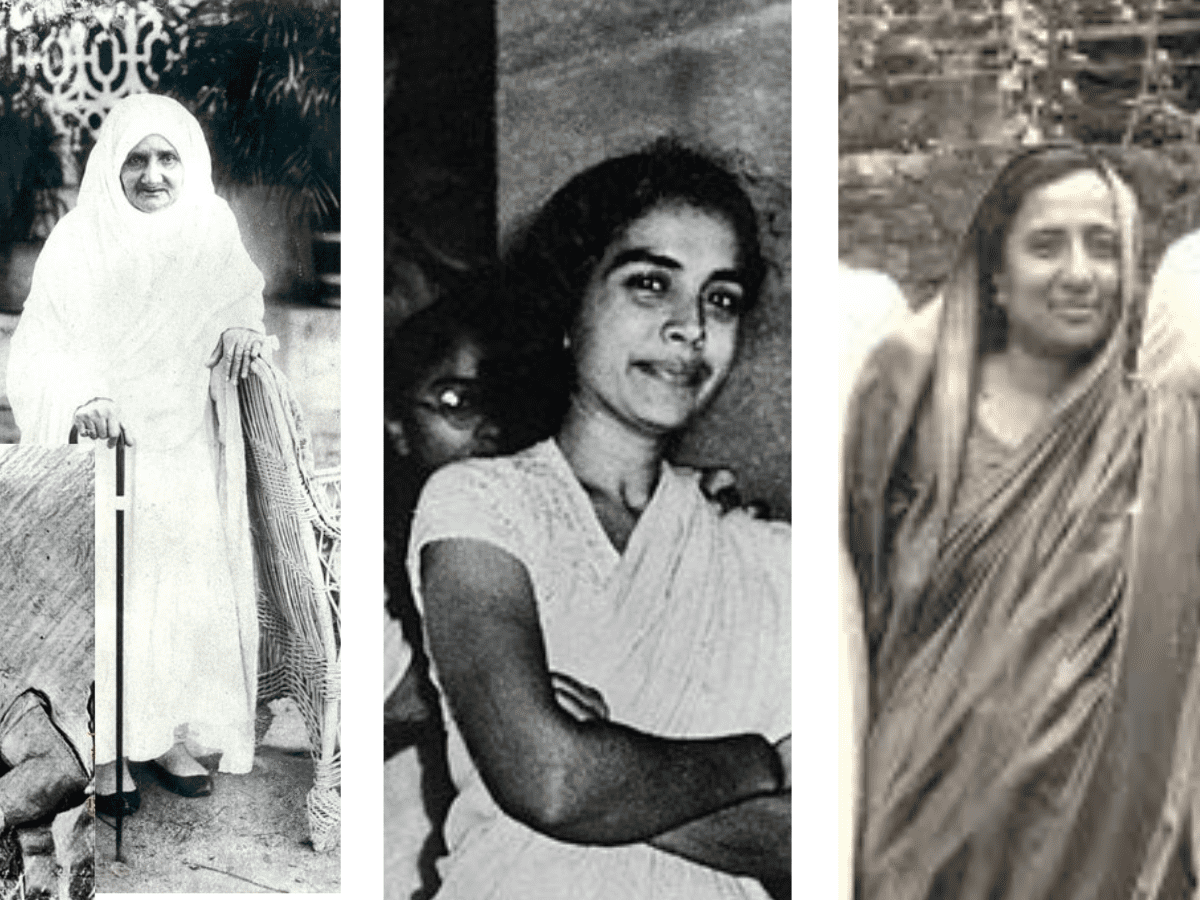
The list includes Abadi Bano Begum, Bibi Amtus Salam, Begum Anis Kidwai, Begum Nishatunnisa Mohani, Baji Jamalunnisa, Hajara Beebi Ismail, Kulsum Sayani, and Syed Fakrul Hajiya Hassan.
As India celebrates 75 years of Independence the country often recalls those that were instrumental in the country’s freedom struggle. But often those who aren’t talked about enough evanesce into the archives of history.

As men who took lead roles in the movement were put behind bars, the women ensured that the movement would not die down and the country attained the freedom a vast majority of it’s residents and citizens enjoy today.

The country’s Prime Minister Narendra Modi in his Independence Day speech, on Monday, hailed women and the part they played during the times including, Rani Laxmibai, Jhalkari Bai, Durga Bhabhi, Rani Gaidinliu and Begum Hazrat Mahal among others.

These are a few among the many names that are a part of the country’s Independence struggle. Apart from Begum Mahal, who made it to the list of the PM’s speech, today, Muslim women have made their mark in Indian history.

Abadi Bano Begum, Bibi Amtus Salam, Begum Anis Kidwai, Begum Nishatunnisa Mohani Baji Jamalunnisa, Hajara Beebi Ismail, Kulsum Sayani, and Syed Fakrul Hajiya Hassan are among those who are often forgotten or lost in public memory.

Abadi Bano Begum (Born 1852- Died 1924)

Abadi Bano Begum was the first Muslim woman who actively took part in politics and was also a part of the movement to free India from the British Raj. Abadi Bano Begum referred to by Gandhi as Bi Amma, was born in 1852, in Uttar Pradesh’s Amroha.

Bi Amman was married to a senior official in the Rampur State, Abdul Ali Khan.

After the death of her husband, Bano raised her children (two daughters and five sons) on her own. Her sons, Maulana Mohammad Ali Jouhar and Maulana Shaukat Ali become leading figures of the Khilafat Movement and the Indian Independence Movement. They played an important role during the non-cooperation movement against the British Raj.

Bi Amma, despite her poor financial condition, from 1917-1921, donated Rs 10 every month to protest against the British Defense Act, after Sarojini Naidu’s arrest.

In 1917, Bano also joined the agitation to release Annie Besant and her sons, who were arrested by the British after their failed attempts to silence her home rule movement in 1917, launched alongside, Bal Gangadhar Tilak.

Despite being a conservative Muslim for the most part of her life Bi Ammah was one of the most prominent faces of Muslim women in India’s freedom struggle.

To get the support of women, Mahatma Gandhi encouraged her to speak in a session of the all-Indian Muslim league, she gave a speech which left a lasting impression on the Muslims of British India.

Bano played an important role in fundraising for the khilafat movement and the Indian Independence movement.

Bibi Amtus Salam (Died 1985)

Mahatma Gandhi’s ‘adopted daughter’ from Patiala Bibi Amtus Salam was a social worker and his disciple who played an active role in combating communal violence in the wake of the partition and in the rehabilitation of refugees who came to India following the partition.

She has on several occasions risked her life by rushing to sensitive areas during the communal riots in Calcutta, Delhi and Deccan.

Bibi Salam was a Muslim inmate of the Gandhi ashram and had over time become an adopted daughter to Gandhi.

After the Noakhali riots, an article published in The Tribune on February 9, 1947, noted that Amtus Salam’s 25-day fast, which was intended to make offenders feel guilty, was one of the most significant outcomes of Gandhi and his disciples’ actions.

To protest the “negligence” of the state authorities in the effort to rescue kidnapped women and children, she sat on an indefinite fast at Dera Nawab in Bahawalpur.

Begum Hazrat Mahal (Born 1820-Died 1879)

An iconic figure of the 1857 uprising, Begum Hazrat Mahal fought against the British East India Company.

Begum, the wife of Nawab Wajid Ali Shah, the ruler of Awadh, refused to accept any favours or allowances from the British. Begum, with the aid of her commander Raja Jailal Singh, battled the British East India Company valiantly.

Muhammadi Khanum, the future Mahal, was born in Faizabad, Uttar Pradesh, in 1830. Gulam Hussain is her father. She had an early understanding of literature. The East India Company’s destruction of mosques and temples to make room for highways served as the catalyst for her uprising.

When the British East India Company invaded Awadh in 1856 and her husband, the last Nawab of Awadh, was exiled to Calcutta, the Begum made the decision to remain in Lucknow along with her son, Birjis Qadir.

On May 31, 1857, they convened in Lucknow’s Chavani neighbourhood to declare Independence and drive the British out of the city.

On July 7, 1857, Begum Hazrat Mahal proclaimed her son, Birjis Khadir, the Nawab of Awadh. She raised 1,80,000 soldiers and lavishly renovated the Lucknow fort as the Nawab’s mother.

She died there on 7 April 1879.

Begum Anis Kidwai (Born 1906- Died 1982)
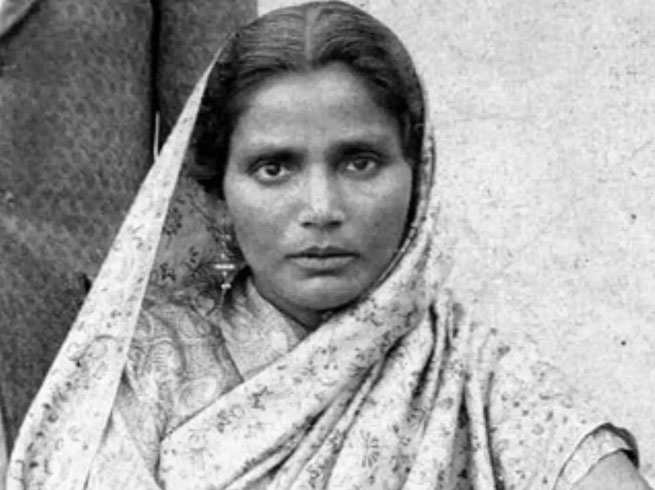
Story all about freedom fighter Anis Kidwai

A politician and activist from Uttar Pradesh (UP) named Anis Kidwai devoted most of her life to serving the newly Independent India, working for peace and the rehabilitation of the victims of the terrible partition of India.

She represented the Indian National Congress (INC) in the Rajya Sabha from 1956 to 1962, serving two terms as a Member of the Parliament.

Anis Begum Kidwai remained active during the Indian National Movement. Despite gaining independence in 1947, India suffered from country division.

By then, her husband Shafi Ahmed Kidwai had been murdered by communal forces for his efforts to promote amity between Muslims and Hindus and to prevent the split of the country. She was deeply devastated by her husband’s passing.

She visited Mahatma Gandhi in Delhi following her husband’s passing as a result of this unfortunate tragedy.

In order to support and assist the women who were suffering similarly to her as a result of the country’s separation, she began working with women leaders like Subhadra Joshi, Mridula Sarabhai, and others under the direction of Mahatma Gandhi.

She also started rescue camps for the victims and supported them in all respects. They affectionately called her ‘Anis Aapa’. She penned her experiences during the division of the Nation in her book ‘Azadi Ki Chaon Mein’.

Begum Nishatunnisa Mohani (Born 1884- Died 1937)

Begum Nishatunnisa Mohani was born in 1884 in Awadh, Uttar Pradesh, and her notion of ultimate freedom was adopted by Gandhiji.

Married to Moulana Hasrat Mohani, a tenacious independence warrior and the one who gave the phrase “Inquilab Zindabad” its origin. Begum, a fierce opponent of British authority, supported the then-hardliner of the liberation struggle, Bal Gangadhar Tilak.

After his imprisonment for publishing an anti-British piece, she wrote to her husband, Hasrat Mohani, encouraging him and raising his spirits by saying, “Face the risks imposed upon you boldly. Do not give me any thought. No sign of weakness should come from you. ‘Be careful’.”

Later, when her husband was in prison, she took over the publication of his daily, Urdu-e-Mualla, and engaged in various legal disputes with the government.

Baji Jamalunnisa, Hyderabad (Born 1915- Died 2016)

Baji Jamalunnisa, who actively participated in the Telangana armed conflict, passed away in this city on July 22 2016, at the age of 101.

Jamalunnisa Baji was born in Hyderabad in 1915 and was a prominent advocate for racial peace and the independence cause.

She began reading the banned journal “nigar” and progressive literature as a young child after being raised by her parents in a liberal/progressive environment.

Despite being raised in the traditional religious traditions of the Nizam regime, a component of the British Raj, she actively participated in the nationalist movement.

She continued to participate in the independence movement despite the oppressive rule of the Nizam and the British rule over her in-laws’ objections.

Later, she met Maulana Hazrat Mohani (the man who coined the phrase “Inquilab Zindabad” and was known as “Thunder Bolt” in the Freedom struggle), who inspired her to join the anti-imperialist movement in the nation.

She provided sanctuary to freedom fighters trying to avoid being arrested by the Imperial Government while being a communist.

Despite lacking basic higher education, she was fluent in Urdu and English and founded the literary society Bazme Ehabab, which held debates in groups on socialism, communism, and unreasonable customs.

She is buried at the Hazrath Syed Ahmed Bad-e-Pah dargah in First Lancer. She was the sister of Syed Akthar Hasan, a former MLA and the founder of Payam Daily, and was better known as “Baji”.

She was a close friend and member of the Communist Party of Maqdoom Mohiuddin. Baji was also a founding member of the Progressive Writers Association and the Women’s Cooperative Society.

Hajara Beebi Ismail, Andhra Pradesh (Died 1994)

Mohammed Ismail Saheb’s wife, Hajara Beebi Ismail, was a freedom warrior from Tenali in the Guntur district of Andhra Pradesh.

Mahatma Gandhi had a significant impact on the pair, who committed themselves to the Khadi campaign movement. In the Guntur district, her husband Mohammed Ismail opened the first Khaddar Store, earning him the moniker “Khaddar Ismail.”

Tenali served as the Muslim League’s headquarters during that time in the Andhra area, where it was particularly active.

Since Hajara and her husband supported Gandhi, they encountered fierce hostility from the Muslim League. Despite her husband’s repeated arrests for his involvement in the national movement, Hajara Beebi never lost spirit.

Kulsum Sayani (Born 1900- Died 1987)

On October 21, 1900, in Gujarat, Kulsum Sayani was born. She participated in the Indian National Movement and battled against social injustices.

Kulsum and her father met Mahatma Gandhi in 1917. Since then, she has travelled Gandhi’s path. Throughout the Indian National Movement, she advocated for social changes.

Dr. Jaan Mohamad Sayani, a well-known liberation fighter, was the man she wed. She participated actively in a number of events of the Indian Freedom Struggle, with her husband’s backing.

She began working with the illiterate and joined the Charkha Class. She also had a significant impact on the Indian National Congress’s “Jan Jagaran” campaigns, which raised public awareness of social ills.

Sayani’s operations included the suburbs and the metropolis of Mumbai.

Syed Fakrul Hajiya Hassan (Died 1970)

Syed Fakrul Hajiyan Hassan, who not only took part in the Indian freedom fight but also urged her children to do so. She was born into a family that immigrated to India from Iraq. She raised her kids to be freedom fighters who later gained notoriety as the “Hyderabad Hassan Brothers.”

Hajiya wed Amir Hassan, who had relocated to Hyderabad from Uttar Pradesh.

She adopted Hyderabadi culture as a result. Amir Hassan, her spouse, had a senior position in the Hyderabad government. He was required to travel to several locations as part of his employment.

She noticed the suffering of women in India while on her visits. She put a lot of effort into the growth of female children.

She lived in Hyderabad, which was governed by the British, yet she actively engaged in the National Freedom Movement since she was a lady with strong national emotions.

She burned foreign clothing at her Abid Manzil in Hyderabad’s Troop Bazaar in response to the demand of the Mahatma Gandhi. She took part in the non-cooperation and Khilafat movements.

She regarded each soldier in the Indian National Army as one of her children. Along with Smt. Sarojini Naidu, and Fhakrul Hajiya put a lot of effort into getting the heroes of Azad Hind Fouz released.

source: http://www.siasat.com / The Siasat Daily / Home> Featured News / by Marziya Sharif / August 17th, 2022
A historian who shed light on colonial-era opium trade in the city

Lucknow, UTTAR PRADESH / Mumbai, MAHARASHTRA, Bengaluru, KARNATAKA :

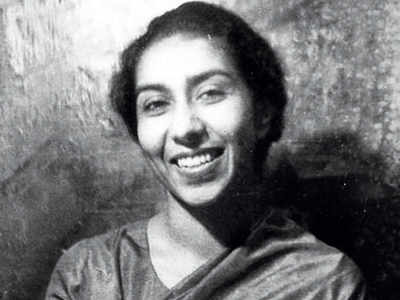
Asiya Siddiqi (1928-2019) (Pic Courtesy: Obaid Siddiqi)

Siddiqi also broke new ground by studying 20,000 HC insolvency records to recreate the lives of an array of 19th-century city inhabitants.

In an age that sometimes overrates quantity and is beguiled by grandiloquence, economic historian Asiya Siddiqi, who passed away on Monday morning, went against the grain.

A chronicler of 19th century India, she wrote just two books. But each was a culmination of decades of painstaking original research, presented in prose that many might describe as being quietly elegant. In between working on the two books, she edited a volume on trade and finance in colonial India.

She broke new ground in both her books by closely reading new or underutilised primary sources. In the second book, Bombay’s People, 1860-1898: Insolvents in the City, published in 2017 by the Oxford University Press, she not only tapped a voluminous new source, namely about 20,000 insolvency records in the high court, but also incorporated the innovative conceptual approach of microhistory to illuminate the past.

She admired the work of one of microhistory’s founding scholars, Italian historian Carlo Ginzburg, especially his book ‘The Cheese and the Worms: The Cosmos of a 16th Century Miller’. Microhistory focuses on small units of research, such as a village, a single event or an individual, instead of large ones such as nations, kingdoms and cities. Siddiqi’s chapter, ‘Ayesha’s World’, the story of an unlettered butcher’s wife, is a gem of this genre.

“She was a first-rate historian, approaching her work with a craftlike precision,” said Mariam Dossal, a friend of hers who is an urban and maritime historian of 18th and 19th -century Mumbai and a former professor at the University of Mumbai, where Siddiqi worked for everal years. “In Bombay’s People, her view was so rich and broad that it covered every kind of person who inhabited the city, from the wealthy Jamshetji Jejeebhoy all the way to Ayesha. One marvelled at her beautiful use of language, through which she recreated the worlds of these inhabitants. For Asiya, everybody deserved a history.”

Her early work on the 19th-century opium and cotton trade based in Mumbai was also influential, in particular her article ‘The Business World of Jamshetji Jejeebhoy’, which appeared in the Indian Economic and Social History Review in 1982. She worked for years on the private papers of the merchant who was a central figure in those two trades to offer a finely-etched view of the entrepreneurial climate of that period, while also shedding light on the ways in which Mumbai supported the growth of the British economy.

A large portion of these papers consisted of letters in which Jejeebhoy had recorded both his business dealings and social life in great detail. Because the papers were disintegrating in the heat and humidity of Mumbai, she got them laminated with help from her uncle Saiyid Nurul Hasan, who was then the union minister of state for education, Dossal recalled.

Asiya Siddiqi’s first book, Agrarian Change in a Northern Indian State: Uttar Pradesh, 1819 to 1833, published in 1973 by Oxford Clarendon Press, grew out of the thesis she did for her DPhil at Oxford University. In what became a classic of South Asian economic history, she analysed the relevant records with characteristic rigor, becoming one of of the earliest to show how colonial trade policies contributed to a severe agricultural depression in the region.

She grew up in Lucknow, and from 1962 worked in and on Mumbai for four decades. She moved in the late 1990s to Bangalore, where her daughter said she passed away peacefully in her sleep. Her husband was the eminent biologist Obaid Siddiqi, who founded the biology department at the Tata Institute of Fundamental Research in Colaba and the National Centre for Biological Sciences in Bangalore. He passed away in 2013.

Asiya Siddiqi balanced her research with bringing up four accomplished children: the eldest Imran, a leading plant biologist based in Hyderabad; Yumna, a professor of English in the US; and fraternal twins, Diba, a visual artist and high school social science teacher in Bangalore, and Kaleem, a computer scientist in Canada.

Siddiqi seemed happiest working by herself in the archives, as an independent researcher, although she had two productive teaching stints: one at Aligarh Muslim University, where she met her husband just after getting a bachelor’s degree at Oxford University, and the other at Mumbai University.

She quit teaching when, at one point she found it difficult to commute from her home in south Mumbai to the university campus in Kalina while also keeping up with her research and and raising four children.

Disclaimer: The views expressed here are the author’s own. The opinions and facts expressed here do not reflect the views of Mirror and Mirror does not assume any responsibility or or liability for the same.

source: http://www.mumbaimirror.indiatimes.com / Mumbai Mirror / Opinion > Columnist / by Sumana Ramanan / October 11th, 2019

Dr Fatima Shahnaz conferred second highest French civilian honour

Hyderabad, TELANGANA:

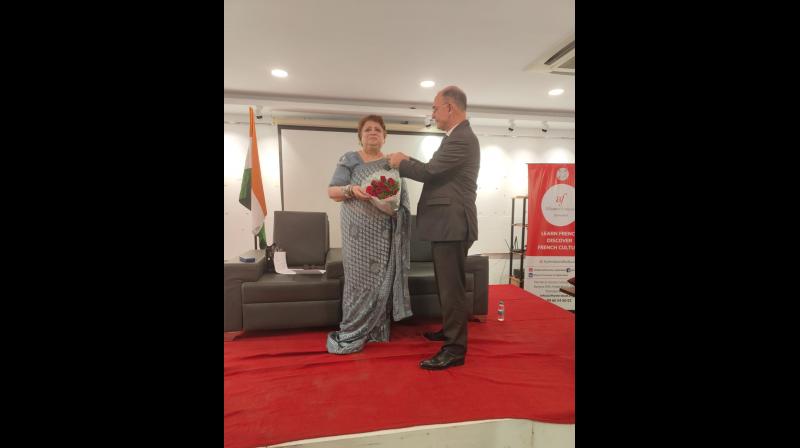
Dr Begum Fatima Shahnaz being conferred the Chevalier dans l’Ordre des Arts et des Lettres (Knight of the Order of Arts and Letters), the second highest French civilian honour by the French ministry of culture for her significant contribution to arts and literature, on Thursday. ( Photo: DC)

Hyderabad:

The multifaceted Dr Begum Fatima Shahnaz was conferred with Chevalier dans l’Ordre des Arts et des Lettres (Knight of the Order of Arts and Letters), the second highest French civilian honour by the French ministry of culture for her significant contribution to arts and literature, on Thursday.

The Jawaharlal Nehru gold medal winner for writing in her teens, Dr. Shahnaz was felicitated at a special investiture ceremony at Alliance Française by Consul General of France, Bangalore, Thierry Berthelot.

The teary-eyed Shahnaz broke into French as she thanked the distinguished guests and shifted to English after a minute or two.

“I didn’t realise I was speaking in French, it comes so naturally to me and I sometimes think in French too,” said the actor, writer, humanitarian, journalist, theatre & art director, professor and journalist.

Talking about the significance of the honour, she said, “France has supported me, and through me, it has supported the Indian people. A Hyderabadi being honoured is an honour to all my people. This places huge responsibility on me, as a citizen of India.”

She also spoke about France and its relationship with Hyderabad and recalled her college years there.

Hailing from royal Indian dynasties, Shahnaz is an actor from the Institut d’Arts Dramatiques Rene Simon in Paris, and is associated with Broadway in New York. She completed her education with a stint at the legendary French school of cuisine, the Cordon Bleu and hopes to bring a new dimension to ‘nouvelle cuisine’ through innovations in Indo-French culinary arts.

Her works include Golconda, Khaki-poems on Pulwama, Saraswati, Shards, Prince of Tears, The New York Poems, Kaleidoscope Eyes, Tiger in the twilight, among several others.

source: http://www.deccanchronicle.com / Deccan Chronicle / Home> Nation / by DC Correspondent / May 19th, 2023

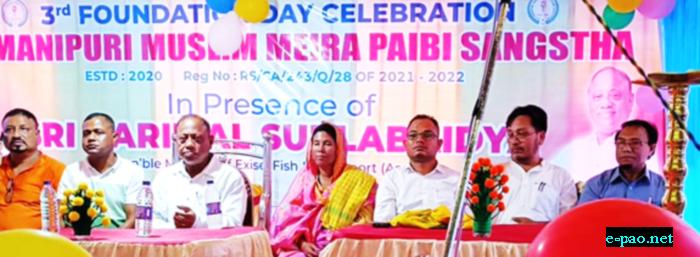
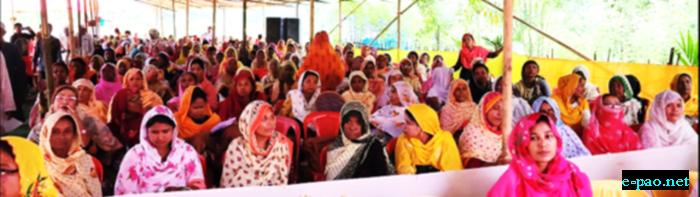
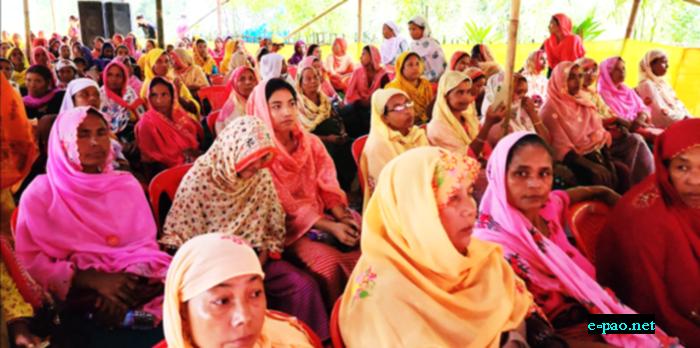
3rd Foundation Day of Manipuri Muslim Meira Paibis at Cachar – Bhaga, 5th October 2023 : All Manipuri Muslims Meira Paibi Sanstha, Cachar –

Cachar District, ASSAM :

 3rd Foundation Day of Manipuri Muslim Meira Paibis at Cachar
3rd Foundation Day of Manipuri Muslim Meira Paibis at Cacha

The Cabinet Minister of Transport, Excise & Fisheries, Government of Assam, Primal Suklabaidya has donated a sum of Rs. 5 Lakhs from his local area development fund for the welfare of the Manipuri Muslim Meira Paibis (Manipuri Muslim Torch bearing Mothers) operating in Cachar District of Assam.

The Minister has handed over the amount to the President of All Manipuri Muslims Meira Paibi Sanstha, Cachar, Assam Moinam Jubeda Begum on the occasion of the 3rd Foundation Day Celebration of the Sanstha held on the 5th October 2023 at Bhaga, Islamabad, Cachar District, Assam.

The Minister also announced a special package including development of the office complex of the Sanstha, construction of a public community hall and development of approach roads. Attending as the Chief Guest in the 3rd Foundation Day of the All-Manipuri Muslims Meira Paibi Sanstha, the Minister also took note of the acute shortages faced by the Meitei Pangal Communities in the District and assured the package in a very quick response to a memorandum submitted by the Meira Paibi Womenfolk during the occasion.

The galaxy of other eminent personalities from Assam and Manipur present in the foundation day include Principal of Moirang College, Manipur Dr Raheijuddin Sheikh, Retired Additional Secretary of Assam Nandababu Singha, Assistant Director of Textiles Lairellakpam Harilal Singha, Assistant Professor of S R College Dr Abul Khair Choudhury, Vice President of Federation of Civil Societies Organisations (FOCS), Manipur B M Yaima Shah and Lakhipur East Zila Parishad Kabrabam Anita Devi as special guests.

A two minutes silence was also observed by the gathering to mark the tribute to the two of the Manipuri Meira Paibi leaders viz Ima Memchoubi Devi who expired very recently and Ima Sitara Begum who passed away last year.

The FOCS also extended financial assistance to the Muslim Meira Paibi Sanstha of Cachar by donating a sum of Rs.10,000/- only which was handed over by the Vice President B M Yaima Shah to the president of the Sanstha – Moinam Jubeda Begum.

 3rd Foundation Day of Manipuri Muslim Meira Paibis at Cachar
3rd Foundation Day of Manipuri Muslim Meira Paibis at Cachar

In his short address by the special guest from Manipur, Moirang College Principal Dr Raheijuddin Sheikh emphasised the role of Manipuri women in the social change which became a unique culture of the Manipuri Womenfolk which is not seen in any other parts of the World and dire need for support and preserve the culture for the welfare of the future generations.

The women’s participation in safeguard of the people has a long history which may be dated back to the monarchy system in Manipur which later became more significant after the women agitation broke out in 1904 and 1939 showing discontentment of the womenfolk against the British policy.

Beginning with the safeguard of their male counterparts and children as the informal Nishabandhi groups in the localities during 1970’s, the Meira Paibi has now emerged as one of the biggest forces to move for a social change, an indispensable force to safeguard the integrity, starting from the issues of drug abuse and illicit trafficking to the eradication of antisocial elements and now the Meira Paibis have come up with the strongest force to deal with the present unrest in Manipur.

In her key note address, Lakhipur Zila Parishad Anita Devi has reiterated that the Foundation Day is being observed every year since the year 2021 in various places where the Manipuri Muslims (Pangals) are inhabiting in the Cachar District.

The venue of the 3rd Foundation Day this year has been chosen at Bhaga, Islamabad as the sanstha intended to reach out the importance of services rendered by the torch bearing mothers in various field including eradication of antisocial elements, drug abuse, upliftment of the educational, social and economical status of the people belonging to this area of the district which is being considered as the most backward as compared to the Meitei Pangals of other areas in Cachar District.

 3rd Foundation Day of Manipuri Muslim Meira Paibis at Cachar

Sanarei Bibi & Thanin Bibi / Publicity in Charge, 3rd Foundation Day
All Manipuri Muslim Meira Paibi Sangstha, Cachar, Assam

source: http://www.e-pao.net / E-Pao / Home> News section / Press Release 2023 / October 07th, 2023

Changing Status of The Muslim Women in Manipur released

Imphal, MANIPUR:

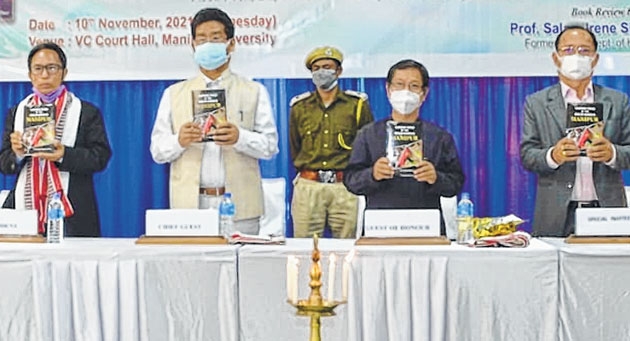
Changing  Status of The Muslim Women in Manipur, a book wriiten by Dr Haobam Bidyarani and published by Sunmarg Publishers & Distributors New Delhi was released today at Manipur University.


The author is an Assistant Professor at the Department of History, Kumbi College.

Speaking as the chief of the ceremony, MU Vice Chancellor Professor Naorem Lokendra lauded Dr H Bidyarani for highlighting the social issues of the muslim women in Manipur through her book.


Saying that the author took suggestions from different sources, carried out intensive field work to complete the book, Prof Lokendra maintained that the book focused on  the social norms, dress code and other features of the Meitei pangal.


Meitei pangal are a socially and culturally hardworking community, he said and added that the book would be helpful to future scholars and draw the attention of many.


The book was reviewed by Former HoD of Department of History, MU Salam Irene.


Kumbi College Principal Kumam Jugeshor; Manipur University School of Social Science Dean Professor Senjam Mangi and College Development Council (CDC)  Director Professor Soibam Jibonkumar also attended the programme.

source: http://www.thesangaiexpress.com / The Sangai Express / by Staff Reporter / November 11th, 2021

Rahmani30 shines with record-breaking 67.5% success in ICAI CA Intermediate Exam, triumphant over national 19% average

INDIA:

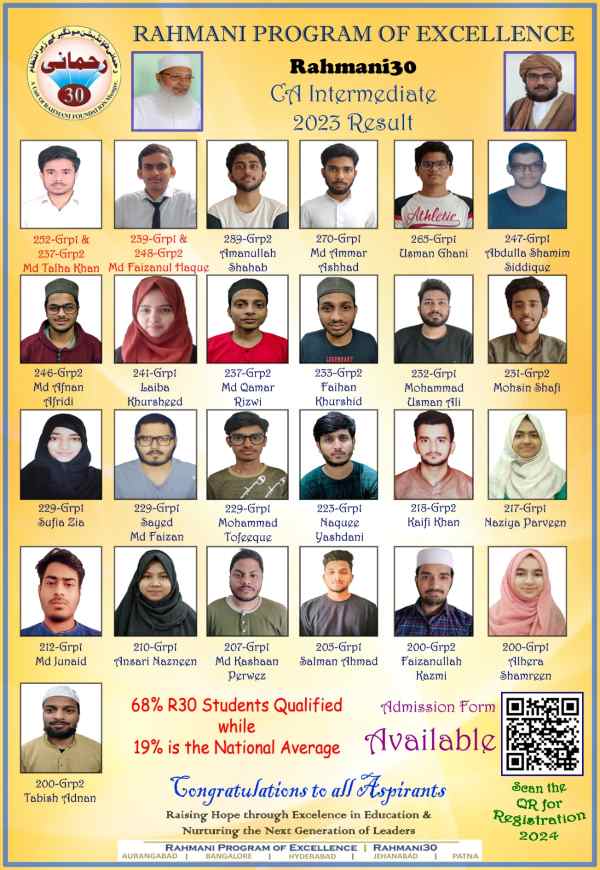
In a remarkable triumph, Rahmani30, a trailblazing educational initiative dedicated to nurturing deserving students, recently attained an extraordinary milestone in the ICAI CA Intermediate exams.

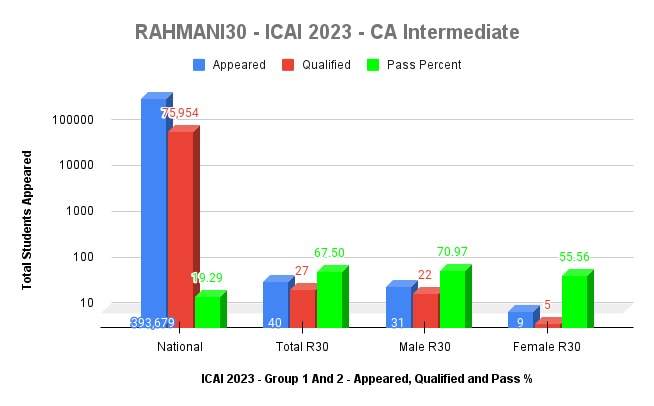
Amidst a national average success rate of around 19%, Rahmani30 soared high with an unparalleled 67.5% achievement, etching an indelible mark in the institution’s history and setting an exceptional benchmark.

The ICAI CA Intermediate examination, a rigorous professional test administered by the Institute of Chartered Accountants of India, represents the pivotal second phase in the Chartered Accountancy course. Comprising two groups with four papers each, it stands distinct from the Senior Secondary School Examination, commonly known as 10 + 2 or Intermediate.

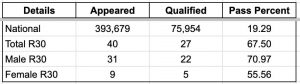
The 2023 ICAI CA Intermediate exam saw an impressive participation of 393,679 students undertaking the Group 1 & Group 2 tests, with 75,954 candidates successfully qualifying—a cumulative pass rate of 19.29%. In striking contrast, Rahmani30’s cohort of 40 students showcased an outstanding 67.5% success rate, underscoring the institution’s commitment to academic excellence. Noteworthy were the November 2023 results, revealing an outstanding 80% success rate among female students in CA Intermediate Group 1, celebrating the remarkable achievements of women in this domain.

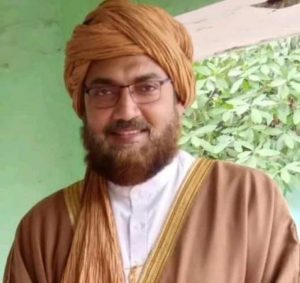
Ameer E Shariat Hazrat Maulana Ahmad Wali Faisal Rahmani sb., the esteemed patron of Rahmani30, extends heartfelt congratulations to the students, faculty, donors, ambassadors, management, and the wider community for this exceptional accomplishment. He lauds the unwavering dedication and diligence exhibited by the students, expressing immense pride in Rahmani30’s ceaseless pursuit of empowering students through educational excellence.

Maulana Ahmad Wali Faisal Rahmani, President Rahmani30

Expanding upon this achievement, one could delve into the individual stories of some standout students, the unique teaching methodologies adopted by Rahmani30, the impact of community support, and the future aspirations of the institution in continuing this trajectory of success and empowerment.

Important Update:•

The application form for the 2024 session is now available online for Rahmani30 entrance examination

•  Students currently in *8th, 9th, and 10th* grades are eligible to apply

• A test will be conducted for students in *10th* grade applying for admission to the *11th* preparatory course for Medical, Engineering & Commerce (CA/CS/CLAT).

• Students from *8th, 9th and 10th* grades will be selected for the *Rahmani30 Junior Program*.• Additionally, students from *8th, 9th, and 10th* grades will be chosen for online training this year.

Your participation and prayers are deeply appreciated.

Link to Form: https://tinyurl.com/r30-std-form-2024

Current Results: http://tinyurl.com/R30-CurrentResult

Follow us on Facebook: https://www.facebook.com/profile.php?id=100054544236444&mibextid=ZbWKwL

Subscribe to Email Notifications: https://groups.google.com/a/rahmanimission.org/g/r30-info

Website: www.rahmanimission.org

source: http://www.muslimmirror.com / Muslim Mirror / Home> Education> Indian Muslim> Positive Story / by Muslim Mirror Staff / January 10th, 2024

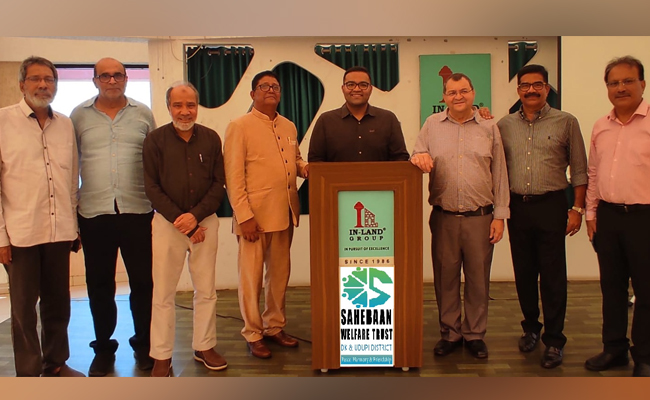
Sahebaan Welfare Trust organizes ‘Community Welfare Talks Series 2024’ session in Mangaluru

Mangaluru, KARNATAKA:

Mangaluru:

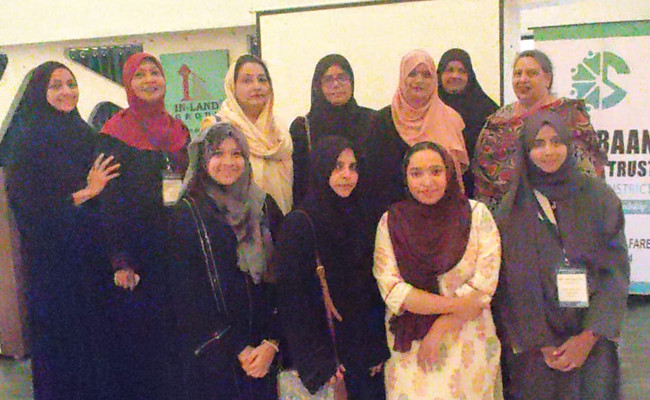
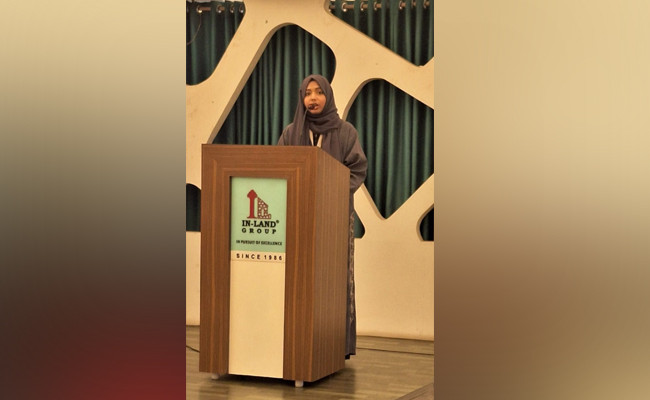
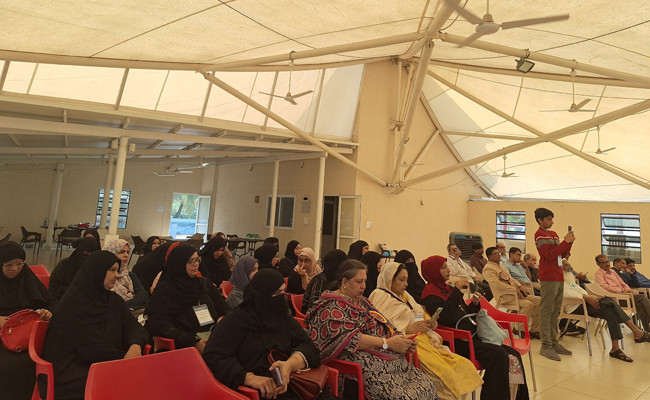
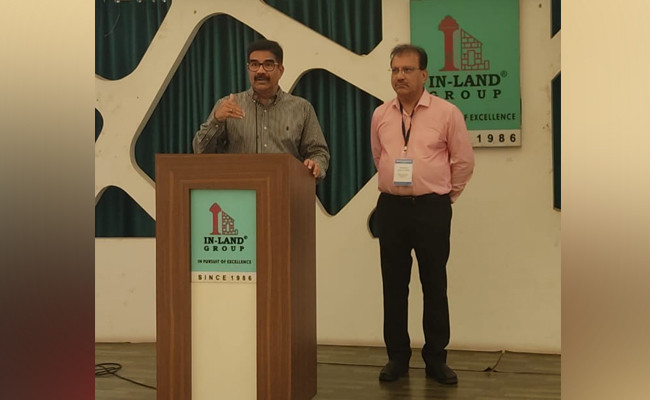
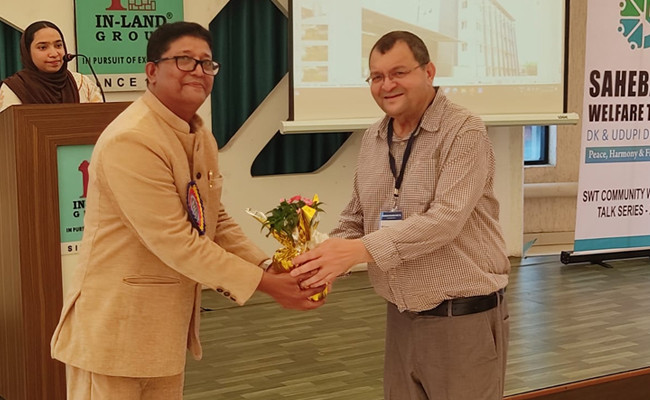
The ladies’ wing of Sahebaan Welfare Trust (SWT) hosted the inaugural session of the ‘Community Welfare Talks Series 2024’ at Senate Hall, Inland Ornate Complex, in the city on January 21, with Siraj Ahmed, Managing Director, Inland Infrastructure Pvt Ltd, inaugurating the event.

Ahmed, in his inaugural address, lauded the efforts of SWT at initiating the talk series for the benefit of the community members as well as the society at large.

Meraj Yousef, Executive Director, Inland Buiders, who spoke on the occasion, pledged his support towards community welfare activities of SWT.

Educationist and Motivational Speaker Obeida Shoukath, who was one of the speakers of the day, spoke on the challenges faced by students on campus and the remedial measures while the second speaker Dr. Mohammed Noorulla, Senior Unani Consultant at the District Wenlock Hospital, Mangaluru, explained on the occasion the history and benefits of AYUSH, the Indian Alternative Medicine system, and the services available at the Ayush Hospital in the city.

Syed Siraj Ahmed, Secretary of SWT, welcomed the gathering on behalf of the President, Afroze Assadi Saheb. The program was ably compered by Zaiba Khatib.

The Qirat was read by Fariha Fathima and Ayesha Shahnaz.

The event was conducted by the Ladies’ Youth Wing of the SWT under the leadership of Amreen Khatib, who was ably assisted by Aliya Imtiaz and Rifaa Sheikh, with the support extended by Ayaan Sheikh and Luqman Tonse.

Umme Kulsum proposed the Vote of Thanks.

Senior Sahebaan Community members and SWT trustees Althaf Khatib, Rafik Assadi and Imtiaz Khatib were present on the occasion.

source: http://www.english.varthabharati.in / Vartha Bharati / Home> Karavali / by Vartha Bharati / January 26th, 2024

Shah Rukh Khan’s Mother Lateef Fatima Khan’s Picture With Indira Gandhi Goes Viral

Hyderabad, TELANGANA / NEW DELHI:

Lateef Fatima Khan
Shah Rukh Khan’s mother Lateef Fatima Khan’s picture with former Prime Minister Indira Gandhi went viral. A rank holder magistrate from Oxford University, England, she was a close associate of the former prime minister.

Lateef Fatima Khan was born and brought up in Tolichowki, Hyderabad on July 1, 1941. Khan was a social worker and passed away in 1990 due to complications with diabetes.

Lateef Fatima Khan was born and brought up in Tolichowki, Hyderabad on July 1, 1941. Khan was a social worker and passed away in 1990 due to complications with diabetes. She passed away before her son Shah Rukh Khan made his Bollywood debut Deewana.

Khan studied at Oxford University and was a first-class magistrate. The Bollywood actor spoke about her accomplishments and said, “She was among the first few Muslim women to have achieved so much.” He added that she was an executive magistrate for the longest tenure recorded. She was a close associate of the former Prime Minister Indira Gandhi and an image of her with the late prime minister is going viral.

In 1992, Shah Rukh Khan was awarded a newcomer award and dedicated it to his late mother. He said, “I am getting a major award in the film industry, she’s still not here. This one’s for you Ma.”

He also spoke about how he rarely prayed but began praying when his mother was battling for her life in the Intensive Care Unit (ICU).

Lateef Fatima Khan was the daughter of a senior government engineer and married Meer Taj Mohammed, an Indian independence activist from Peshawar.

Shah Rukh Khan recently completed 30 years in the film industry on June 25, 2022. His upcoming films include Jawaan, Pathaan, and Dunki. He is a co-producer for the Alia Bhatt starrer Darlings. He was last seen on screen in the 2018 film Zero along with actors Anushka Sharma and Katrina Kaif.

The actor and film producer was awarded the Padma Shri and has won 14 Filmfare Awards for his work in Bollywood. His career began with television appearances and made his Bollywood debut in 1992 in the film Deewana. In his thirty years of acting in Bollywood films, he has appeared in more than 80 films.

While initially resistant to acting in films, he decided to act in films in 1991 and cited it as a way to escape the grief of losing his mother, Lateef Fatima Khan.

source: http://www.shethepeople.tv / She The People / Home> Art> Culture / by Ritika Joshi / July 07th, 2022

“Let’s talk about consent,” says advocate Aaliya Waziri, author of ‘In the Body of a Woman’

NEW DELHI :

For gender-responsive law-making, it is imperative to have a clear definition of consent.

An advocate at the High Court in Delhi, Aaliya Waziri lives with the horrors of the 2012 Delhi gangrape. In the aftermath of the Nirbhaya case, the J.S. Verma committee’s recommendations led to amendments in Indian criminal law. But why do women still live in fear? Waziri’s collection of essays, In the Body of a Woman, takes stock of the progress that has been made and the long road left to cover, even as she pushes for gender-responsive law-making. Excerpts from an interview.

Aaliya Waziri | Photo Credit: special arrangement

A majority of women and girls live in some sort of fear — they fear for their safety in buses and trains and sometimes even at home. After the Nirbhaya case, a stringent law was put in place. What more needs to be done to make women feel safe?

As women, we carry pain and fear for our safety. Ask any woman walking the street after sunset how many times she looks over her shoulder. Nirbhaya was the tipping point for our insecurities related to our safety. It was also a watershed moment in terms of pointing out the lacunae in the legal framework. It would be false to state that things haven’t changed since Nirbhaya. For example, we now have vulnerable witness deposition complexes in district courts, victim compensation schemes etc. but there is much more to be done. We can do more to strengthen our laws and have a robust system in place that does not allow for procedural lapses. We must have a judicial gender-sensitisation training system that ensures victims are not subjected to re-victimisation. We need to allocate more resources and personnel to fast track courts and precipitate the specialised redressal mechanism in place. We can expand the definition of consent to make it more gender responsive by affirming what consent is.

Students with placards emphasising the need for women’s safety at the ‘Freedom from fear’ rally organised in Mumbai. | Photo Credit: Vivek Bendre

Why should consent be at the centre of all discussions on gender sensitivity?

Talking about consent is perhaps the most important conversation when it comes to gender responsive law-making. Right now there is a grey area of offences that are not punishable by law because deciphering consent is tricky. Marital rape is one such example. The law defines consent in negative terms. At the same time, we have a statutory definition that talks about how consent must not be tainted with fear or duress or coercion. But this definition talks about all that consent is not instead of a definition that affirmatively defines what consent is, which is where the problem lies. Without a definition of what consent is, we are all shooting in the dark.

In a poor country like ours, why is it important for women to be equal beneficiaries in every sphere of life?

The answer is parity. Women are not a homogenous group. We are unevenly and disproportionately placed on the starting line. To give women a fair chance at competing with men, we have to first put them on an equal footing with men. Only then can we hope to ensure women are equal beneficiaries of the Indian success story. Unless women are equal recipients of state welfare mechanisms that form a conducive environment for women to participate freely in the open market, how can we expect women to enter, re-enter and exist in the work space? There is no one-step-panacea to put women on an equal footing with men but what is important is to identify and plug operational loopholes with affirmative action, no matter how much some of us might dislike the phrase.

Why do you want the focus to shift from a gender-neutral approach to a gender-responsive one if society and mindsets have to be transformed?

A gender-neutral approach might seek to bridge the differences between different genders. But what we need is an approach that acknowledges and addresses differences between genders and works towards parity and inclusion as opposed to homogenising them. I am not sure if the collective mindset of our society can be changed, that’s a pipedream, but we can take concrete steps towards smaller goals. Law is a mirror to our societal fabric and by inculcating a gender-responsive approach, we recognise that within the subcategory of women, we are not an analogous group, we differ in terms of our access to welfare services, the impact our geographical and marital status has on our socio-economic identities, and so forth. The goal is to target disadvantages that women face, simply by virtue of their gender, and equip them to better respond to these challenges.

In the light of the ‘sulli deals’, what should be done to prevent such cyber bullying?

The anonymous non-confrontational form of violence against women and girls, devoid of physical contact, in cyber space, must be viewed as an impeding factor to gender justice in the 21st century. Essentially, if women are at the receiving end of systemic gender-based violence in real life then the same will translate into an inequitable cyberspace.

With that in mind, we have to first understand the fact that the landscape of violence against women and girls has changed with the advent of technology. To counter this, what we need is targeted legislation that criminalises cyber violence against women and girls. In the absence of any special legislation, both the IT Act and the Indian Penal Code are interim solutions inadequate to contain the magnitude of problems brought on by digital technology.

In The Body of a Woman; Aaliya Waziri, Simon & Schuster India, ₹499.

sudipta.datta@thehindu.co.in

source: http://www.thehindu.com / The Hindu / Home> Books> Author / by Sudipta Datta / October 20th, 2023

‘Quran in Embroidery’ a hand crafted phenomenon in 604-pages of velvet cloth – The Miracle of two Bengaluru sisters – Bibi Tabassum and Suraiya Quraishi

Bengaluru, KARNATAKA:

Bibi Tabassum and Suraiya Quraishi who embroidered the Quran.

Bengaluru :

This is a miracle. An awe-inspiring phenomenon took place in this city a few days back, as two sisters- Bibi Tabassum and Suraiya Quraishi- embroidered the sacred Quran onto 604 pages of plush velvet cloth.

Showing excellent craftsmanship, they used needles and threads to meticulously prepare an embroidered holy Quran. This embroidered Quran, prepared under the watchful guidance of an Alim-e-deen (religious scholar), is not only easily legible but also heavenly captivating.

Bibi Tabassum, the younger of the two sisters, holds a great fondness for doing embroidery ever since she was a child. In the beginning, she used to embroider only small verses of the Quran, but one day, an idea graced Bibi Tabassum’s mind – to intricately embroider the entire holy Quran. This took her on a laborious journey, one fueled by love and devotion.

Expressing extreme gratitude to Allah for giving them the opportunity to prepare this embroidered Quran, Bibi Tabassum says that she aspires to gift this embroidered holy Quran to a library in the holy city of Madina.

Venturing on this embroidery voyage of the Quranic verses along with her elder sister Suraiya Quraishi, Bibi Tabassum started with the first inaugural Surah of the Quran i.e. Surah Al-Fatiha, and continued diligently. The last surah- Surah An-Nas marked the culmination of their hard labour.

This embroidered holy Quran is divided into five volumes, and each volume consisting of six chapters. It went through a meticulous binding process by the skilled hands of its creators.

Initially, in the detailed process of embroidery, Bibi Tabassum used to inscribe the verses of the Quran with a pencil on the velvet cloth, followed by both the sisters intricately weaving threads along those sacred lines.

Carrying on the demands of daily life, both sisters, driven by unwavering dedication, used to finish their household chores and then engage in the embroidery work of the holy Quran.

To ensure the utmost accuracy of the embroidered work, a learned religious scholar closely scrutinized each verse upon the completion of a page. Bibi Tabassum says, ‘After completing every page of the embroidered holy Quran, we would show that to our scholar and do any correction if required.”

In the aftermath of this big achievement, family members are thoroughly elated for the two sisters. They say that the two sisters have utilized their time for a very noble endeavour. Extending heartfelt gratitude, they thank Allah for the manifestation of this lovely artwork, which stands as a testament to the beautiful blending of devotion and artistry.

source: http://www.indiatomorrow.net / India Tomorrow / Home> News> Society / by India Tomorrow (headline edited) / February 05th, 2024