The 23-hour-and-40-minute countdown for the Sun mission has begun. Aditya-L1 satellite will lift off from Sriharikota on Saturday at 11.50 a.m
Inside: Project director of the ambitious Aditya-L1 Nigar Shaji
Tenkasi :
The contribution of Tamils to India’s Space Odyssey seems to be enduring as a woman scientist from the state’s southern district of Tenkasi will have her tryst with destiny when Aditya-L1 satellite soars into the sky on Saturday.
Nigar Shaji (59), a native of Shengottai, is the project director of the ambitious Aditya-L1, which is the first space-based mission deployed by India to study the Sun.
Speaking to TNIE on Friday, Shaji’s brother S Sheik Saleem said Shaji completed her schooling in English medium at the Shengottai government higher secondary school.
“She did her graduation in engineering from the Tirunelveli government engineering college and joined ISRO in 1987. She resides in Bengaluru and visits Shengottai whenever there are family functions. Shaji’s husband, an engineer, is working in a Gulf country, and her son is also working as a scientist in the Netherlands. Her daughter and our mother are staying with Shaji in Bengaluru. We lost our father 30 years ago,” Saleem said. Incidentally, Chandrayaan 3 project director P Veeramuthuvel is also from Tamil Nadu.
Countdown starts
The 23-hour-and-40-minute countdown for the Sun mission has begun. Aditya-L1 satellite will lift off from Sriharikota on Saturday at 11.50 a.m.
source: http://www.newindianexpress.com / The New Indian Express / Home> States> Tamil Nadu / by Thinakaran Rajamani, Express News Service / September 02nd, 2023
The farm has different breeds, including Holstein Friesian, Gir, Australian and jersey. Her aim is to own 101 cows as dreamt by her father.
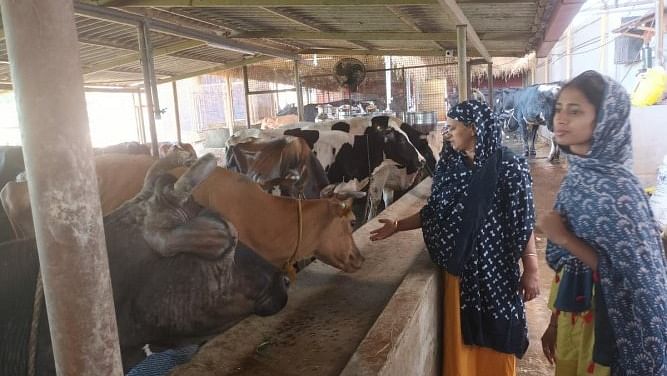
Maimoona and daughter Marzeena with the cows in their farm at Harekala. Credit: DH photo
Maimoona, with her three daughters, re-started her venture of dairy farming with just one cow at Harekala, situated on the outskirts of Mangaluru, about two years ago.
She now sells 320 litres of milk daily and owns 40 cows. The shed has a total of 67 cattle, including calves. The striking point is that she sets aside a portion of her earning for helping the needy.
“When my husband Abdul Majeed died in the year 2020, we were shattered. He loved cows and had started Majeed Farm and owned around 25 cows. His dream was to own a farm with 101 cows. After his death, we sold all the cows. However, we did not spend money earned from selling cows. Later, it was my second daughter Marzeena, who is an engineering graduate, persuaded me to purchase a cow and re-start the venture,’’ Maimoona told DH.
Initially, she purchased one cow and later added more into the fleet of cows.
Maimoona said, “I re-established the farm with the support of my daughters Ramzeena, Marzeena and Azwena. Initially, we only managed all the work. As the farm grew, we hired labourers to help us. The cattle are milked using two machines. In spite of using a machine, we have to milk manually at the end. Along with labourers, my daughter Marzeena and I take care of the cattle.”
The farm has different breeds, including Holstein Friesian, Gir, Australian and jersey. Her aim is to own 101 cows as dreamt by her father.
“We are happy with the initiative and it is the only source of our livelihood. Our driver Prashanth is helping us in reaching out the milk to the dairy at Ellyarpadavu and Konaje in time. Maintaining a dairy farm is challenging as we need to constantly work hard,” Maimoona said.
The family also sells cow dung.
I am planning to grow grass required for the cows in my own farm. Now, we procure the required dry hay from Hassan, she said.
The family owns about two acres of land in which they have cultivated arecanut and coconut. In addition, the house is surrounded by a variety of fruits, like apple, grapes, chikoo, fig and musambi.
‘’We also have started goat farm and have a poultry farm on small scale. At present, there are 23 goats. When my father was alive, we had 150 goats,” Marzeena said.
“My husband was keen that we lend a helping hand to those in needy. Accordingly, I keep aside a portion of my earning from the farm to charity,” Maimoona added.
Lauding the success, Harekala Gram Panchayat president Badruddin said people need to learn from the success of Maimoona. With hard work and dedication, she has proved that anything is possible.
‘’She lends a helping hand to the needy and has donated AC, cooler, and an aquarium to the newly built Harekala GP building and has also donated money to distribute financial assistance to the differently abled,” he said.
source: http://www.deccanherald.com / Deccan Herald / Home> India> Karnataka / by Naina J A, DHNS / January 24th, 2023
Meet The Young Muslim Scientists, Engineers Who Contributed To India’s Moon Mission Success
New Delhi:
Meet some of the Muslim scientists and engineers who contributed to India’s moon mission success.
Together with other scientists, they played an important role in the Indian Space Research Organisation’s (ISRO) Chandrayaan-3 project team that wrote a new history in the world of space science and technology, bringing immense laurels to the country.
Because of our scientists, India now ranks counts with the US, Russia, and China – countries that have mastered in spacecraft technology. It would not be wrong to say that India has emerged as one of the “Vishwa Guru” (world leaders) in spacecraft science.
Here are the names and brief biodata of the few Muslims scientists who were part of the Chandrayaan-3 team.
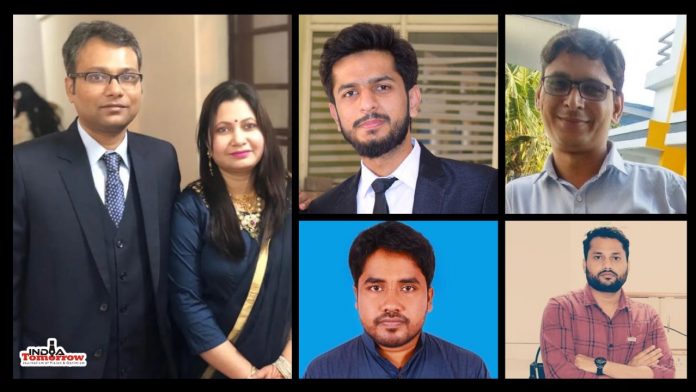
*SANA FIROZ, a B.Tech. (2006-2010) in electronics and communications engineering from Madan Mohan Malaviya University of Technology at Gorakhpur in Eastern Uttar Pradesh, is among the 54 female scientists and engineers who contributed to the success of the Chandrayaan-3.
Sana, who hails from the small town of Mau, neighbouring Azamgarh, has been working with ISRO at Mohali since 2013.
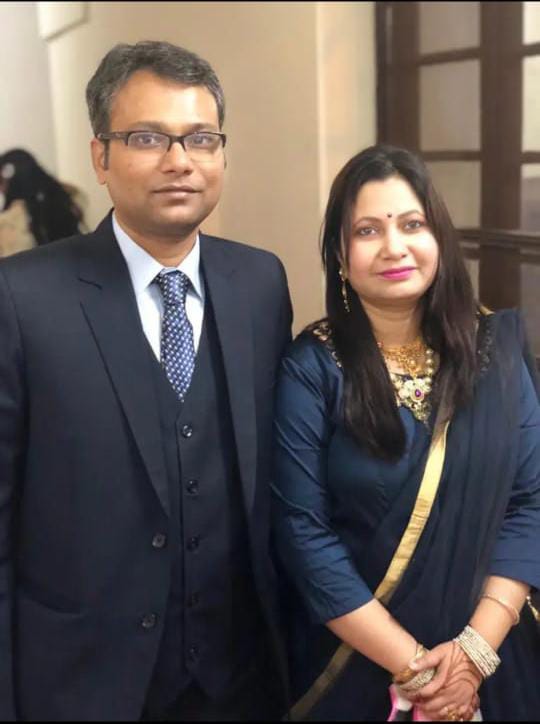
Husband-wife, Sana Firoz, and Yasser, who were part of the Chandrayaan-3 that landed successfully at the moon’s surface on August 23, 2023.
*Sana’s husband YASSER AMMAR, also a B.Tech.(2006-2010) in electronics and communications engineering from Madan Mohan Malaviya University of Technology at Gorakhpur in Eastern Uttar Pradesh, was also in the Chandrayaan-3 project team. Yasser is a native of Gorakhpur, the hometown of UP chief minister Yogi Adityanath. Yasser also works at ISRO’s Mohali facility.
Yasser, who has been working with ISRO since 2010, has written several research papers, including one on “Design and development of Silicon Photomultiplier for Photon Counting Applications” published in the Journal of Spacecraft Technology, a prestigious research journal published by ISRO.
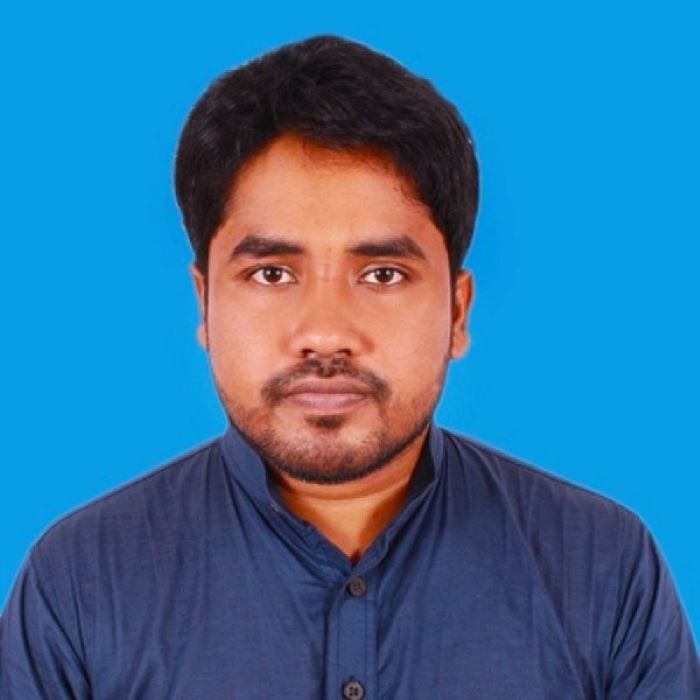
Mohammed Sabir Alam .
*MOHAMMED SABIR ALAM, is another engineer, who played an important role in the Chandrayaan-3 mission. Holding a B Tech degree inaerospace, aeronautical, and astronautical engineering from the Indian Institute of Space Science and Technology, Thiruvananthapuram (Kerala), he has been working at ISRO’s Thiruvananthapuram centre since 2018.
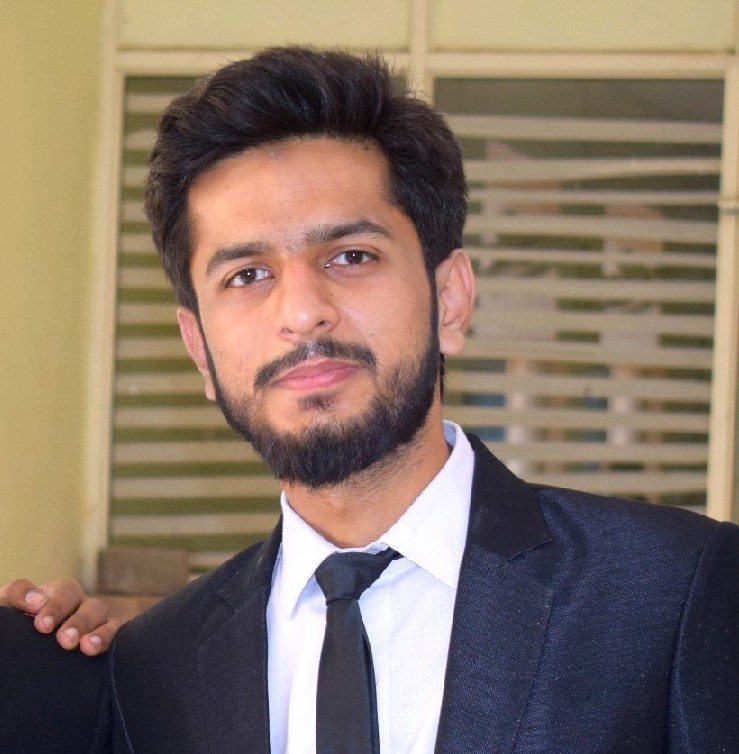
Areeb Ahmad
*AREEB AHMAD, a B.Tech in mechanical engineering (2015-19 batch) from Jamia Millia Islamia, is a young scientist who contributed immensely to the success of the Chandrayaan-3. He hails from Muzaffarnagar district of UP which witnessed one of India’s worst communal riots in August-September 2013 that resulted in 42 Muslims and 20 Hindus being killed. More than 50,000 Muslims were displaced many of whom have yet not returned to their original homes and villages. Posted at ISRO’s Sriharikota facility, Areeb was part of an inspection team before the Chandrayaan-3 was launched in July 14, 2023. The spacecraft landed at the lunar south pole region of the moon on August 23, 2023, in a span of six weeks.
Akhtedar Abbas
*AKHTEDAR ABBAS, a native of the Gonda district in Eastern Uttar Pradesh and posted at Thiruvananthapuram in Kerala, also worked with the Chandrayaan-3 project, bringing immense pride to the nation. A B.Tech (2006-2010) from Aligarh Muslim University and an M.Tech from Motilal Nehru National Institute of Technology, Allahabad, he has been working with ISRO since March 2015. Before joining ISRO, he worked as a professor at the DIT University in Dehradun and Operations Manager at Indian Oil Corporation Limited.
Ishrat Jamal
*ISHRAT JAMAL, who was also associated with the Chandrayaan-3 project, is a B Tech in electrical engineering from AMU and an M Tech in Power and Control from IIT, Kanpur. He has been working with ISRO for the last six years. He is currently posted at ISRO’s research facility in Bengaluru.
“I am a power electronics engineer with experience in the design and development of space qualified Electronic Power Conditioners (EPCs)/Power Supplies for various Radio Frequency (RF) subsystems, such as Solid State Power Amplifiers (SSPAs) and Travelling Wave Tube Amplifiers (TWTAs), of Synthetic Aperture Radar (SAR) payloads,” he says in a post on a social media platform.
Khushboo Mirza
*Khushboo Mirza, is another Muslim woman scientist, who was involved in the Chandrayaan-3 project. She is a B.Tech. in Electronics Engineering from Aligarh Muslim University and works at the ISRO centre in Greater Noida.
She is an experienced scientist skilled in ArcGIS products. ArcGIS is a family of client, server, and online geographic information system (GIS) software developed and maintained by Esri (Environmental Systems Research Institute). Esri is an American multinational geographic information system software company.
Mohd Kashif
*Another Muslim engineer involved in the Chandrayaan-3 mission is Mohd Kashif, a B Tech in Mechanical Engineering from Jamia Millia Islamia. He joined ISRO at its Bengaluru centre in December 2021. He obtained the top rank in ISRO recruitment in 2021.
Some scientists and engineers like Amit Bhardwaj who have passed out from Jamia Millia Islamia, and Priyanshu Varshney and Sonali Jain from AMU were also in the Chandrayaan-3 team.
source: http://www.indiatomorrow.net / India Tomorrow / Home> Breaking News> Editorial (edited) / by Syed Khalique Ahmed (edited) / August 24th, 2023
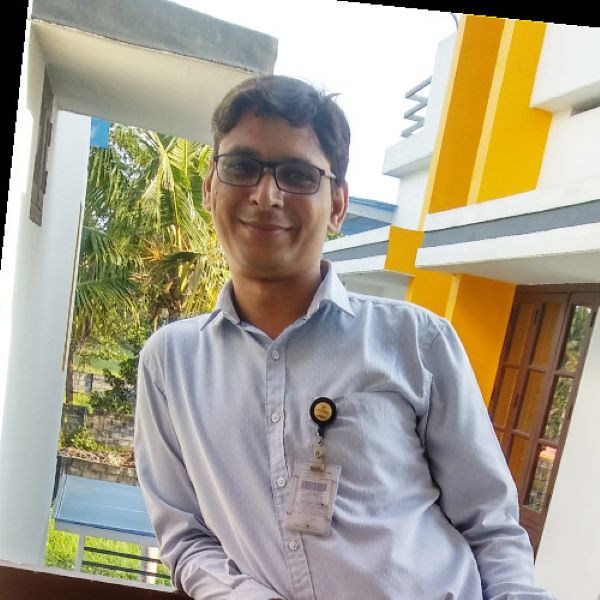
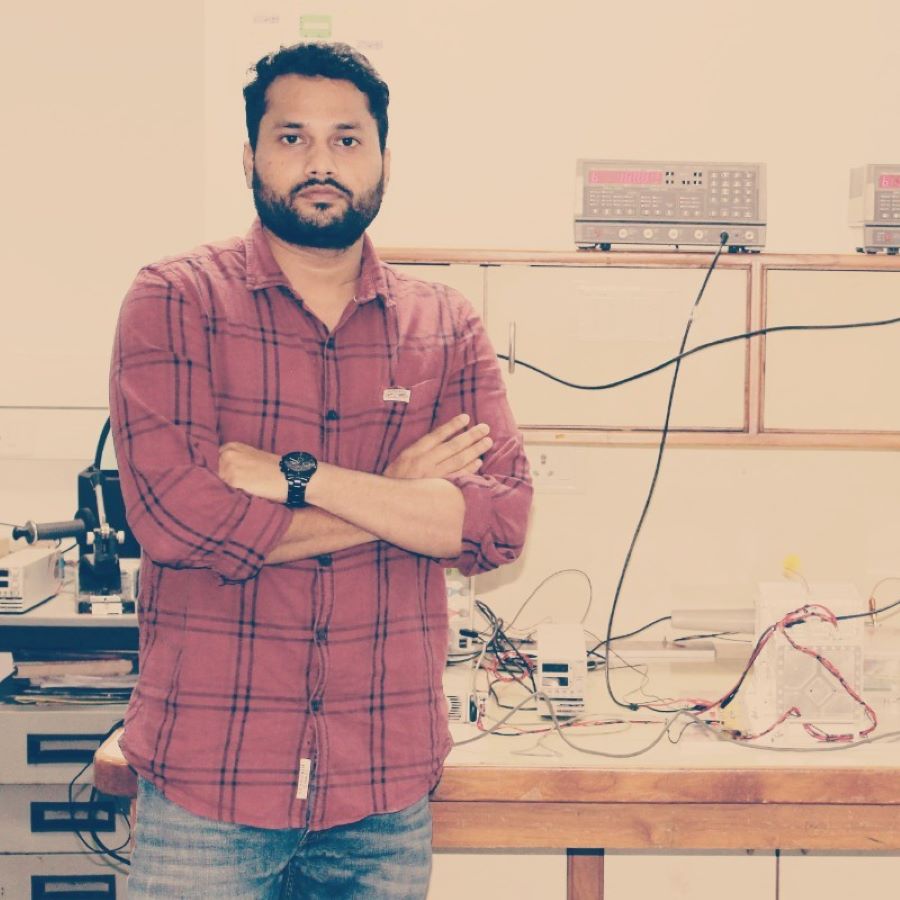
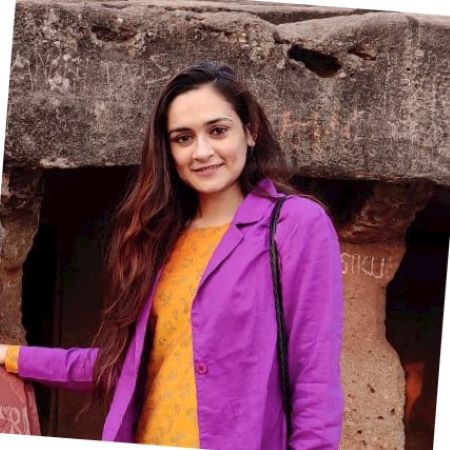
Assam’s Nazneen Yasmin and Dr. Baharul Islam Barbhuyan are among the scientists who contributed to making the ISRO’s Chandrayaan-3 land on the South Pole of the Moon.
Nazneen Yasmin, who is from a middle-class family of central Assam’s Nagaon district joined the ISRO after cracking the toughest selection test two years ago. The young scientist has been involved in radar tracking in the launch department of ISRO for more than a year.
But the journey was not easy for Nazeen Yasmin. While she was on maternity leave for her firstborn about six months ago, she was recalled for crucial operations at least twice and she took her child along.
Despite facing the challenges of married life and the post-pregnancy phase Nazeen was very passionate about the Chandrayyan-3. Many a time, Nazeen worked from home by keeping her baby in her lap.
Naznin Yasmin, daughter of Abul Kalam Azad and Manzila Begum of Maherpar near Juria in the remote Nagaon district received her appointment letter as a scientist at the ISRO headquarters in Swar Sriharikotha, Andhra Pradesh around two years back.
Naznin Yasmin received her primary education at Nuruddin Furkania JB School, Juria in Nagaon district in central Assam. She performed brilliant results in the matriculation or Class X final exam from Kadamani Town High School in 2007. She passed the Class XII exam from Alphabita Science Junior College in 2009 with letter marks in several subjects in the science stream. She later obtained her B.Tech in Electronics from NITS Mirza College, Guwahati in 2013 and her M.Tech in First Division from Tezpur University.
Along with working in various private scientific institutions, Nazneen passed the National Eligibility Examination under the University Grants Commission in 2018 and also qualified for the Junior Research Fellowship of the Government of India.
Nazneen Yasmin, who had dreamed of becoming a scientist since childhood, said she was inspired by the success of India’s first female astronaut Kalpana Chawla. She urges the younger generation not to think of themselves as weak and prepare themselves to get a place in the leading institutions of the country through hard work.
Also, Nazneen was inspired by the life and work of former President Dr. APJ Abbul Kalam, who came from a family with modest means, a family source said.
On the other hand, Dr. Baharul Islam Barbhuiyan of south Assam’s Hailakandi has proved that all dreams come true if a person chases them and works hard.
Baharul, 45 is a resident of Syedband II Khand village situated about 5 km from Hailakandi town. He is the pride of the Hailakandi district.
Baharul Islam’s name came into the spotlight after India’s Chandrayaan-3 spacecraft made history by landing on the south pole of the moon on Wednesday evening. He is a prominent scientist at ISRO. He is one of the scientists who played an important role in the success of Chandrayaan-3
Speaking to Awaz-the Voice Assam from ISRO headquarters in Bangalore, Baharul Islam said he was proud to be involved in a historic work that set a record in the space world. He said students have always been interested in space and after the successful landing of Vikram on the South Pole of the Moon. “Success of Charayaan-3 will result in an increase of interest and curiosity about space science among the younger generation,” he said.
He earned his B.Sc from SS College, a Masters in Mathematics from Aligarh Muslim University, PhD from Gujarat University before joining the ISRO.
Baharul’s parents were teachers and they created an environment of science at their home from the very early stage of their son. His father, Moinul Haque Barbhuiyan, has passed away. Mother Rehana is old yet she is excited about her son’s achievement.
“There are no words to express my joy at the moment. I never thought such a day of success would come. People have been calling us since Wednesday,” said Baharul’s brother Enamul Haque.
source: http://www.awazthevoice.in / Awaz, The Voice/ Home> Story by ATV / posted by Aasha Khosa / August 26th, 2023
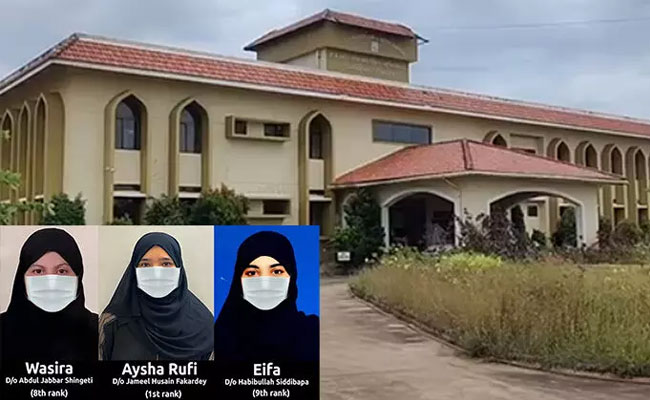
Students of the Anjuman Institute of Management and Computer Application (AIMCA) have achieved remarkable success by securing top ranks in the annual university examination conducted by Karnataka University Dharwad (KUD).
In the Bachelor of Business Administration (BBA) stream, Aisha Rufi, daughter of Jameel Hussain Fakardey, secured the first rank with an impressive score of 94.95% marks.
Wasira, daughter of Abdul Jabbar Shingeti, secured the eighth rank with a commendable score of 91.69% marks, while Eifa, daughter of Habibullah Siddibapa, secured the ninth rank with 91.67% marks, as announced in a press release by the Principal of AIMCA.
Anjuman Hamee-e-Muslimeen President Kazia Muzammil, General Secretary Ismail Siddique, Principal Mohammad Mohsin, and other staff members congratulated the students on their remarkable achievement in the university examination.
source: http://www.varthabharati.in / Vartha Bharati / Home> Karavali / by Vartha Bharati / August 23rd, 2023
Chance, coincidence and an unflinching belief in the plans of the cosmos propelled Samina Bano to quit the corporate world to champion children’s right to equitable access to education.
Sometime in late 2012, Samina Bano, then a Chicago-based consultant with Deloitte Consulting, started to notice what she believed to be ‘omens’ all around. She loved her corporate life – thrived on its challenges and enjoyed its ceaseless travelling, yet was convinced it was time to move on. “There was this persistent feeling that I was meant for something else,” she says.
A hazy idea of what that ‘something else’ entailed was brought about by a chance reading of How to Change the World by David Bornstein. “Till that point, I did not know how to make the best use of my education and skills. I first read the term ‘social entrepreneur’ in the book and figured out that was the way ahead for me,” she recalls.
It would take a chance reaching out to one such change maker in Bihar for Samina to understand that Uttar Pradesh – a state with some of the poorest development indicators, was where she must use her skills. Another chance conversation on the Right to Education Act (RTE) helped her decide the area she must work on.
Samina’s work channelled initially through the Bharat Abhudaya Foundation and subsequently through the RightWalk Foundation (both of which she founded), has focused on Section 12(1)(C) of the above Act. The Section mandates that all private unaided schools (with the exception of minority-run schools) reserve 25 percent seats in their entry-level class for children from socially and economically disadvantaged groups.
Since 2009, when the Act came into force, that Section had never been implemented in UP- home to the world’s largest child population. In 2012, two years before Samina started working, the State recorded zero admissions under the Section, but in 2017, this number had leaped to 27,726.
This was made possible by the bringing together of various stakeholders, awareness building, handholding of parents, creating interface with the government, activating a helpline for RTE admissions and creating an online digital system to institutionalise the admission process. The most prominent push in this effort came yet again from a chance fight.
“The first parents who approached us for admissions fell within a one-kilometre area of a branch of City Montessori School. Under the State government’s rules, it was the ‘neighbourhood school’ to which the children were entitled to admission. We were turned away 15 times by the school. Finally, when the District Magistrate ordered the school to admit 31 children, it approached the High Court”, Samina recounts. It turned out to be a David versus Goliath fight which the school (recognised in 2013 by the Guinness Book of World Records as the world’s largest school) had every reason to win had it not been for Samina and her team’s persistence.
“We did not leave the court case to the government. We worked with its counsel to provide the right arguments. The school was represented by the likes of Gopal Subramanium and Shanti Bhushan. At no point in time were we assured of a win. Yet, we were sure we were going to try,” she says.
The High Court’s order in September 2015 against the school (which then went on to appeal against it only to have its plea dismissed by the Supreme Court) was the most strongly worded message of Samina’s persistent belief that inclusive education was the way ahead for a more egalitarian society. She says, “The law is the same for everyone. Injustice is not acceptable. If you take an initiative with the right conviction, dedication, faith, belief, integrity and truthfulness, God will help you to find the right path”.
This was a lesson Samina had first learned as a child of eight at one of the air force stations her airman father was posted. “I did not understand why there must be a playground reserved only for the children of officials,” she says. Then when she learned in civics class one day that a playground was public property, she rallied classmates and marched up to the station commander demanding that the playground either be opened to all children or their lessons be modified to reflect the inequality. “My victory gave me the hope that anything wrong happening with the world need not stay that way. If we try, even an eight-year-old can make a difference,” she says of that learning.
The transition to working with the government and bureaucrats has been tough admits Samina, While the communication, problem-solving, team and interpersonal skills she learned in her corporate stint helped her, she was hamstrung by women’s inherent inability to network after work hours. Her background in high-end technology did little to convince men of her abilities. “My disability made them think that I must have gotten into engineering through a quota,” she says referring to an accident that left her with more than 50 percent paralysis in one leg.
She has been challenged by vicious rumours of her being related to a prominent politician, accused of having a communal agenda in her dogged pursuance of the RTE and even faced physical threats. “I have had to work almost thrice as hard for recognition of my abilities,” she says. She has also had to bear criticism of her supposed aggressiveness which in men would have been lauded as leadership ability.
Yet never one to shy away from challenges, Samina believes she has been guided by instinct in her work life. This was first manifested when she gave up her MBBS course for a change to engineering, driven by her love for Physics and Mathematics, and refusing to bow to the stereotype that the medical professional was the safest bet for women who studied science.
Her dogged fight against being typecast has yielded rich honours for Samina. She is the recipient of the International Ashoka Fellowship, and the Acumen Fellowship, and counts the APJ Abdul Kalam Award for Innovation in Governance and Women Super Achiever Award from the World Women Leadership Congress, among her many recognitions. Yet it’s in the heartfelt gratitude of parents and children that she finds her greatest reward.
Having created an enabling environment for the implementation of the RTE – not just through admissions but by training government officials at every level, bringing private school managements up to speed on how to provide inclusive education and effecting policy changes, Samina is ready to move on to her next challenge. “Our philosophy is to strengthen government systems for effective and efficient delivery of services, such that they can function independently of us”, she explains. Thus, after 2018, she sees RightWalk as addressing new challenges in education and in other sectors.
And through it, all as Samina, 31, says, “I shall continue to listen to my heart and heed the omens.
source: http://www.yourstory.com / Your Story / Home> Stores / by Puja Awasthi / February 20th, 2018
“In today’s world, if something goes wrong in our household, women are held responsible,” said Mubeena Ramzan, an iconic figure for women’s rights and upliftment in Kashmir. Featured in “The World’s 500 Most Influential Muslims of 2019” and born in the ‘apple town of Kashmir’, Sopore, she had always been a “sensitive” child who always looked around for people who were not so privileged. She had a strong desire to help the underprivileged but financial constraints made her helpless. Growing up, she aimed to change this and be instrumental in helping the lesser fortunate women around her.
“When I initially started, we were just a few people but the recognition of our Kashmiri people who stood with me and joined our cause made me happier,” she shared about being among the most influential Muslims of 2019. Mubeena completed her studies in her native town and joined a private college run by Anjuman Moin-ul-Islam which was the only college for women at Sopore then. “Whenever things are wrong at home, a woman is asked to do a job and support the family,” she recalled. Speaking about her immediate surroundings, she detailed how women were still suppressed “in the garb of religion as interpreted by the village elders and religious leaders.” Disturbed by such wrong interpretations of the status of women in Islam, she was motivated to get educated and work towards improvisation concerning women rights.
“There is an ayah in the Quran which talks about women to remain inside four walls of their homes but we have forgotten that every ayah had its own context,” Mubeena stated while defining her motivation to pursue Islamic Studies. “Our so-called maulvis used Islam as a tool to suppress women while Islam is the only religion which empowers women in every aspect of her life,” she added. Driven by this zeal, she went to the University of Kashmir for pursuing Masters in Islamic Studies. Her choice of studying the interpretation of Islamic teachings was aimed “to look inside the teaching which catered to women.”
“In Islam, women have been given property rights but whenever a daughter asks for her share she is abandoned and fought off,” says Mubeena. Her harrowing experiences of witnessing abandoned women with limited access to clothes, food or water motivated her to enrol for a B.Ed., M.Phil and PhD in Islamic Law. Her vision remained to challenge the deliberately flawed interpretations of Islamic teaching that caused Muslim women untold misery. After her studies, she initially started working as a research associate, looking for opportunities to educate, help and empower women through Islamic teaching. She feels that when people “want to truly empower a woman they should give her the share from the property.”
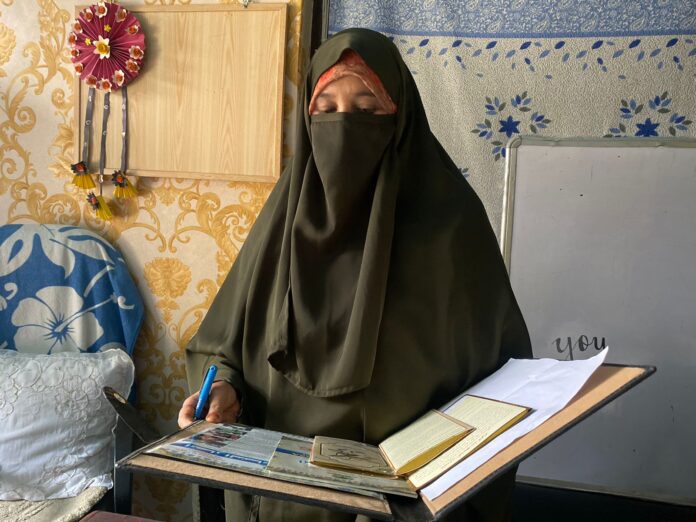
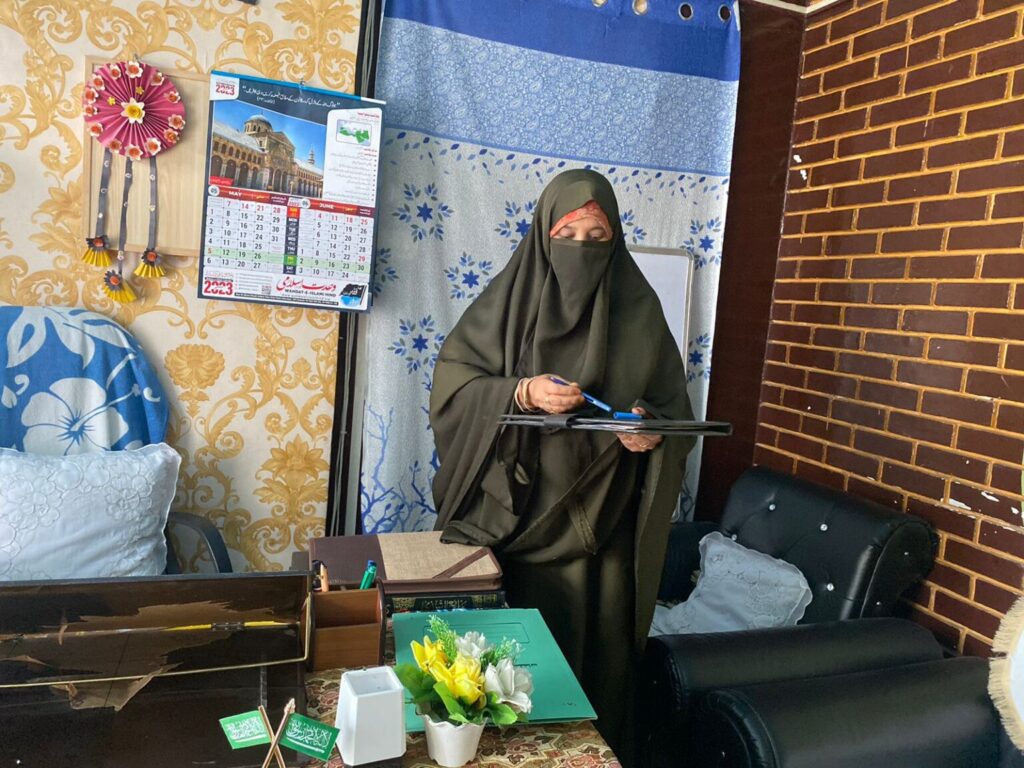
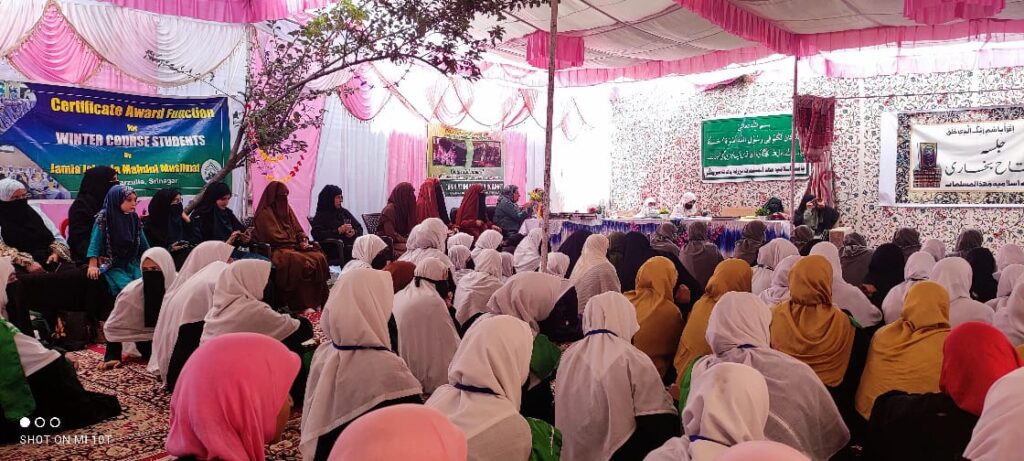
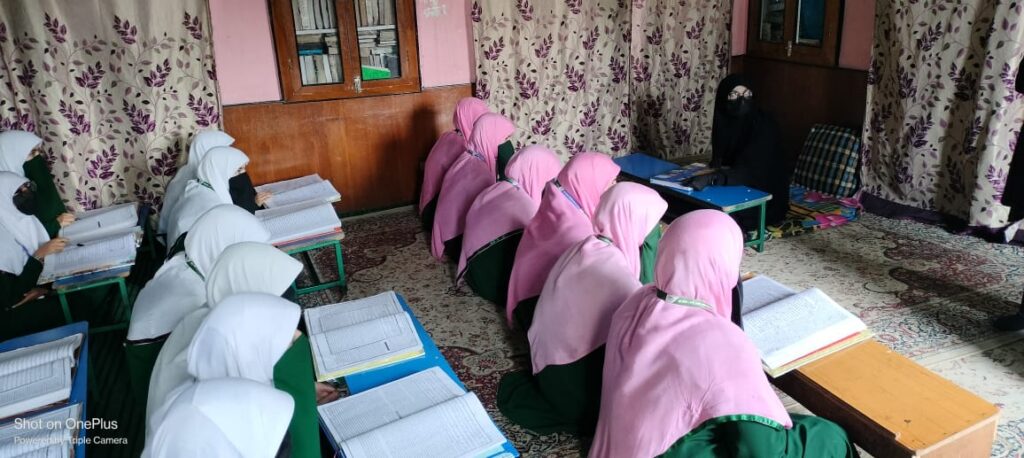
“In Islam, women don’t have any economic liabilities, men were created as the protector and guardian of women so it’s his responsibility to look after her,” Mubeena explained. She completed two theses on Islamic Law and Social Evils as well as on Shah-e-Hamdan and Orientalism. Her education has taught her that “there needs to be more resources for women’s empowerment and education.” To contribute to the cause, she continued working in various educational institutions as a contractual lecturer and research associate and went on to open her own institution for women, Jamia Islamia Mahdul Muslimaat.
“The vocational training in activities like cutting, tailoring, and computer skills here empower and helps us to support ourselves financially,” says Nahila Wani, a senior student at Jamia Islamia Mahdul Muslimaat. The school provides shelter, food, clothes, and education free of cost to all needy students. “Many students who have received an education from this institution have gone on to open their own schools, benefiting our society,” shares Nahila who added that the well-balanced curriculum “fosters independence and awareness among women, making them conscious of their duties and rights.”
“There were so-called preachers who said that I can’t run this institution as I am a woman,” she said while recounting the initial three years of starting the institution. She explained that initially the establishment faced many problems but over time they installed networks with professional teams including top doctors in the valley. The emphasis here lies in educating women in Quranic exegesis, science of Hadith, Jurisprudence, and History, while also training them in languages like Arabic, English, Urdu, and computer skills. “Our goal is to equip them with the necessary skills to become self-reliant and competent individuals,” said Mubeena.
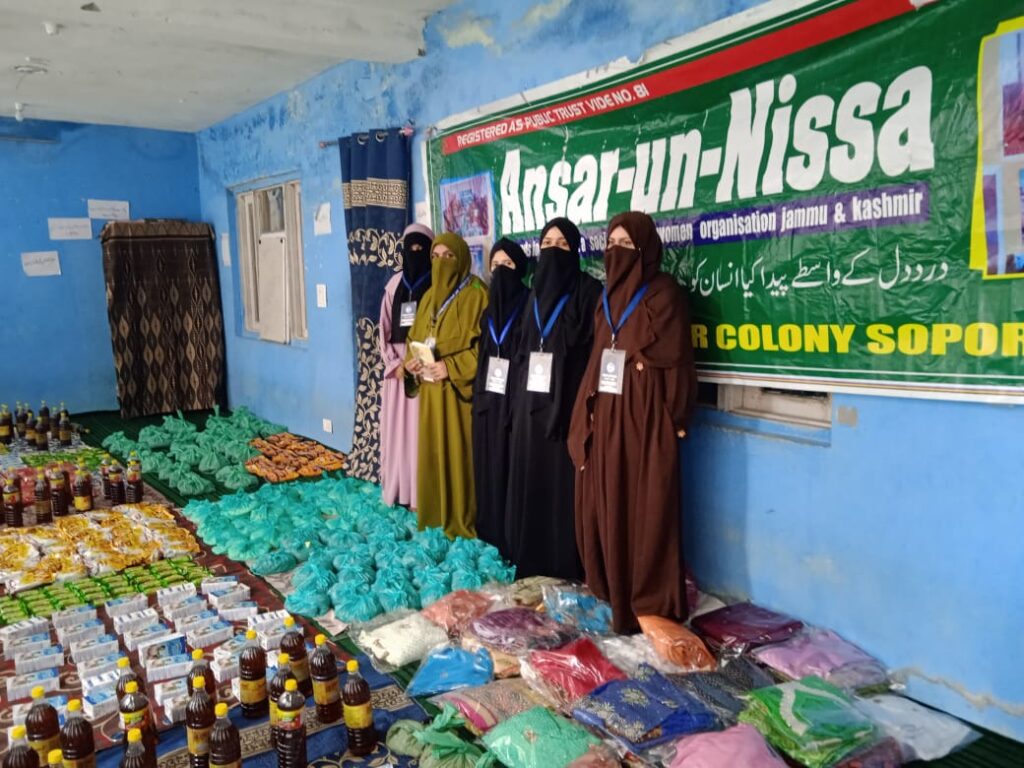
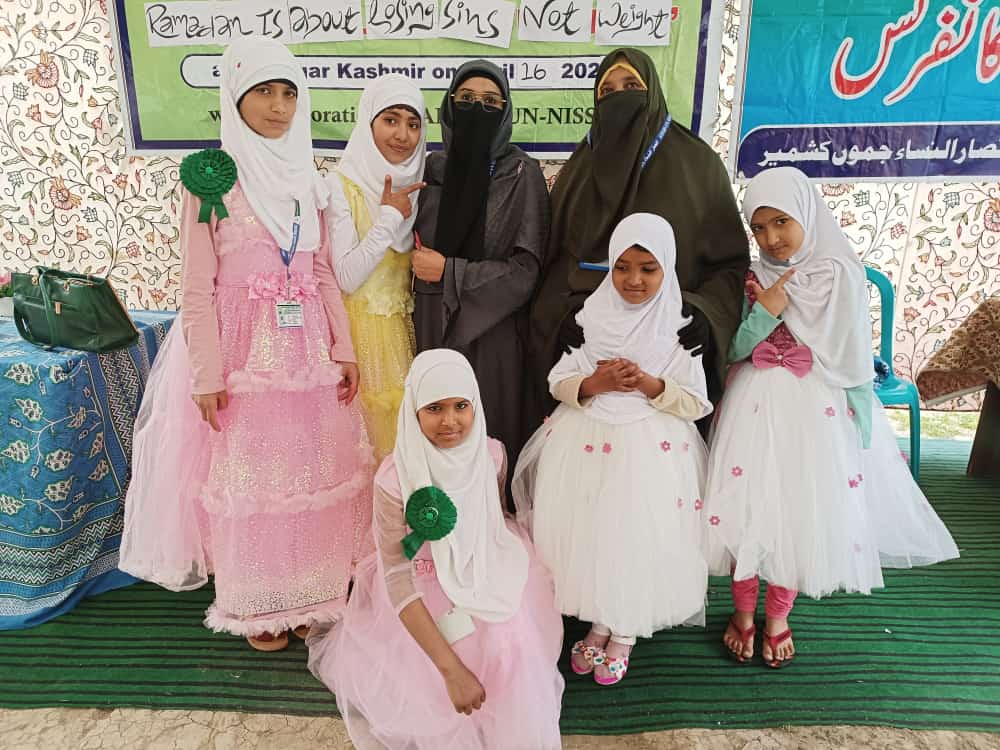
In 2014, Mubeena also started Ansar-ul-Nisa, a socio-religious organization that provides special support to needy orphans, would-be-brides, and widows. Through the organization, she came across several cases of suicidal cases of women, especially among married women. According to the latest National Crime Records Bureau (NCRB) report, there was a 15.62% increase in crimes against women in 2021 compared to the year 2020. Over 7,000 arrests were made in cases of women harassment in the union territory in 2021. In the 2011 Census, among 64 lakh women in the valley, the crime rate per lakh population in stood at 61.6% as of 2021. 315 cases of rape, 1,414 incidents of attempt to rape, and 14 dowry deaths were reported in 2021 wherein 91.4% of cases showed that the accused were known to the victims. Around 1,851 cases of physical assault on women with the intention to outrage their modesty was also caused. The figures clashed with the lockdown in COVID-19 when suicidal tendencies among Kashmiri women grew rapidly, the same time around Mubeena’s team was expanding women counselling activities.
The counseling cell works 24×7 hours to help Kashmiri women in such events wherein one of the cases she dealt with was involving a girl who was abandoned by both her parents who had separated and remarried and registered her as an orphan. Her organization fought on the social front against her father ultimately convincing the local elders to rightly grant some portion of the property in her name. The girl was married off soon after and is currently living happily with her husband and a daughter. Two more orphan sisters studying in Jamia Islamia Mahdul Muslimat received legal help to secure property share from their grandfather and are now living with their mother in their own house. Stories like this abound in Mubeena’s organizations.
“We believe in providing a safe space where newly married women, divorcees, and those suffering from mental health disorders can come to share their stories and find relief,” shares Mubeena. Through her institution’s counseling team of highly qualified professionals including top doctors and professors, they divert efforts to support them financially and emotionally. “As we look to the future, we aim to establish a helpline number to further expand our reach and continue to provide crucial support for those in need,” she said. At present, 600 girls are studying in the institutions and about 500 widows also receive financial assistance. Due to lack of funds, her plans of opening a college for skills-oriented courses are delayed.
Speaking about her future plans, she detailed that she aims to build an institution where all modern subjects are taught at par with Islamic education, alongside martial arts and vocational skills like cutting, designing, oratory, etc. “Our whole motive is to make women empowered through education,” Mubeena iterated her future plans.
Sadaf Shabir is an independent journalist. She tweets @sadafreports
source: http://www.twocircles.net / TwoCircles.net / Home> India News /by Sadaf Shabir / May 24th, 2023
New Delhi / Shillong, MEGHALAYA / Bengaluru, KARNATAKA:
Anjum Hasan’s novel considers what it is like to live in troubling times.
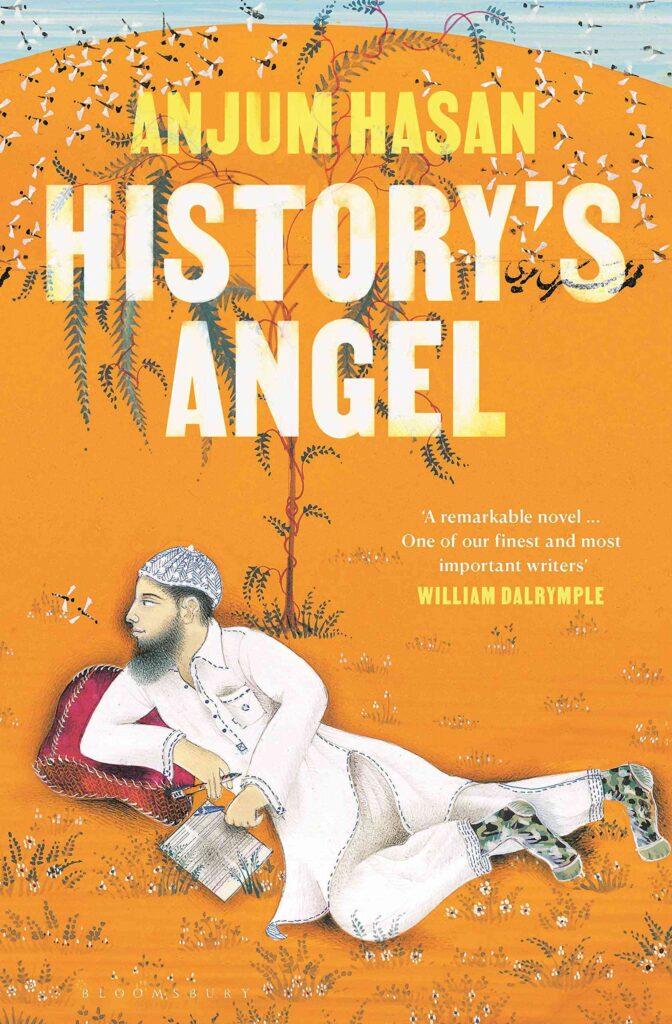
History’s Angel, Anjum Hasan, Bloomsbury India.
Living in an ancient city is like living in two time periods – the present (when you are alive) and the past (when the city was alive and you were not). It’s a strange conundrum. In a city like Delhi, where Alif from History’s Angel lives, the past creeps into the present in ordinary, mundane ways. There’s Humayun Tomb to visit, the Red Fort that you see on your way to work, the ruins of Tughlakabad where people reside…the city of Delhi is effortlessly ancient and ever-expanding. And what about the intangible past – the memories of what Delhi used to be, the violence that ravaged it and the unexpected friendships that were born in dire times, the natural seat of power that stood strong even as the city exchanged hands between emperors and regimes? History is a double-edged sword – there’s pride in continuing the legacy and there’s a burden of living with its failures.
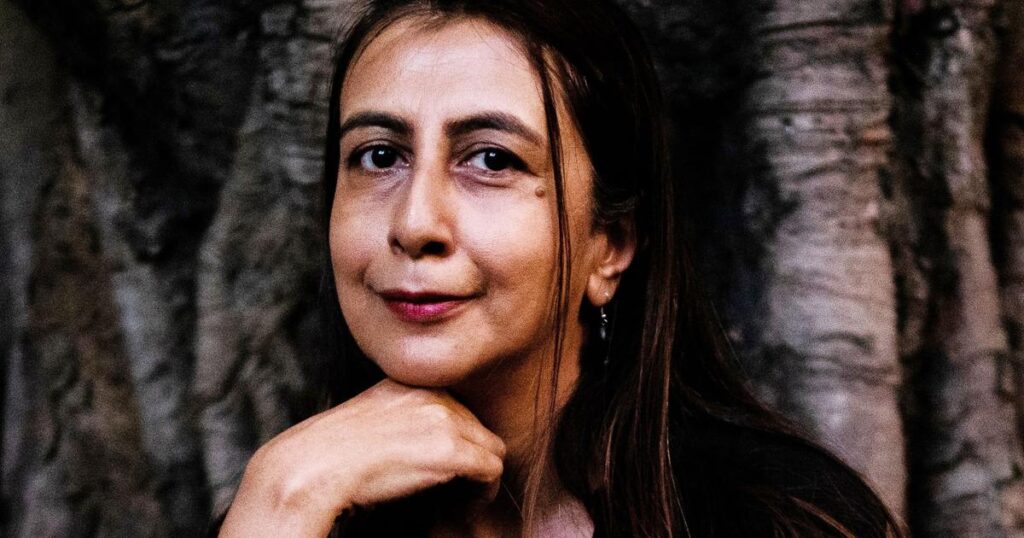
Author Anjum Hasan. | Lekha Naidu
Anjum Hasan’s latest offering, History’s Angel considers what it is like living in Delhi in troubling times (something the city always seems to be in). Alif teaches history to students aged between nine and 14 at a private school. He believes in history – its nuances, nonlinear existence, and its ability to make its students upright, empathetic people. But Indian school education system does not care for holistic scholarship. As long as the students successfully mug up facts and figures and hurl them onto the answer sheets, the teacher’s job is done. But Alif has bigger aspirations – he wants the children to understand and appreciate history in all its complexity. And in striving for this noble goal is where the trouble begins.
Humayun, Hanuman, Hindustan
Hell breaks loose when nine-year-old (upper caste Hindu student) Ankit Kumar disappears from his sight on an excursion to Humayun’s Tomb. Alif imagines the worst, but after a brief period of great anxiety, Ankit is finally found. Overcome with relief, Alif is only too happy to indulge the child when he seeks permission to ask a question. Only it is not what Alif was expecting.
Ankit asks his teacher, “Are you a dirty Mulla?” Perhaps before Alif could even make sense of the child’s question, he reaches for the boy’s ear and twists it. Corporal punishment is a punishable offence – as it should be – but in this case, it is something of a reflex action. Alif is stunned and he feels helpless.
Always keeping himself out of the way of trouble, and with his faith dialled down to the minimum, Alif does everything he can to be a “good Muslim”. However, the India he lives in is not so kind. The story, as it moves from one tongue to another and one imagination to another, takes a grotesque form. The final version is this: Ankit disappeared after Alif insulted his god Hanuman and threatened to throw him out of the rickshaw. In the absence of any reliable eyewitnesses, it is Alif’s words versus the majority’s hostility which is ever ready to exaggerate the failings of Muslim citizens.
The school where Alif teaches is a mini India. There are people of all faiths and cultures but one seems to be quickly taking precedence over the others. Alif wonders why the children stopped singing Muhammad Iqbal’s Saare Jahan Se Achcha in the assembly, why the principal was conducting a havan on the school premises, or why history lessons on Muslim emperors were no longer essential. The principal clearly instructed him to not bring religion into the school – visits to Humayun’s Tomb etcetera – while Hindu traditions were proudly being paraded as the culture of the country. Alif can see the gradual shift from Iqbal’s Hindustan to the narrow-minded, saffron-tinted Bharat. And so can we.
The state of any minority in our country has never been worth much and now, even more so. The hostility and open call for violence is not just encouraged but rewarded. The news cycle works on repeat – lynchings of Muslims, the murder of an untouchable, a Kashmiri’s freedoms curbed, a journalist attacked or jailed, a farmer dead from suicide. And screaming news reporters who are oblivious to it all. An endless, vicious cycle that sucks the common man dry. And it is in this soul-sucking, gut-wrenching India that people like Alif and his wife Tahira strive to be perfect (Muslim) citizens.
Horrors, hounding, humiliation
Simple things like renting a house become an impossible dream as brokers ask the couple if they slaughter goats at home and tell them – feigning kindness – that there are no mosques or madrasas nearby. Tahira and Alif are made to participate in humiliating interrogation – they are not only questioned about their faith and eating habits but made to answer for Muslim invaders and also those who stayed back. The fact that these events happened many centuries ago and the “invaders” had long since integrated with the Indian peoples is immaterial.
The indignity that Muslims are subjected to in India is one-of-its-kind. Disparaging remarks are always at hand and fingers are quick to point to Muslims when something goes wrong in the nation-state. Alif’s mother says stoically, “Things are bad…but if that is what’s bothering you then forget it. Because it is not new.” It is not new. Through the elderly lady’s voice, Anjum Hasan tells us that this has always been the reality of being a Muslim in India. It always has been humiliating. Of course, things have become alarmingly bad in the last decade, but none of us should think even for a moment that India was a secular haven before.
Alif’s is an interesting characterisation – his history teacher persona makes him acceptable as an upright citizen. In India, a teacher exists beyond the classroom – they are considered quite literally a “guru”. In the same way, Alif exists beyond the textbook. He contemplates the Sufi way of life, sorrowfully remembers the demolition of the Babri Masjid and the violence that followed, and imagines the horrors of the Partition.
Not just the past, Alif must also answer for the loud azaan and “land jihaad” of the present. It’s a life of questions and interrogations and like most of us – any of us – Alif does not always have an answer. He is no more responsible for the actions of Muhammad Ghori than Hindus are for the pillaging and killing that many kings of their religion were known for. But only one of them is allowed to cut the cord from the notorious past.
While Hasan easily incorporates the past in her portrayal of the contemporary Indian Muslim, the figures and events of this past can sometimes be distracting. The nine-year-old child who gets the wheel turning on Alif’s ruination fades into the shadows – how did the child become so hateful, what made him falsely accuse his teacher, and why did he not fear being punished? I wanted to know more.
Ahmad, a minor character in the novel, is a devout Muslim. And being devout often means enforcing one’s personal beliefs on others. He complains that Alif’s family “shirks shirks shirks” their faith –photos of human faces adorn the walls at home, Alif’s mother does not cover her head, the men do not always attend prayers at the mosque, the women go out to work, and the children are not being educated in madrasas. Hindus have alienated and hounded Muslims, and so have Muslim fanatics. The common Muslim who just wants to go about their day without getting into trouble is on the losing side of a lost war. Hasan’s attack on Muslim orthodoxy is subtle yet impressive.
History’s Angel ends on a predictive note. You can see it coming however it does not dampen the reading experience – surely you were not expecting justice to be delivered to a wronged Muslim history teacher?
pix02
source: http://www.scroll.in / Scroll.in / Home> Book Review / by Sayari Debnath / July 30th, 2023
The famous writer Kushwant Singh, once wrote: “Indian Freedom is written in Muslim blood, since their participation in the freedom struggle was much more, in proportion to their small percentage of the population.”
The story and history of India’s independence are written with the blood of Muslims. According to historical references, 65% of those who stood, fought and sacrificed against the British for India’s independence were Muslim freedom fighters, the hams live reported.
A large number of people from all religions and castes took part in the freedom struggle, undoubtedly. However, the struggles of many Muslim prominent personalities who also contributed to India’s freedom and even sacrificed everything including their lives are little known. Muslims have been at the forefront to oppose the British and stood shoulder to shoulder with people from other communities while fighting against them. Getting freedom was not easy, our ancestors had to go face a lot of struggles and difficulties to get us the freedom that we are enjoying now.
The First Call To Oppose British
In the 1750s, Nawab Siraj-ud-Daulah was the first awakened Indian ruler, who stood his ground against the British. He lost the Battle of Plassey in 1757 due to the betrayal of Mir Jafar (Commander of Nawab’s army). With this, Siraj-ud-Daulah’s reign marks the end of the last independent rule in India and the beginning of the East India company’s rule that was unabated for the next two hundred years.
First Freedom Struggle By Muslim Rulers
The first freedom struggle against the British was started by the rulers of Mysore Hyder Ali and his son, Tipu Sultan, during the 1780s and 90s. Both used the first iron-cased rockets and cannons effectively against the British invaders.
Tipu Sultan is considered to be one of India’s first freedom fighters for his fierce fight and brave against the East India Company. He resisted the conquest of the British in southern India and was reluctant to welcome them on his soil. He was the only Indian ruler who understood the dangers that the British posed to India, and fought four wars to oust them from the country.
The Unsung Heroines Of India’s Freedom Struggle
Begum Hazrat Mahal, the unsung heroin, played a very important role in India’s war of Independence. Being a woman, she led a rebellion against the British East India Company in 1857. She shot the British ruler, Sir Henry Lawrence and defeated the British army in a conclusive Battle at Chinhat in 1857.
In the great revolt of 1857, as many as 225 Muslim women sacrificed their lives in the uprising. These unsung Muslim women freedom fighters who have sloganeered, shed blood and given their lives for the country’s independence have now been forgotten to due biases.
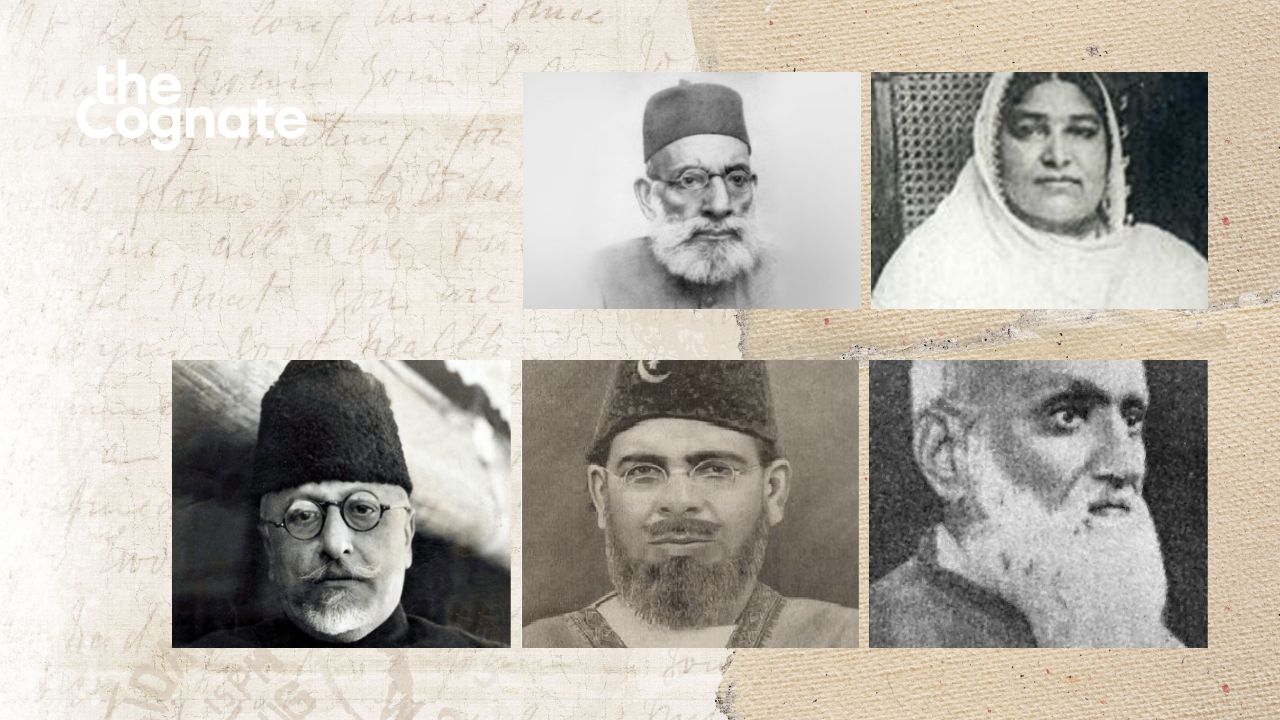
A majority of freedom fighters did a nameless service to the nation and one such lesser-known name was Abadi Bano Begum (Bi Amma). Bi Amma was the first woman to address a political rally wearing an abaya. She took part in National freedom struggles, Khilafat Movement and propagated Hindu-Muslim unity. Following Mahatma Gandhi’s advice, Bi Amma played an. An important role in encouraging women to take part in the freedom movement. Further, she played a pivotal role in the Swadeshi movements.
In the book, Gandhi and the Ali Brothers: Biography of a Friendship by Rakhahari Chatterji, Maulana Mohammad Jouhar says, “Suffice it to say that, although she was practically illiterate, I have, in all experience, of men of all sorts of types, come across none that I could call wiser and certainly that was more truly godly and spiritual than our mother.”
Bi Amma was also the mother of Muhammad Ali Jauhar and Shaukat Ali popularly known as the Ali Brothers whom she raised on her own after her husband died when she was young.
Amjadi Begum, the wife of Muhammad Ali Jauhar and daughter-in-law of Bi Amma, is yet another Muslim women freedom fighter. Mahatma Gandhi also dedicated an article on her titled ‘A Brave Woman‘ where he admired her as a courageous wife of a courageous man.
At the age of 45, Asghari Begum, another forgotten Muslim woman, has also taken part in the 1857 revolt and challenged British rule in the present-day Uttar Pradesh. However, she was captured by the British in 1858 and burnt alive.
Habiba, a Muslim woman’s fought many battles against the British in Muzaffarnagar in 1857. However, she was captured and hanged along with 11 other female warriors at the age of 25.
The Great Revolt of 1857
During the Great Revolt of 1857, Hindus and Muslims under the leadership of the last Mughal emperor Bahadur Shah Zafar tried to oust the British from India. A majority of Hindu sepoys requested Zafar to lead them in the war of Independence. Although the Revolt failed due of several reasons, Muslims have always stood on the front line to oppose the British.
Former Prime Minister of India, Rajiv Gandhi during his visit to Bahadur Shah’s grave, wrote in the visitor’s book: “Although you (Bahadur Shah) do not have land in India, you have it here; your name is alive… I pay homage to the memory of the symbol and rallying point of India’s First War of Independence….”
Muslims came to India and ruled here for over 800 years but they did not steal anything from here as the British, the Dutch and the French did. By bringing plenty of knowledge in literature, architecture, judiciary, political structure, government body and management structure, which is still used in Indian management strategy, they helped India to progress into a unified and civilized nation.
Lighthouse of Rebellion
How many of us know that the organizer and leader of “First Indian freedom struggle” in 1857 was Moulavi Ahamadullah Shah. Known as the ‘Lighthouse of Rebellion’ in Awadh, he Faizabad free from British rule for almost one year, until his death at the hands of British agents on June 5, 1858.
“With being a practicing Muslim, he was also the epitome of religious unity and Ganga-Jamuna culture of Faizabad. In the revolt of 1857, royalties like Nana Sahib of Kanpur, Kunwar Singh of Arrah fought alongside Maulavi Ahmadullah Shah. Maulavi’s 22nd Infantry Regiment was commanded by Subedar Ghamandi Singh and Subedar Umrao Singh in the famous Battle of Chinhat,” according to researcher and historian Ram Shankar Tripathi.
The important role of Muslims in the uprising is the reason that the British government singled out the community for the worst revenge. From the Nawab, the King of Mysore, the last Mughal King, Princes, the landlords, the Ulemas, intellectuals, Urdu journalists, including common people, all members of the Muslim community have made great sacrifices for the freedom of India.
In the uprising of the 1857 revolt, thousands of ulema were slaughtered and the whole of Delhi was emptied of Muslims, according to excerpts from Syed Ubaidur Rahman’s book Biographical Encyclopedia of Indian Muslim Freedom Fighters. They were not even allowed to return to their homes and reclaim their properties.
First Journalist To Sacrifice His Life During The Great Revolt
Moulvi Muhammad Baqir, a scholar and activist of Indian independence activist was the first journalist to be executed following the rebellion in 1857. The editor of Urdu newspapers, Delhi Urdu Akhbar, was washed dead on 16th September 1857 for writing Nationalist articles, without even a trial.
Although India got independence on 15 August 1947, the foundation of the freedom struggle was laid before 1857. Since the time of the Revolt of 1857, which is considered to be the beginning of India’s freedom struggle, Muslim leadership has spearheaded the cause.
First Muslim To Be Hanged For Conspiring Against East India Company
At the age of 27 years, Shaheed Ashfaqulla Khan was the first Muslim to be hanged for conspiring against the British Raj. Khan was hanged to death on December 19, 1927. With this, he became a martyr and a legend among the people because of his love for the country and his unshakeable spirit.
Reshmi Rumal Tehreek (The Silk Movement)
Muslims not only took the lead in the uprising, but also stood in the front line in all other efforts to topple the British colonial regime in India.
After the revolt of 1857, the Muslim leaders changed their strategy of resistance by setting up educational institutions across the country. Reshmi Rumal Tehreek or The Silk Letter Movement (1913-1920) was an initiative by Deobandi Leaders Maulana Mahmud Hasan and Maulana Ubaidullah Sindhi to topple the British Empire.
However, when British intelligence learned about it, hundreds of sympathizers of the initiative were arrested and put in prison for years without any trial. The top leaders including Maulana Mahmud Hasan and half a dozen of his followers were banished to Malta after a faux trial where they faced the worst hardship.
Role of Muslims in Congress’ anti-colonial struggle
Justice Abbas Tyabji, an Indian freedom fighter from Gujarat and associate of Mahatma Gandhi, was the first Muslim president of the Indian National Congress party. Justice Tyabji is also known for leading Salt Satyagraha following Gandhi’s arrest in 1930.
Another Congress president during the colonialism was Maulana Abul Kalam Azad, who is one of the chief Muslim leaders of the anti-colonial nationalist movement. He became the youngest President of the Indian National Congress in 1923 at the age of 35. He faced multiple imprisonments by the colonial state.
From Justice Tayabji to Maulana Abul Kalam Azad, there have been eight Muslim leaders who were in the Indian National Congress’s freedom movement. The other prominent Muslim leaders include, Muhammad Ali Jauhar, Shaukat Ali, Maulana Azad, Dr Mukhtar Ansari, Hakim Ajmal Khan, Maulana Mahmud Hasan and many others. They made every possible sacrifice for the cause of the end the colonial rule.
Frontier Gandhi
Khan Abdul Ghaffar Khan was a Pashtun independence activist who campaigned to end the rule of the British Raj in India. He founded the Khudai Khidmatgar resistance movement against British colonial rule in India. He was also known as Frontier Gandhi for his principles of non-violence and friendship with Gandhi. Khan worked towards the formation of a united, independent, secular India.
Muslim Man Coins “Jai Hind”
The patriotic slogan “Jai Hind” was initially coined by Zain-ul Abideen Hasan, but it was adopted by Netaji Subhash Chandra Bose. It is now used as a way of salutation throughout India. It means “Victory to India” in English.
The Creation Of the National Flag
For a majority of us, the current national flag was designed by Pingali Venkayya. However, it was a Muslim Lady Surayya Tyabji, who created the flag’s final look today.
Although we have recounted several names of the Muslims who have contributed to India’s freedom struggle, there are several thousands of them who fought on the streets against the British Raj.
source: http://www.thecongnate.com / The Cognate / Home> History / by Rabia Shireen / August 15th, 2022
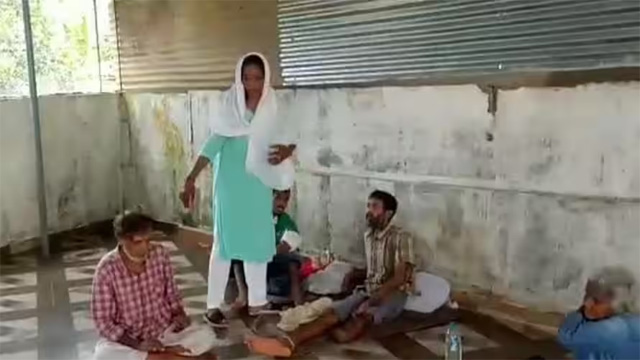
There is no barrier of religion for love, compassion and humanity. Ayesha Banu of the city of Karkala is one such ray of hope for the destitute. She takes care of more than 75 homeless people.
Ayesha not only brings the homeless people to her own ashram but also feeds them and gives them medical treatment. She has people from Maharashtra, Assam and West Bengal residing in her home for the shelterless people. They are given a stomach full to eat, dress to wear and place to sleep.
Ayesha was working in a private hospital when she was young. Her family used to provide ambulance service. One day in a rare situation, Ayesha had to take an orphan young girl to her home as there was no one to take care of her. This came to the public’s knowledge and they started calling her to accommodate orphans known to them. Within no time, the house got filled with destitute. Now she has made a centre for orphans called Suraksha on her own land.
Ayesha spends her whole time in the service of these orphans. Some people give her donations. Rest she herself spends from her savings. Many organizations have recognized her service and have felicitated her in the past eight years. Ayesha has two daughters. She says that she will serve the orphans till her last breath.
Ayesha stands tall in today’s world of hate mongering and selfishness.
source: http://www.daijiworld.com / DaijiWorld.com / Home> Top Stories / by Daijiworld Media Network – Karkala (MS) / August 12th, 2023

_and_Baharul_Islam_Barbhuyan_(right0.webp)