Ganjimutt (Mangaluru), KARNATAKA / Jubail, SAUDI ARABIA:
Al Jubail :
The Elite Cup – Saudi Arabia 2023 sports tournament will be held on a grand scale in Saudi Arabia for the first time.
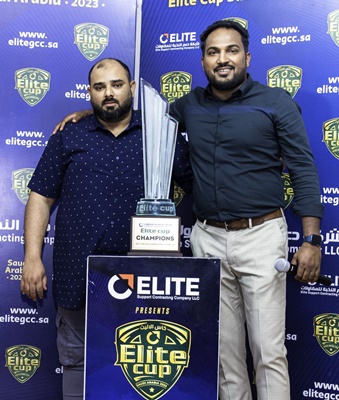
The tournament, which will be held at Expertise sports grounds, Al Jubail from May 10 to 12, is being organised by Elite Support Contracting Company CEO Ijaz Ganjimutt, a resident of Ganjimutt in Mangaluru, for the promotion of the company.
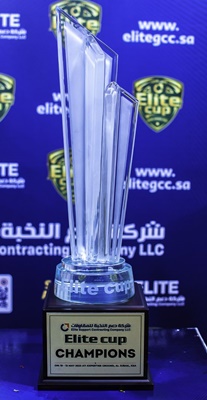
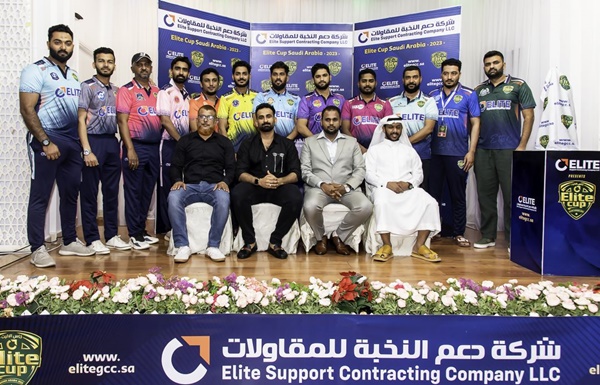
The trophy, jersey and final draw of the tournament were unveiled at Al Jubail Cocoon restaurant on April 29. Company CEO Ijaz Ahmed Ganjimutt, company founder Ibrahim Al Rowaishid, Expertise Company’s Abdul Azeez, Excelsion Company’s Razin were present.
Company’s organising committee members, Elite Company employees and entire cricket tournament in charge, Zameer and Safwan were also present. The captains of 12 teams that will be participating in the tournament sported the new jerseys that were released.
Janab Sayyed Shekabba, Janab Mohammed Ashfak, Janab Mohammed Asif and Janab Mohammed Ijaz who gave the ground for the tournament were thanked by company CEO Mohammed Ijaz on the occasion.
The concluding programme of the tournament will be held on a grand scale at the grounds on May 13. Specially invited artists Tulunada Manikya, Arvind Bolar, Umesh Mijar, Mohammed Iqbal Katipalla and international host and dost Sahil Zaheer will participate in the programme.
The programme will not be restricted only for cricket but will also have food fest, kid games, music and family events along with a lucky draw besides other spot games.
The first prize of the tournament will consist of Elite cup and cash prizes of more than Rs 7 lacs. The second prize will be worth more than Rs 4 lacs in cash.
source: http://www.daijiworld.com / Daijiworld.com / Home> Top Stories / by Media Release – Daijiworld Media Network – Saudi Arabia / May 01st, 2023
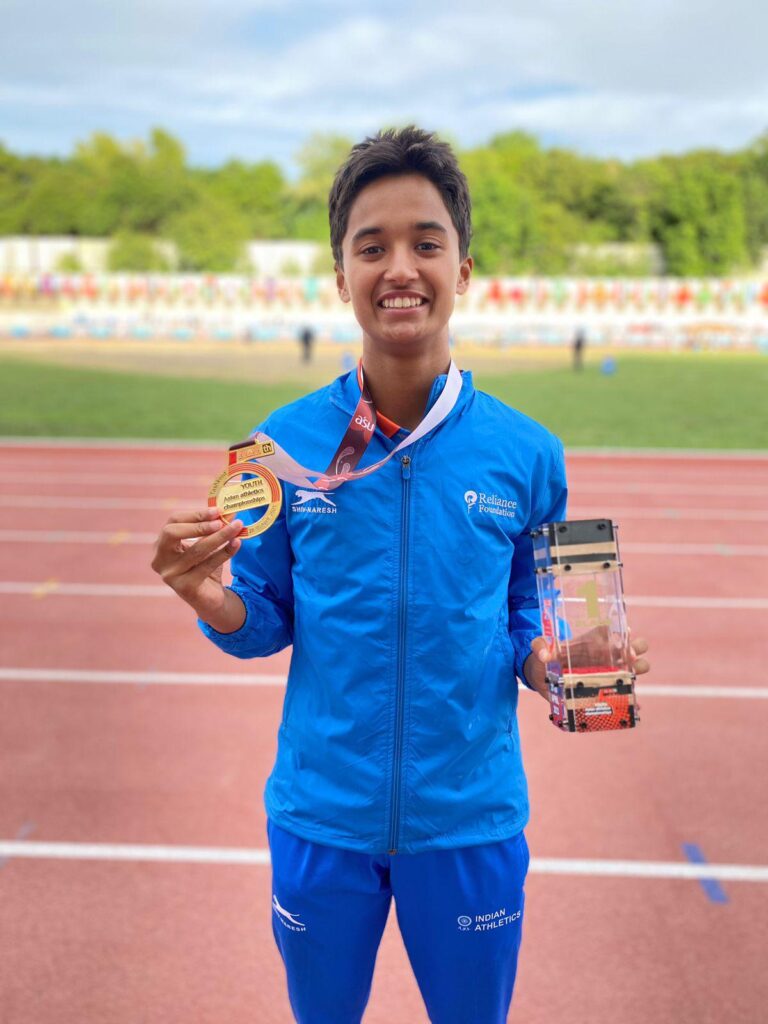
Rezoana Mallick Heena broke the eight-year-old meet record of Bahrain’s former World champion Salwa Eid Nasser as she won the girls 400m gold at the fifth Asian under-18 athletics championships in Tashkent, Uzbekistan, on Friday.
The 16-year-old from Nadia in West Bengal, who is coached by Arjun Ajay in Bengaluru, clocked 52.98s (Salwa’s old meet record 53.02s) which made her the world’s fastest under-18 quartermiler this year and the fastest Indian woman this season. Rezoana’s sterling sprint also bettered former Asian silver medallist Jisna Mathew’s under-18 national record (53.14s, 2015).
Meanwhile, Tamil Nadu’s Abinaya Rajarajan clocked a personal best 11.82s while grabbing the girls 100m silver in 11.82s. Bahrain’s Lalya Kamal took the gold in 11.77s.
In the boys section, India won bronze medals through sprint hurdler Sandeep Vinodkumar Gond (13.80s) and Babendra Singh (10,000m race walk, 43.16.95s).
source: http://www.thehindu.com / The Hindu / Home> Sports> Athletics / by The Hindu Sports Bureau / April 28th, 2023
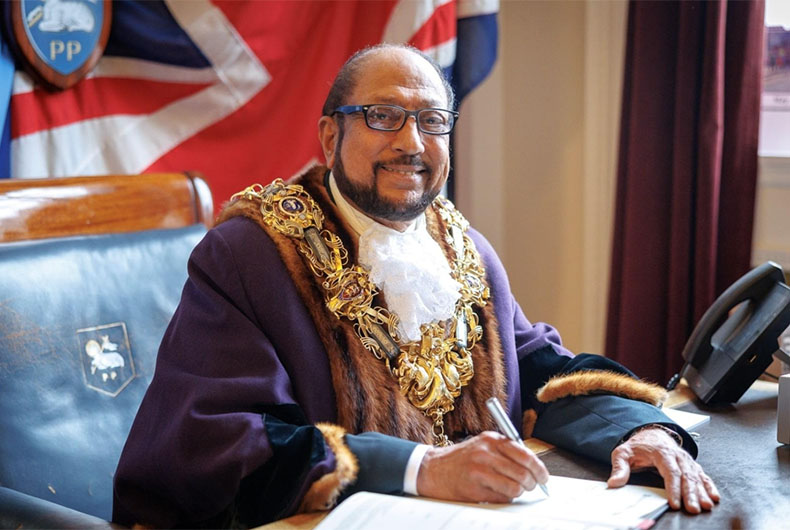
The city of Preston in the UK has elected Gujarat-born Yakub Patel as its first Indian-origin Muslim Mayor for 2023-24 following the completion of Councillor Neil Darby’s term in office.
In his new role, Patel will chair council meetings, and act as ceremonial head representing the city at engagements throughout their year in office.
“I am honoured and delighted to become the Mayor of Preston, a city I am proud to call my home. I hope to make positive differences to the communities that I serve and also provide additional support through my Mayoral charities for the coming year,” Patel said.
Prior to his new role, Patel has been serving as the city’s Deputy Mayor since May 2022.
The long serving councillor has been undertaking civic duties and hosted the visit of the Royal Family in summer alongside the then Mayor.
“…It gives me great pleasure to be handing over the chains of office to the Mayor-elect, Councillor Yakub Patel. The last year has been the most outstanding experience of my life and it has been a huge honour to have been the Mayor of our fabulous city,” Preston’s outgoing Mayor Darby wrote in a tweet.
Birth and Migration to UK
Born in Bharuch, Gujarat, Patel graduated from M S University of Baroda with a degree in BA and MA in English Literature. He came to the UK in June 1976 and started his career in 1979 with Preston Corporation.
Patel also held roles as a Revenue Inspector, Traffic Inspector, Assistant Chief, Chief Inspector and Operations Manager before he retired on July 4, 2009.
Political Career
He has been involved in politics since the age of 10 when he started canvassing and delivering leaflets for his late father, who was a strong supporter and a member of the Congress party.
He was first elected as a Labour Party councillor for Avenham Ward in 1995 and was the first Muslim councillor in the history of Preston City Council.
In addition, Patel was also elected as a Lancashire County Councillor for Preston West Division during 2001-2009.
The new Mayor is also an active member of the local community and serves as a co-opted member for Preston Jamea Mosque and Preston Muslim Burial Society.
He is a school governor for Frenchwood Community Primary School. Rosemere Cancer, Preston Domestic Violence Services and Emmaus will be Patel’s Mayoral Charities for 2023-24.
source: http://www.ummid.com / Ummid.com / Home> United Kingdom / by IANS / May 23rd, 2023
Sadiya Almas was awarded the title of the strong girl of India in National powerlifting championship 2020 held in Ghazipur, Uttar Pradesh.
Sheikh Sadiya Almas felicitated in Vijayawada on Sunday (Photo | P Ravindra Babu, EPS)
Vijayawada :
Shaik Sadiya Almas, who secured a gold medal in powerlifting during the Asian Powerlifting Championship held in Turkey, recently, was felicitated by the Muslim Development Society at a programme here on Sunday.
Speaking on the occasion, Sadiya Almas credited her parents for winning the medals at the championship. “So far, I have achieved only a little in my career and I am working hard to achieve a lot with the support of my family and coach. I will bring more laurels to the country and inspire youngsters,” Sadiya said. She also appealed to the government to provide necessary funds for upgrading the gym at Mangalagiri and make it accessible for more youngsters.
The powerlifter secured the first place in Asian Powerlifting Championship held in Rajasthan in 2018. She also secured the first place in Junior State Championship held in Anakapalle in 2018. She secured ninth place in the Senior national Powerlifting Championship held at Sattenapalli in 2018. She was awarded the title of ‘Strong Girl of Andhra Pradesh’ in 64 SGF State Championship held in Nandigama in 2018.
Sadiya Almas won fifth place in Junior National Championship in Kerala in 2019 and got third place in Federation Cup Championship held in Indore, MP in 2019. Sadiya was awarded the title of ‘Strong girl of South India’ in the South India Powerlifting Championship held in 2019-20 in Hyderabad. She was awarded the title of the strong girl of India in the National powerlifting championship 2020 held in Ghazipur, Uttar Pradesh.
source: http://www.newindianexpress.com / The New Indian Express / Home> Cities> Vijayawada / by Express News Service / January 25th, 2022
Mrs. Aaesha Munawar, General Secretary, U.P. Judo Association, has been nominated as a member of the Infrastructure Committee of the Indian Olympic Association.
Mr. Amitabh Sharma is the Chairman of this Committee. Apart from Aaesha Munawar, the other members are Mr. Bhola Nath Singh, Mr. Vaghish Pathak, Mr. Akhil Kumar, Mr. Ravi Bengani and Dr. Amit Bhalla. This Committee will serve till the year 2026.
This is for the very first time that a female Judoka from U.P. has been nominated in an IOA committee.
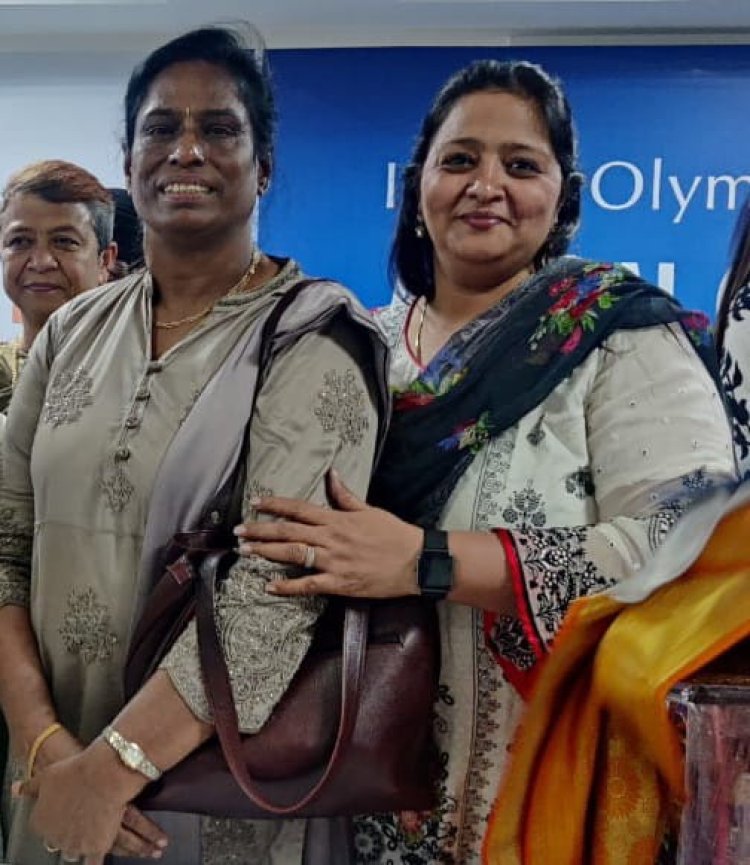
Mrs. P.T. Usha , President,IOA ; Mrs. Alaknanda Ashok , Joint Secretary, IOA; Mr. Harpal Singh and Mr. Bhupendra Singh Bajwa – Executive Council Member, all congratulated Mrs. Aaesha on her nomination.
Munawar Anzar, CEO, U.P. Judo Association.
source: http://www.ismatimes.com / Isma Times / Home> News> National / by Afzal Shah Madudi / March 13th, 2023
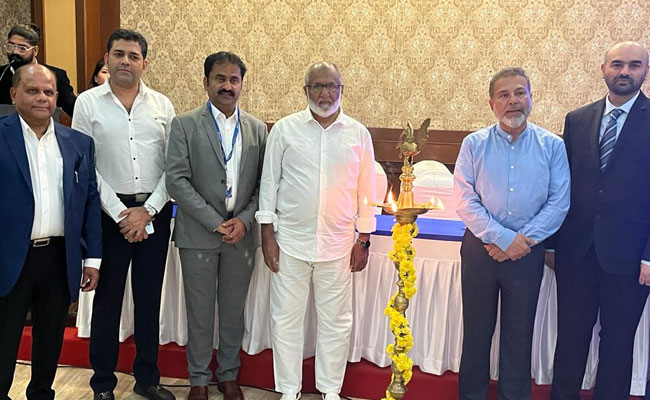
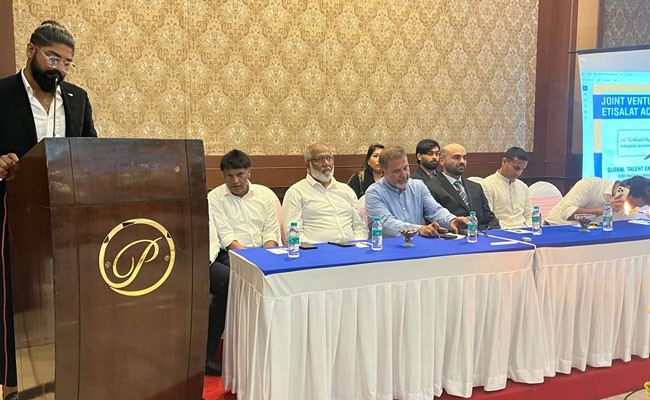
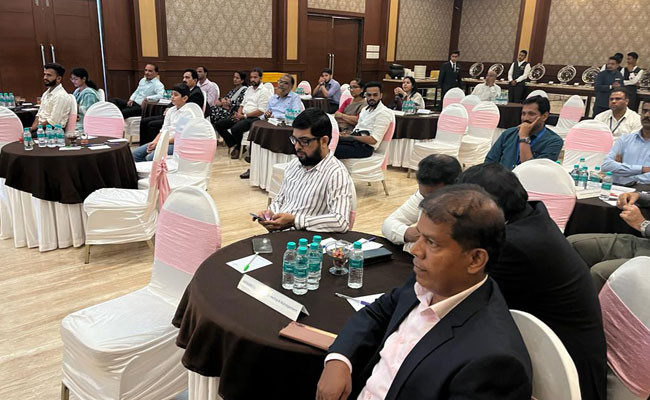
Skiltec Ace Global Human Resources in association with Etisalat Academy UAE launched the Global Talent Enhancement Program in Mangaluru, here at the Ocean Pearl Hotel in the city on Friday, May 5.
The event was attended by prominent personalities Syed Mohamed Beary, Vivek Alva, Farhad Yenepoya among others along with Dr. Mahammed Almarzooqi, Sr. Director Special Projects and Planning Etisalat Academy.
Syed Mohamed Beary, Founder and CMD, Bearys Group and Chairman and Managing Trustee Bearys Education, in his keynote address said skillset is one of the most important things that needs to be developed among the students and youngsters.
He also said that skillset in the modern times are missing the human touch and that spirituality should be taught to the younger generation as it is equally important.
He further stressed about how it was crucial to teach application of mind to the students which play an important role in their overall development and growth.
Vivek Alva, Managing Director, Alva’s Group of Institutions also extended support to the project adding that the project is set play a crucial role in providing employment and developmental opportunity to the fresh graduates from local institutions.
He also added that while the institutions create and groom talents, placing them at right and employment opportunities was also important.
Farhad Yenepoya of the Yenepoya Group of Institutions, in his address noted that for any educational institution, skilling its students was one of the most important and difficult task as students from several backgrounds and different skillset come under one roof. He also hoped the program would be beneficial for the fresh graduates in the region and would give them greater opportunities for their growth.
Mohammed Haris, Trade Commissioner, UAE Arab Asian Chamber of Commerce also spoke during the event and wished the project luck while also assuring of extending support through his organisation.
Dr. Mahammed Almarzooqi presented an introduction of the Etisalat Academy and spoke about the program and how it would help the local educational institutions and students.
Dr. SM Rasheed Haji, President, Bearys Chamber of Commerce and Industries, Mumtaj Ali BM, Chairman, Misbah Group of Institutions, Rahul Haridas, Channel Partner Manager, Etisalat and Evangelyn Brigaudit, Client Relations Manager, Etisalat Academy were also present as Guests of Honor during the event.
Skiltec Ace Global HR’s Director, Mohamed Ali Uchil welcomed the guests and representatives of various colleges who were attending the event.
Evangelyn Brigaudit presented a visual presentation explaining the program and Etisalat Academy.
source: http://www.english.varthabharati.in / Vartha Bharati / Home> Karavali / by Vartha Bharati / May 05th, 2023
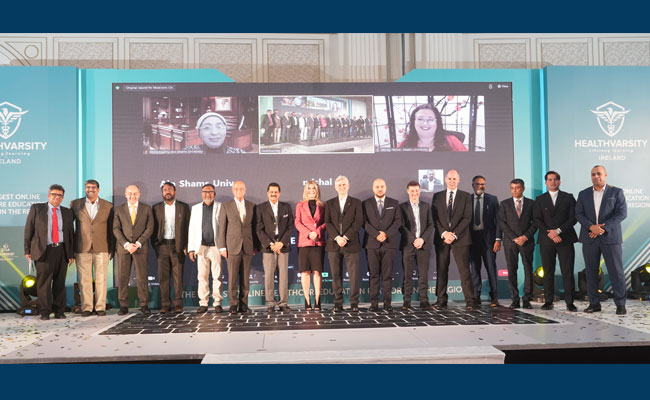
Healthvarsity LLC, the GCC region’s biggest online learning platform for health professionals, using AI and blockchain technology, was launched in Dubai on Wednesday by one of the region’s pioneers in healthcare and medical education.
Headquartered and registered in Dublin, Ireland, Healthvarsity is the brainchild of Dr. Thumbay Moideen, Founder president of Healthvarsity and Thumbay Group, the Dubai-based international business conglomerate, with operations across a wide range of verticals, including education and healthcare.
Designed to positively impact healthcare professionals by helping them progress in their careers, the new EdTech venture offers currently more than 200 courses-which can be paid for in cryptocurrency. The platform aims to expand the reach and accessibility of well-defined programs for up-skilling doctors, nurses, pharmacists, physiotherapists and aspiring medical students, among others. Going forward, the platform will also introduce features such as an AI-based Virtual Instructor, AI-based Virtual Mentor and AI-based Virtual Assessor.
Dr. Moideen, Founder President of Healthvarsity, introduced the platform to 200 stakeholders and guests attending the official launch ceremony today at the Palazzo Versace Hotel, Dubai.
Guests of honour present at the ceremony included Dr. Richard Grose, Dean for Global Engagement, Professor of Cancer Cell Biology, Queen Mary University of London, UK, and Mrs. Wendy Palmer, Director, Global Studio, Deakin University, Australia. They were among a panel of international experts who took part in a multi-stage process to design the Healthvarsity audio-visual courses and full curriculum.
Speaking at the launch ceremony, Dr Moideen said: “Healthvarsity embodies the highly engaged, focused, interactive and unique learning that has been a hallmark of medical education programs for decades. The interconnected world that we live in has experienced unprecedented growth in recent times, and preparing healthcare professionals to succeed in this challenging environment demands a flexible and real world-based approach to education.”
“Healthvarsity will, thus, provide a powerful channel for communicating ideas to and engaging with new and wider audiences, nurturing lifelong journey of enquiry and discovery and achieve better career outcomes using latest technology.”
Healthvasity courses are available in the English language for all users, at different designations and levels of education and professional experience, from students to administrators, doctors, and other healthcare professions. After the initial registration, users can select courses optimally meeting their professional requirements from several options, including diploma, advanced certificate courses, master classes and self-study programmes. On completion of each course, they receive a certificate on blockchain to maintain security and authenticity.
Healthvasity offerings are differentiated by multiple course styles, including recorded webinars, guided tours, case studies, test preparation, demonstrations, and leaders’ insights.
Mrs. Wendy Palmer, Director, Global Studio, Deakin University, Australia, “We are honored, excited and proud to partner with Healthvarsity to lead the transformation in medical education. With unique set of courses, the platform will provide not only provide easily accessible tool for professionals and learners in refining their skills and increasing the accuracy of their work, but will also bring together renowned academicians of the world on one platform to make the Halthvarsity the center of engagement for research, innovation, education and collaboration in the years to come.”
Fee structure for students, and revenue model for instructors, are built on a robust and forward-looking economic model. Partnering local banks, payment gateways, ‘Learn now and pay later’, Healthvarsity offers easy and flexible payment methods for learners to make healthcare education more accessible, and economically sustainable, to enable future investment and growth.
Dr. Richard Grose, Dean for Global Engagement, Professor of Cancer Cell Biology, Queen Mary University of London, UK: “We are excited to join forces with Healthvarsity to equip health professionals, learners in the region, and beyond, with the essential skills they need to achieve better career outcomes. Learners across the world have embraced online learning at a greater pace since the beginning of the pandemic. And, therefore, expanding our range of partnerships with some of the region’s pioneers in medical education and research, we look forward to continuing to deliver transformational, relevant learning to everyone.”
The panel responsible for designing the Healthvarsity courses and curriculum also included experts from University of Arizona (USA), Medi-AI (Australia), Skills for Health – UK, e-Integrity (UK), Learna (UK), AIN Shams (Egypt), Raaonline (India), The Behavioral Training Institute (Ireland), IBCCES (USA), Arlington Medical Academy (UK), Gulf Medical University (UAE), Thumbay Labs (UAE), Advanced Laparoscopic Training (United Kingdom), Newcastle Australia – Singapore, AIO Compass (Japan).
About Healthvarsity
The Healthvarsity registered in Ireland, aims to positively impact healthcare professionals by helping them progress in their careers. The newly established ed-tech venture is a brainchild of the visionary leader in Healthcare and Medical Education, Dr. Thumbay Moideen.
Healthcare and alternative medicine are growing sectors, and the demand for working professionals in these segments has seen a meteoric rise in recent times. Accredited health courses provide students with the skills, knowledge, and experience to stand out and develop the tools they need for a rewarding career. The objective of this platform is to make healthcare education more accessible, engaging, and beneficial for people everywhere. Healthvarsity courses are organized to help focus on learning with a more comprehensive study of key topics related to health, wellness and beyond.
Healthvarsity will provide professional development, career-focused education, and in-demand healthcare programs in a self-paced online format. Enrolling in online courses is an excellent way to demonstrate commitment to a healthcare specialization.
About Thumbay Group
Founded by Dr. Thumbay Moideen in 1997, Thumbay Group is a diversified international business conglomerate with operations across different verticals. These include education, healthcare, medical research, diagnostics, retail pharmacy, health communications, retail opticals, wellness, nutrition stores, hospitality, real estate, publishing, technology, media, events, medical tourism, trading and marketing & distribution. Headquartered in Dubai, the group presently employs around 3,000 people.
Thumbay Group is committed to provide quality care to the community. The Thumbay Hospital Network, which today has the distinction of being the biggest chain of private academic hospitals in the region, treats patients from as many as 175 countries. Thumbay Group’s Healthcare Division operates eight academic hospitals, ten family clinics and medical centers, five diagnostic labs, and 46 retail pharmacy outlets.
Thumbay Group’s pioneering role in the GCC has helped establish the UAE as a regional hub of futuristic medical education, state-of-the-art healthcare, and cutting-edge research.
source: http://www.english.varthabharati.in / Vartha Bharati / Home> Gulf / by Vartha Bharati / May 03rd, 2023
In the run-up to 2024, with the pendulum poised between a secular or theocratic state, we need to revisit this forgotten chapter of history.
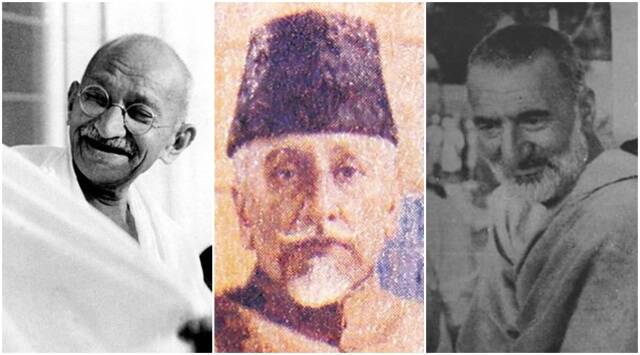
In the end, only three Indians spoke against Partition: Mahatma Gandhi, Maulana Abul Kalam Azad (centre) and Khan Abdul Ghaffar Khan (right). (Express Archives)
The hall of the Bharatiya Bhasha Parishad on Calcutta’s Shakespeare Sarani was fully packed when I arrived for the Hashim Abdul Halim Foundation International Seminar. The Foundation is named after a man who was the speaker of the West Bengal Assembly for 29 years. The Iran Society which brings out the journal Indo Iranica is located in his ancestral home. Fuad Halim and Saira Shah Halim, along with their group, were the spirit of this event.
The overhead banner read “Muslims for a United India — Unvisited Histories: Remembering the Azad Muslim Conference, April 27-30, 1947”. Each word of the banner was part of my life although I had never thought of framing it in this way.
In 1947, my family was forcibly evicted from our ancestral place, Panipat, where we had lived for 800 years. No one asked them if they wanted to go to a newly carved country named Pakistan. The women of my family left notes pasted on their front doors, “We are going for a short time; we will return”. Keys were handed to neighbours, tears flowed on both sides. All they could carry were bundles and potlis. They were mostly women; the men of Panipat worked in nearby cities. They would join later. Young men who were studying abroad did not “opt” for the new country until it became inevitable. Seventy-six years later in 2023, I live in Delhi, near the campus of a university, Jamia Millia Islamia. Those who established it in 1920 were fortunately not evicted; they stayed on amidst the communal frenzy because they believed in a united India.
That day I heard speaker after speaker in a hall which remained packed for almost eight hours. They spoke on topics like ‘The Case for a South Asian Union’, ‘1857 Joint Heritage Joint Martyrdom’, ‘Muslims against Partition – Carrying Forward the 1857 Legacy’, ‘Challenging the Two Nation Theory: Maulana Azad and Nationalist Muslims’, ‘The Two Nation Theory: One Thought of Hindu Mahasabha RSS and Muslim League’, ‘Muslims who opposed the Partition of India’, ‘Allah Bux Soomro and Muslim Politics’. These were academics from universities across West Bengal, plus a few from the US and the UK.
The Azad Muslim Conference was the cord that held it all together. It was organised in Delhi in 1940 for three days, its objective: Advocacy for composite nationalism and for a united India, and unequivocal opposition to Partition and the Two Nation Theory. Participants were from the Krishak Praja Party, the Jamiat, Majlis e Ahrar ul Islam, All India Momin Conference, Khudai Khidmatgar, All India Shia Political Conference, Anjuman i Watan Baluchistan and others. Wilfred Smith, a world-renowned orientalist from McGill University in Canada wrote that this conference represented the vast majority of India’s Muslims. The Bombay Chronicle reported that the Muslim attendance was five times that of any event organised by the Muslim League. Allah Bux Soomro, twice premier of Sindh, was its leading light. Born in 1900 in Shikarpur, his fierce commitment to a united India led him to return the honours bestowed on him by the Empire. An equally unequivocal opposer of the two-nation theory was Maulana Abul Kalam Azad. He was born in Mecca, lived in Kolkata and joined the struggle with the guerrilla movement of Jugantar with Rash Behari Ghosh and Shyam Sundar Chakravarty. Azad spoke from every platform, the highest being his addresses as President (twice) of the Indian National Congress , against Partition and for a united India. In his first presidential address in 1923, he spoke for Hindu-Muslim unity, even if it meant a delay in attaining Swaraj.
Three years after the AIMC, Allah Bux Soomro was assassinated by an assailant said to belong to the Muslim League.
As the conference proceeded, layer after layer opened up and, to reword John Keats, I felt as if a “new planet swam into my ken”.
In the last decade, I have heard the following refrain from many quarters: “They demanded Pakistan. So why are they here? The Muslims — expunge, expel, exorcise them.”
Questions: Who asked us? Was there a plebiscite? Was there a “rai shumari”? Who made it happen? Elite Muslims, colonial masters — who suffered?
In his excellent work, Muslims Against Partition, Shamsul Islam writes, “The people of India, Hindus, Muslims, Sikhs, unitedly challenged imperialist power. This unprecedented unity naturally unnerved the firangis and made them conscious that their rule could flourish only if Hindus and Muslims were divided along communal lines.” The Minister of Indian Affairs, Lord Wood wrote to Lord Elgin, ‘We have maintained our rule in India by playing off one part against another.’ John Lawrence, Administrator of the East India Company, wrote, ‘If Muslims and Hindus have quarrelled, so much better for us; let them slaughter each other…’”
In the end, only three Indians spoke against Partition: Mahatma Gandhi, who said “over my dead body” but succumbed to the Congress; Maulana Abul Kalam Azad who stood his ground and Khan Abdul Ghaffar Khan, who wrote to Gandhi, “We Pashtuns stood by you and had undergone great sacrifices for attaining freedom. But you have deserted us and thrown us to the wolves.”
In the run-up to 2024, with the pendulum poised between a secular or theocratic India, we need to recall this forgotten history. In the current din of Muslim hatred is heard the rasping voice of the Minster of State for Law and Justice. At Delhi’s Maharashtra Sadan, he said, “There are very few tolerant Muslims; those who pretend to be tolerant do so to grab the offices of the Vice President, the governor as well as vice-chancellors. As soon as they retire they start spitting poison. They wear the mukhota (mask) of tolerance; tolerant Muslims can be counted on fingers. The basic structure of the nation is Hindu Rashtra.”
I’m ending with two lines from Hafiz Shirazi, quoted in S Abid Husain’s prophetic work, The Destiny of Indian Muslims: “If sorrow raises its dire legion/ To overwhelm people of faith / The Saqi and I will join hands /To wipe it off the face of this earth.”
The writer is former Member, Planning Commission
source: http://www.indianexpress.com / The Indian Express / Home> News> Opinion> Columns / by Syeda Hamid / May 11th, 2023
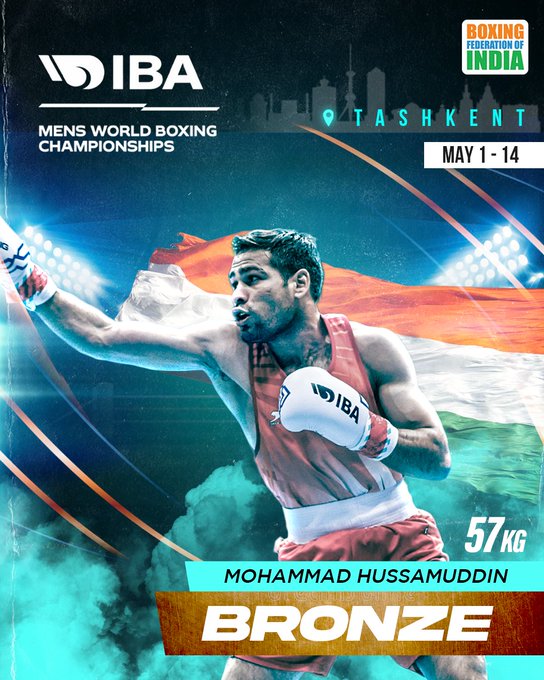
India’s Mohammed Hussamuddin finished his IBA World Boxing Championships campaign in Tashkent, Uzbekistan with a bronze medal on Friday.
India’s Mohammed Hussamuddin finished his IBA World Boxing Championships campaign in Tashkent, Uzbekistan with a bronze medal on Friday.
Hussamuddin was forced to give a walkover to Horta Rodriguez Del-Rey of Cuba in the 54-57kg semifinals due to a knee injury sustained during his quarterfinal bout, the Boxing Federation of India (BFI) said in a tweet.
Against a taller opponent landing blows from a long range, the Indian southpaw connected a few headshots to claim the first round 3-2.
Hussamuddim relied on his ring craft to stay marginally ahead in the second period and matched the Bulgarian in the physical third round, which witnessed both going all out, to emerge triumphant.
The Haryana boxer defeated Russia’s Eduard Savvin in the pre-quarters.
Mohammed Hussamuddin’s background
Hailing from a family of boxers, Mohammed Hussamuddin is the youngest of six brothers, four of whom are seriously entrenched in the sport. Hussamuddin, whose role model is Vasyl Lomachenko, two-time Olympic Champion, was afraid to don the gloves until his father and coach, Mohammad Shamsuddin, got him to shed that fear and trained him at the Collectorate grounds in Nizamabad, north Telangana.
Commonwealth Games champion Hussamuddin had upset fifth-seeded Bulgarian Javier Ibanez Diaz 4-3, via bout review, in a closely-contested fight in the quarterfinals.
The 29-year-old went on to outshine his siblings and established himself in the state-level competitions before moving on to the national scene, making his debut in the 2009 junior Nationals at Aurangabad, claiming bronze. He turned it into gold in his debut at the senior nationals.
The boxer’s potential was spotted early and in 2011, he was sent to a fortnight-long stint of training and competition to Havana, Cuba, before participating in the 2012 Tammer Tournament in Finland and later in the Youth World Championship in Yerevan, Armenia.
His barren-run on the international stage ended with bronze at the 2015 Military World Games. Since then, he has been on the up and today he has evolved into one of the finest boxers in the country in his weight category.
With a bronze in Commonwealth Games 2018 and a gold in the Chemistry Cup, Hussamuddin continued to shine and bag silver at the Gee Bee Boxing Tournament in 2019. He won silver at the Boxam International in march 2021 and finished 2022 with bronze medal at CWG and Asian Championships.
source: http://www.sportstar.thehindu.com / SportStar / Home> Boxing / by Team Sportstar / May 12th, 2023
Ebrahim Ismail Ebrahim served time on Robben Island as a political prisoner alongside Nelson Mandela.
Dr Aboubaker Ebrahim Dangor is known for his ground-breaking physics research.
National Orders winners (Photo | Presidency | South Africa Twitter)
Johannesburg :
Two South African Indian-origin citizens, the late struggle icon Ebrahim Ismail Ebrahim and scientist Dr Aboubaker Ebrahim Dangor, were among the many recipients of National Orders when President Cyril Ramaphosa hosted the annual event in Pretoria on Friday.
National Orders are the highest awards that South Africa country bestows on its citizens and eminent foreign nationals who have contributed towards the advancement of democracy and have made a significant impact on improving the lives of South Africans.
The National Orders also recognise the contributions made by individuals towards building a non-racial, non-sexist, democratic and prosperous South Africa as envisaged in our Constitution.
Popularly known as ‘Ebie’, Ebrahim passed away after a long illness in December 2019, shortly before his autobiography ‘Beyond Fear — Reflections of a Freedom Fighter’ was released by his wife Shannon.
Ebrahim served time on Robben Island as a political prisoner alongside Nelson Mandela, Ahmed Kathrada and others.
After his father was arrested twice for defying laws that restricted the movement of Indians in South Africa, he joined the liberation struggle at the age of 13.
Ebrahim often shared how he had been inspired by the Satyagraha style of Mahatma Gandhi, which he used in his passionate representation of the ANC in global conflict situations in Sri Lanka, Palestine, Rwanda, Kosovo, Bolivia and Nepal.
After his release, Ebrahim went into exile to continue his work with the ANC, but was abducted by apartheid-era security police from neighbouring Swaziland, tortured and sentenced to a second term on Robben Island. He obtained two university degrees while on Robben Island.
After the release of all political prisoners and the election of Mandela as South Africa’s first democratic president, Ebrahim served in various capacities, including as Deputy Minister of Foreign Affairs and Parliamentary Counsellor to Mandela.
Ebrahim’s citation said he was receiving the Order of Luthuli in Gold for his lifelong commitment to the liberation of all South Africans. “He lived by the courage of his conviction and became a formidable opponent to the repressive apartheid government,” it read.
Shannon Ebrahim described her late husband as a “gentle giant, even to his family.”
“He inspired us with his undiluted moral values, his absolute commitment to transform South Africa for the better (even beyond political liberation), and his willingness to engage warring factions in conflicts around the world as a peacemaker. He was the essence of humility and never expected recognition for any of the hardships he endured throughout his life in the cause for freedom,” she said.
His one hope was that South Africans would read his memoir “Beyond Fear” to better understand what revolutionaries of his generation went through to bring about a new South Africa, his wife added.
“(Our children) Sarah, Kadin and I miss him dearly, but will always cherish his legacy,” she said.
“Dr Dangor was awarded the Order of Luthuli in Silver — for his admirable and distinguished contribution to the field of science through his ground-breaking research in physics,” his citation read.
Dangor has been based in the UK since he went there to continue his studies after getting his first Honours degree at Wits University in 1961.
He could not return home permanently because the white minority apartheid government denied entry to his wife from Bermuda, as she was of Black descent.
Widely published in academic journals, Dangor has also overseen scores of doctorate candidates in his career.
“It is particularly humbling for me that the first recipient of the Award was Nelson Mandela, our first post-apartheid president. I hope that being the recipient of this award will encourage the youth in the sciences in South Africa,” Dangor said.
Dangor’s niece, Zubeda Dangor, founder and director of Nisaa Institute for Women in Johannesburg, said he was very shy and did not like the limelight.
He could not attend the ceremony and his award was accepted by his grandnephew Mohammed Raees Dangor.
source: http://www.newindianexpress.com / The New Indian Express / Home> World / by PTI / April 30th, 2023