Warangal, TELANGANA / Longrove Village Board (Illinois), U.S.A :
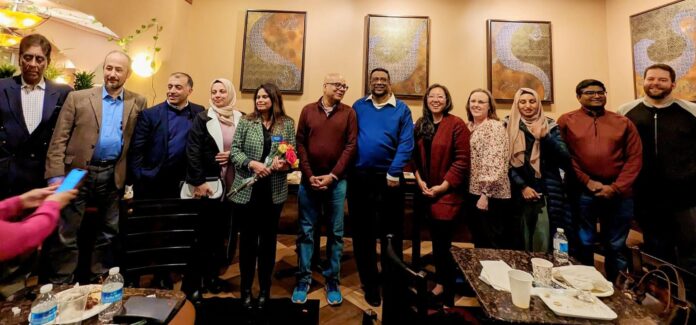
Dr Mohammed Jameel NRI has become the First Indian American Muslim to be elected for LongGrove village Board elections.
Speaking on this occasion in winning celebrations in Long Grove Dr. Jameel thanked the voters of Long Grove who voted for him and urged the community to increase participation in civic activities and build a strong community which thereby can lead to more participative and inclusive participation in all levels of Government.
Lake County Treasurer Holly Kim was the Chief Guest and congratulated him .
Dr Jameel is very active in Local politics heads the Americans Democratic Forum and has supported in win of the first Indian Muslim woman Nabeela Syed as a state representative in the state of Illinois.
Dr Jameel is also very active in all spheres of engagement socially and politically in India as chairman of the Indian Americans forum .
He belong to warangal India and graduated from Deccan medical college.
Many eminent personalities both from India and USA congratulated him on his success prominent amongst them is the President of DAANA Moizuddin.
Alumni association from his school Y SUNITHA, Inner wheel president Dr. Ashish Chauhan MD, Tarun Joshi IPS, Zaheeruddin Ali Khan Editor Siasat, Padmaja Shaw former prof of communications OU .
From the US Dr. Rehan khan ISPJ Washington, Holly Kim Lake county Treasurer, CK Schmidt chief Ela democrat, Roy Manthena Dalit activist Newyork, Irshad khan ex-chairman CIOGC congratulated him on being elected and wished him all success .
source: http://www.thehindustangazette.com / The Hindustan Gazette / Home> News> Election / by Shifa (headline edited) / April 06th, 2023
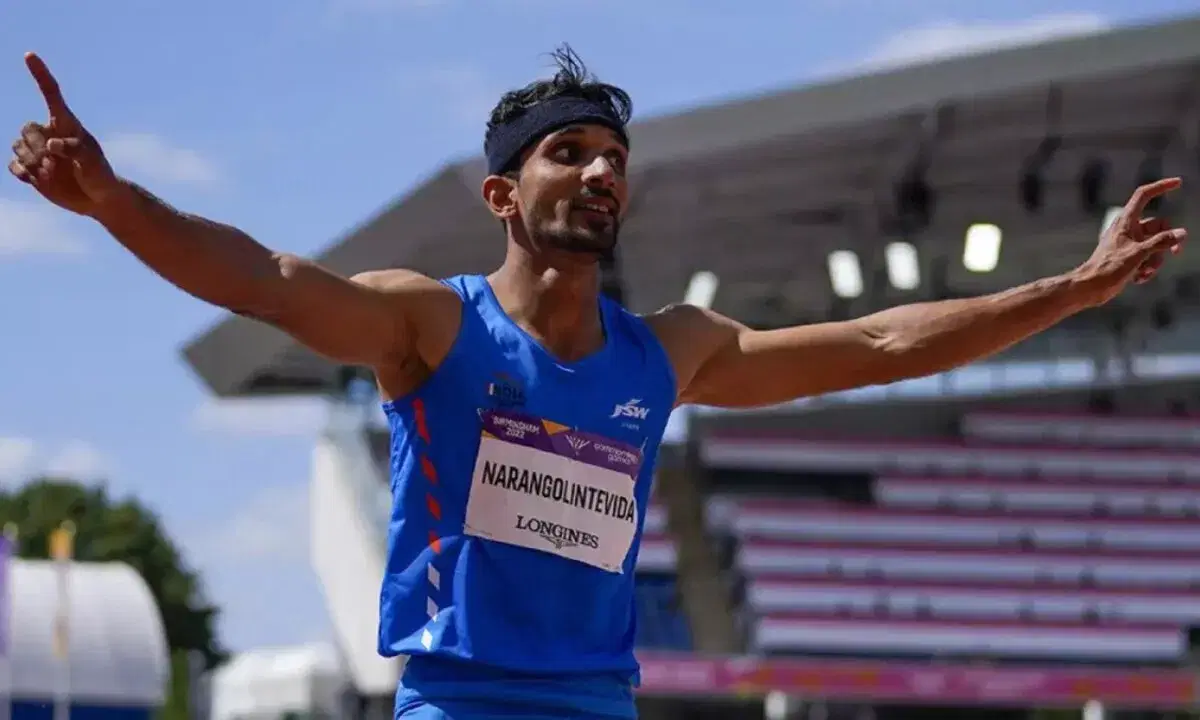
The 27-year-old achieved his season-best score in the tournament.
Commonwealth Games 2022 silver medallist triple jumper Abdulla Aboobacker Narangolintevida clinched the gold medal clocking a season-best score of 16.31m in the Mikio Oda Memorial Athletics meet in Hiroshima, Japan. The 27-year-old Keralite clocked his season-best score twice in the fifth and sixth attempts and notched up a good performance in the maiden foreign meet of the season.
Abdulla crossed the 16m mark five times in seven attempts overall in the Mikio Oda Memorial. Earlier this year, he claimed the third spot in two domestic meets by clocking 15.93m and 15.77m (Indian Open Jumps and Indian Grand Prix). The Keralite, after below-average performances in the domestic meet this year, has shown good improvement by constantly crossing the 16m mark in Japan.
Last year, he also won the silver medal at the Birmingham Commonwealth Games 2022 with a result of 17.02m, just 0.1m behind the gold medal mark. Compatriot Eldhose Paul clinched the gold medal at CWG 2022 by clocking 17.03m.
The 2022 season was one of the most successful ones for the Keralite. He crossed the 17m mark thrice and recorded his personal best mark of 17.19m in the Indian Grand Prix held in Bhubaneshwar. The 27-year-old also qualified for the World Athletic Championships 2022, but put in a below-average performance (best score-16.45m).
The qualification mark for World Athletics Championships 2023 stands at 17.20m. Abdulla needs to get back to his original form ahead of the all-important Senior Federation Cup and the National Inter-States Meet, to secure automatic qualification for the Worlds.
Among the other Indian Triple Jumpers, Praveen Chitravel came close to qualifying for the World Championships as he notched up a personal best score of 17.17m in the Indian Open Jumps and won the silver medal in the Asian Indoor Athletics Championships recently.
Meanwhile, Eldhose Paul will soon be in action alongside Tokyo Olympics gold medallist Neeraj Chopra in the Doha Diamond League, starting May 5, 2023.
source: http://www.khelnow.com / Khel Now / Home> Athletics / by M Sudharshan / April 30th, 2023
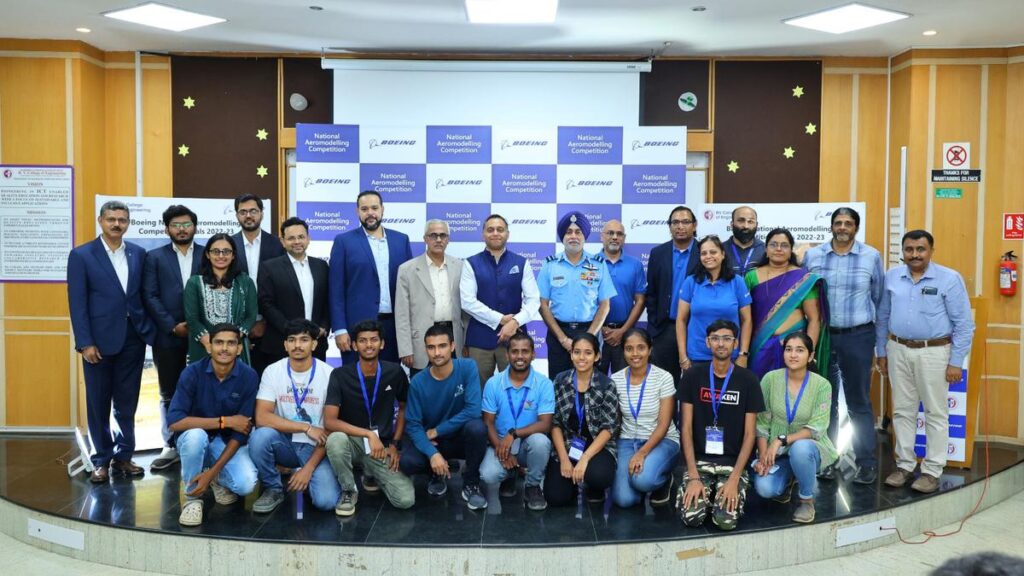
Winners of the 2023 Boeing National Aeromodelling Competition. 39 finalists from 12 teams were selected for the finale, which was held at R.V. College of Engineering in Bengaluru.
Bengaluru:
This year’s competition attracted close to 2,200 students across India.
Boeing announced the winners of the 8th annual Boeing National Aeromodelling Competition in India, on May 3.
This year’s competition attracted close to 2,200 students across India, and saw a two-fold increase in participation across zonal and national rounds. 39 finalists from 12 teams were selected for the finale, held at R.V. College of Engineering in Bengaluru.
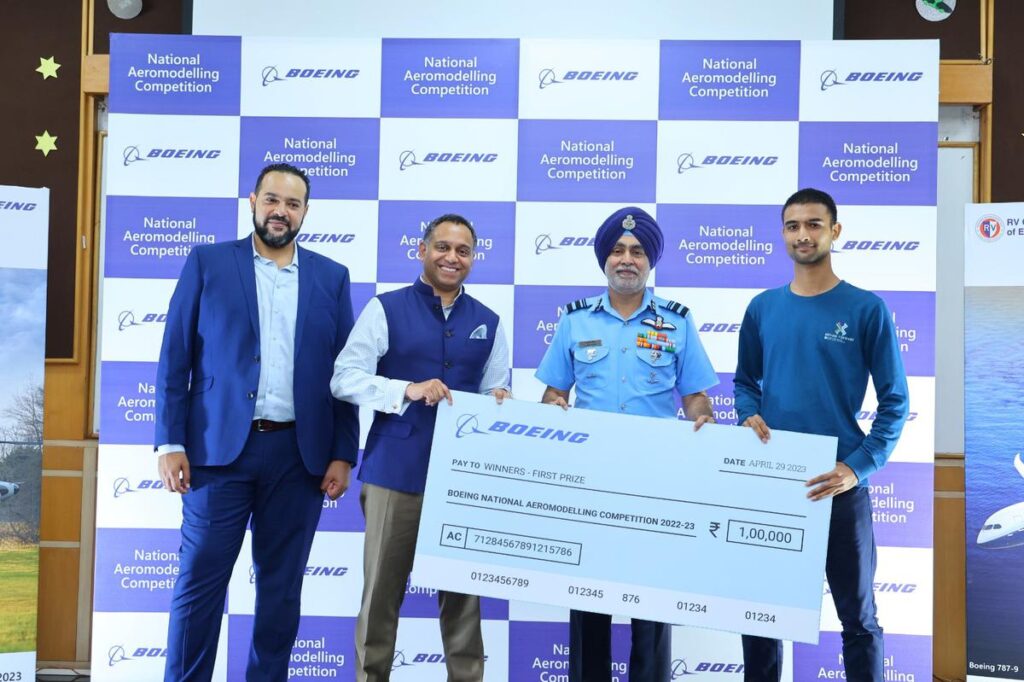
Arshad Khan (right) from Rabindranath Tagore University, Bhopal won the 2023 Boeing National Aeromodelling Competition. The finale was held in Bengaluru
Arshad Khan from Rabindranath Tagore University, Bhopal was declared winner of the competition.
Sharanya Acharya Nishmithe, Aman Kumar Srivastav and Gagan G. Nayak from Nitte Mahalinga Adyanthaya Memorial Institute of Technology (NMAMIT), Nitte, Karnataka bagged the second spot
Divyamshu, Rathan Raj K. Nancy and Anantha Krishna, also from NMAMIT-Nitte, took the third spot.
The zonal rounds of the competition were held at IIT Kanpur, IIT Bombay, IIT Kharagpur, and IIT Madras. The top three teams from each zone then travelled to Bengaluru for the finale.
The competition started as an annual event in 2013 to provide a nationwide platform for students who have a keen interest in aerospace engineering and related fields. The competition allows them to demonstrate their skills and creativity in designing, building, and flying fixed-wing aircraft models of different types and sizes.
Salil Gupte, president, Boeing India, said, “This national aeromodelling competition provides an excellent platform for young aviation and technology enthusiasts to present their creativity, and engineering and design skills. It is a testament to our commitment to encourage engineering talent to pursue careers in aerospace and defence in India.”
Ahmed Elsherbini, managing director, Boeing India Engineering & Technology Center, and chief engineer, Boeing India, said, “Aeromodelling competition plays a crucial role in the aerospace sector. It brings fresh perspectives, new ideas, and a willingness to challenge conventional thinking. With the aerospace industry constantly evolving, student innovation can be a driving force in the development of new technologies and sustainable solutions.”
Over the years, Boeing has strategically invested in developing talent for the aerospace sector in India.
Its programs, including Boeing University Innovation Leadership Development (BUILD) Program, the Boeing HorizonX India Innovation Challenge, and the Accelerated Aircraft Maintenance Engineers (AME) Apprenticeship program, have all helped empower entrepreneurs and contributed to building a skilled frontline workforce for India.
source: http://www.thehindu.com / The Hindu / Home> News> Cities> Bengaluru / by The Hindu Bureau / May 03rd, 2023
Just an 11-year-old girl astonishes the world with her extraordinary development skills. She recently created an AI Application that uses advanced models to determine eye diseases or serious conditions such as Melanoma, Cataracts, etc. Read below about this creative Kerala-origin girl.
An 11-year-old Dubai-based girl called Leena Rafeeq has designed a modernistic application integrated with Artificial Intelligence (AI). This young girl from Kerala proclaimed that this smart app can locate common eye disorders and symptoms. Moreover, this can be determined through a unique scanning method built into the app and only the iPhone supports this advanced model so far.
iPhone users will be able to check their eye-related problems and conditions with 70 per cent accuracy. The intelligent app that has been going viral for a couple of days has been named ‘Ogler EyeScan’ by Ms Leena Rafeeq. She was just 10 when she built it and now after so much research at the age of 11, she exuberantly launched it.
Self-taught Techie
On a social media platform called LinkedIn, she vividly presented the model. She further expounded the workings of her self-made in an online video that she posted online after which several viewers are impressed with her knowledge and skill set.
She asserted that this AI-based application has the capability to evaluate various parameters. The specifications include light and colour intensity, distance and look-up points in order to track down the eyes.
It scans the human eyes within the available range of the frame and this is possible through the “advanced computer vision and machine learning” used in this model’s design.
Features of ‘Ogler EyeScan App’
Leena Rafeeq explains her exceptional achievement and said that the Ogler EyeScan App can also identify any light burst issues. Additionally, this app will first check the eye positioning inside the scanner frame and after that through advanced technological scanning procedures, it can identify some of the common eye problems.
Built with Machine Learning Algorithms and Computer Vision Systems, eye conditions like Arcus, Melanoma, Pterygium and Cataracts can be checked however 70% accurate results have been recognized till now.
How AI App is developed?
Ms Rafeeq told that this smart technology app was developed natively with high-level programming developer ‘SwiftUI’ without the involvement of any third-party libraries or packages. She also reveals that she dedicated herself for almost six months to conducting research and development to come up with this initiative.
Along with this, she continued her learning about different eye conditions, computer vision, algorithms, machine learning models and other advanced levels of Apple iOS development which involves sensors data, AR, CreateML, CoreML and many such tools.
It is notable that the Ogler EyeScan is supported solely in iPhone 10 or Apple phones with iOS above 16. The app is under review on the App Store and this young girl hopes that her model gets listed soon.
Appraisal of her Project
This young Kerala girl leaves many flabbergasted by the invention of such a little girl. People congratulated her as she attains this level at this age. A user commented that this is a pretty good example of how AI can be effectively used in the health sector.
Another goes on to say that this is such an amazing creation and wished her good luck with her future endeavours. They all wished her positive reviews on her app. Ms Rafeeq responded that the model accuracy is “almost 70 per cent”.
However, she is handling some difficulties with the presence of glare and burst from lights caused by the distance required for capturing scans through the phone device. She has implemented metrics and detection for light-related issues so that the users will be able to re-scan. Her current focus is on training more elegant models. As soon as Ogler is accepted by the Appstore, she will be releasing an update in the software.
source: http://www.jagranjosh.com / Jagran Josh / Home> Current Affairs> Science – Technology Current Affairs / (headline edited) April 2023
Syed Abdul Rahim and Ajay Devgn in the poster of Maidaan
In an era of Indians recognizing their unsung heroes and reviving their memories, a biopic on Syed Abdul Rahim, India’s most successful football coach, is all set to be released on June 23.
The teaser of the film Maidaan featuring Ajay Devgn as the legendary coach of the Indian national football team was released by Zee Films recently. It has already crossed 35 million views of YouTube in five days.
Under Syed Abdul Rahim’s guidance, the Indian team was rated as one of the most powerful teams in the sport, and the period – 1952-1962 turned out to be the golden period of Indian football.
The teaser opens with the resounding music of A R Rahman and the powerful image of the Indians playing Yugoslavia (a country now spilt into Bosnia and Herzegovina, Croatia, Macedonia, Montenegro, and Serbia) in heavy rain.
It seems the bare-footed Indians lost the match against Yugoslavia as Rahim (Ajay Devgn) is shown in tears in the teaser. The film is produced by Bonny Kapoor.
According to reports, from his early days, this Hyderabad-born Rahim spotted talented boys on the football fields of Hyderabad and trained them to cobble up an Indian team.
With him as the coach of the national team, India finished fourth in the Melbourne Olympics and won the gold medal in the Asian Games of 1962 beating Japan and Korea.
Although Rahim is credited for ushering in the Golden Era of Indian football, he passed away unsung. He was never conferred with any award and many say he was too focused on coaching and never mingled with leaders or influencers to get noticed by them.
Maidaan’s teaser is a 90-second clip that tells the story of a fight against the odds by Rahim and his Indian team. The trailer opens with monochrome shots from the 1952 Summer Olympics held in Helsinki (Finland). India fared badly on that occasion and lost 10-1 to Yugoslavia in the preliminary round.
The resounding defeat did not discourage Rahim; instead, it brought out his fighting spirit.
He studied the training methods used by the European teams. Rahim studied their training and tactics and then modified the same to suit Indian conditions. He realized that Indian players had less physical stamina and there was no point copying the European methodology.
Rahim adapted the European ways to suit the Indians and it worked wonders. It must have taken Rahim’s meticulous planning and precision in training the Indians that helped the team perform great in the next Olympic Games in 1956 when India defeated Australia
On 1st December 1956, India stunned the world with the team’s excellent performance and defeating host Australia 4-2. Ace striker Neville D’Souza scored a hat trick and Krishnaswamy scored one goal.
This match is an abiding memory of the glorious era of Indian football.
Today, Indian football fans are disappointed to see Australia plays in the final phase of the FIFA World Cup while India has dropped to the bottom. Indian team employs expensive foreign coaches and support staff but the results are not commensurate with the efforts and expenses.
Sources said the filmmakers had consulted the Football legend’s son S.S. Hakim who died in 2021. Hakim was an Air Force officer who had played in the Olympics and was a highly qualified coach and referee too.
In the film, Ajay Devgn speaks the Hyderabadi (Deccani) version of Urdu. After many delays due to the pandemic and other reasons, the film is scheduled for a theatrical release on 23rd June 2023.
source: http://www.awazthevoice.in / Awaz, The Voice / Home> Story / by ATV, posted by Aasha Khosa / April 15th, 2023
Nadvi has been the president of the All India Muslim Personal Law Board for the last 21 years.
President of the All India Muslim Personal Law Board Maulana Rabe Hasni Nadvi. (Photo | Twitter)
Lucknow :
President of the All India Muslim Personal Law Board Maulana Rabe Hasni Nadvi died here on Thursday after a prolonged illness.
Senior executive member of the board Maulana Khalid Rasheed Farangi Mahali told PTI that Maulana Rabe Hasni Nadvi died around 3.30 pm at the Lucknow-based Islamic Educational Institute Nadwatul Ulama (Nadwa).
Mahali said Nadvi had been brought to Lucknow from his ancestral home in Raebareli four days ago as he was suffering from pneumonia.
He is survived by three daughters.
Nadvi has been the president of the All India Muslim Personal Law Board for the last 21 years.
His farewell prayers will be held at 10 pm in Nadwa and the body will be laid to rest in Raebareli on Friday.
source: http://www.newindianexpress.com / The New Indian Express / Home> Nation / by PTI / April 13th, 2023
The film ‘Alzahravi’ bagged the best film award in the category of Best Visual Effects and Animation whereas ‘Polymer, the Promise of PDMS’ has been recommended for a citation.
Hyderabad:
Two films of the Instructional Media Centre, Maulana Azad National Urdu University (MANUU) produced under the MANUU Knowledge Series have won accolades at the 24th CEC UGC Educational Video Festival organized by Consortium for Educational Communication (CEC), an Inter-University Centres set up by the University Grants Commission.
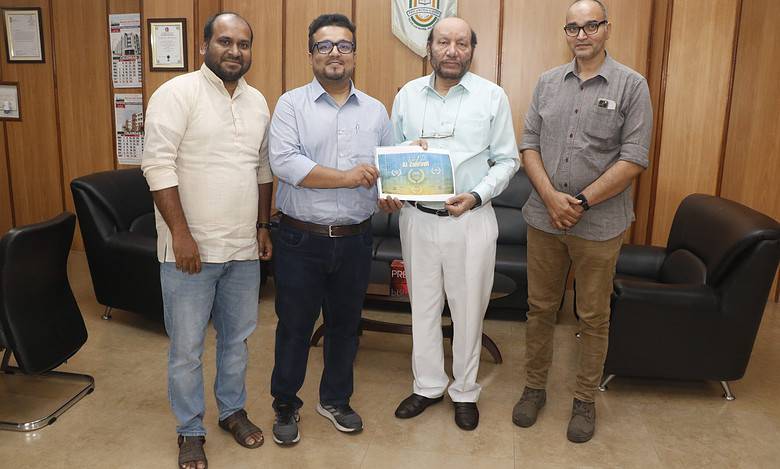
The film ‘Alzahravi’ bagged the best film award in the category of Best Visual Effects and Animation whereas ‘Polymer, the Promise of PDMS’ has been recommended for a citation under the Best Film Documentary award category along with the other three films.
According to Rizwan Ahmad, Director, IMC, the film Alzahravi by Omer Azmi, Producer IMC explores the life, struggles, and achievements of the renowned scholar, Alzahravi, and his contributions to the field of medicine.
Polymer, the Promise of PDMS by Obaidulla Raihan, Cameraperson, is a thought-provoking film based on a research output by researchers from the Central University of Hyderabad, where they have developed a polymeric material which is graphene base media mists smart composite material which will revolutionise the technology in near future.
Prof Syed Ainul Hasan, the Vice-Chancellor, congratulated the centre on this achievement and said IMC is steadily gaining recognition for its unique and thought-provoking approach to digital media. Appreciating the Media Centre Team’s effort who met him today at his office the Vice-Chancellor expressed the hope that the MANUU knowledge Series will continue to inspire and educate audiences and contribute to the growth and development of Urdu and dissemination of knowledge.
Rizwan Ahmad said both films were also selected previously at various film festivals nationally and internationally. This honour is a testament to the hard work and dedication of the directors of the films and the entire team. MANUU Knowledge Series aims to promote the Urdu language and culture, as well as highlight important issues and stories through the medium of film, a press release said.
source: http://www.siasat.com / The Siasat Daily / Home> News> Hyderabad / by Indo Asian News Service (IANS) / April 12th, 2023
In popular memory, historical narratives are more often than not laced with silence, neglect, nostalgia and heroism thus blurring the line between history and fiction. Public memory tends to remember the selective events according to ideological or political conveniences while the whole narrative in its context is often forgotten.
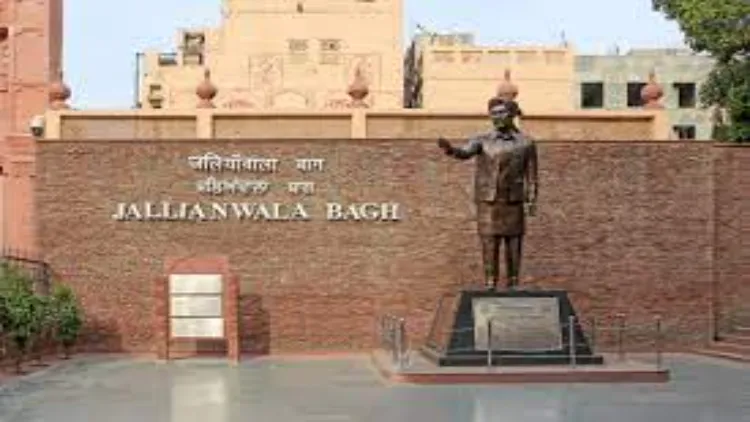
The Jallianwala Bagh Massacre is one such event which stands out in public memory as a solitary incident. Popular imagination puts the killing of hundreds of Indians on 13th April, 1919 at Amritsar as an event completely disassociated from time and space. It is needed that the massacre should be read in context with the time and space.
Why did the people gather at Jallianwala Bagh?
Indian leadership in general supported the war efforts of the British during the World War – I (WWI) on a promise that the country would be granted self rule or some kind of political autonomy after the war would be over. The British, after the war, backtracked on the promise. Rather to check the nationalist voices brought a Rowlett Act in force which enabled police to imprison Indians without evidence. Several Indian Muslims were aggrieved at the humiliation of Turkey and the British believed that it was their only challenge. With the Rowlett Act at their disposal these Pro-Khilafat voices could be easily suppressed. They did not foresee the possibility of Hindus joining hands with the Muslims, and vice versa and pose a problem for their colonial rule.
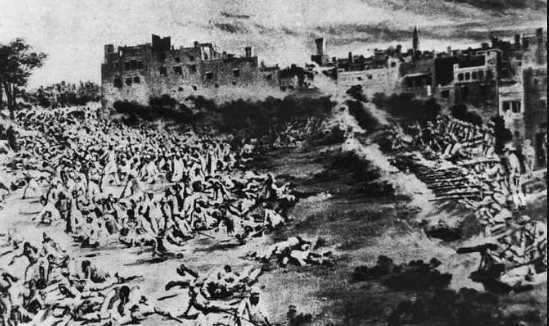
An artist’s depiction of the scene of massacre
On 18th March, 1919, the Rowlett Act was passed. Mahatma Gandhi along with other nationalist leaders termed it a Black Act and called for a protest movement against the same. The day chosen for protests and strikes was the 30th March that was later changed to 6th April. In Delhi a protest was held on 30th, because of lack of communication, and the police did not hesitate from firing upon the unarmed people. More than 50 protestors were killed in Delhi. The British had cleared their intention of using violence against the non-violent protesters.
On 6th April protests and strikes were held across the country, yet Punjab displayed an exemplary zeal of nationalism. What disturbed the British most was the fact that orthodox Hindus of Arya Samaj and orthodox Muslims of different Wahabi and pan-Islamist organizations joined hands against the British. The most popular leaders of Punjab at the time – Dr. Saifuddin Kitchlew and Dr. Satyapal, were prohibited from making public statements but still unity could not be broken. At different places people were fired upon but the nationalist sentiments could not be killed.
On April 9, Muslims came out to celebrate Ram Navami across Punjab. This was becoming too much for the British. In Amritsar Saifuddin and Satyapal oversaw a grand Ram Navami procession where Muslims were as zealous as Hindus were. It led the British to arrest the two leaders and sent them to an unknown location. The people gathered at the Deputy Commissioner’s office to register their protest and they were fired upon. Many were killed. The fear of a Hindu-Muslim unity was so frightening for the British that even after Jallianwala Massacre they arrested and killed Muslims for participating in Ram Navami celebrations.
Ghulam Jilani, who was an Imam of a mosque, was arrested on 16th April with Khair Din for leading the Ram Navmi processions. Police tortured them in the most horrific and inhuman fashion by inserting sticks up in their anus until their excreta and urine would not come out. Khair Din died of the torture while Jilani survived to narrate the ordeal. More than a hundred Muslims were tortured in this manner to celebrate Ram Navmi.
On the other hand in Lahore, on receiving this news, in an unprecedented manner more than 25,000 Hindus and Muslims gathered in Badshahi Mosque and Hindu leaders, like Rambhaj Datta, addressed the people from the pulpit of the mosque. In Lahore, not only the British used bullets but also brought their loyalists into the picture.
A few sold out Indians like the leaders of Muslims League issued statements that allowing Hindus into the mosque and addressing from pulpit amounted to the sacrilege. Still, most of the Muslims in Punjab were supporting the war cry of the protestors: Hindu-Musalman ki Jai (Victory to Hindu-Muslims).
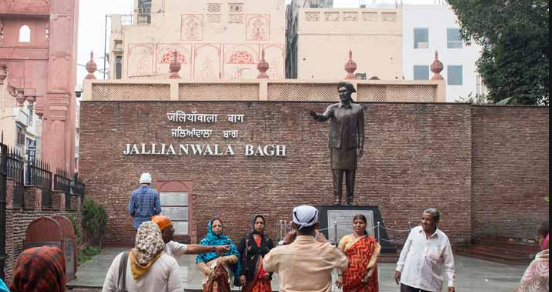
Visitors clicking pictures at Jallianwala Bagh
It was noted in a government report tabled at the British Parliament, “It (Hindu-Muslim) union had only one purpose, a combined attack on the government.”
Meanwhile, on 13 April, the Baisakhi Day, a meeting was scheduled at Jallianwala Bagh, near Golden Temple, to protest the arrests of Saifuddin and Satyapal. Hindus, Muslims and Sikhs gathered at the Bagh. Colonel Dyer with his troops entered the place and fired upon the unarmed protesters. A gory story of blood, death and massacre happened that each and every Indian knows by heart. Hundreds of Indians died. The tale of this massacre became folklore and inspired generations of revolutionary Indians like Bhagat Singh, Ram Mohammad Singh Azad and others. But, what we miss out is that the British did not stop at this. Punjab remained a laboratory of British atrocities.
The next day, April 14, people in Gujranwala woke up to find a beheaded calf at a public place. It did not take a rocket science to decipher a sinister plot to cause enmity between Hindus and Muslims. People gathered and protested such malicious attempts of the government to disturb the peace. Frustrated at their failed attempt and seeing that the unity has strengthened even further, army airplanes were called in to bomb the city. Yes, you are reading it correctly.
Within two decades of the invention of aero planes and less than a decade of its first military use in WWI when the technology was novel even for armies the British used it upon the innocent civilians of Punjab. A fleet of three planes dropped bombs and fired machine guns on the city and adjacent rural areas. Bombs were dropped at schools, hostels, mosques, marriage ceremonies etc. The government report specifically mentioned that the district is dangerous because followers of Arya Samaj and orthodox Muslim Wahabis like Fazal Ilahi and Zafar Ali Khan had joined hands. An armoured train with machine guns mounted in it was also used to kill along the railway tracks in Gujranwala.
The tales of torture, suppression and killings was repeated allover Punjab. While Jallianwala Bagh rightly gets its mention in our books and survived the public memory the causes behind it and a long trail of violence proceeding and succeeding the event have been forgotten. The very fact that the British used their worst form of violence to counter Hindu-Muslim unity itself speaks about the power of this unity. We need to remember the cause for which our forefathers and foremothers had laid down their lives.
(Saquib Salim is a historian-writer)
source: http://www.awazthevoice.in / Awaz, The Voice / Home> Story / by Saquib Salim / 2021
“The Indian National Army (INA) has now crossed the Indo-Burmese border and in the course of the struggle for the liberation of the people of India from the British Yoke, we have now reached Moirang, the ancient citadel of Manipur. Our commitment is the march to Delhi and the unfurling of the Tricolour Flag then at Lal Quila.
Many had died on our way to reach near Moirang and many would die on our way to Delhi. However, the expulsion of the enemy from the sacred soil of India is a compulsion for us… Freedom of India is very near and near at hand. We shall win it and we shall have progress and prosperity of the people of India after it.” Colonel Shaukat Ali Malik of Azad Hind Fauj addressed these words to a large gathering at Moirang in Manipur on 14 April 1944 after hoisting the National Tricolour. In this way, Moirang became the first liberated territory of India, which came under the administration of Azad Hind Sarkar headed by Netaji Subhas Chandra Bose.
Col. Malik led INA’s victory march over Moirang, liberated the Indian territory, unfurled the national flag, and established a national government.
In his recently published book, Professor Kapil Kumar wrote, “Col. Malik while commanding the Unit, always led from the front and displayed Great feats of Bravery in difficulties achieving successes at various places. Netaji conferred upon him the great honour of Tamgha-e-Sardar-e-Jang.”
Kumar also lists several Indians from Manipur who joined INA forces. Prominent among them were Mairembam Koireng Singh, who later became CM of Manipur, and Naqi Ahmed Chaudhary, an INA soldier from Manipur who helped Col. Malik with the local language and terrain.
But, the importance of this operation goes beyond the hoisting of the flag and establishment of civilian government.
In the official newsletter of Azad Hind Fauj, Dr. M. R. Vyas one of the most trusted men of Netaji explained the importance of the victory of Moirang. He wrote, “When the INA first entered India, it appeared as if they would launch a direct assault on Imphal, the capital of Manipur. The British, in this expectation, concentrated powerful forces, consisting of 3 divisions and 2 motorized brigades at Imphal. However, the INA troops avoided any such frontal attack which would necessarily have meant big losses. Instead, the Indian and the Japanese High Command planned for the rendering impotent of a powerful enemy force by encircling it.”
So, the capture of Moirang “brought about the virtual encirclement of Imphal, thus rendering an entire British force of 60,000 – 80,000 men impotent of launching a major counter-offensive. This force became dependent on air supplies, which, from their very nature, are limited and insufficient for big operations.”
The plan was to further annihilate this British force with the onset of Monsoons. For more than two months, INA under Col. Malik remained in total control and kept attacking the British posts from there. The British would have faced a humiliating defeat if US Air Force wouldn’t come to their rescue.
More than 100 US fighter planes bombed Moirang and Bishnupur in Manipur. Fleets of B-25, P-51, and A-31 started bombing INA positions and civilians on 8 May 1944. Hundreds of these US fighter planes bombed civilian areas, INA positions, bridges connecting Myanmar to Manipur, and any supply line available to the Indians. The scale of US operations in Moirang is a testimony to the importance of this victory.
source: http://www.awazthevoice.in / Awaz, The Voice / Home> Stories / by Saquib Salim / April 14th, 2023
Sikri Village (Nagar Pahari Tehsii, Bharatpur District),RAJASTHAN:
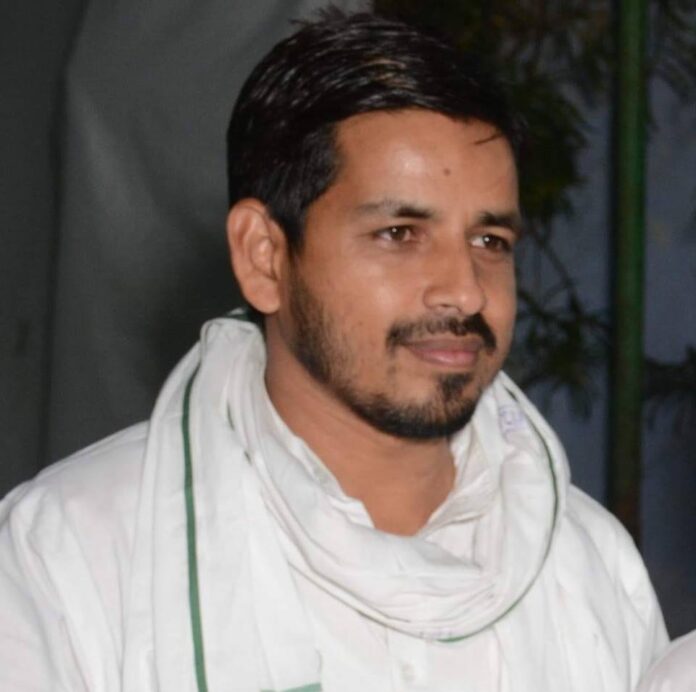
Wajib Ali.
Jaipur:
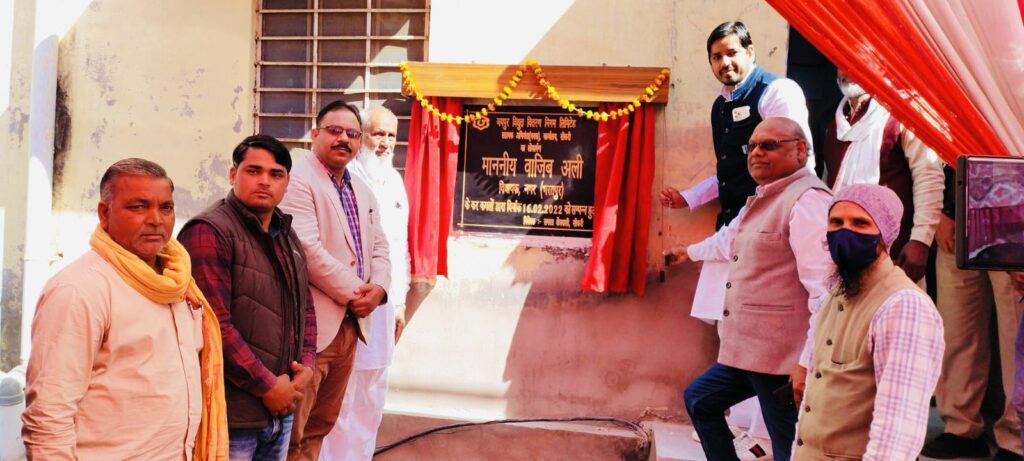
A successful young Indian Muslim educationist from Australia, who has made his way into the Rajasthan Assembly as an MLA with the dream to bring about a change at his native place, has made a mark by improving social conditions in the Meo-dominated region in the eastern part of the state. The MLA from Nagar constituency in Bharatpur district, Wajib Ali, 40, defies the image of typical politicians.
Born in a Meo Muslim family of Nagar block’s Sikri village, Ali had left his native place to pursue higher studies in 2005, when he first went to New Delhi’s Jamia Millia Islamia and later migrated to Australia. He came back to Bharatpur in 2013 and contested the State Assembly election as a National People’s Party candidate, but he lost to Bharatiya Janata Party’s sitting MLA Anita Singh.
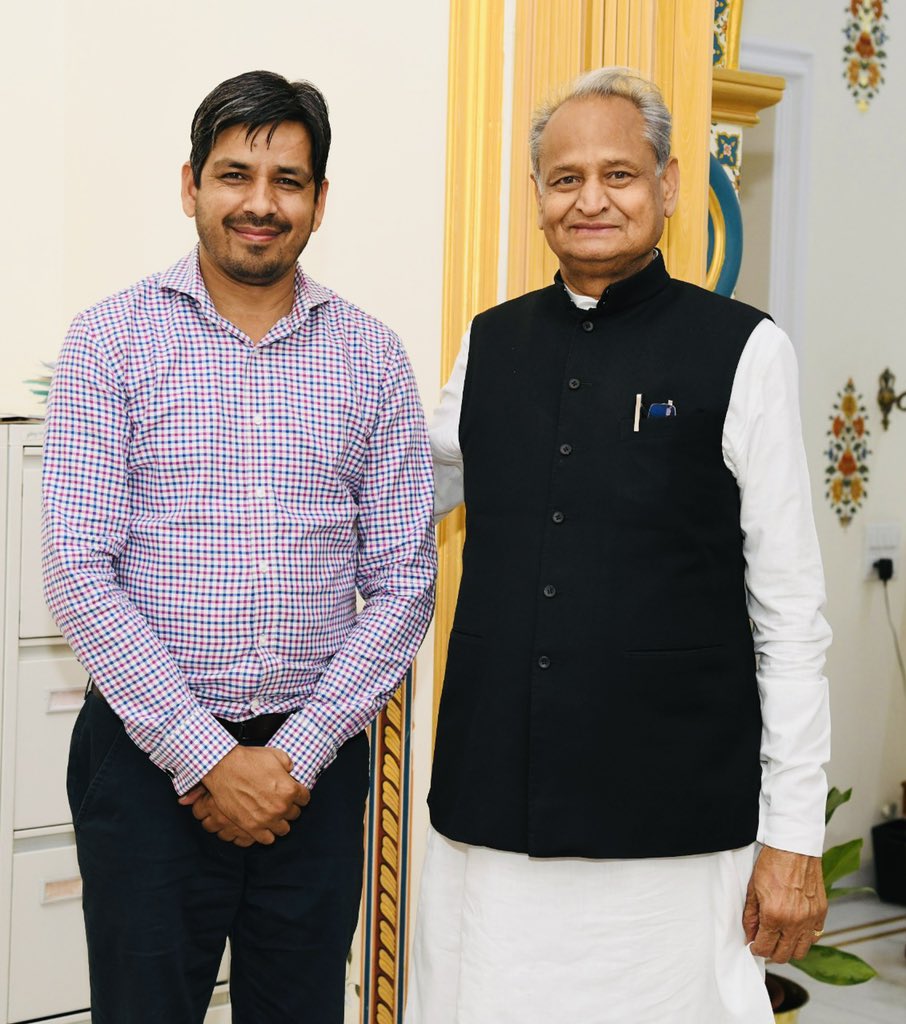
MLA from Nagar constituency Wajib Ali with Chief Minister Ashok Gehlot
Ali has a thriving real estate business in Australia and he runs eight colleges and a school, along with his two brothers, in the cities such as Sydney, Melbourne and Brisbane. He led a successful election campaign in the rural heartland during the December 2018 Assembly polls and was elected an MLA on the Bahujan Samaj Party’s ticket from the Nagar seat.
In 2019, Ali defected to the ruling Congress along with five other BSP MLAs while declaring that all of them wanted to ensure the State Government’s stability. The move came amid reports of the BJP trying to lure the BSP MLAs in a bid to repeat a Karnataka-type upheaval in Rajasthan. Ali and his fellow MLAs also supported Chief Minister Ashok Gehlot during the political crisis in 2020, caused by the rebellion of the then Deputy Chief Minister Sachin Pilot, and voted for the Congress candidates in the Rajya Sabha elections held in June 2022.
Ali was later appointed the Chairperson of the Rajasthan State Food Commission in August 2022. He has been active in the Meo-dominated region since 2013, extending support to the people’s struggles and raising their issues with the Government authorities.
Ali says that he had come back to India with the desire to make a difference in people’s lives and improve the social conditions in eastern Rajasthan. “This is the most backward area in Rajasthan and the basic facilities are lacking here. Moreover, the people belonging to the Meo Muslim community are treated with suspicion,” he says.
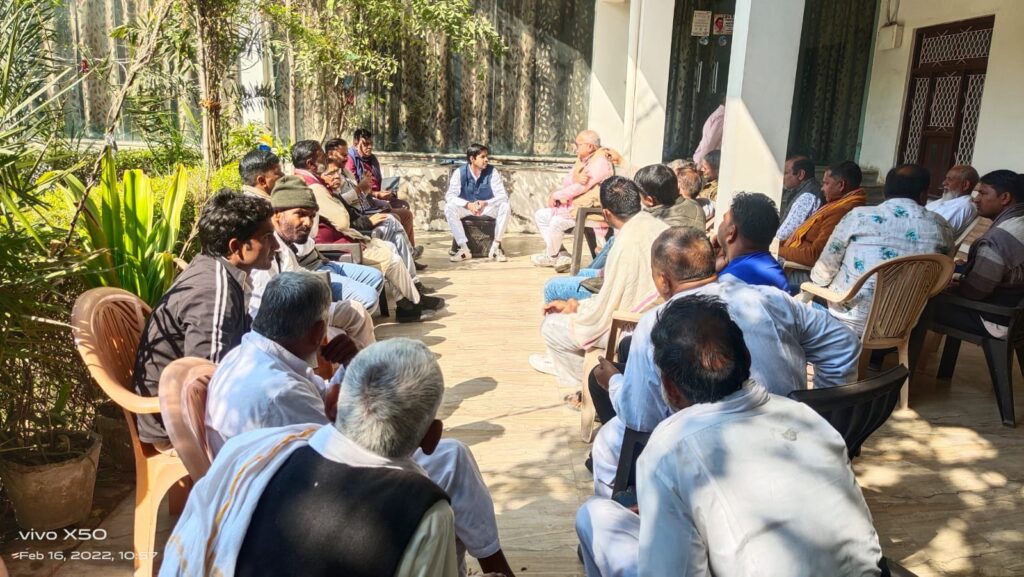
In his election campaign, Ali succeeded in convincing the voters about his honest intentions. “People from all castes voted for me in Nagar constituency, where Muslims comprise 20% of population. The voters were convinced that I had sacrificed my comforts in Australia to do something for them,” he says with a sense of satisfaction.
“Moreover, I have defeated the idea of communalism and hate campaign, which is used for climbing up the ladder in politics. Common people have reposed faith in me,” Ali says. In the election results, BJP’s Anita Singh was relegated to the third position, while Samajwadi Party’s Nem Singh was the runner-up. Having secured 62,644 votes, Ali won with a margin of 25,467 votes.
Ever since his election, Ali has focused on education and health in his constituency in order to raise the standard of living of the villagers. “I have been working for improving the quality of Government education system. Private education is not a solution. Even if I open schools and colleges in Nagar, it cannot serve the numbers. Only a robust Government education set-up can benefit everyone,” he points out.
As regards the health sector, the condition of Government facilities was earlier pathetic in the villages, where 95% of the women’s delivery cases were referred to private hospitals. Ali’s interventions at various levels have helped improve the situation. He has also brought relief to Muslims and other marginalised groups by raising their issues on various forums.
Ali has drawn the attention of Government authorities to the law and order situation and corruption in various offices with public dealing. He has sought to utilise his position as an MLA for betterment of society and setting the things correct on various occasions. He recently raised the issue of suspension of an Urdu teacher, Amin Kayamkhani, with the Education Minister when the teacher drew the Minister’s attention to the Urdu subject being sidelined in the schools.
As a result of Ali’s sustained efforts, a large number of announcements were made for the development of the Nagar Assembly constituency in the 2023-24 State Budget presented in the Assembly last month. The announcements included construction of a hostel for girls belonging to minority community and a new sub-district hospital, establishment of an Agriculture College, installation of a faecal sludge treatment plant and upgradation of Khoh and Jaluki village panchayats as sub-tehsils.
The selfless and dedicated work by Ali in the eastern Rajasthan region both before and after his election as an MLA has set an example of how the young educated Muslims can bring a change by entering the multifarious fields of public service. The common people in Nagar constituency, who have reposed faith in Ali’s leadership, are hopeful that he will set new standards of public service and bring a new identity to the backward region.
source: http://www.indiatomorrow.net / India Tomorrow / Home> News> Society / by India Tomorrow Correspondent / March 31st, 2023

.webp)

.webp)