This Poet Never Went to School, so She Invented Her Own Alphabet to Write Poetry

Bandipora District, JAMMU & KASHMIR:
This Poet Never Went to School, so She Invented Her Own Alphabet to Write  Poetry

Zareefa Jan has created a “language of circles” to help her document her poems. Only she can decode them.

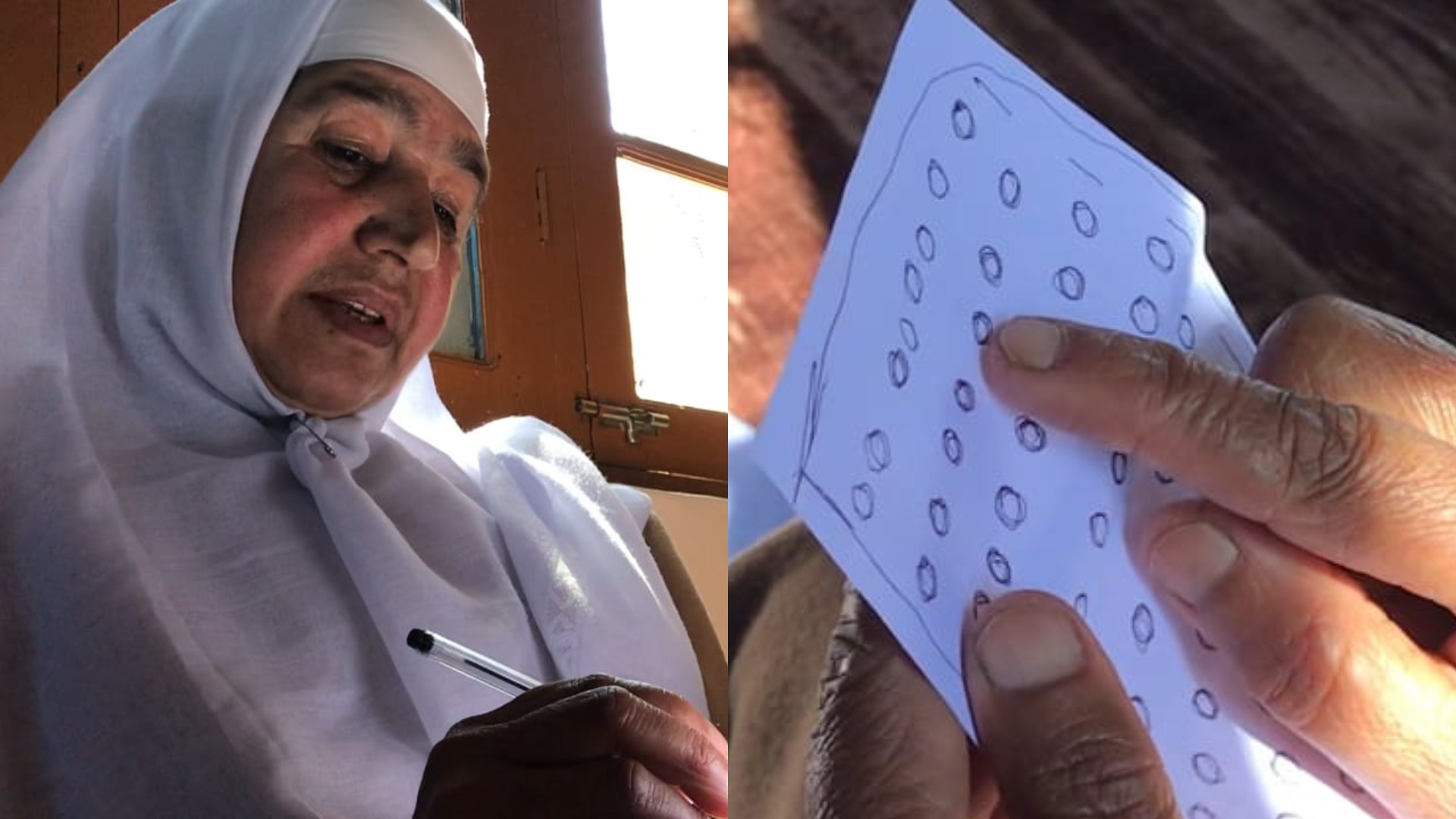
Zareefa Jan handed me a piece of paper on which several circles were scribbled in pencil. It was only on closer look that I could make out the small differences between them – some were larger, some were not as perfectly circular, some were closer to each other, some seemed circled over and over again. They were laid out neatly in a line. As I continued trying to decipher them, she fished out a pencil and added some lines of circles on a fresh piece of slightly crumpled paper – writing from right to left, the way Urdu and Kashmiri scripts are written.

“Nobody in the world can read those lines except my mother,” Shafaat Lone, Zareefa’s son, told VICE.

Those “lines” are actually Zareefa’s very own coded language, one that she has developed as a means to archive her poetry.
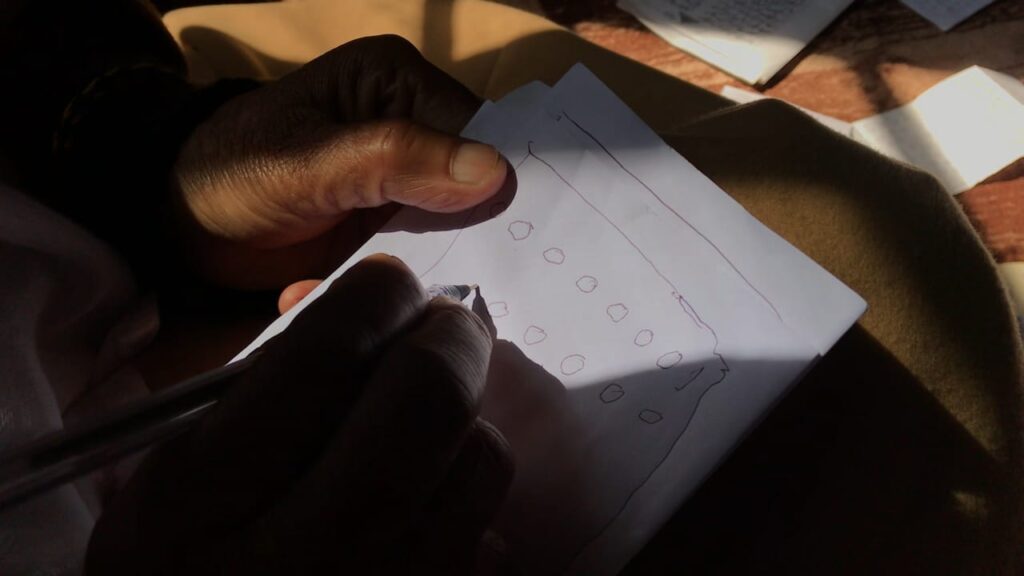
“Nobody in the world can read those lines except my mother, “Shafaat Lone, Zareefa’s son told Vice.

The 65-year-old sufi poetess living in north Kashmir’s Bandipora district in India never went to school. And so, even though she can speak her native Kashmiri language, she can’t read or write in it. 

Sufism is a mystical form of Islam, an unorthodox school of practice that focuses more on the esoteric aspects of religious life, and in which Sufis strive for direct, personal experiences with God.

“This is my language, the language of circles,” she tells me proudly. “I’ve developed it over the years.”

Zareefa’s initiation into poetry started a few years after she got married, when she was in her late thirties. She had gone to fetch water from a nearby brook, when she claims she lost all sense of the world around her and fell into a kind of a trance. When she came to, she’d lost her pitcher, but also felt like a different person altogether.

“When I regained my senses, a gazal just came out of my mouth,” she said. 

A “gazal” is a poem or an ode that originated in Arabic poetry, and often has to do with themes like love, longing and loss. “Until then, I had no idea of what poetry was because I had never read it. But ever since, I have written hundreds of poems and gazals.”

She read out a few lines from one of her poems:

“Panie soaraan aam yawuniyey
Lalwuniyey thovtham naar.
Yawun myon chambi dulwuniyey
Yi chu samsara napaidaar.

(I didn’t destroy my youth as a fire kept nourishing me. My youth is insubstantial in the transient world.)”
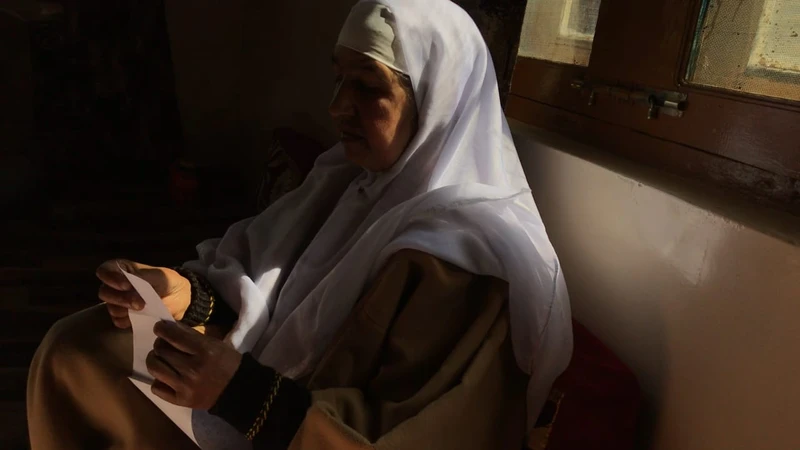
Zareefa reading out one of her poems

When Zareefa realised that she had a penchant for poetry, her children were in school. They were learning how to read and write in English and Urdu. But her poems would come to her in Kashmiri – a neglected language whose use is declining, even in Kashmir. 

“It would have been futile and unjust to ask them to learn another language. And who would have taught them? Kashmiri, as a subject, was not part of their school curriculum like English and Urdu,” she said. “Also, I wasn’t sure whether to share my poetry with them at all.”

It took her a few years to muster the courage to tell, first, her husband, and then her children, about her poems. To her surprise, they were amazed at the content of the poems. However, she could memorise and remember only a few of her works; most were lost to memory since she had no way of documenting them.

Initially, Shafaat tried to record them on tape. Then, her elder daughter, Kulsum, tried to write them down with the little Kashmiri she knew. But Zareefa was unhappy with both ways of archiving.
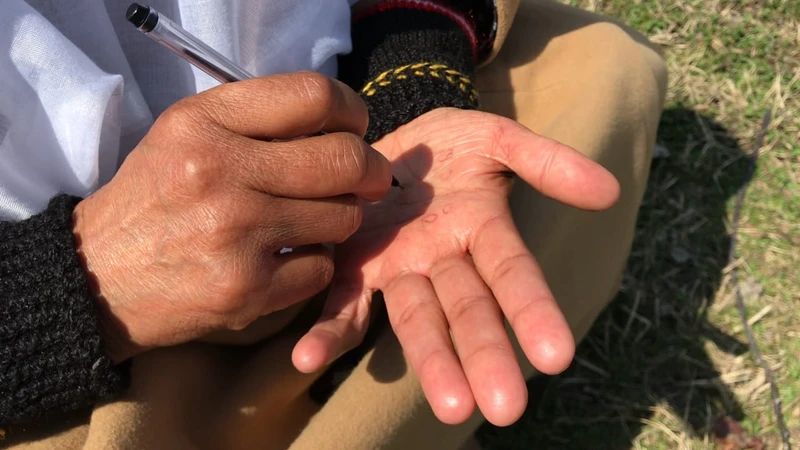
If a thought occurs to Zareefa out of nowhere, she grabs the nearest pen and writes it down, even if its on her hand itself.

“I can’t take my children with me everywhere I go to read my poetry and ask them to whisper my own lines into my ear so that I can say them out loud for others,” she said. “Also, my children can’t be with me every time I have a thought and want to record it, either on tape or on paper.”

So, she devised another technique.

Whenever she had a thought, she’d grab a page and draw different shapes of things on it. Most of it would be literal. “If there was an apple as a word in my poem, I’d draw an apple; if there was a heart, I’d draw a heart,” she said.

Later, whenever her daughter had the time, Zareefa would decode those shapes and Kulsum would write down the poem in conventional script.

“But I am illiterate, and I had never held a pen before,” said Zareefa. “So everything I drew was just a different shape and size of a circle. Like, even if I drew a banana, it would be circular!”

Still, those odd, circular shapes proved to be a good cue for her to remember her lines until her daughter could note them down. That, however, came to a stop three years ago, with Kulsum’s sudden passing. 

In grief, Zareefa neglected to document her poems for a time, until she decided to revisit those circular shapes. 
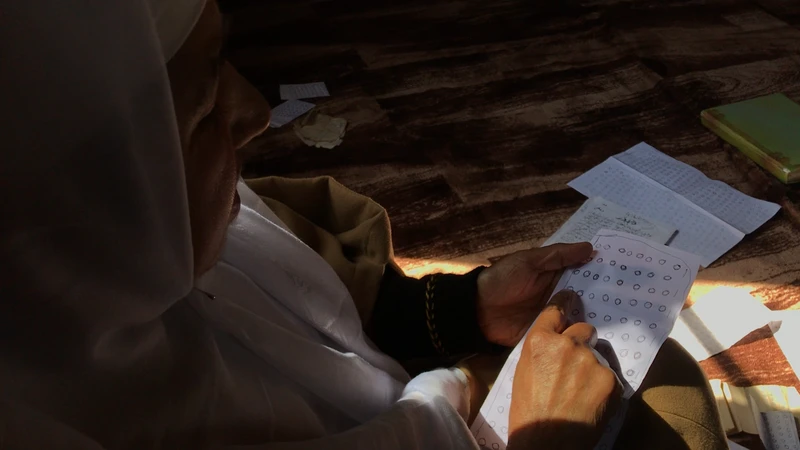
Zareefa Jan while reading her coded poetry

She realised that the many years of assigning her own meaning to her circles meant she had created an alphabet of sorts. Only she could read it, but she was content with that. It’s not even a fixed lexicon where one shape always stands in for a particular meaning. It keeps evolving as she gives the circles meaning that only she can remember and decode.

Now, those pages filled with squiggly circles lie inside books that hold them together, a repository of some 300 poems she has thus written. Her family is trying to get them all published in both her coded scripture and its conventional transliteration side by side.
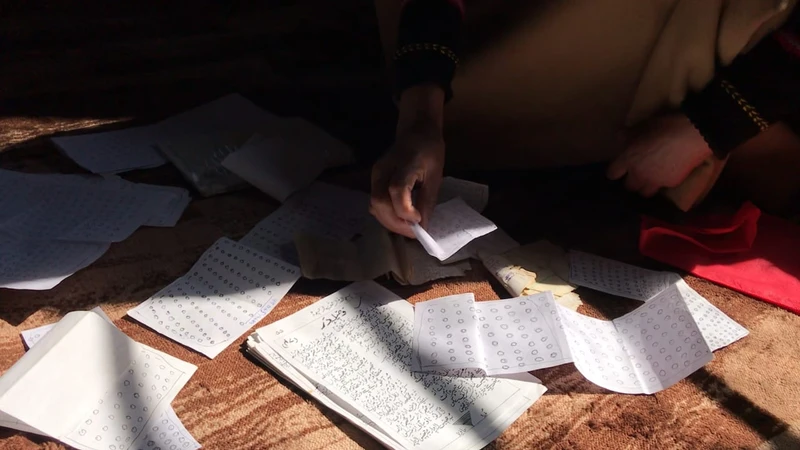
Some of her coded as well as decoded works

Some experts believe that Zareefa could well be the first poet in the world to have created her own alphabet to preserve her creations.

“As a student and teacher of poetry, I haven’t seen this kind of thing anywhere in the world of poetry,” said Seraj Ansari, an Urdu teacher. “If what she is saying is true, then she is probably the first poet in the world to do so.”

However, Zareefa’s son tells me how some people doubt his mother’s claim that her circles carry meaning that only she can decode. They suspect that she really remembers her poetry and only pretends to read it from her circles.

But one of the oldest and most revered sufi poets in Kashmir, Ab Kareem Parwana, believes Zareefa.

“No poet in the world can remember everything they have written,” he told VICE. “I have not seen or heard of anyone in my lifetime saying they remember their entire poetry collection. She is a mystic poet, and in mysticism, everything is possible.” 

Follow Rouf Fida on Twitter.

source: http://www.vice.com / Vice / Home> Life / by Rouf Fida / Photos by Rouf Fida / August 06th, 2021
FII Interviews: Poet And Essayist Moumita Alam Talks About Identity Politics And Cultural Elitism

WEST BENGAL:

In a conversation with FII, Moumita Alam discusses how she began writing poetry, and what it is like being a Muslim woman in a Hindu majoritarian state and how the voices of certain minorities have been silenced throughout Indian history.

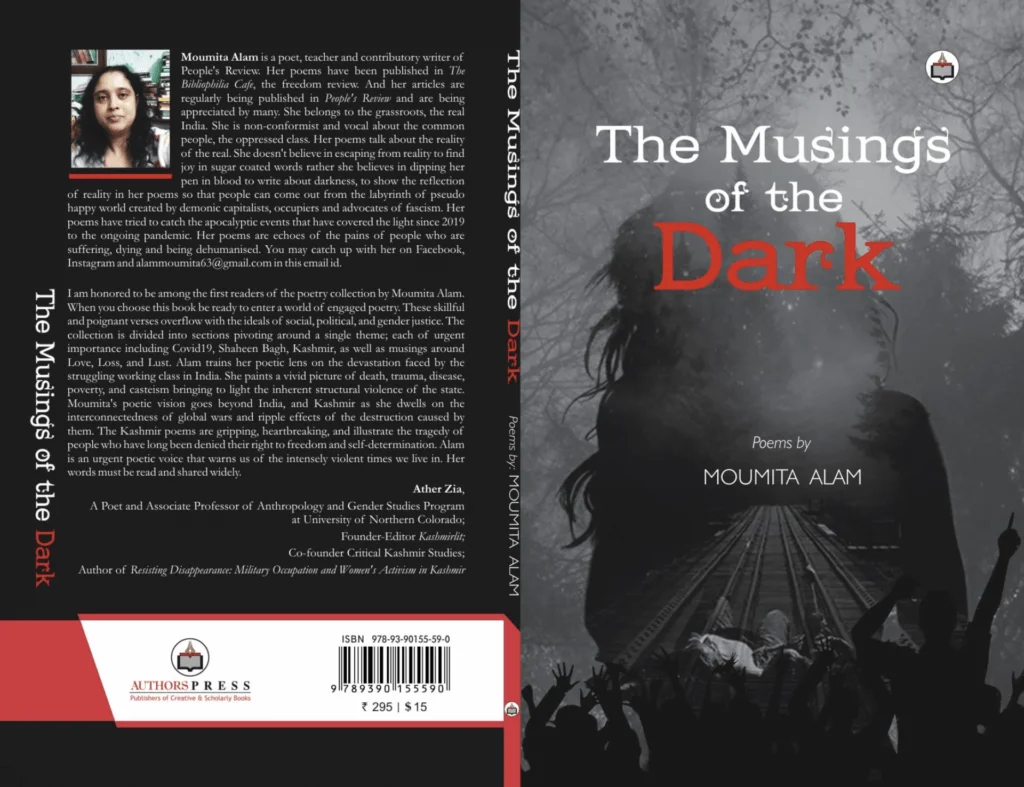
Moumita Alam is a teacher based in West Bengal whose political poetry, over the past few years, has gained incredible popularity in South Asia due to its powerful messages and themes. As a Muslim woman, through her poems, essays and opinion pieces, she attempts to bring out the atrocities faced by the women of her community alongside critiquing the larger issue of rising Islamophobia in India. Her first and only book, The Musings of the Dark was published in 2020.

In a conversation with FII, Moumita Alam discusses how she began writing poetry, what it is like being a Muslim woman in a Hindu majoritarian state and how the voices of certain minorities have been silenced throughout Indian history, particularly in West Bengal ever since the 1947 partition. 

FII: You have, over the past few years, used your poetry to both raise awareness about and protest against the Islamophobia propagated by the ring wing in our country. Would you like to shed some light on what your writing journey has been like? 

Moumita: I began my poetic journey after 2019. In 2019, on the 5th of August, the abrogation of Article 370 happened. I had a friend who lived in Kashmir, so I lost connection with him. He was an aspiring advocate who would regularly speak with me. I, as a teacher and a single mother, would share my life journey with him in return. But in 2019, when I could no longer talk to him, a sense of guilt began haunting me — how could a land become a prison where the people couldn’t even make a phone call to the ones in the outside world?

At some point in time, I thought of writing a letter to him, but receiving a letter from here could land him in trouble. He was much younger than me but was my only friend who would listen to my feelings, my happiness, my sorrows. So, I began writing.

I am against the use of the term “migrant labourers,” because India is our own country, so how can its citizens be called migrants? — to come on the grounds and walk for miles and miles to reach their homes.

Moumita Alam

That same year, in December 2019, the Anti-CAA-NRC movement started and we suddenly became aware of our religious identities. Everyone around me would ask me, “Are you legal? Are you a Bangladeshi?” But, believe me, I was born and raised in West Bengal. I have never even seen or visited Bangladesh. Every Muslim I know — whether practising or non-practising — was being asked this question. So, after my Kashmiri friend, I lost my other friends too because their questions would hurt me. I wrote about those feelings too. 

FII Interviews: Poet And Essayist Moumita Alam Talks About Identity Politics  And Cultural Elitism | Feminism in India
Source: Moumita Alam’s FB

And then again in March 2020, we saw how the unplanned lockdown forced the workers of the unorganised sector — I am against the use of the term “migrant labourers,” because India is our own country, so how can its citizens be called migrants? — to come on the grounds and walk for miles and miles to reach their homes. I could not sleep for days because I live in a village and many of my relatives and fellow villagers used to work in Kerala and Delhi as labourers. So, I also started to write poems about their plights and sufferings. 

One of my friends asked me to send my poems for publication, which had never crossed my mind because I stay far away from Delhi and its so-called “English literary circle.” But I still emailed a publisher who agreed to publish and then, my first and only book, The Musings of the Dark came out in August 2020. 

FII: Since your poems usually focus on the theme of gendered Islamophobia or the issues that Muslim women face in our country, what is it like being a Muslim woman in a country governed by the right-wing? 

Moumita: In 2021, I got to know that a few right-wing fanatics had created an app to sell Muslim women and had named it ‘Bulli Bai.’ I was so disturbed after reading the news about this because this is such a heinous thing to do — how can anyone do this in a democratic country like India?

So, I wrote this poem, “I am a Muslim woman and I am not for sale.” This poem was translated into many languages — in Telugu, Assamese, Bengali, Tamil, Kannada, and others — and was also published on various platforms. 

If you follow the news, you would know that in 2022, hijab was banned in schools across the country. Even if I don’t wear hijab, you can’t ban other women who do from getting an education. As women, we are a minority in many ways — first, as Muslims in this country and then, because of our gender. We have to bargain our choices and sometimes, we have to compromise in front of our families by saying, “I will work hard, I will wear a hijab, please let me go to the doors of education.”

When a man is interpreting religious scriptures for you, he will — whether consciously or unconsciously — view religion through a patriarchal lens. They might not allow us to gain an understanding of the equal rights that Islam gives to Muslim women.  

Moumita Alam

After becoming independent, I, as a Muslim woman, can decide for myself whether or not I wish to wear a hijab. But, you can’t put a blanket ban on hijab like that.

While I do write poems on the rising Islamophobia in our country, I also write about the oppression we Muslim women face within our own communities. Look, our society is based on patriarchal notions which means that even a lot of religious preachers are men. When a man is interpreting religious scriptures for you, he will — whether consciously or unconsciously — view religion through a patriarchal lens. They might not allow us to gain an understanding of the equal rights that Islam gives to Muslim women.  

FII: Have you ever faced censorship for having political themes and highlighting the various injustices particularly on the basis of religion, in your work?

Moumita: Thankfully, we still have some platforms that provide a space to people like me where we can raise our voices. I am thankful to the Editor of LiveWire, who recently resigned. She was an immense pillar of support for me because she never censored my work — she either accepted it or denied it from being published, but never censored it. Even the Editor of Outlook is brilliant that way.

FII Interviews: Poet And Essayist Moumita Alam Talks About Identity Politics  And Cultural Elitism | Feminism in India
Source: Moumita Alam’s FB

Sometimes, however, my poems get rejected by other platforms because they say my work is too political, but I think we are living in a time during which one can’t be apolitical. If you are, then you are indirectly standing with people who are unleashing injustice towards minorities. 

FII: As a poet who writes in both English and Bengali, you have often talked about how the voices of certain minorities have been neglected even within Bengali literature and poetry — an example of which can be the Marichjhapi massacre in 1979. Is there anything that you would like to discuss about the domination of certain elite classes and castes in Bengal? 

Moumita: You might have noticed that for the non-Bengalis, West Bengal is equal to Kolkata — all of Bengal is just Kolkata for most people who aren’t from Bengal. This suggests a very Kolkata-centric attitude that most people have about Bengal. The literary world is, of course, not an exception — it’s so Kolkata-centric that people like me who are living in the margins find it almost impossible to reach the centre that is Kolkata. 

Also, the Bengali literary world has been dominated by upper-class, upper-caste people for a very long time. So, they write about only those issues that they know about and that suit their narrative. Things are changing, some voices are getting spaces. However, we still have a long way to go. »

FII: When we usually talk about the India-Pakistan partition, the discussion inevitably gets centred around the division of what is present-day Punjab with little being said about how the refugees of Bengal, particularly the oppressed even among the displaced, were impacted. As someone who has written articles on this theme for both English and Bengali publications, can you tell us a little about your understanding of the same? 

Moumita: Yes, I agree with you that the pains and sufferings of the Bengali refugees haven’t found expression in the so-called mainstream literature, particularly English literature. When I’m talking about “Bengali,” I mean both Hindus and Muslims. The plights of the oppressed class like the Namasudra community who were forced to migrate to West Bengal from the then East Pakistan is missing from the literary narrative. Equally, even the traumas and voices of the Muslims who stayed back while the other members migrated to East Pakistan are missing from the literary imagination.

Source: Moumita Alam’s FB

Most importantly, after partition, no political establishment tried to heal the wounds of the refugees. We all understand how the various European governments attempted to heal the wounds of the holocaust survivors after the second world war, but the same did not happen in India, even though the partition is often compared to the Holocaust.

Instead, every political party tried to gain political mileage from the religious fault lines. If I am not mistaken, nothing much has yet been written about internal migration. How many partition museums do we have?

FII: Every time your poems about the Babri Masjid demolition or about Kashmir get published, there are a lot of derogatory things that are often said by right-wing people— such as a lot of Kashmiri Pandits who end up claiming that their own stories need to be heard over yours. Since you have been doing what you believe in for so many years, is there any advice that you’d like to give to the young girls of our country about how they can voice their thoughts fearlessly even when they are intimidated? 

Moumita: We are living in a critical juncture of time. As witnesses of this time, we can’t let the fascists win. How are they winning? They are winning through their narrative — a narrative of hatred towards minorities, towards women. We have to tell our own stories, we have to counter their narrative by our narrative. 

So, here is my message for all women:

I wish you,

Oh women,

A savage fury

To throw all the

Dos and don’ts

Under a ravaging bus.

And begin from the beginning

All-new, all equal.»

FII: You write and publish your creative works and political thoughts as a freelancer, which means there is very little for you to gain from it as a poet. If anything, your poems and articles have mostly just led people to threaten you. What is it that motivates you to continue writing even when things don’t entirely work in your favour? 

Moumita: Silence is not an option. The hatred that engulfed my friends still haunts me. I am a villager and I know how common people are suffering every day. The silence of the intellectual people saddens me. I want to jolt them, wake them up from their hibernation. 

I am a villager and I know how common people are suffering every day. The silence of the intellectual people saddens me. I want to jolt them, wake them up from their hibernation. 

Moumita Alam

You know, potatoes are the only profitable crop in my village. This year, the poor farmers incurred a heavy loss and couldn’t repay the loans they had to take from private microfinance companies at heavy interest rates. I asked a very old farmer how they plan to survive after this loss? And he replied, “Next year we will get some profit.” I was just amazed at his belief and relentlessness. I believe we can bring a change. We have to hope because we don’t have any other option.

The interview has been paraphrased and condensed for clarity.

source: http://www.feminisminindia.com / Feminism In India / Home> Interview / by Upasana Dandano / June 09th, 2023

Book Review: Amar Sohal’s ‘The Muslim Secular’

UNITED KINGDOM:

Amar Sohal’s ‘The Muslim Secular’ is a compelling exploration of ideas, identities, and legacies that takes you on a scholarly journey that traverses the intricate terrain of India’s struggle for Independence and its subsequent partition through the lens of three influential Muslim leaders: Maulana Abul Kalam Azad, Khan Abdul Ghaffar Khan, and Sheikh Abdullah.

Photo: Getty Images
Photo: Getty Images 

Amidst the dynamic sociopolitical landscape of the subcontinent, the Muslim community grapples with multifaceted challenges, navigating issues of identity, representation and political agency. It is against this backdrop that Amar Sohal’s book ‘The Muslim Secular: The Parity and Politics of India’s Partition’ emerges as a pertinent exploration. 

Sohal embarks on a scholarly journey that traverses the intricate terrain of India’s struggle for Independence and its subsequent partition through the lens of three influential Muslim leaders: Maulana Abul Kalam Azad, Khan Abdul Ghaffar Khan, and Sheikh Abdullah. This meticulously crafted work not only delves into the historical narratives surrounding these figures but also navigates the complex intersectionality of religion, politics, and regional identity, offering readers a profound and nuanced understanding of a pivotal period in South Asian history.

Sohal’s narrative unfolds with the exploration of Azad’s vision, which significantly departs from conventional perspectives. Azad, rather than emphasising a stark dichotomy between Hindus and Muslims, envisions a shared Indian nationality rooted in historical evolution. His integrationist stance grapples with the challenges of sectarian antagonism, weaving a narrative that transcends the simplistic notions of religious division. Sohal adeptly captures Azad’s dynamic response to historical exigencies, portraying him not merely as a religious leader, but as a visionary navigating the multifaceted socio-cultural landscape of India.

The focus then shifts to Ghaffar Khan, a transformative figure whose reinterpretation of the Muslim Pashtun warrior archetype challenges prevailing stereotypes. By divorcing bravery from violence, he introduced an ethical dimension to the pursuit of freedom. Sohal meticulously unravels the intricacies of Ghaffar Khan’s advocacy for a symbiotic relationship between Muslim Pashtuns and Hindu Hindustanis. The book doesn’t shy away from the complexities of Ghaffar Khan’s engagement with the post-Partition referendum in Kashmir, illuminating the enduring impact of his ideas on regional political dynamics.

Amar Sohal's book 'The Muslim Secular: Parity and the Politics of India's Partition'
Amar Sohal’s book ‘The Muslim Secular: Parity and the Politics of India’s Partition’

Abdullah emerges as another pivotal figure and Sohal meticulously traces the evolution of his perspectives on Kashmiri identity. Abdullah’s delicate balance between preserving the region’s distinctiveness and fostering unity with the broader Indian context adds layers of complexity to his political trajectory. Sohal deftly navigates Abdullah’s integrationist phase in later years, providing readers with a nuanced understanding of the man and his enduring influence on the Kashmiri political landscape.

What distinguishes ‘The Muslim Secular’ is its seamless transition between historical narratives and contemporary implications. Sohal draws intriguing parallels with the present, shedding light on how the legacies of Azad, Ghaffar Khan, and Abdullah continue to shape the political landscape. The comparison with the Pashtun Tahafuz Movement in Pakistan adds depth to the exploration of non-violence and symbiotic centre-region relationships, offering readers insights into the ongoing dynamics in the region.

Expanding the scope of the book, Sohal delves into the role of large Muslim-minority communities in Kerala, West Bengal, and Assam. These communities, constituting a significant portion of the population, actively resist the homogenising efforts of the Bharatiya Janata Party (BJP) through sub-national political formations. Inspired by the integrationist visions of Abdullah and Ghaffar Khan, they navigate the intricate socio-political terrain, contributing to the overarching theme of the book. This expansion not only enriches the narrative but also provides a holistic understanding of how these visions transcend regional boundaries.

‘The Muslim Secular’ stands out as a seminal work that transcends traditional historiography. Sohal’s narrative is not only informative but also reflective, inviting readers to engage deeply with the complexities of India’s political trajectory. The book encourages a nuanced understanding of the legacies of Azad, Ghaffar Khan, and Abdullah, urging readers to contemplate their enduring impact on the current socio-political milieu.

In conclusion, ‘The Muslim Secular’ is a compelling exploration of ideas, identities and legacies. Sohal’s nuanced and insightful approach ensures that readers not only gain a profound understanding of the historical context but also appreciate the lasting relevance of these visionary leaders in shaping India’s political landscape. The book serves as an indispensable resource for scholars, historians, and anyone seeking a comprehensive understanding of the intricate interplay between religion, politics, and regional identity during a pivotal period in South Asian history.

However, it is imperative to recognise that the book might present challenges for the general reader, particularly in the initial sections. The narrative, laden with academic jargon and intricate historical details, necessitates a certain familiarity with the subject matter. While this scholarly depth undoubtedly elevates the work, it could potentially form a barrier for readers less acquainted with the nuances of Indian history and politics. Yet, for those willing to navigate this initial complexity, the reward is a profound and enlightening exploration that unveils the complex tapestry of India’s political evolution, offering insights that extend far beyond the pages of this thought-provoking work. 

Sohal’s ‘The Muslim Secular’ not only adds scholarly richness to the discourse but also invites readers to confront and engage with the multifaceted dimensions of a crucial period in South Asian history.

(Saleem Rashid Shah is a literary critic and an independent writer based in New Delhi. He tweets at @SaleemRashid176. Views expressed are personal.)

source: http://www.outlookindia.com / Outlook / Home> Weekend Reads / by Saleem Rashid Shah / October 28th, 2023

Assamese Muslim women in Jajori village weave fairy-tales

ASSAM:

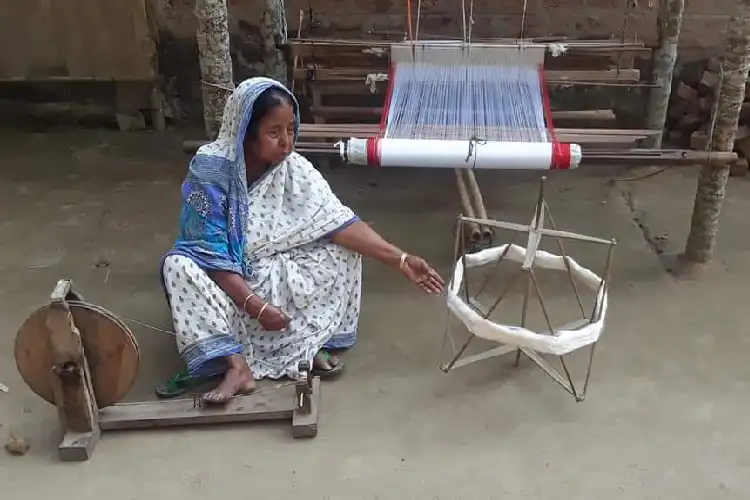
A weaver at her loom in Assam's Jajori village
A weaver at her loom in Assam’s Jajori village

When Mahatma Gandhi said “Assamese women are born weavers, they can weave fairy tales in their cloth”, he wasn’t exaggerating. The words of the Father of the Nation are well reflected in Jajori, an Indigenous Assamese Muslim-dominated village in central Assam’s Nagaon and Morigaon districts. The only source of livelihood for the villagers is the handwoven clothes made by the Muslim women. These clothes are sold in Assam and rest of India.

There were three Burmese invasions of Assam between 1817 and 1826, during which time the Kingdom of Assam (then ruled by the Ahoms) came under the control of Burma from 1821 to 1825. It is believed that the ancestors of Jajori started settling in the village during the Burmese invasion. 

Even though weaving was the only source of income for villagers in Jajori since the Ahom Empire it gathered momentum when Mahatma Gandhi gave the call of boycotting all foreign goods during India’s freedom struggle in 1905. Now the entire village is dependent upon weaving.   

A weaver at work in the Jajori village of Assam

Cotton, Muga, Pat (mulberry silk), and Eri (endi) are the main fabrics that are woven in Jajori village. Textiles like shawls, saris, furnishings, and bedspreads are usually woven from pure Assamese cotton. Chadars and Mekhalas – which is the traditional dress worn by indigenous Assamese women – are also made from this cotton.  

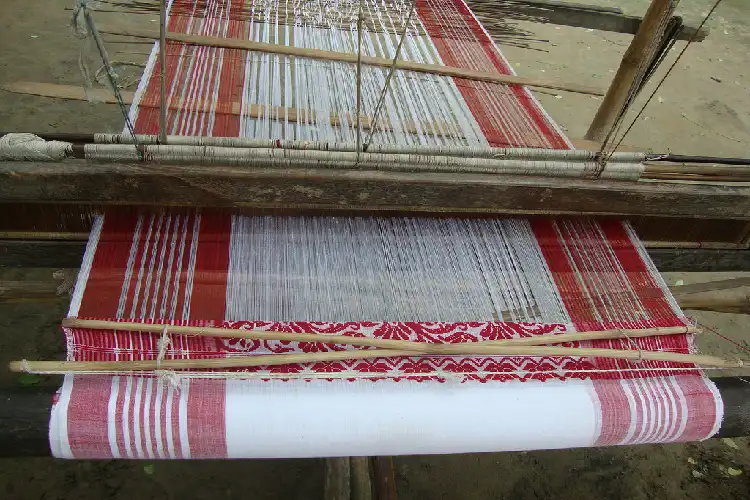
The Muslim women in Jajori also weave out the traditional Gamosha (white towel with red patterns on both ends) which is given to elders and dear ones as a mark of respect and love on different occasions.

Initially, the Muslim artisans of the Jajori village were personally involved in weaving. In 1960-61, some local elders tried to organize these artisans and the late Jamiat Uddin, and Majlul Haque formed the Jajori Muslim Village Weaving and Cutting Cooperative Society..

A weaver diaplaying handloom cloth

The cooperative society has been run by Nechima Begum alias Mary Begum since 1980.

Gulnaha Begum, a craftswoman, said she has provided education to her two sons and arranged marriage for her daughter by weaving and selling clothes. The women of the village including Chimim Sultana, Nazima Begum, Runu Begum, Maria Nesa, Alea Begum, and Punang Begum have been involved in the weaving industry for a long time.

The state government has not provided any major financial assistance to the weavers except one-time assistance under the Din Dayal scheme.

Abdul Khayer Ahmed, a prominent social worker in Jajori village, said that when Mahatma Gandhi called for a boycott of foreign textiles in 1905, the artisans of the village cut their yarn and wove clothes for themselves and others.  

The fairytale designs woven in cotton

The women of this area weave saris, gamochas, rihas, chadars-mekhelas, tablecloths, etc.

Even though there is an office of the Handloom and Textiles Department at Dalang Ghat near Jajori. However, the response of the department is not as expected. But the weavers are not looking towards the government.

Even though there is an office of the Handloom and Textiles Department at Dalang Ghat near Jajori. However, the response of the department is not as expected. But the weavers are not looking towards the government.

source: http://www.awazthevoice.in / Awaz, The Voice / Home> Story / by Daulat Rahman, Guwahati / December 06th, 2023

Mangaluru: HIF releases book titled ‘Big B’ to pay tribute to Late SM Basheer

Mangaluru, KARNATAKA:

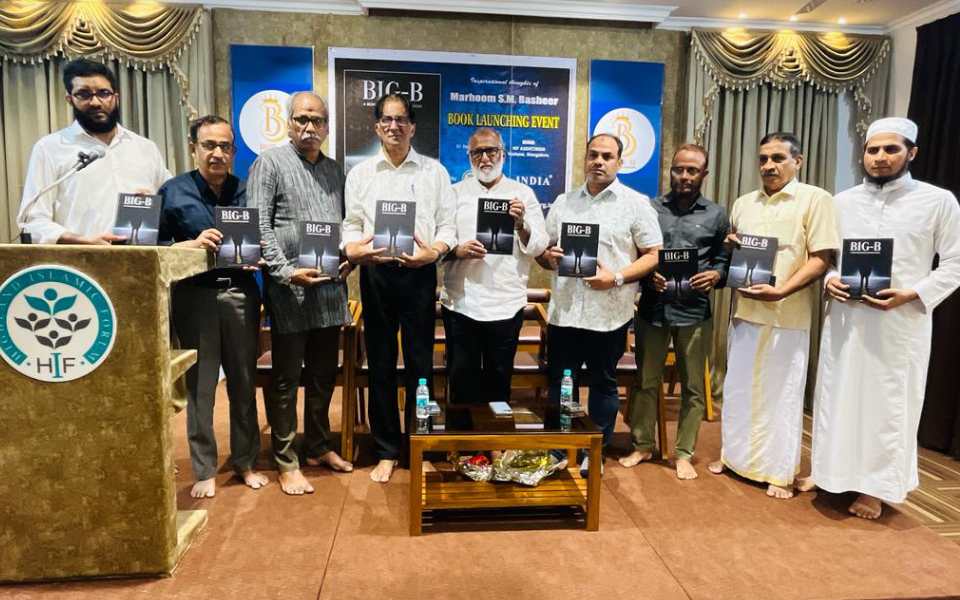
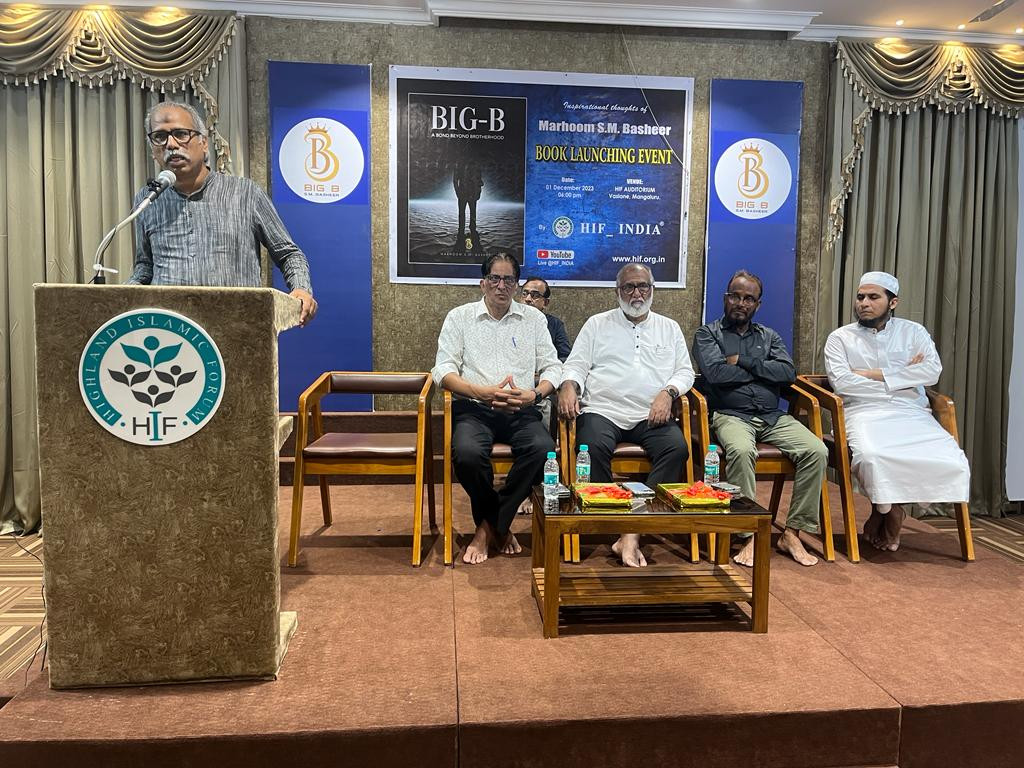
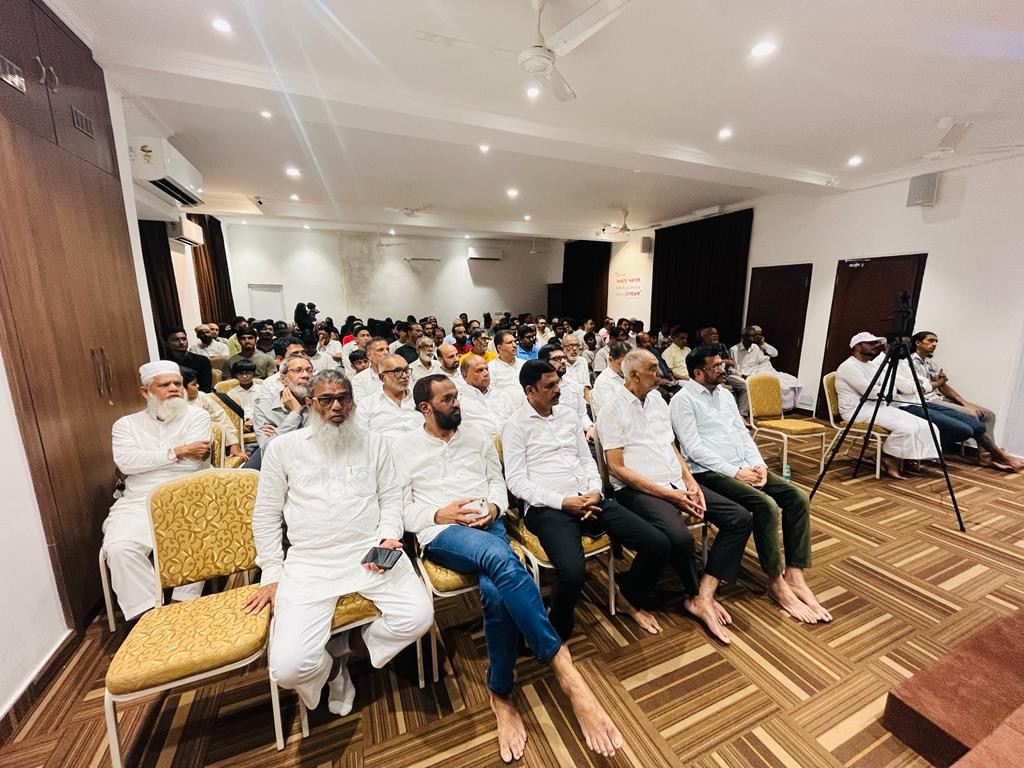
In an event held at the Highland Islamic Forum (HIF) Auditorium in the city, the Highland Islamic Forum (HIF) unveiled a new book titled ‘Big B,’ a tribute to the late SM Basheer.

Subtitled ‘A Bond Beyond Brotherhood,’ the book is centered around the inspirational thoughts and life of Late SM Basheer.

Addressing the gathering at the book launch, NA Muneer, Ex-Chairman of the Kuwait Kerala Muslim Association (KKMA), shared memories of his association with SM Basheer. Muneer spoke about the charismatic personality and powerful aura that SM Basheer possessed, leaving a lasting impact on everyone who met him.

Recalling his memories, Muneer emphasized that even a year after SM Basheer’s passing, he continues to remember and honor the late leader. He praised SM Basheer’s instrumental role in organizing significant events at KKMA and acknowledged his invaluable contributions to the organization while serving as its chief.

Fatah Tayyil, Ex-President of KKMA, also paid tribute to SM Basheer, acknowledging his substantial contributions to the KKMA.

SM Rasheed, Chairman of Bearys Chamber of Commerce and Industries (BCCI), spoke about SM Basheer’s profound influence on people’s lives and commended his contributions to the BCCI.

Other speakers, including Mohammed Ali Uchchil and Rizwan Pandeshwar, shared their views on the life and impact of SM Basheer during the event.

The book ‘Big B’ was released by AK Niyaz, MD of AK Group of Companies, along with HIF India President Adil Parvez, and other guests present at the event.

Hussain Shafi, the author of the book, was felicitated by HIF for his contributions.

HIF also presented a documentary-style short video introducing SM Basheer and showcasing his life.

Prominent figures such as SM Basha, MD of SM Group of Companies, SM Farooq, KK Abdullah, officials, and executive members of KKMA and BCCI graced the occasion.

The event, hosted by AK Shaaz, concluded with supplications led by Moulana Tayyub, Khateeb Ehsan Masjid.

source: http://www.varthabharati.in / Vartha Bharati / Home> Karavali / by Vartha Bharati / December 01st, 2023

Twin daughters of Imam from Kashmir village qualify NEET 2023

Damhal Hanjipora (Watto Kulgam District), JAMMU & KASHMIR:

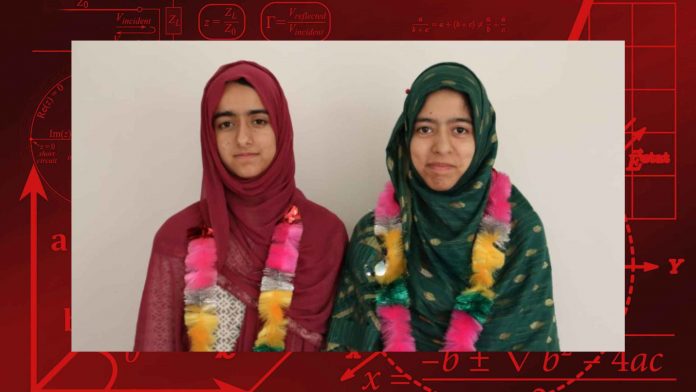
Syed Bismah and Syed Sabiya, twin daughters of an Imam from Damhal Hanjipora in Kulgam district, south Kashmir, have achieved success by qualifying the Undergraduate National Eligibility Cum Entrance Test (NEET) in their first attempt.

The NEET results for 2023 were recently announced, and Bismah and Sabiya secured impressive marks of 625 and 570, respectively.

When asked about their achievement, the siblings expressed their gratitude towards their parents, highlighting their unwavering support throughout their journey to qualify for this prestigious examination. Their parents played a vital role in encouraging and guiding them, making it possible for Bismah and Sabiya to achieve this notable milestone.

“They provided us with whatever we needed to study from childhood. They made a big sacrifice for our future”, Sabiya told local media.

She emphasized the importance of focus in order to qualify for the NEET examination.

“If you want to appear in NEET, you should first check your level and identify your weaknesses. You should discuss your weaknesses with your teachers and also take help from internet to overcome them,” she said.

The father of Bismah and Sabiya, an Imam from Damhal Hanjipora, expressed his immense pride in his daughters’ accomplishment. He acknowledged that he had faced struggles and worked tirelessly to provide support to his daughters throughout their journey. His dedication and hard work were aimed at ensuring that his daughters had the necessary resources, guidance, and encouragement to pursue their dreams of qualifying for the NEET examination. The father’s commitment and efforts played a significant role in enabling Bismah and Sabiya to achieve their goals, and he takes great pride in their success.

“My advice to every parent is that you should provide the best opportunities to your wards for their better future,” he said.

source: http://www.muslimmirror.com / Muslim Mirror / Home> Education> Indian Muslim> Positive Story / by Muslim Mirror Staff / June 14th, 2023

Delhiwale: Rakhshanda Jalil’s ghararas

NEW DELHI:

A peek into a precious wardrobe of strange outfits that are fast becoming invisible from Delhi evenings.

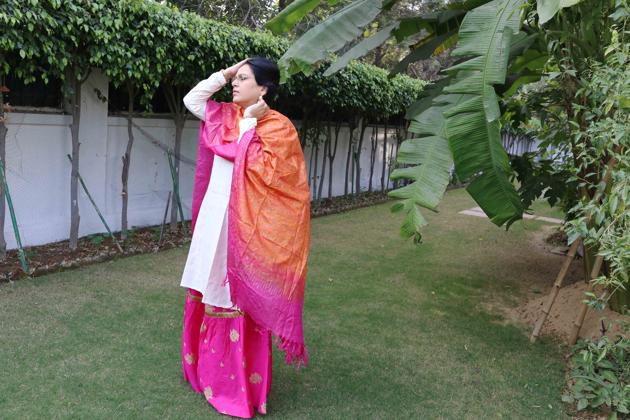
Ghararas, too, are fast becoming invisible from Delhi evenings, although Rakhshanda Jalil is often spotted wearing it in literary gatherings.(Mayank Austen Soofi / HT Photo)

The other day, we spot a strange outfit. It is neither a skirt, nor a gown, and definitely not a sari. It is also not a pajama.

What is it, we ask.

“It is gharara,” says author Rakhshanda Jalil, pronouncing the ‘gh’ from the base of the throat.

We are at Ms Jalil’s home in central Delhi. Her most precious wardrobe is a treasure-house of about two dozen ghararas. Most have been passed on to her from her mother and mother’s mother; a few are even older.

Indeed, Ms Jalil has a fascination for souvenirs of the past. One of her many books is titled Invisible City: The Hidden Monuments of Delhi. Ghararas, too, are fast becoming invisible from Delhi evenings, although Ms Jalil is often spotted wearing it in literary gatherings.

Years ago, she had worn a pink gharara for her wedding. Her two young daughters also wear it on during special occasions such as… well, weddings, particularly in Uttar Pradesh, where more people are likely to be similarly attired.

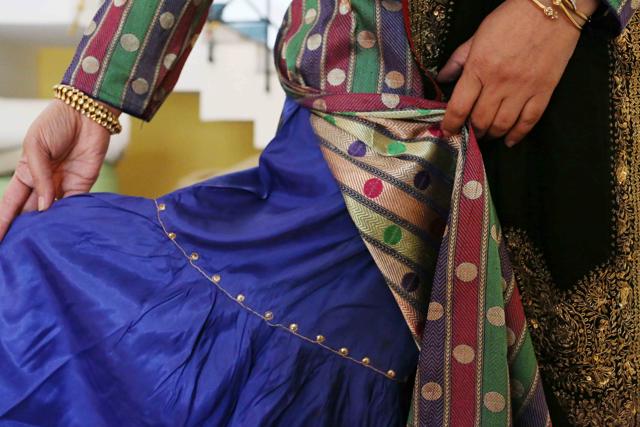
It is not unusual in Delhi weddings to see women in gharara’s sister dresses, such as the lehenga and the sharara — which is like flared pants. The gharara is more complicated. Each leg is comprised of two parts. The first goes down from the waist to the knee, and the second, which is much wider, begins from the knee and goes down to the foot.

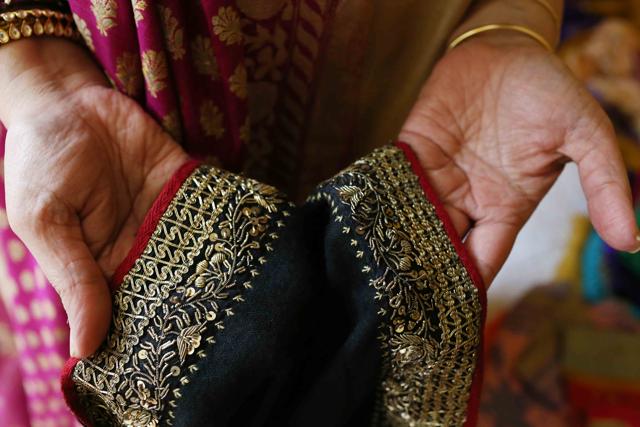
Truth be told, Ms Jalil prefers saris and trousers for ordinary outings. But the gharara was the daily costume of her maternal grandmother, Zahida Suroor, who lived in the university town of Aligarh. “In my grandmother’s time, it was common for women to wear cotton ghararas made of chintz (called chheent by Urdu speakers) at home,” says, Ms Jalil. “Silk or satin ghararas were worn on formal occasions. And the heavy brocade, called kamkhaab, was worn at weddings.”

Each gharara should have its own kameez and dupatta, though these days one has more liberty to mix and match. Ms Jalil says that back in the day an entire gharara was sewn in four or five days. Each piece was stitched by hands. The entire hem was turned in with tiny invisible stitches. Sparkling bits of gold lace were tagged to camouflage the joints at the knees.

Ms Jalil’s mother, Mehjabeen, recently hand-stitched a red gharara for her. The happy daughter gave it a trial run at a dinner in her own home. There was much applause. The gharara came with a short white shirt. The red dupatta was lined with gold frills.

In the old days, women of a family gathered together to sew a gharara if it had to be made for a bride’s trousseau. Neighbours and friends also chipped in. Opinions were eagerly sought on the design, and the leftover cloth was never thrown away — it was used to make an accompanying batua (wallet), or jootis (sandals).

There was a time when a few cities were known to make special types of ghararas, says Ms Jalil. Benares was famous for its brocade ghararas, with master-weavers painstakingly transporting the design to lighter gauzier material for the accompanying dupatta. Lucknow favoured a patchwork design called chatapati. Delhi specialized in something called ‘farshi’, with a long train that women were supposed to hold delicately in their arms.

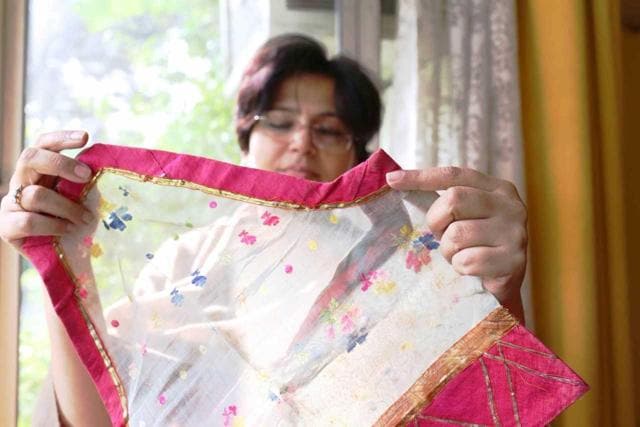
Perhaps the most ideal way to study this old-world costume is to ask the wearer to sit still. On request, Ms Jalil settles down beside a window with an Eric Segal novel. While the book belongs to her elder daughter, Aaliya, the gharara belongs to her great grandmother. Made of atlas (no relation to the book of maps), the fabric is so fragile that it can tear at the slightest tug. It has a blue background with yellow, orange and pink flowers. At one point, Ms Jalil looks out of the window. Her gharara ceases to be a dying tradition, and seems very much a part of the present.

source: http://www.hindustantimes.com / Hindustan Times / Home> News> Cities>Delhi News / by Hindustan Times / by Mayank Austin Soofi / October 09th, 2017

The Father Of Urdu Poetry: The Disputed Disappearance Of Wali Gujarati’s Grave

Ahmedabad, GUJARAT:

The Father Of Urdu Poetry: The Disputed Disappearance Of Wali Gujarati's Grave

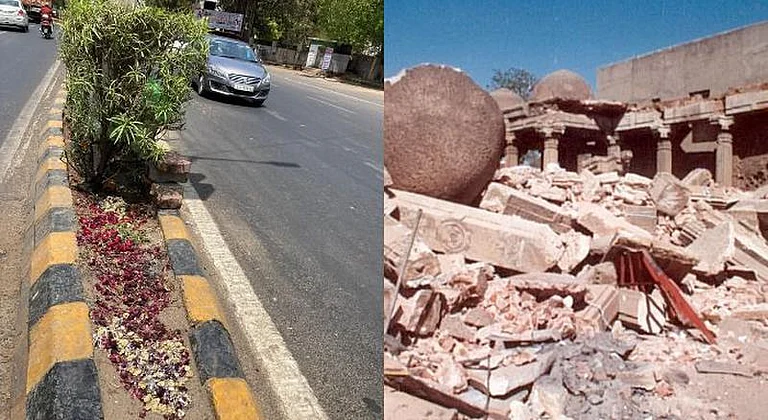
Amidst the busy roads of Gujarat that have thousands of cars passing by every day, there lies a neglected divider that holds reverence for many. A petal-strewn corner on a broken divider signifies the tomb of an Amdavadi poet credited for the advent of Urdu poetry that gave rise to a league of poets like Zauq, Mir, and Mirza Ghalib.

The poet in question is none other than the father of Urdu poetry, Wali Muhammad Wali, whose contribution towards uplifting Urdu poetry to being at par with its Persian counterpart is considered indispensable.

Challenging the notion that elite poetry can only be Persian, Wali opened up a world of poetic possibilities for Urdu poets and his influence can be seen in a piece penned by the Poet Meer Taqi Meer as a tribute to the Urdu Chaucer.

Khugar nahin kuch yun hi hum Rikhta-goi kay/
Mashooq jo apna tha, bashinda-e-Dakhan tha”

(It isn’t casually that I began dabbling in Urdu/I picked it from my lover, a native of the Deccan).

The poetic legend who died 300 years ago was buried in his family graveyard in Ahmedabad after his demise. Post Independence, Wali’s grave was separated from the graveyard and found itself situated in the middle of the road.

While the death and origins of Wani might be disputed, the razing of his grave has been linked to the communal past of Gujarat. Destroyed during the Gujarat violence of 2002, Wali’s grave was part of the riot that saw thousands murdered and the demolition of many significant Muslim shrines and Dargahs. Eliminating any and all signs of the Dargah, roads were built overnight and the atrocities of communal violence were swept under the layers of tar and repairs that ensued.

A Twitter user recently went searching for the shrine and impressively remarked on the presence of the Urdu poet’s legacy that remains etched in the mind of locals. Street vendors, shoemakers, and locals seem happy to guide and give precise directions to the grave for those looking to visit the shrine. Once an ornate shrine, the grave now portrays a sad picture of desolation and jarring neglect that can be blamed on the political powerplay as well as the ‘divide and rule’ ideologies that plague the nation.

One cannot miss the imprint of Wali’s work on Urdu poetry. It remains immortal in the hearts of people and keeps the light of consciousness alive.

source: http://www.homegrown.co.in / Homegrown / Home> #HGExplore / by Riya Sharma / August 08th, 2022

How This Waste Collector In Bengaluru Is Making Entrepreneurs Out Of Ragpickers

Bengaluru, KARNATAKA:

How This Waste Collector In Bengaluru Is Making Entrepreneurs Out Of Ragpickers

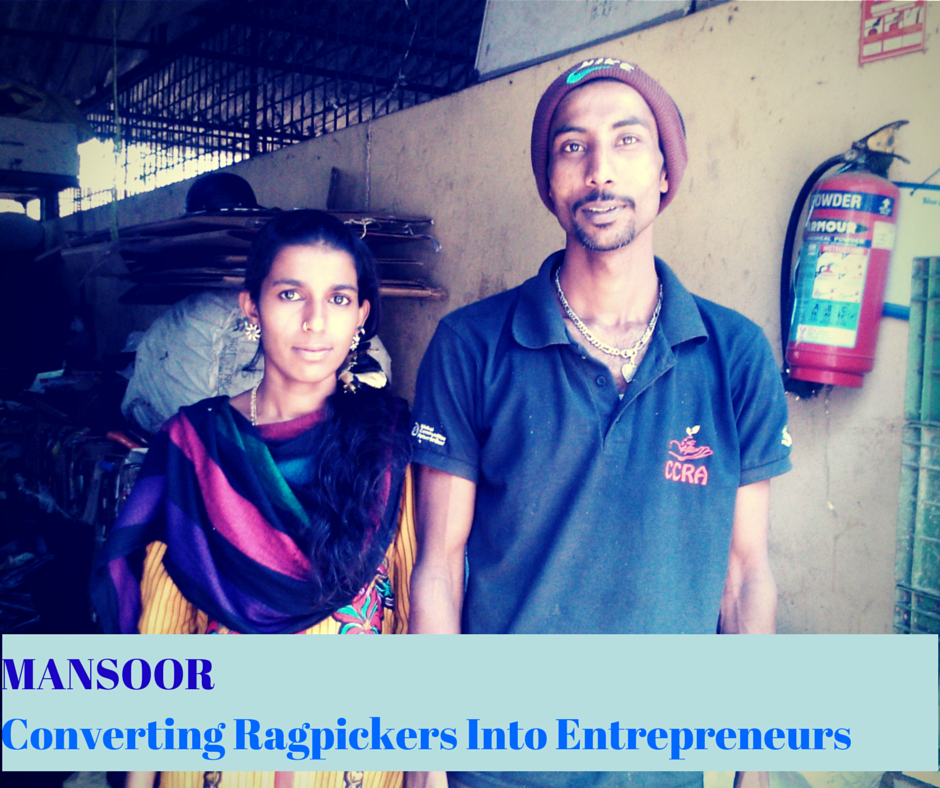
Using technology and people management skills, read how Mansoor is making waste collection a well organized profession. Thanks to his efforts, Bengaluru now sees ragpickers with ID cards, fresh uniforms and better incomes.

Using technology and people management skills, read how Mansoor Ahmed is making waste collection a well organized profession. Thanks to his efforts, Bengaluru now sees ragpickers with ID cards, fresh uniforms and better incomes.

“The waste pickers’ community is very enterprising. If their entrepreneurial skills are channelized and steered in the right direction, they can work wonders,” says Mansoor . “Not only will this put fellow waste pickers on the right path of hard work and integrity, but it will also be an opportunity to include them in the mainstream economy.”

He believes that one man can only do so much to solve the garbage crises of the city. The idea is to involve the entire community in problem solving. On the one hand, Bengaluru citizens are keenly looking for a solution to the garbage menace, while on the other hand there is tremendous energy to be unlocked in the waste picker community who can come to their rescue.

“My father started as a scrap dealer around 30 years ago. ‘Segregation’ was an alien word then. However, he used to promote the practice like we do today. He is no more but I am inspired by him and want to do the same,” he says.

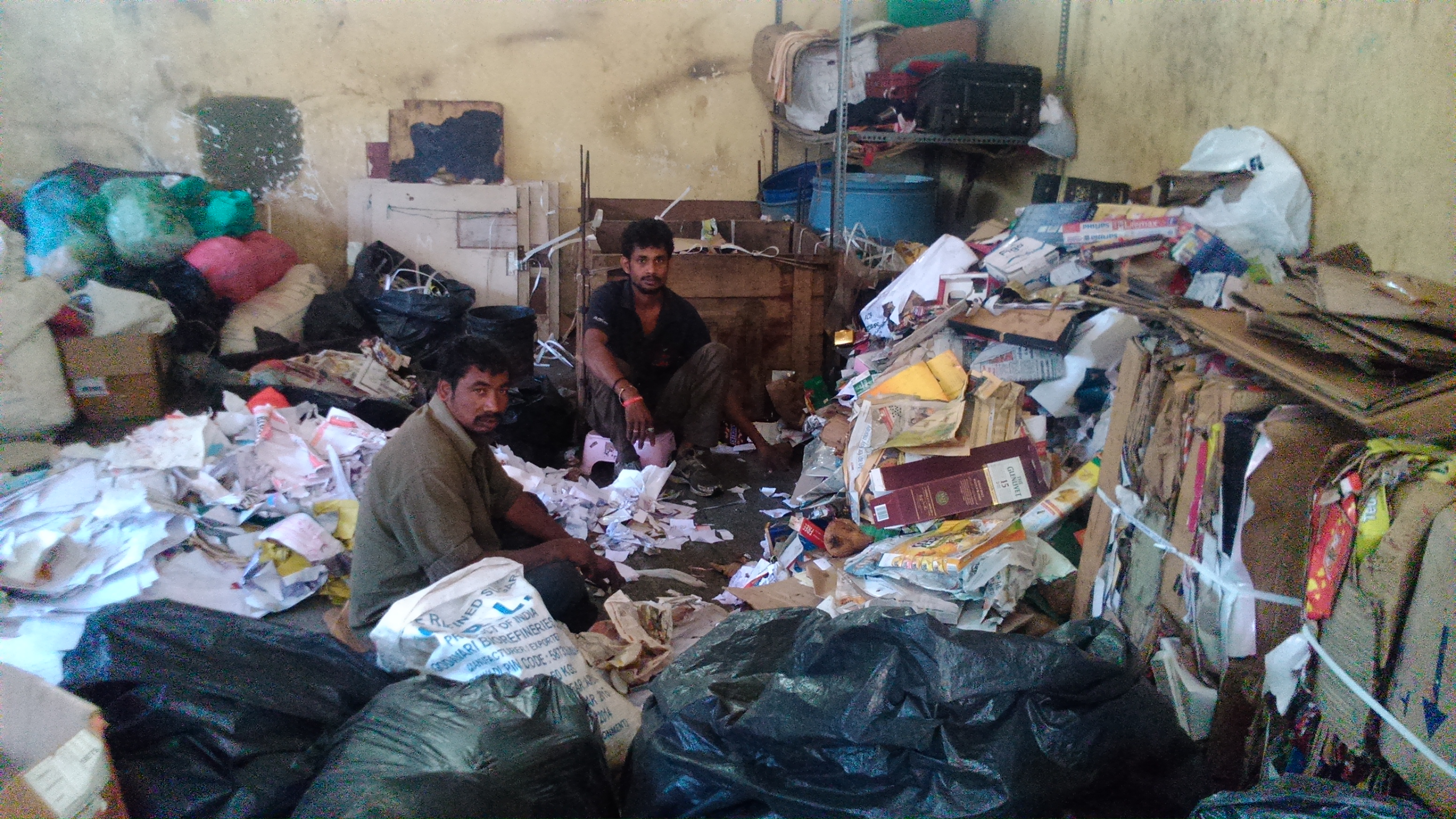
Mansoor, who operates the Dry Waste Collection Centre in ward 168 of Jayanagar in Bengaluru, is not just another somebody who manages the city’s waste, but a trained scrap dealer trying to bring about change much beyond his job description.

Thanks to Mansoor, ward number 168 is now emerging as a systematic waste collection system, with a team of collectors and sorters who ensure that the waste is responsibly recycled and not dumped in a land-fill.

“When I was a kid, I would help my parents in waste collection and sorting. We used to manage around 500 kgs of waste every month,” he remembers. Today, his vision is beyond just numbers.

Mansoor’s dream of better waste management and giving a better life to waste pickers went one step forward when he got associated with HasiruDala, a Bangalore-based NGO that works with the city waste pickers. They not only gave him the initial support but also helped him scale up with financial aid, when required.

Today, Mansoor has a team of 10 sorters & collectors at the Jayanagar Dry Waste Collection Centre. He manages the inventory of 10-12 tons of dry waste every month and sorts the same in 72 different categories before it goes for recycling.

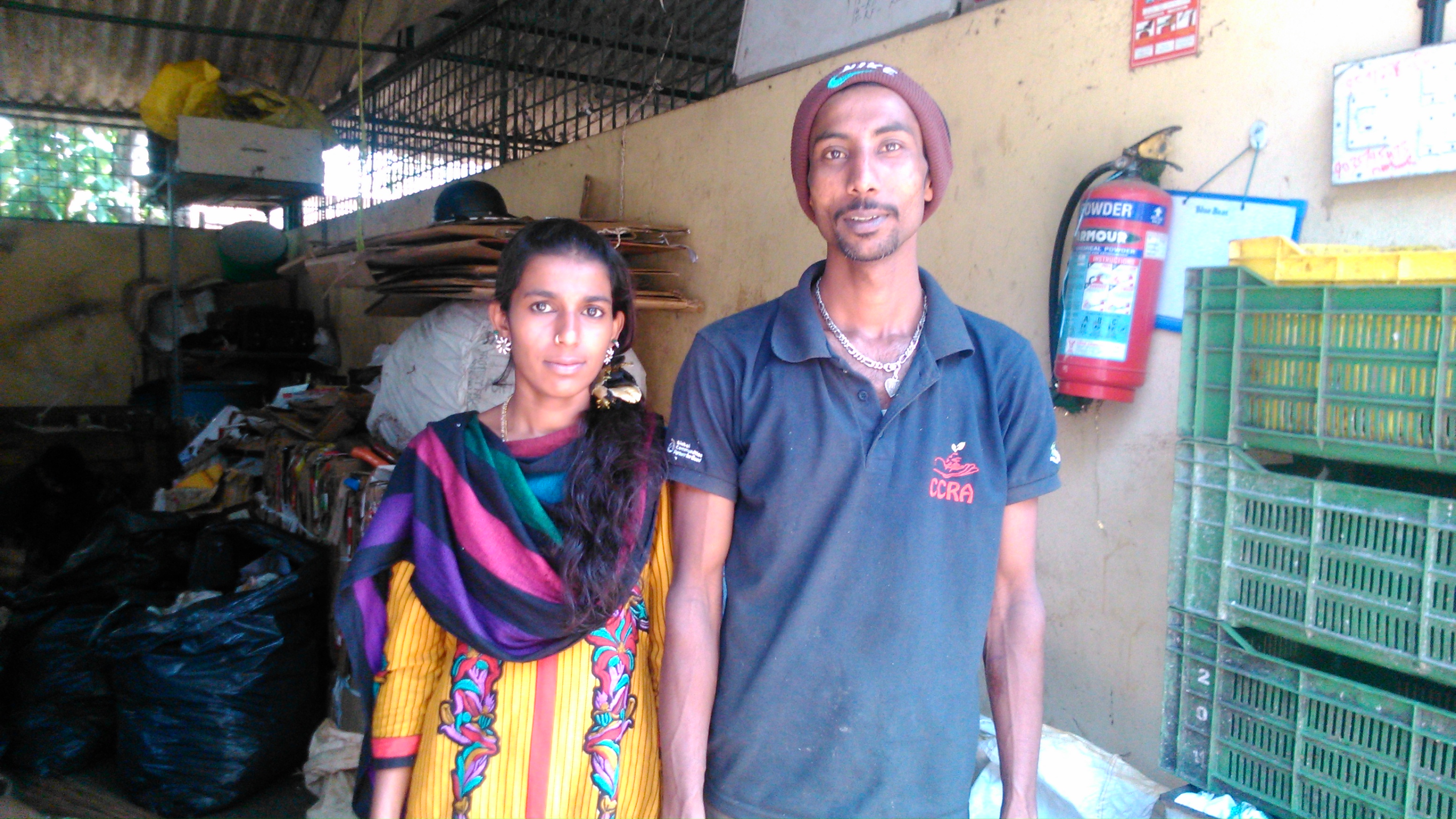
Mansoor with his wife.

But Mansoor does not stop just by adding value to waste. He also aims to make a scrap dealers’ cooperative which will play a role in creating a fair price marketplace, provide access to transparent data and geo-tag scrap dealers as the first point of sale for household waste.

He coined the brand name Clean City Recyclers Association (CCRA), and has MBA graduates assisting him in implementing his plans.

Reaching to this scale wasn’t easy for him. He had no stable source of income to support the operations or pay salary to the workers he had hired. HasiruDala came to the rescue and helped him stabilize operations. “Gradually, I got hold of things and today this centre is self-sustainable,” he says.

“Waste collection should not be considered as petty work. Thanks to HasiruDala, people don’t look down upon my work & have respect for what I do. HasiruDala has also provided ID cards to fellow waste pickers and a good uniform. It feels like we are all a part of something good.” he says.

Talking about the impact of his work, he has seen a tremendous positive change in the lives of the sorters and his team mates.

“People would sometimes be very careless while disposing the waste. They would mix wet and reject waste also in the dry category. This made our centre an unhygienic place to work. We later stopped collecting waste if it wasn’t segregated properly”.

Thanks to his hard work in spreading awareness, 75 percent of his customers are now segregating at source.

Dry waste collection centre.

Apart from altering people’s mindset towards waste, Mansoor has made an impact in his work force as well. We learned that one of his new recruits, Arunachalam, who was a waste picker and an alcoholic, also had an unattended serious leg injury. From the day he has started working with the team, his condition has improved significantly, he earns more than what he used to and is now on a healthier diet towards recovery.

“Though I am still learning, I have realized that technology has a role to play. I Got Garbage team has developed android apps for managing our daily operations making it much easier than ever before. It helps us keep track of waste pick-ups, waste inventory and more,” says Mansoor.

Satyam Gambhir, client partner – Social Inclusion at Mindtree Ltd. adds, “At I Got Garbage, our focus is on waste picker livelihood and building solutions on the cloud platform that are repeatable and scalable. In Mansoor we see a long-term strategic partner, his unrelenting dedication and expertise has been instrumental.”

Mansoor is the chosen partner with I Got Garbage, a Mindtree initiative that positions waste pickers as recycling managers. I Got Garbage, along with Mansoor, is piloting a project ‘Donate Dry Waste’ in some parts of Bengaluru.

As Mansoor describes it, “Every waste picker will have a well-branded Rickshaw, a uniform and a smart phone, and will be put on-route to collect segregated dry waste from households and apartments.”

Mansoor segregates the waste in over 30 different categories.
Mansoor segregates the waste in over 72 different categories.

“Currently, waste pickers are at the end of the chain, scavenging for waste on the street. They venture out on roads during odd hours of the day in hope of getting sufficient waste to make ends meet. We intend to place them at the beginning of the waste supply chain, i.e. at the source, like your house and mine,” says Gambhir.

He envisions a day when waste pickers will turn into waste managers, collect segregated waste from households on a weekly basis in a uniform, and wants to formalize the same; and Mansoor plays an important role in making this happen.

Mansoor and his unique people management skills have enabled waste pickers to earn Rs. 9,000 to Rs. 12,000 per month, which is far more that what they do while working informally and scavenging on the street for recyclables.

With Mansoor’s amazing enthusiasm and willingness to see change in the society, we definitely hope to see the much ignored sector getting its due credit.

source: http://www.thebetterindia.com / The Better India / Home> English> Bengaluru> Changemakers – Waste Management / by Shreya Pareek / February 19th, 2015

The many hues of faith

KERALA:

Nasreen Anshad’s brand SAWB makes beautiful garments specially created for Namaz with dreamy designs.

Nasreen Anshad

Picture this. The next time you offer Namaz, you are in a single, free-flowing, comfortable garment adorned with flowers or stars and sometimes even polka prints. The prayer dresses or Jilbabs may not be that familiar to people in Kerala . However, 28-year-old Nasreen Anshad is bringing Jilbab into vogue among the women here through her venture SAWB. 

The whole idea is to offer dresses for Muslim women that they could wear with elegance during prayers. An MCA graduate, Nasreen’s foray into garment designing happened by chance. It all started last year when Nasreen was just searching for modest wear on the web. “I came across the prayer dresses on my search. But these weren’t available here. So I thought of making one for myself. I designed a Jilbab and my mother stitched it. After a few trials, we eventually got the attire right,” says Nasreen.

Nasreen started getting some customers  for this specially designed prayer garment. And soon it turned into a huge business with over 1,000 pieces of Jilbabs getting sold every two weeks. Usually, women wear an Abaya and a Makhana while praying. The Jilbab comes as a single piece, making it a convenient garment for the prayers. It is also easy to carry as well. “A lot of people prefer buying Jilbab because it is comfortable and convenient. It is also beautiful and elegant to wear and is travel friendly,” says Nasreen.

The prayer dresses that Nasreen makes are modelled after the kinds available in Dubai. Nasreen says the style of these dresses changes according to the country. “The prayer dresses made in London or Indonesia are completely different. The reason Jilbab isn’t available here is since it is very pricey to even import. I wanted to make them and offer them to everyone at an affordable price,” says Nasreen.

The main challenge the novice designer faced was to convince people of the faith that wearing a colourful dress while praying was okay. “There is a misconception that you should wear only white. But this is nowhere mentioned in the Quran. What the Quran says is that one should wear the best dress while offering prayers,” says Nasreen.

So, Nasreen’s Jilbabs come in a grand array of colours and patterns, all designed by her. When she started out, it was her mother who used to stitch the garments. Now she has employed a women’s collective to stitch the garments. The Jilbabs are available in three sizes — for kids, teens and adults. The garment is made out of soft crepe and will last for three to four years, she says. “I feel so happy and proud now. This is a venture that happened by chance and people have embraced it. I want to incorporate more styles into the Jilbab, like the different versions available in various countries,” Nasreen says.

source: http://www.indulgexpress.com / The Indian Express – INDULGE / Home> Fashion / by Aathira Haridas / April 13th, 2022