Tag Archives: Positive News of Muslim Women of West Bengal

Home chef Farah Kadir gets the cut and the cook right with Beyond Biryani

Shahjahanpur, UTTAR PRADESH / Kolkata, WEST BENGAL :

My Kolkata shelves its biryani cravings for a day as Farah whips up a storm of Yakhni Pulao, Shami Kebab and Nargisi Kofta.

Video and images by Ritagnik Bhattacharya

When Farah whipped up Butter Chicken for 30 family members as notun bou in the Kadir household, she didn’t dream that in about two decades she would be supplying houses around the city with neatly packed boxes of biriyani, korma, pulao and kebabs. “My mother and grandmother were great cooks, so I always enjoyed cooking. It was never something I dreamed of doing professionally,” says Farah, who grew up in Shahjahanpur, Uttar Pradesh. She hails from a family of Pathans, originally from Afghanistan.

“Her legend just kept growing!” says her husband, Rubayat, her greatest fan and critic. “You know how we got married? Her brother-in-law lives in Kolkata and decided she absolutely has to marry a Kolkata foodie. Enter, Rubayat!” he says with a flourish.

They waited until their younger daughter had graduated school to resume full-fledged operation. The pandemic only expedited an eventuality which was long-simmering in the Kadir kitchen. Their friends were habituated to wrangling dinner invitations to Farah and Rubayat’s Ballygunge home for the fare which most regular Mughlai restaurants will find difficult to replicate. When social distancing became the norm, friends demanded that the food be sent to them. And so Beyond Biryani was born.
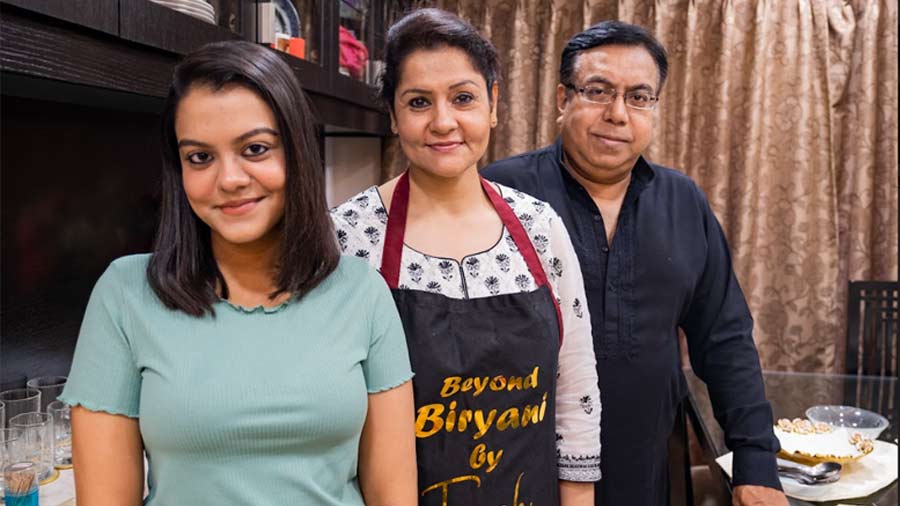
Farah (centre) with her younger daughter Ifrah and her husband, Rubayat

“Calcutta is crazy about biryani but we also want people to explore dishes beyond biryani,” explains Rubayat. He’s always at hand to taste her recipes and to guide patrons on their menu choices. He’s likely to bristle if you ask for an egg in the biryani and grimace if you want to pair the korma with biryani instead of roomali roti. “A boiled egg adds nothing to the biryani! It can be boiled separately and placed inside the rice. Besides, it takes up space in the container and which would you rather have anyway, more rice and aloo or a plain boiled egg?” he demands to know.

Not being a fan of boiled egg in my biryani anyway, I acquiesce. Farah’s biryani, having gained popularity and fame, tends to pop up at dining tables across the city, catching guests by delighted surprise. Following the trail to its source, I’m here today to dig into offerings that go beyond the Kolkata dum.
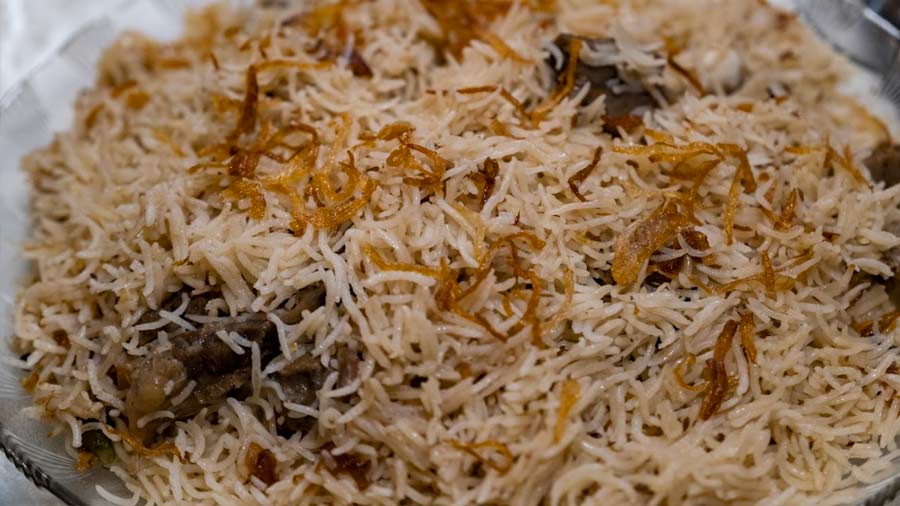
Yakhni Pulao

The flavour of the Yakhni Pulao is enhanced by the fact that the rice is cooked in mutton stock. It’s lighter than the biryani, which just means you’ll get to eat a lot more and fall into a bhaat-ghoom that much quicker. This one’s definitely a winner for summer.

Mutton Afghani Kebab

The Mutton Afghani kebab was one of Farah’s mother’s specialities, so it’s straight from the family legacies. Reminiscent of a galouti kebab, this one achieves just the right amount of tender with the help of papaya and not a slab of fat. “I don’t use extra fat or dalda. I cook like I would cook for my family,” explains Farah.
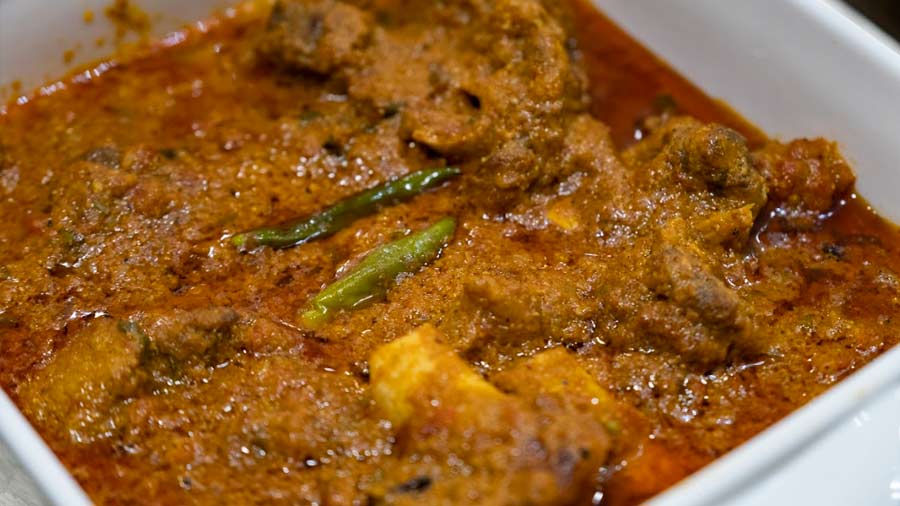
Mutton Akbari

Mutton Akbari, like every great meat dish, is served on the bone, albeit almost falling off it. It cooks in its own juices, and though you might be tempted to moisten your biryani rice with it, like every good Bengali who likes his jhol, Rubayat insists you have it with paratha. Don’t worry, you’ll love that too.
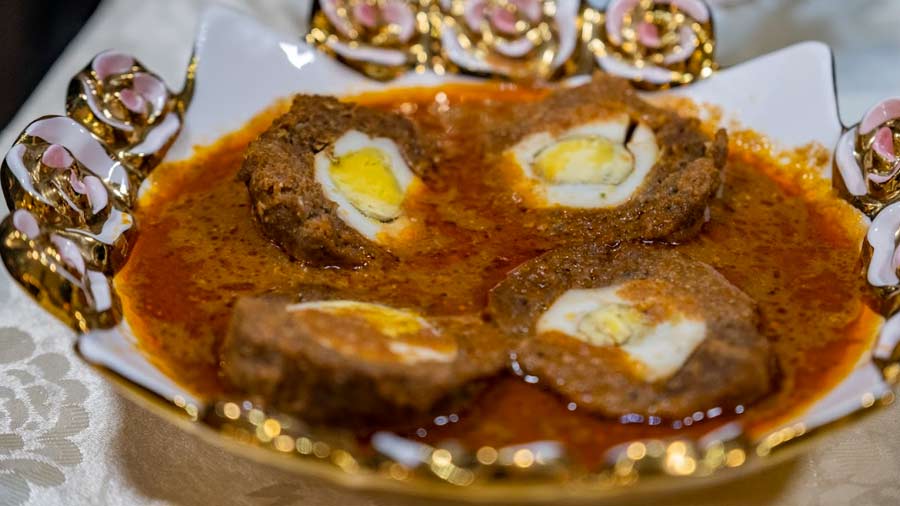
Nargisi Kofta

This one, another maternal hand-me-down, is one of the stars of the menu. The Nawabi cousin of the Bengali dimer-devil, Farah’s Nargisi Kofta is fried to a perfect brown and then placed in a surprisingly light gravy. All you need is a plate of fluffy white rice to soak it up with.
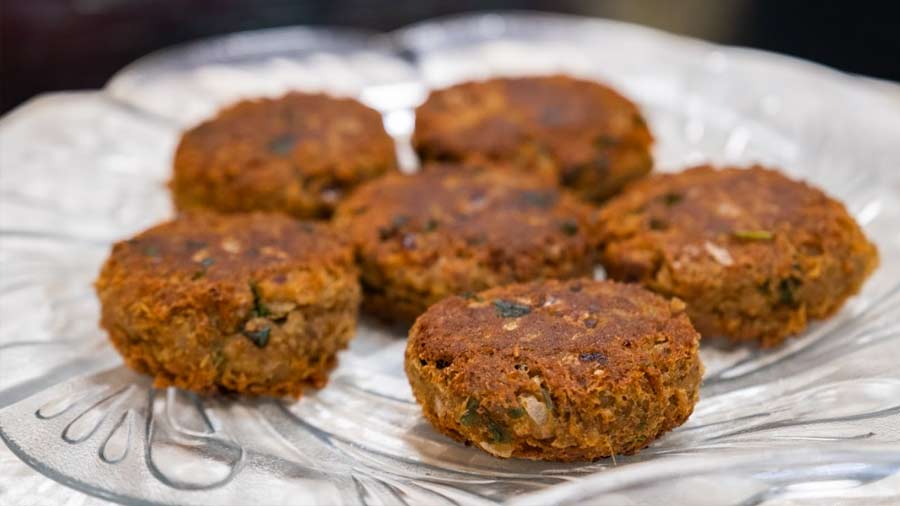
Shami Kebab

The Shami Kebabs are Farah’s primary claim to fame. “They’re our fastest moving item. These kebabs go all over the world – Canada, America, Bangkok. My elder daughter used to take it back with her when studying in the US. It’s the one dish I cook every day, as mutton, chicken or even soya which is also very popular. In fact, the soya is actually very tasty,” says Farah.

Which brings us to the crucial point that there are a great many vegetarian items on the menu as well. “We have very many vegetarian clients who are regulars too,” says Farah.

Farah’s full of surprises. She is able to make a mean prawn dish without tasting it because she prefers to not eat seafood. “There’s a de-shelled crab in butter garlic which I tasted in Trishna, Mumbai, that I’m trying to get her to recreate. She’s never eaten it, so I have to describe it really well,” says Rubayat, with all the purpose of a man setting out on a mission.

The other element of surprise lies in the size of Farah’s kitchen. It’s a small space attached to an apartment, just as fuss-free and efficient as the cook. It’s clean, compact and no-nonsense, spilling out a feast for a gourmand. In this kitchen, Farah insists on doing everything herself. She sets out every morning to buy meat from a regular Park Circus shop and then methodically goes about the cleaning, chopping and marinating. “The secret lies in knowing which cut of meat to use for which dish. The meat required for biryani, shami kebab and korma are all very different,” explains Farah.

“It’s the cut and the cook which determines the success of a dish,” sums up Rubayat, succinctly. “She has no recipes. It’s all on andaz, which is amazingly never wrong.”
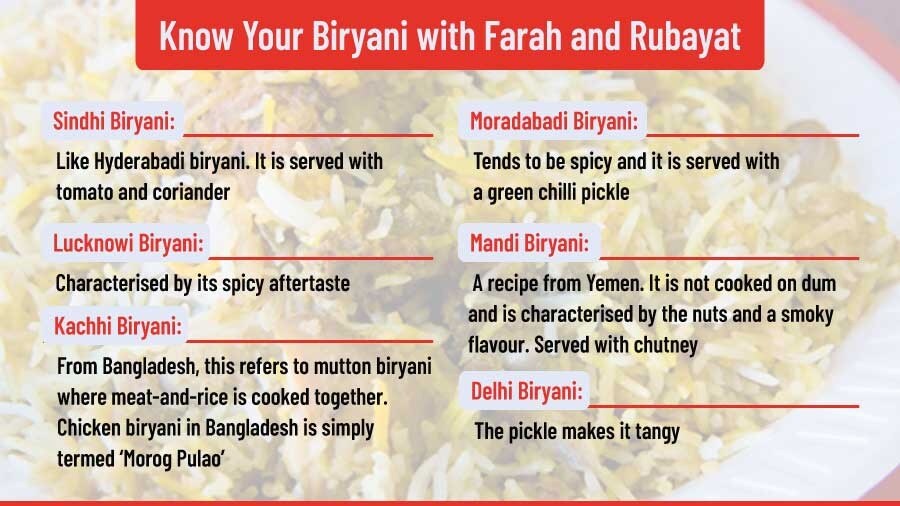
Farah is of the opinion that her dishes are infused with the flavours of Delhi because her grandparents lived in the capital city. Of course, she learnt just how Kolkata likes to have its biryani and proceeded to get it just right. It’s not the only biryani she knows how to make though, in case you’re enthused to go, not just beyond biryani, but beyond the Kolkata Biryani.
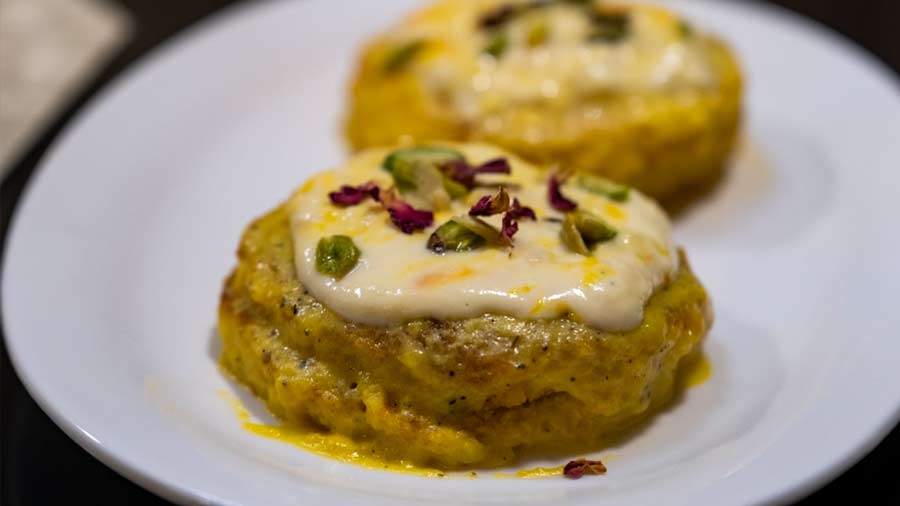
Shahi Tukda

Yes, Farah makes dessert too! Because in Kolkata we need our mishti mukh, even if we can look beyond the biryani.

source: http://www.telegraphindia.com / Telegraph Online / Home> My Kolkata / by Ramona Sen / June 14th, 2022
Inspiring tales of a bus driver’s daughter, panwala’s son and gatekeeper’s grandson becoming doctors

Kolkata, WEST BENGAL :

Urooj, a Kolkata-based NGO has taken up the task of coaching underprivileged and average students to excel in NEET exam.

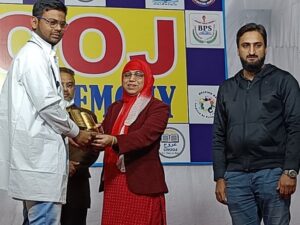
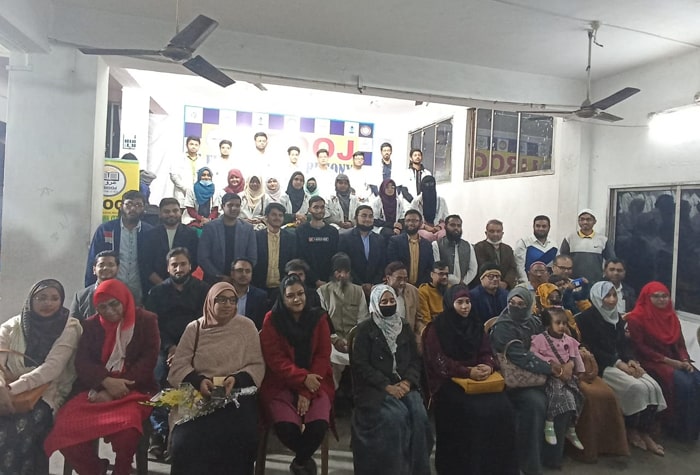
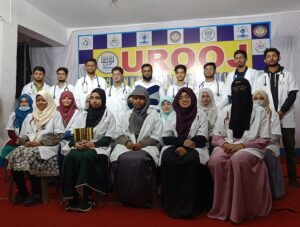
Kolkata’s renowned doctors with Urooj students who secured a seat through NEET

Kolkata:

Gosiya Azad stays in a small house on College Street. During the lockdowns, she found it difficult to study at her home, so she used to walk almost two kilometres to study in a library. Azad, daughter of a bus driver, has managed to secure a medical seat (BDS) at the Dr. R Ahmed Dental College.

Gosiya missed MBBS by one mark. If she would have OBC certificate then she would have got MBBS seat. She is an OBC candidate, but couldn’t get all the documentation done because her family is not literate.

“I had secured 62 per cent in senior secondary. And I was not very good at studies,” she recalls.

Like Gosiya, Shayaan Fahim, also says that he was an average student. And once believed he will never be able to crack the national level exam — National Eligibility cum Entrance Test (NEET). But, he too secured an MBBS seat at the Barasat Medical College.

Danyal Rizwan Ansari passed his secondary from a government school in Bihar. He is all set to become the first doctor from his village. Danyal has also secured an MBBS seat in Barasat Medical College.

Along with them, there are other students whose father runs a pan stall or whose mother is a teacher in a trust school earning a meagre salary and have beaten all odds to crack the NEET and secure a medical seat.

The Urooj students who secured a medical seat

These students have one thing in common, Urooj, a Kolkata-based Non-Government Organization (NGO) which helps underprivileged and average students to crack NEET at a nominal or almost no fees.

Some 151 students (classroom+test) enrolled last year but due to open enrollment system only 79 gave tests, out of which 22 got seats in different government medical colleges and hospitals through NEET 2022. Among them, 14 are girls who realized their dreams of becoming doctors.

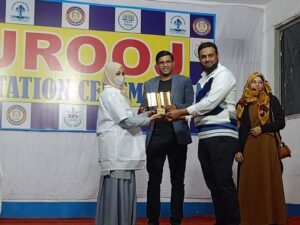
On Sunday evening, all of them, along with 15 more students of Urooj’s 2021 batch were felicitated in Topsia.

And to felicitate them, 30 doctors, from renowned medical colleges and hospitals attended the event.

Aulad Hussain High School, center of Urooj’s classroom coaching had a jam-packed session, despite the unexpected delay caused by a phenomenal turnout of guests to attend the event.

Dr Salim Parvez, Dr Nahid Parvez and Dr Aadil Bashir felicitate an Urooj student Md. Shoaib Akhtar

It was an emotional moment not only for the students who realized their dreams but also for the parents who wanted to see their sons and daughters don the ‘white coat’.

Anwar Hussain, who secured an MBBS seat in Deben Mahata Medical College, when get felicitated, later called upon his father Md Mobarak Hussain and the son donned the father with white coat.

“We do not do the felicitations for donations or publicity. But by such functions, we want to encourage the students for higher studies. We believe that MBBS is just a beginning and they have to do MD and MS or other higher studies in future,” informed Umar Daraz Danish, a teacher, by profession and the center-in-charge of Urooj.

Urooj is the brainchild of Dr. Minhajuddin Khurram, Cardio-Thoracic and vascular Surgeon at NRS Medical College and his cousin Dr. Jaweria Mehreen (MBBS intern). Urooj also gets support from Helping Hand Trust.

Dr. Ahsan Kamal, Dr. Minhajuddin Khurram and Dr. Jaweria Mehreen felicitating another student of Urooj Sumaiya AK Sayeed

Umar added, “Last year, a student whose grandfather was a gatekeeper in Aulad Hussain School cleared NEET and secured a seat in a government college. But we did not publicize it. Urooj also has students who are from economically well-off backgrounds, like a parent who is a teacher in Pratt Memorial.”

Urooj conducts a one-year course for students who are in plus two or have passed senior secondary. Unlike other medical coaching centers, Urooj does not teach or guide 11th-standard students in order to prepare for NEET. It charges only Rs 20000 for a year, that too in installments. If some parents can’t afford that also then they can pay as little as Rs 8000. The Urooj students, who crack NEET, next year help guide ongoing aspirants.

“We do not compromise on the quality of teachers. All are paid as per industry-standard. But we also ensure that students do not start considering teachers as cult figures and rather believe in Urooj and the idea behind it,” said Dr. Khurram, the Academic Supervisor of Urooj.

All the budding doctors praise Dr. Khurram for his selfless mentoring and guidance, which helped them crack NEET.

Some of the doctors also addressed future doctors like gynaecologist Nahid Parvez and Plastic Surgeon Faria Shahab.

“The students should believe that they are not in the profession to earn money but to serve humanity. I also request support from those who are unable to clear this year,” said Dr. Nahid.

While Dr. Faria highlighted, “There is a need for female doctors in every area of specialization and there is nothing like male specialist area, so girls can opt for any specialization they want.”

The list of thirty doctors with their specializations and where they are practicing.

1- Dr. Sayeed Uddin(MBBS, Veteran General Practitioner)

2- Dr. Marya Tazeen (BDS, Dentist, Central Kolkata)

3– Dr. Arshad Ahmed (MS, Orthopedics, Asst. Prof CNMC)

4- Dr. Sufiyan Ahmed (MD, Anesthesia and intensive care specialist, in-charge of GDDI ICU)

5– Dr. Ayesha Farheen (BHMS, Homeopathic Practitioner)

6– Dr. Arsalan Raza (MBBS, DCH, Pediatrician) 

7– Dr. Salim Parvez (MD, Radiologist, Director of Radiology, Fortis)

8– Dr. Nahid Parvez (MS, Renowned Gynaecologist)

9– Dr. Aadil Bashir (DM, Cardiologist, NRS MCH)

10– Dr. Asif Ansari (MD, Internal Medicine, Asst. Prof CNMC)

11– Dr. Fatima Zinna (MD, Dermatologist)

12– Dr. Wasif Akhtar (Homeopathy practitioner)

13– Dr. Md. Sarim Ashfaque. (MS, Orthopaedics, Apollo)

14– Dr. Ishrat Parveen (BHMS, Homeopathic Practitioner)

15– Dr. Zoya Ayesha (MBBS, Social Activist)

16– Dr. Ismail Shahidullah (DNB, Neuro Anesthesia- INK)

17– Dr. Jaweria Mehreen (MBBS intern- founder member of Urooj)

18– Dr. Mubashshir Shamim (MRCP, Pediatrician)

19– Dr. Arif Faizan (MD, Senior Interventional Radiologist, NH, Medica and Kothari)

20- Dr. Haseeb Hassan (DM- Neurologist, Amri, Kolkata)

21– Dr. Abdul Majid (DMS, Veteran Homeopathic Practitioner)

22– Dr. Amber Obaid (MD, Senior Radiologist, Medica)

23– Dr. Ahsan Kamal (MS, General Surgery)

24– Dr. Talha Shahid (BDS, Dentist)

25– Dr. Subhan Reyaz (DNB Radiation Oncology, Chitranjan Cancer Hospital)

26– Dr. Saima Shahid (BHMS, Homeopathic Practitioner)

27– Dr. Minhajuddin Khurram (MCh, CTVS, resident at NRS)

28– Dr. Faria Shahab (MCh, Plastic Surgeon, Asst. Prof RG. Kar)

29- Dr. Nehal (DMS, Veteran Homeopathic Practitioner, Social Activist)

30– Dr. Samira Aslam (BDS, Dentist)

source: http://www.enewsroom.in / eNews Room India / Home> Let There Be Light / by Shahnawaz Akhtar / January 10th, 2023

Ghazipur’s Saima Khan Creates History: Clears UPSC Twice, Secures Rank 135

Usia Village Kamsarbar (Ghazipur District), UTTAR PRADESH / Kolkata, WEST BENGAL :

The daughter of Kamsarbar village in Uttar Pradesh becomes the first woman civil servant from her area, inspiring Muslim girls across the country 

New Delhi :

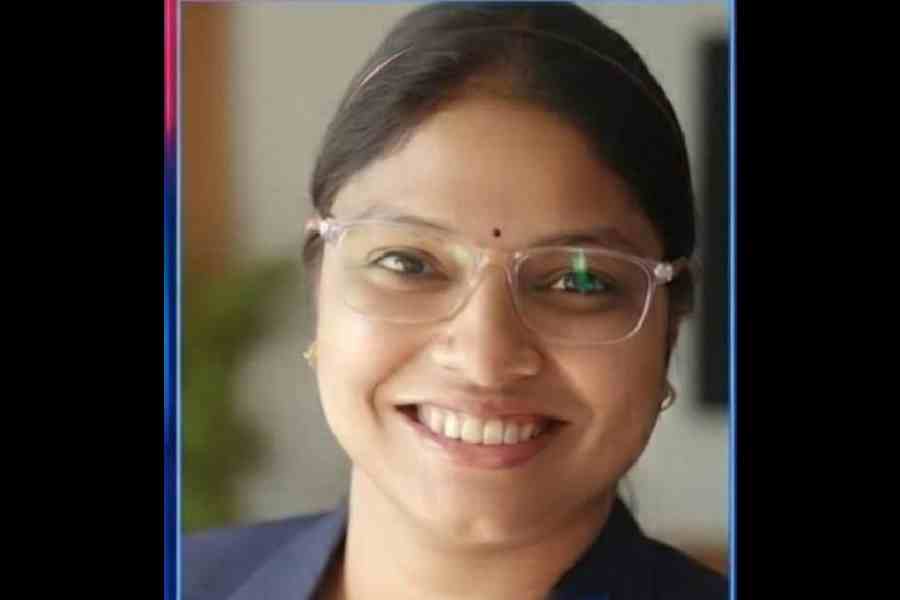
In a moment of pride for Indian Muslims, especially young women from small towns, Saima Saraj Khan from Kamsarbar in Ghazipur district, Uttar Pradesh, has once again cleared the prestigious Union Public Service Commission (UPSC) Civil Services Examination. This time, she achieved an impressive All India Rank of 135, improving on her earlier success where she secured Rank 165. With this double achievement, Saima joins the rare group of women in the country who have passed the tough exam twice.

Saima, the only daughter among three siblings, hails from Usia village in the Muslim-majority Kamsarbar area of Ghazipur. Her family later moved to Kolkata, where she grew up and studied. Her father, Saraj Ahmad Khan, is a successful businessman and builder, and he played a big role in encouraging her education from childhood. “My father always said education is the biggest power. Once you get it, paths in life open on their own,” Saima recalled.

Most of Saima’s schooling took place in Kolkata. She completed up to Class 8 at St. Paul’s Boarding and Day School in Kidderpore, then did her Class 12 from Ashok Hall Girls Higher Secondary School. She graduated with honours in Sociology from St. Xavier’s College. During her college days, working with an NGO brought her close to real problems faced by people on the ground. “When I met people and saw their struggles, I felt I wanted to help them, even if in a small way. That need for real authority to make change pushed me towards UPSC,” she said.

Saima prepared for the exam at Educate IAS Academy in Kolkata. After clearing prelims in earlier attempts, she also guided other aspirants for some time. Her journey was not easy. She failed three times before her first success in UPSC 2023, which made her the first woman from Kamsarbar to become a civil servant. Each failure tested her deeply. “Every day after those failures, the thought of giving up came. But I had no other plan. All my dreams were tied to UPSC, so I kept going,” she shared.

To focus fully, Saima cut herself off from social media and most social events for four to five years. She rarely visited relatives or attended weddings, limiting outings to occasional meetings with childhood friends once a month. “There was no fixed study time, but I gave as many hours as possible to studies,” she explained.

Her message to other aspirants is clear and practical. “First, be honest with yourself. If you study five hours, focus on quality, not just quantity. Consistency matters most. Don’t worry too much about results—just keep preparing fully.” She also spoke directly to Muslim girls and women: “Dreaming and working to fulfil those dreams is every girl’s right. Women can succeed in any field. Never give up on your dreams.”

Saima’s success brings huge joy to her family, village, and district. People in Ghazipur and beyond see her as a strong example of self-reliance and hard work for Muslim women, where many still face limits on education and careers. Her story shows that with family support and belief in oneself, no goal is too far.

She quoted a line that sums up her journey: “Where there is a will, there is a way.” Saima often repeats that difficulties and failures are part of success. “Don’t let them take over you. Keep pushing.”

Her achievement also connects to Kolkata’s proud history—from Satyendranath Tagore, the first Indian ICS officer from united India, to now Saima becoming the first woman civil servant from Kamsarbar. “Education is the real power,” she stresses, echoing her father’s words from childhood.

As news of her Rank 135 spread, young Muslim girls in Uttar Pradesh and across India are finding fresh hope. Saima proves that with clear goals, steady effort, and strong resolve, women from humble backgrounds can reach the top. In the words of poet Dushyant Kumar that capture her spirit perfectly:

“Kaise aakaash mein suraakh nahin ho sakta

Ek patthar to tabiyat se uchhaalo yaaro”

(How can the sky not have a hole?

Just throw a stone with real courage, friends.)

Saima Khan has thrown that stone with full courage—and broken through barriers for many to follow. Her story is a shining light for education, perseverance, and the power of dreams in the Indian Muslim community.

source: http://www.clarionindia.net / Clarion India / Home> Editor’s Pick> Indian Muslims> Women / by Mohammad Bin Ismail / March 10th, 2026

Outcome of resilience and family support: Farmer’s daughter from Murshidabad cracks UPSC

Pakalpara Village (Murshidabad District), WEST BENGAL :

A resident of Pakalpara village, Sana secured an All-India Rank of 764 among 958 candidates recommended in the final list of the 2025 examination, making her eligible for the Indian Revenue Service and other Group-A central government services.

Sana Azmi, a 25-year-old Muslim woman from a modest farming family in Murshidabad’s Sagardighi, brought pride and joy to the region this month by qualifying in the prestigious Civil Services Examination conducted by the Union Public Service Commission (UPSC).

A resident of Pakalpara village, Sana secured an All-India Rank of 764 among 958 candidates recommended in the final list of the 2025 examination, making her eligible for the Indian Revenue Service and other Group-A central government services.

The results of the Civil Services Examination 2025 were declared on March 6.

Though the achievement has been widely celebrated in her village and across Murshidabad district, Sana is dissatisfied with her present rank and has already started preparations to attempt the exam again for a better rank that would enable her to become an Indian Administrative Service (IAS) officer.

The Civil Services Examination, conducted annually by the UPSC, is regarded as one of the toughest in the country with three stages — the preliminary, Main and the personality test/interview. Successful candidates are recommended for appointment to the country’s elite administrative services such as the Indian Foreign Service, Indian Administrative Service, Indian Police Service and Indian Revenue Service.

Born into a large family with limited means, Sana’s UPSC journey has been remarkable on many fronts. Youngest among 10 siblings, Sana grew up in a family focused on education.

That was largely because of her father, Maijuddin Sheikh. A poor farmer with a small patch of land, he had to discontinue his education after Class IX. But he struggled to ensure that all his children, including his seven daughters, received a proper education.

The results of that commitment are now visible.

Two of Sana’s sisters chose to study medicine — one of them, Beauty Khatun, is a doctor at the Burdwan Medical College and Hospital, while another sister is studying MBBS at the North Bengal Medical College and Hospital in Siliguri.

Sana’s success in the UPSC exam has added another feather to the family’s cap.

Sana began her schooling in her native village.

She studied up to Class VIII at Kabilpur High School in a neighbouring village. She later moved to a residential institution run by the Al-Amin Mission, where she completed her Class X and Class XII. She appeared for the Class XII board exams through a high madarsa in Howrah district and stood first in the district.

Then came the big leap.

Encouraged by her family and her own grades, she took admission to the Jamia Millia Islamia in New Delhi, where she graduated in English Honours and completed her MA as well.

During her time in Delhi, she also joined the university’s residential coaching academy for civil services aspirants, where she began a systematic preparation for the UPSC exam.

Remarkably, she cleared the Civil Services Examination in her very first attempt in 2025.

“I had strived hard to crack UPSC, and I thank my family members for their support. I am happy to have done it on my first attempt, but I would not have achieved it without the support of my sister Beauty Khatun. She sent me to Delhi to fulfil my dream. I will take up the job, but ultimately will try to fulfil my dream to become an IAS officer,” said a reclusive Sana, who spoke to the media through her elder brother Md Imran.

Beauty recalled how the family collectively nurtured Sana’s ambition.

“I became a doctor, and another of our sisters is studying MBBS,” she said.

“But we always felt that one of us should become a top civil servant. Sana had that dream. We encouraged her and planned her academic path accordingly. Her admission to Jamia Millia University in Delhi was also part of that plan,” she added.

As congratulations poured in, her mother, homemaker Fulbanu Bibi, couldn’t stop beaming.

“It is a dream come true,” Fulbanu said. “But Sana is not satisfied with the rank she has obtained. Her goal is to become an IAS officer. So she has begun her studies again.”

source: http://www.telegraphindia.com / The Telegraph / Home> West Bengal / by Alamgir Hossain / March 03rd, 2026

Feroza Begum chronicles hardships of life in her poems and stories

Jubuni Village (Rampurhat subdivision of Birbhum District), WEST BENGAL :

Feroza Begum

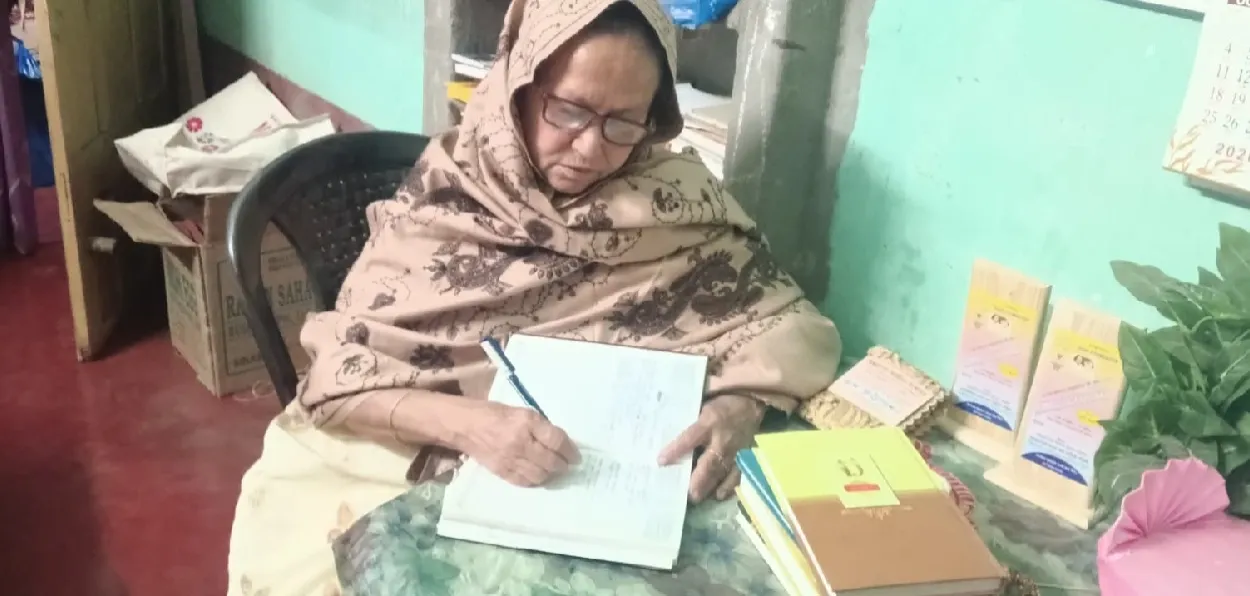
Firoza Begum’s language of protest against the harsh realities of rural India, gender inequality, and family adversity is a strong statement. The poet and writer in her, though, has emerged from a phase of struggle.

She was born into a respectable family in Jubuni village of Rampurhat subdivision of Birbhum district, West Bengal. Her parents, Abdul Hakim Mallick and Arestun Bibi, faced poverty, disease, and social uncertainty, due to which her childhood was difficult.

The struggle for survival of her family and relatives during the terrible smallpox epidemic influenced and triggered a humanitarian spirit in her.

In her childhood, when women’s education was neglected in rural society, she completed her schooling. She broke many social barriers. The discrimination and neglect she faced while in school ignited the spirit of rebellion in her, which, in due course, made the language of her writing sharp, protestant and sensitive.

Feroza Begum with an award

In 1974, she married Nurul Haque Mallick, a science-minded teacher. With her husband’s liberal attitude and inspiration, she managed to balance both her family life and pursuit of literature. She made sure her four daughters got educated and financially independent, self-reliant. Although her husband’s death in 2016 left a deep void in her life, she did not stop pursuing literature.

Since 1992, Firoza Begum has been regularly writing poems, songs and essays. Her writings have been published in various literary magazines of Murshidabad, Rampurhat and Kolkata, Pragati, Trinayani, Kalam, Bhabbana, Sangbad Darpan, Roddur, Arpan, etc.

Besides, she is also a regular participant in the radio and television programs and has received recognition beyond her hometown and community.

The poetry collection “Nayantara” published in 2010) and “Aparajita” published in 2014) clearly reflect the struggle of women, the adversities of life, and the human spirit.

She proofread and published the book, despite illness and limitations, and it reflected her perseverance.

 Firoza Begum has received several honours and awards in recognition of her contribution to literary endeavours.

The reception by the Bhabna O Anubhavber Dana newspaper of Rampurhat, the Rokeya Award from the Roddur newspaper, certificates from various radio stations in Kolkata and Baharampur, the Ambedkar Shilpi Ratna Award from New Barrackpore, and the recent “Best Bengali” award from the Asha Foundation are important recognitions of her literary and humanitarian activities.

The life of poet Firoza Begum is not just the autobiography of a writer, it is a courageous document of a struggling woman. Her pen still bears witness to the fact that even in the deep darkness of adversity, education, humanity and literature are capable of illuminating the path of humanity.

source: http://www.awazthevoice.in / Awaz, The Voice / Home> Stories / by Dev Kishore Chakraborty / February 03rd, 2026

‘I’m Proud to Be a Bengali’: Meet Nilufa Yasmin Who Topped UGC NET 2025 With 100%, Earned CM’s Praise

Katwa Town (Purba Bardhaman District) , WEST BENGAL :

Nilufa Yasmin

Kolkata : 

Nilufa Yasmin has scored a perfect 100% in the University Grants Commission National Eligibility Test (UGC NET) held in June 2025. She has qualified for the Junior Research Fellowship (JRF) in Bengali.

The UGC NET is a national-level exam that determines eligibility for the award of the JRF, a scholarship awarded to postgraduate students to pursue research that leads to a PhD.

Her result is being celebrated as an achievement. It came after two previous unsuccessful attempts. She appeared for the exam along with more than 7,52,000 candidates. Her score of 100% has placed her right at the top.

Belonging to the state of West Bengal, she feels proud of her language and identity.

“I am proud to be a Bengali. I take even greater pride in my subject, which is Bengali language, and I am determined to hold onto it as I move forward in life,” she told TwoCircles.net, with a sense of pride.

Nilufa, 26, comes from Katwa town in Purba Bardhaman district of West Bengal. Her academic performance from school through college has been excellent.

Lauding her success, Chief Minister Mamata Banerjee wrote on X (formerly Twitter), “Congratulations to Nilufa Yasmin of Katwa in Purba Bardhaman for scoring 100 percentile and securing first position in India in UGC-NET June, 2025 in Bengali and to Rikta Chakraborty of Kolkata for securing second position in India in UGC-NET June, 2025 in Mass Communication and Journalism. Your achievements have made our State proud. Congratulations to your parents/ guardians and teachers too.”

Nilufa said this recognition from the chief minister is an honour and a reminder for her to strive even harder in the future.

She is currently pursuing her PhD on Sangeet O Sahityer Melbondhon from the Burdwan University. Her research explores the connection between music and literature.

She has an interest in music. She learnt Rabindra Sangeet during her school years and has taken part in many singing competitions. She has won prizes in various categories, including a gold medal in Rabindra Sangeet, Nazrul Geeti and classical ‘bhaktigeeti’.

“I am inspired by legendary singers like Mohammed Rafi and Lata Mangeshkar,” she says.

She is a singer herself and has hosted a musical show titled ‘Eto Sur Eto Gaan’ on Doordarshan. She shares her singing performances on her You Tube Channel.

Her ambition is to become a professor in Bengali literature.

An avid reader who is inspired by her favourite authors such as Sarathchandra Chattopadhyay, Rabindranath Tagore, Procheta Gupta, among others, she aspires to be a professor of Bengali language and literature.

She has written 16 stories on themes such as women, social issues and romance. She hopes to publish them one day. She also wants to write a book.

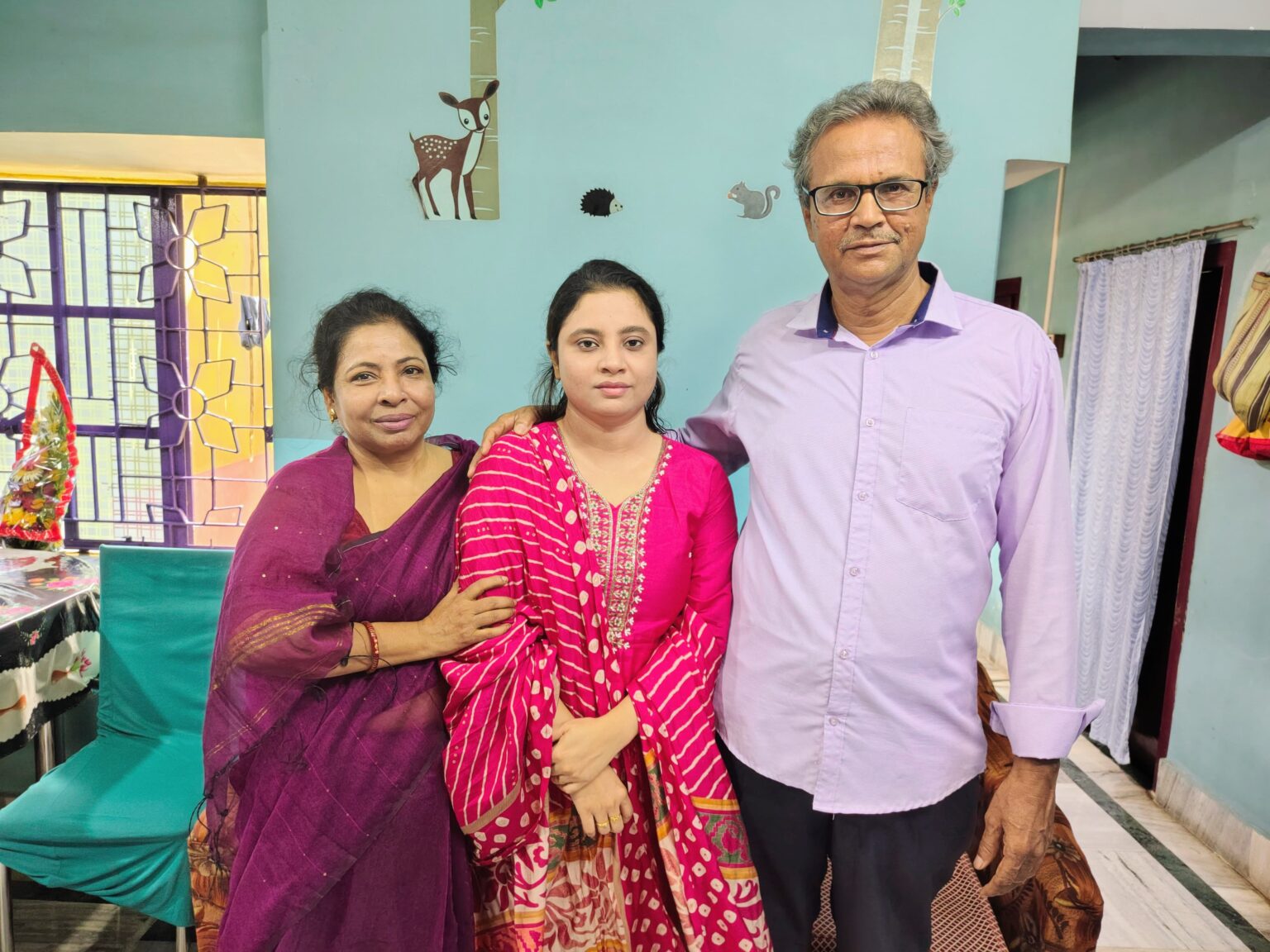
Nilufa Yasmin with her parents

Nilufa says she owes her success to her sister and her parents who are in the field of education. She has a message for aspiring young girls and women: “Stand on your own feet first as financial freedom is the greatest form of freedom. Education brings dignity and teaches us to respect others. It is more important to be truly educated than just formally literate.”

She believes that food and language should not be used to create barriers.

Speaking about the alleged harassment and targeting of Bengali-speaking Muslims in different parts of the country, she says, “I am heartbroken by these incidents. One’s language, food and attire are personal choices and fundamental rights. Even though our country is independent, our mindset is yet to attain that freedom. Had we been free in thoughts, then no one would attack another for their language. This causes pain.”

source: http://www.twocircles.net / TwoCircles.net / Home> India News> India Politics> Indian Muslim> Lead Story> TCN Positive / by Nikhat Fatima, TwoCircles.net / August 10th, 2025

Book Launch Sparks Debate on Muslim Representation, Education, and Healthcare

Kolkata, WEST BENGAL :

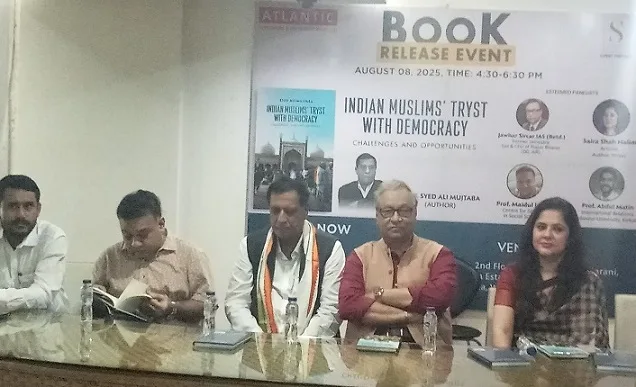
At the launch of the book Indian Muslims’ Tryst with Democracy: Challenges and Opportunities at ICCR Library, Kolkata, academics and public figures underlined that meaningful improvements in government schools and hospitals could significantly uplift India’s Muslim community, especially its poorest segments.

Professor Abdul Matin of Jadavpur University stressed that socio-economic realities leave many Muslims dependent on failing public services. “We keep saying Muslims lag in education — but how do we fix it? When families earn only ₹8,000–₹10,000 a month, they cannot afford private schools. They rely on government schools, which have deteriorated so much that students rarely move up in life,” he said.

Matin pointed out that this crisis is not limited to rural Bengal but also affects Muslim-majority urban areas such as Metiabruz, Khidirpur, Topsia, Park Circus, and Raja Bazar. Once-active Kolkata Municipal Corporation schools, he noted, have shut down, worsening access. The state’s public education system, weakened by years of political interference, has hit all low-income communities hard — with Muslims among the worst affected.

He also painted a bleak picture of healthcare: “In rural Bengal, people travel overnight and queue from midnight for a doctor’s appointment. We must revive mohalla-level schools and clinics.”

Jawhar Sircar, former Rajya Sabha MP and bureaucrat, urged the community to prioritise education over religious symbolism and to resist being reduced to a political vote bank. He encouraged Muslims to join democratic, secular movements fighting to restore India’s plural ethos. On the caste census, Sircar advised patience, saying its 2026 release could be a “game changer” for the community.

Political activist and CPM leader Saira Shah Halim spoke bluntly about systemic discrimination, citing examples from both Delhi and Kolkata. On housing bias, she noted: “People say Muslims are ghettoised — but do they have a choice?” She also criticised the absence of certain MPs, including secular leaders, during critical parliamentary debates on Muslim concerns such as the CAA and the abrogation of Article 370.

From a historical and political perspective, Prof Maidul Islam of the Centre for Studies in Social Sciences, Calcutta, traced a steady decline in Muslim political representation — in the Lok Sabha since 1980 and in the Bengal Assembly since 2011. He alleged that parties deliberately withhold tickets from Muslim candidates, echoing warnings made decades ago by B.R. Ambedkar. The lack of progressive leadership, he argued, further limits the community’s advancement.

The book itself — Indian Muslims’ Tryst with Democracy — offers a detailed examination of these socio-political dynamics, combining historical insight with policy recommendations. Described by speakers as “a guide for collective action,” it lays out both the challenges and the concrete opportunities available for India’s Muslims to achieve equitable development.

 You can order a copy from Atlantic Publishers & Distributors Pvt. Ltd 7/22, Ansari Road, Darya Ganj, New Delhi – 110002. Email-  aparna@atlanticbooks.com – Phone: 011-40775252 Website: www.atlanticbooks.com

source: http://www.theindianawaaz.com / The Indian Awaaz / Home> Quami Awaaz / August 13th, 2025

Kolkata young Muslim girl proves pen is mightier than sword, wins global honour

Kolkata, WEST BENGAL / New York (U.S.A) :

A 23-year-old Sarah Aziz from Kolkata won the prestigious UK’s The Press Award for investigative reporting. Armed with BA English, she is pursuing her Master of Science in Journalism at Columbia University Graduate School of Journalism in New York in the US. Interestingly, she started filing stories even while doing her UG in Kolkata during 2023. Her in-depth report on Rohingya Muslim refugees in Bangladesh for Voice of America (The American Multimedia Broadcasting Network) fetched her the highly commended “Young Journalist of The Year Award”.

Be bold, be curious, and be unyielding in your pursuit of the untold stories. Yes, this applies to 23-year-old Sarah Aziz from Kolkata in West Bengal, who had put up a brave face to report from the field about the inhuman treatment meted out to Rohingya Muslim refugees in Bangladesh for Voice of America, part of American Multimedia Broadcasting Network. This, in fact, fetched her the “Young Journalist of the Year” this year.

Armed with BA English from Loreto College in Kolkata, she is now pursuing her Master of Science in Journalism at Columbia University Graduate School of Journalism in New York in the US. Interestingly, she started filing stories as a freelancer even while doing her UG in Kolkata during 2023. To top it all, she has been a contributing reporter for The GuardianThe Telegraph (UK), South China Morning Post (SCMP) and The Christian Science Monitor besides others.

In November 2024, Aziz published an investigative report in The Telegraph (UK), exposing the truth behind the “mysterious” death of a Rohingya child who had been detained by the Indian government in New Delhi. The multimedia report not only delved into the medical negligence and abuse faced by the child in detention, but also revealed the wider pattern of the mass arbitrary detention and torture of Rohingya Muslims seeking refuge in India.

Earlier in the same year, Aziz had exposed the hidden scandal of rape and sexual abuse faced by incarcerated women in India, particularly in West Bengal. The investigative report, published in The Guardian, laid bare the tactics used by authorities to cover up crimes against some of the most vulnerable women in the country.

Aziz has extensively covered the persecution faced by Rohingya Muslims in India and Bangladesh for multiple international news outlets like The South China Morning PostVoice of America and The Guardian. Her investigative breaking news reporting on the 2025 Bangladesh student protests was published in The Times (UK).

On cloud nine, Sarah Aziz is reported to have said, “My interests lie in investigative reporting on human rights issues of national and global importance. Some beats I have covered extensively are women’s health, the Rohingya refugee crisis, human trafficking and Indigenous affairs both in India and the U.S. It’s a great honour to receive the Highly Commended “Young Journalist of the Year” instituted by The Press Awards (2025) and the Thomson Foundation.

Sarah Aziz dedicated this award to her dad Sheik Azizur Rahman and her seventh grade English teacher who motivated her to be what she is now. She will be graduating from Columbia University with an MS in Journalism in August 2025.  Glad to learn that Sarah Aziz is a poet, translator, and artist based in Kolkata, India. In 2021, her translation of Bangladeshi activist and author Pinaki Bhattacharya’s “History of Bengal: from Ancient to British Rule” got published receiving rave reviews.

Established in 1962 by The People and World’s Press News, the first award ceremony for the then-named Hannen Swaffer Awards, named after journalist Hannen Swaffer, was held in 1963. This got transformed from British Press Awards to The Press Awards which is being given under the aegis of Haymarket Media Group on behalf of the News Media Association.

Some of the categories include Business and Finance Journalist of the Year, Campaign of the Year, Cartoonist of the Year, Columnist of the Year, Critic of the Year, Environment Journalist of the Year, Excellence in Diversity Award, Feature Writer of the Year, Foreign Reporter of the Year, Front Page of the Year, Health Journalist of the Year, Interviewer of the Year, Investigation of the Year, News Podcast of the Year, News Website of the Year, Newspaper of the Year, Photographer of the Year, Political Journalist of the Year, Science and Technology Journalist of the Year, Scoop of the Year, Specialist journalist of the Year, Supplement of the Year, The Hugh McIlvanney Award for Sports Journalist of the Year, Travel Journalist of the Year, and Young Journalist of the Year.

[The author is former Indian Express and Deccan Chronicle chief]

source: http://www.radiancenews.com / Radiance News / Home> Pride of the Nation / by M Rafi Ahmed / May 31st, 2025

Bengal’s Parvin Sultana Overcomes Hardships to Become ITI National Topper, Aspires for Civil Services

Taldi Village (South 24 Parganas District), WEST BENGAL :

Photo Credit: enewsroom

Kolkata:

Parvin Sultana, a young woman from West Bengal, has secured the top position in the All India Industrial Training Institute (ITI) examination 2024 in the Mechanic Diesel Trade, scoring an impressive 599 out of 600 marks.

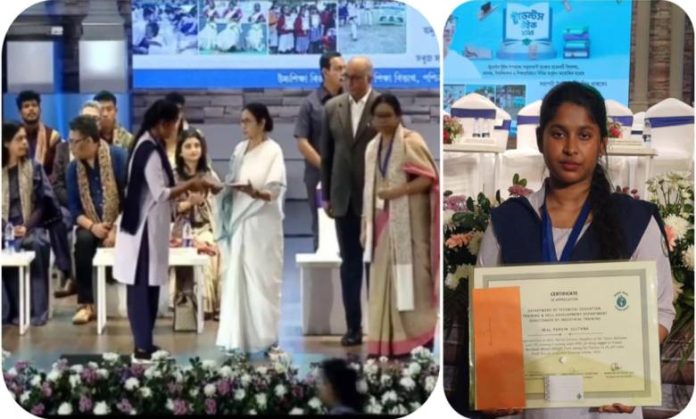
Despite financial struggles, she achieved this remarkable feat without private coaching. Recognizing her exceptional performance, Chief Minister Mamata Banerjee felicitated her, and she also received official recognition from Delhi.

Hailing from Taldi village in South 24 Parganas district, Parvin ranked first among female candidates nationwide. However, her academic success contrasts with her family’s financial difficulties. Her father, Taziur Rahman Sardar, works as a daily wage laborer in a fish market, striving to support their seven-member household.

Parvin’s educational journey has been one of determination. She completed her schooling at Taldi Surabala Sikshayatan for Girls’ School, securing 42% in her Madhyamik exams in 2017 and 76% in her Higher Secondary exams in 2019. In 2023, she earned a Political Science degree with 66% marks.

Despite financial hardships, Parvin remained focused on her studies, preparing for the ITI exam with the guidance of her college teachers instead of opting for private tutoring. “I couldn’t afford a tutor, but my teachers supported me. I want to prove that girls can excel in every field,” she said.

Lokman Mollah, a social worker in Canning, praised her perseverance, stating, “Many talented students in the Sundarbans go unnoticed due to financial constraints. Parvin’s success is proof that determination can overcome any obstacle.”

Parvin was honored at a public reception in Canning, organized by the Trinamool Congress (TMC) and led by MLA Paresh Ram Das. Canning Panchayat Samiti President Uttam Das also recognized her achievements, while her mother, Rijia Bibi, voiced concerns about financial constraints. “She wants to study further, but we lack the resources,” she said.

Assuring assistance, MLA Paresh Ram Das stated, “Just as Chief Minister Mamata Banerjee supports meritorious students, we, too, stand by them.”

While excelling in the ITI exam, Parvin’s ultimate goal is to serve society through the civil services. Inspired by her recent success, she has decided to prepare for competitive exams. “Initially, I wasn’t sure what to study for a secure job, but after my ITI results, many suggested civil services. Now, I am enrolling in a coaching center in Kolkata to prepare,” she said.

Parvin’s journey from a small village to national recognition serves as an inspiration, proving that resilience and hard work can overcome financial hardships.

source: http://www.radiancenews.com / Radiance News / Home> Pride of the Nation> Markers of Excellence / by Radiance News Bureau / February 13th, 2025

Naseema Gain: Human Trafficking Survivor Helps 4000 Rescued Women

Maslandpur, WEST BENGAL :

Human trafficking is the illegal process of moving or luring a person from one place to another using deception, threats, pressure, duress, or other abusive means for financial gain. Most of them trafficking children are pushed into the sex trade.

Fifteen years before, she was a victim of human trafficking. Today, leaving her past behind, Naseema Gain, 28, has rescued more than 4,000 women from the flesh trade and is helping them lead a normal life, reports Awaz The Voice.

“It was 2009. I remember there was a Puja function at my school on that day. I was happy. I have known him since childhood, as his uncle lived in our village. I and my friend happily sat in his car when he offered to drop us at our place. Little did I know this incident was going to change my life. When I regained consciousness, we found ourselves at an unfamiliar place. I had no idea where I was.” The 13-year-old Naseema Gain had no idea that she had landed in the net of human traffickers.

Born in Maslandpur, West Bengal, Naseema Gain had a happy childhood till an acquaintance kidnapped her on the pretext of offering her a ride to school.

Fortunately, she was released after 10 months. However, she faced a bigger tragedy on her return home when she found people looked at her and treated her differently. Due to prejudices, people didn’t treat her as a victim.

Naseema didn’t give up. Today she is helping hundreds of girls who are victims of human trafficking by rescuing and rehabilitating them.

Narrating the incident of her kidnapping, Naseema says, “He asked me and one of my friends if we would like to go home in his car. There was also another person in the car. Not knowing his intentions, we happily sat in the car. He took us to a deserted place and dropped us saying that he would return after some time.

“After a while, a person came in another car and said that he would drop us home. It was dark, so we accepted his offer least knowing that this lift would turn was going to change our lives.”

They sold Naseema and her friend in Bihar. On her life in a brothel, Naseema says, “They taught us to dance and sing. If anyone did not obey them, they were beaten, tortured, and made to starve. We had lost all hope of returning home.”

She says violence, torture, and starvation were routine punishments for the inmates of a brothel. One day Naseema and her friend were sold as maids. This gave them a chance to escape.

Naseema worked as a house help for a professor. “Slowly I started following their language. One day I told him about my story of being kidnapped and sold and asked him to help me return to my home. I somehow managed to gather the courage to tell this to him.”

She also told the professor that if he didn’t help them and sent them back to the agency, the girls would face torture and be resold.

The professor asked her to provide him contact number of her home. Naseema didn’t remember hers but her friend had memorised her telephone number. The kind-hearted professor called the number and both the girls were rescued with the help of the police.

However, before the police and the parents could reach Naseema and the other girl, the trafficker came to know about this. He called the Professor who shifted them to different secret locations for safety. After tracking them for several weeks, Naseema and her friend were finally freed after 10 months.

Naseema says, “It still feels surreal to be rescued and taken home. I had lost all hope, but our and the police’s efforts would be successful. I am very grateful to those professors.”

Her family was happy at her rescue and return home but the villagers were not ready to accept her.

“This is the sad truth of our society. I was a victim of circumstances, and yet had to face ostracism.” She adds, “Parents would tell their children not to speak with us,” she says.

She said, “We were not allowed to go to school because the school refused to admit us.”

“Ten months of torture and then this kind of treatment from society alienated me. I didn’t leave my house for the next five years,” she says, “Even after coming out of the quagmire of human trafficking, I was saddened by the ostracism by society.”

Naseema’s parents contacted an NGO which was into counselling of human trafficking survivors. Naseema says that counselling gave her a lot of strength. She was convinced that she could only counsel those who had survived this inhuman quagmire. She contacted girls and women who had been rescued from human traffickers and brothels and helped them.

Naseema says, “I have tried to build a life with whatever I have. Call it courage, hope, or luck. That is why I dare to help others. To help more girls like me, I started working with ‘Utthan Collective’, an organisation that provides training, counselling, and support to girls and victims.

She says victims like her are treated like criminals even after their rescue. She wants to create a new identity for all such victims.

In 2019, Naseema co-founded the Indian Leadership Forum Against Trafficking (ILFAT) with similar anti-trafficking groups across the country. The organisation’s work spans across nine states and has given a new direction to the lives of more than 4500 victims.

She adds, “A person who has gone through such a situation needs a lot of care, love, and respect. In the process of trafficking, they have lost all their self-esteem. Often, society rejects them; in many cases, even their families disown them. We provide them with the necessary help and shelter.”

The organisation trains victims in various skill-based jobs and helps them earn a livelihood. “We reach out to victims and provide them with mental health support and counselling. Through outreach programmes, their trauma and grief connect. So, they don’t feel any loss there. This helps them move forward,” Naseema says.

About her work, Naseema says, “Many times different NGOs approach me and learn how ILFAT and Utthan work. This is a huge inspiration and victory for me.” She adds, “With the organisation, I want to create a safe environment for the victims, ensure that the culprits get proper punishment and all the surviving girls are rehabilitated.”

Naseema, along with her colleagues, helps improve the mental health of the girls who have been rescued from the quagmire of human trafficking, provides compensation, makes the girls aware of their skills, and nurtures them by giving them necessary training.

source: http://www.radiancenews.com / Radiance News / Home> Education> Latest News / by Mohammed Atherulla Shariff, Radiance News Bureau / January 28th, 2025