Tag Archives: Asif Iqbal

Muslims’ historic contributions highlighted at National History Conference in Delhi

NEW DELHI :

New Delhi :

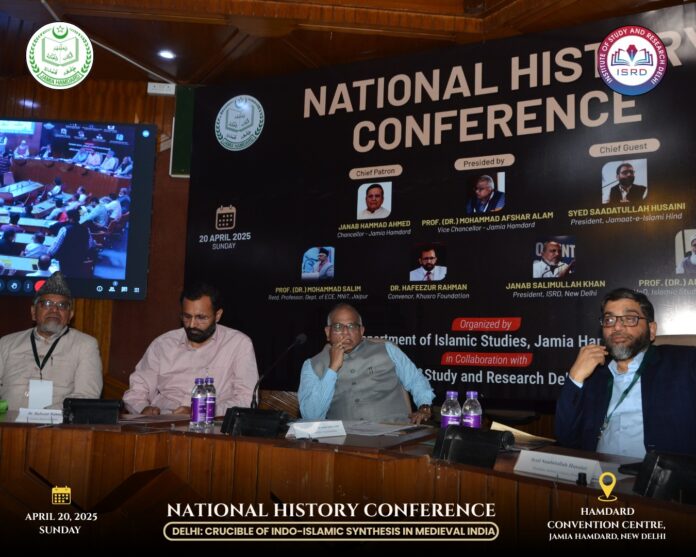
At a landmark one-day national history conference, prominent scholars, professors, and historians Sunday gathered to commemorate the unparalleled contributions of Muslims to India’s cultural and civilizational fabric. Titled “Delhi: Crucible of Indo-Islamic Synthesis in Medieval India,” the conference was hosted by the Department of Islamic Studies, Jamia Hamdard University, in collaboration with the Institute of Study and Research Delhi (ISRD), New Delhi.

Held at the Hamdard Convention Centre, Jamia Hamdard, the conference aimed to explore the profound impact of Islamic heritage on shaping medieval Indian culture, society, and governance, with a special emphasis on Delhi as the epicenter of this cultural convergence.

A wide array of research papers was presented under several sub-themes aligned with the central topic, including the Advent of Islam in North India , Educational Institutions and Knowledge Production, Indo-Islamic  Architecture, Sufi Traditions and Sacred Spaces, Language and Literature, Music and Performing Arts Role in the Freedom Struggle, Calligraphy and Decorative Arts, Culinary Heritage and the Culture of Cuisine, Women’s Contributions, Science and Technology, Mughal Gardens and Economic and Administrative Innovations.

As a chief guest, Jamaat-e-Islami Hind Syed Sadatullah Husaini emphasised that the Quran repeatedly encourages the study of history and historical events to extract lessons and guidance. “If lessons are taken from history, it becomes an asset,” he asserted, adding that history serves as a mirror of society.
Refuting the prevailing negative narratives surrounding Muslims in India, Husaini remarked, “Muslims are not outsiders or foreign invaders. They are developers, not destroyers; builders, not colonizers; inheritors, not intruders.” He highlighted how the Delhi Sultanate acted as a conduit, connecting India with the thriving global centers of knowledge in the Muslim world.

He cited the example of Sanskrit scholars and experts in numerics being recognized and honored in the court of the Abbasid Caliphate. The Arabs, he noted, never appropriated the intellectual achievements of Indian scholars but instead gave them due credit. “Muslim Sultanates helped disseminate India’s hidden treasures of knowledge across the globe,” he stated.
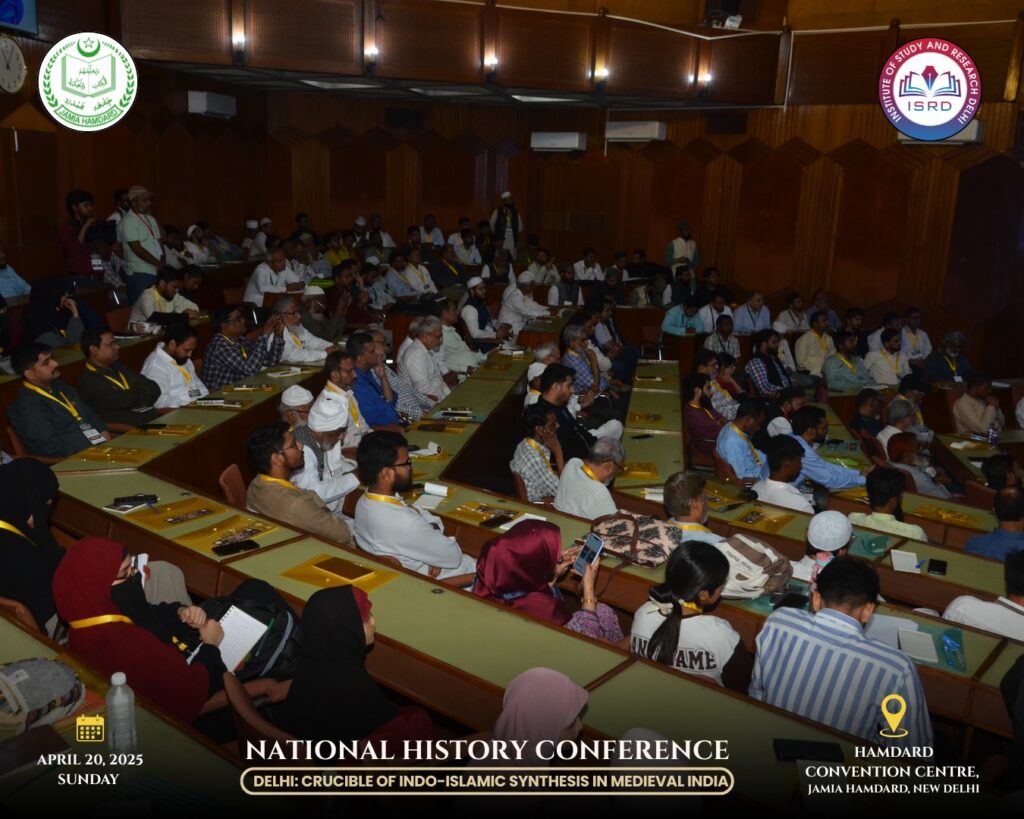
Husaini also praised the architectural marvels of the Delhi Sultanate, such as the Qutub Minar, calling them a testament to the era’s artistic grandeur. He emphasized that the most valuable contribution of Muslim rulers was the promotion of unity and human equality, bringing together people across religions, castes, and classes under a shared identity of humankind—a concept Allama Iqbal referred to as “Wahdat-e-Khaas Quwwat” (special power of unity).

Referencing Maulana Abul Kalam Azad, he recalled Azad’s fervent appeals to Muslims at the time of Partition to remain in India, invoking their emotional and civilizational connection to iconic Islamic monuments such as the Taj Mahal, Red Fort, and Qutub Minar.

Dr. Afshar Alam, Vice Chancellor of Jamia Hamdard University, presided over the inaugural session. He provided a historical overview of Islamic rule in India, tracing it from Mohammad Ghori’s arrival in the 12th century to the British colonial era, covering the Slave, Khilji, Tughlaq, Sayyid, Lodhi, and Mughal dynasties.
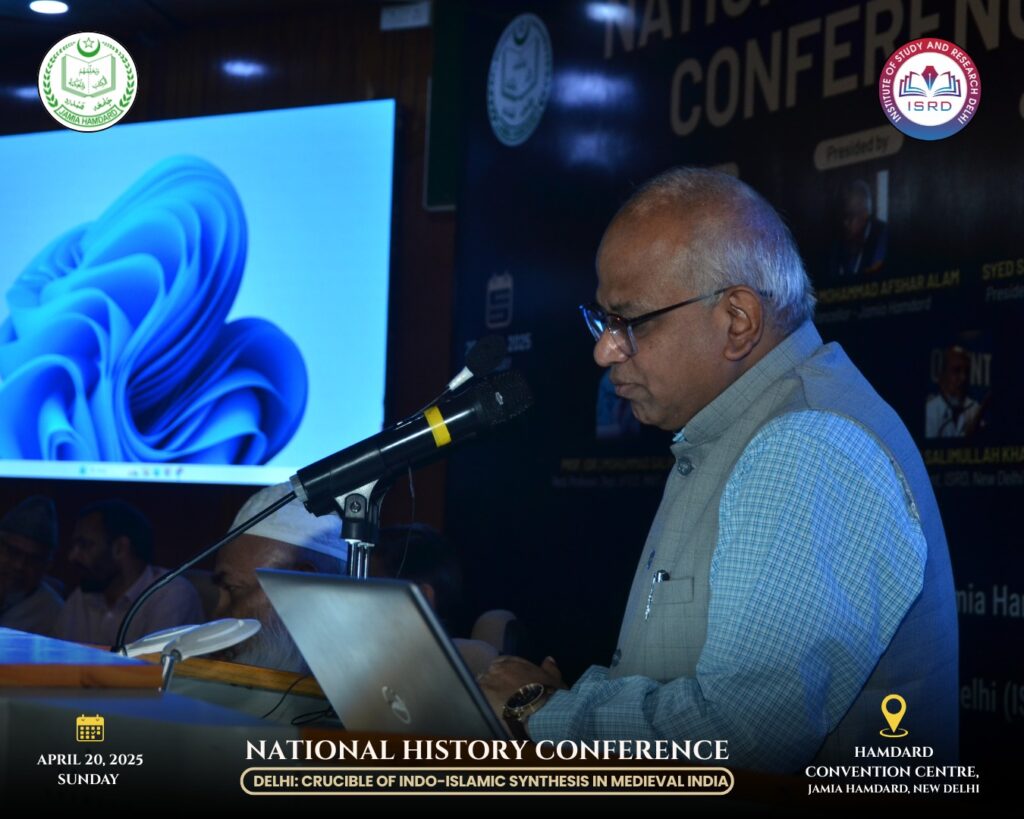
He emphasized how Delhi became the nucleus of Indo-Islamic cultural fusion, with Central Asian and Persian architectural styles merging with indigenous Indian designs. This, he said, resulted in a unique Indo-Islamic architectural identity, visible in the city’s rich heritage.

Alam also elaborated on the contributions of the Islamic period in education, science, music, literature, governance, and social reform, asserting that this synthesis laid the foundation of what is now referred to as South Asian culture. “This fusion didn’t just shape Indian civilization—it gave it depth, diversity, and resilience,” he concluded.

Dr. Hafeezur Rahman, convenor of the Khusro Foundation and an expert in Urdu and Persian, delivered speech as a special guest. He reflected on historiography, distinguishing between pro-establishment and anti-establishment narratives, and praised Islam’s contribution to historical objectivity through the tradition of “Asma al-Rijal” (biographical evaluation of narrators).

He noted, “It is often said that the Mughals gifted India three unparalleled treasures: the Taj Mahal, Mirza Ghalib, and the Urdu language.” Rahman particularly celebrated the role of Sufi saints, especially Hazrat Nizamuddin Auliya and his disciple Ameer Khusrau, a 13th-century polymath and the founding father of the Urdu language. Khusrau, he said, was also a distinguished scholar in astrology, astronomy, and music.
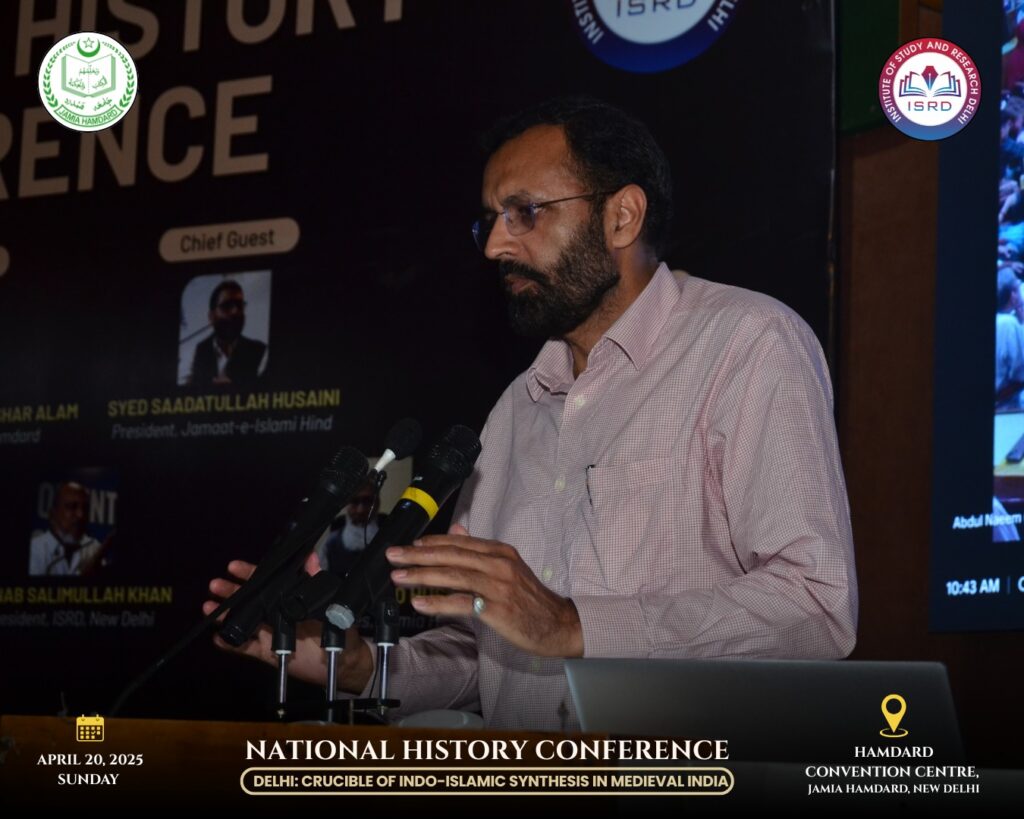
Quoting Khusrau’s oft-repeated teaching from his spiritual mentor—”Agar duniya aap ke raste mein kaante bichhaye, to tum phool bichhao” (If the world throws thorns in your path, you lay down flowers)—he emphasized the Sufi message of love and resilience.

Dr. Hafeezur Rahman further illustrated how cultural synthesis led to creations like biryani and sherwani, both products of Indo-Islamic fusion. He expressed hope that the academic papers presented at the conference would become historical documents in their own right.

Dr. Fazlur Rahman, Assistant Professor in the Department of Islamic Studies, anchored the conference and gave a brief introduction to its aims.

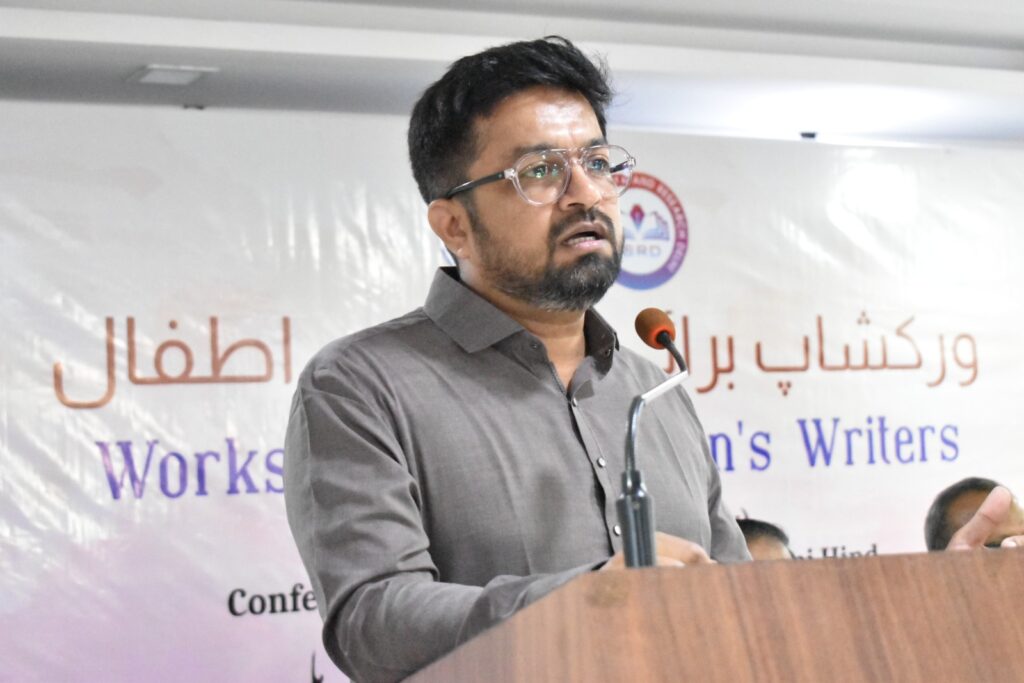
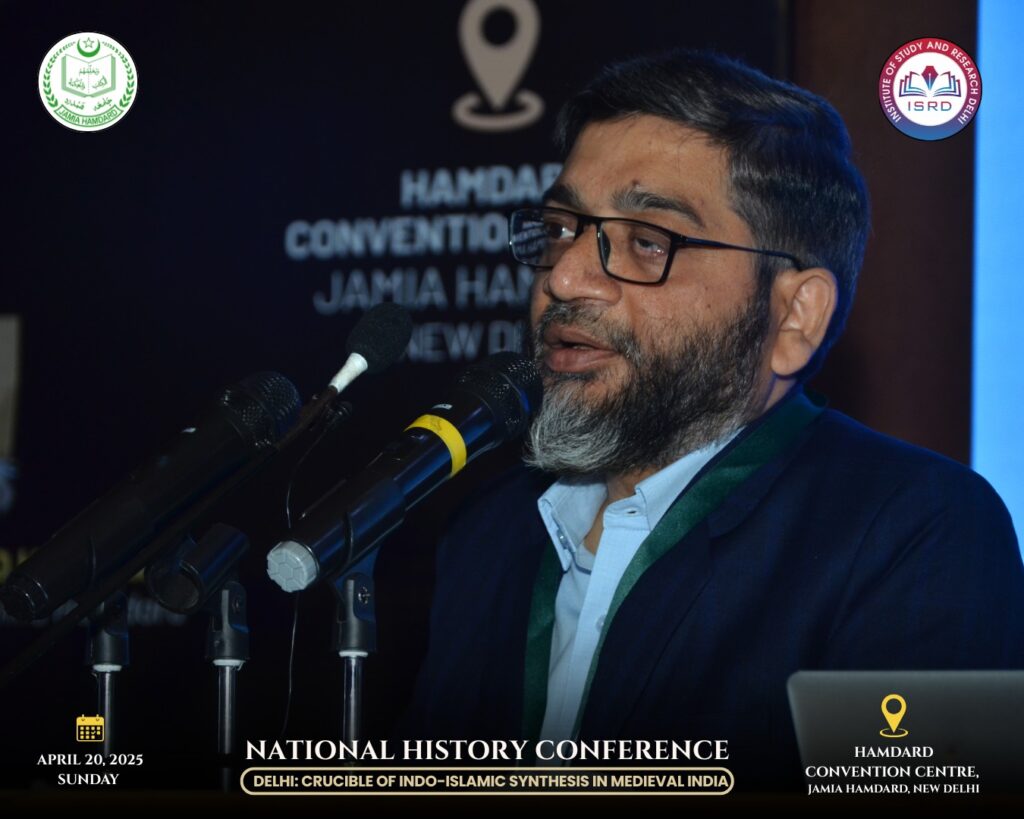
ISRD Secretary and Organizer Asif Iqbal outlined five core objectives and sub-themes of the event. Asif Iqbal emphasized that civilizational interactions—such as those between Islam and Indian culture—often result in positive transformations. He stated that Muslims, while introducing new cultural and civilizational values to the subcontinent, also embraced indigenous practices. “This mutual exchange reshaped the cultural and intellectual landscape of the region,” he said.
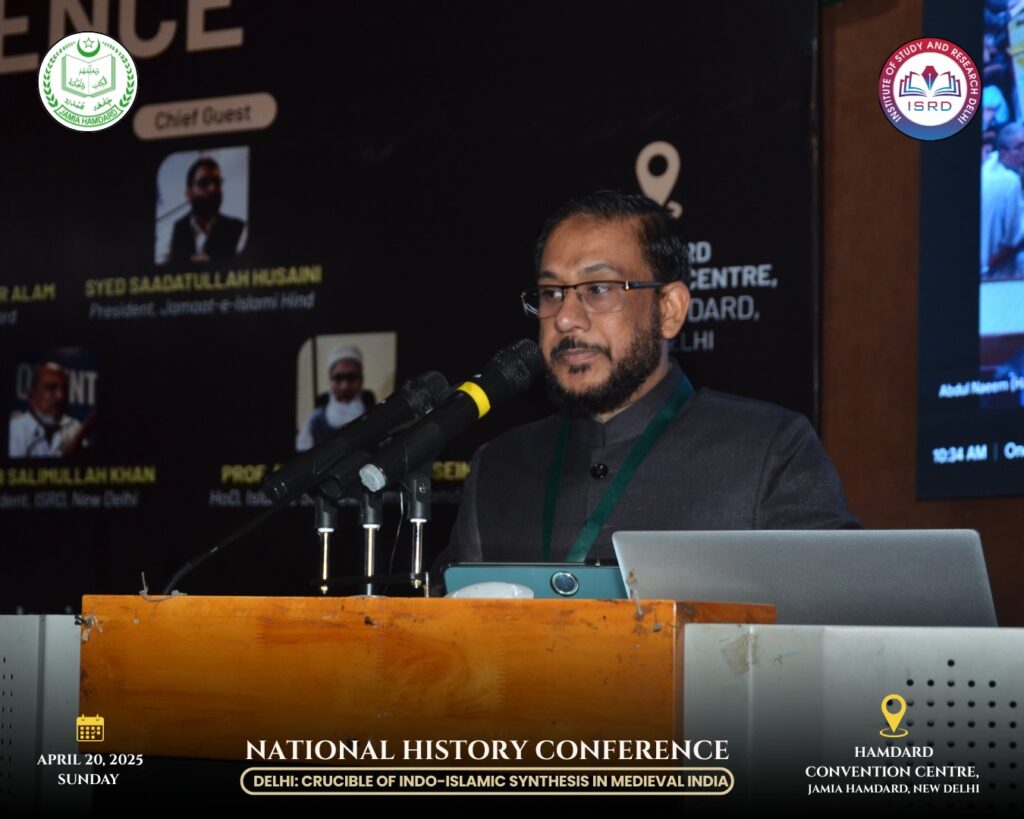
ISRD President Saleemullah Khan offered reflections on the ethical teachings of Prophet Muhammad, citing his instruction to Hazrat Ali to return belongings even to those who plotted to kill him during the Hijrah (migration to Madinah). He also quoted Urdu writer Rashidul Khairi, who praised the skills, cooperation, and intelligence of Delhi’s women during the medieval era.
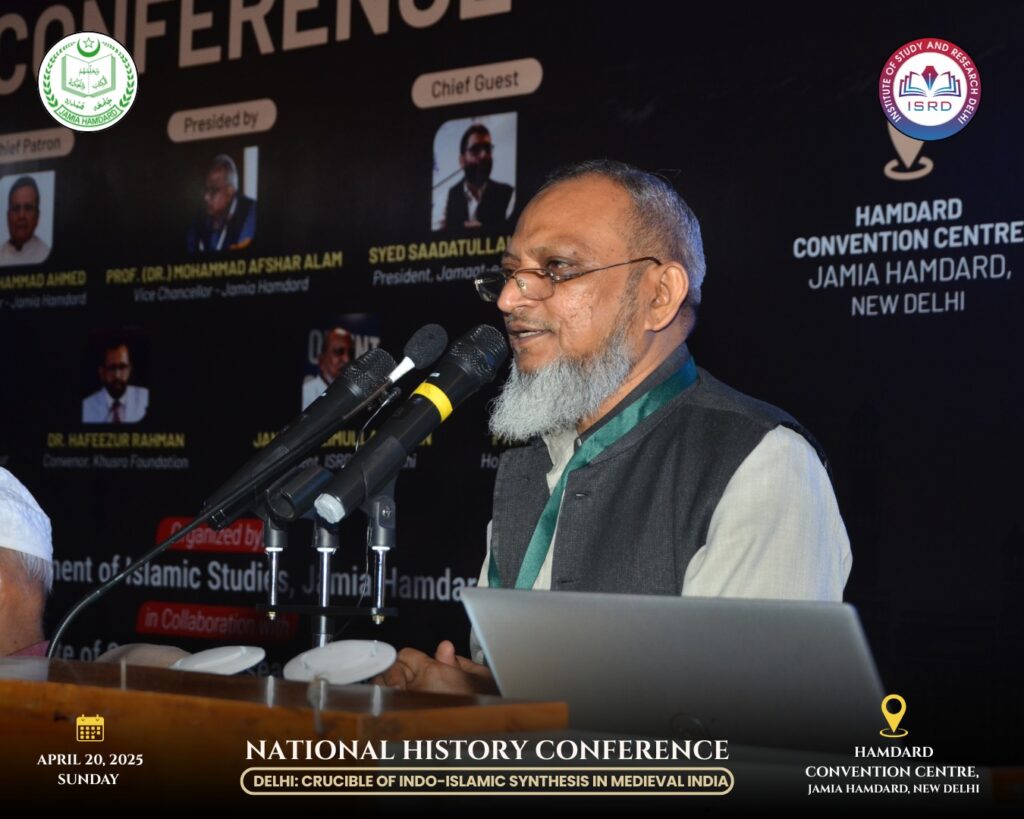
Professor Arshad Hussain, Head of the Department of Islamic Studies at Jamia Hamdard, delivered the welcome address and warmly greeted all dignitaries and guests.

The day featured parallel academic sessions, with 50 research papers presented by scholars and students from institutions including Jamia Millia Islamia (JMI), Aligarh Muslim University (AMU), Jawaharlal Nehru University (JNU), Maulana Azad National Urdu University (MANUU), National Institute of Technology (NIT), Delhi University, and Jamia Hamdard.

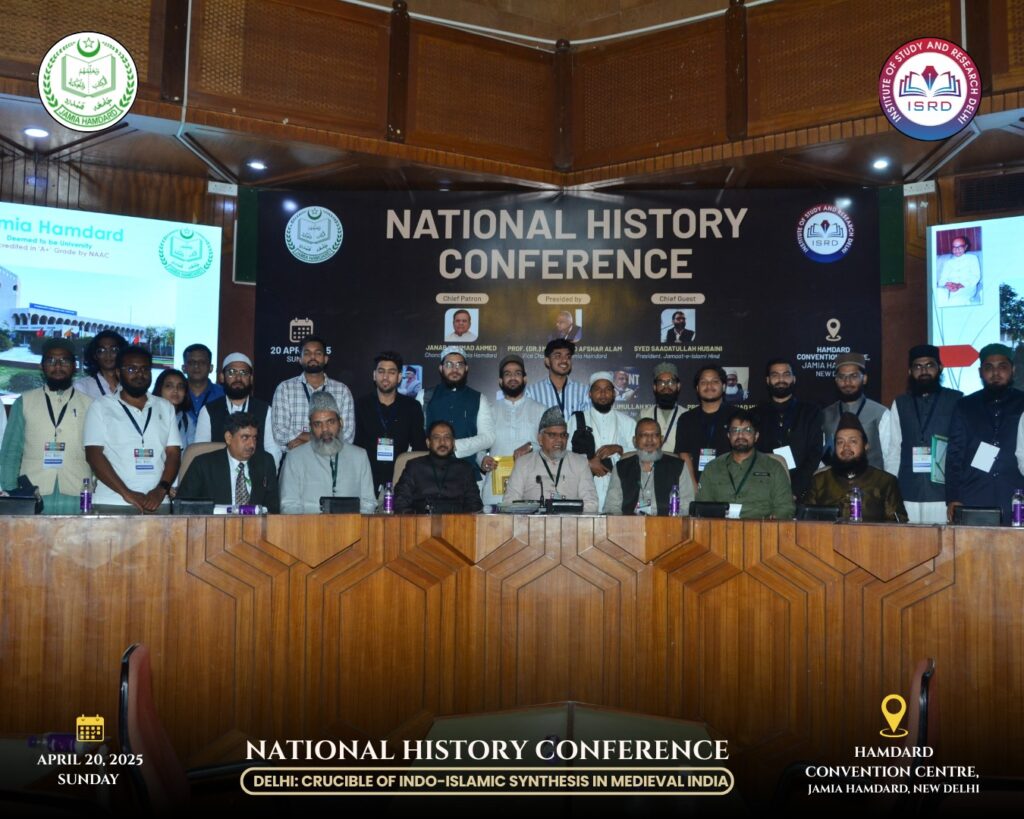
Sessions were chaired by eminent professors such as Prof. Obaidullah Fahad (AMU), Dr. Faizan Ahmed (National Archives of India), Dr. Mohiuddin Ghazi (former Dean, Al Jamia Al Islamia, Kerala), Prof. Azizuddin Husain, and Prof. Parvez Nazir. Guest speakers received mementoes, and research scholars were presented with certificates.
In the valedictory session, Prof. Mohammad Salim Engineer, retired professor from MNIT Jaipur, addressed emerging researchers, emphasizing key research ethics—many of which, he noted, align with Islamic principles. These include academic honesty, objectivity, peer review, and depth over volume. “There’s no shortcut to excellence,” he advised. “Hard work can even surpass intelligence.”
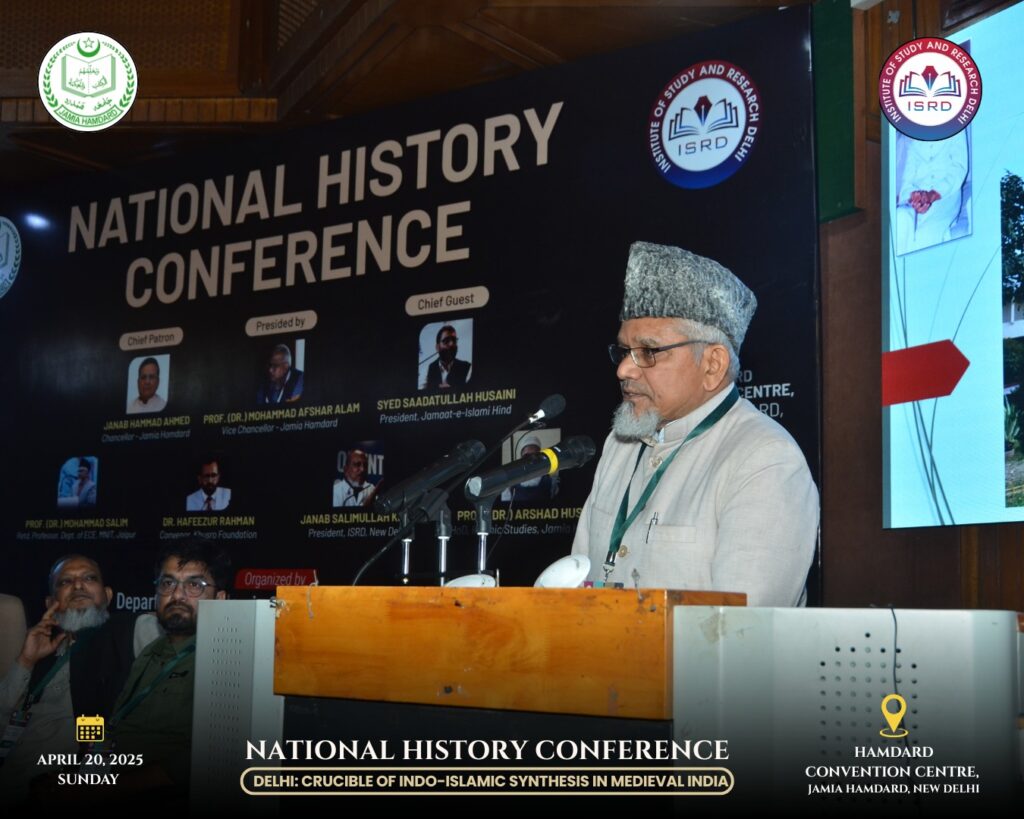
In light of the current communal atmosphere, he urged the Muslim community to take charge of creating history, not just recalling it.

Abdul Kalam, co-convenor of the event, delivered closing thanks, while Dr. Shadab Musa, Assistant Secretary of Jamaat-e-Islami Hind, offered a speech reflecting on the present socio-political environment.

source: http://www.indiatomorrow.net / India Tomorrow / Home> Breaking News> Education> National Interest / by Anwarulhaq Baig / April 21st, 2025
Workshop urges creation of high-quality Islamic children’s literature

NEW DELHI :

New Delhi :

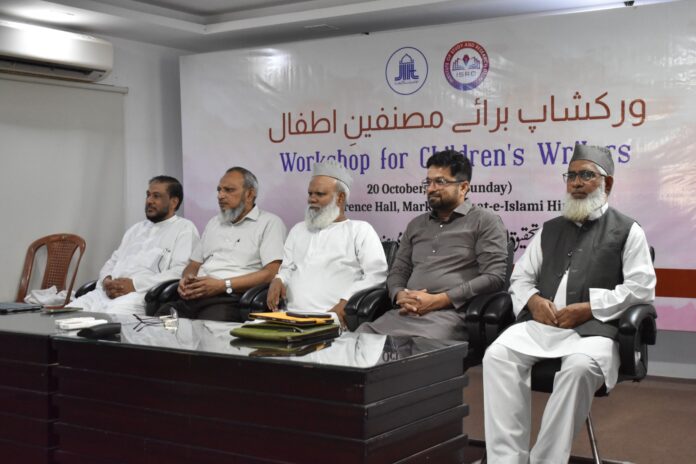
A recent workshop for children’s writers and authors, organized by the Institute of Study and Research Delhi (ISRD), highlighted the urgent need for quality Islamic literature for children and called for initiatives to train the youth and new generation in this endeavour.

Held at the Jamaat-e-Islami Hind headquarters here, the workshop was attended by over 50 research scholars and individuals interested in children’s literature, affiliated with institutions such as Jamia Millia Islamia, Jawaharlal Nehru University, National Council for Educational Research and Training (NCERT), and the Education Department of the Delhi Government, with nearly half of the participants being women, some of whom have been working in the field of children’s literature for several decades. ISRD, which conducted the workshop, has been actively promoting Islamic thought and encouraging writing and authorship through various programmes for the last more than five years.

Speaking on the occasion, AIMPLB spokesperson and editor of the monthly Urdu magazine Afkar-e-Milli Dr Syed Qasim Rasool  Ilyas, critically reviewed children’s Islamic literature under the title “Reimagining Children’s Islamic Literature: A Critical Analysis for Modern Needs.” He emphasized that today, the primary goal of acquiring knowledge and education has become mainly about obtaining good jobs and accumulating wealth, which fosters a materialistic approach and attitudes among children. He stressed that education should focus on developing children into good human beings, ethical individuals, and righteous Muslims.

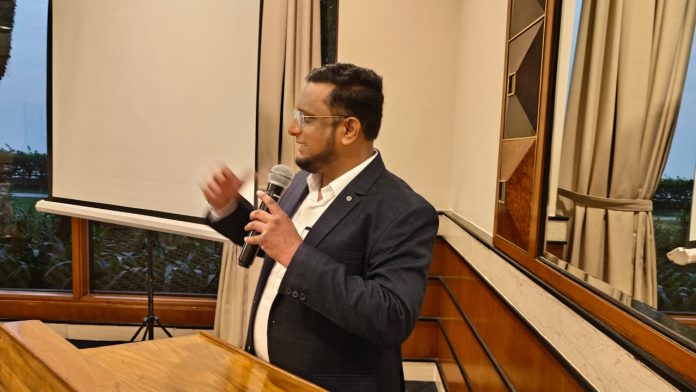
ISRD secretary Asif Iqbal presented a survey conducted among 254 children in the area to understand their reading habits. Through a PowerPoint presentation, he highlighted key findings, noting that children demonstrate a keen interest in reading books and still place high value on printed materials. Both parents and teachers should adopt a positive and proactive role in fostering children’s reading habits. He pointed out that children tend to read more in Hindi and English compared to Urdu, indicating a need for special attention in this area, likely due to education in English schools.

While it is true that screen time on mobile devices reduces children’s reading time, authors and publishers should consider how to capture children’s attention through mobile platforms to make their content accessible.

The survey revealed that children enjoy reading adventure stories, Islamic history, and fiction, with a particular interest in Islamic heroes in the current context. Parents provide children with books, and they often receive books as gifts. Notably, children are also purchasing books with their pocket money, which is commendable and should be encouraged further. There remains a significant preference for reading printed books compared to e-books and audiobooks.

However, the question persists: to what extent are we meeting the needs of children in the community? While it is a fact that children engage with online games, social media, and various internet content, they also recognize that books play an essential role in their lives, and they express a desire to read. They prefer simple and accessible language along with colourful, graphic books available at affordable prices. Authors and publishers should focus on these aspects.

In his presidential address, renowned Islamic scholar and author of more than 100 books, Dr Muhammad Raziul-Islam Nadvi, Secretary of Jamaat-e-Islami Hind, emphasized that children’s authors should keep three key principles in mind: (1) While writing stories, consider the tastes and psychology of children, subtly incorporating Islamic values, teachings, and culture into their works; (2) present credible material, particularly regarding Islam, and avoid incorrect or misleading information; (3) use very simple and accessible language.

Dr Raziul-Islam Nadvi noted that during the initial period of Jamaat-e-Islami Hind, its members produced quality religious literature for children, but there has been a decline in this area over time. However, he affirmed that renewed attention is now being given to this vital aspect.

Renowned children’s author Mohammad Siraj Azeem, founder secretary of All India Adab-e-Atfal Society Delhi, delivered a lecture titled “Exploring Pluralistic Society and Its Impact on Children Amid Increasing Extremism.” He highlighted several factors contributing to extremist tendencies in children: 1) the destruction of the joint family system, 2) parents’ indifferent relationships and callous connections with their children, 3) uncontrolled technological advancements and excessive use of electronic gadgets, including mobile devices by children, and 4) various pressures from parents, the environment, or technology. Addressing the question of how tendencies towards violence arise in children, he urged parents to connect well with their children, give them ample attention, and focus on their all-round training and nurturing, as parents serve as crucial role models for their children, thus they should demonstrate the best conduct and behaviour.

The workshop commenced with welcoming remarks from Mr Saleemullah Khan, Delhi state president of Jamaat-e-Islami Hind. Following this, experts delivered insightful lectures on various aspects of children’s literature.

Maulana Inaamullah Falahi, associated with the JIH Markazi Taleemi Board, spoke on “The Need and Importance of Children’s Literature in the Light of Islamic Values.” Dr Shadab Musa, JIH Assistant Secretary, presented on ‘Understanding Stages of Cognitive and Intellectual Development in Children’.

Dr Faizan Shahid discussed “The Effects of Short Stories on the Psychological, Social, and Moral Growth of Children .”

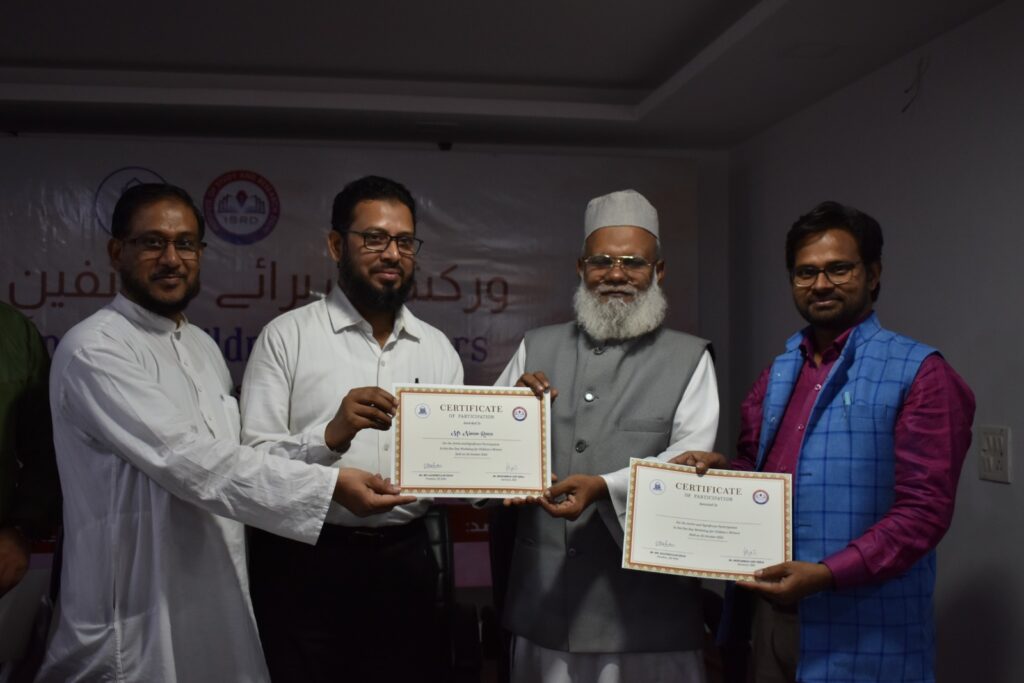
The workshop consisted of three sessions, moderated by Noor-ul-Islam Rahmani, Naim Raza, and Muhammad Maaz. All participants were awarded certificates.

source: http://www.indiatomorrow.net / India Tomorrow / Home> Education / by admin india tomorrow / October 23rd, 2024

Asif Iqbal – A trailblazer in education, social change, and Urdu literature

Solapur, MAHARASHTRA :

Asif’s mantra, “My life is the purpose of everyone’s work,” resonates deeply within his rich personality. Dr. Khan aptly encapsulates Asif’s unwavering commitment to illuminating the path of education and eradicating societal darkness, echoing the sentiment that Asif’s life is dedicated to serving others.

In the landscape of educators, Asif Iqbal stands as a beacon of inspiration and dedication, reshaping the conventional norms of teaching and community engagement. While the average routine for most teachers comprises daily duties and personal engagements, Asif Iqbal, a 41-year-old teacher, exemplifies an extraordinary commitment that extends far beyond the traditional roles.

His passion for teaching goes beyond the classroom walls. Asif’s dedication spans across various domains, including social work, promotion of Urdu language and literature, active political participation, and tireless efforts toward educational empowerment. Unlike many, his primary focus lies in the upliftment of students and communities, striving to instigate positive transformations in their lives.

Embarking on his journey after completing a Diploma in Education, Asif began his career at a Zilla Parishad primary school in 2001. However, it was his departure from a secure government job in 2010 that marked a pivotal shift. At the young age of 28, he joined a renowned government-aided school in his city, ultimately rising to the position of Head Master at the SSA Urdu Primary School in Solapur.

His responsibilities extend far beyond the confines of an educational institution. As the spokesperson for the City Indian National Congress committee and President of the Lions Club Solapur (Classic), Asif actively engages in diverse social and political roles. Additionally, his affiliations with organizations like the All India Human Rights Association, Khidmate Khalq Organization of India, and various literary bodies underline his multifaceted contributions.

Asif’s devotion to education and his compassionate approach have earned him immense popularity among students and parents alike.

Maaz A. Gafoor Sagri, one of his brightest students currently preparing for NEET, hails Asif as a motivator who consistently creates platforms for students to showcase their talents. Despite the school’s substantial size of nearly 2000 students, Asif manages to establish personal connections with a vast majority, prioritizing character and behavior development.

Dr. A.A. Pagan, a PTA member of the school, lauds Asif Iqbal for his administrative prowess, capacity for work, and forward-thinking attitude. According to Dr. Pagan, Asif’s initiatives have brought about positive changes and regular personality development activities within the school.

In a conversation with Muslim Mirror, Asif reflects on the dearth of educational infrastructure in his city, especially for the substantial Muslim population. He laments the absence of universities and well-equipped campuses, emphasizing the need for investments in education over commercial endeavors like land development and construction projects.

Highlighting the broader educational landscape in Maharashtra, Asif points out the scarcity of institutions offering higher and professional education, while acknowledging the few notable ones like PA Inamdar University in Pune and Anjuman E Islam in Mumbai.

Asif’s vision extends beyond his current commitments. He expresses a strong desire to build an Asian Minority University, a dream he is diligently working towards with the acquisition of a 100-acre land. This envisioned educational hub aims to become a center for Indian Muslims, fostering educational growth and empowerment.

His influence on Urdu literature and poetry is equally significant. As a host to numerous All India Mushairas, including prestigious events like the Delhi Urdu Academy in the presence of Delhi’s Deputy Chief Minister Manish Sisodia, Asif has actively contributed to nurturing Urdu literary talents.

Despite commendations for his leadership potential in politics, Prakash Wale, a senior Congress Party leader, advocates for Asif’s continued presence in the education sector, acknowledging its need for individuals like Asif Iqbal, while cautioning about the intricate nature of politics.

Dr. Asadullah Khan, an eminent figure in the education realm, celebrates Asif Iqbal as a catalyst for educational and social transformation in Solapur. Recognizing Asif’s multifaceted abilities as an educator, poet, and orator, Dr. Khan commends his dedication to service and highlights Asif’s poetic work, “Naya Asman,” as a significant contribution to the world of literature.

Asif’s mantra, “My life is the purpose of everyone’s work,” resonates deeply within his rich personality. Dr. Khan aptly encapsulates Asif’s unwavering commitment to illuminating the path of education and eradicating societal darkness, echoing the sentiment that Asif’s life is dedicated to serving others.

This expansion not only delves deeper into Asif Iqbal’s multifaceted contributions but also elaborates on his vision, impact, and the endorsements he has received from various stakeholders within the education, social, and political spheres.

source: http://www.muslimmirror.com / Muslim Mirror / Home> Education> Positive Story / by Imran Inamdar / December 19th, 2023

Running with a vision: Mohammed Asif Iqbal’s life, an inspiring tale for many

Kolkata, WEST BENGAL:

Bouncing back from adversity with indomitable resilience and willpower, Asif Iqbal helps others with disabilities as he pushes the limits. Ejaz Kaiser shares his story.

Since 2021, Iqbal has run 10 km each on 12 different races.

Chhattisgarh :

A life well lived is a life worth talking about. With complete vision loss, Mohammed Asif Iqbal’s life can force anyone to rethink disability.

A Kolkata resident, who had a successful stint in Central government’s smart city projects for digital inclusion initiative at Nava Raipur in Chhattisgarh, Iqbal (46) had partial vision loss since birth due to a genetic disorder called retinal degeneration. By the time he turned 16, he had turned completely blind.


He moved to the United States and managed complete his high school and partial college education in Oregon, USA. Iqbal returned to India in 1995 to later become the first visually challenged commerce graduate of St Xavier’s College Kolkata and got his MBA in human resources from Symbiosis Institute, Pune.

Around six years back, he was diagnosed with high blood pressure. Having given a choice to either change his lifestyle or be on medicines all his life, Iqbal decided to lead a life worth living. “I thought my health shouldn’t be a hurdle towards my contribution to nation-building. Just the thought of doing something to ensure I remain healthy. I was overweight. I began visiting the playground and park with the help of friends. It was there the idea clicked to participate in marathons and began preparing for the race to build my confidence”, Iqbal said.

Running became a routine; starting from 100 metre, he increased the length slowly to 300 and later to a few kilometres with the support of volunteers. Gradually, he learnt navigation on his own.

“I was competing with myself to enhance my performance”, he added. Since 2021, Iqbal has run 10 km each on 12 different races and has also been recognised by former Indian cricket skipper master blaster Sachin Tendulkar for his brave initiative.

But his biggest moment came on December 18, 2022 when he accomplished TSK-25 km (15.53 miles) marathon run in Kolkata only through voice guidance. He was blind-folded and had zero physical touch or physical assistance from anyone. He set a record and entered into Asian Book of Records, as the first Indian Asian blind runner to complete a marathon in 3:32 hours with voice navigation support from Dibyendu Mondel and Prakash Singh who piloted his run.

“While I run on voice guidance (talking GPS) issued by fellow buddy runners who run at the same speed,  the mission of 25km marathon in Kolkata was well achieved,” Iqbal said.

He is also the recipient of a national award, West Bengal state role model award and the extraordinary citizen of Kolkata award among others.

During his career spanning over 15 years, he has designed and implemented social inclusion strategy for AADHAR enrollment, accessible income tax, and accessible telecom under Telecom Regulatory Authority of India (TRAI) among others.

He is presently an associate director at PricewaterhouseCoopers (PwC) India Ltd. In 2000, he filed a public interest litigation (PIL) for implementation of reservation quota in government-run universities including the IIMs and IITs.

source: http://www.newindianexpress.com / The New Indian Express / Home> Good News / by Ejaz Kaiser, Express News Service / January 29th, 2023