Tag Archives: Assamese Muslims

Guwahati teacher Saikh Md. Sabah Al-Ahmed’s on Kashmiri youth features in Penguin Book of Poems

Guwahati, ASSAM :

Guwahati-based school teacher Saikh Md. Sabah Al-Ahmed

At a time when Pakistan’s sponsored terrorism in India has drawn global attention, a Guwahati-based school teacher Saikh Md. Sabah Al-Ahmed has tried to highlight the same issue through a different medium. His poetry “In the Valley of Red,” which talks about the loss of lives of Kashmiri youths, has featured in the Penguin Book of Poems on the Indian City.

From Ghalib’s Delhi and Nissim Ezekiel’s Bombay to Agha Shahid Ali’s Srinagar and Kamala Das’s Calcutta, from Sarojini Naidu’s Hyderabad to Arundhathi Subramaniam’s Madras to Kynpham Sing Nongkynrih’s ShillongThe Penguin Book of Poems on the Indian City takes readers on a spectacular poetic journey across 37 cities in India.

His anthology contains nearly 300 poems, some written in English, and those translated from 25 regional languages. This collection offers an immersive lyrical exploration of India’s urban landscape.

Sabah Ahmed with renowed author from Penduin Zubaan (Women) Preeti Gill

Speaking to Awaz-The Voice, Sabah Ahmed said his poem “In the Valley of Red” talks of the plight & irony of innocent Kashmiri youths who are brainwashed and taken to the other side of the border to become terrorists. He said these youth again come back to their home (Kashmir) to kill their people, and eventually they also get killed in the hands of security forces in different encounters.

“Through the poem, I try to capture the emotions of parents of these Kashmiri youths who eagerly wait for their sons to return home one day. But in the end, these parents have to receive their dead bodies. My poem tries to depict how a paradise (Kashmir) has been destroyed by Pakistan,” Sabah Ahmed said.    

Before the Penguin Book of Poems Sabah Ahmed poem on Kashmir was published in WITNESS: The Red River Book of Poetry of Dissent (2021), an anthology of “Poetry of Dissent from the Margins” as seen by Indian poets, edited by Nabina Das. Subsequently, it was also published in the London-based Joao-Roque Literary Journal on February 28, 2022, edited by British-Asian writer and editor Selma Carvalho.

Another poem of Sabah Ahmed on Guwahati Diaries has also been featured in the Penguin Book of Poems on the Indian City. This poem highlights the situation of Guwahati during Covid-19 pandemic.

The Penguin Book of Poems on the Indian City is edited by Bilal Moin from Oxford University. The anthology is slated for release on May 30, 2025.

Sabah Ahmed, 50, who teaches social science in the prestigious Don Bosco School Pan Bazar in Guwahati, is popular among students, parents, and his peers for his affable nature.

“I scribbled a few lines, way back in 1988 or 1989, when I was in class 8 or 9. I felt like a 14-year-old while putting down my feelings on paper. The rest is this long journey since then. I was awarded the Reuel International Prize for Poetry in 2019 for the best upcoming poet from the North East. My poems were translated into Italian by Italian poet Giorgio Moio, based in Naples, Italy. My poems were also translated into Manipuri by veteran Manipuri critic Laishram Memo Singh,” Sabah Ahmed said.

Sabah Ahmed is very disturbed about the present situation in Kashmir. “Things were coming back to normal in Kashmir after decades. But the Pahalgam attack has finished everything. But I am still hopeful for better days in Kashmir. It will be the happiest moment in my life if my poem touches the Kashmiri youths and they quit the wrong path shown from the other side of the border,” he said.

source: http://www.awazthevoice.in / Awaz, The Voice / Home> Stories / by Daulat Rahman, Guwahati (headline edited) / May 20th, 2025

Ruhul Amin Hazarika from Assam joins cancer detection research in Italy

Chenibari Village (Darang District) , ASSAM / ITALY :

Dr. Ruhul Amin Hazarika

A young scientist from a small village Chenibari in the Darang district of Assam has brought laurels to the country in global medical research. Dr. Ruhul Amin Hazarika has been appointed as a research scientist at the prestigious University of Calabria in Italy, where he will conduct research on cancer detection and diagnosis with the help of artificial intelligence (AI) and will assist in teaching.

Dr. Ruhul Amin Hazarika is the son of Bashiruddin Ahmed Hazarika and Rabia Khatun, residents of Chenibari village. He received his early education from local Assamese-medium government schools and after matriculation moved to Mangaldoi for further studies.

After passing 12th in Science from Mangaldoi Government Higher Secondary School, he obtained B.Tech, M.Tech, and PhD degrees from North Eastern Hills University (NEHU), Shillong. Due to his hard work and dedication, today he has secured such an achievement which is a matter of pride for the entire state and country.

His main area of research in Italy is to develop AI-based cancer detection systems. This technology can prove helpful in the early detection of cancer and can revolutionize medical science at the global level.

Dr Hazarika believes, “Medium of education and social status are not barriers if the hard work and dedication is genuine.”

He himself studied in Assamese medium government schools from primary to 12th standard and then achieved this position by obtaining a PhD from government universities.

After completing his education, Dr. Ruhul Amin worked as an Associate Professor at Manipal University, Bangalore, where, observing his research work and technical expertise, he received a research invitation from the Italian University.

This achievement of Dr. Hazarika is not just an inspirational message for his family or village but also for the students of Assam and India who dream of touching heights despite limited resources and difficult circumstances.

“With hard work and determination, any obstacle can be overcome. If I can do it, anyone can,” said Dr. Ruhul Amin Hazarika.

His achievement not only strengthens India’s role in the field of medicine and technology but also shows that boundaries cannot stop talent.

source: http://www.awazthevoice.in / Awaz, The Voice / Home> Stories / by Ashad Ali, Mangaldoi / April 2Oth, 2025

Assam’s Shakeel Talukdar is flying his dream in USA

Bahri Village (Barpeta District), ASSAM / Florida, U.S.A :

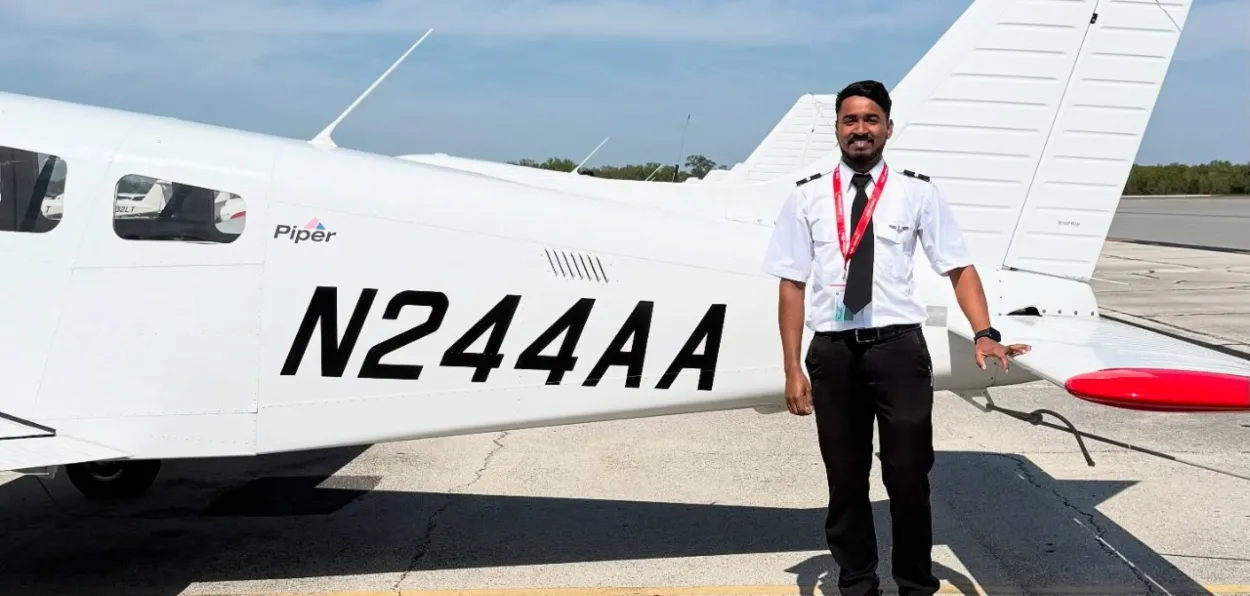
Shakeel Talukdar in front of his aircraft

This is an inspiring story of a young man’s journey from a remote village in Assam to a flying club in the USA. Shakeel Talukdar of the Bahri village in the Barpeta district of western Assam, about 100 km from the capital Guwahati, has realized his childhood dream to touching the skies in a plane bringing glory to his family and people.

His achievement is extraordinary as he didn’t give up his dream of flying even after failing to make it to the the National Defence Academy (NDA), premier Military training institute, and made it happen.

He has been training at the International L3Harris Flying Academy in Florida since August.

His father Abul Kalam Talukdar said, “He had a big dream of flying since childhood. I told him I couldn’t make this dream come true. I asked Shakeel to study other subjects. Shakeel also underwent coaching in Delhi and wrote the examinations for the NDA. Here his dream was shattered as he did not qualify for the medical tests.”

Shakeel Talukdar with his instructor

Shakeel was hugely disappointed and fell into mental depression for some time. “We also felt bad about it,” his father said.

However, Shakeel Talukdar did not give up chasing his dream. He completed his commercial pilot training course. He completed the first phase of training during the holy month of Ramadan 2025 and it was an Eid gift to his parents.

The trainers at the International L3Harris Flying Academy praised Shakeel for his excellent performance. After successfully completing the first phase of training, Shakeel gained confidence. He had reached the threshold of his dreams.

“Shakeel did not break down after failing the medical test at the NDA in Delhi. He then took the pilot examination at the Director of Civil Aviation of India. After passing the examination, he was sent to the US by Air India for training. Shakeel is currently training at the L3Harris Flying Academy and can fly solo,” his father Abul Kalam Talukdar said.

Apart from studying, Shakeel Talukdar has been a sportsperson since childhood. As a child, he played cricket and badminton. He also participated in a national-level badminton tournament held in Hyderabad.

Shakeel Talukdar’s mother said: “As a mother, I am proud of my son’s achievements. We are all happy. Please pray for him. Shakeel tried his best to fulfill his dream. He would sleep only 3-4 hours a day and sit with a laptop or a book in his hand most of the time. He has now been recognised as a pilot. I appeal to everyone to pray for him.”

source: http://www.awazthevoice.in / Awaz, The Voice / Home> Stories / by Ariful Islam, Guwahati / April 21st, 2025

Backstory 2024: In Bengal, an echo of my family’s migration story – without the hostility

ASSAM :

I found that the journey from East Pakistan to India is seen in a completely different light – unlike in Assam.

Design | Rubin D’Souza

Earlier this month, I was on my way to the India-Bangladesh border in West Bengal on a reporting assignment.

As I crossed the outskirts of Kolkata and took the Jessore Road, ancient trees swam into view. Our driver, Swapan Kumar Shikari, got talking. “These are very old trees,” he told me. “They guided millions of refugees from East Pakistan who were fleeing the [1971 Bangladesh liberation] war.”

Jessore Road is a historical refugee route, connecting Kolkata and Khulna in present-day Bangladesh, and the flight of terrorised people on this road in 1971 is now part of collective memory. “Most people who you will meet, they came here in 1971 or after that,” Shikari said, pointing to the houses and paddy fields on both sides of Jessore Road.

A similar journey is part of my history too. More than a hundred years ago, our forefathers, mostly peasants, migrated from the Mymensingh district of undivided Bengal to Assam – they were not fleeing violence, but following the instructions of the British colonial power.

Many of them tried to assimilate with the mainstream Assamese society. They not only started to read and write in Assamese but also initiated campaigns to identify themselves as “Assamese speakers” and “Assamese” in the 1941 census. Over decades, however, even our best efforts have not led to acceptance from Assamese society.

And in the process, we have become wary of recognising our roots – on the other side of the border.

For good reason. The rise of Assamese sub-nationalism has led to Muslims of Bengali origin being vilified as “illegal immigrants” from Bangladesh – even though many of them migrated years before the creation of India.

An anxiety, if not paranoia, about outsiders has taken centre stage in Assam and shaped politics in the state for the last six decades. The rise of Hindutva in Assam has only made our lives more precarious.

But as I began my interviews in Thakurnagar, the seat of the Matua order in North 24 Parganas district, I found that the journey from East Pakistan to India is seen in a completely different light here.

The Matuas, an influential religious order consisting almost exclusively of Namashudra Dalit immigrants from Bangladesh, are open about their migration history and are not afraid to speak of their origins.

“My family came here between 1980 and 1985,” said a resident of Thakurnagar. “There is nothing to hide. People in West Bengal have accepted us. Even if they don’t accept us, we don’t have anywhere else to go. Lakhs of people fled, and the local Bengali people not only welcomed us but also gave shelter and showed empathy.”

If he were in Assam now, he would never speak this openly. “You would have been picked up by the border police any day,” I told him.

Indeed, the state in Assam has come up with several mechanisms, from foreigners’ tribunals to the National Register of Citizens, to detect “illegal” residents. This institutional suspicion has taken a toll on the Bengali community in Assam, both Muslims and Hindus.

I have been reporting on the citizenship crisis in Assam for the last five years. Minor errors in documents or the inability to prove they are the children of their parents through documentary evidence have led many people to “fail” their citizenship test.

The plight of Bengalis in Assam was familiar to those I interviewed. Indeed, a few years ago, residents of West Bengal were spooked at the prospect of the National Register of Citizens being carried out on a nationwide scale, as suggested by the Union home minister Amit Shah.

On the last day of my reporting assignment, a Kolkata-based social activist from the Matua community had several questions for me about the National Register of Citizens.

I told him how the majority of Bengali Muslims in Assam supported the idea of the National Register of Citizens. Since they are required to produce papers in every aspect of life to prove their citizenship, they were not anxious. They knew they could produce the documents that could rid them of the lifelong “Bangladeshi tag.”

The Assam National Register of Citizens ended up excluding 19.06 lakh people, from Hindus to Muslims, from natives to those with a migration history. They are on the verge of statelessness and they now have to prove their citizenship before the tribunals, the last chance before being declared as non-citizens.

I told the Matua leader that if the National Register of Citizens came to West Bengal, those who came after 1971 would face hurdles having their names included. But while Hindu migrants may be protected by the Citizenship Amendment Act, Muslims may still have to prove their citizenship.

“Yes, the words ‘infiltrators’ and ‘illegal immigrants’ will only be associated with Muslims,” he agreed.

Citizenship is a federal subject in India, and the Union government makes the laws for it. But how a state responds to the spectre of illegal immigrants depends on its own history and culture.

In Assam, both the state and the citizenry are suspicious about migrants.

But other regions show us that another way is possible. In West Bengal, the state and its people not only accept migrants wholeheartedly but also show compassion for their history.

Most recently, the tiny northeastern state of Mizoram gave shelter to refugees from Myanmar and Bangladesh, describing them as their kith and kin.

But in Assam, with an aggressive form of Hindutva becoming dominant, it is unlikely that a Bengal-origin Muslim like me will find the courage to look back at my history – without having to pay a price for it.

source: http://www.scroll.in / Scroll.in / Home> Backstory 2024 / by Rokibuz Zaman / December 11th, 2024

Grab a stick, take the turf: How one man’s passion is transforming Assam’s Barak Valley

Sribhumi (formerly Karimganj), (Barak Valley District) , ASSAM :

Government worker and volleyball player Mohammed Emad Uddin has brought hockey into lives of people in a border district in Assam, motivating children to hone their skills and go on to represent their state & nation in the sport, Prasanta Mazumdar writes.

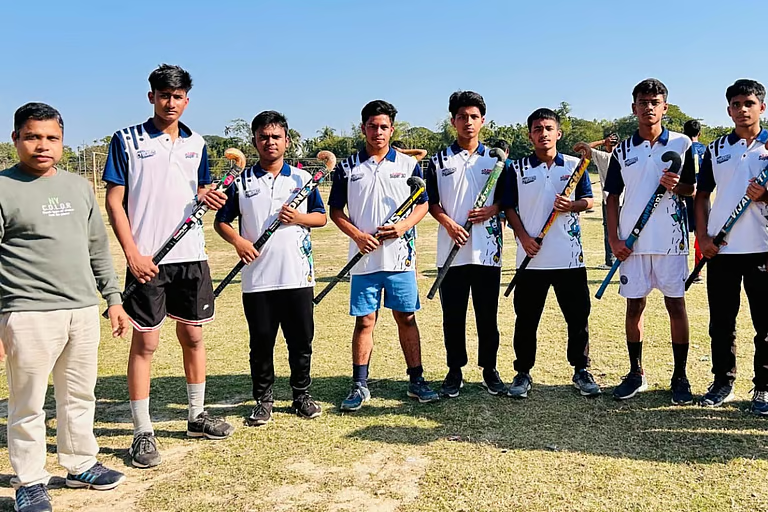
Only five years ago, the residents of Sribhumi had little notion of hockey. And it would have remained that way, if not for the persistent efforts of a government employee who has sparked a ‘hockey revolution’ in the remote Barak Valley district in Assam, situated on the Bangladesh border.

Now, nearly 500 children across the region wield the stick as they take to the pitch, determined to hone their skills and elevate their game.

Mohammed Emad Uddin, an employee of National Health Mission (NHM) in Assam has made it his mission to spread the game to the nooks and crannies of Sribhumi, formerly known as Karimganj. A passionate advocate of hockey, Emad introduced locals to the fundamentals of the sport.

There is an interesting story behind the propagation of the sport in Sribhumi. A press club wanted to make its tenth anniversary celebration memorable. So, they approached Emad, a volleyball player and sports enthusiast.

“The Badarpur Press Club completed ten years in 2020 and wanted to celebrate the occasion in a unique way by organising a hockey tournament. The club members proposed that I constitute the ‘Karimganj XI’ team. Four teams – Cachar District Sports Association, Hailakandi District Sports Association, Badarpur Press Club and Karimganj XI took part in the tournament. While hockey has been played in Cachar and Hailakandi for long, nobody in Karimganj had played it before,” Emad says.

Sribhumi, Hailakandi and Cachar are the three districts of southern Assam’s Barak Valley. Bengalis, both Hindu and Muslim, constitute the majority in this region.

After the hockey tourney, Emad fell in love with the game. He not only started playing, he also began promoting the sport. He moved around from one place to another within the district, motivating children to play the game.

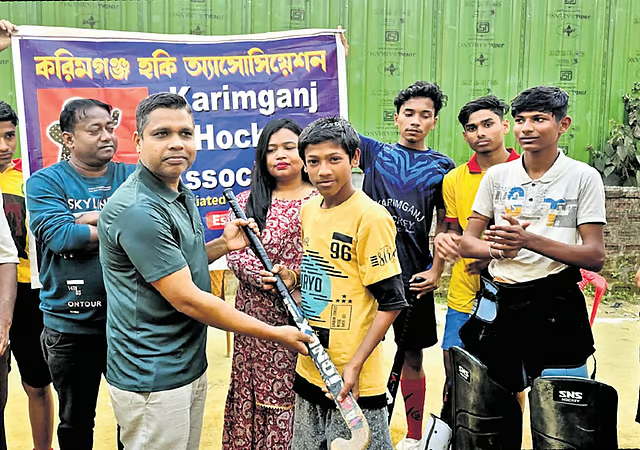
He visited a number of schools in the area to convince teachers to include hockey in their sports disciplines. Many schools responded positively. Soon, Karimganj Hockey Association was formed, followed by its affiliation with Assam Hockey in 2021. Sahirul Islam Bokul was its founder president.

“An estimated 500 school and college students now play the game in our district. Around 100 of them play it regularly. Most of them are from an academy named Bright Future Institute. It earlier had several sports disciplines but not hockey. We introduced it here,” Emad says, a glint in his eyes.

Some time ago, three hockey players from the Sribhumi district underwent a 14-day training in Guwahati where players were being selected for the state team. Three others from the district also underwent an umpire training course in Nagaon to broaden their horizon.

“Recently, our players took part in a tournament in Charaideo. They also play in inter-district events,” says the NHM employee who once led the district team at a tournament in Cachar.

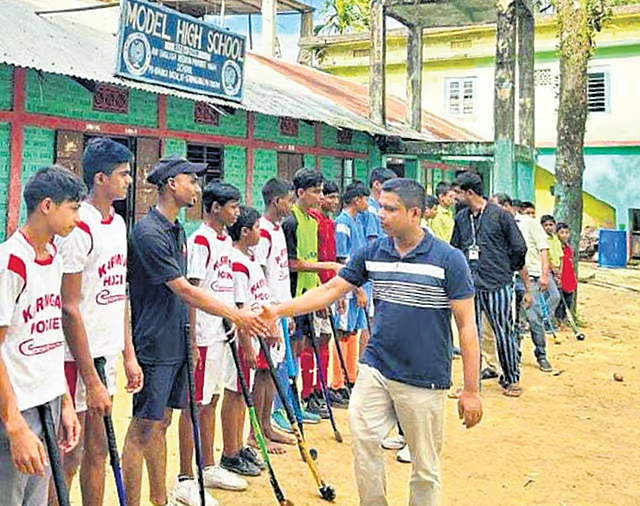
On January 12 last year, Karimganj Hockey Association organised a tournament with children from seven schools in Malua area of the district. Recalling the event, Emad says there was much enthusiasm among locals.

“Various schools are associated with us. We coach their children when they practice at their school grounds. Sometimes, we hire coaches to impart training. The schoolchildren in our district have developed a keen interest in hockey but we cannot give them as much time as we want as they are often required to sit for their exams. We also have a girls’ team but it is as active as the boys,” Emad says, lamenting the challenges that impede his mission.

In the absence of sponsors, he and members of the Karimganj Hockey Association contribute regularly to ensure that the ‘hockey wave’ continues in the district. Sometimes, help comes from friends and well-wishers. Once, Assam Hockey provided them with some kits.

“We need a dedicated hockey ground. Assam Hockey secretary Tapan Das once visited Sribhumi. He was happy to see the hockey craze,” Emad says.

“We are getting a good response from schools and parents. However, its hasn’t been easy. In a region where there is much greater enthusiasm over cricket, people feel hockey does not have a future. So, teachers and parents were not totally convinced initially. It took an effort to make them believe hockey, too, has a future,” Emad says.

He further says, he and his friends, Salim Ahmed and Taz Uddin, from Karimganj Hockey Association, gained a lot of experience by watching live matches of the 2023 Men’s FIH Hockey World Cup in Odisha.

Emad has been also instrumental in introducing sepak takraw (foot volleyball) in the district but his focus remains hockey. “It feels good when you can do something for children. My goal is to make sure hockey players from our district represent Assam and India someday and make us proud,” he says.

source: http://www.newindianexpress.com / The New Indian Express / Home> Good News / by Prasanta Mazumdar / February 16th, 2025

Assam: Elias Hossen Ansari’s journey from Madrassa to London law firm

Chakla Village (Bongaigaon District) ASSAM / London, U.K :

Elias Hossen Ansari in London

A madrassa student has smashed the myth about education in Islamic seminaries. Elias Hossen Ansari of village Chakla in the Bongaigaon district has secured his dream job; he has been appointed a paralegal officer at an Oyini firm in London, United Kingdom.

Elias Hossen Ansari comes from a financially poor family. His parents sent him to a small madrasa in the nearby Bajali district from where he completed his Hifz (Quranic study) course followed by the Maulana course.

As luck would have it, the Ajmal Foundation picked him up in Hojai for regular academic studies. He obtained his Bachelor of Laws degree from the University of Science and Technology Meghalaya (USTM), Meghalaya close to Guwahati, and later a Master of Laws degree from Jamia Millia Islamia, Delhi. Elias excelled in all the examinations he wrote.

Elias Hossen Ansari (Center) with classmates at the USTM

However, Elias did not end his higher education with Jamia Milia. He explored chances of securing a legal job in London, the city of his dreams. To raise money for his education, Elias taught religious prayers (Tarawih) at the Station Mosque in Rangia near Guwahati every year during the month of Ramazan. This also helped him revise his leaning at Madrassa.

“Besides, I believe that the Almighty has always guided me to the right path in pursuing my dreams because I have always served Him the way He has commanded,” Ansari told Awaz – The Voice joining in from London on an internet conversation.

Ansari shifted to London nearly two years ago to pursue higher studies in international law and has since been also performing as an imam leading the Friday congregation and other prayers in local mosques along with his studies.

On January 23, he joined as a paralegal officer at Barristers and Solicitors Legal Firm and AA Homes and Housing Ltd in London on a salary that his peers back home can only dream of. His annual emolument comes to around ₹37 lakh Indian Rupees.

“I’m happy that my prayers have been answered! My job here will be to assist the barristers, and solicitors, and other seniors in drafting and pursuing various legal matters, including those of immigration, visa, and a lot of other things … Migrating to England is not so easy for someone like me who hails from a middle-class family, because the cost of living here is exceptionally high. I’ve never left any stone unturned to find sponsorship for my stay in the UK which is very essential, and finally, I’ve got a permanent sponsorship by the grace of God,” a beaming Ansari said.

Elias Hossen Ansari being felicitated on Independence Day at USTM

Asked if his initial madrasa education posed any hurdle in chasing his dream, Ansari said: “Not at all. Nowhere, neither in my own country India, nor abroad. I’ve travelled to around 20 countries on study tours, and I’ve never come across anything as such … I am grateful to the makers of our Constitution where Articles 29 and 30 guarantee freedom of education of one’s own choice even for minorities. Here, in London also, I face no hurdle in offering five times Salah a day reciting the Holy Quran, or following my religious commandments. What I’ve seen in my life is that everyone is free to follow his/her faith. In this respect, India is the greatest country as far as peaceful coexistence is concerned.”

He also said that he does not believe in the narrative that madrassas are breeding grounds for fundamentalism or radicalism. “Religious educational institutions are no different from modern educational institutions, except that there are few extra subjects in religious studies which help in holistic development of students. And, no religion teaches hatred or violence. Religion always teaches love and compassion. So, I don’t believe in such negative narratives,” Ansari said, adding that there happen to be moles in every beautiful thing, but that should not be generalized.

Elias Hossen Ansari during his Madrassa days

About his life’s struggles to pursue such higher education, Ansari said: “I am grateful to many people, including (chairman of Ajmal Foundation Badruddin) Ajmal Saheb, (USTM Chancellor) Mahbubul Hoque Sir, (USTM academician) Baharul Islam Sir and many others whom I can’t name because they don’t want me to name them in public, but have helped me a lot. It would not have been possible for me to dream so high without their benevolence. I’m always grateful to all who have helped me so selflessly. Besides, I believe in the philosophy of greats like Napoleon Bonaparte and Dr APJ Abdul Kalam that everything can be achieved through hard work and perseverance, which helped me a lot.”

This is not the end of Ansari’s dream though. He has even higher dreams – to serve the people among whom he grew up. “Everybody asks me the same question; will you ever return to India or Assam? I’ll return and I nurture a hope to serve my people back home. I want education to spread in our country. I want to set up accessible and affordable schools and colleges in my country. I want colleges and universities in every town and district of our country. I’ll certainly go back and work for the people of my land,” he said.

Asked what he would like to suggest to the younger generation to pursue difficult dreams like himself, Ansari said: “The only way to success is hard work and burning midnight’s oil. Read the biographies and autobiographies of great people, you can draw all the inspiration. All the great people, including Mahatma Gandhi, Pt Jawaharlal Nehru, Dr APJ Abdul Kalam, and others have worked exceptionally hard to be such great leaders. Everything is possible if you persevere to achieve it and keep focus.”

source: http://www.awazthevoice.in / Awaz, The Voice / Home> Story / by Imtiaz Ahmed, Guwahati / January 27th, 2025

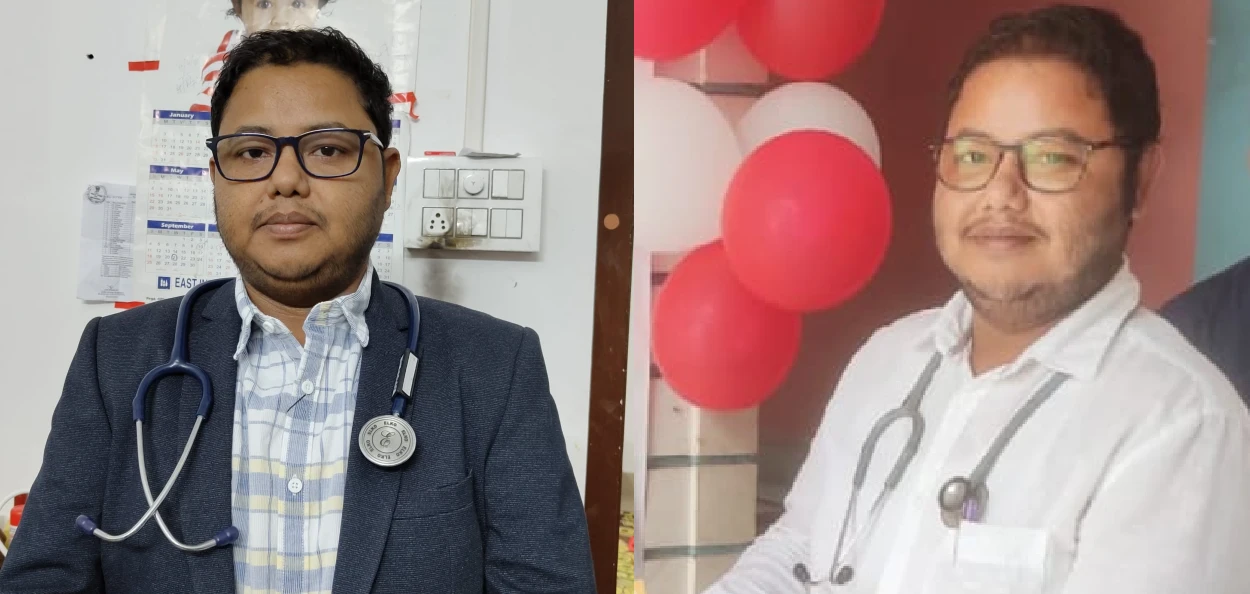
Assam’s Dr Rubul Ahmed’s mission is to treat the needy all his life

Bongaigaon (Bongaigaon District), ASSAM :

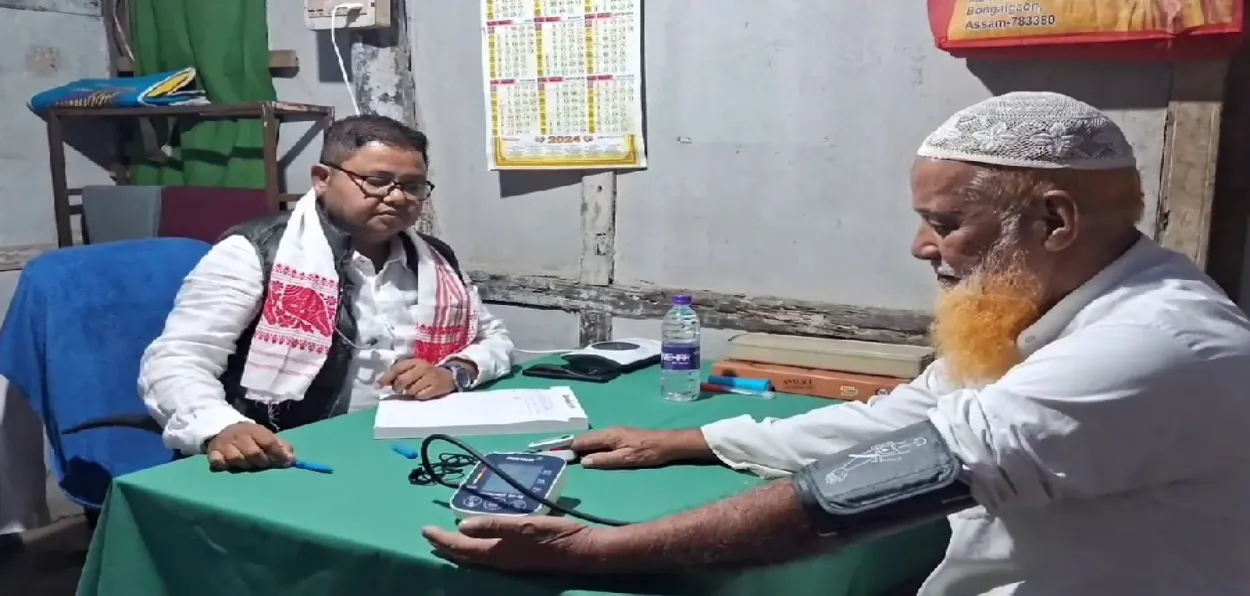
Dr. Rubul Ahmed with a patient at his no-fees clinic

At a time when doctors are charging exorbitant fees in the name of treatment and the skyrocketing prices of medicines have cut big holes in patients’ pockets, a young doctor in Assam has become a messiah for many patients.     

Dr Rubul Ahmed from Assam’s Bongaigaon district has started a free health camp every Thursday for a week to treat poor and needy patients. Dr Ahmed is a doctor working in Bongaigaon Civil Hospital in lower Assam.

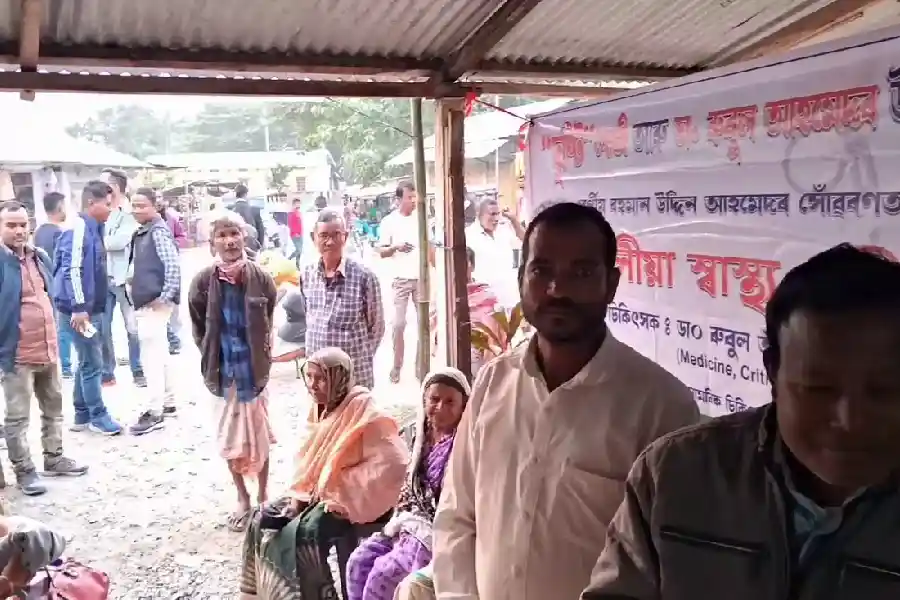
Dr. Ahmed has been providing free health services to patients at Assam Medicine Centre, a private pharmacy located in Dhantula Bazar, Bangagaon every Thursday. His great work is being encouraged and supported by a voluntary organization called ‘Drishti’ About 50 to 80 patients, both male and female, are receiving free medical services from Dr. Rubul Ahmed in each health camp.

Dr. Rubul Ahmed

In an interview with Awaz-The Voice, Dr. Ahmed said; “I grew up in an underdeveloped area of Bongaigaon district with a mixed population. The love and blessings of the people of our area have motivated me to become a doctor. I will always be grateful to them. Most people in my area cannot afford costly advanced treatment. So, I have decided to help them by organizing a free health camp every Thursday for a week.”

Dr. Ahmed lost his father when he was a child. His mother worked very hard to educate him. Till the time he got admission to pursue an MBBS course to become a doctor, there was no electricity at his home. “So, I understand the plight of the poor people,” he said.

“After passing my MBBS examination from Gauhati Medical College in 2014, I worked as Chief Emergency Medical Officer at Nemecare Hospital in Guwahati. Then I worked as a doctor in a state hospital in Dhubri district under the National Health Mission. In January 2021, I joined Bangagaon Civil Hospital,” said Dr. Rubul Ahmed.

  Patients waiting for their turn at the free camp organised by Dr Rubul Ahmed 

“If we run after money every moment of our lives. So when will we work for people? I try to help people with the medical knowledge I have learned. After receiving free medical care from me, they can buy two good medicines with the money that ordinary people in this area normally use to pay doctor fees. If a very poor person comes to me for treatment, I will buy medicine for them with my own money,” Dr Ahmed said.

Dr. Rubul Ahmed has undertaken this great work in tribute to his late father Rahmanuddin Ahmed and his late mother Rupjan Begum. Dr. Rubul Ahmed’s great efforts will benefit many poor people in the Dhantula area in Bongaigaon district. He is committed and determined to continue his free treatment of patients till his last breath.

source: http://www.awazthevoice.in / Awaz, The Voice / Home> Story / by Ariful Islam, Guwahati / December 11th, 2024

Tennis star Nazneen Rahman Zaffar proves age is just a number

Guwahati, ASSAM :

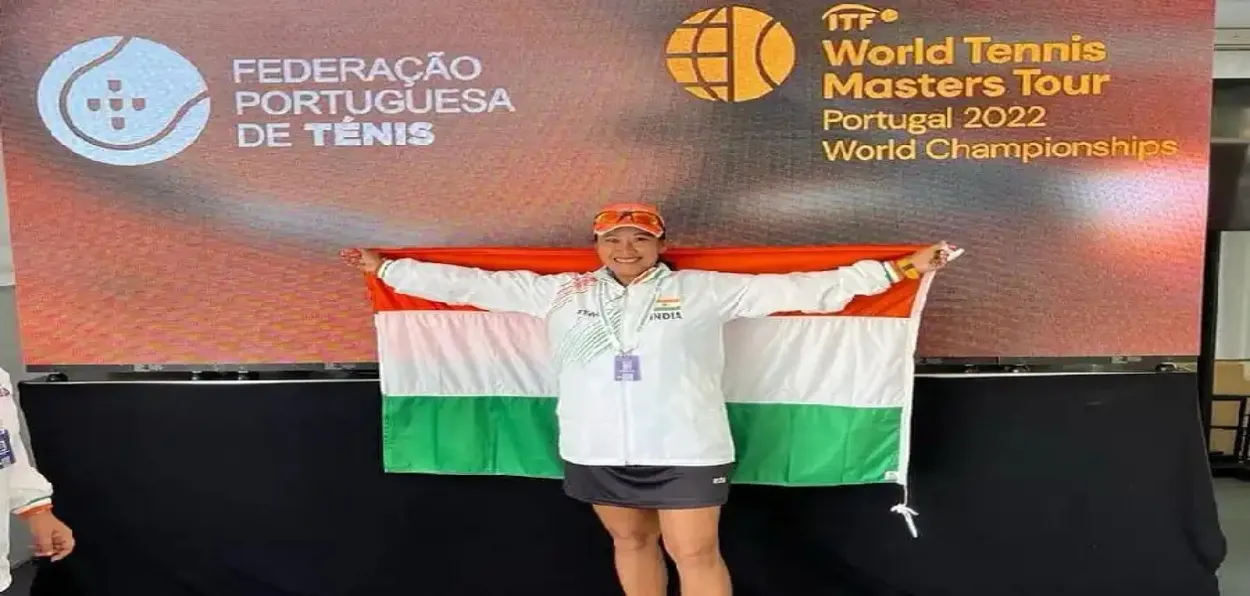
Nanzeen Rahman Zaffar at the World tennis Masters’ Tour in Portugal

A woman in her 40s; a homemaker, a doting mother, and an ideal daughter-in-law – Nazneen Rahman Zaffar of Guwahati is all this yet has a distinct identity. She is an international tennis player.

Nazneen proves that age is no bar to success She is a mother of two children manages her family well and is yet able to find the time and energy to excel in sports.

“I played sports in school but never got into sports professionally. In college, I was focused on studying. I started playing late in life after I got married.’  After 10 years of playing tennis, she took a break to care for her children and family.

“I started playing tennis in 2011 and the next year, I participated in the state-level tournaments. Tasting success, I was even more interested in playing, and later on, I trained well and played at the national level,” Zaffar told Awaz-The Voice.

Nazneen Zaffar playing tennis

Later Nazneen Zaffar finished among the top 10 at the ITF Masters.

She says her daughter encouraged and inspired her to play tennis. Her daughter is currently pursuing her higher studies at the A&M University in Texas.

“When I took my daughter Raina Zaffar to the stadium for tennis training, I too wanted to play. Some of my friends always told me that I played good tennis and I should continue. They told me that they wanted to see me at the international level in Indian colours. I thought; why not give it a try? I participated in the international games held by the All India Tennis Association in Haryana where I won my first trophy in the doubles event.”

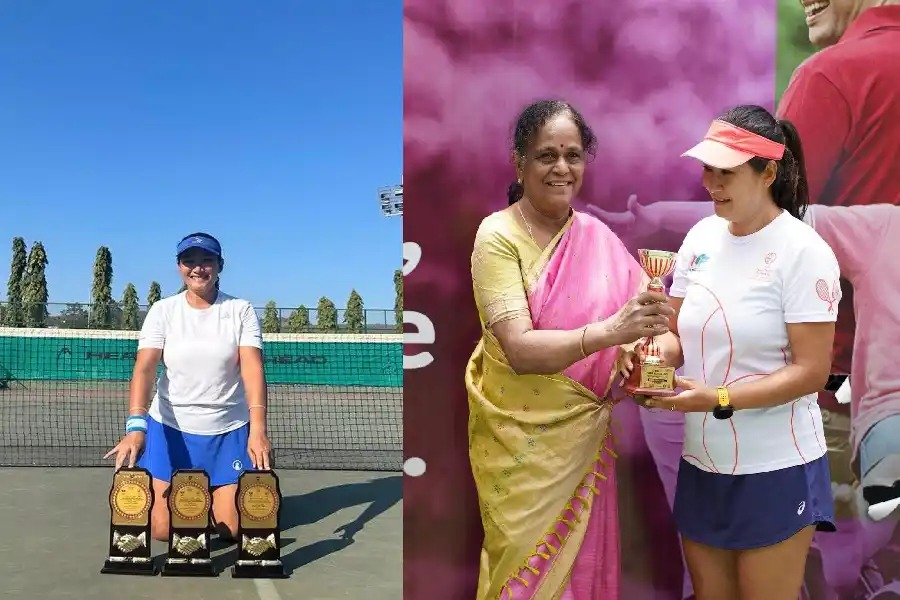
Nazneer Zaffar with her trophis and receiving a trophy

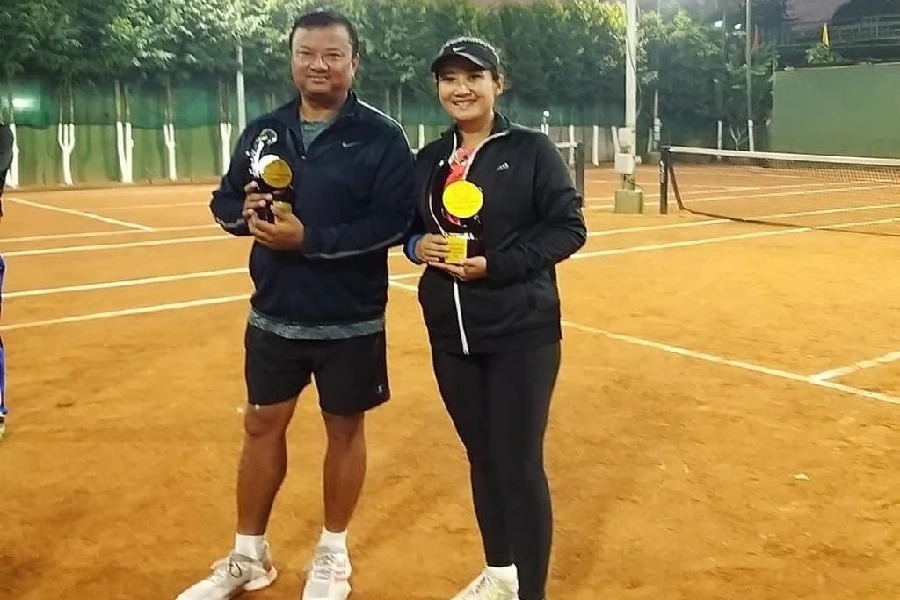
Nazneen Zaffar won the All Assam CTC Mixed Doubles titles in 2023 and 2024, finished runner-up in World Masters Tournament 200 in Dubai in 2023, won titles in Masters Tournament 200 in Guwahati and in Darjeeling in 2023 and a Masters Tournament 100 in Gurugram in 2023.

She also won the doubles title in a Masters 400 in Thailand.

“I gradually started participating in more tournaments and my ranking improved. Then when India sent a women’s team for the World Championships, I was appointed its Captain.”

She took the first women’s tennis team to Portugal. “Most importantly, every player in our team was a mother. It’s nice to think that we have made a distinct identity after having children.”

Nazneen Zaffar with her husband Shahnawaz Zaffar.

Nazneen has broken the myth that it is difficult for women to maintain physical fitness after becoming mothers. Nazneen is an athlete and an active fitness influencer on social media as well.

“I think sports and physical education are always complementary. When I had to take my daughter to different places for sports, I had to take care of her body and fitness. Since it becomes too expensive to take a fitness coach with us every time, I studied how we can keep ourselves fit; and how a tennis player can take care of her fitness.”

“It becomes quite difficult for women of my age to keep fit after bearing children. Many women give up self-care. However, I believe that every woman should take care of herself, not just because she has to play sports, but for her physical and mental health. They must walk and do yoga. Muscle formation slows down in a woman after the age of 30. On the other hand, when the time of menopause comes at the age of 40, many hormonal imbalances occur.

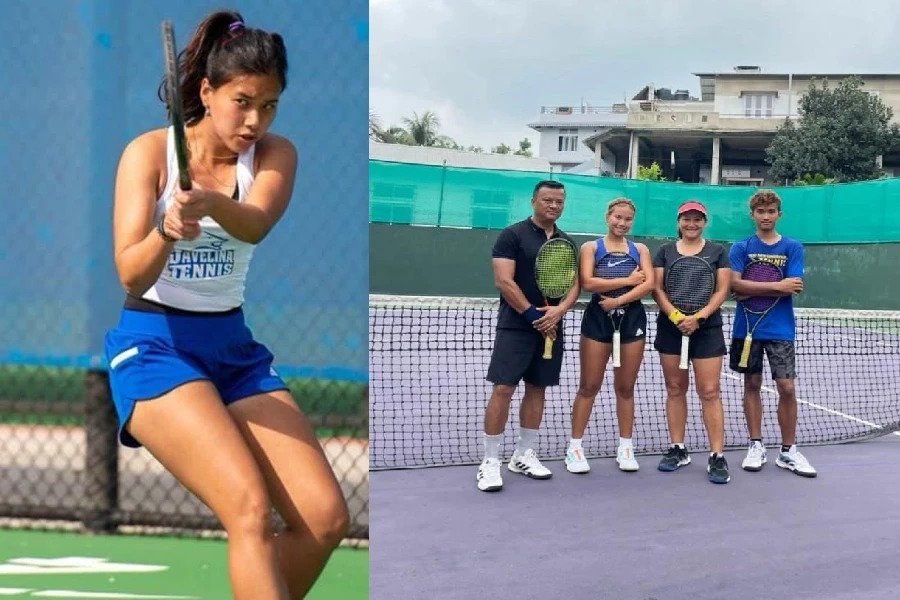
Raina Zaffar in the tennis court (Left) Nazneen and his family in Tennis court

“We have to keep ourselves fit to deal with all these problems. There are so many women who after a certain age would say we can’t do this… we can’t do that. But I think there is no age to stop learning. Even a woman in her 80s and 90s can learn or do many things if she has the confidence and desire. When I started playing, there were very few women in Assam, but now many women have come out,” Nazneen said.

“I have been imparting free yoga training at the Khanapara ground. I believe apart from physical fitness, we must also focus on mental health. When we are mentally fit, we live happily and can also keep others happy; and deal with all the problems. When members of a family see this change in the woman, they too want to change,” the fitness influencer emphasized.

In many cases, a woman, especially a Muslim woman, finds going out a hassle. As a Muslim woman, Nazneen Zaffar has never encountered someone questioning or blocking her; rather she receives support from her family.

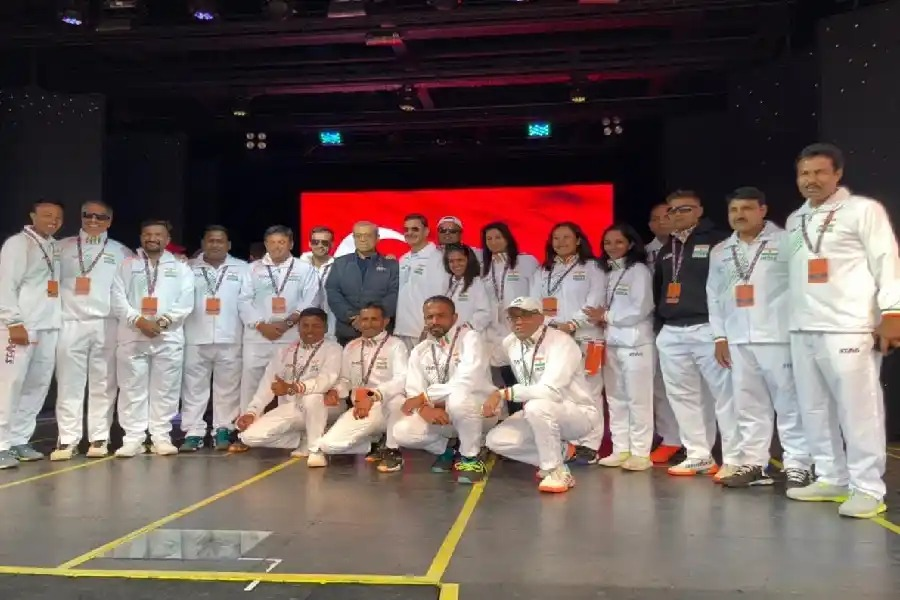
Nazneen Zaffar with the Indian team

“I get a lot of support from my family. My father supported me when I was young and later it was my husband Shahnawaz Zaffar. He is an NIS-accredited tennis coach. He guides me on many aspects of the game. Many women, especially Muslims, are reluctant to go out. I am very fortunate that my family supports me financially and mentally.”

Nazneen also links sports with religion and spiritualism. “I pray and fast regularly except sometimes when I am playing for competitions. When I have to go out for sports, I stay in a single room so that I can carry on with my religious activities smoothly. Religion helps us keep our bodies healthy. We fast for a month which is a very positive practice and this rule of fasting has many scientific implications for an athlete,” she said.

Since a player faces various situations during sports how can the player maintain mental stability to cope with good and bad situations are some difficult aspects of sports. Nazneen Zaffar, an athlete and fitness influencer, has done a course in sports psychology. Through this, she has been advising many players on how to keep their mental state stable.

“I did a course in sports psychology. Tennis is a very difficult game. There are many good and bad experiences. Since my daughter and son play along with me, I’ve done this course,” she said.

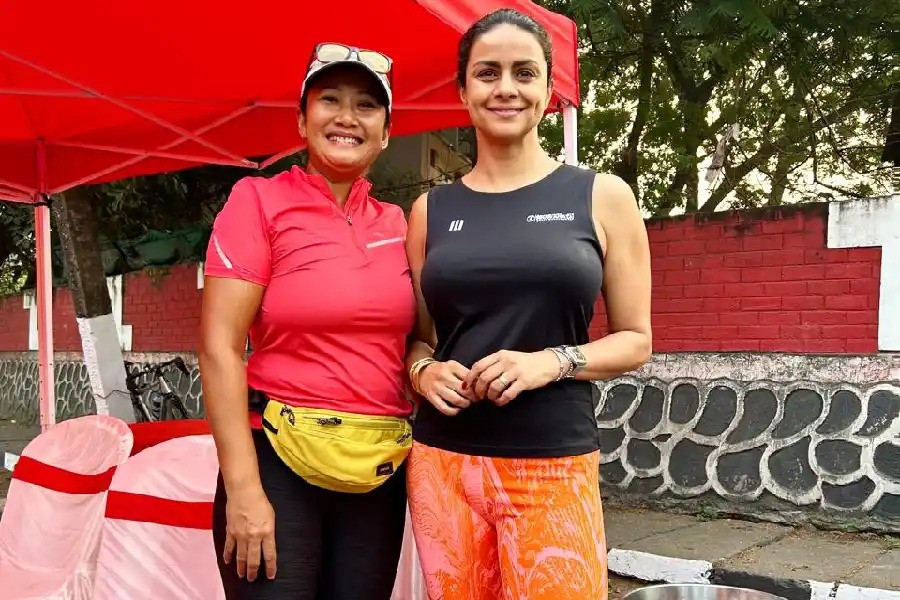
Nazneen with Bollywood actor Gul Panag

“I have been able to help my children stay mentally stable. I also advise many other players to stay strong. The course teaches how to deal with situations after losing a game or how to be determined. For instance, I have to decide the moment I enter the court that I have to win this game anyway, no matter who the competitor is. It helps me to keep up with the expectations of the audience,” she explained.

Of late Nazneen has been promoting a relatively new sport in Assam – pickleball.

“Pickleball is a fast-spreading sport in Assam. It is spreading rapidly in the US as well as in Asian countries. It is spreading in India as well. This game is simple and convenient. It has no hard and fast rules. It is a mixture of tennis, table tennis, badminton, etc, and can be played by people of all ages. It is a game where a polymer ball is played with a small paddle made of fiber, micro-fiber, and wood.  We have brought this game to Assam. We recently demonstrated pickleball in several schools and IAS Colony and got a very good response.”

Pickleball has been launched in 23 states of India. In NCR, Delhi NCR, and Western India, new coaches are coming up and about 10,000 players have registered. An institute named Pickleball World Ranking was launched recently in Dubai.

source: http://www.awazthevoice.in / Awaz, The Voice / Home> Story / by Munni Begum, Guwahati / August 06th, 2024

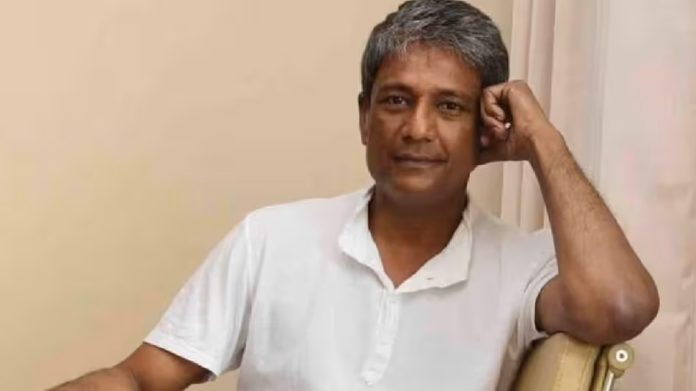
Actor Adil Hussain Honoured with 2024 Anandaram Dhekial Phukan Award

Guwahati, ASSAM:

Acclaimed actor Adil Hussain

Guwahati :

Acclaimed actor Adil Hussain, known for his significant contributions to Indian and international cinema, has been awarded the prestigious Anandaram Dhekial Phukan Award for 2024. The award recognises Hussain’s achievements in the film industry and his continued efforts to bring Assamese culture and stories to a global audience, reported India Today.

Expressing his gratitude, Hussain took to social media, writing, “Thank you so much for choosing me for the Anandaram Dhekial Phukan Award. I am honoured and humbled.” The actor, who hails from Goalpara in Assam, has long been celebrated for his versatile performances in independent films and his work in international cinema.

The Anandaram Dhekial Phukan Award is named after one of Assam’s literary pioneers, who played a vital role in promoting the Assamese language during the Orunodoi era. The award commemorates Phukan’s contributions to Assamese literature and culture, and it is given to individuals who have made outstanding contributions in their respective fields.

Hussain’s recognition with this award highlights his deep connection to his Assamese roots and his dedication to representing his culture on a global stage.

source: http://www.radiancenews.com / Radiance News / Home> Pride of the Nation> Awards> Latest News / by Radiance News Bureau / September 01st, 2024

Assam highway tomb of freedom fighter Baga Maulvi is shrine of harmony

Marai Village, Siphajr (Darang District) , ASSAM :

Inside the shrine of Baga Baba

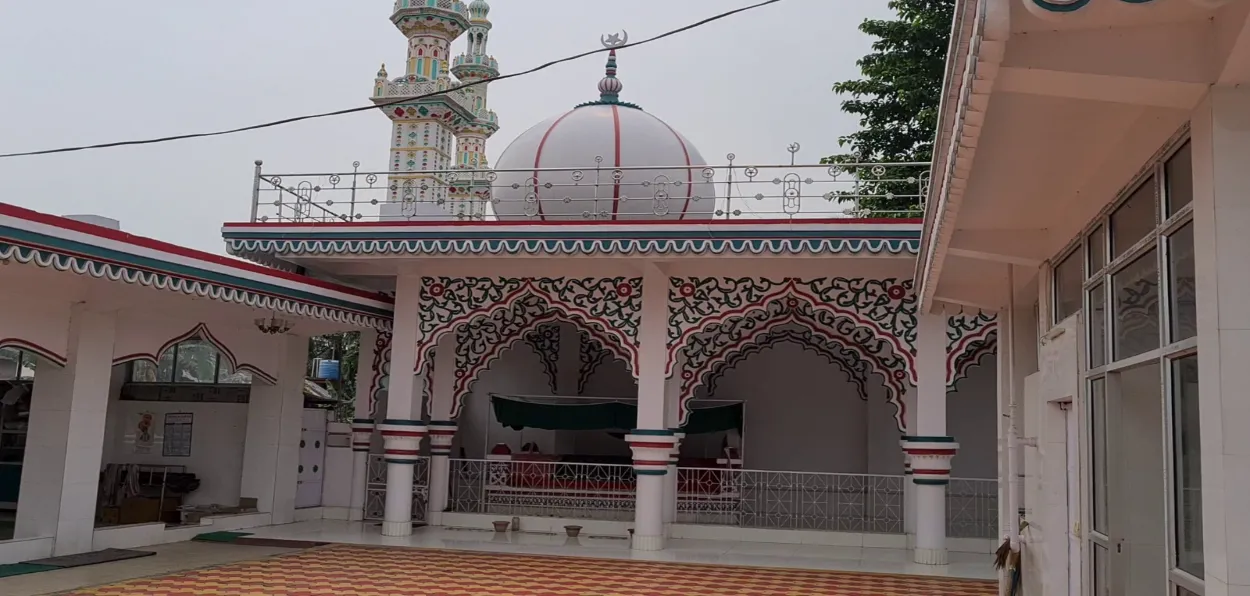
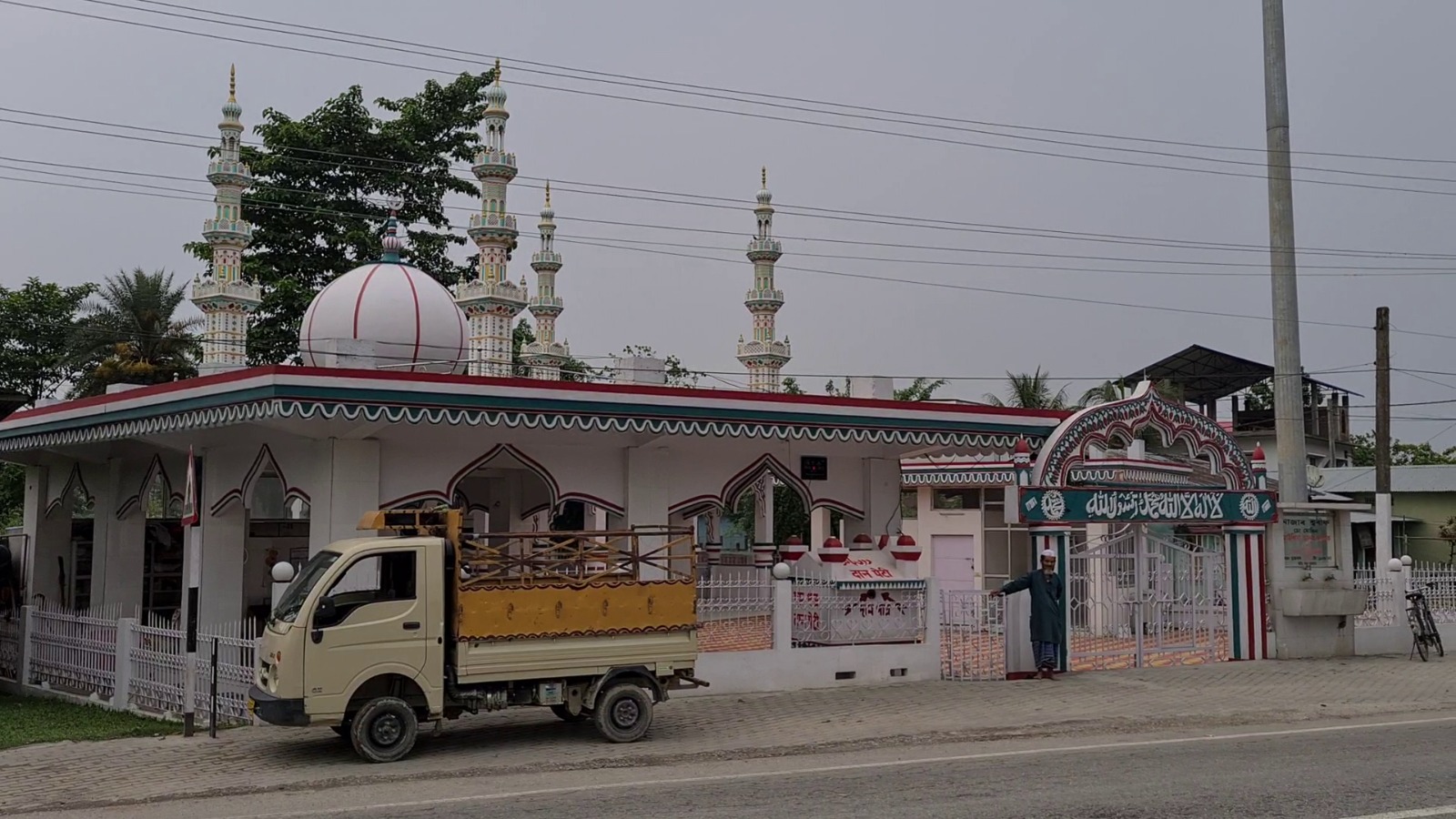
As National Highway-15 traverses through the village Marai of the Darang district in northern Assam, travellers see a shrine that commands the devotion and reverence of both Hindus and Muslims.

This is the shrine of Baba Baga which is visited by people of all faiths, and is especially popular among travelers who have taken the NH-15. Trucks and buses that come from far and wide stop here to offer prayers and make donations. All passenger buses and goods trucks stop here as the shrine management has kept drinking water available.

Baga Baba was born as Abdul Khaleque. He came to Assam in 1916 from the then Sylhet district (now in Bangladesh). Initially, he lived in Gog, Satsali, and Badalguri and finally settled down in Marai village of Sipajhar in 1919.

The shrine of Baga Baba in village Marai 

From there, he launched his mission of spreading Islam in the greater Darang district.  The Sufi cleric also joined the Indian freedom movement; he was also jailed.

Baga Baba died in 1933 and the locals raised a mausoleum (mazar) on his grave.

Speaking with Awaz-The Voice, Hafiz Ali, secretary of Baga Baba Mazar, said: “The cleric lit the torch of Islam here. Along with preaching the religion, he also spread the message of peace, harmony, and brotherhood. Then he sent Maulana Didaruddin Saheb to be educated as a maulana. Everybody believes Baga Baba to be an Auliya (master of some divine power) of Allah. Hindus and Muslims alike come here and pray.

“At present, people from all over Assam and India who travel through this highway donate at this mazar. Today the village has nine mosques. The inflow of people and pilgrims has increased over the years. Hindus and Muslims have equally contributed to it.

Drinking water facility at the shrine for travellers

The construction work of the mazar was initiated by former president Jiban Baruah. There are still many non-Muslims, such as Bhumidhar Saharia, Himanshu Kalita, and others, in the management committee of the Mazar,” he said.

The shrine hosts Milad sharif every Thursday of the week. In addition, a Urs is held every year on 12 of Magh (late January), the death anniversary of Baga Baba. People from different parts of India participate in the Urs. Although the Baga Baba Mazar is located on the northern side of NH 15, there is also a premises of the Mazar on the southern side of the road.

It is worth mentioning that the Baga Baba Mazar has played a significant role in maintaining Hindu-Muslim unity and harmony in the entire Darang district as well as in the greater Marai Bijulibari area.

source: http://www.awazthevoice.in / Awaz, The Voice / Home> Story / by Ariful Islam, Sipajhar / June 25th, 2024