Tag Archives: Begum Rokeya – India’s First Bengali Muslim Feminist

I became a scientist because of Fatima Sheikh

UTTAR PRADESH :

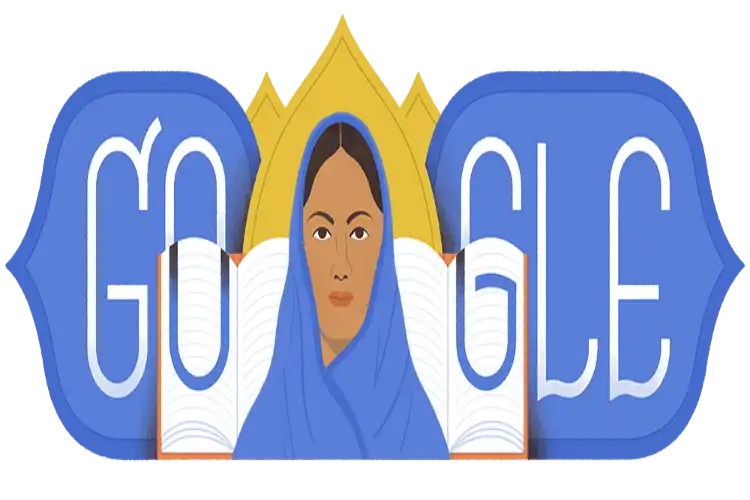
Doodle of Fatima Sheikh issued by Google

It was a cold day in February 2016. A woman from a small town of Uttar Pradesh received her Ph.D. at the 63rd Annual Convocation of Aligarh Muslim University (AMU), Aligarh. She was the first from her clan to have taken admission to AMU in 2003. Her parents never attended college; her four brothers took up family businesses at a younger age. The woman in the discussion is me. I am Mahino Fatima, a Muslim girl from a backward caste who became a scientist against all odds.

pix: heritagetimes.in / Dr. Mahino Fatima

Friends, relatives, and peers celebrated my becoming a scientist as a consequence of my hard work and perseverance. In my heart of hearts, I knew this day has not come only because of me; I was grateful for the privilege of education that I was born with.

Most importantly, I should not forget Fatima Sheikh. If not for her, I would never have become a scientist. Lakhs of women who are successful because of education would have remained illiterate but for Fatima Sheikh’s pioneering work.

How can I, a woman, forget that my foremothers were not allowed to learn how to write? How can I, a backward caste woman, forget that my forefathers were not allowed to receive an education? Today, when we look at our curriculum, we find that women scientists, economists, philosophers, and intellectuals are negligible in comparison to men. Famous philosopher, Jaques Derrida, once remarked that no woman was a philosopher. His observation was true, but he did not delve into the reason. How can a woman become a philosopher when men for centuries controlled the development of her intellectual capacities in the name of culture? 

In our society, men would not let women learn the art of writing for the fear that if literate these women would communicate to ‘lovers’ through letters. Bibi Ashraf, a late 19th-century educationist, recalled how she was not allowed to learn reading and writing like male members of her family. She secretly learned to write. The secret came out when during the revolt of 1857; she had to write a letter to her father and uncle. Instead of receiving accolades, she was abhorred by men in her family. Her uncle was furious and made her take an oath that she would never write a letter to a man. Similar was the story of Rassundari Devi, who secretly learned writing by stealing books from her son. How do we expect women scientists in such a society? Still, a large section of our society would not let women study more than what is needed in the ‘marriage market’.

In this society, Fatima Sheikh, along with Savitribai Phule, started a school for girls in 1848. Yes, 1848. 26 years before Sheikh Abdullah, who later founded a women’s college at Aligarh, and 32 years before Begum Rukaiya Sakhawat, doyen of women education, were born, Fatima had started a girls’ school and taught herself. Today, that small classroom of 9 girls has prepared lakhs of educated women. 

Today women are asking for gender parity in opportunities and pay scales. Thanks to Fatima, women today are educated to understand their worth and assert their rights. 

Fatima was a pioneer; she was followed by Begum Rukaiya, Begum Wahid, Muhammadi Begum. A revolution starts with an idea. Fatima’s was the idea that put women of India in general and Muslim women in particular, on the march to empowerment through education.

Today, I thank Fatima for making me a scientist. Nobody knows how many bright women before 1848 had been deprived of education and were not allowed to dream of becoming a scientist. But, we surely know that after 1848, women have slowly entered different fields through education and are today competing with men to have their rightful place in the books, laboratories, and society.  

(Author is a neurobiologist with her major research on depression and Alzheimer’s)

source: http://www.awazthevoice.in / Awaz, The Voice / Home> Stories / by Mahino Fatima / Saquib Salim / January 09th, 2022
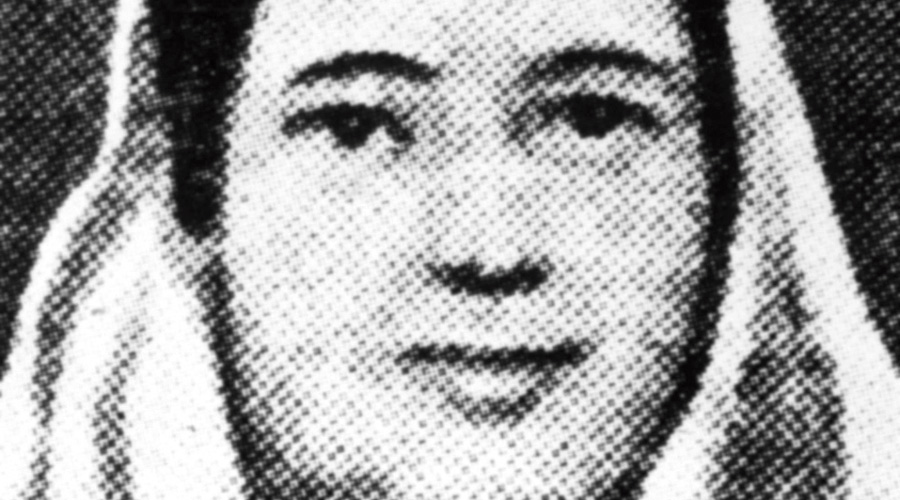
Muslim Women, Waqf, and the Power of Charitable Legacy: A Forgotten Force in the Shadows of Reform

INDIA :

A New Law, A Timeless Legacy

The Waqf Amendment Act 2025, recently passed by the Government of India, has stirred a wave of public discourse. Promising to regulate and modernize the administration of waqfproperties across the country, the law is being introduced as a means to improve transparency and benefit marginalized communities, especially Muslim women.

However, in this swirl of policy language, governance reform, and bureaucratic oversight, we must not forget a foundational truth: Muslim women have always been central to the waqftradition—not as passive recipients, but as active architects of community transformation.

Waqf as a Tool of Empowerment—Before the State Claimed It

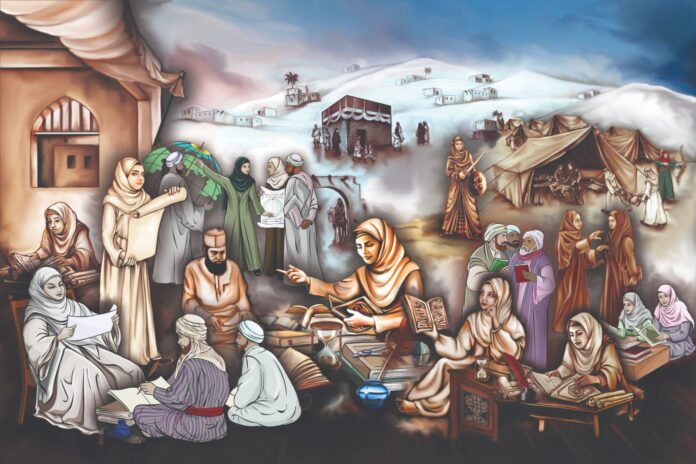
Before governments created waqf boards, before institutional frameworks shaped their regulation, and long before women were officially recognized in policy narratives, Muslim women in India were shaping societies through charitable endowments.

They:

• Founded schools and madrasas for girls and boys alike

• Donated lands and properties for the construction of mosques, shrines, and Sufi lodges

• Built hospitals, water fountains, and orphanages

• Funded scholarships, welfare kitchens, and even public rest-houses for travelers.

This was not mere charity—it was strategic social intervention, embedded in Islamic ethics and guided by a vision of communal upliftment.

👑 Queens of Waqf: A Glimpse into Heroines of Charity and Community Leadership

🏛️ Razia Sultana (1205–1240, Delhi)

India’s only woman Sultan, Razia established educational and civic institutions supported by state waqf. Her leadership emphasized justice, learning, and infrastructure.

🏛️ Jahanara Begum (1614–1681, Delhi)

Daughter of Shah Jahan, she created waqf endowments for Sufi shrines, caravanserais, and public gardens. Her waqf documents are among the earliest female-authored ones preserved in India.

🏛️ Roshanara Begum (1617–1671, Delhi)

Sister to Jahanara, she built Roshanara Garden and a Sufi lodge. She maintained religious institutions through royal waqf.

🏛️ Sultan Jahan Begum (1858–1930, Bhopal)

The last Begum of Bhopal, she modernized education, built hospitals, supported madrasas, and legally registered many waqf properties to support her reforms.

🏛️ Begum Hazrat Mahal (1820–1879, Lucknow)

Regent of Awadh, she protected the city’s religious institutions and supported waqf-based welfare during the 1857 Rebellion.

🏛️ Khair-un-Nissa Begum (18th c., Hyderabad)

Established Khairtabad Mosque and other public works through her waqf. One of the early noblewomen to invest in education and water supply systems.

🏛️ Begum Rokeya Sakhawat Hossain (1880–1932, Kolkata)

A visionary educationist, she established the Sakhawat Memorial Girls’ School using her own resources and informal waqf practices. A true reformer of women’s rights.

🏛️ Begum Sughra Humayun Mirza (1884–1958, Hyderabad)

Urdu novelist and educationist who established the Safdariya Girls School through personal endowment. One of India’s earliest women school founders.

🏛️ Princess Durru Shehvar (1914–2006, Hyderabad)

Ottoman princess and daughter-in-law of the Nizam. Founded the Durru Shehvar Hospital, a major maternity and child-care waqf.

🏛️ Princess Niloufer (1916–1989, Hyderabad)

Ottoman royal by birth and philanthropist. Established Niloufer Hospital for women and children in response to maternal health tragedies.

🏛️ Dr. Uzma Naheed (Contemporary, Mumbai)

Thinker and leader who founded the IQRA International Women’s Alliance. Created vocational and educational centers for women through charitable trusts and waqf-like models.

🏛️ Begum Abadi Bano (Bi Amma) (1850–1924)

Mother of freedom fighters Maulana Mohammad Ali and Shaukat Ali, she supported the Khilafat movement and women’s education through charity and informal waqf support.

🏛️ Begum Qudsia Aizaz Rasul (1909–2001)

Only Muslim woman member of the Indian Constituent Assembly. Promoted educational waqfs and women’s legal rights in independent India.

🏛️ Hamida Habibullah (1916–2018, Lucknow)

Educator, politician, and philanthropist who helped establish Talimgah-e-Niswan, a leading girls’ school, partially supported by endowments and community waqf models.

🏛️ Tayyaba Begum (early 1900s, Hyderabad)

Co-founder of Anjuman-e-Khawateen-e-Deccan, she organized women’s welfare through educational trusts and neighborhood charities alongside Sughra Humayun Mirza.

These women are not anomalies in history. They are evidence of a forgotten mainstream—a rich legacy of Muslim women using waqf, education, and philanthropy to shape the public sphere.

What the Law Misses

The 2025 Amendment claims to create better access for women and transparency in waqfgovernance. Yet, many community members raise concerns about:

• Increased government control over waqf boards

• Reduced autonomy of local Muslim stakeholders

• Weak representation of women in decision-making roles

If reform is truly meant to benefit women, it must not just focus on current access. It must honor and preserve the legacy of those women who built the system through vision, sacrifice, and faith.

Reclaiming the Narrative

As students of history and as researchers in the contributions of Muslim women across disciplines—al-Muhaddithat, scholars, judges, educators, warriors, nurses, and philanthropists—we find it essential to reclaim and highlight this tradition in the current discourse.

This document delves into the intersections of gender, history, law, and social development, spotlighting women’s roles in charitable work and community building through waqf and related institutions.

Our goal is not just to preserve history, but to activate it: to inspire current and future generations to recognize the power of service, leadership, and waqf in reshaping communities. The struggle for recognition today stands on the shoulders of those who built with purpose and gave with dignity.

Conclusion: From Past to Future

Muslim women in India have been pioneers of welfare through the waqf system for centuries. Their work wasn’t performed for applause or public acclaim. It was done with quiet resolve, deep faith, and a vision for lasting impact.

As new policies reshape the landscape of waqf, let us not merely react—we must respond with wisdom, rooted in history and hope. Let the legacy of women like Razia, Jahanara, Durru Shehvar, Niloufer, Sughra, and Uzma guide us in reimagining waqf as a tool not only for preservation—but for progressive, inclusive development.


The author is a Social Worker, Student of History and Educator

source: http://www.muslimmirror.com / Muslim Mirror / Home> Education> Positive Story> Waqf> Women / by M A Lateef Atear / June 04th, 2025

Builders of Bengal: Begum Rokeya

Pairaband Village (Rangpur), BENGAL (British India):

A PAST WE MUST PRESERVE | She was a pioneer of women’s education and feminist writing who started the first school for education of Muslim girls in Calcutta

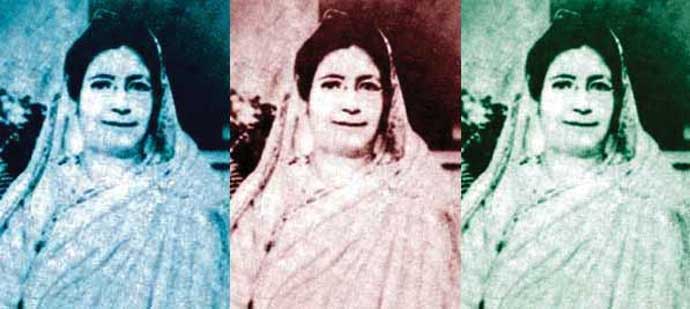
Begum Rokeya, 1880-1932 / File picture

Rokeya Sakhawat Hossain, popularly known as Begum Rokeya, was a pioneer of women’s education and feminist writing who started the first school for education of Muslim girls in Calcutta. She considered education to be crucial to women’s emancipation.

She was born in 1880 at Pairaband village in Rangpur, now in Bangladesh. Her elder sister Karimunnesa, who was a poet who wrote in Bengali, was a great influence on her life. Rokeya at 18 was married to Khan Bahadur Sakhawat Hussain, who was 38 and the deputy magistrate of Bhagalpur.

A liberal man who spoke Urdu, he encouraged his young wife to continue her studies in Bengali and English and to write.

Rokeya chose to principally write in Bengali and her works uphold the equality of men and women. Matichur (1904, 1922) is a two-volume collection of her essays on her thoughts about women and society, Padmarag (1924) is about the oppression of Bengali wives and Abarodhbasini (1931) is a robust critique of the severe forms of purdah for women.

Ten years before the American novelist Charlotte P. Gilman published Herland, Begum Rokeya wrote her feminist utopia Sultana’s Dream in 1905. Written in English, it is a novella set in Ladyland, ruled by women.

A few months after her husband’s death in 1909, Begum Rokeya started Sakhawat Memorial Girls’ High School in Bhagalpur, with five students. She moved the school to Calcutta in 1911, where it is still located, but is run by the government.

In 1916, Begum Rokeya founded Anjuman-e-Khawateen-e-Islam (Islamic Women’s Association) to hold discussions on women, education and progress. She advocated change in Muslim women’s lives and spoke up against rigidity and conservatism.

She went from door to door to ask Muslim families to send their daughters to school. She was engaged till the very end of her life in ideas and activities that would lead to the empowerment of women. She passed away on December 9, 1932, shortly after presiding over a session of the Indian Women’s Conference.

Bangladesh observes Rokeya Day on her death anniversary every year.

source: http://www.telegraphindia.com / The Telegraph Online / Home> Culture> People / by Chandrima S. Bhattacharya / March 28th, 2021

Watch: 5 Indian Muslim Feminist Writers You Should Know About

INDIA :

Today, we remember these 5 powerful Indian Muslim feminist writers, who wrote boldly of issues that were considered taboo, shattering gender roles and stereotypes in their fierce writing and the politics they advocated for.

Watch this video detailing the life and times of luminaries like Ismat Chughtai, Rashid Jahan, Begum Rokeya, Wajida Tabassum and Qurratulain Hyder. #IndianWomenInHistory

source: http://www.youtube.com /

source: http://www.feminisminindia.com / Feminism In India (FII) / Home> History / by FII Team / November 09th, 2017

How Begum Rokeya — India’s first Bengali Muslim feminist — dared women to dream

BENGAL :

Rokeya Begum was an educationist, writer, social activist and effectively, India's first Bengali Islamist-feminist.
Rokeya Begum was an educationist, writer, social activist and effectively, India’s first Bengali Islamist-feminist.

As a Muslim reformist, her activism was neither half-baked nor exclusionist, yet little is known of her meaningful contributions to society.

Sometimes when wars are long and without any imminent hope of triumph or an end, it’s best to count on the smaller victories. Such as the taking down of Omprakash Mishra’s misogynist cringe-pop video or Uber apologising for their presumptuous and sexist offer on “Wife Appreciation Day” or Hulu’s The Handmaid’s Tale bagging the Emmy for “Best Drama Series” leaving behind popular shows like Westworldand Stranger Things.

The Handmaid’s Tale is to feminists what the BJP manifesto is to Arnab Goswami. Though Margaret Atwood’s evergreen dystopian thriller published in 1985 was one of its kind, it wasn’t the first. Eighty years before that, Begum Rokeya Sakhawat Hossain published her feminist utopian fantasy Sultana’s Dream, a novella investigating the ironies of a technologically advanced, gender-reversed India (one where men were confined to the “zenana” — the part of a house for the seclusion of women, or as Rokeya terms it, the “mardana” — imagined in the dreams of a woman named Sultana.

Born in 1880 to a wealthy Zamindar family in Pairabondh (present Bangladesh), Rokeya Begum was an educationist, writer, social activist and effectively, India’s first Bengali Islamist-feminist. While Savitri Phule and Pandita Rama Bai re-emerged through the obliterating clouds of India’s redacted history-telling, the narrative on Rokeya’s work remains shrouded, at least, in India.

Her father, an orthodox Muslim, persisted that the women maintained purdah and allowed them to be educated in Arabic (only) to enable them to read the Quran. Rokeya and her sister Karimunnesa, learned Bengali and English at the behest of their supportive brothers, who educated them on the sly. Perhaps this phase of her own life contributed amply to her tenacious belief that the lives of Muslim women could not be ameliorated without proper education. Added to that was her own sister who remained a key inspiration for Rokeya’s writings and her social work.

Karimunnesa, a seasoned poet, had been married off before the age of 15, putting what might have been a lucrative future to an abrupt end. This had further consolidated Rokeya’s faith in educational and individual rights for women — chiefly Muslim women, who, in that era, lived like showpieces in a glass casket but with an iron curtain.

With this line of thought and the support of her husband (Sakhawat Hossain, whom she was married to at the age of 16 and who died in 1909) and the money he had set aside, Rokeya went on to establish Sakhawat Girls Memorial High School, five months after his demise.

She started the school in Bhagalpur (a majority-Urdu speaking area in erstwhile East Bengal) with merely five students and was forced to shift the school to Kolkata in 1911 due to property feuds with her husband’s family. It remains one of the city’s most popular schools for girls and is now run by the state government of West Bengal.

Today, Rokeya's memory is as fleeting — even for her benefactors — as Sultana's dream. Photo: http://nationalwomansparty.org
Today, Rokeya’s memory is as fleeting — even for her benefactors — as Sultana’s dream. Photo: http://nationalwomansparty.org

In 1916, she founded the Anjuman-e-Khawateen-e-Islam (Islamic Women’s Association), which was her other organisational contribution to Bengali Muslim women. Through this organisation she offered financial and educational support to downtrodden Muslim women, over and above raising public opinion regarding the issue of Muslim women’s rights. That Rokeya was way ahead of her times finds semblance in the curricula of the school she established, which included physical and vocational training in an attempt to arm women with financial independence. She coined the term “manoshik dashhotto” or mental slavery, referring to the absence of individuality that pervaded the entire gamut of Muslim women and attributed it as the root cause for their subjugation. This rings true even today.

A century ago, Rokeya approached her adversaries with a wit and logic that is hard to find in today’s generation (which appears to be self-deprecatingly volatile). Insightfully, Rokeya tapped into the quintessential Muslim male ego and inversed it to men’s disadvantage, instead of directly antagonising them with liberal arguments.

She writes, “The Muslim society is paying a greater price for the lack of any system of education for their women. I have been informed by a reliable source that some educated Muslim youths of well-to-do families are setting conditions that if they can’t find educated Muslim women, they will not marry. They even threaten to become Christians and marry someone from that community if they fail to find educated Muslim women.”

Critics might question the ethic behind this approach, but the truth is, even now, “the threat to minority identity” continues to be the most veritable impediment to the realisation of Muslim women’s rights.

Keeping this in mind and the socio-politico environment of that era, perhaps by playing on their fears was not only ingenious but also the only way out.

In 1926, when she was invited to chair the Bengal Women’s Educational Conference, she said, “Although I am grateful to you for the respect that you have expressed towards me by inviting me to preside over the conference, I am forced to say that you have not made the right choice. I have been locked up in the socially oppressive iron casket of ‘porda’ for all my life. I have not been able to mix very well with people – as a matter of fact, I do not even know what is expected of a chairperson. I do not know if one is supposed to laugh, or to cry.”

Having lost her husband early and her two children who died at infancy, Begum Rokeya was not just subjected to scathing criticisms for her views but also faced unforgiving social exclusion. Despite the variegated hindrances she faced, in lieu of her gender, her community and the very fabric of the milieu that she had set out to change, she worked tirelessly and fearlessly to carve a way out for many Bengali Muslim women like myself.

Begum Rokeya died on December 9, 1932, and up until 11pm on December 8, 1932, she was working on an unfinished article titled, “Narir Odhikar“, which translates to women’s rights. The over-arching principle that governed her literary and social work was feminism and through it she heralded the discourse into Bengal. As a Muslim reformist from that era, Rokeya’s activism was neither half-baked nor exclusionist as the classist and sexist Aligarh movement led by Syed Ahmed Khan, yet little is known of her meaningful contributions to society. Today, Rokeya’s memory is as fleeting — even for her benefactors — as Sultana’s dream.

source: http://www.dailyo.in / Daily O / Home> Variety / by Suman Quazi / September 21st, 2017