NEW DELHI :
New Delhi :
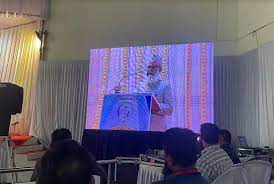
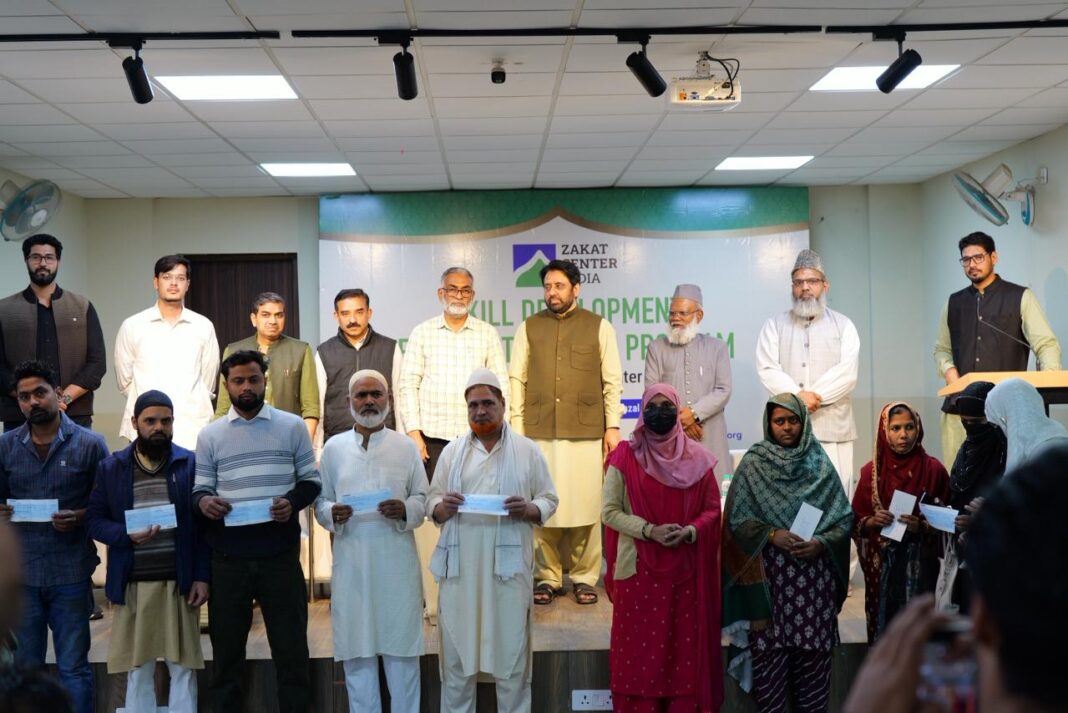
Zakat Center India (ZCI) disbursed Rs. 6 lakh among 14 deserving beneficiaries in Delhi during a Skill Development Fund Distribution Programme held at the Scholar School Conference Hall, Jamia Nagar, for the financial year 2025–26.
The programme was attended by several prominent dignitaries, including Okhla MLA Amanatullah Khan, who graced the event as chief guest. Representatives from social, religious, and community organizations were also present.
ZCI, a pan India non-profit organization dedicated to poverty alleviation and social welfare, focuses on the transparent and efficient utilization of Zakat. The initiative aims to help beneficiaries establish micro-businesses and sustainable livelihoods, enabling them to transition from Zakat recipients to self-reliant earners within a short period.
Addressing the gathering, MLA Amanatullah Khan appreciated ZCI’s organized and institutional approach to Zakat management and assured his continued support for such welfare initiatives. He noted that structured and transparent Zakat systems can significantly contribute to social upliftment and economic justice.
In his keynote address, ZCI Chairman and Jamaat-e-Islami Hind (JIH) Vice President S. Ameenul Hasan emphasized the importance of channeling Zakat into productive sectors such as livelihood generation, education, and skill development. He said that when managed strategically, Zakat becomes a powerful tool for long-term economic empowerment rather than temporary relief.
JIH Secretary Dr. Mohiuddin Ghazi highlighted Qur’anic guidance on economic justice and social responsibility, stressing Islam’s emphasis on equitable distribution of wealth. Human Welfare Foundation (HWF) CEO P.K. Noufal acknowledged the collaborative spirit behind the programme.
Delivering the welcome address, ZCI’s National Operations Director Shoaib Islam underscored the need for a technology-driven, transparent, and impact-oriented Zakat ecosystem that ensures scalability and lasting socio-economic transformation.
“This initiative reflects ZCI’s commitment to transforming Zakat from seasonal charity into a structured, dignity-based economic intervention,” he said.
Rs. 6 Lakh Distributed to 14 Beneficiaries
Providing details, Shoaib Islam said that 14 beneficiaries including six women, received financial assistance totalling Rs. 6 lakh. According to him, most beneficiaries were given Rs. 50,000 each while some received Rs. 20,000, and others were granted up to Rs. 60,000 based on their specific business needs. The funds are intended to help establish or strengthen micro-enterprises and promote financial stability, he added.
When asked about the nature of businesses supported, Shoaib Islam said the ventures include battery rickshaw services, electrical shops, tailoring units, grocery stores, resin art businesses, painting workshops, and other self-employment initiatives.
“The objective is not merely financial relief but sustainable livelihood creation, enabling families to move from dependency to self-reliance,” the ZCI official said.
He confirmed that all beneficiaries are residents of Delhi, including areas such as Kanchankunj, Jamia Nagar, Seelampur, and Old Delhi.
Thorough Scrutiny Before Assistance
Responding to a query about the selection and identification of deserving persons, the ZCI official said ZCI follows a rigorous and transparent mechanism. Beneficiaries are identified through social media outreach, public advertisements, recommendations from local Unit Advisory Committees, and coordination with local NGOs. Applications are verified through field visits and background checks are done before final approval. Once assistance is provided, beneficiaries typically begin earning daily income and, in most cases, achieve self-sufficiency within months, he added.
Awarded Shariah Compliance Certificate
The ZCI Operations Director also shared ZCI’s Shariah Audit Certificate. The Shariah Council of Jamaat-e-Islami Hind awarded ZCI the Shariah Compliance Certificate for the financial year 2024–25. The certificate, signed by Shariah Council President Dr. M. Iqbal Masood Nadvi and Secretary Dr. Mohammad Raziul Islam Nadvi, confirms that ZCI’s operations and accounts comply with Shariah principles. The certification remains valid until the next Shariah audit for the financial year 2025–26.
Clarifying common doubts and misconceptions prevalent in society regarding transparency and Shariah compliance of such institutions, Shoaib Islam stated that ZCI conducts regular audits and presents its financial statements and balances in its annual report before the public.
He said this practice shows a high level of transparency and strict adherence to Shariah principles, further strengthening ZCI’s credibility and reaffirming its commitment to accountability and Shariah-based ethical operations.
From 5 Pilot Units to 37 Units Across 11 States
The ZCI official further stated that since its inception in 2022, ZCI has expanded from five pilot units to 37 units across 11 states over the past four years, covering both North and South India, supported by a network of over 600 dedicated volunteers. He described the growth as evidence of increasing community trust and the effectiveness of a collective, transparent, and Shariah-compliant Zakat management system.
Across India, ZCI, with the generous support of its donors, has served over 3,525 beneficiaries in 2025. ZCI has reached numerous distressed families, with nearly 60 percent of Zakat funds allocated to livelihood support and 20 percent to education. The organization prioritizes productive, empowerment-focused spending over purely consumptive relief.
“This expansion reflects the trust of the community and the dedicated efforts of our teams and partners,” he added.
Comprehensive Welfare Model
According to Shoaib, ZCI operates under three major categories: Livelihood Projects, Education Schemes, and Mawasat (Food Ration & Pension Schemes).
Under Livelihood Projects, ZCI supports the poor in establishing businesses, shops, carts, cattle farming units, and other self-employment ventures to generate sustainable income.
Under Education Schemes, the Centre provides scholarships, fee assistance, mentoring, and training to deserving students from economically weaker sections.
Under Mawasat (Food Ration & Pension Schemes), ZCI offers monthly support to widows, persons with disabilities, elderly women, and orphans in the form of rations, food supplies, pensions, and medical assistance.
The organization currently supports nearly 5,000 needy individuals through its livelihood initiatives. ZCI typically disburses amounts ranging from Rs. 20,000 to Rs. 50,000, with nearly all collected Zakat distributed among beneficiaries and only minimal funds used for essential administrative expenses.
ZCI’s core objectives include mobilizing and managing Zakat and Ushr in accordance with Qur’anic guidance, promoting awareness about the social and spiritual benefits of organized Zakat, providing livelihood and welfare support, establishing institutions for Zakat recipients, and conducting research to strengthen and modernize Zakat management systems.
source: http://www.indiatomorrow.net / India Tomorrow / Home> Economy / by India Tomorrow / February 20th, 2026