NEW DELHI :
New Delhi :
The Al-Hikmah Foundation, a non-governmental organisation working in the fields of education, social welfare and community development, concluded its 34th annual convention and national conference at the India Islamic Cultural Centre, Lodhi Road, New Delhi, with a strong emphasis on the role of young people in nation-building and the responsibility of civil society organisations in shaping an inclusive and progressive society.
The conference, titled “Ambition and Responsibility: Role of Youth in Nation Building,” brought together prominent national figures, social activists, educationists, political leaders, Islamic scholars and young speakers to deliberate on the aspirations, challenges and responsibilities of the younger generation.
The programme began with the recitation of the Holy Quran, followed by an address by Al-Hikmah Foundation Chairman Dr Ziauddin Ahmed, who presented an overview of the organisation’s objectives, vision and ongoing activities. He highlighted the Foundation’s commitment to educational advancement, social welfare and the empowerment of underprivileged sections of society.
Former Union Cabinet Minister and senior Congress leader Salman Khurshid attended the conference as the chief guest, while renowned thinker, social reformer and founder of the Interfaith Harmony Foundation, Khwaja Iftikhar Ahmed, presided over the gathering.
A major highlight of the convention was the Foundation’s presentation of its welfare initiatives. Sewing machines were distributed among dozens of women in need, while scholarship cheques were awarded to deserving students. The initiative reflected the organisation’s continued efforts to promote self-reliance among women and support students in pursuing their education.
The Foundation has been conducting various educational and welfare programmes throughout the year, including sewing centres, libraries and coaching centres. Students who demonstrate outstanding performance in its educational and welfare activities are recognised through scholarships, incentives and awards. These initiatives form an important part of the organisation’s efforts to strengthen educational opportunities and improve the socio-economic conditions of disadvantaged communities.
Addressing the gathering, motivational speaker and founder-president of ALIF Academy, Sameer Ahmed Siddiqui, spoke about the emerging challenges associated with Artificial Intelligence (AI) and the increasing dependence of young people on technology. He cautioned the younger generation against becoming overly reliant on artificial intelligence and falling into new traps created by technological developments and unhealthy competition.
Referring to the concept of the “Moloch” trap, which symbolises destructive and blind competition, he advised young people not to allow themselves to become part of a race that undermines their independent thinking and personal development. He urged them to remain alert, work hard, continuously improve their abilities and adapt themselves to changing circumstances.
He emphasised that the effective use of the heart, mind and intuition would help young people maintain their individuality and remain ahead in an increasingly competitive environment. He also stressed the importance of understanding technological changes without allowing technology to control their lives and decisions
Former Director General of Police (DGP) from Madhya Pradesh, social activist and Gandhian thinker Anuradha Shankar appreciated the theme of the conference and commended the vision and initiatives of the Foundation’s chairman. She observed that meaningful social transformation was possible only through sustained commitment to selfless service and efforts aimed at the welfare of others.
She underlined the importance of brotherhood, religious tolerance, social harmony and inclusiveness in building an ideal society. According to her, the focus of national development should not remain confined to economic growth alone; equal attention must be given to the direction in which society is moving. She called for nurturing a cooperative generation rather than one driven solely by materialistic ambitions.
Vice President of Jamaat-e-Islami and noted Islamic scholar S. Aminul Hasan also extended his best wishes to the Foundation for organising the conference. Describing its theme as particularly relevant to the present times, he delivered an address focusing on the importance of self-awareness, ambition, purpose and responsibility among young people
He urged the younger generation to dream big and avoid placing unnecessary limitations on their aspirations. He advised them against leading lives without purpose or meaning and encouraged them to move beyond their comfort zones, contribute to charitable activities and remain conscious of their responsibilities towards society.
He also emphasised the importance of keeping the afterlife in perspective while pursuing worldly achievements. He said that genuine success should be earned through one’s own efforts, commitment and determination rather than depending on the influence or achievements of others. According to him, young people who develop a clear sense of purpose and fulfil their responsibilities will naturally move towards success.
Presenting the chief guest’s address, Salman Khurshid appreciated the work being undertaken by the Al-Hikmah Foundation, particularly in areas where government initiatives alone are unable to meet the needs of society.
He observed that although governments undertake major programmes in education and healthcare, significant gaps often remain in the delivery of services to people. Voluntary and charitable organisations such as the Al-Hikmah Foundation play an important role in bridging these gaps through their grassroots initiatives and sustained engagement with communities
Khurshid spoke highly of the Foundation’s mission and its contribution to society. Describing the conference as a significant success, he said that the discussions and ideas shared by the distinguished participants would acquire real meaning if they were translated into their everyday lives. He suggested that the true success of such gatherings lay not merely in speeches and deliberations but in putting the principles discussed into practice.
Presiding over the conference, Khwaja Iftikhar Ahmed summarised the principal observations made by the speakers and appreciated their contributions to the discussion. In his address, he particularly focused on the responsibilities of parents in nurturing the younger generation.
He urged parents to make an effort to understand their children’s perspectives instead of limiting their role to giving advice and instructions. Children, he said, should be provided with an environment in which they can freely express themselves, develop their abilities and grow without being subjected to unnecessary pressure.
He also called for greater emphasis on practising religious values rather than merely talking about religion. Stressing the need for collective responsibility, he advocated moving away from an individualistic approach centred on “I” towards a collective spirit of “We”. He encouraged people to work together, involve fellow citizens in constructive activities and pursue collective progress in a manner that promotes peace, harmony and social order.
The conference also provided a platform to young speakers Abdullah Tariq and Ramiz Abdul Wadood, who impressed the audience with the content of their presentations and their effective delivery. Both speakers discussed, in detail, the ways in which young people could contribute actively to nation-building and national development.
Drawing inspiration from Islamic history and the teachings of Prophet Muhammad (PBUH), they outlined the qualities and practical steps required to build a virtuous, responsible and prosperous society. Their presentations highlighted the importance of moral values, commitment, leadership and active participation in social development.
During the programme, Foundation Secretary Syed Shoaib Ahmed presented the annual report, giving a detailed account of the organisation’s activities and initiatives. The report highlighted the different educational and welfare programmes being implemented by the Foundation and its efforts to reach people in need.
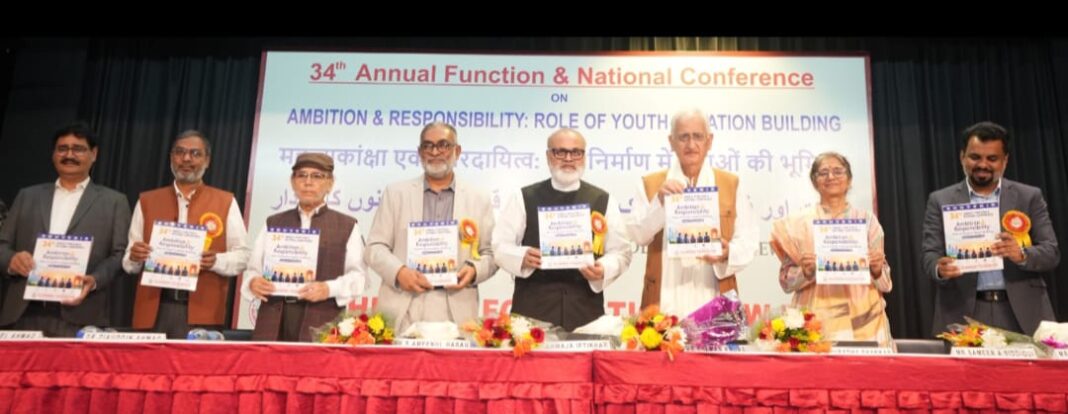
Distinguished guests were felicitated with shawls and mementos in recognition of their presence and contributions. The guests also jointly unveiled a souvenir published by the Foundation, which received appreciation from the audience for documenting and showcasing its work and achievements.
The 34th annual convention thus served not only as a platform for discussions on youth empowerment and nation-building but also as an occasion to showcase the Al-Hikmah Foundation’s continuing commitment to education, women’s empowerment and social welfare. Through the distribution of scholarships and sewing machines, the organisation highlighted the importance of combining discussions on social responsibility with practical initiatives that directly benefit people.
The deliberations at the conference collectively underscored that nation-building requires more than economic development or individual success. It calls for an educated, responsible and compassionate younger generation, supported by strong social institutions, committed voluntary organisations and a culture of cooperation, inclusiveness and service.
source: http://www.indiatomorrow.net / India Tomorrow / Home> Society> Youth / by Mohd Noushad Khan / November 16th, 2026