Tag Archives: IPS

Muslims who dominated headlines in 2021

INDIA :

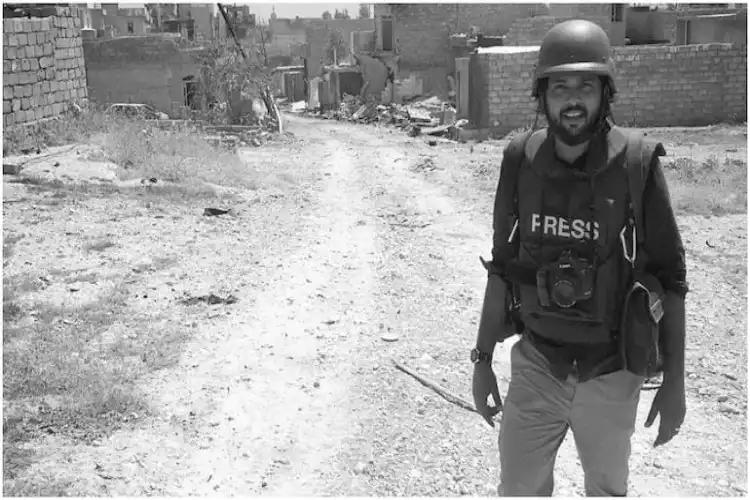
Danish Siddiqui in Afghanistan

As the year draws to an end, we have compiled a brief list of the Indian Muslims who have been in news during 2021.

Danish Siddiqui :

Danish Siddiqui was a Pulitzer Award winning photojournalist from New Delhi, who was killed by Taliban while covering the war in Afghanistan. An alumnus of Jamia Millia Islamia, Siddiqui was one of the country’s most well known photographers who documented the Rohingya refugee crisis, Covid deaths and the Delhi riots to win several awards. In July 2021, Reuters assigned him documentation of the Afghanistan War as an embedded journalist with Afghan Special Forces. On July 16, Siddiqui was killed in action. Governments of India, USA, Afghanistan and United Nations expressed grief and shock on his death and thousands joined his funeral procession in DelhI.

Dr Shahid Jameel :

Dr. Shahid Jameel is a world renowned virologist and is one of the leaders of India’s fight against Covid-19. The Covid-19 outbreak has thrown new challenges to the scientific community. When the Government of India set up an Indian Sars-Cov-2 Genomics Sequencing Consortium (INSACOG), which consists of 38 laboratories to monitor the genomic variations in the SARS-CoV-2, Jameel was appointed as the head of its scientific advisory group. He served the INSACOG in this position till May, 2021 and still advises different government and non-government bodies in strategising the war against Covid-19. 
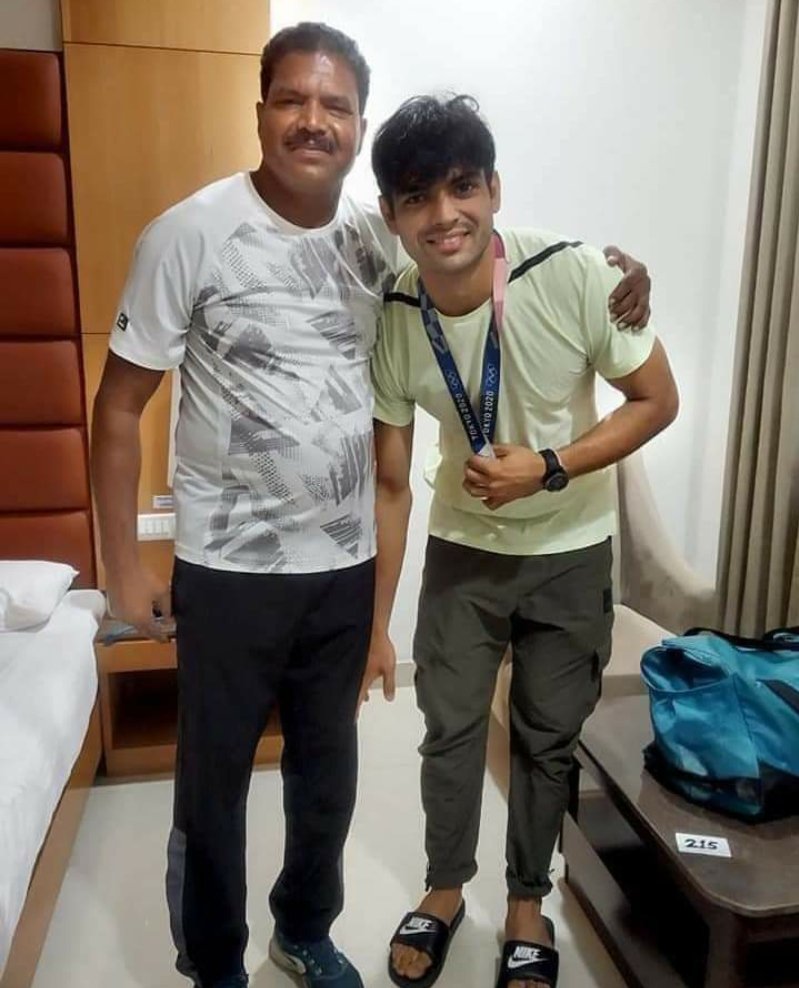
Coach Naseem Ahmed with Olympian Neeraj Chopra

Naseem Ahmed :

Naseem Ahmed: On 7 August, 2021, Neeraj Chopra threw Javelin for 87.58 mts. and became the first Indian to win an Olympic Gold in track and field events. With this success, Naseem Ahmed of Panchkula also hit the headlines. Ahmed was his first coach, who coached Chopra for almost six years at Tau Devi Lal Sports Complex in Panchkula. It was under his guidance that Chopra turned into an athlete from a chubby child. After returning to India, Chopra went to meet and receive blessings from his coach.
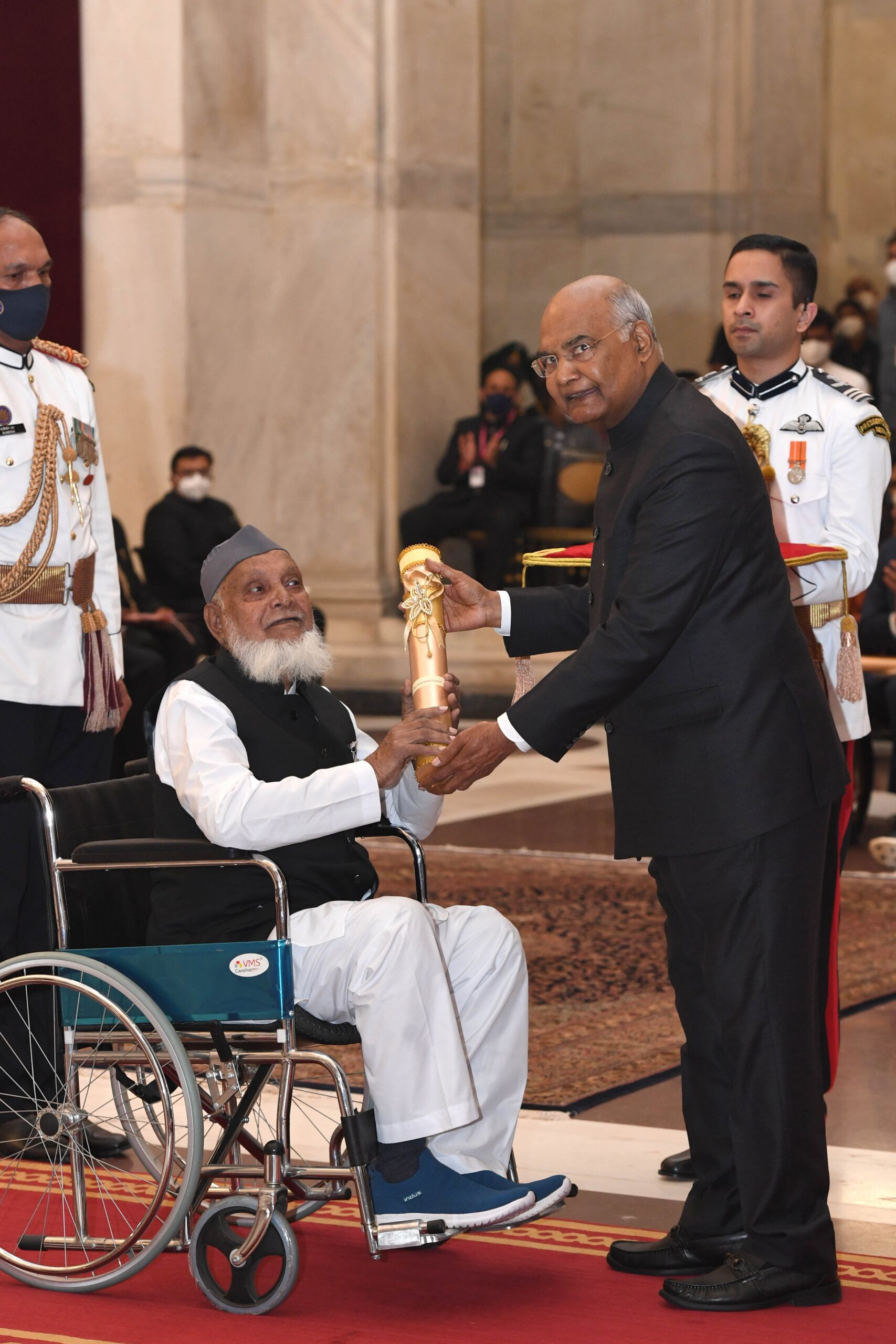
Mohammad Shareef alias Shareef Chacha receiving Padma Shri from President Ran Nath Kovind

Mohammad Shareef :

Mohammad Shareef is a bicycle mechanic from Faizabad, Ayodhya and hit the news headlines this year for receiving Padma Shri, the fourth highest civilian award in India, from the President Ram Nath Kovind. In 1992, his son was murdered and was eaten by animals as nobody claimed it. This incident moved him so much that he took it upon himself to perform the last rights of unclaimed dead bodies. In the last 28 years, he has performed the last rights of more than 25,000 unclaimed dead bodies according to their religions.
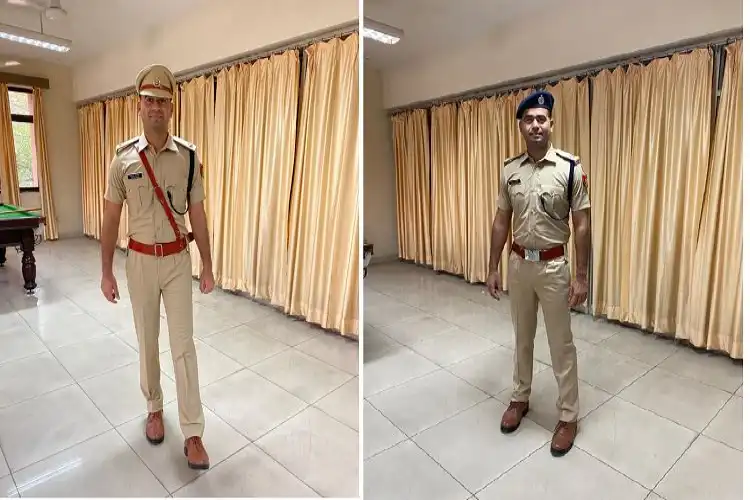
Firoz Alam as an IPS officer (Left) and as a Constable of the Delhi Police (Right)

Firoz Alam :

Firoz Alam’s story is straight out of a fiction, where his character bears resemblance to those played on screen by several film stars. Alam, a resident of Hapur in U.P, was a constable with Delhi Police since 2010. In 2014, he started preparing for UPSC CSE. The work pressure and family responsibilities did not allow him to devote full time to the studies, like many availing coachings could do. After five unsuccessful attempts, in his sixth attempt he qualified UPSC CSE and joined as an IPS officer. His inspiring journey from a constable to IPS had taken the nation by a storm when he joined the training after leaving the job as constable.
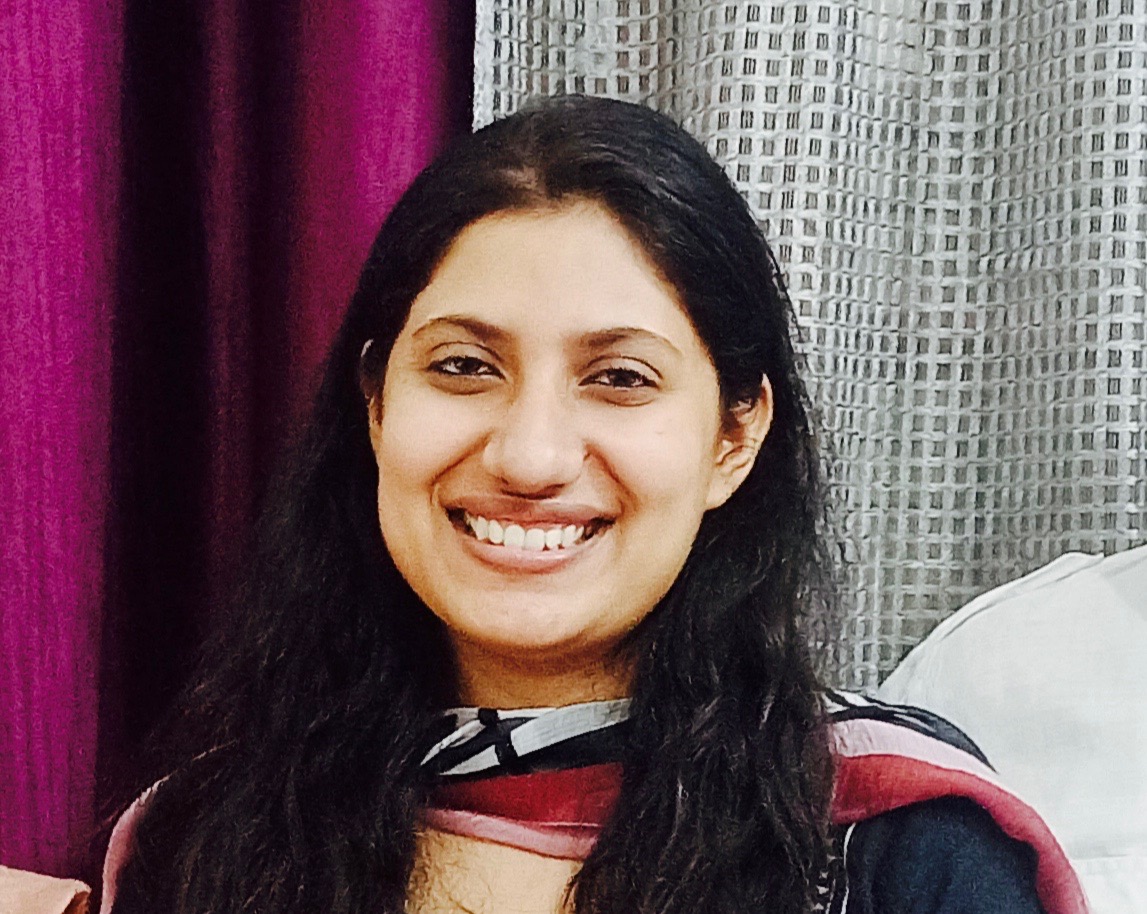
Sadaf Choudhary 

Sadaf Choudhary :

Sadaf Choudhary came into limelight when the UPSC CSE results were declared in September and she secured 23rd rank. She was the highest rank holder among Muslims this year and will become an IAS officer. It must be kept in mind that since independence only 179 Muslims have secured ranks to get IAS allotted to them.
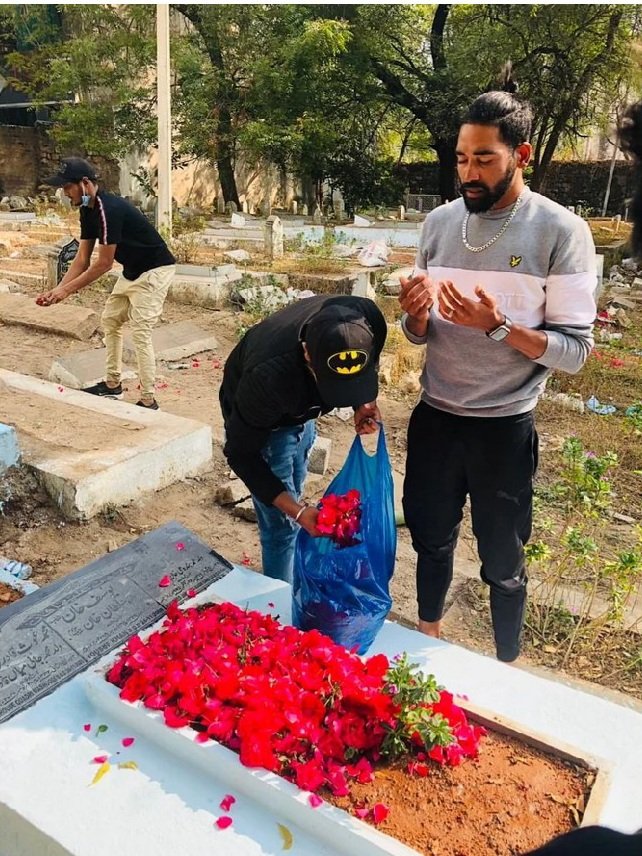
Mohammed Siraj praying at the gave of his father

Mohammed Siraj :

Mohammed Siraj is an Indian cricketer from Hyderabad who made it to the headlines in January by becoming the highest wicket taker from India during the India – Australia Test Match Series in Australia. To claim his 13 scalps, he played only three of the four tests in the series. The fact that his father had died just before the series and he was given an option to return to the country, which he declined citing his commitment to the nation made it even more special.

In the last test match at Brisbane, he bagged five Australian wickets to script a historic win and became a national hero. The headlines of the sports column were filled with his heroics, commitment and ability. Since then he has been a regular feature of the Indian Cricket team as a pacer. 

source: http://www.awazthevoice.in / Awaz, The Voice / Home> Stories / by Saquib Salim / December 30th, 2021
How one act of defiance in Mughal India cemented Sikh-Muslim ties in Punjab’s Malerkotla

Malerkotla, PUNJAB :

Muslim-majority Malerkotla has been declared as the 23rd district of the state, with the Punjab government fulfilling a decade-long demand of its residents.

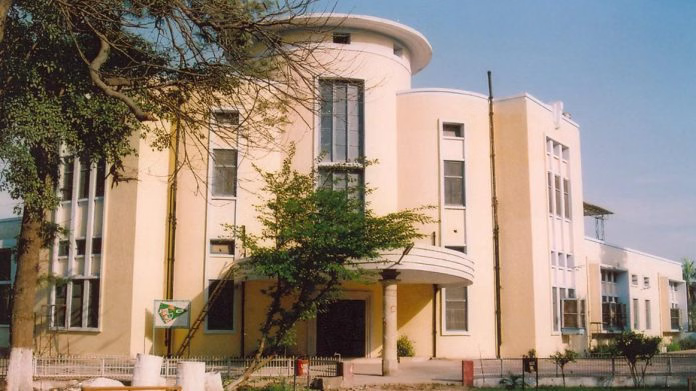
The government college in Malerkotla | Wikimedia commons

Chandigarh: 

On the occasion of Eid-ul-Fitr Friday, Punjab Chief Minister Captain Amarinder Singh declared the Muslim-majority Malerkotla as the 23rd district of the state, while announcing a slew of projects for the development of the historic city.

The move fulfils an at least decade-old demand in Malerkotla and a promise that the ruling Congress had made in its manifesto ahead of the 2017 assembly elections.

Punjab’s decision, however, hasn’t gone down well with the BJP, particularly Uttar Pradesh Chief Minister Yogi Adityanath.

Adityanath tweeted Saturday that the move was “proof of the Congress’ divisive politics”.

“Any distinction on the basis of religion is contrary to the basic spirit of the Constitution of India,” the Uttar Pradesh CM said. “Presently, the formation of Malerkotla (Punjab) is a reflection of the divisive policy of the Congress.”

Tarun Chugh, the BJP’s national secretary from Punjab, weighed in, saying the decision was clearly “communal” and that it was for the first time in the history of Punjab that an administrative decision was taken to further communal interests.

None of these charges, however, will find any resonance in Punjab, where Sikhs and Malerkotla’s Muslims share historically harmonious ties. So entrenched is this solidarity, that the Muslim-majority region saw no violence even as the rest of Punjab went up in flames during Partition in 1947.

The Punjab chief minister even alluded to this while responding to his UP counterpart.

“What does he (Yogi Adityanath) know of Punjab’s ethos or the history of Malerkotla, whose relationship with Sikhism and its Gurus is known to every Punjabi? And what does he understand of the Indian Constitution, which is being brazenly trampled every day by his own government in UP?” Amarinder asked in a statement issued Saturday evening.

A 300-year-old legacy

Punjab Sikhs’ reverence for the Muslims of Malerkotla dates back chiefly to one singular event in history.

According to Anna Bigelow, associate professor of Islamic Studies in the Department of Religious Studies at Stanford University, the Nawab of Malerkotla, Sher Muhammad Khan, had in 1705 opposed the death penalty handed out to nine-year-old Baba Zorawar Singh and seven-year-old Baba Fateh Singh — the sons of Guru Gobind Singh, the 10th Sikh Guru.

Bigelow, who has researched Malerkotla’s history, writes that despite Khan’s protests, the then Mughal governor of Sirhind, Wazir Khan, bricked alive the two children.

The Malerkotla nawab’s defiance, referred to as “ha da naara (cry for justice), however, earned him the respect and adoration of Sikhs.

“Guru Gobind Singhji blessed Sher Muhammad Khan and ever since Malerkotla has become an icon of Sikh-Muslim brotherhood,” said the Shiromani Akali Dal (SAD) general secretary Dr Daljeet Singh Cheema. “Even during Partition, this town remained completely peaceful.”

The new district will also have a government medical college in the name of Nawab Sher Muhammad Khan.

The Opposition SAD has backed Chief Minister Amarinder, with Cheema issuing a statement  that Adityanath’s tweet was in bad taste and symbolic of his complete lack of historical knowledge about Malerkotla town and its significance for Sikhs.

“Malerkotla town is a unique example of Sikh-Muslim communal harmony that has lasted for over 300 years,” Cheema said.

A Muslim-majority region

Malerkotla was part of a jagir of several villages that the then Delhi Sultan Behlol Lodhi granted as dowry to the Afghani Sufi Saint Sheikh Sadruddin-i-Jahan (also called Haider Sheikh) in 1454.

According to Bigelow, the original settlement was called “Maler” and it remains the name of the neighbourhood surrounding the Sheikh’s tomb.

Following the advent of Mughal rule in India, the descendants of the Sheikh became the nawabs of Malerkotla.

Bigelow writes that Kotla came to be in 1657 when Mughal emperor Aurangzeb granted permission to Bayazid Khan, the first ruler of Malerkotla, to build a fortified city.

Bigelow also states that during British rule, Malerkotla was as turbulent as the other smaller principalities of the time, marked by infighting and ever-changing loyalties. The last ruler of Malerkotla was Nawab Iftikhar Ali Khan.

During Partition in 1947, Malerkotla remained absolutely peaceful and when the princely state merged with India, Iftikhar Ali Khan was its first chief minister.

Malerkotla was later merged with other princely states of the region to form the Patiala and East Punjab States Union (PEPSU). During the reorganisation of states in 1956, Malerkotla became a part of Punjab.

Modern-day Malerkotla

With almost 70 per cent of its population comprising Muslims, the Malerkotla assembly constituency has always been represented by a Muslim.

Nawab Iftikhar Ali Khan served as MLA twice while his second wife Begum Yusuf Zamani and fourth wife Begum Sajida were legislators as well. All of them were part of the Congress party.

The Malerkotla seat has, in the last few decades, been alternating between the Congress and the Akali Dal.

Razia Sultana, the current Congress MLA from Malerkotla, is representing the constituency for the third time (2002, 2007 and 2017). She is the wife of former Punjab DGP Mohammad Mustafa. In 2012, however, Farsana Alam, the wife of another IPS officer, Izhar Alam, was elected as the Akali MLA from here.

The constituency’s politics has not been without its intrigue. In 1981, the last nawab divorced Sajida Begum. She then went on to marry Anwar Ahmed Khan of the Shiromani Akali Dal, against whom she had fought multiple elections.

The nawab died in 1982 and Sajida Begum in 2006. The legacy of the last nawab continues as an ugly family litigation for property and palaces.

On Friday, Chief Minister Amarinder Singh, himself the scion of the Patiala royal family, recalled his ties to the last nawab of Malerkotla, whom he fondly called Chachaji (Uncle) and who he said lovingly addressed him Bhateej (nephew).

Amarinder also said he had written to the Aga Khan Foundation to undertake conservation and restoration of Mubarak Manzil Palace, occupied by Begum Sahiba Munawwar ul-Nisa, the wife of the last nawab.

The Punjab government, the chief minister said, has acquired the Mubarak Manzil Palace, adding that “its restoration and upkeep would be a fitting tribute to the nawabs of Malerkotla”.

A decade-long demand

The demand for district-hood is not new.

Malerkotla falls on the Ludhiana-Sangrur road and is part of Sangrur district. It’s almost equidistant from the district headquarters of Ludhiana and Sangrur and for every administrative work residents had to go to Sangrur, which is over 40 km away.

The town is full of small steel units and is specially known for manufacturing badges and uniforms.

The Congress’ manifesto had also promised district status for Malerkotla.

According to the government’s order Friday, the subdivisions of Malerkotla and Ahmedgarh, as well as the sub-tehsil of Amargarh, would be included in the newly-created district. The process of bringing villages under the jurisdiction of Malerkotla district would begin later, after the conclusion of the census operations, the order said.

The chief minister has also directed the Sangrur deputy commissioner to find a suitable building to immediately start the functioning of the district administration office. The deputy commissioner for the newly-carved district would be appointed soon.

(Edited by Arun Prashanth)

source: http://www.theprint.in / The Print / Home> India / by Chitleen K Sethi / May 16th, 2021

Jharkhand Cadre IPS Probationer Dr. Syed Mustafa Hashmi Wins Home Ministry’s Best Essay Trophy on Communal Harmony

JHARKHAND :

Udit Vani, Jamshedpur: 

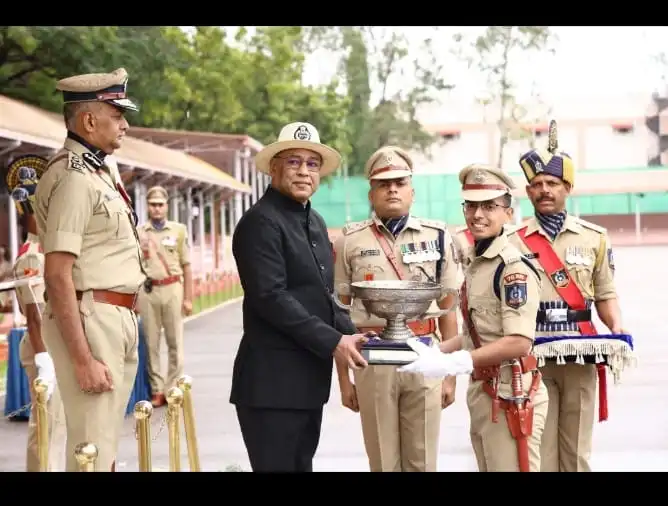
In a prestigious recognition of intellectual depth and commitment to the ideals of unity and peace, Dr. Syed Mustafa Hashmi, IPS (P), a probationer from the 76th Regular Recruit (RR) batch borne on the Jharkhand cadre, has been awarded the Ministry of Home Affairs Trophy for the Best Essay on the theme “Communal Harmony and National Integration”.

His essay stood out among numerous entries submitted by IPS probationers across the country for its clarity, depth of analysis, and strong articulation of inclusive governance.

Securing the second prize in the same category was Anna Sinha, IPS (P), also from the 76 RR batch, who is borne on the AGMUT cadre. Her essay was lauded for its innovative approach and empathetic insights into India’s diverse societal fabric.

The awards were presented during the Valedictory Parade of Phase II training of the 76 RR IPS Probationers at the Sardar Vallabhbhai Patel National Police Academy (SVPNPA) in Hyderabad.

The ceremony marks the culmination of their intensive training that spanned law enforcement tactics, ethical policing, public service delivery, and nation-building.

The Director of SVPNPA, senior IPS officers, and faculty members were present during the function, which also included a ceremonial parade by the probationers — a symbol of their readiness to join the ranks of the Indian Police Service and serve the nation with integrity and valor.

This year’s training cohort included a diverse group of young officers from across India, representing various states and social backgrounds.

Their training included exposure to modern policing challenges such as cybercrime, terrorism, social media monitoring, community policing, and strategies to foster communal harmony and inclusive development.

Home Ministry’s Essay Competition: A Platform for Thought Leadership

The Ministry of Home Affairs Essay Competition is an annual initiative that encourages future IPS officers to reflect on themes central to India’s national unity. By promoting intellectual discourse on critical social issues, it aims to create a cadre of officers who are not only efficient administrators but also thought leaders in promoting harmony, justice, and inclusive governance.

Dr. Hashmi, who has a background in medicine prior to joining the IPS, emphasized in his essay the role of empathetic policing, grassroots engagement, and inclusive policymaking as tools to bridge communal divides.

He has been praised for blending scholarly analysis with practical insights drawn from his field experiences during training.-

Anna Sinha, in her essay, highlighted the role of women in peace building and the need for greater representation and sensitivity in community policing. Her perspectives reflected a balanced understanding of law enforcement challenges and the human dimension of national integration.

A Pledge to Serve

The valedictory function ended with the probationers taking a solemn oath to uphold the Constitution, maintain law and order, and serve with dedication, impartiality, and compassion. The entire 76 RR batch is now set to report to their respective cadres and districts, where they will begin their real-world policing assignments as Assistant Superintendents of Police (ASPs).

As they embark on their careers, recognitions like the Home Ministry Essay Trophy serve as a reminder of the intellectual and moral leadership expected from the IPS — to not only enforce law, but also to be torchbearers of national unity and harmony.

source: http://www.uditvani.in / Udit Vani, English News / Home / July 25th, 2025

 Senior IPS Officer Syed Javaid Mujtaba Gilani Promoted To DGP Grade

Jammu, JAMMU & KASHMIR :

Jammu :

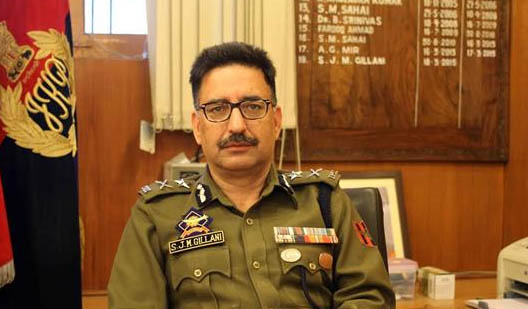
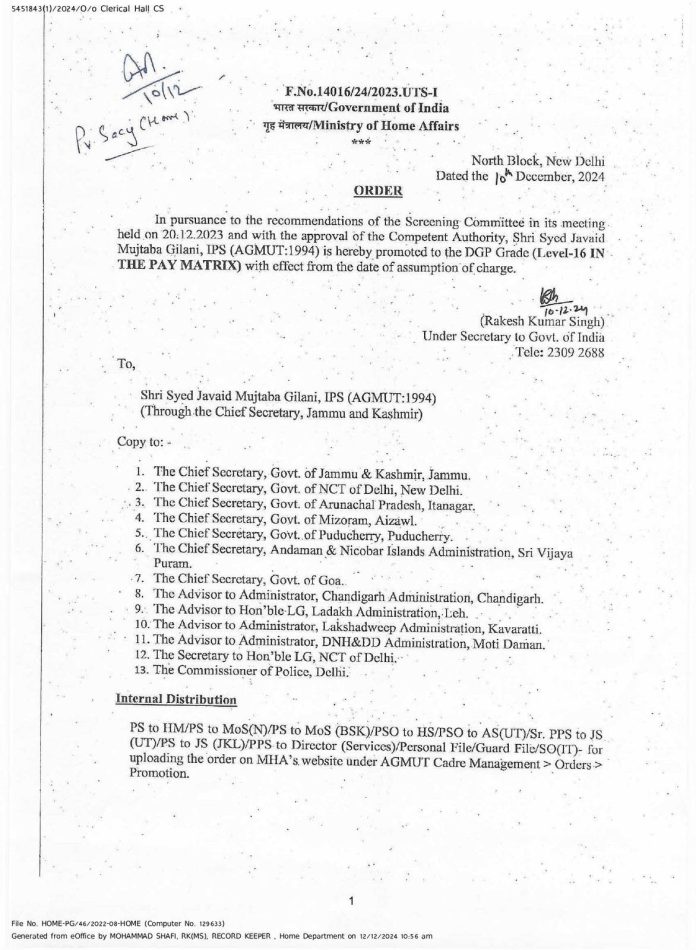
The Ministry of Home Affairs, Government of India has ordered the promotion of senior IPS Officer, Syed Javaid Mujtaba Gilani to the DGP Grade with effect from the date of assumption of charge.

An order issued by Rakesh Kumar Singh, Under Secretary to Government of India, reads: “In pursuance to the recommendations of the Screening Committee in its meeting held on 20.12.2023 and with the approval of the Competent Authority, Syed Javaid Mujtaba Gilani, IPS (AGMUT:1994) is herby promoted to the DGP Grade (Level-16 IN THE PAY MATRIX) with effect from the date of assumption of charge”.

source: http://www.dailyexcelsior.com / Daily Excelsior / Home> J & K Government Order /by Daily Excelsior / December 12th, 2024

Ex-diplomat Mahmood passes away

Mahmood bin MuhammadMPos06mar2014

Hyderabad: 

Former Indian Ambassador Mahmood bin Muhammad, 89, a leading Indian police theoretician, passed away on Friday. An IPS officer, who served in various important positions including Ambassador of India to Saudi Arabia, was also a Indian Police theoretician. He served the country for nearly seven decades.

Muhammad, a 1953 cadre in Indian Police Service, served as additional home secretary, inspector general of prisons & director of correctional services, government of Andhra Pradesh, director-incharge, S.V.P. National Police Academy, Hyderabad; and deputy director (research), bureau of police research & development, ministry of home affairs, till his retirement.

After his retirement from police service, Muhammad continued to serve the country as Ambassador of India to Saudi Arabia from 1985 to 1987. He served on India’s Planning Commission on social defense and as India’s correspondent with the UN Secretariat in the field of prevention of crime and treatment of offenders.

He was invited to attend an international seminar at the Arab Security Studies and Training Centre, Riyadh, and deliver a lecture to trainees of the Institute of Diplomatic Training and Studies, ministry of foreign affairs, Saudi Arabia.

Muhammad, who has to his credit eight books, including one of his poems and his autobiography, was awarded the Rajiv Gandhi Sadbhavana Award for his contributions towards the promotion of communal harmony and peace in India in 2006.

Muhammad is survived by his wife Anees Syed Husain, a daughter, two sons, 10 grandchildren and a great grandson.

source: http://www.deccanchronicle.com / Deccan Chronicle / Home> Nation> Current Affairs / DC / October 20th, 2013