Tag Archives: Mohammad Shareef – Burier of dead bodied

Muslims who dominated headlines in 2021

INDIA :

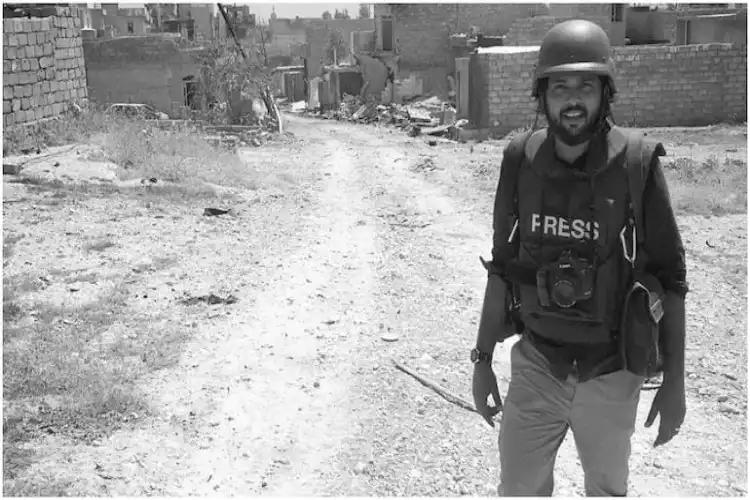
Danish Siddiqui in Afghanistan

As the year draws to an end, we have compiled a brief list of the Indian Muslims who have been in news during 2021.

Danish Siddiqui :

Danish Siddiqui was a Pulitzer Award winning photojournalist from New Delhi, who was killed by Taliban while covering the war in Afghanistan. An alumnus of Jamia Millia Islamia, Siddiqui was one of the country’s most well known photographers who documented the Rohingya refugee crisis, Covid deaths and the Delhi riots to win several awards. In July 2021, Reuters assigned him documentation of the Afghanistan War as an embedded journalist with Afghan Special Forces. On July 16, Siddiqui was killed in action. Governments of India, USA, Afghanistan and United Nations expressed grief and shock on his death and thousands joined his funeral procession in DelhI.

Dr Shahid Jameel :

Dr. Shahid Jameel is a world renowned virologist and is one of the leaders of India’s fight against Covid-19. The Covid-19 outbreak has thrown new challenges to the scientific community. When the Government of India set up an Indian Sars-Cov-2 Genomics Sequencing Consortium (INSACOG), which consists of 38 laboratories to monitor the genomic variations in the SARS-CoV-2, Jameel was appointed as the head of its scientific advisory group. He served the INSACOG in this position till May, 2021 and still advises different government and non-government bodies in strategising the war against Covid-19. 
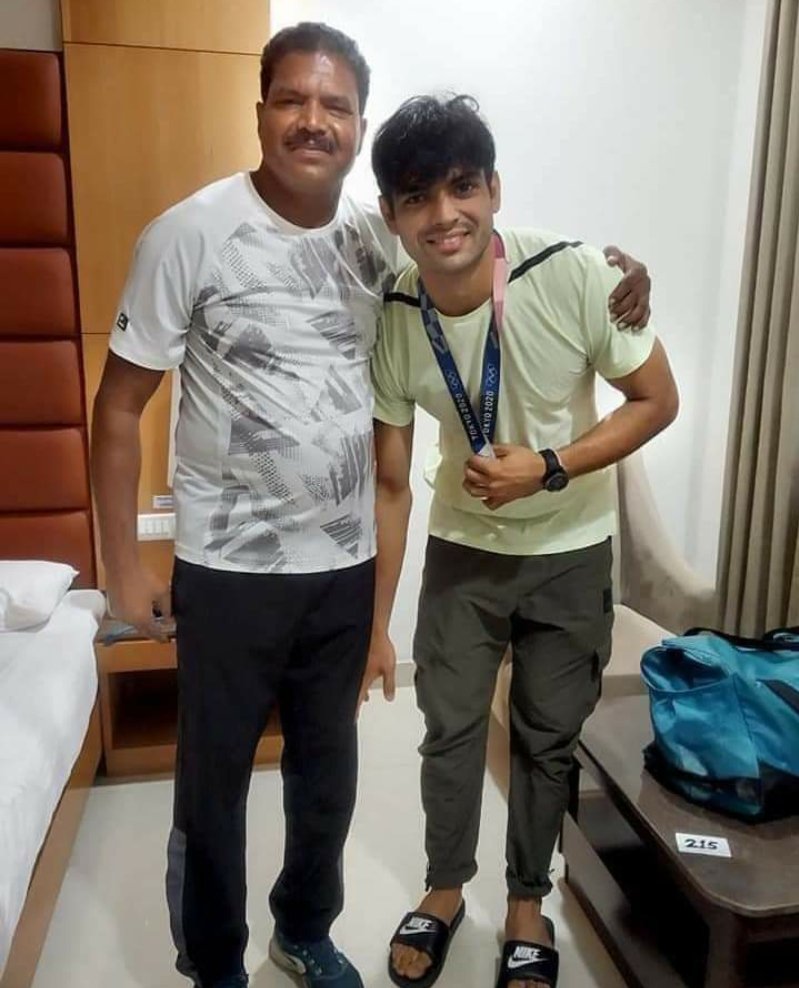
Coach Naseem Ahmed with Olympian Neeraj Chopra

Naseem Ahmed :

Naseem Ahmed: On 7 August, 2021, Neeraj Chopra threw Javelin for 87.58 mts. and became the first Indian to win an Olympic Gold in track and field events. With this success, Naseem Ahmed of Panchkula also hit the headlines. Ahmed was his first coach, who coached Chopra for almost six years at Tau Devi Lal Sports Complex in Panchkula. It was under his guidance that Chopra turned into an athlete from a chubby child. After returning to India, Chopra went to meet and receive blessings from his coach.
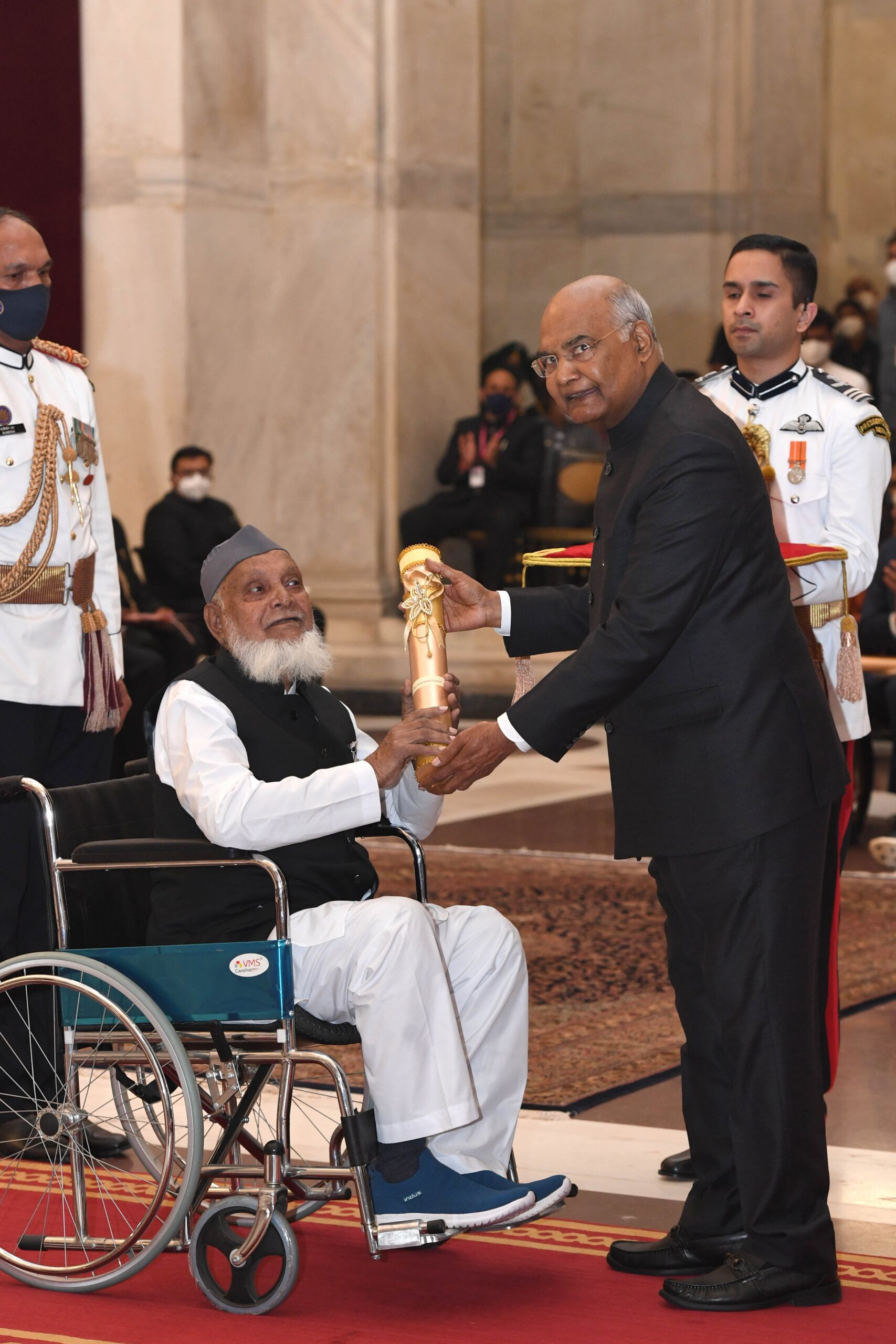
Mohammad Shareef alias Shareef Chacha receiving Padma Shri from President Ran Nath Kovind

Mohammad Shareef :

Mohammad Shareef is a bicycle mechanic from Faizabad, Ayodhya and hit the news headlines this year for receiving Padma Shri, the fourth highest civilian award in India, from the President Ram Nath Kovind. In 1992, his son was murdered and was eaten by animals as nobody claimed it. This incident moved him so much that he took it upon himself to perform the last rights of unclaimed dead bodies. In the last 28 years, he has performed the last rights of more than 25,000 unclaimed dead bodies according to their religions.
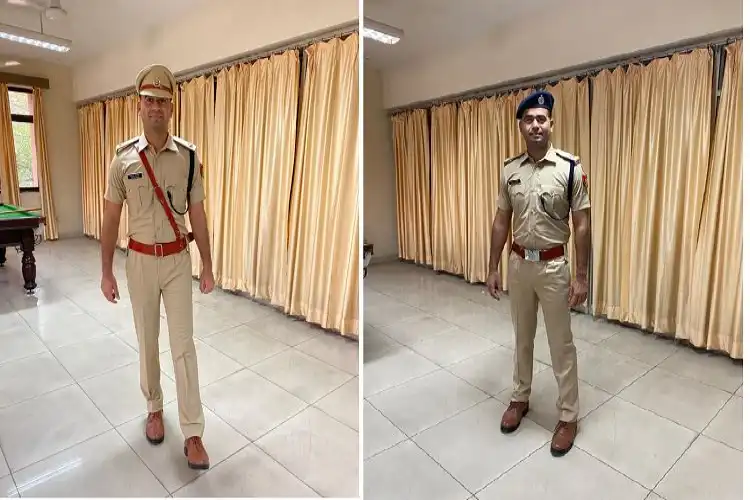
Firoz Alam as an IPS officer (Left) and as a Constable of the Delhi Police (Right)

Firoz Alam :

Firoz Alam’s story is straight out of a fiction, where his character bears resemblance to those played on screen by several film stars. Alam, a resident of Hapur in U.P, was a constable with Delhi Police since 2010. In 2014, he started preparing for UPSC CSE. The work pressure and family responsibilities did not allow him to devote full time to the studies, like many availing coachings could do. After five unsuccessful attempts, in his sixth attempt he qualified UPSC CSE and joined as an IPS officer. His inspiring journey from a constable to IPS had taken the nation by a storm when he joined the training after leaving the job as constable.
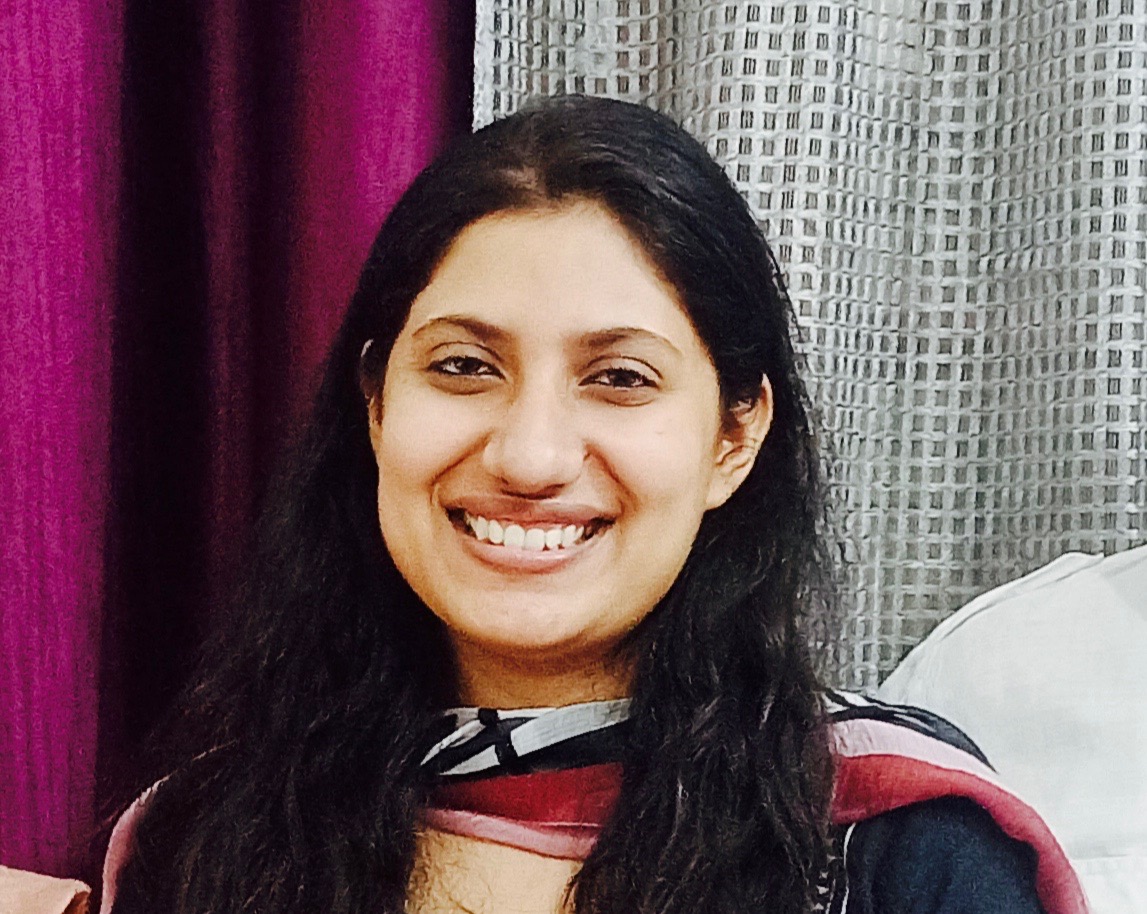
Sadaf Choudhary 

Sadaf Choudhary :

Sadaf Choudhary came into limelight when the UPSC CSE results were declared in September and she secured 23rd rank. She was the highest rank holder among Muslims this year and will become an IAS officer. It must be kept in mind that since independence only 179 Muslims have secured ranks to get IAS allotted to them.
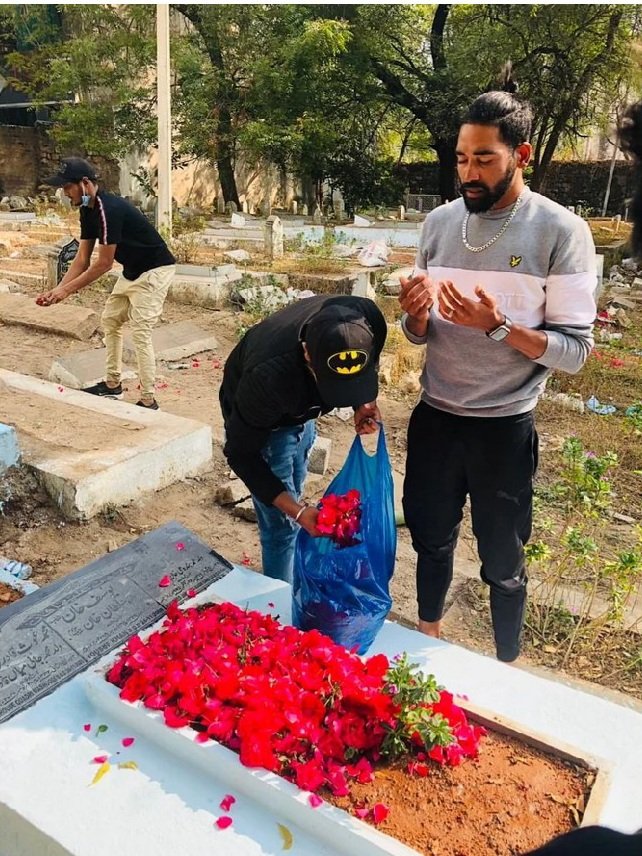
Mohammed Siraj praying at the gave of his father

Mohammed Siraj :

Mohammed Siraj is an Indian cricketer from Hyderabad who made it to the headlines in January by becoming the highest wicket taker from India during the India – Australia Test Match Series in Australia. To claim his 13 scalps, he played only three of the four tests in the series. The fact that his father had died just before the series and he was given an option to return to the country, which he declined citing his commitment to the nation made it even more special.

In the last test match at Brisbane, he bagged five Australian wickets to script a historic win and became a national hero. The headlines of the sports column were filled with his heroics, commitment and ability. Since then he has been a regular feature of the Indian Cricket team as a pacer. 

source: http://www.awazthevoice.in / Awaz, The Voice / Home> Stories / by Saquib Salim / December 30th, 2021
Saviour of the dead: Burying the bodies India forgets

 UTTAR PRADESH :

Mohammad Shareef began burying bodies after his son's death / Mohd Shabbir
Mohammad Shareef began burying bodies after his son’s death / Mohd Shabbir

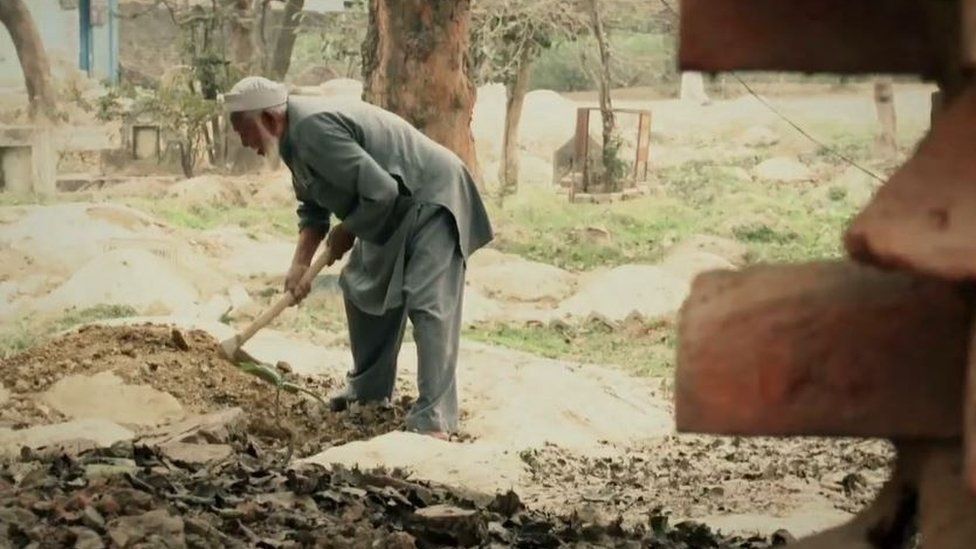
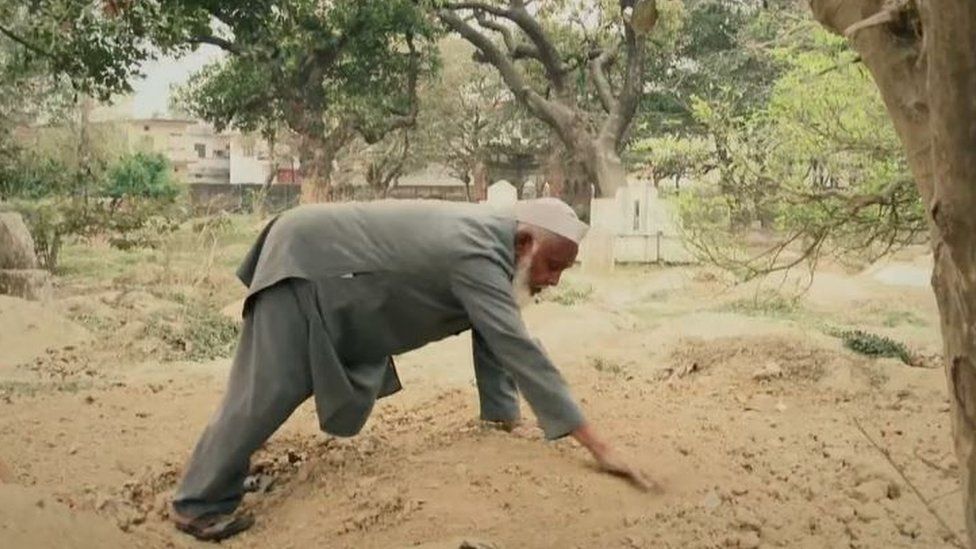
Mohammad Shareef never got to bury his son. Instead, he has spent the last 27 years burying the unclaimed sons and daughters of thousands of other families.

It took a month for police to tell Mr Shareef that his son had died, and even then, they couldn’t tell him where, or how.

All Mr Shareef knows is that his son, Mohammad Rais, was one of almost 2,000 people killed in the Hindu-Muslim riots which engulfed India following the destruction of a mosque on a disputed religious site in 1992.

Mr Shareef doesn’t even know where the 25-year-old was buried.

“Police told me his body had decomposed,” Mr Shareef recalled, almost three decades on. “We didn’t see his body. We only got his clothes.”

But a few months later, he would witness something which would change his life forever.

“One day I saw police officers throwing a body into a river. I was horrified,” Mr Shareef says.

Along with the horror, came a realisation.

“I think my son’s body might have been thrown into a river, just like other such dead bodies. That day I said to myself, from today I am the guardian of abandoned dead bodies and I will give them a proper funeral.”

Mr Shareef says his wife Bibi never recovered from the death of their son / Mohd Shabbir

Unclaimed bodies pile up in India for a host of reasons: they could be people who lost their lives in road and rail accidents, or people who died far from home – pilgrims, migrants, old people abandoned by their children.

Some impoverished patients die in hospital with no-one to take care of the funeral.

But what to do with the bodies? Back in 1992, many districts in India didn’t have a mortuary facility. It was fairly common practice to dispose of unclaimed bodies quickly.

Burial was the preferred method, but in some places in north India they dumped unclaimed human remains into rivers to save money, time and effort.

Mr Shareef’s family have long suspected that Rais’ body ended up in the Gomti river. It flows past Sultanpur, the city where the young man had been working as a chemist in December 1992 – the month when Hindu fundamentalists tore down the 16th Century Babri mosque in Ayodhya, Mr Shareef’s home, 65km (40 miles) away.

Rais went missing amid the bloodshed which followed.

“After my son disappeared I searched for him everywhere for a month, like a mad man,” his father says. “I didn’t find him anywhere. I even went to Sultanpur to look for him.”

Then came the news they had been dreading: their beloved son was dead. Mr Sharif and his wife Bibi were traumatised. His wife still struggles with periods of depression to this day.

The pain is aggravated by the fact they were not able to give their son a proper burial. It is a pain no one else should go through, Mr Shareef says.

“I decided that in my district, I wouldn’t let any unidentified body be thrown away into a river,” he says.

Shareef says he takes care of the unknown dead persons as he would a family member / Mohd Shabbir

In India’s caste-bound Hindu society, those who were at the bottom were historically forced to do the job of burial and cremations – and then treated as “untouchables” as a result.

But Mr Shareef – a bicycle mechanic by trade – was not to be deterred. He told the police about his desire to take up a task shunned by everyone else.

“When I got the first call, my heart was pounding. After the post-mortem, the police asked me to take away the body. I clearly remember that person’s neck was slashed.”

Soon, his workload started to increase. He even bought a four-wheeled cart to transport the dead.

Predictably his family members, friends and neighbours were taken aback. Even as a Muslim, Mr Sharif began to experience the same social exclusion as his Hindu colleagues.

“No-one in my family was happy at that time. They said, ‘you have gone mad’.

“Some people were afraid of me. They thought they would get infected with germs if they made physical contact with me.”

Yet Mr Shareef was resolute in his conviction. He had skipped family weddings, festivals and even prayers for the sake of unknown people. It gave him peace and solace: performing last rights is a moment to remember his son.

“It helped me to deal with the pain of my son’s death. I think about him all the time. I miss him.”

In the Hindu caste system, those who are relegated to the bottom of the pyramid are forced to assist with cremations and burials / Getty Images

It is not an easy job. Police often struggle to identify the body, which means they may have been dead for some time. Often it is not the bodies, Mr Shareef says, but the smell which is most off-putting.

“Whenever I see a badly mutilated or decomposed body it is difficult to sleep. I have nightmares and resort to sleeping tablets,” he explains.

“Sometimes police officials come with me to the cemetery but even they stand far away.”

All the same, he always takes the time to ensure the person is given the proper treatment, usually bathing the body.

If he realises the dead person is Muslim, he wraps the body in a sheet of cloth and recites the final prayers. If the body belongs to a Hindu, he takes it to be cremated.

No-one know exactly how many bodies Mr Shareef has buried. The head of Ayodhya district administration, Anuj Kumar Jha, told the BBC that they don’t have full records of the bodies handed over to Mr Shareef.

“Our rough estimate is we would have given about 2,500 bodies to him,” he said. Mr Shareef’s family say he has given last rites to more than 5,500 people.

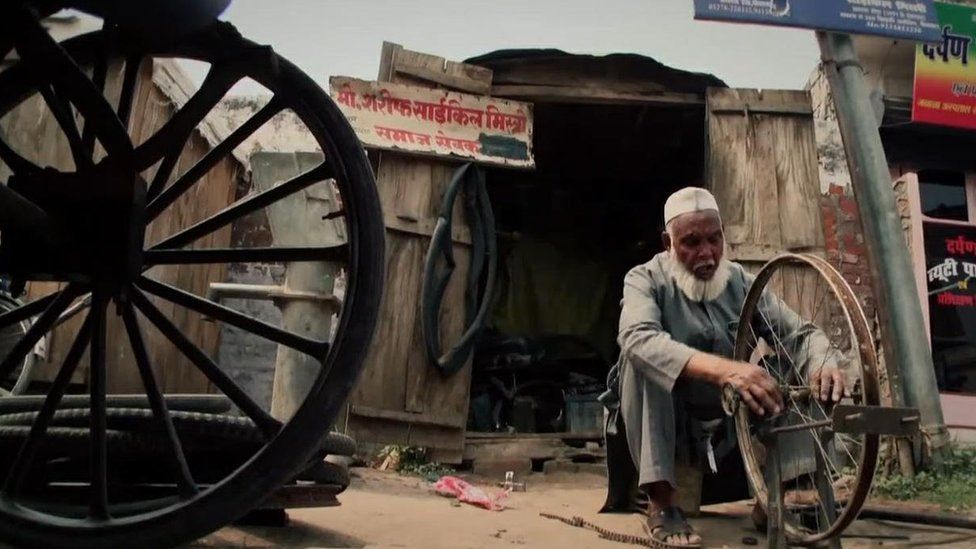
Yet for years, he toiled without any financial support. To this day, he works in his bicycle shop, earning the equivalent of about $3 a day.

Mr Shareef continues to run his roadside cycle repair shop to provide for himself and his wife / Mohd Shabbir

But things are changing. He has been recognised for his dedication. The government has given him one of India’s highest civilian awards, while local shop owners now also help cover his expenses. At the age of 80, he is now able to have two paid assistants who are sharing his burden.

“Both Hindus and Muslims help me. People give me food and warm blankets. Recently I had to have an eye operation – a stranger called me and gave me 20,000 rupees [$290].”

But retirement is not something he is willing to consider. Neither his two surviving sons nor grandchildren want to follow in his footsteps, and he is acutely aware of what will happen if he stops doing this work.

“If I am not there, police will throw the bodies into rivers as they did before.”

For a man who some call the “saviour of the dead” that would be unbearable.

“I will continue doing this till my last breath,” he says.

source: http://www.bbc.com / BBC / Home> News> Asia / by Swaminathan Natarajan & Khadeeja Arif / BBC World Service / March 13th, 2020