Tag Archives: Mohammed Bin Ismail

Delhi’s Historic Madrasa Rahimiya Struggles to Protect Its Rich Legacy

DELHI :

The centuries-old Islamic educational centre, birthplace of the Urdu Qur’an translation, struggles to protect its legacy amid growing Hindu-led development projects.
New Delhi :

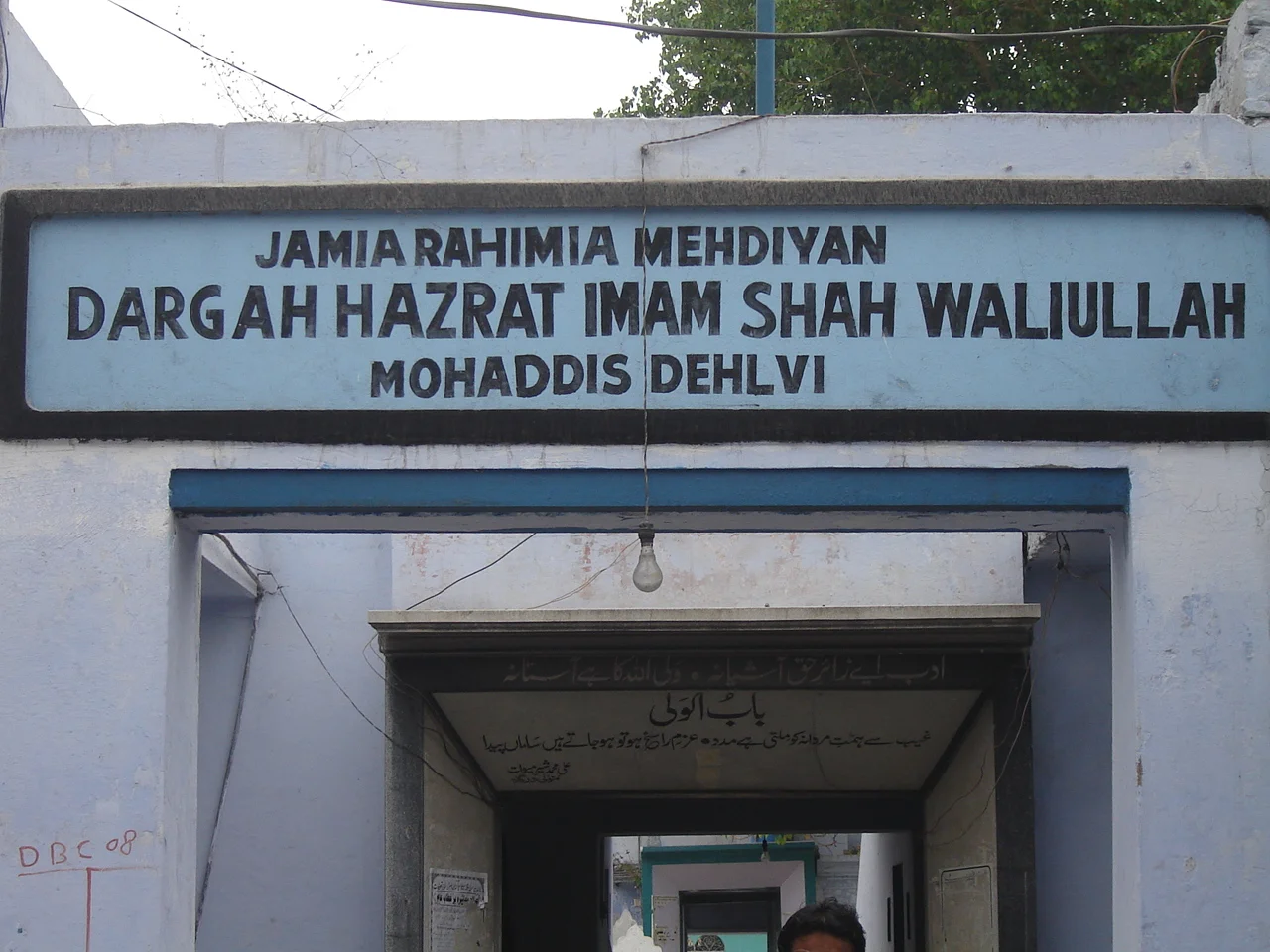
Hidden along the busy Bahadur Shah Zafar Highway, Mehdiyan — home to the revered Madrasa Rahimiya, also known as Jamia Rahimia — stands as one of Delhi’s oldest Islamic learning centres. Established by Shah Abdul Rahim, father of the famed scholar Shah Waliullah Muhaddith Dehlvi, this madrasa has for centuries served as a vital institution nurturing Islamic scholarship. However, today its existence is threatened by creeping urban development dominated by Hindu groups, threatening to erase a vital piece of Muslim heritage.

“Madrasa Rahimiya was not just a school; it was a movement to bring Muslims closer to the Qur’an’s true teachings,” explains Mufti Muhammad Sabir, a Hadith instructor at the madrasa. “But its history is being erased by those who prioritise development over our heritage.”

Madrasa Rahimiya holds a proud place in history, especially for pioneering the first Urdu translation of the Qur’an. In the late 1700s, Shah Abdul Qadir, a key scholar educated under his father and others, undertook the translation project at the Akbarabadi Mosque. This effort laid the foundation for making Islamic scripture accessible to millions of Urdu-speaking Muslims across India, who were otherwise unable to understand the original Arabic text.

“Shah Abdul Qadir’s translation was revolutionary, yet it faced strong opposition from scholars who considered translating the Qur’an sacrilegious,” says Maulana Sabir. “Despite this, his work endured and shaped generations.”
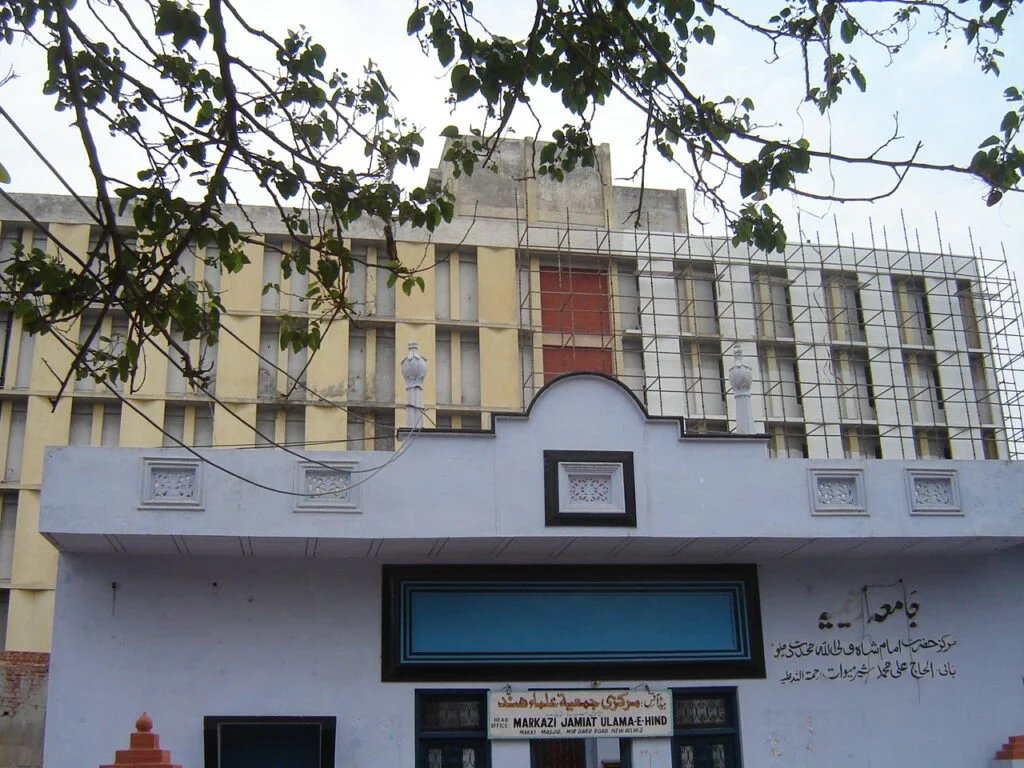
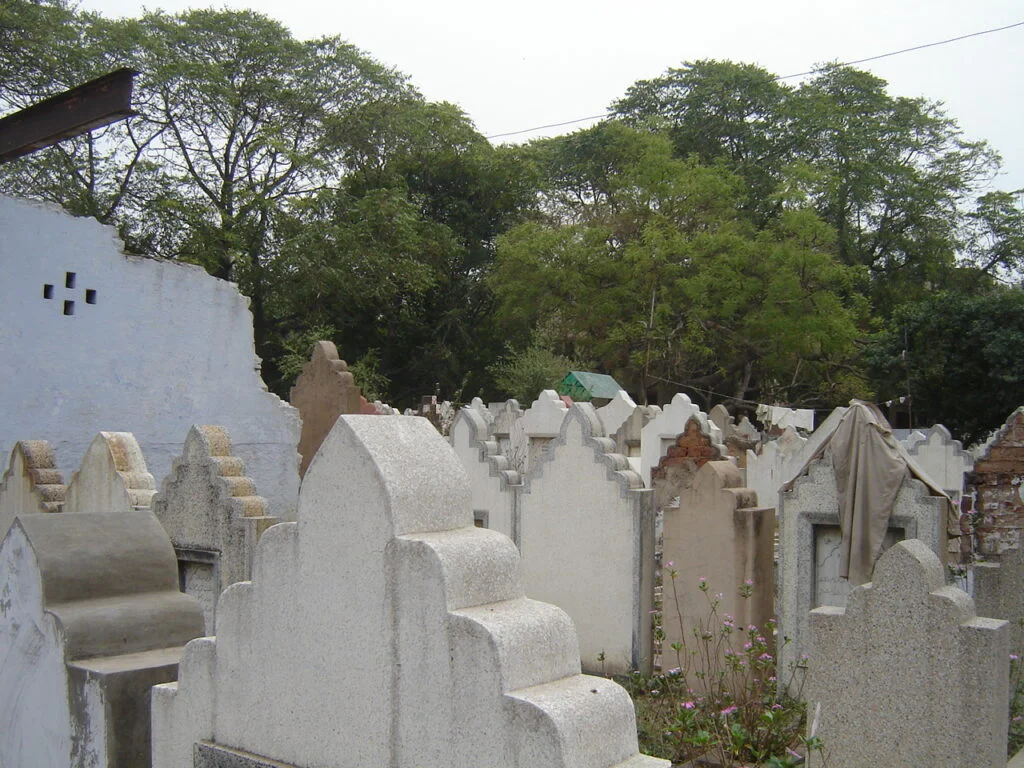
But this rich history has not been free from hardship. After the 1857 War of Independence, British colonial forces destroyed the Akbarabadi Mosque and shuttered the madrasa. The adjoining Mehdiyan cemetery, the resting place of Shah Waliullah and his family members, was drastically reduced. Historian Rana Safavi laments, “Mehdiyan was once a vast necropolis for saints and commoners alike. Now, much of it is lost to encroachment, with what remains used merely as a washing place.”

In the 1960s, Delhi’s expanding urban sprawl posed new threats. Plans to demolish Mehdiyan to build flats and houses were only halted because of the heroic resistance of Ali Muhammad, known locally as Sher-e-Mewat. “He lay down in front of bulldozers and even Pandit Nehru’s car to protect these sacred shrines,” recalls resident Bilal Ahmed. “He broke his leg but ensured our heritage survived.” Jawaharlal Nehru himself was moved by Ali Muhammad’s determination and ordered the preservation of these sites, which were later enclosed by a boundary wall.

Yet, the madrasa’s survival is once again at risk. Critics point out that the latest wave of urban planning, heavily influenced by Hindu groups, disproportionately targets Muslim heritage areas. Historian Zafar Khan asserts, “Hindu groups have long viewed places like Mehdiyan as obstacles to their vision of a ‘modern’ Delhi. This is not just about land — it’s an attempt to erase Muslim identity.”

Local Muslims feel the marginalisation acutely. “Our history is being systematically sidelined,” says Ayesha Begum, a teacher at Jamia Rahimia. “While Hindu temples receive government protection and funding, our sacred sites are neglected, ignored, or demolished.” She highlights the glaring lack of state support for the madrasa compared to the ample aid granted to Hindu religious institutions.
Despite the ongoing pressures, Madrasa Rahimiya endures as a symbol of resilience and faith. Its small mosque and student quarters continue to operate, preserving the teachings that Shah Waliullah and his predecessors established centuries ago.

“We teach the same Qur’an and Hadith that Shah Waliullah did,” says Mufti Sabir. “No matter the encroachment or neglect, that legacy will not disappear.”

The battle to save Mehdiyan reflects wider tensions in India, where Muslim cultural and religious heritage frequently confronts Hindu nationalist agendas. For now, the madrasa stands firm — a testament to Delhi’s Muslim scholars’ enduring spirit and their steadfast commitment to preserving Islamic knowledge and identity.

source: http://www.clarionindia.net / Clarion India / Home> Culture> Editor’s Pick> India / by Mohammed Bin Ismail / May 24th, 2025
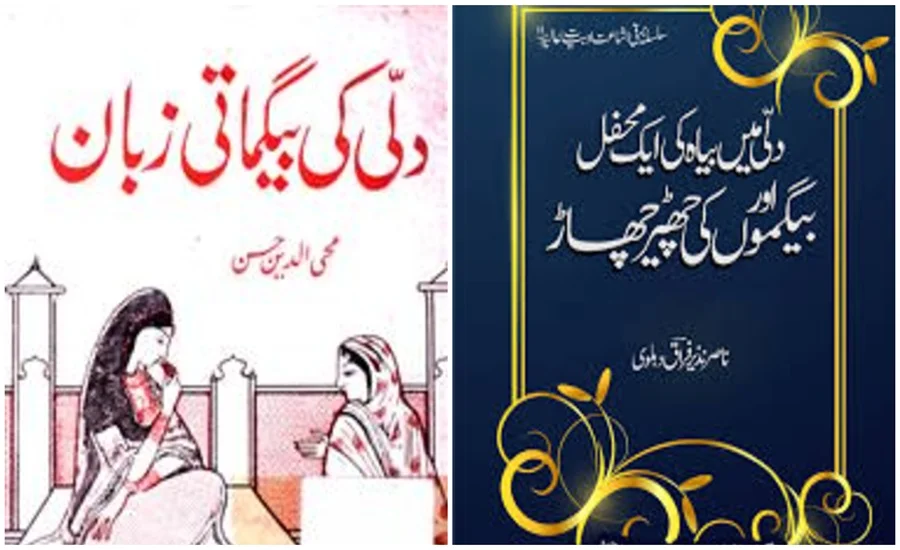
Begmati Language: The Forgotten Voice of Old Delhi’s Muslim Women

DELHI :

Once confined to royal palaces, the Begmati language shaped the unique feminine idioms of Muslim households but now survives only in whispers and memories.

New Delhi :

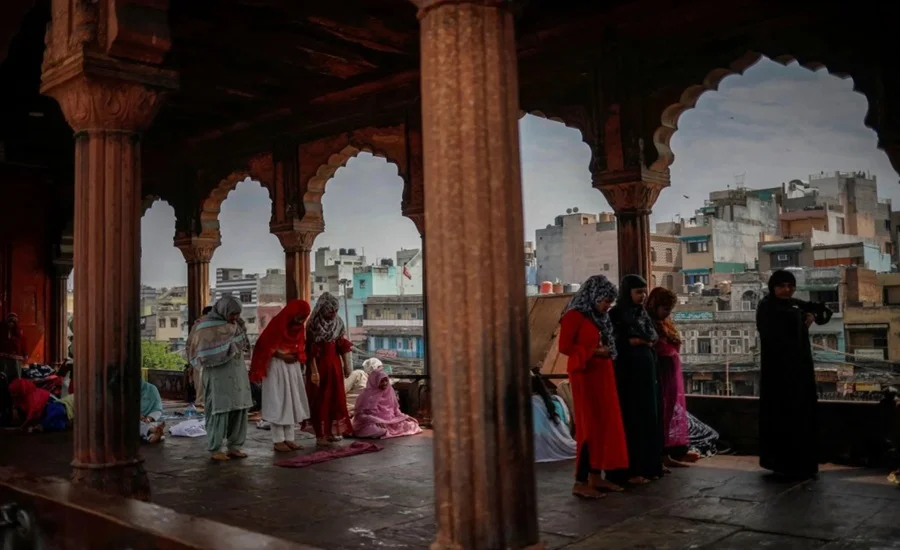
In the narrow lanes of Old Delhi, the echoes of a unique language once spoken behind the veils of royal and noble Muslim households are gradually fading. Known as the Begmati language, this distinctive way of conversation carried the idioms, proverbs, and expressions exclusive to the women of the forts and palaces — a language that was as much about identity as it was about communication.

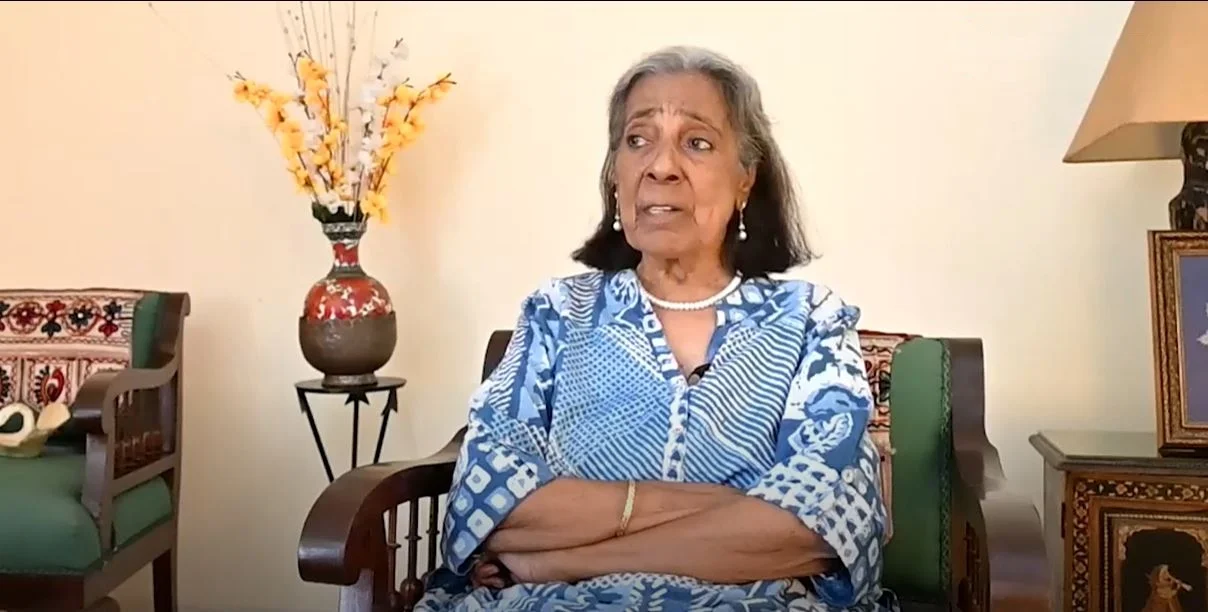
Sania, a doctoral researcher from Jamia Millia Islamia University studying the Begmati language, explains that “Begmati language is actually Urdu, but used in a very special way during conversations among women.” She notes that it was initially limited to the ladies of forts and royal palaces, who communicated through a code rich in kitchen-related idioms and feminine references.

“After the political turmoil in Delhi, this language spread beyond the confines of the forts and into the streets of Old Delhi,” Sania says. “Even today, many old families in Delhi retain the flavour of Begmati.

The Begmati language thrived as a cultural vessel among women — grandmothers, aunts, sisters, daughters, and household maids — who managed and nurtured the home. Sania remarks, “The language women spoke had a completely different flavour, a vocabulary distinct from that of men. Just as men’s conversations were incomplete without poetry, women’s speech was never without proverbs or idioms, sometimes sharp with scorn, other times filled with desire.”

One example she shares is the word ‘Nikhto’, once used to describe women who were considered impolite or outspoken — a word now absent from modern male speech. Another charming idiom contrasts male and female speech: men might say “Reinhold the tongue” to tell someone to be quiet, referencing horse riding, but women, unfamiliar with horses, would say, “Is the stitch of the tongue broken?” borrowing from the language of sewing and embroidery.

The deep roots of Begmati language lie in everyday female experiences — kitchen work, childcare, household management — shaping a linguistic heritage that remains unique. Sania adds, “Many proverbs related to maternal care or household chores are pure Begmati. For instance, if someone repeatedly visits a place, it’s said their ‘umbilical cord is stuck there,’ a phrase reflecting the language’s intimate connection with womanhood.”

Despite its rich cultural value, the Begmati language is now nearly extinct. Social reformers in the 19th century, including figures like Deputy Nazir and Hali, criticised it as a “bad language,” leading to its decline. The spread of education among girls also meant that standardised languages replaced the once-vibrant Begmati. “Begmati language is no longer in vogue,” Sania laments. “It was not preserved strictly because there was no need, and much of what remains has been recorded by male writers raised in women’s homes.”

The word ‘Begum’ itself hints at class and caste dimensions embedded in the language, which also found variants in places like Lucknow, Bhopal, and the Deccan region — areas with strong veiling traditions and feminine cultures. “The songs and speech of women in Hyderabad, for example, have a melody and rhyme much like the Begmati language’s rhythm,” Sania observes.

Political and social changes in the 19th century further pushed the language into obscurity. As wealth and status became more important, “people lacked taste,” and the Begmati language was dismissed as the talk of a “special kind of women” who should not be emulated. Sania quotes a popular saying mocking women of the time: “I forgot the lime, I forgot the tot, I started eating wheat, I started sleeping on khat,” illustrating how Begmati was ridiculed and sidelined.

Yet the language’s musicality and self-mockery shine through in its verses: “Wood burns like coal, coal burns like ash, I don’t burn coal like ash,” a phrase women would use to express frustration or resignation with their fate.

Today, while the Begmati language no longer flourishes as it once did, its traces linger in the conversations of old Delhi’s Muslim families — a living heritage of a time when women’s voices spoke their own truths behind palace walls.

source: http://www.clarionindia.net / Clarion India / Home> Culture> Featured> India / by Mohammed Bin Ismail / May 23rd, 2025

Mujawar Hussain Unveils Harsh Realities of Ghostwriting in Pre-TV Literary World

Allahabad, UTTAR PRADESH :

The acclaimed Urdu and Hindi writer from Allahabad exposes how poverty forced him to ghostwrite 1,065 novels.

New Delhi :

In the decades before television became a household staple in India and Pakistan, millions turned to novels filled with mystery, romance, and detective tales for entertainment.

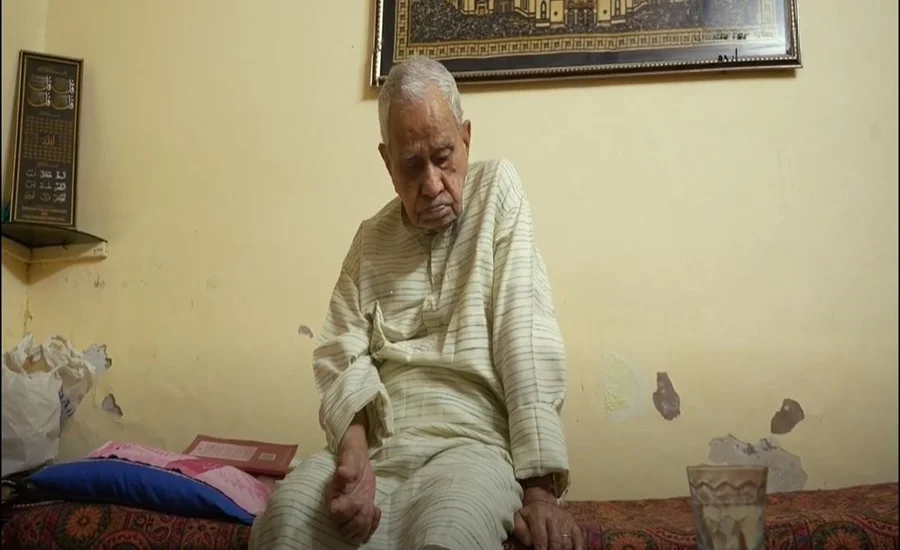
One Muslim writer’s story reveals the untold hardship and exploitation faced by many like him during that time. Mujawar Hussain, a prolific Urdu and Hindi author from Allahabad, has exposed the difficult truth behind the 1,065 novels he ghostwrote for Hindu publishers, many under pseudonyms.

Now in his elderly years but still sharp, Hussain shared his painful journey of writing stories for survival rather than pride. “The number of such books combined is 1,065,” he told Clarion India recently. “But the books I consider a source of pride are my research paper, Elements of National Unity in Urdu Poetry, and a collection of my religious essays,” he said.

Hussain’s writing career began in the 1950s when major publishers churned out fiction in bulk to satisfy growing demand. Muslim writers like him were often paid meagre sums to produce thick novels under pseudonyms for Hindu authors and publishers, including names such as Janardan Prasad Jaiswal, Shambhu Prasad Jain, Ashok BA, and the mysterious “Neqab Posh Bedi.” Hussain estimates he wrote 30 to 32 novels under Bedi’s name alone.

“Some of them were non-Muslims,” Hussain said, naming former students turned authors. “I wrote in their names because I had to. The money kept my family alive.”

His words underline the economic hardship faced by many Indian Muslims, forced to work behind the scenes without recognition while Hindu publishers reaped profits. Hussain recalls the pressure of poverty pushing him to write constantly. “I remember those days when I’d enter the house, and my wife would tell me food and drinks would last until the next evening. I’d sit down with a pen, write, and hand over the manuscript to the publisher. I’d take money — 30 rupees at first, then 60, then 100, and finally up to 2,500 rupees. With that, household expenses were met.”

Hussain’s experience highlights the sidelining of Muslim talent in the Indian literary scene, where Hindu publishers held most of the power. “That forced me,” he said. “The memory of that time is painful, and the work was painful. After that, I put down the pen.”

He also revealed working for Nikhat Publications, famous for publishing the works of legendary Urdu detective novelist Ibne Safi. When Ibne Safi’s manuscripts stopped coming to India due to political tensions between India and Pakistan, Hussain was asked to fill the void by writing novels under his name. “When I realised the institution was going to close, I started writing under his name,” he said. “I wrote very few novels in Urdu under his name — half partridge, half quail, meaning some was his, some I mixed.”

In Hindi, Hussain wrote extensively in Ibne Safi’s style, including the novel The Barrister’s Wife, though he remains uneasy about these works. “Even now, I don’t feel good about them,” he admitted. “I didn’t consider them a source of pride.”

Despite his difficult path, Hussain’s academic achievements stand tall. He earned an MA in Urdu in 1958 with two gold medals, a silver medal, a Victoria Gold Medal, and another prize he cannot recall. “No one has ever scored higher than me,” he said proudly. Yet this success did not shield him from the economic hardship that forced him into ghostwriting.

Dr Ayesha Khan, a literary historian specialising in the pre-television literary world, explains that Hussain’s story reflects a larger pattern of exploitation faced by Muslim writers. “Many Muslim authors like Mujawar Hussain were sidelined, forced to write under pseudonyms or for others to survive,” she said. “Hindu publishers often held the power, dictating terms and profiting from their work.”

Hussain’s reflections carry a sense of regret. Quoting a poem, he said, “Remembering the past is a punishment.” He sees much of his commercial writing as a compromise born of necessity, not passion. “Due to the compulsion of circumstances, I wrote some books that I do not consider a source of pride,” he said. “I was writing incessantly.”

Today, Hussain hopes that sharing his story will reveal the struggles of Muslim writers who toiled behind the scenes while others took credit. “I wrote for survival,” he said quietly. “But I want people to know the real story behind those books.”

source: http://www.clarionindia.net / Clarion India / Home> Editor’s Pick> Featured> India / by Mohammed Bin Ismail / May 26th, 2025

The Rich Legacy of Mughal Era Drinks: How Muslims Preserved Royal Recipes

INDIA :

From rose syrup to mango panna, Indian Muslims continue the Mughal tradition of crafting cooling summer drinks originally developed by royal physicians.

New Delhi :

Muslims in India proudly carry forward the centuries-old tradition of crafting refreshing drinks that originated in the Mughal era, a time when royal physicians invented syrups not only for their enduring taste but also for immense health benefits.

Salma Hussain, a researcher who has studied Mughal food and drink habits for over fifty years, explained: “Most of the drinks were invented by the royal physicians, who sometimes prepared drinks for medicinal purposes and sometimes for a refreshing taste, and they were very popular.”

She shared how the art of making these drinks flourished under royal patronage, especially during the reign of Empress Noor Jahan, whose influence in the royal kitchen brought many innovations. “Noor Jahan had creative talent. Under her leadership, excellent syrups were developed. The food was also good, tasty. She especially supervised the royal kitchen,” she told Clarion India recently.

Salma recalled an interesting anecdote from the Mughal court: “Once Queen Noor Jahan was strolling in the garden. Rose flowers were in full bloom. Noor Jahan’s mother, Ismat Ara Begum, used to make perfumes from these flowers. Noor Jahan called the royal physician and said many medicines were made from flowers; why cannot a syrup be extracted from the roses? ‘Many people drink in the name of medicine, but you should make something that will relieve us from the heat and be refreshing, and we will also enjoy it.’”

This simple request from the queen gave birth to the now-famous rose syrup, a cooling drink cherished across the Indian subcontinent to this day.

According to Salma, syrups were not limited to rose alone. “Syrups started to be made from roots, like khus syrup; Panna from mango. Similarly, vine syrup came up. Pomegranate syrup was made by cooking sour and ripe fruit, both said to be very beneficial for the skin,” she said. These drinks were especially popular among the royals, famous for their passion for beauty and health.

Salma further highlighted how Indian Muslims and Mughal royalty took special care to combat the intense Indian heat. “The heat in India was extreme, like today’s heat. Kings also used to cool drinks. Emperor Akbar started ordering ice from the mountains.”

The knowledge of cooling drinks extended to using yoghurt, lemon, and various salts to make beverages like shikanji and lassi, which remain popular today. 

“Rose syrup was made from flowers, custard from custard. Jamun syrup was made from fruits, vine syrup was made from mango syrup. Yoghurt was used a lot then. We learned how to make raita from it. They used to cool the yoghurt or mix it in water and make a drink,” she said.

She also pointed to the influence of neighbouring cultures: “A syrup came from Turkey, Aryan, which is the buttermilk we drink today. Almonds were used to make a lot of syrups. It is said that in Iran, almonds were put in hot water and savoured.”

Salma stressed the importance of these drinks beyond refreshment. “There are some unsubstantiated stories about drinks, but all of them seem appropriate, such as the first among the sages who made syrup; his name was Fitha Ghoras. Sage Fitha Ghoras was the first to give a medicinal drink the form of a syrup, like a decoction, etc. Over time, the trade in syrup gradually started and all kinds of syrups started being made.”

She also mentioned that in 1906, Hakim Abdul Majeed (founder of Hamdard) made the spirit-enhancing syrup. The same refreshing syrup is still alive, and we drink it to relieve the heat.

The purity and quality of ingredients were also important to the Mughals. Salma explained: “The water mixed in the syrup was from the Ganges, although the Yamuna River was closer to Delhi. Its water was not used because of the belief that it caused diseases.”

Water management was taken seriously: “The Mughals used to inspect water tanks. Special officers were assigned to procure and preserve the Ganges water.” 

This careful tradition of preserving royal recipes and using pure ingredients continues in India’s Muslim communities, who keep the memory of Mughal cuisine alive through generations.

Local historian Ahmed Khan commented, “These drinks are not just a part of our culture, they connect us to our glorious past. They remind us of the wisdom of our ancestors and the care they took in making life enjoyable and healthy.”

As the summer sun blazes, families across the subcontinent continue to enjoy these time-honoured drinks, a tribute to the enduring legacy of the Mughal era and the Indian Muslim custodians who have preserved these traditions.

source: http://www.clarionindia.net / Clarion India / Home> Editor’s Pick> Indian Muslims / by Mohammed Bin Ismail / May 26th, 2025

Amidst Manipur Turmoil, ‘Green Hero’ Anees Ahmed Plants Hope with One Lakh Trees

Bualjang Hills, MANIPUR :

Three decades of selfless environmental work in the lush hills of the North East have become a beacon of inspiration in the region

New Delhi :

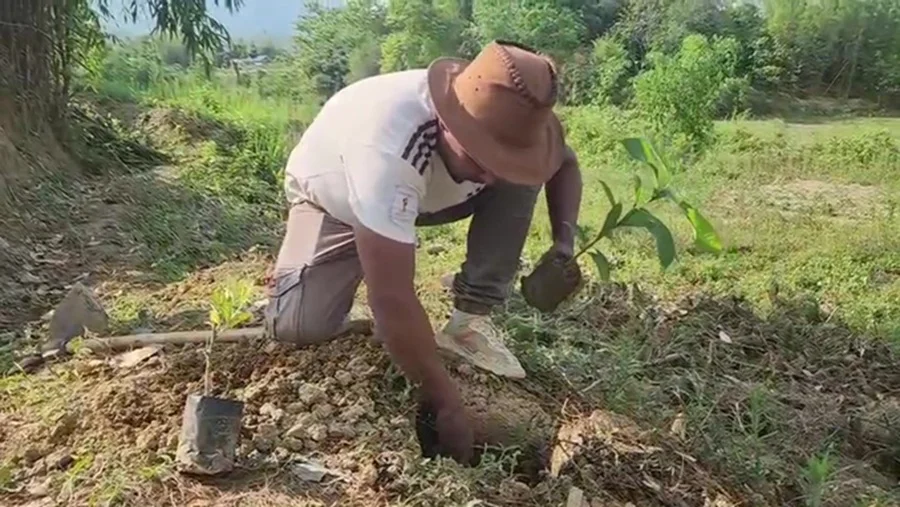
While Manipur continues to recover from the scars of communal violence, a quiet yet powerful story of hope has emerged from the lush hills of the North East. Anees Ahmed, a humble resident of the Bualjang Hills, has become a beacon of inspiration in the region, earning the title of ‘Green Hero’ for planting over one lakh trees in the past three decades.

At a time when the world races towards rapid modernisation and faces the harsh realities of climate change, Anees has chosen a different path, one rooted in soil, seeds, and selflessness.

Born and raised in the Bualjang Hills, often referred to as the jewel of the North East, Anees developed a fascination with nature from a young age. “I was always curious about trees, plants, and the mysteries of the forest,” he said.

Now in his fifties, Anees has dedicated the last 30 years of his life to greening his surroundings — not for fame or money, but for the pure love of nature. With no external support, no government grants, and without access to advanced facilities such as greenhouses or water tanks, he continues to nurture thousands of saplings from his modest home nursery.

Remarkably, Anees funds his entire campaign from his own pocket. He uses traditional, eco-friendly methods to collect seeds and cultivate saplings. “Each seed I plant, I treat it like a child. I make sure it grows strong,” he explained.

His nursery has produced and planted more than one lakh trees, while over 40,000 saplings have been distributed free of cost to individuals, schools, and village groups across the region. “What I do may seem small, but if many of us do it together, it becomes big,” he said with a smile.

From remote hilly terrains to urban public spaces, Anees’s green footprint can be found in every corner of Manipur. His plantations dot school campuses, roadsides, cremation grounds, and local parks. “In the early days, I focused on neglected public spaces like crematoriums and roadside areas,” he shared.

Over the years, he has also organised numerous plantation drives, particularly involving children and villagers. “I believe educating the next generation is the key. Once they start loving trees, they will protect them for life.”

Anees’s methods are as grounded as his values. Instead of relying on expensive tools or technologies, he uses simple techniques like seed balls — a method of enclosing seeds in a mixture of clay and compost, which are then scattered across barren areas to encourage natural growth.

“These methods are cheap, effective, and easy for anyone to follow,” he noted. “You don’t need to be rich or educated to plant a tree. You just need care.”

In a state often marred by ethnic tensions and civil unrest, Anees’s story offers an alternative narrative — one of unity, peace, and environmental stewardship. While violence has driven many to leave or take sides, Anees chose to stay rooted, literally and metaphorically.

“The hills are my home, and I owe something to them,” he said. “No matter how dark things get, nature always offers a path forward.”

Initially a lone effort, Anees’s campaign has gradually evolved into a small but growing movement. Inspired by his unwavering commitment, many locals have joined hands with him in recent years.

“His work gives us pride,” said Lalramsanga, a school teacher in Imphal. “He’s not doing this for publicity. He’s doing it for the earth, for our children.”

Another supporter, college student Anjali Devi, echoed the sentiment. “He made us realise that saving the environment isn’t someone else’s job — it’s ours too.”

Manipur’s ecology is under increasing pressure due to rampant development, illegal logging, and shifting cultivation practices. Environmental experts have long warned of the long-term consequences of deforestation in the region — including loss of biodiversity, increased landslides, and depletion of water sources.

In this context, Anees’s decades-long dedication to reforestation is not just admirable — it’s vital.

“His work shows how grassroots efforts can counterbalance environmental damage,” said Professor T. Indumati, an environmentalist from Manipur University. “We need more people like him.”

Anees’s mission is guided by a simple yet powerful motto: ‘Green Earth for Better Tomorrow.’ It’s a vision that goes beyond trees — it’s about fostering a culture of care, sustainability, and hope in a troubled world.

“The earth gives us everything. Isn’t it our duty to give something back?” Anees asks.

His answer comes not in words but in leaves, roots, and branches — in the quiet forests he has brought back to life with his bare hands.

As Manipur heals and rebuilds, the work of people like Anees serves as a reminder that peace and progress are not always forged in grand gestures or political speeches. Sometimes, they grow silently — in the shade of a sapling, nurtured by one man’s faith in the future.

His story speaks to people far beyond his village, offering a model of sustainable activism that resonates globally. At a time when climate anxiety is on the rise and ecological despair is mounting, Anees Ahmed stands as a symbol of what one determined individual can achieve.

source: http://www.clarionindia.net / Clarion India / Home> Editor’s Pick> Indian Muslims / by Mohammed Bin Ismail / May 28th, 2025

Mohammad Raza Khan to Represent India in Youth Basketball Championship in Maldives

Shahpura (Jaipur District) , RAJASTHAN :

A Muslim youth from Shahpura, Rajasthan, earns place in Indian youth basketball squad for South Asian Championship, inspiring local community and proving that dedication overcomes all challenges

New Delhi :

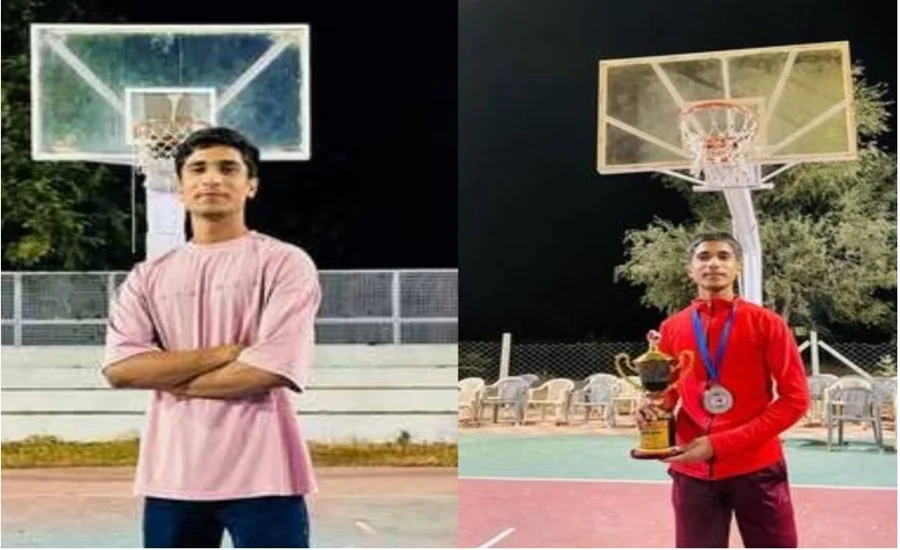
In a proud moment for both Rajasthan and the Muslim community, Mohammad Raza Khan, a young basketball player from Shahpura town, has been selected to represent India in the Youth Basketball Championship. His achievement has filled his family and local community with joy and hope.

Mohammad Raza Khan will participate in the South Asian Basketball Championship scheduled to take place in the Maldives on une 11. His selection to the Indian youth basketball team highlights not only his talent but also the determination and hard work that have brought him this far.

Raza Khan has been training hard at the Indian team’s camp in Indore, where he impressed coaches and selectors with his skills and discipline. “Raza showed remarkable focus and commitment during the training sessions,” said one of the coaches at the camp. “His talent is clear, and he deserves this opportunity to shine for India.”

News of Raza Khan’s selection was met with great happiness in Shahpura. Local residents, relatives, and sports fans gathered at his home to congratulate his father, Shabbir Hussain Khan. “We are very proud of Raza. His success is a shining example for all young people in our community,” said a neighbour. The atmosphere in Shahpura has been full of celebration and encouragement.

Mohammad Raza Khan comes from a humble middle-class family. Despite limited resources, his dedication, discipline, and passion for basketball have been unwavering. His journey serves as a strong reminder that with hard work and determination, barriers can be overcome.

Raza Khan’s achievement is also a proud moment for the Jaisalmer Academy, from where he hails. He is the ninth player from this academy to earn a place on the Indian basketball team, which speaks volumes about the academy’s contribution to nurturing young talent.

“The selection of Mohammad Raza Khan is a moment of great pride for Rajasthan and especially for the Muslim community,” said a local sports official. “His success shows that talent and commitment are found everywhere, regardless of background or economic condition.”

Residents of Shahpura are confident that Raza will not only represent India with distinction but also bring home a gold medal from the championship. “We all believe that Raza will make the country proud,” said a sports enthusiast in the town. “He is determined and ready to give his best on the international stage.”

Mohammad Raza Khan’s rise to the national team sends a strong message about the potential of young Indian Muslims in sports and other fields. It challenges negative stereotypes and shines a light on the hard work and talents often overlooked in smaller towns and communities.

This young athlete’s story encourages many others to follow their dreams, showing that with persistence, even those from modest beginnings can reach national and international levels of success.

Mohammad Raza Khan prepares to take part in the South Asian Basketball Championship, the hopes and prayers of Shahpura and Rajasthan go with him. His journey is a symbol of courage, dedication, and the bright future that awaits India’s youth when given equal opportunity.

source: http://www.clarionindia.net / Clarion India / Home> Editor’s Pick> India> Indian Muslims / by Mohammed Bin Ismail / June 05th, 2025

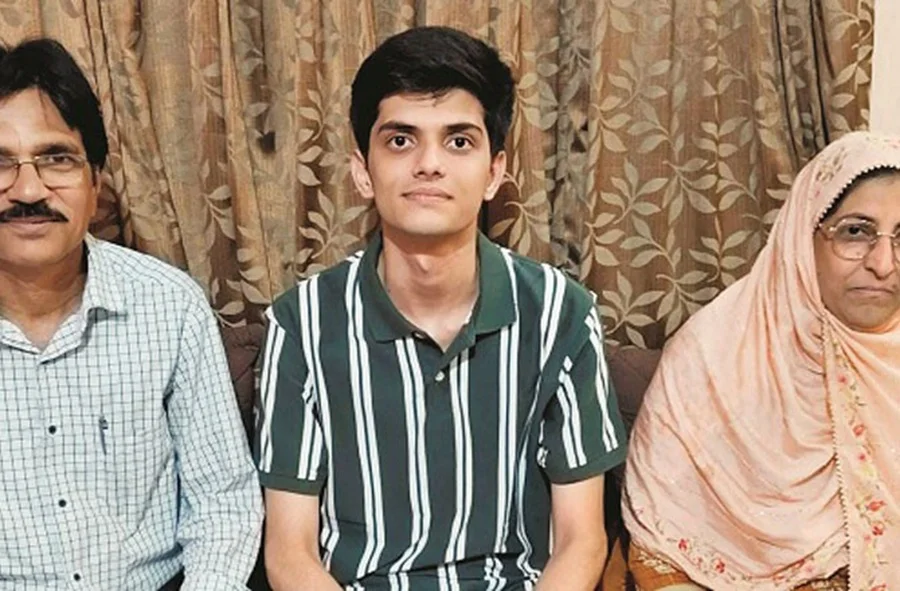
Nagpur’s Umaid Khan Achieves 21st Rank in NEET, Plans to Pursue MBBS at AIIMS

Nagpur, MAHARASHTRA :

New Delhi / Mumbai :

Muhammad Umaid Khan, a young Muslim student from Nagpur in Maharashtra, has made his community proud by securing the 21st rank nationwide in the NEET UG exam, a highly competitive medical entrance test in India. Umaid, whose academic journey has been marked by dedication and strong family support, now aims to pursue MBBS from the prestigious AIIMS in New Delhi with the clear goal of serving people through the medical profession.

Umaid Khan, son of Furqan and Shaheen Khan, studied at the Indian Olympiad School in Nagpur from 8th to 12th grade and achieved exceptional academic results, scoring 95.6% in his 10th standard and maintaining a similar level in the 12th grade science stream. Despite clearing the JEE Mains exam earlier, he chose to follow his passion for medicine, driven by a desire to help others.

Speaking exclusively to Clarion India, Umaid shared his study approach: “I studied with a plan and worked hard to achieve my goal. I prepared for NEET at the Alien Coaching Institute in Nagpur. I used to strictly follow my study schedule, revising daily, clearing doubts, and taking mock exams. This routine helped me stay focused and confident.”

Umaid’s success is also a reflection of his strong family backing. His father, Furqan Khan, is a civil engineer, and his mother, Shaheen Khan, manages the home. He has two brothers—Adeel Khan, an engineer, and Areeb Khan, who recently completed his MBBS and is undergoing an internship. Umaid credits their encouragement for his achievement. “My family’s support kept me motivated throughout,” he said.

Sohail Khan, Director of Indian Olympiad School, praised Umaid’s determination: “This student is an inspiration for all students of our school and college and is proof that determination and discipline are the keys to great success. His accomplishment highlights the potential of the Muslim youth when given the right environment.”

Umaid Khan’s story counters common negative stereotypes and showcases the commitment and talent present within the Muslim community. His decision to choose medicine over engineering despite acing both exams reveals a thoughtful choice prioritising public service over personal convenience.

“NEET is a tough exam, but nothing beats discipline, hard work, and consistency,” Umaid advised other students aiming for success. His words reflect the reality that merit and dedication can overcome barriers faced by minority students in India.

Indian Muslims often face challenges, including social prejudice and limited access to quality resources, yet stories like Umaid’s demonstrate their capability to shine at the national level. His journey from Nagpur to a national rank in one of the toughest medical exams in India is a clear sign that Muslim youth are ready and willing to contribute meaningfully to society.

As Umaid prepares for the next step in his career at AIIMS Delhi, he hopes to serve communities like his own and inspire other young Muslims to aim high and work hard. His achievement sends a strong message that with support and determination, Muslims can achieve excellence in education and professional fields.

source: http://www.clarionindia.net / Clarion India / Home> India> Indian Muslims / by Mohammed Bin Ismail / July 08th, 2025

Ali Hussain, the Unsung Bird Catcher Who Saved India’s Wings and Won Global Praise

Patna, BIHAR :

Born a bird trapper, Ali Hussain from Bihar became a guardian of India’s birds, working alongside top scientists and proving how traditional Muslim knowledge can serve the world’s wildlife

New Delhi / Patna :

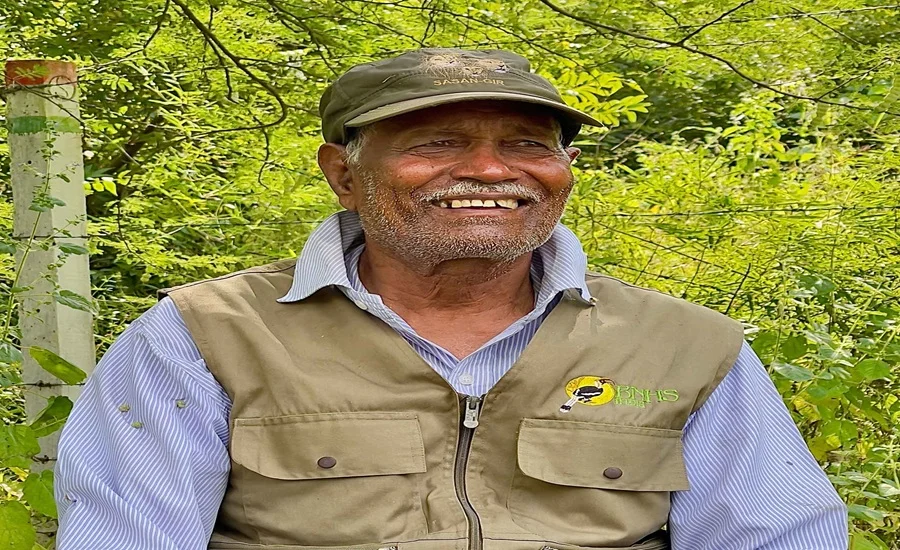
 When people first saw Ali Hussain walking through the fields of Bihar with bamboo cages and handmade nets, many thought he was just another bird catcher, and many called him that for years. But few understood what really made him special.

Ali Hussain, a quiet man from a family of traditional bird trappers, was more than what the eye could see. Behind his soft smile and weather-worn hands was a lifetime of wisdom passed down over generations. He had learnt to follow bird calls, understand their movements, and craft traps not to harm them, but to study and help them survive.

In the early 1960s, Hussain’s life changed forever. He met Dr Salim Ali, India’s most famous ornithologist, often called the “Birdman of India.” It was the start of a deep friendship and a shared mission. Instead of catching birds for trade, Hussain began working with scientists to catch birds for research and conservation.

“I had never met anyone like him,” Dr Salim Ali had once told colleagues at the Bombay Natural History Society (BNHS). “He handled birds like a doctor treats a child. Gently, with care. He knew more about them than many of us.”

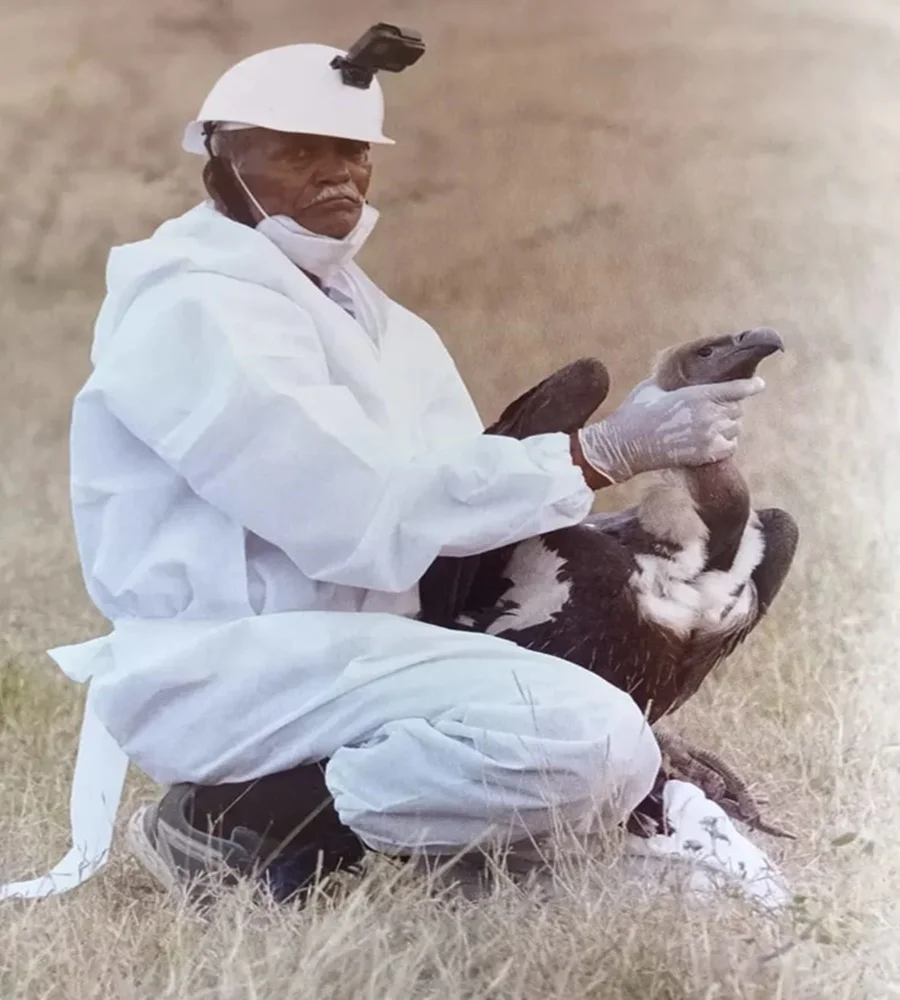
Ali Hussain helps capture and tag a vulture in Gir National Park. – Photo: Wildlife Division, Sasan-Gir, Gujarat

Hussain began travelling with BNHS teams across India, using his age-old skills to help ring thousands of birds. These rings, placed on birds’ legs, allowed scientists to track their migration and breeding patterns. And each bird was returned safely to the sky.

His fame didn’t stop in India. In the 1990s, American scientists from the Whooping Crane Recovery Programme invited him to the US. The whooping crane is one of the rarest birds in the world. Catching them was almost impossible until Hussain arrived there.

In just a few weeks, he safely captured 10% of the entire population without harming a single bird.

One American official said, “We were shocked. He caught birds we couldn’t even get close to. And they were all unharmed. It was a masterclass.”

For years, conservation efforts across the world relied mostly on modern technology — drones, satellites, and lab studies. But Ali Hussain showed that indigenous knowledge also has value.

“He never went to school,” said Mohammed Salim, one of his sons. “But he could read nature like a book. He knew where birds would land just by feeling the wind.”

His Muslim identity and simple lifestyle never stopped him from working with international scientists. In fact, it reminded many that people from rural and minority communities have a lot to offer when they are trusted and respected.

Even in his 80s, Ali Hussain never stopped helping. Young researchers from across India still come to his home in Patna, Bihar, asking him how to catch birds safely. His sons, trained under him, now assist with bird studies and continue the family’s work.

“Abba used to say, ‘Don’t hurt what sings. We’re here to protect, not harm,” recalled his eldest son, Iqbal Hussain.

For them, bird trapping was never about money. It was about respect — for life, for tradition, and for the Creator’s creation.

Despite his international praise, Ali Hussain was rarely honoured by Indian government bodies. No national award. No Padma Shri. No headlines on TV. Many believe this is because he was poor, Muslim, and from Bihar.

“People like him don’t fit the official image of a ‘scientist’,” said Prof Neelima Ghosh, an ornithologist from Delhi University. “But make no mistake, he taught us what our books couldn’t.”

Foreign universities invited him. Wildlife departments in the US and UK mentioned him in reports. Yet in India, he was mostly seen as “just a bird catcher.”

Ali Hussain’s connection with birds wasn’t just scientific — it was spiritual.

In many interviews, he said he felt that protecting birds was part of his faith as a Muslim. Islam teaches kindness to all living creatures, and he took that to heart.

“Birds pray too,” he once told a young researcher. “If we harm them, we stop their prayer.”

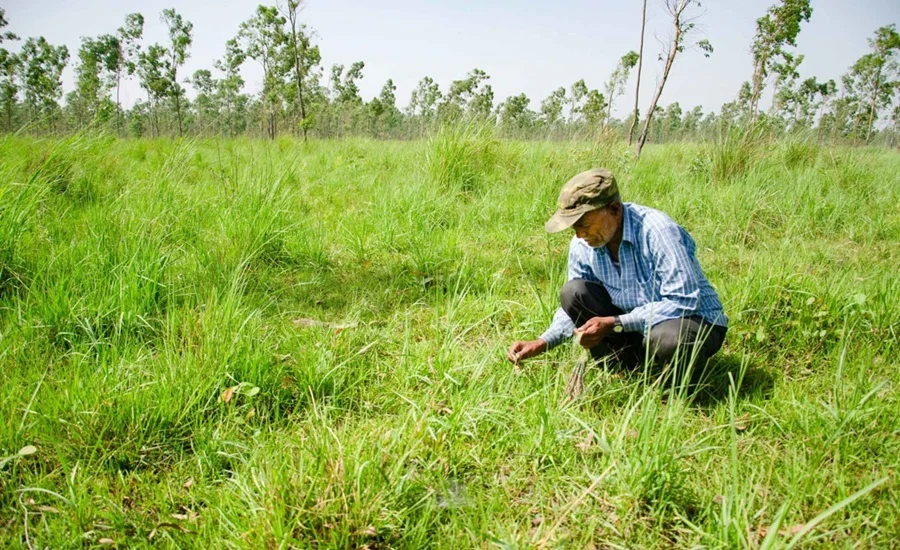
Ali Hussain sets traps to capture the Bengal florican in Pillibhit Tiger Reserve. Photo: Asad Rahmani taken from roundglas sustain

Today, his sons — Iqbal, Rashid, and Shafiq — run workshops on bird ringing and safe trapping. They continue to work with scientists from India and abroad.

“We grew up watching him work,” said Rashid. “He never rushed. He would wait for hours just to catch one bird the right way. Now we are doing the same.”

They are also trying to collect and record his trapping methods, which risk being lost as modern technology takes over. Many young Muslims from Bihar and West Bengal now visit the Hussain family to learn these skills.

In a country where Muslims are often shown in a bad light or made to feel like outsiders, Ali Hussain’s story is a powerful reminder of their quiet contributions. He didn’t protest, shout, or demand attention. He just kept working, helping both birds and humans.

“Ali Hussain should be in our school books,” said Dr Ramesh Gupta, a conservation writer. “Not because he was a Muslim, but because he was a great Indian.”

But maybe he deserves to be remembered because he was a Muslim too — a man who used his traditional knowledge, passed from father to son, to help save the very species others hunted.

He was not a scientist in the traditional sense. He didn’t wear a lab coat or speak English. He didn’t write research papers or held press conferences.

But to every bird that flew free because of him, and every student who learnt the gentle art of trapping from him, he was a scientist of the highest order.

He belonged to a generation of Muslims whose knowledge came from the land, who learnt by watching, listening, and respecting life around them.

India may not have celebrated him fully in his lifetime. But the birds did. And that’s something to think about.

source: http://www.clarionindia.net / Clarion India / Home> Editor’s Pick> Featured> Indian Muslims / by Mohammed Bin Ismail / July 08th, 2025