Tag Archives: Muslim Calligraphers of India

Wasifi family brings Tonk’s calligraphy to the global stage

Tonk, RAJASTHAN :

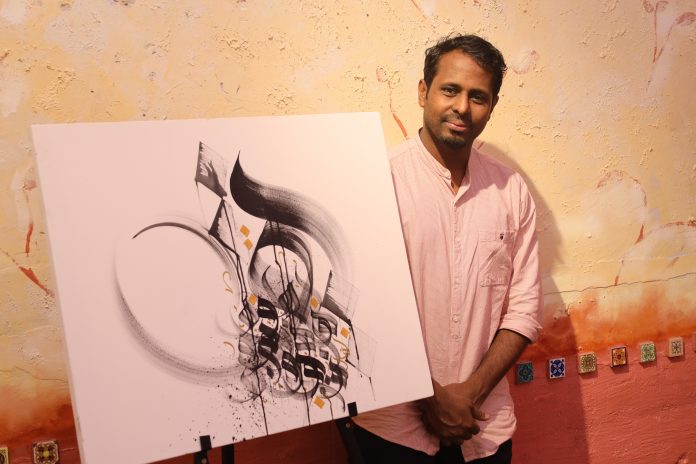
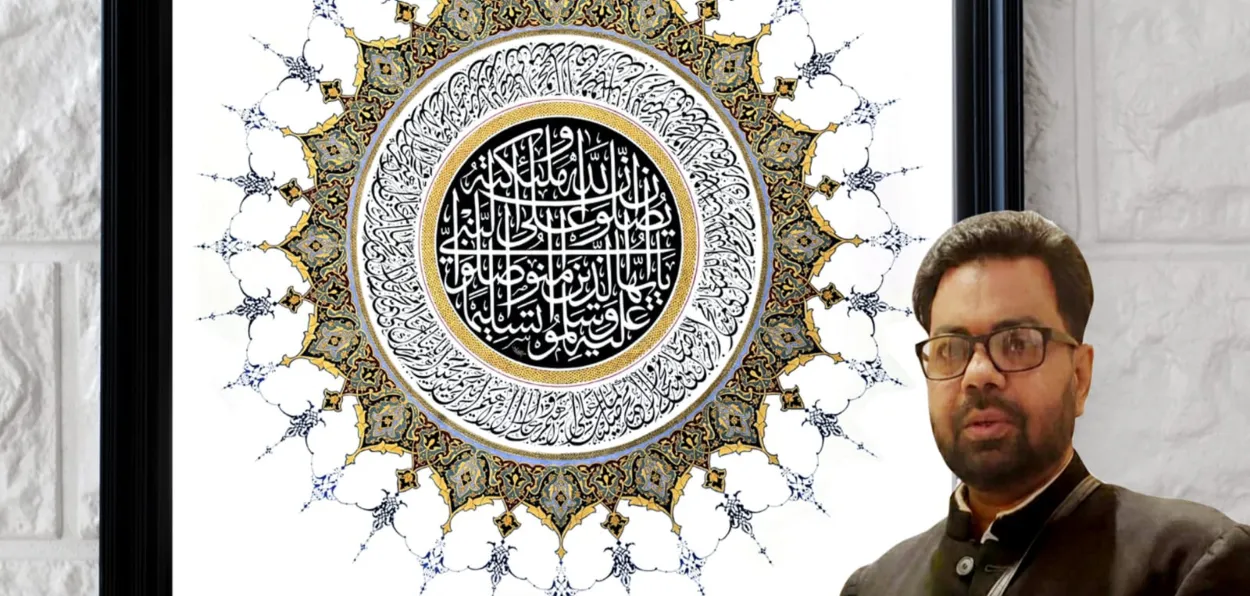
Qari Mutiullah Wasifi with his prize winning work

Qari Mutiullah Wasifi, a calligrapher from Tonk, a city in Rajasthan, won the second prize in the International Islamic Calligraphy Competition, organised by the Islamic Art Society in New York, USA.

This recognition comes amid the rise of digital fonts and artificial designs globally.

Qari Mutiullah Wasifi competed with more than 4000 artists from around the world. On this occasion, Qari said his success at an international forum is not sudden. Over the past four years, India’s presence in this competition has been consistent, and the Wasifi family has made it to the top every time.

In 2022, Qari Mutiullah Wasifi received the first prize. A year later, his son Haris Wasifi secured second place. In 2024, Haris won the first prize.

This year, the first prize was bagged by Egypt, the second by India, the third by Pakistan, and the fourth by Turkey. The award includes a certificate, a memento, and a cash prize. However, for the Wasifi family, the real honour is the recognition that comes with representing India.
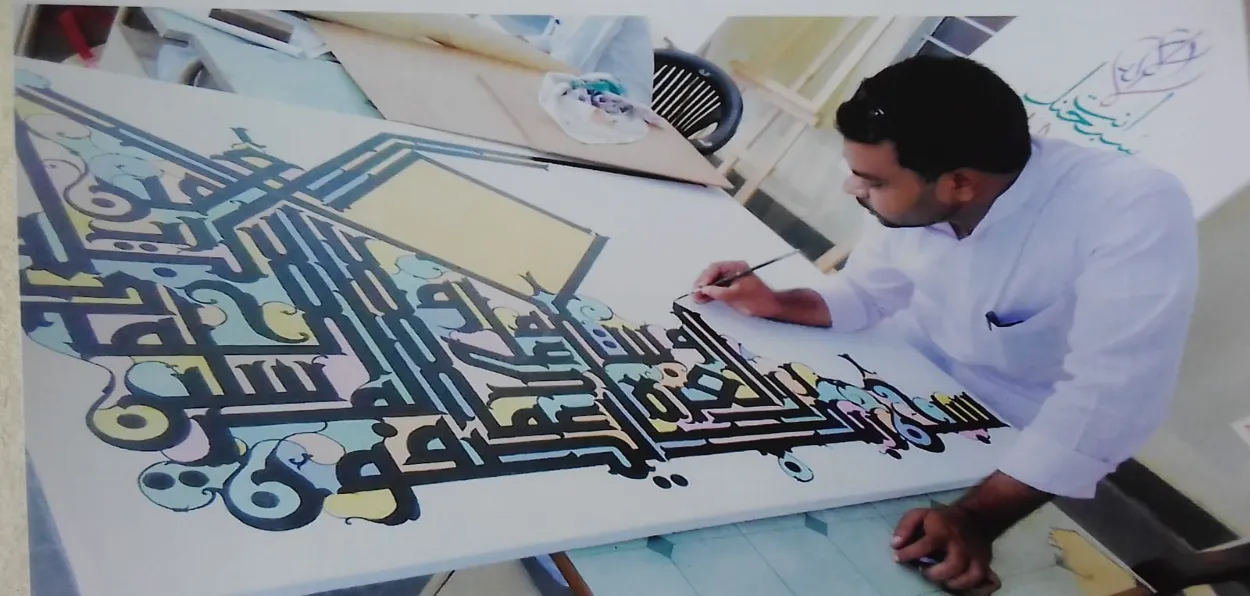
Qari Mutiullah Wasifi at work

Qari Mutiullah Wasifi’s journey didn’t begin at an art college. His first school was his own home. His late father, Qari Salimullah Wasif Furqani, was a renowned calligrapher, reciter of the Quran, and a scholar. He had a command of Arabic, Persian, and Urdu.

His calligraphy of the Quran was his speciality. As a child, Mutiullah watched his father sit for hours, writing. The sharpness of the pen, the curves of the letters, and the measured amount of ink used were not mere play for him, but a matter of discipline.

For formal education, he enrolled at the Maulana Abul Kalam Azad Arabic-Persian Research Institute (APRI) in Tonk. He completed a four-year diploma course, recognised by the National Council for Promotion of Urdu Language (NCPUL), Delhi. This is the same institution that has made Tonk a centre for Arabic and Persian studies.

Tonk is generally known for its madrasas, books, and Islamic education. But this city has also witnessed a well-established tradition of calligraphy. During the Nawab era, calligraphers from Iran and Central Asia taught locals the art.

Institutions like Maulana Abul Kalam Azad Arabic Persian Research Institute (APRI) have preserved this legacy. This institution has trained many calligraphers who have made a name for themselves in India and abroad. Qari Mutiullah Wasifi is an important link in this chain.

Wasifi told Awaz-the Voice that for him, calligraphy is not just a means of decoration, but a part of worship. To date, he has handwritten 27 copies of the Holy Quran. Some of these Qurans are written in extremely fine script, while others are adorned with gold and silver.
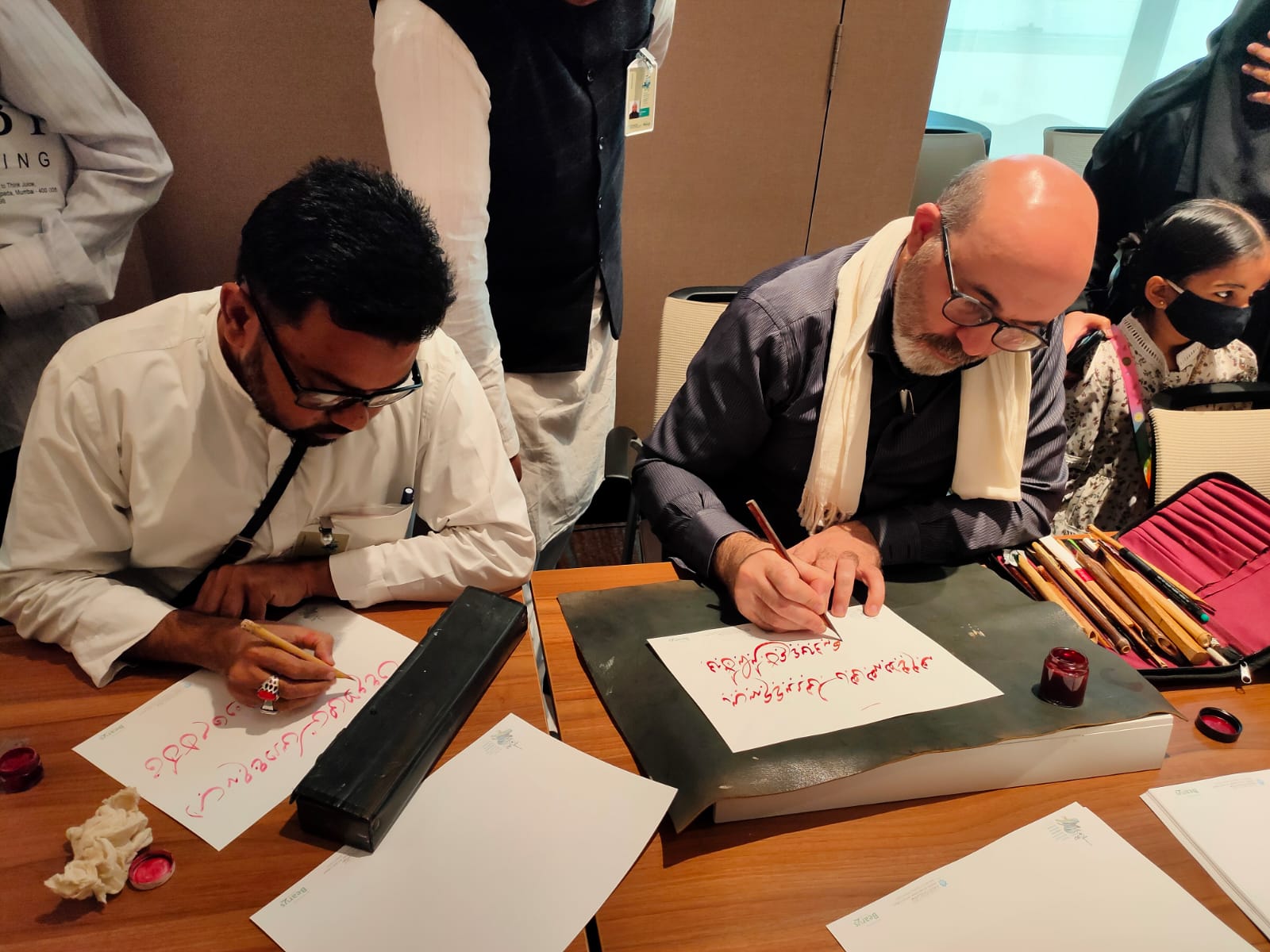
Qari Mutiullah Wasifi with a competitor

He has also undertaken unique projects, such as writing the entire Quran on a single large sheet of paper. This work requires years of practice and patience. The placement of each letter is crucial, and even a single mistake can ruin the entire work.

One of Qari Mutiullah Wasifi’s lesser-known yet important contributions is related to the preservation of manuscripts — completing the half-done copies of the Holy Quran and rare books in Arabic, Persian, and Urdu. So far, he has completed approximately 500 incomplete Qurans and hundreds of old books.

He has undertaken projects for private collectors, libraries, and research institutions. This effort breathes new life into books that might otherwise have been lost to oblivion.

Wasifi’s art is not limited to paper. He has done calligraphy on cloth, leather, wood, metal, grains of rice, lentils, marble, hair, and even inside bottles. This art is not only a test of manual dexterity but also of concentration and balance.

Wasifi participated in the international calligraphy competition organised by the Islamic institution “Irtika” in Istanbul, Turkey, in 2022. This institution organises a prestigious global calligraphy competition every two years, in which renowned calligraphers from around the world participate.

In 2023, he also participated in the international calligraphy competition organised by Fujairah Company in Dubai (UAE). This competition is known for its distinguished jury and global participation.

Wasifi says that if workshops, exhibitions, and competitions are considered together, his participation in national and international events, both within and outside India, totals approximately 30.

Wasifi thinks it’s not his achievement, but a means of showcasing the Indian calligraphy tradition at the international level.

According to him, such platforms provide artists with opportunities to learn, test themselves, and connect with calligraphers from around the world. He has also received several honours at the national level.

He has also participated in international exhibitions and workshops in places like Bengaluru, Udaipur, Aligarh, Diggi Palace in Jaipur, and the Lalit Kala Akademi in Delhi.

In the Wasifi family, this art has been passed down from one generation to the next. Qari’s eldest son, Haris Wasifi, is an internationally acclaimed calligrapher. The second son, Abbas Wasifi, is a Hafiz and Qari (one who has memorised the entire Quran and recites it with proper pronunciation) and is pursuing his education at Nadwatul Ulama, Lucknow.

The daughter, Sidra Wasifi, is an Alima (a female religious scholar) and teaches calligraphy to young girls. This family is not only preserving art but also discipline and heritage.

Qari Mutiullah Wasifi has established ‘Bazm-e-Wasif‘ in memory of his father. His dream is to create a special library and museum of calligraphy in Tonk, where his and his father’s manuscripts can be safely preserved. He says that despite the lack of resources, his resolve remains unwavering. His goal is to ensure that this calligraphic heritage of Tonk reaches future generations.

source: http://www.awazthevoice.in / Awaz, The Voice / Home> Stories / by Farhan Israeli, Tonk (Rajasthan) / January 29th, 2026
Calligraphy and a message deep within

Vijayapura (formerly Bijapur) / Kalaburagi (Gulbarga), KARNATAKA :

Around 40 artists from all faiths are on a campaign to preserve the Islamic art, and build communal harmony

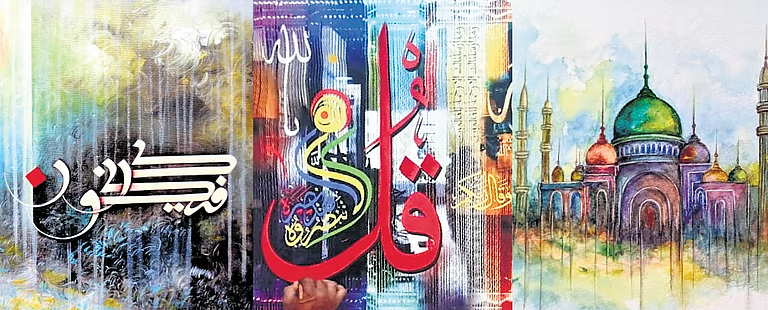
Calligraphy paintings created by various artists

Vijayapura :

When veteran artist Dr Subbayya Neela was invited to join a campaign to spread communal harmony through the ancient but fading art of Islamic calligraphy, he could not hide his delight. For him, the idea was not merely about preserving an art form, but about exploring the potential of art to transcend barriers of faith and culture.

“I have always believed that art knows no religion or boundaries. Art has the power to touch the hearts of people across communities. That is why, when I was approached to contribute to this unique initiative, I immediately agreed. I prepared a few pieces of Arabic calligraphy that were later exhibited in different places as part of the campaign,” recalled Dr Neela.

Among his works was a calligraphic representation of the Arabic phrase ‘Allahu Akbar’, which means ‘God is Great’. “I was given the liberty to interpret the phrase through my own artistic imagination, while maintaining the sanctity of the verse. It was both a responsibility and a joy,” he said.

Dr Neela is among 40 artists from across Karnataka, both Hindus and Muslims, who have joined this movement that began in Kalaburagi in 2020. The campaign was conceived not only to preserve Islamic calligraphy, which has been steadily losing ground, but also to foster unity at a time when society is fractured along communal lines.

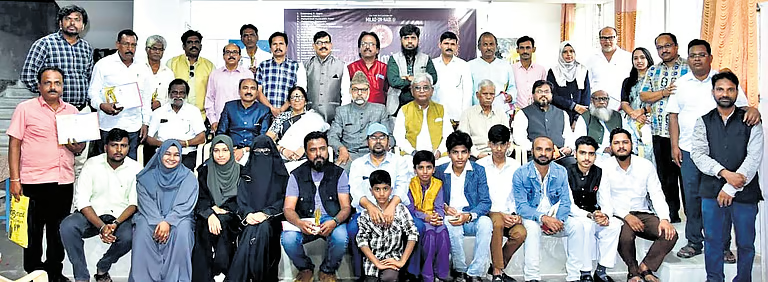
The group of artists who joined the campaign

The Initiative

It was the brainchild of noted artist Mohammed Ayazuddin Patel, a veteran painter from Kalaburagi and recipient of the Lalit Kala Akademi Award. “When hatred and intolerance seemed to be gaining ground in society, we felt the need to bring people together. We thought of reviving Arabic and Islamic calligraphy because it embodies both artistic beauty and deep spiritual messages. At the same time, it offered us a platform to involve artists of all faiths to work together for harmony,” he explained.

Ayazuddin was soon joined by another respected artist, Rehman Patel, and together they expanded the circle of participants. What started with around 15 artists, junior and senior, has now grown into a diverse collective of 40, half of whom are Hindus. These artists work closely with their Muslim counterparts to ensure accuracy in Arabic writing, while retaining artistic freedom.

The campaign, in many ways, draws inspiration from the history of the Deccan itself. Rehman Patel points out that after the decline of the Chalukyan dynasty, many local artisans and craftsmen found themselves unemployed. With the arrival of Muslim rulers in the region, particularly in erstwhile Bijapur and Gulbarga, these artisans were drawn into projects that fused Persian and Turkish influences with local Indian traditions.

“The architecture of that time was a collaboration. While designs came from foreign artists, the actual construction was executed by local Hindu craftsmen. The result was Indo-Persian art, a blend of Indian and Islamic architecture that still stands testament to cultural harmony,” he said. Arabic and Islamic calligraphy flourished during this period, adorning monuments and manuscripts, but over the centuries, as tastes and practices changed, the art form began to fade. “Our campaign is an attempt to not only revive this vanishing tradition but also to remind people of the harmony that once defined this land,” he added.

Preserving sacredness

A key aspect is the selection of verses from the Quran. The organizers have been deliberate in choosing verses that emphasize unity, peace and brotherhood, values that are not confined to one faith but resonate universally. “The artists are given complete freedom to use their imagination while ensuring that calligraphy remains the focal point. We guide them on the technicalities of Arabic script, but artistic interpretation is entirely theirs,” explained Ayazuddin. “This way, we safeguard the sacredness of the verses while allowing creativity to flourish.”

For many Hindu artists like Basavaraj Totad and Rajani Talwar who are involved in it, it has been a learning experience. Working with Arabic characters is not easy, and ensuring accuracy requires constant collaboration. Yet, this very collaboration has built bonds of trust and friendship. “It is heartening to see artists from different backgrounds sit together, discuss and create something so meaningful,” said Ashok Hiremath, an artist from Bidar.

To showcase their work and reach a wider audience, the collective has organized exhibitions, usually coinciding with Id-Milad, the birth anniversary of Prophet Mohammed. So far, five exhibitions have been held, each drawing large crowds from different faiths. “The response has been overwhelming,” Ayazuddin said. “We have seen people from all communities attend and appreciate the art. Many told us that such initiatives give them hope that religious harmony is still alive in our society, and voices of hate and division are not as strong as they seem.”

The exhibitions are not limited to calligraphy, but also feature paintings and photographs of ancient monuments from the Deccan region, tying the campaign to the cultural and architectural heritage of Karnataka. “This serves two purposes. It connects people with their shared history, and encourages them to protect and preserve monuments that are our national heritage,” said Rehman Patel.

Messages beyond borders

For the participating artists, the project is as much about personal conviction as it is about art. Dr Neela believes the messages of peace from saints and prophets have universal appeal. “Prophet Mohammed spread the message of peace, which can be accepted by anyone, anywhere in the world,” he said.

“If art can be used as a language of unity, it should not remain confined to one place. Art has always been a reflection of society. If society is fractured, art can heal and unite. That is what we are trying to do through this campaign,” Ayazuddin said.

source: http://www.newindianexpress.com / The New Indian Express / Home> Good News / by Firoz Rozindar / September 14th, 2025

Tonk’s Ustad Zafar Raza Khan and Student Shahjahan Shine in National Calligraphy Competition

Tonk, RAJASTHAN :

Tonk:

Tonk has been renowned for its calligraphy, a centuries-old art form that has earned the nawabi city an esteemed reputation on the international stage. This rich cultural heritage continues to thrive through the dedication of talented artists.

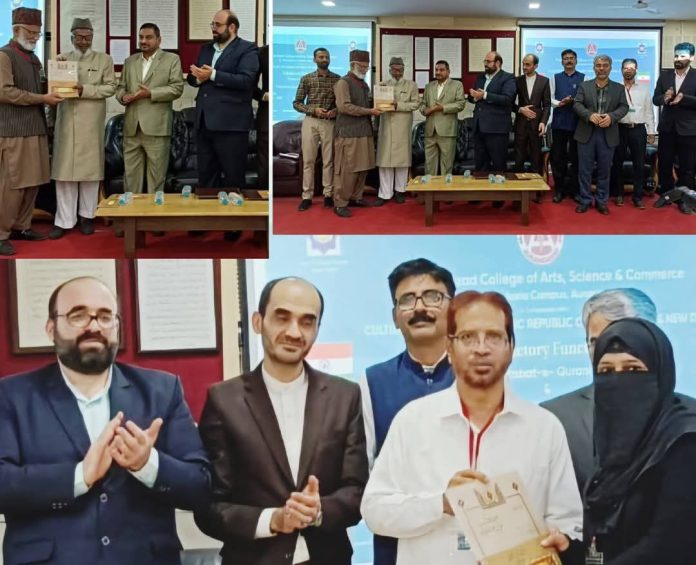
Recently, a national-level calligraphy competition was held in Aurangabad, attracting participants from across India, including Telangana, Maharashtra, Kashmir, and Rajasthan. Ustad Zafar Raza Khan and his student Shahjahan, both from Tonk’s Markaz-Talimul-Khutut institute, represented their city at the Second All-India Quranic Calligraphy Competition. The event was organised in collaboration with Maulana Azad College of Arts, Science, and Commerce (Aurangabad) and the Iran Culture House, Mumbai and New Delhi.

Participants were initially shortlisted based on online submissions of their work. Those selected were invited to the competition held on December 27. Among the contenders, Tonk’s calligraphers distinguished themselves, securing the top two honours and bringing glory to their city.

Ustad Zafar Raza Khan received high praise for his exceptional skill in the Nasta’liq script. While judges unanimously considered his work the finest, he was awarded the second prize due to international competition rules. These rules stipulate that if only one individual meeting the standard for first place remains in the competition, the top prize is withheld, and the second prize is awarded instead.

Shahjahan, another participant from Tonk, triumphed in the Naskh Arabic (Osmani Naskh) script category, winning first prize. Their achievements underscore the exceptional training provided at Markaz-Talimul-Khutut, a new institute established in Tonk on January 1, 2024.

The institute has rapidly gained prominence, thanks to its internationally acclaimed instructors, Ustad Zafar Raza Khan and Ustad Khurshid Alam. Both are celebrated as among the finest calligraphy masters globally. Their dedication has elevated the institute and inspired a new generation of artists to master this ancient art form.

The institute’s officials attribute their success to the hard work of their students and faculty, pledging continued efforts to preserve and promote the art of calligraphy. This achievement is a source of pride not only for Tonk but for Rajasthan and the entire nation.

source: http://www.radiancenews.com / Radiance News / Home> Latest News / by Raheem Khan, Radiance News Bureau / January 01st, 2025

ART SCAPE – The legendary writing art dying a slow death

Calligrapher Syed Manzoor Uddin

Calligraphy. Aware of this word? Or heard it somewhere? It is an art, now a rare art almost on the brink of extinction. It is an art of writing a decorative language that begins from right to left for instance, Urdu Arabic, Persian, Pashto, Kashmiri and Sindhi.

The art, ‘kitabat’ as it is commonly known, owes its origin to a period before the Mughal reign in India. At that time, a town called ‘Bayana’ in Rajasthan had an entire mohalla, ‘Katibaan’ (meaning calligraphers who write books only), whose residents’ vocation was calligraphy. The art saw its golden times during the Mughal era.

Emperors Babar, Jahangir, Darashikoh, Alamgir, Aurangzeb and the last Emperor-in-exile Bahadur Shah Zafar were not only experts in calligraphy but they also ordered that it was a must-learn art, an order that was first carried out in their own homes.

It is also said that Aurangzeb brought home the bacon by writing the Quran in calligraphy. Once, when his aging wife requested him to keep a maid for her, as she was unable to do the household chores alone, the emperor was believed to have replied, “How do you expect me to hire a maid for you with such a low income?”

For the people hailing from the upper strata, learning this art or ‘funne khattati’ was considered a proud privilege. They would use the language primarily for writing beautiful, artistic letters to their near and dear ones and also for incorporating this skill in various other forms of art.

Once, Muradabad was also considered a hub for calligraphic works for it had various printing houses for the purpose.

The art was used later to write books of literature and religion by various calligraphers, so also epitaphs and engraved writings on the monuments all over the world. On the three gates of the wonder of the world, the Taj Mahal, Surah Yaseen (a surah, which is considered as the heart of the Quran) is inscribed in splendid calligraphy. Similarly, in all monuments, which are a remarkable example of Mughal architecture, calligraphy in the form of writings on its various facets can be witnessed till today. These calligraphers were invited from different parts of the world. Most of them find their names mentioned at the end of their creation in all these structures.

Earlier, several pens or ‘kalam’ of 7–8 inches with different width, made up of wood and ‘sarkanda’ (cow dung) were used to write artistically. Its ink too was home-made. Kanpur was considered to be the hub for such ink-making, where it was a small scale industry. As the art saw new developments, so did its pens. Now, America and China are the main pen nib makers and Germany has replaced the wood pen with steel one.

The art started witnessing its decline in early 90s, when it was learnt that China and Pakistan had created a software that would replace the art to merely a mechanical work and render many jobless. The threat has come true in many aspects. Sadly enough despite having a glorious history, this legendary art is dying a slow death.

Seventy-nine-year-old Syed Manzoor Uddin is a renowned name in the field, who has to his credit around 600 books written on history, literature, prose, poetry and religion in Urdu, Arabic, Persian, Sindhi, Pashto and Kashmiri and who has countless works done and distributed in Bahrain, Sharjah, Dubai, Pakistan, Iran and Turkey. He says, “In the days of yore, a ‘khushnavees’ (calligrapher) would be awarded even a palace by the kings and queens for their work in the field. Now, those who want some work to be done in calligraphic style, refuse to pay even Rs 25 for such an arduous work.”

Syed Manzoor has written coronation/invitation, (sahra) for the Shah of Iran, rare letters of the world’s who’s who, addresses of ex-prime ministers of India, and poems for the showman Raj Kapoor’s elder daughter on her wedding and several such works. He has now stopped practising this art. He owes the reason to his age and the invasion of computer that has almost destroyed this art. “I have served the artistry for more than five decades. The hopeless times have done a great injustice to this rare writing form. Now, I don’t feel like working,” he reasons.

With the onset of computers, the art has suffered a setback mainly because the computers do not have softwares that could parallel the manual skill. Moreover, the graphic designers mainly do not have a good command of Urdu. Hence, the work they do on the computer is full of grammatical mistakes, Syed Manzoor observes.

Unfortunately, for such an art, there is no recognition in the form of any award. Most awards instituted by one or the other organisations, have now been withdrawn.

Take for example, the Information and Broadcasting Unit of Press Trust of India had a National Award for printers and designers that included calligraphers also. But the practice saw its last year in 1988.

Similarly, Ghalib Institute also had an award for the same and 15 years back this award was also withdrawn.

The Urdu Academy, however, still gives an award in this category that carries a citation and Rs 11,000. This year it is awarding, Mohd Yusuf, a calligrapher of repute though his work does not diversify in other languages as of Syed Manzoor.

An ailing and aged Mohd. Yusuf, who did India proud through many of his works, is now living in penury with his several family members in a small room, enough only for two men in old Delhi. While many calligraphers, for whom it was the only source of earning sometime back, now sit on pavements in the vicinity of Jama Masjid and get just a measly amount for their labour of love.

The art of calligraphy has mainly suffered because of lack of promoters. “Only in last November, the Ministry of Human Resource and Development had organised an Urdu Kitab Mela at Lal Qila ground. It turned out to be a major fiasco for this form of art. Even the rent for the ground, Rs 3,000, could not be recovered in the 11-day fete. Only two persons turned up all these days. And they too thought that a sum of Rs 25 was high for getting their names written in a calligraphic style. Even someone from the famous Rajshri Production bargained for a rare pen, used in the art and managed to buy it for just Rs 3,” recalls Syed Salahuddin, the disciple and son of Syed Manzoor.

Here, slogans were shouted against Mr Hamidullah Bhatt of Qaumi Council, who was blamed for not doing enough publicity for an art though he received a package for it. The condition of dying art was witnessed at the fete by Civil Aviation Minister Shahnawaz, Chief Minister Sheila Dikshit and HRD minister M M Joshi.

Salahuddin asks, “When a doctor can be awarded for operating upon the Prime Minister. There is an award for Hussain’s brush; even for a best citizen. Then why not for a calligrapher? Why not my father and guru, who burnt the midnight oil to prepare 600 books and countless other works for many ministries all over the world. Why can’t he be recognised for his contribution to the art?” Ironically, Salahuddin, who wants to carry forward this artistic legacy, finds no sponsors for it. He also tries hard to get an award for his aged father from the government.

Although a few organisations and individuals are doing some work in the domain, that is not sufficient. For example, Urdu Academy still provides a two-year course on calligraphy that includes computer calligraphy in its second year. While in the first year, the manual expertise in the Urdu language and design is taught so that they do not commit errors that today’s so-called computer calligraphers are committing. But, unfortunately the learners there come only from the aged and financially week backgrounds, who learn the art only to make fast bucks. In fact, the academy pays a scholarship of Rs 150 to teach this art!

“I see several grammatical and other mistakes in Urdu newspapers and names of roads, lanes, bazaars in Urdu are mostly wrong because the language is not known to those who get the work done on computers by inefficient people,” moans Syed Manzoor. However, he is happy about the Urdu software that has come in the market now as he is reminded of what Dr Zakir Husain’s said once, “The language that does not have its type face, dies its own slow death.”

A reputed calligrapher, Anees Siddiqui is known to be compiling a dictionary of calligraphers in India.

The art, however, still needs a helping hand. Will the recognition ever come to the dying art and its artists? Will the proud heritage of India be saved? Only time will tell.

source: http://www.tribuneindia.com / Tribune India / Home> Culture> Artscape / February 22nd, 2002

First of its kind, 3-day multilingual calligraphy exhibition, seminar in B’luru from March 10

Bengaluru, KARNATAKA:

Bengaluru:

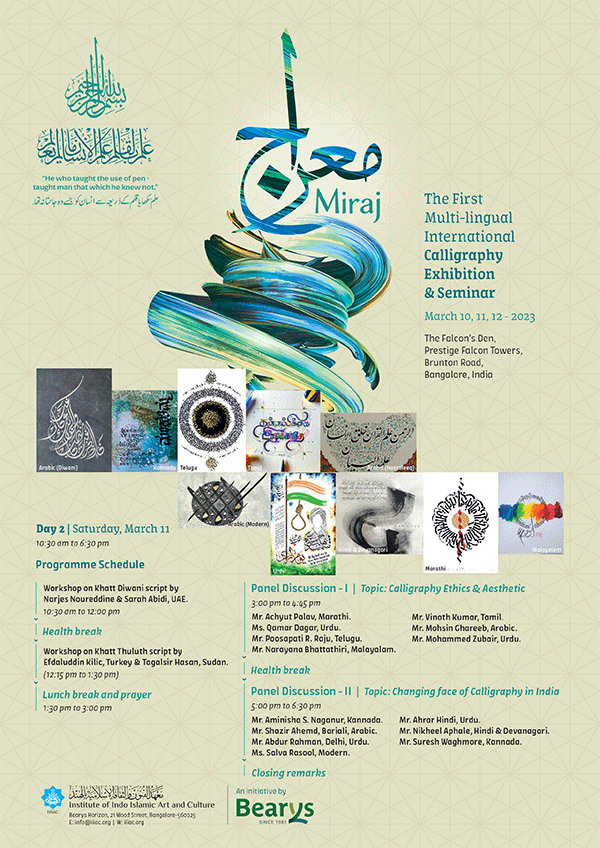
A three-day multilingual calligraphy exhibition and seminar named Miraj will be held in Bangalore from March 10 to 12, 2023.

The event will be held at Falcon’s Den, Prestige Falcon Towers, Brunton Road here in the city.

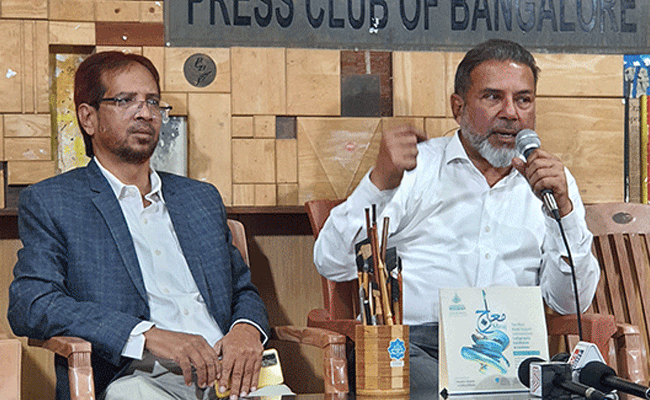
The exhibition and seminar will be first of its kind in Bengaluru, Syed Beary, Chairman of Bearys Group said in a press conference at the Press Club on Wednesday.

The event sponsored by Bearys Group is being organised by Institute of Indo Islamic Art and Culture ( IIIAC), Syed Beary who is also the Chairman and Managing Trustee of IIIAC added.

“More than 50 artists and experts from across the world will take part in this unique event. Calligraphy is a special art. It helps in maintaining balance between your mind, body and your thoughts,” he further added.

“Calligraphy finds its origin in Arabic. But Chinese and Japanese modern calligraphy are also significantly beautiful and pleasing to eyes. Even Indian regional languages have now adopted calligraphy and artists are exhibiting their skills and talents in their respective regional languages,” Syed Beary further stated.

Speaking about the exhibition, he said experts and artists from more than 10 countries including Turkey, Japan, Sudan, and Middle-East will take part in the event. Calligraphy experts in Urdu, Tamil, Malayalam, Kannada, Marathi and other regional languages will also be a part of the event.

“Seminars, Talks, and discussions on various aspects of calligraphy will also be held during this first of its kind three-day event,” he said.

Institute of Indo Islamic Art and Culture’s Principal Muqtar Ahmed  also spoke at the press conference and said the exhibition will be inaugurated on March 10 at 10:30 am by Irfan Razack, Chairman and Managing Director of Prestige Group, Bangalore. The seminar will be inaugurated later at 3 pm by Maulana Mufti Sageer Ahmed, Ameer-e-Shariyat, Karnataka, snf Principal & Shaikul Hadees, Darul Uloom Sabeelur Rashad.

Zia Ulla Sharief, Chairman India Builders Corporation, Bangalore, Irfan Razack, Chairman, MD Prestige Group Bangalore, Shabeena Sultana, Consul of the Republic of Tunisia, Bangalore and Pusphamala N, Artist, Sculptor, Writer and Curator will be guests of honor during the inaugural event that will be presided over by Syed Mohamed Beary, Muqtar Ahmed said.

He also spoke about how expert calligraphers of multiple languages will grace the event and share their thoughts and experiences with the participants.

Efdaluddin Kilic, Turkey, Narjes Noureddine, UAE, Dr. Abdullah Fattini, KSA, Tagalsir Hasan, Sudan, Mohsin Ghareeb, Bahrain, Farid Abdur Rahim, Kuwait, Dr. Ali Rabbani, Iran, Yuko Takaji, Japan, Achyut Palav, Marathi, Poosapati Raju, Telugu, Narayana Bhattathiri, Malayalam, Suresh Waghmore, Kannada, Vinoth Kumar, Tamil, Nikheel Aphale, Hindi & Devanagari, Salva Rasool, Urdu are some of the experts who will hold talks on Calligraphy on the first day of the event.

The exhibition will remain open from 10:30 am to 8:00 pm on three days of the event.

The program schedule is as follows:

source: http://www.english.varthabharati.in / VarthaBharati.in / Home> Karavali / by Vartha Bharati / March 08th, 2023

Popular calligraphy artist from Kerala aims to ‘build bridges between communities with his art’

Kakkore Village (Malappuram District) KERALA / Doha, QATAR :

Abdul Kareem with his calligraphy art. | Picture by Lulu Ahsana

A graphic designer by profession, Abdul Kareem, who is popularly known as Kareemgrahy, left his job at an American company in Qatar last month to pursue his passion for calligraphy. 

Kerala:

When tea-seller Abdurahman from Kerala bought a calligraphic painting from a Sufi saint to his home one day in the early 1980s, he hadn’t imagined that his six-year-old son Abdul Kareem will make calligraphy his profession. The painting had Arabic verses written in the shape of a person offering the Islamic prayer. 

“That image was inscribed in my heart,” said Abdul Kareem, 44, a popular calligrapher from Kerala, popularly known as Kareemgraphy. Originally hailing from the Kakkove village in Malappuram district in Kerala, Kareem presently lives in Qatar with his wife and three children.

A graphic designer by profession, Kareem left his job at an American company in Qatar last month to pursue his passion for calligraphy.

Love for calligraphy art was imbibed in Kareem from his childhood. Recalling an incident during his Madrasa days, Kareem said when his teacher wrote some Arabic words on the board, he was moved and could see “the beauty in how the words were written and shaped.” 

In 1996, Kareem had to drop out of his course at the School of Arts in Kerala due to financial constraints. He was 18. This, however, didn’t deter him from pursuing his passion. He started work as a painter of hoardings and a few years later, he moved to Saudi Arabia to earn a living, where eventually he became a graphic designer. 

“The beautiful symmetrical patterns on the Roudha Shareef (where the Prophet (PBUH) is buried), and the calligraphy on the pillars and walls there influenced me a lot,” said Kareem about the city of Madina, one of the holiest cities of Islam. 

Kareem said he wanted to devote all his focus to calligraphy and left his job to pursue it. 

“Calligraphy has been my passion for more than 20 years, but I took to serious learning and experimentation only five years ago and left my job to pursue this dream,” he said. 

Kareem credits his teachers for instilling a passion for knowledge in him and his success. “All those who give ilm (knowledge) in my journey are my ustaads (teachers),” he said. 

Calligraphy art has different forms and styles. Kareem follows the contemporary style.

“Art and rule are combined in traditional calligraphy. But in contemporary art, it is freedom. I do calligraphy on things and ideas that people in my locality can relate to. As an artist, I am trying to blend different styles, without conforming to any specific script or style,” he said. 

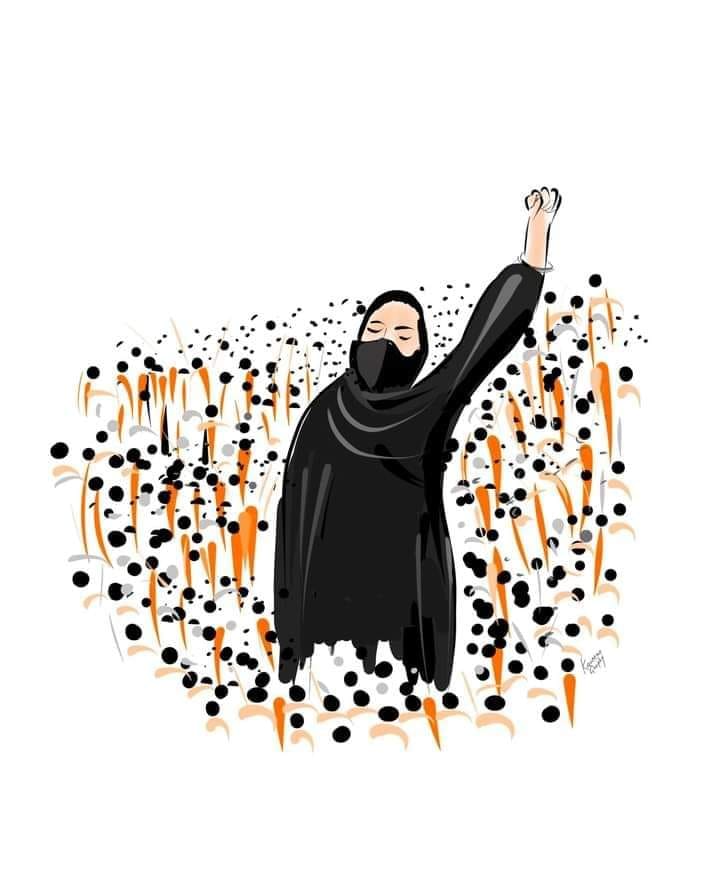
Abdul Kareem’s portrayal of a student during the Hijab row in Karnataka | Picture: Abdul Kareem Facebook

As his fame grew in the last five years, Kareem started conducting calligraphy workshops in India, UAE, Qatar, and Turkey. On August 10 this year, he attended the All India Calligraphy Akshar Mahotsav organised by the Calligraphy Foundation of India in New Delhi. He has also won a few awards for his work, including the Youth Icon Award-Doha (2017) and the Youth Signature Award (2021). 

Last year, Kareem founded a centre for calligraphy in Kozhikode called the KagrArt. Its logo was launched online by famous French-Tunisian calligraffiti artist ElSeed. “I want to popularise this art. It is more important than being famous. There should be a physical space for artists to meet and interact,” he said.  

KagrArt was founded by Abdul Kareem last year as a centre for calligraphy art. | Picture by Lulu Ahsana

In addition to his calligraphy works, KagrArt displays art pieces like lanterns, carpets, calligraphy and images from different countries.  

In one of the programmes held at KagrArt last month, Kareem talked about his visit to Uzbekistan and his love for travelling. 

“Instead of calling it a trip to Turkey or Uzbekistan, we can call it going to different people, and seeing things that they built and wrote in the past,” he said. 

Kareem’s dream is to build a bridge through his art between different religions, peoples and countries, between traditional and contemporary calligraphies, between Arabic and Malayalam calligraphies, and between old and new generations.  

“I want to work on a serious theme in future which would fill the minds of people with hope, and which would give the message that no one should run away from anywhere and that people can be where they are,” he added. 

Kareem’s wife Fasija said that “calligraphy is more than just a passion for him.” She credits his “hard work and dedication for the success he has achieved.”

Najiya O is an independent journalist from Kerala. She tweets at  @najiyao

source: http://www.twocircles.net / TwoCircles.net / Home> Lead Story / by Najiya O, TwoCirlces.net / August 18th, 2022

Mohammed Yasin, A Calligrapher and Painter Par Excellence, is No More

Mogalgidda (Mahbubnagar District) / Hyderabaad, TELANGANA :

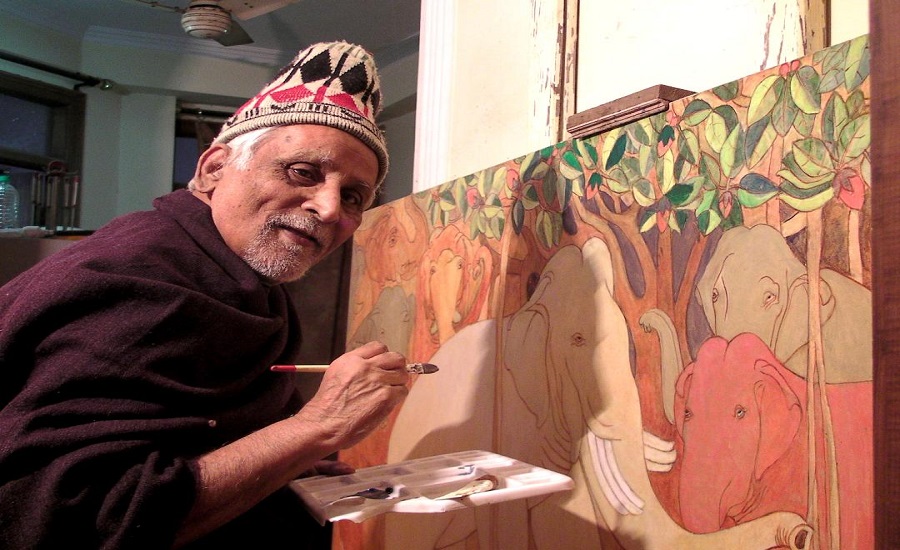
Mohammed Yasin, veteran painter and one of the best calligraphers in the subcontinent.

OBITUARY

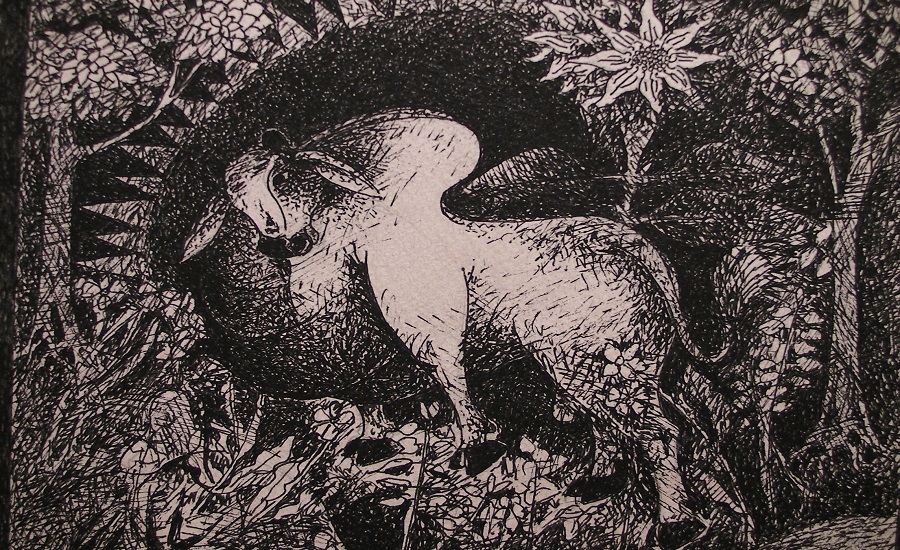
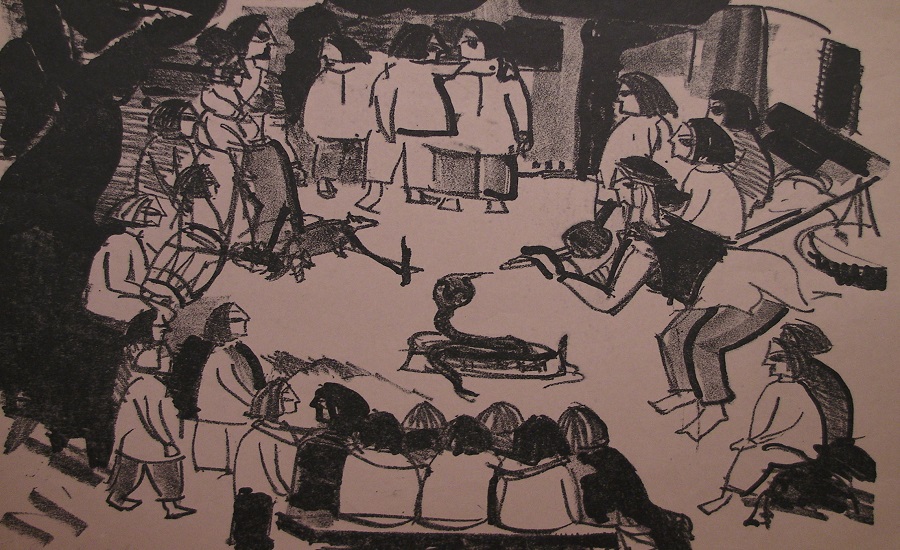
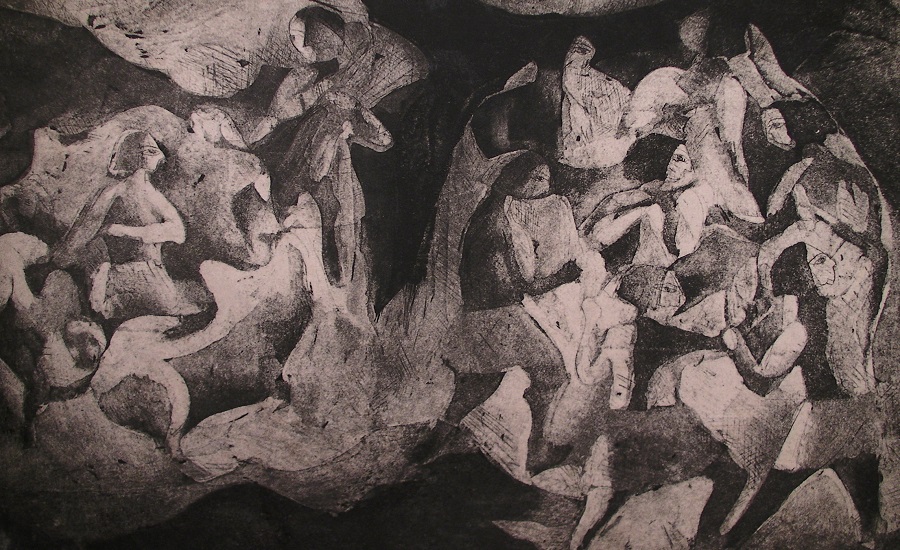
Yasin’s early works have explored all available mediums from lithography, etching, aquatint, engraving, dry point, serigraphy, mezzotint water colours, oils, gouache and egg tempera.

“85-year-old veteran artist Mohammed Yasin’s character impresses as a person and his characteristics as an artist. Perhaps the distinction is unreal, for, in his case, it is the same integrity that reveals itself in the structure of life and in self-expression through art.”

These were the words said a few years ago by a noted art critic for Mohammed Yasin, veteran painter and one of the best calligraphers in the subcontinent, who passed away on August 19.

Yasin was born in Mogalgidda, a village near Shadnagar, 30 km from Hyderabad. As a young school boy, he felt an aptitude for Art when he was just 14 years old. After passing his elementary and intermediate drawing examinations, he moved to Hyderabad city with his family members from his birthplace Mogalgidda.

Showcasing art work.

Though quiet in his demeanour, Yasin has had seriously tragic experiences. His father passed away when he was only 14 months old. He was brought up under his mother’s care and guidance. He had to grow up with many hardships. While as a boy, he was affected by tuberculosis of the spine which has left a limp which necessitates the use of a stick to aid in walking. But through a sustained musing, he has won an inner serenity.

Art works displayed in an art gallery

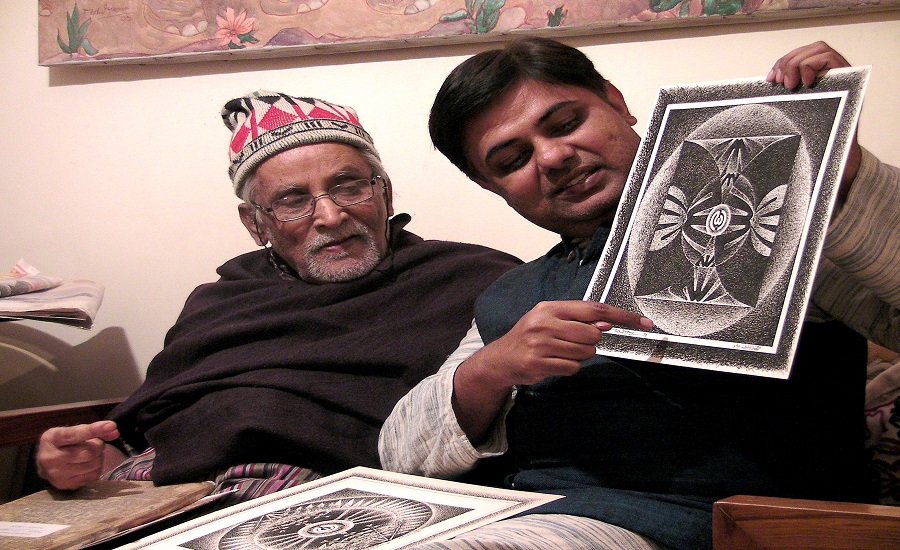
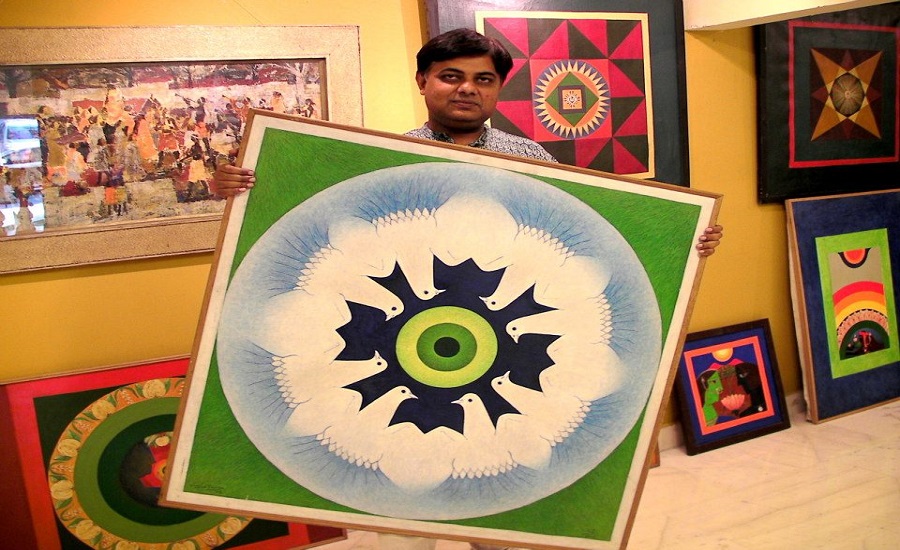
His most important contribution goes to the art of calligraphy. He chose to work in an abstract symbolic manner. Geometrical elements like the circle within the square, concentric circles, etc. comprise the basic structure emphasizing a symmetrical arrangement and abstract formal values–calm and quiet but they are, nevertheless, active fields. They seem to be deeply influenced by the Buddhist art. They generate impulses of colour and focus attention on the symbolic images they contain.

The use of circle, square, triangle adds to his innovation a transparency, a water colour. The orthodox prohibition of representational figuration in art made the Islamic tradition turn to calligraphy. Yasin has brought to this tradition a modernist love of abstraction and monumental geometricism.

His early works have explored all available mediums from lithography, etching, aquatint, engraving, dry point, serigraphy, mezzotint water colours, oils, gouache and egg tempera.

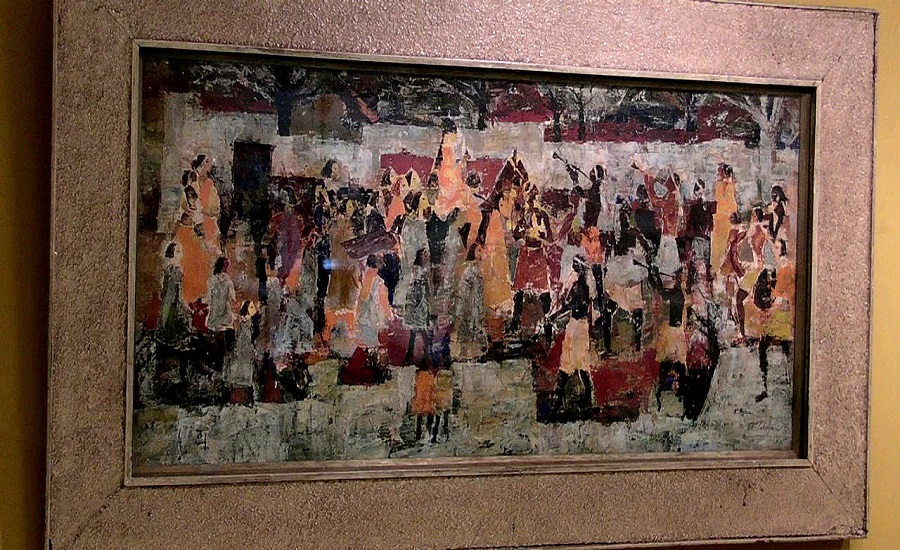
His works are very poetic and also dramatic; actually they are calligraphic in nature. Tantric symbolism, Sufi mysticism, echoes of the miniature schools, shades of thankas and pictorialised Arabic Calligraphy are all inspirations which could be identified in Yasin’s work.


Aseem Asha Usman is founding director of Aseem ASHA Foundation, and has been documenting the life and works of the veteran calligrapher and painter.

source: http://www.clarionindia.net / Clarion India / Home / by Aseem Asha Usman / August 20th, 2020