The recipient of Padmashri award for communal harmony had earned the sobriquet of ‘Karnataka’s Kabir’
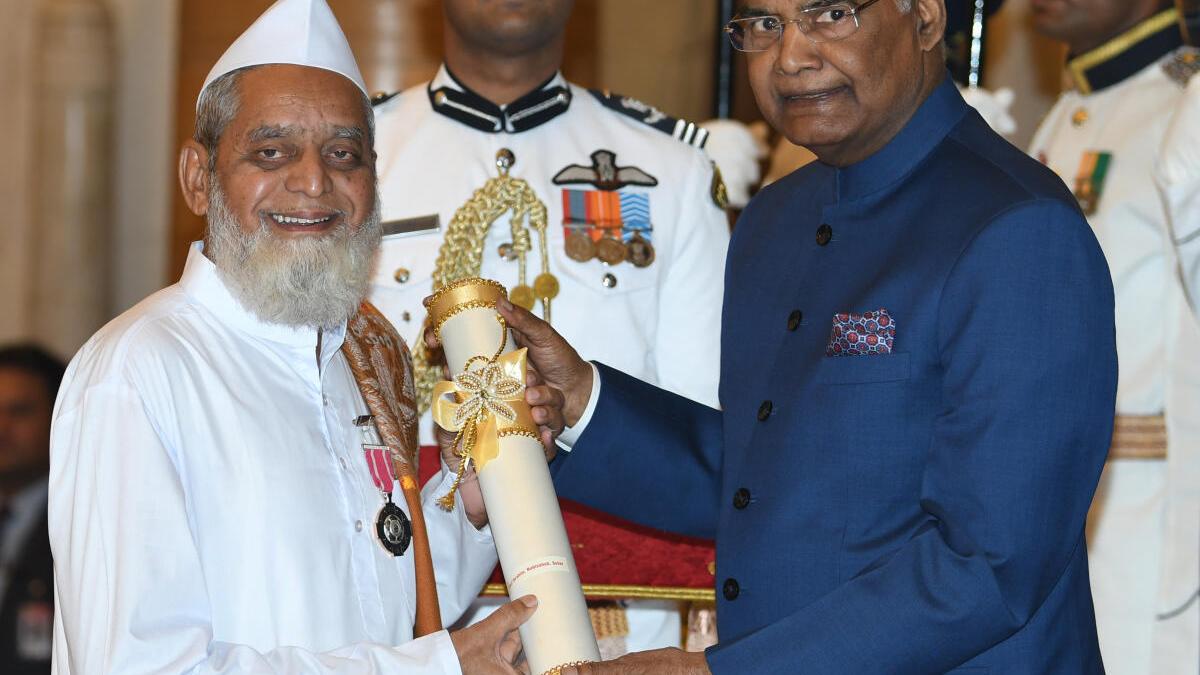
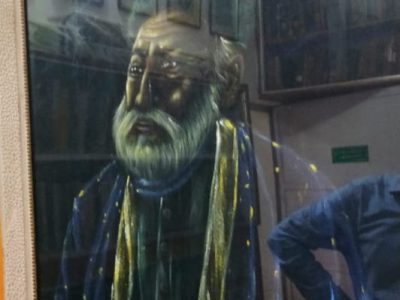
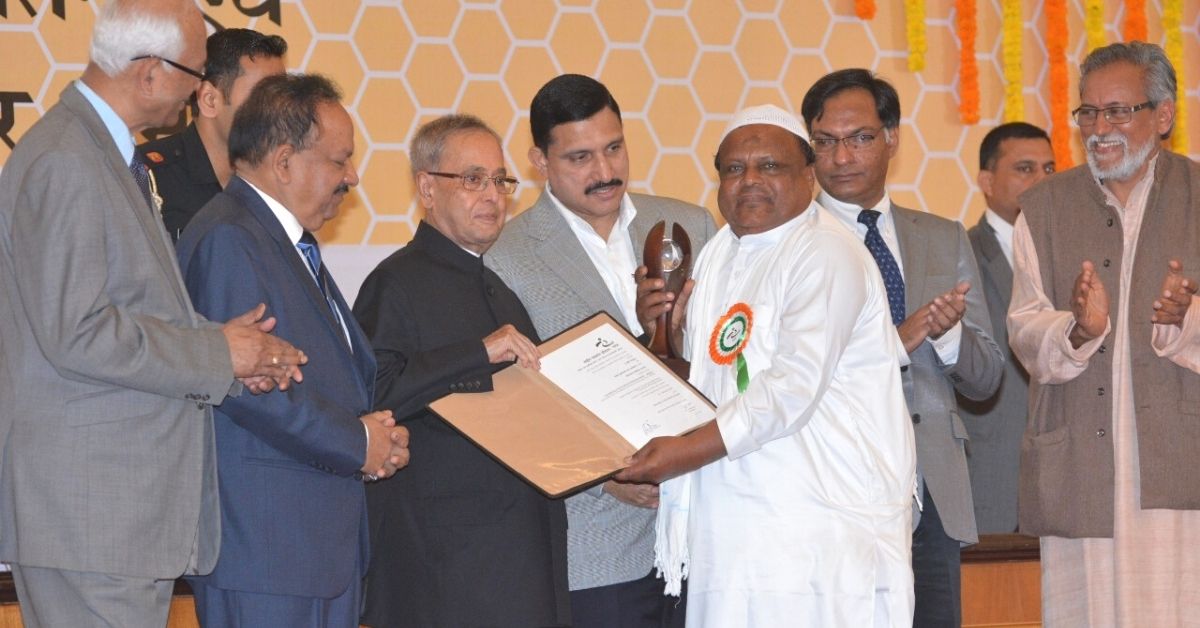
‘Karnataka’s Kabir’ Ibrahim Nabisaheb Sutar is presented the Padmashri award by President Ram Nath Kovind at Rashtrapati Bhawan, in New Delhi on April 2, 2018.
Ibrahim Sutar, polyglot folk singer, who toured India spreading the message of Hindu-Muslim unity, died in Mahalingpur in Bagalkot district on February 5. He suffered a massive heart attack around 6.30 in the morning. He died a few minutes later, family sources said. He was 82. He leaves behind his wife, son and two daughters.
The recipient of Padmashri award for communal harmony had earned the sobriquet of ‘Karnataka’s Kabir’.
The founder of ‘Bhavaikyate Bhajana Mela’ began his career as a Harikathe bhajan singer going around villages and towns. He regaled audiences with stories from Hindu and Islamic scriptures always leaving with a message of harmony, and need for ethics in personal life. He sang songs and gave lectures, quoting from multiple scriptures without the need to read from notes. He was equally well-versed in Kannada and Urdu.
In his later life, he emerged as a public speaker, visiting schools, colleges and Lingayat mutts to speak on vachana and dasa literature. He was honoured with the Karnataka Rajyotsava award in 1995, and the Padmashri in 2018.
Born in a poor weaver family in Mahalingpur, he dropped out of primary school to work as an assistant to a weaver. He developed a spiritual bent of mind early in life. He began attending lectures in the Sri Basavananda Swami mutt and participating in bhajans in Sadhu Maharaj temple. He was a member of the mosque committee that went around villages, asking the faithful to wake up early during the month of Ramzan. He studied Hindu and Islamic scriptures with equal zeal and developed a team of bhajan singers. The ‘Bhavaikyate Bhajana Mela’ performed across Karnataka and Maharashtra.
A routine performance was in the question–answer format interspersed with songs of dasa saints and vachanas . One of the team members came up with a question that sounded very ordinary, but had deep spiritual undertones, like: ‘Who is important in life – god or guru?’ Sutar used anecdotes from the Ramayana and Mahabharata, Islamic scriptures and stories from the life of prophets to give his opinion, that was directed at the audience, rather than the team member who kept asking questions.
source: http://www.thehindu.com / The Hindu / Home> News> India> Karnataka / by Special Correspondent / February 05th, 2022
Qureshi traces his lineage to chefs who served Awadh rulers more than 200 years ago.
Chef Imtiaz Qureshi receives Padma Shri award in 2016 from former President Pranab Mukherjee
Culinary legend Imtiaz Qureshi, who was credit with making the dum pukht style of cooking popular, died in Mumbai on Friday at the age of 93.
His eldest son and chef Ishtiaque Qureshi said the 93-year-old had issues with his vital organs and was hospitalised for some weeks due to old-age issues.
Who was Imtiaz Qureshi?
Born in a family of chefs in Lucknow on February 2, 1931, he traces his lineage to chefs who served Awadh rulers more than 200 years ago. His culinary journey started at the age of nine when his uncle was tasked with cooking for a British regiment. He later joined Krishna Caterers, a catering company that served the Indian Army during the 1962 war with China. He had even cooked for a state banquet hosted by former Prime Minister Jawaharlal Nehru. Along with this, he cooked for state banquets for visting foreign leaders including Queen Elizabeth II, Bill Clinton and Tony Blair on different occasions.
The Padma Shri awardee was also known for giving a fillip to the culinary excellence of ITC Hotels after he joined there in 1979. He established restaurants like Bukhara and Dum Pukht. Dum Pukht is a traditional slow-cooking technique.
He won the Padma Shri award in 2016. He is survived by two daughters and five sons. All seven of them are working in the culinary field.
‘Lucknow lost its biggest ambassador’
Chef Kunal Kapur posted on X, “His culinary legacy and contributions will forever be remembered and cherished. May his soul find eternal peace and may his memory continue to inspire us all.”
Singer Adnan Sami said, “Sad to learn that Padma Shri Master Chef Imtiaz Qureshi has passed away. He was a culinary genius & a man full of zeal for life!! He was also the modern day father of Awadhi Cuisine & his Biryani was legendary amongst everything else he fed the world. My deepest heartfelt condolences to his family.”
Chef Ranveer Brar paid tribute to the legend, saying, “Lucknow has lost its biggest ambassador. As a Lucknow boy with dreams of becoming a chef, the folklore of Imtiaz Qureshi is something I grew up with. It was around 1999 when I was working as a trainee chef at the Taj in Delhi. I remember once taking the Rs 612/- I had earned to ITC Maurya next door and trying out the Galouti Kebab. It’s an extremely sad moment for me, for everybody in Lucknow. (I) am currently in a state of shock.”
“Every interaction of mine with the maestro, was about Lucknow, his growing up years in Lucknow, his time at the Raj Bhavan, his time when he opened the beautiful Clarks restaurant.. And so much more,” he wrote on Instagram, “Sometimes you just can’t accept that someone’s no more. This is one of those moments…
“The fact that I was eating Imtiaz Qureshi’s food in an ITC hotel was life changing for me. Not only had he pulled the dum pukht technique out of Lucknow, he had given it a personality, an unmistakable refinement,” Brar added. “RIP chef, your legacy lives on forever…”
source: http://www.theweek.in / The Week Magazine / Home> News> Entertainment / by Web Desk / February 11th, 2024
Discover the transformative story of women in maroon berets rewriting their community’s narrative.
In the heart of Chhattisgarh, where challenges of illiteracy, alcoholism, and crimes against women cast long shadows over communities, a remarkable force has emerged to rewrite the narrative. In the villages of Gunderdehi region, groups of women wearing maroon berets stand as a testament to resilience, empowerment, and the unwavering spirit of change. This is the brigade of Mahila Commandos, a force initiated in 2006 by the indomitable Shamshad Begum, an activist and Padma Shri recipient.
The journey began with a stark reality: women voicing the anguish of living in households marred by alcohol abuse, domestic violence, and the perils of substance abuse engulfing their children. The Mahila Commandos emerged as a response to this cry for change. Shamshad Begum, the founder and guiding force behind this brigade, transformed the pain of these women into a movement that has since become synonymous with hope, empowerment, and courage.
Shamshad Begum’s vision reached beyond the constraints of societal norms, and the Mahila Commandos became the embodiment of strength and resilience. From homemakers to labourers, these women found a new identity in the title of “Mahila Commando.” Voluntarily patrolling their villages at night, they became the frontline warriors against fights, gambling, and substance abuse, tirelessly combating domestic violence, dowry, female foeticide, and gender discrimination.
What sets the Mahila Commandos apart is their commitment to creating a safer and more just society. Recognizing the importance of their mission, the Chhattisgarh Police conferred the title of Special Police Officer to 200 Mahila Commandos as a testament to their dedication and to the impact they’ve had.
Beyond their role as guardians of societal norms, the Mahila Commandos have also extended their impact to education and economic empowerment. They have reached out to help over 9,000 underprivileged girls with their education. The Mahila Commandos also engage in economic activities, producing and selling items like cow dung diyas, leaf plates and vermicompost, in addition to cultivating flowers and engaging in agricultural work.
Shamshad Begum’s transformative work goes beyond the immediate impact on families. Under her guidance the Mahila Commandos have helped form 5,000 self-help groups, empowering 75,000 women with an outstanding 98% loan recovery rate from banks. A movement that began with a hundred women has now blossomed into a movement involving 65,000 women across 14 districts of Chhattisgarh. The Mahila Commandos are not just protectors; they are catalysts for change. Shamshad Begum’s vision, courage, and determination have created a network of empowered women who refuse to be silent spectators to the challenges that plague their communities.
To honour stories like Mahila Commandos and Shamshad Begum, AU Small Finance Bank presents Badlaav Humse Hai Season 2, in association with Network18. Just like the first season, Season 2 celebrates 25 stories that showcase changemakers whose unsung work has helped carve out cultural identities for communities, lifted them out of poverty; created access where only barriers existed; shown communities how to work with nature to create true sustainability; changed hearts and minds about othered communities; changed the lives of many through economic, social or educational empowerment, and much, much more.
Shamshad Begum’s Mahila Commandos Transforming Balod’s Safety Landscape | Badlaav Humse Hai Season 2 / youtube.com / moneycontrol.com
source: http://www.moneycontrol.com / MoneyControl.com / Home> Badlaav Humse Hai
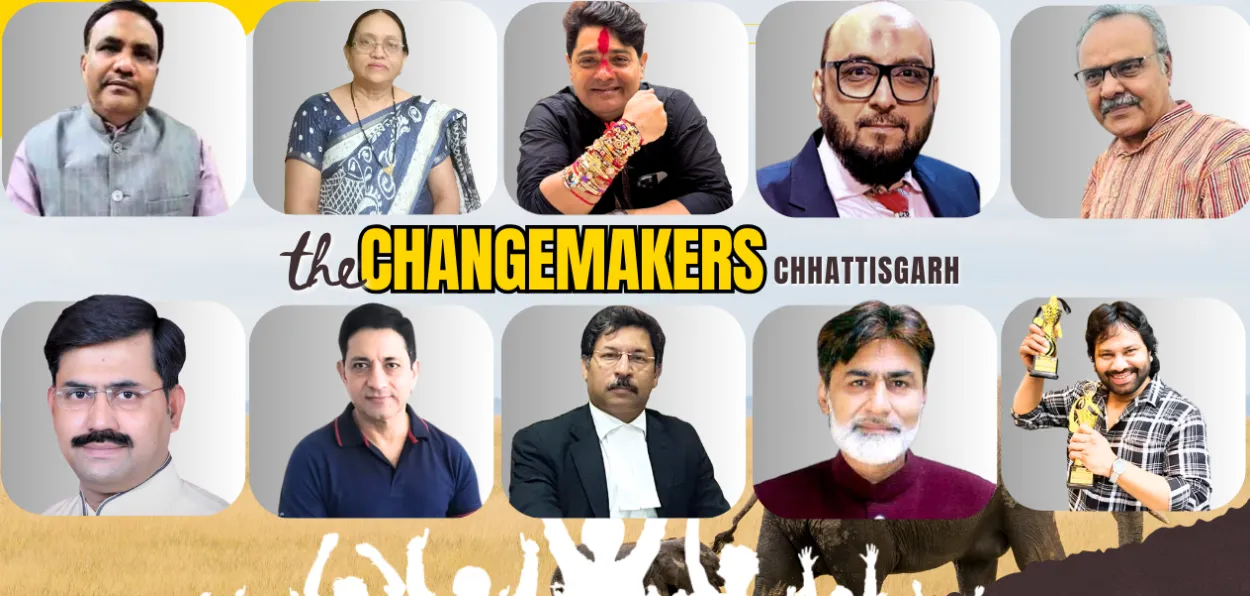
Chhattisgarh, the youngest of Indian states, is a repository of culture and antiquity and also home to spirited people. Some of them have set the trends and become changemakers. Here, we present 10 Changemakers from Chhattisgarh, whose work, grit and initiatives not only set examples for their state but also changed the lives of millions.
These 10 personalities are establishing benchmarks across art, politics, education, science, health and social servicein the state.
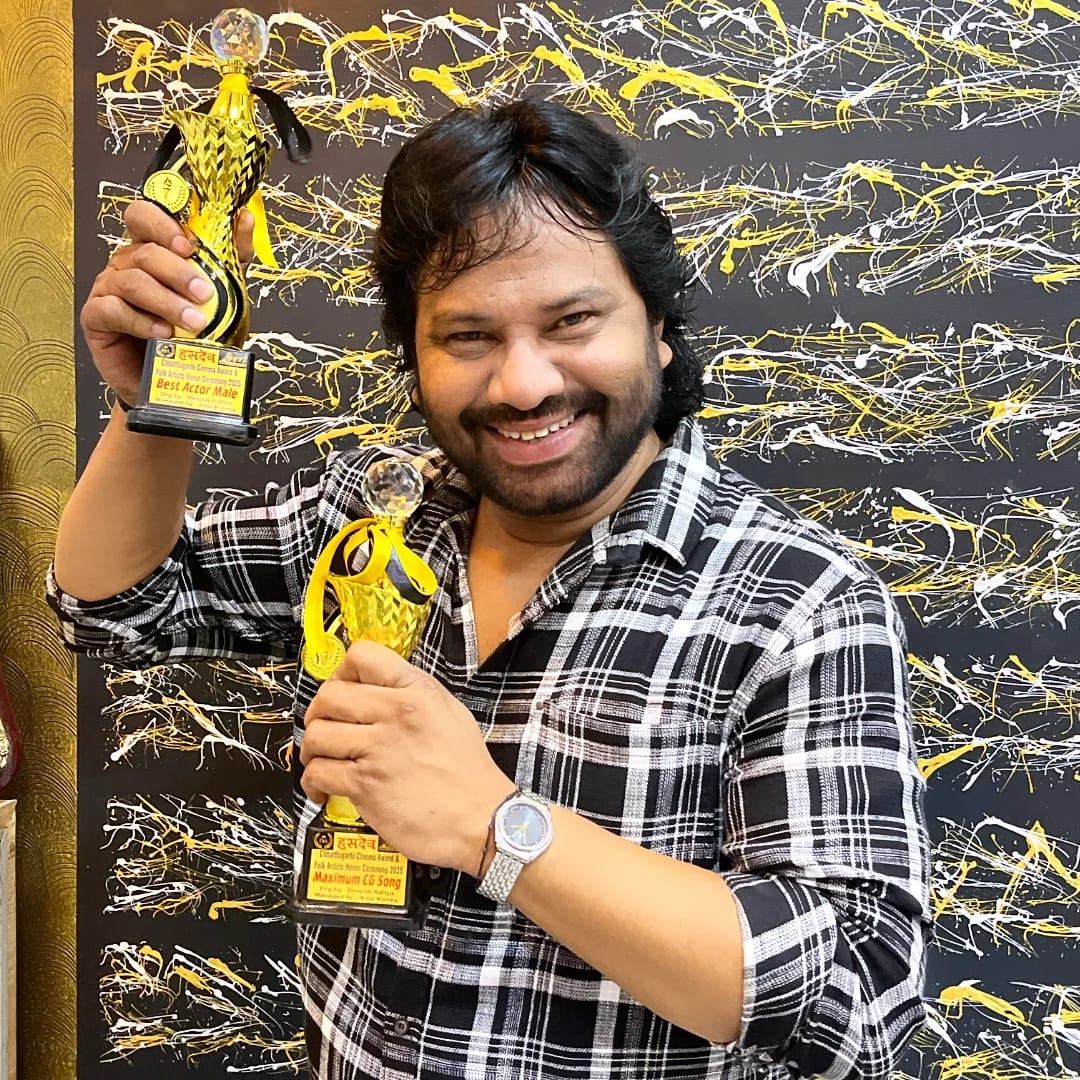
Karan Khan: Superstar of Chhattisgarhi Cinema
Karan Khan is a superstar of the Chhattisgarhi cinema, popularly known as “Chhollywood.” His work extends beyond feature films into music albums, video songs and live cultural events. In recent years, he has appeared in hundreds of Chhattisgarhi songs and albums, many of which have gone viral on YouTube and other platforms, such as the “Ditto Karan Khan Mona Sen” album.
Born Syed Tahir Ali, Karan Khan worked from cinema and music to broaden his reach and fan base. He has been a strong advocate of raising production quality in the regional films. His upcoming filmis being shot on an Arri Alexa—a professional-grade camera rarely seen in Chhattisgarhi productions, which usually face limited budgets and access to high-end technology. Khan strikes a balance between tradition and contemporary presentation to meet the expectations of changing audiences.
Mir Ali Mir: Poetic genius
When you hear the lines “Nanda jahi ka re… kamra au khumari, araitutari…” one name instantly comes to mind: Mir Ali Mir. His real name is Syed Ayyub Ali Mir, but in the world of literature, he is popularlyknown as Mir Ali Mir. Famous for expressing deep thoughts about life in simple words, his ghazals portray love, longing and life’s contradictions, while his Chhattisgarhi compositions are steeped in the fragrance of folk life.
Chhattisgarh has always been fertile ground for literature, art and culture, and Meer Ali Meer carries this legacy forward. His writings strengthen the pride of the Chhattisgarhi language and give voice to the pain, struggles and sensitivities of common people. Born on 15March 1953 in Kawardha, Meer Ali Meer enriched the Chhattisgarhi language and gave it a new identity.He is not only a poet but also an indefatigable promoter of Chhattisgarhi literature, actively working to connect younger generations with the region’s poetry and verse.
Aijaz Dhebar: transforming Raipur
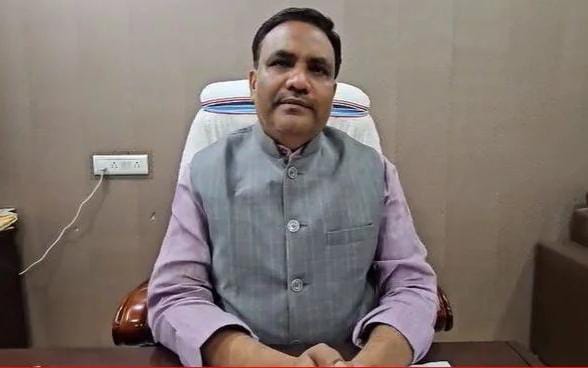
The story of Chhattisgarh’s transformation is incomplete without the mention of Aijaz Dhebar’s name. He is more than just the mayor of Raipur, the capital of Chhattisgarh; he is a symbol of struggle, commitment and secular politics.
Born in a modest Muslim family in Maulana Abdul Rauf Ward of the Old Raipur, Dhebar helped run his household while pursuing his education. “My circumstances didn’t hold me back; they propelled me forward,” he often says. In January 2020, he was elected Mayor of Raipur Municipal Corporation, defeating his opponent, Mrityunjay Dubey. “I never considered myself a representative of just one religion,” he says. Recognising his leadership, he was appointed National Vice-President of the All India Mayors Council—the first mayor from Chhattisgarh to hold this post. His message to youth: “Don’t waste your energy on hatred and negativity. Politics and society today need constructive, innovative young people.”
Dr.Saleem Raj: Restructuring Waqf Board
Dr.Saleem Raj stands tall among a few who have played a crucial role in Chhattisgarh’s minority politics and social reform movement. A long-time member of the Bharatiya Janata Party, Raj serves as Chairman of the Chhattisgarh Waqf Board, a position with cabinet rank.
His rise is not just a story of political success but of a man determined to transform religious institutions from centres of controversy into engines of social and national development. “Religious institutions should be partners in the nation’s progress, not centres of disputes,” he often says. Raj joined the BJP in 1992 and steadily rose through the ranks, serving at district, state and national levels in the party’s Minority Morcha. From 2016 to 2020, he chaired the state Minority Morcha, earning a reputation for Muslim outreach and consensus-building.
Tauqeer Raja: Accessible Politician
Tauqeer Raja embodies a rare blend of political activism, entrepreneurship, sportsmanship and cultural pursuit—serving as a model of dedication in Chhattisgarh’s public life. He is widely recognised as the BJP’s state spokesperson, a sharp debater, a successful entrepreneur, a sports and music enthusiast, and a committed social worker.
What sets him apart is his ability to pursue society, politics and business with equal commitment. He focuses on issues likeeducation, healthcare and employment, with special attention to integrating youth into the mainstream. Born on 15 September 1973 into a modest family, Raza displayed leadership qualities from an early age, excelling in studies as well as sports and cultural activities. Today, he is actively involved in all three fields and is known for his approachable nature—equally accessible to the public and party workers.
Dr Shams Parvez: Keeping air clean
Professor Dr Shams Parvez guides students and the public with an approach that blends scientific rigour with social responsibility. An expert in air pollution, environmental health and chemistry, Dr Parvez is one of the few scientists in Chhattisgarh to link academic research with societal needs.
His extensive studies on changing air quality in Raipur and surrounding areas have given policymakers a solid scientific basis for interventions. Defined by simplicity, rigour and dedication to students, he is a key figure in Chhattisgarh’s academic landscape for environmental protection. His research has been published in numerous national and international journals, informing state environmental policies and public health programmes. Collaborations with prestigious institutions such as NASA and the Chinese Academy of Sciences reflect the high quality of his work, through which he has led multimillion-dollar projects.
Dr Abbas Naqvi: Building a Medical Centre with a Human Touch
Dr Abbas Naqvi is a prominent name in Raipur’s healthcare sector. He is not just any other doctor but is known for his unmatched dedication, honesty and an unshakeable spirit of service. Dr Naqvi is among a select few who take their profession not just as a career but as a means to serve society.
In 2004, Dr Naqvi founded Ramkrishna Hospital, which has become one of Chhattisgarh’s leading multi-speciality healthcare centres. He currently serves as Director and Consultant in the Department of Medicine. Patients know him as a sensitive human being. Born and raised in Raipur, he chose to return to his hometown after completing his medical education rather than seek opportunities in larger cities. He treats thousands of patients daily using a blend of modern technology and empathy and compassion.
Mohsin Ali Suhail: Positive Reporting
Amid a changing media landscape, Hajji Dr Mohsin Ali Suhail has preserved the dignity, integrity and responsibility of the profession of journalism. He is one of Chhattisgarh’s most respected journalists, known for fearless, people-centred reporting and an unwavering commitment to truth.
Suhail hopes the next generation of reporters will retain honesty and care for depth in their stories. His advice: “Don’t just chase breaking news. Dig deep into society’s roots. Journalism means bringing change, and change comes only when we show the truth.”
Born on 7 May 1953, Suhail displayed curiosity and social awareness from an early age. He recalls deciding as a child that he would speak up whenever his village faced problems.
Shamsad Begum: Chhattisgarh’s Women Commando
Padma Shri awardee Shamsad Begum is living proof of how a woman’s determination can transform an entire community. With unwavering honesty and a focus on inclusion, she has built one of India’s most inspiring grassroots networks, empowering thousands of women in Chhattisgarh to live safer, more self-reliant lives. She is the driving force behind the women’s commando movement.
Her journey began in the small town of Balod, where she witnessed firsthand the obstacles women faced. “If I ever get the chance, I will work for women’s education and empowerment,” she resolved. Coming from a modest family, she drew inspiration from her mother, Aamna Bee, who balanced work and education to ensure all six of her children studied. Her impact was nationally recognised when she was included in the list of 100 Muslim women honoured for their role in India’s development.
Faisal Rizvi: A Lawyer with an Unyielding Sense of Justice
Faisal Rizvi has made his nameas a leading criminal lawyer in Raipur. His arguments, cross-examination skills and strong command of legal intricacies have made him one of Chhattisgarh’s most respected legal figures.
From a young age, Rizvi displayed keen observation and a natural inclination towards law, with a deep interest in social issues and legal awareness. Understanding the importance of nurturing the next generation of lawyers, he has distributed more than10,000 books on the Indian Penal Code and Constitution to law students in memory of his father. Born into a cultured, educated family, Rizvi completed his LL.B. from CLC College, Raipur in 1995 and later earned an LL.M. During his studies, he immersed himself in judicial perspectives, constitutional principles and the workings of society and administration.
source: http://www.awazthevoice.in / Awaz, The Voice / Home> The Changemakers / posted by Aasha Khosa / October 05th, 2025
Zillur Rahman, a professor, poet and hakim, has established a museum-cum-library in Aligarh to preserve books and artefacts that tell the story of Delhi of yore.
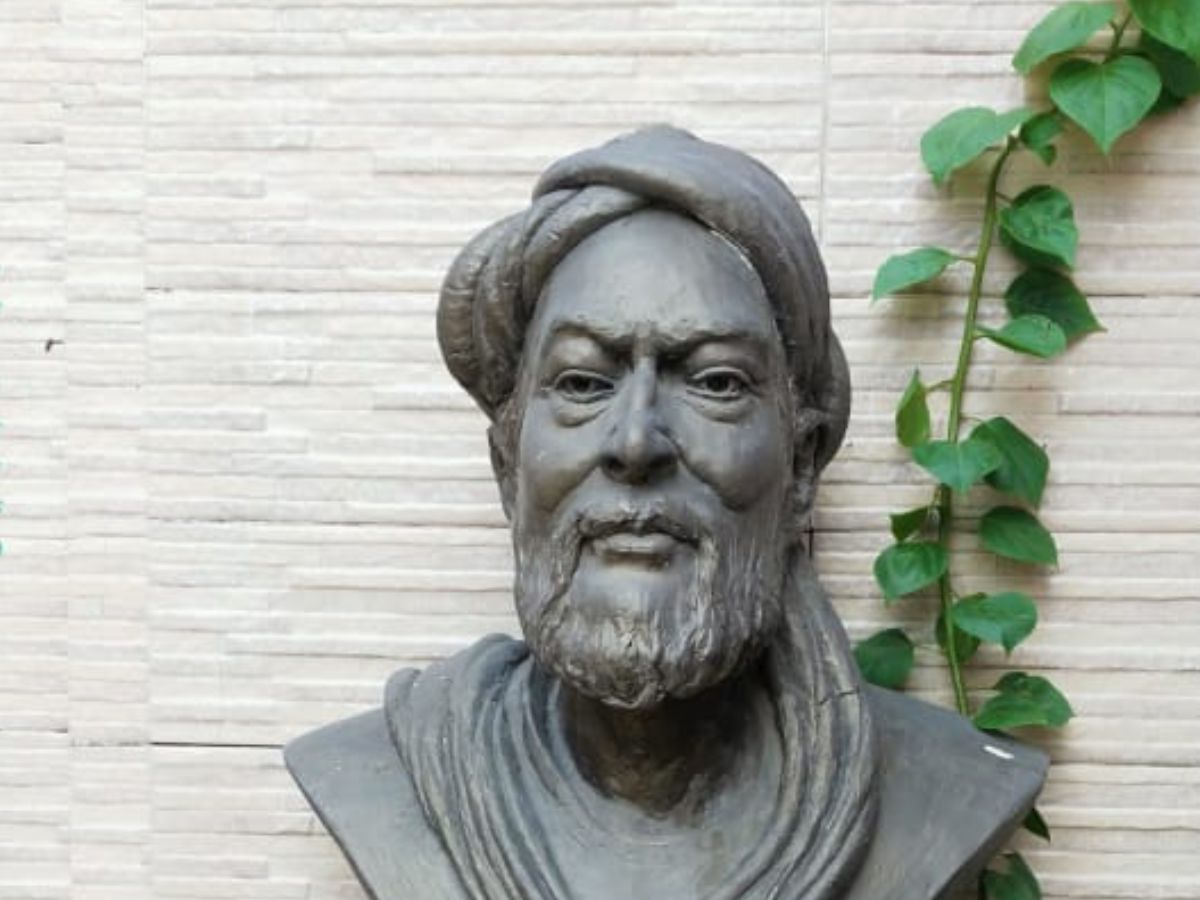
PIONEER: A bust of Ibn Sina, a physician and philosopher, who lived over a thousand years ago, at the Ibn Sina Academy in Aligarh
Nestled in the heart of the city of Aligarh, Uttar Pradesh, is Ibn Sina Academy of Medieval Medicine and Sciences, named after famous scholar of philosophy and medicine Abu Ali Ibn Sina (980 -1037), who lived over a thousand years ago.
Located at Tijara House, the non-profit, non-government and non-political academy was established in the year 2000 by Professor Syed Hakim Zillur Rahman, an academic and a litterateur from Aligarh.
A one of its kind museum and library, it was aimed at encouraging and promoting researches and studies in medieval sciences, especially Ibn-Sina’s, as well as arts, culture, poetry among other subjects.
Notably, Ministry of Ayush, Government of India gave accreditation to the academy in 2004 and promoted it as a Centre of Excellence in 2008. The professor had a mammoth personal library that he had established in 1960s. After Ibn Sina Academy was born, the library became a part of it.
The specialty of this museum lies in its varied collection that includes sofas, crockery, jewels, armours, stamps, mirrors, outfits of princesses, queens and kings as well as turbans worn during battles by historical legends.
The Zillur Rahman Library houses 32,000 rare books and magazines, 1,100 manuscripts apart from paintings, sketches, citations, artefacts and much more.
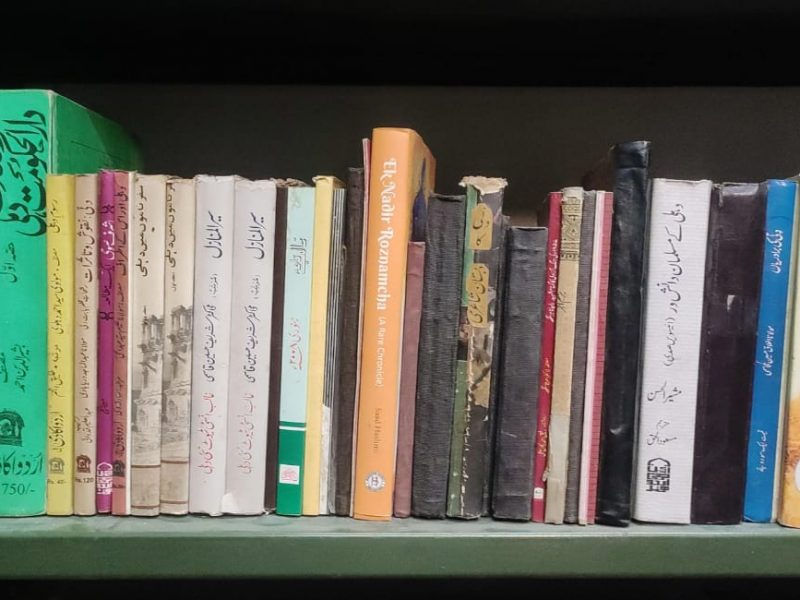
RARE: A collection of books on Delhi
The Delhi connection
There are 7,500 books on Delhi of yore in the library, including on poet Iqbal, dictionaries as old as 150 years, authentic diwaan on Ameer Khusrau, books dating back to 1893, on and by the last Mughal emperor Bahadur Shah Zafar, British Raj–Victorian Era with pictures in lithographs and more.
But considering Delhi is dry without the ‘zikr’ (mention) of the poetic legacy of Asadullah Khan ‘Ghalib’, the library has dedicated a special space for the poet: “Ghalib Study Centre”.
A galaxy in itself, this part has 1,350 rare books in Urdu, Persian, English and Hindi on Ghalib apart from several special issues in different magazines (called risala in Urdu) which are now available only in this museum.
For instance, an important old publication called Sooraj (meaning sun) had special Ghalib edition.
One of the books has illustrations of most of the ghazals he had penned, while in his own Deewan (collection of his authentic shayri) there, Ghalib’s original ghazals had no pictures or illustrations.
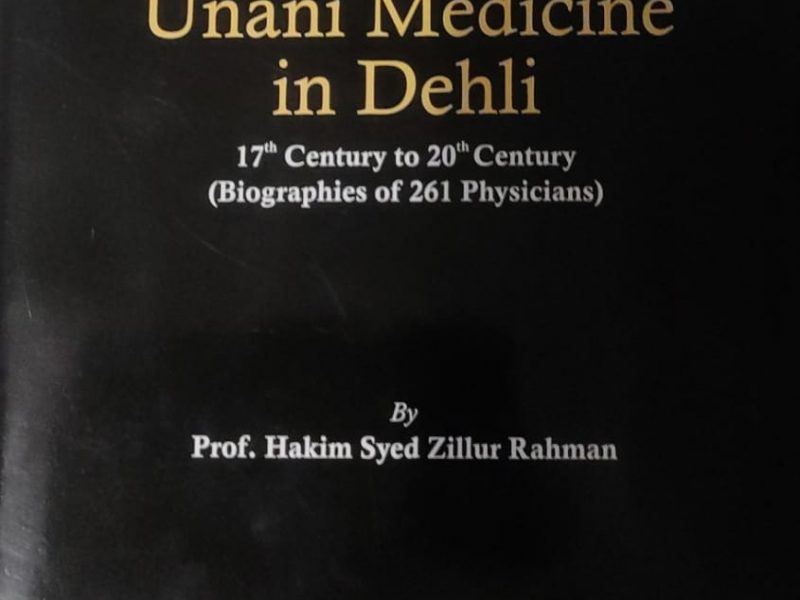
MASTERPIECE: The translation of the book written by Hakim Zillur Rahman
One of the most important collections here is a book by renowned author Shakeel ur Rahman called Mirza Ghalib aur Mughaliyaat, which has illustrations from Muraqqa-i-Chughtai, an illustrated selection of Ghalib’s work by AR Chughtai, a renowned artist of early last century. The illustrations are based on an important topic or issue that the poet raised in his couplet (sher).
Rare books with names like Jihad-e-Ghalib, Ghalib Satrung, Soz-e-Ghalib, his letters in Persian and many more ornate the archive.
Additionally, a book called Naqsh-e-Rung from Pakistan which was brought to India by scholar Urdu litterateur and poet professor (late) Shamsur Rehman Farooqui enriches the book shelves.
Tehqeeq-nama Ghalib, Ghalib’s ghazal in Persian called Ghazaliayat-e-Farsi, Ghalib, few rare and special issues of magazines like Shama, Nuqoosh, Hunoon, Taar-e-Nau, film magazines, Al-Ilm, Shayar, Kaarvaan with special edition on Ghalib are the other charms.
A rare pocket-sized edition on Ghalib is a popular one.
Travels to Delhi
Another section on Delhi consists of travels and trips done in Delhi by the authors, travellers and poets of old times. Rare books like Safarnama Dehli and Sair-ul-Manazir provide an inside view of Delhi in the 18th century.
LEGEND: Bust of a renowned Indian physician Charaka at the academy in a section dedicated to physicians and medicinal plants
Also, over 200 rare books on Delhi’s poets (shayars) in Urdu and important personalities form another gallery here. For instance, there is Aslam Parvez’s award-winning book on Bahadur Shah Zafar, and his another one called Meri Dilli. There is also a book on Hamare Zamane Ki Dehli, Charagh-e-Dilli, Dilli Wale by famous author Salauddin, Aalam mein intekhab-e-Delhi among others.
Rare and significant books on personalities include those on Hakim Ajmal Khan, Sir Ross Masood, former India President Zakir Hussain, Sir Syed Ahmad Khan, Raja Mahendra Pratap and many more.
An entire unit is also devoted to all the journals that came out of Delhi during the War for Independence “and those from late 17th century to beginning of 19th century. The Delhi College was established in 1824, with it, all these journals rose to a great height. These form an enticing collection in the museum,” apprises Aftab Najmi, the coordinator and convener at Ibn Sina Academy.
On enquiring why such a large collection in Urdu finds space here, Professor Rahman adds, “Our own language and culture is much better described only in Urdu and Persian. So, it was very important to have a different section on Urdu to give a peep into what Delhi was in olden times.”
However, countless notable oldest books in English and Hindi on Delhi also enrich the collection on the Capital.
A legacy himself
Professor Zillur Rahman has 56 books to his credit. The subjects are related to Tib (Unani medicine) and Urdu literature. His books on medical sciences with oldest references (100 to 200 years old) are immensely popular. He is also a poet and an ardent admirer of Urdu poets of yore. He has also edited Diwan-e-Ghalib and many books on Urdu shayri. So far, 11 books have been written on him by students from different parts of India and globe in Arabic, Urdu and English. There are two academies, in Meerut and Bhopal, named in his honour. A part of the library has books on Zillur Rahman’s own family and their contribution to academics, medicine, poetry and culture.
For the next generation
On why he decided to make such a rare museum and library under one roof, Rahman says, “I was just a teacher at AMU. I had no money like businessmen to construct roads and hospitals so I decided to build this museum and library to help those who want to study but have neither books nor a place for the same. I want the current generation to know that books on all our glorious histories and personalities were penned in Urdu before 1947.
ICONIC: A portrait of Mirza Ghalib at the library, which boasts of rare works on the Delhi-based poet
“So, our generation has to know Urdu to understand their buzurgs (elders) and what charismatic works they had done. Our current generation, which doesn’t know Urdu, is like a blackboard. Anyone can write anything on it and it doesn’t impact them because they are so ignorant of legacies of their own language.”
Professor Rahman has travelled abroad 44 times. He visited Greece, including its capital Athens, Samarkand and Bukhara in Uzbekistan, Spain, Turkey, Germany and other countries.
“I went to Iran 11 times to gather books and study how it has preserved its arts and culture, literature, medicine and environment,” he says adding that children of every country know their mother tongue and can read and write in it.
“India’s children, especially the new Muslim community, is ignorant of its own legacy in Urdu.”
The Ibn Sina Academy has a tremendous collection of Islamic sciences and Islamic medicines. The professor has procured them from across the globe.
“Some are bought, some gifted and some requested and begged for. Hamaare 3,200 hazaar kitaabon mein, Ghalib ka collection jo hamaare paas hai vo duniya mein kisi ke paas nahi hai (No one in the world has the rare collection on Ghalib that we have among our 32,000 books). Even Delhi’s own Ghalib Institute and Ghalib Academy visit us and take photocopies of the rare material they require. We have made our academy work on Delhi’s poets, littérateurs, historical buildings and monuments,” he adds.
Most books, he adds, are from Iran, Samarkand and Bukhara.
“The richest in education, philosophy, medicine and culture is Uzbekistan but it could not present it to the world, the way Iran did.”
Why Delhi in Aligarh?
Why Delhi forms a special section at his library, has its reasons.
“Delhi was always the capital of India, be it during the Mughal, British eras or post-Independence period. So, it has always been not only a melting pot of cultures but also an abode for the best of poets, authors and travellers. The number of academics, authors, sufis, litterateurs, shayars (poets), lovers of arts and music and academic institutions that Delhi had, no other capital in the world has it till date,” he reasons with pride.
To know Delhi better, he suggests books penned by the renowned Dehlvi family.
For instance, there is Dilli jo aik shahar thaa by Shahid Ahmad Dehlvi, who was born in Delhi in 1902.
He wrote extensively on vanishing culture of Delhi which was a symbol of Indo-Muslim culture ruined by violence and blood of the War of Independence. Post Independence, he went to Pakistan and died in 1967.
Waqyaat-e-Darool Hukoomat in three volumes by Bashiruddin Ahmad Dehlvi published from Urdu Academy, Delhi in 1990, and books on 1857 revolution are also there in the academy.
Delhi just got richer by another book by Zillur Rahman — Dilli aur Tibbi Unani which has just come out in Urdu. It is translated in English by Toronto-based Zakaria Virk, titled ‘History of Unani Medicine in Delhi – 17th Century to 20th Century – Biographies of 261 physicians’.
source: http://www.thepatriot.in / The Patriot / Home> Delhi NCR / by Rana Siddiqui Zaman, Delhi NCR / November 15th, 2023
Mir was among 139 Padma awardees announced on Saturday, making him one of only two Padma Shri awardees from Jammu and Kashmir this year
Farooq Ahmad Mir’s 60 years of artistry earn Padma Shri
Srinagar :
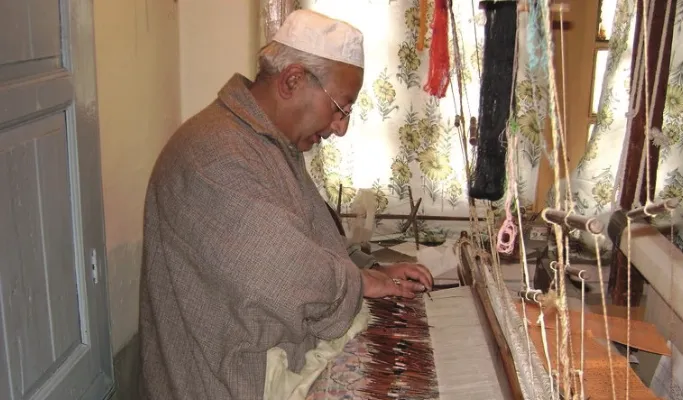
In a heartfelt tribute to the art of craftsmanship, Farooq Ahmad Mir, a master shawl weaver from Srinagar, was conferred the prestigious Padma Shri award on January 25. At 73 years old, Mir embodies the spirit of dedication, having devoted over six decades to a craft that intertwines patience with artistry.
Mir was among 139 Padma awardees announced on Saturday, making him one of only two Padma Shri awardees from Jammu and Kashmir this year.
Starting his journey at the tender age of 10, Mir’s story resonates through generations. “Pashmina artisans require patience, much like education. It teaches us about the intricate nuances of our craft,” he reflects, drawing parallels between learning and weaving. Hailing from a lineage of artisans, Mir has not only preserved but revitalised the Kani shawl tradition, once favored by Mughal, Afghan, Sikh, and Dogra rulers.
Mir’s influence extends beyond his family; he has painstakingly taught the art of Kani shawl weaving to over many individuals in Srinagar’s old city.
“In a world where modern careers are alluring, many aspiring artisans are deterred by societal perceptions and a lack of patience for traditional craft,” he notes. Yet, Mir’s commitment to his heritage has inspired not only his children, skilled weavers in their own right, but countless young men and women in his community.
“Your work should speak for itself,” Mir shares humbly when asked about his relative anonymity in a world that often celebrates flashy accolades over dedication. His contributions, however, haven’t gone unnoticed. He has received multiple national and state awards, including recognition from Prime Minister Narendra Modi himself.
The exquisite Kani shawls, woven using cane needles rather than shuttles, can take between four to eighteen months to create. However, the beauty of this art form is in jeopardy. As younger generations lean towards more modern occupations, the skills required to produce these heirlooms risk fading away. Mir’s tireless efforts aim to ensure this heritage is not lost.
Born into a weaver’s family in Srinagar, Mir’s start was modest. Despite barriers to formal education, he channeled his passion into honing his skills, becoming one of the finest artisans in Kashmir. Alongside his successful weaving career, he managed to educate his siblings and inspire a new wave of artisans dedicated to preserving Kani shawl weaving.
In an age driven by industrialisation, the importance of handmade products is gaining renewed appreciation globally. Mir stands as a pioneer in safeguarding this cultural legacy, instilling pride in his craft and ensuring its continuation across generations. His handcrafted Kani shawls have not only found a place in the hearts of locals but also captured the attention of international clientele, including the Ambani family and major corporations like Tata and Aditya Birla Group.
Farooq Ahmad Mir’s journey exemplifies resilience and dedication. As an unsung hero of the Kani shawl tradition, he reminds us that true artistry thrives in the shadows, waiting for the right moment to emerge into the light.
Director Handicrafts and Handloom, Mussarat Islam in a tweet on social media extended heartfelt congratulations to Farooq Ahmad Mir on being awarded #PadmaShri 2025 for his significant contributions to Kani Shawl weaving and the preservation of Jammu and Kashmir’s rich cultural heritage.
source: http://www.greaterkashmir.com / Greater Kashmir / Home> Business / by Mukeet Akmali (headline edited) / January 26th, 2025
Abdul Khadar Nadakattin from Dharwad in Karnataka has 24 innovations under his belt.
The niche but problem-solving machines and innovations help farmers with everyday solutions and have also increased their yield up to 25 per cent.
Splashing water on a deep sleeper to wake them up is a clichéd scenario used in many comedy films and on social media. But Abdul Khadar Nadakattin earnestly practised this comedy routine on himself during his school days to wake up early.
A native of the Annigeri village of Dharwad district in Karnataka, Abdul struggled to push himself out of bed in the mornings. “A splash of water on my face was the only solution to wake me up. But I could not expect my parents to do this to me every day,” he tells The Better India.
A then 14-year-old Abdul devised an innovative Wa(h!)ter Alarm. Its functioning was simple — one end of a string was tied to the key of his alarm clock in a manner that when it rang, the thread would unwind itself and the other end was tied to a water bottle. Once the alarm key unwound, the bottle would tilt, and the water would fall on Abdul’s face.
“It helped me wake up and complete my school,” he recalls, laughing. Though he managed to pursue education until Class 10, he did not pursue higher studies.
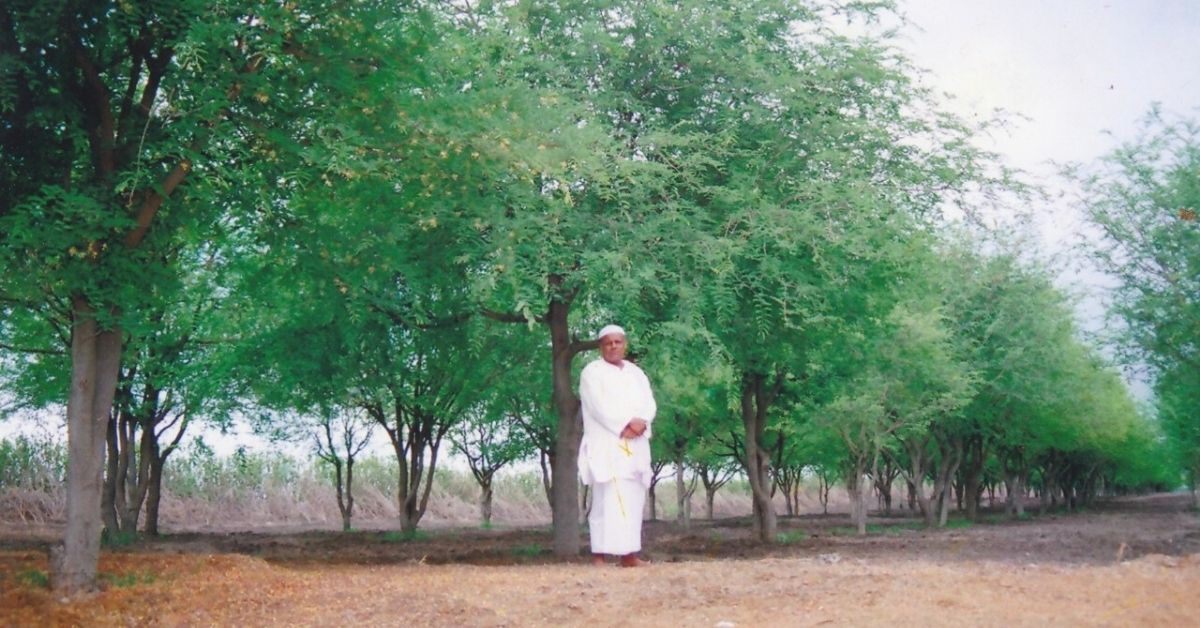
Abdul at his tamarind plantation
But his water alarm talks led to him speaking of the more serious water issues his village faced. “My father owned 60-acre ancestral land and the water scarcity deterred us from earning good profits from farming. My father admitted that our family’s financial condition was poor and asked me to contribute to the farm. So, I gave up my dream to pursue graduation in agriculture,” the 70-year-old says.
Being deprived of an education did not deter him from thinking out of the box. Little did he know then that the water alarm was the first of many of his innovations .
This farmer has come up with unique ideas to solve everyday farmer problems. To date, Abdul has had 24 innovations under his belt, which benefit thousands of farmers in India. It was for this reason that he won the Padma Shri award in 2022.
Helping Farmers, One Innovation At A Time
“Thomas Alva Edison is the source of my inspiration,” says the scientist who went barefoot to receive the President’s Lifetime Achievement Award in 2015 at the hands of the then President of India, Pranab Mukherjee. “I always thought of unique ways to solve a problem. That is how I conceived the water alarm. In 1974, I received the ancestral land from my father to continue farming. But interacting with fellow farmers and practising the occupation myself, I learned about the issues of finding labour and other difficulties faced in agriculture.”
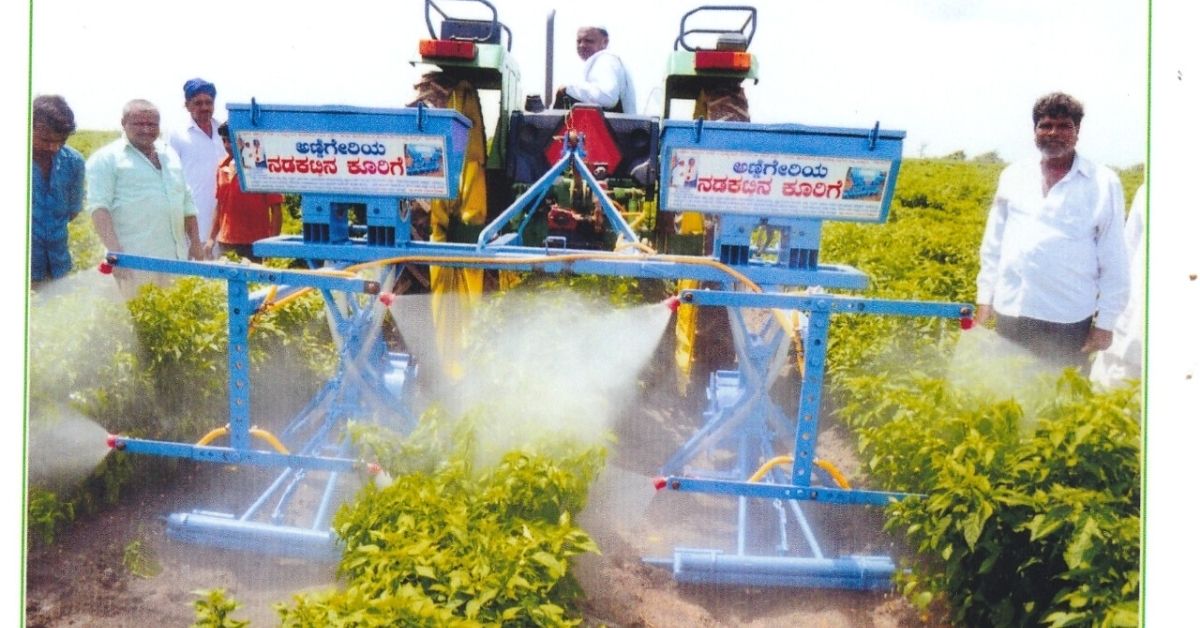
Soon after taking over the reins, he built a tiller machine capable of deep ploughing which needed operating by a bullock. “In 1975, I established Vishwashanthi Agricultural Research and Industrial Research Centre to sell the product. But financial constraints did not allow me to market it well, and it failed to take off,” he says.
Later, he also built a plough blade that did not require sharpening and lasted for a long duration compared to others in the market. “The blade did not lose its sharpness, which ensured its long life. It could be attached to a tractor as well,” Abdul adds.
Following this, he built a seed-cum-fertiliser drill that enabled sowing seeds of different sizes with equal spacing. “The equipment is used in sowing a wide variety of seeds from jowar to groundnut. The device also facilitated the dispersal of fertilisers, soil and other organic matter,” he says.
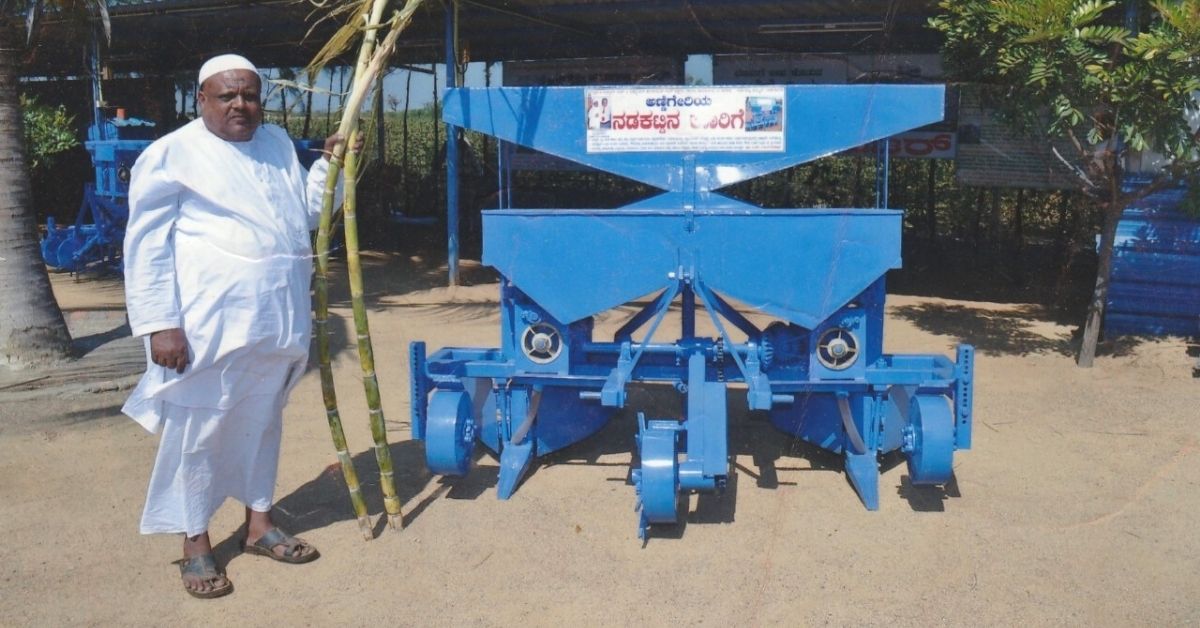
To meet the demands of farmers in Maharashtra, Abdul constructed an automated sugarcane sowing machine. Slowly, his innovations became popular and saw an increase in demand.
Abdul’s 5-in-1 tiller machine
Apart from his innovative pursuit of helping farmers, Abdul also worked to improve the agricultural yield on his farm.
As his father and grandfather suffered losses with erratic rains and limited groundwater reserves, Abdul decided to find an alternative. “In the early 1980s, I planted mango saplings, placed between ber and sapota (chikoo) trees. I planted chillies as an intercrop. But the lack of water killed the plantations. So I switched to growing tamarind as I learned that it required less water and maintenance,” he says.
He sourced 600 saplings and planted them across 6 acres of land by keeping a gap of 20 feet each.
In 1985, the region faced severe droughts, but Abdul managed to source water from a distance of 3 km. “I dug 11 bore wells, but only two yielded water. So I sourced water from a long distance and stored it by creating six farm ponds. They also helped to harvest rainwater during the monsoons. I used the water for flood irrigation of my plantation of 600 saplings,” he says.
“The plants grew well, and feeling confident with its success, I planted more than 1,100 trees in a 10-acre area, making a total of 1,800 saplings,” he says.
But there was another unexpected chapped Abdul faced. “I did not know how to make use of so much tamarind produce. My wife and daughter made pickles and jams to sell in the markets across the state including, neighbouring Hyderabad,” he says.
So, Abdul decided to harvest tamarind and make pickles out of them. “But the process of separating seeds from the tamarind was tedious, and labour shortage made it more difficult. The seeds had to be separated manually and were a time-consuming process,” he explains, building up the crescendo before revealing his next innovation.
After spending nearly Rs 3 lakh and over six months, Abdul conceived a machine that did the job. “The instrument involved a system where the tamarind slid on the tapered peg. This pushed the seeds out from the tamarind pod,” he says, adding that to make tamarind pickles convenient he built yet another device.
“The pickle making required tamarind to be sliced into smaller chunks which again was labour intensive. So, I designed another machine to make the slicing effective and efficient,” Abdul adds.
Over the years, Abdul produced more machines and sold them. His popularity with these niche but problem-solving innovations earned him the name ‘hunase huccha’, meaning ‘tamarind crazy’.
“It was the most difficult innovation of my life as the seeds often got stuck in the tamarind making the separation difficult. I researched and experimented for years to achieve the desired result,” he says.
An Innovation Revolution
Abdul receiving lifetime achievement award at the hands of then President Pranab Mukherji
Abdul has sold thousands of his various innovations to date, he claims with pride.
Shrikanth Jain, one of the farmers who purchased Nadakattin seed-cum-fertilizer drill a few years ago, says, “I used it to sow wheat pulses and other woodgrains. The machine does the job of sowing, dispersing fertiliser, covering the soil, spraying pesticides and saving fuel. It also helps to prevent excess sowing of seeds. Using the device has helped me increase my yield by 20 per cent.”
However, these innovations and his passion for helping the farming fraternity came at a heavy financial loss to Abdul who says, “I struggled with debts all my life and mortgaged part of my agricultural land to invest in research for innovations. I never sell equipment for profits and offer them at make-to-cost, which is about 25 per cent cheaper than the ones in the market. It is a seva (service) for the farmers, and I do not wish to burden them financially.”
Today, Abdul has received funding for his research from the National Innovation Foundation, University of Agricultural Sciences, Dharwad and Karnataka government. He adds, “I received Rs 16 lakh to develop the ploughing machine from the Karnataka government and have also invested other prize money received.”
Elaborating on his innovative process, he says that some innovations happen in months while others take a year or more. “Investing time and money can become very demanding.” But Abdul is relentless and wants to continue his dream of helping farmers. “I believe that the economy of this country runs on farmers. But our community is facing hardships at various levels. I aim to benefit them and ease their difficulty. Innovations can only bring the next revolution in agriculture,” he says.
source: http://www.thebetterindia.com / The Better India / Home> Stories> Innovation> Karnataka / by Himanshu Nitnaware (headline edited) / Edited by Yoshita Rao / February 05th, 2022
Justice Beevi was the first Muslim woman to be appointed to the higher judiciary in the country and the first woman to be elevated to the Supreme Court of an Asian country.
The first woman to be a judge of the Supreme Court of India, Justice M Fathima Beevi, was on Thursday posthumously awarded the Padma Bhushan.
Justice Beevi received India’s third-highest civilian award in the field of Public Affairs.
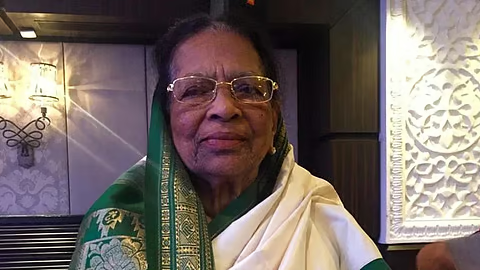
The former Supreme Court judge passed away aged 96 in November last year. Justice Beevi was the first Muslim woman to be appointed to the higher judiciary in the country.
She was born in Kerala in 1927 and her father encouraged her to study law. In 1950, she topped the Bar Council exam becoming the first woman to receive a Bar Council gold medal.
She started her career as an advocate in Kerala and worked her way up to become a district and sessions judge in 1974. In 1980, she joined the Income Tax Appellate Tribunal and was appointed as a High Court judge in 1983.
She made history in 1989 by becoming the first woman appointed to the Supreme Court.
As a Supreme Court judge, she became the first Muslim woman in the higher judiciary and the first woman to become a Supreme Court judge in Asia.
After retiring in 1993, she had served as a member of the National Human Rights Commission and then as Governor of Tamil Nadu.
She had resigned from the post of Governor of Tamil Nadu after rejecting the mercy petitions filed by four condemned prisoners in the Rajiv Gandhi assassination case.
Tejrasar Village (Bikaner),RAJASTHAN / Mumbai, MAHARASHTRA:
The land of Bikaner is very rich in art and culture and it has given uncountable diamonds of talent not only to the country but to the world. Bollywood musicians Ali and Ghani have been awarded the Padma Shri by the Government of India, the country’s fourth highest honor.
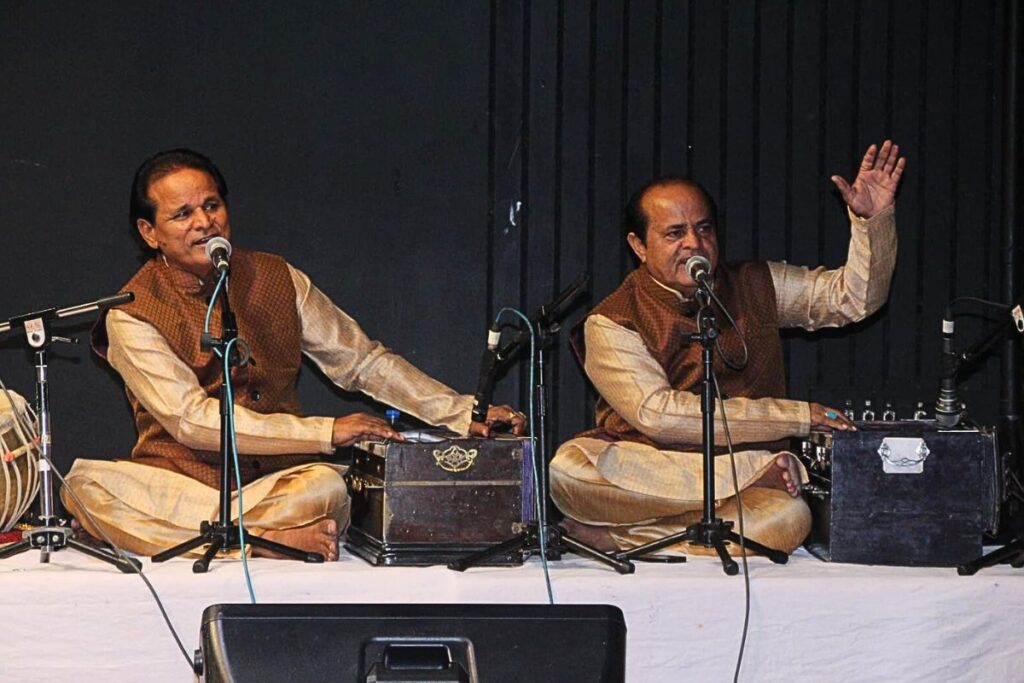
Maand singers Bandhu Ali Mohammed and Ghani Mohammad from Rajasthan were awarded the Padma Shri.
Ali Mohammad and Ghani Mohammad Padmshree: The Padma Awards for the year 2024 were announced on the eve of Republic Day. President Droupadi Murmu announced the Padma awards to 132 personalities, including five Padma Vibhushan, 17 Padma Bhushan, and 110 Padma Shri awardees. The shortlist for this year’s Padma awards includes impersonator Jankilal and Dhrupad singer Laxman Bhatt Tailang from Rajasthan.
Maand singers Bandhu Ali Mohammad and Gani Mohammad from Rajasthan and road safety activist Maya Tandon have also been given the Padma Shri award.
Ali Mohammad and Ghani Mohammad brothers, who live in Bikaner, will jointly receive this award.
Ali-Ghani was completely dedicated to music
The land of Bikaner is very rich in art and culture and it has given uncountable diamonds of talent not only to the country but to the world. In every field, the personalities of Bikaner have proved their mettle. Be it music, art, literature, painting, Bikaner has been rich in every field. Bikaner has established its own place in music and Bollywood. Pakeezah composer Ghulam Muhammad, lyricists Bharat Vyas, Rafiq Sagar, Raja Hassan and Ali-Ghani have all dedicated their all to music.
Inherited music
But here is the talk of Bollywood musicians Ali and Ghani, who have been awarded the Padma Shri by the Government of India, the fourth highest honor of the country. Born in Tejrasar village of Bikaner, brothers Ali and Ghani inherited music. His father Sirajuddin himself was a great knowledge of music, due to the death of Ali-Ghani’s wife in childhood, the responsibility of upbringing was on his father. While father Sirajuddin trained him to become a great person, he also inherited the legacy of music.
Struggle in Mumbai
As the mousiki became mastery, the desire to come out of a completely backward village Tejrasar and build a house in a big place also started shaking in the heart. At the age of youth, both brothers turned to Kolkata and from there traveled to the city of dreams, Mumbai. Ali and Ghani, who lived a difficult life in the village since childhood, did not find it strange to struggle in Mumbai and the struggle gradually brought success, the eyes of Bollywood musicians and directors fell on them.
During the struggle, the two brothers started singing together
Ali-Ghani had to starve several times during the conflict. In a metro city like Mumbai, many kilometers had to be traveled on foot. But he remembered the difficult life in the village. Therefore, the struggle of Mumbai seemed to him a game. During this time, the two brothers started singing together and made the basis of their singing Mand raga, which is considered to be the most popular raga of western Rajasthan. The most important raga in the Bikaner region is Mand and not only Rajasthani folk music has been sung on it, but the king of ghazal singing like Mehdi Hassan also made Mand the basis of his ghazals. Inspired by them, Ali and Ghani also decorated their Gulukari with the beauty of the mand.
Mastery in classical music
Ali-Ghani, who received his basic training in music from his father, the late Sirajuddin Khan, has a great influence in classical music. Both brothers received classical music education from Ustad Munawar Ali Khan and Ustad Bade Ghulam Ali Khan. Both are known in the country and abroad as film composers and singers.
Lata and Asha Bhosle get blessings
Associated with All India Radio since 1981, the brothers have directed music in many films, including Hindi, Rajasthani and Punjabi films. Apart from this, many albums of Naat, Bhajan and Rajasthani folk songs have also been released. Ali and Gani have also decorated the ghazals of big singers like Pankaj Udas, Sadhana Sargam, Chandan Das, Alka Yagnik, Anuradha Paudwal and Hans Raj Hans with their music. These big Gulukars have also sung under the direction of Ali-Ghani. Even the nightingale of Lata Mangeshkar and Asha Bhosle have been blessing Ali-Ghani.
Said – talent got value
Ali and Ghani, who came out of Tejrasar and shined as stars in the glare of Mumbai, have been honored with many awards. Sixty-year-old Ali and sixty-two-year-old Ghani have not moved away politely even after receiving the Padma Shri. On receiving the Padma Shri award, he thanks Allah and says that there is still more to go.
He credits Prime Minister Narendra Modi, Bikaner MP and Union Law Minister Arjun Ram Meghwal for this honor. It is said that the BJP government appreciated our talent and awarded the Padma Shri, also very humbly thanking NDTV, Ali and Ghani say that this channel first informed us and showed us all over the country.
source: http://www.rajasthan.ndtv.in / NDTV Hindi / Home> Sacrifice> Pride of Rajasthan / by Dr Nasir Zaidi / edited by Sachin Samar (and Translated in English) / January 26th, 2024
SRINAGAR, JAN 27 (UNI):- Ghulam Nabi Dar, a 72-year-old master craftsman from Srinagar nominated with the Padma Shri for his contribution to wood carving, in Srinagar on Saturday. (With URDU Story) UNI PHOTO-13U
Srinagar :
In Srinagar, where the echo of chisels against wood harmonizes with the whispers of history, Ghulam Nabi Dar, a venerable 72-year-old maestro, has carved his way into the distinguished realm of the Padma Shri.
His unwavering dedication to the delicate dance between chisel and wood spans over six decades, a testament to the enduring love affair with his craft.
Through the rhythmic strokes of his skilled hands, Ghulam Nabi Dar has woven a narrative in wood, earning him a constellation of accolades that now converge in the dazzling brilliance of the Padma Shri.
The announcement of this national honor on the eve of the country’s 75th Republic Day crowns a lifetime of commitment, marking not just a personal triumph but a harmonious resonance with the nation’s celebratory spirit.
On January 27, the air in Dana Mazar Safakadal resonated with the symphony of celebration as the Department of Handicrafts and Handloom Kashmir orchestrated a commendation ceremony at the residence of the venerable Ghulam Nabi Dar.
The purpose was to pay homage to his latest jewel in the crown – the Padma Shri, a resplendent recognition for his unparalleled contributions to the art of wood carving, with a particular mastery in working wonders on walnut.
Ghulam Nabi’s craftsmanship, a beacon of artistic brilliance, has been a steady force in the cultural landscape. The ceremony not only celebrated his recent honor but also showcased his illustrious journey, embellished with previous accolades such as the State Award in 1984 and the National Award in 1995. His artistic footprint extends far beyond the borders, painting a global canvas of appreciation in countries like Iraq, Germany, and Thailand, establishing him as a luminary on the international stage.
The coveted Padma Shri bestowed upon Ghulam Nabi Dar is hailed by many as more than a personal accolade; it’s a potential catalyst for the renaissance of a craft deeply rooted in the history of Kashmir.
A testament to the resilience of traditions that have endured the test of time, Dar reflects on his arduous journey with a spirit undeterred by adversity.
Born into hardship, Dar’s initiation into wood carving came at a tender age, a refuge from financial turmoil. Despite facing initial rejection from craftsmen unwilling to impart their trade, Dar’s perseverance guided him to Nooruddin Tikoo, a mentor who, despite a paralyzed hand, imparted his knowledge through intricate designs on paper.
Recounting his struggles, Dar narrates being expelled from school at the age of 10 due to his father’s financial losses. His journey led him to a wood carving unit in Sarai Safakadal, sparking an enduring passion for the art form. Determined, he faced rejection from numerous craftspeople but pressed on, thankful for the divine intervention that eventually led him to Tikoo.
As Dar’s artistic journey unfolded, he transcended traditional designs, crafting his own unique pieces inspired by nature. Recognition followed, with a state award in 1984 and an opportunity to showcase his skills in Baghdad during the early 1990s. The pinnacle of his craftsmanship arrived with the National Award in 1995-96.
Amidst the applause, Dar’s happiness resonates through his family. Acknowledging the transformative power of awards, he stresses the importance of government encouragement for artisans, fearing the loss of interest without such support.
Expressing gratitude for the Padma Shri, Dar underscores the critical role of government support in preserving traditional arts. He calls for the establishment of a comprehensive institution or workshop to train and incentivize young artisans, safeguarding the future of wood carving.
With his son following in his footsteps, Dar looks to the horizon with hope, emphasizing the imperative of sustained interest and support from both the government and the public for the seamless continuity of his cherished craft.
source: http://www.morningkashmir.com / Morning Kashmir / Home> Kashmir Latest / by Syed Snober / January 28th, 2024