Tag Archives: Muslims of Bulandshahar

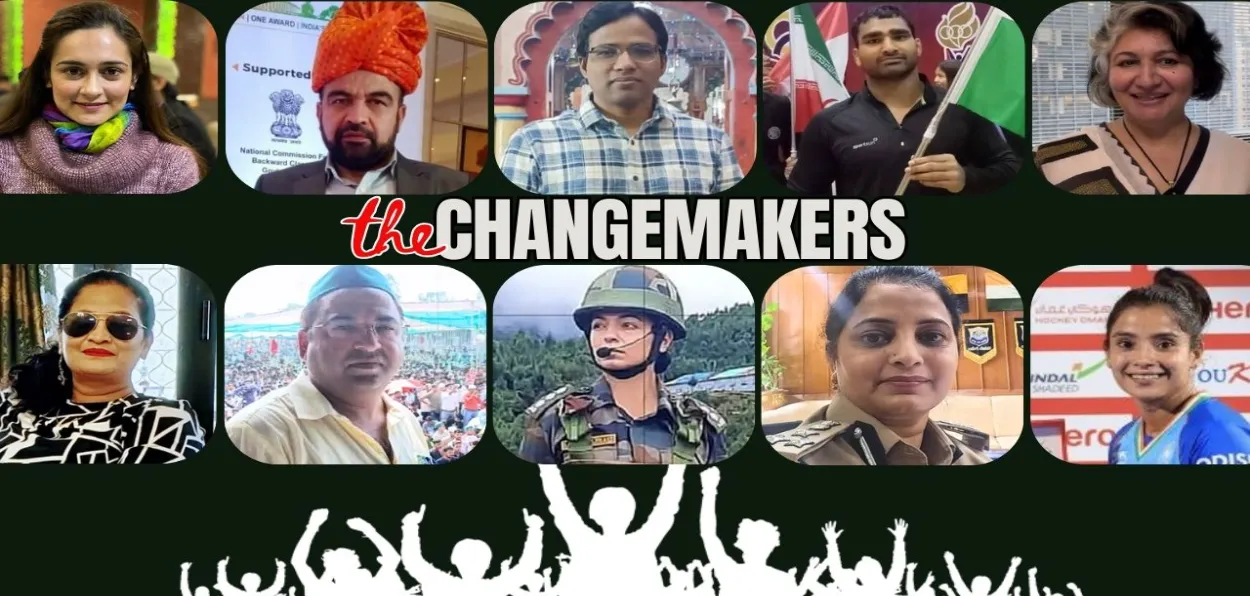
10 trailblazers of Uttar Pradesh reshaping India’s future

UTTAR PRADESH :

New Delhi :

While media spotlight often shines on celebrities and politicians, the real engine of India’s progress runs on the resolve of countless unsung heroes who, away from limelight, quietly transform society.

From national defense to grassroots education, sports, science, and civil service, these individuals from Uttar Pradesh show how courage, compassion, and conviction can drive extraordinary change. Here are 10 such trailblazers whose stories deserve to be heard:

Captain Sariya Abbasi: A Woman in Uniform on the Frontlines
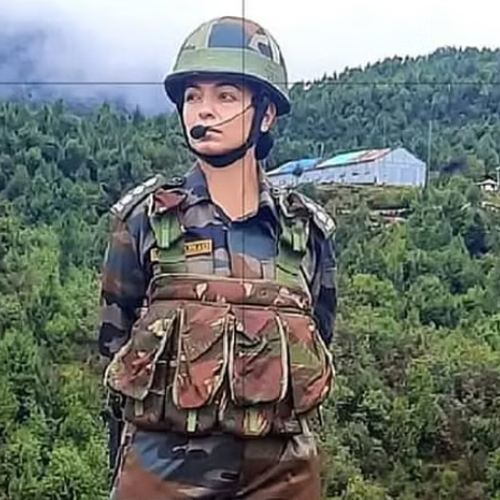
Hailing from a small city of Gorakhpur, Uttar Pradesh, Captain Sayria Abbasi broke every convention to join the Indian Army. A graduate in Genetic Engineering and with plenty of job offers and career opportunities from big companies was not enough for her to pursue in life. The call of service for the motherland was too strong to be sacrificed.

The world noticed her as a soldier deployed at the Line of Actual Control (LAC), India-China temporary border, manning an Air Gun. Today, Sariya leads drone-killer teams and operates L-70 anti-aircraft guns on the border. Her journey from an academic achiever to a defender of the nation’s borders is not just about military precision; it’s about shattering glass ceilings and reshaping how India imagines women in uniform.

Dr. Faiyaz Ahmad Fyzie: Voice for the Voiceless Pasmanda Community
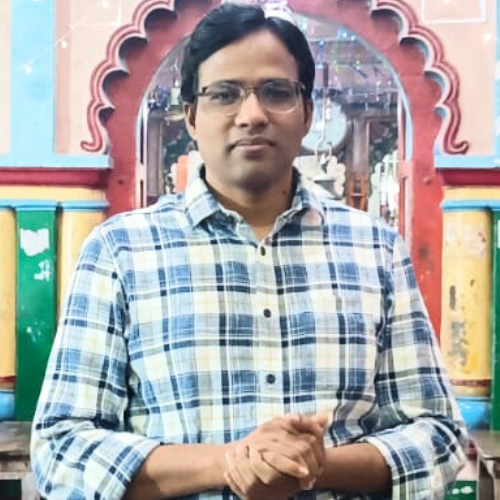
Dr. Faiyaz Ahmad Fyziean AYUSH physician, is more than a healer—he is a public intellectual, columnist, translator, and relentless advocate for the Pasmanda (socially backward) Muslim community. Raised in modest conditions, his rise to national recognition is built on fearless writing and tireless grassroots work.

When even the Prime Minister refers to Pasmanda voices, Fyzie’s years of advocacy resonate. His pen continues to empower those whose struggles were long silenced. His work is a call to conscience—and a roadmap for inclusive discourse.

Mohammad Luqman Ali: Wrestling His Way to Glory and Degree
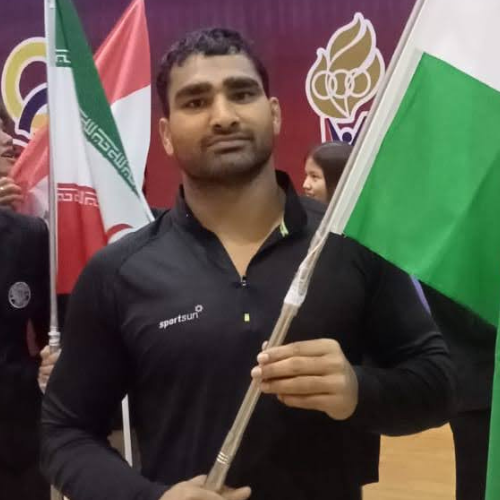
Wrestler Mohammad Luqman Ali, a student of Social Work at Jamia Millia Islamia, is balancing body and brain. Born in Amroha’s tiny village of Mohraka Patti, his father worked on the railways, and his mother gave him religious grounding. Despite limited resources, Luqman’s grit has earned him recognition in India’s wrestling circles.

From the mat to the classroom, his dual commitment shows that excellence doesn’t require compromise. It requires discipline, heart—and a family’s belief in you.

Rubina Rashid Ali: Reviving Mughal-Era Art with a Modern Mission
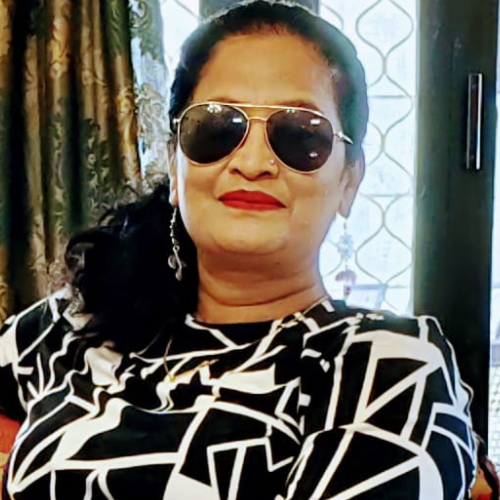
In a sun-drenched corner of Aligarh, Rubina Rashid Ali has quietly built a movement. Her work in floral appliqué embroidery, a legacy of Mughal art, now supports dozens of women in Aligarh and Rampur. What was once an undervalued craft monopolized by middlemen has been transformed by Rubina into a vehicle for women’s economic empowerment.

Her home resonates not only with the sound of needles and threads but also with the hum of independence. “Real artists were reduced to laborers,” she says. Today, she ensures their hands are not just working — but also earning.

Babban Mian: A Gaushala Keeper Inspired by His Mother’s Love

At Madhu Sudan Gaushalla in Bulandshahr, Babban Mian tends to cows not out of ritual, but reverence — inspired by his late mother Hamidunnisa Begum. “She loved cows like her own children,” he recalls. After she passed away in 2015, Babban vowed to preserve her legacy.

Despite being a Muslim in a Hindu-dominated tradition, he runs a government-recognized shelter rooted in compassion, not controversy. For him, animal welfare is a universal value — not a communal issue. His work quietly redefines what shared culture and interfaith harmony look like.

Khushboo Mirza: From Amroha to the Moon with ISRO
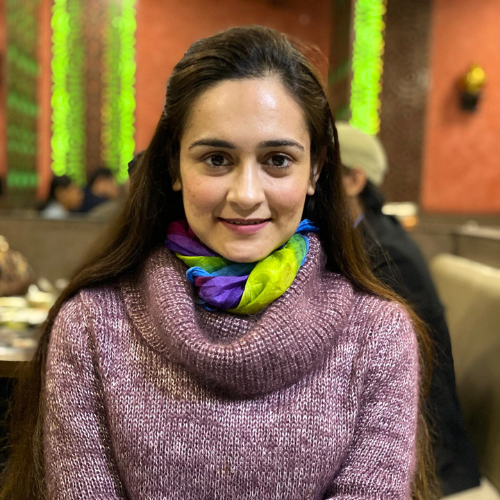
 Khushboo Mirza, scientist at ISRO and part of the Chandrayaan-1 and Chandrayaan-2 missions, is a stellar example of perseverance. After her father’s death when she was just seven, her mother raised three children alone, running a petrol pump and defying social norms.

Khushboo earned a Gold Medal in Electronics Engineering from AMU and was the youngest member of the Chandrayaan-1 checkout team. A practicing Muslim and a symbol of India’s scientific aspirations, she turned down corporate offers to reach for the stars—and took a whole generation of girls with her.

Zaheer Farooqui: A People’s Leader with a Vision for Purkazi
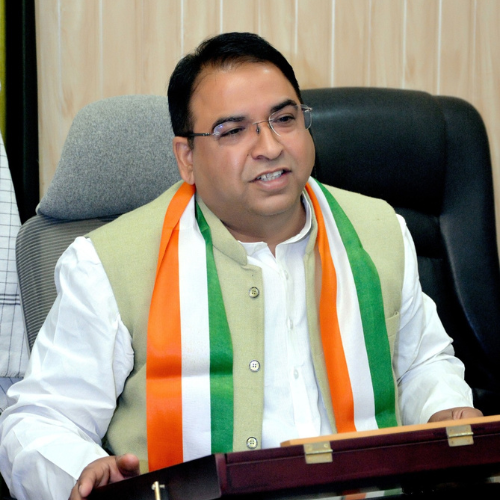
In western UP’s PurkaziZaheer Farooqui is rewriting what local leadership means. As Nagar Panchayat Chairperson, he donated land worth ₹1.5 crore for the area’s first Intermediate College and modernized local schools into PM Shri-certified institutions.

His initiatives go beyond classrooms. From India’s first double-storey government-run cow shelter to a gym for Muslim women, and one of the most sophisticated rural CCTV networks in the region — Farooqui’s governance is a blend of tradition and tech, equity and empowerment. His Tiranga Yatra revives local history, reminding citizens that patriotism is inclusive and action-oriented.

Dr. Farah Usmani: From AMU to Global Health Leadership
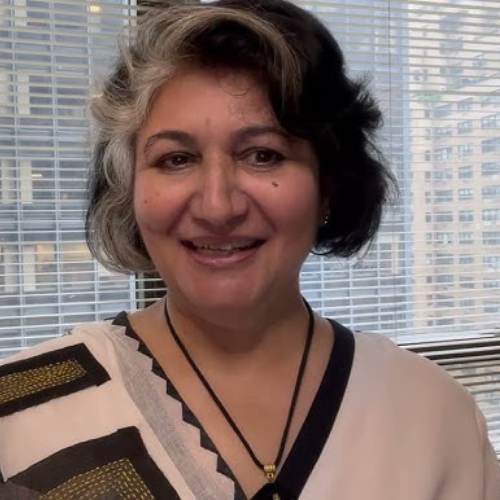
On a cold morning in New York, Dr. Farah Usmani stood outside an apartment, a folder in hand, her eyes bright with resolve. The daughter of Uttar Pradesh, she is today a formidable presence in global health policy.

n M.D. in Obstetrics & Gynecology from AMU, Farah sought impact beyond hospital walls. Armed with a Master’s in Health Policy from LSE and the London School of Hygiene & Tropical Medicine, she’s led transformative health initiatives around the world. Her journey is one of intellect guided by idealism — a doctor who chose not just to heal individuals but to reform systems.

Anjum Ara: Bridging Communities Through Compassionate Policing

Hailing from Azamgarh’s Kamharia village, Anjum Ara, a 2012-batch IPS officer, has redefined the image of policing with a human touch. A computer engineer by training, her journey from Integral University to Senior Superintendent of Police in Shimla has been marked by integrity and reform. Known for her work in cybercrime and her community-focused policing model, Anjum is also a fierce advocate for girls’ education.

Together with her husband, IAS officer Yunus Khan, Anjum adopted the cause of Khushdeep, the daughter of a martyred soldier, pledging to support her upbringing. This act of empathy mirrors her professional ethos, proactive, principled, and deeply people-centered.

Mumtaz Khan: From Vegetable Stall to World Hockey Stage
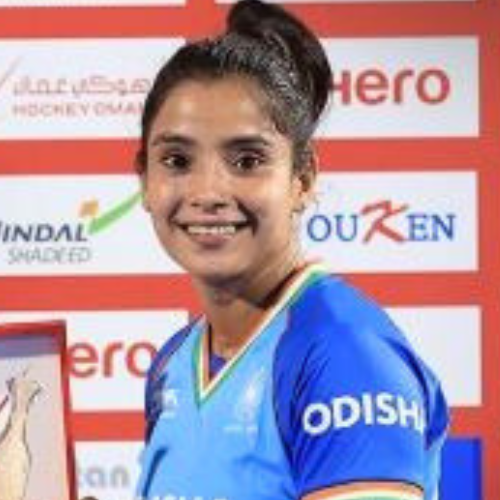
From the bustling alleys of Lucknow’s Cantt area to the turf fields of South Africa, Mumtaz Khan’s journey is pure grit. Once helping her father at a vegetable stall, a single race at school changed her life when Coach Neelam Siddiqui noticed her speed. That moment set her on a course to become a leading forward in India’s Junior Women’s Hockey Team.

Her standout performance at the 2018 Youth Olympics, where she scored 10 goals, earned her national acclaim. Yet, Mumtaz remains rooted, balancing hope and humility as she eyes the Olympics. She is proof that dreams born in dusty streets can blaze across international arenas.

These ten changemakers hail from Uttar Pradesh, from narrow village lanes to bustling metros, from battlefields to laboratories. But they are united by one thing:  quiet, relentless courage. In their lives, we find the India that persists, uplifts, and transforms—not with headlines, but with hard work.

Tap HERE to watch the video

source: http://www.awazthevoice.in / Awaz, The Voice / Home> The Changemakers / by Vidushi Gaur / May 24th, 2025


A student at the age of 92, Salima Khan is new Internet sensation

Bulandshahr, UTTAR PRADESH: 

A student at the age of 92, Salima Khan is new Internet sensation
Salima Khan is seen with Dr Pratibha Sharma and her great-grand daughter-in-law

Salima Khan is a new Internet sensation who enrolled herself in Chawli Primary School in Bulandshahr at the age of 92, becoming an inspiration to many. 

Bulandshahr (Uttar Pradesh): 

Remember Swara Bhaskar’s much acclaimed film “Nil Battey Sannata” released in 2016 where the ace actress goes back to school, attending class right with her daughter much to her dismay?

The plot is “recreated” in real life in Bulandshahr, Uttar Pradesh though for a different reason where a Muslim woman in a video is seen sitting in a classroom with her great-grand daughter-in-law.

Salima Khan is a new Internet sensation who enrolled herself in Chawli Primary School in Bulandshahr at the age of 92, becoming an inspiration to many.

The immediate reason behind Salima Khan’s inspiring endeavour at this age is to receive pension given to elderly citizens under the Indira Gandhi National Old Age Pension Scheme (IGNOAPS).

The government under this scheme gives a monthly pension of Rs. 200 to elderly citizens of 60 to 79 years and Rs. 500 thereafter.

“Amma used to come to me with a request to help her in getting pension. I promised her help provided she come to school every day for at least half an hour and learn something”, the Headmistress told media.

Despite facing a number of age-related issues, including hearing loss and weak eyesight, Salima Khan started coming to school and attend classes.

“Salima is a regular student and is never absent. She is attending the school since the last ten months. In this period, she has learnt a lot of things”, Dr Sharma said.

“Even at this age the interest and dedication with which Salima Khan learns is motivatinf for other students”, she added.

Salima who was unable to recognise letters is now able to write her name with fare fluency and can also confidently count up to 100.

Acha lagta hai padhna. School aana bahut badhiya lagta hai. (I like to study and attend school)”, 92-year-old Salima Khan said in the video now going viral.

Inspired by Salima Khan, as many as 25 other women of the village, including her daughter-in-laws, have decided to go to school.

source: http://www.ummid.com / Ummid.com / Home> Education & Career / by ummid.com news network / September 29th, 2023

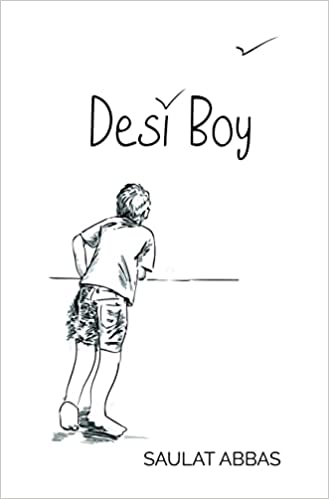
Saulat Abbas’s memoir: An authentic journey of a life from a UP village to Europe and Saudi Arabia

Bulandshahr, UTTAR PRADESH / SAUDI ARABIA :

Abbas said he wrote the memoir to enable his children to know their father better.

Saulat Abbas.

In a letter to his friend Thomas Poole, Coleridge wrote that any life, however insignificant, would if truthfully told, be of interest. There are two important points in Coleridge’s observation. One, that it is not important whether the subject of a memoir, biography or autobiography has lived a very eventful life and achieved great success, as any life can be a good enough subject for a book. Two, truthfulness in reporting events of life is an essential feature of a book chronicling a life. And because a memoir lies somewhere between history and literature, the element of selection, omission, foregrounding, and downplaying of events of life can all be part of a memoir.

An ordinary life

Saulat Abbas’s memoir Desi Boy starts with his modest admission about his ordinariness. He states that his purpose in writing his memoir is to let his children know him if ever they decide to know about their father. “Given all the uncertainties of life, if god decides to take me away before my kids are mature enough to care about who their father is, this book, I believe, will satisfy their curiosity.” While Abbas, whose two marriages did not last long, lives in Saudi Arabia alone, alternating between the gulf countries and his motherland India, his teen-aged son lives in Taiwan with his mother, and his daughter in Malaysia with her mother.

Abbas’s truthfulness in reporting various events of his childhood, adolescence and youth, some even projecting him in a very bad light if seen from some established ethical principles, is the most important feature of his memoir. It certainly must have been an important decision for him to decide which incidents should or should not be included in his memoir. Thus indoctrinated to believe that the punishment for theft is chopping off hands, he almost chopped off the hand of Khajya, his young playmate, with an axe for stealing marbles, injuring him badly enough to leave a cut on his hand.

There is certainly interesting material in his ordinary life: a Muslim boy living in an eastern UP village in a patriarchal set-up struggling with his education; his family moving to western UP town of Bulandshahr where his anglophile father taught English in a postgraduate college; his student days at Aligarh Muslim University; his dreams and his aimlessness finally taking him to Saudi Arabia and Europe where he feels that he has made it. More than the external events, it is his intellectual and spiritual development and his struggle with some ethical principles that make the book eminently readable.

Undoubtedly the most authentic portion of the book is his account of his early childhood in his mother’s village where he was exposed to village superstitions, rural-agricultural practices, Tom Sawyer-like antics of stealing hens and the rigidity of caste structure where, contrary to their religion, Muslim landowners maintained caste hierarchy very ruthlessly. The author narrates how he and his cousins caused a big scandal in his family when they attended a Dalit wedding to watch a nautanki. “As far as I can remember, perhaps, it was the first time that the Sayeds were going to attend a Dalit marriage ceremony, and all because of the fun of the nautanki.” The punishment for this transgression from the elders in the family was fierce: “we could not sit after the caning.”

The villagers believed in black magic, witchcraft and often consulted a mulla, rather than a doctor, when taken ill. Formal education in this set-up was a rarity, often available in a madrasa, and was the prerogative of landowners’ sons as the poor villagers were kept away from learning. “If they became literate, who would do the farming?,” Abbas wryly asks. Writing was done on a wooden board, a takhti, which needed the application of a film of fine clay called multani mitti. For the author the whole process of preparing his wooden board for writing and making reed pens with a sharp tip “was more interesting than writing or learning so we did it as slowly as possible,” till his teacher lost his temper.

Life in the village

Many characters in his account of village life stick in memory. The foul-mouthed, amoral, “ever-giggly-jiggly” Okida, who gives many “arse-spreading ideas” to the author, is also a woman full of practical wisdom. Harcharan, a farm worker in his sixties, not only narrates tales of his sexual exploits, he also gave the author lessons in little thefts like stealing milk right from “the cows’ udders.” The lower caste, good looking Sudhua, who was probably fathered by a zamindar for whom his mother worked, taught him lessons in farming and agriculture as also in the exploitative and unjust social order in his village.

“If any member of Sudhua’s community ever combed his hair or wore sandals or slippers, he would be castigated. In physical care and style they were not supposed to “emulate’ the zamindar.” Shammu Khan, the private tutor known for his strictness, also taught the author lessons in morality and power structure in the family. Granny Iqfa who came from Calcutta not only has many tales behind her but her writing of poems in Urdu and Persian when women hardly had any education, makes her even more interesting.

The break in his idyllic existence and a brief experience of uprootedness informs his description of his life in Bulandshahr, where his family moves. Up to his High School days, he describes, how his lack of interest in studies and attending school made him one of the slowest learners in his class. His teachers had unshaken belief in corporal punishment which he learnt the hard way and his classmates smelled of curry, putting him off from studies further. “In my mind, school had become synonymous with the Nazi concentration camps…teachers looked like demons.” The ruins of houses left behind by people who migrated to Pakistan after the partition became his hideouts where he would spend time with city urchins, learning bad language, playing marbles and smoking bidi. He also specialised in committing petty thefts with friends to finance his passionate love for Hindi films.

An important part of his growing-up years in the college premises where his father worked was his mingling with his Hindu neighbours. Religion was never an issue in his friendships, rather “we learned about one another’s faith, and learned stories that were at the foundation of our religious beliefs.”

One particular incident about hierarchical system of education stands out. As he became more serious about his career, he thought of exploring the possibility of getting admission in St Stephen’s College, New Delhi. However, so mesmerised and scared was he to see the dress, language and confidence of students and staff in the College, that he could not even gather courage to even talk to anyone in the College: “I returned to the bus station, got back home, and never told anyone how heroically the villager was defeated on his first trip to a real city.”

There are a plenty of interesting, funny, and humorous situations in the book which are enlivened by the author’s self-deprecating humour. Thus in watching Hindi films he and his friends felt aroused by Helen, Aruna Irani, or Jayshree, but “respected our heroines…and never cast a lascivious look at them. We thought our heroes had exclusive rights on those women.” He relates how his father’s application for a job in a university in Saudi Arabia and his own application for admission to a course were mixed up by the person handling them in Saudi Arabia because he had learnt to copy his father’s handwriting perfectly. When his father received a letter that he could not get admission to the said course he did not know “that his job prospects in Saudi Arabia were screwed up by his brilliant son.”

There appears a little bit of drama in the narrative when a boy from a lower-class family in his village who had left for Lucknow and later Bombay comes back to his village in style after making it big. It turns out that Rasheed, who made people believe that he was part of the author’s family, to gain respectability and social status, was an underworld don on the run, and the author’s house was the safest place to hide. Obviously the elders in his family had to do a lot of explaining to the police officers who followed Rasheed in the village.

Reproduction of village life, especially some rural Hindi slangs and swear words entailed problems of their translation in English. He uses expressions like “arse spreading remedy” to translate a familiar swear word in Hindi. The author’s wit makes the book very readable. The common practice in his village of keeping the heads of children shaved meant that “five or six little neo-Nazis of similar age, size, and shape often roamed the orchard. Abbas’s style of writing includes allusions to many literary works, often reflecting his study of English literature. Thus nights are dark “like Iago”, and a deserted house, called Chhaouni in the village, reminds him of the atmosphere in The Duchess of Malfi and The Fall of the House of Usher. His uses similes very liberally all through his texts, many of them are very original.

Memory has a very important role in a memoir. It can sometimes play tricks and at other times it can be put to selective uses. The author does not always mention dates or years in reporting many incidents of his life. An aware Indian reader can draw an inference about the time of the incidents but for others the author leaves a lot of work to do. Thus if the author saw Sholay 25 times, one can make out that he is talking about the year 1975. It would also have helped if he had used the names of schools he attended. His account of Aligarh Muslim University could have been longer. The elaborate rituals attending a death in the family and various forms of the expression of griefs are rites of passage for him. However, the description of Moharram, its significance in his formative years and description of many events in Islamic history take something away from the main narrative of the memoir.

All through the memoir the narrator uses a royal “we” to narrate events and experiences which, since it is a plural subject, sometimes feels awkward in the narrative, that is, “We brought a two-page long essay back to my father. He made millions of corrections and trimmed it well, and we memorised it by writing it many times to make sure we were not going to make a mistake on our exam.” In the same way the author uses a common Indianism “beef” to refer to buffalo meat, which in the present context is a very problematic expression. It should have been replaced either by buff or simply buffalo meat, the common Hindi expression for which is “bade ka ghosht.”

In all, Desi Boy is truly an authentic and interesting account of a life because it is truthfully rendered by Saulat Abbas.

Desi Boy, Saulat Abbas, StoryMirror.

source: http://www.scroll.in / Scroll.in / Home> Book Review / by Mohammad Asim Siddiqui / December 10th, 2022

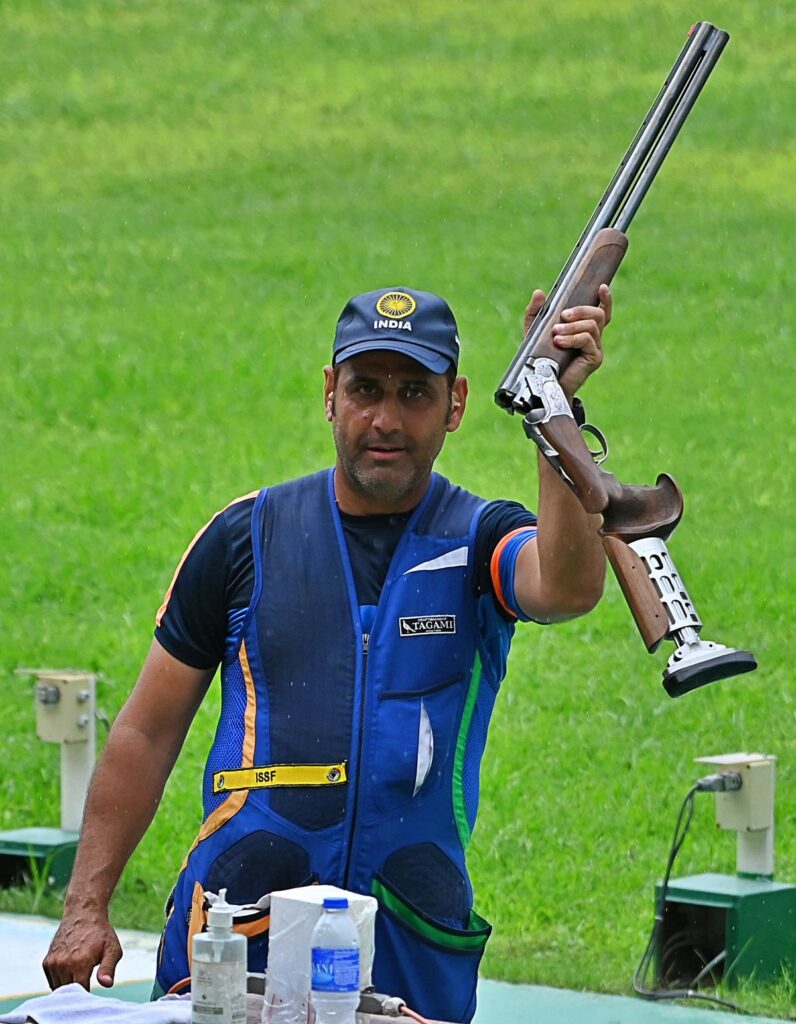
Mairaj Ahmad Khan snatches skeet gold

Khurja, Bulandshahar District, UTTAR PRADESH :

Mairaj Ahmad Khan wins a spectacular gold from nowhere in the Digvijay Singh shotgun championship in Delhi on Sunday. | Photo Credit: Kamesh Srinivasan

New Delhi:

Darshna Rathore had a chance to fight for gold but missed the last two birds and thus had to settle for the bronze.

Olympian and World Cup gold medallist Mairaj Ahmad Khan asserted his class yet again as he accelerated to a smart finish in grabbing the skeet gold in the Digvijay Singh shotgun championship at the Dr. Karni Singh Range, Tughlakabad, on Sunday.

The 46-year-old Mairaj beat Arjun Thakur 35-30 for the gold, as he missed only one bird in the medal round. He had qualified on top in the semifinal with 27 hits, after having made the final with a modest score of 115, six point behind qualification topper Gurjoat Khangura.

‘’Final and semifinal are great. I am going to work only on qualification for the next three months’’, said Mairaj, understandably happy about the way he had competed despite not being at his best.

It was a similar case during the last World Cup in Changwon, when Mairaj had to win a shoot off with four others after being tied on 119 for the last two berths, before racing to the gold.

Anantjeet Singh Naruka who had shot 120 in qualification lost the shoot off against Amrinder Singh Cheema for a berth in the medal round.

Raiza Dhillon won both the women’s and junior skeet gold medals. | Photo Credit: Kamesh Srinivasan

It was Raiza Dhillon all the way as she won both the women’s and junior gold. Raiza beat qualification topper Ganemat Sekhon 36-35 for the women’s gold, and beat Parinaaz Dhaliwal 33-32 for the junior gold.

Darshna Rathore had a chance to fight for gold but missed the last two birds and thus had to settle for the bronze.

The results:

Skeet: Men: 1. Mairaj Ahamed Khan 35 (27) 115; 2. Arjun Thakur 30 (27) 119; 3. Gurjoat Khangura 24 (29) 121; 4. Amrinder Singh Cheema 15 (24) 113.

Juniors: 1. Harmehar Singh Lally 28 (25) 112; 2. Bhavtegh Singh Gill 23 (25) 113; 3. Rajveer Singh Gill 19 (26) 112; 4. Abhay Singh Sekhon 14 (26) 116.

Women: 1. Raiza Dhillon 36 (25) 113; 2. Ganemat Sekhon 35 (27) 118; 3. Darshna Rathore 26 (22) 109; 4. Zahra Mufaddal Deesawala 11 (21) 112.

Juniors: 1. Raiza Dhillon 33 (23) 113; 2. Parinaaz Dhaliwal 32 (23) 109; 3. Darshna Rathore 24 (28) 109; 4. Sanjana Sood 14 (26) 113.

source: http://www.thehindu.com / The Hindu / Home> Sport / by The Hindu Bureau / New Delhi, August 01st, 2022