Tag Archives: Muslim Women Scientists

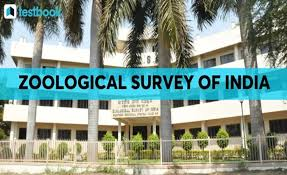
Zoological Survey of India Has 23 Muslims Among its 591 Officers and Other  Employees

Kolkata, WEST BENGAL / INDIA :
PUSHED TO THE MARGIN

On the list are 14 Muslim zoologists and scientists

To date, India has identified 102,718 animal species

Work is underway to discover new species in ecosystems

15 million living species still to be discovered

THE Kolkata-headquartered Zoological Survey of India (ZSI), whose scientists and field staff are engaged in exploring, naming, describing, classifying, and documenting animals from all over the world’s most populous country, has a miserably low number of Muslims – 23 – on its rolls that has a total of 591 officers, administration and field staffers, according to Mohammed Abdul Mannan’s new book, At the Bottom of the Ladder: State Of The Indian Muslims – https://www.amazon.in/dp/B0GF1Q9R25. The book quantifies Muslim presence in 150 key organisations, including Union ministries, departments, and organisations.

The Muslim scientists and zoologists at the ZSI are – Sarfraz Ul Islam Kazmi, Shaikh Rehnuma Sultana, Mohammed Hafiz, Imran Alam, Shabnam Nizamuddin Ansari, Jalil Ahmed, Mohammed Rasmanjani Ali, Anjum Nasreen Rizvi, Rifat Hussain Raina, Jafer Palat, Mohammed Ethtesham Ul Hassan, Ruqiya Bano, and K Bakh Mollah. There are seven Field Assistants from the largest minority community.

Among 82 ZSI scientists are two Muslims – Dr M E Hassan, a Scientist ‘E’ at the Gangetic Plains Regional Centre in Patna, and S R Sultana, Assistant Zoologist at the Freshwater Biology Regional Centre in Hyderabad. Among 98 officials at 15 Regional Centres, eight are Muslims, including two NRCs in Dehradun – Dr. Anjum Nasreen Rizvi, a scientist in Nematology, Helminthology and Molecular Systematics, and Dr S I Kazmi, a scientist in Hymenoptera. The Western Regional Centre in Pune’s four staff members include Dr Muhamed Jafer Palot, a scientist in animal taxonomy with a special interest in birds, reptiles, and butterflies. Dr Anjum Rizvi is the Managing Editor of the Journal of Indian Zoology.

The 108-year-old organisation has been working to understand and investigate the faunal diversity for scientific use and equitable sharing of the benefits of animal resources of the country. Formed in July 1916, it conducts surveys, exploration, and research that lead to the advancement of zoological knowledge. ZSI originated from the establishment of the Zoological Section of the Indian Museum at Calcutta in 1875.

It gradually expanded in terms of its manpower and research programme. Today, India is among the 17 mega-diversity countries of the world, with four biodiversity hotspots, including the Western Ghats/Sri Lanka, Indo-Burma, and the Himalayas. Currently, there are about 1.7 million living species described from all over the world, and another 15 million species are waiting to be discovered. To date, India has been able to describe 102,718 species of animals, and work continues to discover and explain new species, especially from the lower invertebrate groups occurring in various ecosystems. Also, the status of the higher group of animals is studied before their habitats disappeared on the planet Earth.

The country’s custodian of the animal resources has broadened its work in line with the Articles of the UN Convention on Biological Diversity (UNCBD), a multilateral treaty focused on conserving biodiversity, promoting its sustainable use, and ensuring the fair and equitable sharing of benefits from genetic resources.  As many as 157 countries signed it, like the United Nations Framework Convention on Climate Change (UNFCCC) and the United Nations Convention to Combat Desertification (UNCCD), at the UN Conference on Environment and Development in Rio de Janeiro in 1992. The CBD now has 196 countries as signatories, including India.  

To take the agenda further up, India also enacted the Biological Diversity Act in 2002 to implement the provisions of CBD, which covers biodiversity at all levels: ecosystems, species, and genetic resources. To support the implementation of its objectives, two internationally binding agreements were adopted within the framework of the CBD. The Cartagena Protocol, adopted in 2000 and entered into force three years later, regulates the transboundary movement of living modified organisms (LMOs).

The Nagoya Protocol, adopted in 2010 in Japan and entered into force four years later, establishes a legally-binding framework for access to genetic resources and the fair and equitable sharing of the benefits arising from their use. Experts say considerably less is done to assess the degree and value of biodiversity without knowing the species involved. The ecosystem’s health also cannot be monitored without recognizing the presence of the individual organisms crucial for the indication of ecological processes.

The ZSI has made extensive surveys across the country, and a large number of specimens have been collected. Of these collections, only about 65 percent have been taxonomically studied. These include the major groups of vertebrates. The organization provides information and vital data for the in-situ conservation of various species in different ecosystems, both within and outside the protected areas. The ZSI provides regular services with regard to permissible limits of legal trading of faunal resources or derivatives thereof, monitoring services on population status of commercially important species, and providing inputs for underutilised, culturable species, both from terrestrial and aquatic systems.

A part of the Union Ministry of Environment, Forest and Climate Change, it also undertakes Environmental Impact Assessment (EIA) with special reference to ecology and wildlife. Zoological surveys worldwide are crucial for understanding and managing biodiversity. These surveys involve various methods to collect data on animal populations, behaviour, and habitats, including field observations, monitoring programs, and advanced techniques like DNA analysis and satellite tracking.  

There are about 1.7 million living species described from all over the world and another 15 million species are waiting to be discovered. Based on the largest dataset to date, the global Living Planet Index (LPI) shows an average 73 percent decline in monitored wildlife populations between 1970 and 2020. It reports that there has been a large average decline across more than 34,000 animal populations.  In 2024, ZSI set up a pilot project to use eDNA (environmental DNA) to study and monitor wildlife.

Data analysis of the 2010-2020 decade reveals that a total of 4,112 species — 2,800 new species and 1,312 new records in 2020, India added 557 new species to its fauna, which included 407 new species and 150 new records, according to a document by the ZSI. The number of faunal species in India has climbed to 1,02,718 species with the discovery of the new species. There is no definitive, universally agreed-upon number for the total number of animal species in the world.

Estimates range from three million to 100 million. However, the most common estimates fall between seven and 10 million. About 1.5 million animal species have been formally described and named by scientists.  The ZSI publishes the Red Data Book on Indian Animals, which was first published in 1983 and is similar to the Red Data Book published by the International Union for Conservation of Nature (IUCN), the world’s largest and most diverse environmental network known for producing authoritative reports, standards, and tools for conservation.

To read and obtain more data, please visit:

At the Bottom of the Ladder: State of the Indian Muslims – https://www.amazon.in/dp/B0GF1Q9R25

source: http://www.clarionindia.net / Clarion India / Home> Big Story> India / by Team Clarion / April 27th, 2026
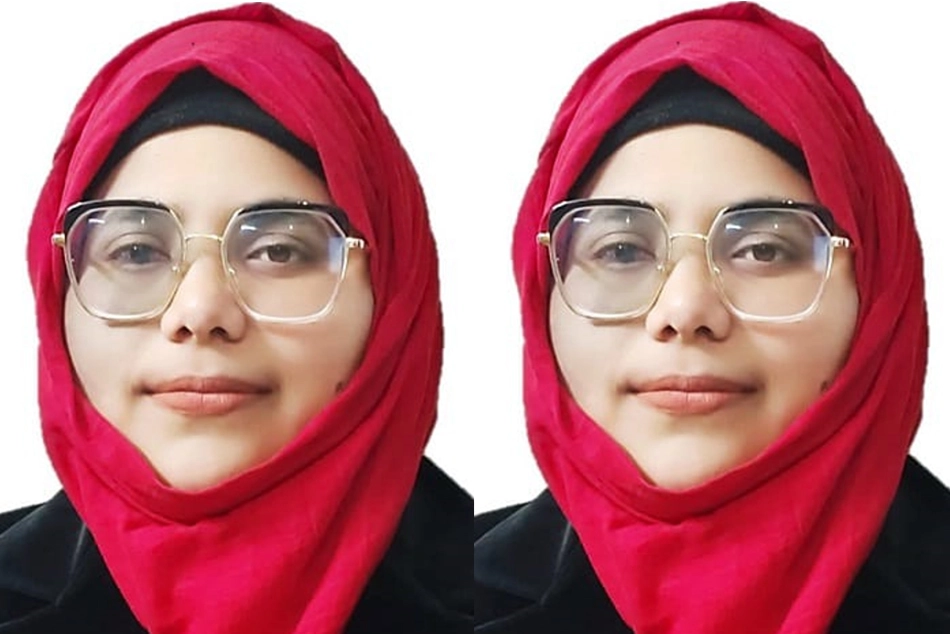
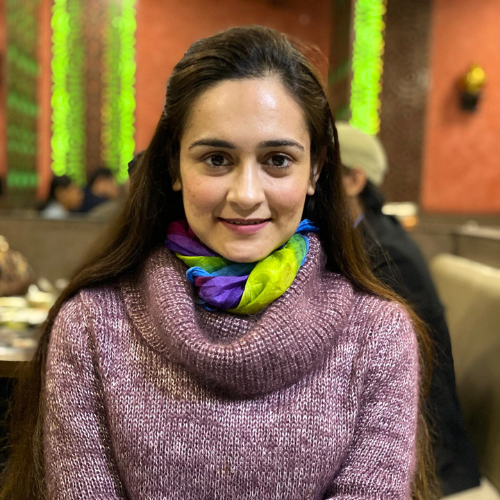
Meet Tamkeen Fatima: AMU Alumna Selected by DRDO as Scientist

Aligarh, UTTAR PRADESH :

Tamkeen Fatima, a past student of Aligarh Muslim University (AMU), has been selected as Scientist ‘B’ by the Defence Research and Development Organisation (DRDO), Ministry of Defence, Government of India

Aligarh Muslim University: 

Tamkeen Fatima, a past student of Aligarh Muslim University (AMU), has been selected as Scientist ‘B’ by the Defence Research and Development Organisation (DRDO), Ministry of Defence, Government of India.

Tamkeen Fatima is a recent M.Tech. graduate from the Department of Computer Engineering. Her selection came through a highly competitive process comprising academic performance, GATE score and interview.

Tamkeen completed her M.Tech. (Computer Science & Engineering) in 2025 with an outstanding CPI of 9.944, securing the top rank in her class.

She also completed her B.Tech. from AMU in 2023 and qualified UG-NET (JRF) 2024 in Computer Science with an All-India Rank 2 (99.9933 percentile) in her very first attempt.

“A Consistent Performer”

Tamkeen is a Second Year student pursuing M. Tech. in Computer Science and Engineering at the Department of Computer Engineering, Z.H. College of Engineering and Technology, Aligarh Muslim University.

She completed her B Tech from AMU in 2023 with 9.703 CPI. She has been a consistent recipient of Merit Scholarships from class X onwards, including UP STSE, University Merit Financial Award (AMU), and GATE scholarship.

During her B Tech, Fatima participated in research internship programmes at ISRO, McMaster University, Toronto, Canada (Mitacs GRI), and The Fields Institute, Toronto, Canada (Fields Undergraduate Summer Research Programme). She has also published a research paper in ACM Conference Proceedings.

Recognising her academic excellence and research potential, she was selected as Assistant Professor (Contractual) through the Local Selection Committee and joined the Department of Computer Engineering, AMU in August 2025.

source: http://www.ummid.com / Ummid.com / Home> Career / by Ummid.com news network / November 01st, 2025

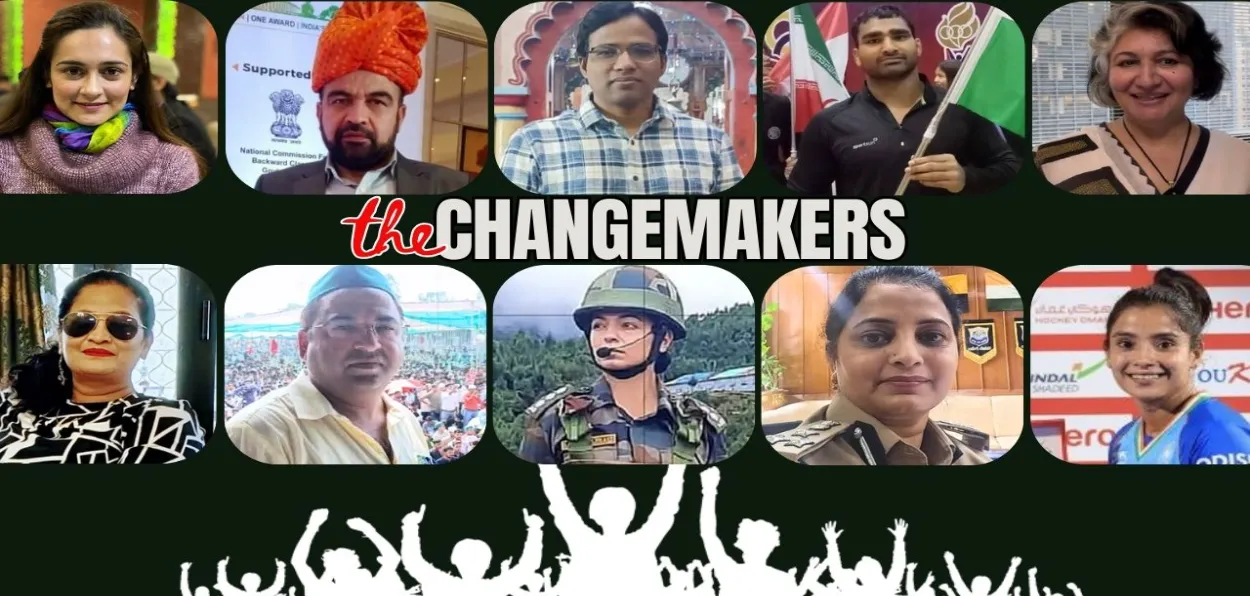
10 trailblazers of Uttar Pradesh reshaping India’s future

UTTAR PRADESH :

New Delhi :

While media spotlight often shines on celebrities and politicians, the real engine of India’s progress runs on the resolve of countless unsung heroes who, away from limelight, quietly transform society.

From national defense to grassroots education, sports, science, and civil service, these individuals from Uttar Pradesh show how courage, compassion, and conviction can drive extraordinary change. Here are 10 such trailblazers whose stories deserve to be heard:

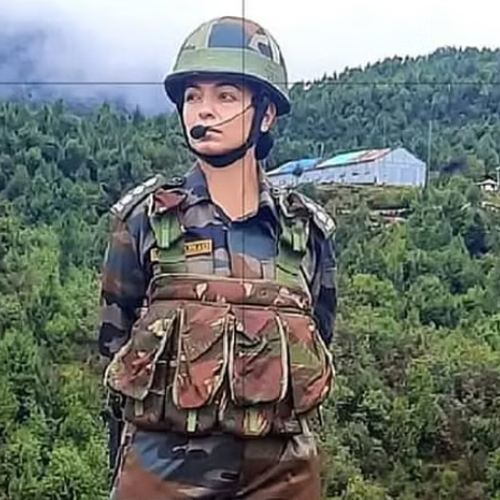
Captain Sariya Abbasi: A Woman in Uniform on the Frontlines

Hailing from a small city of Gorakhpur, Uttar Pradesh, Captain Sayria Abbasi broke every convention to join the Indian Army. A graduate in Genetic Engineering and with plenty of job offers and career opportunities from big companies was not enough for her to pursue in life. The call of service for the motherland was too strong to be sacrificed.

The world noticed her as a soldier deployed at the Line of Actual Control (LAC), India-China temporary border, manning an Air Gun. Today, Sariya leads drone-killer teams and operates L-70 anti-aircraft guns on the border. Her journey from an academic achiever to a defender of the nation’s borders is not just about military precision; it’s about shattering glass ceilings and reshaping how India imagines women in uniform.

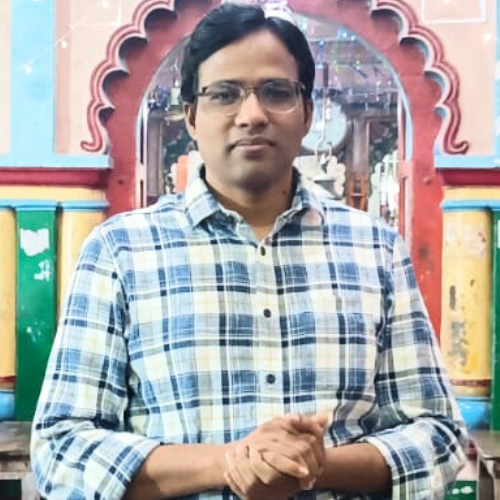
Dr. Faiyaz Ahmad Fyzie: Voice for the Voiceless Pasmanda Community

Dr. Faiyaz Ahmad Fyziean AYUSH physician, is more than a healer—he is a public intellectual, columnist, translator, and relentless advocate for the Pasmanda (socially backward) Muslim community. Raised in modest conditions, his rise to national recognition is built on fearless writing and tireless grassroots work.

When even the Prime Minister refers to Pasmanda voices, Fyzie’s years of advocacy resonate. His pen continues to empower those whose struggles were long silenced. His work is a call to conscience—and a roadmap for inclusive discourse.

Mohammad Luqman Ali: Wrestling His Way to Glory and Degree

Wrestler Mohammad Luqman Ali, a student of Social Work at Jamia Millia Islamia, is balancing body and brain. Born in Amroha’s tiny village of Mohraka Patti, his father worked on the railways, and his mother gave him religious grounding. Despite limited resources, Luqman’s grit has earned him recognition in India’s wrestling circles.

From the mat to the classroom, his dual commitment shows that excellence doesn’t require compromise. It requires discipline, heart—and a family’s belief in you.

Rubina Rashid Ali: Reviving Mughal-Era Art with a Modern Mission

In a sun-drenched corner of Aligarh, Rubina Rashid Ali has quietly built a movement. Her work in floral appliqué embroidery, a legacy of Mughal art, now supports dozens of women in Aligarh and Rampur. What was once an undervalued craft monopolized by middlemen has been transformed by Rubina into a vehicle for women’s economic empowerment.

Her home resonates not only with the sound of needles and threads but also with the hum of independence. “Real artists were reduced to laborers,” she says. Today, she ensures their hands are not just working — but also earning.

Babban Mian: A Gaushala Keeper Inspired by His Mother’s Love

At Madhu Sudan Gaushalla in Bulandshahr, Babban Mian tends to cows not out of ritual, but reverence — inspired by his late mother Hamidunnisa Begum. “She loved cows like her own children,” he recalls. After she passed away in 2015, Babban vowed to preserve her legacy.

Despite being a Muslim in a Hindu-dominated tradition, he runs a government-recognized shelter rooted in compassion, not controversy. For him, animal welfare is a universal value — not a communal issue. His work quietly redefines what shared culture and interfaith harmony look like.

Khushboo Mirza: From Amroha to the Moon with ISRO

 Khushboo Mirza, scientist at ISRO and part of the Chandrayaan-1 and Chandrayaan-2 missions, is a stellar example of perseverance. After her father’s death when she was just seven, her mother raised three children alone, running a petrol pump and defying social norms.

Khushboo earned a Gold Medal in Electronics Engineering from AMU and was the youngest member of the Chandrayaan-1 checkout team. A practicing Muslim and a symbol of India’s scientific aspirations, she turned down corporate offers to reach for the stars—and took a whole generation of girls with her.

Zaheer Farooqui: A People’s Leader with a Vision for Purkazi

In western UP’s PurkaziZaheer Farooqui is rewriting what local leadership means. As Nagar Panchayat Chairperson, he donated land worth ₹1.5 crore for the area’s first Intermediate College and modernized local schools into PM Shri-certified institutions.

His initiatives go beyond classrooms. From India’s first double-storey government-run cow shelter to a gym for Muslim women, and one of the most sophisticated rural CCTV networks in the region — Farooqui’s governance is a blend of tradition and tech, equity and empowerment. His Tiranga Yatra revives local history, reminding citizens that patriotism is inclusive and action-oriented.

Dr. Farah Usmani: From AMU to Global Health Leadership

On a cold morning in New York, Dr. Farah Usmani stood outside an apartment, a folder in hand, her eyes bright with resolve. The daughter of Uttar Pradesh, she is today a formidable presence in global health policy.

n M.D. in Obstetrics & Gynecology from AMU, Farah sought impact beyond hospital walls. Armed with a Master’s in Health Policy from LSE and the London School of Hygiene & Tropical Medicine, she’s led transformative health initiatives around the world. Her journey is one of intellect guided by idealism — a doctor who chose not just to heal individuals but to reform systems.

Anjum Ara: Bridging Communities Through Compassionate Policing

Hailing from Azamgarh’s Kamharia village, Anjum Ara, a 2012-batch IPS officer, has redefined the image of policing with a human touch. A computer engineer by training, her journey from Integral University to Senior Superintendent of Police in Shimla has been marked by integrity and reform. Known for her work in cybercrime and her community-focused policing model, Anjum is also a fierce advocate for girls’ education.

Together with her husband, IAS officer Yunus Khan, Anjum adopted the cause of Khushdeep, the daughter of a martyred soldier, pledging to support her upbringing. This act of empathy mirrors her professional ethos, proactive, principled, and deeply people-centered.

Mumtaz Khan: From Vegetable Stall to World Hockey Stage

From the bustling alleys of Lucknow’s Cantt area to the turf fields of South Africa, Mumtaz Khan’s journey is pure grit. Once helping her father at a vegetable stall, a single race at school changed her life when Coach Neelam Siddiqui noticed her speed. That moment set her on a course to become a leading forward in India’s Junior Women’s Hockey Team.

Her standout performance at the 2018 Youth Olympics, where she scored 10 goals, earned her national acclaim. Yet, Mumtaz remains rooted, balancing hope and humility as she eyes the Olympics. She is proof that dreams born in dusty streets can blaze across international arenas.

These ten changemakers hail from Uttar Pradesh, from narrow village lanes to bustling metros, from battlefields to laboratories. But they are united by one thing:  quiet, relentless courage. In their lives, we find the India that persists, uplifts, and transforms—not with headlines, but with hard work.

Tap HERE to watch the video

source: http://www.awazthevoice.in / Awaz, The Voice / Home> The Changemakers / by Vidushi Gaur / May 24th, 2025