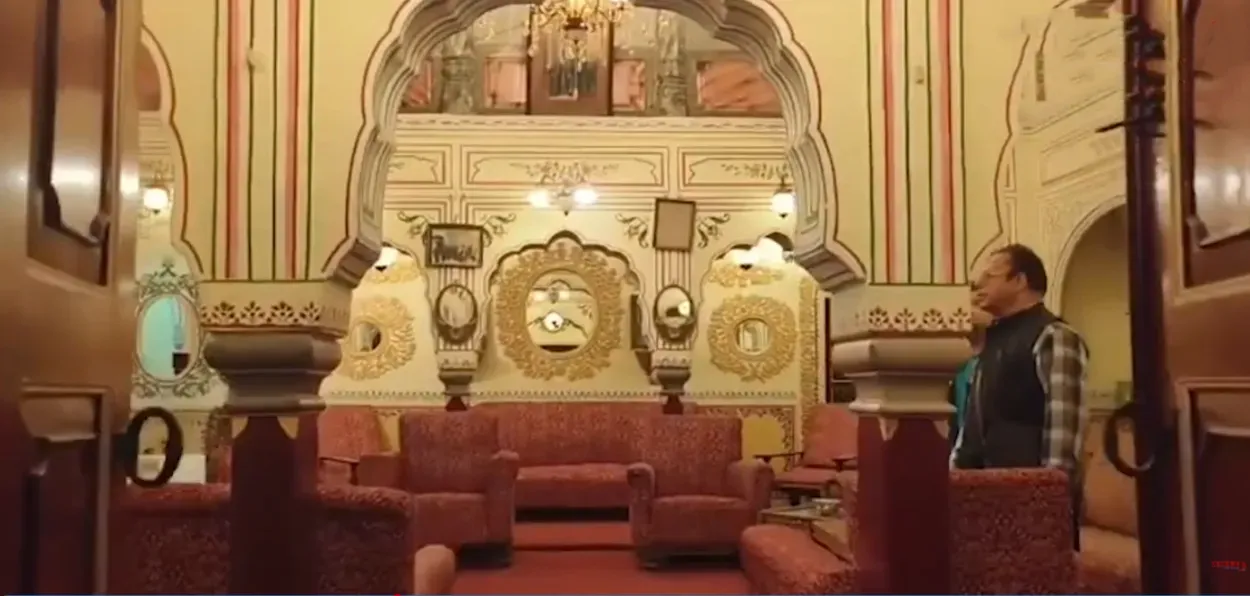
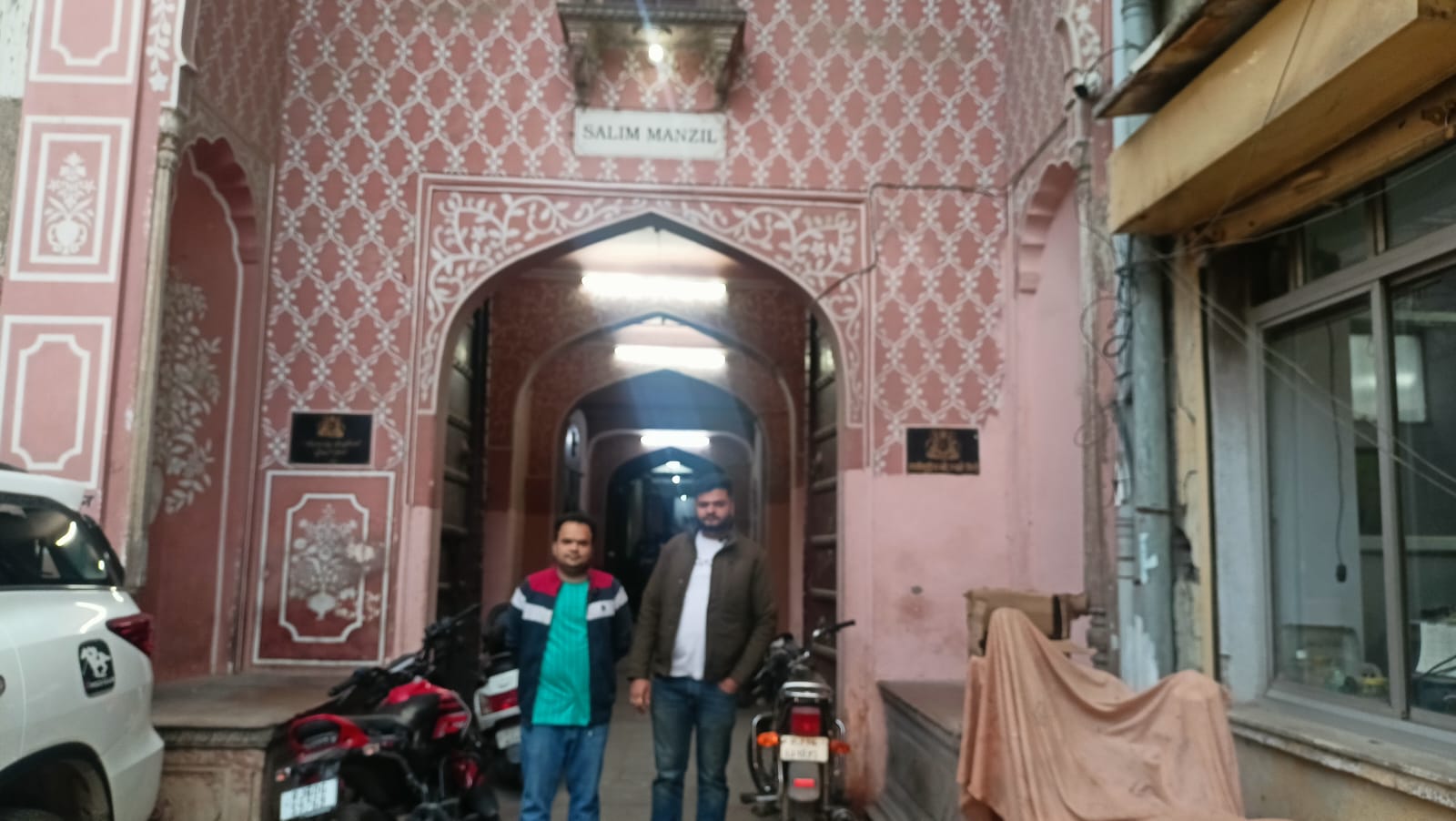
In the bustling streets of Jaipur at Haldio Ka Rasta, Johari Bazar, time suddenly seems to stand still. Amidst ancient stone walls, arched doorways and the stillness of history, stands the Salim Manzil, a majestic building which is a living legacy of more than two centuries.
The mansion houses a relic – a cap of Imam Hussain, the grandson and son-in-law of the Prophet Muhammad; it adds to its importance.
The story behind the ‘blessed cap’ reaching the haveli is interesting and part of its rich history.
The entrance to Salim Manzil
In the early 17th century, an ancestor of today’s inmates of Salim Manzil treated an Iranian king. The King wanted to reward him with gold, silver and valuable gifts, but he declined the offer and instead requested the cap of Hazrat Imam Hussain.
The King presented the relic and a certificate with the royal seal to him as a reward.
Since 1876, this blessed hat has been preserved in Saleem Manzil in a special glass-framed box kept in a hall called “Kala-e-Mubaraq”.
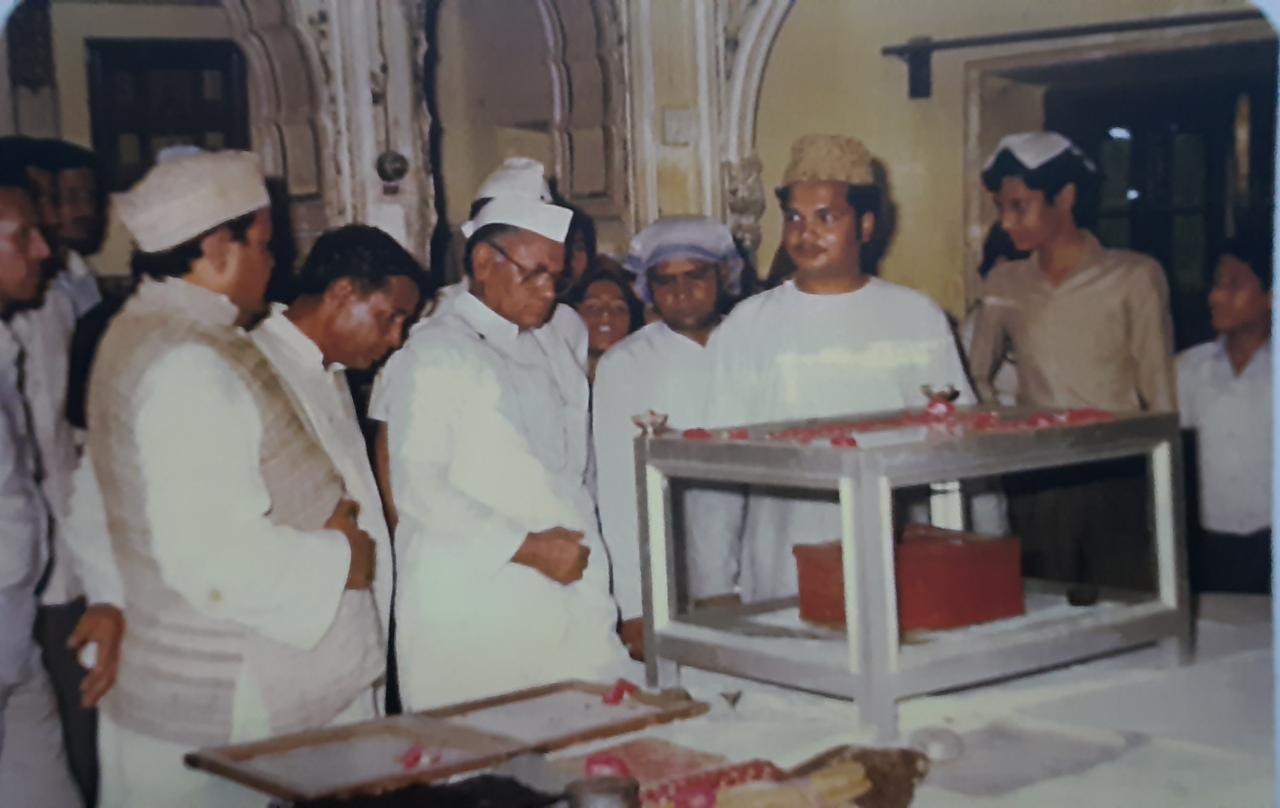
Every year on the 9th and 10th of Muharram, it is opened to the public. In those days, Salim Manzil is turned into a pilgrimage centre, and its air filled with spirituality.
People viewing the Blessed Cap of Hazrat Imam Ali
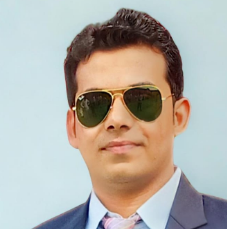
Today, Moinuddin Khan, 33 and his younger brother, Hussamuddin Khan, 27, are living in the mansion. The two brothers are not only maintaining this legacy, but also modernising its upkeep and display of artefacts.
Moinuddin Khan says that his ancestors came to Jaipur from Delhi around 1812 AD. At that time, Maharaja Jagat Singh of Jaipur State granted them a fiefdom and honour to his elder brother, Hakim Wasil Ali Khan.
This honour was for Wasil Ali Khan’s academic and medical expertise, and he was admitted to the Royal Court. One of the ancestors was the head of the intelligence department of Jaipur State, a sensitive position. He was responsible for the State’s security, political activities and gathering information needed for administration.
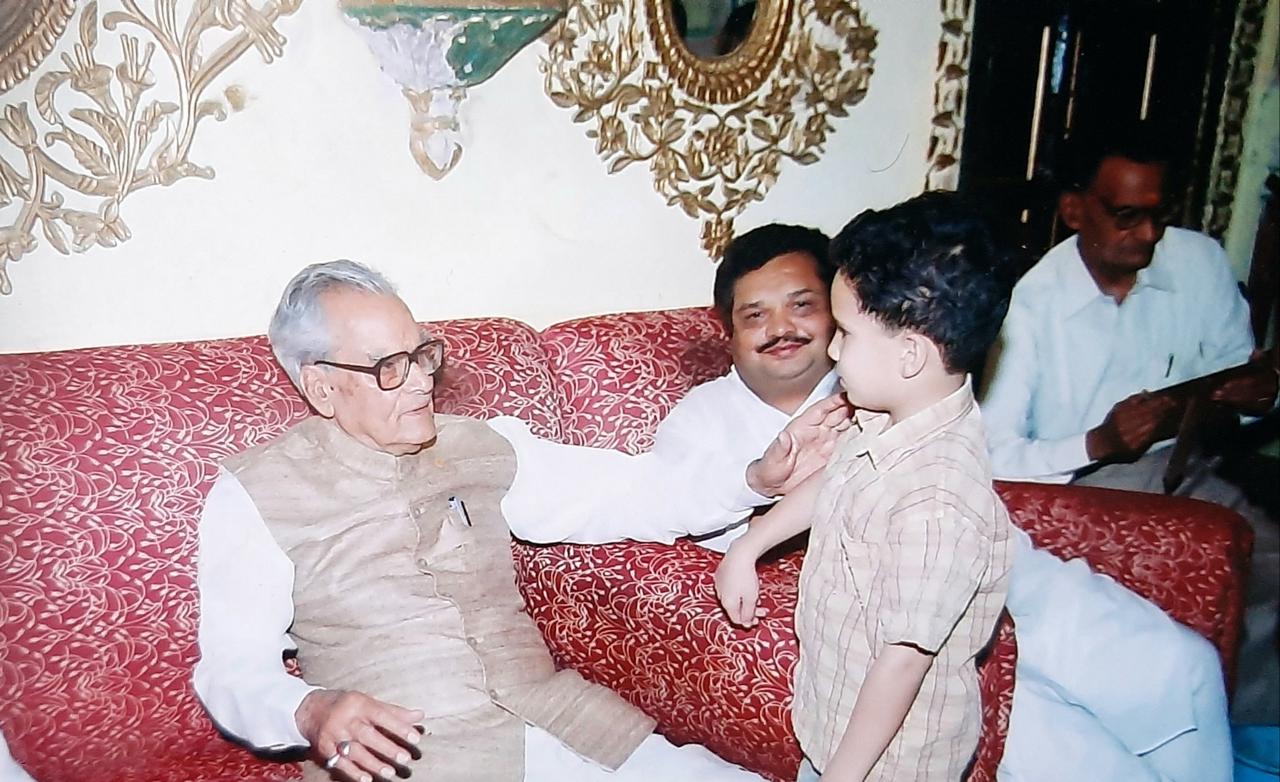
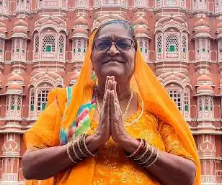
Bharion Singh Shekhawat with the inmates of Salim Manzil
Later, his son, Salim Ali Khan, worked in the same position.
The construction of Saleem Manzil began in 1867, and it was completed within three years. Spread over an area of about a bigha, the building was gifted by the Maharaja of Jaipur. Even today, the haveli’s traditional Rajasthani carvings, arches, high ceilings and lattice windows are a testimony to the architectural craftsmanship of that era.
Over time, many havelis were converted into commercial hotels, but Saleem Manzil retained its original identity. The family also received offers to convert it into a hotel, but they preferred to preserve the spirit of the heritage rather than market it.
Visitors inside the Salim Manzil
The mansion has been used as a set by many filmmakers for movies and web series. Moinuddin says he acted for the role of Sri Krishna in one of the web series. “We have a strong foundation in religion, but we also remain connected with art and dialogue.”
A large hall is decorated, the rooms are filled with the fragrance of perfume and roses, and the pilgrimage begins with Milad Sharif.
Devotees from Gujarat, Maharashtra and other parts of the country also arrive here. In those days, Shia Muslims read prayers and distribute Tabarak.
Moinuddin says that we consider it more of a trust than an inheritance. It is both an honour and a responsibility for us.
Many important persons have visited Salim Manzil. They include President Giani Zail Singh, Chief Ministers Haridev Joshi and Shiv Charan Mathur, Bhairav Singh Shekhawat (Vice President), Natwar Singh (Minister), Najma Haibabullah (Rajya Sabha Chairperson), and Supreme Court Justice Gyan Sudha Mishra.
Head of the family, late Naseemuddin Khan, popularly known as Pyare Mian, founded the All-India Hakeem Ajmal Khan Memorial Society to perpetuate his family’s legacy of Unani medicine and social service.
Today, Moinuddin and Husamuddin Khan are trying to connect this heritage with modern dialogue. They are planning to build a new hall for better management of the pilgrimage during Muharram.
They are sharing information about this heritage with the world through social media and digital means for transparency.
Amid myriad historic monuments of Jaipur, Salim Manzil is unique since it not only preserves the relics of history but is also a pilgrimage centre.
source: http://www.awazthevoice.in / Awaz, The Voice / Home> Stories / by Farhan Israeli, Jaipur / February 21st, 2026
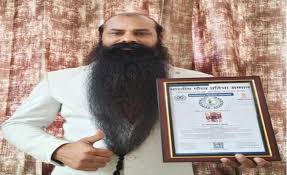
Dr Mohammad Ishaq, a well-known physician from Shahpura in Rajasthan, has been honoured with the Indian Pride Talent Award 2026 for his unique work in beard and moustache art, promotion of local culture, and dedicated social service. The award was presented during a virtual programme organised recently by Jeevan Jagruti Seva Sansthan, Jaipur.
Dr Ishaq, also known as ‘Mr Beard Man’ of Shahpura, is not only recognised for his distinctive designer beard and moustache styles but also for his efforts to take Rajasthani art and culture to national and international platforms. The award, organisers said, was given for his “art, cultural contribution, and service to society”.
The news of the award has created a sense of happiness across Shahpura. Residents, social workers, and youth groups have congratulated Dr Ishaq, calling the honour a matter of pride for the town.
“This award is not just for me, it belongs to Shahpura,” Dr Mohammad Ishaq said. “Whatever I have achieved is because of the love and support of the people.”
Locals say Dr Ishaq’s journey shows how talent rooted in local culture can earn global recognition.
National Fame
Dr Mohammad Ishaq Khan is a medical professional by training, but his identity goes far beyond his clinic. Over the years, his designer beard and moustache styles have become his signature. Through this art form, he has represented Shahpura and Rajasthan across India.
He has won several awards at local, state, and national levels. Recently, he secured first position in a moustache competition held at the internationally known Pushkar Fair, where participants from across the country and abroad took part.
“Pushkar was special,” he said. “Winning there gave me confidence that our traditional styles still have value.”
Dr Ishaq is widely credited as the first person to introduce funky and designer beard styles in India as a separate competitive category.
After his participation, beard and moustache competitions across the country began, including dedicated categories for funky and designer beard styles.
According to organisers of the India Beard Club, this change helped attract new talent and gave a fresh direction to traditional competitions.
“Dr Ishaq changed the way these competitions are seen,” said an organiser associated with the India Beard Club. “He brought creativity and discipline together.”
National Championship
One of the most important achievements in his career came at the India Beard Club National Championship, where around 60 participants from different states competed.
Dr Mohammad Ishaq secured first place in the designer beard category, bringing national attention to Shahpura.
“That moment was unforgettable,” he recalled. “Standing on that stage, I felt I was carrying my city and my culture with me.”
Beyond competitions, Dr Ishaq has worked to promote Rajasthani art, culture, and traditional appearance through his beard and moustache styles.
Last year, he played a small group role in the Bollywood actor Saif Ali Khan’s film Laal Kaptaan. Though brief, the appearance was important for him.
“Cinema reaches people everywhere,” he said. “I wanted our Rajasthani look to be seen by a wider audience.”
Shahpura Beard Club
To support young artists and keep traditional art forms alive, Dr Ishaq established the Shahpura Beard Club last year.
The club aims to guide new artists, organise local events, and provide a platform for those interested in beard and moustache art.
“Many young people have talent but no guidance,” he said. “The club is meant to support them and keep our culture alive.”
Members of the club say Dr Ishaq personally mentors newcomers and encourages discipline and respect for tradition.
Alongside his artistic work, Dr Mohammad Ishaq has also been deeply involved in public life. He has served as a municipal councillor in Shahpura for the last ten years.
During this time, he has taken part in health camps, cleanliness drives, and local welfare programmes.
“Service to society is part of my duty,” he said. “Being a doctor and a councillor gives me a chance to help people in different ways.”
Residents say he is easily approachable and regularly attends to public concerns.
Faith, Culture, and Service
Community leaders say Dr Ishaq’s work challenges stereotypes and presents a positive image of Indian Muslims.
“He represents our culture with dignity,” said a local social worker. “His success shows that Muslims are contributing positively in every field.”
Dr Ishaq himself believes culture and service go hand in hand.
“My beard is not just fashion,” he said. “It reflects identity, tradition, and self-respect.”
The Indian Pride Talent Award is given to individuals who have made meaningful contributions in their respective fields while also serving society.
Organisers said Dr Ishaq was chosen for his rare combination of art, cultural promotion, and social commitment.
“He has turned a traditional art into a modern platform,” said a representative of Jeevan Jagruti Seva Sansthan. “At the same time, he remains connected to social work.”
Celebration Across the City
After the announcement, congratulatory messages poured in from across Rajasthan and beyond. Local traders, youth groups, and cultural organisations welcomed the honour.
“Shahpura feels proud today,” said a shopkeeper. “He has taken our city’s name to places we never imagined.”
Dr Mohammad Ishaq says he wants to continue promoting culture and guiding young talent while staying active in social work.
“Awards give encouragement, but the real work continues,” he said. “I want to do more for society and for our culture.”
His journey, supporters say, proves that dedication, creativity, and service can go together.
As Shahpura celebrates its “Mr Beard Man”, Dr Mohammad Ishaq’s story stands as an example of how local identity, when carried with pride and purpose, can earn national and international respect.
source: http://www.clarionindia.net / Clarion India / Home> Editor’s Pick> India / by Team Clarion / February 11th, 2026
Ilin Fatima, a young Muslim from Ajmer, has made history by becoming the city’s first female Chartered Accountant (CA), marking a milestone for her family and the local Muslim community. Her achievement reflects a blend of strong upbringing, determination, and a steadfast commitment to education.
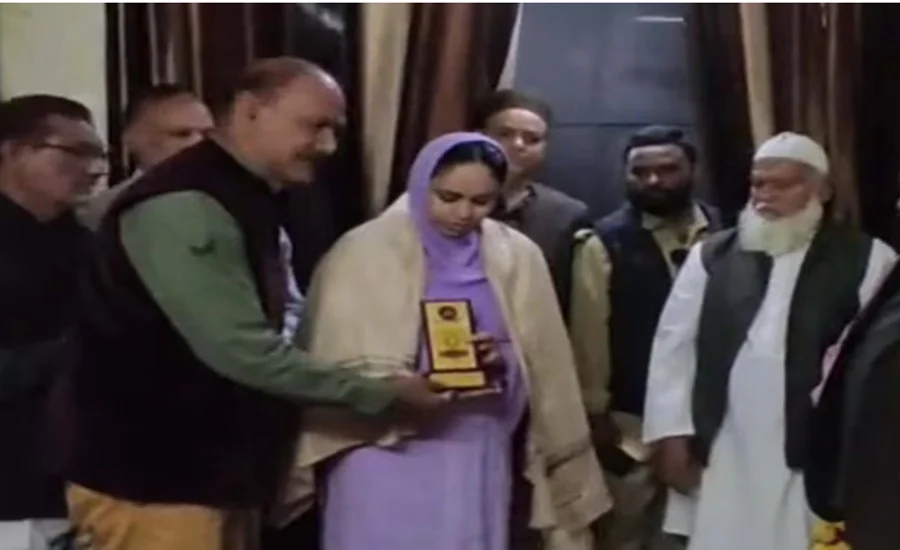
Fatima was welcomed with widespread enthusiasm by the Muslim Welfare and Education Committee of Ajmer in Rajasthan, where she was felicitated for her dedication and resilience. Community members gathered to celebrate, expressing pride not only in her personal success but also in what it signifies for Muslim families across Ajmer and the state.
Her father, Abdul Hameed Khan, spoke about the significance of this accomplishment with deep gratitude to Allah. “I have three daughters, and I ensured they were educated according to Shariah law,” he said. “My daughters have succeeded in both religious and worldly knowledge. I urge every parent to prioritise education for their children. Even if you have to eat half a loaf of bread, make sure your children receive quality education.”
He referred to a Hadith (sayings of Prophet Muhammad) and emphasised the value of knowledge: “Acquire knowledge even if one has to go to China. Education is essential, and people often overlook its importance. My daughter’s success is a reminder of the power and necessity of learning.”
The community’s response has been overwhelming. Leaders and members of various organisations, including Syed Rab Nawaz Jafri, UD Khan, Dr Syed Mansoor Ali, Haji Nafees Ahmed, Advocate Manzoor Ali, Hasan Mohammad, Akram Siddiqui, Farid Hussain, and Aqeel Ahmed of the Ajmer Muslim Welfare and Education Committee have all praised Fatima’s dedication and accomplishment.
A committee spokesperson remarked, “Ilin Fatima’s achievement serves as an inspiration not only to her family but to the entire city. Her commitment to education demonstrates that the progress of daughters is vital for the development of society. When girls are educated, communities prosper, and real success is achieved.”
Ilin Fatima’s historic success is likely to encourage more Muslim families to prioritise education for their daughters, breaking barriers and inspiring future generations. Her journey is a testament to perseverance, faith, and the unwavering support of a family that values both religious and worldly knowledge.
“Her hard work shows that with determination, guidance, and faith, anything is possible,” the committee official added. “She has set an example for all young Muslim girls in Ajmer and beyond.”
As Ilin Fatima steps into her professional career, her story stands as a beacon of hope and a reminder of the transformative power of education within the Muslim community in India.
source: http://www.clarionindia.net / Clarion India / Home> Editor’s Pick> India> Indian Muslim / by Mohammad Bin Ismail / November 10th, 2025
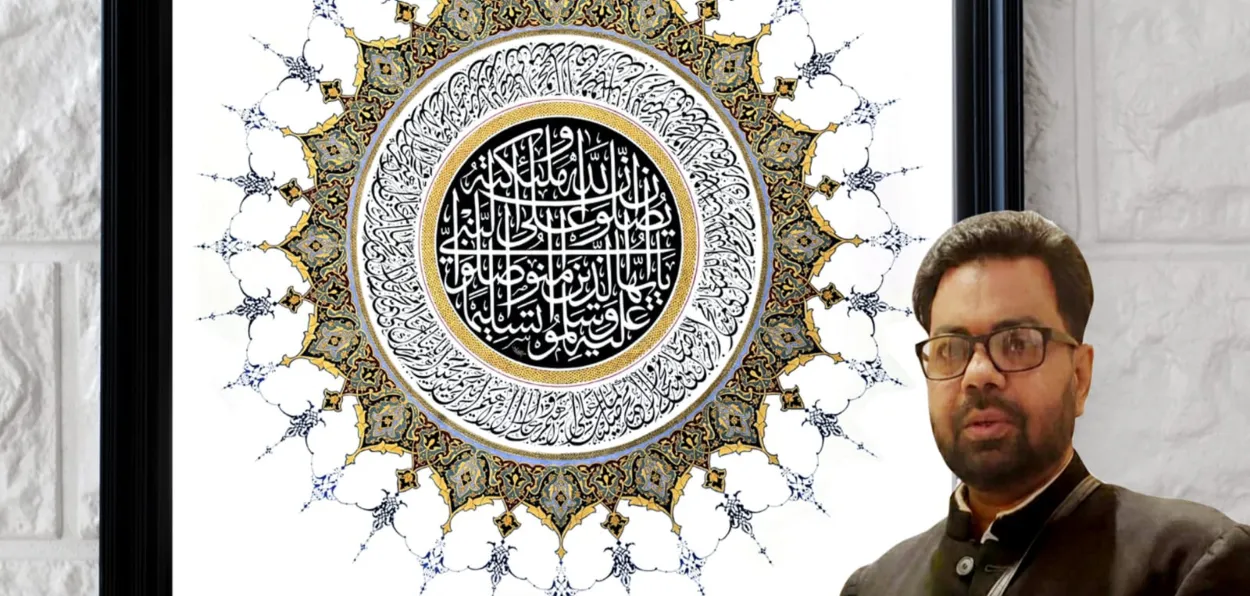
Qari Mutiullah Wasifi, a calligrapher from Tonk, a city in Rajasthan, won the second prize in the International Islamic Calligraphy Competition, organised by the Islamic Art Society in New York, USA.
This recognition comes amid the rise of digital fonts and artificial designs globally.
Qari Mutiullah Wasifi competed with more than 4000 artists from around the world. On this occasion, Qari said his success at an international forum is not sudden. Over the past four years, India’s presence in this competition has been consistent, and the Wasifi family has made it to the top every time.
In 2022, Qari Mutiullah Wasifi received the first prize. A year later, his son Haris Wasifi secured second place. In 2024, Haris won the first prize.
This year, the first prize was bagged by Egypt, the second by India, the third by Pakistan, and the fourth by Turkey. The award includes a certificate, a memento, and a cash prize. However, for the Wasifi family, the real honour is the recognition that comes with representing India.
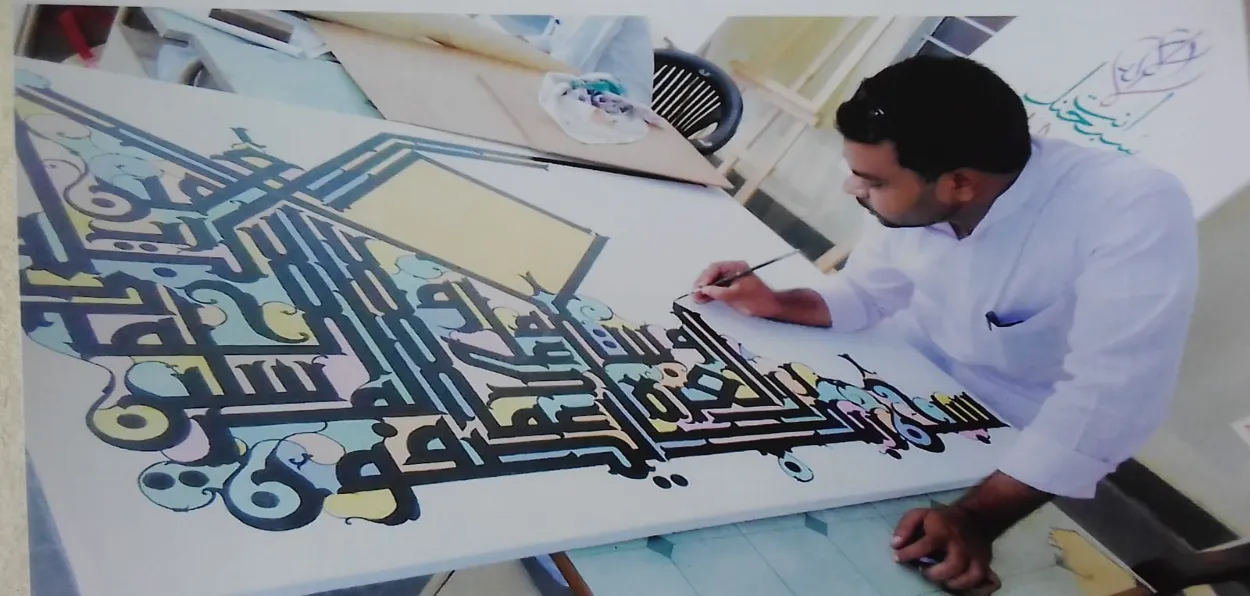
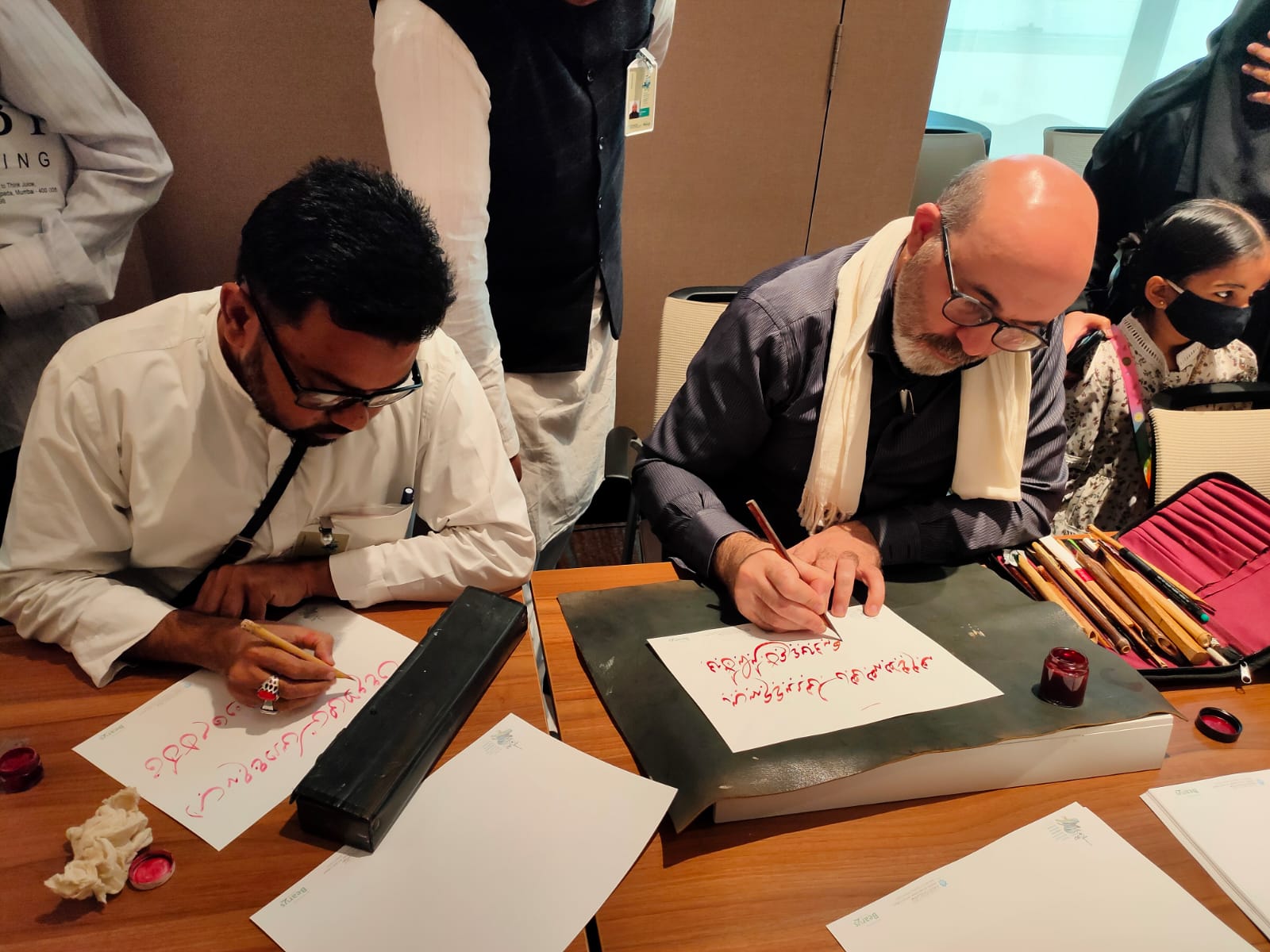
Qari Mutiullah Wasifi at work
Qari Mutiullah Wasifi’s journey didn’t begin at an art college. His first school was his own home. His late father, Qari Salimullah Wasif Furqani, was a renowned calligrapher, reciter of the Quran, and a scholar. He had a command of Arabic, Persian, and Urdu.
His calligraphy of the Quran was his speciality. As a child, Mutiullah watched his father sit for hours, writing. The sharpness of the pen, the curves of the letters, and the measured amount of ink used were not mere play for him, but a matter of discipline.
For formal education, he enrolled at the Maulana Abul Kalam Azad Arabic-Persian Research Institute (APRI) in Tonk. He completed a four-year diploma course, recognised by the National Council for Promotion of Urdu Language (NCPUL), Delhi. This is the same institution that has made Tonk a centre for Arabic and Persian studies.
Tonk is generally known for its madrasas, books, and Islamic education. But this city has also witnessed a well-established tradition of calligraphy. During the Nawab era, calligraphers from Iran and Central Asia taught locals the art.
Institutions like Maulana Abul Kalam Azad Arabic Persian Research Institute (APRI) have preserved this legacy. This institution has trained many calligraphers who have made a name for themselves in India and abroad. Qari Mutiullah Wasifi is an important link in this chain.
Wasifi told Awaz-the Voice that for him, calligraphy is not just a means of decoration, but a part of worship. To date, he has handwritten 27 copies of the Holy Quran. Some of these Qurans are written in extremely fine script, while others are adorned with gold and silver.
Qari Mutiullah Wasifi with a competitor
He has also undertaken unique projects, such as writing the entire Quran on a single large sheet of paper. This work requires years of practice and patience. The placement of each letter is crucial, and even a single mistake can ruin the entire work.
One of Qari Mutiullah Wasifi’s lesser-known yet important contributions is related to the preservation of manuscripts — completing the half-done copies of the Holy Quran and rare books in Arabic, Persian, and Urdu. So far, he has completed approximately 500 incomplete Qurans and hundreds of old books.
He has undertaken projects for private collectors, libraries, and research institutions. This effort breathes new life into books that might otherwise have been lost to oblivion.
Wasifi’s art is not limited to paper. He has done calligraphy on cloth, leather, wood, metal, grains of rice, lentils, marble, hair, and even inside bottles. This art is not only a test of manual dexterity but also of concentration and balance.
Tomorrow is the last day to enjoy the discount on incredible workshops by the Global Centre of Islamic Art during Islamic Art Week! 🌟 Access a variety of workshops on calligraphy and Islamic art in general by many talented artists… pic.twitter.com/XAg735bUeT
Wasifi participated in the international calligraphy competition organised by the Islamic institution “Irtika” in Istanbul, Turkey, in 2022. This institution organises a prestigious global calligraphy competition every two years, in which renowned calligraphers from around the world participate.
In 2023, he also participated in the international calligraphy competition organised by Fujairah Company in Dubai (UAE). This competition is known for its distinguished jury and global participation.
Wasifi says that if workshops, exhibitions, and competitions are considered together, his participation in national and international events, both within and outside India, totals approximately 30.
Wasifi thinks it’s not his achievement, but a means of showcasing the Indian calligraphy tradition at the international level.
According to him, such platforms provide artists with opportunities to learn, test themselves, and connect with calligraphers from around the world. He has also received several honours at the national level.
He has also participated in international exhibitions and workshops in places like Bengaluru, Udaipur, Aligarh, Diggi Palace in Jaipur, and the Lalit Kala Akademi in Delhi.
In the Wasifi family, this art has been passed down from one generation to the next. Qari’s eldest son, Haris Wasifi, is an internationally acclaimed calligrapher. The second son, Abbas Wasifi, is a Hafiz and Qari (one who has memorised the entire Quran and recites it with proper pronunciation) and is pursuing his education at Nadwatul Ulama, Lucknow.
The daughter, Sidra Wasifi, is an Alima (a female religious scholar) and teaches calligraphy to young girls. This family is not only preserving art but also discipline and heritage.
Qari Mutiullah Wasifi has established ‘Bazm-e-Wasif‘ in memory of his father. His dream is to create a special library and museum of calligraphy in Tonk, where his and his father’s manuscripts can be safely preserved. He says that despite the lack of resources, his resolve remains unwavering. His goal is to ensure that this calligraphic heritage of Tonk reaches future generations.
source: http://www.awazthevoice.in / Awaz, The Voice / Home> Stories / by Farhan Israeli, Tonk (Rajasthan) / January 29th, 2026
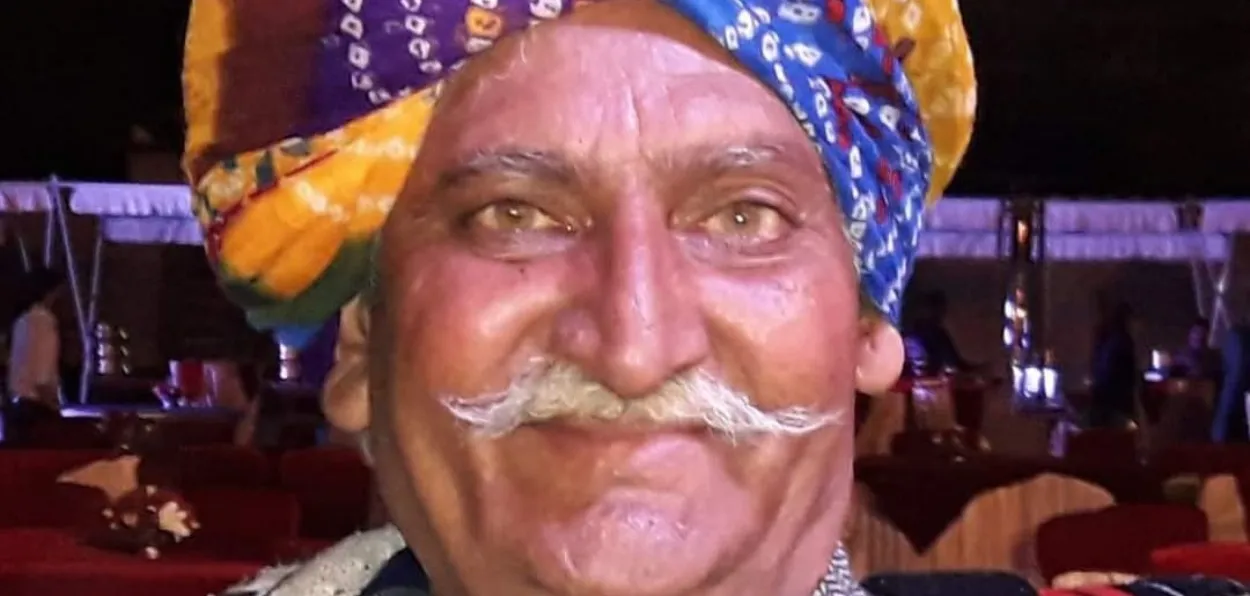
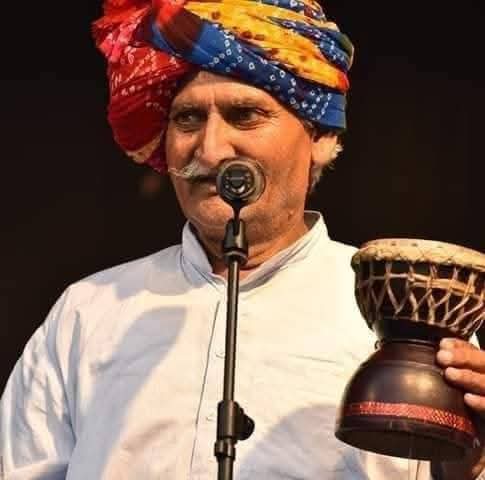
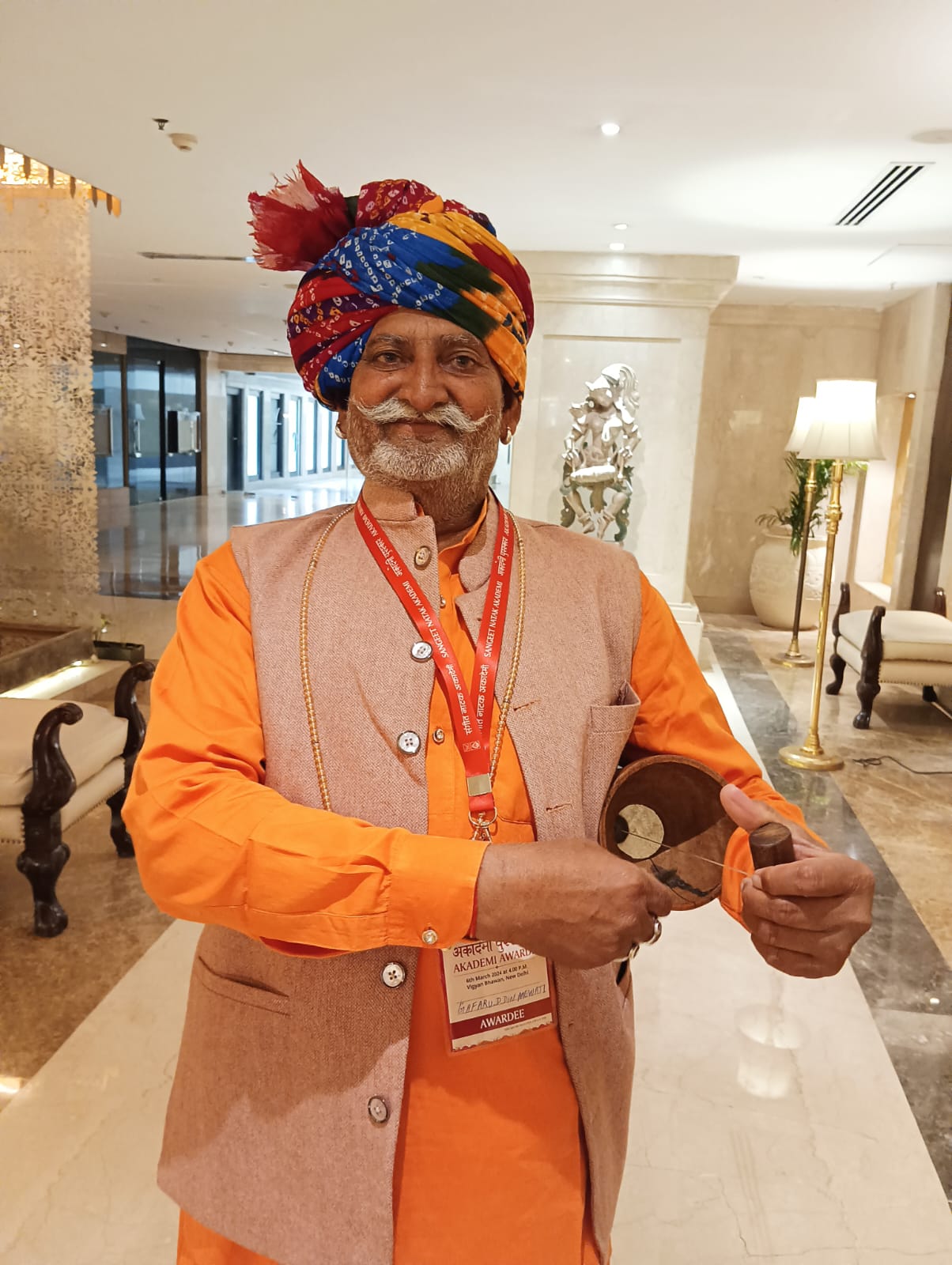
My joy is like that of a labourer who goes to work in the morning and receives his wages the same evening,” said Ghafruddin Jogi Mewati, a traditional singer, who has been selected for this year’s Padam Shri award by the government of India.
Ghaffaruddin, 68, has showcased his art for more than half a century, from the rugged lanes of Mewat to the seven seas. As soon as the announcement of the coveted award poured in, Ghafruddin, a resident of Alwar, was overwhelmed with emotion.
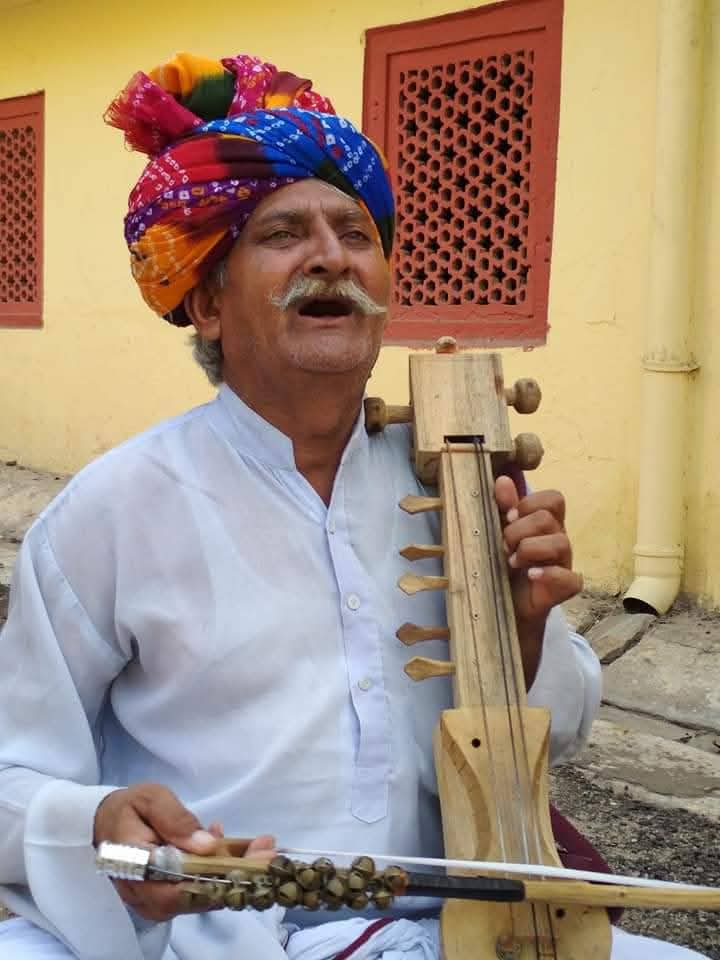
Memories of him wandering barefoot through the villages of Mewat, playing the bhapang (A traditional string instrument) and begging for flour, flashed in his mind. Today, he feels that he has received the wages for all that hard work he did to keep a traditional art form alive.
He feels the Padam Shri is not just an honour for an individual, but for the centuries-old Mewati culture, the legacy of the Jogi community, and the rhythm of the bhapang, which is on the verge of extinction.
The Mewat region, which straddles the borders of Haryana and Rajasthan, possesses a unique identity as a syncretic culture.
Here, the Jogi community, who are Muslims, has, for generations, sung episodes from the Mahabharata and other folk tales.
#WATCH | Folk artist Gafruddin Mewati Jogi, awarded the Padma Shri in the field of art, said the honour marks the culmination of a lifelong struggle.
He recalled learning and preserving the art by travelling with his father, passing it on to others, and continuing the… pic.twitter.com/xiYDWTOqSQ— DD News (@DDNewslive) January 26, 2026
Ghafruddin is one of the strongest exponents of this tradition. He says, “Stay connected to your language, culture, and folk art; that is our true identity.” For him, this honour is a debt he owes to the soil of Mewat, which nurtured him during his days of struggle.
Born in Kaithwara village in the Deeg district of Rajasthan, Ghafruddin’s childhood was no less dramatic than a film script. His father, the late Budh Singh Jogi, was an accomplished artist. At the tender age of four, when children usually play with toys, his father placed a ‘bhapang’ in Ghaffaruddin’s hands.
The Bhapang, which resembles a small drum but has a single string, is considered an evolved form of Lord Shiva’s damru (a small hourglass-shaped drum). Playing it requires an extraordinary coordination of abdominal muscles, fingers, and vocal rhythm.
As a child, he learned by travelling from village to village with his father, sitting in village squares, and listening to folk tales.
They had to beg for grain and flour in villages to support the family. Those were difficult days, but the rhythm of the Bhapang never let him lose hope.
The most significant aspect of Gafruddin Jogi’s art is his rendition of the Mahabharata. Remarkably, a Muslim artist sings the epic of Lord Krishna and the Pandavas with such devotion and purity that the listener is completely captivated. Alwar and the surrounding areas are historically linked to ‘Viratnagar,’ where the Pandavas spent their period of exile.
When Gaffaruddin narrates these folk tales in the Mewati dialect, history comes alive. His art has proven that music and culture know no religious boundaries.
The year1992 marked a major turning point in his life. He travelled abroad and performed for the first time. There has been no looking back since then.
He carried the sound of Bhapang to over 60 countries, including England, Australia, Canada, France, and Dubai. When he played Mewati folk tunes at an event celebrating Queen Elizabeth’s birthday in London, even the foreign audience was captivated by the magical rhythm.
When the call on his mobile came, he initially thought someone was playing a prank on him, but when the news was confirmed, he was emotional. He dedicated the award to the Mewat region and the Jogi community.
#WATCH | Alwar, Rajasthan: On being conferred with the Padma Shri 2026 in the field of art, folk artist Gafruddin Mewati Jogi says, “I am very happy that the struggle of my life has finally yielded results, and I have received this recognition… For seven years, I went from… pic.twitter.com/66UQBRb4W5
Today, the eighth generation of his family is carrying on this art form. His son, Dr Shahrukh Khan Mewati Jogi, has not only learned music but also earned a PhD on the culture of Mewat. While many traditional art forms are fading away, Ghaffaruddin’s family is keeping this flame alive.
Ghafruddin Jogi Mewati wants to open a school for folk arts. He wants the government to provide him with land where he can teach the new generation the art of playing the Bhapang, Mewati folk singing, and their traditional stories.
He says that if the younger generation does not stay connected to its roots, we will lose our identity. He says receiving the Padma Shri is not the destination for him, but the beginning of a journey that he wants to continue until his last breath.
source: http://www.awazthevoice.in / Awaz, The Voice / Home> Stories / by Younus Ali, Alwar / January 28th, 2026
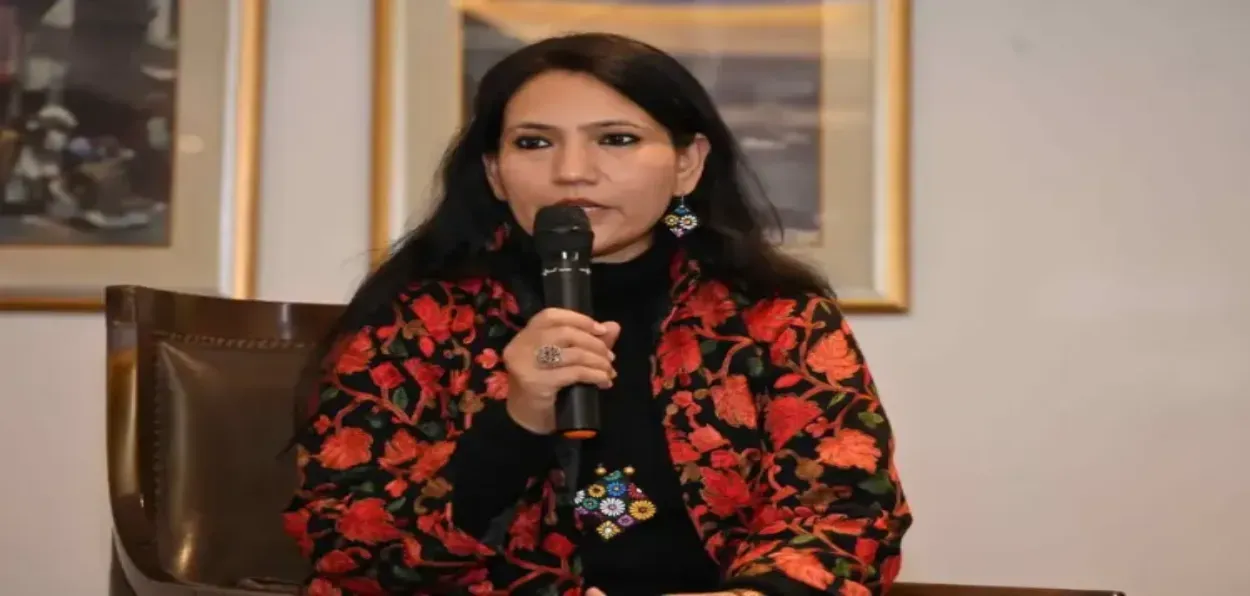
Coming from a small town and making a mark on the national scene, writer-journalist Tasneem Khan brings women’s concerns to the forefront through her journalism and literature. Her narratives are sensitive, clear, and attempt to offer solutions. Her writing and television programmes do more than narrate women’s struggles; they challenge social mindsets and inspire change.
Here are excerpts from an exclusive conversation with her:
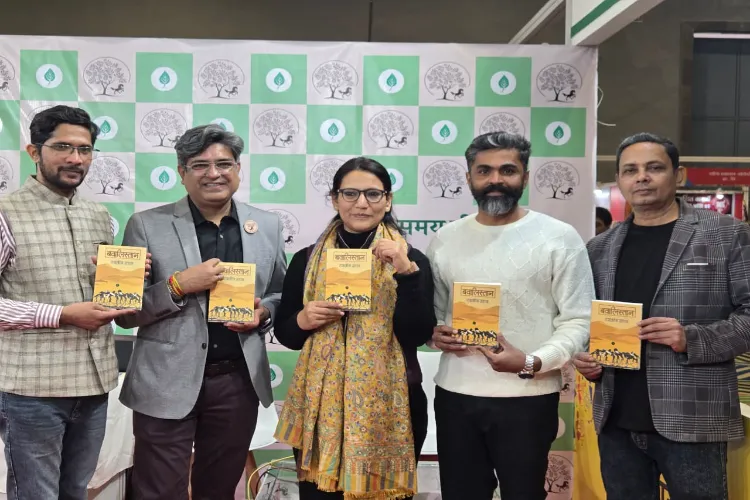
Let’s begin with Bwalistan. What is it about?
Bwalistan is a collection of stories rooted in Rajasthan, particularly its desert life. These stories belong to a distinct literary tradition that deeply portrays the complexities and struggles of life in the Thar Desert. Rajasthan’s desert is not just a physical landscape—it is defined by its people, culture, traditions, and way of life, all of which give it a unique identity.
Coming from a small town, it isn’t easy to make a mark in journalism and literature. How did your journey begin?
A: It’s true that paths have never been easy for women. I come from Didwana tehsil in Rajasthan’s Nagaur district. Though I grew up in a small town, my parents were educated, and our home had a culture of reading and learning. My mother’s love for books shaped me deeply. Growing up among books sharpened my ability to think, debate, and reason. I also won several awards during my school and college years.
When did you choose journalism as a career?
I formally entered journalism in 2005. From the very beginning, I was drawn to women-centric issues. I consistently wrote on gender sensitivity, domestic violence, and women’s social rights. For me, journalism is not just about reporting news; it is about engaging in dialogue with society.
Your television programmes gained special recognition. Could you tell us about them?
A: I hosted a programme called Samar Shesh Hai, which discussed women’s social and political concerns. Later, my regular show on Patrika TV, Aadhi Duniya, Poori Baat – with Tasneem Khan, became quite popular. The aim was to present women not merely as victims, but as thinking, reasoning individuals.
For which report did you recently receive the Ladli Media Award?
I received the award for my show “When Will Domestic Violence Go into Lockdown?”, presented by Population First and UNFPA. The jury felt the report exposed a harsh truththat during lockdown, women faced another terrifying pandemic inside their homes: domestic violence.
Your writing focuses less on complaints and more on solutions. How did this approach develop?
I don’t want to merely describe women’s pain. I believe writing should point toward solutions. If even one woman finds a way forward through my work, I would consider my life meaningful.
You began novel writing in 2015. How special is Mere Rehnuma to you?
A: Mere Rehnuma is extremely close to my heart. Published by the Jnanpith Trust, it was selected in a young writers’ competition. I became the second woman writer from Rajasthan whose debut novel was published by Jnanpith. Through this novel, I tried to establish that women’s empowerment cannot come through financial independence alone without a change in social mindset, empowerment remains incomplete.
Research has been conducted on this novel. How did that feel?
A: It was a matter of great pride that Mere Rehnuma became the subject of PhD and MPhil research. It reaffirmed my belief that my writing has connected at both academic and social levels.
Could you tell us about your other works and awards?
A: My short story collection Dastaan-e-Hazrat Mahal was published in 2019 and earned me the Chandrabai Award. In 2021, I received the Shakuntalam Award from the Rajasthan Progressive Writers’ Association. My stories have been translated into several languages. Rukh-e-Gulzar was translated by the Indian Translation Council, while The Blue of Silence was published in a Pakistani Urdu magazine and won the Mirror Award. My story My Share of Moonlight will soon appear in a collection by Oxford University Press.
What is your writing process like?
I observe people around me very closely their characters, pain, and struggles shake me from within. Until that restlessness finds words, I find no peace. That unrest gives birth to my stories.
What role did your parents play in your life?
My parents have been my greatest support. At difficult turns, they always encouraged me. I firmly believe parents’ education plays a decisive role in shaping a child’s future. I have seen many girls unable to move ahead simply because their parents did not value education.
The heroine of Mere Rehnuma is in search of liberation. How do you view this liberation?
A: For me, liberation is not just personal; it is social. Until society learns to accept strong women, their freedom will remain incomplete. If my writing can guide even one woman in this direction, that will be my greatest achievement.
You recently interacted with readers during the ‘Chaturang #LockdownLive’ session on Facebook. How was that experience?
The Rajasthan Forum organised the session. I spoke openly about my education, career, and literary journey. I emphasised that becoming a writer requires years of preparation, deep reading, and psychological analysis of society. I also read excerpts from my novel Ai Mere Rehnuma. The interaction was deeply personal and immensely inspiring for me.
Tasneem Khan’s journey shows how words, when driven by empathy and purpose, can challenge patriarchy, reshape thought, and quietly spark a revolution, one story at a time.
source: http://www.awazthevoice.in / Awaz, The Voice / Home> Stories / by Onika Maheshwari, New Delhi / January 19th, 2026
Raizada Village (Ajnala Tehsil, Amritsar District), PUNJAB :
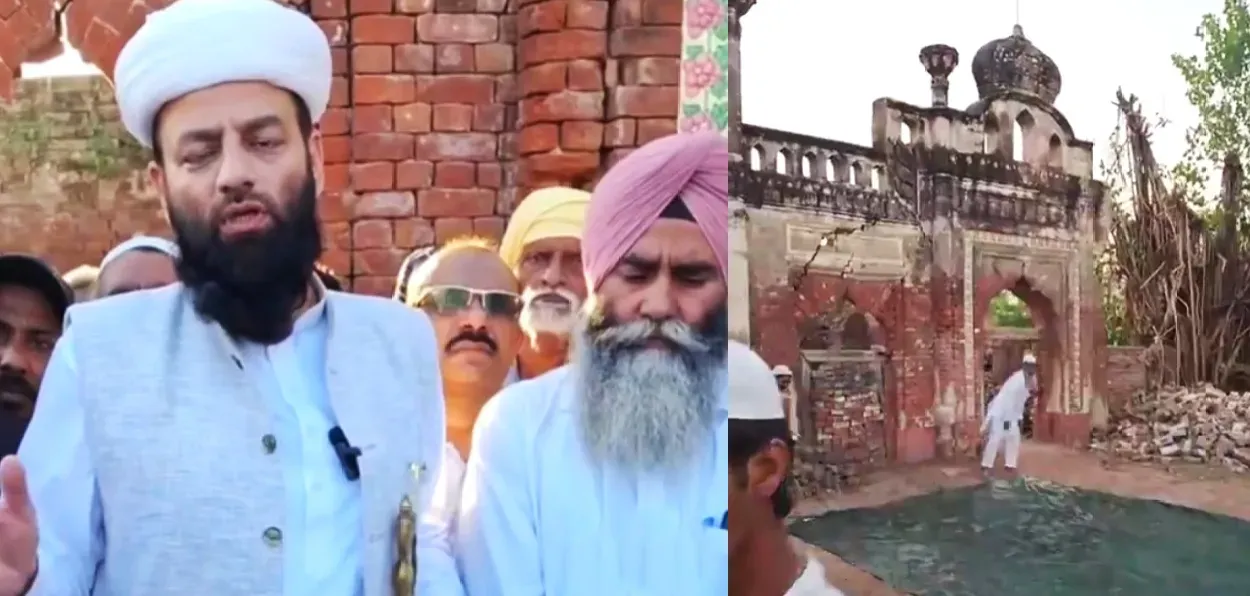
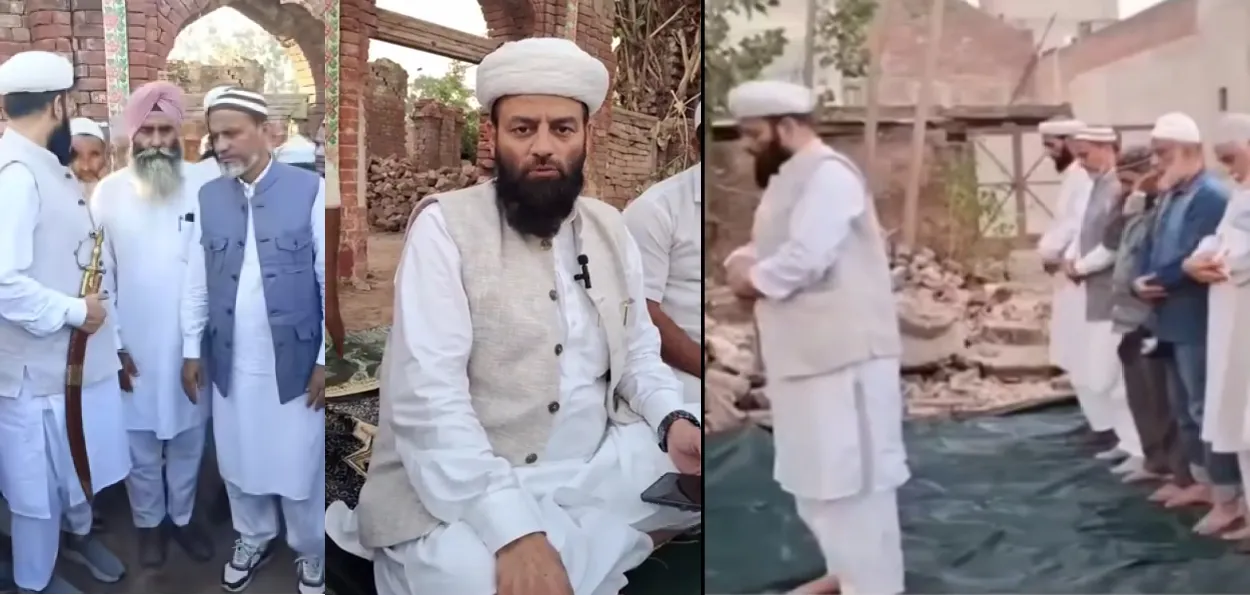
Shahi Imam of Punjab Maulana Usman Rehmani Ludhianvi taking charge of the mosque in village Raizada of Amritsar, Punjab
The Sikhs and Hindus of a village in the Amritsar district of Punjab have handed over a mosque which lay in a run-down state since no Muslims lived there after the partition of India in 1947, to the Muslims for restoration.
In a ceremony attended by Shahi Imam of Punjab, Maulana Muhammad Usman Ludhianvi, in the small village of Raizada in Ajnala tehsil of Amritsar, locals formally handed over the mosque to the Muslim community.
The initiative was led by the village sarpanch, Sardar Omkar Singh. Closed since the partition of 1947, the mosque, for the first time on Friday, echoed with the sounds of the Azaan, the call for prayers.
Sikhs, Hindus, Muslims, Christians and Dalits all stood together inside the mosque located on the banks of the River Ravi.
The mosque is in a dilapidated condition, wild grass and vegetation covered it; its walls collapsed. A school running inside it was closed 11 years ago.
Yet the non-Muslims of the village believed the mosque was not just a Muslim heritage, but that of the village. One of them remarked, “In Punjab, we are connected not by religion, but by heart.”
Shahi Imam of Punjab Maulana Muhammad Usman Rahmani Ludhianvi with villagers of Raizada
In his address, Maulana Muhammad Usman Rahmani Ludhianvi narrated the history of harmony in Punjab. He said Guru Nanak Dev, whom Muslims remember as “Baba Nanak”, was carried to a safe place by Muslim brothers Nabi Khan and Ghani Khan in his palanquin during the war.
He also mentioned Diwan Todarmal, a minister in Akbar’s Court, who dedicated his land for the burial of the Guru’s sons.
The Shahi Imam said that this is the real strength of Punjab, Sikhs, Hindus and Muslims have stood together for centuries. The greatest beauty of India is its “unity in individuation”.
He announced that the restoration of the village mosque was being done as a tribute to two Muslim volunteers who sacrificed their lives during relief work in the recent floods.
These youths were Shamshad Bhagwanpuri (Uttarakhand) and Zakaria Mewati (Rajasthan). Both of them distributed ration and medicines in the affected areas for a week, but met with an accident on their return journey. Shahi Imam said that they did not just deliver goods, but also conveyed a message of love and brotherhood. Punjab will never forget their sacrifice.
The mosque will be named ‘Masjid-e-Shamshad Bhagwan Puri’ to honour the sacrifice of the flood relief volunteers in the name of humanity.
پنجاب میں تقسیم ملک کے بعد ویران پڑی ایک اور مسجد سکھوں نے مسلمانوں کو سونپ دی، پنجاب کے شاہی امام مولانا محمد عثمان لدھیانوی نے سب کا شکریہ ادا کیا ،اس کو ملک کی گنگا جمنی تہذیب کا نمونہ قرار دیا ہے In Punjab,a abandoned Mosque handed over to Muslims by the Sikhs#Mosquepic.twitter.com/Lq4Ii8tR7t
He said while the foundation of the mosque will be laid this month, the story of Shamshad’s life and service will be engraved on the wall of the mosque.
The second mosque, “Masjid-e-Zakaria” will be built in Fagan Majra village of Mewati-Patiala district, the land for which was acquired this week. The parents of these two martyrs have been invited to lay the foundation. The Shahi Imam prayed that for love to spread throughout the country.
The incident comes amid a wider humanitarian effort that has been seen during the recent floods. Volunteers from Mewat in Haryana, traditionally allies of Punjab farmers, sent more than 300 truckloads of relief supplies to the states of Punjab, Himachal Pradesh and Jammu and Kashmir. It reflects agricultural ties that predate the separation of Haryana and Punjab in 1966. Organisations like Khalsa Aid have been on the ground since August, rescuing families and providing water and medical aid in affected areas like Gurdaspur and Ferozepur.
The event took place in a backdrop of peaceful harmony. As the sounds of Gurbani recitation echoed from the gurdwara during evening prayers, the call to prayer for Maghrib was soon heard from the mosque, symbolizing the harmonious heartbeat of Punjab. The villagers distributed sweets to celebrate. As the sun was setting over the Ravi River, the Shahi Imam concluded the ceremony with a prayer. He said, “May this love spread throughout the country and every corner be illuminated like a lamp of brotherhood.”
According to media reports, more than 30 such mosques have been restored so far through interfaith cooperation, with most of them led by Sikhs in providing financial support, labour, and land.
According to Shahbaz Ahmed Zahoor, leader of the Idara Mosques, there have been about 200 such incidents across the state in which Sikh families have donated land for mosques and graveyards.
In 2018, in village Moom, Baranala district, while Hindus provided the land, the Sikhs raised funds for the construction of a mosque that shares a wall with their gurdwara.
This created a rare combination of Hindu, Muslim and Sikh places of worship in one place. In 2022, in the Bakhatgarh district, Barnala, farmer Amandeep Singh donated 250 square yards of land for the Noorani Masjid. Other Sikhs and Hindus shouldered a major part of the construction cost of Rs 12 lakh so that 15 Muslim families would not have to travel 5 km to offer prayers.
In January of the same year, former Sarpanch Sukhjinder Singh Noni and his brother Avininder Singh donated 5.5 biswas (worth Rs 7-8 lakh) of valuable roadside land for a new mosque in Umarpura village of Malirkotla district. They were joined by donors like Tejwant Singh (Rs 2 lakh) and Ravinder Singh Grewal (Rs 1 lakh).
In Malla village of Ludhiana district, in 2016, Sikhs and Hindus renovated the old mosque for the only Muslim family in the village and provided financial assistance while locals worked as labour for its construction.
In Nathuwal village of Sangrur district, in 2015, non-Muslims bore more than 65% of the Rs 25 lakh cost for the renovation of the Jama Masjid and the addition of a second floor.
source: http://www.awazthevoice.in / Awaz, The Voice / Home> Story / by Mansooruddin Faridi, New Delhi / October 27th, 2025
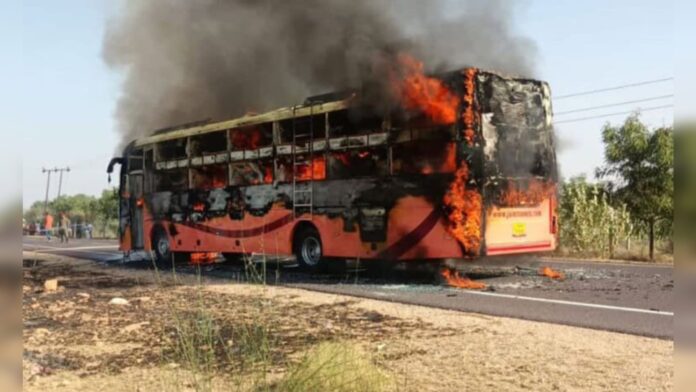
Twenty passengers burnt alive, 16 critically injured in Jaisalmer-Jodhpur bus fire Tuesday.
A devastating tragedy unfolded on the Jaisalmer–Jodhpur highway on Tuesday evening when a private air-conditioned sleeper bus carrying nearly 50 passengers went up in flames near Thaiyat village in Rajasthan.
Amid the panic, bus conductor Rafiq Khan displayed extraordinary bravery. Positioned near the back when the smoke appeared, he rushed forward to open the main gate and allow passengers to flee. As he moved toward the front, the ceiling burst into flames and an explosion knocked him down.
Despite sustaining severe burns, Khan crawled through the aisle, managed to unlatch the door, and helped several passengers escape before collapsing. He is now battling for his life at Dr. S. N. Medical College in Jodhpur, where doctors say he has suffered extensive burn injuries.
The fire, which is believed to have started from the rear of the vehicle, spread rapidly, trapping dozens inside. At least 21 people have been confirmed dead, while several others sustained critical burns and remain hospitalized.
According to preliminary reports, the incident occurred shortly after the bus left Jaisalmer for Jodhpur. Passengers noticed smoke rising from the back, prompting the driver to stop on the roadside. However, before most could react, a sudden blast shook the bus and flames engulfed the upper berths. Survivors described chaotic scenes as people screamed for help, some breaking windows in a desperate attempt to escape. The situation was worsened by the fact that the bus had only one functional exit door, which became jammed as the fire spread, leaving passengers trapped inside.
Medical officials confirmed that fifteen injured passengers were brought from Jaisalmer late Tuesday night. Five of them, including Khan, are on ventilator support with burns exceeding 70 percent of their bodies. The remaining have burns between 40 and 50 percent. Identification of the deceased has been difficult due to the extent of the burns, and DNA testing is being carried out to help families claim the bodies. Ten bodies have been kept at the S. N. Medical College mortuary, while others are at AIIMS Jodhpur.
Eyewitnesses and local residents who rushed to the scene recalled horrific visuals of the burning bus and passengers trapped inside. One survivor, Peer Mohammad, managed to smash a window to rescue his wife, sister-in-law, and a child but lost two of his young children who were asleep on the upper berth. “I could see them burning, but the flames were too strong. I tried to go back, but I couldn’t,” he said, breaking down.
Officials suspect that an electrical short-circuit in the air-conditioning system may have triggered the fire, though a detailed forensic and mechanical investigation is underway. The bus owner, driver, and the vehicle body-builder have been detained for questioning, while a technical team from the Central Institute of Road Transport (Pune) has been called to examine possible safety lapses. Authorities are also probing whether the bus had been illegally modified and if its emergency exits met regulatory standards.
The Rajasthan government has announced financial compensation for the victims’ families and injured passengers, but the relief policy has already drawn criticism over the cap imposed on payments to households that lost multiple members. District Collector Pratap Singh stated that a helpline has been set up for the families and that DNA matching and identification will be expedited.
As the state mourns one of its worst transport tragedies in recent years, questions are being raised about the enforcement of passenger safety rules, particularly in private buses converted into AC sleepers. Critics say the incident highlights the urgent need for mandatory fire-safety mechanisms, functional emergency exits, and stricter monitoring of vehicle modifications.
In the midst of this overwhelming loss, the courage of conductor Rafiq Khan stands out. A man who risked his own life so others could live. His selfless act amid the chaos has earned him praise across the state and beyond, a rare moment of humanity in an otherwise grim tragedy that exposed fatal gaps in India’s passenger transport safety system.
source: http://www.muslimmirror.com / Muslim Mirror / Home> Indian Muslim> Positive Story / by Muslim Mirror Network / October 18th, 2025
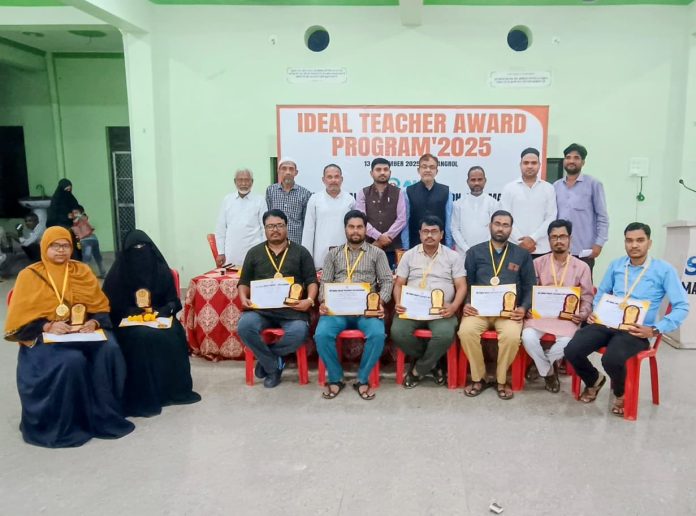
The All India Ideal Teachers Association (AIITA) Unit Mangrol, district Baran, Rajasthan, organized the Ideal Teacher Award 2025 to honor the contributions of educators in the community. The event brought together teachers, dignitaries, and residents to recognize the vital role of teachers in shaping students and society.
Applications were invited from educators across schools and madrasas. A seven-member committee evaluated candidates based on moral character, punctuality, religious integrity, contribution to student development, social engagement, and community impact. After a rigorous selection process, ten educators were chosen for recognition. They were awarded certificates, shields, and medals. The awardees included Rafiq Ahmad, Ejaz Hussain, Mohammad Iqbal, Fakhruddin (Siswali), Tarannum Parveen, Mohammad Saleem (Principal, Madrasa Suiwalan), Mohammad Irfan (Anjuman Madrasa), Meraj Ahmad, Wahid Anwar, and Rizwana Kausar.
A highlight of the ceremony was the Lifetime Achievement Award presented to Tahir Hussain for his decades of service to education. His work was described as leaving a lasting impact on the community and inspiring both teachers and students.
The event was attended by prominent figures including AIITA State President Khalid Akhtar, who spoke on the moral and social responsibilities of teachers, and Media Secretary Dr. Raheem Khan, who encouraged the use of technology in classrooms. State Secretary Yunus Ansari and other guests also expressed appreciation for the teaching community.
The program concluded with words of thanks from Unit Secretary Haider Ali Ansari and Unit President Mohammad Irfan. The ceremony reinforced the value of education and highlighted the role of teachers as community leaders.
source: http://www.radiancenews.com / Radiance News / Home> Latest News> Report / by Radiance News Bureau / September 17th, 2025
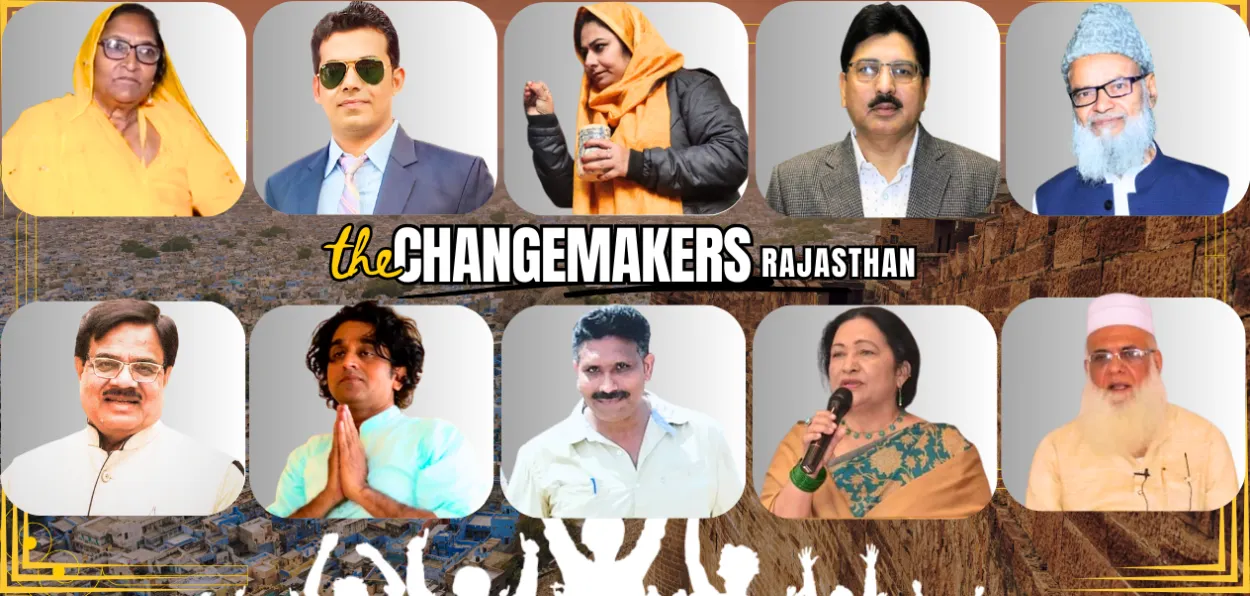
Rajasthan is known for its sandy deserts, historical monuments, especially forts, vibrant culture, and above all, its brave people, some of whom are inspiring others and changing society for the better. Under our series ‘The Changemakers’, Awaz-The Voice, brings you ten such personalities of Rajasthan, who have done extraordinary and pioneering work. Batool Begum: A living legacy of musical heritage.
Batool Begum: Woman who took traditional music to the world
One name that resonates in the streets of Jaipur is that of Batool Begum. Born in Kerap village of Nagaur district, Rajasthan, this extraordinary singer is a living legacy of Indian classical music. Batool developed a deep passion for music in her childhood. Despite facing social and economic challenges, she continued her singing.
Her melodious voice and her passion for music not only earned her recognition as an artist but also proved that talent can break all barriers. Her art is a source of inspiration for her community and the entire Rajasthan.
Abdul Salam Johar: A lac bangle maker who received global recognition
The vibrant spirit of India’s Pink City, Jaipur, doesn’t only emanate from its colours and people but also from the traditional handicrafts that are made and sold here. Bangles worth lakhs are made in these streets, which are a symbol of the traditional beauty and hard work of thousands of its people.
Abdul Salam Johar is one such artist who not only preserved the traditional art of the State but also brought about a social change in a major way. Coming from the Manihar community, Johar was born in a family with little means, but his dreams were extraordinary. Seeing the struggles of his grandfather Hafiz Mohammad Ismail and parents Haji Abdul Aziz and Hajjan Qamar Jahan, he made hard work, dedication, and social service the main mantra of his life.
He began his journey from his ancestral shop ‘Indian Kangan and Colour Store’ located in Tripolia Bazaar of Jaipur, and today his wares are being sold under brands ‘Johar Design’, ‘Johar King’ and ‘Indian Crafts’ in the global markets. He is not only a successful entrepreneur, but also a social reformer who took his community and traditional art to new heights.
Abdul Latif ‘Arco’: A confluence of business and social service
Abdul Latif, who lives in Chini ki Burj in the capital Jaipur, and is known as ‘Arko’ in Rajasthan, is one such special personality. Born in a small village of Chomu in 1946, Abdul Latif’s father, Rahmatullah, and mother, Hafijan, taught him hard work, honesty, and the passion to help people, which became the basis of his life.
His company, Abdul Razzaq & Company (ARCO), is today a big name for social service along with electric motors, fans, and coolers. Apart from this, his hotel, ARCO Palace, is a symbol of his hard work and foresight. Abdul Latif’s story is not just of a businessman, but of a person who chose to work as a changemaker by combining his business and social responsibilities.
Qazi Nishat Hussain: A new voice breaking stereotypes
The voice rising from a small office located in the narrow streets of Johri Bazaar in Jaipur, the capital of Rajasthan, is today inspiring society to change. This voice is of Nishat Hussain, Rajasthan’s first Muslim female Qazi, social worker, and a strong advocate of the rights of Muslim women.
Her life journey is an example of courage, struggle, and change, which not only made thousands of women aware but also gave them a new direction to live.
Born in Sitabari Mohalla of Karauli district, Nishat’s childhood was spent in an environment of communal harmony. His family was the only Muslim family in the neighbourhood. There were three temples in front of her house. She says, “We did not know who was a Hindu and who was a Muslim.” In a backward area like Karauli, where girls’ education was not given importance, Nishat created history. She became the first Muslim girl in the district to pass the tenth standard, that too as the only Muslim student among 1200 girls. Today, she has become a torchbearer of the rights of Muslim women.
Captain Mirza Mohtasim Baig and Ruby Khan: An Inspiring couple in social service
An inspirational couple, Captain Mirza Mohtasim Baig and his wife Ruby Khan, hail from Jaipur. Captain Mirza is the first Muslim pilot of Rajasthan and has been operating national and international flights for the last 25 years. At the same time, his wife Ruby is an active social worker and politician.
Both believe that if one wants to bring change in society, then he has to take the initiative. Together, they had organised medical camps, documentation camps, free ration distribution, and offered financial help to families in the marriage of their daughters. The couple is an epitome of change brought about by spirited people.
Dr. Arif Khan: The village scientist who created history
Thirty-four years ago, a child was born in the small village of Masani in the Hanumangarh district of Rajasthan. Today, he is Dr. Arif Khan, a scientist who has brought laurels to India. In his village, most of the people toiled in the fields. His father, Advocate Farid Khan, wanted his son to become a doctor. His mother and grandfather also had the same dream. But there were few schools in Masani, and the path to making dreams come true was difficult. Still, Arif had a passion to do something extraordinary in his life.
With his hard work and dedication, he became a bio-scientist and brought glory to his family and village. His research on milk and food products brought a wave of change. His story proves that if the intentions are strong, then even a boy from a small village can become a scientist and make the country feel proud.
Mainuna Nargis: First Shia Muslim woman in art conservation
In a vast country like India, art conservation is important since it not only preserves history but also connects future generations to our heritage. Mainuna Nargis, the country’s first and so far the only Shia Muslim woman art conservator, does the same work. Born in Bahjoi, a small town in Moradabad district of Uttar Pradesh, Maimuna’s childhood was ordinary, but her dreams were extraordinary. Rajasthan has now become Mainuna’s second home.
Her father, a Policeman in UP, always encouraged her. After studying Fine Arts from Aligarh Muslim University (AMU), she did a diploma in Museology, which became the most decisive turning point in her life. Maimuna’s story is not just of professional success, but a story of passion, struggle, and self-confidence, which revived the broken pieces of history.
Yoga Guru Naeem Khan: Global journey from music to yoga
The life journey of Yoga Guru Naeem Khan, who rose from the streets of Jodhpur, the cultural capital of Rajasthan, to spread his spiritual aura on international platforms, is a unique example. He rose from a common man to a global yoga guru and presented yoga as a universal energy beyond religion, culture, and boundaries.
Naeem Khan was born in a family where music was in every breath. His grandfather, Ustad Umardin Khan, was the court musician of the Jodhpur royal family, while his maternal uncle was Padma Bhushan-awarded Sarod player Ustad Sultan Khan. However, with changing times, that traditional flame of music started to fade. Naeem and his brother got involved in business, but yoga gave Naeem a new direction, and he took it to a global platform.
Syed Anwar Shah: A man who introduced girls to education
Thirty years ago, a dream was born in a small room in Jaipur, which has today become the light of education for thousands of girls. This is the story of Syed Anwar Shah, whom people fondly call Master Anwar Shah. He not only dreamt of his daughter’s education, but also made it a means of progress for the daughters of society.
Today his educational institution, Al-Jamia-tul Alia, is spreading the message of knowledge and Islamic ethics not only in Jaipur, but also in the whole of India and abroad. After completing his M.A. in Public Administration from Rajasthan University in 1980, he dedicated his entire life to the welfare of society and the service of education. In 1995, when his daughter Alia was born, he decided to set up an institution for the education of girls, which would impart both worldly and divine teachings.
Today, his effort has become a boon for thousands of families.
Padma Shri Shakir Ali: Patron of Miniature Painting
It’s no exaggeration to say that Jaipur is the art capital of Rajasthan. And in the field of miniature painting, the name of Syed Shakir Ali comes to the fore spontaneously. This genre of painting is an identity of the state of Rajasthan.
Padma Shri awardee Syed Shakir Ali is not only a great practitioner of this art, but he is also the guardian of that heritage, which is an integral part of the cultural identity of Rajasthan. Born in 1956 in Jalesar village of Uttar Pradesh, Shakir Ali’s family soon settled in Jaipur, where his art got a new direction.
Today, he has given recognition to this traditional art of Rajasthan not only in India but also on international platforms.
source: http://www.awazthevoice.in / Awaz, The Voice / Home> The Changemakers / by Aasha Khosa, ATV / September 14th, 2025