Tag Archives: Najeeb Jung – Vice Chancellor – Jamia Millia Islamia

Muslim Mirror Releases List of 100 Most Influential Indian Muslims 2025; Young Faces Gain Prominence

INDIA :

Muslim Mirror’s 100 Most Influential Muslims of 2025

New Delhi: 

Muslim Mirror has released its much-anticipated annual list of the “100 Most Influential Indian Muslims of 2025,” spotlighting individuals who have made significant contributions to India’s public life across a wide spectrum of fields including politics, culture, education, business, media, religion, sports, and social service. Now in its second edition, the list aims to document influence not merely as power or popularity, but as sustained impact, leadership, and the ability to shape public discourse.

A defining feature of the 2025 edition is the growing prominence of younger achievers, signalling a visible generational shift within Indian Muslim leadership. Alongside established national figures, the list includes emerging voices who have built influence through grassroots activism, professional excellence, digital platforms, legal advocacy, education, and community engagement. Editors associated with the project said this was a deliberate attempt to recognise new centres of influence beyond traditional hierarchies.

The list reflects the diversity and plural character of Indian Muslim society, cutting across geography, ideology, profession, and language. From seasoned politicians and religious scholars to artists, entrepreneurs, academics, and social reformers, the compilation offers a broad snapshot of leadership trends at a time when issues of representation, constitutional values, and social justice remain central to national debate.

Representation Across Sectors

The 2025 list features several eminent academicians and intellectuals who have shaped higher education, policy discourse, and social research. Among them are Abul Qasim Nomani, Ameerullah Khan, Furqan Qamar, Shahid Jamil, and Ubaid-ur-Rahman, recognised for their contributions to education, public policy, and academic leadership.

In the business and entrepreneurship category, the list includes influential names such as Azad Moopan, Azim Hashim Premji, Farah Malik, Irfan Razack, M. P. Ahammed, Mecca Rafiq Ahmed, Meraj Manal, Syed Mohamed Beary, P. Mohammed Ali, Shahnaz Hussain, Tausif Ahmad Mirza, Yusuff Ali, and Ziaullah Sharif. Their inclusion underlines the growing economic footprint of Indian Muslim entrepreneurs, both domestically and globally, spanning sectors from retail and healthcare to infrastructure and consumer goods.

Community leadership remains a strong pillar of the list, with figures such as Arshad Madani, Mahmood Madani, Malik Motasim Khan, Mehmood Pracha, Syedna Mufaddal Saifuddin, Navaid Hamid, Pirzada Md Abbas Siddiqui, Qasim Rasool Ilyas, Sadatullah Husaini, Umer Ahmed Ilyasi, and Yusuf Mohamed Abrahani recognised for their roles in religious guidance, legal advocacy, social mobilisation, and institutional leadership.

Culture, Media, and Public Discourse

In arts and entertainment, globally recognised names such as A. R. Rahman, Aamir Khan, Mammootty, Munawar Faruqui, and Shah Rukh Khan continue to command immense cultural influence, shaping narratives that extend well beyond cinema and music into social consciousness.

The list also acknowledges the growing importance of media and journalism in shaping opinion and challenging dominant narratives. Journalists and commentators such as Arfa Khanam, Irfan Meraj, and Seema Mustafa are recognised for their consistent engagement with issues of democracy, minority rights, and constitutional values.

Religious and Intellectual Scholarship

A significant section of the list is devoted to Islamic scholars and religious thinkers, reflecting their continued influence on moral leadership and intellectual discourse. Names such as A. P. Aboobacker Musliyar, Qasim Nomani, Prof. Akhtarul Wase, Asghar Ali Imam Mahdi Salafi, Asjad Raza Khan, Ibraheem Khaleel Al-Bukhari, Javed Jamil, Khalid Saifullah Rahmani, Khaleelur Rahman Sajjad Nomani, Qamaruzzaman Azmi, Rashid Shaz, Shakir Ali Noori, Shamail Nadvi, and Yasoob Abbas find place for their scholarly work, writings, and public engagement.

Politics and Governance

The political category features leaders cutting across party lines and regions, including Asaduddin Owaisi, Ghulam Nabi Azad, Hamid Ansari, Mehbooba Mufti, Omar Abdullah, Salman Khurshid, Najeeb Jung, Syed Naseer Hussain, Engineer Rashid, Akhtarul Iman, Iqra Hasan, Zameer Ahmed Khan, Rakibul Hasan, K. Rahman Khan, Kadir Mohideen, Mohibullah Nadvi, Md Shafi, Agha Mahadi, Asim Waqar, and Sadiq Ali Shihab Thangal. Their inclusion reflects influence exercised through electoral politics, governance, diplomacy, and legislative advocacy.

Changemakers and Social Reformers

One of the most dynamic sections of the 2025 list is that of changemakers and social reformers, featuring individuals such as Safeena Husain, Shahabuddin Yaqoob Quraishi, Syeda Hameed, Zameer Uddin Shah, Mahbubul Hoque, Sabahat S. Azim, Mehmood Pracha, Faiz Syed, and Zahir Ishaq Kazi, among others. Many of these figures have earned recognition through long-term grassroots work rather than formal authority.

International Booker Prize 2025 winner Banu Mushtaq for Heart Lamp, along with renowned poet Wasim Barelvi, has been placed in the category of Literary Figures.

In sports, iconic names Sania Mirza and Irfan Pathan continue to inspire younger generations through excellence and public engagement beyond the playing field.

Beyond Rankings

The editors emphasised that the list does not claim to be exhaustive, nor does it measure influence solely through fame, wealth, or official position. Instead, it seeks to capture real-world impact, moral authority, intellectual contribution, and the ability to shape conversations within and outside the community.

The annual list has increasingly become a reference point for understanding evolving leadership patterns among Indian Muslims. By foregrounding both established figures and rising talents, the 2025 edition reflects continuity as well as change, underscoring how Indian Muslims continue to contribute meaningfully to India’s democratic, cultural, and social field.

source: http://www.muslimmirror.com / Muslim Mirror / Home> Indian Muslim / by Muslim Mirror / January 15th, 2026
Umair Manzar recalls days he was teaching Urdu to Rekhta Founder Saraf

Lucknow, UTTAR PRADESH / NEW DELHI :

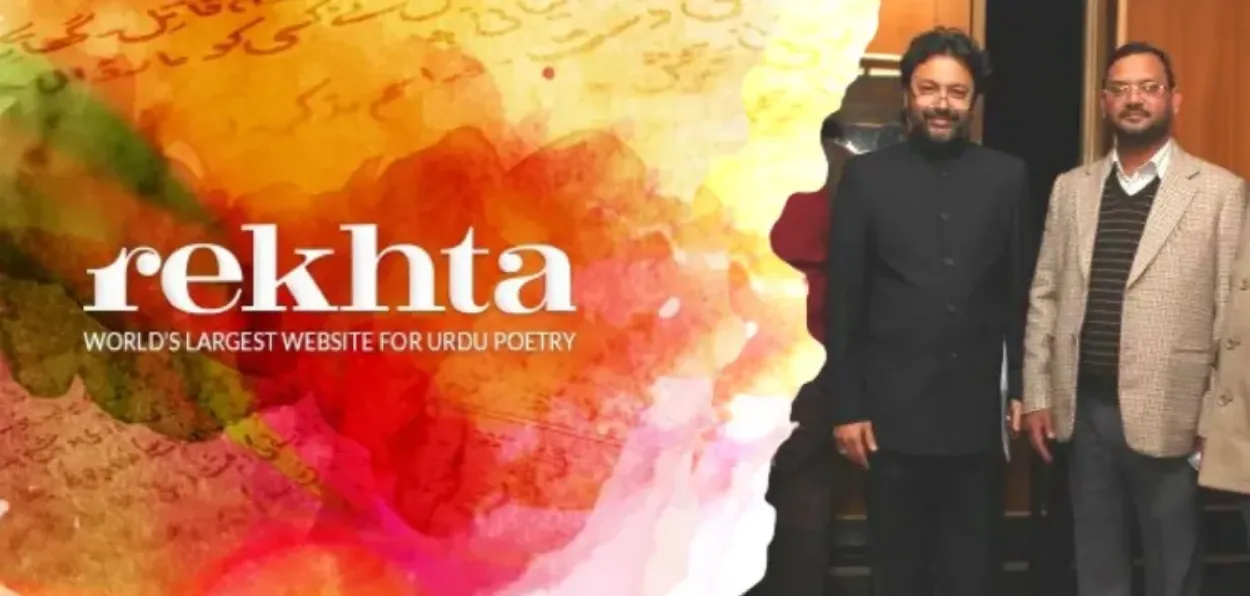
Founder of the Rekhta Foundation Sanjeev Saraf (left) with Dr Umair Manzar

“Umair Manzar was the first to join me in my journey of Rekhta,” said Sanjeev Saraf, the founder of the Rekhta Foundation. He said this before a smaller audience at the launch of the first Jashn-e-Rekhta, the festival of literature and performing arts in 2012.

The festival has become a major annual cultural event in Delhi, and the Rekhta Foundation portal is a key resource for Urdu language and literature and a peg for the online and offline community of Urdu literature lovers.

This year the three-day Jashn-e-Rekhta is being held in Delhi from December 13.

Saraf said Umair was his first Urdu teacher. He was the one who proposed the name Rekhta for the website and became the first member of the online community of Urdu aficionados on Rekhta Foundation.

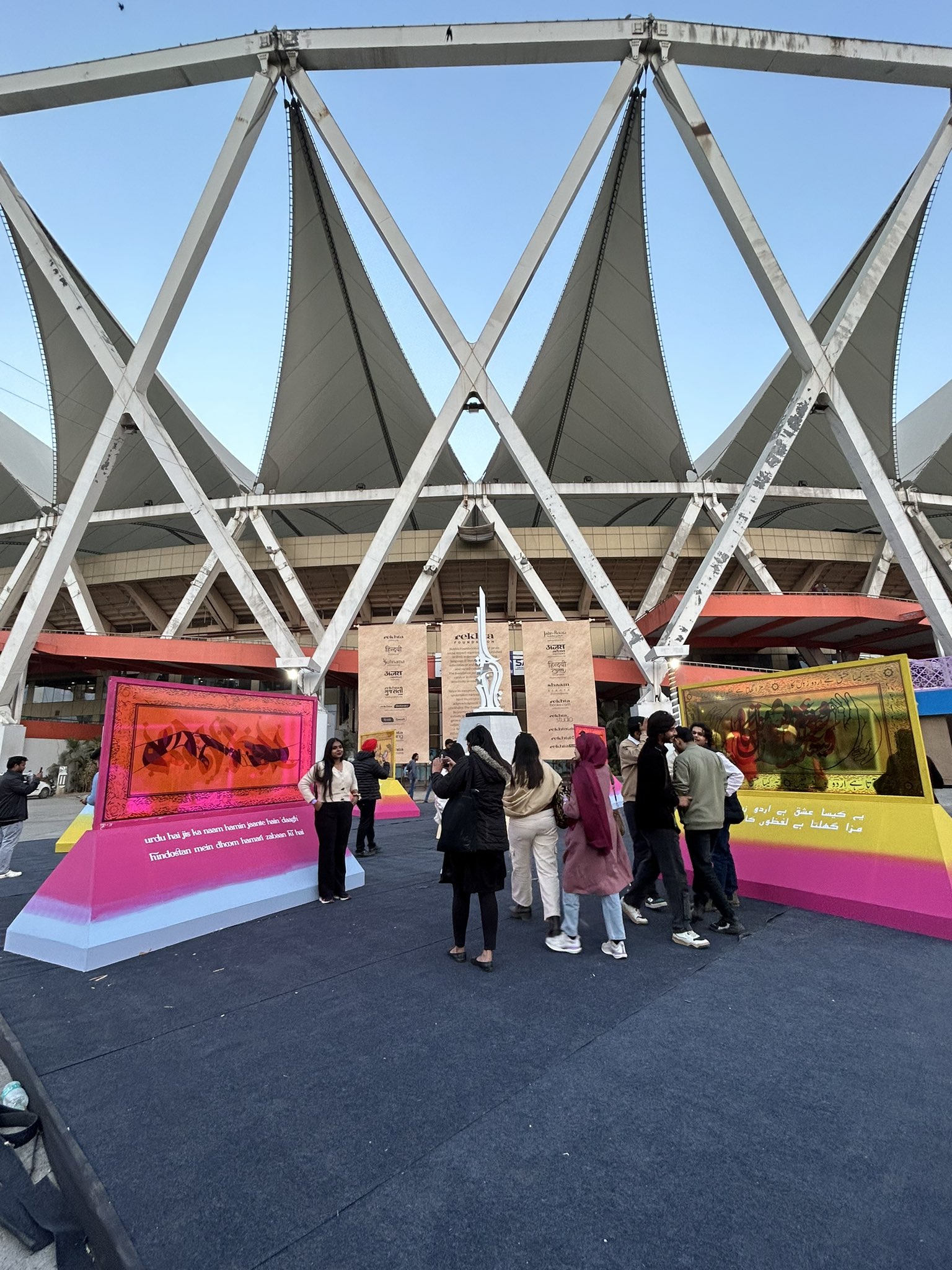
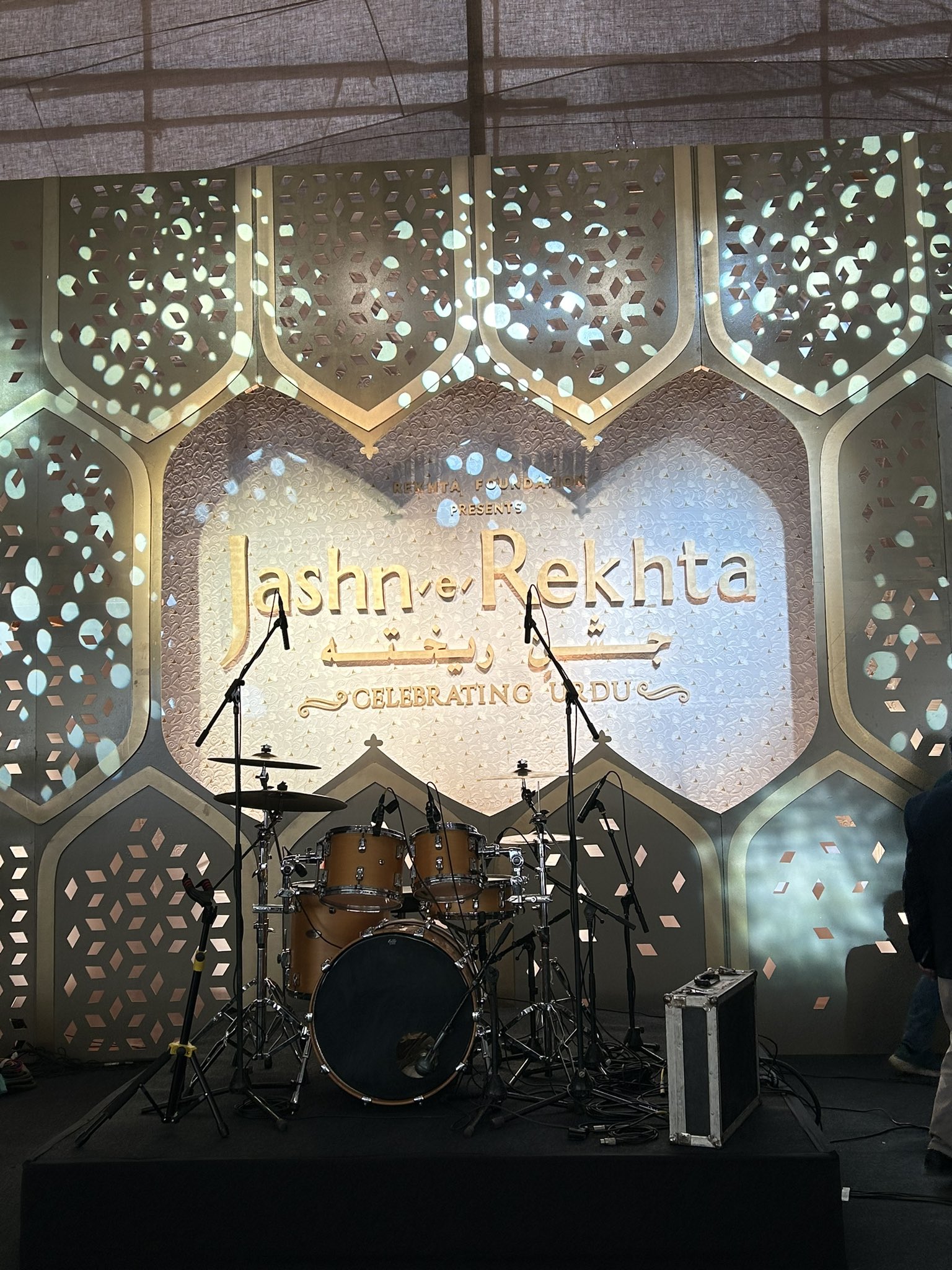
Stage for artists to perform in Jashn-e-Rekhta

Today, Dr. Umair Manzar is an Assistant Professor in the Urdu Department of Maulana Azad National Urdu University, Lucknow Campus When Awaz-the Voice contacted him, he was surprised at his name being mentioned by Safar.

Awaz-The Voice contacted Umair Mazhar on the phone. He came across as a simple and humble person not too keen to take credit for his key role in setting up Rekhta.

After initial reluctance, Umair Manzar agreed to share his interaction with Sanjeev Saraf.

Manzar’s version of the initial days of Rekhta threw up many more characters in this journey. He says many other people also played their part in helping Sanjeev Saraf concretize what was his passion for the language.

Umair Manzar said that he met Saraf during the 2010 spring.”Summer had not started.”

One day Vice Chancellor Jamia Millia Islamia Najeeb Jung called Urdu’s Head of Department Professor Khalid Mahmood and asked him to send a tutor to a particular person to teach Urdu. At that time, Umair was teaching at the university. His HOD gave him a piece of paper with a name and a telephone number scribbled on it and asked him to contact him.

“The name was Sanjeev Saraf. I called that number, we fixed a time for the tuition class.”

Jashn-e-Rekhta festival

“The first time I met him at his home. I had no idea who he was. Yet I found him a serious person; there was a certain calm in his way of speaking.”

“I liked him instantly as he spoke candidly. After a few meetings, he told me that he was very fond of Urdu and wanted to learn it.

“He especially wanted to understand poetry. In a few meetings, I realized that apart from learning the language, he was also interested in creating an Urdu website. He has nursed a dream of starting an Urdu website for many years,” Manzar said

Sanjeev Saraf seemed to be learning the language out of love for it. He also thought Urdu could become a bridge among diverse people of India who loved the language.

He thought the website of this idea could increase their love for Urdu. Thousands of people want to learn the language because of its poetry. However, there is no one to help them. Sanjeev Saraf had faced this problem and therefore empathized with others. He had the resources, including time to learn Urdu. However, everyone could not do it.

Manzar told Awaz that he soon realized Sanjeev Saraf wanted to do something beyond learning Urdu.

After a few days, he said, “Every person needs a teacher; my website can fulfill the needs of all such people.”

Manzar said, “This got me thinking seriously about this issue. By now I was visiting the Noida office of Mr Saraf. One day he said that we can start Urdu work in a part of that office.”

Umair Manzar also did not realize that he had become a part of the initiative to establish a website that would help Urdu lovers all over the world and bind them in a community.”

He also realized that he was dealing with a passionate lover of Urdu and not a mere learner. 

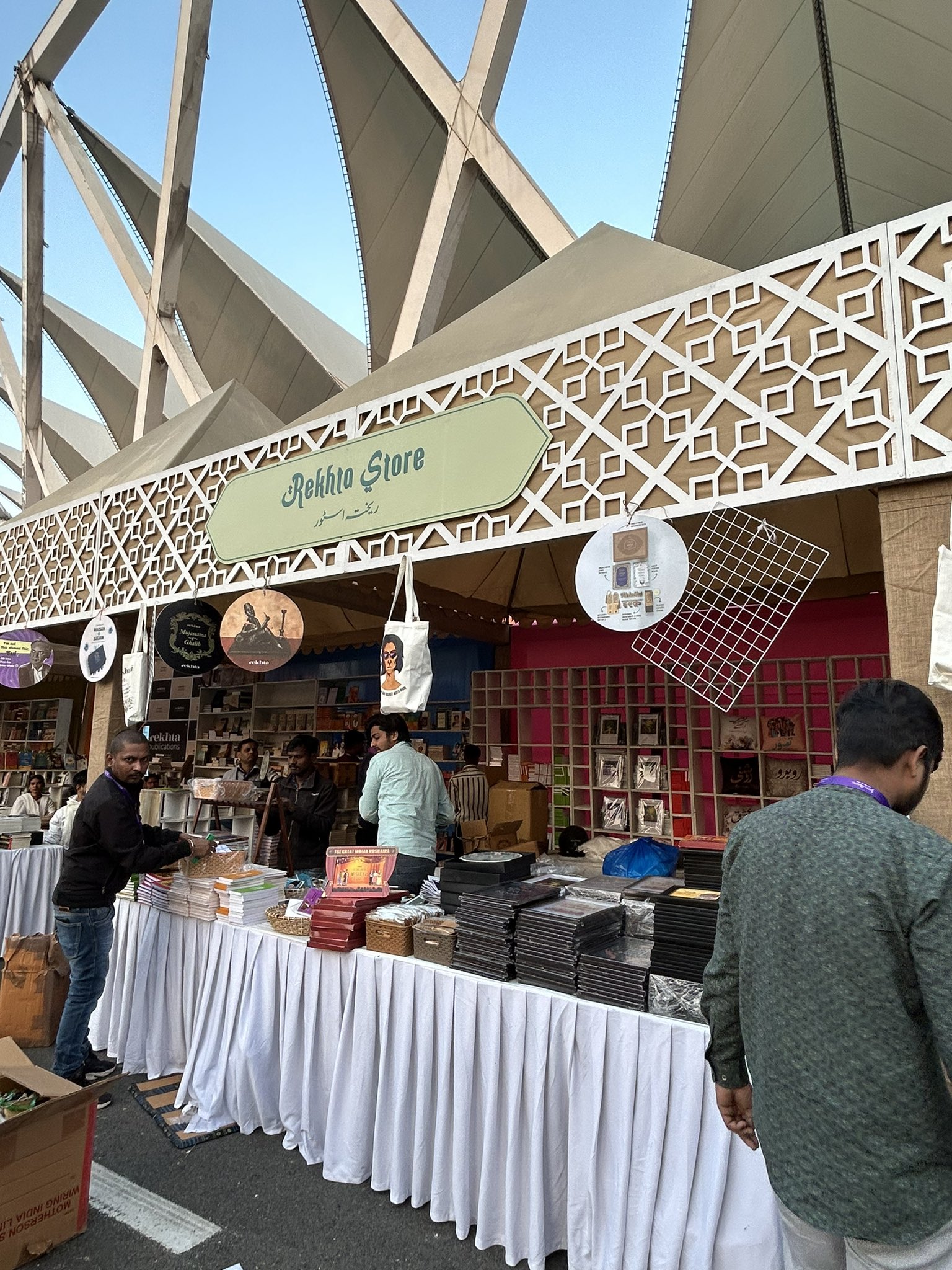
A bookshop in Jashn-e-rekhta

One day Safar spoke formally to him. We decided to discuss it in detail.

And finally one day Sanjeev Saraf asked him to start work on the website,

The first name for the website he suggested was Kavita. This was already bought by someone. The same was the case with many other titles. “I also felt if we had to buy the already registered name for the website, the prices were ridiculously high.”

He suggested ‘Rekhta’ to Sanjeev Saraf. ”He asked me its meaning. When I explained it to him he was happy. Soon we registered rekhta.org as the domain name. I remember he liked the harmony of the words. He was sitting with us during the entire process of registration online.”

Thereafter the work on the website started and many targets were achieved before the scheduled time. This was the journey of paper preparation for the Rekhta Foundation.”

Umair Manzar says he had met Sanjeev Saraf with the sole purpose of teaching him the language but he got involved in his mission.

When asked about the preparations after naming, Umair Manzar said, “After the name was decided, work on the website started. In the summer of 2011, I officially launched the website. The first step was to choose poems of classical poets and the unanimous choice was Mirza Ghalib.”

The selection of contemporary poets started from Jamia Millia Islamia and other libraries. Their compositions were recorded. Saraf hired composers and they worked out of the Noida office. It started slowly and then it gained momentum.”

Umair Manzar said, he also contacted Professor Ahmed Mahfooz and Professor Abdul Rashid for their suggestions and advice.”I also arranged a meeting of both gentlemen with Sanjeev Saraf and this meeting lasted for several hours.”

Saraf expressed his intentions and ambitions; the professors also gave their input and suggestions. “Sanjeev Saraf noted every suggestion and tip the two learned professors  offered.”

Prof. Rashid suggested that the way to preserve old books was to scan them and upload them on the website.

Umair Manzar says,” One day when I went to the office, Sanjeev Saraf announced the (scanning) machine had arrived. “Now you people bring the books. The scanning process will begin.”

This was a challenge to all of us. Initially, we tried to upload only selected and important books on the website. Later this also opened a new possibility.

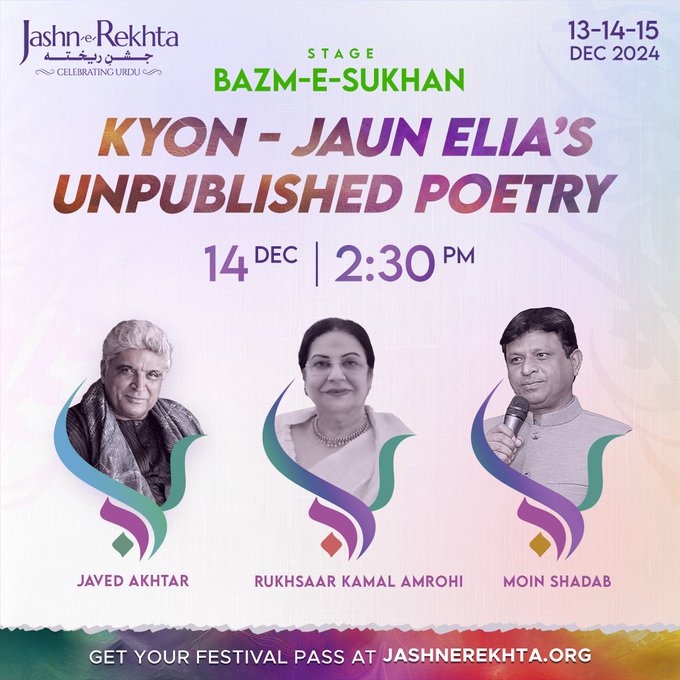
A poster of Jashn-e-Rekhta

Umair Manzar says that initially, people like Rehman Farooqi, Prof. Shamim Hanafi, and Prof. Walwasa ignored the website as another wannabe.

Probably the first column about Rekhta was written by Professor Vasa, Vice President of the Urdu Academy. He also gave Rekhta an award for the promotion of Urdu.

Umair Manzar joined Maulana Abul Kalam Azad Urdu University as an assistant in the early days of Rekhta.

Initially, the Rekhta Foundation was recruited only on the recommendation of a group of like-minded people like Professor Ahmed Mahfooz, Professor Abdul Rashid, and Umair Manzar.

Abdul Rashid, who is from Delhi, had done his research on dictionaries. This year the Ghalib Institute is giving him its prestigious literary and research award. Professor Ahmed Mahfooz is the HOD Urdu Department of Jamia Milia Islamia. He is an expert on poetry.

Professor Abdul Rashid and Dr. Amir Manzar are among the people who have been actively associated with the Rekhta Foundation since its inception.

Dr. Umair Manzar and Prof. Abdul Rashid were included in this team to scan books from Raja Mahmoodabad library and make them part of e-books.

Similarly, access to some private libraries and some important books was very active. Along with them, Professor Abdul Rashid and Dr. Umair Manzar have played a role.

source: http://www.awazthevoice.in / Awaz, The Voice / Home> Stories / by Mansooruddin Faridi, New Delhi / December 12th, 2024