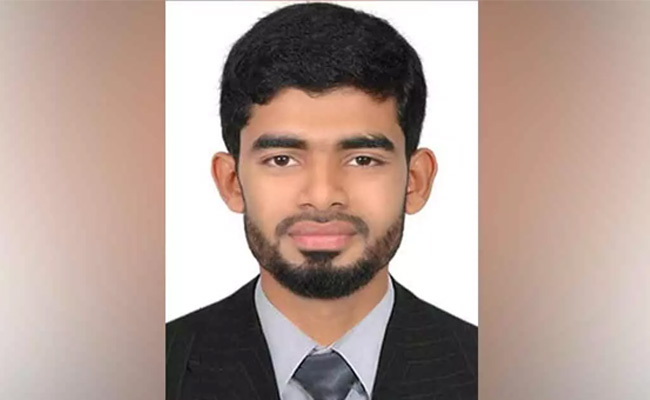
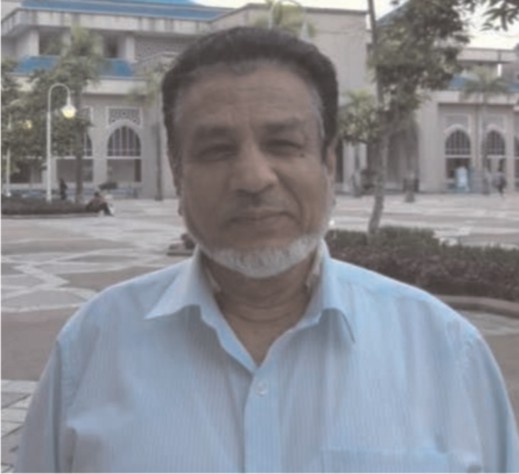
Kasaragod District Kannada Journalists Welfare Association has selected Vartha Bharati journalist Samshuddeen Yenmoor for its annual ‘Dattinidhi Award’.
The association, which has been working for nearly two decades to promote the Kannada language, culture and the welfare of journalists in Kerala, presents this award with sponsorship from Dubai-based entrepreneur James Mendonca.
The award includes a cash prize, citation and memento. It will be presented at a function scheduled on May 16, 2026, at 9:00 am at the Hall of Subbayyakatte Aided Higher Primary School in Kasaragod district.
The programme will be held under the chairmanship of Shivananda Tagadur, State President of Karnataka Union of Working Journalists.
Among those expected to attend are Karnataka Legislative Assembly Deputy Speaker Rudrappa Lamani, Minister N.S. Boseraju, Manjeshwar MLA A.K.M. Ashraf, Chief Minister’s Media Advisor K.V. Prabhakar and Karnataka Border Area Development Authority Chairman Somanna Bevinamarad, among others.
The details were shared in a statement issued by association president Ravi Naikap.
source: http://www.english.varthabharati.in / Vartha Bharati / Home>Karavali / by Vartha Bharati / April 30th, 2026
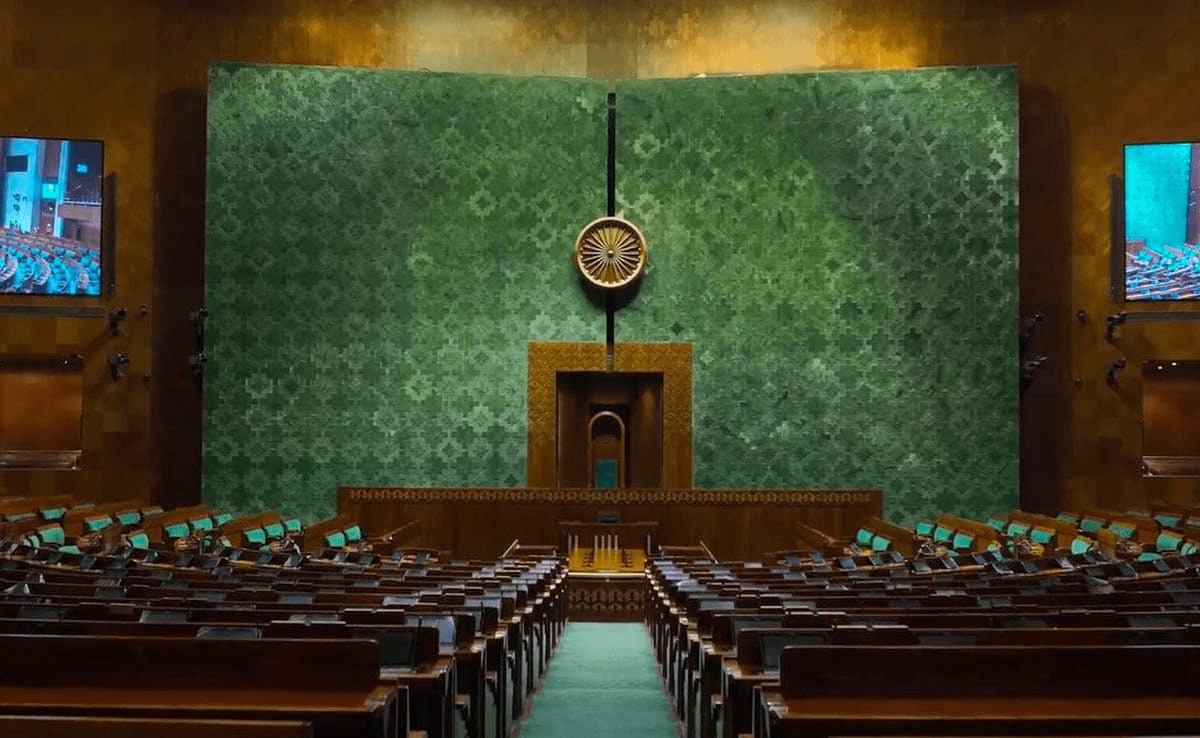
A majority, 13 of the 18 came from political families, and no southern state, including Kerala, Tamil Nadu, Karnataka, Andhra Pradesh, or Telangana, has ever elected a Muslim woman to the Lok Sabha.
Amid demands for reservation for Muslim and OBC women triggering sharp exchanges in the House, the stark underrepresentation of Muslim women is evident, with only 18 elected to the Lok Sabha since 1947 despite Muslims comprising about 7.1% of the population, and five Lok Sabhas having no Muslim woman MP at all.
A majority, 13 of the 18 came from political families, and no southern state, including Kerala, Tamil Nadu, Karnataka, Andhra Pradesh, or Telangana, has ever elected a Muslim woman to the Lok Sabha.
The issue is documented in the book “Missing from the House, Muslim Women in the Lok Sabha” by Rasheed Kidwai and Ambar Kumar Ghosh, which profiles these 18 leaders.
“It is a shockingly abysmal figure,” Kidwai notes, pointing out that in five of the 18 Lok Sabhas constituted till 2025, there was not a single Muslim woman member.
In the current Lok Sabha, there is only one Muslim woman MP, Iqra Hasan Choudhury of the Samajwadi Party.
The list of Muslim women MPs includes Mofida Ahmed of the Congress (1957), Zohraben Akbarbhai Chavda of the Congress (1962–67), Maimoona Sultan of the Congress (1957–67), Begum Akbar Jehan Abdullah of the National Conference (1977–79; 1984–89), Rashida Haque of the Congress (1977–79), Mohsina Kidwai of the Congress (1977–89), Abida Ahmed of the Congress (1981–89), Noor Bano of the Congress (1996; 1999–2004), Rubaab Sayda of the Samajwadi Party (2004–09), Mehbooba Mufti of the People’s Democratic Party (2004–09; 2014–19), Tabassum Hasan of the Samajwadi Party, Lok Dal and Bahujan Samaj Party (2009–14), Mausam Noor of the Trinamool Congress (2009–19), Kaisar Jahan of the Bahujan Samaj Party (2009–14), Mamtaz Sanghamita of the Trinamool Congress (2014–19), Sajda Ahmed of the Trinamool Congress (2014–24), Ranee Narah of the Congress (1998–2004; 2009–14), Nusrat Jahan Ruhi of the Trinamool Congress (2019–24), and Iqra Hasan Choudhury of the Samajwadi Party (2024–present).
On Thursday, a confrontation began in Lok Sabha when SP MP Dharmendra Yadav demanded that Muslim and OBC women be included within the reservation framework, saying the party would oppose the Bill otherwise and arguing that delinking delimitation from the Census was unconstitutional.
His remarks drew strong objections from the Treasury Benches, with Union Home Minister Amit Shah and Parliamentary Affairs Minister Kiren Rijiju asserting that reservation on religious grounds is unconstitutional. Rijiju said quota cannot be granted on the basis of religion and urged members to “talk about women of the whole country.”
SP president Akhilesh Yadav countered by asking whether Muslim women were not part of the “aadhi aabadi” and questioned whether the government was avoiding a caste census.
source: http://www.maktoobmedia.com / Maktoob Media / Home> India / by Maktoob / April 16th, 2026
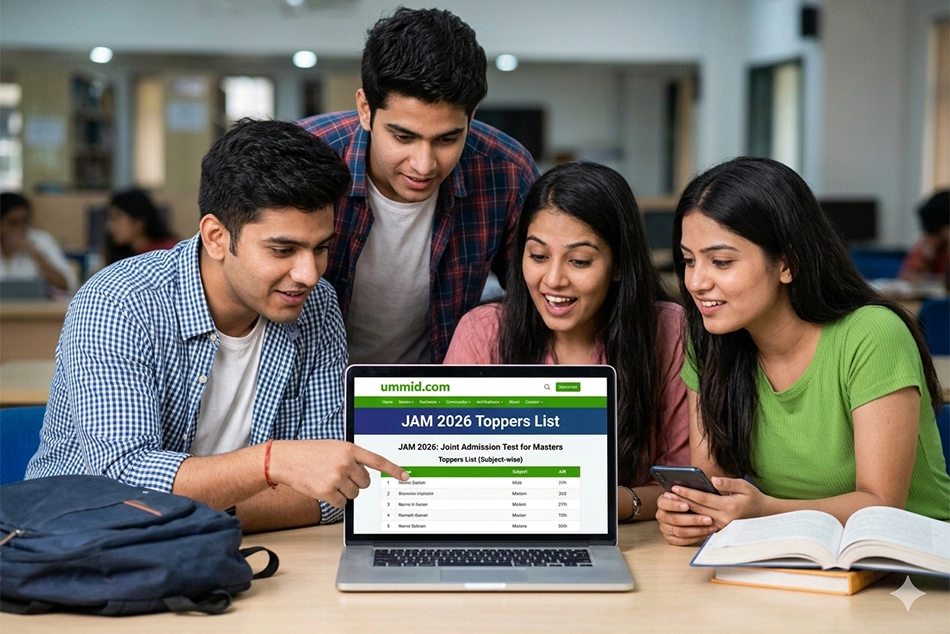
Syed Adnan Shafi, Afimol Ashraf, Ryan Azim Shaikh, Muskan Fatema, and Arisha Tauqeer are among the JAM 2026 toppers the list of which was released by the Indian Institute of Technology Bombay (IIT Bombay) Thursday.
JAM 2026 Toppers List:
Syed Adnan Shafi, Afimol Ashraf, Ryan Azim Shaikh, Muskan Fatema, and Arisha Tauqeer are among the JAM 2026 toppers the list of which was released by the Indian Institute of Technology Bombay (IIT Bombay) Thursday.
The Joint Admission Test for Masters (JAM) is the entrance exam conducted for admission to top-tier postgraduate programs.
The JAM 2026 exam this year was conducted on February 15, 2026. JAM 2026 result was announced on March 19, 2026. The scorecard of the candidates along with the list of subjectwise toppers was released today i.e. Thursday March 26, 2026.
As per the JAM toppers list released today, Syed Adnan Shafi is among the Physics toppers, Afimol Ashraf is one of the toppers in Chemistry subject, Ryan Azim Shaikh is one of the toppers in Mathematics subject, whereas Muskan Fatema and Arisha Tauqeer are among the Biotechnology toppers.
JAM 2026 Top 10 List
JAM 2026: Physics Toppers
AIR Registration ID Name 1 PH811A336 Sarvesh Gupta 2 PH321A435 Jatin Yadav 3 PH620A193 Ankur Saha 4 PH811A310 Anmol Mehrotra 5 PH515A041 Varun Singh Gautam 6 PH407A501 Debarshi Das 7 PH304A048 Sudhanshu Sethi 8 PH407A250 Pratyush Yadav 9 PH406A092 Dinabandhu Maji 10 PH322A088 Syed Adnan Shafi
JAM 2026: Chemistry Toppers
AIR Registration ID Name 1 CY303F047 Ayushi Agrawal 2 CY301B011 Deepak Poonia 3 CY620F051 Soumo Pal 4 CY620F403 Anubrata Chatterjee 5 CY316F111 Nancy 6 CY113F052 Afimol Ashraf 7 CY314F199 Pihu Roy 8 CY616F277 Rahul Guchhait 9 CY320F148 Jaspreet Singh 10 CY406F235 Sourav Gorai
Candidates who have qualified in the examination will be eligible to apply for admission to 89 postgraduate programes across 22 IITs for the academic year 2026-27 through the JAM Online Application Processing System (JOAPS 2026) from March 27 to April 15. The first admission list is scheduled to be released on May 25. The second, third and fourth admission lists will be respectively released on June 08, 16 and 27, 2026. Additional list if any will be published on July 03, 2026, IIT Bombay said.
source: http://www.ummid.com / Ummid.com / Home> Education & Career / by ummid.com news network / March 27th, 2026
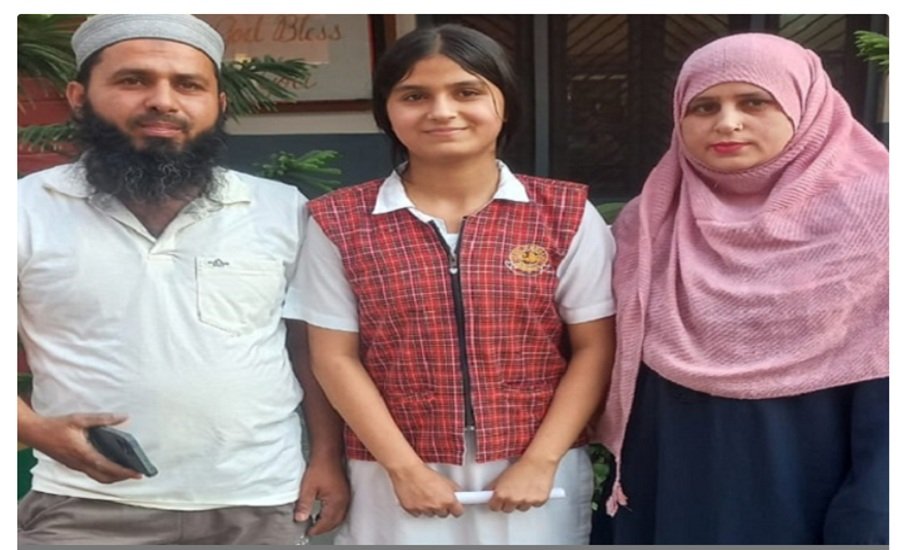
The sisters come from a modest background. Their father, Abdul Malik, works as a carpenter, while their mother studied up to Class 9.
Two sisters from Meerut have drawn attention with their impressive performance in the Uttar Pradesh Madhyamik Shiksha Parishad examinations, securing the top two positions in the district.
Adeeba Malik scored 95.68 per cent in the high school examination to secure first place, while her sister Shifa Malik ranked second with 82 per cent in the science stream.
Their achievement has brought joy to the locality, with residents visiting their home to congratulate the family.
Adeeba attributed her success to discipline and consistency. “I studied for long hours every day and stayed focused. Hard work and a proper routine helped me achieve this result,” she said. She scored full marks in mathematics, her strongest subject.
Notably, she prepared entirely at home without any tuition or coaching support.
The sisters come from a modest background. Their father, Abdul Malik, works as a carpenter, while their mother studied up to Class 9. Expressing his pride, Abdul Malik said, “I could not study much myself, but my daughter is making me proud. There is no difference between a son and a daughter. I want her to study and move ahead.”
The sisters were felicitated at St Joseph Inter College, where teachers and students celebrated their success. Sweets were distributed, and similar celebrations were held at their home.
Family members said the achievement reflects the sisters’ consistent dedication and hard work.
Adeeba aspires to become an IAS officer and serve the country.
Education experts say such success stories are significant, especially in areas where awareness about girls’ education is still evolving and students often face challenges in continuing their studies. The sisters’ achievement is being seen as an inspiring example for others.
source: http://www.clarionindia.net / Clarion India / Home> Editor’s Pick> India> Indian Muslim / by Mohammad Bin Ismail / April 25th, 2026
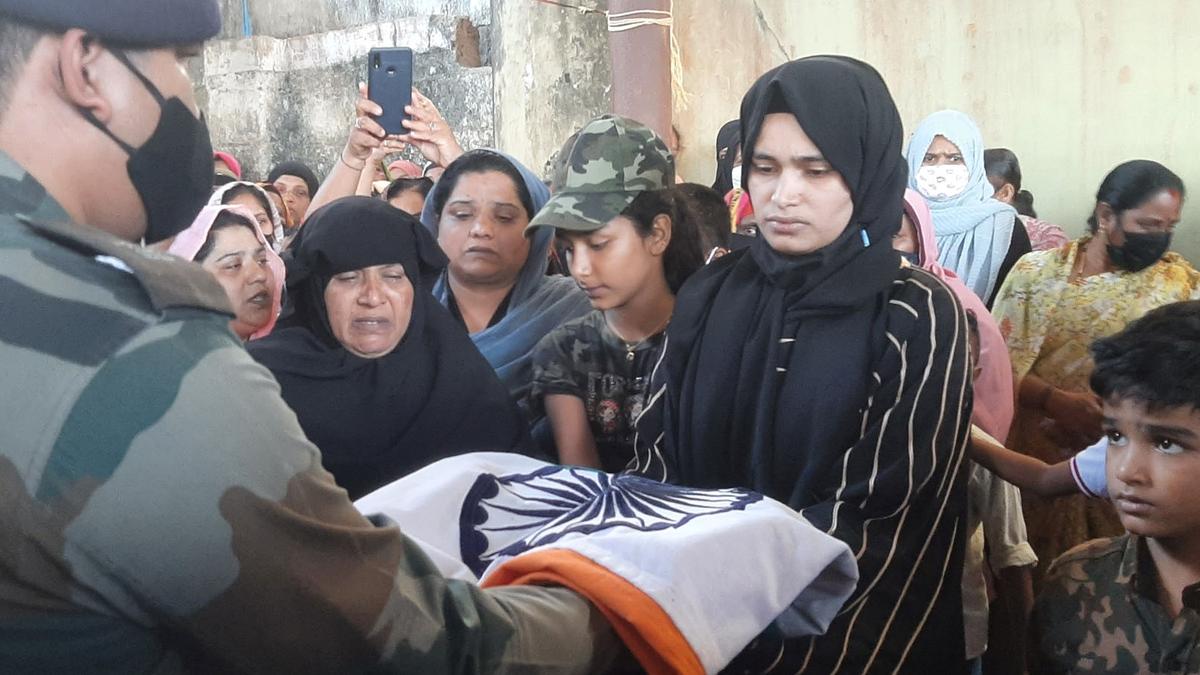
Army personnel handing over the tricolour to the wife of Hawaldar Althaf Ahmed, who died in Kashmir on February 22. | Photo Credit: Special Arrangement
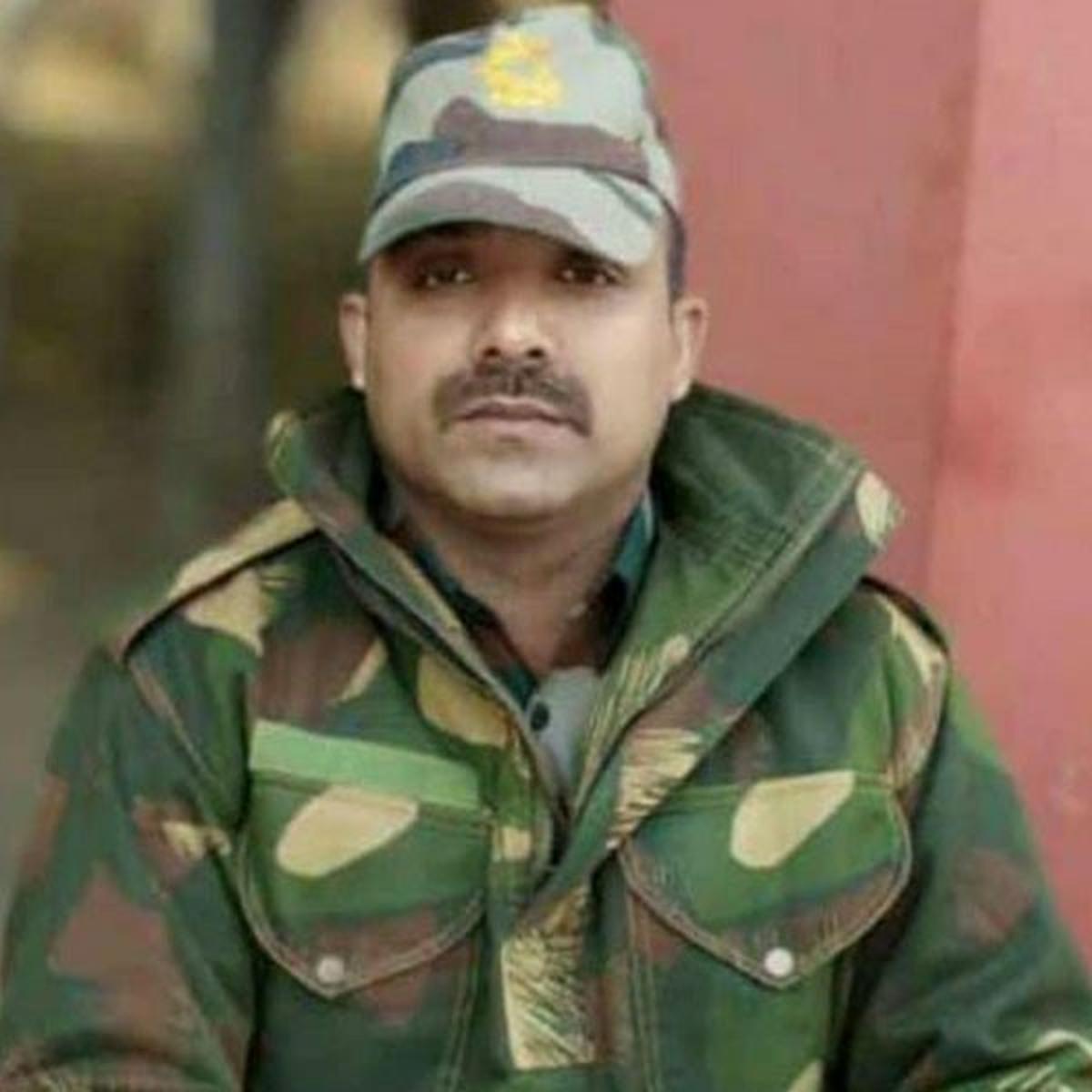
Althaf Ahmed | Photo Credit: Special Arrangement
The last rites of 37-year-old Indian Army Hawildar Althaf Ahmed, who died in a blizzard while on duty in Kashmir, were performed in his native in Meenupete in Kodagu district’s Virajpet taluk with state honours on Saturday.
The body of Althaf Ahmed, who had died on February 22, arrived in his native in Kodagu early on Saturday as its departure by air from Srinagar was delayed owing to bad weather. The body was kept at Eidgah Maidan in Meenupete for the public to pay their last respects before it was laid to rest at the burial ground as per Islamic rituals.
Virajpet MLA K.G. Bopaiah, MLCs Suja Kushalappa and Veena Achaiah, besides Deputy Commissioner B.C. Satish, Kodagu Superintendent of Police M.A. Aiyappa and other senior officials of the district administration were among the large number of people, who paid their last respects.
According to sources, Althaf Ahmed grew up in Meenupete and completed his SSLC in St Anne’s School in Virajpet and Pre University Education at the Virajpet Government Junior College. He later joined the Army Ordnance Corps (AOC) regiment. He had been serving the Army in various places since the last 19 years.
While guarding the border in Kashmir, Althaf Ahmed was caught in a blizzard on February 22 and died.
After the ceremonial gun salute during the funeral of the martyred solider, Army personnel handed over handed over the tricolour that draped Althaf Ahmed’s body and his uniform to his wife and two children. He leaves behind his mother, wife, a son and a daughter.
source: http://www.thehindu.com / The Hindu / Home> News> India> Karnataka / by Special Correspondent / February 26th, 2022
* On the list are 14 Muslim zoologists and scientists
* To date, India has identified 102,718 animal species
* Work is underway to discover new species in ecosystems
* 15 million living species still to be discovered
THE Kolkata-headquartered Zoological Survey of India (ZSI), whose scientists and field staff are engaged in exploring, naming, describing, classifying, and documenting animals from all over the world’s most populous country, has a miserably low number of Muslims – 23 – on its rolls that has a total of 591 officers, administration and field staffers, according to Mohammed Abdul Mannan’s new book, At the Bottom of the Ladder: State Of The Indian Muslims – https://www.amazon.in/dp/B0GF1Q9R25. The book quantifies Muslim presence in 150 key organisations, including Union ministries, departments, and organisations.
The Muslim scientists and zoologists at the ZSI are – Sarfraz Ul Islam Kazmi, Shaikh Rehnuma Sultana, Mohammed Hafiz, Imran Alam, Shabnam Nizamuddin Ansari, Jalil Ahmed, Mohammed Rasmanjani Ali, Anjum Nasreen Rizvi, Rifat Hussain Raina, Jafer Palat, Mohammed Ethtesham Ul Hassan, Ruqiya Bano, and K Bakh Mollah. There are seven Field Assistants from the largest minority community.
Among 82 ZSI scientists are two Muslims – Dr M E Hassan, a Scientist ‘E’ at the Gangetic Plains Regional Centre in Patna, and S R Sultana, Assistant Zoologist at the Freshwater Biology Regional Centre in Hyderabad. Among 98 officials at 15 Regional Centres, eight are Muslims, including two NRCs in Dehradun – Dr. Anjum Nasreen Rizvi, a scientist in Nematology, Helminthology and Molecular Systematics, and Dr S I Kazmi, a scientist in Hymenoptera. The Western Regional Centre in Pune’s four staff members include Dr Muhamed Jafer Palot, a scientist in animal taxonomy with a special interest in birds, reptiles, and butterflies. Dr Anjum Rizvi is the Managing Editor of the Journal of Indian Zoology.
The 108-year-old organisation has been working to understand and investigate the faunal diversity for scientific use and equitable sharing of the benefits of animal resources of the country. Formed in July 1916, it conducts surveys, exploration, and research that lead to the advancement of zoological knowledge. ZSI originated from the establishment of the Zoological Section of the Indian Museum at Calcutta in 1875.
It gradually expanded in terms of its manpower and research programme. Today, India is among the 17 mega-diversity countries of the world, with four biodiversity hotspots, including the Western Ghats/Sri Lanka, Indo-Burma, and the Himalayas. Currently, there are about 1.7 million living species described from all over the world, and another 15 million species are waiting to be discovered. To date, India has been able to describe 102,718 species of animals, and work continues to discover and explain new species, especially from the lower invertebrate groups occurring in various ecosystems. Also, the status of the higher group of animals is studied before their habitats disappeared on the planet Earth.
The country’s custodian of the animal resources has broadened its work in line with the Articles of the UN Convention on Biological Diversity (UNCBD), a multilateral treaty focused on conserving biodiversity, promoting its sustainable use, and ensuring the fair and equitable sharing of benefits from genetic resources. As many as 157 countries signed it, like the United Nations Framework Convention on Climate Change (UNFCCC) and the United Nations Convention to Combat Desertification (UNCCD), at the UN Conference on Environment and Development in Rio de Janeiro in 1992. The CBD now has 196 countries as signatories, including India.
To take the agenda further up, India also enacted the Biological Diversity Act in 2002 to implement the provisions of CBD, which covers biodiversity at all levels: ecosystems, species, and genetic resources. To support the implementation of its objectives, two internationally binding agreements were adopted within the framework of the CBD. The Cartagena Protocol, adopted in 2000 and entered into force three years later, regulates the transboundary movement of living modified organisms (LMOs).
The Nagoya Protocol, adopted in 2010 in Japan and entered into force four years later, establishes a legally-binding framework for access to genetic resources and the fair and equitable sharing of the benefits arising from their use. Experts say considerably less is done to assess the degree and value of biodiversity without knowing the species involved. The ecosystem’s health also cannot be monitored without recognizing the presence of the individual organisms crucial for the indication of ecological processes.
The ZSI has made extensive surveys across the country, and a large number of specimens have been collected. Of these collections, only about 65 percent have been taxonomically studied. These include the major groups of vertebrates. The organization provides information and vital data for the in-situ conservation of various species in different ecosystems, both within and outside the protected areas. The ZSI provides regular services with regard to permissible limits of legal trading of faunal resources or derivatives thereof, monitoring services on population status of commercially important species, and providing inputs for underutilised, culturable species, both from terrestrial and aquatic systems.
A part of the Union Ministry of Environment, Forest and Climate Change, it also undertakes Environmental Impact Assessment (EIA) with special reference to ecology and wildlife. Zoological surveys worldwide are crucial for understanding and managing biodiversity. These surveys involve various methods to collect data on animal populations, behaviour, and habitats, including field observations, monitoring programs, and advanced techniques like DNA analysis and satellite tracking.
There are about 1.7 million living species described from all over the world and another 15 million species are waiting to be discovered. Based on the largest dataset to date, the global Living Planet Index (LPI) shows an average 73 percent decline in monitored wildlife populations between 1970 and 2020. It reports that there has been a large average decline across more than 34,000 animal populations. In 2024, ZSI set up a pilot project to use eDNA (environmental DNA) to study and monitor wildlife.
Data analysis of the 2010-2020 decade reveals that a total of 4,112 species — 2,800 new species and 1,312 new records in 2020, India added 557 new species to its fauna, which included 407 new species and 150 new records, according to a document by the ZSI. The number of faunal species in India has climbed to 1,02,718 species with the discovery of the new species. There is no definitive, universally agreed-upon number for the total number of animal species in the world.
Estimates range from three million to 100 million. However, the most common estimates fall between seven and 10 million. About 1.5 million animal species have been formally described and named by scientists. The ZSI publishes the Red Data Book on Indian Animals, which was first published in 1983 and is similar to the Red Data Book published by the International Union for Conservation of Nature (IUCN), the world’s largest and most diverse environmental network known for producing authoritative reports, standards, and tools for conservation.
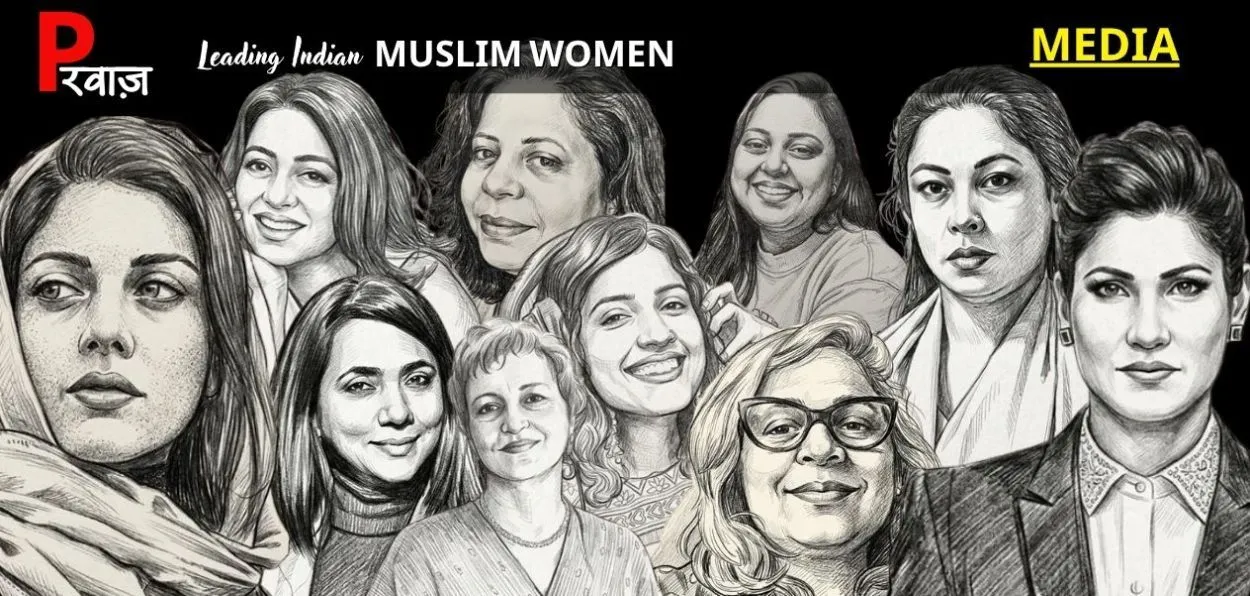
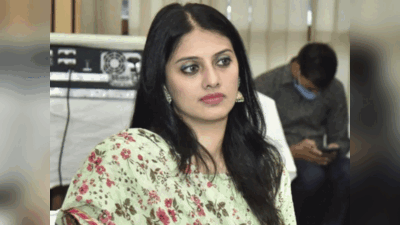
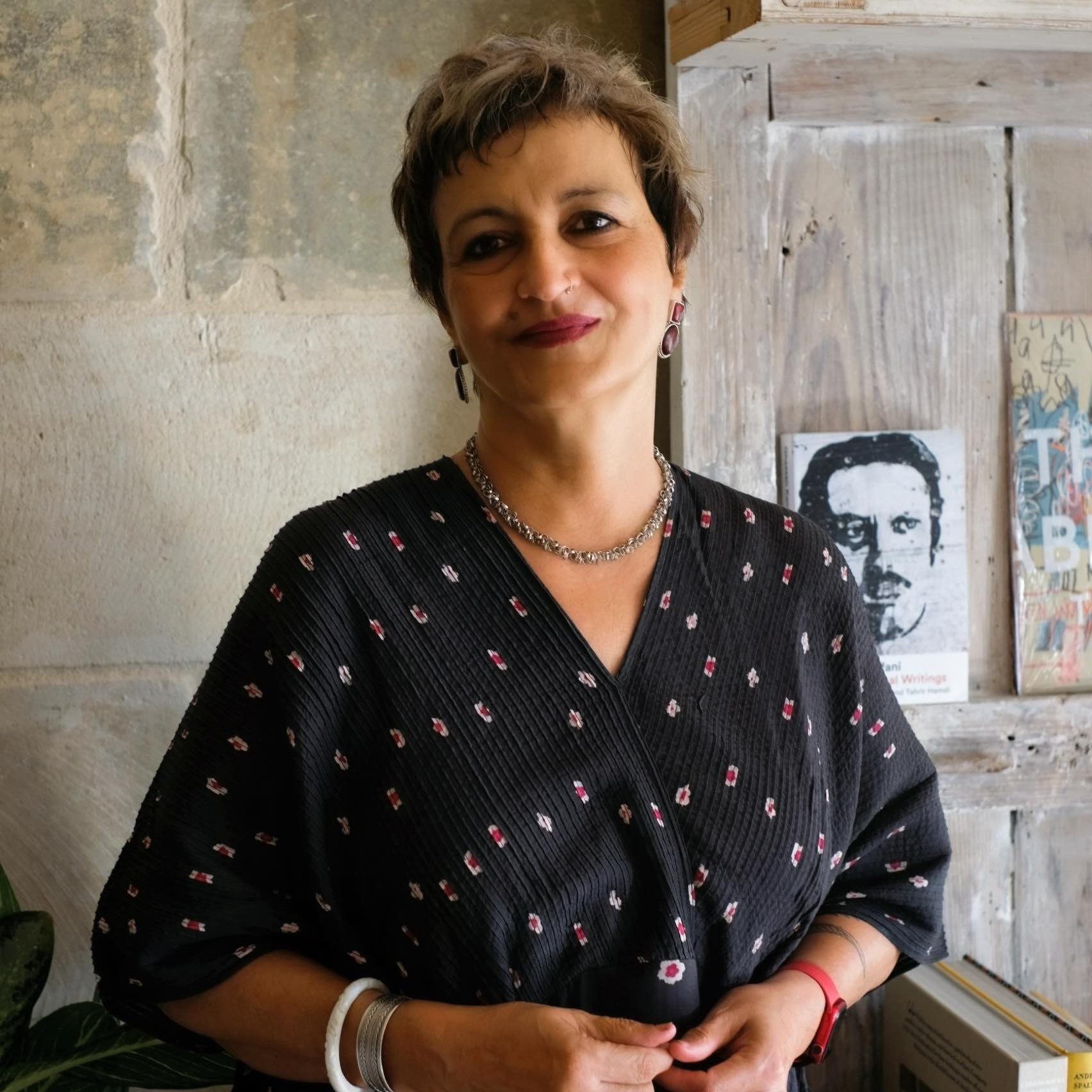
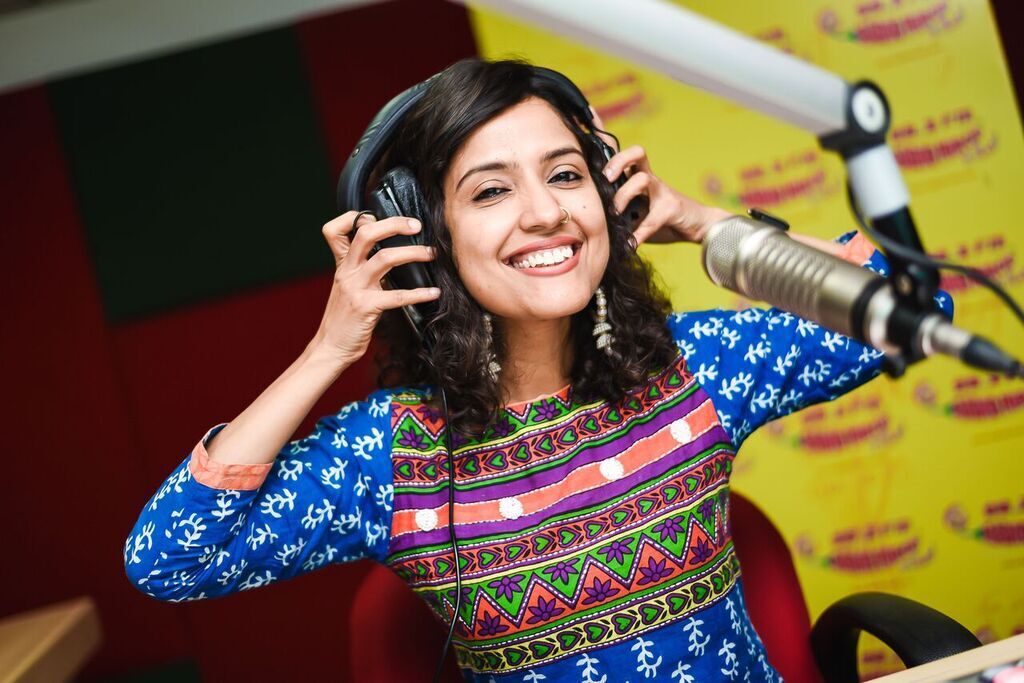
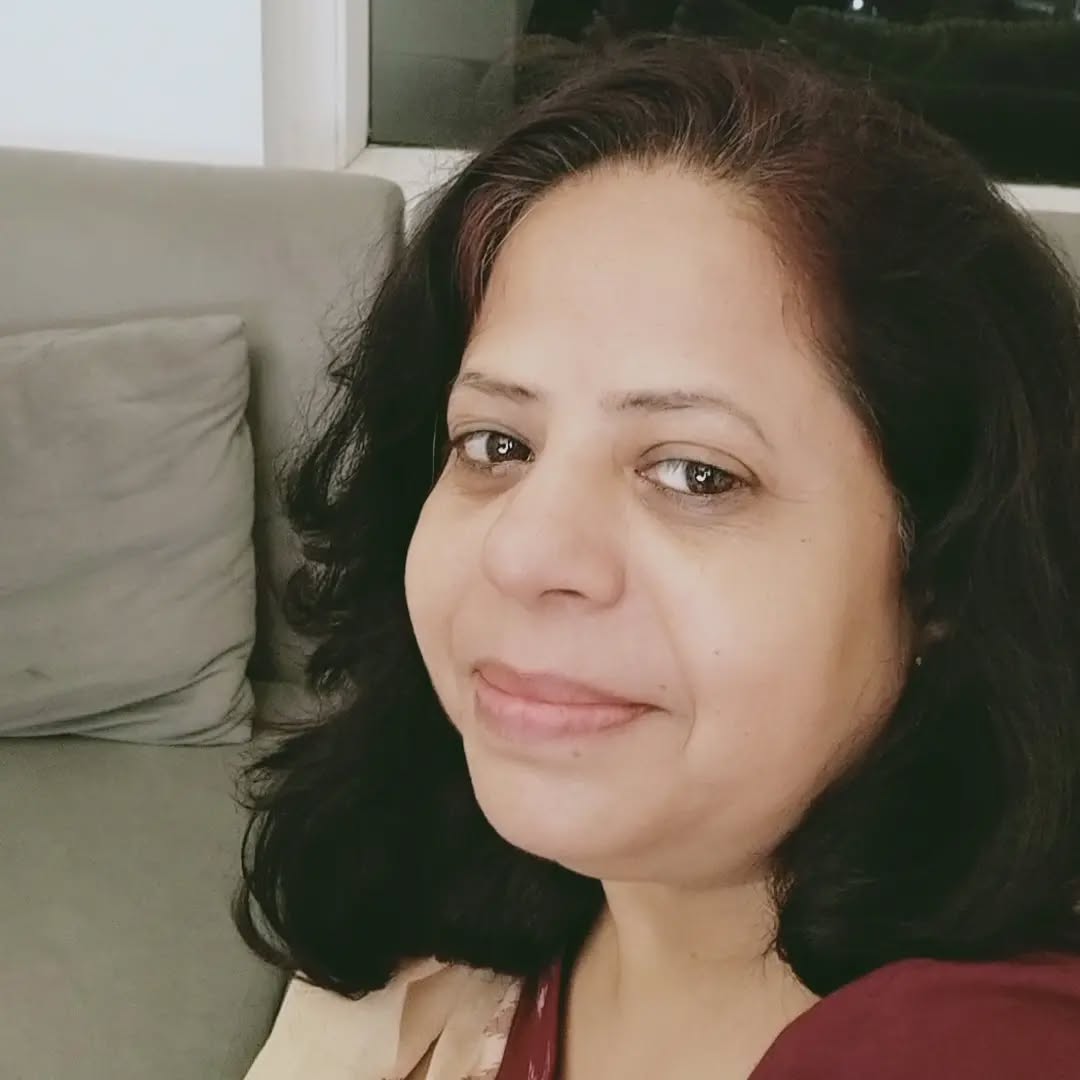
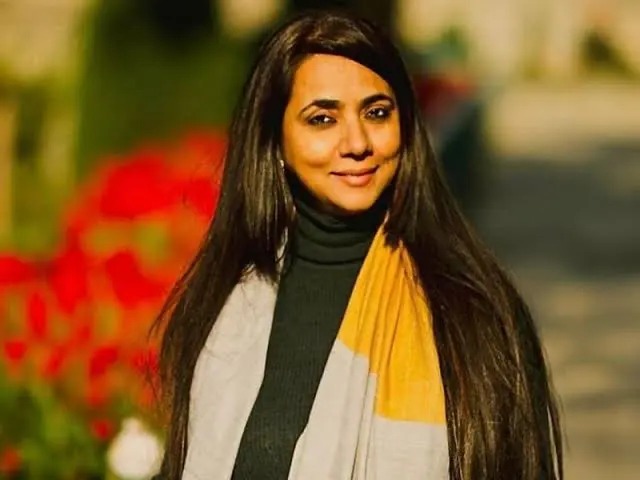
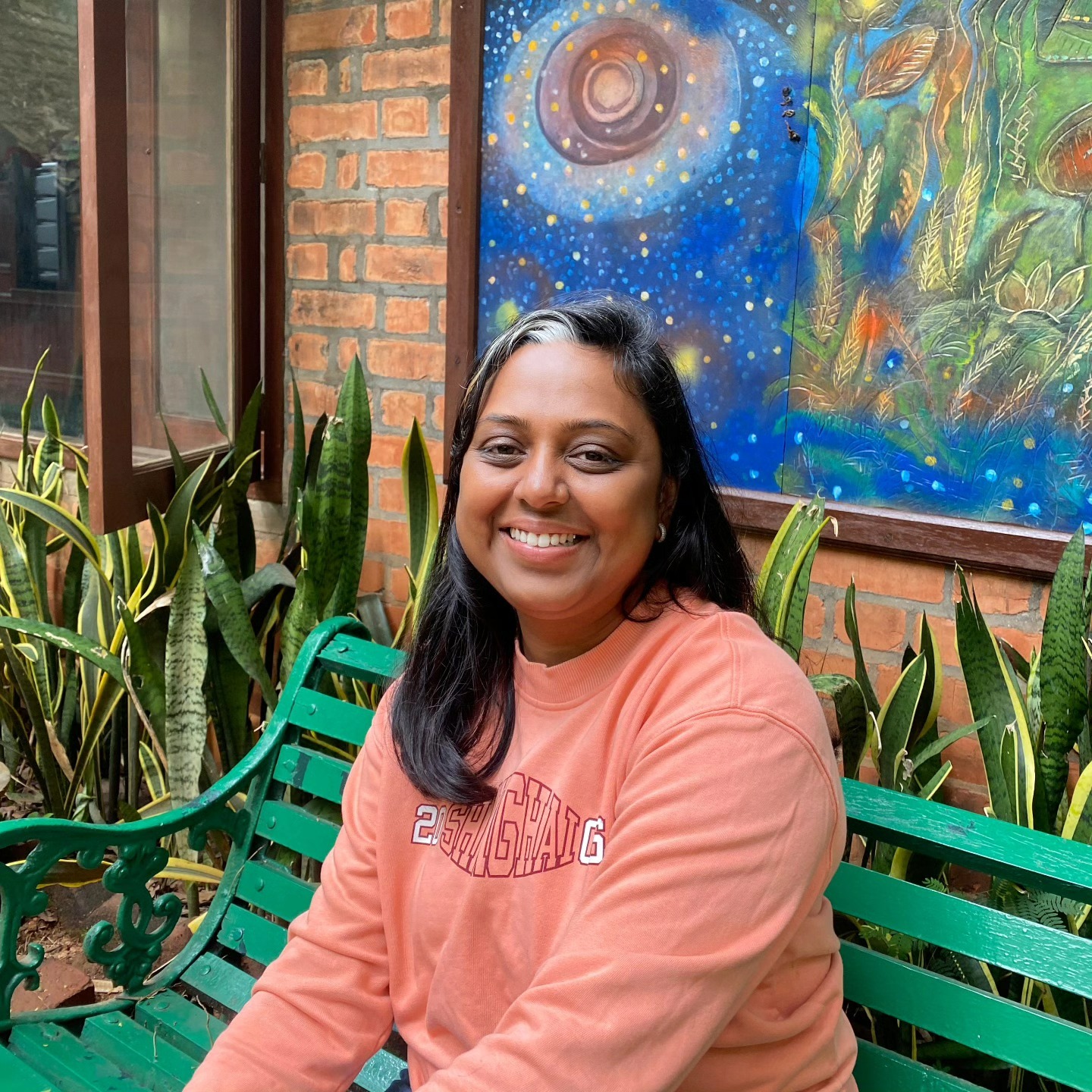
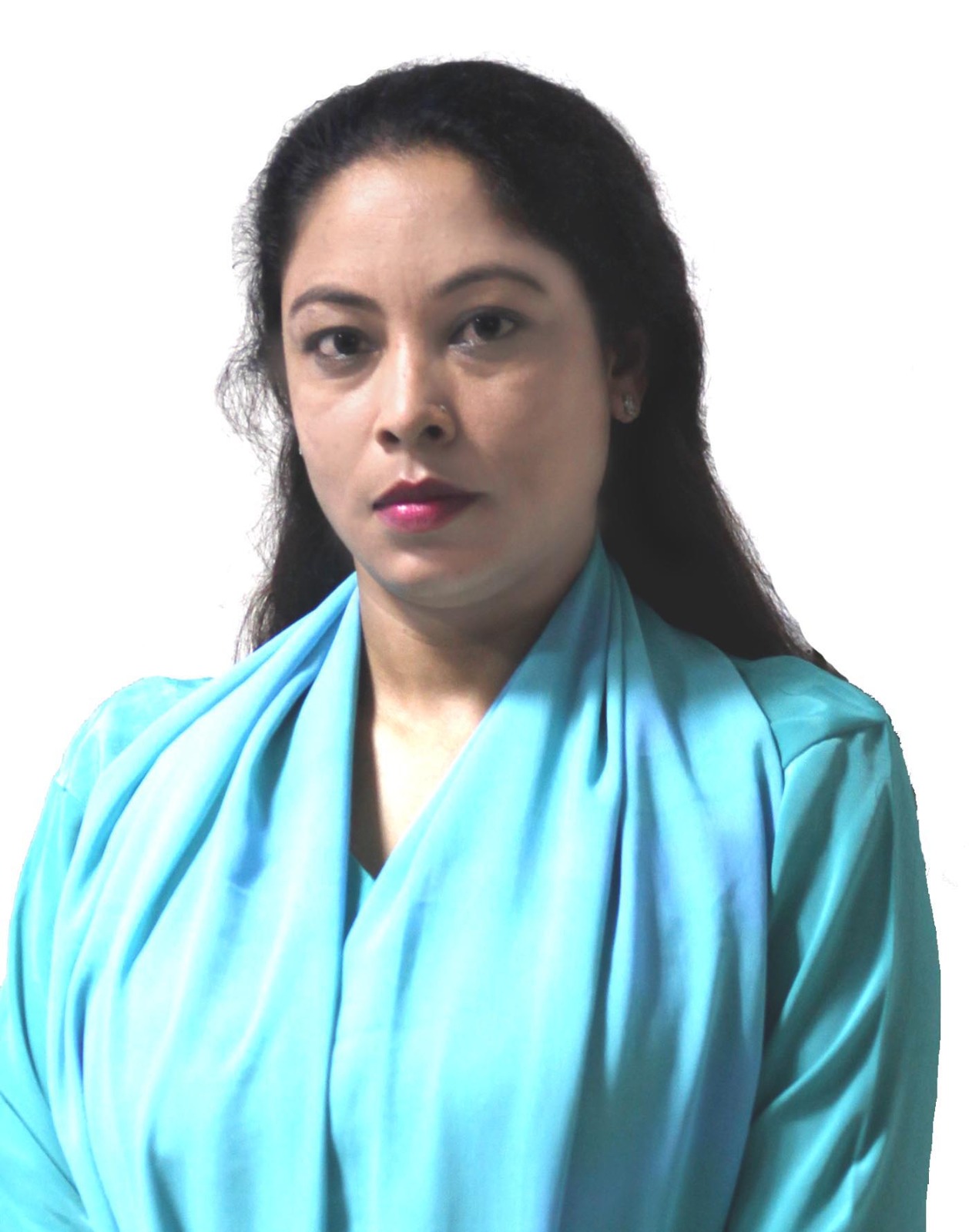
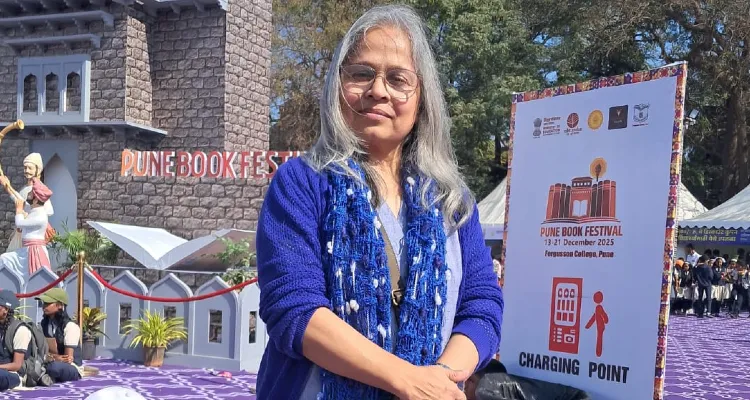
The media is considered a tough profession, and naturally, till few decades ago, very few women were part of it. However, the pioneers, especially among Muslims, whose journeys span television studios, radio booths, conflict zones, and digital platforms, helped turn the narrative on national and local issues. With a growing presence of Muslim women in newsrooms, on TV screens conducting prime-time news debates, as Radio Jockeys, and covering conflicts on the ground, they have empowered the community and made media space more inclusive.
Under its series Parvaz, Awaz-the Voice brings you the stories of ten women from the Indian media who have left a mark in the field. They represent a generation of women who refused to remain confined by convention and instead built identities rooted in excellence and purpose. Here are the top Muslim women media persons:
Yana Mir
Yana Mir has emerged as one of the strongest voices from Kashmir, challenging Pakistan-backed propaganda through journalism, entrepreneurship and advocacy. Educated in Mumbai and rooted in Kashmir, she returned to the Valley in 2020 to report stories often ignored, including the families of policemen killed by terrorists and the silence created by fear.
As CEO of the Real Kashmir Group, she has continued to document change despite threats and pressure.
Her speech at the UK Parliament in 2024 brought international attention when she spoke of feeling free and safe in India. Through her enterprise NourZuw, she also supports Kashmiri artisans and promotes economic self-reliance.
Seema Mustafa
Seema Mustafa stands among India’s most fearless journalists, with a career spanning nearly five decades. Beginning at The Pioneer at just nineteen, she went on to work with leading publications such as The Indian Express, The Telegraph and The Asian Age.
She reported from war zones, including Beirut and Kargil, earning the Prem Bhatia Award. Founder of the digital platform The Citizen, she remains a powerful advocate for independent journalism and women’s voices. As the first elected President of the Editors Guild of India, she reinforced the principle that journalism must question power, not flatter it.
Saima Rahman
Saima Rahman, fondly known as RJ Saima, is one of India’s most loved radio voices.
Raised in Delhi after being born in Nigeria, she developed a passion for language, music and public speaking early in life. Her journey began with All India Radio’s Yuv Vani and blossomed through the iconic show Purani Jeans, where songs, poetry and nostalgia created an emotional bond with listeners.
Through Urdu Ki Paathshala, she has also brought audiences closer to the beauty of the Urdu language and literature. Her voice continues to blend memory, music and social awareness.
Rubika Liyaquat
Rubika Liyaquat has built a strong identity in Indian television journalism through discipline, sharp reporting and composed primetime anchoring. Beginning with field reporting, she worked with networks such as Live India, News24, Zee News and ABP News, steadily rising to national prominence.
Beyond the newsroom, she is recognised for affirming India’s plural social fabric through messages of mutual respect and Hindu-Muslim harmony. Her journey highlights resilience, merit and the importance of coexistence in a polarised age.
Rana Siddiqui Zaman
Rana Siddiqui Zaman broke barriers to become a respected voice in journalism, particularly in cinema, culture and the performing arts. Educated at Aligarh Muslim University, she chose journalism when it was still considered unconventional for women.
Her defining years at The Hindu earned her acclaim for insightful columns and interviews with major artists. After professional setbacks and economic challenges, she reinvented herself and now works with the Children’s Book Trust. Her story is one of courage, reinvention and quiet determination.
Nagma Sahar
Nagma Sahar is widely regarded as one of the most balanced and socially committed voices in television journalism. Born in Patna and educated in Delhi, including studies at JNU, she brought academic depth to her reporting. At NDTV India, she covered major events from the tsunami in Tamil Nadu to elections in Kashmir.
Her show Salaam Zindagi brought issues such as addiction, discrimination and transgender rights into mainstream conversation with empathy and dignity. Her career reflects integrity and meaningful journalism.
Heena Kausar Khan
Heena Kausar Khan has become an important journalistic and literary voice by bringing the inner realities of the Muslim community into mainstream Marathi discourse. Raised in Pune, she started her career with Lokmat before turning to feature writing.
Through platforms like Sadhana Weekly and Loksatta, she explored identity, reform and changing social consciousness. Her books, including Itranama and Ijtihad, have earned acclaim and honours. She continues to advocate humanity, coexistence and nuanced understanding.
Atika Farooqui
Atika Farooqui has enjoyed a distinguished media career spanning more than two decades. Known as a thoughtful host and interviewer, she built her reputation through consistency rather than instant fame.
Working across news and entertainment, she became known for warm, intelligent conversations that focused on creativity and personal journeys rather than sensationalism. A poet and writer fluent in multiple languages, she remains relevant by adapting gracefully from television to the digital era.
Dr. Firdous Khan
Dr Firdous Khan, celebrated as “The Princess of the Isle of Words,” is a scholar, poet, journalist and translator whose work bridges spirituality, literature and media. Associated with the Sufi tradition, she has authored books such as Fahm al-Qur’an and Pioneers of Ganga–Jamuni Culture.
Her career spans Doordarshan, All India Radio and numerous print platforms. Writing in Urdu, Hindi, Punjabi and English, she has earned honours for journalism and literature while promoting harmony, service and the enduring power of words.
Shah Taj Khan
Shah Taj Khan, professionally known as Sheh Taz Begum Khan, is a distinguished Urdu author, journalist, and educator whose career spans more than twenty-five years across print media, broadcasting, literature, and academia.
Based in Pune, she has earned respect in Urdu journalism through roles as reporter, editor, producer, and creative director with organisations such as ETV News, where she helped shape the special bulletin Khas Baat, as well as publications like Nai Duniya Urdu Weekly and Media Star News Feature Agency
She has also made a notable contribution to children’s literature through science-based Urdu books such as Seen se Science and Picnic, praised for making scientific ideas engaging for young readers and supported by the National Council for Promotion of Urdu Language.
source: http://www.awazthevoice.in / Awaz, The Voice / Home> Stories / by Aasha Khosa / April 26th, 2026
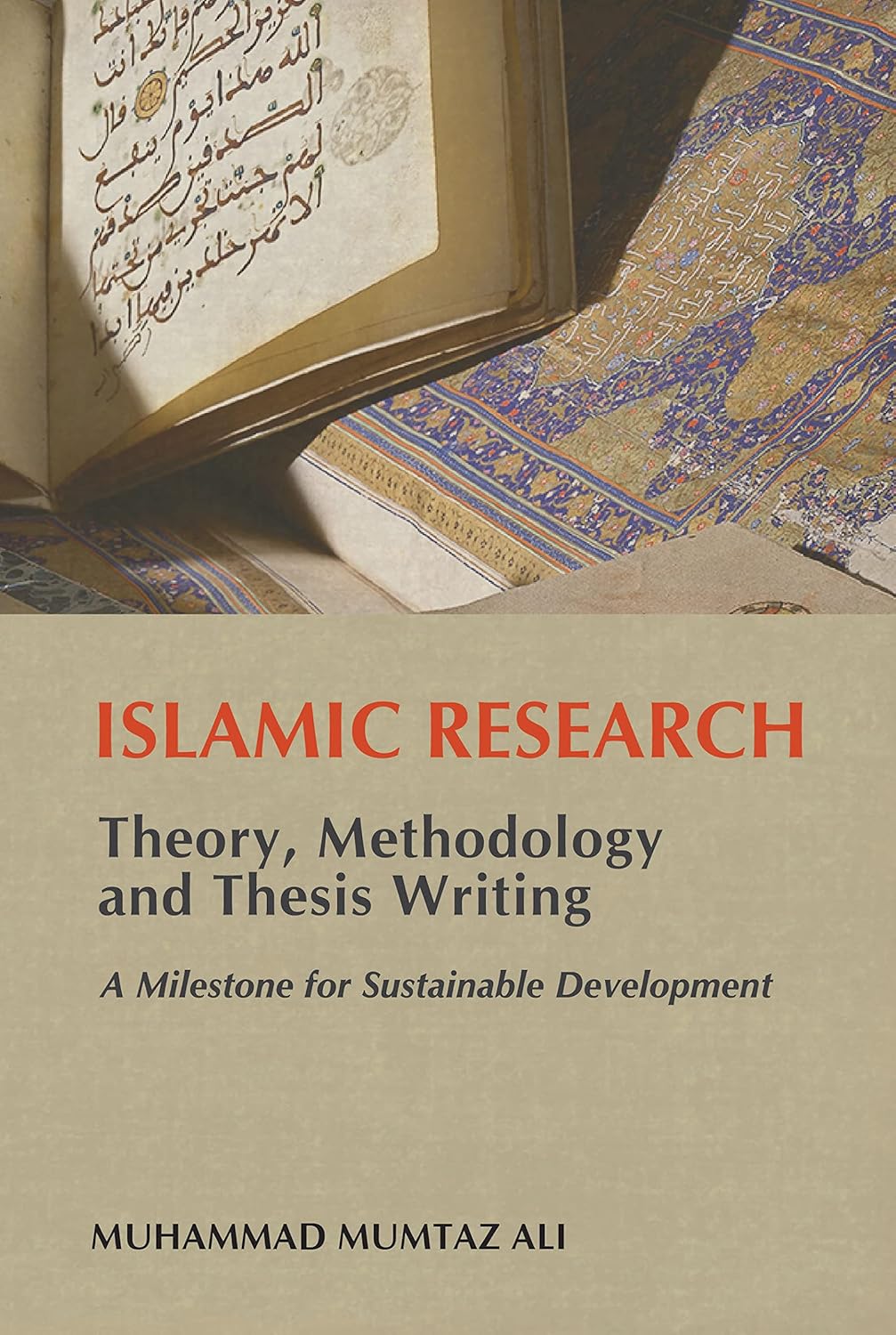
In a significant achievement, Professor (Dr.) Muhammad Mumtaz Ali, hailing from Hyderabad, India, has been honored with Malaysia’s National Book Award for the third time. Currently teaching at the International Islamic University Malaysia (IIUM) in Kuala Lumpur, Prof. Ali was recognized for his outstanding contribution through his latest work, “Islamic Research: Theory, Methodology, and Thesis Writing,” published in 2022.
pix: amazon.in
The prestigious National Book Award 2023 and Certificate for the year 2023 were presented to Prof. Ali in a grand ceremony held on December 22, 2023. The certificate carries the signatures of Prime Minister Dato Seri Anwar Ibrahim and Minister Dato Seri Zambry Abdul Qadir.
Born in Hyderabad in 1955, Prof. Ali holds a doctorate in philosophy in Islamic studies from Aligarh Muslim University. He began his academic journey by completing his master’s degree in Islamic studies at Aligarh Muslim University and a bachelor’s degree in modern western political thought from Osmania University.
Joining IIUM in 1987 as an assistant professor, Prof. Ali has been a dedicated member of the university ever since. Currently, he leads the Abdulhamid Abusulayman Kulliyyah of Islamic Revealed Knowledge and Human Sciences in the Department of Usul al-Din and Comparative Religion.
His award-winning book, “Islamic Research: Theory, Methodology, and Thesis Writing,” advocates for the transcendence of Islamic research beyond religious topics, emphasizing its relevance to all aspects of life and society. The book distinguishes Islamic research from conventional methods, emphasizing the need for a comprehensive theory and methodology.
Prof. Ali’s contributions extend to various branches of Islamic theology, including developmental studies, modernization, epistemological and methodological studies, critical thinking, philosophy of science, and modernity. His books, especially those on the Islamization of Knowledge, are widely regarded as bestsellers on campus.
In 2014, Prof. Ali received the National Book Award for his book, ‘Issues in Islamization of Human Knowledge: Civilization Building Discourse of Contemporary Muslim Thinkers.’ His consistent recognition reflects his commitment to advancing Islamic research and knowledge.
source: http://www.islamicvoice.com / Islamic Voice / Home> National News and Affairs / pix of book added – amazon.in / by Islamic Voice / February 24th, 2024.
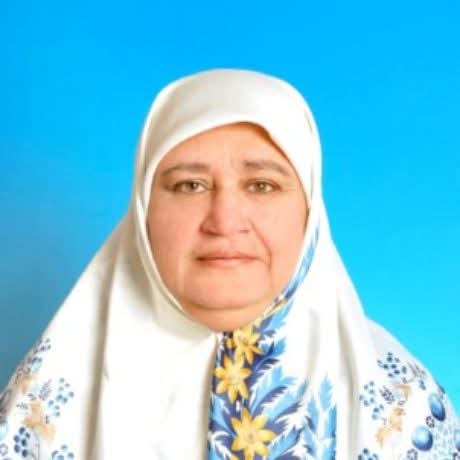
Professor Dr. Zeenat Kausar breathed her last at 12:10 am on March 16, returning to her Creator. She had served for a long time at the International Islamic University Malaysia. Her death is not only a loss for academic circles but also a great loss for the entire Muslim Ummah.
Dr. Zeenat Kausar taught at the International Islamic University Malaysia, in the Department of Political Science from 1990 to 2006 and later taught at Qatar University, in the Department of International Affairs from 2007-2009.
A leading figure in faith-based women’s intellectual struggle, Dr. Zeenat Kausar completed her Master’s degree in 1986 and her PhD in 1991 from Aligarh Muslim University. At international conferences, she frequently spoke as a keynote speaker, presenting Islam and its perspectives on women in a highly effective and engaging manner, leaving a strong impression even on people of other faiths. Her book, Islamic Feminism: A Critique (Islam Vs Feminism: Emancipation, Liberation and the Development of Women) is widely known.
She had deep interest and expertise in various academic fields, including Islamic and Western political thought, feminism and its Islamic critique, modernity, development studies, and globalisation.
Professor Zeenat Kausar used to contribute her thought-provoking articles to Radiance Viewsweekly, especially when the magazine requested her to write articles for its Special issues.
Her recently completed book is about Dr. Wan Azizah, the wife of Malaysia’s Prime Minister Dato’ Seri Anwar Ibrahim. She had also requested Dato Iqbal to arrange a meeting with the Prime Minister’s wife. In this book, Dr. Wan Azizah’s personality is portrayed in detail – as a homemaker, a mother, a party leader, a political activist who helped realise the dreams of her imprisoned husband (when Anwar Ibrahim was Deputy Prime Minister), and a woman of struggle. Sadly, she passed away before her wish to meet Dr. Wan Azizah could be fulfilled.
Professor Dr. Tamim Usama mentioned that Dr. Zeenat was writing a detailed article on “Women’s Empowerment in Islam.”
The distinguished scholar’s husband, Professor Muhammad Mumtaz Ali, is himself a prominent scholar associated with the Department of Revealed Knowledge at the International Islamic University, Kuala Lumpur, Malaysia. When her body was placed in the room and colleagues stood around her, Professor Dr. Mumtaz Ali, spoke emotionally. He said: “It had not even been a month since our marriage. We were standing at a railway station. I had to leave for a training camp organised by the Jamaat. I told my wife, Dr. Zeenat: From this station, two trains are departing in different directions. One goes towards our home, and the other is the one I must take for social and missionary work. You may board whichever train you prefer.”
“Without a moment’s hesitation, she said: I will travel with you on the train that is going for the work of faith and Dawah.”
He further added: “From that day on, throughout our 46 years of married life, she remained my support and strength. Her thoughts and writings were a source of awakening for society. She was a practical example of the freedom that Islam envisions for women. She always had a thirst for knowledge, read extensively, and expressed her ideas in very simple language. As a wife, as the mother of my children, and as a thinker beneficial to society, she lived a meaningful life. I request all of you to pray for her success in the Hereafter.”
Thus, Dr. Mumtaz Ali concluded his brief yet deeply moving words about his wife, Professor Dr. Zeenat Kausar.
May Almighty Allah accept her good deeds and grant her the highest place in Jannat al-Firdaus. Aameen.
source: http://www.radiancenews.com / Radiance News / Home> Focus> Obiturary / by Radiance News Bureau / March 17th, 2026
Ramsha is an alumna of Azim Premji University, Bangalore, where she pursued her undergraduate degree in Liberal Arts. She later went on to complete a Master’s in History and Persian from the School of Oriental and African Studies (SOAS), University of London.
Hyderabad:
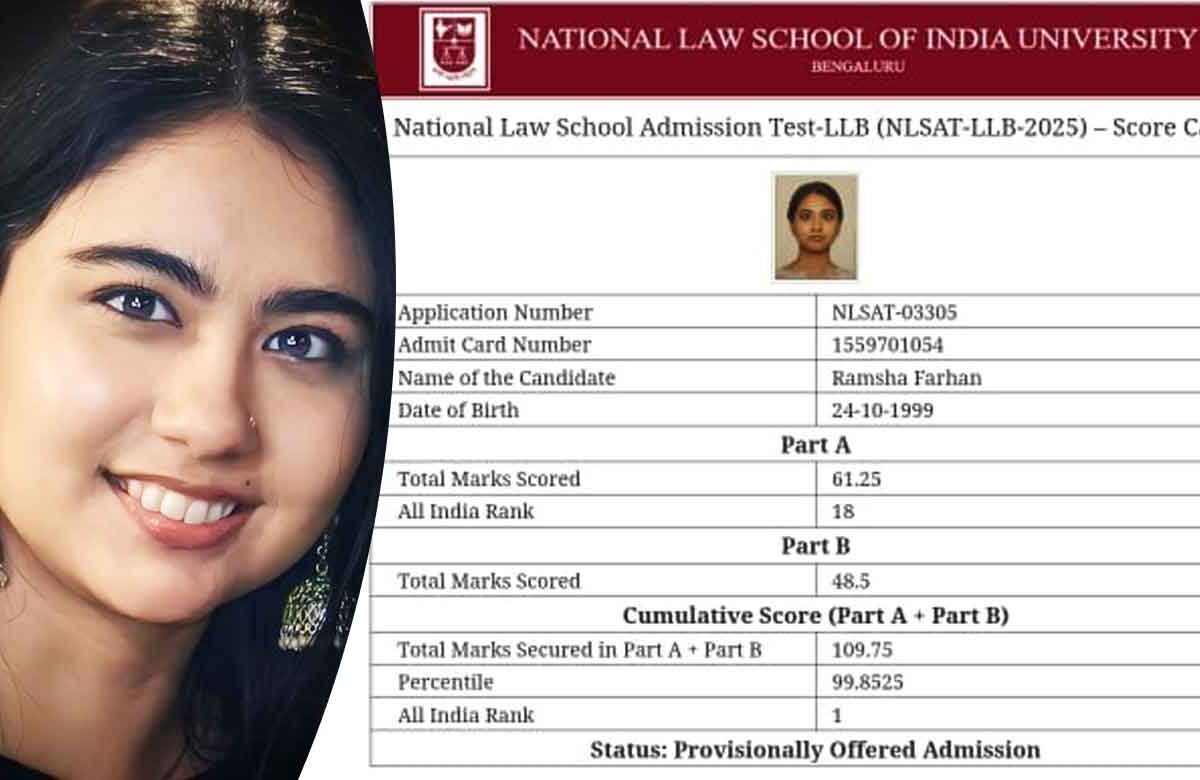
In a moment of immense pride for Hyderabad, RamshaFarhan has secured the 1st Rank in NLSAT-LLB 2025, the national-level entrance examination for admission to the prestigious National Law School of India University (NLSIU), Bangalore — widely regarded as the top law school in the country.
Ramsha is an alumna of Azim Premji University, Bangalore, where she pursued her undergraduate degree in Liberal Arts. She later went on to complete a Master’s in History and Persian from the School of Oriental and African Studies (SOAS), University of London.
She hails from a family with a strong legacy of intellectual and cultural contributions. Ramsha is the daughter of Ashhar Farhan and Humera Ahmed, co-founders of Lamakaan, Hyderabad’s iconic open cultural space. She is also the granddaughter of the celebrated writer and Padma Shri awardee Jeelani Bano.
Known for her academic excellence and deep social commitment, Ramsha Farhan’s achievement is not just personal but a proud milestone for her city and community. Her success is a testament to the values of education, culture, and progressive thought that her family has championed for decades.
We extend our heartfelt congratulations to Ramsha and wish her continued success as she embarks on her legal journey at NLSIU.
source: http://www.munsifdaily.com / Munsif News 24 x 7/ Home> Hyderabad / by Syed Mubashir / June 03rd, 2025