BIHAR / UTTAR PRADESH :
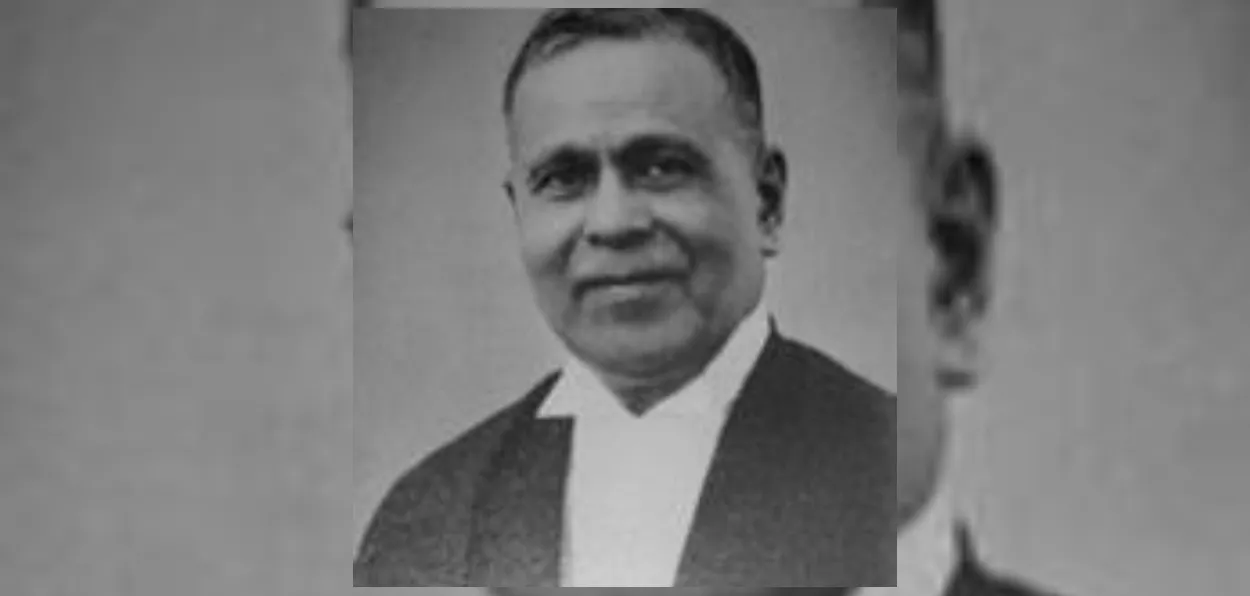
Sir Syed Fazl Ali
It is a commonly held notion that the states of India are natural units, each a homeland of a particular language and culture that existed long before 1947. The formal recognition of these states after India became a Republic was nothing but natural.
A Slice of History
History shows that the political boundaries most Indians live inside today were drawn by a three-member commission that submitted its report on 30 September 1955. This means that the line that separates a Kannadiga from a Malayali or a Bihari from a Bengali was an innovation.
Till then, India had simply carried forward former British provinces, princely states and centrally administered territories, classified under a four-tier system of Part A, B, C, and D states inherited from the Government of India Act of 1935. It was Sir Syed Fazl Ali, a judge from Benares (Varanasi), who led the work to define the boundaries of Indian states,
Born on 19 September 1886 in Varanasi to Saiyid Nazir Ali, Fazl Ali belonged to a family of lawyers, with roots in Bihar. He studied at Muir Central College, Allahabad (now Prayagraj), and at the Middle Temple, London.
Oner his return to India, in 1912, set up practice in the district courts of Chapra, Bihar, arguing criminal cases before subordinate judges. This apprenticeship carried him to the Patna High Court in April 1928, with a deputation to settle labour disputes at the Tata steel works in Jamshedpur.
He was knighted in the New Year Honours of 1941, became acting Chief Justice of Patna in 1938 and permanent Chief Justice in January 1943.
Fazl Ali also chaired the inquiry into the Royal Indian Naval Mutiny of February 1946, one of the last rebellions against the British Empire in India. Later he sat on the Calcutta Disturbances Enquiry Commission, investigating the killings during the partition.
Fazl Ali was elevated to the Federal Court in June 1947. In three months and an Independent India, he went as India’s delegate to the second session of the United Nations General Assembly, where he was elected chairman of its Fifth Committee. In 1950, he became one of the eight judges of the Supreme Court of India. He was also the first Muslim to sit on that bench.
One of his dissenting notes as a Supreme Court judge made history. Indian Parliament had passed the Preventive Detention Act of 1950, allowing the state to jail a person without trial. In A.K. Gopalan versus State of Madras, decided on 19 May 1950, Chief Justice Harilal Kania led the majority in holding that a citizen could be stripped of his liberty by any procedure Parliament chose to enact, however unfair, so long as it was called law.
Two of the six judges who disagreed were Fazl Ali. Fazl Ali held that the procedure established by law had to rest on four elementary principles, which he summed up in a single line: “the right to be heard before one is condemned.” It took twenty-eight years and the government’s arbitrary seizure of a young woman’s passport, without explanation, for the Supreme Court to agree with him.
In Maneka Gandhi versus Union of India in 1978, the Court finally read fairness back into Article 21, and nearly every later right to dignity, privacy and due process in India has been built on that foundation. In fact, less than two years after Gopalan, Fazl Ali had already sat with the majority in the State of West Bengal versus Anwar Ali Sarkar, striking down a law that let the government to select certain cases for trial in Special Courts, bypassing ordinary procedures.
The Court held that such discretionary power violated Article 14 of the Constitution, as it allowed arbitrary and unequal treatment of similar offences. Indian courts still apply the test of reasonable classification under Article 14 that this judgment helped establish.
In 1952, Potti Sreeramulu fasted for a separate Telugu state. He died in the process, and there was unrest in the region. This forced Jawaharlal Nehru’s government to concede to reorganisation of India along linguistic lines.
In December 1953, Ali Fazl Ali, then Governor of Odisha, was asked to head a commission with the historian-diplomat K.M. Panikkar and the veteran liberal parliamentarian H.N. Kunzru as members for the purpose. For almost two years they toured the country, took evidence region by region and read memoranda from parties, princes and peasants. They weighed every demand against four tests – national unity and security, linguistic and cultural homogeneity, financial and administrative viability, and the welfare of the people in each proposed state.
The Commission submitted its report on 30 September 1955. The report said that it was guided by the principle that “the unity of India must be regarded as the paramount consideration,” and refused to accept one language, one state as an absolute rule.
Not every line the commission drew was viable. For example, it kept Maharashtra and Gujarat together as a bilingual Bombay state. The plan was not acceptable to both Marathi and Gujarati speakers, and the state was split into Maharashtra and Gujarat in 1960.
The commission had recommended 16 states and three union territories as against the final Reorganisation Act of November 1956 going for 14 states and six UTs. However, the template was intact. Punjab and Haryana followed it in 1966. Chhattisgarh, Uttarakhand and Jharkhand followed it in 2000. Telangana followed it in 2014. Every one of these reorganisations has worked within the same administrative and legal vocabulary that Fazl Ali’s commission wrote, that a community’s claim to its own language and government must be weighed against, never simply surrendered to, the unity and coherence of the nation.
Fazl Ali spent his last years as Governor of Assam, working to bring the Naga hills into the administrative mainstream. He opened a college at Mokokchung, Nagaland that still bears his name.
Fazl Ali’s son, Syed Murtaza Fazl Ali, became Chief Justice of the Jammu and Kashmir High Court and, in 1975, a judge of the very Supreme Court his father had helped inaugurate. Sir Syed Fazl Ali was awarded the Padma Vibhushan in 1956. He died in office on 22 August 1959.
Sir Syed Fazl Ali led no mass movement. But every time an Indian under arrest demands to know the grounds, every time a citizen calls a law arbitrary before a court, and every time someone crosses from one state into another without a thought for how that border came to sit exactly there, they are repeating an argument first made by a Varanasi-born Bihari judge.
source: http://www.awazthevoice.in / Awaz, The Voice / Home> Stories / by Saquib Salim / September 11th, 2026