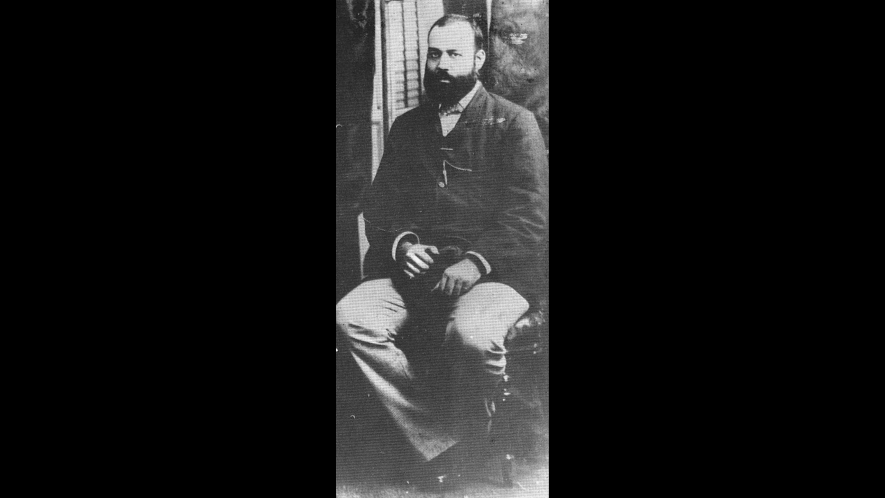
Aligarh, UTTAR PRADESH :
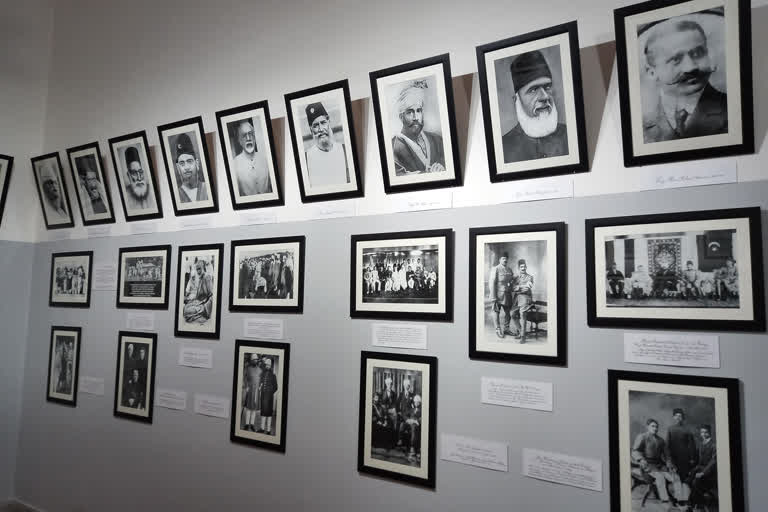
It is well-timed and relevant to know that Aligarh Muslim University (AMU) has produced many freedom fighters who fought for independence. While we are celebrating the Azadi Ka Amrit Mahotsav, present-day India is going through difficult and trying times, as hate speeches against Indian Muslims are often heard from every corner of India. It is believed that most of them are not patriotic and are supporters of Pakistan.
During the last eight years we have seen some incidents of mob lynchings of Muslims and Dalits and have also heard unfortunate calls for genocide of Muslims. Knowing about the contribution of AMU towards the national struggle of independence is relevant to dispel the myth that the founder of AMU, Sir Syed Ahmed Khan, advocated that Muslims of India constituted a separate nation, qaum, or that the idea of Pakistan took birth among the intellectual class of Aligarh. Moreover, the study of AMU’s contribution to freedom movement will, it is believed, strengthen Hindu-Muslim Unity.
The Mohammado Anglo-Oriental College (MAO College), Aligarh, established in 1875 (which later became AMU in 1920), produced many freedom fighters, prominent among them are Ali brothers (Maulana Shaukat Ali and Mohammad Ali), Abdul Gaffar Khan (Frontier Gandhi), Maulana Hasarat Mohani, Raja Mahinder Pratap (President of 1st Indian Government established in exile at Kabul), S. M. Tonki, Saifuddin Kichloo Kitchlew (recipient of Lenin Peace Prize), Abdul Majeed Khwaja and Qazi Adeel Abbasi, Saith Yaqoob Hasan, Ali Sardar Jafri, Shafiqe-ur-Rehman Kidwai, Rafi Ahmad Kidwai, Raja Gulam Husain, Shoeb Qureshi, Sheikh Mohammad Abdullah, Dr. Datu (Leader of African National Conference), Abdul Matin Chowdhry (Founder Member of Indian Civil Liberty Union), Mazharul Haque, Syed Ali Zaheer, Syed Hossain, Syed Mir Qasim, Syed Rauf Pasha, Tassauq Ahmad Khan Sherwani, Yaseen Noori Z Ahmad, and Zafar Ali Khan.
In the following pages we provide a brief profile of fifteen prominent freedom fighters who are alumni of AMU (Hakeem Ajmal Khan was not an alumni alumnus of AMU but was associated with it as a member of Trustee).
Khan Abdul Ghaffar (1890-1988)
Khan Abdul Ghaffar is one of the most important Muslim freedom fighters of India and he was also known as “Frontier Gandhi “. He started the famous Khudai Khidmatgar (“Servants of God”) movement in 1929 and it was a very successful freedom movement. The British were so infuriated by the success of the movement that they began a harsh crackdown on its supporters. The atrocities committed on Khudai Khidmatgar were one of the most severe repressions that the Indian independence Movement ever witnessed. He also opposed the All-India Muslim League’s demand for the partition of India. When the Congress Party did not consult him on partition, he felt very sad and told the Congress “you have thrown us to the wolves”. After the partition, he remained in Pakistan and started fighting for a separate Baloch province. He was jailed many times from 1948 to 1988 and most of the time was under house arrest. When he died in 1988, tens of thousands of mourners attended his funeral. At the same time heavy fighting was going on between Soviet forces and Afghan Rebel forces but both stopped their fight and paid tribute to the great leader.
Zakir Husain (1897-1969)
Dr. Zakir Husain served as 3rd President of India and he was also the first Muslim President of India. He was one of the founders of Jamia Millia Islamia, Delhi. He was deeply influenced by Gandhi’s doctrine of Non-Violence and believed that India’s struggle for freedom would only be successful when Indian Society is educated with value-based education. He acted as the Vice Chancellor of Jamia Millia Islamia for 22 years (1926-48) and made it one of the finest educational institutes in India. He was awarded The Bharat Ratna, India’s highest National Honour.
Saifuddin Kitchlew (1888-1963)
Dr. Saifuddin Kitchlew completed his studies in Europe and then returned to India to practice Law. He was appointed as Municipal Commissioner of Amritsar when the infamous Rowlatt Act was passed by the British Government. He soon left his law practice and took part in the Non-Cooperation Movement. He was arrested with Mahatma Gandhi and Dr. Satyapal for leading a protest in Punjab and to protest the arrest of the trio, a public meeting gathered at the Jallianwala Bagh where Gen. Reginald Dyer and his troops fired mercilessly upon the unarmed civilian crowd. He was also the founding leader of the Indian Youth Congress. Kitchlew spends nearly fourteen years in jail for his revolutionary activities. He strongly opposed the Muslim League’s demand for Pakistan and partition of India. India Post released a special commemorative stamp featuring him on his 100 Birth Anniversary.
Abdul Majeed Khwaja (1885-1962)
Khwaja Sahab, as Abdul Majeed Khwaja was affectionately known as, served – first as Vice Chancellor and then as Chancellor of the Jamia Millia Islamia for the longest duration in its 100 years. Jamia’s history will remain incomplete without his mention.
He was educated at MAO College, Aligarh, after which he went to Cambridge and was called to the Bar. At Cambridge his contemporaries included Jawaharlal Nehru, Saifuddin Kitchlew, Syed Mahmud and T. A. K. Sherwani, all of whom joined India’s freedom movement.
Khwaja Sahab was a committed Congressman who had joined the party in 1915 and, despite ups and downs, remained with it till his last breath. He also remained associated with Jamiat Ulama-i- Hind almost from the beginning and was in the Khilafat delegation that went to England. He was Junior Law Professor at MAO College, had served as its Trustee and was also Secretary of the MAO Old Boys’ Association.
Khwaja Sahab was a distinguished lawyer, and was quite famous in Patna High Court. But, in response to the call for non-cooperation which included boycotting the British Government supported education, he gave up his legal practice, and got himself involved in the formation and building of Jamia.
Abdul Majeed Kwaja held high offices in the Khilafat Congress and was associated with Jamait- Ulamae-e-Hind from its inception. He was a close associate of Jawaharlal Nehru and a great advocate of Hindu-Muslim unity. He took keen interest in the Khilafat movement and went to England as a member of the Khilafat delegation (1920), led by Dr. MA Ansari.
Hakeem Ajmal Khan (1868-1927)
Ajmal Khan was a prominent leader of India’s freedom struggle and was among the founders of Jamia Millia Islamia. He is also the sole person who has had the honour to be elected the President of the Indian National Congress, the Muslim League and the All-India Khilafat Committee. He was a prominent freedom fighter, respected physician and academician of India. After beginning his practice, Khan was elected as the main physician to the Nawab of Rampur from the time period 1892 to 1902. Here, he was introduced to Sir Sayyid who chose him as the trustee of the MAO College.
His life changed its course from medicine towards politics after he started writing for an Urdu weekly ‘Akmal-ul-Akhbar’ that was launched during 1865-70. Khan was also heading the Muslim team, who met the Viceroy of India in Shimla in the year 1906 to give him a memorandum for creation of AMU.
At a time when many Muslim leaders were arrested, Ajmal Khan approached Mahatma Gandhi for help. As such, Gandhiji united with him and other Muslim leaders like Maulana Azad, Maulana Mohammad Ali and Maulana Shaukat Ali in the famous Khilafat movement. Ajmal Khan resigned from AMU as its trustee when the authorities refused to accept the non-cooperation movement waged by Gandhiji and the Congress against the British government. He was elected the president of the Indian National Congress in 1921.
Hasrat Mohani (1877-1951)
Syed Fazl-ul-Hasan, known by his pen-name Hasrat Mohani, co-founder of Communist Party of India, was an Indian political activist (as he was expelled from MAO College in 1903 due to his political activities), freedom fighter in the Indian independence movement and a noted poet of the Urdu language. He coined the notable slogan “Inquilab Zindabad” (translation of “Long live the revolution!”) in 1921. Together with Swami Kumaranand, he is regarded as the first person to demand complete independence for India in 1921 at the Ahmedabad Session of Congress. Maghfoor Ahmad Ajazi supported the complete independence motion demanded by Hasrat Mohani. The demand of “complete independence” was however not upheld by Mahatma Gandhi then as he believed that “it could not be incorporated in the Congress creed until the Hindu-Muslim unity is completely achieved which also meant that the idea was premature.
Mohani was opposed to the Nehru Committee Report and left Congress to become President of the Muslim League at Ahmedabad in 1921. As a member of the Constituent Assembly, he refused to sign the draft Constitution to protest partition and India’s membership of the Commonwealth.
While he was a devout Muslim, he didn’t find it odd to be inspired by Krishna, the Hindu deity. Makkah, Mathura and Moscow were Hasrat Mohani’s popular symbols. He did not find any conflict between them. A firm believer in religious integration, he repeatedly performed hajj pilgrim as well as attended the Sri-Krishna celebration fair held annually at Mathura.
Raja Mahendra Pratap (1886-1979)
Raja Mahendra Pratap Singh was an Indian freedom fighter, journalist, writer, revolutionary, President in the Provisional Government of India, which served as the Indian Government in exile during World War I from Kabul in 1915, and social reformist in the Republic of India. He also formed the Executive Board of India in Japan in 1940 during the Second World War. He also took part in the Balkan War in the year 1911 along with his fellow students of MAO college. He is popularly known as “Aryan Peshwa”. Government of U.P. established in 2021, Raja Mahendra Pratap Singh State University, at Aligarh, to cherish his memory and legacy. Prime Minister Narendra Modi laid the foundation stone of the University on 13 September 2021.
Maulana Shaukat Ali (1873-1938)
Shaukat Ali was the elder brother of the renowned political leader Mohammad Ali Jouhar. He helped his younger brother Mohammad Ali to publish the Urdu weekly, Hamdard, and the English weekly Comrade. In 1915 he published an article which said Turks were right to fight the British. These two weekly magazines played a key role in shaping the political policy of Muslim India back then. In 1919, while jailed for publishing what the British charged as seditious materials and organizing protests, he was elected as the last president of the Khilafat conference. He was re-arrested and imprisoned from 1921 to 1923 for his support to Mahatma Gandhi and the Indian National Congress during the Non-Cooperation Movement (1919–1922). His fans accorded him and his brother the title of Maulana. In March 1922, he was in Rajkot jail and was later released in 1923.
While still a supporter of Congress and its non-violent ethos, Ali even surpassed some of his colleagues in also providing support to the revolutionary independence movement. To this end, he supplied guns to Sachindranath Sanyal.
He opposed the 1928 Nehru Report. Instead, he demanded separate electorates for Muslims and finally the Khilafat Committee rejected the Nehru Report. Shaukat Ali attended the first and second Round Table Conferences (India) in London in 1930-31. Ali served as a member of the ‘Central Assembly’ in British India from 1934 to 1938. He travelled all over the Middle East, building support for India’s Muslims and the struggle for independence from British rule in India.
Maulana Muhammad Ali Jauhar (1878-1931)
Maulana Muhammad Ali Jauhar studied in MAO College and in Oxford University. He launched non-cooperation and Khilafat movement with Mahatma Gandhi. His regular writings in leading Indian and foreign newspapers like The Times, London, The Manchester Guardian and The Observer made him look like a visionary that the Indian Muslims and the general public was waiting for decades. Later, in the year 1911 he launched his well-received magazine The Comrade in Calcutta. But Kolkata didn’t suit him much and he shifted base to Delhi, from where he launched an Urdu daily, Hamdard, in 1913. Muhammad Ali was in the forefront in the war against British Raj. He wholeheartedly supported Mahatma Gandhi’s call for a national civil resistance movement, and inspired hundreds of protests and strikes all over India. He was arrested by British authorities and imprisoned for two years for what was termed as a seditious speech at one such meeting. He was one of the founders of Jamia Millia Islamia and was its first Vice Chancellor.
He was elected the President of INC in 1923. The fearless Maulana, despite his ill-health, went to attend the first Round Table Conference in London in 1930. He told the British Government in a very clear tone that he would not return to India alive unless the country was set free. “I would prefer to die in a foreign country so long as it is a free country, and if you do not give us freedom in India, you will have to give me a grave here”, the Maulana said. The true freedom lover, Muhammad Ali died during the same journey in London on 4 January 1931. He was buried in Jerusalem in the proximity of the Dome of Rock. While speaking bluntly in the Round Table Conference, he said, “I have not come to ask for Dominion Status. I do not believe in the attainment of Dominion Status. The one thing to which I am committed is complete independence. In Madras in 1927, we passed a resolution making that our goal.”
Abdul Qaiyum Ansari (1905-1973) was a freedom fighter of India. He was known for his commitment to national integration, secularism and communal harmony. He fought against Jinnah’s two nation theory through the All-India Momin Conference of which he was the President. He vehemently opposed the very idea of Pakistan and spoke out openly to the extent of inviting attack by Muslim League supporters. While speaking in Patna during the Bihar Provincial Momin Conference on 21 April 1940, Abdul Qayyum said: “It is blasphemy to say that Islam is in danger here. It is tragedy to place orders for a Pakistan for the segregation of Islam. It is a defeat of Islam to run away from the battle of life in search of a privilege. It is a fantastic wavering of a fevered mind”.
He was impressed by Mahatma Gandhi, Maulana Azad and Ali Brothers who were the leading lights of the freedom movement. His activism in the freedom movement and social causes can be gauged by the fact that he established a national school for the students who had boycotted government schools in response to the call of the Indian National Congress (INC). For this he was arrested and imprisoned at the young age of 16 since it amounted to participation in Non-Cooperation and Khilafat Movements. Abdul Qaiyum Ansari was also a champion of weaker sections of the society. He was among the top leaders of the Momin Conference and used the forum to make every effort to beat Muslim League and its divisive agenda. Besides, he also stood firmly against divisive politics of other organizations. He worked closely with the INC throughout as a youth leader and even took part in the students’ agitation against the Simon Commission during its visit to Calcutta in 1928. He was also an accomplished journalist, writer and a poet.
Ali Sardar Jafri (1913-2000)
Sardar was a rebel, freedom fighter, pacifist, radical activist, story writer, critic and documentary filmmaker at once. But, above all, he was a poet endowed with exquisite imagination, one of the brightest stars on the firmament of 20th century Urdu poetry. Like all great poets he was a prophet engaged in unravelling the mysteries and ambiguity of human drama. The principal theme of his poetry was compassion, love, perseverance and sensitivity surviving amidst the callous inhumanity of our times. In his unique style, he depicted the exemplary survival of the human spirit in face of all- pervasive adversity and defeatism. In so doing he not only carried forward the traditions of Urdu poetry but enriched its treasure with new symbols and powerful imagery. Indeed, his poetry gradually evolved into a genre of its own kind whose influence is difficult to ignore among the present generation of Urdu poets.
Sardar’s early works reflected a restless yearning for India’s independence from the colonial yoke. Equally intense was his yearning for the freedom and dignity of the proletariat. This was because of the strong impact of the Progressive Writers’ Movement inspired by Marxism and the Bolshevik Revolution in Russia in 1917. As early as 1938, he joined the movement at its conference held in Calcutta and soon became one of its leading advocates. The influence of Marxism on his poetry was thus profound and everlasting.
AMU conferred a doctorate (D. Litt.) on him in 1986, fifty years after he was expelled from the university. He was the fourth person to receive this honour, his predecessors being the notable Dr. Allama Iqbal, Mrs. Sarojini Naidu and Jigar Moradabai. His works have been translated into many Indian and foreign languages.
K.M. Ashraf (1903-1962)
Kunwar Mohammad Ashraf was an eminent historian, scholar of Islamic studies, a communist leader and crusader of Hindu-Muslim unity. During the non-cooperation movement, he left MAO College to join recently created Jamia Millia. Later he rejoined AMU in 1923 to pursue M.A. (History) and LL.B. courses. He received a Ph.D. from SOAS, London University. After teaching at AMU for a year, he gave up his academic career due to his commitment to the national movement. Ashraf came under the influence of Professor Mohammad Habib and joined socialist movement. Inspired by the Russian Revolution, he joined the Congress Socialist Party formed in 1934. During 1933-34, he led the Meo peasant struggle against the Maharaja of Alwar’s oppression and the Government had to intervene to introduce reforms. Dr. Ashraf was a trusted associate of Jawaharlal Nehru and was a member of AICC from 1934-45. He headed the Muslim Mass Contacts Campaign Cell of Congress, 1937-39, formed to wean away the Muslims from the influence of Muslim League and propagate Congress’ nationalist programmes. Ashraf exhorted the Indian Muslims to participate in the freedom movement and staunchly opposed M.A, Jinnah’s idea of Pakistan. He served as the Secretary to Jawaharlal Nehru and Maulana Azad when they were Congress Presidents. In 1948 he edited Naya Daur, the daily newspaper that denounced communalism and was distributed by the CPI. He taught at the University of Delhi and joined the Humboldt University, Berlin as a Guest Professor (Medieval Indian History) in 1960. In 1962 he died and was buried in the ‘Cemetery of Socialists’ at Berlin.
Rafi Ahmad Kidwai (1894-1954)
An Indian independence activist and a socialist to the core, Rafi Ahmed Kidwai’s ceaseless efforts in making the country free from British rule have been nothing but praiseworthy. Although a graduate from MAO College, his skills of keen observation and learning from human nature took him beyond bookish knowledge. During the crisis situations that he had to deal with during his service to the nation, he showed distinct man management skills and an innovative approach to resolve human issues. And with Pandit Jawahar Lal Nehru as his mentor, there was no stopping him further. His efforts in bringing out many reforms and fighting against the unjust with utmost conviction will always be remembered. A committed freedom fighter to the very end!
It was by 1920 that Kidwai’s political career officially began after he had become an active force behind the Khilafat Movement and the Non-Cooperation Movement and was even jailed for the same. In 1922, he moved to Allahabad after being released from jail and served as the private secretary to Motilal Nehru. In 1926, Kidwai was elected to the Central Legislative Assembly of British India and from there on it was his political and social insightfulness that made him the Chief Whip of the Congress Legislative Assembly from 1926 to 1929. He also held the secretary position of the United Provinces Congress Committee and organized a no-rent campaign to protect Ashraf came under the influence of Professor Mohammad Habib and joined socialist movement. The farmers of the Rae Bareli district from the ongoing economic depression. For this, he was even sentenced for six months.
The Government of India Act 1935 made him a minister-in-charge of managing the revenues and jail portfolios in Pandit Govind Ballabh Pant’s cabinet in the United Provinces when congress government was set up. He was second to Pant as home minister in the 1946 government and in the same year, he became the home minister of UP. Post-independence, Kidwai became India’s first minister for communication in Jawahar Lal Nehru’s cabinet. Kidwai, along with Abul Kalam Azad, were the two Muslims in Nehru’s central cabinet. The “own your telephone” service that he launched in 1948 still goes by the name of OYT; under which a new telephone may be obtained. In the same year, he also launched night air mail service as a minister for communications.
Saith Yaqoob Hasan (1875-1940)
Saith Yaqoob Hasan (Maulana Yakub Hasan Saith) was an Indian businessman, freedom- fighter and politician who served as a cabinet minister for Public Works in the Madras presidency, under Rajaji (1937-1939). In 1916, Saith was elected to the Madras Legislative Council by the South Indian Chamber of Commerce. He joined the INC and participated in the Khilafat agitations in 1919 and was imprisoned for six months. He was arrested and imprisoned once again in 1921 for his participation in the Non-Cooperation Movement. On his return from jail in 1923, he resigned from the Congress and founded the Madras Province Muslim League. This move was prompted by Saith’s preference for Dominion Status when the Congress declared independence as its primary goal. As a result, no Muslim leader from the Presidency participated in the Civil Disobedience Movement. Saith stood for the elections and was elected to the Assembly.
Before the 1937 elections, Saith, left the Madras Provincial Muslim League and joined the Indian National Congress. Soon, he became one of the top leaders of the provincial Congress. He condemned Mohammad Iqbal’s two-nation theory and supported a united India. However, he still supported most of the other policies of the Muslim League.
Shoeb Qureshi
Qureshi edited Harijan during the detention of Gandhiji.
(Abdulrahim P. Vijapur is currently Emeritus Professor of Political Science at the University of Science and Technology, Meghalaya. Formerly he was Professor of Political Science at Aligarh Muslim University. He retired in 2020 after serving AMU for 37 years. He can be reached at: Email: arvijapur@gmail.com )
This article was first published in countercurrents.org on 26 August 2022
source: http://www.indoislamic.org / Indo Islamic Heritage Centre / Home> Article / by Abdulrahim P Vijapur / October 23rd, 2023