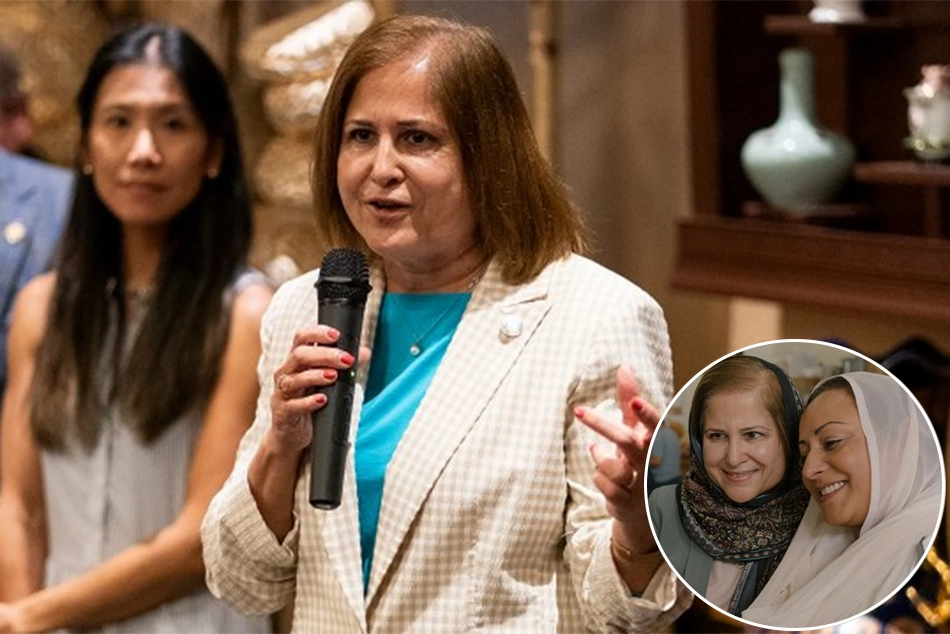
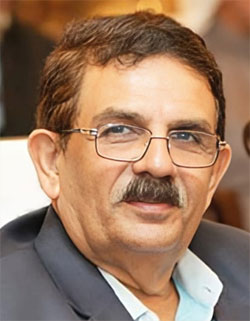
Indian-American Ghazala Hashmi, who is closely linked with the prestigious Aligarh Muslim University (AMU), has won the Virginia Lieutenant Governor 2025 Election result of which was declared on Monday.
Virginia:
Indian-American Ghazala Hashmi, who is closely linked with the prestigious Aligarh Muslim University (AMU), has won the Virginia Lieutenant Governor 2025 Election result of which was declared on Monday.
A Democrat Party candidate, Ghazala Hashmi, defeated Republican candidate and the state’s first gay statewide nominee, John Reid, to become first Muslim and first South Asian American elected as Lieutenant Governor of Virginia, a Republican stronghold.
Ghazala Hashmi polled over 55% votes as against her nearest rival John Reid who got the support of around 44.7% voters. Hashmi had earlier defeated five primary challengers in June, narrowly winning the nomination with 28% of the vote, as per the final result of the Virginia Lieutenant Governor Election 2025.
Ghazala Hashmi was the first Muslim woman to be elected to the Virginia State Senate following her stunning victory over sitting Republican Senator Republican Glen Sturtevant in the 2019 U.S. elections.
Ghazala Hashmi was born in India and emigrated to the US as a child with her family. She is also a former director of the Center for Excellence in Teaching & Learning at Reynolds Community College.
Ghazala Hashmi’s AMU Link
Ghazala Hashmi was born to Zia Hashmi and Tanveer Hashmi in Hyderabad in 1964. She spent her childhood days at her maternal grandparents’ house in Malakpet, Telangana.
She migrated to the United States with her mother and older brother as a 4-year-old child to join her father in Georgia.
Ghazala Hashmi’s mother, Tanveer Hashmi, is an alumna of Osmania University’s Women’s College in Kothi from where she did BA and B.Ed before migrating to the United States.
Ghazala’s father Professor Zia Hashmi is the alumnus of Aligarh Muslim University (AMU) from where he did MA and LLB. He completed his PhD in International Relations from University of South Carolina and soon after began his university teaching career. He retired as the Director of Centre for International Studies which he founded.
Ghazala Hashmi is married to Azhar Rafiq. The couple have two adult daughters – Yasmin and Noor – who both graduated from Chesterfield County Public Schools and the University of Virginia.
According to information available on her official website, Ghazala Hashmi is an experienced educator and an advocate of inclusive values and social justice. Her legislative priorities focus on public education, voting rights and the preservation of democracy, reproductive freedom, gun violence prevention, environmental protection, housing, and affordable healthcare access.
Hashmi spent nearly 30 years as a professor, first teaching at the University of Richmond and then at Reynolds Community College. At Reynolds Community College, Hashmi also served as the Founding Director of the Center for Excellence in Teaching and Learning (CETL).
Former Minister, MLA and BRS leader KT Ramarao has congratulated Ghazala Hashmi on her victory.
“This is massive! From Malakpet to Virginia… Congratulations to Ghazala Hashmi on becoming the first Indian-American Lieutenant Governor of Virginia. There is nothing more beautiful when democracies celebrate diversity of the world”. KTR wrote on X.
source: http://www.ummid.com / Ummid.com / Home> United States / by ummid.com news network / November 05th, 2025
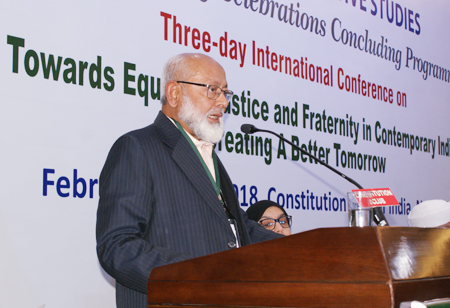
Dr. Mohammad Manzoor Alam, the founder of the Institute of Objective Studies (IOS), stands as one of the most prominent leaders of the Indian Muslim community. Recently, his biography “Dr. Manzoor Alam: Empowering the Marginalized” written by senior multilingual journalist A. U. Asif, was released at the Constitution Club of India in New Delhi. The event was attended by several distinguished personalities from politics, academia, the judiciary, and the media.
The biography reveals many unknown aspects of Dr. Manzoor Alam’s life, his contributions, and his wide national and international connections — from Dr. Manmohan Singh to Ahmed Patel, from cabinet ministers to chief ministers and governors. His close friendships extended to Malaysian Prime Minister Anwar Ibrahim and several prominent personalities across the Gulf Cooperation Council (GCC), including ministers and academicians. Among his international associates were Prof. Omar Hasan Kasule, Secretary General of the International Institute of Islamic Thought (IIIT), USA; Dr. Ahmad Muhammad Ali, the first President of the Islamic Development Bank (IDB); Dr. Ahmed Tutunji, General Secretary of the International Islamic Federation of Student Organizations (IIFSO); and Professor Ismail Raji al-Faruqi, co-founder of IIIT, Dr. Abdullah Al-Maatouq, Chairman of the International Islamic Charity Organization (IICO) Kuwait etc.
The Institute of Objective Studies: A Pioneering Muslim Think Tank
Undoubtedly, the IOS — the first Muslim-run think tank in India — has played an unparalleled role in academic and intellectual engagement. Over the past four decades, it has organized more than 1,230 conferences, seminars, symposia, and workshops on diverse issues affecting Muslims and Indian society at large. It has completed over 410 research projects and produced around 405 publications focusing on socio-economic, educational, and cultural challenges.
Through its data-based research, collection, and presentation, IOS provided valuable insights into the conditions of marginalized communities. The institution succeeded in building a network of more than 500 research scholars, social scientists, academicians, judges, lawyers, and politicians. Its studies and deliberations form a crucial body of work on the socio-economic conditions of Indian Muslims.
However, despite its achievements, the IOS has failed to evolve a sustainable mechanism for implementing the findings of its research. After nearly four decades of existence, the impact of its ideas on the ground remains negligible. The think tank, while rich in intellect and intent, fell short of translating its research into practical policies for the empowerment of marginalized communities. When one examines the ground realities, the absence of tangible transformation makes this collective effort appear more like an academic exercise than a movement for social change.
The Promise and the Reality
The Institute of Objective Studies was established in 1986 with the vision of empowering the 200 million-strong Indian Muslim community — a group that, even today, lags behind many other marginalized sections, including Dalits, on multiple socio-economic parameters. While IOS produced a wealth of research and data, it failed to create models of empowerment or tangible change on the ground.
It would be unfair to assume that Dr. Manzoor Alam’s vision was limited to research and conferences alone. He unsuccessfully attempted to extend his work into education, media, and healthcare. Unfortunately, many of those initiatives remained unrealized.
Dr. Alam had conceived numerous projects, including a dream university and television channels Al-Hind and Falak TV — both designed to serve as platforms for education and social awareness. He presented these projects at several events in India and abroad, yet they never materialized beyond the planning stage. Why these ideas remained confined to files is a question that only Dr. Alam himself can answer.
Dr. Manzoor Alam’s Tryst with Education and Development
In the 1990s, Dr. Alam invited Mohammad Yunus Saleem, then Governor of Bihar, to lay the foundation stone of an educational institution in his native village, Ranipur, in Madhubani district. Decades later, that very school continues to function from a thatched hut.
Similarly, he invited another Governor, Akhlaqur Rahman Kidwai, to lay the foundation of a hospital in the same village. However, there is no trace of that foundation today, and the land has reverted to agriculture. It is said that even a few delegations of Arab dignitaries visited the site to explore funding possibilities for these projects. Yet, despite such visits and promises, Ranipur remains a mirror reflecting the unfulfilled dreams of Dr. Alam’s vision for grassroots empowerment.
Akhlaq Ur Rehman Kidwai, then Governor of Bihar, during his visit to Ranipur — the native village of Dr. Manzoor Alam — for the foundation stone-laying ceremony of a school.
The Unfulfilled Dream of an Islamic University in India
Following the model of the International Islamic University Malaysia (IIUM), the International Islamic University Islamabad, and the International Islamic University Dhaka, it is said that funds were once earmarked for a similar university in India. The responsibility for establishing it reportedly rested with Dr. Manzoor Alam. A 25 acres of land were even purchased in Palwal district, Haryana, under the Taawun Trust which was formed in 1980s for the same purpose. However, the project never moved forward, and its current status remains unknown.
Under the same trust, a clinic in Zakir Nagar, New Delhi, was inaugurated by the then Chief Minister, Sheila Dikshit. But today, little remains of that initiative — its fate is known only to its former manager, Mohammad Alam, son of Dr Manzoor Alam. Likewise, a valuable piece of land (D-16 worth over 10 crores) in Abul Fazal Enclave, earmarked for the Taawun Trust office, was later developed into a five-storey building. The ownership and purpose of this property are known only to Dr. Alam and other trustees.
Other Institutions and Initiatives
Along with the late Qazi Mujahidul Islam Qasmi, Dr. Manzoor Alam co-founded several organizations, including the All India Milli Council, Islamic Fiqh Academy (IFA), Qazi Publications, Universal Peace Foundation (UPF), Featured and News Analysis (FANA), United Mass Media Association (UMMA), Indo-Arab Economic Cooperation Forum, and the Taawun Trust. Except for IOS and IFA, most of these institutions are now nearly defunct.
In earlier years, FANA and UMMA operated from 166 Zakir Bagh but were later shifted to the IFA premises at Zakir Nagar. The present status of the Zakir Bagh flat remains unclear. Similarly, behind the IOS office once stood the premises of the Universal Peace Foundation (UPF), which was closed many years ago.
A Malaysian organization once sponsored Bharat Offset Press, located at 2035 Mumtaz Building, Gali Kasim Jan, Ballimaran, Delhi. The press was set up under Dr. Manzoor Alam’s patronage to provide financial support to widows and orphans. One can only hope it continues to serve that noble purpose today.
Interestingly, most of the important publications of the Institute of Objective Studies are now being published and marketed by Genuine Publications and Media Pvt. Ltd., where Dr. Alam’s younger son, Ibrahim Alam, serves as the Executive Director.
Now, his elder son Mohammad Alam has taken over as the General Secretary of the IOS. It is hoped that the unfulfilled dreams of Dr. Manzoor Alam will be realized and a university will be established on the proposed land in Palwal
The Unasked Questions
A serious question arises: Why has no one from among Dr. Manzoor Alam’s large circle of associates — including intellectuals, professors, writers, and bureaucrats — ever raised concerns or sought accountability? Why has there been such silence around the unrealized projects and abandoned initiatives?
Dr. Alam is a man of extraordinary connections and resources, with access to national and international leaders, institutions, and philanthropists. Yet, despite such privilege and goodwill, he could not establish even a modest school or clinic in his own native village — a village that once saw two governors visit to inaugurate his projects.
Dr. Manzoor Alam’s journey represents a paradox: a leader of vision and intellect who created one of India’s most influential Muslim think tanks, yet whose dreams for practical empowerment of the marginalized remain largely unrealized. His ideas, no doubt, inspired a generation of scholars and activists. But without concrete implementation, the towering edifice of research and conferences risks standing as a monument to missed opportunities.
source: http://www.muslimmirror.com / Muslim Mirror / Home> Exclusive Reports / by Syed Zubair Ahmad / October 30th, 2025
The Academic Insights Magazine, a prominent Indian monthly publication, has selected Mahbubul Hoque, Honourable Chancellor of the University of Science and Technology Meghalaya (USTM), as one of India’s 25 Most Inspiring Education Leaders.
This recognition celebrates the transformative changes Chancellor Hoque has brought to the educational landscape of North East India while empowering youth across the region and beyond. Responding to the honour, Chancellor Hoque said, “I deeply appreciate The Academic Insight’s honourable recognition. I am a great admirer of this monthly powerhouse. My motto to move forward positively in a competitive world is simple — keep trying, don’t look back; if you pick up ten things and only four work, move forward with them, and success will eventually materialise.”
Over the past 23 years, Chancellor Mahbubul Hoque has built a robust educational ecosystem under the Education Research and Development Foundation (ERDF), establishing fourteen institutions that span from kindergarten to PhD levels. What began with just four students has now grown to over 10,000 learners, making ERDF one of the most impactful educational networks in the region.
The honour goes beyond individual achievement — it signifies the North East’s growing prominence on India’s national education map and stands as a testament to Hoque’s vision of perseverance, inclusivity, and people-centric leadership.
The University of Science and Technology Meghalaya, the first state private university dedicated to science and technology in the North East, earned an ‘A’ Grade accreditation from NAAC in its very first assessment cycle in 2021. It continues to hold a top position nationally, being the only private university from the North East to feature in the NIRF Rankings for four consecutive years, including 2025.
The Academic Insights, launched over a decade ago, today guides more than 450,000 readers monthly through the evolving landscape of school and higher education across India.
source: http://www.muslimmirror.com / Muslim Mirror / Home> Education> Positive Story / by Muslim Mirror Desk / November 02nd, 2025
The Bearys Welfare Association, Bangalore, has announced its newly elected office bearers for the upcoming term, following a unanimous selection process. The appointments aim to strengthen the association’s ongoing welfare initiatives and community engagement activities.
Shamsudhin Adoor has been unanimously selected as the President, while Umar Haji B.M will serve as the Vice President. Waaheid Kayrkhan has been appointed as the General Secretary, with Mohammed Tasleel taking charge as the Joint Secretary. Mohammed Ashraf Kuchoor will serve as the Treasurer.
Ten individuals have been named as Executive Committee Members. They are: Ahmed Bava Bajal, Yusuf Perody, B.M. Haneef, Yusuf Mani, Abdul Khader Mustaq, Athuru Chaiyabba, Ashraf Kodi, Tanveer Ahmed, Mohammed Haneif, and Junaid P.K. The outgoing secretary, Mohammed Shareef T.K, will continue to serve as the Ex officio member of the committee.
Additionally, four senior members have been co-opted into the Executive Committee. These include G.A. Bawa, Ibrahim Goonadka, Siddiq Beary, and Hamzathullah Kuvenda.
In a structural update, the association has also incorporated a Governing Council into its bylaws. This council is intended to offer guidance and ensure the smooth functioning of the association. The members of the newly formed Governing Council are Syed Mohamed Beary, B.M. Farookh, Umar Teekay, Iqbal Ahmed, and Dr. Maqsood Ahmed.
source: http://www.english.varthabharati.in / Vartha Bharati / Home> Karnataka / by Vartha Bharati / August 03rd, 2025
The government of Karnataka’s department of Kannada and culture has announced the Karnataka Rajyotsava Awards for 2025–26, naming Zakaria Jokatte, founder of Al Muzain Company in Jubail, Saudi Arabia, and president of Mangaluru-based M Friends Charitable Trust, as the recipient in the Non-resident Kannadiga category.
Born on May 10, 1958, at Thokur in Jokatte, Zakaria is the eldest of five children of Haji B Shekuni and Katheejamma of Bajpeguttu. His journey from humble beginnings to international recognition is one of perseverance and determination. After discontinuing his schooling, he undertook various odd jobs — selling jaggery on streets, working as a welder, and even as a labourer carrying cement up to the 28th floor at construction sites abroad.
His years of hard work and sacrifice bore fruit when, in 2008, along with his eldest son Zaheer, he established Al Muzain Manpower Company in Jubail, Saudi Arabia, starting with just three employees. Through dedication and leadership, the company has now grown to employ 8,000 workers, with a goal of creating 10,000 jobs by 2027.
Following the success of Al Muzain, Zakaria expanded his entrepreneurial ventures, founding several other companies in Saudi Arabia, Bahrain, the UAE, Oman, Qatar, Kuwait, London, and India. He has also forayed into education by establishing an international institution in Al Khobar in collaboration with Yenepoya Group, and plans to set up a hospital and medical college in the near future. His upcoming projects include AI innovation initiatives and development ventures for the coastal region of Karnataka.
Currently residing in Bolar, Mangaluru, Zakaria lives with his wife Hazra Zakaria. His three sons — Zaheer, Nazir, and Zahid — are engaged in various business ventures abroad.
Zakaria serves as the chairman of M Friends Charitable Trust, Hidaya Foundation, and Zara Family Charity Trust. He is also associated as director, advisor, and sponsor with several organisations across Karnataka, working tirelessly for the welfare of thousands of underprivileged and needy individuals.
In recognition of his philanthropic contributions and entrepreneurial achievements, Zakaria Jokatte has received numerous national and international honours. His selection for the Karnataka Rajyotsava Award stands as a testament to his service, dedication, and pride as a global Kannadiga.
source: http://www.daijiworld.com / Daijiworld.com / Home> Karnataka / by Daijiworld Media Network – Mangaluru / October 30th, 2025
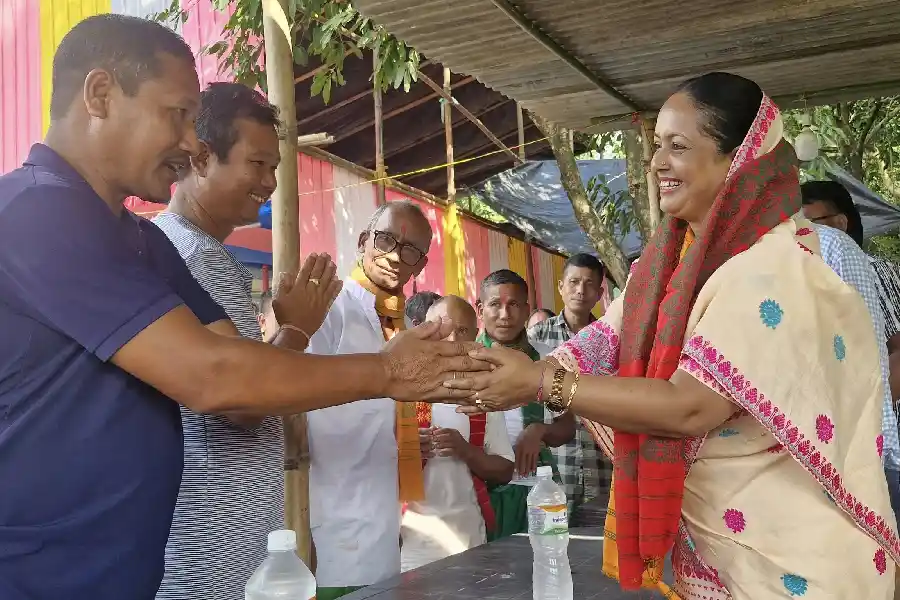
For the first time, the Bodoland Territorial Council (BTC), led by Bodoland People’s Front (BPF) chief Hagrama Mohilary, has a Muslim woman as an elected executive member. As Muslims in BTAD (Bodoland Territorial Autonomous Districts) had been feeling marginalised for a long time, a Muslim woman’s election to a council is significant and historic.
BTC is the governing autonomous council of BTAD, aka BTR (Bodoland Territorial Region), comprising Kokrajhar, Chirang, Baksa, Udalguri and Tamulpur of Assam as districts. It was formed following the peace treaty with the Bodoland Liberation Front in February 2003. BTAD covers an area of over 9000 square kilometres and is predominantly inhabited by the Bodo people and other tribal communities of Assam.
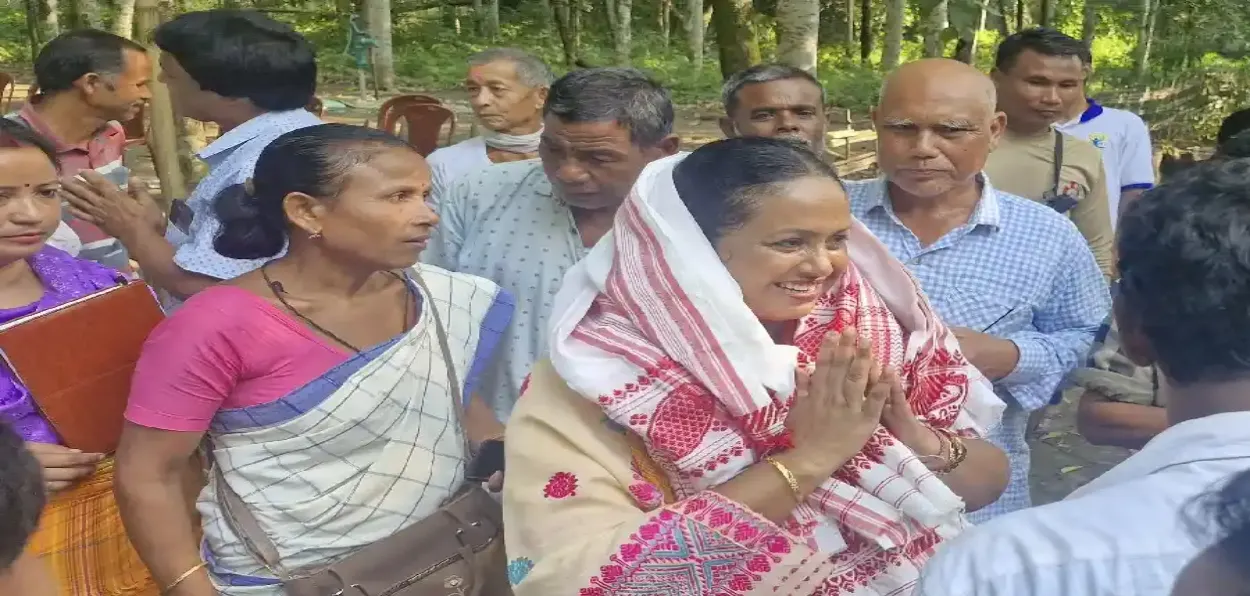
Begum Akhtara Ahmed has been elected from Mathanguri constituency of the BTC and inducted into Mohilary’s cabinet. She has been bestowed with the responsibility of the Public Health Engineering (PHE) Department. Regional political party BPF won the single largest party majority in the BTC elections held in September 2025 with 28 seats.
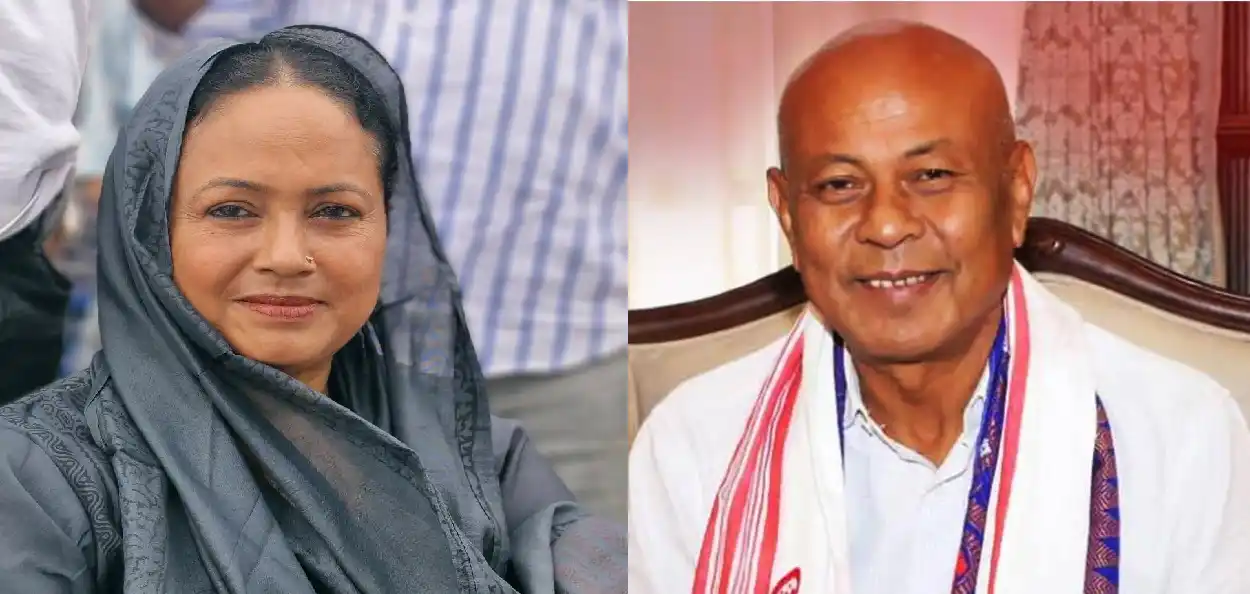
Begum Akhtara Ahmed and Hagrama Mohilary
Incumbent UPPL won seven seats and the BJP won five seats in the 40-seat council. The BTC was formed in 2003, and Hagrama Mohilary has been in power for the past five years.
Begum Akhtara Ahmed of the BTC had no aim or desire to be in politics as she wanted to be a litterateur. But destiny has another script for her life.
Begum Akhtara was born in the Kalgachia area of Barpeta district. She got her primary education in Kalgachia. She was married while studying in Class VII.
Her husband, Ibrahim Ali Molla, recently retired as a higher secondary school teacher. Begum Akhtara could pursue her education. Her first child was born while she was in Class X. She passed her matriculation examination under such circumstances.
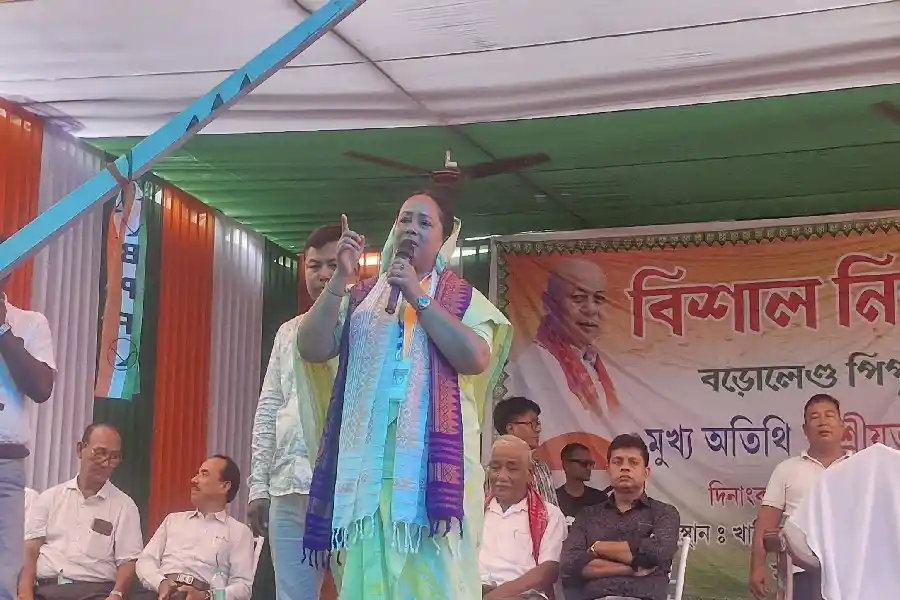
Begum Akhtara Ahmed addressing a political rally
Her second child was born while she was in Class XII. Begum Akhtara continued her education and completed her postgraduate degree from Gauhati University in 2003.
She joined Langla College in the Bangaigaon district as a part-time lecturer, but quit soon. She got involved in politics. She joined the Congress and was appointed as the organising secretary of the Barpeta District Women’s Congress.
Since her matrimonial home is in Lawahur village of Mathanguri constituency in Baksa district, she changed her address and became the president of the Baksa District Women’s Congress. She joined the BPF in 2004.
Begum Akhtara Ahmed with Chief Minister Himanta Biswa Sarma
This is where her new political journey and new life of conflicts begin. Party chief Mohilary formed the women’s wing of the BPF, and she was appointed its president.
After three years as the women’s BPF president, she was appointed as the party’s organising secretary by party president Hagrama Mohilary.
She contested the 2020 BTC elections for the first time and was defeated by the BJP’s Gautam Das in the Mathanguri constituency. This time, however, Begum Akhtara contested from the same constituency for the second time and defeated the same opponent.
Begum Akhtara Ahmed was attacked and her house was torched in the once-violent BTC. She was even threatened and asked to stay away from politics in the BTC. Once, while she was busy with a political meeting, her car was set on fire at the venue, and she barely survived.
Begum Akhtara Ahmed with activists of her party at a rally
Begum Akhtara Ahmed said three of her cars were set on fire in 2012. It may be mentioned that several incidents of attacks on minorities took place in the BTC in 2012. Most of the attacks took place in the Baksa district, from where many minorities were forced to flee their homes. Several people were even brutally murdered.
However, all this could not distract her from her goals and objectives.
Praising her leader, Hagrama Mohilary, Begum Akhtar said he wants the Bodo people to move forward along with all ethnic groups. So she is happy to work under the leadership of Mohilary.
According to Begum Akhtara, BTC is a small place. Therefore, it is necessary to rely on the governments at the Centre and in the state to work for its development. Otherwise, developmental work may be interrupted. “We don’t have to look at which party’s government is at the Centre or in the State, we have to work with that government in coordination,” she said.
source: http://www.awazthevoice.in / Awaz, The Voice / Home> Story / by Priya Sarma, Guwahati / October 27th, 2025
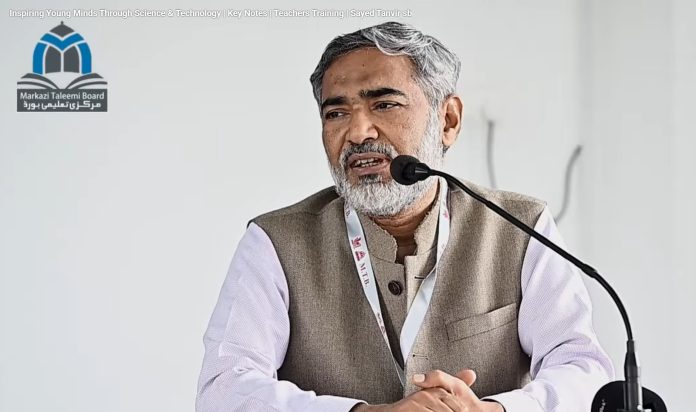
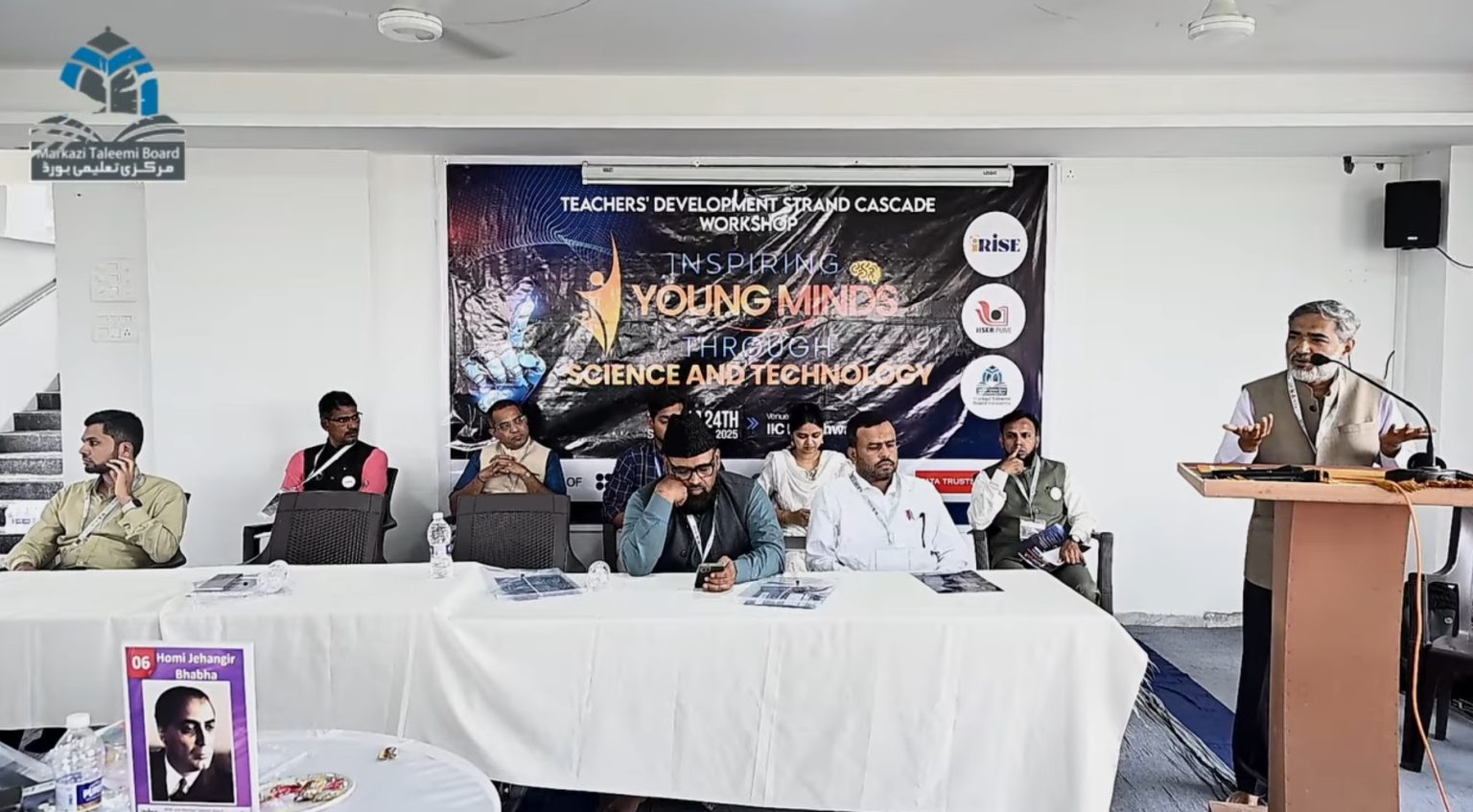
Syed Tanveer, Secretary of the Markazi Taleemi Board (MTB), urged teachers to transform science and mathematics education during his keynote address at the Teachers Development Strand Cascade Workshop. The event was organised by Markazi Taleemi Board Maharashtra in partnership with IISER Pune. The session focused on methods to align classroom practice with the National Education Policy 2020.
Syed Tanveer began by welcoming the IISER Pune team and thanking the organisers for arranging training across Maharashtra and other states. He told participants that the workshop aims to shift teaching from rote memorisation to active, hands-on learning. He said teachers must make classrooms places where students observe, experiment, and think.
He pointed out a common issue: society often dislikes maths teachers, and science teachers face similar bias. Many students avoid science because it is considered difficult. Tanveer argued that this perception arises from how teachers teach. “We have treated maths and science as fact-transfer subjects,” he said, adding that this has made learning mechanical instead of meaningful.
Syed Tanveer explained Bloom’s taxonomy as a guide to moving students from lower-order to higher-order thinking. He described six cognitive levels. “Most of our classrooms are stuck at the first stage—knowing or memorising,” he said. The next stage is understanding, achieved when students learn by hearing, seeing, and doing. The workshop, he added, would train teachers to conduct hands-on experiments that encourage conceptual understanding.
The third level is applying. Tanveer urged teachers to help students connect formulas and scientific principles to real-life applications. The next levels—analysis and evaluation—involve breaking concepts into smaller parts and examining their relationships. The final stage is creation, where learning leads to innovation. “Education is not about memorising facts. It is about creating something new,” he said.
Giving examples, Syed Tanveer said a short experiment could teach photosynthesis better than hours of memorisation. A paper plane can explain mechanics, and observing local water pollution can connect science with social responsibility. He praised simple, observation-based teaching models such as those promoted by educator Arvind Gupta and scientists like C.V. Raman.
Syed Tanveer also highlighted the moral role of science. “Scientific temperament must not remain limited to exams,” he said. “It should guide ethics and social responsibility.” He explained that true education transforms human beings into moral, thoughtful individuals, not mere human resources for the market.
He concluded with five key tasks for educators: raise awareness of civic responsibility, reject divisive politics, support independent educational institutions, revive critical thinking in academia, and promote debate and dialogue among youth and women.
“Do not make students pen drives filled with memorised data,” Tanveer said. “Make them thinkers, creators, and problem-solvers.” He prayed for the success of the workshop and called on teachers to inspire young minds through curiosity and experimentation.
source: http://www.radiancenews.com / Radiance News / Home> Education> Latest News> Report / by Radiance News Bureau / October 16th, 2025
One of the oldest places in Uttar Pradesh is Sambhal in District Moradabad, has a long list of people in its history who confronted with British and posed great resistance with their historic acts of gallantry. Abdul Qaiyyum, Lala Prem Pal, Qari Abdul Haq, Maqsood Turki, Chaudhary Riyasat Ali, Lala Chandulal, Lala Roop Kishor, Maulvi Noorul Hasan, Sheikh Abdul Raheem, Chetan Swaroop, Radhey Lal Poddar, Munshi Moinuddin, Ml. Sultan Ahmad,Maulvi Abdul Waheed are prominent among such people.
The exact date of birth of Maulana Ismail Sambhli is not known however, he might have taken birth in 1899 at Mohallah Deepa Sarai. He belonged to the Sarwar Waley family of Turk community. His father, Munshi Kifayatullah was considered among the educated people of the area and was famous with the nickname ‘Munshiji’. His grandfather’s name was Sarwar Husain who was a native to village Mundha in J. P. Nagar. Later he shifted to Sambhal. His family surname, Sarwar Waley was due to his grandfather’s name.
He received primary education at Madrasatul Mohammadia, Deepa Sarai and was admitted to class VI to continue further education in English against his mother’s wish. She wanted him to get Arabic education and finally her will prevailed. Meanwhile, his father passed away and he was sent to his elder brother at Bahawalpur where he had the honour to receive education from Maulana Farooq Ahmad, Sheikhul Hadees and Head, Jamia Usmania.
Maulana Farooq Ahmad was the disciple of Shaikhul Hind Maulana Mahmoodul Hasan and relative of Maulana Mansoor Ansari who was put on exile on the pretext of abetting and participating in the freedom movement. He was extremely unhappy with British and a staunch supporter of freedom struggle. It was his company that helped instill a sense of nationalism in the heart of Maulana Ismail Sambhli and inspired him to participate in the freedom struggle.
After completing education at Bahawalpur, Maulana Ismail Sambhli returned back to his native place, Sambhal and continued with his education at Madrasa Sirajul Uloom. In the meantime the barbaric incident of Jalianwala Bagh took place that put the whole of India on fire. A protest strike was observed in Sambhal as well and a mass gathering of all communities was organized at the gardens of Gul Chhatar. Maulana Ismail Sambhli delivered a very inspiring lecture at the mass convention. Maulana was the youngest among all orators yet his oration impressed the public most and thus his national and political life began. Maulana gained popularity as Raees-ul Muqarrareen (master orator).
When the British defeated Turkey, the resulting loss and the sense of defeat made the Muslims furious. On November 22, 1919 the Khilafat Committee was founded and the Jamiatul Ulema-e-Hind took birth in Delhi. The Khilafat Movement was pronounced through out the country. Just months after the sad demise of Sheikhul Hind Maulana Mahmoodul Hasan, Maulana Ismail Sambhli took admission in Darul Uloom Deoband where his nationalist ideas and concepts received firmness. He started partaking in the nationalist activities with much vigour and zeal and despite him being a student he was arrested on February 22, 1921 for his radical ideas and inflammatory speeches. After two – three days his case was heard at Moradabad Jail and he was sentenced to two years’ rigorous imprisonment. Then the political detainees were generally subject to extreme brutalities. Maulana and his companions borne all types of atrocities. They were put under penal servitude, were imprisoned in small cages and were compelled to sleep handcuffed. Precisely, they were put to all types of brutalities but did not tender apology. Finally, he was released after the term of his punishment was over. Back to home he concentrated on completing his education. After completing courses at Darul Uloom Deoband he joined Jamia Qasmia Madrasa Shahi, Moradabad as a teacher in later 1924. The country’s condition had changed by the time, Khilafat had come to an end, there were communal disturbances through out the country and Congress had suspended its Civil Disobedience Movement. Mahatma Gandhi was imprisoned for six years. People were feeling let down but Maulana Sambhali kept moving ahead with full confidence.
In 1930 when Congress proclaimed for complete freedom. On March 13 Mahatma Gandhi commenced his famous Dandi march in violation of the laws of salt. A Civil Disobedience Movement was also commenced.
The Britishers put the nationalist people to extreme brutalities. They were mercilessly beaten, shot by guns and imprisoned. The Jamiatul Ulema sense the need of the hour and vowed to support Congress in its Civil Disobedience Movement. It established a Daira-e-Harabia (Circle of War). Mufti Kifayatullah, Maulana Ahmad Saeed, Maulana Husain Ahmad and Maulana Mubarak Husain Sambhli were arrested one by one. Maulana Mohammad Ismail Sambhli was the seventh in this order to be arrested and was sentenced to six months’ rigorous imprisonment.
When the time came for Provincial Assembly elections, the Muslim League Parliamentary Board came to existence. On behalf of Maulana Ahmad Saeed, Nazim of Jamiatul Ulema Mohammad Ali Jinnah was given the right to nominate members to the parliamentary board. Mr. Jinnah nominated 22 members from 56 out of which 20 were of Jamiatul Ulema and two of Ahrar. The Provincial Boards were under the control of Central Board. Maulana Ismail Sambhli was admitted to UP Board. He was also declared candidate from Sambhal of Moradabad and Tehsil Bilari constituencies. Those days the land lords, nawabs, kings and English title holders enjoyed great immunity and British supported people were considered prominent in the society. The nationalists participated in the election to defeat the pro-British candidates.
In 1939, the war in Europe started and the Indian government without taking the members in confidence sent the Indian army to war. The Congress opposed the move and boycotted the Assembly. It convened its session at Ramgarh on March 20-21, 1940 under the president ship of Maulana Abul Kalam Azad. The Civil Disobedience Movement was pronounced in the session and finally in the last of 1940 the non-violent civil disobedience movement commenced. A programme was chalked out for individual speeches. Maulana Ismail Sambhli was arrested in Moradabad during the movement and was sentenced for nine months’ imprisonment. In August 1942, Congress gave the famous ‘Leave India’ slogan. Mahatma Gandhi was arrested and sent to Sabarmati Jail. There were arrests every where in the country. Maulana Ismail Sambhli was again arrested in Sambhal and was put under house arrest at Moradabad Jail for indefinite period. Later he was released after one year.
In 1946, when elections were declared, the tussle between Congress and Muslim League was at its peak. Maulana Sambhli was elected, remained MLA till 1952.
Maulana Ismail Sambhli did not participate in the 1952 elections and stationed at Delhi as the Nazim-e-Ala of Jamiatul Ulema. He served Jamiat for four years and remained busy in social and political affairs. In 1957 he resigned from Jamiat and returned to Sambhal.
In 1962, he was appointed as Sheikhul Hadees at Madrasa Imdadia, Moradabad and served there for about three years.. In 1974, he shunned the idea of service and returned back to Sambhal and engaged himself in the literary work only to complete the half hatched books. “Maqalat-e-Tasawwuf”, “Akhbarul Tanzeel” (the Quranic prophesies) and “Taquleed-e-Aimma” are some important books authored by him.
Meanwhile he went to Mawana, Meerut and taught Quran’s translation for eight months. In his last age, he spent a few Ramadhan months in Bombay delivering lectures on the translation and analysis of Quran every night after Taraweeh. He fell sick in the last Ramadhan of his life yet, and after returning to Sambhal he breathed his last on 23rd November 1975 after one and half months’ prolonged illness. (deoband.net)
source: http://www.milligazette.com / The Milli Gazette / Home> News> Family & Kids / by Mohammad Najeeb Qasmi / May 22nd, 2016
The residents of these slums are prone to infection. Lack of water could cause dehydration in residents. Hence, we took up this initiative.”
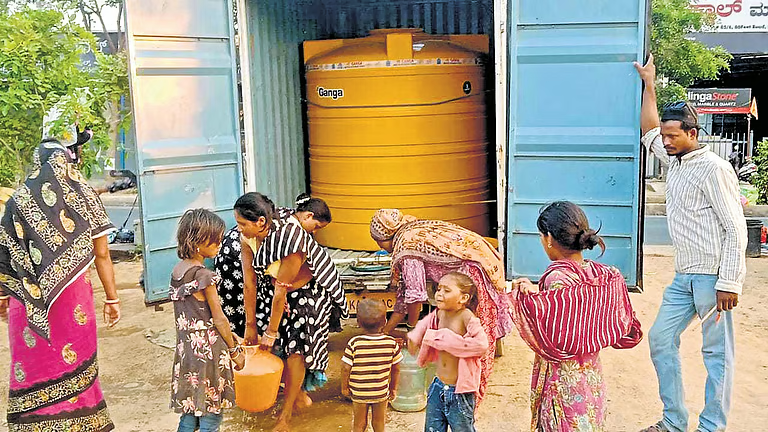
‘Active Bengaluru’ supplies water to a slum in North Bengaluru. It has come as a saviour to the residents of several slums in the city Photo | Express
Bengaluru :
‘Active Bengaluru’, a non-profit organisation, has come as a saviour to the residents of several slums in the city this summer. The organisation is supplying water to these residents to tide over this harsh summer.
‘Active Bengaluru’ is supplying 50,000 litres of water at the doorsteps of the residents of slums in North Bengaluru, including in areas like Thanisandra, Hegde Nagar, and Saraipalya, every alternate day.
Like other parts of the city, close to 6,000 public borewells in these areas have gone dry this year. Members of ‘Active Bengaluru’ supply water in four water tanks (2,500-litre capacity each) mounted on mini-tempos.
Speaking to The New Indian Express, Tauseef Ahmed, a volunteer with ‘Active Bengaluru’, said, “Under ‘Project Zam Zam’, the slum population in North Bengaluru is being supplied water free of charge. The project began in March, and till date, over 12 lakh litres of borewell water has been supplied. The residents of these slums are prone to infection. Lack of water could cause dehydration in residents. Hence, we took up this initiative.”
“The water is collected from good Samaritans from their borewells, and the same is then supplied to the slums. The residents have been told to call the emergency number of the NGO to place a request. Based on the number of calls received from an area, a vehicle is sent. In each tank, about four taps are fixed, and residents are asked to come in a queue and collect water,” said another member of ‘Active Bengaluru’.
“The NGO mostly deals with policy issues, women’s empowerment, health, and education. Shortage of water directly impacts the health and education of children. We decided to do our bit to address the same and joined hands to supply water to the needy,” said another member of the organisation.
source: http://www.newindianexpress.com / The New Indian Express / Home> Karnataka / by Mohammed Yacoob / April 23rd, 2024
It was a hot, restless afternoon in New Delhi – the kind where the sun presses down with such fury that even the breeze seems to hide. The air was thick with chants, placards, and purpose. Students from across the capital’s universities had gathered in protest – a voice of defiance against the rising wave of mob lynchings sweeping through India, backed by extremist ideologies. Amid the sea of young faces, I noticed a small group that stood out. They were not university students in jeans and t-shirts, but madrasa students in simple white kurtas and skullcaps, holding banners of peace and justice.
They had come all the way from Deoband, a quiet town that has long been a lighthouse of Islamic learning, to stand shoulder to shoulder with victims’ families. Among them was a young scholar whose calm presence carried a certain gravity: Moulana Mehdi Hasan Aini Qasmi.
Our meeting was brief, just a few words exchanged, a handshake perhaps, but something about him stayed with me. I didn’t know then that this quiet madrasa graduate would one day become the face of a remarkable educational revolution in India.
The Seeds of Brotherhood
Two years later, in 2018, the Students Islamic Organisation of India (SIO) held its grand All India Conference in New Delhi, themed “Reclaiming Dignity | Designing the Future.” Among the audience of fiery youth and intellectuals, Mehdi Hasan was invited as a representative of madrasa students – being the President of the Abna-e-Madaris (Old Boys’ Association of Deoband).
When he spoke, his words carried the depth of tradition and the urgency of modern times. After the session, we found ourselves in a long conversation about faith, education, and the future of Muslim youth. That day, a brotherhood was born – one that would travel far beyond Delhi’s conference halls.
Soon, he invited me to Deoband. What began as a visit turned into a revelation. We walked through the majestic gates of Darul Uloom Deoband, met students immersed in their studies, and discussed the evolving role of Islamic education in a rapidly changing India. It was there I saw the spark – Mehdi’s vision was clear: to bridge the gap between traditional Islamic scholarship and the demands of modern society.
From Streets to Seminars
Between 2019 and 2020, our journey turned into a mission. Together, we travelled across India – from the quiet corners of Tripura to the bustling lanes of Telangana – addressing crowds, organising awareness drives, and speaking against hate, Islamophobia, and discrimination.
Then came the storm – COVID-19. India went silent. The streets emptied. Institutions shut their doors. But we refused to stop. Our activism simply changed form. While the world was locked down, we were reaching out – distributing relief, helping stranded students, and connecting youth through virtual spaces.
One late-night discussion during those months became the turning point.
“If people have time,” I said thoughtfully, “why can’t we bring madrasa education online? Why can’t we empower teachers who have no income now? Why can’t we teach our youth skills to survive?”
That one why became a revolution.
Over the next two years, the spark spread like wildfire. Under Mehdi’s leadership, IIAD organised over ten national workshops across India, reaching thousands of students from Aurangabad to Delhi. These workshops covered topics far beyond theology – from Education to Entrepreneurship and Islamic Thought to Social Leadership.
One such event, the Aurangabad Education Expo, became a milestone in connecting madrasa students with mainstream educational opportunities. Through these sessions, IIAD began to carve a new narrative for Islamic learning – one that embraced progress without compromising on principles.
The Birth of an Idea
Our first online programme, “Education to Entrepreneurship,” was meant to be a small initiative – a bridge between learning and livelihood. But the response was beyond imagination. Hundreds of madrasa students and teachers joined from every corner of India.
We realised we had touched a nerve – there was a hunger for knowledge, a thirst for relevance. In 2022, we organised an offline workshop in Bidar at Shaheen Group of Institutions for madrasa students. To our surprise, several attendees were already running small businesses – many of whom had attended our first online sessions back in 2020.
One night, Moulana Mehdi and I sat in deep conversation till Fajr. The sky turned from ink to gold as we reached a decision that would change everything: to start a full-fledged online institute for Islamic education and leadership and the name finalised was “India Islamic Academy Deoband” and now it is a brand in Madaris Circles.
But Mehdi had already taken the first step. Before our official launch, he had begun teaching small groups online – offering a Basic Islamic Foundation Course (3 months) and an Advanced Islamic Studies Course (6 months). Within weeks, the response exploded. Students from across India – and even abroad – joined.
And then, in 2021, the dream took shape.
Multi-Dimensional Mehdi
Many madrasa teachers benefited from IIAD’s programmes and became self-sustained, empowered to teach and earn through digital platforms. Watching this transformation unfold, I became deeply impressed by Moulana Mehdi Hasan’s multifaceted personality.
As a student, he had marched with his friends in protests; later, he organised them. As a social activist, he raised his voice fearlessly and even faced police cases. Through his advocacy work within Muslim organisations, he united madrasa youth under a shared purpose – to stand up for justice, particularly during the anti-CAA movement, where he became a leading voice representing madrasa student unions.
During the pandemic, the COVID-19 crisis his alumni group at Darul Uloom Deoband established a help-desk that handled thousands of calls, distributed oxygen cylinders and fought misinformation – reinforcing his role as a frontline community leader, he turned compassion into action as a social worker, extending relief to the needy.
As a writer and journalist, he penned articles and books that shaped public discourse in Urdu media. And as an entrepreneur, he became the very example he urged others to follow – transforming his vision for empowering madrasa students into a thriving digital institution.
The Rise of IIAD – India Islamic Academy Deoband
The official launch of India Islamic Academy Deoband (IIAD) was not just the founding of an institution; it was the dawn of a new era. For the first time, a madrasa-based initiative had embraced technology to take classical Islamic education to every home.
The story of IIAD began in 2017, when a vision was realised – to bridge authentic Islamic scholarship with modern accessibility. What started as a modest initiative soon blossomed into a movement that redefined faith-based learning for the digital era.
By 2019, IIAD proudly celebrated the first wave of scholars graduating from its inaugural Aalim programme, ready to serve their communities with knowledge and integrity. The academy’s turning point came in 2021, when it launched its Global Digital Campus – a state-of-the-art online learning platform that connected students and scholars across continents.
And by 2024, that vision had grown into a vibrant global community – a growing Ummah of over 5,000 students from diverse countries, all united by the pursuit of knowledge and purpose.
The journey of IIAD stands as a testament to how faith, when paired with foresight and innovation, can transform education and empower generations.
What began with few offline and online courses soon expanded into a vast ecosystem. Today, IIAD offers 15 specialised courses – blending Islamic scholarship with modern subjects like media, leadership, and entrepreneurship. The courses are taught in Urdu and English.
From the official website, one can see how IIAD evolved with a clear mission – to empower the next generation of Muslim scholars, entrepreneurs, and thought leaders. The vision was simple yet revolutionary: “To make Islamic learning accessible, practical, and globally relevant.”
But Mehdi’s ambition didn’t stop there.
The Expanding Vision
He founded the Abna-e-Madaris Educational Trust, a platform that supports social and educational initiatives across India. Through it, he organised relief programmes, training sessions, and mentorship circles for youth.
He also launched Deoband Dastak, an online Urdu news portal that amplifies the voices of the unheard and highlights stories of reform within the madrasa ecosystem. His pen became his sword – through articles, opinions, and books – shaping discourse and reclaiming narratives.
Now, as IIAD moves forward, the academy is preparing to launch a course on Artificial Intelligence for Madrasa Students and a Crash Course on Entrepreneurship, opening doors that were once unimaginable in traditional settings.
To further strengthen academic and intellectual pursuits, Moulana Mehdi established another pioneering platform – the Deoband Educational and Research Foundation (DERF). The foundation aims to promote rigorous scholarship, interfaith dialogue, and academic research rooted in Islamic tradition while engaging contemporary challenges. Through DERF, Mehdi envisions nurturing a new generation of Muslim researchers who can think critically, write powerfully, and contribute meaningfully to global discourse.
A Bridge Between Two Worlds
What makes Moulana Mehdi Hasan Aini Qasmi truly remarkable is not merely what he built – but what he bridged.
For centuries, madrasa and modern education were seen as parallel lines – never meeting. But through his courage, vision, and relentless work, Mehdi made them intersect. He became the bridge, connecting heritage with progress, theology with technology, tradition with transformation.
From joining protests as a young activist to leading educational innovation as an entrepreneur, his journey is not just a personal success story; it is a blueprint for a generation.
Today, when I see students from humble madrasa backgrounds speaking about startups, media literacy, and AI ethics, I see his reflection in every one of them.
He has proven that change doesn’t always come from power or privilege. Sometimes, it begins with a simple idea shared between two friends – on a sleepless night – under a sky just beginning to brighten.
Humanitarian Impact
Beyond education and activism, Mehdi Hasan’s compassion flows into the heart of social service. Through his initiatives and trusts, hundreds of struggling families found hope. 300 families had their kitchens lit through ration kits during Ramadan-ul-Mubarak; 100 families were gifted festive joy on Eid al-Fitr; and 50 Imams and Mu’azzins were honoured with Eid gifts. During Eid al-Adha, 200 households were provided Qurbani meat and essentials, while 15 destitute women received full maternity care with dignity.
Each month, 15 orphaned madrasa students are sponsored, 50 talented youth receive scholarships, and teachers of five Makatib-e-Qurani are paid regular salaries, ensuring that the flame of knowledge never dims.
Even during disasters, his team reached out, sending 100 blankets and supplies to flood victims in Punjab, a testament to his unshakeable belief that service to humanity is service to faith.
And that, perhaps, is the story of Moulana Mehdi Hasan Aini Qasmi – a madrasa graduate who dreamed beyond walls, taught beyond classrooms, and built bridges where there were once only divides.
source: http://www.radiancenews.com / Radiance News / Home> Entrepreneurship> Features> Focus / by Syed Azharuddin / October 23rd, 2025