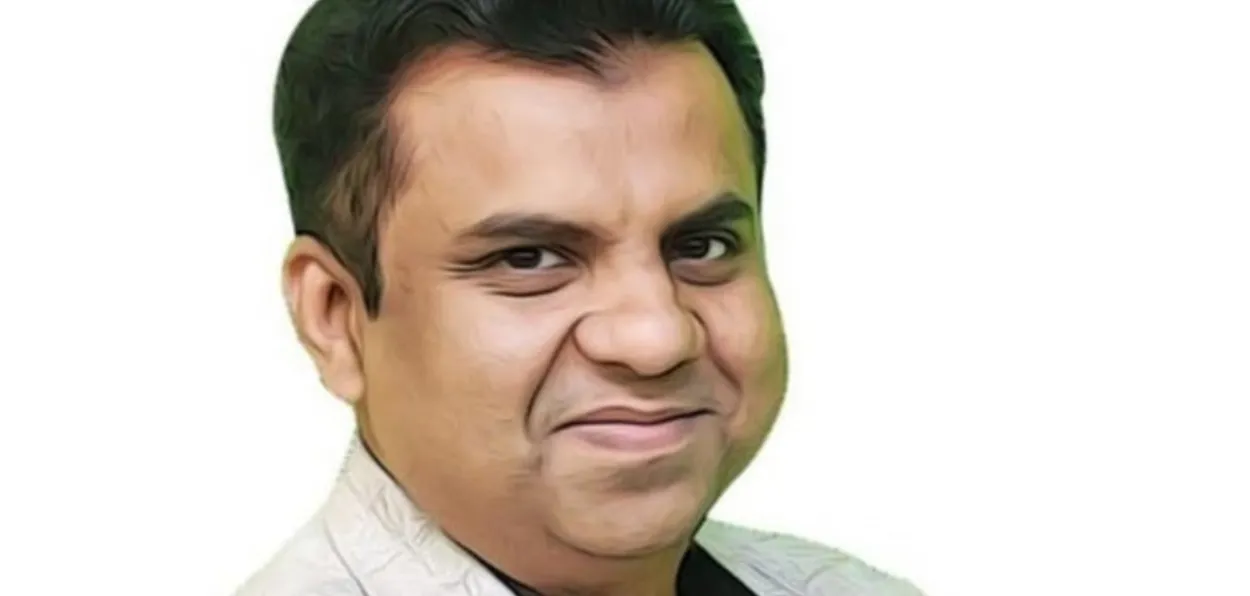
Former NTC official Ameer Althaf, who played with numbers as accounts manager at the central government organisation had a passion for penning books.
And his creativity came to the fore with his maiden book on 300 year long history of Coimbatore Muslims in 2014.
Taking the next step, Ameer took up intensive research on Holy Quran. His seven year effort bore fruits with his four part book ‘Athaatchigal Thirukkuran Kalai Kalanjiam’ which has lots of interesting info which he collected during his indepth study visiting universities in Mecca, Medina and Malaysia. No doubt, this creative work is his magnum opus. Moreover, this book is a must in the book shelf of every household.
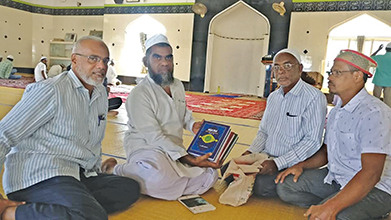
Retired apex court judge F M Ibrahim Kalifullah and former Madras High Court judge K N Basha will release the book in the presence of leading luminaries of Coimbatore and experts in their chosen domain from across the globe.
The event sponsored by Dhaanish Ahmed Institute of Technology (DAIT) and Al Azhar Educational Trust is to be held at Podanur Thendral Mahal on Oct 20 evening.
Interestingly, Ameer’s research papers on Holy Quran were presented and published in global forum like Umma-al Qura University in Mecca, King Fahad University in Madina, University Malaya, Islamic Science University Malaysia besides universities in Istanbul, Jordan, Qatar, Mali.
His four decade central government service and three decade research on Holy Quran made him go places across the globe. Significantly, he became to be known as International Holy Quran researcher.
Others who are part of the event includes Moulavi Alhaj M A Abdur Rahim, president, Coimbatore-Nilgiris-Tirupur district Jamathul Ulema Sabai, Moulavi Alhaj M A Mohammed Imdhadi, president, Coimbatore city Jamathul Ulema Sabai, social activist Aloor Shanavas, Coimbatore district United Jamaath president Alhaj A R Basheer Ahamed, Tamil Nadu Haj organisors association president Alhaj A Mohamed Rafeek, Iqra Educational Trust president Alhaj H E Iqbal Sait, Project Manager in Kuwait Haji M A Azad will address the audience at the book release event.
Himayathul Muslimeen Sunnath Jamaath, Podanur secretary Haji KTS Riyas Kapoor will propose the vote of thanks.
Other dignitaries who will speak at the event include Holy Quran translator Prof Mohamed Khan baqavi, TN state Jamathul Ulema deputy general secretary Moulavi Alhaj K M Ilyas Riyaji, Chennai Anna Salai Makkah Masjid chief imam Moulana M Mohammed Mansoor Kasimi, Madras University HoD Arabic, Persian and Urdu Dr A Zakir Hussain Baqavi and senior network consultant, Abudhabi Dr Mohamed Ibrahim.
source: http://wwwkovaimetro.in / Kovai Metro / Home> Coimbatore / by Shefa Rafi / October 13th, 2019
In the serene, mountainous terrain of Bhalesa in Jammu and Kashmir’s Doda district, where life flows gently with nature, a remarkable tale of faith and perseverance has emerged — one that is touching hearts across the country, reported the Chenab Times.
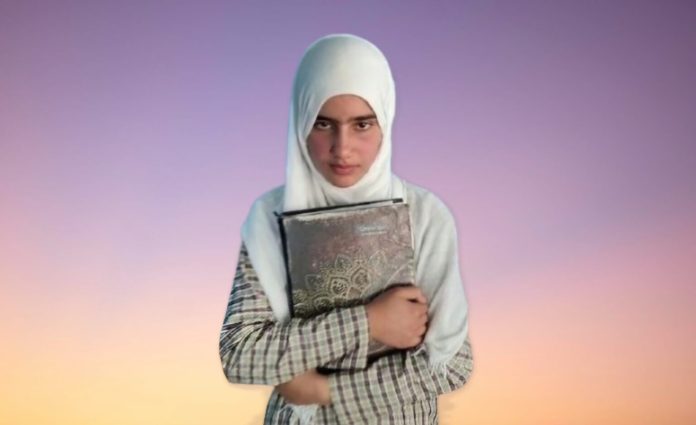
Mavish Arif, a 16-year-old Class 10 student from the remote village of Batara Gawalo, has achieved an extraordinary spiritual milestone: she has handwritten the entire Quran Sharif. What makes her achievement even more awe-inspiring is that Mavish was born deaf and mute.
In a world consumed by distractions and noise, Mavish’s silent journey of devotion speaks volumes. Over a span of nine months, without any formal guidance or assistance, she meticulously copied the Quran from start to finish, line by line, in the solitude of her home. Her determination, fueled by a deep spiritual purpose, astonished not only her family but the entire region.
Her parents, emotional and proud, shared how she immersed herself in this divine task, refusing help — not out of pride, but from an unwavering sense of purpose. Her days were spent absorbed in transcription, her hands speaking the language her voice could not.
This self-motivated act of worship, especially by a differently-abled young girl, has been hailed as unprecedented by local educators and scholars. Her school, Government Girls Higher Secondary School in Gandoh, has quietly supported her, and its principal, Mr. Ajeet Singh, expressed deep admiration:
“Mavish may be unable to speak, but her actions have roared louder than words. She has become a role model not just for students but for our entire community.”
The villagers of Bhalesa are united in pride and joy. Elders, neighbours, and teachers alike see her as a symbol of unwavering focus in a world that too often celebrates superficiality.
“In today’s time, when goals are often fleeting and attention is short-lived, this girl’s devotion is a lesson in spiritual resilience for all of us,” shared one elder.
Despite limited resources and geographical isolation, Mavish’s story radiates with spiritual brilliance and personal triumph. Her journey is not just a personal achievement, but a beacon of hope and inspiration for the entire nation.
Without uttering a word, Mavish Arif has etched a legacy — not just on paper, but deep in the hearts of everyone who learns of her devotion. Her story is one of faith, fortitude, and the silent strength of a pure soul on a sacred mission.
source: http://www.radiancenews.com / Radiance News / Home> Latest News> Markers of Excellence / by Radiance News Bureau / June 06th, 2025
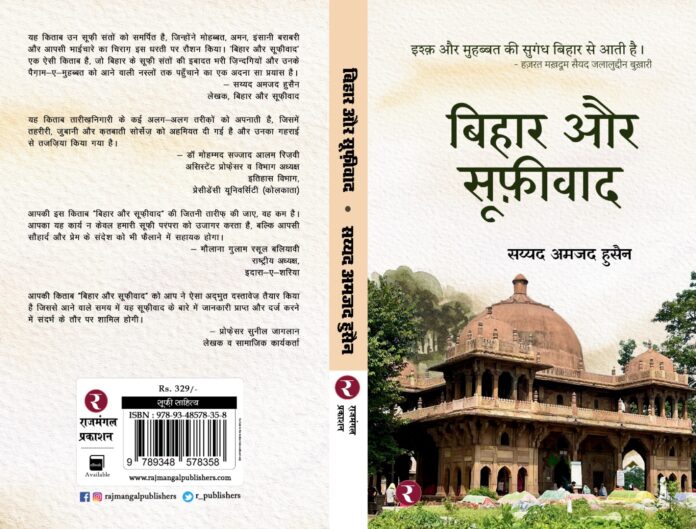
In a time marked by growing communal tensions and polarizing narratives, young author and scholar Syed Amjad Hussain’s book ‘Bihar Aur Sufivad’ arrives not only as a work of history but also as a much-needed spiritual intervention. Spanning more than 300 pages, the book immerses the reader in Bihar’s rich and pluralistic Sufi heritage, offering a profound counter-narrative rooted in peace, love and human dignity.
Bihar is generally remembered for its political agitations and socio-economic challenges, but beneath the surface lies an older, deeper history – a rich tapestry of sufi saints who arrived as early as the 12th century. Through systematic research and a respectful tone, Hussain revives this forgotten spiritual geography.
Beginning with the arrival of Hazrat Peer Shah Mushk Nafah, Hazrat Momin Arif Ansari Yemeni and Hazrat Imam Muhammad Taj Faqih Zubairi Hashmi, followed by the transformative presence of Hazrat Qazi Syed Shahabuddin Suhrawardi Peer Jagjot Kashgari in Fatuha (Patna), the book presents a chronologically overlapping map of Sufi presence in Bihar. These are not mere biographies; they are glimpses into a world where divine love was not only preached but lived, practiced and internalised.
Thematic Depth, Scholarly Rigor
Divided into well-organised sections, ‘Bihar Aur Sufivad’ details the lives of 20 influential sufi saints. Each chapter offers insights into their teachings (taalim), spiritual practices, miracles (karamaat) and most importantly, their social engagements. The saints in Hussain’s work are not passive mystics withdrawn from the world; they are reformers, healers, poets and bridges between communities.
The book also discusses the various sufi orders (silsilas) present in Bihar – Firdausi, Shattari, Husami, Warsi, Chishti, Qadri, Suhrawardi and Naqshbandi – illustrating how each infused its own spiritual philosophy into the soil of Bihar. Of special mention is Hussain’s inclusion of female figures such as Hazrat Bibi Kamal of Kako Sharif, a rare and valuable recognition of women’s contributions to Bihar’s mystic culture.
Language, Tone and Accessibility
Hussain’s writing flows with a gentle rhythm that recalls classical Urdu and Hindi scholarship yet remains accessible to contemporary readers. The prose is rich and poetic without sacrificing academic precision. His background as a researcher is evident in the meticulous citation of works in Persian, Urdu, Arabic, Hindi and English, many of which are obscure or little known to the general public.
This is not a dry academic treatise; it is a living, breathing narrative of spiritual heritage, crafted to engage scholars, young seekers and general readers alike.
Relevance in Today’s India
What makes the book particularly significant is its timing. At a moment when histories are being erased or rewritten to suit political agendas, this book affirms that India’s collective spiritual heritage must not be forgotten. The sufi saints of Bihar transcended caste, creed and religion. Their khanqahs were open to people of all faiths. They preached service, not supremacy.
In this age of ideological divisions, Hussain’s work reminds the bridges that once united communities. It is a call to return – not to nostalgia, but to the ethics of inclusiveness, humility and compassion that the sufis embodied.
‘Bihar Aur Sufivad’ is more than a book; it is a spiritual journey and a historical reclamation. In reviving the voices of Bihar’s forgotten sufi saints, Hussain does more than pay tribute; he builds a bridge for contemporary readers to reconnect with a heritage that offers solutions to some of our most pressing problems.
This book deserves a place not only on library shelves but also in classrooms, living rooms and community discussions. It is an invitation to think, to remember and to heal.
Hussain has not merely authored a book – he has attempted to revive a spiritual legacy and present it afresh to the modern world. This work warrants a place of honour in the study of Indian Islam, Sufism and regional spiritual histories. It is hoped that it will inspire further research, dialogue and, most importantly, personal transformation.
It is strongly recommended for scholars, spiritual seekers and anyone interested in the rich diversity of India’s syncretic traditions.
(Dr. Shujaat Ali Quadri is an Indian journalist, deputy director of the Indo-Islamic Heritage Center and the chairman of the Muslim Students Organisation of India)
source: http://www.twocircles.net / TwoCircles.net / Home> Arts & Culture> Book Review / by Dr Shujaat Ali Quadri / May 07th, 2025
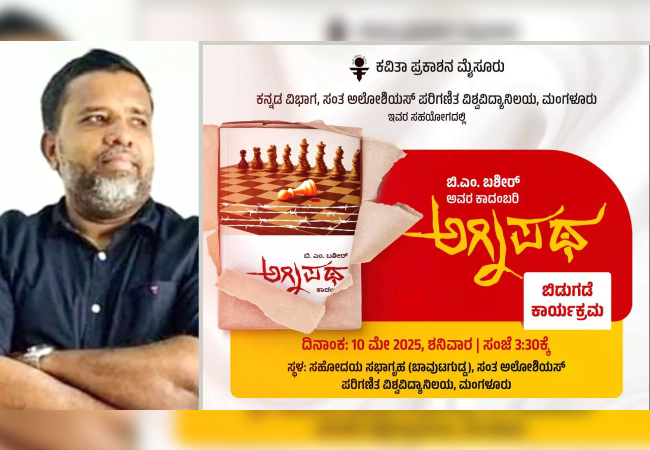
Senior journalist, storyteller, and news editor of Vartha Bharati, B.M. Basheer, will release his new book titled Agnipath on Saturday, May 10, at a special event to be held in Mangaluru.
The book release programme is being jointly organised by Kavita Prakashan, Mysore, and the Kannada Department of St Aloysius Deemed University. It will take place at 3:30 pm at the Sahodaya Auditorium of the university campus near Bavutagudde.
The book Agnipath, published by Kavita Prakashan Mysore, will be released by noted thinker and columnist Shivasundar.
Senior writer Vasudeva Belle will introduce the work to the audience.
The event will be presided over by renowned author Chandrakala Nandavar. St Aloysius Deemed University Vice Chancellor Rev. Dr. Praveen Martis and Ganesh Amingad from Kavita Prakashan are expected to attend the function, as per the official announcement.
source: http://www.english.varthabharati.in / Vartha Bharati / Home> Karavali / by Vartha Bharati / May 08th, 2025
In 2000, Rabiya was diagnosed with cancer, which she later overcame, after which she returned to social work.
In 2022, she was honoured with the Padma Shri for social work. (File Photo)
K V Rabiya, known for her prominent role in Kerala’s adult literacy programme, died at her home in Malappuram on Sunday. She was 59.
A native of Vellikakkad in Malappuram district, Rabiya fought against heavy odds and personal tragedies, right from childhood, to work relentlessly for the betterment of the differently abled and inspired thousands of women to enter the world of letters.
In 2022, she was honoured with Padma Shri for social work.
While still a school student, Rabiya contracted polio at the age of 12, which would eventually leave her paraplegic. Despite this, she completed her schooling and joined a college. However, she could not complete the degree course.
Rabiya then turned to books, reading everything from science to literature. Wheelchair-bound by then, Rabiya also started taking tuition classes for local children at a nominal fee.
It was by chance that Rabiya became a part of Kerala’s literacy movement, which began in the late 1980s. A college degree was a must for a literacy instructor. However, an instructor, who could not continue with the programme, sought Rabiya’s help. This marked the birth of a social worker and the beginning of her legacy.
She started teaching literacy classes in June 1990, and local elderly women and housewives were her students. She worked to convince women from orthodox families about the importance of education, and told them inspiring stories of world leaders and social reformers to get them interested in her classes.
When her number of students started swelling, Rabiya became a full-time literacy instructor. Later, she also established a library for women and became instrumental in the development of her locality, which did not have basic facilities such as roads and electricity, telephone, and water connections.
She eventually launched a voluntary organisation named Chalanam (movement), which also spearheaded literary programmes.
Her intervention was not limited to literacy alone. She started six schools for children with special needs and trained and empowered more than 250 women through a small-scale manufacturing unit. She was also at the forefront of the movement to create awareness against dowry and superstition. In later years, she was also actively involved in the e-literacy programme, Akshaya, in Malappuram.
In 2000, Rabiya was diagnosed with cancer, which she later overcame, after which she returned to social work.
In her autobiography, Swapnangalkku Chirakukalundu (Dreams Have Wings), Rabiya told the story of her inspiring life and how she chased her dreams. She also authored four other books, including the memoir, Mouna Nombarangal (Silent Pains). A documentary was also made on her life, titled Rabiya Moves.
She received several honours, including the Kannagi Devi Stree Shakti Puraskar, instituted by the Child Welfare Department of the Union government, in 2000. She also won the Youth Volunteer against Poverty award, jointly instituted by the Union Youth Affairs Ministry and the United Nations Development Programme.
source: http://www.indianexpress.com / The Indian Express / Home> India / by Shaju Philip, Thiruvananthapuram / May 05th, 2025
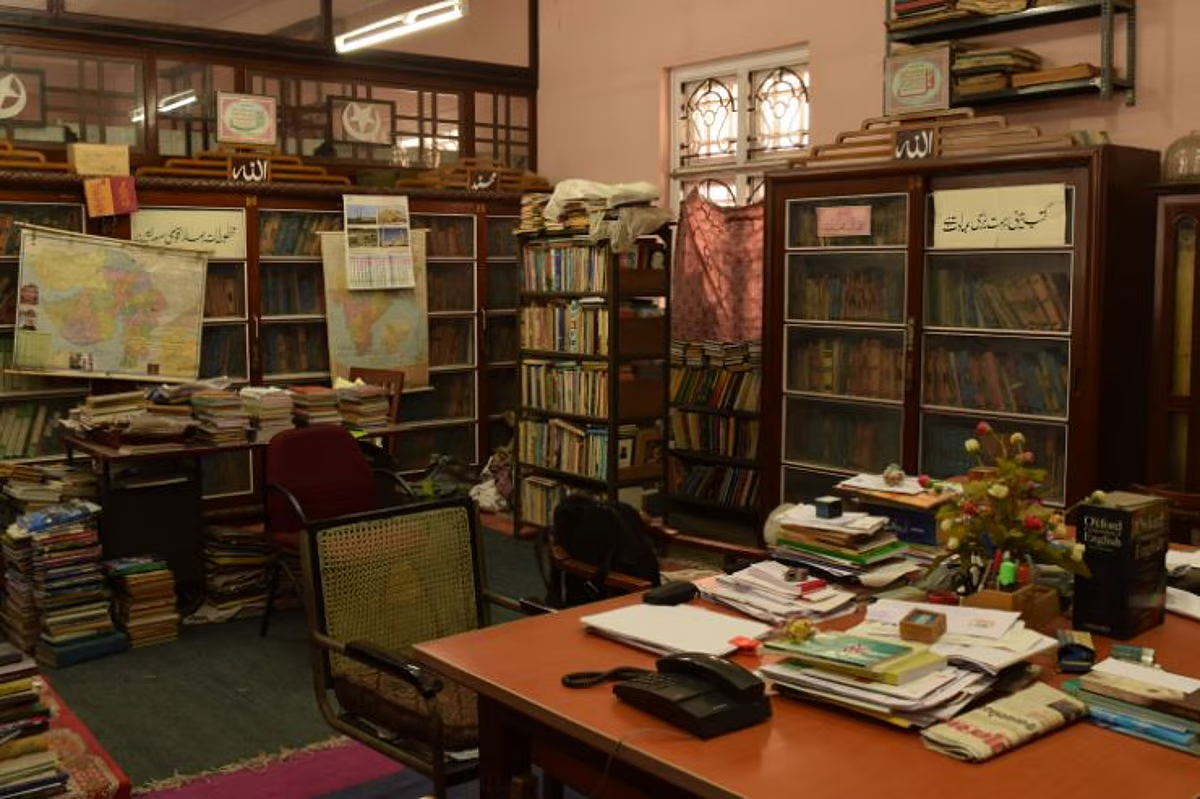
With over 4,000 manuscripts and 25,000 books, Hazrat Pir Mohammad Shah Library is a sanctuary of knowledge and wisdom.
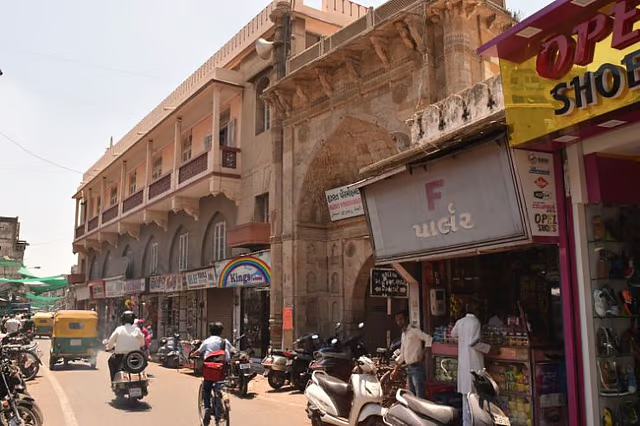
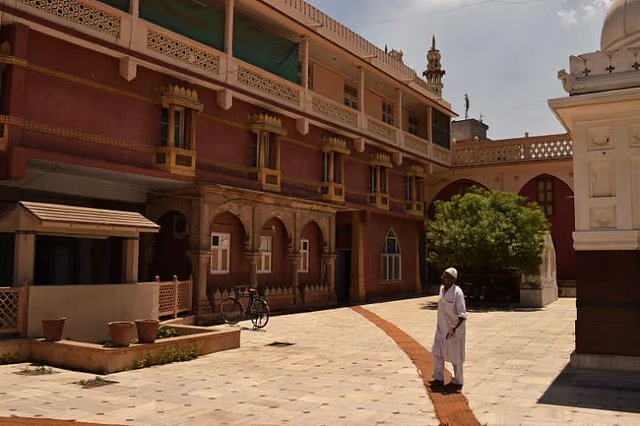
Stepping into the Hazrat Pir Mohammad Shah Library, the oldest library of the city, feels like entering a secret realm concealed within the narrow lanes of Pankora Naka, Ahmedabad. This hidden sanctuary of wisdom resides within the majestic tomb-shrine complex dedicated to the esteemed Pir Muhammad Shah.
The library’s journey commenced over 250 years ago when Pir Mohammad Shah and his devoted disciples gathered a humble collection of 300 manuscripts. Now, this literary haven proudly safeguards an expansive repertoire of over 4,000 manuscripts, establishing its position as such largest collection in Western India. Moreover, it boasts an impressive assortment of over 25,000 books.
About Mohammad Shah
Let us delve deeper into the enigmatic figure of Mohammad Shah, the driving force behind the library. Born in Bijapur in 1688 AD, he embarked on a transformative journey to Mecca, where he immersed himself in the teachings of practical Sufism.
Eventually, he settled in Ahmedabad in 1711, where he would offer his daily prayers in the Jama Masjid and rest in the humble hut of a benevolent elderly woman. It is in this very location that the awe-inspiring mausoleum-mosque-library complex now stands.
A treasure trove of manuscripts and books
During his lifetime, Pir Muhammad Shah, along with his devoted disciples, amassed a treasure trove of manuscripts and books, encompassing a wealth of academic and spiritual wisdom. This invaluable collection finds its residence in the esteemed “kutubkhana”. The Pir himself was a gifted bilingual poet, penning abundant verses in Persian and Dakhani.
Today, the library stands as a testament to its illustrious past, harboring more than 4,000 manuscripts—the largest collection in Western India, alongside a rich trove of over 25,000 books. Its extensive catalog covers diverse subjects such as spirituality, Quran Knowledge, music, literature, history, geography, language, astronomy, astrology, agriculture, and more.
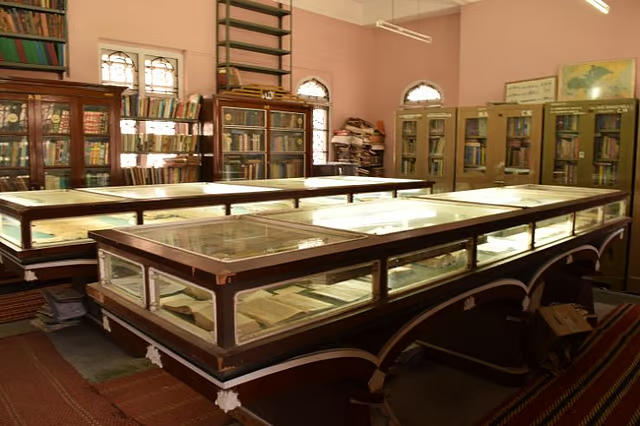
Within its hallowed halls, one can explore literature in Urdu, Gujarati, Arabi, Parsi, Hindi, and English. The library features a special chamber dedicated to ancient manuscripts, some dating back 800 years, as well as a display of Hazrat Pir Mohammad Shah’s personal belongings, carefully encased in glass to ensure their preservation.
Translations of sacred texts and unique manuscripts
The library’s treasures extend beyond its own collection, offering translations of sacred texts such as the Bible, Rigveda, and Geeta. Visitors are also privileged to behold unique manuscripts, including a handwritten Quran by the illustrious Mughal Emperor Aurangzeb.
This historic repository not only embodies a wealth of knowledge, wisdom, and heritage but also exudes an aura of serenity and tranquility. Explore the mosque, wander through the tranquil courtyard, lose yourself in the pages of ancient tomes, marvel at rare manuscripts, and surrender to the enchantment of bygone era. A captivating journey back in time awaits within these hallowed walls.
source: http://www.knocksense.com / Knock Sense / Home> Ahmedabad / by Zeal Jani / June 27th, 2023
The World Heritage City of Ahmedabad saw many revered men who silently documented the various tales the city’s monuments, structures and literature had to tell.
One such relentless pursuit was that of publisher, author and a keen student of the medieval history of Gujarat, Shahed Kalimi, who not just ran the nearly-century old Kalim Book Depot but also spent 20 years of voluntary service to set up the library at Sarkhej Roza.
A little over a month after he passed, Kalimi’s contributions to Ahmedabad’s heritage were remembered by academicians, renowned historians and heritage enthusiasts at a remembrance meeting organised in the city on Sunday.
Kalimi was the sole force behind revamping the library at one of the ASI-protected monuments of the Heritage City of Ahmedabad, Sarkhej Roza.
AS Saiyed, President of the Sarkhej Roza Committee, narrated Kalimi’s two decades of voluntary contribution at the Sarkhej Roza and lauded him for his dedication and perseverance. “Kalimi was instrumental in reviving the library at the Sarkhej Roza and setting up a publishing department at the Roza through which many books were translated and published under the aegis of the Sarkhej Roza Committee,” Saiyed said.
During his lifetime, Kalimi had translated nearly 50 books from Urdu, Persian and Arabic, into Gujarati, in a bid to bring forth the little pieces of history about Gujarat to the people here.
In fact, two of his last books – A Bird’s Eye View of Sarkhej Roza and Yaad-e-Ayyam, were released during the remembrance meet.
“Kalimi’s sole aim was to bring forth anecdotes of Gujarat’s history to the state. Being an ardent reader of history himself, he translated many books written about Gujarat and its history, Persian and Arabic to Gujarati. He has translated close to 50 works by now about various aspects of Ahmedabad and Gujarat which the state would have otherwise lost,” said Professor MH Bombaywala, curator and founder, Peer Mohammad Shah Library, one of the oldest in Ahmedabad who was present at the meeting.
Being an ardent enthusiast of medieval history of Gujarat, Kalimi turned his place of work – the Kalim Book Depot – around by diligently sourcing, procuring, even translating if needed to make history books available to people here.
Students of History and even architecture and design often frequented his book store, which was once upon a time, a fulcrum for intellectuals to gather and discuss new, radical ideas through expressions of poetry and Shayari.
The Kalim Book Depot will be a century old in 2026 and till date is known for rare books. “We have retailed the Urdu versions of Ramayana, Mahabharata and the Bhagavad Gita to people. Father used to procure a series of Urdu books from warehouses of libraries, book exhibitions, flea markets including the Gujari Bazar and wherever he travelled and patiently sorted them, to find the right kind of books for history students and later translate them,” said Mushir Kalimi, Shahed’s son.
“Father’s interest was not in the business but instead in letting the younger generation read and delve into the history about Gujarat to the people of Gujarat by translating works of authors from Persian, Arabic and Urdu languages. Therefore, if he realised someone’s interest in books, he would gift them a second book for free besides the ones they’ve bought,” said Mushir.
Kalimi was working on one of his last books just before he passed — Makbaras and Masjids of Ahmedabad. Mushir along with members of the Sarkhej Roza Committee are working towards publishing the book which will soon be out.
source: http://www.timesofindia.indiatimes.com / The Times of India / Home> News> City News> Ahmedabad News / by Niyati Parikh / TNN / March 28th, 2022
As Muslims all over the country are protesting against the Pahalgam carnage by the Pakistan-backed terrorists killing 27 persons, including a local ponywallah, Sameer Ahmed Siddiqui, a well-known IAS coaching Academy head, has proposed that the community should raise the “world’s largest anti-terror fund” to deal with aftermath of the terrorist attacks.
This fund, he said, would help the survivours and dependents of the victims of terrorism.
Sameer Ahmed Siddiqui, who is also emerging as a new age social thinker, says if 20 lakh Indian Muslims contribute Rs 100 each, a huge fund can be created. This fund can be used to provide financial assistance to the families killed in the Pahalgam attack for ‘seven generations’.
Sameer’s idea is similar to that of Kolkata’s Wali Rahmani, who established a state-of-the-art school for Rs 12 crore through similar small financial contributions.
Siddiqui’s idea is that the Chief Minister of Jammu and Kashmir, Omar Abdullah, must take the initiative for this fund. He says Abdullah must take the lead since Kashmir has been associated with terrorism and negative images for a long time. He said, “It’s time to associate Kashmir with a positive and historical record as well.”
He says, “At a place where innocent people have been killed after asking about their religion and attempts have been made to dishonour the Kalma, the world’s biggest anti-terror fund should be created on the call of the people there. This will not only change the face of Kashmir but will also send a strong message in favour of humanity.”
Sameer Ahmed Siddiqui presented his proposal on his YouTube channel ‘Team Sameer Siddiqui’ six days ago. The video has gone viral on social media, and the people are appreciating it as an ‘eye-opening initiative’.
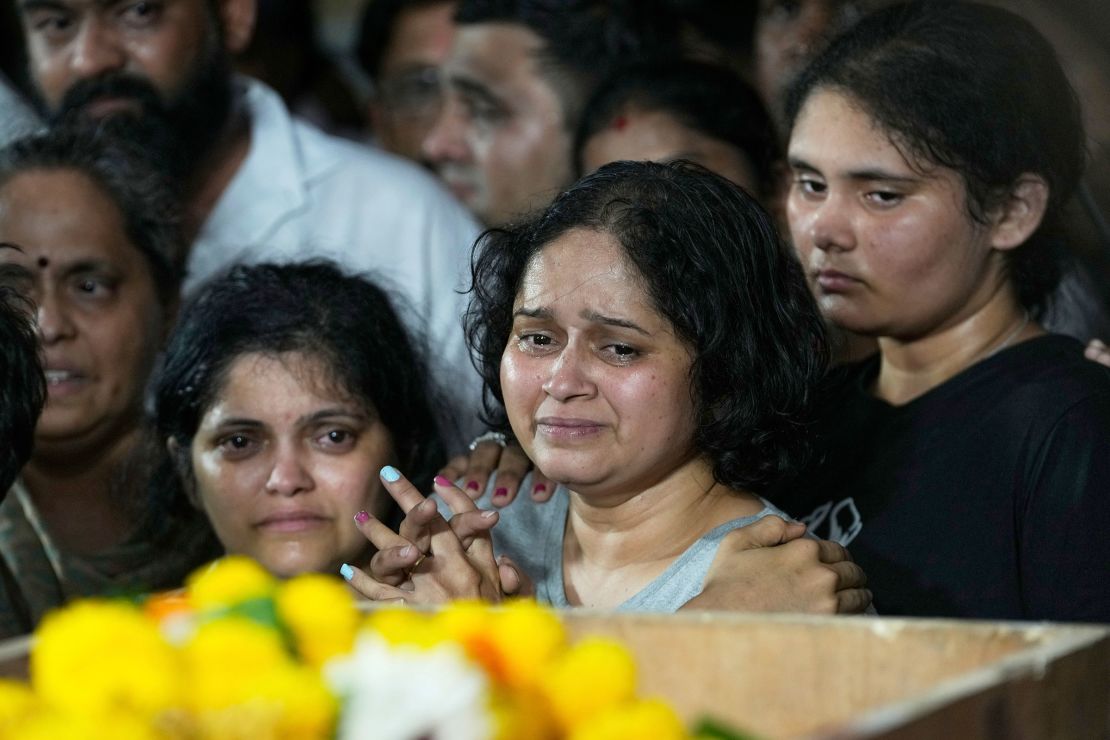
A family mourning the loss of their kin in the Pahalgam terrorist strike
The viewers have posted the following comments on the video:
“Sir, I salute your thinking. What you have said is very important in today’s time.”
“Distance from education is our failure today, scholars like you are our hope.”
“Subhan Allah! With what deep thinking you have given such a big message.”
Some of the reactions in the comments sections are as follows:
“How deeply you have explained a big thing.”
“The strongest answer is – unity and education.”
Sameer Ahmed Siddiqui is a reputed IAS coach and a business analyst. He has experience in the information technology and service industry. He is adept at operations management, communication, leadership and data analysis.
A graduate of Aligarh Muslim University, Sameer is currently the head of General Studies at M Puri IAS Institute, New Delhi. This institute is one of the top civil service training institutes in the country, from where the highest selection rate has been achieved in IAS, IPS, and Group-A services.
His books, especially the book on “Internal Security and Bilateral Relations”, are highly popular among competitive students.
Sameer advocates change in education in accordance with the needs of the future, and preparing the new generation for the era of Artificial Intelligence, Machine Learning and Robotics. He is also famous for beautifully combining the principles of traditional and modern science.
His lectures and analyses have been viewed and shared by millions of people on YouTube and other internet platforms.
If the Muslims of India unite and adopt this plan and the people of Kashmir take the initiative, then not only will the suffering families get support, but a new message will also be sent to the whole world – that the unity of humanity is much stronger than the hatred of terrorism.
source: http://www.awazthevoice.in / Awaz, The Voice / Home> Stories / by Malick Asghar Hashmi, New Delhi / April 28th, 2025
Prof. Abdul Qavi Desnavi (November 1, 1930 – July 7, 2011)
Bhopal:
A two-day National seminar is being organised on “Prof. Abdul Qavi Desnavi Hyat Aur Adabi Khidmat” here on April 1 and 2 at Mulla Ramuzi Sanskriti Bhavan, the headquarters of Madhya Pradesh Urdu Academy, (MPUA).
The seminar is being organised by Ilma Education Society, Bhopal under the joint aegis of National Council for the Promotion of Urdu Language, (NCPUL) and MPUA.
Mr. Kailash Sarang, former Rajya Sabha member, will inaugurate the seminar on April 1 at 10 am which will be presided over by Urdu litterateur Prof. Afaq Ahmad.
AThe guests of honour on the occasion include: Mr. Aziz Qureshi, ex-member of Lok Sabha, Mr. Iqbal Majeed, Prof. Shakoor Khan, Prof. Muzaffar Hanafi and Prof. Ateequllah.
Prof. Afaq Husain Siddiqui will deliver the keynote address in the inaugural function while Kausar Siddiqui, director of the organising committee shall welcome the guests. Mr. Ali Mutaqqui Desnavi, the eldest son of late Prof. Abdul Qavi Desnavi will propose vote of thanks.
After the inaugural function there would be two sessions on April 1 and three on the next day. Two-and-a-half dozen scholars and writers from all over India will present their papers in different sessions of the seminar.
They include: Prof. Muzaffar Hanafi (Delhi), Mr. Ayub Waqif (Mumbai), Master Akhtar, Mr. Arif Aziz & Dr. Arjumand Bano Afshan (all three from Bhopal), Prof. Ateequllah (Delhi), Prof. Khalid Mahmood (Delhi), Maulana Syed Sharafat Ali Nadwi (Bhopal), Dr. Yaqoob Yawar (Banaras), Mr. Iqbal Masood, Mr. Rasheed Anjum & Dr. (Mrs.) Razia Hamid (all three from Bhopal), Dr. Saifi Sironji (Sironj), Prof. Manzar Husain (Ranchi), Prof. Afaq Ahmad (Bhopal), Dr. Maula Baqsh (Delhi), Mr. Naseem Ansari (Bhopal), Mr. Zia Farooqui, Mr. Ashfaq Mashhadi, Mr. Khalid Abidi, Dr. Mahtab Alam & Mr. Javed Yazdani (all six from Bhopal), Dr. Mohammad Nauman & Dr. Khalid Mubashshir (both from Delhi), Dr. Abdul Waheed Khan (Jabalpur), Mr. Naeem Kausar, Mr. Khursheed Akhtar (both from Bhopal), Dr. Shan Fakhri (Sironj), Mr. Habib Ahmad & Mr. Inamullah Lodhi (both from Bhopal).
Meanwhile, it may be stated here that Prof. Abdul Qavi Desnavi (November 1, 1930 – July 7, 2011) was an Indian eminent Writer, Critic, Bibliographist, Linguist and Scholar of Urdu language. He has authored more than 50 books on Urdu literature. His books were also translated in other languages. His important work was about Maulana Abul Kalam Azad, Mirza Ghalib, Allama Muhammad Iqbal and litterateurs of Bhopal.
He was recipient of several awards. He received Senior Fellowship from the Union Ministry of Culture, Govt. of India. His great treatise was a voluminous book on one of India’s frontline freedom fighter and first Union Education Minister Maulana Abul Kalam Azad over 900 pages titled “Hayat-e-Abul Kalam Azad” which he penned in the year 2000. It was acclaimed nationally and internationally.
Desnavi was born in Nalanda Prof. Desnavi was born on November 1, 1930 in village Desna of block Asthawan in Nalanda district Bihar. He belonged to the family of Great Muslim scholar Syed Sulaiman Nadvi, who was one of the eminent historian and biographers of the Islamic Prophet Muhammad (PBUH), during his times. He was the second son of late Prof. S. M. Saeed Raza, who was Professor of Urdu, Arabic and Persian languages in St. Xavier’s College, Mumbai. His elder brother was Prof. Syed Mohi Raza and younger brother was Syed Abdul Wali Desnavi.
Education Prof. Desnavi had his primary education in Arrah town of Bihar state. After completing his graduation & post-graduation in First Division from St. Xavier’s College, Mumbai, he joined Department of Urdu in Saifia Post Graduate College, Bhopal in February 1961. He went on to become Professor and Head of the Urdu Department of Saifia Post Graduate College. He was well-known literary figure in India and in the Urdu world.
His shining disciples Many scholars, poets and teachers of today such as lyricist Javed Akhtar, Poet Mushtaq Singh, Prof. Muzaffar Hanafi, Selani Silwatte, Prof. Khalid Mehmood, Prof. Mohammed Naumaan Khan, Prof. Afaq Husain Siddiqui, poet Iqbal Masood, Dr. Iqbal Masood Nadvi, Ahsanuddin Farooqui, Khurshid Akhtar, Mohammed Naseem, Dr. Qamar Ali Shah, Prof. Yaqoob Yawar, Maulana Syed Sharafat Ali Nadvi, Prof. Arjumand Bano Afshan etc. were under his tutelage during their student days in Bhopal and are now sparkling in the Urdu world. Under his guidance many students attained Ph.D. degrees.
He retired in 1990. He was also holding many Honorary positions such as: • Additional Principal of Saifia Post Graduate College, Bhopal.(1983–1985); • Secretary of Madhya Pradesh Urdu Academy, Bhopal (1991–92); • Elected Member Majlis-e-Aam Anjuman Taraqqui Urdu (Hind), New Delhi (1979–1984); • Member of All India Anjuman Taraqui Urdu Board, New Delhi, (1977–1978); • Member of Program Advisory Committee, All India Radio, Bhopal (1978–1979); • Member Executive Council, Barkatullah University Bhopal, (1980–1982); • Chairman of Board of Studies, Urdu, Persian & Arabic, Barkatullah University Bhopal, (1977–1980) and (1984–1985); • Dean Faculty of Arts, Barkatullah University Bhopal, (1980–1982) & • Member Working Committee, Taj-ul-Masajid, Bhopal (1997-2007)
Awards Prof. Desnavi received many awards in his lifetime such as Shibli Award, Mumbai, 1957; Senior Fellowship, Ministry of Education & Culture, Government Of India for 4 Years, 1979-1983; Sanad “Imteyaz Meer” All India Meer Academy, Lucknow 1981; Nawab Siddique Hasan Khan Provincial Award, Bhopal 1986; Bihar Urdu Academy Award, for recognition of Urdu services (1988–89) & (1989–90); All India “Parvez Shahidi Award” West Bengal Urdu Academy, Calcutta 1998.
His books The books Prof. Desnavi authored to enrich the Urdu literary world included: Ek Aur Mashriqi Kutub Khana (1954); Hasrat Ki Siyasi Zindagi (1956); Aur Hindustan Jag Utha (1963); Allama Iqbal Bhopal Mein (1967); Mazameen Lisan-un-Sidque (1967); Bhopal Aur Ghalib (1969); Ghalibyaat (1969); Nuskha-e-Bhopal Aur Nuskha-e-Bhopal Sani (1970); Qadir Nama-e—Ghalib (1971); Anis Numa (1973); Ek Shahar Panch Mushahir (1973); Nazr—e-Sajjad (1974); Mota’ala—e—Khotoot—e—Ghalib 1975, (Edition 2nd 1979); Saat TahrireiN (1975); Hindustan MeiN Iqbaliat (1976); Talash-o—Taasur (1977); Mehdi Hassan Efadi (1977); Iqbal Uneesween Sadi MeiN(1977); Mirza Salaamat Ali Dabeer (1977); Bachon Ka Iqbal (1978); Iqbal Aur Dilli (1978); Abdul Haque Banam Mahvi (1980); Nazr-e-Takhallus (1981); Mota’ala-e-Ghobar-e—Khatir (1981); Dhanpat Rai Nawab Rai Premchand (1981); Iqbal Aur Darul Iqbal Bhopal (1983); Iqbaliat Ki Talash (1984); Yadgar—e—Sulaiman (1984); Iqbaliat Ki Talash Publisher, Globe Publishers, Urdu Bazar Lahore, Pakistan (1985); Armoghane-Saifia (Co—Editor) (1986); Abul Kalam Azad (1987); Maulana Abul Kalam Mohiuddin Ahmad Azad Dehlavi (1988); Mahanama Lisan-un-Sidque (1988); Yadgar—e—Azad (1989); Mataihiyat (1989); Talash—e—Azad; Talash-e-Azad, Shaqsiyat, Khidmat, Chand JhalkiaN (1990); Jawaharlal—o—Azad (Co—Editor) (1990); Ajnabi Shahar (1992); Fakhernama (Co—Editor) (1997); Urdu Shairi Ki Gayarah AwazaiN; Masreen wa Mutaliqat Azad; Hayat Abul Kalam Azad (2000); Bombai Se Bhopal Tak (2004); Dur Dais Se (2005); MaiN Urdu Hoon (2006).
His books translated in other languages are: Abul Kalam Azad in Hindi language Translated by Janki Prashad Sharma, Publisher Sahitya Akademi (1987); Abul Kalam Azad in Punjabi language Translated Inder Singh Raz Publisher Sahitya Akademi (1988); Abul Kalam Azad in English language translated by Syeda Syedain Hamid Publisher Sahitya Akademi(1991); Abul Kalam Azad in Maithili language translated by Fazlur Rehman Hashmi, Publisher Sahitya Akademi (1994)
The awards Prof. Desnavi received on his books are: Saat TahrireiN – Uttar Pradesh Urdu Academy Lucknow, 1975; Uneesween Sadi Mein Iqbal – Bihar Urdu Academy Patna, 1977; Mota’ala-e-Khotoot Ghalib – Bihar Urdu Academy Patna, 1979; Mota’ala-e-Ghobar-e-Khatir – Bihar Urdu Academy Patna, 1981; Iqbaliat Ki Talash – Bihar Urdu Academy Patna, 1984, Abul Kalam Azad Academy, Bihar Urdu Academy Patna, 1987; Yadgar—e—Sulaiman – Maghribi Bengal Urdu Academy Calcutta, 1984; Talash—e—Azad – Uttar Pradesh Urdu Academy Lucknow, 1991; Talash—e—Azad – Bihar Urdu Academy Patna, 1991; Talash—e—Azad – West Bengal Urdu Academy Calcutta, 1993; Urdu Shairi Ki Gayarah AwazaiN – Uttar Pradesh Urdu Academy, Lucknow, 1993; & Urdu Shairi Ki Gayarah AwazaiN – Bihar Urdu Academy, Patna, 1993.
Under his guidance the Ph.D. degrees were awarded by Barkatullah University to • Dr. Muzaffar Hanafi – “Shad Arfi Shaksiat Aur Fun” 1974 Published – 1977; • Dr. Hadiqa Begum – “Abdul Rehman Bijnori Hayat Aur Khidmat” 1981 Published – 1984; • Dr. Naseem Shanvi- “Urdu Tanquid Ka Marxi Dabistan” 1981; • Dr. Mohammed Ayub Khan – “Iqbal Aur Gazal Goi” 1982; • Dr. Safia Wadood – “Takhalus Bhopali Hayat Aur Khidmat” 1984 Published – 1993; • Dr. Arjumand Bano – “Riasat Bhopal Aur Mushahir Urdu” 1989; • Dr. Shan Ahmed Fakhri – “Sironj Ki Khidmat” 1990 Published – 1999; • Dr. Yaqoob Ali Khan – “Taraqqui Pasand Shairi Aik Jaiza” 1990 Published – 1997 and • Dr. Mohammed Naumaan Khan – “Bhopal MeiN Urdu Inzamam Ke Baid”1990.
Poems The poems composed on Prof. Desnavi include: • Pasban-e-Urdu by Rahbar Jaunpuri; • Nazre Abdul Qavi Desnavi by Arshad Siddiqui; • Anjuman Ilm-O-Kamal by Zafar Sahbai; • Herf-e-Khuloos by Kausar Siddiqui; • Shan-e-Imtiaz by Zafar Naseemi; • Qandil-e-Hikmat, Abdul Qavi Desnavi by Wafa Siddiqui;
• Kharaj-e-Tehsin by Arman Akberabadi; • Pahchaan Hai Saifia by Kamil Baihzadi; • Prof. Abdul Qavi Desnavi by Mateen Qurashi Shaheed and • Aik Nazem by Iqbal Masood.
Last breath Prof. Desnavi died at about 5 am on 7 July 2011 in a private hospital where he was admitted following complaints of old age related diseases. He is survived by his wife, three sons and four daughters and a large number of relatives and literary friends to mourn his loss.
(pervezbari@eth.net)
source: http://www.twocircles.net / TwoCircles.net / Home> Indian Muslim> Literature / by Pervez Bari, TwoCircles.net / March 30th, 2012
Saifi Sironji has been actively vibrant in the literary horizon of Urdu literature for last umpteen years. In the fields of criticism, research, journalism and poetry Saifi Sironji’s dedicated services are worth to be noted. Saifi Sironji was born in 1953 in Pigrani Mahu Kheda village of Sironj MP.
He has spent his entire childhood in his native village and was much attracted towards Bollywood movies right from his early childhood. His forefathers were from Gadhi clan who actually occupied higher ranks in the army of King Mahmud Ghori.
People of Gadhi clan (Rajputs) had reverted to Islam after losing the battle against Prithvi Raj Chouhan. Bravery, hard work and hospitality is the hallmark of Gadhi clan. People of Gadhi clan were almost illiterate and mostly were associated with rearing of cattle.
At the age of six Saifi Sironji’s grandfather sent him to a Madrassa to memorize the glorious Quran. After memorising some Parahs (juzz/ chapters) of holy Quran, he left the Madrasa only to waste time in watching movies and listening to songs. His passion of listening to songs compelled him to work in a Bidi manufacturing factory where the sound of Radio always pleased him.
This Bidi manufacturing unit belonged to famous poet Dilkash Sagri. In this unit, regular literary and poetic events were held in which prominent poets and litterateurs from all over India would participate. Maximum participants among the audience were unlettered but still they remembered hundreds of poetic couplets.
He too used to read the magazine and journals of Urdu which were meant for Dilkash Sagri viz Kitaab, Shabkhoon, Subah Adab and Shaayir. After going through these books of literature, Saifi Sironji also developed an interest in poetry thus went ahead to compose poetic couplets. Once an all India naatiya mushaira was organised which he too attended and it was his maiden participation in a literary event.
In Bidi manufacturing unit, apart from traditional job he would read some novels of Naseem Hijazi eg, Akhri Maurka Akhri Chatan, Dastani Mujahid, Yousuf Bin Tashkin, Shaheen and Aur Talwar Toot Gayi etc during literary functions. In Bidi manufacturing unit once he thoroughly read Sadiq Sarhandi’s famous novel Aftabi Alam.
He was so impressed by this masterpiece that he composed a 70 lined poem depicting the life of companions of Prophet Muhammad (SAW). Later on he composed some naats which were recited during Milad-un-Nabi during 1970s. With this his poetic items started getting published and in Jarayim for years his Ghazals and Naats were regularly published.
The experience of novel reading during literary events helped him in composing stories also and in high-impact Urdu magazines like Roshni Adab, Filmi Sitare, Tamir, Khatooni Mashriq his stories were given due recognition. When a treasure of books accumulated at his home, he opened a book shop near Nishat Talkies where apart from books, newspapers and magazines too were sold. At his shop then poets assembled all day and night prominent among them were Ismail Zabihi, Talib Irfani, Zia Asadi and Dr Shahid Mir who would recite their poetic items. Saifi would recite five ghazals each day as he was much passionate.
During the times Saifi received his education most of his Gadhi counterparts were almost illiterate and would keep themselves attached to religious literature only. That is why nowadays we see hundreds of Hufaz among the Gadhi clan. Saifi’s real name is Ramzani because he is born on 13th of Ramzan and Saifi is his pen name.
His literary items are presently being published in national and international dailies, weeklies and high-impact Urdu magzines and journals viz Awraq, Makalma, Nigaar, Badban, Kagzi Parahan, Adab Latif, Tashkil, Sadaa, Parwaz,Chaharsu, Takhliq, Roshnayi, Safir Urdu, Nadaib, Jung, Jadid Adab, Hamara Adab Sahil, Suraj etc.
In hundreds of Indian Urdu dailies his writings get featured. In 1969 his first writing got published and till date his creative items are continuously being published in popular dailies, weeklies and monthlies on regular basis. His first poetry collection Roshan Alaw was published in 1985 through the financial aid of MP Urdu academy.
So far Saifi Sironji has published 75 books of different genres. Among them Saifi Sironji Shakhsiyat aur Fun was immensely hailed by the literary world. It is a 500 page compilation in which the author has mentioned the factual and real events of his life. He has left no room for the fabricated and fake information in the book.
Which is the main reason behind the success and popularity of this book alongside the comprehensive language used by Saifi. Saifi Sironji has also written a masterpiece travelogue Sironj se London Tak which was widely hailed by the literary world. About this travelogue famous critic of Pakistan Anwar Sadeed has said “this travelogue is so beautifully written that it has been read by 50 litterateurs and the travelogue is still a travel”.
Writers from Canada and London liked it profoundly. These two books of saifi Sironji were hugely loved by the readers. He has written editorials about Afsana, Novel, Urdu nazm and ghazal for about four years in Intisab Alami which later were published as a collection. Contemporary scholars get benefitted from his writings after they go through them. Although he has written umpteen books on criticism and research but he lacks an interest in research.
While writing regular editorials in Intisab Alami, people themselves have labelled him as a researcher and critic and his poetry has got somehow wrapped. Initially, he has written a good number of short stories also and two of his collections viz Hum Reh Gaye Akele and Ye Zindagi Ke Malei have already seen the light of the day.
When asked about who impressed you most, Saifi Sironji replies “Except Dr Gopichand Narang none has been able to impress me most”. It is through Gopichand Narang’s writings and speeches that Saifi Sironji has reached the level of apex. That is why Saifi Sironji has issued special numbers on Gopichand Narang in both Intisab Alami and Alami Zuban besides composing two books which were recieved with love by the literary world. Saifi Sironji has deep affection with Urdu and infact he doesn’t has a strong hold on any other language. Let’s see his one couplet… Pehli kitab jis ne na dekhi tamam umar, Qudrat Khuda ki sahibi adrak ho gaya.
Saifi Sironji’s dedicated services for Urdu can be accessed from his twin magazines Intisab Alami and Alami Zuban which are regularly published from Sironj MP since 1983. He has issued special numbers on legendary litterateurs viz Bashir Badar, Zafar Gorakhpori, Nida Fazili, Hamidi Kashmiri, Hafiz Karnataki etc in these magzines.
One research scholar has completed his PhD on literary services of Intisab Alami as well. Saifi Sironji feels dejected and disappointed about diminishing number of Urdu readers. He is of the opinion that Urdu is a big gift from Allah which after English is the only global language spoken by wide range of people.
Very fewer people now buy magazines and journals of Urdu which is displeasing. Saifi sites an example of teen aged girl Stuti Agarwal who is a regular subscriber of 30 Urdu magazines. She not only buys them but also reads them and her creative items get regularly published in these magazines. So was her father Anil Agarwal who always purchased books even from his friends. About Urdu language saifi Sironji has composed this couplet…. Tum apne uhad ka wirsa tu kho chuke ho tamam,Jo Bach sake tu ye Urdu zuban rakh lena.
Saifi Sironji has widely toured to outside country. He has attended international seminars in UK for five years and sold hundreds of copies of Intisab Alami there. He also went to Saudi Arabia, America, Holland, Germany and Pakistan to meet litterateurs and poets of international repute. His passion for poetry is reflected from the fact that, to buy a book of Dr Wazir Agha “Urdu shayri ka Mizaj” Saifi Sironji worked continuously for three days and three nights to meet the cost of the book which was merely 75 rupees.
Poets aren’t merely the players who play with the words, but emotions, pains and societal wrongs are reflected in their poetry. Saifi Sironji is an excellent and skilful poet who doesn’t immitat and follow any other, but he is bestowed with a unique style of composing poetry which is widely applauded by the readers. His journey from his childhood to an author of 75 books is really an amazing one.
(The author hails from Qazigund south Kashmir)
source: http://www.kashmirvision.in / Kashmir Vision / Home> KV News / by Rayees Ahmed Kumar / October 11th, 2023