With a sparkle in his eyes and his hand holding a pair of scissors over a piece of cloth with the precision of a surgeon, on the long cutting board, he paused for a moment, looked up and said, “I was a lecturer in the Department of Mechanical Engineering, but my father’s death changed everything. A mechanical engineer became a tailor to keep his family art and inheritance alive.”
He is Anwar Mehdi, whose tone shows no disappointment or regret at his decision to change careers. This is because not only in Aligarh, he is known across the world as a ‘sherwani expert,’ as he, proudly, carried on the tradition at Mehdi Hasan Tailors – after his father’s name – alive.
Mehdi Hasan Tailors is a brand name and the pride of Aligarh Muslim University for 80 years. It’s also popular across India for its unique sherwani. Several Presidents, Prime Ministers, political and social figures, and Bollywood stars have had their Sherwanis stitched from this place.
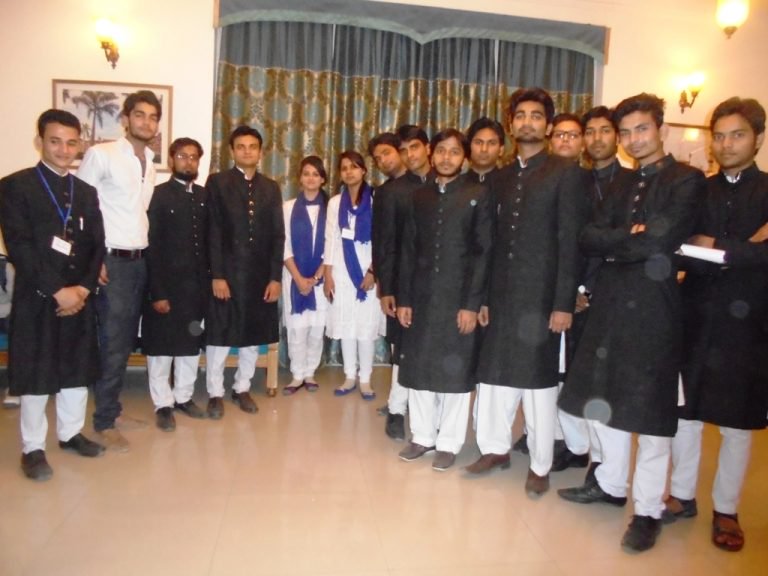
AMU students in Sherwani
Speaking to Awaz-The Voice at Mehdi Hassan Tailors in the Katara Mahal area of Civil Lines, Aligarh, Anwar Mehdi says that his father was an ordinary tailor who went to Mumbai in search of employment around 1944. He met Abdul Rais, an expert sherwani tailor, from whom he learned the art. Before partition, sherwanis were not very common in the country, but wearing sherwanis was a custom in Aligarh Muslim University, so his father came to Aligarh. In 1947, he opened that shop, which is today an iconic tailoring shop.
“I completed my M. Tech. While I had mastered the cutting of sherwani with my father during my student days, I took it over completely after he died in 1995. Although by then I had become a lecturer in the Mechanical Engineering Department, the passion to keep a family art alive took me from the Mechanical Engineering Department to the tailoring shop.”
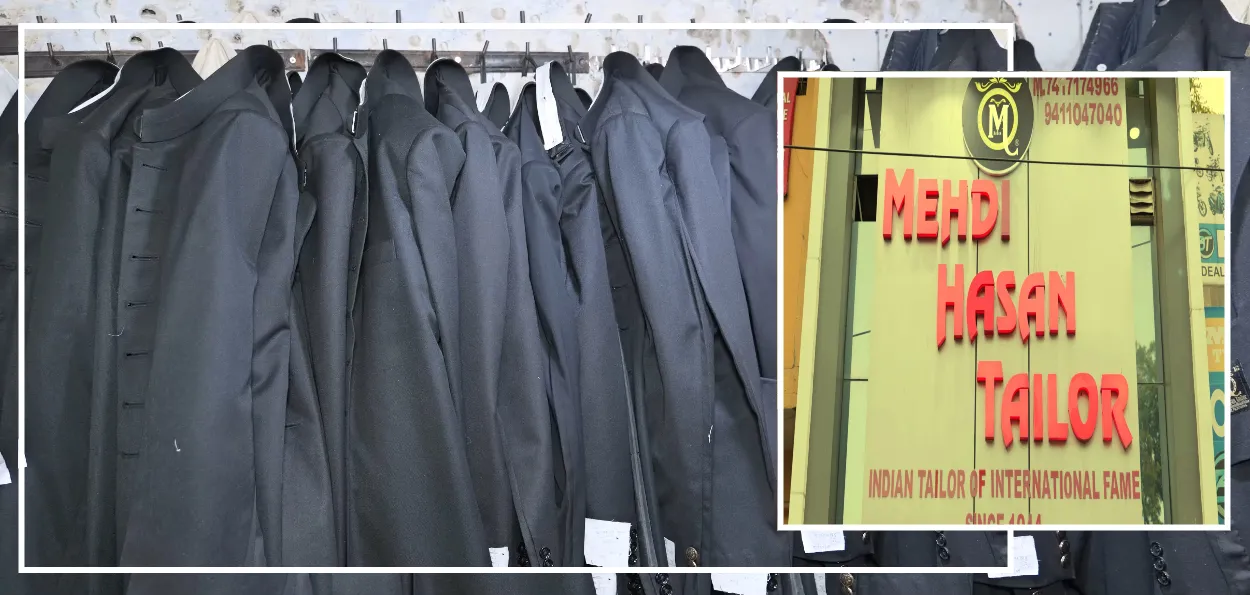
Mehdi Hasan and tailors
Anwar Mehdi said that Sherwani is actually a garment of the Mughal era and later the British, which has its roots in the clothing of the Turkish and Mughal courts. During the Ottoman Empire, the coat and cap of the Turks were very popular. The same style was later changed in India, the coat was lengthened and given a new look, which we know today as “Sherwani”.
He says that from the end of the 19th century until after independence, most of the Nawabs, Rajas, and big landowners of India wore a Sherwani. If you look at their photos, almost all of them will be seen in a Sherwani, the reason being that this garment was considered a symbol of dignity and honour.
According to Anwar Mehdi, as far as Aligarh is concerned, due to the educational environment and the influence of the Muslim elite, the sherwani became a part of educational and cultural prestige. Therefore, it is often said that the “Aligarh sherwani” actually became a symbol of Indian elite culture, be it a doctor, a politician or a scholar. I can say that the sherwani is not a dress, but a symbol of culture, history and identity.
He says that leaders like Pandit Jawaharlal Nehru adopted the sherwani, and later many Presidents of India, Dr Rajendra Prasad, Dr Zakir Hussain and Dr APJ Abdul Kalam also wore it. Anwar Mehdi says that Mehdi Hasan Tailors has the honour of having made sherwanis for many Presidents of the country and other important personalities.
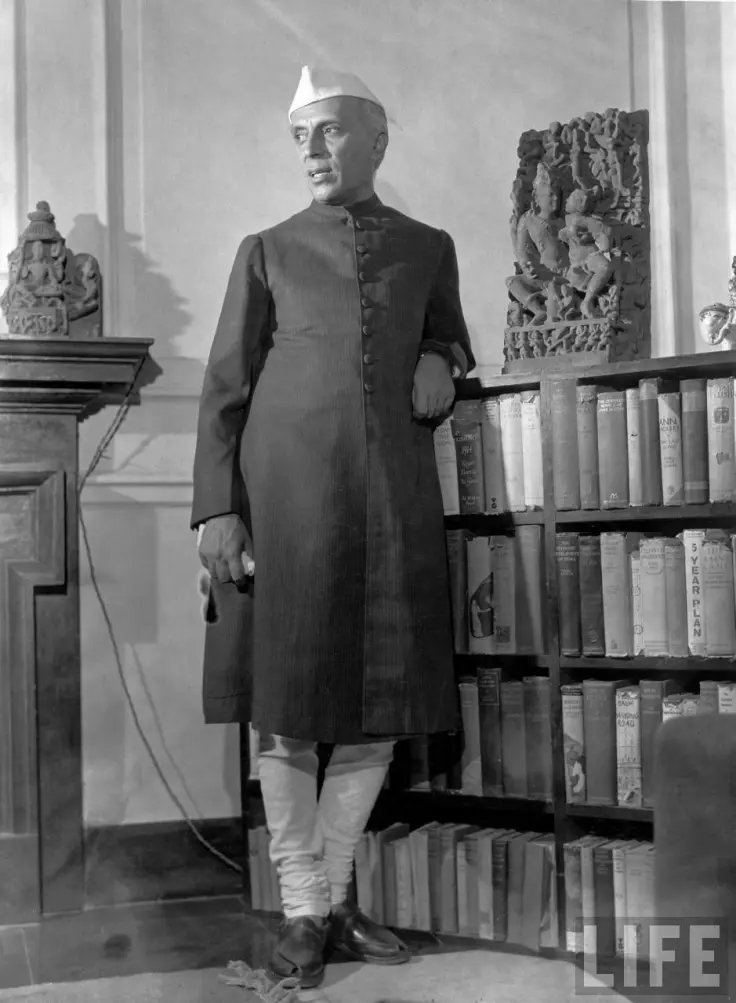
Jawaharlal Nehru in Sherwani
Anwar Mehdi says that not only honoured his enterprise, but also gave it recognition. He recalls making sherwanis for former Presidents VV Giri, R Venkata Raman, Dr APJ Abdul Kalam, late President Pranab Mukherjee, former President Ram Nath Kovind, former Prime Minister Manmohan Singh, Chief Ministers of various states like Mufti Sayeed, ND Tiwari, Farooq Abdullah, besides Governor Arif Muhammad Khan, Syed Sabt Razi, and other members of Parliament. Besides, he has stitched the dress for some judges of the Supreme Court.
When we met him, Anwar Mehdi was busy completing the sherwani orders on time before Sir Syed Day. He said while cutting the black sherwani, “When Dr Zakir Hussain was the Vice Chancellor of Jamia Millia Islamia, my paternal uncle was in the Department of Islamic Studies. He introduced Zakir Hussain to my father. After that, Zakir Hussain became the Governor of Bihar, then the Vice President of the country and finally the President of the Republic of India. During these 18 years, a record 178 sherwanis were sewn for Dr Zakir Hussain. Which is a testament to our quality.”
Speaking of Bollywood, Anwar Mehdi says that Majroh Sultanpuri loved sherwanis. Besides him, Javed Akhtar and Raj Babbar have also been using sherwanis made by him.
Recently, Saif Ali Khan’s sherwani was also made by him. He says that one day, Saif Ali Khan’s mother, Sharmila Tagore, called. She had requested that Saif Ali Khan be in Lucknow, so that he could give measurements for his sherwani. Saif Ali Khan called Mehdi, and he travelled to Lucknow to do the follow-up.
Anwar Mehdi said the youth have the same enthusiasm for this traditional dress as they did in the past. He says that in view of Sir Syed Day, the order from the AMU, where it’s a formal dress, increased. He says that he has seen respect and enthusiasm for the Sherwani in every era. “This is never going to end,” he says.
source: http://www.awazthevoice.in / Awaz, The Voice / Home> Stories / by Mansooruddin Faridi and Saqib Salim (Aligarh) / October 18th, 2025
Sajid Jamal, Founder and Chief Business Architect of BranchX, is redefining India’s retail landscape through advanced artificial intelligence and data-driven solutions. His company aims to empower small and medium retailers by bridging the digital divide that separates local stores from organized retail and e-commerce giants.
BranchX, established in Mumbai, provides AI-powered tools that assist shop owners in managing inventory, predicting customer demand, and enabling seamless digital payments. The platform also supports hyperlocal delivery networks, offering small businesses a competitive edge in fast-changing markets.
Under Jamal’s leadership, BranchX plans to onboard over one million retailers across 500 cities by 2027. The company’s growth roadmap includes a public listing in 2027, signaling strong investor confidence and a clear vision for nationwide expansion. Jamal’s background in finance and technology, with professional experience in the UAE and India, has shaped BranchX into a model of sustainable retail innovation.
Jamal’s vision is rooted in inclusive growth. By offering AI and digital solutions once limited to large corporations, he seeks to democratize retail technology and strengthen the backbone of India’s economy—the kirana stores. His approach combines financial inclusion with smart technology, opening new opportunities for millions of small traders.
BranchX’s rapid rise highlights a broader transformation underway in India’s retail sector, driven by homegrown innovation and a renewed focus on empowering local entrepreneurs.
source: http://www.radiancenews.com / Radiance News / Home> Entrepreneurship> Features / by Radiance News Bureau / October 07th, 2025
RIFAH Chamber of Commerce and Industry successfully organized the International Business Networking Meet 2025 at the Galadari Hotel, Colombo, bringing together leading entrepreneurs and industry professionals from India, Sri Lanka, and Malaysia. The two-day event marked a major milestone in promoting bilateral trade, investment, and cross-border collaboration.
The event was inaugurated by Mr. Hanif Yosoof, Governor of the Western Province, Sri Lanka, who praised Rifah’s initiative in connecting business leaders and fostering ethical, growth-oriented entrepreneurship across regions.
Mr. Rifas Jabbar, Chairman of The Lanka Business Alliance, extended a warm welcome to all dignitaries and delegates, appreciating their participation in strengthening business relations between the two nations. The meet featured productive B2B networking sessions, market opportunity discussions, and presentations on trade facilitation and ease of doing business in Sri Lanka.
Mr. Afzal Baig, General Secretary of RIFAH, introduced the chamber’s vision and ongoing initiatives to expand international market linkages. The programme also saw contributions from various state representatives who shared insights on investment potential and collaborative ventures in multiple sectors.
As a gesture of goodwill, mementos were presented to key dignitaries including Mr. Hanif Yosoof (Governor, Western Province), Mr. Sudath Ja Jayasekara (Deputy Director, Investment Promotion Department), Mr. Aqthar Hussain (Expert in International Trade & Customs Affairs), and Major General (Retd.) Samantha Wickramasena (Secretary General, Ceylon National Chamber of Industries). The felicitation was led by Mr. Afzal Baig (General Secretary, RIFAH), Mr. Anees Mohammad (Head, International Department, RIFAH), Dr. Abdul Qadeer (Educationalist), and Mr. Yonus Sait (President, RIFAH Tamil Nadu Chapter).
The event, organized in collaboration with The Lanka Business Alliance, served as a vital platform to strengthen India–Sri Lanka business relations, encourage joint ventures, and build a network of entrepreneurs committed to sustainable, ethical, and globally integrated trade practices.
source: http://www.indiatomorrow.net / India Tomorrow / Home> World Affairs / by India Tomorrow / October 10th, 2015
Ishtiyaque, the eldest son of chef Imtiaz Qureshi, a Padma Shri awardee, has worked in various departments, from bakery to butchery.
Chef Ishtiyaque Qureshi preparing kebabs at the Jashn-e-Lucknow food festival in Delhi | Photo: Tina Das | ThePrint
New Delhi:
When he offered his guests a bowl of kheer, a traditional dessert made with thickened milk, chef Ishtiyaque Qureshi had a wicked twinkle in his eyes. He knew he would leave them flabbergasted when he revealed the key ingredient—garlic.
Not just the guests, but even other chefs had no clue that the pearly pods in the dessert were not almonds. The kheer was part of a delectable spread of Awadhi cuisine at the Jashn-e-Lucknow food festival at Delhi’s JW Marriott.
“When he (Ishtiyaque) asked me to taste it, I could never guess what it was. It has truly been quite the experience watching him work tirelessly from morning to night,” said Yashasvi Yadav, a management trainee at JW Marriott.
Yadav had been working closely with Ishtiyaque to prepare 23 dishes using 20 ingredients for the festival held between 21-23 February. With rajanigandha in vases, lanterns, and roses, the tables were set to complement the Awadhi cuisine.
From melt-in-the-mouth Kakori kebabs to the rich dum gosht biryani, and the experimental narangi chicken korma, the slow-cooked dishes had people going for multiple servings.
These dishes reflected the artistry of Ishtiyaque, the eldest son of chef Imtiaz Qureshi, a Padma Shri awardee. Ishtiyaque has been carving out a niche for himself—from opening the Kakori House restaurant in Mumbai to working as a consultant for several popular hotels in India, dabbling with the frozen food industry, and now starting the restaurant Murgori, which serves chicken Kakori kebabs.
Ishtiyaque was on his feet for 14 hours on the first day of the festival, in a kitchen shared with another food pop–up. “We made 23 dishes in just three stoves,” he said, smiling, as he talked to guests in detail about the dishes.
Deeply appreciative of his legacy, Ishtiyaque has, however, charted a course very different from his father, who spent his career with the ITC group.
Ishtiyaque has worked with various brands like The Leela, Kempinski, and InterContinental. He has also been instrumental in the makeover of several brands, including Aafreen, a fine–dining Indian restaurant of JW Marriott Pune.
Ishtiyaque learned from the best—his father—while working through school. “When I was 12, during school holidays, my father skilfully lured me to the Maurya operations. With the temptation of swimming in the pool and eating at the bakery, he put me in the kitchen,” said Ishtiyaque.
He worked in various departments, from bakery to butchery, and credits that hands-on training for building a solid foundation for his career.
Culinary artistry
The young boy didn’t want to cook; he wanted to join college instead. But with a big family to support, another earning member was necessary. He initially worked at ITC Maurya during the day while attending classes at Delhi’s Ram Lal Anand College in the evening.
Ishtiyaque later left for Jeddah, Saudi Arabia, in 1986 after his father helped him get a job there. Three years later, he returned home and interviewed with ITC’s then-chairman, YC Deveshwar, at ITC Maurya in Delhi. He soon found himself at the Dum Pukht restaurant in Mumbai, which was then part of the Sea Rock Hotel.
He also worked with legendary French chef Roger Moncourt, who was the executive chef at ITC Maurya in New Delhi. “I remember he removed beef and pork from the Indian restaurant,” said Ishtiyaque. This separation—which he also recently recommended at a new restaurant—helped increase the clientele for fine Indian dining.
This was around the time when Datta Samant’s trade union raised slogans like ‘Dilliwale murdabad’. Nevertheless, Ishtiyaque found his space, experimenting with slow-cooked delicacies and reviving age-old techniques that define Awadhi cuisine.
Over the years, he has also mastered techniques from the frozen food industry, blending science with culinary artistry—all while carrying forward his father’s legacy.
Food innovations
The father-son duo often cooked together, especially after doctors advised both parents to stop consuming red meat. This led to one of Ishtiyaque’s innovations—the chicken Kakori kebab.
“For three years, they never guessed it wasn’t made of mutton but chicken. That’s when I realised this is a great option for the market, for those who cannot or don’t want to consume red meat,” said Ishtiyaque.
His father always made sure to have dinner at home, where his mother would rustle up delicacies like aloo gosht, saag gosht, or meat cooked with seasonal vegetables. Ishtiyaque prefers home–cooked meals and staying in rather than travelling, even though work often keeps him on the move.
One dish that had people queuing up for second and third helpings was the narangi chicken korma. “While making the list of ingredients, the chef asked me to get oranges. Even the person in charge of the hotel’s vegetable and meat stock was curious why Awadhi food might need oranges,” said Yadav.
The result of Ishtiyaque’s experiment was a refreshing, aromatic stew. “To me, that is fusion food—when you marry one ingredient with another, instead of overpowering the dish or just laying a few strands of microgreens on a plate. That is just scamming,” said Ishtiyaque.
According to him, training chefs today isn’t what it used to be, as people no longer want to invest the same time or energy. The way his father worked and taught now feels like part of a bygone era.
“I was lucky that we could spend his last years together. He was charismatic and an extrovert. Even till the end, he wanted good food and was joking with the nurses,” said Ishtiyaque.
“But I will always be there for my guests,” he added, pausing briefly to speak to someone dining alone.
Ishtiyaque often cooked for his parents and was always eager to hear his father’s feedback. “He would suggest improvements, and sometimes my mother would be like, ‘Your son has cooked, let it be.’ But that is who he was. And I think like him and have the same kind of passion that he did,” he said.
(Edited by Aamaan Alam Khan)
source: http://www.theprint.in / The Print / Home> Features> Around Town / by Tina Das / March 02nd, 2025
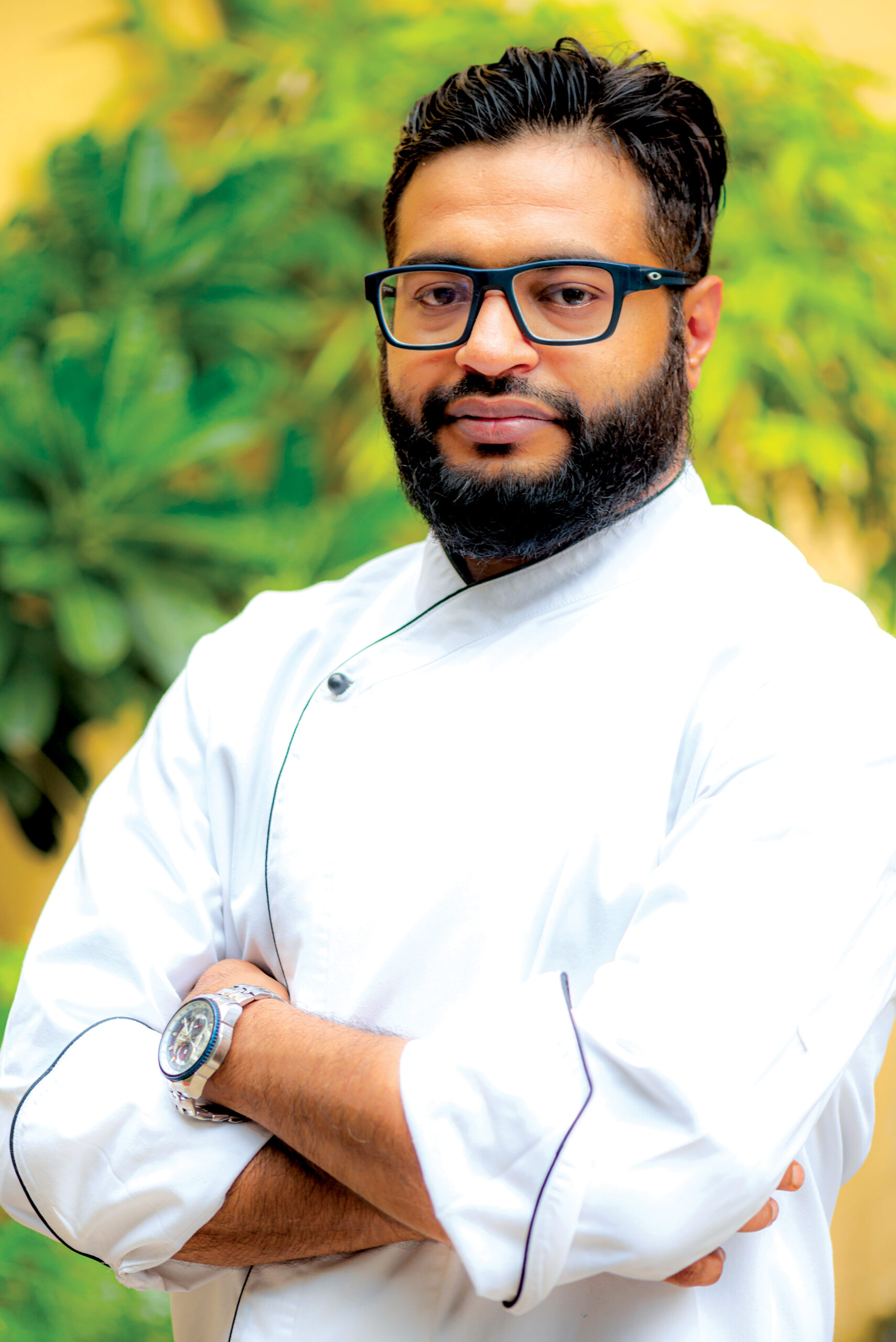
His grandfather taught Gordon Ramsay the secrets of dum cuisine. Chef Zoheb Qureshi hails from what is considered as the First Family of food in India. His grandfather, Chef Imtiaz Qureshi, is one of the two chefs to receive a Padma Shri honour and his father, Gulam Qureshi has been the brand custodian at Dum Pukht, ITC Maurya, Delhi for the last 15 years.
Zoheb’s preparations exemplify the philosophy of Giza-e-Khusus meaning cooking delicious food while retaining its nutritive value. He has taken upon himself the daunting task of running the first chef-led online food delivery format in the country, Cross Border Kitchens. He says, “I am on a mission to make people taste what authentic Nehari or Mirch Baigan ka Salan is or what an original dum biryani tastes like.”
In a candid conversation, he talks more about himself and his work:
Your philosophy of food?
It’s a common ground offering people a universal experience. It brings people together belonging to varied cultures and beliefs.
Your fav cuisine?
Awadhi
Your idol?
My father – Gulam Qureshi
Your fav spice?
Cardamom
Your hot selling dish?
Awadhi Gosht Biryani
Lessons learnt in the kitchen?
Every day is a new day in the kitchen that teaches you something new. However, my evergreen lesson that I stand by daily is to never go to the cooking range without all the ingredients.
How do you like to de-stress?
Listening to music calms me down.
How do you define yourself?
Someone who’s forever eager to learn & unlearn.
What are you passionate about?
About different techniques in cooking and travelling to new places to learn about its food culture.
Last meal on earth, what would you choose?
Phirnee
Recipe: Murgh Rampur Biryani
Ingredients:
Chicken (50 gm) piece 400 gm
Basmati rice 250 gm
Brown onions 25 gm
Desi ghee 50 gm
Cloves 4
Cinnamon sticks 2
Bayleaf 1
Green cardamom 4-6
Cream 25 ml
Beaten curd 75 gm
Salt to taste
Yellow chilli powder 10 gm
Mace cardamom powder 15 gm
Ginger garlic paste 25 gm
Rose water 5 ml
Kevda water 5 ml
( screwpine)
Sweet ittar 1 drop
Slit green chillies 25 gm
Mint leaves 25 gm
Ginger julienne 10 gm
Royal cumin seeds 2 gm
Lemon juice 20 ml
Water ½ litre
Whole wheat flour dough
(for lining the lid) 100 gm
Process:
Step 1 : Cooking of chicken
Marinate the chicken with Biryani masala powder, hung curd, rose water, red chilli powder and cook in tandoor
Cook the chicken with jhol, yellow chilli powder, mace cardamom powder, saffron, ittar, kewra and rose water.
Step 2 : Boiling rice
Wash, soak basmati rice for 10 minutes. Boil water in a pan and add the wholespices, salt to taste and lemon juice.
Add the rice and cook till 2/3rd done.
Step 3 : Cooking on Dum
Layer the chicken. Add a mixture of ghee and cream.
Garnish with mint leaves, ginger juliennes, brown onions and saffron dissolved in water.
Line the lid with flour dough and seal the vessel.
Put the vessel on an iron griddle and cook for 15 minutes.
Once the biryani is cooked, serve it with raw onions, lemon, chutney and raita.
source: http://www.thepatriot.in / The Patriot / Home> Specials / by Sharmila Chand / October 04th, 2019
Address : ITC Windsor hotel, Vasanth Nagar, SEE MAP
The restaurant is shedding its colonial hangover by dropping “Jolly Nabobs” from its title and focussing on biryanis and kebabs.
Master Chef Ghulam Qureshi | Photo Credit: Special Arrangement
ITC Hotels’ Dum Pukht restaurant is an institution with a storied legacy. At ITC Windsor in Bengaluru, the restaurant was called Dum Pukht Jolly Nabobs; for the past 25 years, it was known for its Anglo-Indian and colonial-era dishes. Think mulligatawny soup, pomegranate chops, and forest officer’s pulao. But now, with a menu curated by Master Chef Gulam M Qureshi, they are harking back to the brand’s Lucknowi roots. The restaurant is dropping “Jolly Nabobs” from its name and introducing some classic Awadhi dishes. Over a leisurely lunch, Qureshi treats me to the new menu, delighting me with tales of nawabs and begums.
Chef Qureshi is the seventh generation chef from his family. He is the son-in-law of the pioneering chef Imtiaz Qureshi, who was awarded the Padma Shri for his contributions. The family has been cooking for the nawabs of Lucknow for 200 years. The chefs of Awadh invented the dum style of cooking and take great pride in their kebabs and biryanis.
The succulent Kakori kebabs
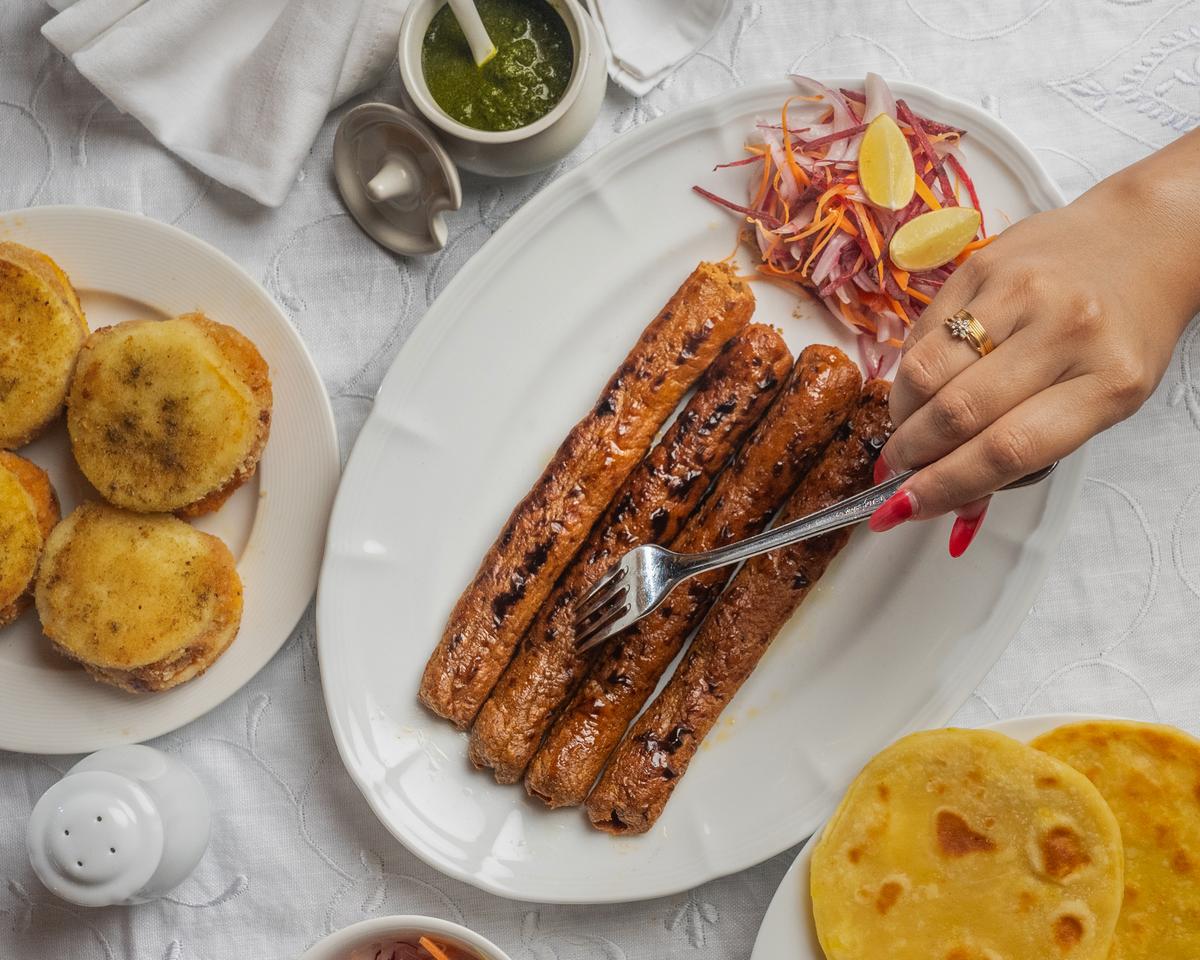
Our lunch begins with a selection of kebabs. The Kakori is, of course, legendary. Minced lamb, flavoured with cloves and cinnamon, are skewered and char grilled. Saffron completes the dish. The seekh nilofari kebabs are made of lotus stem and puffed lotus seeds. Spices like mace, green cardamom and herbs are used to add masala to the kebabs. We are also served the jumbo prawns cooked in the tandoor and then finished in a dum preparation. Flavoured with cheese and yoghurt, this dish is mild and delicate.
The highlight of the meal is the murgh khushk purdah. The main chicken dish is brought to the table in a platter that is topped with the baked pastry, then carved at the table by the team of chefs.
“My forefathers have been making this dish since the 1820s. The nawabs used to farm the poultry at home, because they were very particular about the quality. On the day of the feast, the chicken was marinated for five or six hours. It was then cooked in the dum with the purdah,” Qureshi shares.
Jaitoon ka tel or olive oil, imported from West Asia, makes the dish light and silky. Under the pastry, succulent pieces of chicken, along with chunks of onions, tomatoes and pineapples, are enveloped in a gravy, which has notes of mace and star anise. It pairs very well with the warqi parantha.
The specialty gucchi pulao
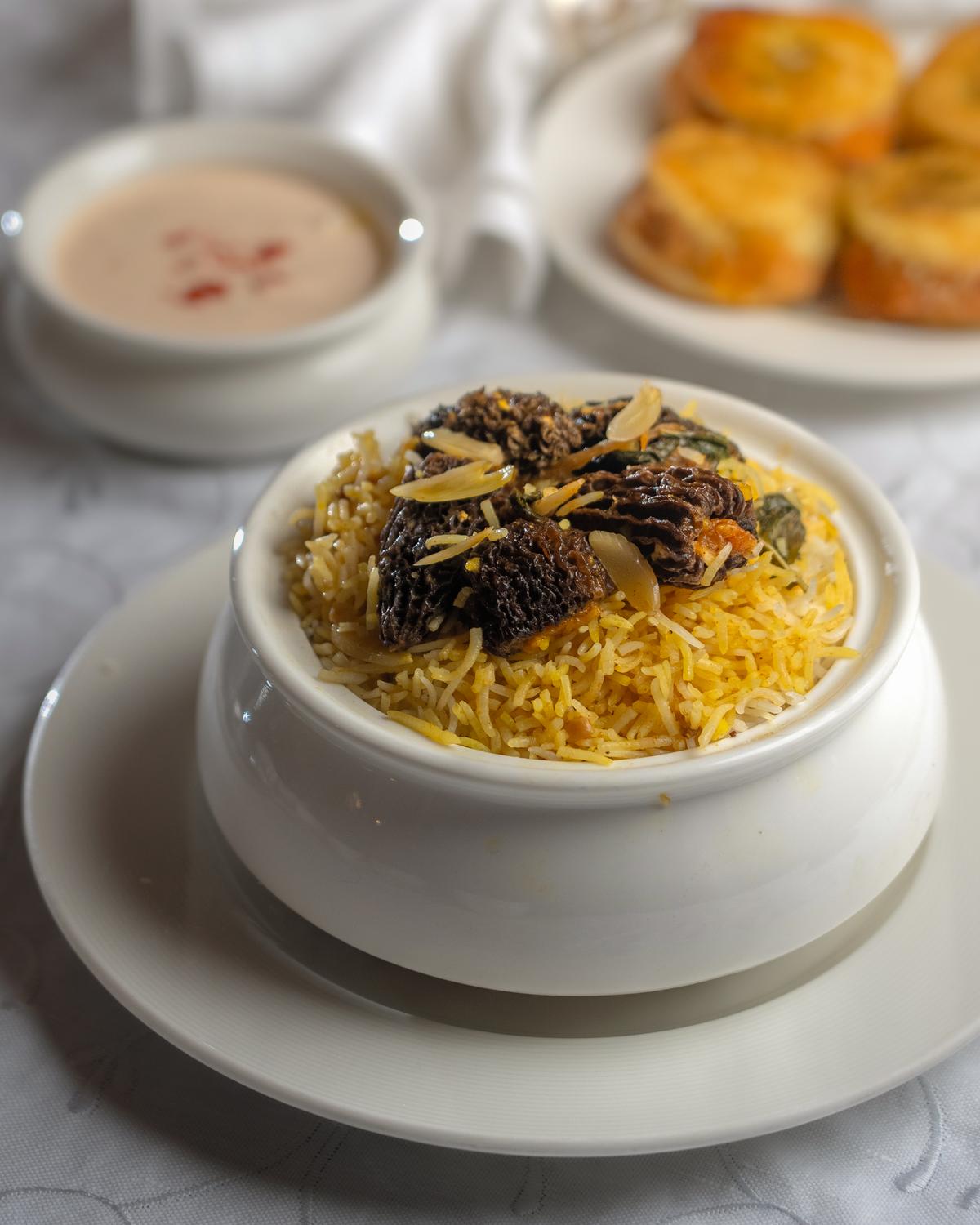
Try the gucchi pulao, made with morel mushrooms that are a delicacy from Kashmir. They are stuffed with cheese and cooked with basmati rice.
We end with shahi tukra and saffron rabri, topped with pistachios, almonds and a silver leaf. While the Anglo-Indian dishes may be missed, I won’t complain about the new direction taken by the restaurant because of the quality and authenticity of the dishes.
Cost for two ₹6,000. At ITC Windsor. For details, call 8061402610
source: http://www.thehindu.com / The Hindu / Home> Food> Dining / by Anagha Maareesha / June 17th, 2024
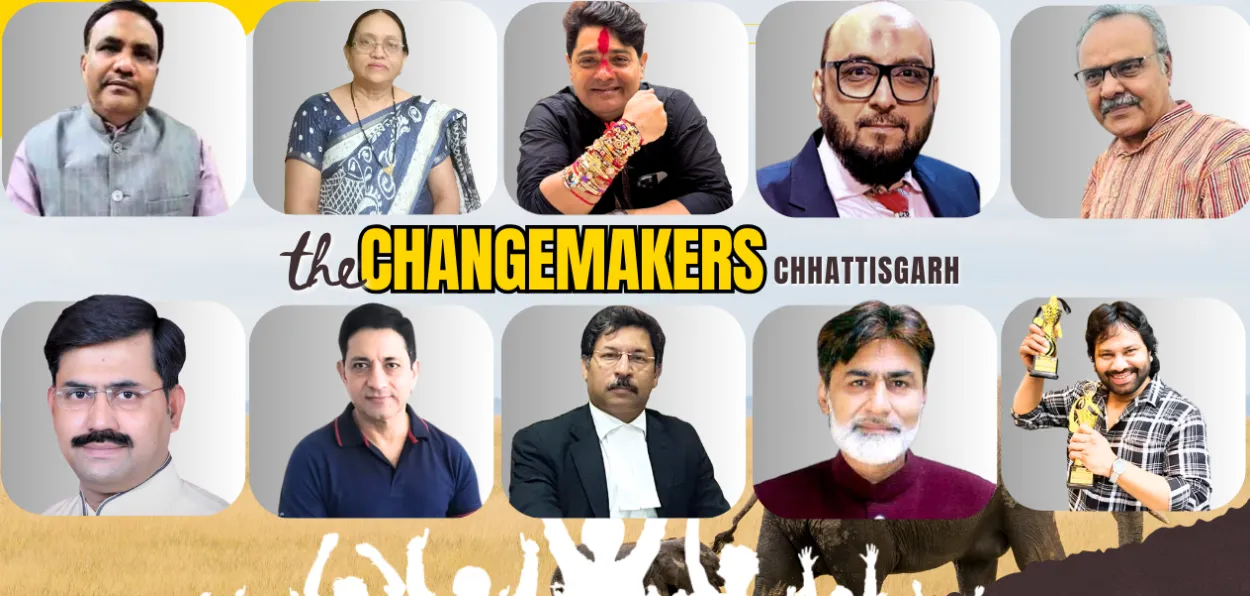
Chhattisgarh, the youngest of Indian states, is a repository of culture and antiquity and also home to spirited people. Some of them have set the trends and become changemakers. Here, we present 10 Changemakers from Chhattisgarh, whose work, grit and initiatives not only set examples for their state but also changed the lives of millions.
These 10 personalities are establishing benchmarks across art, politics, education, science, health and social servicein the state.
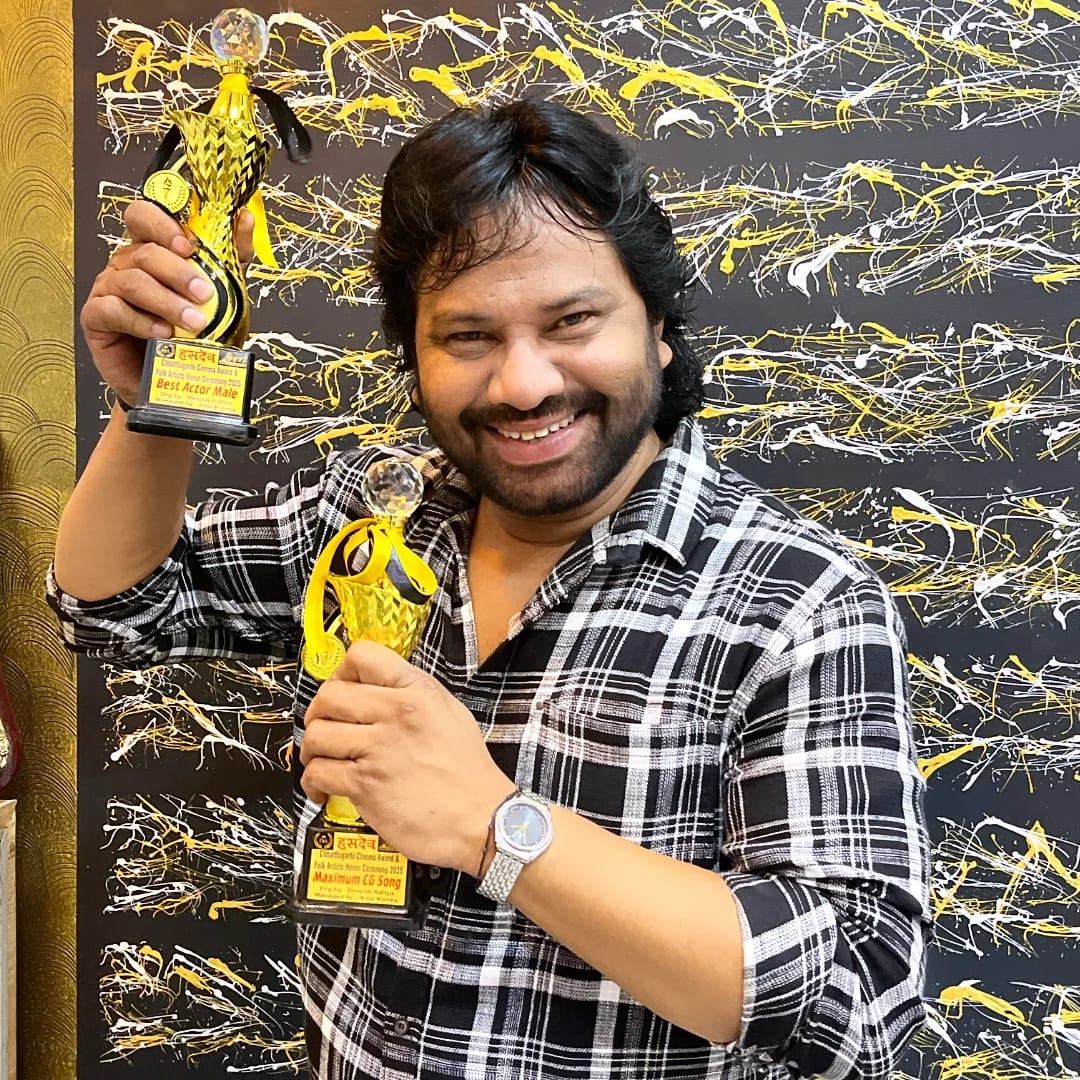
Karan Khan: Superstar of Chhattisgarhi Cinema
Karan Khan is a superstar of the Chhattisgarhi cinema, popularly known as “Chhollywood.” His work extends beyond feature films into music albums, video songs and live cultural events. In recent years, he has appeared in hundreds of Chhattisgarhi songs and albums, many of which have gone viral on YouTube and other platforms, such as the “Ditto Karan Khan Mona Sen” album.
Born Syed Tahir Ali, Karan Khan worked from cinema and music to broaden his reach and fan base. He has been a strong advocate of raising production quality in the regional films. His upcoming filmis being shot on an Arri Alexa—a professional-grade camera rarely seen in Chhattisgarhi productions, which usually face limited budgets and access to high-end technology. Khan strikes a balance between tradition and contemporary presentation to meet the expectations of changing audiences.
Mir Ali Mir: Poetic genius
When you hear the lines “Nanda jahi ka re… kamra au khumari, araitutari…” one name instantly comes to mind: Mir Ali Mir. His real name is Syed Ayyub Ali Mir, but in the world of literature, he is popularlyknown as Mir Ali Mir. Famous for expressing deep thoughts about life in simple words, his ghazals portray love, longing and life’s contradictions, while his Chhattisgarhi compositions are steeped in the fragrance of folk life.
Chhattisgarh has always been fertile ground for literature, art and culture, and Meer Ali Meer carries this legacy forward. His writings strengthen the pride of the Chhattisgarhi language and give voice to the pain, struggles and sensitivities of common people. Born on 15March 1953 in Kawardha, Meer Ali Meer enriched the Chhattisgarhi language and gave it a new identity.He is not only a poet but also an indefatigable promoter of Chhattisgarhi literature, actively working to connect younger generations with the region’s poetry and verse.
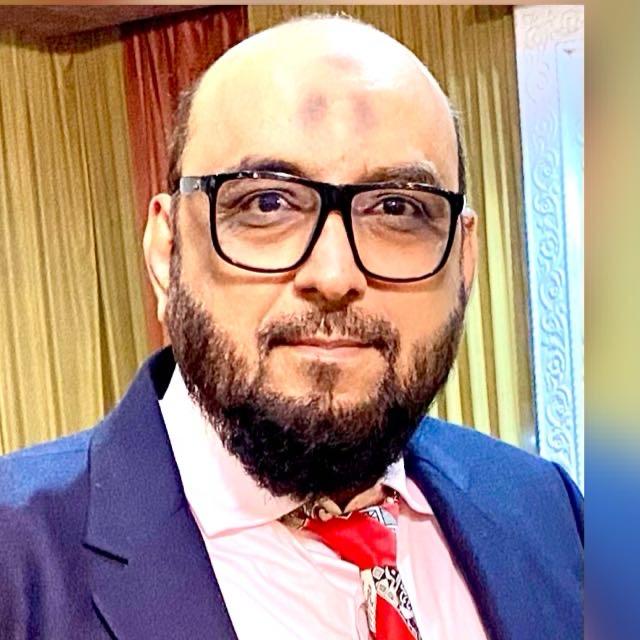
Aijaz Dhebar: transforming Raipur
The story of Chhattisgarh’s transformation is incomplete without the mention of Aijaz Dhebar’s name. He is more than just the mayor of Raipur, the capital of Chhattisgarh; he is a symbol of struggle, commitment and secular politics.
Born in a modest Muslim family in Maulana Abdul Rauf Ward of the Old Raipur, Dhebar helped run his household while pursuing his education. “My circumstances didn’t hold me back; they propelled me forward,” he often says. In January 2020, he was elected Mayor of Raipur Municipal Corporation, defeating his opponent, Mrityunjay Dubey. “I never considered myself a representative of just one religion,” he says. Recognising his leadership, he was appointed National Vice-President of the All India Mayors Council—the first mayor from Chhattisgarh to hold this post. His message to youth: “Don’t waste your energy on hatred and negativity. Politics and society today need constructive, innovative young people.”
Dr.Saleem Raj: Restructuring Waqf Board
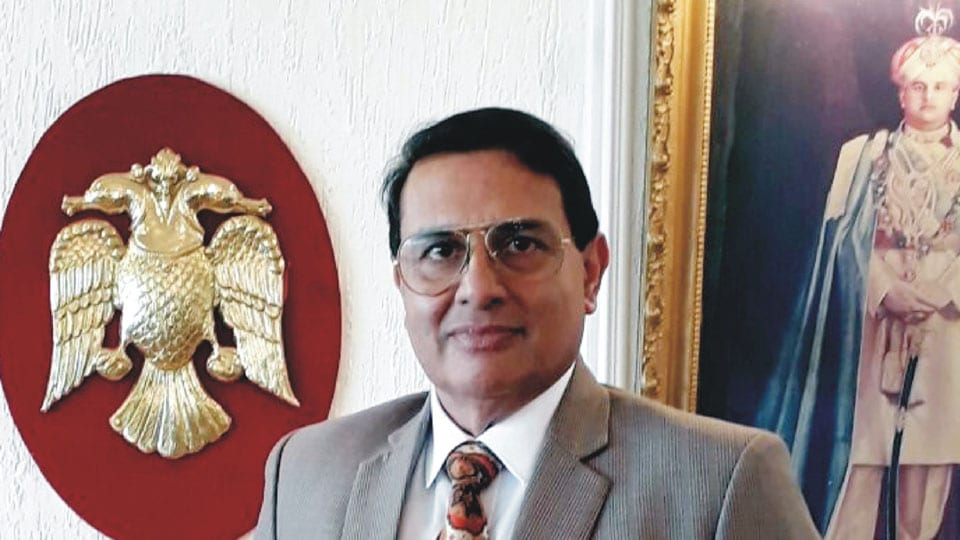
Dr.Saleem Raj stands tall among a few who have played a crucial role in Chhattisgarh’s minority politics and social reform movement. A long-time member of the Bharatiya Janata Party, Raj serves as Chairman of the Chhattisgarh Waqf Board, a position with cabinet rank.
His rise is not just a story of political success but of a man determined to transform religious institutions from centres of controversy into engines of social and national development. “Religious institutions should be partners in the nation’s progress, not centres of disputes,” he often says. Raj joined the BJP in 1992 and steadily rose through the ranks, serving at district, state and national levels in the party’s Minority Morcha. From 2016 to 2020, he chaired the state Minority Morcha, earning a reputation for Muslim outreach and consensus-building.
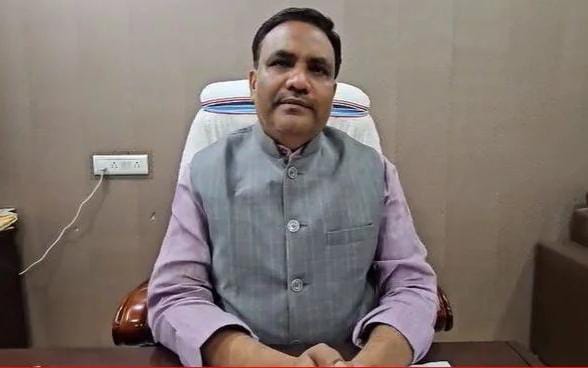
Tauqeer Raja: Accessible Politician
Tauqeer Raja embodies a rare blend of political activism, entrepreneurship, sportsmanship and cultural pursuit—serving as a model of dedication in Chhattisgarh’s public life. He is widely recognised as the BJP’s state spokesperson, a sharp debater, a successful entrepreneur, a sports and music enthusiast, and a committed social worker.
What sets him apart is his ability to pursue society, politics and business with equal commitment. He focuses on issues likeeducation, healthcare and employment, with special attention to integrating youth into the mainstream. Born on 15 September 1973 into a modest family, Raza displayed leadership qualities from an early age, excelling in studies as well as sports and cultural activities. Today, he is actively involved in all three fields and is known for his approachable nature—equally accessible to the public and party workers.
Dr Shams Parvez: Keeping air clean
Professor Dr Shams Parvez guides students and the public with an approach that blends scientific rigour with social responsibility. An expert in air pollution, environmental health and chemistry, Dr Parvez is one of the few scientists in Chhattisgarh to link academic research with societal needs.
His extensive studies on changing air quality in Raipur and surrounding areas have given policymakers a solid scientific basis for interventions. Defined by simplicity, rigour and dedication to students, he is a key figure in Chhattisgarh’s academic landscape for environmental protection. His research has been published in numerous national and international journals, informing state environmental policies and public health programmes. Collaborations with prestigious institutions such as NASA and the Chinese Academy of Sciences reflect the high quality of his work, through which he has led multimillion-dollar projects.
Dr Abbas Naqvi: Building a Medical Centre with a Human Touch
Dr Abbas Naqvi is a prominent name in Raipur’s healthcare sector. He is not just any other doctor but is known for his unmatched dedication, honesty and an unshakeable spirit of service. Dr Naqvi is among a select few who take their profession not just as a career but as a means to serve society.
In 2004, Dr Naqvi founded Ramkrishna Hospital, which has become one of Chhattisgarh’s leading multi-speciality healthcare centres. He currently serves as Director and Consultant in the Department of Medicine. Patients know him as a sensitive human being. Born and raised in Raipur, he chose to return to his hometown after completing his medical education rather than seek opportunities in larger cities. He treats thousands of patients daily using a blend of modern technology and empathy and compassion.
Mohsin Ali Suhail: Positive Reporting
Amid a changing media landscape, Hajji Dr Mohsin Ali Suhail has preserved the dignity, integrity and responsibility of the profession of journalism. He is one of Chhattisgarh’s most respected journalists, known for fearless, people-centred reporting and an unwavering commitment to truth.
Suhail hopes the next generation of reporters will retain honesty and care for depth in their stories. His advice: “Don’t just chase breaking news. Dig deep into society’s roots. Journalism means bringing change, and change comes only when we show the truth.”
Born on 7 May 1953, Suhail displayed curiosity and social awareness from an early age. He recalls deciding as a child that he would speak up whenever his village faced problems.
Shamsad Begum: Chhattisgarh’s Women Commando
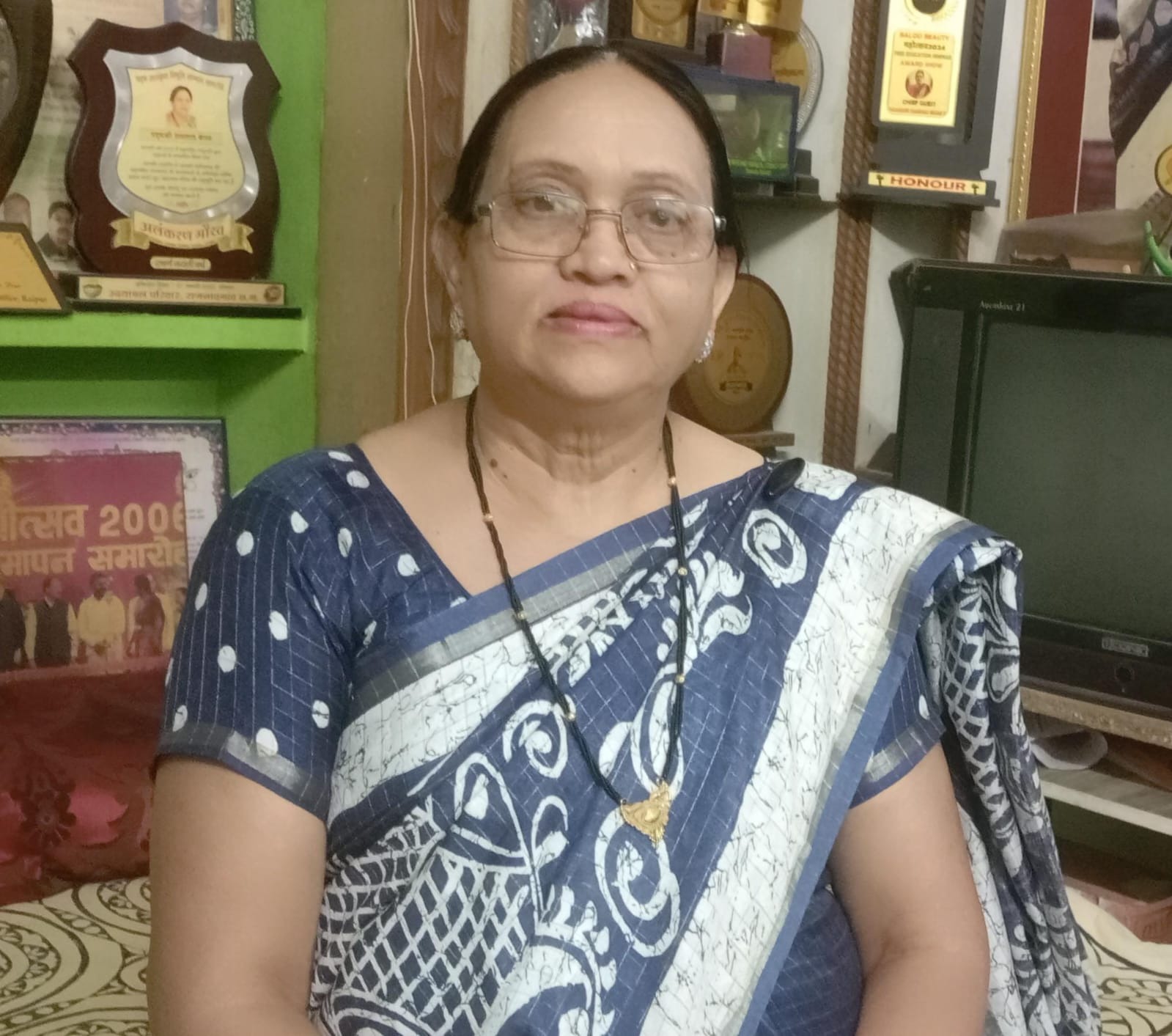
Padma Shri awardee Shamsad Begum is living proof of how a woman’s determination can transform an entire community. With unwavering honesty and a focus on inclusion, she has built one of India’s most inspiring grassroots networks, empowering thousands of women in Chhattisgarh to live safer, more self-reliant lives. She is the driving force behind the women’s commando movement.
Her journey began in the small town of Balod, where she witnessed firsthand the obstacles women faced. “If I ever get the chance, I will work for women’s education and empowerment,” she resolved. Coming from a modest family, she drew inspiration from her mother, Aamna Bee, who balanced work and education to ensure all six of her children studied. Her impact was nationally recognised when she was included in the list of 100 Muslim women honoured for their role in India’s development.
Faisal Rizvi: A Lawyer with an Unyielding Sense of Justice
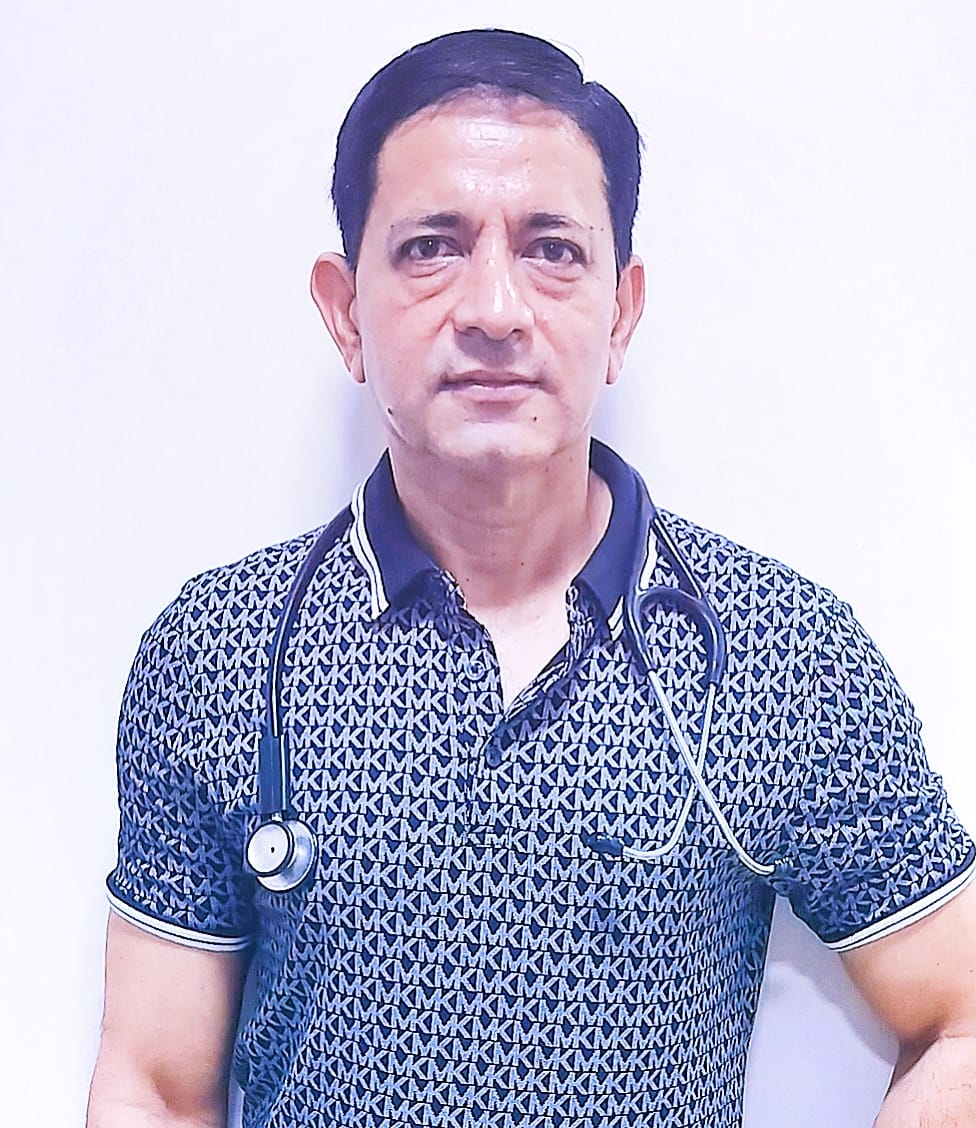
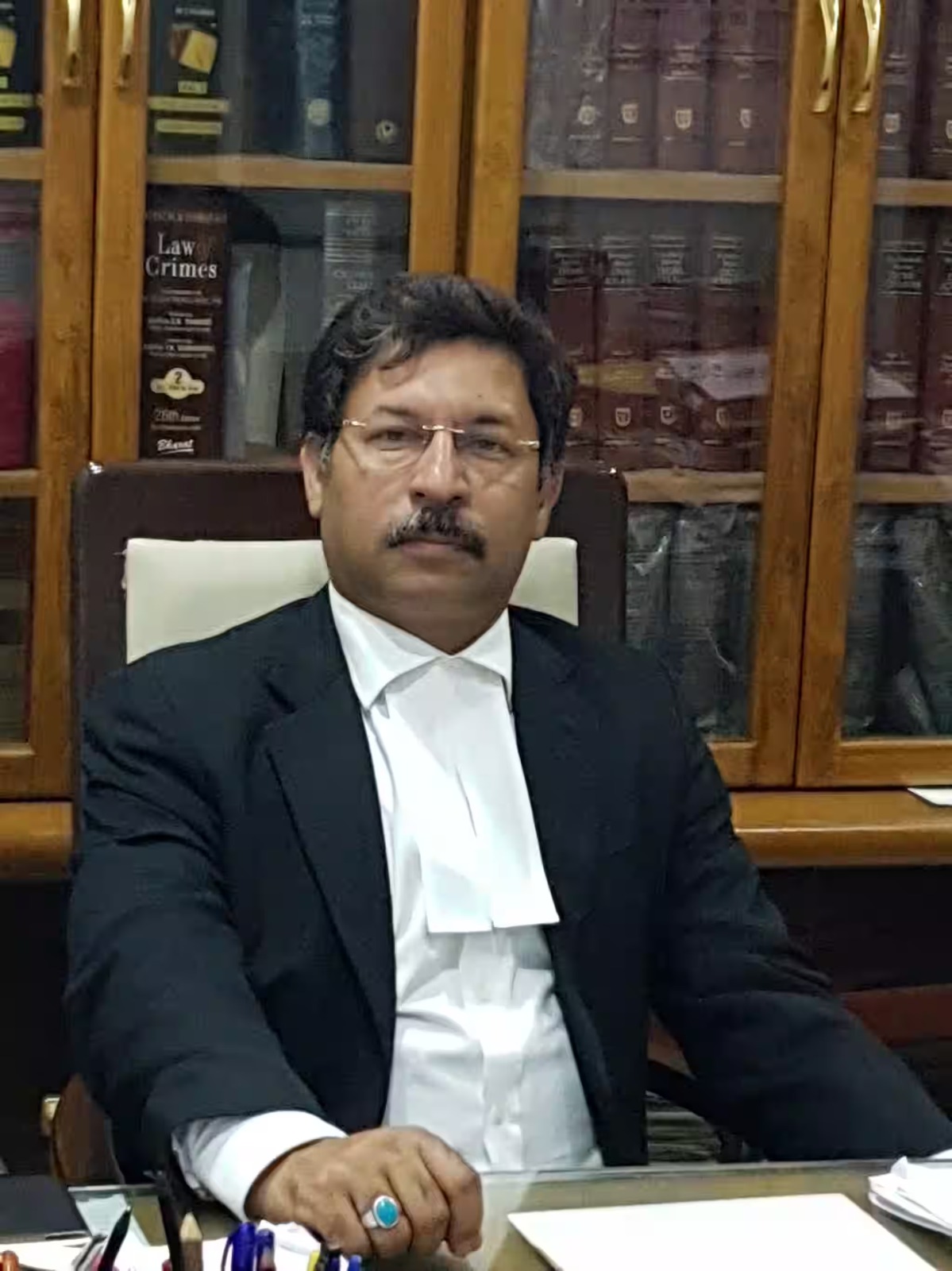
Faisal Rizvi has made his nameas a leading criminal lawyer in Raipur. His arguments, cross-examination skills and strong command of legal intricacies have made him one of Chhattisgarh’s most respected legal figures.
From a young age, Rizvi displayed keen observation and a natural inclination towards law, with a deep interest in social issues and legal awareness. Understanding the importance of nurturing the next generation of lawyers, he has distributed more than10,000 books on the Indian Penal Code and Constitution to law students in memory of his father. Born into a cultured, educated family, Rizvi completed his LL.B. from CLC College, Raipur in 1995 and later earned an LL.M. During his studies, he immersed himself in judicial perspectives, constitutional principles and the workings of society and administration.
source: http://www.awazthevoice.in / Awaz, The Voice / Home> The Changemakers / posted by Aasha Khosa / October 05th, 2025
Lover of wildlife, celebrated hunter, sharp-shooter, tranquillising expert and more…
Dwindling forest covers, rampaging rogue elephants, man-eating tigers and man-animal conflict are all very frightening realities in today’s world, especially in our country. The Forest Departments across the country are faced with these huge challenges. In spite of their best efforts, the problems persist.
However, the solutions by a few who have grown up understanding wildlife like the back of their hand are hardly taken.
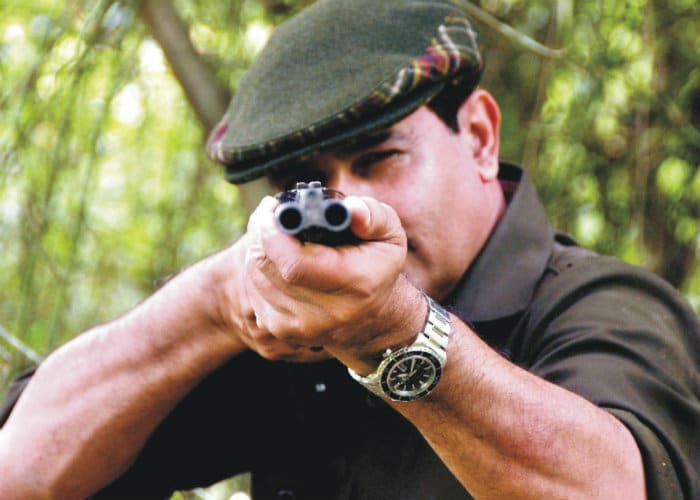
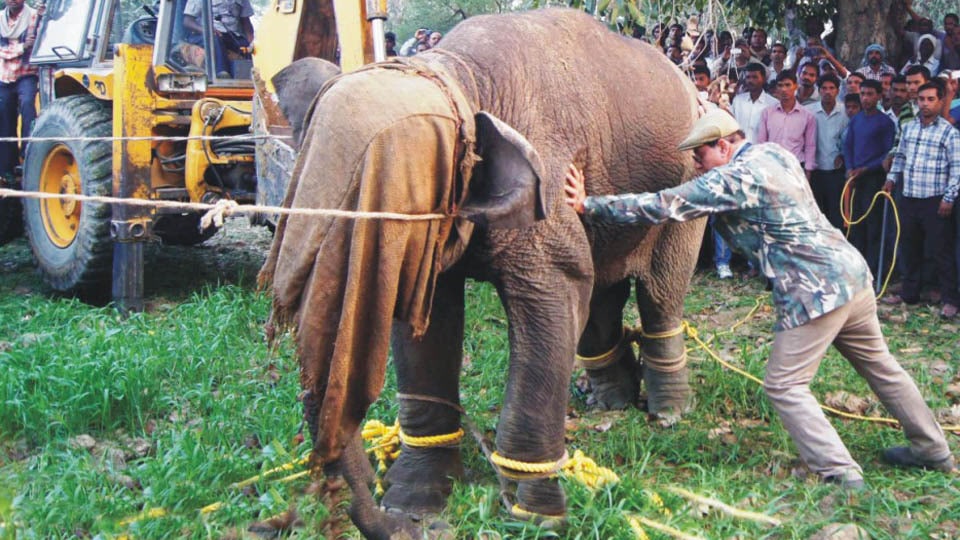
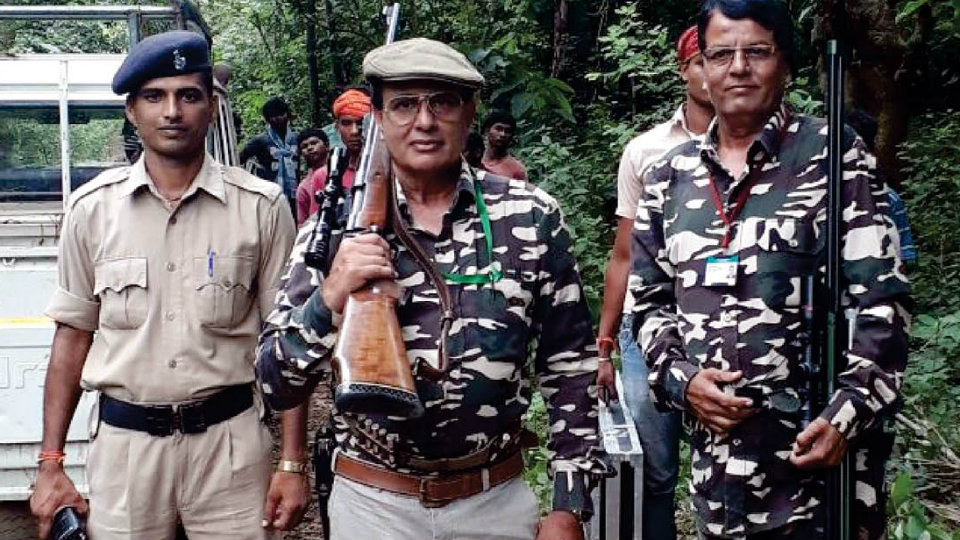
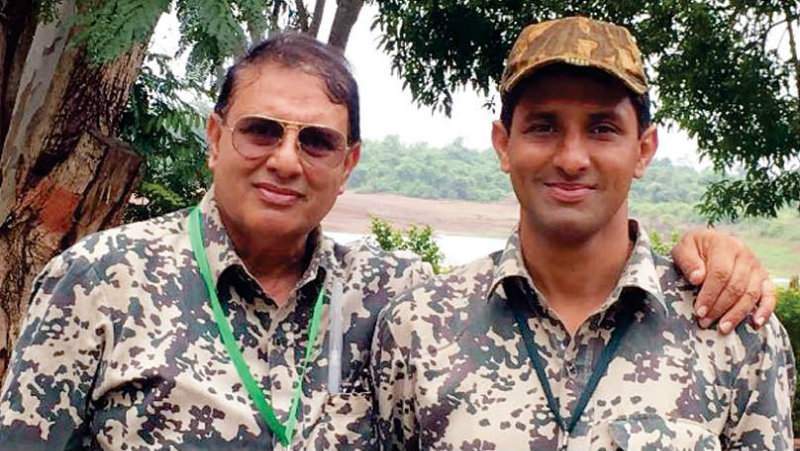
One such Wildlife Conservationist is Nawab Shafath Ali Khan from Hyderabad, who had been invited by the Jharkhand government last month to put down a rogue elephant that had killed 15 people. He is the most celebrated hunter and the only tranquillising and culling expert in the country.
He also runs a chain of resorts in Masinagudi, Tamil Nadu.
Star of Mysore Features Editor N. Niranjan Nikam travelled all the way to meet the Sharp-Shooter at his den in the midst of the jungle at the Safari Land Resorts in Masinagudi.
The Nawab opened his heart out for nearly two hours in this exclusive interview and spoke about royalty, how to manage forests, man-animal conflict, radio-collaring, culling, animal right activists and his anguish about the villagers and forest-dwellers. Excerpts…
Star of Mysore (SOM): You are not only a Nawab at heart but also a real Nawab from Hyderabad. How much of ‘Nawabipan’ is still there in you?
Nawab Shafath Ali Khan: Well, in well-bred horses the genes carry on in the blood. So I am a Nawab. But I devoted my life to the cause of poor Indians who suffer silently, like forest-dwellers, tribals, aborigines, having lost their lives and property to wild animals.
SOM: You are the most celebrated hunter in the country. Where did it all begin?
Shafath Ali Khan: Hunting was a family ritual. And my grandfather Nawab Sultan Ali Khan Bahadur was Advisor to the British Government on man-animal conflict. I grew up at a time when the Wildlife Protection Act came into being and from controlled hunting the transition to a total ban on hunting was introduced in the country. With the royalty and nobility hanging up their hunting rifles there was a vacuum of traditional knowledge of tracking animals that had generated over generations. I tried to fill this vacuum and worked for saving India’s wildlife as a Conservationist. Hunting is a tool of conservation and all advanced countries across the world are practicing and encouraging controlled hunting and their wildlife is growing.
SOM: You are the only authorised tranquillising expert and culling officer in the country. When there is a Forest Department, which has a rich history, what are the Officers doing?
Shafath Ali Khan: As I said, traditional knowledge acquired over generations cannot be found in textbooks. The art of reading pug marks, identifying it as a tiger or tigress just by seeing it or coming to conclusions about the height of an elephant by measuring the circumference of pad mark of the forefoot is traditional knowledge. Rulers had Shikaris who managed their forests with a vested interest of hunting. The rulers’ passion for hunting not only saved trees and grasslands but also kept a check on excess animal population. Unfortunately, after Independence forest management came into the hands of Officers who were bereft of ground realities. Large scale deforestation started and wildlife mismanagement reached its apex. Certain species grew in numbers beyond controllable figures like wild boar and blue bull. Across the country, tiger population reduced due to habitat destruction and revenge killings.
Large scale destruction is caused by elephant herds that have strayed considerable distances away from protected areas into agriculture fields. Neglected National Parks are overridden with noxious weeds like lantana and parthenium forcing our precious wildlife outside protected areas.
This is the crux of man-animal conflict that has frustrated farmers and forest-dwellers; giving them no option but to poison or electrocute elephants. According to project elephant figures, there were 15,700 elephants in the country in 1980 and today we have over 32,000. The forest cover on the other hand has reduced. The think-tanks who manage wildlife in the country did not plan this explosion in elephant population resulting in excessive man-animal conflict that we face today.
SOM: As a boy of 19 years you were in Mysore Race Club (MRC) as Assistant Secretary. How did this happen?
Shafath Ali Khan: My grandfather was India’s senior-most Handicapper (a person appointed to fix or assess a competitor’s handicap, especially in golf or horse-racing) and my father was Senior Stipendiary Steward and Secretary of Bangalore Turf Club (BTC).
High taxation on horse-racing was killing the industry and both BTC and MRC were finding it difficult to even pay salaries to their staff. My father Nawab Arshad Ali Khan started off-course betting between BTC and RWITC (Royal Western India Turf Club) in 1977 and this gave a new lease of life to the racing industry across the country.
Jawa motorcycle factory Founder Farookh Irani whom I always called Uncle Irani, Chairman of MRC, in consultation with my dad, started off-course betting between BTC and MRC and soon the fortunes of MRC blossomed. MRC was setting up photo-petrol cameras to record the races and I was sent, raw out of school, to Mysore to identify where the twin towers of the cameras had to be installed. I was already a National Champion in Equestrian sports and a top rider in the country. When I finished identifying the setting up of photo-petrol camera towers, having worked under Uncle Irani for a week, he decided to absorb me under MRC and I had the good fortune of learning from him. I was there for three years.
The crux of the man-animal conflict today is that old, weak and handicapped species are pushed out of the forest by the younger and stronger animals. These animals before they could create havoc were eliminated. The village folks were happy, revenge killing was never heard of and we didn’t have elephants straying into private lands like Hassan and Coorg like we are facing today.
Star of Mysore (SOM): The fight between humans and elephants, in other words man-animal conflict is resulting in shocking number of deaths. Planters in Kodagu are facing the heat with their crops being destroyed because of huge elephant menace there. What do you think can be done about this?
Nawab Shafath Ali Khan: The problem is not only in pockets of Karnataka but across the country. Any wild animal requires space. We cannot comprehend compressing them into smaller forest areas. With the number of elephants increasing in the country, the land to animal ratio has gone haywire. National Parks are not being de-weeded and cleared of noxious weeds; to provide enough fodder to the elephants and to restrain them within the parks. Hungry elephants are forced to stray out into agricultural lands for their survival.
Elephant is wise to the fact that nutritional value is found more in sugarcane, bananas, paddy and jackfruit compared to what it gets in barren government-controlled forests. So the Department is putting animals under tremendous pressure. This pressure is changing the metabolism of elephants making them aggressive, attacking people and raiding crops with impunity.
This man-made pressure on elephants and tigers have changed their psychological persona and they are also attacking humans. We have left the problems drift so much that it’s hard to find a win-win situation at this point of time. Anyway my thinking after spending 40 years in the field is that 70 per cent of our wild elephants are outside the forests. This is a very alarming figure. There is no shortage of fund as far as Forest Department is concerned. We are sitting on Rs. 35,000 crore of CAMPA (Compensation Afforestation Fund Management and Planning Authority) Funds. The States can utilise this money and have an elephant-proof trench all around government protected forests. All stray elephants outside this trench will be herded in or translocated.
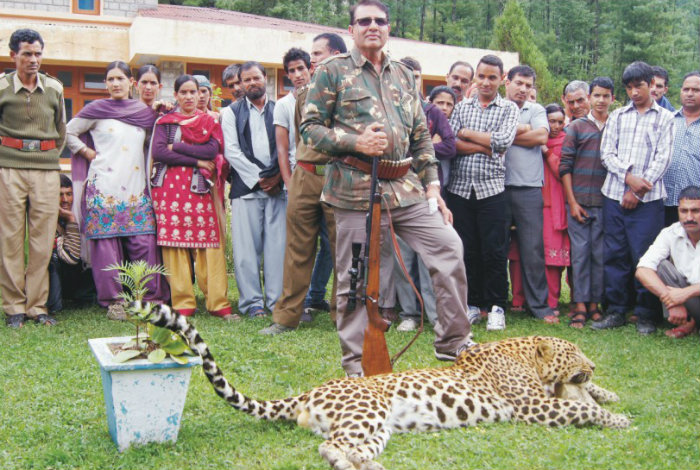
The carcass of the man-eating leopard stretched out on the lawns of Thunag Rest House in Himachal Pradesh.
Wildlife management and human habitations have to be compartmentalised. Solar powered borewells have to be erected every 5-km radius within the National Parks. Clean and sufficient drinking water should be provided to the animals. However, the hard decision that we need to take but from which we have drifted for decades is, how many animals can survive in the relatively small National Parks and buffer areas.
Excess animals sadly will have to be culled not only for their own survival but also to maintain a healthy forest. Overgrazing and over-browsing is casting tremendous pressure on our precious forests.
SOM: There is a story that late Srikantadatta Narasimharaja Wadiyar fell in love with the Land Rover you were driving and bought it. Is this true?
Shafath Ali Khan: Yes, it is true. We were all fond of cars and I had a Land Rover that I had maintained in immaculate condition. The Prince (as Srikantadatta Narasimharaja Wadiyar was called by many who were close to him) fell in love with it and wanted to buy it. But, I was reluctant to sell it. Soon, the Prince and the Princess (Pramoda Devi Wadiyar) came to attend my wedding and the Prince brought a Convertible Red Triumph Sports Car which he gifted to me at the wedding. Now, I had no option but give my Land Rover to him. He enjoyed the Land Rover and I and my wife, newly-married, thoroughly enjoyed the Convertible Sports Car. Prince was very close to me and I was one of the few who had access to the gun rack that was just beside his bedroom. I had the pleasure and honour of cleaning and repairing those beautiful rifles which belonged to the late Highness Jayachamaraja Wadiyar.
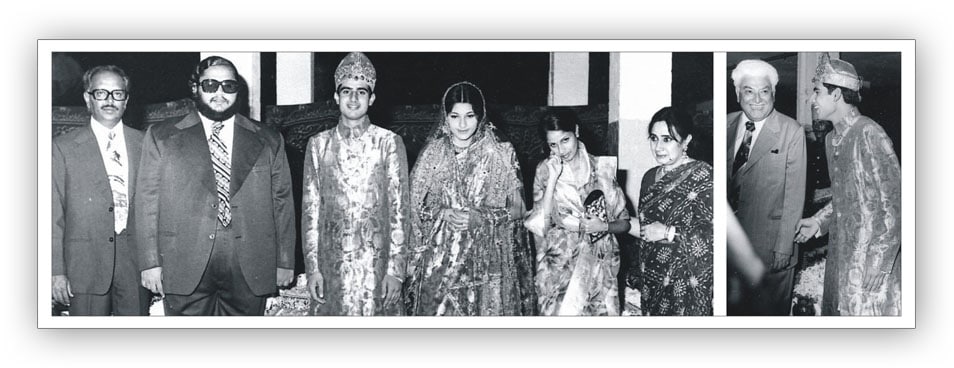
The young bridegroom Nawab Shafath Ali Khan (third from left) seen with (from left) late Sirdar K.B. Ramachandra Raj Urs, late Srikantadatta Narasimharaja Wadiyar, bride Begum Shaheen Khan, Pramoda Devi Wadiyar and the Nawab’s mother Begum Arshad Ali Khan at his wedding reception in Bangalore Turf Club (BTC) in 1976. Picture right shows Jawa Factory Founder F.K. Irani greeting Nawab Shafath Ali Khan at the wedding.
SOM: Isn’t there a contradiction when you say nobility indulged in hunting but they also protected forests?
Shafath Ali Khan: It was a paradox that controlled hunting that had a code and a strict set of rules where only males of deer were shot subsequent to the breeding season. Old rogue elephants and dying tigers beyond breeding age were painlessly shot using high-powered rifles in the hands of our expert shooters. Survival of the fittest is the law in the jungle.
The crux of the man-animal conflict today is that old, weak and handicapped species are pushed out of the forest by the younger and stronger animals. These animals before they could create havoc were eliminated. The village folks were happy, revenge killing was never heard of and we didn’t have elephants straying into private lands like Hassan and Coorg like we are facing today.
Wildlife management was much better balanced compared to what it is today. Across the world animal population have reduced or gone haywire wherever government imposed total ban on hunting.
Meet Nawab Shafath Ali Khan- 3 (September 08th, 2017)
When Star of Mysore Features Editor N. Niranjan Nikam travelled all the way to meet the Sharp-Shooter at his den in the midst of the jungle at the Safari Land Resorts in Masinagudi, Tamil Nadu, Nawab Shafath Ali Khan and his son Asghar Ali Khan, drove this writer in the jungle in their American Jeep M-38 A1, a 1952 model four-wheeler late in the evening and it was a hair-raising experience as the young driver at the wheel negotiated the tough, lovely, Blue Nilgiri Hills range.
Both of them are attuned to every sight and sound in the forest even as the Nawab spotted two elephants and a calf at quite a distance instinctively. Later, the Nawab sat in his unique restaurant and for nearly two hours spoke freely in this exclusive interview about royalty, how to manage forests, the officials in the department, man-animal conflict, his views on radio collaring, culling, animal right activists and his anguish about the forest-dwellers and the villagers living in the fringes of the forest.
Star of Mysore (SOM): How much of preparation goes when you shoot man-eating tigers and rogue elephants?
Nawab Shafath Ali Khan: Bascially physical fitness and mental alertness are the major factors. A hunter is a complete man. He knows how to repair his vehicle, stitch his shoes in the forest, carry out minor repair to his weapons and who could read the forest, pick up the slightest sound and check the direction of the wind. Patience has to be in abundance. I don’t remember how many nights I have spent on a tiny machan on a tree in freezing cold and rainy night.
Tracking rogue elephants one has to walk 10-20 kms a day and this can be quite taxing. Preparing for these operations has become a way of life for me. I live on the most wildlife rich area of the sub-continent where I see wild elephants, tiger, leopard and sloth bear in my morning and evening walk. This keeps my mind alert and greatly helps in dangerous and close encounters with dangerous beasts that I have to tranquillise or eliminate as per government orders.
When Star of Mysore Features Editor N. Niranjan Nikam travelled all the way to meet the Sharp-Shooter at his den in the midst of the jungle at the Safari Land Resorts in Masinagudi, Tamil Nadu, Nawab Shafath Ali Khan and his son Asghar Ali Khan, drove this writer in the jungle in their American Jeep M-38 A1, a 1952 model four-wheeler late in the evening and it was a hair-raising experience as the young driver at the wheel negotiated the tough, lovely, Blue Nilgiri Hills range. Both of them are attuned to every sight and sound in the forest even as the Nawab spotted two elephants and a calf at quite a distance instinctively. Later, the Nawab sat in his unique restaurant and for nearly two hours spoke freely in this exclusive interview about royalty, how to manage forests, the officials in the department, man-animal conflict, his views on radio collaring, culling, animal right activists and his anguish about the forest-dwellers and the villagers living in the fringes of the forest.
SOM: There is no scientific basis in culling and it is not very successful in Africa as you claim, criticise a few. How do you react to this?
Shafath Ali Khan: There is no place for sentiment and religious connotation in wildlife management. I have been asked this question in several national workshops that I have attended. But when I ask them for an alternate solution no doable common sense approach has come forth.
I basically don’t like culling or shooting. I am now an authorised tranquilliser and resource person for six States and run an NGO ‘Wild Life Tranquil Force.’
SOM: What do you do here in the NGO?
Shafath Ali Khan: We are training front-line forest staff and veterinarians of six States in the country. I don’t see any alternative to scientific culling as far as our country is concerned. As an advisor and culling officer to Forest Department of Bihar, I have conducted several experiments to arrest the exploding population of blue bulls. Bihar is a fertile State with Ganges and several rivers flowing. The Gangetic plains are rich in crops. Overpopulation of the blue bulls from the forest, which consist of only 5 percent has found its way into agricultural fields causing as much as 35 percent damage to the farmers.
If at all there is a substitute to culling, it would have been adopted long ago and population controlled. Today UP, Jharkhand, Haryana, Rajasthan, Gujarat, Maharashtra, and Uttarakhand are reeling under the problem of overpopulation of wild boar and blue bulls and no solution is in sight.
Animal right activists might have a vested interest. These organisations get funds from abroad and with politicians and muscle power they arm-twist the senior forest officers to do what they want them to do rather than what is in the interest of the country. They are often bulldozed to falling in line and let matters drift.
Don’t be surprised if the price of Dal becomes Rs. 600 a kg as blue bulls, antelopes deliver two calves annually and wild boar sow delivers anywhere up to 19 piglets in a span of three months. There are virtually no carnivores to control this population explosion outside the forest. So, what are we heading for is anyone’s guess.
Shafath Ali Khan with his son Asghar Ali Khan.
SOM: As a wildlife conservationist, what is your view on radio collaring of tigers and other animals?
Shafath Ali Khan: In my opinion it is an utter failure. The reason why I say this is, it affects the breeding of tigers. Because when the tiger mounts a tigress, he starts biting on the top of her neck and it is a natural instinct. When the radio collar is there, the tiger bites into the radio collar and finds something hard and abnormal and it withdraws. I have seen this phenomenon physically.
In Siriska Tiger Reserve, when they introduced tigers with radio collar there was no breeding at all and I had predicted this 30 years ago.
Each radio collar weighs almost 1.5 Kgs and when a wild tiger is all of a sudden burdened with it then his entire movement and body language changes. This famous tiger Jay, which was tranquillised and radio collared, his home range, which was 38 sq. metres before the radio collaring, increased to 58 sq.mtrs.
SOM: Why is that?
Shafath Ali Khan: When you have something implanted in an animal, then its entire movement changes and it may come closer to human habitation also.
Also, the battery life which is supposed to last one year, never lasts that long. For instance, in this tiger Jay in Umed Sanctuary in Maharashtra, the battery ran out in two months and it disappeared. It was a pretty tiger and later it even died.
Then each radio collar costs about Rs. 3.5 lakh to Rs. 5 lakh and the cost involved in catching a wild tiger is another Rs. 5 lakh. With all this operation, it does not come cheap.
There is my own experience of a leopard that I tranquillised in Gundlupet in Muntipara village. This leopard had a radio collar, which had gone dead long time back. This animal entered a house and but for my early intervention, the girl living in that house would have been dead. It was a problematic leopard which was caught, radio collared and released and it again entered human habitation. The biggest problem of radio collaring is it gives the Forest Department a false sense of temerity to release the animal that should not be released. As a result the lives of villagers and poor forest dwellers are shackled.
SOM: Have you had any near-death-like experiences as a sharp-shooter in all these years?
Shafath Ali Khan: The most memorable day in my life was on Dec.17, 1976, when I was called by Van Ingen and Van Ingen (the famous taxidermists in the country) to shoot a rogue elephant that had killed 12 people. Since, late Uncle Joubert Van Ingen (who, at the age of 100, had written a foreword to the book ‘Man-Eaters And Wildlife Challenges’ by the Nawab. He dictated the foreword at one breath without a single mistake!) thought he was too old to trace the rogue elephant, he requested the Forest Department to invite me to shoot it at H.D. Kote. I traced the elephant and shot it and this incidence is rich in my memory.
The other near-death-like experience I can recall was just last month, on Aug. 11, 2017, when I was invited by the Jharkand Government to put down a rogue elephant that had killed 15 people and we tracked it for three days in most difficult terrain and thick impenetrable jungle, the rogue tusker turned around and came for us.
My two trackers fled leaving the Veterinarian Dr. Ajay Kumar and me. I saw the 10-foot tall tusker from hardly 10 metres coming for us like a railway engine with a loud trumpet. He raised his head to grab me with his trunk covering the forehead which is the only vital spot to shoot at that close range. A wrongly placed shot would have ended me in a fraction of a second. I took him at 9 metres and shot him in the mouth. The heavy bullet from .458 Magnum brought him to his knees. But he tried to get up in a fraction of a second. Working the bolt fast I fired the second shot in between the eyes and brought him down painlessly and death was instantaneous.
I often strive hard to see that the animal is put out with least pain and agony. Shooting, for me is the last option, when all other remedies have exhausted.
SOM: What about the experience of shooting a man-eating tiger?
Shafath Ali Khan: In July 2017, I was invited by the Maharashtra Government to tranquillise a man-eating tigress that had claimed four human lives. I darted from a distance of 15 metres when she was galloping away. But the most hair-raising incidence was shooting a man-eating tigress in 2009 in UP, where I tracked her for 35 days and nights and shot her when she charged from a distance of six metres.
SOM: Asghar Ali Khan, your son is also an authorised shooter. So, the family tradition continues?
Shafath Ali Khan: Asghar, is an authorised shooter and a crack shot. He has a .470 double rifle on his licence and helps me in dangerous tranquillising operation. But he along with my wife Shaheen keep the fire burning and looks after our chain of resorts in the Nilgiris. Often when a long drawn operation is coming to a conclusion, I summon him to join me as a backup.
SOM: Running Safari Land Resort must be a great experience for you and your family?
Shafath Ali Khan: Definitely yes. The very thought of living in a deep jungle arouses a sense of bliss within me. Forests and wildlife are very close to my heart. Riding in the jungle every morning is a thrill that I have no words to explain. Safari Land has given what no other luxurious Palace in the world can give us.
SOM: But are you related to the Nizam family of Hyderabad?
Shafath Ali Khan: Yes, yes. We are from the royal family of Hyderabad. We were equal to the Nizams, like you had the Maharajas and Ursus in Mysuru. The Nizam married into our family, our daughters were given in the Nizams family. So we were equals.
SOM: How long do you think you can carry this crusade of yours as a hunter and sharp- shooter?
Shafath Ali Khan: My priorities are no longer shooting. Having worked for several assignments for the past four decades, I have been involved in 24 dangerous operations and have culled thousands of animals. No one in the country has shot as many animals as I have done. My priority is not shooting or culling any more. My focus is to help those five crore people who are living in 1,87,000 villages and the forests across the country in most adverse conditions. Since I have worked, stayed and eaten with them, I know what it means by hunger.
Several interior villagers are living in a state of anarchy, in constant fear of wild elephants that raid the villages, break their huts, and eat away their rations. Women with infants in their arms run in the middle of the night to the next village 3 kms away. There is no one to wipe their tears. This is fresh in my mind from Jharkhand. I sometimes wonder whether the Constitutional rights, the right to life and liberty is guaranteed only for the elite and not my brothers and sisters who suffer in silence.
My passion now is to work for them, get them the due compensation, get the government to erect solar fencing to protect them. I don’t charge the government for service and time that I give. Tears of gratitude from underprivileged forest-dwellers when I shoot down a rogue elephant or a man-eating tiger, give me energy to work for them for another 100 years.
[Concluded]
source: http://www.starofmysore.com / Star of Mysore / Home> Feature Articles / by N Niranjan Nikam (3 part feature articles) / September 18th, 2017
PB Ahmed Mudassar has been elected as the new President of the Kanara Chamber of Commerce and Industry (KCCI).
The elections were held on Saturday, where businessman Ahmed Mudassar was chosen to lead the chamber. He had previously served as the Vice President during the last term.
source: http://www.english.varthabharati.in / Vartha Bharati / Home> Karavali / by Vartha Bharati / September 27th, 2025
Late Abdur Razzak Kalsekar, Chairman, Rasasi Group
Dubai/Mumbai:
Distinguished citizen, pioneer businessman and philanthropist, Haji Abdul Razak Kalsekar passed away on Monday at Dubai.
The well-known educationist and philanthropist who ran Kalsekar Trust, Kalsekar College and Kalsekar Hospital among many other charitable institutions. His special interest lay in the education sector and he had established many schools, colleges and orphanages.
“His philanthropy in India and West Asia will be remembered forever. He was very much concerned towards the upliftment of the downtrodden and empowerment of women.
Among his educational institutions, Kalsekar Girls Degree College for Women in Mumbra was established in order to provide quality education to girls. He was also very instrumental in setting up many hospitals, engineering, pharmacy and architecture colleges,” Aamir Edresy, president of the Association of Muslim Professionals, said.
Razzaq ran a perfume business in Dubai.
The AMP team offered deep condolences to his family and thousands of people, who considered him not just as an employer but also as a father and a guide.
source: http://www.twocircles.net / TwoCircles.net / Home> Indian Muslim / by TCN News / August 11th, 2015