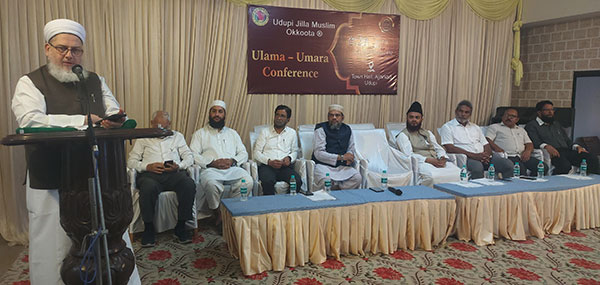
“There is growing concern among communal forces regarding the progress of the Muslim community, and this has led to them being increasingly targeted,” said Maulana Syed Tanveer Hashmi, a member of the Karnataka State Waqf Board and All India Muslim Personal Law Board. He stressed that the community must intensify its efforts towards educational and overall development, especially encouraging the youth to aspire for civil services.
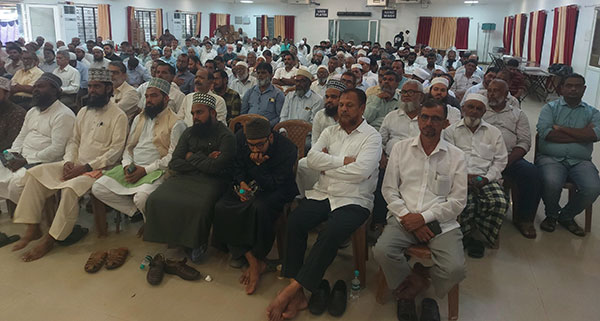
He was addressing a seminar titled “Current scenario and our responsibilities” organised by the Udupi District Muslim Federation at the mini auditorium of the Udupi Town Hall on Tuesday.
Maulana Hashmi highlighted the need to integrate Islamic values deeply into daily life to reform the challenges prevailing in society. “The community must actively engage in social service, extend help to the underprivileged, and foster harmonious relationships with people of other religions. During festivals, we must invite our non-Muslim brothers and share the joy of the celebration with them,” he said.
He further emphasised that Muslims should fully practice religious values and instil Islamic principles within their families, including children, women, and men. Education must be prioritized, with awareness cultivated within the community to promote academic growth.
Cautioning against objectionable behaviour on social media, he urged the youth to be responsible and avoid provocative posts. “We must stay away from the hateful narratives of ‘Godi Media’, communal provocations, and toxic online environments,” he stated.
Sulaiman Khan Sahib from Bengaluru, assistant general secretary of the All India Milli Council and Karnataka co-coordinator of the “Save Waqf, Save Constitution” movement, also addressed the gathering.
The event was presided over by Udupi District Muslim Federation president Muhammad Wawla. During the seminar, a book titled ‘Dharmadharma’ authored by federation member and writer Mustaq Hennabail was released.
The stage was graced by senior vice president Rafiq Kundapur, vice presidents Shabhi Qazi, Fareed Sheikh, and Fayyaz Byndur. The programme began with a recitation from the Holy Quran by Udupi Jamia Masjid Imam Maulana Rasheed Umri.
The event was welcomed by Maulana Zamir Ahmad Rashadi. Former district president M P Modinabba delivered the introductory address.
General secretary Ismail Hussain Katapady extended the vote of thanks, while Yaseen Kodibengre compered the event.
source: http://www.daijiworld.com / Daijiworld.com / Home> Karnataka / by Daijiworld Media News Network – Udupi / July 29th, 2025
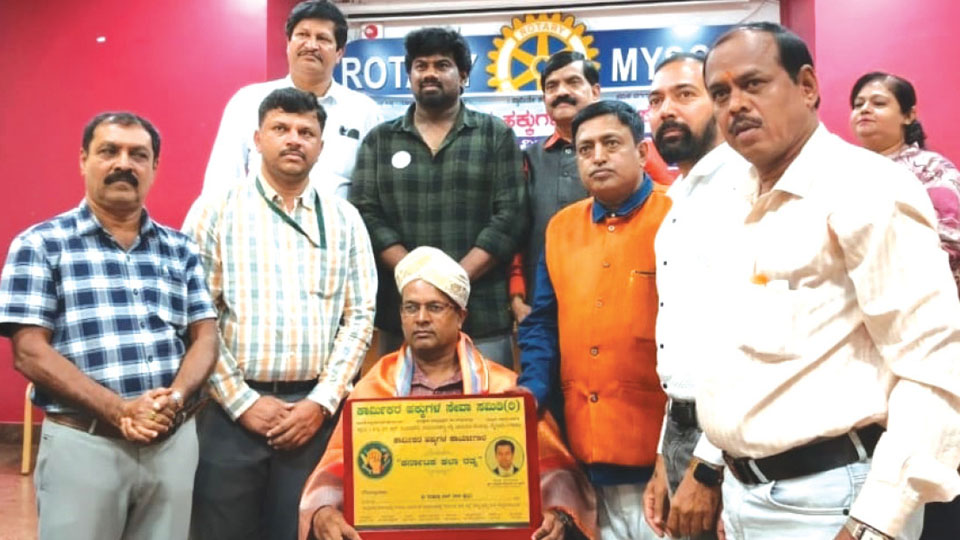
Radiulla Khan, Organising Secretary of Mysuru District Kannada Sahitya Parishat, being presented with ‘Karnataka Kala Ratna’ State Award during the workshop on ‘Labour Rights’ organised by Karmikara Hakkugala Seva Samiti at Rotary Hall on JLB Road in city recently.
The award was presented to Radiulla Khan in recognition for his works in multilingual films especially in Kannada language as a junior artiste.
M.S. Naveen, Chief Legal Aid Guardian, District Legal Services Authority (DLSA), V. Vinay Kumar from Employees State Insurance Corporation, industrialists and social workers M. Lalita Rao, Shubh Krupesh, V. Ramamurthy and Prashanth P. Aask, Actor-director Mahesh K.H. Belur, journalist Kasthurichandru and others were present.
source: http://www.starofmysore.com / Star of Mysore / Home> Photo News (headline edited) / July 26th, 2025
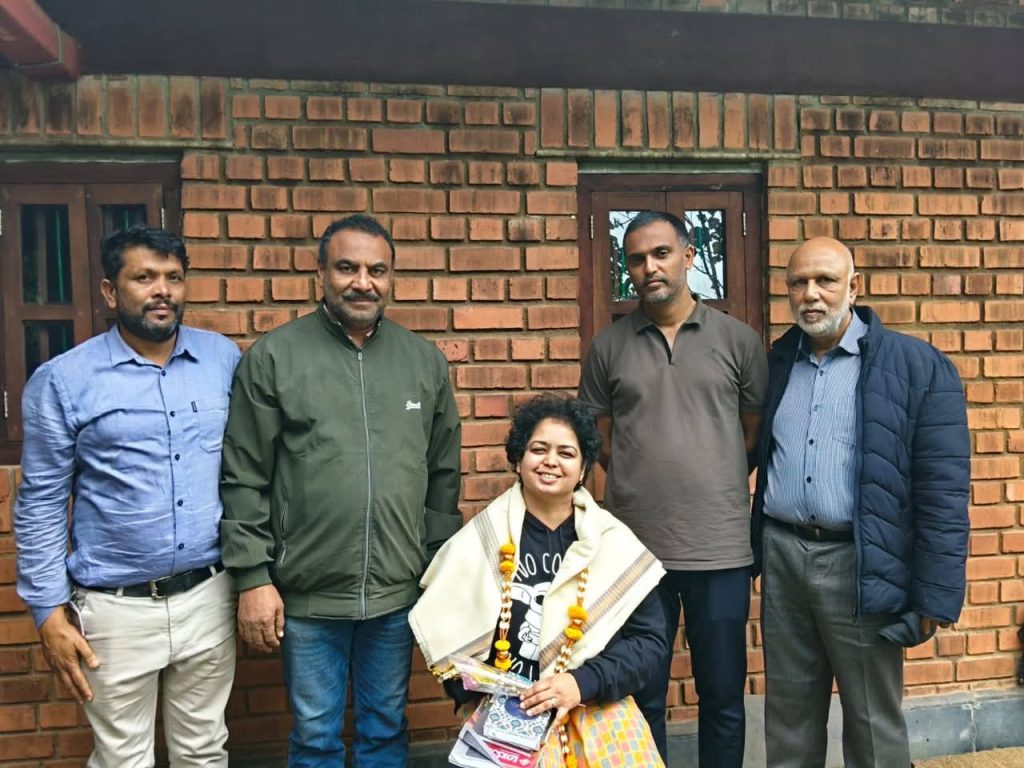
The Jamaat-e-Islami Hind Women’s Unit honored acclaimed writer and Booker Prize winner Deepa Basti at her residence in Madikeri on Tuesday, recognizing her remarkable contribution to literature.
During the felicitation, members of the unit encouraged Basti to focus on promoting human values through her work, highlighting the powerful role of literature in bringing about societal change.
Responding to their thoughts, Basti acknowledged that the literary field holds immense potential to influence social transformation and stressed the importance of sustained efforts in that direction.
The program was attended by Kodagu District Women’s Unit President Muheena Abubakkar, Madikeri President Waheeda Shaukat, and members Bibi Fatima, Maryam Mafeeda, and Tahira.
Also present were District President C.H. Apsar, Madikeri Local President G.H. Mohammed Hanif, members Mohammad Mustafa, and journalist Abdullah, all of whom extended their congratulations and best wishes to Basti for her future endeavors.
source: http://www.thehindustangazette.com / The Hindustan Gazette / Home> News> National> Karnataka / by The Hindustan Gazette / July 12th, 2025
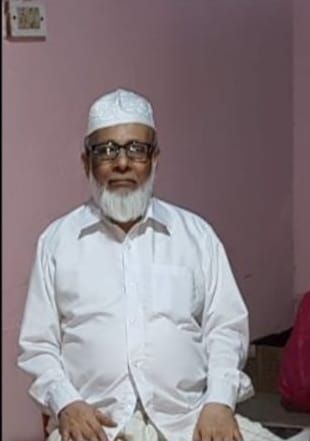
Late. Janab Usman Hassan Mohtesham, translator of Tarjumah Quran Shareef in Nawaity of Moulana Syed Abul Aala Moududi was the recepient of Viqare Islamia an highest academic award of Islamia Anglo Urdu High School Bhatkal.
He had served in the Department of Health Dubai for 30 years and is the father of Dr.Imran Mohtesham, Mangalore.
source: http://www.facebook.com/syed.zakir (Syed Zakir S.M) / February 18th, 2025
Tucked between the roaring waves of the Arabian Sea and the lush green canopy of the Western Ghats lies a jewel of a town – Bhatkal.
A place where coconut palms sway in the ocean breeze, where the call to prayer echoes through the valleys, and where the scent of cardamom-laced biryani mingles with the salty sea air. But beyond its scenic charm and poetic quietude, Bhatkal tells an inspiring story – a story of legacy, faith, culture, and a deep-rooted commitment to education.
Once a humble trading post frequented by Arab merchants, Bhatkal today is a dynamic blend of history and modernity. Its people, mostly of Arab descent, still carry the flame of their forefathers – traders who braved the seas, settled in distant lands, and left behind more than just wealth. They bequeathed a way of life, a sense of community, and a passion for learning that continues to flourish in remarkable ways.
Imagine waking up to a view where mist-kissed mountains tumble into spice-scented fields, only to meet a coastline where waves pound golden sands under the watchful gaze of age-old palms. That’s Bhatkal – not just a town, but a canvas painted with the green of the hills, the blue of the sea, and the gold of tradition. And amid this natural splendour, an educational movement has quietly taken root – transforming lives and reaffirming the town’s historic role as a cradle of knowledge and cultural resilience.
A Legacy Carried on the Tides
The story begins not just in Bhatkal, but far beyond – across the seas in the Gulf. Over the last five decades, thousands of Bhatkalis migrated to the UAE, Saudi Arabia, Oman, and Kuwait – carrying with them their culture, values, and a remarkable sense of unity. Wherever they went, they established Jamaats (community organisations), which became lifelines of cultural preservation and mutual support.
But by the 1990s, community elders noticed a worrying trend. Amid the glitz of Gulf jobs and the comfort of petro-dollar salaries, education was beginning to take a back seat. Young boys were dropping out after high school, opting to join the workforce early. The allure of quick earnings began to eclipse the pursuit of knowledge.
It was then that the Bhatkal Muslim Khaleej Council – an umbrella body of 11 Gulf-based Bhatkali Jamaats – decided to act.
The Birth of the Rabita Educational Award
The Council launched the Rabita Educational Award to rekindle academic ambition among Bhatkali youth. It wasn’t just about giving away medals or cash – it was about igniting pride, ambition, and a sense of purpose. The idea was simple: if we honour excellence, others will strive for it.
When the initiative began 30 years ago, the bar was modest. Students securing 65-70% were among the awardees. Yet even then, it was revolutionary. For the first time, young boys and girls felt seen and celebrated, and parents began to regard education as a shared community value.
Fast forward to today: Rabita Award winners score as high as 98% and above. This year, the difference between the topper and the runner-up was a mere 0.0375%. That’s not a gap – it’s a heartbeat.
This Year’s Celebration: A Festival of Learning
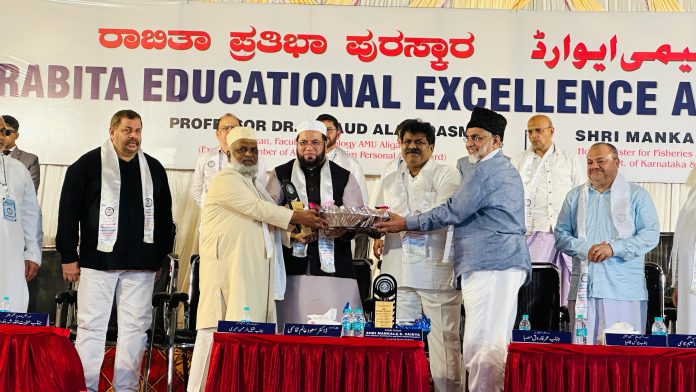
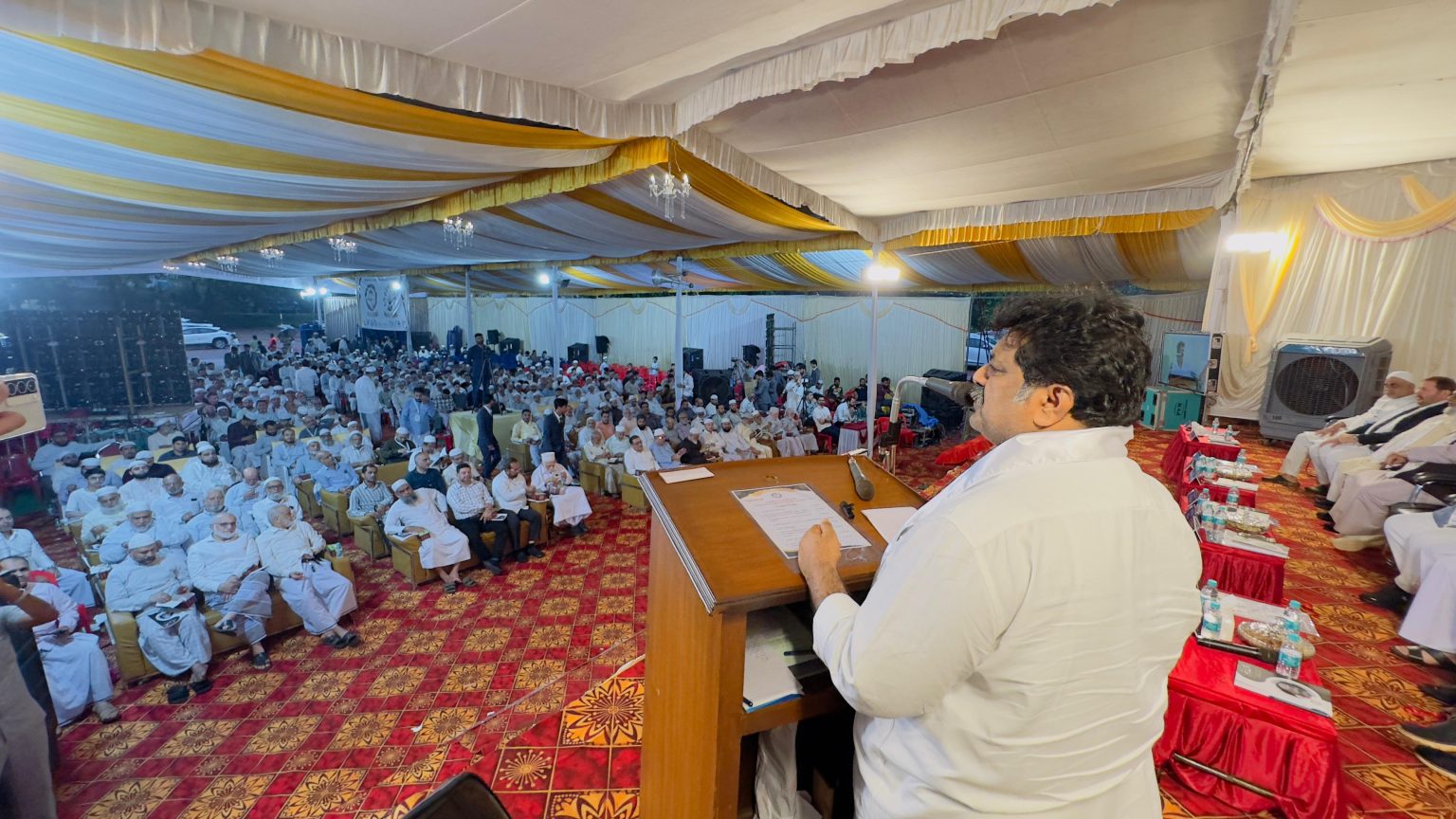
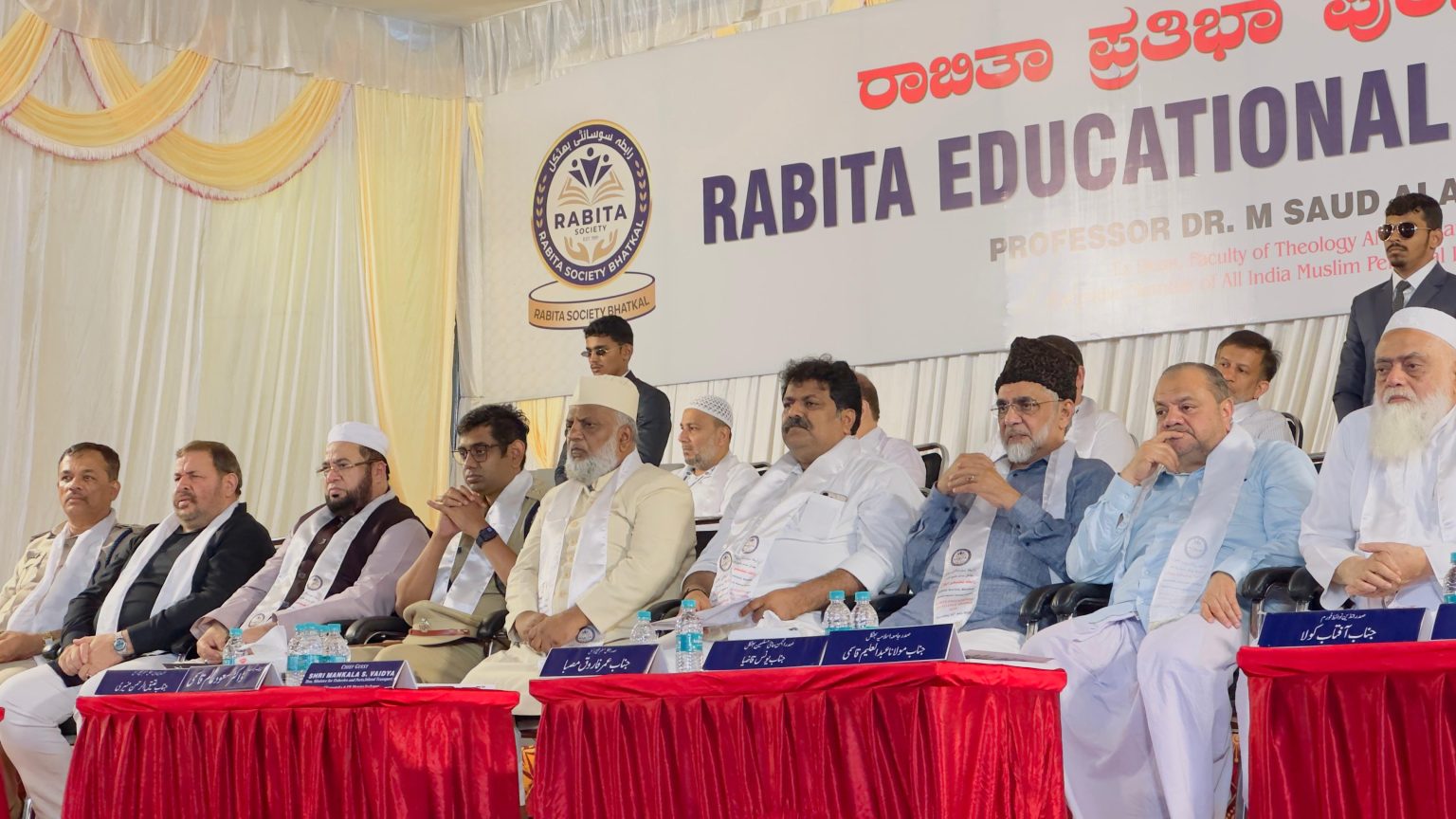
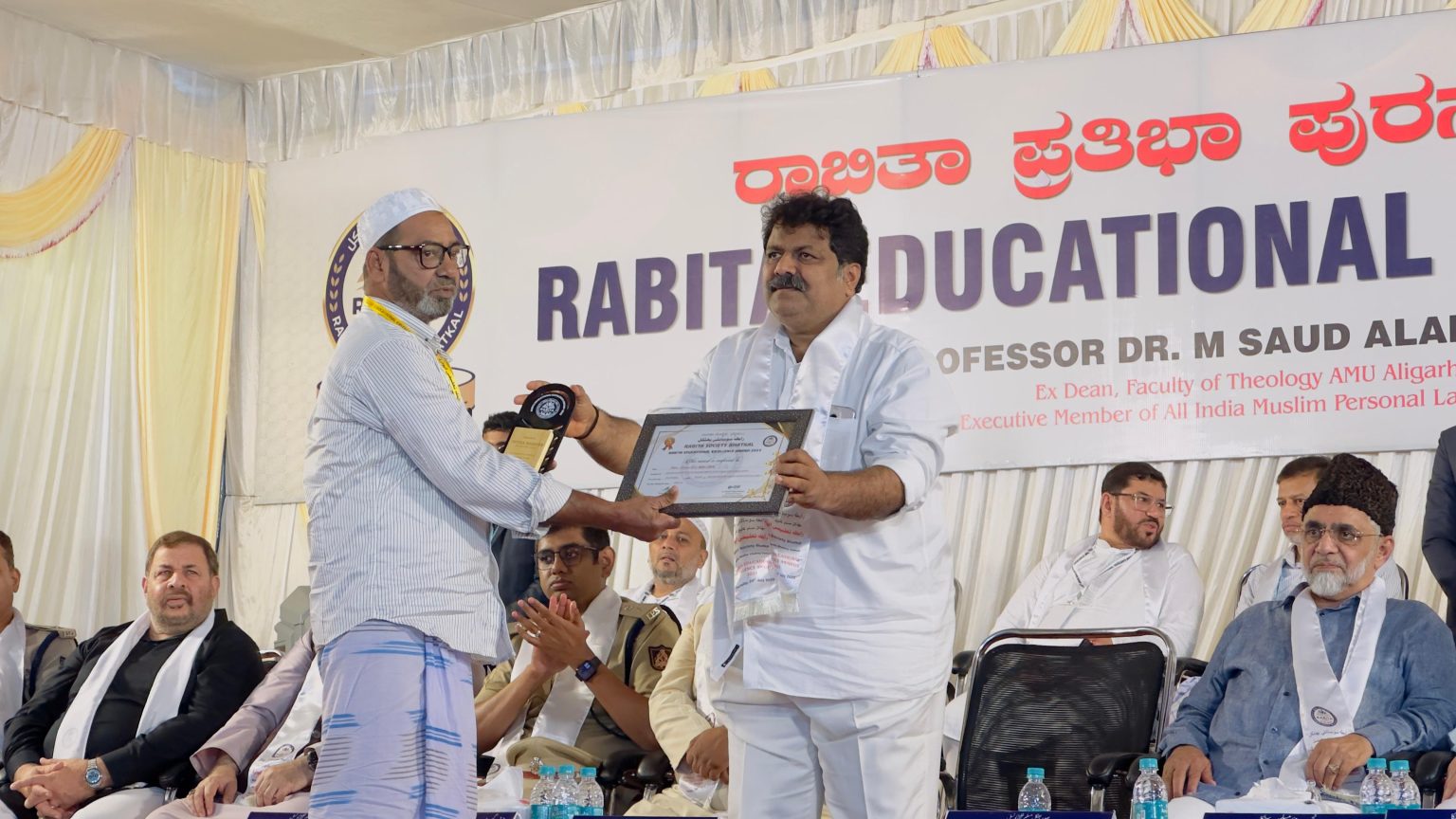
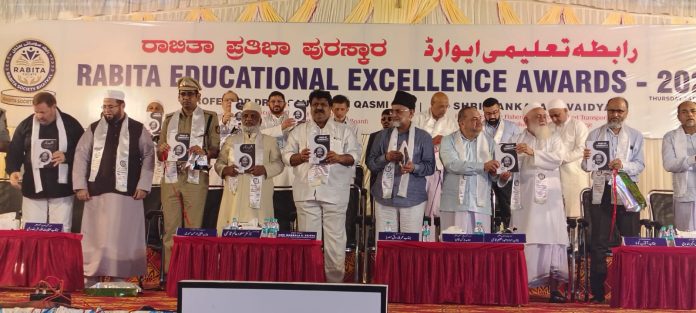
The 2025 Rabita Award Ceremony, held on 24th July at the sprawling grounds of Anjuman Islamiah Anglo-Urdu High School, was nothing short of majestic.
Even as rain poured steadily over the coastal town, the people of Bhatkal gathered in full strength. The makeshift auditorium overflowed with parents, teachers, and well-wishers – proving once again that no weather can dampen a community’s spirit when the cause is education. The stage, draped in the colours of Bhatkal’s spirit, welcomed an audience of thousands – parents, educators, students, and dignitaries.
Dr. Saud Alam Qasmi, a respected professor from Aligarh Muslim University and member of the All India Muslim Personal Law Board, addressed the gathering. His words resonated deeply:
“The United Nations declared education a basic human right in 1947. But 1,450 years ago, Islam declared: ‘Seeking knowledge is an obligation upon every Muslim man and woman.’”
His speech wove together spiritual insight and modern urgency, urging families to view education not as a luxury, but as both a sacred duty and a social necessity.
Joining him was Karnataka State Minister Mankal Vaidya, who praised Bhatkal’s educational institutions and pledged full support for establishing a medical college – recognising that Anjuman already offers nearly every other academic faculty.
More Than Medals: The Power of Encouragement
This year, 35 students across SSLC, PUC, and degree levels were honoured with gold medals and thoughtful gifts. Among them, female students once again outshone their peers, capturing two-thirds of the recognitions – a heartening sign of changing mindsets and growing gender parity in education.
The Best School Award continues to be named after Janab Usman Hassan, the legendary headmaster of Islamia Anglo High School, who worked tirelessly to promote education in Bhatkal. A pioneer in his own right, he laid the foundation for a culture of academic excellence that still echoes through the town’s institutions.
In a meaningful addition this year, the Best Teacher Award was named after Janab Syed Khaleelur Rahman Sahib, the very same visionary celebrated in the tribute volume “Iftikhar-e-Qaum Janab SM Khaleelur Rahman”. From his Gulf office in Dubai, he dreamt of uplifting his people through knowledge – and worked quietly but tirelessly to turn that vision into reality.
Though he now rests in the desert sands of Arabia, his legacy continues to bloom each year in the smiles and successes of the awardees he once imagined. Honouring him through the Best Teacher Award is both a tribute and a reminder that behind every great student is a teacher who believed in their potential.
This year’s recognitions reflected that enduring vision.
Ali Public School (Girls) received the Best School title, led by their standout student Hafsa Bint Hafeezullah, who scored an impressive 98.04%.
The Best Teacher honour went to Ms. Fatima Wida Siddiqui of Noonahal Central School, recognised for her outstanding dedication to education.
District toppers such as Shagufta Anjum (Urdu) and Bhoomika (English) were also felicitated, symbolising the inclusive spirit of academic celebration that the Rabita Awards embody.
Why This Model Deserves to Be Replicated
In an age when education is increasingly commodified, where coaching institutes manufacture toppers and commercial schools chase ranks, the Rabita model stands apart.
It is community-funded, value-driven, and inclusive. It celebrates the bright, uplifts the average, and motivates the struggling. It views education not merely as individual success, but as a shared legacy and a community responsibility.
The Rabita Award isn’t just a medal; it’s a signal fire – telling every child, “We see you. We believe in you. We’re with you.”
Imagine This in Every Town
What if every small town like Bhatkal decided to invest in its children this way?
What if the diaspora of Hyderabad, Azamgarh, Kutch, or Kolkata pooled their earnings not just for lavish marriages and luxury homes, but for educational dreams?
What if every community – regardless of faith, culture, or geography – told its youth: “We are proud of your academic journey. Keep going. We’re watching. We care.”
Communities that value knowledge rise. Those that don’t, perish slowly.
A Lesson from the Sea and the Ghats
Just like the waves of the Arabian Sea, education must be relentless – always pushing, always reshaping. And like the roots of the Western Ghats, it must be deep, nourishing generations, and anchoring identity against the floods of time.
Bhatkal is not just a place; it’s a model of what’s possible when community, culture, and commitment converge.
As the sun sets behind its palm-draped shores, one truth becomes clear:
Awards don’t just honour achievers. They create them.
Let This Be Your Takeaway
If you’re reading this in another town, another country, another community – know this: you too can start your Rabita. You too can plant the seeds of pride, perseverance, and purpose in your youth.
Start small. Honour the top three in your school. Involve your elders. Call the students to the stage. Clap for them. Gift them a medal. Take their picture. Tell the story. And do it again next year.
That’s how legacies begin.
And who knows? One day, someone may write about your town the way we write about Bhatkal – a place where the sea sings songs of learning, and the mountains stand tall in witness to dreams fulfilled.
source: http://www.radiancenews.com / Radiance News / Home> Education / by Mohammed Talha Siddi Bapa / July 26th, 2025
In Marapala, under the Thitimathi Gram Panchayat of Kodagu district, a dilapidated house belonging to a poor family—damaged over the years due to heavy rains—has been rebuilt into a beautiful new home. The initiative was undertaken by Jamaat-e-Islami Hind, Kodagu District’s Baitu Zakat unit, with generous support from donors and the Sadrimane team.
In a simple ceremony held on the evening of Wednesday, July 23, the newly built house was inaugurated, and the keys were handed over by JI Abdussalam, Convenor of the Mysore Zone.
The event was graced by Gram Panchayat President Mrs. Ponnu, Vice President Mrs. Shyamala, members JI Afroz, local cleric Maulana Kamaruddin Ahsani, Baitu Zakat supervisor, and businessman JI Ahmed Balele, JIH Kodagu District Convenor JI C.H. Afsar Madikeri, District Secretary P.K. Abdurrahman Virajpet, Gonikoppa Circle Convenor JI Tanvir Ahmed, and JIH Siddapur Local President JI M.K. Ashraf, who played a key role in overseeing the construction.
source: http://www.thehindustangazette.com / The Hindustan Gazette / Home> News> Latest News / by The Hindustan Gazette / July 24th, 2025
“This Too Shall Pass,” a debut poetry collection by Muskan Sufi, a young Kodagu student studying in Mysuru, has earned international recognition after being nominated for the prestigious Indie Authors Award 2025, held in memory of American poet Emily Dickinson. The book is now available for purchase online on Amazon.
Muskan Sufi, a student of English Literature and Psychology at St. Philomena’s College, Mysuru, hails from Virajpet in Kodagu and belongs to the Kodava Muslim community. Her literary achievement has drawn attention not only for its quality but also for the quiet determination that brought her recognition at a young age.
Published by the internationally acclaimed Bookleaf Publication, This Too Shall Pass was born out of Muskan’s participation in the publisher’s “21 Poems in 21 Days” challenge. She surpassed expectations by writing more than 28 poems, which resulted in a 50-page collection of emotionally rich, thought-provoking verse.
Her poems explore themes of pain, healing, nature, death, and the complexities of human emotion. With modern and socially conscious subjects, Muskan’s writing brings to life the inner turbulence of individuals and the beauty of life’s fleeting moments. She uses simple yet powerful language, aiming to connect souls and provide hope to those facing life’s darkest times.
Thousands of poets participate in Bookleaf’s global poetry initiatives, and the top entries are selected for book publication and nomination to the Indie Authors Award. Muskan’s nomination has created a ripple in the English literary community, marking a proud moment for the Kodava Muslim community.
Expressing her joy, Muskan said, “I joined the challenge after coming across the campaign on social media. I’ve always loved writing English poetry, but I never imagined my poems would be published or nominated for such a prestigious award. It’s given me great motivation to pursue more literary work.”
Muskan is the daughter of Duddiyanda H. Sufi and Masuda Sufi, who head the DHS Group of Companies in Virajpet. Her father also serves as the president of the Kodava Muslim Association (KMA).
Muskan’s poetry book, This Too Shall Pass, is now available for purchase on Amazon.
source: http://www.hindustangazette.com / The Hindustan Gazette / Home> News> Latest News / by The Hindustan Gazette / pix:kannada.hindustangazette.com / July 21st, 2025
Senior IPS officer Abdul Ahad has been promoted to the grade of Senior Superintendent of Police (Selection Grade) with effect from January 1, 2025. He will continue serving in his current role as Director of Security and Vigilance at the Bengaluru Metropolitan Transport Corporation (BMTC) until further orders.
This promotion places Ahad in Level 13 of the IPS Pay Matrix as per the IPS (Pay) Rules, 2016, reflecting his distinguished service in the force.
Ahad, who hails from Moodbidri in Dakshin Kannada district, has held several important positions throughout his career. Before his appointment to BMTC, he was serving as the Deputy Commissioner of Police (DCP) for Bengaluru’s Crime Branch (CCB). In September last year, he took over the role of Director for BMTC’s Security and Vigilance wing.
The senior officer’s tenure includes noteworthy stints as the DCP of Bengaluru’s Whitefield division, SP at the Coastal Security Police, SP of Anti-Corruption Bureau (ACB) Bengaluru, SP of Economic Offences Wing at CID, and Commandant at KSRP.
Ahad’s extensive experience in tackling economic crimes, corruption cases, and city crime has been instrumental in his rise through the ranks, marking another milestone in his illustrious career with this promotion.
Ahad is the younger brother of Abdus Salam Puttige, founder of popular Kannada daily Vartha Bharati, published from Bengaluru, Mangaluru and Shivamogga simultaneously. Fluent in Kannada, Urdu and Beary language, Ahad completed memorising the Quran from a local Madrasa in Karkala town at young age.
source: http://www.radiancenews.com / Radiance News / Home> Latest News> Report / by Mohammed Atherulla Shariff / January 01st, 2025
Hamd Foods, a rising name in the natural food products sector, inaugurated its fourth exclusive outlet in Kaup on Thursday, reinforcing its commitment to the brand’s vision, ‘Healthy Food, Healthy Life.’ The launch was spearheaded by Founder Shahida A, Co-founder Mariyam Shahira, and Branch Manager Khairunnisa.
Following the success of its earlier outlets in Falnir, Krishnapura, and Thokkottu, the Kaup branch marks a significant step in the company’s expansion journey. With over 150 natural food and personal care products on offer, the outlet provides customers with options ranging from spice blends, stone-ground pastes, and frozen snacks to flour varieties and skincare items, all free from artificial colours and chemical preservatives.
“In today’s fast-paced world, many people struggle to find time to prepare healthy meals. Through this outlet, we aim to make wholesome, ready-to-use natural products easily accessible to everyone,” said Shahida A, addressing the gathering.
The launch event was attended by several prominent women including Reshma Thota, Prameela Jatanna, Alia Sayyed, and Nilofer Parveen, who expressed their appreciation for the brand’s consistent growth.
“Your consistency and hard work over the past seven years has led you to launch your fourth store today,” noted Reshma Thota. “For working women like us, Hamd’s products are a real support. In a market full of choices, it’s rare to find ones that are both hygienic and chemical-free — Hamd is a brand we truly trust.”
source: http://www.english.varthabharati.in / Vartha Bharati / Home> Karavali / by Vartha Bharati / July 13th, 2025
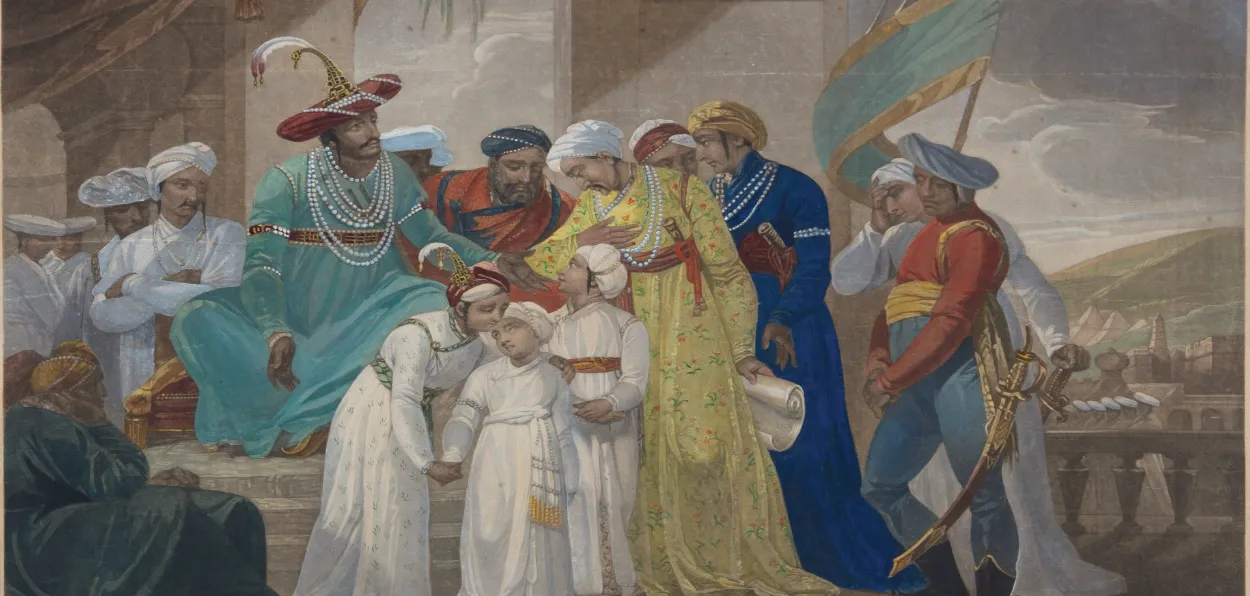
Tippoo Sultaun delivering to Gullum Alli Beg the Vakeel his sons who are taking leave of their brother previous to their departure from Seringapatam (1793) Painting by Henry Singleton
“The Christian drummers were seized, taken to the palace where Tippu’s sons were confined, and made to beat the “general” ; lights flashed in the palace, refreshments were brought out; a mob of sepoys called on the princes to place themselves at their head; Tippu’s own flag, green stripes on a red field, was nailed to the flagstaff. Prince Muizuddin (son of Tipu Sultan) ordered his horse to be saddled, and told off a party of sepoys to go and seize the principal hill fort; when that was captured and the dead body of Colonel Marriott, paymaster of stipends, brought before him, he promised he would mount his horse and ride through the native town proclaiming the restoration of the Mahommedan power.”
A Slice of History
This is the account by Colonel Alfred Keene of the night of 10 July 1806 at Vellore. The rising, popularly known as the Vellore mutiny, was a dress rehearsal of a sort of what would happen in May 1857 at Meerut.
Keene pointed out, “In the mutinies of Vellore and the greater one of 1857, two points of similarity stand out prominently. In each is the unreasoning fear of an attack on the institutions of religion and of caste; for the greased cartridges in the latter mutiny had as much to do with the outbreak as had the new head-dress in 1806, and the presence of the remnants of the Moghul Dynasty at Delhi acted in 1857 precisely as had the presence of Tippu’s family at Vellore in 1806.”
After the fall of Tipu Sultan in 1799, the English East India Company shifted his children to Vellore. In early 1806, the Commander-in-Chief ordered a new headgear and, the removal of beards, tilaks, earrings, or any mark of caste identity.
The Indian sepoys of the 2nd Battalion 4th regiment showed dissatisfaction in May 1806 and disobeyed the orders. These sepoys were tried in army court and 21 of them were found ‘guilty’. Of them, one Hindu leader and other Muslims were discharged from the duty and sentenced to receive 900 lashes each. The other 19 were not discharged but ordered 500 lashes each. The order was passed on 29 June and published to the army on 2 July 1806.
The wife of a serving English officer at Vellore, F. W. Blunt, wrote in a letter to her family in England, “Nine of the ringleaders, as they were called, were brought down to Madras and here passed publicly through the streets in irons, destined to receive the most dreadful military punishment…… The nine men in irons awaiting a most severe punishment was made use of by the sons of Tippoo, who have been kept prisoners in the Palace at Vellore since the taking of Seringapatam and served to ripen a design that had been long formed. A conspiracy was formed by the Sepoys to murder all the Europeans and take possession of that Fort.”
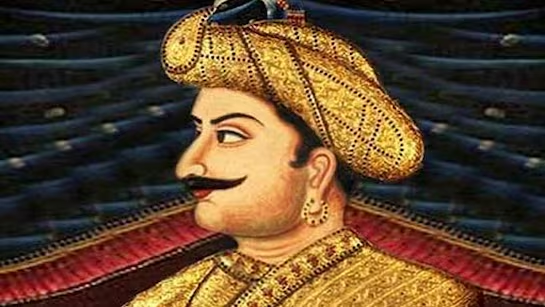
Tipu Sultan
On the night of 10 July 1806, Shaikh Kasim, a sepoy, led the English East India Company sepoys in starting a general massacre of the English troops.
Lt. Col. W. J. Wilson in ‘History of the Madras Army’ wrote, “The sepoys went away shortly afterward, and were heard to call out “Come out, Nawab, come out, Nawab, there is no fear.” This was supposed to be addressed to Futteh Hyder, the eldest of the four Mysore Princes.”
Of the 372 Englishmen present at Vellore, 128 were killed that night by the Indian sepoys. The English flag was replaced with the flag of Tipu Sultan, which was handed over by Moizuddin, the eldest son of Tipu. He was proclaimed the leader of the revolutionaries.
Though the immediate cause was the headgear and other orders, the revolt had been planned for a long time. Charles Macfarlane wrote, “The splendour which the sons of Tippoo were enabled, by the liberality of the Company, to keep up, attracted a continual influx of visitors, including all that came to Vellore from the countries which had once belonged to their father. Among these men were very many who had lost by the change which had taken place in Mysore, who hated the tranquillity which we had introduced into their country, and who longed for the old days of rapine and violence. It is believed that these desperadoes contributed to a regular conspiracy and facilitated the execution of the daring design.
It is said that the confederates intended that all who were brought to join in the insurrection should act upon a preconcerted plan, which had been digested and privately circulated by some of the turbulent Marawa chiefs; and that in connection with these desperadoes were some few Frenchmen, disguised as fakeers or dervishes, who went about the country inveighing everywhere against the English as robbers and tyrants. It is also stated that placards were fixed up within the mosques and Hindu temples, where Europeans never entered, to excite a general spirit of revolt among the whole native population of Madras.”
The English Government set up an enquiry commission headed by Major General Pater which submitted its report on 9 August 1806. The report said, “There are two principal causes which appear to us to have led to the mutiny. The late innovations in the dress and appearance of the sepoys, and the residence of the family of the late Tippoo Sultan at Vellore.”
Sir J. F. Cradock, the Commander-in-Chief, disagreed with these findings and argued in his submission that change in dress was a pretext and the real objective was to restore the rule of Tipu Sultan’s family.
The Court of Directors after the investigation declared that the “immediate cause of the discontent among the sepoys was the introduction of certain innovations in their dress, which were offensive, and, as they held, degrading to them; and that the captive sons of the late Tippoo Sultan, with their adherents and abettors, took occasion, from the dissatisfaction of the sepoys, to instigate them to insurrection and revolt, with the view of effecting their liberation, and the restoration of the Mahomedan power.”
The mutiny was suppressed by noon on 10 July. Colonel Gillispie stationed at Arcot came to rescue the Englishmen at Vellore before 7 am. His forces, which also included Indian sepoys, killed more than 500 Indians in the fort within a few hours.
At least 15 English officers including, Colonel Fancourt, H.M.’s 34th regiment, commanding the garrison, Lieutenant-Colonel McKerras, Captain Willison and Lieutenants Winchip and Jolly of the 23rd, Captain Miller, Lieutenants O’Reilly, Smart, and Tichbourne of the 1st, and Lieutenants Eley and Popham of the 69th, Mr. Mann Deputy Commissary of Stores, Mr. Gill Conductor of Ordnance, Mr. Smith the Military Paymaster and Major Armstrong of the 16th N.I. were killed.
Among the captured sepoys, six were blown away with cannon guns, five were shot by firing squads, eight were hanged, and several others were transported for life. Out of the retainers of Mysore Princes, one was sentenced to death, two to transportation for life, one to imprisonment for life, and one to imprisonment for ten years. The sons of Tipu Sultan were sent to Kolkata with stricter vigilance.
Lord William Bentinck, Governor, and Sir J. F. Cradock, C-in-C, were removed from their respective offices by the Court of Directors.
source: http://www.awazthevoice.in / Awaz, The Voice / Home> Stories / by Saquib Salim / July 10th, 2025