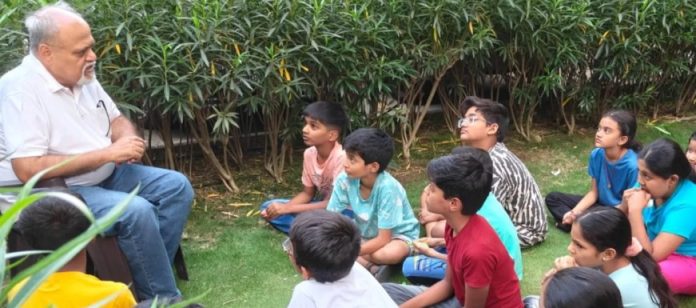
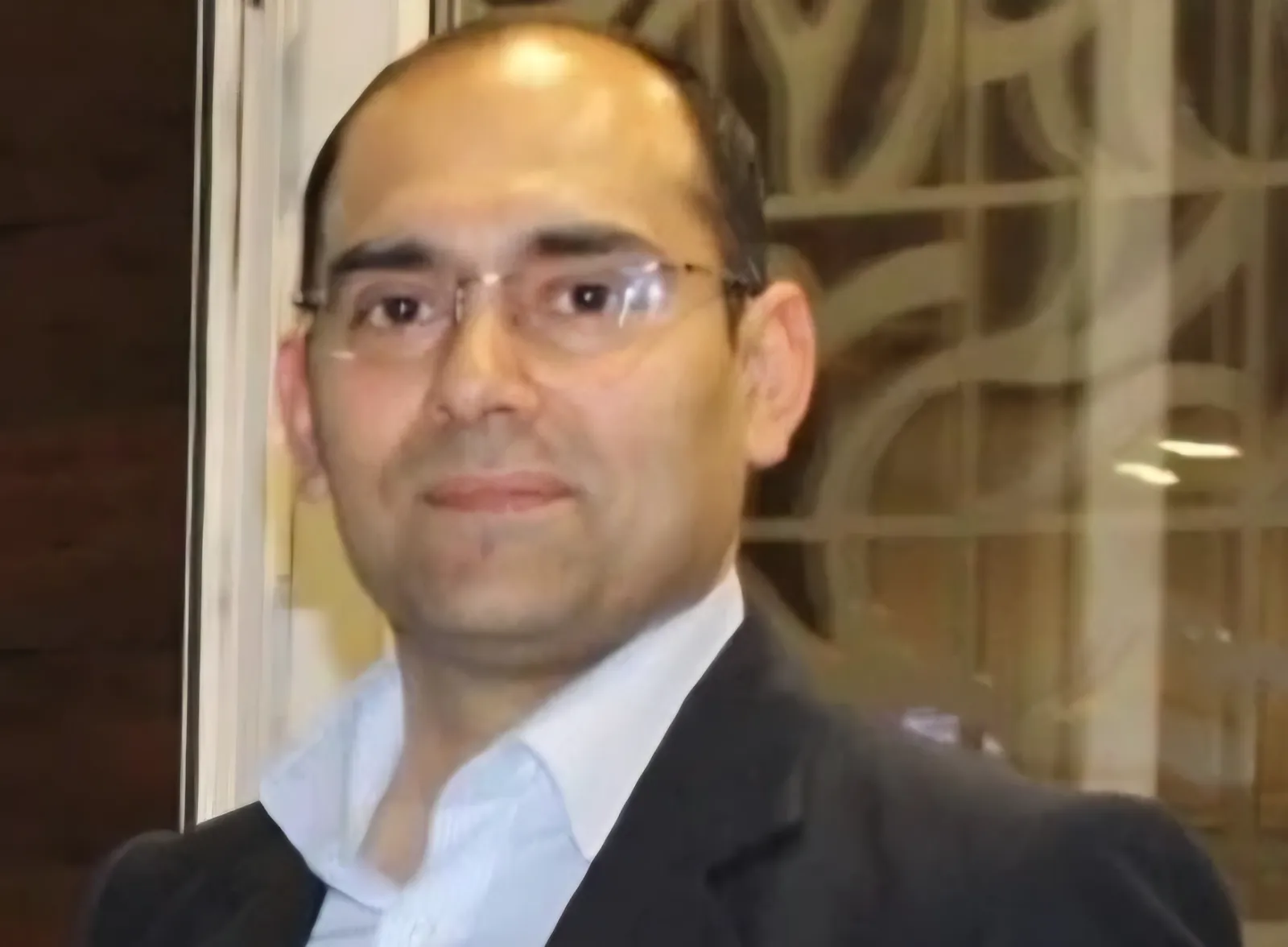
In several housing societies across Pune, evening playtime is taking a new direction as children gather with simple materials to explore science under the guidance of Prof. Mujtaba Lokhandwala. His initiative brings activity based learning directly into residential spaces, encouraging curiosity and practical understanding among young learners.
At a time when many children spend hours on screens, these sessions offer a hands on alternative. Using everyday objects such as plastic bottles, straws, mirrors, and magnets, Prof. Lokhandwala explains scientific concepts in an engaging manner. Children learn about air pressure, light reflection, motion, and energy through simple experiments conducted in open spaces.
Prof. Lokhandwala, who has over 18 years of teaching experience in engineering, serves as a trainer for activity based learning under the Department of Science and Technology. He believes science education must move beyond memorisation and focus on observation and questioning. He said children often learn definitions for exams, yet struggle to explain real life applications.
During the sessions, children are encouraged to ask questions without fear. The environment remains informal and interactive. According to Prof. Lokhandwala, the scientific process begins when a child asks why something happens.
After each workshop, a science club is formed within the society. Interested adults receive training to continue activities with children. These clubs aim to conduct at least one session every month, ensuring continuity and community participation.
The initiative also includes astronomy sessions held on terraces. Children observe the Moon, Jupiter, and constellations through telescopes. They learn to identify stars such as the North Star and understand their positions. These experiences help them connect with the natural world and develop interest in science beyond textbooks.
Parents who initially attend out of curiosity gradually become active participants. The initiative has begun to change the atmosphere within societies, with families engaging in educational activities together. Children now discuss experiments during holidays instead of leisure outings.
Prof. Lokhandwala said modern lifestyles often disconnect children from nature and inquiry. He stressed the need to provide meaningful alternatives to screen based entertainment. His work shows that simple methods and community involvement can reshape how children learn science.
Courtesy: www.awazthevoice.in
source: http://www.radiancenews.com / Radiance News / Home> Latest News> Pride of the Nation> Markers of Excellence> Report / by awazthevoice.in / Radiance News Bureau / May 22nd, 2026
A 42-year-old Muslim Ayurvedic doctor from Kerala, Sajna S.A., who had been working in Bhopal for the past six months, passed away after suffering a severe brain haemorrhage (subarachnoid haemorrhage). She was admitted to a private hospital in Bhopal on May 15 after her condition became critical.
Despite intensive medical care, her condition worsened, and doctors later declared her brain-stem dead.
Family Agrees to Organ Donation After Counselling
Following the diagnosis, doctors and transplant coordinators counselled the family about the possibility of organ donation. After careful discussion, her family agreed to donate her organs, turning a moment of personal loss into an act of life-saving generosity.
Hospital authorities said the entire process followed the guidelines of the National Organ and Tissue Transplant Organisation (NOTTO), which regulates organ donation and transplantation procedures in the country.
What is Brain-Stem Death
Doctors explained that brain-stem death is a medically and legally recognised form of death. It refers to the irreversible loss of all brain functions, including those that control breathing and consciousness. Even if a ventilator keeps the heart beating, recovery is not possible.
Medical experts said such cases allow organ donation under strict protocols, as the organs remain viable for transplantation for a limited time.
Organs Transplanted to Save Lives
According to hospital officials, Sajna’s liver and one kidney were transplanted into patients admitted at the same hospital in Bhopal. Her second kidney was sent to another private hospital, where it was used for a patient in urgent need.
Dr S.K. Trivedi, Director of Bansal Hospital, said the family showed remarkable compassion during a difficult time.
“When asked if they had any preference regarding the recipient’s religion or identity, her husband said, ‘Give it to whoever needs it,’” he stated.
Doctors confirmed that all three organs helped save the lives of two patients.
Emotional Farewell With Full Honour
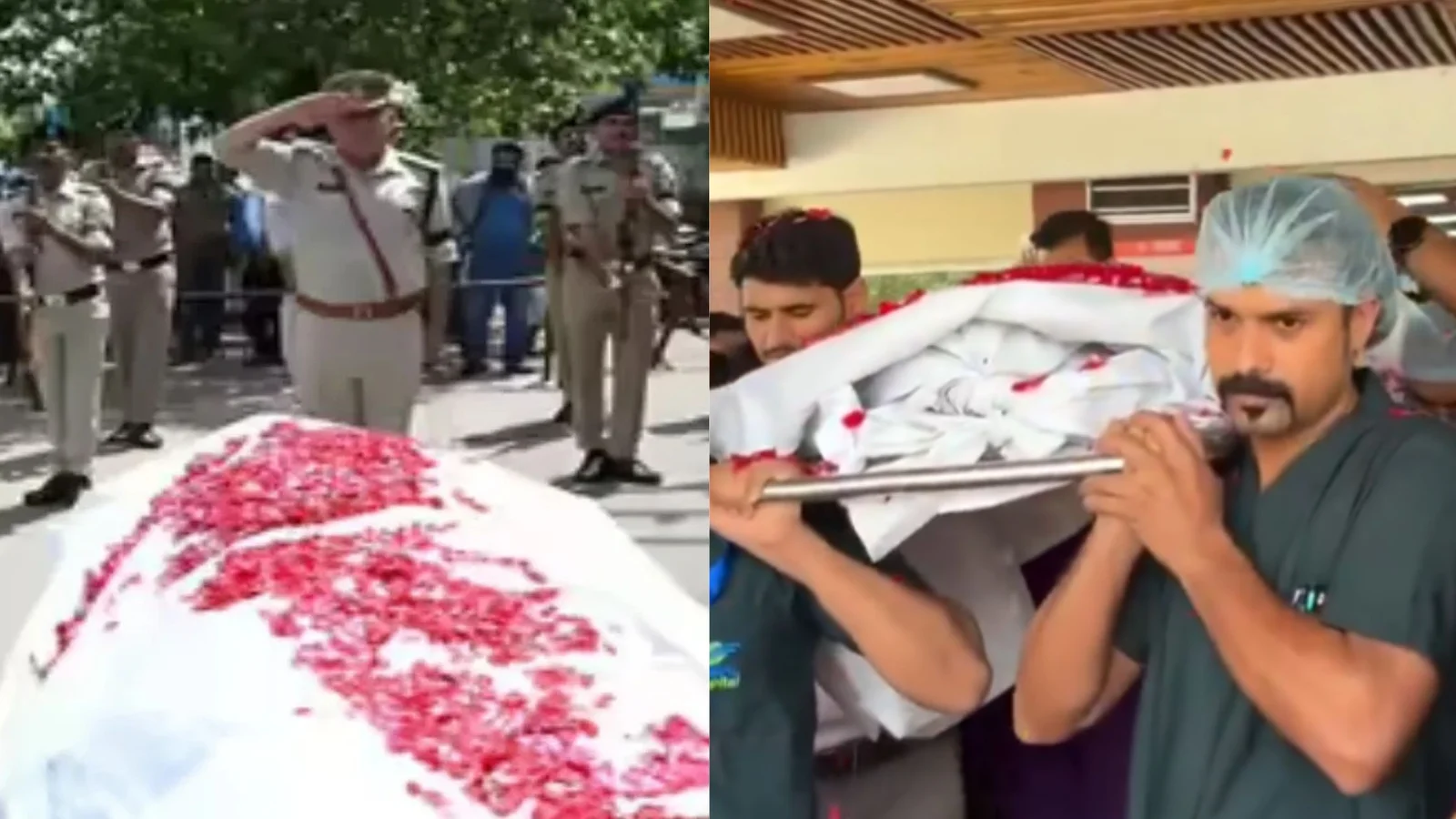
After the organ retrieval procedure, Sajna S.A.’s body was given a respectful farewell. Police personnel and hospital staff paid their tributes as part of the state’s recognition of organ donors.
Her body was later transported to Thiruvananthapuram for final rites in her hometown.
Hospital staff, local administration officials, and representatives from various organisations honoured the family for their decision, describing it as an example of humanity and compassion.
Debate and Public Response
The incident has drawn widespread attention on social media, where many users praised the family’s decision, calling it an example of “humanity beyond religion.”
Some users wrote that “humanity is the greatest religion,” while others highlighted the act as an example of interfaith harmony and selflessness.
Medical experts also said the case highlights the importance of organ donation awareness, especially in brain-stem death cases, where timely decisions can save multiple lives.
source: http://www.theobserverpost.com / The Observer Post / Home> India> Indian Muslims> Positive Story / by The Observer Post / May 29th, 2026
Two of South Africa’s internationally recognised, Indian-origin scientists were among the 38 people awarded the country’s highest civilian awards in recognition of their outstanding contributions toward public health.
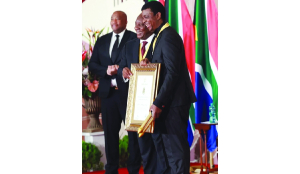
Professor Salim Abdool Karim and Professor Keertan Dheda, were formally awarded the prestigious Order of Mapungubwe by President Cyril Ramaphosa at Pretoria.
This specific order recognises South African citizens who have achieved excellence and exceptional accomplishment to the direct benefit of South Africa and the global community.
The citation for Karim, who was awarded the Order of Mapungubwe in Gold, honours his monumental contributions to medical science and public health, particularly his groundbreaking research into HIV/Aids and tuberculosis (TB) epidemiology, and his exceptional leadership in national health policy development.
source: http://www.dailypioneer.com / The Pioneer / Home / by Fakir Hussain / May 21st, 2026
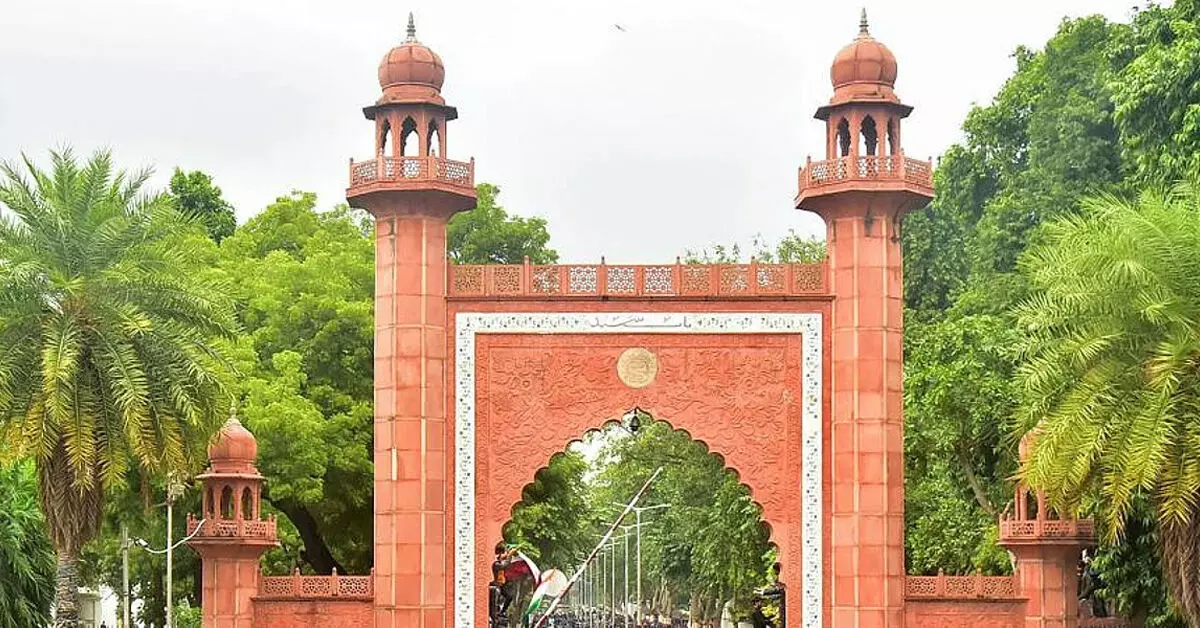
Researchers at the Interdisciplinary Biotechnology Unit of Aligarh Muslim University have identified a new multidrug-resistant bacterial genome in wastewater flowing through Aligarh city, raising concerns over the growing threat of antibiotic resistance in densely populated urban areas.
The findings, published in the April edition of the scientific journal ‘Molecular Biology Reports’, are based on a long-term study by a team of scientists led by Asad Ullah Khan, Shamsi Khalid and Absar Talat, who have been tracking the evolution of antibiotic resistance genes (ARGs) for over a decade.
According to the study, genome sequencing of a bacterial isolate, identified as ‘AK 633’ from a major city drain revealed the presence of a rare “mosaic plasmid” carrying the NDM-7 gene, which is associated with resistance to multiple antibiotics.
In microbiology, plasmids are small DNA molecules inside bacteria that can transfer genetic material, including drug-resistance traits, from one bacterium to another. A “mosaic plasmid” refers to a plasmid formed through genetic recombination, enabling it to carry resistance traits from different bacterial sources.
The researchers said the NDM-7 gene belongs to the New Delhi Metallo-beta-lactamase (NDM) family of resistance genes, which make bacteria resistant even to “last-resort antibiotics” such as carbapenems that are often used when other antibiotics fail.
The study noted that the sequencing of AK 633 pointed to the role of the plasmid ‘p1550’ in the possible global spread of high-risk antibiotic-resistant bacterial clones.
Talking to PTI, researcher Asad Ullah Khan said the findings underscore the urgent need for a wider national surveillance and awareness programme to monitor and contain the growing menace of drug-resistant bacterial genomes.
He said antibiotic resistance has emerged as a major public health challenge worldwide and pointed to untreated waste disposal, particularly hospital waste, and poor drainage management as important contributing factors.
Khan also stressed the need for vigilance during drain-cleaning operations in urban areas.
“Very often after drains are cleaned, the sludge is left on the roadside for long periods instead of being immediately removed. Such practices can contribute to the spread of resistant organisms,” he said.
According to the researchers, genotypic analysis — the study of the genetic composition of bacterial isolates — is essential to understand how resistance genes spread between bacteria in community and hospital settings.
Khan said at least 94 variants of NDM genes have so far been identified globally, many of which are increasingly being found both in hospitals and in the community.
“These are among the main causes of resistance against last-resort antibiotics,” he said.
The researchers noted that while similar work is being carried out in a limited number of laboratories in India, a much larger scientific and public health effort is needed to combat the growing threat posed by multidrug-resistant bacterial genomes.
source: http://www.english.varthabharati.in / Vartha Bharati / Home> India / by Musthafa / May 20th, 2026
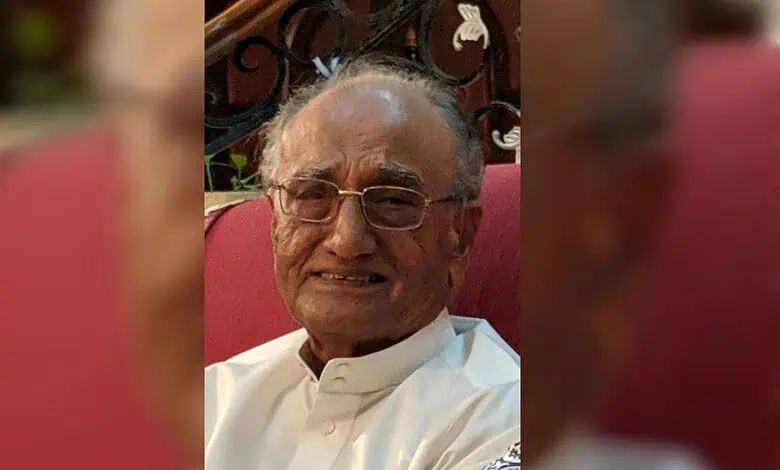
Cardiologist Dr Mohammad Iqbal Sanai served King Khaled bin Abdulaziz and prominent Saudi families for decades.
Dr Mohammad Iqbal Sanai.
Hyderabad:
Renowned cardiologist Dr Mohammad Iqbal Sanai, who served the Saudi royal family and several prominent families in the Kingdom, passed away in Hyderabad on May 14, 2026. He was 95.
According to his son, who spoke to Siasat.com, Dr Sanai is survived by his wife, Bader Babu Khan, daughter of late Khan Bahadur Abdul Kareem Babu Khan, and their four children.
Born in 1931, Dr Sanai completed his MBBS in 1955 before moving to Scotland for higher studies. He earned his MRCP in Cardiology from the University of Edinburgh in 1960.
He began his medical career as a government doctor in Warangal and later worked at Osmania Hospital in Hyderabad.
Career in Saudi Arabia
Dr Sanai moved to Jeddah in 1965, where he emerged as one of the city’s earliest specialist cardiologists. He became closely associated with several well-known business families, including the Bin Mahfouz, Binladin, Bugshan, Sharbatly, Ali Reza, Zainal and Gabel families.
In the early 1970s, he started attending to then Crown Prince Khaled bin Abdulaziz and later became his family physician.
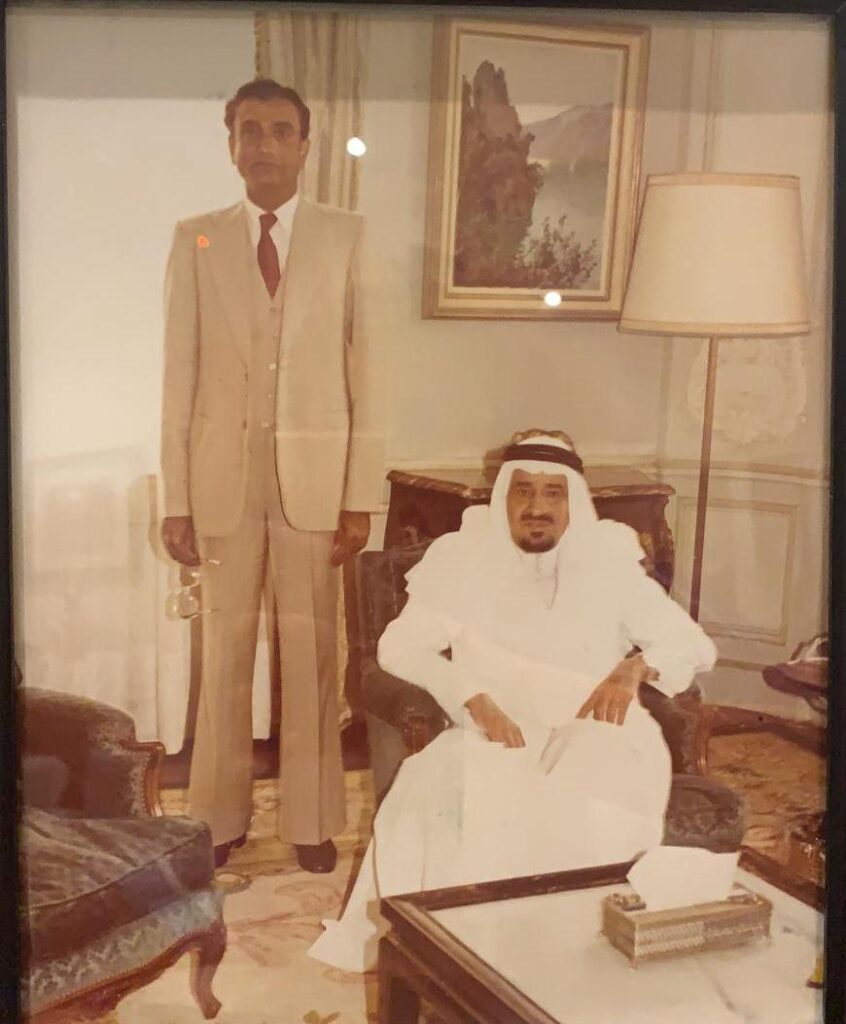
In 1978, Dr Sanai was appointed full-time physician to King Khaled bin Abdulaziz and remained in the role until the monarch’s death in 1982.
Dr Mohammad Iqbal Sanai with King Khaled bin Abdulaziz.
Recognition and retirement
The Saudi government granted Dr Sanai citizenship in 1976 in recognition of his contribution to healthcare services in the Kingdom.
Following a medical career spanning over five decades, he retired in 2007. He was widely respected for his professionalism, dedication and compassionate care.
source: http://www.siasat.com / The Siasat Daily / Home> News> Hyderabad / by Sakina Fatima / May 19th, 2026
A North Texas psychiatrist says one phone call during the Bosnian refugee crisis led him to create the Muslim Community Center for Human Services. The nonprofit now provides medical, dental and mental health services to thousands of patients each year, regardless of faith or ability to pay. The organization relies on donated time, equipment and funding as Dr. Basheer Ahmed continues serving patients at age 90. NBC 5’s Tahera Rahman has more.
When Catholic Charities called Dr. Basheer Ahmed in the early 1990s, asking for help relocating Muslim Bosnian refugees, he quickly realized something larger was missing across Texas.
“There was no Muslim social service organization or charitable organization helping people,” Ahmed said.
That phone call led Ahmed, now 90 years old, to found the Muslim Community Center for Human Services , a North Texas nonprofit that has since grown into a network of free and low-cost medical, dental and social service programs serving thousands each year.
“Being a psychiatrist, I had been doing some consultation work for Catholic Charities,” Ahmed recalled.
The organization was helping relocate Muslim Bosnian refugees to North Texas and needed guidance on cultural and religious needs, including mosques and halal food.
Ahmed, a Muslim immigrant from India, said the request stayed with him.
“They said, ‘Dr. Ahmed, what should we do?’” he said. “And I became very concerned that in the entire Texas, in fact, there was no Muslim social service organization or charitable organization helping people.”
In 1995, Ahmed gathered a group of supporters and founded the Muslim Community Center for Human Services, known as MCC.
The organization, based in Richland Hills, began modestly.
“So, I acted as a receptionist also initially,” Ahmed said. “We didn’t have money.”
Ahmed soon realized many patients also struggled to access medical care because of language barriers, cultural differences and long wait times.
“They had to wait a long time. There were language barriers, cultural barriers,” he said.
What started as culturally sensitive social services expanded into medical care, mental health support, domestic violence assistance and dental services.
Ahmed said community support helped the organization grow. One example that stands out to him involved retiring dentist Sam Roach, who donated equipment to MCC’s dental clinic before volunteering there himself.
“[A] Christian donating office to a Muslim organization shows how humanity works,” Ahmed said.
A Life Shaped by Service
Ahmed has held many leadership roles throughout his life, including serving as president of the Islamic Association of North America in 1979.
“In 1979, when there was Iranian hostages, he called us,” Ahmed said of former President Jimmy Carter. Ahmed said Carter sought input from Muslim leaders during the hostage crisis.
Still, Ahmed said service remains the role that matters most to him.
“I always feel that every human being should think about why God created you, what purpose you are serving,” he said. “I realized that serving humanity is my purpose of life.”
Adeela Malik, MCC’s director of clinical services, said the organization continues adapting to financial challenges while trying to meet growing demand.
“This was operating right until COVID,” Malik said of the dental clinic. “When COVID hit, we had to shut it down because of a lack of funds.”
Malik said MCC now connects patients with partner dentists who provide care for free or at reduced cost through their own practices.
“That’s one of our goals, to collect enough funds and reopen it,” Malik said. “Because I’m telling you, there is a lot of demand. People are willing to travel two hours for their dental.”
Care for Everyone, Regardless of Background
MCC services are free, though patients may be charged a $25 administrative fee if they can afford it.
One patient, who asked not to be identified, said he discovered MCC after searching online while struggling with serious health issues and no insurance.
“When you lose 70 pounds in three months, we thought like something serious was going on,” he said.
The patient said he initially believed the clinic only treated Muslim patients.
“To be honest, first I thought they’re only treating like Muslim community, but I was very wrong,” he said.
Doctors diagnosed him with untreated diabetes, and he said ongoing visits have helped him manage the condition.
“I’m glad I found them because… I will say, saved my life,” he said.
The patient also shared a message for Ahmed.
“I wanna say thank you from the bottom of my heart for having such a kind heart,” he said.
Ahmed said the organization’s mission remains rooted in expanding care to anyone in need.
“This is the best medical service in the world we provide here in America,” Ahmed said. “I can tell you that. But unfortunately, the sad part is it’s not for everybody. And my desire is that I wish we can do this to every person. We can.”
That’s why, even after a lifetime’s work, the 90-year-old continues to fill needs where he finds them.
“I feel at least a peace in mind that I am doing that for satisfying my own faith and my purpose for living in this world,” he said.
The Muslim Community Center for Human Services operates through donated time and funding.
source: http://www.nbcdfw.com / 5NBCDFW / Home> Health / by Tahera Rahman / May 13th, 2026
Meet Dr Munkir Hossain, a scholar on a mission to empower the girl child and create religious harmony, hopes that one day India will be led by scholars. A Sufi, who fasts almost throughout the year.
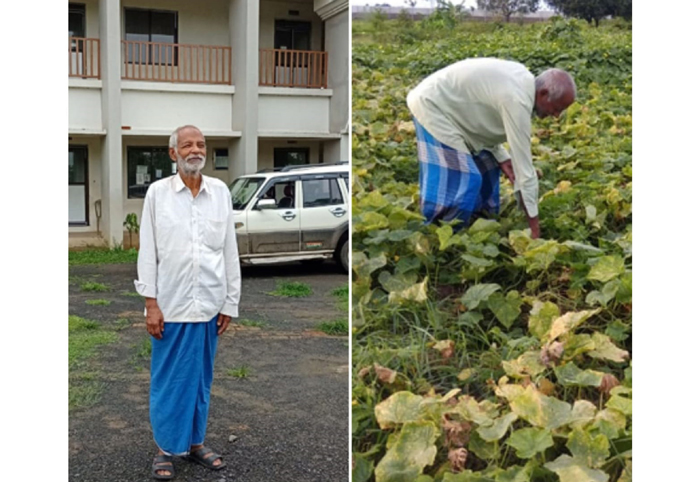
Dr Munkir Hussain in front of the institute cum hostel at a farm in Birbhum District
Kolkata:
If you were to cross him on your way to Birbhum, famous for its terracotta work, you probably wouldn’t give him a second glance. If you saw him tilling the farm land you’ll only see a regular farmer busy at his work. A frail figure in a checked lungi (waist cloth) is a common sight in our country. What is not common though are the achievements of our students from rural India and that too as scientists of international repute.
Yes, of course we have our much admired A.P.J. Abdul Kalam, who made his way from a village to achieve great heights as a scientist and went on to become one of India’s most loved and respected Presidents.
Dr Munkir Hossain, the person described above, has been a post doctorate research scholar at various national and international institutes. After schooling from his maternal village at Bhimpur he went to Burdwan University where he did his master’s in Chemistry and followed it up with a PhD and later did post doctorate studies from the prestigious IIT (Indian Institute of Technology) Bombay.
Who is Dr Munkir?
“I was born in Khutkail village but there was no school there. Luckily my brother was born soon after my birth so my parents left me at my maternal grandparents’ house in Bhimpur which is just across the Pagla river. There was a primary school too. If that had not happened I would have remained illiterate,” chuckles the scientist as he recalls the fond memories of childhood days.
He credits his teachers at the village school for instilling in him the values he has and the thirst for knowledge that took him to far flung places and universities such as Taiwan and Japan.
Dr Munkir has over 55 research articles published in national as well as international science journals of great repute.
He is revered by all those who know him or have heard of him. The Vice Chancellor of Aliah University and former Professor, Department of Chemistry at Jadavpur University in Kolkata, Md Ali recalls the days at Burdwan University when he had enrolled for his MSc while Dr Munkir was doing his PhD there, “As an academician from such modest background Dr Munkir has definitely been an inspiration for others. I come from a village myself and seeing Dr Munkir do his PhD at that time seemed like a huge achievement in itself. I used to admire his sincerity and his simplicity. He led a simple life and used to be dressed in very simple attire, wearing the modest chappal (bathroom slippers) to class. He had no political leaning nor do I think he discussed religion. Though my interactions with him were very limited.”
After retirement in 2016 as a senior research scholar Dr Munkir opted to come back to his village.
Dr Munkir Hossain with BSM’s Samirul Islam
After retirement, bought lands and providing free education for girls
At 67, he has given away all his earnings for the education of poor children on a 60 bighas (acres) plot of land that he bought in Bhimpur.
Dr Munkir had started his venture with the aim to empower the girl child. But he ran short of money. His objective is to spread secular knowledge and create scholars who will provide honest leadership.
“Out of the 26 students from our first batch which appeared for the WB Board’s Madhyamik examination this year, 25 secured first division. Five of them scored between 90 to 100 percent and six students scored between 80 to 90 percent,” shares the scientist like a father proud of his children’s achievements.
“His achievements as a scholar are unparalleled yet he lives in oblivion. He does not even own a mobile phone. He spent his money getting his brother’s daughters married and with the rest he bought a plot of land to promote education. He is a Sufi scholar, a Saadhak,” says Samirul Islam, Assistant Professor at Shyampur Siddheswari Mahavidyalaya and President of Bangla Sanskriti Mancha.
Future plan: A maternity hospital
That’s not all. Dr. Munkir also wants to set up a Maatri Sadan (Mother and Child care) hospital that will have women administrators and hopefully women doctors as well. The institute at present provides free education from school till the post graduate level besides free hostel facilities. It occupies 37 bighas. The remaining 23 bighas of the plot will be used for the Maatri Sadan.
“Let’s not forget that our mother is our first teacher. It is on her lap that we get to hear stories and tales of good and bad, right and wrong. Habits formed during childhood last long. It lays the foundation for a healthy outlook and consequently a healthy society. As of now only girls from the local village are getting education here because we don’t have hostel facility for them. I’m hopeful that soon, like the boys who come from far off places, they too will be able to get quality education and hostel facility with wholesome food free of cost,” he shares with conviction.
The scholar reminds us that society is an extension of our family. “We need to improve social values. We are losing our heritage and culture. Even the villages are not free from such degradation. My intention is not just to give my country educated individuals but youth who can rise above vices like corruption and greed for money or power,” says the man who chose to remain unmarried so that he would be free to serve society.
Epitome of simple living and high thinking
For his own sustenance he takes farmland on lease from the villagers and cultivates onion and vegetables and also grows mangoes. “I was born in a very poor family. We barely could manage one meal a day. So I’m a light eater and hunger does not bother me. But I don’t want other children to be deprived. The only way to get out of poverty is through education,” says the scientist in answer to how he manages to lead such a frugal life.
All his life he owned only two sets of pants and shirts and has toured across the globe in them.
The man himself fasts for 360 days a year, hasn’t skipped his prayers since the time his primary school teachers taught him how to pray and sleeps at the mosque. He is critical of such religious preachers who spread hate and create rift between communities. He stresses on the importance of secular knowledge combined with spiritual knowledge to tide over all the ills plaguing our society today.
“What we see around us today is a result of ignorance. I hope more people come forward and join hands with others to create a society that is not just secular but one that thrives on peace and prosperity,” says the scientist turned social activist with a conviction that’s difficult to ignore.
Taking a cue from Tagore’s Ekla Chalo Re, which Dr Munkir quoted, the indomitable spirit of the scientist is persistent in its resolve to serve the society. He has joined hands with Bangla Sanskriti Mancha that works for the welfare of downtrodden and has been closely associated with the relief work during the lockdown and cyclone Amphan, to provide the relief works to the affected people.
source: http://www.enewsroom.in / eNews Room India / Home> Bengal> Let There Be Light / by Nasreen Khan / July 22nd, 2020
* On the list are 14 Muslim zoologists and scientists
* To date, India has identified 102,718 animal species
* Work is underway to discover new species in ecosystems
* 15 million living species still to be discovered
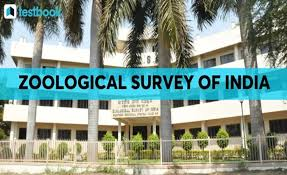
THE Kolkata-headquartered Zoological Survey of India (ZSI), whose scientists and field staff are engaged in exploring, naming, describing, classifying, and documenting animals from all over the world’s most populous country, has a miserably low number of Muslims – 23 – on its rolls that has a total of 591 officers, administration and field staffers, according to Mohammed Abdul Mannan’s new book, At the Bottom of the Ladder: State Of The Indian Muslims – https://www.amazon.in/dp/B0GF1Q9R25. The book quantifies Muslim presence in 150 key organisations, including Union ministries, departments, and organisations.
The Muslim scientists and zoologists at the ZSI are – Sarfraz Ul Islam Kazmi, Shaikh Rehnuma Sultana, Mohammed Hafiz, Imran Alam, Shabnam Nizamuddin Ansari, Jalil Ahmed, Mohammed Rasmanjani Ali, Anjum Nasreen Rizvi, Rifat Hussain Raina, Jafer Palat, Mohammed Ethtesham Ul Hassan, Ruqiya Bano, and K Bakh Mollah. There are seven Field Assistants from the largest minority community.
Among 82 ZSI scientists are two Muslims – Dr M E Hassan, a Scientist ‘E’ at the Gangetic Plains Regional Centre in Patna, and S R Sultana, Assistant Zoologist at the Freshwater Biology Regional Centre in Hyderabad. Among 98 officials at 15 Regional Centres, eight are Muslims, including two NRCs in Dehradun – Dr. Anjum Nasreen Rizvi, a scientist in Nematology, Helminthology and Molecular Systematics, and Dr S I Kazmi, a scientist in Hymenoptera. The Western Regional Centre in Pune’s four staff members include Dr Muhamed Jafer Palot, a scientist in animal taxonomy with a special interest in birds, reptiles, and butterflies. Dr Anjum Rizvi is the Managing Editor of the Journal of Indian Zoology.
The 108-year-old organisation has been working to understand and investigate the faunal diversity for scientific use and equitable sharing of the benefits of animal resources of the country. Formed in July 1916, it conducts surveys, exploration, and research that lead to the advancement of zoological knowledge. ZSI originated from the establishment of the Zoological Section of the Indian Museum at Calcutta in 1875.
It gradually expanded in terms of its manpower and research programme. Today, India is among the 17 mega-diversity countries of the world, with four biodiversity hotspots, including the Western Ghats/Sri Lanka, Indo-Burma, and the Himalayas. Currently, there are about 1.7 million living species described from all over the world, and another 15 million species are waiting to be discovered. To date, India has been able to describe 102,718 species of animals, and work continues to discover and explain new species, especially from the lower invertebrate groups occurring in various ecosystems. Also, the status of the higher group of animals is studied before their habitats disappeared on the planet Earth.
The country’s custodian of the animal resources has broadened its work in line with the Articles of the UN Convention on Biological Diversity (UNCBD), a multilateral treaty focused on conserving biodiversity, promoting its sustainable use, and ensuring the fair and equitable sharing of benefits from genetic resources. As many as 157 countries signed it, like the United Nations Framework Convention on Climate Change (UNFCCC) and the United Nations Convention to Combat Desertification (UNCCD), at the UN Conference on Environment and Development in Rio de Janeiro in 1992. The CBD now has 196 countries as signatories, including India.
To take the agenda further up, India also enacted the Biological Diversity Act in 2002 to implement the provisions of CBD, which covers biodiversity at all levels: ecosystems, species, and genetic resources. To support the implementation of its objectives, two internationally binding agreements were adopted within the framework of the CBD. The Cartagena Protocol, adopted in 2000 and entered into force three years later, regulates the transboundary movement of living modified organisms (LMOs).
The Nagoya Protocol, adopted in 2010 in Japan and entered into force four years later, establishes a legally-binding framework for access to genetic resources and the fair and equitable sharing of the benefits arising from their use. Experts say considerably less is done to assess the degree and value of biodiversity without knowing the species involved. The ecosystem’s health also cannot be monitored without recognizing the presence of the individual organisms crucial for the indication of ecological processes.
The ZSI has made extensive surveys across the country, and a large number of specimens have been collected. Of these collections, only about 65 percent have been taxonomically studied. These include the major groups of vertebrates. The organization provides information and vital data for the in-situ conservation of various species in different ecosystems, both within and outside the protected areas. The ZSI provides regular services with regard to permissible limits of legal trading of faunal resources or derivatives thereof, monitoring services on population status of commercially important species, and providing inputs for underutilised, culturable species, both from terrestrial and aquatic systems.
A part of the Union Ministry of Environment, Forest and Climate Change, it also undertakes Environmental Impact Assessment (EIA) with special reference to ecology and wildlife. Zoological surveys worldwide are crucial for understanding and managing biodiversity. These surveys involve various methods to collect data on animal populations, behaviour, and habitats, including field observations, monitoring programs, and advanced techniques like DNA analysis and satellite tracking.
There are about 1.7 million living species described from all over the world and another 15 million species are waiting to be discovered. Based on the largest dataset to date, the global Living Planet Index (LPI) shows an average 73 percent decline in monitored wildlife populations between 1970 and 2020. It reports that there has been a large average decline across more than 34,000 animal populations. In 2024, ZSI set up a pilot project to use eDNA (environmental DNA) to study and monitor wildlife.
Data analysis of the 2010-2020 decade reveals that a total of 4,112 species — 2,800 new species and 1,312 new records in 2020, India added 557 new species to its fauna, which included 407 new species and 150 new records, according to a document by the ZSI. The number of faunal species in India has climbed to 1,02,718 species with the discovery of the new species. There is no definitive, universally agreed-upon number for the total number of animal species in the world.
Estimates range from three million to 100 million. However, the most common estimates fall between seven and 10 million. About 1.5 million animal species have been formally described and named by scientists. The ZSI publishes the Red Data Book on Indian Animals, which was first published in 1983 and is similar to the Red Data Book published by the International Union for Conservation of Nature (IUCN), the world’s largest and most diverse environmental network known for producing authoritative reports, standards, and tools for conservation.
In an era where corporate success is often measured solely in balance sheets, Hamid Ahmed stands out as a rare blend of business acumen and social commitment—quietly carrying forward the towering legacy of his grandfather, Hakim Abdul Hameed, a visionary who believed that enterprise must serve society.
A young, suave, and dynamic Indian business leader, Ahmed today occupies multiple roles with ease and purpose. As the Chief Executive Officer and Trustee of Hamdard Foods India, and former Chancellor of Jamia Hamdard, he represents a new generation of leadership rooted in legacy but driven by innovation.Owing to his leadership acumen and expanding contributions to the service of humanity, he has been featured among the 100 Most Influential Muslims of India in the 2025 list compiled by the Muslim Mirror. The list also features distinguished personalities such as former Vice President of India Mohammad Hamid Ansari, noted industrialist Azim Premji, and politician-barrister Asaduddin Owaisi, among several other eminent names.
Born in 1977 in New Delhi, Ahmed’s early education at St. Columba’s School laid the foundation for a disciplined and forward-looking career. He went on to pursue a Bachelor’s degree in Economics from the University of Delhi, graduating in 1998, before earning an MBA from London in 2000—equipping himself with a global outlook at a young age.
His association with the Hamdard legacy began early. In 1995, he was appointed as a Trustee of Hamdard Laboratories India by his grandfather. By 2000, he had formally joined the organization, embarking on a professional journey that would span over two decades. When he assumed the role of CEO in 2016, Ahmed brought with him not just experience, but a renewed vision—one that sought to modernize while preserving the ethos of Unani medicine and ethical enterprise.
Under his leadership, Hamdard Foods India has expanded its footprint across both domestic and international markets, strengthening its position in the food and Unani healthcare sectors. His approach combines strategic expansion with a nuanced understanding of regional consumer behavior, reflecting years of hands-on experience across diverse markets.
Yet, Ahmed’s influence extends well beyond boardrooms. His commitment to education is deeply intertwined with the legacy of Jamia Hamdard, an institution founded on the principles of accessible and value-based learning. As Chancellor, he played a key role in reinforcing its academic and institutional growth, ensuring that the university continues to serve as a hub of excellence for students from all backgrounds. Today, Jamia Hamdard has secured a top-tier position among a plethora of private universities, distinguished for its academic excellence, research output, and commitment to holistic education.
He is also the Founder and President of the Unani Drug Manufacturers Association (UDMA), where he has worked to strengthen the traditional medicine sector and advocate for its modernization and global relevance.
Philanthropy remains central to his work. Through the Hamdard National Foundation India and the Hamdard Learning and Welfare Society, Ahmed has championed initiatives focused on education, skill development, employment generation, and the upliftment of economically weaker sections. These efforts echo his grandfather’s philosophy—that business must ultimately serve humanity.
His contributions gained particular prominence during the COVID-19 pandemic, when he led large-scale vaccination drives, organized holistic healthcare camps, and initiated environmental campaigns such as tree plantation drives—demonstrating a hands-on approach to crisis response and community care.
In recognition of his service, he was conferred the Paul Harris Fellow award by the Rotary Club of Delhi South in 2022—an honor reserved for individuals who make significant contributions to society.
Beyond his executive and philanthropic roles, Ahmed has also brought his expertise to the corporate governance space. He has served as a Non-Executive Independent Director on the boards of several prominent companies, including Religare Enterprises Limited, Religare Finvest Limited, Religare Housing Development Finance Corporation Limited, Care Health Insurance Limited, and Religare Broking Limited.
At a time when legacy institutions often struggle to remain relevant, Hamid Ahmed’s journey offers a compelling narrative—of continuity without stagnation, of growth anchored in values, and of a leadership style that sees business not merely as a vehicle for profit, but as a force for social transformation.
On his inclusion in the 100 Most Influential Muslims-2025 list, senior journalist Abdul Bari Masoud engaged Hamid Ahmed in an in-depth conversation for Muslim Mirror, exploring a wide spectrum of issues—from his leadership at Hamdard and vision for the Unani sector to his commitment to education, philanthropy, and inclusive nation-building.
Excerpts from the Interview
Q:To what extent were you inspired by your grandfather, Hakim Abdul Hameed Sahib?
A : Hakim Abdul Hameed Sahib was not only the founder of Hamdard but also a visionary who believed in combining traditional health system with modern scientific approaches. His life’s work was deeply rooted in service to humanity, education, and healthcare. His philanthropic initiatives, like establishing Jamia Hamdard University and other institutions, shows how he linked business success with social responsibility. His vision continues to inspire Hamdard’s focus on blending tradition with innovation. His humility and dedication to public welfare set a self reliant leadership and business model that balances growth with ethical responsibility.
Q:Which aspects of his life and philosophy had the greatest influence on you?
A: His decision to dedicate Hamdard as a charitable institution inspires my own sense of responsibility towards society. His passion for education, his humility and ethics, simplicity and global vision not only motivates me but drives me to spend my energies in the research, innovation and making Hamdard’s every effort relevant to the human beings in everyday life. For me, his life is a compass that shapes my journey into the future.
Q:What made Hamdard diversify into the food sector? And what was the thinking behind this transition?
A: Having Rooh Afza- a beverage stalwart already a household name, diversification into the food sector was a natural extension of consumer trust in Hamdard’s quality and purity. Naturally consumers expected that Hamdard could reach out for their food’s need requirements in the categories of core food and functional foods. This way Hamdard could see the light of faster growth and avenues for ensuring sustainable revenue growth, which helps out our charitable mission requirements. To meet India’s growing demand and global needs of quality foods, we introduced several products in a short span of time like, Milkshakes, Lassi, Juices, Squashes, Coconut Water, Honey, Saffron, Soya Nuggets, Vermicelli, Mustard Oil, Olive Oil and range of Spices.
Q:How do you assess the position of Hamdard Foods India within the current Indian food industry?
A: At Hamdard Foods, we have always believed in blending tradition with innovation. Consumer preferences in India are evolving rapidly, with a growing emphasis on quality foods and convenience. Our iconic brands like Rooh Afza continue to resonate deeply, but we are also expanding into new product categories that meet modern lifestyles — from ready-to-drink formats to sugar-free variants. Sustainability and quality remain at the heart of our mission, and we are committed to ensuring that every product we deliver carries forward our legacy of trust while embracing the future of the food business.
Q:What are your future plans and long-term ambitions for Hamdard Foods and the broader Hamdard legacy?
A: Hamdard Foods has always stood for trust, tradition, and purity. As we look ahead, our future plans are centered on three pillars: innovation, expansion, and sustainability. We are committed to introducing new product formats that cater to evolving consumer lifestyles, while ensuring that our heritage brands like Rooh Afza continue to remain relevant across generations.
On the global front, we aim to strengthen our presence in international markets, taking the Hamdard legacy of quality to new geographies. At the same time, we are investing in sustainable practices — from responsible sourcing to eco-friendly packaging — so that our growth is aligned with the well-being of both people and the planet.
Our long-term ambition is to ensure that Hamdard remains not just a household name in India, but a global symbol of nutritious food producer imbibing traditions along with innovations. We want the Hamdard legacy to inspire future generations by showing that a company rooted in heritage can thrive in modern times while staying true to its values.
Q:Is there any particular experience or anecdote that significantly shaped your outlook or altered the course of your thinking?
A: One experience that profoundly shaped my outlook was witnessing how Rooh Afza continued to unite generations within families. I recall visiting a household where grandparents, parents, and children all had their own stories tied to the drink — from Ramadan evenings decades ago to modern-day summer gatherings. That moment reminded me that Hamdard is not just about products, but about memories, traditions, and emotional connections.
It strengthens my thinking by reinforcing the idea that our responsibility goes beyond business growth. We are custodians of a legacy that touches lives deeply in personal ways. This realization drives me to ensure that every decision we make — whether it’s innovation, expansion, or sustainability — honors that heritage while preparing the brand for the future. It’s a constant reminder that Hamdard’s strength lies in being timeless yet adaptable.
source: http://www.muslimmirror.com / Muslim Mirror / Home> Interviews> Positive Story / by Abdul Bari Masoud / April 02nd, 2026
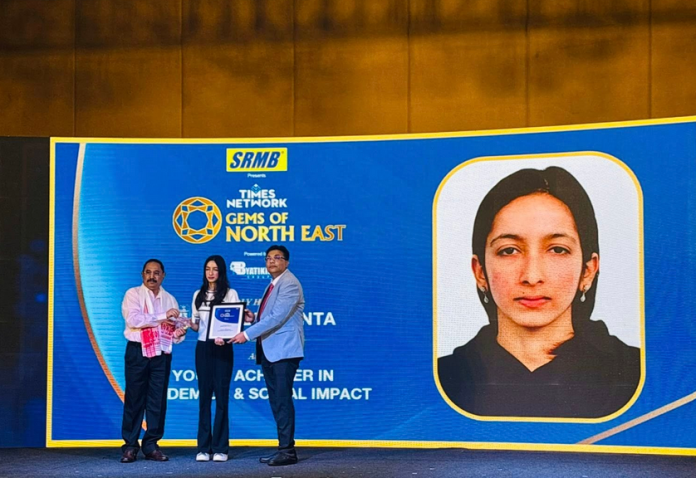
A 16 year old Muslim student from Assam has gained international attention after presenting her research at a global conference on artificial intelligence and machine learning.
Huma Abia Kanta, a Grade XII student at Royal Global School, Guwahati, presented her paper at the Advancement and Innovation International Scientific Practical Conference held in Azerbaijan. The event brought together academic institutions from multiple countries and focused on emerging developments in AI and machine learning.
Her research, titled ML Based Prediction of Phycocyanin Purity, examined how machine learning models predict pigment purity levels used in sustainable bio resource industries. She compared six regression models and achieved a mean absolute error of 0.058, improving on the standard laboratory deviation of 0.31. The paper will be published in international journals indexed in Scopus.
Huma has also authored another paper on natural language processing, accepted for presentation at RegICON 2025. She has co authored three additional research papers, which are under review.
Beyond research, she leads an educational startup named desicodes. The initiative works on an Assamese Python transpiler to promote coding in regional languages and improve access to computer science education in the Northeast.
She has also contributed to environmental work by supporting the Hargila Army initiative, helping digitise traditional motifs linked to the endangered Greater Adjutant Stork for handloom use.
Huma credited her mentors for their guidance, highlighting the role of academic support in her journey.
source: http://www.radiancenews.com / Radiance News / Home> Features / by Radiance News Bureau / March 20th, 2026