Category Archives: Women/Girls(since May26-2021)

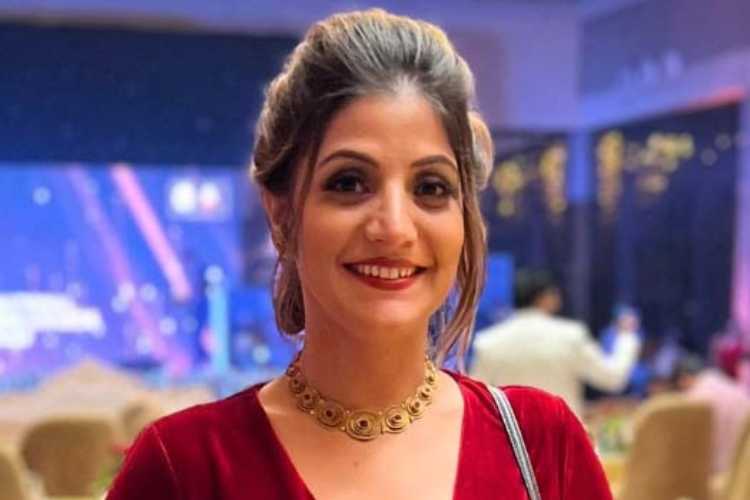
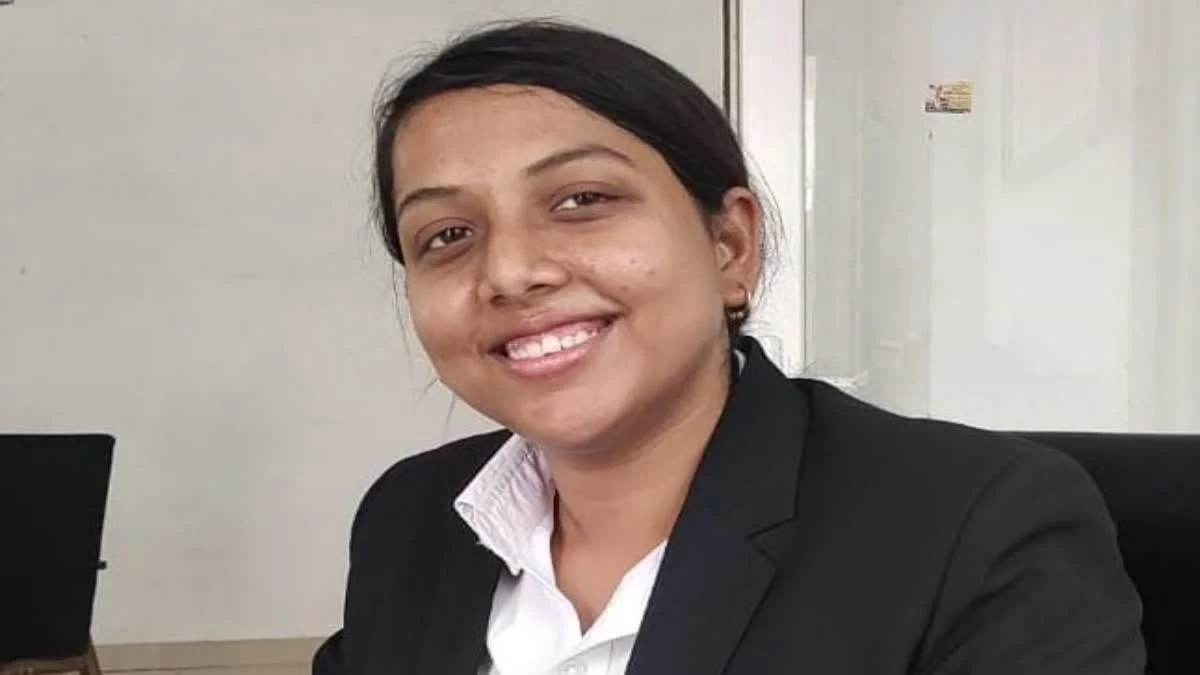
Turning Failures into Success: UP’s Anjum Ara Tops Judicial Service Exam

Prayagraj, UTTAR PRADESH :

Educated at Allahabad University, the daughter of a State Bank of India officer credits self-study, family support and disciplined preparation to secure first rank
New Delhi :

In a story of determination, faith and steady hard work, Anjum Ara from Prayagraj in Uttar Pradesh has secured first rank in the Chhattisgarh Provincial Judicial Service Examination, becoming a judge and bringing pride to her home state. Her success has been widely celebrated in Prayagraj, where neighbours and well-wishers described her achievement as a moment of honour for the city.

Anjum, who comes from an educated Muslim family, said her journey was shaped by a personal loss that changed the direction of her life. Her uncle, whom she lovingly called Bade Abu, served as an Additional District Judge. His death left a deep impact on her and inspired her to choose the path of judicial service. “I used to call him Bade Abu,” Anjum recalled. “After he passed away, I made up my mind that I would become a judge like him and serve society.”

She completed her early schooling at Central Academy in Jhunsi town in Prayagraj District before pursuing her BA and LLB from the University of Allahabad. Reflecting on her university years, Anjum said the Law Faculty played a major role in shaping her approach towards legal studies. “The Law Faculty taught me to understand the law, not just memorise it,” she said. “Our professors focused on practical learning. That helped me a lot in the judicial exams.” She added that because of the strong academic environment at the university, she did not feel the need to rely on costly coaching institutes. “If your basics are clear, you can prepare on your own,” she said.

Her father, Shamim Ahmed, works as an assistant manager at the State Bank of India, while her mother, Akhtari Begum, is a homemaker. Anjum described her parents as her biggest support system. She said her preparation was entirely self-driven and disciplined. “I studied five to six hours every day with full focus,” she explained. 

For the mains examination, she focused strongly on judgment writing. She regularly practised answer writing and carefully studied judgments delivered by local courts in Chhattisgarh to understand how decisions are framed. “I practised writing answers regularly. I also studied judgments from local courts in Chhattisgarh to understand how decisions are structured,” she said. She also credited her habit of reading newspapers daily for helping her during the interview stage. “Current affairs helped me respond confidently,” she added.

At home, her family ensured that her studies were never disturbed. “They made sure there was no noise while I studied. They always encouraged me, especially when I failed in the Rajasthan and Delhi judicial exams,” Anjum said. Her father said the family never allowed disappointment to take over. “We always believed in her ability. Failure is part of life. We told her not to lose hope,” he said. Her mother added, “She worked very hard day and night. We only tried to give her a calm environment.”

Before achieving success in Chhattisgarh, Anjum faced setbacks in other states. She admitted that those failures were painful but also important lessons. “Failures taught me where I was lacking,” she said. “Instead of getting upset, I improved my answer writing and strengthened my understanding of the law.” Her perseverance paid off when the results were declared and she secured the top rank in the state.

Residents in Prayagraj expressed pride in her achievement. A neighbour said, “This is a proud moment for the entire area. She has shown that with hard work, anything is possible.” A former teacher from the University of Allahabad said, “Anjum was always sincere and focused. Her success proves that strong academic grounding and discipline make a real difference.”

Now appointed as a judge, Anjum says her goal is to carry out her duties with honesty and integrity. “I want to fulfil my responsibilities towards society through the judiciary with sensitivity,” she said. “Justice should be fair and humane.” Her achievement is being seen as an inspiration, particularly for young women from minority communities who dream of entering the judiciary.

Anjum also shared advice for aspirants preparing for judicial services. She urged students to build a strong grasp of the basic language of law. She advised regular answer writing practice for the mains examination and stressed the importance of understanding how court judgments are read and written. She encouraged students to maintain a routine of five to six hours of focused study daily and not to lose heart in the face of failure. “There is no easy way,” she said. “You have to stay focused and believe in yourself.”

From the classrooms of Prayagraj to securing the top rank in Chhattisgarh, Anjum Ara’s journey reflects discipline, patience and family support. As she prepares to take her place on the bench, many young aspirants now look to her story as proof that steady effort and belief in one’s goal can turn a dream into reality.

source: http://www.clarionindia.net / Clarion India / Home> Editor’s Pick> Indian Muslims / by Mohammad Bin Ismail / February 23rd, 2026
From Balaghat to bureaucracy: Farkhanda Qureshi’s inspiring rise to UPSC Rank 67

Balaghat, MADHYA PRADESH:

Balaghat (Madhya Pradesh):

When she was in Class 8, a young girl in Balaghat sat watching television as district collector B Chandrasekharan appeared on a local channel. For many, it was just another news segment. For Farkhanda Qureshi, it was a turning point. In that moment, a dream quietly took root — she would one day become a civil servant.

Years later, that dream has turned into reality.

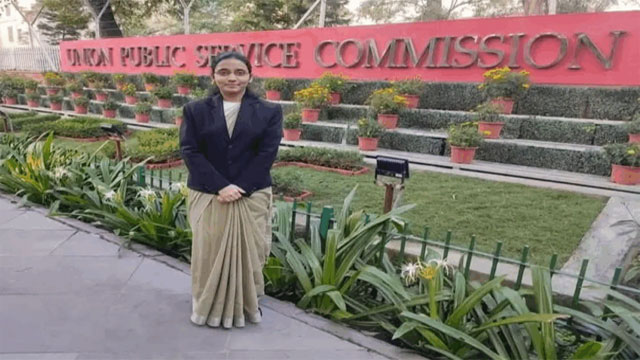
Farkhanda Qureshi, a determined young woman from the small town of Balaghat in Madhya Pradesh, has secured an impressive 67th rank in the UPSC Civil Services Examination 2024. She will soon begin her training at the Lal Bahadur Shastri National Academy of Administration in Dehradun, stepping into the journey she once only imagined.

“I had decided that one day I would become a collector and work for society,” she recalls — a promise she made to herself as a schoolgirl.

Her success did not come easily. Farkhanda began preparing for the UPSC in 2021. The road was marked by setbacks and disappointments. Yet, she chose persistence over defeat. It was her fourth attempt that finally brought her success.

Through every failure, her parents stood firmly beside her. “My parents never let me break down. They kept telling me that I would succeed one day. Without their support, I might have given up after my first or second attempt,” she shared with media persons.

Farkhanda’s preparation strategy challenges common myths about the UPSC. She believes that marathon study sessions are not the key. “Studying 18 hours a day is not necessary. What matters is consistency and the right strategy,” she says. She dedicated 6 to 8 focused hours daily, ensuring that she studied every single day. Previous years’ question papers, standard reference books, newspapers, and current affairs formed the backbone of her preparation.

An alumna of St Mary’s School for her 10th standard and Methodist Mission for her 12th, Farkhanda believes that coming from a small town was never a disadvantage. “Balaghat has never been my weakness. If young people here get the right guidance and resources, they too can achieve national success,” she asserts.

She calls her father, Abdul Malik Qureshi, a lawyer, and her mother, Nikhat Anjum Qureshi, a homemaker, her true heroes. Their faith in her, she says, is the foundation of her achievement.

Farkhanda Qureshi’s journey is more than a rank on a list. It is a reminder that dreams born in small towns can reach the highest corridors of power — with courage, consistency, and unwavering support.

source: http://www.daijiworld.com / DaijiWorld.com / Home> Top Stories / by Daijiworld Media Network – Balaghat / February 26th, 2026

Mumtaza Begum’s sheep farm is inspiring women in Kashmir

Watrina Village (Bandipora District, North Kashmir), JAMMU & KASHMIR :

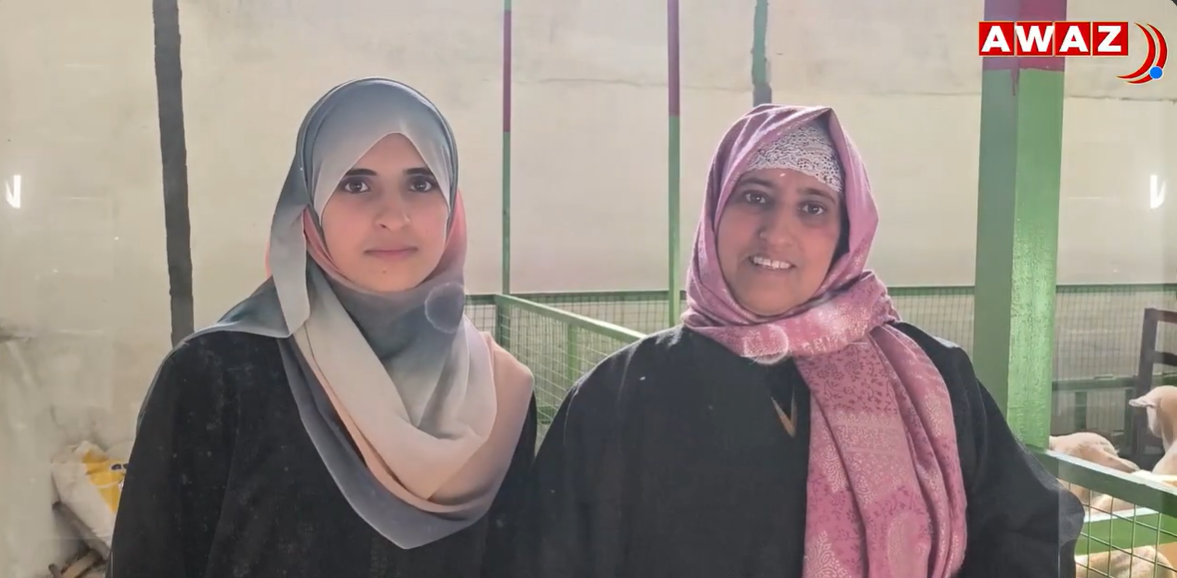
Mumtaza Begum, Sheep farm owner

Mumtaza Begum, a 33-year-old homemaker from Watrina village in Bandipora district, North Kashmir, has changed her life through sheep farming. Despite limited resources, social challenges, and the compulsion to drop out of college early, Mumtaza refused to give up and is today recognised as a successful female entrepreneur in the area.

Mumtaza’s story is one of struggle and the spirit of fighting out adversity. Financial difficulties forced her to drop out of college, but she never gave up on her dreams. Her matrimonial family had 10 to 15 sheep, which were reared using traditional methods. This sparked the idea of ​​pursuing sheep farming on a larger scale.

Mumtaza’s dream wasn’t limited to mere subsistence; she wanted to turn it into a systematic and successful business.

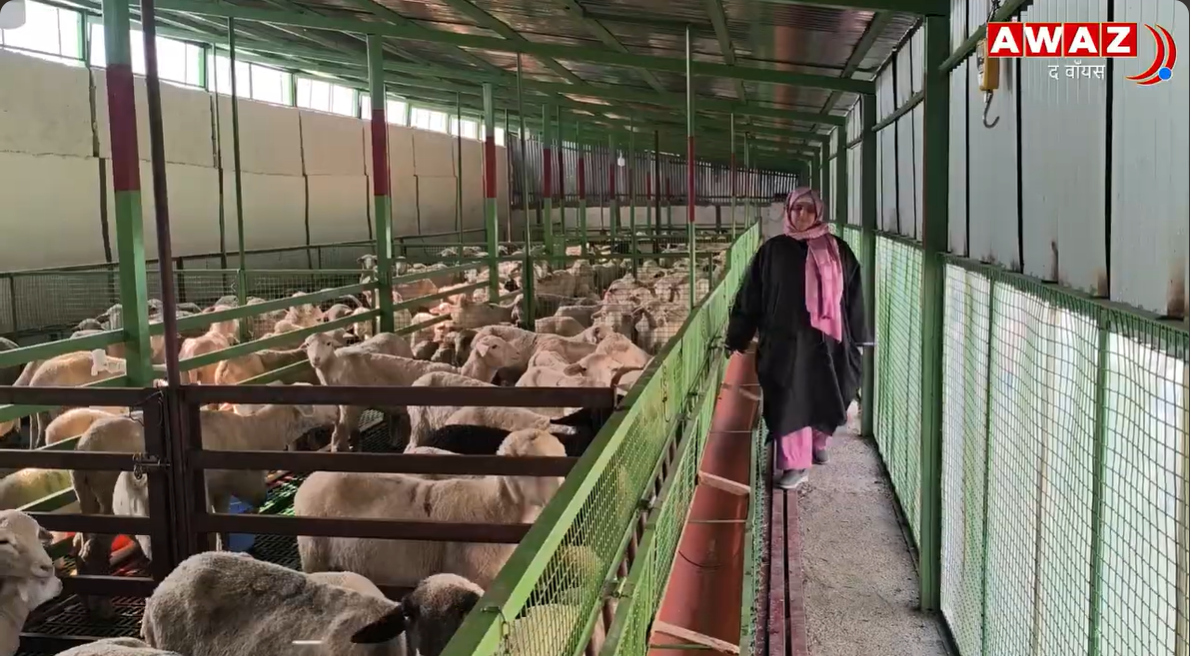
With this thought in mind, she approached the Animal Husbandry Department in Bandipora. With the department’s guidance, she applied under the state-sponsored subsidy scheme, “Mini Sheep Farm.” In February 2019, she was selected and allotted a unit of 50 sheep.

Sheep rearing requires hard work and patience. Besides, for Mumtaza, the lack of experience was also a major challenge. But Mumtaza didn’t give up. Through persistent hard work, a passion for learning, and a strong will, she gradually expanded her business. Over time, her experience grew, and her farm expanded.

Mumtaza credits her family, especially her husband, for her success. She says that her husband stood by her every step of the way. “He is always there for me, offering emotional support and actual help with work,” she says.

Mumtaza believes that family support is crucial for women entrepreneurs, especially when they have to juggle both home and work responsibilities.

Mumtaza also praises the officials of the Animal Husbandry Department for her success. Proper guidance, technical advice, and knowledge of government schemes helped her overcome many challenges. With the department’s support, she could manage her farm efficiently and increase production.

Today, Mumtaza Begum owns a successful farm with over 210 sheep. She earns a net income of over 5 lakh rupees annually. Most of her sheep are sold during Eid al-Adha, providing her with a substantial income. This work has not only improved her financial situation but also boosted her confidence and self-worth.

Mumtaza no longer considers herself merely a sheep herder; She wants to inspire other women to opt for entrepreneurship.

She shares her experiences with women and encourages them to move forward. She says that if women utilise the opportunities available to them, they can certainly improve their social and economic status.

Mumtaza says that the true rewards of hard work come when one proves oneself. For her, sheep farming is not just a means of earning money, but a path to self-reliance and respect.

This woman from Bandipora has proven that with the right mindset, hard work, and support, any dream can become a reality.

source: http://www.awazthevoice.in / Awaz, The Voice / Home> Stories / by Arsla Khan, New Delhi / February 11th, 2026

Army officers Saria Abbasi, Fatima Wasim show women power in Army

INDIA :

Captain Saria Abbas and Captain Wasim

New Delhi :

If you thought that the marching of an all-women tri-services contingent in the Republic Day Parade was just a show-off, you need to know about two women in the Indian Army to realise how women are not only joining the Military but also get the toughest assignments by being posted on treachrous terrains and hostile borders of India.

Captain Saria Abbasi and Captain Fatima Wasim are two women army officers whose names surfaced on social media. Abbasi is posted on the post on the Line of Actual Control (LAC) the contentious working boundary with China and Fatima Wasim on a post in Siachen, the world’s highest and coldest battlefield along Pakistan.

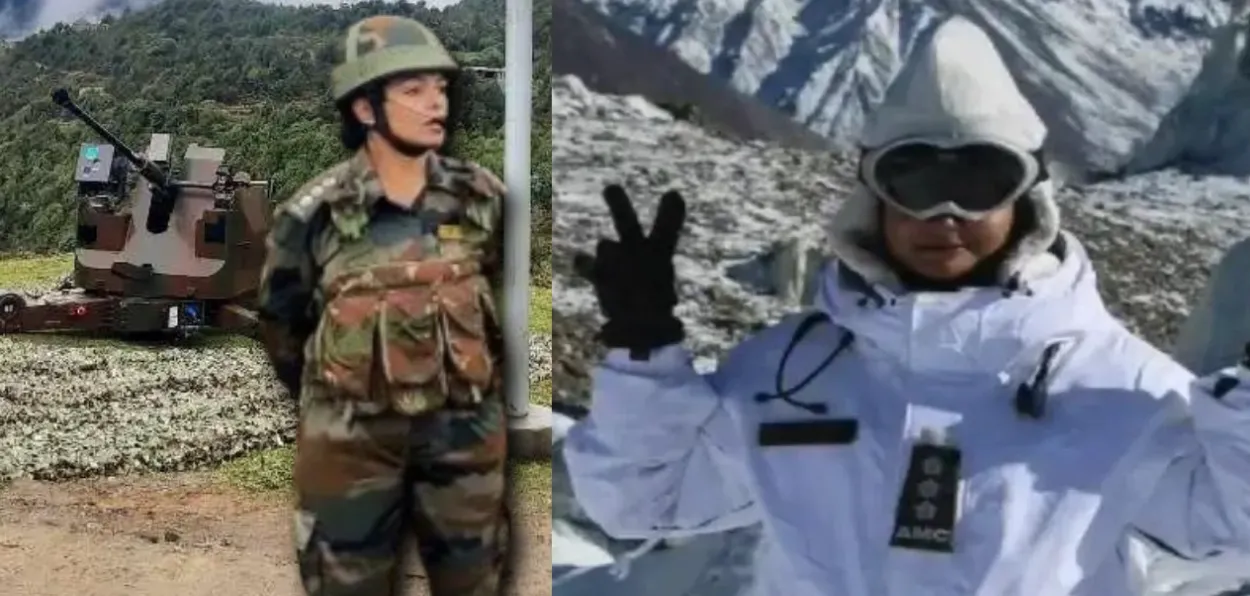
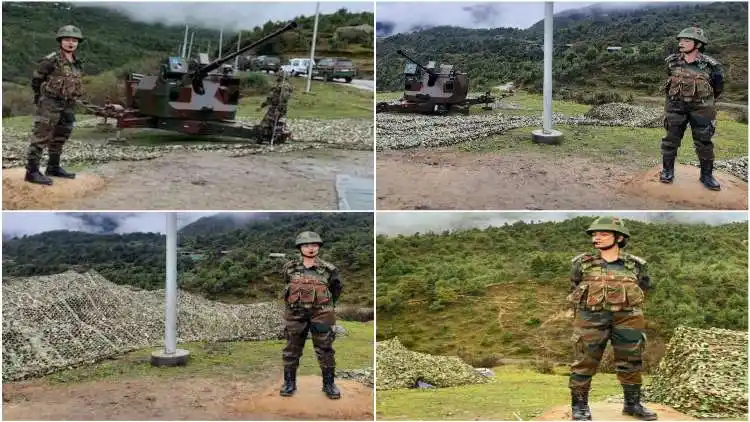
Captain Saria Abbasi’s picture surfaced on social media after a visit of the media team to the Tawang border where India had deployed its latest acquisition anti-aircraft gun L70.

Capt Saria Abbasi on duty

Capt. Saria Abbasi briefed the media on the merits of the L-70 anti-aircraft gun with its deployment, which can target all types of unmanned aerial vehicles, helicopters, and drones.

Capt Abbasi hails from Gorakhpur, Uttar Pradesh, and had dreamt of wearing the Army uniform as a child.

This one video and some pictures caught the attention of the entire country as people were awed by a woman in that role and the gender parity in the Indian army.

Abbasi’s unit is one of the first AD regiments in the country, equipped with 70 guns. India has deployed anti-aircraft guns L70 in Tawang, Arunachal Pradesh, amid ongoing tensions on the Indo-China border in eastern Ladakh and Arunachal Pradesh.

Saria Abbasi’s father Dr. Tehseen Abbasi is associated with All India Radio, and her mother Rehana Shamim is a junior high school teacher.

The second woman whose image also captured the imagination of the country’s men is Captain Fatima Wasim of the Siachen Warriors. She created history by becoming the first woman medical officer to be deployed to an operational post on the Siachen Glacier.

Capt Fatima Wasim at Siachen

Her posting was proclaimed by the Indian Army’s Fire and Fury Corps in a post on X.

“She (Captain Fatima Wasim) was inducted to a post at an altitude of 15,200 feet after undergoing rigorous training at Siachen Battle School, which speaks of her indomitable spirit and high motivation,” Fire and Fury Corps posted on X.

The Indian Army’s Fire and Fury Corps also uploaded a video in the post to further highlight Captain Fatima Wasim’s achievement and celebrate it.

Earlier this month, Captain Geetika Koul from the Snow Leopard Brigade became the first woman medical officer of the Indian Army to be deployed at the world’s highest battlefield, Siachen, after completing the induction training at Siachen Battle School.

Siachen Glacier is known as the highest-altitude battle site in the world and is situated near the Indo-Pak Line of Control.

It is the largest glacier in India and the second-largest in the world. It is the highest battleground on earth.

Back to Saria Abbasi’s story: she is a graduate of Genetic Engineering and joined the army four years ago. She said she had no interest in engineering and was always dreaming of becoming an army officer as some of her relatives were. She was attracted to donning the olive green after listening to the stories of valour from her ‘fauji’ relatives.

Capt Abbasi with L70 Gun (released by Army)

She rejected all the job offers from big companies and focused on clearing the Combined Defence Service (CDS) competitive examination conducted by the UPSC for taking in officers for the Military.

There were only 12 seats for women and Saria cleared her examination in her second attempt. After passing the ongoing interviews held over several tours, she was selected for the training that is considered to be the toughest of all.

source: http://www.awazthevoice.in / Awaz, The Voice / Home> Stories / by ATV / posted by Aasha Khosa / January 30th, 2024

Kerala’s child climate warrior proposes recycled paper for passports

Kozhikode, KERALA :

Roohi Mohazzab at the UN Conference in Bangkok


New Delhi :

In 2023, India issued more than 13 million passports, using about 468 metric tons of paper. Globally, about 100 million passports are issued each year, requiring about 3,600 metric tons of paper—the equivalent of cutting down about 86,400 trees.

At this scale, using recycled paper passports could save thousands of trees each year and greatly reduce environmental damage. These statistics were compiled by six-year-old environmentalist Roohi Mohazzab of Kerala.

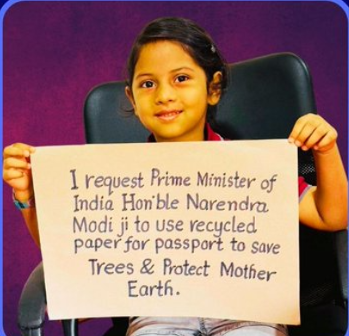
In a handwritten letter to world leaders, including Prime Minister Narendra Modi and the heads of 195 countries, Roohi has asked the leaders to replace traditional passport paper with recycled paper to save trees and protect Mother Earth.

Roohi Mohazzab also set a remarkable global milestone by delivering the keynote address during the Global Conference on Education for a Sustainable Future (GCE 2026) at the United Nations Asia-Pacific Headquarters in Bangkok.

Roohi Mohazzab has taken on a challenge that many adults might never even consider – to revolutionise the way passports are made. 

Their idea is not only profound but also practical—a step that could make India the first country in the world to issue passports made from recycled paper, setting an inspiring example for global sustainability.

Roohi Mohazzab, a first-standard student of Common Ground International Academy, Kozhikode, was formally invited as a keynote speaker and SDG (Sustainable Development Goals) Impact Award winner.

The event was organised by the UNESCO Youth Education Research Centre and the Sustainable Development Council, which has special consultative status with the United Nations Economic and Social Council ECOSOC.The conference was held at the United Nations Conference Centre, Bangkok, on 11-12 February 2026.

At the conference, the young environmental activist spoke about the devastating impacts of paper use on forests and climate change.

He stressed that a common item like a passport, which is issued in millions every year, can become a symbol of sustainability rather than being harmful to the environment.

In a symbolic moment on the UN platform, Roohi officially launched her global initiative, “The Children’s Movement for Climate Action.” The foundation aims to foster environmental responsibility and civic awareness among children so that young minds can become active participants in climate policy and sustainability solutions.

Roohi was recognised as one of the world’s youngest environmental voices and is known for her impactful local initiatives.

Other initiatives launched on the occasion:

The Country Tree Project  – Launched on World Environment Day 2025, aims to plant 10 million trees through one million school micro-nurseries.

Tree Bank Nursery Project  – Inaugurated by Rajendra Vishwanath Arlekar, which aims to create a green educational environment in 10,000 schools.

Recycled Paper Passports Campaign   – At the age of five, Roohi wrote a letter to Narendra Modi and 195 world leaders, recommending eco-friendly passports to save trees.

 The conference sent out a message that Children are not just the future – they are the present custodians of Mother Earth.”

source: http://www.awazthevoice.in / Awaz, The Voice / Home> Stories / by ATV / posted by Aasha Khosa / February 18th, 2026

A doughty warrior builds a mosque for women

Lucknow, UTTAR PRADESH :

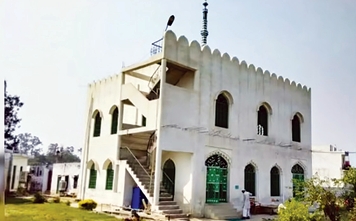
Mosques in Hindi heartland states are an exclusive male preserve. Though Islam doesn’t barentry of women into mosques, they are scrupulously kept away from the holy precincts all across north India. But Amber Mosque in the outskirts of Lucknow challenges this shibboleth. It was founded and built by Ms. Shaista Ambar, a social activist from Lucknow who wouldn’t take such taboos lying down.

Wife of a bureaucrat in Uttar Pradesh, Shaista conceived the idea of a mosque where women could also offer namaz alongside men, in 1995. As a young woman, Shaista would take up social causes during the 1980s and 90s. Construction of a mosque was certainly not on her mental screen. But the rebel in her got awakened when she took a child inside a mosque to introduce him to the collective prayers.

For the imam the sight of woman inside the mosque was no less than a sacrilege. She was ordered out. The outrageous behaviour left a deep imprint on her. Beating a hasty retreat, she vowed to build a mosque where both men and women could pray. She drove straight to Nadwatul Uloom, the world famous centre of Islamic learning in Lucknow seeking an audience with Maulana Ali Miyan, the 7th Chancellor of the seminary and a world re nowned scholar of Islam.

The revered Maulana signalled her to go ahead pledging his full support. Pouring the family’s savings, a 26,000 square feet plot of land was bought in Teli Bagh, 15 kms away from the city centre on the road going to Rae Bareli. She sold away her car and ornaments to raise the required funds. The move gathered support from wider circle of relatives and acquaintances.

Lo and behold! The mosque came up opposite the trauma care centre of the Sanjay Gandhi Post Graduate Institute of Medical Sciences. And it was none other than Maulana Ali Miyan Nadwi who presided over the consecration of the mosque in 1999. (He passed away on December 31, 1999). The mosque can host a congregation of over a thousand persons on a Friday when doughty Shaista Amber ensures her weekly presence.

She presides over the committee taking care of the mosque as the chief mutawalli with several other members of the family. She has resolutely stood against traditional maulvis taking over the management of the mosque. There have been pleas to start a madrassa (Islamic theological school) within the precincts.

She has declined permission and has instead started a dharamshala (stay-homes for wayfarers) within the boundary of the mosque where women attendants of inmates at the Sanjay Gandhi Institute find accommodation at a very reasonable rent. And they could belong to any faith. She says Uttar Pradesh has several thousands of madrassas but no dharamshalas and other such key civic facilities set up by Muslims.

The mosque is open for namaz to Sunnis as well as Shias, the major sects within Muslims. The mosque also runs a counselling centre where family disputes, mainly post-marital, are referred for resolution. Shaista has had differences with the All India Muslim Personal Law Board on several issues pertaining to women’s rights in Islam.

Critical about the rigidity on its outmoded stances, she and several of her supporters set up the All India Muslim Women Personal Law Board nearly a decade ago. The Board has appreciated the law banning the practice of triple talaq at one sitting and has suggested several progressive reforms. One who completed her graduation from the Aligarh Muslim University and later acquired Adib and Kamil certificates, Shaista has willed that her two daughters and son would look after the management of the mosque after her passing away.

Shaista came visiting Bengaluru last May at the invitation of the Azim Premji University for a seminar where this author had a chance meeting as a participant. Log onto www.shaista ambar.com for an overview of her vision and activities. 

source: http://www.newstrailindia.com / News Trail / Home / by M A Siraj / October 19th, 2025

Celebrating Unsung Heroes: Indian Muslim Changemakers

INDIA :

AI generated image

Amid our fast-paced lives, there exists a remarkable group of individuals who believe in slow, steady, and consistent efforts to create meaningful change.

These individuals are known as changemakers—people who quietly dedicate themselves to bettering society, far from the spotlight and the noise of daily routine.

They don’t seek fame or recognition. Instead, they focus on making a positive impact in their communities. Often unheard of, these changemakers influence others through their actions, values, and vision for a better world.

Awaz–The Voice is proud to launch a special series starting this Sunday, spotlighting Indian Muslim changemakers of India.

Through their inspiring stories, we aim to shine a light on individuals whose work exemplifies compassion, dedication, and innovation.

Our editorial team has carefully selected these changemakers based on several parameters, including the authenticity of their efforts and the tangible impact they have made.

These are everyday heroes who are addressing pressing social, environmental, and economic challenges—often with limited resources but unwavering commitment.

They are improving access to education, healthcare, and sanitation; they are empowering women, protecting the environment, and uplifting their communities—all without expecting any rewards or recognition. For them, the satisfaction of doing good is reward enough.

Their actions may seem small, but their impact is profound. As the saying goes, “Every drop counts in making an ocean.” Each changemaker is a vital part of the wave of progress that is quietly transforming India.

One of our key criteria in identifying these individuals was whether they are creating tangible change or inspiring others to become changemakers themselves. For us, a changemaker is someone who brings positivity into the world through innovative solutions, leadership, and a commitment to improving lives and systems.

In a world that often celebrates loud success, we believe it’s important to pause and acknowledge those who uphold the highest ideals of humanity. These changemakers serve as a moral compass, reminding us of our own responsibilities to society and to one another.

We begin our series with changemakers from Uttar Pradesh, featuring stories like that of Capt. Saria Abbasi, who dreamt of joining the Indian Armed Forces from a young age. After earning her engineering degree and receiving multiple job offers, she chose instead to follow her dream and joined the Indian Army—becoming a role model for countless Muslim women aspiring to serve the nation. She has done challenging missions like serving at Indo-China border post at Tawang in October 2021.

Rubina Rashid Ali, who lives in Aligarh Muslim University’s campus has become a champion for women earning their livelihood out of applique (ornamental needlework in which pieces of fabric are sewn or stuck). She has stood up for them to ensure that these women from poor backgrounds get the wages they deserve.

The changemakers of India

Dr Farha Usmani, a medical practitioner who hails from Aligarh, went to US to pursue her career in the United Nations Population Fund in 2007. Leaving behind her family was a tough call for her. She is the only Muslim woman to have risen to the position of director in the UNFPA. Today, she is making world policies for women’s health and rights. She is the Vice President of SAFAR, an organization that is responsible for the overall advancement and rights of minority and marginalized women and girls in India. 

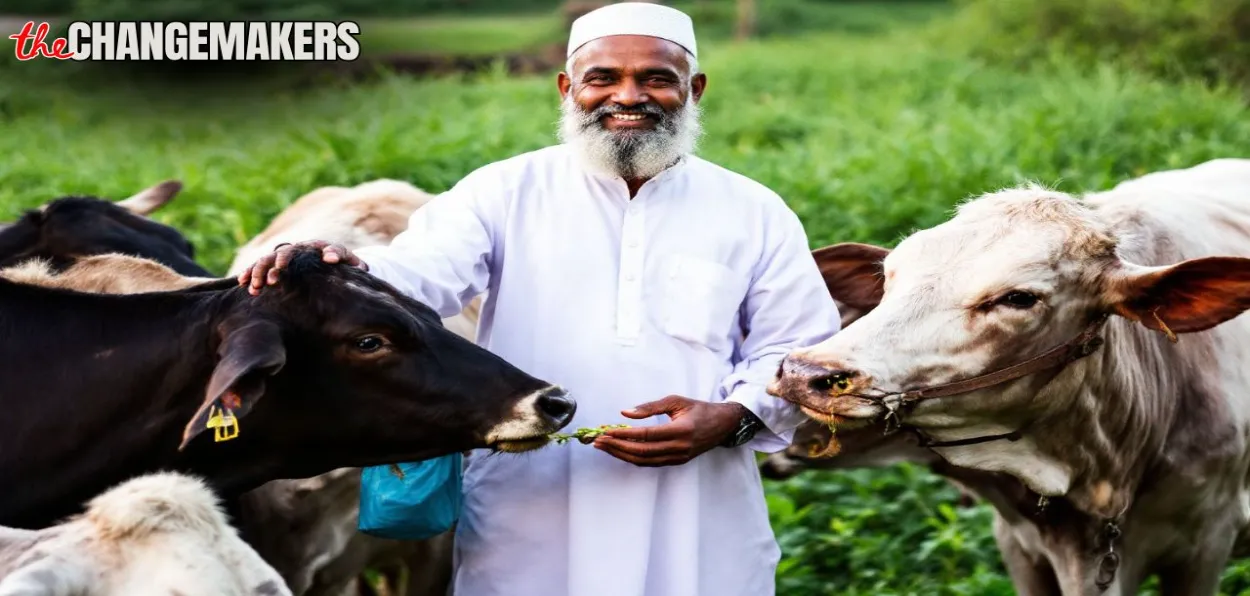
Another inspiring figure is Babban Mian, a businessman who runs a large gaushala (cow shelter) in Bulandshahar, caring for hundreds of cows. Inspired by his late mother’s deep affection for animals, Babban Mian’s work also challenges stereotypes and promotes harmony by offering a different perspective on the Muslim community’s relationship with animal care.

Some of the changemakers will remind you of characters straight from Indian folklore and vernacular literature. People who have been nurtured by Indian civilizational values of compassion and selflessness.

Through these stories and many more, we hope to inspire our readers and celebrate the quiet revolution being led by changemakers who are shaping a better, more inclusive India.

We’d love to hear your thoughts on this series. Write to us at input@awazthevoice.in or engage with us on our social media platforms.

The author is the Editor-in-Chief of Awaz-the Voice portal

source: http://www.awazthevoice.in / Awaz, The Voice / Home> Stories / by Atir Khan, Editor-in-Chief, Awaz-the Voice portal / May 22nd, 2025

Srinagar’s Arouba Kabir bags International Business Award

Srinagar, JAMMU & KASHMIR :

Srinagar :

Enso Wellness – A Platform for Mental and Emotional Health of Bangalore has been awarded the best online platform by International Business Awards 2022-2023.

Mental and emotional health needs and deserves more and more recognition in today’s era to remove the stigma attached to it, says Arouba Kabir Founder, Enso Wellness.

Born in Kashmir, Arouba Kabir setup her organisation in Gurgaon in 2015 with an aim to spread more awareness and become a one-stop solution for those who have been struggling with the issues and challenges of emotional and mental health.

“Pandemic changed the definition and made it globally possible for people to ask for help by using online platforms keeping their identity anonymous as reaching out to a mental health professional is still a stigma,” Arouba said.

Her organization is known for hosting many online series- like Stand up to Stigma, One-minute Mental Health, Ask the Doctor with eminent personalities from across the globe and conducts various online and offline workshops for Kashmiris in the last five years.

“Mental health is as important as physical health-one definitely impacts the other. We need to start talking about mental health as we do talk about physical health and make it normal for people to reach out for help when they need it.”

“And if you want to see the change, we have to be the change, so talking about your emotions, challenges, struggles and visiting a professional definitely does help make it normal,” she said.

source: http://www.awazthevoice.in / Awaz, The Voice / Home> Stories / by ATV, posted by Nakul Shivani / December 13th, 2022

Zaara Vasim Assadi wins four gold medals at Muscat Night Festival Karate Championship

Udupi, KARNATAKA / Muscat, OMAN :

Muscat, Oman:

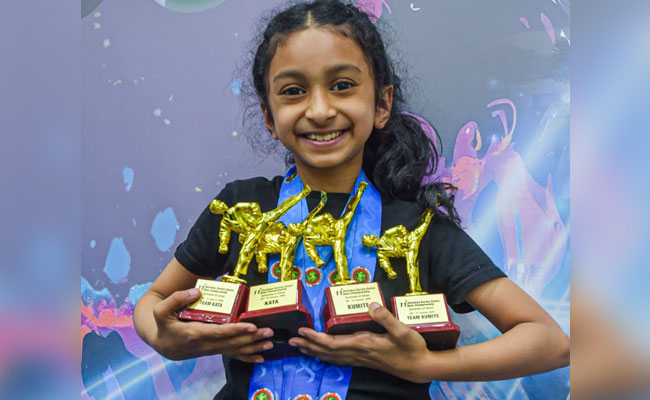
Indian karateka Zaara Vasim Assadi emerged as the standout performer at the International Karate Open Championship held as part of the Muscat Night Festival, clinching four gold medals in a remarkable display of skill and consistency.

The prestigious tournament saw participation from around 400 athletes representing 24 clubs across multiple countries. Amid intense competition, Zaara, aged just 10, created history by becoming the only girl at the championship to secure gold in all four categories she competed in individual Kata, individual Kumite, team Kata, and team Kumite.

Zaara’s achievement adds to her already impressive record. She has remained undefeated in Kata since the age of five, underlining her long-standing dominance in the discipline. Her performances were widely praised for technical precision, discipline, and composure well beyond her age.

Training at The Champ Sports & Arts in Muscat, Zaara’s journey has become a source of inspiration for young martial artists, reinforcing the idea that dedication and passion can overcome age-related barriers in competitive sport.

The championship also served as a platform for cultural exchange, bringing together athletes and spectators from diverse backgrounds and celebrating the unifying spirit of karate.

Zaara Vasim Assadi is the daughter of Vasim Assadi and Hasra Sana and hails from Udupi. She is the granddaughter of Zikriya Assadi.

source: http://www.english.varthabharati.in / Vartha Bharati / Home> Gulf / by Vartha Bharati / February 02nd, 2026

Winds of change: Stories of quiet revolution in Jammu & Kashmir

JAMMU & KASHMIR :

Changemakers of Jammu and Kashmir

Srinagar :

In a land shaped by upheaval—where countless dreams were long overshadowed in remote corners—a silent revolution is underway. Far from the spotlight, a group of remarkable individuals is reshaping the social fabric of Kashmir. They are quietly overcoming obstacles, challenging norms, and inspiring countless others with their unwavering commitment to progress.

Sakeena Akhtar

Sakeena Akhtar is a trailblazer who has shattered deep-rooted gender norms in Kashmir, where women in sports—particularly cricket—have historically faced stigma and exclusion. From being the only girl playing cricket in the narrow lanes of Munawarabad to becoming India’s first female National Cricket Coach from Jammu and Kashmir, her journey is a powerful testament to resilience, courage, and transformation.

Seerat Tariq

At just 19, Seerat Tariq has turned her personal journey of artistic expression into a movement for empowerment and cultural revival. With national records and international accolades to her name, she uses her platform to amplify the voices of others—especially young women in conflict zones—helping them discover their strength and creativity through art.

Shabnam Kausar

In a conflict-ridden region, Shabnam Kausar stands as a beacon of purpose-driven leadership. Starting with just four students and no infrastructure, she transformed the Army Goodwill School in Bandipora into a nationally recognized educational institution. Her story exemplifies the transformative power of education, vision, and resilience.

Suhail Saeed Lone

Born in Bandipora and scarred by the violence of militancy, Suhail Saeed Lone could have succumbed to disillusionment. Instead, he channeled his trauma into storytelling through cinema. Now working in Mumbai’s film industry, he uses the medium to share narratives of courage, sacrifice, and patriotism, turning pain into powerful, purposeful expression.

Sarwar Bulbul

Sarwar Bulbul is preserving and redefining Kashmir’s spiritual and cultural legacy through the timeless medium of music. As a celebrated Naat Khwan and founder of the Bulbul Academy of Performing Arts (BAPA) in rural Rafabad, he mentors underprivileged youth in Kashmiri classical, Sufi, and devotional music—ensuring that age-old traditions are passed on with reverence and relevance.

Irtiqa Ayoub

Irtiqa Ayoub is changing the game—literally—for women in Kashmir. As the region’s youngest Rugby Development Officer, she challenges patriarchal norms in a male-dominated sport. Her work promotes empowerment, equality, and confidence among young women, showing that sports can be a powerful platform for social change.

Anissa Nabi

Anissa Nabi seamlessly fuses public service with personal passion. As a JKAS officer and Chief Sports Officer, she champions grassroots sports development across Jammu and Kashmir. A marathoner and fitness advocate, she founded the Wondrous Women community and serves as an ambassador for the Fit India Movement—proving that leadership thrives on action, inclusivity, and inspiration.

Ghulam Nabi Tantray

Ghulam has launched educational institutions such as a B.Ed. college in Bandipora and the Doon International School in Jammu to mentoring rising sports stars like Tajamul Islam, Ghulam Nabi Tantray has made community empowerment his life’s mission. In times of crisis, he has stepped up with compassion and aid. Despite accolades at the national and international levels, he remains deeply rooted in his community—proving that true leadership begins with purpose, not position.

Mohammad Hafeez Furqanabadi

Mohammad Hafeez Furqanabadi has dedicated his life to transforming society through education and compassion. In an environment where girls’ education was often discouraged, he visited homes personally to shift mindsets and advocate for equality. As a teacher and founder of a charitable trust, he has provided free education and resources to countless underprivileged children—regardless of religion or background—promoting communal harmony and opportunity.

Wajahat Farooq Bhat

Once a stone-pelting teenager driven by rage and radical ideologies, Wajahat Farooq Bhat’s life took a transformative turn after an unexpected encounter with SSP Imtiyaz Hussain in Baramulla in 2018. As a young man from Sheeri village near Baramulla, Wajahat grew up amid narratives of jihad, revenge, and martyrdom, reinforced by mosque sermons and community glorification of violence. However, a deeply personal moment, witnessing the hypocrisy of a local cleric, and later, a heart-to-heart with the soft-spoken SSP during his NCC stint, triggered his awakening. Imtiyaz’s message. Today, he leads Jammu and Kashmir Save Youth Save Future, a grassroots organisation that has helped deradicalise over 3,000 Kashmiri youth. Wajahat aspires to take his mission global, to inspire hope where despair once reigned.

These changemakers may not often make headlines, but their impact is undeniable. Through courage, creativity, and conviction, they are not only rewriting narratives in Kashmir but also illuminating a path for others to follow. Their stories are a reminder that even in the most challenging environments, transformation is possible—quietly, steadily, and powerfully. In the days to come Awaz-The Voice will bring their detailed stories for our readers.

source: http://www.awazthevoice.in / Awaz, The Voice / Home> Stories / by ATV, posted by Aasha Khosa / June 22nd, 2025