Category Archives: Women/Girls(since May26-2021)

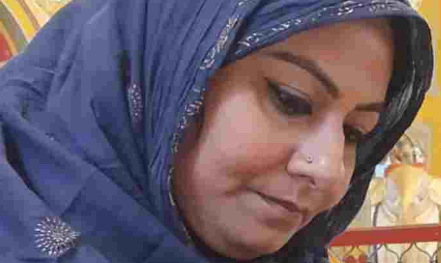
Asma Hussain The Royal Legacy Behind India’s Fashion Icon

Lucknow, UTTAR PRADESH :

Asma Hussain, an iconic name in the Indian fashion industry, is renowned for her remarkable designs and her deep-rooted connection to the royal family of Awadh. As a descendant of Shuja-ud-Daula, a ruler from the 18th century, Asma carries with her a rich legacy that has greatly influenced her work in fashion. Born into a family that has always been associated with culture and heritage, Asma Hussain’s foray into the world of fashion was a natural extension of her upbringing.

Since unveiling her first collection in 1994, Asma Hussain has become a household name in India and across the world, known not only for her royal heritage but also for her impeccable craftsmanship.

She is the founder of the Asma Hussain Institute of Fashion Technology (AIFT), an institution dedicated to imparting high-quality fashion education to young aspiring designers….

Early Life and Inspirations: Shaping a Designer’s Vision

Asma Hussain’s lineage has greatly shaped her journey as a designer. The royal family of Awadh is known for its contributions to art, culture, and history, and Asma has absorbed these influences into her design philosophy. Raised in a family that placed immense value on tradition, culture, and the finer things in life, Asma’s designs reflect a deep understanding of Indian craftsmanship, royal grandeur, and modern aesthetics.

While Asma’s royal connection often takes center stage in media discussions, it is her extraordinary skill and passion for design that truly sets her apart. Asma’s collection is an intersection of history and modernity, reflecting both her ancestry and the needs of the contemporary fashion world. She drew upon royal Indian textiles, ornate embroideries, and rich fabrics such as silk, velvet, and brocade to create collections that exude royalty while maintaining a sense of modern sophistication.

Her collection’s distinctive blend of Eastern and Western elements has helped her carve a unique niche in the fashion industry. Over the years, she has showcased collections that feature traditional styles combined with avant-garde concepts, which have gained the attention of both Indian and international clientele.

From AIFT to Fashion House: A Pioneer in Fashion Education

In addition to her success as a designer, Asma Hussain has contributed to the fashion industry in another significant way. In 1999, she founded the Asma Hussain Institute of Fashion Technology (AIFT) in Uttar Pradesh. The institute is recognized as one of the top fashion design schools in the country, offering comprehensive courses in fashion design, fashion technology, and merchandising.

AIFT was born out of Asma’s vision to provide young, aspiring designers with the skills, tools, and guidance they need to succeed in the competitive fashion world. Asma’s institute is unique because it goes beyond just offering technical knowledge—it teaches creativity, innovation, and critical thinking. The curriculum integrates both traditional and modern techniques of fashion design, which allows students to learn everything from embroidery and fabric manipulation to fashion history and business strategies.

Since its inception, AIFT has produced several successful fashion designers, many of whom have gone on to work for major fashion houses or start their own design labels. Asma’s role as an educator and mentor has become a cornerstone of her legacy, further cementing her influence on the Indian fashion scene.

https://www.instagram.com/reel/C7wOY5bNws4/?utm_source=ig_web_button_share_sheet

Asma Hussain’s Notable Clients and Collaborations

Asma Hussain’s clientele speaks volumes about her versatility and reach. Her designs have been worn by some of the most influential figures in India, including Bollywood legends, politicians, and celebrities. Asma’s ability to create outfits for a diverse group of people—from film stars to political leaders—demonstrates her exceptional skills and understanding of different tastes.

Some of Asma Hussain’s most notable clients include Bollywood actress Saira Banu, known for her timeless elegance, and Shabana Azmi, an award-winning actress and social activist. In addition to Bollywood icons, Asma’s fashion has also attracted attention from politicians, including the Prime Minister of India, Narendra Modi, and Uttar Pradesh Chief Minister, Yogi Adityanath. The fact that these high-profile figures have chosen Asma’s creations is a testament to her ability to craft outfits that blend traditional beauty with contemporary style.

In 1996, her fashion house was inaugurated by the legendary Bollywood actor Dev Anand, who was known for his style and charisma. Dev Anand’s association with Asma Hussain further solidified her reputation as a designer with a strong sense of elegance and sophistication. Since then, Asma’s creations have graced numerous high-profile events, cementing her position as one of India’s leading fashion designers.

Design Philosophy and Signature Style

Asma Hussain’s design philosophy is deeply rooted in the rich cultural traditions of India, especially those from her home state of Uttar Pradesh. Drawing from the royal aesthetics of Awadh, Asma’s clothing collections often feature ornate embroidery, luxurious fabrics, and rich color palettes. She is known for her use of traditional Indian textiles, such as Banarasi silks, georgette, and velvet, to create elegant yet modern garments.

One of the key elements of Asma’s designs is the intricate work on fabrics, especially hand-embroidered motifs that reflect the grandeur of royal craftsmanship. From sarees to lehengas, and even contemporary Western-style outfits, Asma’s attention to detail and craftsmanship is unparalleled. She is particularly known for her bridal collections, which are often a blend of traditional and contemporary styles, making them perfect for the modern bride who wants to feel regal on her special day.

Her designs are not limited to one particular category or occasion. Whether it is a wedding, a red-carpet event, or a festive occasion, Asma’s clothes can be seen on people from all walks of life. Her ability to create both traditional and contemporary looks has made her a favorite among clients looking for timeless elegance with a modern twist.

The Royal Influence: Awadh’s Rich Cultural Heritage in Every Stitch

The legacy of the royal family of Awadh plays a significant role in Asma Hussain’s designs. As a descendant of Shuja-ud-Daula, a ruler known for his opulence and patronage of arts and culture, Asma’s upbringing was steeped in the cultural richness of the region. The intricate embroidery and regal fabrics used in her creations are reminiscent of the royal courts of Awadh, where intricate craftsmanship was highly valued.

The use of zari work, brocade, and gold thread embroidery in her creations adds an aura of luxury and tradition. Each piece is meticulously crafted to ensure that it embodies the royal aesthetic, while also incorporating contemporary elements that make it relevant in today’s fashion landscape.

The Future of Asma Hussain in the Fashion Industry

Asma Hussain has not only succeeded in her career as a designer but has also played a pivotal role in shaping the future of fashion in India. Through her institute and her dedication to educating young talent, she is creating a legacy that will continue for generations. Asma’s vision for the future of fashion is one that embraces both tradition and innovation, ensuring that Indian fashion continues to evolve while staying grounded in its cultural heritage.

Her influence on the fashion industry is undeniable, and she continues to be a source of inspiration for aspiring designers. Asma Hussain is not just a fashion designer; she is a symbol of how tradition, culture, and modernity can come together to create something truly exceptional.

Asma Hussain’s Legacy in Indian Fashion

Asma Hussain is a name that has become synonymous with elegance, sophistication, and cultural heritage. With her roots deeply entrenched in the royal family of Awadh, Asma has successfully blended her ancestral legacy with her modern fashion sensibility. Her designs reflect the rich cultural heritage of India while catering to the modern woman’s needs, making her one of India’s most respected and successful designers.

Her legacy extends beyond her own creations to the many students who have passed through the Asma Hussain Institute of Fashion Technology, taking forward her vision and continuing to innovate in the world of fashion. Asma Hussain’s contribution to Indian fashion is undeniable, and her influence will be felt for years to come.

source: http://www.atlucknow.com / @Lucknow / Home> Lifestyle / by Mohd Badar / November 09th, 2024

Dr. Hussaini founder chancellor of Khaja Bandanawaz University conferred with “Mohsin-E-Millat Award”

Kalaburagi, KARNATAKA :

Mohsin E Millat Award being presented to Dr. Syed Shah Khusro Hussaini by Prof. Shakeel Samdani

Aligarh :  

Dr. Syed Shah Khusro Hussaini, Founder and Chancellor, Khaja Bandanawaz University was conferred with  “Mohsin-E-Millat Award” by Sir Syed Awareness Forum (SAF) during a function which was attended by many prominent personalities from the field of education at  University Polytechnic Auditorium, Aligarh Muslim University (AMU).

During the occasion  a seminar on “Modern Education and Muslims” was also organised by the Forum.

Addressing the seminar  Dr. Syed Shah Khusro Hussaini said that education is necessary for Muslims throughout the world. He said that, Islam is a modern religion and if the principles of Islam are followed honestly, then everyone can achieve success in their lives. He further said that he is the admirer of Sir Syed Ahmad Khan and he is trying his best to carry forward the mission of Sir Syed by establishing a university. He appealed to the Muslims to focus on education as it is the key to success. In the last he said that division on the basis of school of thought is causing harm to the Muslims. It should be avoided by them.

Presiding over the seminar, Prof. Mohd. Hanif Beg, Pro Vice Chancellor, AMU said that in today’s world it is very important to discuss on the issues of education. He congratulated the SAF for organizing the seminar on modern education. He further said that Sir Syed has always given importance to modern education. At the end he requested the students to work hard for civil services and judicial examinations.

Prof. M H Beg, PVC, AMU delivering Speech sitting IPS Abdul Hamid, Dr. Khusro Hussaini, Prof. Shakeel Samdani, Prof. Pathan and others

Guest of Honor, Mr. Abdul Hamid, IPS and Registrar, AMU said that today Muslims are lagging behind in the field of modern education. Sachar Committee report has confirmed that the educational status of Muslims in India is lower than Scheduled Castes and Scheduled Tribes. He said that higher education is the only solution of this problem. He requested the students of AMU to focus on their education and keep themselves away from unnecessary activities. At the last he congratulated Prof. Shakeel Samdani, President SAF for organizing a wonderful seminar on a very important topic.

President of the forum, Prof. Shakeel Samdani, while delivering his speech, said that Muslims have dominated the world in the field of education, science, literature, etc for about 600 years and this was only possible because they focused more on education and research. He congratulated the South India for carrying forward the mission of Sir Syed Ahmad Khan. South Indian Muslims have established much more education institutions as compared to Muslims of North India. He further said that Dr. Khusro Hussaini has established 24 educational institutions and the most important among them is the Khaja Banda Nawaz University. He said that the work of Dr. Hussaini is appreciable as he has helped the poor sections of the society by establishing educational institutions. At the last he said that it is the pleasure of SAF that Dr. Hussaini has accepted the Mohsin-E-Millat Award.

Principal of Abdullah College, Prof. Naima Gulrez said that North India is lagging behind in establishing educational institutions as compared to South India. She gave the example of Parsis that although they are numerically less in population but they are one of the most prosperous community in the country. It is because they are educationally advanced and they focus very much over modern education. She expressed her sorrow about the condition of Muslim women in the society.

Vice Chancellor of Khaja Banda Nawaz University, Prof. Abdul Jaleel Khan Pathan congratulated SAF for conferring ‘Mohsin-E-Millat Award’ on Dr. Hussaini. He said that it is the need of hour to carry forward the mission of Sir Syed and to provide quality education to Muslims.

Dr. Mohib Ul Haque, said that the time has come for Muslims to focus on modern education if they want to succeed. He congratulated Prof. Shakeel Samdani and SAF for their contribution in establishing Tipu Sultan Block at AMU.

Anjum Tabassum Lashkri (Karnataka) and Mr. Tariq Hussain, AMU were felicitated with “SAF Excellence Award”. Ayesha Samdani conducted the seminar and Mansoor Ilahi proposed the vote of thanks. Sarah Samdani also spoke on this occasion. Poetess Rehana Shaheen recited a Nazm on Sir Syed.

Wajahat Jilani welcomed the guests and Aman highlighted the objectives of the Forum.

On this ocassion, Mr. Syed Ali Hussaini, Pro Chancellor of Khaja Banda Nawaz University, Mr. Haider Pasha Qadri, Sajjada Nasheen, Dr. Moinuddin, Superintendent, KBN Medical College, Gulbarga, and Maulana Syed Abdur Rasheed were present.

Seminar was made a great success with the tireless work and efforts of Adv. Shoeb Ali, General Secretary, SAF, Dr. Haider Ali, Abdullah Samdani, Mohd. Muthair, Hunain Khalid, Danish Iqbal, Sarim Ali, Hamza Noman Masood, Saad Asad, Pawan Varshney, Himanshu Singh, Ajay Singh, Hamda, Kashif Sultan, Ayesha Farheen, Razia Chauhan, Talat Anjum, Rubia, Fauzia, Faiz, Adeel Shervani, etc.

Many prominent figures who attended the program include  Prof. Tariq Chattari, Chairman, Dept. of Urdu, Prof. Humayun Murad, Dr. Iqbal Siddiqui, Prof. Zafar M. Nomani, Prof. Kamil, Prof. Khalid Azam, Prof. Ashar Ansari, Prof. Mujeeb Ansari, Prof. K. Khalil Ahmad, Prof. Shakeel Ahmed, Dr. Nazar Abbas, Dr. Ayesha Munira, Dr. Raihan Akhtar, Dr. Rahat Abrar, Dr. Masood Anwar (Shahjahanpur), Dr. Yameen Ansari (Delhi), Syed Ikram Ul Haq (Hapur), Dr. Raghib, Dr Wasim Ali, Mohd Nasir, Dr. Kalimullah, Dr. Rahmat Ullah, Dr. Qaiser Ansari, Dr. Obaid Iqbal Asim, Dr. Iqbal Hadi, Dr. Naseem Ahmad Khan, Dr. Ali Nawaz Zaidi, Dr. Zafar Ahmad, Dr. Mohsin Khan, Adv. Khan Wajahatullah, Rabab Khan, Dr Zeba Azmat, Dr  Tabassum Chaudhary, Huzaifa Amir, Secretary, AMUSU, Khalid Masood, Ex President, AMUSU, Raas Masood Khan, Court Member and a large number of students were also present in the seminar.

source: http://www.muslimmirror.com / Muslim Mirror / Home> Exclusive Reports> Indian Muslims / by Muslim Mirror Networks / December 10th, 2018

Raffat Begum: How a begum’s emergence from the harem changed the lives of Rampur’s women

Rampur, UTTAR PRADESH :

Raffat Begum was a gifted poet and wrote with the pen name ‘Asmat’ and took advice from Azhar Inayati, a renowned poet of Rampur. She also wrote several barsaati folk songs celebrating monsoons as did Nawab Raza.

The names of brides have vanished from wedding cards in Rampur. So, we are cordially invited to the wedding of ‘Arif Khan, S/o Samiullah Khan to the daughter (no name) of Wahidullah Khan’. Even the names of women are concealed from vocalization by disrespectful male lips. The nameless miasma enveloping our girls is a recent trend in Muslim etiquette of this erstwhile princely state. It negates the ninety year journey the women of the city have traversed–all the tiny and large steps of emerging out of the zenanas, educating themselves and finding a voice. Maybe the unnamed daughter getting married was educated at one of the local women’s colleges established by the erstwhile Nawabs and has ambitions that involve a becoming.

The emancipative journey of Rampur women began with the decision of a queen – Raffat Zamani Begum, wife of Nawab Raza Ali Khan– to leave the confines of the harem and become something more than a name. Nawab Raza (1930-1947), an enlightened ruler fully supported his wife in her decision and was possibly influenced by her in his very western and ‘modern’ outlook.  As the princesses and female members of the royal family followed Begum Raffat, there was a filtered down liberation among the women and girls of upper classes, and over the years a snowball effect that touched the lives of the of all classes of Rampur women.

Raffat Begum was the daughter of Sir Abdus Samad Khan, Prime Minister of Rampur under the colonial rule, an impeccable gentleman who traced his antecedents from the Najibabad royal family.  She was married to the crown prince, Raza Ali Khan, when she was five and he was six years old. The little bride sat on her grandmother’s lap, her heavy nath supported by her grandmother’s palm as the nikah ceremony was performed. The young daughter in law was granted all the paraphernalia of the future queen while still living with her father and had to attend court on special occasions. At a time when brides were given a new name and a title, her name was changed from Askari Begum to Raffat Zamani Begum.

When Raffat was thirteen, her father in law, Nawab Hamid Ali Khan (1894-1930) demanded that the rukhsati (going away ceremony) be performed. Raffat’s father insisted that they wait at least till the groom had completed his education. Raffat Begum wrote, and is quoted in her sister Jahanara Begum’s memoir, that the relations between the two gentlemen became strained. Finally, Nawab Hamid walked on foot from his Khas Bagh palace to the bride’s house, ‘Rosaville’, and the ceremony which usually took days was performed in a few hours; Raffat Begum left her paternal home amidst  songs extolling the valiant Rohilla Nawabs and martyrs of ancient battles.

The teenage couple began their married life often separated by the political intricacies and rules of the harem. Oral history says that they were not allowed to live together for seven years and Raffat Begum was declared infertile after her first son was born. Raza was forced to take a second wife by his father and stepmother. The women of Raffat Begum’s family did not practice strict purda. Her mother was the daughter of the regent of Rampur, General Azamuddin Khan (1888-1891) who had earned the ire of the maulvis of the time for his ‘kristaan’ viewpoint and his championing of female education. Some say he was murdered because of his radical outlook. It is therefore unsurprising that the educated Raffat Begum rejected the claustrophobic harem life she had endured for the first ten years of her married life as soon as Nawab Raza came to power. The couple showed a proclivity towards the ‘modern’ and western lifestyle in all areas and Raffat Begum became a major mover in the drastic transformation of the Rampur durbar, the zenana and Rampur culture. Though not documented in written histories, the influence of Raffat Begum on the dress, cuisine and court etiquettes finds testimony in oral history.

We get a vivid description of the Begum in her stepdaughter , Mehrunnisa Begum’s memoir, ‘An Extraordinary Life.’

Home tutored in English, Persian and Urdu, Raffat Begum entertained distinguished guests at royal banquets and sat for official pictures­­––the first pictures of women from the royal family. She wore latest western dresses, make up and was a chain smoker –– a ‘modern’ thing to do. In fact, she encouraged her children to smoke as it was considered fashionable. However, some women continued to live in the royal zenana ––more out of lack of choice and under confidence–– but there was no constraint on their movement. Given that Nawab Raza’s predecessor, Nawab Hamid confined his women to a sequestered life behind the laal purda, this was the beginning of a drastic change in the thought process and lifestyle of elite Rampur women.

The young princesses were sent to a boarding school after being brought up by British nannies in a strictly regimented nursery. Emulating the new trend, the elite landowning families and those associated with the court started educating their sons and daughters at boarding schools. So, my mother and her siblings were sent to La Martinere in the 1950s. The 1960’s saw Rampur’s first female doctors, teachers, writers and lawyers ––aspirational models for young girls studying in government colleges now housed in the old palaces and zenanas of yore. Nawab Raza gave a lot of emphasis to education particularly female education and the girls from ordinary families were now sent to girls’ schools in the city after initial misgivings. Covered rickshaws and thelas (carts) transported the burqa clad young ladies to schools. My mother became a doctor in 1967 and the women of my family practiced a flexi-veil where they would cover their heads, sit in curtained cars in Rampur and don sarees and bellbottoms outside of Rampur.

Raffat Begum was a gifted poet and wrote with the pen name ‘Asmat’ and took advice from Azhar Inayati, a renowned poet of Rampur. She also wrote several barsaati folk songs celebrating monsoons as did Nawab Raza. Some of her poetry was published.

Begum Noor Bano, her daughter in law and ex-Member of Parliament, recalls the after-dinner dastan sessions with the children and grandchildren gathered around their beloved ‘Mummy’.  The dastans were later written down by a scribe.

Mapara Begum, a court singer, says she would give importance to the lowliest person and welcome everyone with warmth. Which is why she was fondly called Raaj Maata, the queen mother of Rampur.

A few years after Nawab Raza’s death in 1966, Raffat Begum moved back to her father’s place, Rosaville, with her retinue of servants. It was an empty house. Her parents had passed away and her brothers and sisters had left in pursuit of their lives and careers. Life had come a full circle. She passed away at Rosaville in 1986 – an elegant begum, spirited and dignified till the end. Her plaintive lines are still echo on the lips of old timers:

“Aisey beemaar ki dava kya hai,jo batata nahi hua kya hai;

Kaun suntan hai is zamaney mein, kis se kahiye iltija kya hai.”

How can a person who cannot describe her ailment find a cure?

Even if I could find words for my pleas, would my entreaties find listeners.

Receiving yet another invite to the marriage of an anonymous daughter, I tried to remember the names of the wives of acquaintances and distant relatives. I came up with Naeem mamu ki biwi, Munney sahib ki ammi etc. etc. We are all guilty of using the blanket term bhabhi or khala to address the married women of various ages; we are introduced as wives, mothers and granddaughters. I used to laugh at the old style of explaining connections––‘Munney mian ki beti Shaddan Khan ke ghar mein hai’, indicating that Munney mian’s nameless daughter is married to Shaddan Khan. We have accepted an anonymous existence here and it is only logical that our girls get shrouded in namelessness on their wedding day.

Tarana Husain Khan is a writer and researcher based in Rampur. Her historical fiction ‘The Begum and the Dastan’ has been recently published by Tranquebar. The views expressed are the author’s own.

source: http://www.shethepeople.com / SheThePeople / Home> Books / by Tarana Husain Khan / March 02nd, 2021

10 Muslim Faces in Indian Sports after Independence

INDIA :

Indian Muslim sportspersons

New Delhi :

After the partition and independence of India, the contribution of Muslim faces in Indian sports is a fascinating story. It also sends a clear message that, despite the communal division of the country, all avenues remained open for Muslims in India. The nation saluted talent, not religion. The contribution of Muslims in the field of sports should be the subject of a dedicated book.

However, in this article, we present the 10 most successful Muslim sportspersons of India.

Nawab Mansoor Ali Khan

Nawab Mansoor Ali Khan

Cricket, the most popular sport in the country, has a long list of Muslim players like Ghulam Ahmed, Salim Durani, Abbas Ali Baig, Mansoor Ali Khan Pataudi, Farooq Engineer, Syed Abid Ali, Syed Mustafa Hussain, Syed Kirmani, Ghulam Ahmed Hassan, Mohammad Azharuddin, Arshad Ayub, Zaheer Khan, Syed Saba Karim, Mohammad Kaif, Irfan Pathan, Munaf Patel, Wasim Jaffer, Yusuf Pathan, Mohammad Shami, Mohammad Siraj, and Sarfaraz Khan.

However, one of the initial cricketers, who happened to be a Muslim and shone like a star, was Nawab Mansoor Ali Khan, known as “Tiger Pataudi”. He became the youngest Test captain in the history of the game. He represented India in 46 Tests and scored 2793 runs.

In March 1962, he became the youngest Test captain at the age of 21 years and 77 days against the West Indies. His notable achievements include leading India to their first overseas Test match victory in New Zealand in 1968, which was also their first overseas Test series win.

Despite losing vision in his right eye in a car accident in England in 1961, Pataudi proved his mettle on the cricket field. Even today, Tiger Pataudi commands the same respect and popularity in Indian cricket as he did in the past.

Mohammad Azharuddin

Mohammad Azharuddin

Another Muslim cricketer, Mohammad Azharuddin, nicknamed “Indian cricket’s wonder boy,” earned this title right at the beginning of his Test career. In his debut series against England in 1984, he scored three consecutive centuries — a feat yet to be repeated.

Azharuddin played 99 Tests and 334 One Day Internationals for India. As captain, he led the team to victory in the 1990-91 and 1995 Asia Cups and reached the semi-finals of the 1996 Cricket World Cup. He captained India in three Cricket World Cups during the 1990s, which remains a record.

Syed Shahid Hakim

Syed Shahid Hakim receiving award from President Ram Nath Kovind

Once, India was a contender for the top slot in the World Cup Football and the Olympics. Though the situation has deteriorated, the list of Muslim footballers Taj Mohammad, Ahmed Khan, Yusuf Khan, B.P. Saleh, Syed Naeemuddin, Noor Mohammad, Rahmat, T. Abdur Rahman, Mohammad Habib, Mohammad Akbar, and Latifuddin come to the fore.

However, Syed Shahid Hakim comes across as one of the brightest and enduring football player of the post-independent India. He is son of Syed Abdul Rahim, who was once the coach of Indian Football team. A former Squadron Leader in the Indian Air Force, S.S. Hakim’s international career highlight was the 1960 Rome Olympics. Although India didn’t progress beyond the group stage, a 1-1 draw against France was nothing short of a feat.

Following in his father’s footsteps, Hakim turned to coaching and later served as an assistant coach of the Indian national team. He was also a FIFA referee and officiated in the 1988 AFC Asian Cup held in Qatar.

Mohammad Shahid

Mohammad Shahid

In Hockey, a sport once dominated by India, several Muslim players made a mark on the game, including Akhtar Hussain, Aslam Sher Khan, Mohammad Shahid, and Zafar Iqbal.

Among them, Mohammad Shahid from Banaras earned the most fame. His wizardry in the 1970s and 80s — marked by agility and magical dribbling — turned him into a star at a very young age.

He was part of the team that won gold at the 1980 Moscow Olympics, silver in the 1982 Asian Games, and bronze in the 1986 Asian Games. He also played in the 1981-82 World Cup, the 1984 Los Angeles Olympics, and the 1988 Seoul Games. He captained the Indian team during 1985-86 and announced his retirement from international hockey in January 1989.

Sania Mirza

Sania Mirza

Sania Mirza is the only Indian woman to break into the top 100 in singles and later became World No. 1 in doubles in Tennis. She won six Grand Slam titles — three in women’s doubles and three in mixed doubles.

Between 2003 and her singles retirement in 2013, she won 43 titles and spent 91 weeks as World No. 1 in doubles. Sania also won 14 medals (including six golds) in the Asian Games, Commonwealth Games, and Afro-Asian Games. In 2007, she achieved her career-high singles ranking of 27, the highest ever for an Indian woman. In April 2015, she became the World No. 1 in WTA doubles rankings — the first Indian to reach the top.

Syed Modi

Syed Modi

In Badminton, Syed Modi has been the most successful and popular Muslim player. He is regarded as one of the most successful Indian badminton players, winning the National Championship eight consecutive times from 1980 to 1987 — a historic feat.

He also won a gold medal in men’s singles at the 1982 Brisbane Commonwealth Games and international titles such as the Austria International (1983 & 1984) and the USSR International (1985). In 1988, Syed Modi was tragically shot dead in Lucknow.

Nikhat Zareen

Nikhat Zareen

Nikhat Zareen is the shining star of Indian women’s Boxing. Nikhat became a boxing sensation after winning gold at the 2011 Women’s Junior and Youth World Boxing Championships. She won silver at the 2019 Asian Championships in Bangkok, gold at the 2022 World Championships in Istanbul, and gold at the Birmingham Commonwealth Games.

In 2023, she won another gold at the IBA Women’s World Boxing Championship in New Delhi, becoming only the second Indian woman to achieve the feat twice. She also won bronze at the 2023 Asian Games in Hangzhou and secured a quota for India at the Paris Olympics, where she reached the Round of 16 in 2024.

Shama Parveen

Shama Parveen

Indian men and women have dominated Kabaddi in the world. Among Muslim women, the most prominent name Kabaddi layer is Shama Parveen from Bihar, who began her career in 2008.

She has won several honors at different levels. She was part of the Indian team that won gold at the 2017 Asian Kabaddi Championship.

Nasreen Sheikh

Nasreen Sheikh

Nasreen Sheikh of Delhi captained the Indian women’s kho-kho team and became the second player in this sport to receive the Arjuna Award. She led the Indian women’s team in the South Asian Games, where India won gold. She was also part of the Indian team that won the inaugural Kho-Kho World Cup held in January 2025 in New Delhi.

India defeated South Korea, Iran, and Malaysia in the group stage, beat Bangladesh in the quarterfinals, South Africa in the semifinals, and thrashed Nepal 78-40 in the final. For her performance, she was awarded the

Alisha Abdullah

Alisha Abdullah

In Motorsports, Alisha Abdullah stands out among women. Alisha, known as India’s fastest car racer and the country’s first female bike racing champion, was born in Chennai in 1989. She was passionate about racing from a young age. In 2004, she ranked among the top five in the JK Tyre National Racing Championship. With her father’s support, she transitioned from car to bike racing.

However, after a serious accident in 2010 while riding a bike, she returned to car racing. She is the first female motorsports star in the country to receive a Presidential Award.

In Motorsports, Alisha Abdullah stands out among women. Alisha, known as India’s fastest car racer and the country’s first female bike racing champion, was born in Chennai in 1989. She was passionate about racing from a young age. In 2004, she ranked among the top five in the JK Tyre National Racing Championship. With her father’s support, she transitioned from car to bike racing.

However, after a serious accident in 2010 while riding a bike, she returned to car racing. She is the first female motorsports star in the country to receive a Presidential Award.

source: http://www.awazthevoice.in / Awaz, The Voice / Home> The Changemakers / by Aasha Khosa, ATV / August 06th, 2025

Dr. Tarana’s book on forgotten Rampur foods released

Rampur, UTTAR PRADESH :

New Delhi :

Away from the hustle and bustle of the national capital Delhi, the food lovers gathered in Delhi’s India International Center to discuss the food – delicacies, genres and history – all day. It was for the release of Dr. Tarana Hasan Khan’s book ‘Deg to Dastarkhwan: Stories and Recipes from Rampur.

In this era of pizza, burger, and fast foods, we seems to be forgetting traditions of the Shahi, Mughlai and old delicious food.

Dr. Tarana Hasan Khan is one of the few to write on Dastarkhwan – the Indian cusine. She is also cultural historian.

Dr. Tarana Hasan Khan and her book

Her other book is: The Begum and the Dastan.

Dr. Tarana says It took her three years to cover the forgotten recipes of Rampur for the book. There is a chapter on rice and spices in this book.

Famous food writer Pushpant Pant also participated in the book launch ceremony. The program started with welcome address by Swati Pal, Principal of Janki Devi Memorial College.

She also discussed the problems faced in writing the book on the ‘forgotten foods of Rampur’ were mentioned. Yusuf Saeed and Naseema Naqvi had a long conversation on this subject. This was followed by a discussion on the history of the foods between Dr. Tarana and Pushpant Pant.

Dr. Tarana specially thanked Pushpesh Pant for attending the program and joining the discussion on delicious food. He has written about Pushpent Pant by posting on Twitter:

This book has been published by Penguin.

source: http://www.awazthevoice.in / Awaz, The Voice / Home / by Aasha Khosa / October 31st, 2022

Mumbai : Felicitation of AMU Achievers by Beauties of AMU

Mumbai, MAHARASHTRA :

Mumbai :

The Aligarh Muslim University Alumni Group formed by female community of this iconic citadel of modern education, known as Beauties of AMU held its Mumbai Meet  towards the Sir Syed Day celebrations on 13th October at Hotel Marine Plaza, Mumbai.

Noted philanthropist, business giant and AMU alumni, Raees Ahmad, MD, Rassaz Group was the Guest of Honour at the event. Faridoon Shehryar, a well known Bollywood journalist was among the AMU stars which illuminated the galaxy of AMU achievers at the event. Faraz Haider, director of War Chhod Na Yaar fame attended the meet in capacity of another AMU stars while famous lyricist Arafat Mehmood stole the show with his magical spell of beautiful words in perfect sync with the event.

The event saw a huge turnout including personalities from all walks of life who build up the social circuit of Mumbai.

Sir Syed lived briefly in the city which now boasts of being the financial capital of India, hence it is imperative to take the message to this very city which had alumni association focussing on male alumni.

Since it couldn’t offer much space to the female alumni based in the city for the nostalgic networking over chai. Beauties of AMU took the plunge and brought them all on the same page, allowing them their own space for discussing and dealing with issues of societal concerns.

At the event Mrs Farrukh Sayyeda highlighted the importance of space for women. She said it’s good to be ‘Mrs Somebody’ but anything that gives you self identity is rather more important and brings self-satisfaction. This identity is not necessarily connected to financial income, added Mrs Farrukh (former principal).

Extending the thoughts, Mr Rais Ahmed (Guest of Honor) talked about the role of Sir Syed in Women Empowerment.

Mumbai is more popularly known for the Indian film industry which has considerable contribution from Aligarh, such as Khwaja Ahmad Abbas, Saeed Jafri, Javed Akhtar, Surekha Sikri, Naseeruddin Shah, Dilip Tahil and to name recent additions, there are Anubhav Sinha, Faraz Haider, Faridoon Sheheryaar and Arafat Mehmood.

Alumni of AMU are front runners in every industry in every corner of the country and the world as well, whether it is Frank Islam of USA, who was the member of Barack Obama’s contingent to deliberate with Muslim world, being a key figure in the economy of USA or the pharma giant Cipla’s founder Khalid Hameed, who has served humanity in Africa so well that nobody would ever find an example like it.

Aligarh has come out of its cocoon with the first and second generations and prepares its next generations following the footsteps of Ismat Chugtai and Qurratulain Haider.

Beauties of AMU is playing the catalyst in this inferno which would reassure the paying back to the great institution of Aligarh, which has contributed largely for the cause of nation building.

Felicitation for AMU Achievers in Bollywood

  1. Faridoon Shahryar- An award winning journalist and known face as an anchor for popular chat show Talking Film, Mr Faridoon was felicitated for his achievements. He participated in event with exuded fervor reminiscing his AMU days with a mention of jumping walls and taste of fritters
  2. Mehmood Arafat- Inspired by his father who is a well known trade unionist, political figure, writer and a popular poet of west Bengal, Mr Arafat is a popular Bollywood Lyricist. His famous work includes songs from Loveyatri, Half Girlfriend, Heartless, Housefull 3, Welcome Back, Sarabjit, Kis kis ko pyar Karen, Machine, Jalebi etc. Mehmood Arafat relived the AMU days by reciting a poem filled with complete nostalgia of AMU, Abdullah Hall, Shamshad Market , Kennedy Hall
  3. Faraz Haider is a well known director of war na chod yaar and Nanu ki Jaanu movie fame attended the event and filled the vibes with laughter and fun by recalling an incident where he got a chance to visit Abdullah Hall

Beauties of AMU(BOA)  is a social welfare organization formed by female alumni of Aligarh Muslim University that functions to spread awareness about education and empowerment of women of all sections of society.

Started off as a Facebook group in 2017, by Iram Raza, a graduate of Department of Mass Communication, Aligarh Muslim University, Aligarh, this group has done meets in 3 cities (New Delhi, Lucknow, Aligarh) so far and the Mumbai Meet Up towards Sir Syed Day was a part of the reunion initiative of the group in the time span of 1 year.

The organization now plans to hold similar events in other parts of country for reuniting the female alumni of the university living in those cities, spreading out the message of goodness and universality.

BOA has been organizing meet-ups in different cities of India for the female alumni who haven’t been included in the old boys associations, providing them a platform to meet and greet and share happiness and nostalgia of their days at Aligarh furthering the reunions to social causes.

BOA has been instrumental in organising several events that contributed well to the cause of social welfare in general and AMU alumni in particular, that makes it stand apart from other alumni associations concerned with AMU.

source: http://www.muslimmirror.com / Muslim Mirror / Home> Exclusive Reports> Indian Muslim / by Faisal Hasan / October 18th, 202

Team Led by Shahid Siddiqui and Syed Abrar Hasan Honoured as Recipient of 2019 Advancing Photodynamic Therapy In Rising Nations Award at the 17th World Congress of the International Photodynamic Association

Aligarh, UTTAR PRADESH / INDIA :

Professors Syed Abrar Hasan (center-left) and Shahid Siddiqui (center) receiving the 2019 Advancing Photodynamic Therapy In Rising Nations Award from Dr. Lothar Lilge (left), IPA Past-President, Dr. Tayyaba Hassan (center-right), and IPA President, Dr. Luis Arnaut (right).

Boston, USA :

At the 17th International Photodynamic Association World Congress in Boston, Massachusetts, Professors Shahid Siddiqui and Syed Abrar Hasan, leading an Indian and international team of PDT clinicians and researchers, were honoured as the 2019 recipients of the IPA award for Advancing Photodynamic Therapy (PDT) in Rising Nations.

The IPA recognizes the joint and considerable efforts of the team over the past three years to establish photodynamic therapy sustainably in the large and growing Indian market. The ‘PDT in India’ initiative is the direct result of the personal efforts, resources and perseverance of Indian Professor Shahid Siddiqui and Professor Syed Abrar Hasan to address the large unmet medical need relating to oral cancer in India. Oral cancer has a high death rate in India, as many people are undiagnosed and do not have access to adequate treatments or healthcare facilities.  The Indian contingent of the team include the following clinicians from Jawaharlal Nehru Medical College, Aligarh Muslim University:

  • Professor Ibne Ahmad
  • Dr. Kafil Akhtar
  • Dr. Syed Abrar Hasan
  • Dr. Bilal Hussain
  • Dr. Shakir Khan
  • Professor Satish C. Sharma
  • Professor Shahid Ali Siddiqui
  • Dr. Shaista Siddiqui

pix02

From left to right: Dr. Shakir Khan, Dr. Kafil Akhtar, Professor Syed Abrar Hasan, Professor Shahid Siddiqui, Dr. Tayyaba Hassan (IPA Past-President), Dr. Luis Arnaut (IPA President), Dr. Amjad Khan, Dr. Bilal Hussain.

Supporting the Indian clinicians on the team with international PDT expertise are representatives from the University College London, the University of Massachusetts, the Wellman Center for Photomedicine, Massachusetts General Hospital and Harvard Medical School. The international contingent of the team includes the following PDT researchers and clinicians:

  • Dr. Colin Hopper, University College London
  • Professor Stephen Bown, University College London
  • Dr. Jonathan P. Celli, University of Massachusetts, Boston
  • Dr. Filip Cuckov, University of Massachusetts, Boston
  • Dr. Hui Liu, University of Massachusetts, Boston
  • Dr. Tayyaba Hasan, Massachusetts General Hospital, Harvard Medical School, Boston
  • Dr. Amjad Khan, Massachusetts General Hospital, Harvard Medical School, Boston
  • Dr. Srivalleesha Mallid, Massachusetts General Hospital, Harvard Medical School, Boston
  • Mr. Marvin Xavierselvan, Massachusetts General Hospital, Harvard Medical School, Boston

As a result of this international team effort spanning three years, a robust infrastructure for photodynamic treatment has been built and is being maintained at the Jawaharlal Nehru Medical College, Aligarh University, India. Along with the development of PDT infrastructure, PDT equipment/supplier access, and extensive clinician training, patient recruitment processes have been successfully established leading to the ability to better meet the large unmet medical needs in the region.  Patients treated to date with PDT have experienced excellent outcomes facilitating accelerating patient acceptance and recruitment rates.

IPA World Congress

The Boston World Congress was the 17th conference held by the International Photodynamic Association, marking 34 years of this global meeting. The IPA World Congresses, held every two years, are the leading PDT meetings bringing together members of the global photodynamic community to advance scientific and clinical research relating to photodiagnosis and photodynamic therapies. The Boston World Congress was led by Congress Chair and IPA President Dr. Tayyaba Hasan, Professor of Dermatology at the Wellman Center for Photomedicine, Harvard Medical School (HMS) and a Professor of Health Sciences and Technology (Harvard-MIT) and had record attendance with representatives from 33 countries.  The 2021 IPA World Congress will be hosted in Moscow, Russia and the 2023 IPA World Congress will be held in Shanghai, China.

About Photodynamic Therapy

Photodynamic Therapy (PDT) is a combination therapy involving light activated photosensitizers to diagnose and treat various types and stages of cancers and pre-cancers, macular degeneration and multidrug-resistant infections involving bacteria, viruses and fungi. First developed in the 1980s, PDT has demonstrated superior patient outcomes with considerable cost savings. Over the past 30 years, millions of patients globally have been successfully treated with PDT.

About the International Photodynamic Association

The International Photodynamic Association (IPA) was founded in 1986 to support and endorse the scientific advancement and clinical development of photodynamic therapy and photodiagnosis. With members and associates from over 30 countries, the IPA represents a truly global community consisting of prominent international scientists, clinicians and translational researchers, healthcare professionals and students across academic, hospital, government and private sector organizations. The IPA promotes the study of diagnosis and treatment using light-activated photosensitizers and disseminates scientific information to its members, the research community, and to the community at large. The IPA organizes a biennial World Congress around the world, providing members and non-members a unique opportunity to share and learn more about global developments relating specifically to photodynamic therapy and photodiagnosis. 

For further information: ipasecretary@internationalphotodynamic.com

source: http://www.globenewswire.com / GlobeNewsWire / Home / by IPA – International Photodynamic Association / July 11th, 2019

Sabeera Haris Shines with Double Gold at Asian Championship in Kazakhstan

Aligarh, UTTAR PRADESH :

Sabeera Haris receives the gold medal Asian Championship in Kazakhstan

Aligarh:

In a proud moment for the country and for Aligarh, Sabeera Haris a Class XII student of Aligarh Muslim University (AMU), has clinched two gold medals at the 16th Asian Championship, held in Kazakhstan on Tuesday.

Sabeera Haris

Demonstrating outstanding skills and determination, Haris bagged both an individual gold medal and a team gold medal, emerging as one of the top performers of the championship.

In a display of sheer determination and skill, Sabeera scripted a remarkable turnaround in the final match. Starting from the sixth position with a score of 105 points, she fought her way into the top ranks and stunned the field by seizing the No. 1 position.

The highlight of her victory came when she outperformed India’s Addya Katiyal, who was the tournament leader with 113 points and widely regarded as the favourite for the top spot. Sabeera’s consistency, composure under pressure, and tactical brilliance enabled her to dethrone the Indian star and secure a memorable win.

Sabeera’s triumph not only showcased her resilience but also underscored the rising competitiveness of the sport at the global stage. Her victory will be remembered as one of the most thrilling finishes of the tournament.

Congratulating her on this remarkable feat, the Vice Chancellor, Prof. Naima Khatoon said, “It is indeed a proud moment for the university to witness our students progress in sports along with academics and attain international achievement. I am confident that Sabeera will continue to bring laurels to the university and the nation”.

Prof S. Amjad Ali Rizvi, Secretary University Games Committee, said her victory was a testament to her hard work, discipline, and passion for the game.

“Sabeera has brought immense pride to the Aligarh Muslim University but also the nation with her exceptional performance. She is an inspiration for young athletes and a true role model,” said Prof Rizvi.

source: http://www.radiancenews.com / Radiance News / Home> Latest News> Sports / by Radiance News Bureau / August 27th, 2025

AMU Professor conferred upon the Exemplary Peer Reviewer Award at International Paediatric Dentistry Conference

Aligarh, UTTAR PRADESH :

Dr. Saima Yunus Khan receiving the Exemplary Peer Reviewer Award from Indian High Commissioner to Sri Lanka, Mr. Santosh Jha at International Paediatric Dentistry Conference at Siri Lanka

Aligarh:

Dr. Saima Yunus Khan, Professor and Chairperson of the Department of Paediatric and Preventive Dentistry at Dr. Z.A. Dental College, Aligarh Muslim University, has brought laurels to the institution by receiving the Exemplary Peer Reviewer Award for her outstanding research contribution at the 5th International Conference of the South Asian Association of Paediatric Dentistry held at Colombo Sri Lanka.

She was presented the award by the Indian High Commissioner to Sri Lanka, Mr. Santosh Jha, during the conference’s inaugural ceremony. The event, attended by over 250 delegates from more than 10 countries, showcased global advancements in paediatric dentistry.

Prof. Saima also presented her original evidence-based research and chaired a paper presentation session at the conference. She has previously won several national and international accolades, including being the only Indian recipient of the prestigious and highly competitive IADR John Clarkson Fellowship.

source: http://www.radiancenews.com / Radiance News / Home> Pride of the Nation> Awards> Latest News / by Radiance News Bureau / August 13th, 2025

From village to glory, Jamia daughter Zeerish Aslam soars high

Shopian District, JAMMU & KASHMIR / NEW DELHI :

Zeerish Aslam brings laurels to Jamia Girls Senior Secondary School (The OT/Jamia)

On the occasion of India’s 79th Independence Day, Zeerish Aslam from Jamia Girls Senior Secondary School, along with five other Prerana alumni, was bestowed with an extraordinary honour. They were invited to an At-Home Reception at Rashtrapati Bhavan by Droupadi Murmu, President of India.

Hailing from the picturesque Shopian District of Jammu and Kashmir, Zeerish showcased her academic prowess by securing the top rank in a district-level competitive exam. This achievement paved the way for her selection into the prestigious Prerana programme, a visionary initiative empowering India’s youth through experiential learning.

At Prerana’s Vadnagar campus in Gujarat, Zeerish joined a diverse group of 20 exceptionally talented students from 10 different states of India, immersing herself in a transformative one-week experience designed to invoke fundamental ideas and inspire the next generation of leaders.

Zeerish vividly recalls the warm and enthusiastic welcome she and her fellow awardees received. As they entered the esteemed gathering, they were surrounded by dignitaries, ministers, and foreign ambassadors. What struck Zeerish was the sense of equality, respect, and spirit of inclusivity.

During the event, Zeerish had the privilege of meeting the President of India, who warmly greeted her and inquired about her studies and experiences at Prerana.  She also interacted with Prime Minister Narendra Modi, who welcomed her with a smile and asked about her future endeavours.

“My colleagues and I stood together during the national anthem and sang in union. As our voices echoed in chorus, filling the room with pride, I felt a deep sense of patriotism and unity,” Zeerish recalls. This extraordinary experience has become a source of deep inspiration for Zeerish and her fellow awardees, reaffirming Prerana’s commitment to nurturing future leaders and contributing to the vision of Viksit Bharat.

The event has left an indelible mark on their lives, motivating them to strive for excellence and make a positive impact in their communities.

The university and schools of Jamia Millia Islamia have extended a hearty congratulations to Zeerish on this rare distinction and recognition and hope that she will continue to bring laurels to her school and JMI.

In another development on the campus, As a part of the National Anti-Ragging Day and Anti-Ragging Week observances, the Proctorial Department of Jamia Millia Islamia (JMI) organised a Special Lecture on Anti-Ragging on 13.08.2025 at 11:30 am in the FTK-CIT Conference Hall to raise awareness about the menace of ragging and to reaffirm the university’s commitment to ensuring a safe and inclusive environment for all students.

Prof. Mohammad Asad Malik, Chief Proctor, JMI welcomed all the guests and participants and shed light on the legal aspects of ragging and outlined the proactive role of the Proctorial team in addressing student grievances and ensuring safety across the campus. He informed the participants that the Anti-Ragging Team and Proctor Office were always there to help any aggrieved students, so they should not feel any reservation in approaching the Proctor Office, and even a mild case of ragging should not go unreported. He also expressed his gratitude to Prof. Mazhar Asif, Vice-Chancellor, JMI and Prof. Md. Mahtab Alam Rizvi, Registrar, JMI for sparing their valuable time to address the students on the sensitive issue of ragging.

The chief guest, Prof. Mazhar Asif, emphasized the moral and ethical responsibility of senior students to warmly welcome and support their juniors. He stressed that earning respect is a reciprocal process and that one cannot expect to be treated well without showing genuine care and respect for others. He also spoke eloquently on the socio-religious dimensions of student life and the traditional guru-shishya (teacher–student) relationship, assuring freshers of a fear-free and nurturing campus environment. Reflecting on the history and culture of Jamia Millia Islamia, Prof. Asif said, “At Jamia, we take pride in shaping our students into compassionate human beings while also ensuring excellence in their respective fields of study.” Highlighting the university’s robust mechanisms to curb ragging, he commended the Proctor Office’s untiring efforts to protect students from even the mildest forms of such misconduct at Jamia Millia Islamia.

The Guest of Honor, Prof. Md. Mahtab Alam Rizvi, reassured the student community by apprising them of the robust anti-ragging mechanisms instituted by JMI. He urged students to actively engage in maintaining a friendly and respectful culture. He reiterated that the Jamia Millia Islamia stands firmly against ragging in all its forms and continues to ensure a welcoming, respectful, and secure environment for all its students. He told the students that there are stringent and concrete laws to combat ragging, making it a punishable offense under both institutional rules and the law of the land. He also apprised the students about the support that the university provides to its students through its Counseling and Guidance Centre, Mental Health Unit, Proctorial Team, and Anti-Ragging Committee.

Prof. Neelofer Afzal, Dean of Students’ Welfare, in her address as Special Guest, emphasised replacing fear with friendship, intimidation with inclusion, and cruelty with compassion. She also urged the students to speak up against the crime of ragging and help in saving a fellow student’s life.

Gaurav Singhal, Vice President of the Society Against Violence in Education (SAVE), Kolkata, delivered the keynote address on the occassion. He said that activities such as anti-ragging campaigns and awareness lectures reflect the strong commitment of JMI to upholding the values of respect, dignity, and empathy among students in all aspects of their academic and personal development. He cautioned students never to indulge in the evil practice of ragging and encouraged them to stand united against any form of violence or harassment. He also informed them about legal remedies and support systems available for victims.

All participants took a solemn pledge not to engage in or support any form of ragging, reaffirming their commitment to a safe and respectful university culture. The event concluded with the singing of the National Anthem, instilling a sense of unity and national pride.

The event was attended by over 120 freshers and senior students, in addition to the Anti-Ragging Committee Members, Provosts of Boys’ and Girls’ Residences, Anti-Ragging Squads, Deans of Faculties, Heads of Departments, Directors of Centres, the University Librarian, the Security Advisor, and many other officials and staff of the university. The programme was compered by Dr. Ambreen Jamali, Assistant Proctor, and the vote of thanks was delivered by Dr. Etee Bahadur, Assistant Proctor.

source: http://www.theokhlatimes.com / The Okhla Times / Home> JMI-Edu / by The Okhla Times / August 19th, 2025