Category Archives: World Opinion

Adeeba Ali: Shooting star’s rise from wheelchair to winning gold in nationals

NEW DELHI:

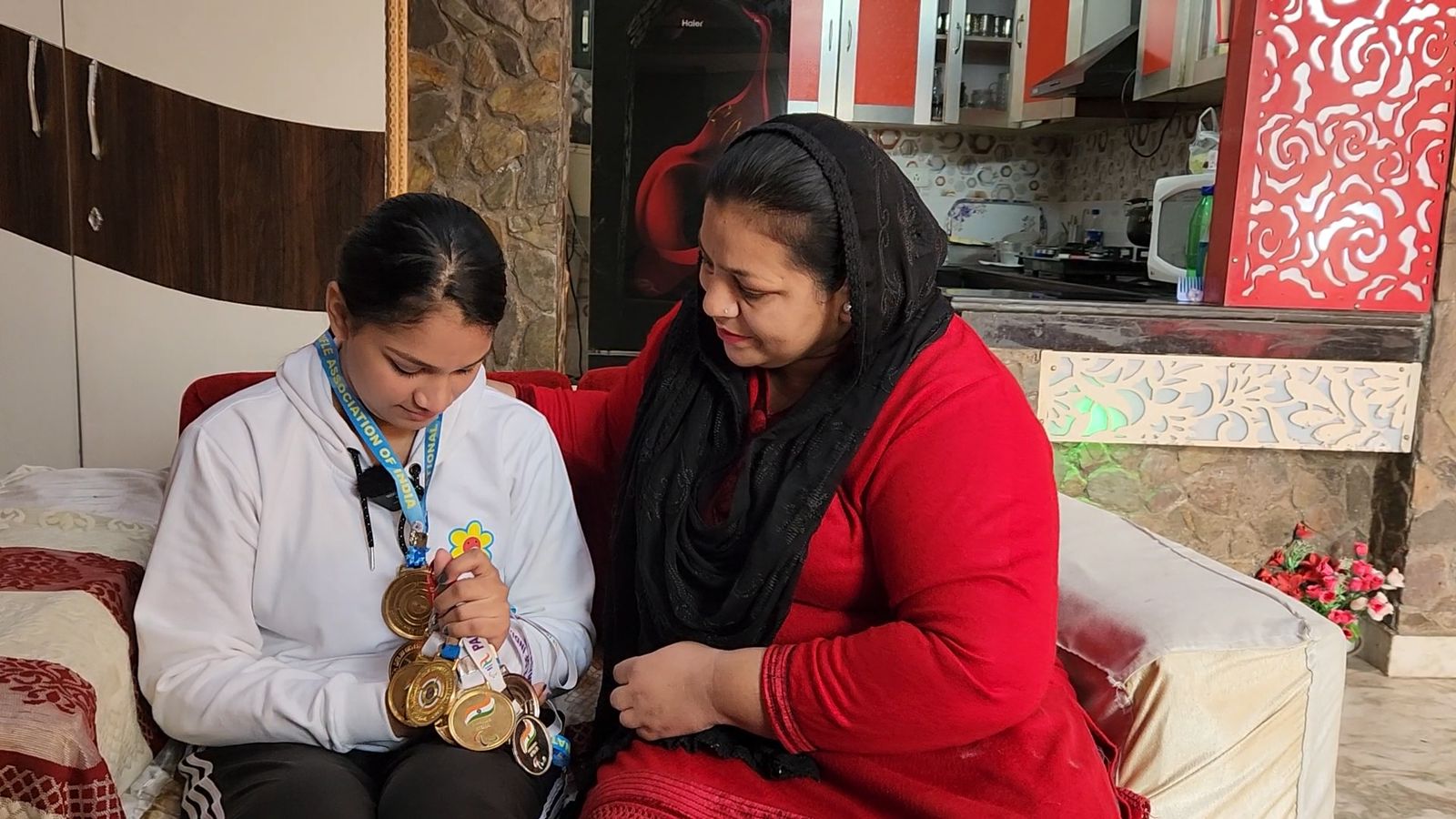
Adeeba Ali showing her gold and silver medals with her father

The 19-year-old Adeeba Ali of Nizamuddin Basti, New Delhi, has raised the bar for those seeking to rise in life notwithstanding physical limitations. The para-athlete recently ended up becoming an inspiration to thousands of people as she won gold and silver medals in the 26th National Shooting Championship competition organized by Madhya Pradesh State Shooting Academy, Bhopal.

Amina Majeed Siddiqui of Awaz spoke with her at her home. Excerpts from the conversation:

How did you think about going to the National Shooting Championship competition and how many days did you prepare for it?

I had always liked sports, but soon after the accident, I started finding what was best for me. After a lot of searching, I met my coaches Subhash Rana and Rohit Sir. They showed me the path to getting back into sports. They suggested I start with competing on the track and gradually aim for the zonal, and the nationals. So after gradual preparation, I qualified for the National championships. It has been 10 months since I started preparing.

How did this accident happen?

It was five years ago, I was looking out from the balcony of my house (Fourth floor). I foot slipped and I fell on the ground floor. I felt dizzy. At first, I thought I was falling backward but no, I was falling forward. Because of that my spine was fractured and due to that my legs do not work.

Have you participated in other competitions before this?

I have also participated in District Level, Zonal, para-zonal, North Zone, and Para National. This is my 5th match.

What inspired you to take up sports?

My inspiration is my father. He has always been promoting sports. He is very fond of cricket. So Papa knows the importance of playing sports. Just as education is important, sports are also important. Secondly, my ideal is Avni Lekhara (Olympian); she is the first woman who won gold medal in shooting and the Para Olympics, she is a big inspiration to me. 

How did your journey in sports start, when did you think that you should go into this field?

I wanted to be associated with sports, so I started searching. Earlier I used to participate in basketball, football, and other sports. But after the accident, everything seemed to be over for some time. I searched for a new sport that I could play with my physical limitations. I wanted to leave the accident behind because whatever happened had happened. I had to see what I could do. I came to know about Para Games which people with disabilities can also play. This gave a new meaning to me. I came to know that despite being disabled one can still play. I came to know about shooting and that yes, I realized I am made for it, then I started playing. It was not so good in the beginning. Then with time, I got better. I gained a new identity and now shooting has become an important part of my life, if I don’t practice for a day, I feel something is missing in life.

What is your plan for the future?

I intend that I want to do better every day. I want to work very hard.

What message would you like to give to those who give up on small things?
https://www.hindi.awazthevoice.in/upload/news/170255513404_Adeeba_Ali_A_great_example_of_courage_in_shooting_2.jfif
Adeeba Ali with her mother Reshma Ali

I would like to say that you should have faith in yourself, because if you give up on yourself, how will others support you? If you have this feeling within you that no matter what happens to me, you can still do this work, then you can achieve anything. The most important thing is to have faith in yourself.

I also spoke with Adiba Ali’s mother Reshma Ali. She told me:

“Adiba used to lie on the bed after the accident and had lost courage. Then one day she thought about how she could move on in life and do better. Initially, she was bedridden for one and a half years. She slowly started reconciling to her condition and began painting. Despite being bedridden, she wrote examinations for 12th standard and did well. She is now pursuing a BA in English. After that she saw what else she could do, and then she watched Avni Lekhara’s videos and said that if she can do it, I can also do it.

“She had never held a pistol in her hand. Her coach Subhash Rana worked very hard on her. Adeeba practices for 8 hours. If one wants to achieve something in life one surely has to do a lot of hard work and Adeeba did the same. She has made all of us proud. I intend to organize motivational camps for people facing disabilities. I want to tell them my daughter’s story. I want to tell people that you can do a lot despite being disabled. We will guide people on how a new life starts from here.”

source: http://www.awazthevoice.in / Awaz, The Voice / Home> Story / by Ameena Majid Siddiqui / December 25th, 2023

UN Forms New AI Advisory Board; iSPIRT’s Sharad Sharma and Hugging Face’s Nazneen Rajani Among the Members

INDIA / U.S.A:

UN Forms New AI Advisory Board; iSPIRT's Sharad Sharma and Hugging Face's Nazneen Rajani Among the Members

On Thursday, the Secretary-General at a press conference announced the creation of a new Artificial Intelligence Advisory Body on risks, opportunities and international governance of Artificial Intelligence (AI) . That body will support the international community’s efforts to govern artificial intelligence.

Among the members of AI Advisory Body, two are from India — Sharad Sharma (iSPIRT) and Nazneen Rajani (Hugging Face).

Sharad Sharma is a co-founder of iSPIRT, a non-profit think tank that wants India to be a product nation. He was the CEO of Yahoo India R&D and dubbed as the architect of Indian software products ecosystem.

About Nazneen Rajani, she is a Research Lead at Hugging Face, which is building an open-source alternative to ChatGPT called H4, a powerful LLM, “aligning language models to be helpful, honest, harmless, and huggy”.

U.N. Secretary-General Antonio Guterres on Thursday launched this 39-member advisory body of tech company executives, government officials and academics from countries spanning 6 continents.

The panel aims to issue preliminary recommendations on AI governance by the end of the year and finalize them before the U.N. Summit of the Future next September.

The full members list are as below:

  • Anna Abramova, Director of the Moscow State Institute of International Relations-University AI Centre, Russian Federation
  • Omar Sultan al Olama, Minister of State for Artificial Intelligence of the United Arab Emirates, United Arab Emirates
  • Latifa al-Abdulkarim, Member of the Shura Council (Saudi Parliament), Assistant Professor of Computer Science at King Saud University, Saudi Arabia
  • Estela Aranha, Special Advisor to the Minister for Justice and Public Security, Federal Government of Brazil, Brazil
  • Carme Artigas, Secretary of State for Digitalization and Artificial Intelligence of Spain, Spain
  • Ran Balicer, Chief Innovation Officer and Deputy Director General at Clalit Health Services Israel, Israel
  • Paolo Benanti, Third Order Regular Franciscan, Lecturer at the Pontifical Gregorian University, Italy
  • Abeba Birhane, Senior Advisor in AI Accountability at Mozilla Foundation, Ethiopia
  • Ian Bremmer, President and Founder of Eurasia Group, United States
  • Anna Christmann, Aerospace Coordinator of the German Federal Government, Germany
  • Natasha Crampton, Chief Responsible AI Officer at Microsoft, New Zealand
  • Nighat Dad, Executive Director of the Digital Rights Foundation Pakistan, Pakistan
  • Vilas Dhar, President of the Patrick J. McGovern Foundation, United States
  • Virginia Dignum, Professor of Responsible Artificial Intelligence at Umeå University, Portugal/Netherlands
  • Arisa Ema, Associate Professor at the University of Tokyo, Japan
  • Mohamed Farahat, Legal Consultant and Vice-Chair of MAG of North Africa IGF, Egypt
  • Amandeep Singh Gill, Secretary-General’s Envoy on Technology
  • Dame Wendy Hall, Regius Professor of Computer Science at the University of Southampton, United Kingdom
  • Rahaf Harfoush, Digital Anthropologist, France
  • Hiroaki Kitano, Chief Technology Officer of Sony Group Corporation, Japan
  • Haksoo Ko, Chair of Republic of Korea’s Personal Information Protection Commission, Republic of Korea
  • Andreas Krause, Professor at ETH Zurich, Switzerland
  • James Manyika, Senior Vice-President of Google-Alphabet, President for Research, Technology and Society, Zimbabwe
  • Maria Vanina Martinez Posse, Ramon and Cajal Fellow at the Artificial Research Institute, Argentina
  • Seydina Moussa Ndiaye, Lecturer at Cheikh Hamidou Kane Digital University, Senegal
  • Mira Murati, Chief Technology Officer of OpenAI, Albania
  • Petri Myllymaki, Full Professor at the Department of Computer Science of University of Helsinki, Finland
  • Alondra Nelson, Harold F. Linder Professor at the Institute for Advanced Study, United States
  • Nazneen Rajani, Lead Researcher at Hugging Face, India
  • Craig Ramlal, Head of the Control Systems Group at the University of The West Indies at St. Augustine, Trinidad and Tobago
  • He Ruimin, Chief Artificial Intelligence Officer and Deputy Chief Digital Technology Officer, Government of Singapore, Singapore
  • Emma Ruttkamp-Bloem, Professor at the University of Pretoria, South Africa
  • Sharad Sharma, Co-founder iSPIRT Foundation, India
  • Marietje Schaake, International Policy Director at Stanford University Cyber Policy Center, Netherlands
  • Jaan Tallinn, Co-founder of the Cambridge Centre for the Study of Existential Risk, Estonia
  • Philip Thigo, Adviser at the Government of Kenya, Kenya
  • Jimena Sofia Viveros Alvarez, Chief of Staff and Head Legal Advisor to Justice Loretta Ortiz at the Mexican Supreme Court, Mexico
  • Yi Zeng, Professor and Director of Brain-inspired Cognitive AI Lab, Chinese Academy of Sciences, China
  • Zhang Linghan, Professor at the Institute of Data Law, China University of Political Science and Law, China

The transformative potential of AI for good is difficult even to grasp,” Guterres said. He pointed to possible uses including predicting crises, improving public health and education, and tackling the climate crisis.

However, the UN Secretary-General cautioned, “It is already clear that the malicious use of AI could undermine trust in institutions, weaken social cohesion and threaten democracy itself.”

source: http://www.indianweb2.com / Indian Web2 / Home> AI Governance / by Indian Web2 / October 27th, 2023

Meet Hamid Farooqui, the software engineer who created 3rd largest survey company in the world

Mumbai, MAHARASHTRA / Virginia, U.S.A :

Mumbai based Hamid Farooqui , is a serial entrepreneur who is the CEO of a fast growing SaaS (Software as a Service) company called SoGoSurvey that he co-founded in 2012. SoGoSurvey offers powerful, user-friendly, and affordable online survey software. SoGoSurvey is changing how feedback is collected in a secure, collaborative setting, and moving forward the process of understanding the feedback gathered from customers, employees, and other stakeholders.

Hamid started his tech career as a geeky programmer during the dot com boom and has expertise in all its related technologies, from Software as a Service (SaaS), cloud computing and mobile applications. He was an early member of the technology team that designed, built, and launched Oracle’s e-Travel’s corporate travel tool using C++ and the then brand-new WAP.

In recognition of his strong performance and technology management skills, Hamid rose through successive promotions to serve as the division’s Director of Engineering. After e-Travel was acquired by Amadeus, Hamid led the integration of two complex technology platforms in both the U.S. and Europe.

Hamid is co-founder, CTO of K12Insight, which offers cloud-based solutions to enhance communication between educators and community members. K12Insight’s tools are helping school leaders build stronger relationships among parents, teachers, students, and staff. He also co-founded India’s most successful consumer review site mouthshut.com, considered a pioneer of the Internet revolution in India.

Hamid is a frequent speaker at technology conferences and startup events. Among his favorite topics are the startup scene in emerging markets and the future of autonomous cars.

Besides technology, Hamid is very actively involved in philanthropic work. He and his family runs and funds a school for poor children in a remote part of India, where more than 500 children study for free.

Hamid earned an engineering degree from Bombay University in India and a Master’s degree in Computer Science from State University of New York, Binghamton.  

Mr. Farooqui believes that Indian organizations just like their global counterparts need a strong survey tool in order to understand the pulse of their audience. Companies have to ensure that they know their customers so they can rectify or retain the quality of services or products. Also, for retention of employees, companies must conduct Employee Satisfaction Survey that helps in creating a suitable work environment that meets and exceeds their expectations.

About SogoSurvey:

When it came to online survey software, users have had two difficult options:

  • the affordable, low-end, low-power solution, and
  • the more powerful solution that breaks the bank

This world has just been disrupted: you can now have really powerful, highly user-friendly online survey software at a super-low cost. And it comes with training and support that existing customers are raving about. We’re changing not just how you collect feedback in a secure, collaborative setting, but also how you fundamentally view feedback from customers, employees and other stakeholders. Our solution is easy for the beginner and powerful for the expert.

SoGoSurvey is a software company which provides one of the best enterprise feedback system/ survey tool as SaaS model. SoGoSurvey was founded by Hamid Farooqui and Suhail Farooqui in beta/stealth mode in 2012. The company came out in its full existence in the year 2013. It is a USA based company with the offices in India and UAE.  Target market for SoGoSurvey is all small, medium and large businesses who need to conduct different types of surveys such as Employee satisfaction Survey, Customer Satisfaction Survey, Employee Engagement Survey and others.

Marketing Strategy of SogoSurvey is to have an awesome product and website which is appealing to the user. They also offer a free version of our tool so that users who want to use the tool for basic purpose can also access the same. The freemium model gives the access to a great amount of people who turn into loyal users eventually.

source: http://www.muslimmirror.com / Muslim Mirror / Home> Indian Muslim> Positive Story> Sci-Tech> Youth / by Muslim Mirror Special Correspondent / January 04th, 2019

Indian Family Kickstarts Mission Impossible Road Tour: Spread over 3 Continents, 57000 km & 55 Countries

Bengaluru, KARNATAKA:

Indian Family Kickstarts Mission Impossible Road Tour© Provided by Hindustan Times

Bengaluru:  

In a story that blends Ripley’s Believe It or Not with Mission Impossible, Musaif Shaan Mohamed and his family have kickstarted their incredible adventure that could potentially earn them a place in the Guinness Book of World Records or the Limca Book.

Bengaluru-based Advocate Musaif Shaan Mohamed, known for his extensive road trips in India and neighboring countries, has crossed Dubai and is currently in Oman with his family on a Mission Impossible-style Road tour of 55 countries spread over 3 continents and 57000 km starting November 12th, 2023.

What makes this journey truly exceptional is that it includes not only Musaif but also his 62-year-old father, mother, sister, and his 6-month-old nephew, Wildan Ezlin Adaam. Musaif has traveled the length and breadth of India by road multiple times in the past 10 years and across Nepal, Bhutan, and Myanmar too!

Musaif, a legal professional and Chairman of Campus Continent, is also a motivational trainer who guides MBBS students seeking better growth prospects. Inspired by Jules Verne’s “Around the World in 80 Days” from his school days, he nurtured the dream of traveling around the world, albeit in a slightly extended timeframe.

An Inspiring Tale of Determination:

Musaif’s travel saga is a testament to determination and living life to the fullest. Over the years, his passion for travel grew, leading him to yearn for more adventure. His latest expedition commenced on November 12th this year from Dubai and is a journey that spans several countries, including Dubai, Turkey, Iran, England, Spain, Belgium, France, Germany, Greece, Portugal, and some rarely heard of exotic countries with beautiful landscapes such as Georgia, Albania, Romania, Kyrgyzstan, Moldovia, Azerbaijan, Belarus, Latvia, Austria, Ireland, Russia, Tajikistan, and Kazakhstan. This incredible journey will conclude in India via China, China (Tibet), and Nepal next year.

Customized Ford Endeavor for the Family:

Recognizing the unique needs of his aged parents and an infant, Musaif made the thoughtful decision to customize his Ford Endeavor to make it an all-terrain SUV. A capable team from The Wrench Virtuoso having branches across India and Germany undertook the challenge of customizing the SUV to ensure the family’s comfort, safety, and protection in varying weather conditions, be it rain, shine, hail, sandstorms, or snow. This custom-built vehicle took nearly three months to complete.

Notably, Mr. Nitin Dossa, Chairman, Western India Automobile Association (WIAA) and Federation of Indian Automobile Association (FIA) along with Mr. Edil Katrak flagged off the journey in Mumbai on the 26th of October 2023.

You name it, this SUV has it

Musaif’s commitment to safety is evident as the vehicle includes a side tent, a main tent, foldable chairs, a portable toilet, and a kitchenette. Incidentally, an extended fuel tank is also built-in to ensure there are no stoppages. Every detail has been meticulously planned to ensure the family’s well-being throughout their journey.

A Collaborative Family Effort:

Musaif’s family plays a significant role in this extraordinary expedition. His sister, Dr. Muneefa A.K., a doctor, is responsible for caring for her son and her mother, Mrs. Nafeesath A.K. While Musaif and his father, Mr. Mohammed Kunhi K.M., a retired businessman, manage the driving and handle entry and exit formalities in each country.

For the family, this journey isn’t just about sightseeing; it’s a profound opportunity to learn about diverse cultures, history, and nature. It’s a way to step out of their comfort zones and explore new places.

A Mission of Peace:

While the initial intention of their tour was exploration, their plan evolved in light of recent global conflicts. The primary goal of their world tour is to spread the message of living in peace and harmony.

This is the first part of the five-part series that the family has planned out. The 2nd part will witness Musaif covering 47 countries in Africa, followed by Australia in the 3rd part, and the 4th part of the globe will be the Americas and Canada.

Musaif and his family intend to share their experiences and promote the importance of peace in their travels, reinforcing the belief that travel has the power to transcend borders and foster understanding.

For further information, please contact Mr.Musaif Shaan Mohammed at +91-8884421111 or mail him at info@campuscontinents.com

Disclaimer: This article is a paid publication and does not have journalistic/editorial involvement of Hindustan Times. Hindustan Times does not endorse/subscribe to the content(s) of the article/advertisement and/or view(s) expressed herein. Hindustan Times shall not in any manner, be responsible and/or liable in any manner whatsoever for all that is stated in the article and/or also with regard to the view(s), opinion(s), announcement(s), declaration(s), affirmation(s) etc., stated/featured in the same.

source: http://www.hindustantimes.com / Hindustan Times / Home> News> Brand Stories / November 16th, 2023

Shami becomes fastest to 50 ODI World Cup wickets during IND vs NZ semifinal

UTTAR PRADESH / Kolkata, WEST BENGAL:

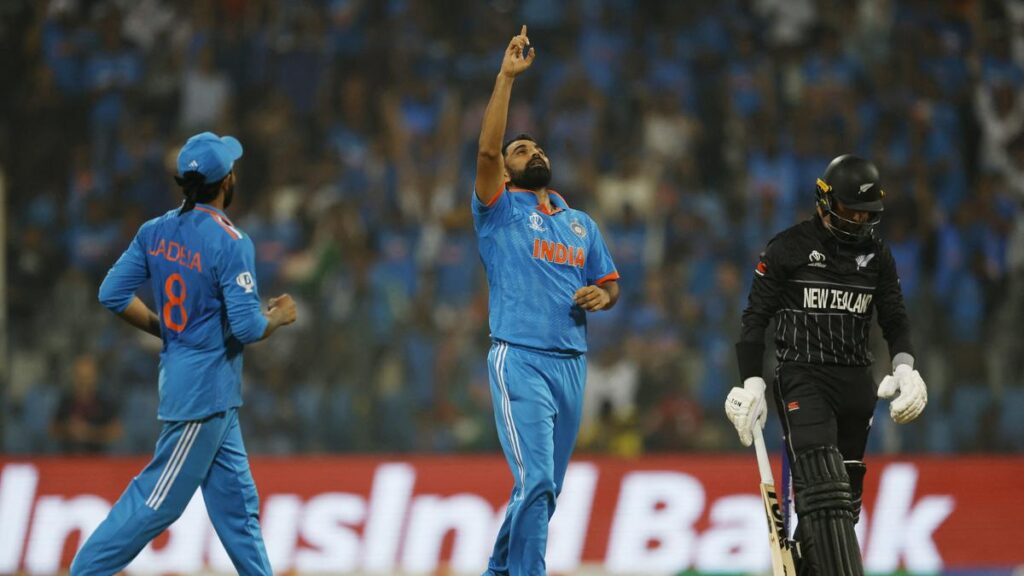
India’s Mohammed Shami became the fastest bowler to 50 ODI World Cup wickets, during his side’s semifinal encounter against New Zealand at the Wankhede Stadium in Mumbai on Wednesday.

India’s Mohammed Shami celebrates after taking the wicket of New Zealand’s Devon Conway. | Photo Credit: Reuters

India’s Mohammed Shami became the fastest bowler to 50 ODI World Cup wickets, during his side’s semifinal encounter against New Zealand at the Wankhede Stadium in Mumbai on Wednesday.

Shami removed Kane Williamson in the 33rd over after the New Zealand’s skipper failed to clear the deep square leg fence with a flick.

Shami got to the landmark in his 17th ODI World Cup innings, going two faster than Australia’s Mitchell Starc, who achieved the feat earlier in the tournament.

The 33-year-old Shami is the seventh bowler to get to 50 ODI World Cup wickets and the first Indian.

The right-arm pacer was initially not part of the Indian lineup. But ever since his return to the fold against New Zealand in the group stage, he has been unstoppable, picking up wickets for fun.

He secured fifers against the Kiwis and Sri Lanka, as he became India’s top-wicket taker in ODI World Cups.

Fastest to 50 wickets in ODI World Cup (Inns)

PlayerEditions playedInnings
Mohammed Shami (IND)2015-2023* (3)17
Mitchell Starc (AUS)2015-2023* (3)19
Lasith Malinga (SL)2007-2019 (4)25
Glenn McGrath (AUS)1996-2007 (4)30
Muttiah Muralitharan (SL)1996-2011 (5)30
Wasim Akram (PAK)1987-2003 (5)33

source: http://www.sportstar.thehindu.com / Sportstar / Home> Cricket / by Team SportStar / November 15th, 2023

Tamil Nadu factory to start making Crocs in India as footwear company looks at India expansion

TAMIL NADU:

Tamil Nadu factory to start making Crocs in India as footwear company looks at India expansion  © Provided by Business Today

A new factory near Chennai is set to start making popular foam footwear Crocs in India as the brand tries to diversify its manufacturing beyond China and Vietnam. 

JR One Footwear, a joint venture between Phoenix Kothari Footwear and Shoetown Footwear, will start manufacturing ‘Crocs’ at its new factory near Chennai from November 28, 2023. 

The foundation stone for the factory was laid by Tamil Nadu Chief Minister M K Stalin in 2022. “The (Tamil Nadu) factory has been built in a record time of one year. This stands as a testament to the dedication and efficiency of the Phoenix Kothari Footwear team and its commitment,” said Phoenix Kothari Footwear Chairman J Rafiq Ahmed in a statement. 

The new factory, which will specialise in making Crocs, is opening about a year after Tamil Nadu became the first state in the country to launch an exclusive footwear and leather goods policy. It is spread across 50 acres within a footwear park developed by Phoenix-Kothari Footwear at SIPCOT Industrial Park in Perambalur — about 250 kilometres to the south of Chennai. 

The factory is expected to generate 4,000 jobs. The Phoenix Kothari Footwear park, which has tied up with internationally renowned brands such as Nike, Adidas, Skechers and Puma, among others, is estimated to create more than 50,000 jobs totally. “The Perambalur footwear cluster is expected to provide significant job opportunities for women. This is also expected to give a big push to the social development goals of the state,” Ahmed added.  

The integrated cluster is expected to promote self-sufficiency by reducing import reliance and fostering indigenous footwear production. With the big international brands seeking to rely less on China in the post-Covid era, it is also expected to position itself as a footwear production hub. 

Phoenix Kothari Footwear Limited is promoted by both Kothari Industrial Corporation Limited and Taiwan’s Evervan Group. The business committed to investments totalling Rs 1,700 crore when it signed a memorandum of understanding with the government’s agency to promote investments in the state Guidance Tamil Nadu in August 2022. 

In August 2022, Tamil Nadu unveiled a Footwear and Leather Products Policy 2022, through which it aims to attract investments to the tune of ₹20,000 crore and create over two lakh jobs. This policy will be valid till March 31, 2025, and will be periodically revised. 

source: http://www.businesstoday.in / Business Today / Home> News> Latest> Corporate / by Vidya S / November 17th, 2023

Rasul Galwan: Pasmanda tribesman of Leh after whom Galwan Valley is named

Leh, LADAKH:

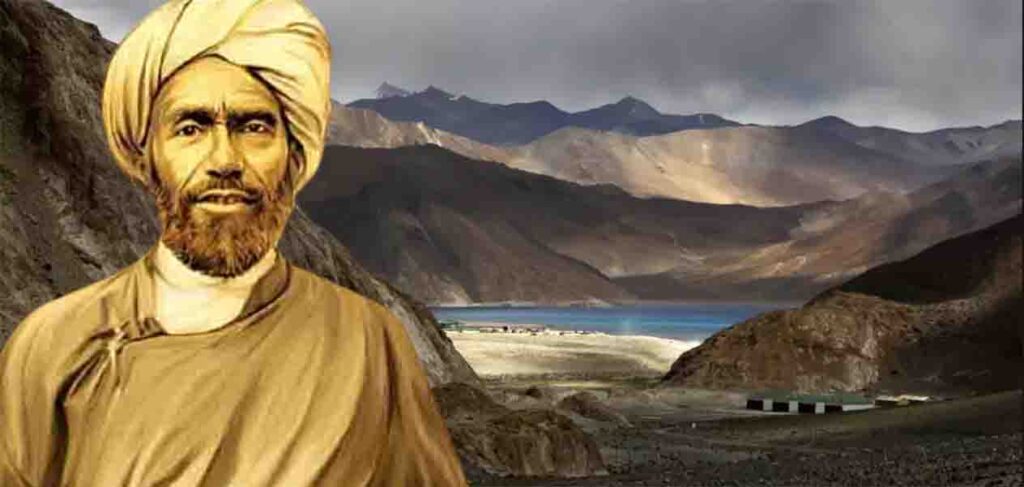
A sketch of Rasul Galwan

Once an explorer had lost his way in the rugged and bland mountains of Ladakh and he could not find his way out. As luck would have it, a 14-year-old boy helped him out of the landlocked hilly region through a river. The explorer was so thankful and impressed by the boy’s bravery that he named the river after the child, Rasul Galwan. Gradually, the surrounding valley became famous as the Galwan Valley.

Rasul Galwan continued to guide famous explorers from England, Italy, Ireland, and America.

The story of the life of Rasul Galwan who hailed from the Pasmanda tribal community –  from a pony-boy to the Chief Assistant to the British Joint Commissioner – is fascinating.

His name was Rasul Galwan. He added Ghulam before his name on the advice of a Sufi saint. Galwan is a name of a family, which means the horse keepers. His ancestors used to take care of horses and ponies, so his family was named Galwan. Walter Lawrence in his book The Valley of Kashmir describes Galwan as a tribe.

Warisul Anwar, a Ph.D. scholar from Aligarh Muslim University,  wrote on a Kashmiri news portal that, Rasul’s ancestors belonged to the famous tribe, the Galwan.

His great-grandfather Kara Galwan was a famous dacoit; he looted the rich and shared it with the poor. Poor people considered him as a guardian and the rich saw him as a constant threat. His grandfather Mahmood Galwan went to Baltistan from Kashmir and later the family settled in Leh.

Rasul was born in Leh around 1878. As a child, he painted the walls of his house with beautiful motifs. People admired his art and told his mother that one day her son would be very successful. He had a creative mindset and wanted to study. he stayed away from sports and games. There were no schools in Leh at that time and the rich people used to hire private teachers for their children. He would prod his mother to send him to a tutor. His mother told him, “We are poor people, I have no money to afford your teacher, reading and writing is the work of the rich people, not ours, our fathers were not educated, They were hard-working people, you should do the same, it will be good for you.”

He replied, “Yes, our ancestors worked very hard for their livelihood, but I want to study.

“Maybe if I have good luck I will learn a few good things which will be good for the future, I want to study, if you think it is good, then let me go to the teacher. I’ve heard that despite being costly study is the best, and we can earn with it in the future.”

His mother said, “You will work in a tailor shop, it will be better for your future and it won’t be costly”.

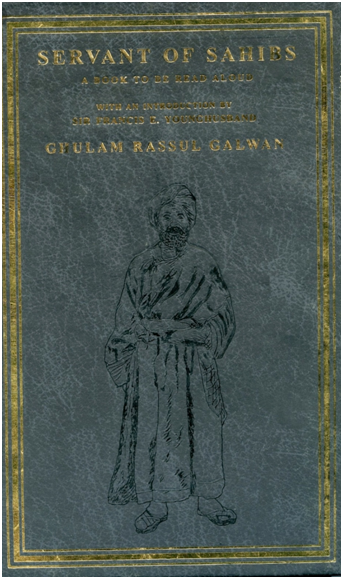
This conversation if in the book Servant of Sahibs.

His mother sent him to a tailor but he wasn’t interested in it. He had been remain sad and always thought that if I was rich, I could have studied. The shopkeeper used to beat him a lot and within a month, he got fed up and fled from there.

Biography of Ghulam Rasul Galwan

At a very young age when he went on an exploration trip with Dr. Trall, his mother stitched three rupees in his kurta and asked him to use this money only when the money given by the sahibs spent out but first tell his sahib how much money you have and where is it kept. Otherwise, when the sahib is looted and he sees money with you, then he might consider you a thief.

Before leaving for the journey, his mother hugged him and both cried a lot and he cried too with her, at last, he touched his mother’s feet and paid salam, and paid salam to his neighbours after that he went to his sister’s home and paid salam to her too. (page 25, Servant of Sahibs)

After some time a missionary priest opened a school in Leh, and Galwan’s passion for reading again started to oscillate but he knew his mother, so after getting a recommendation from his sister he enrolled in school, he quickly moved forward, leaving the other boys behind due to this the priest became very happy, He deeply praised Galwan, which further strengthened Galwan’s faith in studies.

Rasul’s exploration with sahibs and his studies continued. During the long journeys, Galwan kept memorizing the lessons he was taught in school. He knew languages like Ladakhi, Turkish, Urdu, Kashmiri, Tibetan, and English.

In a letter to his wife Catherine, the American traveler Robert Barrett writes, “Rasool’s manners are perfect, the most policed gentleman could do not more than equal them. He is a very good person and a guardian to his men. He is a very black and very handsome man, graceful in all his movements, his smile most charming. His voice is the sweetest man’s voice I ever heard. The woman lives not who would not fall in love at first sight, but his standard of morality is very high. The Women are afraid of him as a saint.”

According to Lieutenant Colonel Sir Francis Younghusband, Rasul had a strong faith in God. It was his stand-by in all hardship, trials, and disappointment. And this habit of reverence was undoubtedly what made him the gentleman he was. He came from the very poorest. He started as a simple village lad. But in every situation, he behaved like a gentleman. He was a born storyteller, clearly a popular singer, and had, also, a great delight in banjo-playing.

Pasmanda has been inhabiting this land for centuries, which is why they have a natural attachment to this land and it is obvious that everyone loves his country as his mother. This has been a big reason why Pasmanda has always been on the front line in sacrificing their life for India.

Pasmanda has never been bothered as to which party or person is ruling the country; they give importance to the country and its protection. Notwithstanding the lack of resources, the Pasmandas have been making supreme sacrifices to defend their nation. This is unlike many Ashraaf, who claim their Arab origins and consider India as a conquered state.

Rasul Galwan

In Servants of Sahibs, there is another incident related to Rasul galwan’s life. “Once when he returned to the camp in the evening, he found that some Chinese soldiers had assaulted Major Sahab and the Head-Man. Rasul Galwan was very angry, he beat the Chinese troops with his friends Kalam and Ramazan, later Chinese came and apologized to Major Sahab.

On the second day, Kalam suddenly came and told us that the Chinese were killing our people in the market, Rasul Galwan reached there immediately and saw that the whole market was full of Chinese soldiers and they were killing the people, he immediately jumped into the fight, Chinese soldiers broke his stick and injured him badly. He fell to the ground, yet they kept hitting him and ran away thinking that he was dead.

After some time, Major Saheb came with the headman, he told Ghulam Rasul, who was lying in a half-dead situation, “Rasul you don’t have to be sad, here you have fallen alone and there are seven Chinese soldiers and one of their military officers have fallen”. A triumphant smile streamed on his face. His friend Ramadan was also injured badly in this event.’

Even though the British themselves were foreigners and occupying India, Rasul thought it was more important that the morale of Chinese soldiers be broken so that they could never look at our borders. For this, he put himself and his companions’s lives in danger. A year after the publication of his autobiography, in 1925, at the age of 47, he passed away.

Today, once again, Rasul Galwan is posthumously playing an important role in protecting the border of India. The discovery and naming of the valley by an Indian is further strengthening India’s claim.

The author is a leading Pasmanda Rights activist

source: http://www.awazthevoice.in / Awaz, The Voice / Home> Story / by Fayaz Ahmed Fyzie / November 05th, 2023

Veteran Actor and Mehmood Ali’s Sister Minoo Mumtaz Dies in Canada

Mumbai, MAHARASHTRA / Toronto, CANADA:

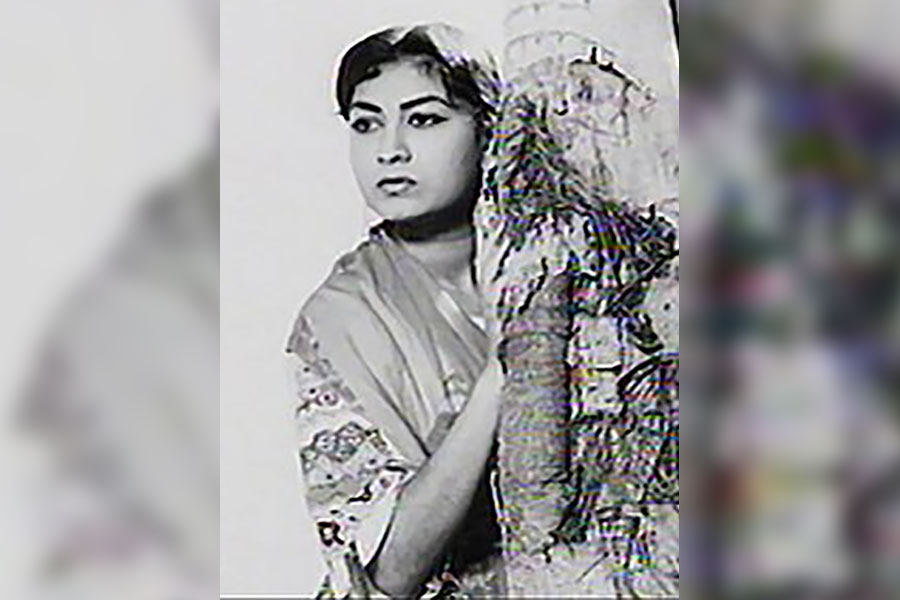
Photo Source: https://commons.wikimedia.org/wiki/File:Minu_Mumtaz.jpg

Minoo Mumtaz aka Malikunnisa Ali, the veteran Hindi actor and comedian Mehmood’s sister, died in Toronto in Canada on Saturday.

She was recently diagnosed with cancer and her health deteriorated quickly, leading to her demise, ETimes reported.

Mumtaz’s nephew Naushad, confirming the news to the publication, said, “Since she was old, 80 plus, there wasn’t much to be done. She was one of the loveliest people I had ever met”.

Her younger brother Anwar Ali, who is also part of the film industry and is now a producer, wrote, “Regret to inform that my loving sister Minoo Mumtaz, passed away (in Canada) a few minutes ago… Deep gratitude to the film fraternity, press, media, fans, friends, for decades of love and adulation showered upon her.”

Born to a family of four brothers and four sisters, Mumtaz was the daughter of Mumtaz Ali, a dancer and character artiste in Hindi films in the 1940s. She was renamed Minoo by actor Meena Kumari, her sister-in-law and Mehmood Ali’s wife.

While she started her career as a stage dancer, Mumtaz appeared in several Hindi films in the 1950s and 1960s as a dancer and character actor. She made her debut with Sakhi Hateem, and moved on to play the lead opposite Balraj Sahni in Black Cat (1959) and appeared in several Guru Dutt films including Kaagaz Ke Phool (1959), Chaudhvin Ka Chand (1960) and Sahib Bibi Aur Ghulam (1962). Other Hindi films that she appeared in include Taj MahalAlibaba, Ghoonghat, Ghar Basake Dekho, Insan Jaag Utha, Sindbad, Jahanaara, Aladin, Gazal, Dharmaputra. She also appeared in the 2002 television serial Chalo Chale Pardes.

Expressing her condolences on the late actor’s demise, author Bhawana Somaaya wrote, “#MinooMumtaz lead dancer of Hindi movies in the 50s and the 60s dies in Canada. Condolences to #AnwarAli family.”

Actor Nasirr Khan also mourned Mumtaz’s death.

Mumtaz is survived by her husband Sayyed Ali Akbar, son and three daughters who lived with her in Toronto.

Namrata Ganguly is a Correspondent at Silverscreen India, and can be reached by email at namrata@silverscreen.in

source: http://www.silverscreenindia.com / SilverScreen India / Home> Hindi> News / by Namrata Ganguly / October 23rd, 2021

Book Review: Muslims In Indian Economy By Omar Khalidi

Hyderabad, INDIA / Boston (MA), U.S.A:

The narrative is lucid, and the book is an important read for individuals, policymakers and think tanks to understand the ground reality.

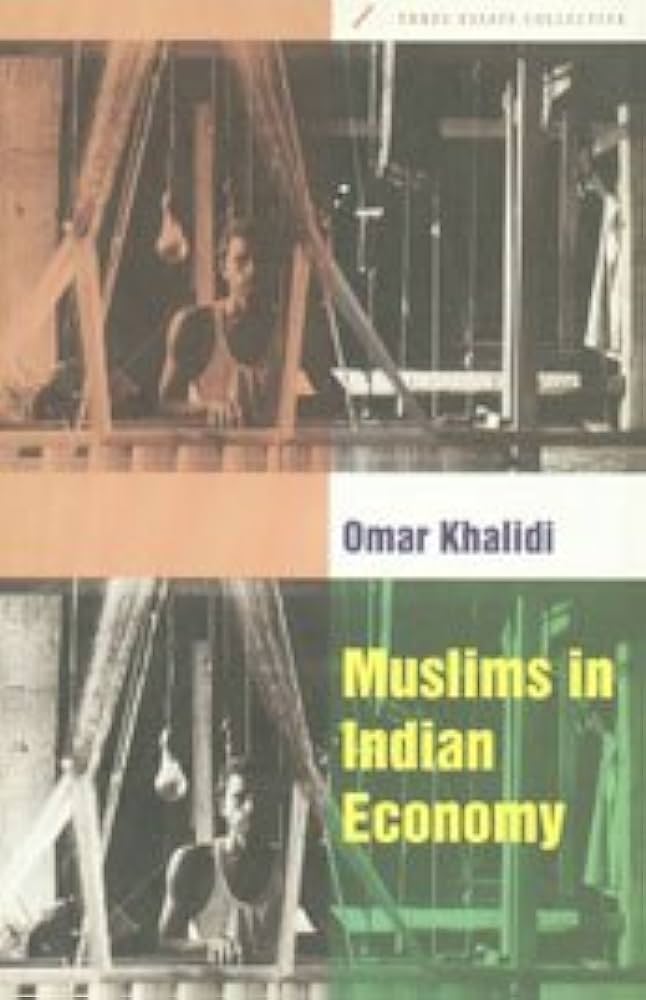
pix: amazon.in

Written by an independent scholar Omar Khalidi, the book Muslims in Indian Economy tries to describe the economic condition of Muslims in India. The narrative is lucid, and Khalidi’s target audience are laymen along with policymakers and think tanks.

The whole book is divided into two major sections. The first is the description of the economic condition of Muslims at the pan-India level. It has two sub-sections dealing with the economic status of Muslims: in colonial India and Independent India. The second major section is the description of the economic conditions of Muslims in the six states of India: Delhi, Uttar Pradesh, Bihar, Andhra Pradesh, Karnataka and Maharashtra. These two sections are followed and preceded by an introduction and conclusion chapter, respectively. 

Written by an independent scholar Omar Khalidi, the book Muslims in Indian Economy tries to describe the economic condition of Muslims in India. The narrative is lucid, and Khalidi’s target audience are laymen along with policymakers and think tanks.

The book states that the revolt of 1857 and the Partition of India in 1947 were the two most important events that affected the lives of Muslims. The Mutiny of 1857 nearly completed the destruction of the Muslim aristocracy in northern India, thus curtailing the prospects of the soldiery, intelligentsia and artisans dependent on feudal patronage. However, the event which affected a significant population of the Muslims of South Asia was the partition of India. It had severe economic consequences, as the poorer Muslims had to stay in India without any protection from the elites. Some Congress leaders also took an anti-Muslim stance during the partition. Similarly, Operation Polo had an enormously negative impact on the Deccani Muslims. 

From its extensive research, the book elucidates how a detailed description and analysis of the state of education among Muslims during British times are absent. An 1870 report shows Muslim students to be a lower percentage when compared to other communities. The Union Ministry of Home Affairs sponsored a survey in 1981 of forty-five districts in states with a large Muslim population. It showed that Muslim enrolment in elementary, secondary, and high schools was poor. 

This is not to deny that Muslim elites in various parts of the country made efforts for the promotion of modern education. Nawab Syed Wilayat Ali Khan’s efforts for Patna College, Syed Ahmad Khan’s for MAO College, which later became AMU and Khan Bahadur Mir Abu Saeed’s endeavours for an educational society in 1865 in Bihar need to be focussed upon. 

The whole book is divided into two major sections. The first is the description of the economic condition of Muslims at the pan-India level. It has two sub-sections dealing with the economic status of Muslims: colonial India and Independent India. The second major section is the description of the economic conditions of Muslims in the six states of India: Delhi, Uttar Pradesh, Bihar, Andhra Pradesh, Karnataka and Maharashtra. These two sections are followed and preceded by an introduction and conclusion chapter, respectively. 

Jawaharlal Nehru and his colleagues like Mahavir Tyagi (Minister of State for Defense) were well aware of the declining number of Muslims in the central services and armed forces in the 1950s. Suren Navlakha, in a study of the elite Central officers like IAS and IES, found that there is a proportionate representation of all religious groups except Muslims and Buddhists. Muslims are not in proportion to their population in the Railways, Armed Forces, and various PSUs.

A Panel headed by Gopal Singh (1983) showed that the economic condition of Indian Muslims was at par with that of the Scheduled Castes. A vast majority of Muslims are landless labourers. More Muslims are unemployed than Hindus. The majority of the big trading and banking concerns are Hindu owned, where Muslims and Dalits are nominal. Contrary to popular perceptions, Muslim women, especially those of the working class, are involved in economic activities.

The book stresses how a major educational institution such as Jamia Millia Islamia also became a victim of the partition and was forced to move from its campus in Karol Bagh to Okhla. It also explains how before Independence, Urdu was the language of instruction in a number of schools. Since the early 1950s, Urdu has been edged out of government schools. One reason many Muslim organisations want to establish their own schools is to escape this discrimination.

One of the major reasons for the poor education among Muslims is the discrimination by both the State and the society. A survey in Delhi showed that poor Muslims are concerned about female education. A psycho-social examination of slum-dwelling Hindus and Muslims showed no difference in positive attitude toward education.

The book stresses how a major educational institution such as Jamia Millia Islamia also became a victim of the partition and was forced to move from its campus in Karol Bagh to Okhla. It also explains how before Independence, Urdu was the language of instruction in a number of schools. Since the early 1950s, Urdu has been edged out of government schools. One reason many Muslim organisations want to establish their own schools is to escape this discrimination.

Similarly, the book concludes that the major reason behind poverty among Muslims is discrimination in the job market. It can be as overt as anti-Muslim pogroms and/ or as systemic as State apathy. Interpersonal discrimination is usually couched in the form of efficiency. Unlike the stereotypical image of Muslim women, various studies find that Muslim women are not averse to earning their own living if conditions are proper. Daily wage earners are normally a highly insecure group dependent on the management’s hire or fire at will. The book narrates how sometimes the government itself has segregated Muslim artisans from the mainstream of business at international fairs!

It has been well established by vast scholarship that communal violence is mainly to quell the upward economic mobility of Muslims. It happens particularly in places where Muslims have either made inroads into or displaced Hindu businesses. As long as the Hindu-Muslim relationship in businesses remains asymmetrical, peace tends to prevail.

Throughout the books, various issues come to light. Political representation for religious minorities was accepted by Vallabhbhai Patel in 1947 but rejected later. Recent scholarship has shown that discrimination against Muslims and Dalits is rampant in the private sector. Muslim Dalits and Christian Dalits do not get SC status. Leaders like Ijaz Ali demands giving SC status to OBC Muslims.

Years after years, the government has constituted committees to estimate poverty among Muslims and the policies to remove it. The majority of those were just for tokenism. For example, Justice Ranganathan Mishra headed National Commission for Religious & Linguistic Minorities (NCRLM), and Justice M.S.A. Siddiqui headed National Commission for Minority Educational Institutions (NCMEI), and Justice Rajindar Sachar headed the Prime Minister’s High-Level Committee for the Muslim Community of India (PMHCMCI).

This book must be read by all those who are sensitive to the plight of minorities in an increasingly parochial society and development practitioners who work for an inclusive plural society.


Zeeshan Husain has done BSc (AMU), and MSW (TISS). He is presently pursuing PhD in sociology from JNU. His research interest is in the society and polity of Uttar Pradesh. You can find him on Twitter.

Featured image source: Three Essays CollectiveIndian Muslim Observer

source: http://www.feminisminindia.com / Feminism In India – FII / Home> Culture> Books / by Zeeshan Husain / July 11th, 2022

Federation of Indian Muslims celebrates 30th anniversary with new logo and name

SINGAPORE:

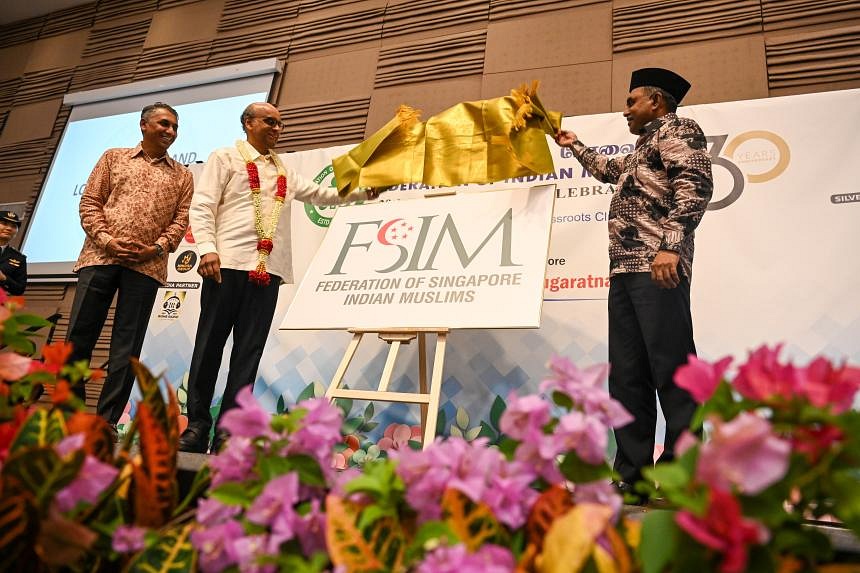
President Tharman Shanmugaratnam (second from left) was the guest of honour at the federation’s 30th anniversary celebrations on Oct 27, 2023. PHOTO: BERITA HARIAN

Singapore :

The Federation of Indian Muslims – the umbrella body encompassing 18 Indian Muslim organisations – is now known as the Federation of Singapore Indian Muslims (FSIM).

The federation unveiled its new name and logo at its 30th anniversary celebrations held at The Grassroots’ Club in Yio Chu Kang on Friday.

President Tharman Shanmugaratnam was the guest of honour at the event, which was attended by 500 people including community leaders.

Four individuals were honoured during the event for their contributions to the Indian Muslim community in Singapore.

Hindu Endowments Board chief executive T. Raja Segar and former Islamic Religious Council of Singapore (Muis) president Mohammad Alami Musa were presented the FSIM Harmony Award.

The FSIM Community Service Award was presented to the federation’s founding member, Mr Shaik Alaudeen Osman, while fellow founding member A.R. Mashuthoo was presented the M.K.A. Jabbar Lifetime Achievement Award.

The award is named after FSIM’s founding president, who was also a former MP for Radin Mas.

Speaking at the event, FSIM’s president, Mr Mohamed Bilal, 55, paid tribute to previous generations of Indian Muslim community leaders.

“In the coming years, we strive to focus on the educational development of students, welfare of youth, identifying young leaders, and honing their skills,” said Mr Bilal. 

In recent years, the federation has been reaching out to young people. It has co-opted IMYouth, an Indian Muslim youth organisation, as its youth wing.

source: http://www.straitstimes.com / The Straits Times / Home / by Irshath Mohamed / October 29th, 2023