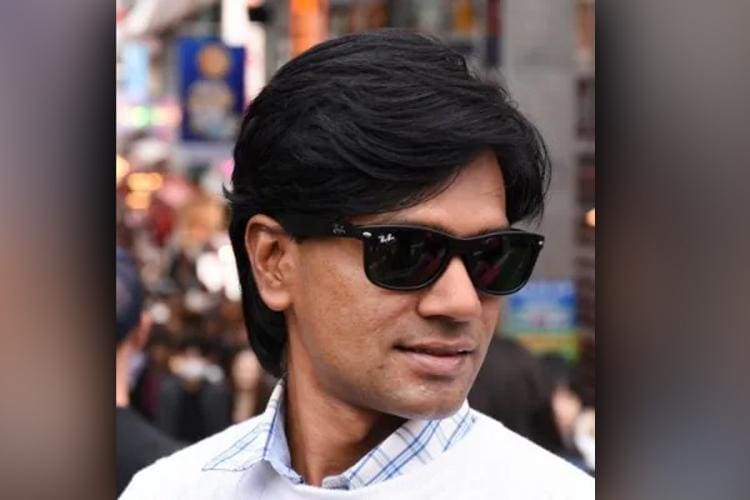
Jaan Nissar Lone was graced with the illustrious global humanitarian award by the World Humanitarian Drive. He is mainly known for his song ‘Harmukh Bartal’ featured in Manoj Bajpai Starrer Webseries ‘The Family Man’. This momentous occasion, graced by esteemed luminaries, reverberated with the essence of his contributions to the realm of music, particularly his role in fostering a sense of unity among diverse populations, including those residing in the picturesque yet troubled valley of Kashmir.
Jaan Nissar Lone’s musical artistry has transcended geographical confines and tugged at the heartstrings of individuals from all walks of life. His melodious compositions served as a wellspring of inspiration, galvanizing countless souls to embark on a journey characterized by love and mutual comprehension, not just for their homeland but for the entire global community. Through his educational music videos, he has empowered a legion of youthful enthusiasts to partake in endeavors aimed at heightening awareness of human unity, thus laying the foundation for a more harmonious and all-encompassing world.
The World Humanitarian Drive lauded Jaan’s remarkable endeavors in employing music as a unifying conduit, capable of bridging divides between communities and nations.
The ‘World Humanitarian Drive’ founder Dr Abdul Basit Syed lauded Jaan’s remarkable endeavors in employing music as a unifying conduit, capable of bridging divides between communities and nations. Lone’s journey as a musician and humanitarian transcends borders, languages, and cultures to promote harmony and peace worldwide. His work resonates with people globally, earning him recognition as a symbol of peace and tranquillity.
source: http://www.timesofindia.indiatimes.com / The Times of India / Home> News> Times Entertainment> Hindi> Music / November 08th, 2023
Prof Seyed Ehtesham Hasnain’s scientific research has changed the complicated regimen for the diagnosis of Drug-Resistant Tuberculosis and the Indian Basmati getting its patent and trademark in the UK in the fight against the Pakistani variant. This Bihar-born scientists’ findings have saved patients suffering from Drug-Resistant TB money and time and helped the Indian government and farmers earn through exports of the Basmati.
He told Awaz-the Voice in an interview that the government of India has taken at least two major policy decisions based on his research. “One decision was that previously the testing of tuberculosis (TB) was based upon antibody-antigen reaction. So, the antibody formed was based on the antigen of a bacterial protein, and the sequence (genetic) used was mostly European or American isolates.
“When I did sequencing in India, I found out that the Indian variant is completely different. Therefore, the test could give false positives or negatives…. I published this finding and had a meeting with the DG of ICMR (Indian Council for Medical Research) and recommended that the tests based on foreign kits be banned and that made a big impact.”
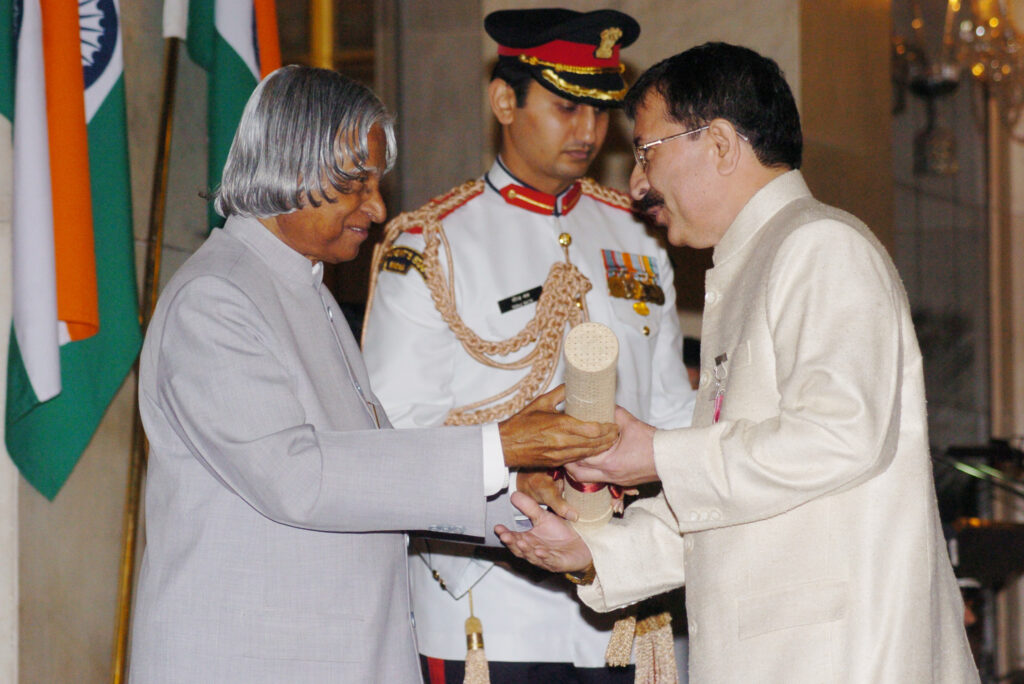
The President, Dr. A.P.J. Abdul Kalam presenting Padma Shri to Prof. Seyed E. Hasnain, renowned biologist, at an Investiture Ceremony at Rashtrapati Bhavan in New Delhi on March 29, 2006.
Padma Shri recipient Seyed Ehtesham Hasnain said. E. Hasnain was awarded the Order of Merit of the Federal Republic of Germany, the highest Civilian decoration of Germany in 2014. Nature, a famous scientific journal, reported on his receiving the award, “With the Order of Merit, he joins the league of outstanding personalities from various fields including Nobel laureate biologist Paul Herman Muller, former German Chancellor Helmut Kohl, former Japanese Prime Minister Yasuhiro Nakasone and music conductor John Crosby.”
In 2006, he received Padma Shri in recognition of his scientific work. Shanti Swarup Bhatnagar Prize (1995) and J. C. Bose Fellowship (2006), two of the most prestigious Indian Awards in the field of science have also come his way apart from numerous other decorations.
Hasnain was born in Gaya, Bihar in 1954. He was born seven years after India had attained independence. At that time Bihar was not the most developed of the Indian states. Hasnain’s father was a college lecturer and he nursed a dream of studying abroad. He studied at the Nazareth Academy, an expensive school in the town. It’s said that almost 20% of his father’s salary would go into children’s school fees.
He did his M.Sc. from the Jawaharlal Nehru University in New Delhi. However, though he was selected for his post-graduation studies by Harvard University, for some reason he could not join.
In 1981, Hasnain moved to Canada as a Post-doctoral Fellow (PDF). He worked in Canada and the USA for the next six years. At this stage, his father asked him to return home to serve his country and people. He was advised by many people that he must try to get his green card before moving back to India.
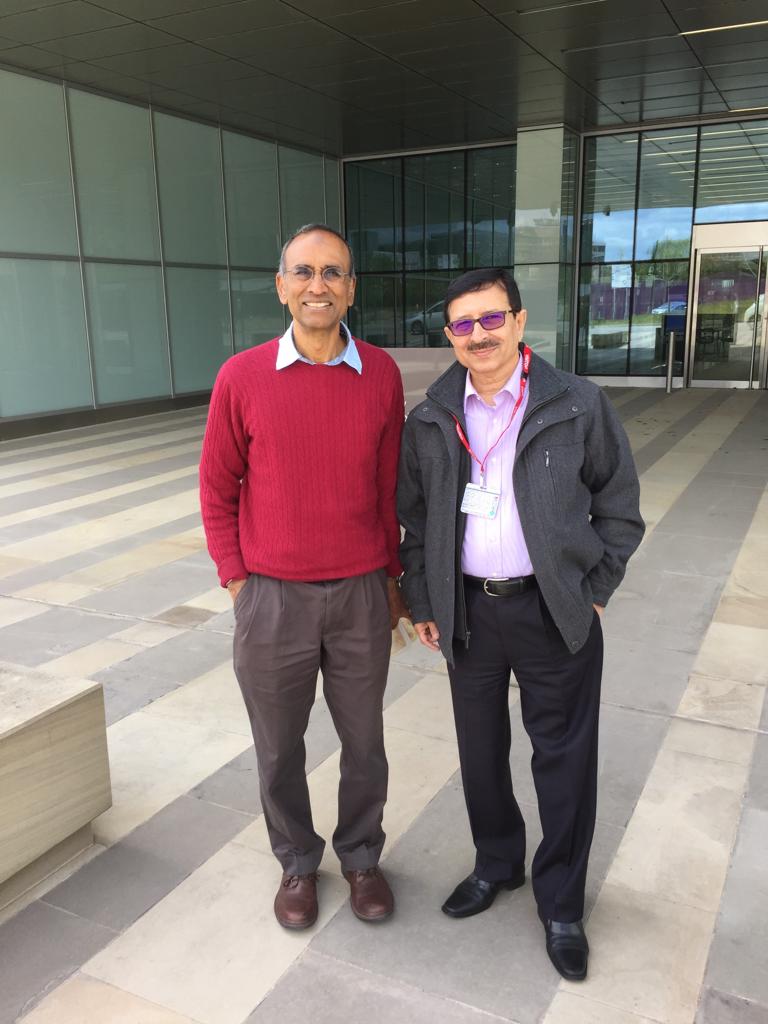
Seyed Ehtesham Hasnain with Dr Venky Ramakrishna, Nobel Prize Winner and President of Royal Society, UK, in Cambridge
In 1987, he joined the National Institute of Immunology (NII) as a scientist. Hasnain says, “I thought that after getting a green card, I would have a fall-back and a plan B. I did not want a plan B. My plan was the only plan A. I will work in India and do something good in India.”
Hasnain broke the convention by not continuing the research he was doing abroad. He started afresh and soon made a name for himself in research of baculoviruses. He established a baculovirus insect cell expression system (BEVS) for the first time in India and used this to express foreign genes and also to ask fundamental questions concerning gene expression in BEVS. The idea was to make India a scientific power.
Hasnain says that when his career was at the peak with research on baculovirus one day, Dr. Sandeep Basu, the then director of NII, asked him, “Seyed, you are publishing in good journals, it is fine, but how does humanity benefit? What is India gaining out of it? How are the common men benefiting from your papers? Doing research is good but do something which will benefit the common man.”
This was the turning point in Hasnain’s life and career. He says “I decided to do something where I can do direct application.” He started his research on tuberculosis.
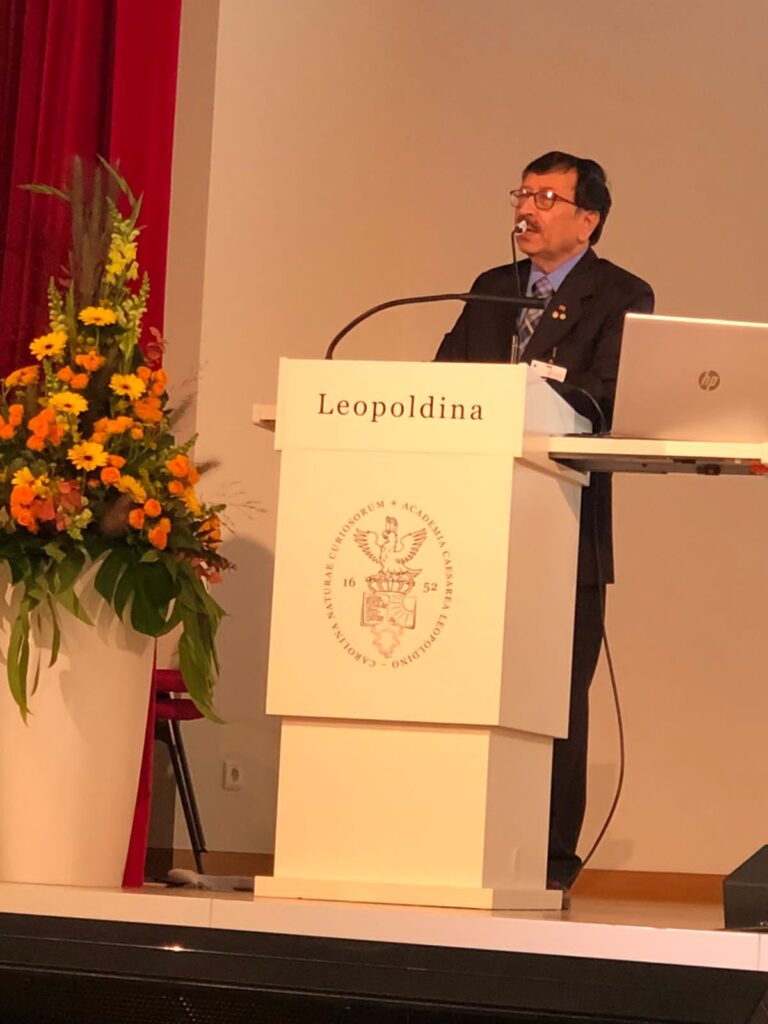
Seyed Ehtesham Hasnain at the Global Health Conference organized by the German National Academy of Sciences, Leopoldina, Halle, Germany
Hasnain initiated studies on molecular epidemiology and genetics of multi-drug resistant (MDR) M. tuberculosis (M.tb). He says, “second important observation that was published, again the first time in the world. We used to test TB for drug resistance. The bacteria was tested against each drug. I showed with my study that if the bacteria are resistant to one drug then it will be resistant to almost all other drugs. I established the correlation and proposed that you don’t need to do multi-drug resistance testing for all the drugs. Just test one drug rifampicin and if it is confirmed then 95%-99% of drugs will be resisted by the bacteria. That has become a standard treatment all over the world. He is still working on developing cheaper methods of diagnosing TB.
In 1999 Hasnain was invited as the first director of the Centre for DNA Fingerprinting and Diagnostics (CDFD), Hyderabad. It was based on his work on Indian Basmati Rice DNA fingerprinting that India won the Patent case against Pakistan enabling the export of the Indian Basmati to the UK. This prevented a major economic loss to India. Subsequently, the Ministry of Commerce established the CDFD-APEDA Basmati DNA Analysis Centre, where all Basmati exports are certified.
Hasnain also served as Vice Chancellor of the University of Hyderabad (2005-11), and Vice Chancellor of Hamdard University and is currently A National Science Chair of SERB, at the Department of Biochemical Engineering and Biotechnology at IIT-Delhi.
Hasnain Mantra is: “Nothing is a substitute for hard work.”
source: http://www.awazthevoice.in / Awaz, The Voice / Home> Story / by Saquib Salim / November 03rd, 2023
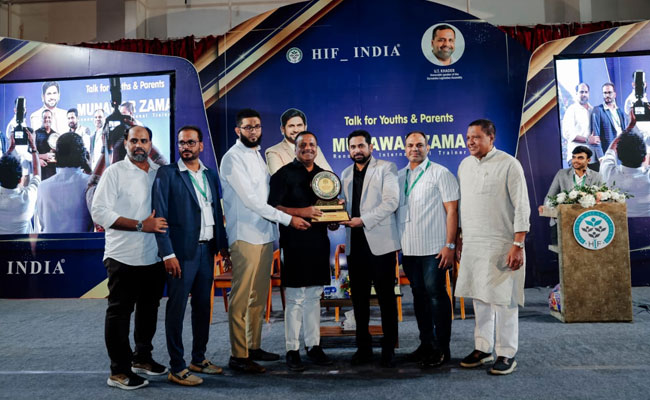
Highland Islamic Forum (HIF India) on Saturday honored motivational speaker Munawar Zama with the HIF Global Youth Icon Award here at the TMA Pai Hall in the city. Munawar Zama was in the city to hold a talk for youth and parents organised by HIF India.
The recognition was presented by UT Khader, Speaker of the Karnataka Legislative Assembly, after Zama’s address to youth and parents.
In his address, UT Khader commended Zama’s unwavering commitment to nurturing the potential of the youth, emphasizing the transformative impact of such efforts in shaping a brighter future for the world.
During the event, Munawar Zama emphasized the importance of mentorship and support systems for the younger population.
HIF members and other dignitaries including Shaz Ahmed AK as the program anchor, and Ashraf Ali – Trustee of Sana Shaheen Charitable Trust, Niyaz AK – Managing Director of AK Apple Ply Group, Naushad AK – Director of AK Apple Ply Group, and SM Farook – Director of SM Fisheries and Export, were present during the event.
HIF India President Adil Parvez presided over the event.
source: http://www.english.varthabharati.in / Vartha Bharati / Home> Karnataka / by Vartha Bharati / October 30th, 2023
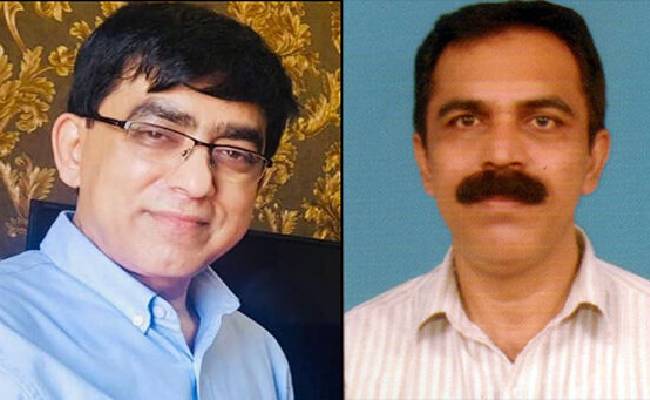
Abdulla Madumule (On the left), Ibrahim Adkasthala (On the right)
Mangaluru:
In an announcement made on Tuesday evening, the prestigious DK District Rajyotsava Awards have been revealed, recognizing the outstanding contributions of 46 individuals and 17 organizations. Among the awardees are figures such as Prominent Non-Resident Indian (NRI) businessman Abdulla Madumule, journalist Ibrahim Adkasthala, and literary expert Dr. Prabhakar Neerumarga.
Ibrahim Adkasthala is a senior correspondent at Vartha Bharati.
Additionally, recognition has been bestowed upon organizations, including the Ullal Syed Madani Charitable Trust, for their noteworthy work in various fields.
A notable recipient of this honor is Badruddin Farid Nagar, the former president of Harekala Gram Panchayat, acknowledged for his significant contributions to rural development.
The awards ceremony is scheduled to take place at Nehru Maidan in the city on November 1, starting at 9 am. Dinesh Gundu Rao, the DK District In-charge Minister, will preside over the event, with Speaker UT Khader in attendance to present the awards to the deserving recipients.
source: http://www.english.varthabharati.in / Vartha Bharati / Home> Karnataka / by Vartha Bharati / October 31st, 2023
Housed in the Le Grande Hotel in Tashkent, the restaurant is a definite stopover for tourist groups from India and is popular for its Bollywood nights
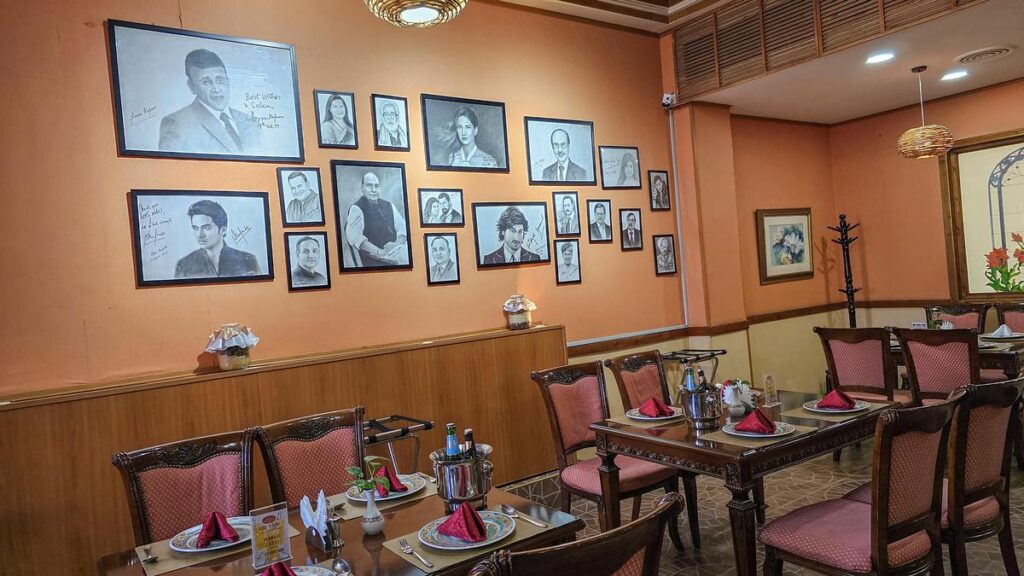
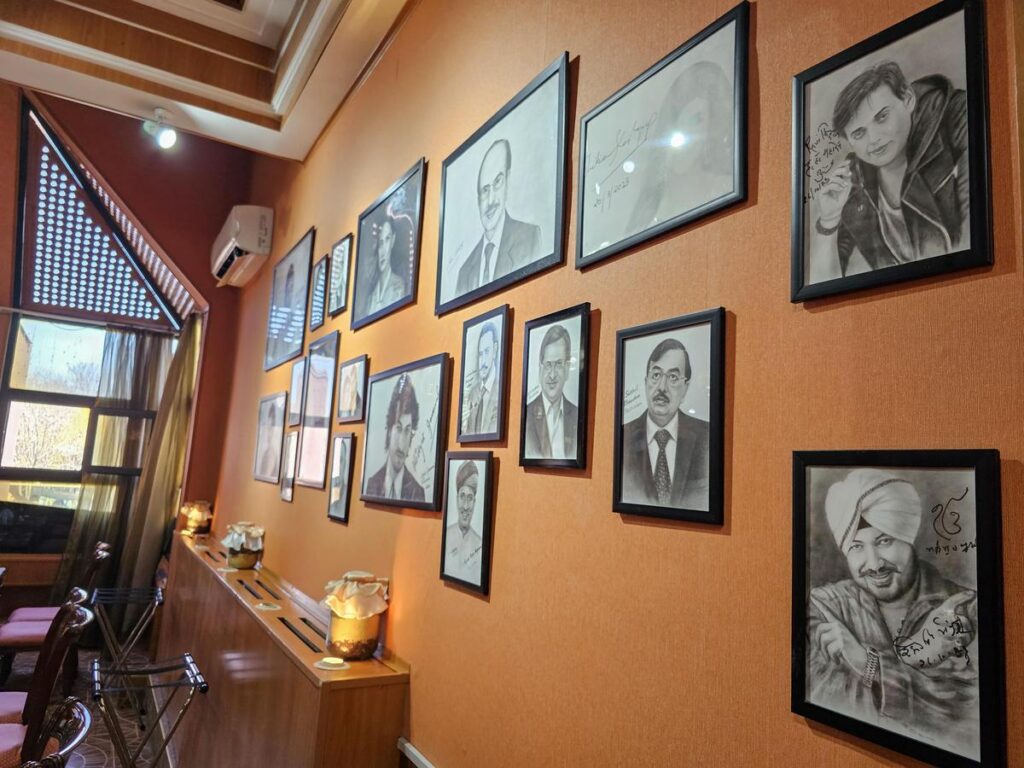
Wall dedicated to Indian celebrities who visited Raaj Kapur restaurant in Tashkent. | Photo Credit: PTI
In the heart of Tashkent, a city known for its rich history, stands an Indian restaurant celebrating the legacy of legendary Bollywood actor Raj Kapoor and the love of the Uzbeks for him even 35 years after his death.
Styled on the Bollywood theme, the ‘Raaj Kapur’ restaurant which is one of the three major Indian restaurants in Tashkent, is not new but at least 16 years old and is a hit among not only Indian tourists but also locals for its lip-smacking dishes.
Three superstars from the Kapoor family — Randhir Kapoor, Rishi Kapoor and Shashi Kapoor — have also dined at the restaurant on different occasions.
“People in Uzbekistan are crazy about Bollywood and generations of people from Uzbekistan and Russia – even the young – are aware of Raj Kapoor and his cinema and regard him as Bollywood’s numero uno. The restaurant attracts more crowd for its name and less for Indian food, which most visitors discover after enjoying a meal,” Sameer Khan, Resident manager, Raaj Kapur restaurant told PTI.
‘A definite stopover’
Housed in the Le Grande Hotel in Tashkent, the restaurant is a definite stopover for tourist groups from India and is popular for its Bollywood nights where Uzbeks also groove on top chartbusters from the 90s.
While Khan, who is originally from Mumbai, manages the property, the idea of the restaurant was first conceptualised by Jay Al Atas, an Indonesian who fell in love with Indian food during a visit to the country and was also impressed with the craze for Raj Kapoor in Russia and Uzbekistan.
“A lot of Indian tourist groups come here on a regular basis while Uzbeks enjoy the food on occasions and also love clicking pictures here. Whenever a Bollywood celebrity from India comes here, there is a bustling crowd,” he added.
The restaurant is also the official caterer for the majority of Indian events — be it the Shanghai Cooperation Organisation (SCO) summit in Samarkand, Prime Minister Narendra Modi’s visit or ones like a recent Bollywood night which saw performances by Daler Mehandi and Ravi Kishan.
Five chefs from different parts of India are behind the variety-loaded menu at the restaurant.
“We offer all kinds of cuisine that are available in India. Our bestselling dishes are butter chicken, biryani, cheese naan and dosa,” said chef Kalamuddin Sheikh who hails from Orissa.
Wall dedicated to Indian celebrities who visited Raaj Kapur restaurant in Tashkent. | Photo Credit: PTI
Celebrity guests
A wall in the restaurant boasts of the renowned people who have visited the restaurant be it politicians like Sushma Swaraj and Rajnath Singh or Bollywood celebrities like Mithun Chakraborty, Shibani Kashyap, Daler Mehandi, Gulshan Grover, among others.
“We have placed signed sketches of the celebrities from India who have visited us. The restaurant is a big hit here,” Sohail Khan, Quality Manager at the restaurant told PTI.
source: http://www.thehindu.com / The Hindu / Home> Life & Style> Food / by PTI / October 30th, 2023
This Bollywood film from before Independence, holds the world record for most songs with 72 musical numbers.
Song and dance is an integral part of Indian cinema. While the West has a separate genre called musicals, most Indian films are by default musicals. Whether it’s a thriller, murder mystery, romantic comedy, or family drama, songs find a place in most Indian films. Yet, some films go the extra mile when it comes to including songs with the sheer number setting records. In fact, it is an Indian film that holds the world record for including most songs with a jaw-dropping 72 musical numbers in its run. And its not one of the usual suspects.
Bollywood film with 72 songs
While Hum Aapke Hain Koun created a flutter with 14 songs back in 1994, there have been a few before it as well that included over a dozen songs. Even Hollywood musicals like Chicago and Moulin Rouge had as many songs. Yet, none of them compare with the 1932 Hindi film Indrasabha, based on the play Inder Sabha. The 3 and a half-hour film was conceptualised and shot almost entirely in verse, comprising of 72 songs in total with most characters, big or small, receiving their own entry song. The mythological drama was one of the first Indian talkies, released just a year after Alam Ara.
Indrasabha’s 72 songs
Indrasabha was an adaptation of a 19th century Urdu play called Inder Sabha, written by Agha Hasan Amanat. The play was first brought to screen in 1925 but as a silent film. When Alam Ara brought the talkie revolution in India, Madan Theatre decided to bring back the film but with sound. The 1932 release utilised almost all of the plays 31 ghazals, 9 thumris, 4 holis, 15 songs, and seven other musical numbers. The film added a few of its own as well, giving it 72 songs in total. The feat earned Indrasabha a place in several record books.
source: http://www.dnaindia.com / DNA / Home> Bollywood / by DNA Web Team (headline edited) / October 26th, 2023
Even when nothing works out as you planned, don’t lose your trust in yourself, this is what Mr. Shamsudheen has to share with us.
Being the Managing Director of Nellara Groups, Address apparel, and more venture, Mr. Shamsudheen a successful Multipreneur from Kerala, has a story of dreams & hard work to share with us.
Since his teenage years, he started working to earn money to pursue his passion, establishing a business. He kept a keen interest in designing shirts, and from a native tailor, Mr. Shamsudheen acquired skills to stitch them, not knowing it would be a turning point in his life.
As he grew up, his dreams got life, and ‘Nellara food products, ’ a chain that provides premium quality food products, was born.
Still, his passion to design fashion was the same, and the concept of gifting people the best ones at an affordable range gave life to a clothing brand, ‘Address Men’s Apparel’.
With cunning strategies and proper implementation, Address caught global attention, and it is now a brand with 60+ outlets across 12 countries. Team Address focuses on designing desired outfits in premium quality that every man dreams of.
Address, a brand exclusively for men, was a dream of Mr. Shamsudheen, and with years of research and market study, the brand was revealed with an exceptional array of supreme comfort shirts. They have a well-experienced and truly professional team of fashion designers to gift everyone the best outfit.
Offering a wide range of shirts, including Supima, Cargo, and Solid shirts, Address Apparel promises superior quality garments because their team leader, Mr. Shamsudheen, believes in extending everything at the best level without compromising quality.
Mr. Shamsudheen Nellara, One who believes in making changes by marking goodness, carries the title of one of the best entrepreneurs in India with all commitment and future goals.
source: http://www.freepressjournal.in / The Free Press Journal / Home> Business / by FPJ Web Desk / July 04th, 2023
On Friday morning, author of the famous and most resourceful Madinah Arabic Book, Shaikh Dr. V Abdur Raheem, passed away in Madinah, Saudi Arabia at the age of 90.
A master of the Arabic language, a world renowned Islamic Scholar, multi-linguist, author, teacher and translator he dedicated his life to extraordinary contributions to Arabic literature by helping millions learn the Arabic language in his over 50 years of experience.
Born in 1933 in Vaniyambadi, Tamil Nadu, he obtained his B.A in English from the University of Madras and M.A in Arabic from the Aligarh Muslim University, India in 1962. He also held a M.Phil. and a Ph.D. in Arabic Philology from Al-Azhar University, Egypt.
A recipient of the National Award from the President of India in 1997 for his services in teaching, he was a self made man who learnt Arabic from the scarcest resources available to him in his little town. His three-volume series, Madinah Arabic Book, a one of a kind in its field, is the official curriculum of the Madinah University, Saudi Arabia, and is also used widely in schools and universities across the world to teach students the Arabic language.
Former Professor of Arabic Language for 30 years at the International Islamic University of Madinah, he has taught Arabic Language at Islamic Universities around the world including at Omdurman in Sudan, Germany, Washington D.C and British Guyana. An expert on European Languages and their etymology, phonetic change and semantic development he was a former Director of the ‘Institute of Teaching Arabic as a Foreign Language’, at the Islamic University of Madinah.
A close associate of the Islamic Foundation Trust (IFT), Chennai, majority of his books have been published by IFT.
Along with the Madinah Arabic Book series he has to his credit a host of other books too including ‘Let’s Begin to Read Arabic: A Beginners Guide to Learning the Arabic Language and the Qur’aan’, ‘AL-TIBYAAN – Easy way to Qur’aanic Reading’, ‘Arabic Course for Non-Native Speakers of Arabic: Originally Devised and Taught at Islaamic University, Madinah’, ‘From Esfahan To Madinah In Search of Truth: Salmaan al-Faarisi’s Hadiith’,‘Both These Lights Emanate from the Same Niche’ – Hadiith of Umm Salamah (raDiyAllaahu “anhaa).’ ‘Suurah al-Hujuraat – With Lexical and Grammatical Notes and DVDs’.
His passing is indeed a great loss to both the Muslim world and to Islamic literature.
source: http://www.thecognate.com / The Cognate / Home> News / by The Cognate News Desk / October 21st, 2023
Maktoob Media has won the 2023 Human Rights Religious Freedom Journalism Award in the category of Best Media Organization for covering human rights and religious freedom.
The jury selected Maktoob from a competitive shortlist of media organizations. Among the contenders were The Wire, The Newslaundry, and Khabar Lahariya.
The award was announced at the IAMC National Convention 2023 in Dallas, Texas, by the Indian American Muslim Council (IAMC), a Washington, D.C.-based advocacy group dedicated to safeguarding India’s pluralist and tolerant ethos.
Extraordinary and in-depth reporting covering the systematic targeting of religious minorities, the Hijab ban, and the weaponization of technology against Muslim women were among the stories that earned top honors at the award ceremony on Saturday, October 14.
“We believe this recognition is a testament to our work and commitment to tell stories that matter. We share the credit of this award with our staff, contributors and all the well-wishers. We dedicate this award to all journalists who speak truth to power no matter the consequences,” Maktoob said in a statement.
Maktoob’s regular contributor Meer Faisal won the title of Best Photo Story on Human Rights and Religious Freedom for his contributions featured in Maktoob and Al Jazeera English. The award committee recognized three photo stories published on Maktoob: “110-year-old madrasa and library set ablaze by Hindutva mob during Ram Navami rally in Bihar,” “Photos: Burnt by Hindutva mob and bulldozed by BJP govt; Muslim lives in Khargone,” and “Photos: Thousands of Muslim women pray during protests against eviction in Uttarakhand.”
Maktoob’s deputy editor, Shaheen Abdulla, jointly received the Best Text Reporting on Human Rights & Religious Freedom award for his report titled “No Country for Religious Converts,” which was published in The Wire.
Sneha Richhariya from IndiaSpend was also honored with the Best Text Reporting on Human Rights & Religious Freedom award.
The Best Video Story on Human Rights and Religious Freedom award was jointly awarded to Fatima Khan from The Quint and Naman Govil from Vice News.
The HRRF Young Journalist of the Year Award for 2023 was presented to Kashmiri journalist Aakash Hassan.
“We established these awards to shine a blazing spotlight on stories that often go unreported or underreported. In a year marked by relentless challenges, where media in India grapples with unprecedented pressures, HRRF’s 14-member international jury has selected winners who dare to speak truth to power. The resilience of these journalists and their unwavering dedication to the values of truth and justice resonate even louder in these turbulent times,” said RasheedAhmed, Executive Director of IAMC.
“Today, we celebrate the unwavering commitment of these exceptional journalists. Through their extraordinary dedication, they have illuminated the path to a more inclusive and harmonious world. These stories have not only won awards but have also won hearts, for they shed light on the issues that matter most to our shared humanity,” Ahmed added.
source: http://www.maktoobmedia.com / Maktoob Media / Home> India / by Maktoob Staff / October 20th,2023
Mohammad Zubair, one of the founding members of fact-checking and news website AltNews, won the 2023 Freedom of Expression Awards – Journalism by Index on Censorship.
“His fight against fake news and disinformation in #India has led to him facing attacks, slander and even jail,” The group said while announcing the award on social media.
Index on Censorship is a nonprofit that campaigns for and defends free expression worldwide. The other nominees for the award were Bilan Media — Somalia’s first women-only media organisation and newsroom— and Afghan journalist Mortaza Behboudi.
Jailed educationalist Matiullah Wesa from Afghanistan won the 2023 Freedom of Expression Awards – Campaigning. Iranian rapper Toomaj Salehi won the award in the art category.
Alt News’ approach focuses on political fact-checking to scrutinise claims made by political parties, leaders and other persons in positions of authority; debunking social media rumours; and examining media misinformation and bias.
In June 2022, following a tweet exposing a national spokesperson of the BJP making hateful and Islamophobic utterances on national TV, Mohammed Zubair was arrested by the Delhi and Uttar Pradesh state police.
It has been reported that whenever Zubair was granted bail on one case another FIR would be lodged against him. This led to six FIRs being lodged against Zubair, resulting in him being caught in a 24-day cycle of arrest, bail and re-arrest.
The following month, the Indian Supreme Court granted Zubair bail and ordered his release, as there was no justification for keeping him in custody.
source: http://www.maktoobmedia.com / Maktoob Media / Home> India / by Maktoob Staff / October 20th,2023
)