Category Archives: World Opinion

The Forgotten Heroes of Malegaon

Malegaon (Nashik District) , MAHARASHTRA:

At most of the places in the country, the names of the martyrs have been put on specially constructed Memorials. But the Memorial in Malegaon is still waiting for the names of the seven martyrs to be written over it.

“I have always wondered how, the Muslims and the Hindus together, had decided to set a Mandir on fire”, said Dr. Iftekhar Ansari recalling the incident when on April 25 in1921, the Malegaonians set the Pophale Mandir on fire where, Bhaskarrao, the PI and Incharge of the only Police Station in Malegaon was hiding. He was ultimately killed by the people. A Muslim Constable was also killed in the same uprising.

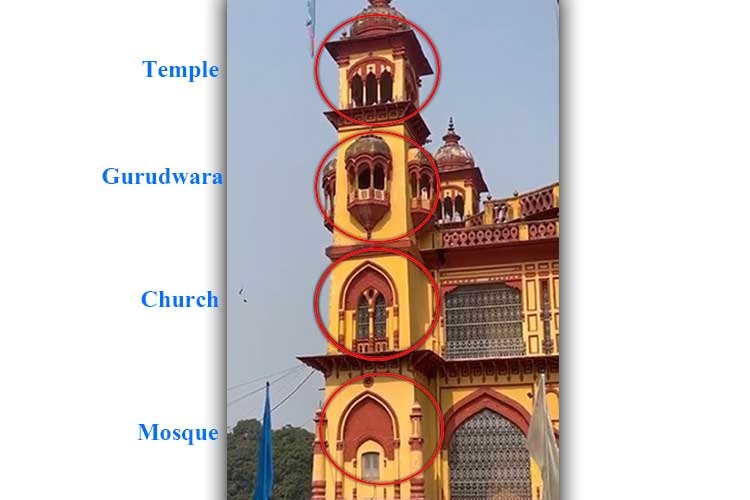
He further said, “It demonstrates not only the harmony with which the Malegaonians were living then, but also shows their eagerness for the country’s freedom. For them, the freedom was above everything, even their religion. In fact, Hindus and Muslims, except few from both the communities as was the case everywhere, had demonstrated a rare unanimity during the whole struggle. I believe if it was a Mosque, a Gurdwara or any other place, it must have met with the same fate.”

Agreeing with Dr. Iftekhar, Ramzan Painter 74, who has collected more than hundred-years of the city records added, “A confirmed account of the exact situation during 1921, clearly suggests the harmony with which people were living.” Mentioning the name of Balu Shah, owner of the first newspaper in Malegaon and a prominent figure of that time who was actively involved in the whole movement with the Muslims, he added, “And who can forget the contributions of Advocate Tatya Khare and Gadgil Wakeel, who remained at the forefront in establishing a separate court in Malegaon.”

“I have always wondered how, the Muslims and the Hindus together, had decided to set a Mandir on fire”

But, as it had done at several other places in the country, the British Police registered the whole incident as rioting and hanged the upfront leaders of the uprising in Yeroda jail. However, after the independence in 1947, the State as well as the Central governments, mentioned the historic event of April 1921 as part of the freedom struggle and included the names of the seven martyrs in their gazettes with due respects. Also, when the Parliament passed a resolution for the construction of a Memorial of similar shape everywhere in the country and to put the names of the martyrs on them, a Memorial was also built in Malegaon.

However in Malegaon, unlike other places in the country, the names of the martyrs have not been put on the Memorial till now. Interestingly the civic body, despite passing many resolutions in its general meeting for putting the names of these martyrs on the Memorial, has also not cared for doing so.

And as if it is not enough to dishonor these martyrs, every year on Kranti Diwas when officials gather everywhere near these Memorials for offering their tributes, in Malegaon, no one cares to honor these martyrs.

source: http://www.ummid.com / Ummid.com / Home / by Aleem Faizee (headline edited)

Bohra community leader gets top honours

INDIA :

President William Ruto awards the spiritual leader of the Dawoodi Bohra community Syedena Mufaddal Saifuddin on Monday.[PCS]

His Holiness Syedna Mufaddal Saifuddin, the leader of the worldwide Dawoodi Bohra community, was among 460 people who were feted by President William Ruto on Jamhuri Day.

Saifuddin received the most prestigious award ​of the Order of the Golden Heart for his philanthropic contributions across the world, including in Kenya.

He was among the leaders invited by President Ruto to this year’s celebrations on Monday.

https://www.youtube.com/watch?v=OxGgOs4EnTE&t=2s

Speaking during the ceremony at the State House, the president thanked Saifuddin for supporting the government’s low-cost housing initiative as well as the ongoing drought relief efforts.

“We are collaborating with the Dawoodi Bohra community to build low-cost houses to address challenges facing low-income earners, especially in the informal settlements,” said Ruto.

Bohra community has established affordable houses in Athi River and Rongai.

The President acknowledged the role of Saifuddin in philanthropy across the world and his leadership role in fostering inter-faith dialogue.

Saifuddin joined the list of eminent personalities who have previously received the highest award in Kenya for their exemplary work.

Others include Uganda President Yoweri Museveni, former President of Liberia Ellen Johnson Sirleaf and the Aga Khan Shah Karim al-Husayni. 

Saifuddin was previously presented with the Chief of the Order of the Golden Heart award during the inauguration of Aljamea-tus-Saifiyah’s Nairobi campus in 2017, the third campus of the Dawoodi Bohra community’s educational institute. 

The award was in recognition of his efforts for the cause of education and literacy. The campus, inaugurated by former President Uhuru Kenyatta, offers higher secondary, undergraduate and postgraduate studies to more than 900 students from 24 countries in various disciplines.

In efforts to restore indigenous tree species, the Bohra community’s spiritual leader donated 76,000 seed balls to Kenya in 2019, which were planted near the Amboseli National Park to mark his 76th birthday.

The East Africa region has more than 10,000 community members and Kenya is home to about 5,500, mostly concentrated in Nairobi and Mombasa and a smaller population in Nakuru, Malindi, Lamu, Kisumu, Eldoret and Kitui. 

Saifuddin is expected to meet the community members and deliver sermons in the course of his visit.

source: http://www.standardmedia.co.ke / The Standard, Kenya / Home> National / by Jacinta Mutura / December 16th, 2022

Turkey-Syria earthquake: Indian-origin businessman/philanthropist Dr.Shamsheer Vayalil donates Rs 11 crore for victims

KERALA / Dubai, UAE:

The United Arab Emirates-based entrepreneur/ philanthropist who hails from Kerala donated Rs 11 crore to help relocate the victims of the earthquake that hit Turkiye and Syria last week, killing tens of thousands.

An earthquake ravaged Turkey.
An earthquake ravaged Turkey

Indian-origin businessman Dr Shamsheer Vayalil, who is the founder and chairman of Burjeel Holdings, has donated Rs 11 crore as an aid for the victims of the earthquake that hit Turkey and Syria, killing tens of thousands last week.

The United Arab Emirates (UAE)-based entrepreneur/ philanthropist who hails from Kerala donated Rs 11 crore to help relocate the quake victims. The fund will be used to relocate those who have lost their homes and rehabilitate victims and families, the VPS Group, owned by Shamsheer Vayalil, informed.

Vayalil has said that the amount has already been handed over to the Emirates Red Crescent, which is carrying out relief efforts in the region.

“The fund will be used to support rescue efforts by providing medicine and other supplies, relocating those who have lost their homes, and rehabilitating victims and their families,” the VPS group, which owns the super-speciality VPS Lakeshore Hospital in Kochi, said in a release.

“This donation is part of our ongoing efforts to provide assistance to the relief work. My heart goes out to all affected by the devastating earthquake, and I hope this contribution will support their needs,” Vayalil said.

Thousands were displaced after a 7.8-magnitude earthquake struck the region on February 6, killing more than 34,000 people.

(With inputs from agencies)

source: http://www.moneycontrol.com / Money Control / Home> News> World (headline edited) / February 14th, 2023

Muslim freedom fighters to be remembered on Republic Day

INDIA:

Mandi Ahmedgarh :

With an intent to highlight the role of Islamic leaders in the pre-independence freedom struggle, a group of Muslim youths have decided to organise a function on the occasion of Republic Day, during which sacrifices of unsung heroes from their community would be highlighted.

Besides organising an elaborate programme after unfurling the Tricolour at the Dehliz Chowk on January 26, the enthusiasts will also install banners displaying portraits of more than 20 prominent Muslim freedom fighters at various locations.

The organisers say the gesture will motivate Muslim youths of the region to come forward and play active in nation building, irrespective of their political, social or religious allegiances.

Zeshan Haidar, the convener of the scheduled event, said youths from various Muslim organisations of the area had been roped in to work in tandem for restoring the lost glory of leaders from their community, who had made supreme sacrifices in struggle against the British Government and played a major role in getting freedom for the country.

“Unfortunately, successive governments have failed to recognise the contributions of Muslim leaders in the freedom struggle and a majority of Muslim freedom fighters and martyrs have remained unsung during functions held to celebrate national events such as Republic Day and Independence Day,” Zeshan Haidar said, adding that these names were also missing from history books.

The enthusiasts have shortlisted names of about 100 Muslim leaders of pre-Independence era and portraits of 20 from them will be displayed in the region.

Maulana Shah Abdul Qadir Ludhianvi (grandfather of Shahi Imam Punjab Maulana Usman Ludhianvi), Zakir Husain, Begum Hazrat Mehal, Maulvi Ahmadullah, Abadi Bano Begam, Ashfaqulla Khan and Husain Ahmed Madni were cited among more prominent Muslim freedom fighters whose portraits figure on the proposed banners.

source: http://www.tribuneindia.com / The Tribune / Home> Ludhiana / by the Correspondent, The Tribune / January 24th, 2023

Waris Shah at 300: Unremembered, uncelebrated

PUNJAB (BRITISH INDIA):

Waris Shah’s 300th birth anniversary on January 23 may have gone unnoticed, but the Sufi poet’s magnum opus — a narrative of threatened love in a space governed by unbending socio-religious norms — still finds huge resonance. He remains, by far, the most important Punjabi qissakaar.

A sketch by Imroz.

I FIRST heard the name literally in my infancy. In the semi-refugee colony where I grew up in Delhi, I recall faint invocations of this name, Waris Shah. It must have been in the late 1950s.

The streets of Naiwalan were now full of people who had been displaced from the multiple regions of Punjab during the Partition of 1947. They spoke different dialects and were not always comfortable conversing with people from other regions.

Waris Shah’s tomb at Jandiala Sher Khan in West Punjab, Pakistan. Courtesy: Saif Tahir

There were a few culturally uniting features though. For the young, the great unifier was the Indian film music and All India Radio. For the rest, there were the gurdwaras and the unbroken chain of Gurbani recitation, and singing on the one hand and the rare but energising jagrata gatherings on the other. The Muslim presence had nearly been wiped out from the cultural imagination of the Punjabis, who had been thrown into alien lands full of unfriendly sounds. However, the feminine work culture had retained an inherent link to a past. Early morning, my mother and foster grandmother would recite verses from Guru Granth Sahib under their breath even as they went about setting up the house for the day ahead. Most prominently, we would overhear Baba Farid being mentioned — from whom the Sufis had drawn much of their local identity. That was one side of the story. The other was Farid’s formidable presence within the field of language from where all Punjabis drew their ethical core. The very grain of their existence would wake up to his ‘dar derveshi’.

The hujra(small room) at a mosque in Malka Hans, (erstwhile Punjab now in Pakpattan, Pakistan), where Waris Shah composed ‘Heer’. The wall shows the opening couplet (translation above) of the Sufi poet’s epic work. Photo courtesy: Muhammad Imran Saeed

Outside of this religio-cultural space, there were two Muslim poets that, as children, we heard on almost a daily basis: Baba Bulleh Shah and Waris Shah, who could well have been near contemporaries, separated as they were by nearly 40 years of age difference. I wonder if the two ever met, especially as both shared a fiercely transgressive spirit.

Waris Shah’s 300th birth anniversary, which fell on January 23, went unnoticed on both sides of Punjab. That the State is past caring is a no-brainer, but how could the community of litterateurs forget the day?

Waris Shah was born in Jandiala Sher Khan of Sheikhupura (now in Pakistan Punjab) at a time when the Mughal empire was showing early signs of disintegration. There was, hence, an abounding atmosphere of increased repression and latent rebellion all around. Waris grew up as an orphan. He is said to have been a keen observer of the ordinary life — a fact to which his magnum opus bears testimony. He remains, by far, the most important qissakaar of our language and among the finest across the globe.

People sing verses of ‘Heer’ near Bulleh Shah’s mazaar in Kasur, Pakistan. Amarjit Chandan 

There were a few editions of Waris Shah in Gurmukhi and Shahmukhi in our library, which I was unfortunately not able to read as I went to a Hindi medium school. However, there was one particular passage from ‘Heer’ — “Doli charhdeyaan maariyaan Heer cheekan” (Ascending the palanquin, Heer cried out bitterly, complaining) — which was repeatedly played on the radio and which initially seemed to catch everyone’s attention. The singer happened to be the iconic Asa Singh Mastana, who was more than an acquaintance of my father and had visited us a few times in the 1960s. His arrival was always greeted with excitement. Those were the days when I heard Waris Shah being mentioned in almost axiomatic two-liners that the wise and elderly would often use to clinch an argument…

It was much later in life that I heard Mastana singing a passage from ‘Heer’, where this newly married rebel of a girl named Heer pours her heart’s pain out to her father before being put into the palanquin and ceremoniously sent away to her husband’s home. This singing seemed as much about forced exclusion as the pain and suffering the refugees had experienced as part of the exodus from their homeland from which they had not quite recovered.

_______________

Kehi Heer di tareef kare shayar:
Matthe chamakda husn maahtab da ji…

How does the poet praise Heer:

Her crown shimmers like the beauteous moon…

A Couplet from Heer


Begin by remembering the Cosmic Self

Who created the world in the image of love

He began first by Himself falling in love

The Prophet Nabi Rasool is His beloved

Opening Couplet from Heer


Aashiq, bhaur, faqeer te naag kaale/bhaajh mantron mool na keeliye ni

Lovers, bumblebees, faqirs and king cobras cannot be tamed without special spells

A Couplet from Heer

__________________

The song was unlike any other I had heard as a child. The melody unfolded in a slow, languorous narration. It had a feel of haunting simplicity that encouraged many of us to try it out in the seclusion of our houses. However, things became a little complex when within the same slow rendition, there arose a sudden burst of fast, quivering, high notes around a single word, or even a lone vowel sound. It was like an unexpected gush of turbulence in the otherwise gently flowing waters. This melodic surge returned equally suddenly to its sedate narrative core, but by now the maelstrom of emotions that had been stirred moved the young and old to look deeply into what had hit them.

Women often cried as the poetic narration took off in musical notes. Men, too, were visibly moved even if they soon recovered their wits to make parodies of these verses to restore their somewhat damaged masculine ego back to health. Many years down the line, when I became a little known as a singer, the impassioned audiences would still persist with requests to sing Heer’s heartbreaking send-off, even if that passage had by then been declared as an unacceptable interpolation.

‘Heer Waris’ stood out as an emotive link to our erased folk memory. The poetic thread ran through an incredibly detailed landscape of a people’s life — their mornings, evenings and nights; their work cultures; their rites of passage; their undying bonds, desires and envies; their transgressions of the social, religious and gender codes; their masquerades. No other poet had been able to embark upon such a vast cultural map with a comparable poetic intensity and masterly conviction. Through his qissa, one could enter the playful piety of playful hamds (Odes to the Almighty) and manqabats (Odes to the Dervishes) of the Punjabi Sufis; the spaces of longing through the lived carnivals and heartbreaks of the ordinary lives; thus, the Punjabi qissakari tradition would come alive spontaneously and with unmistakable signs deep of yearning, despite the unexpunged ghosts of Partition. Thanks to Waris Shah, we were still the people that we once were… Heer-Ranjha’s tale of almost willed displacement in languorous pursuit of love, as against the forced exodus of the people, had its lasting lure. There was still hope for a creative resurgence of a community of people who had walked through the inferno of 1947 and lost the rhythmic beat of celebration and had fallen into a litany of pain…

I walked across the other part of Punjab primarily through how ‘Heer’ was rendered by a range of iconic singers and how it had been received by both the ordinary folks and the cognoscenti. The sheer experience of being exposed to such an incredible range of styles and diverse grain of voices was a heady experience. To begin with, I was introduced to Tufail Niazi Saab’s rendition by a non-Punjabi and my dearest friend, the late Safdar Hashmi. Tufail Saab is, in fact, the reason why I took to singing beyond the anonymity of my house. Listening to his singing, I understood why ‘Heer’ demanded a melodic narration without the support of percussions. Both he and Inayat Bhatti Saab would interrupt their singing with ready dialogic wit and commentary. I heard the distinct flavours of their dialects from Doab and Gujarat interacting with the poetic registers of Waris Shah’s Majhaili. This was quite unlike the ‘Heer’ I had heard in our part of Punjab. This also became a way of recovering a lost cultural selfhood that the unfortunate Partition had buried so insensitively. Through ‘Heer Waris’, I was able to significantly break down the uneasy gap that had created a tangible ‘other’.

Much later, when I was gifted an audio tape of ‘Heer Waris’ rendered by the matchless Sharif Ghaznavi by Ajoka Theatre’s Shahid Nadeem, I felt nearly ready to take the narration of ‘Heer Waris’ on to public platforms. It was the time in the late ’70s and the entire following decade when nothing was making sense anymore. The State and the ideologues of a particular persuasion were engaged in a fiery exchange. For me, the singing of ‘Heer’ by Waris and the Kaafis of Baba Bulleh Shah sublimated into cri de coeur and eventually an act of faith. The melody, its projection and its interpretations on stage were beginning to change, especially as the real stakes of existence were getting increasingly intractable and no longer easily resolvable. Waris’ text was coming out of a limited cultural interiority to now address larger anxieties all across. This was approximately the time when I heard Rabbi Shergill’s angry outpouring to the so-called neutral letter writer about his grievously wounded love. As Bob Dylan would have put it, ‘The times they are a-changin’…

— The writer is a composer, musician

source: http://www.tribuneindia.com / The Tribune / Home> Features / by Madan Gopal Singh / February 27th, 2022

Exhibiting a way of life

Bhatkal, KARNATAKA:

A museum in Bhatkal is a treasure trove of Nawaiti culture and heritage.

Ajaib Shabbir with a writing desk which also acts as a jewel box  | Subhash Chandra NS

Bhatkal (Uttara Kannada):

There stands a heritage building in Bhatkal. This 150-year-old edifice is home to a very unique museum. Within its halls is a trove of artefacts, which visitors want to touch and feel. But Ajaib Shabbir stands guard with his eyes roving around, warning people against doing so. “Do not touch anything! Just look at them,” he repeats every now and then, concerned about the safety of the property. In the museum is the collection of a community’s culture, that of the Nawaitis.

The old house — a unique Nawaiti museum — was opened by the Navayathi Mehfil. On entering, visitors are greeted by a replica of an old boat with a mast. On entering another room, there are old brass, porcelain, and other artefacts made of tin and iron. Just below the high-beam lamps, hang at least two dozen lanterns collected over a hundred years.

“These have been collected from various people in Bhatkal, who have preserved them like treasure. I requested them that these be displayed in a museum and they obliged. Many families like those of Damudi Abdulla and Saeed Shoupa, and others, donated their collections. A few even lent them,” says Shabbir, whose brainchild is this museum.

Pointing out to some of the lanterns, he says these were our means of lighting before the advent of electricity in Bhatkal, sometime in the 1960s. Then turning to a visitor, he describes a writing desk nearby, saying, “This would act as a writing desk and a jewellery box. It’s a 100-year-old design. You can hide your valuables and lock it, and then cover it with materials for writing to use as a desk.”

Moving on, there are areca cutters, hookahs, and coconut graters in designer brass, which look like they are from another era. Explains Shabbir: “The use of these tools in households stopped several decades ago… Maybe when I was a child. These are all very valuable.”

The porcelain products displayed at the museum are among his most valued possessions, and he reminisces how his forefathers collected them from various places. Lifting one of the exhibits, he says, “This plate is from Holland. It was in the possession of a family here.” He adds, “We have materials from Italy, Yemen, England and other European countries, contributed by various families. We are all proud of them,” he says.

Large copper pots, both carved and uncarved, pans, kettles and other products are displayed too. The latest exhibit to join the collection is about 50-years-old, while the oldest is at least 150 years. “We do not look at our exhibits as old articles. They are aimed at explaining how we lived in our past, and the place we came from. That’s why we placed a replica of the ship in which legendary historian Ibn Batuta came to Bhatkal. We consider him as our pioneer,” said businessman and philanthropist Jaan Abdul Rehman Motisham.

Replicas of several old mosques have also been highlighted in the museum. One of the mosques, said to be the second oldest in the country, has undergone several changes except to crucial parts inside, and in its dome.

“These are some replicas of old mosques, how they were in the days gone by,” he says, adding that this museum is a symbol of co-existence as both Muslim and Jain communities have been living in harmony here. Likewise, the Basti constructed by Chennabhaira Devi, the queen of Gerusoppa, is a living holy spot where the devout come and worship.

Preserving culture

The Navayathi Mehfil, which began the museum, came into existence 20 years ago, with an aim to preserve Nawaiti culture, language and social life. The language spoken by the community is a unique mix of Marathi, Urdu and Konkani.

Communal harmony

Nawaitis share a special bond with the Jain community, and both have coexisted in Bhatkal for centuries. According to studies, Nawaitis claim that they have a 1,400-year-old culture. Accordingly, they came with horses for trade and immediately liked Betkal (the name for ancient Bhatkal), the place where they landed. According to Ajaib Shabbir, their culture matches with Yemenis, Arabs and Jains. They consider Ibn Batuta, the great traveller who visited the court of the Vijayanagara Rayas, as their pioneer.

source: http://www.newindianexpress.com / The New Indian Express / Home> Good News / by Subhash Chandra NS / Express News Service / February 05th, 2023

Nooshin Al Khadeer’s journey from aggressive competitor to U-19 Women’s World Cup-winning coach

Kalaburagi, KARNATAKA:

Nooshin’s restless will to compete helped her transition from an elite player to an elite coach.

While Nooshin was looking for a breather, she is getting to experience what it feels to be part of a team that became the first women’s team to bring an ICC title home – a completion of a well-deserved redemption arc. (Special Arrangement)

Nooshin Al Khadeer hasn’t even had the chance to put her feet up and enjoy a brief break. Being the head coach of the India Under-19 women’s team, the last few months have been busy in every sense. Be it a preparatory camp at the NCA, a bilateral series in Vizag, or a preparatory camp in South Africa, Nooshin was at the forefront of everything. The reward: India getting their hands on the inaugural Under-19 World Cup trophy on January 29, defeating England in the final.

While Nooshin was looking for a breather, she is getting to experience what it feels to be part of a team that became the first women’s team to bring an ICC title home – a completion of a well-deserved redemption arc. Nooshin was, in fact, the final Indian batter to have gotten out in the 2005 Women’s ODI World Cup final against Australia, giving the Aussies the fifth of their seven titles.

pix: @NooshinKhadeer

After landing in Mumbai, she left for Ahmedabad, where the BCCI felicitated the team, before taking the next flight to Ranchi to be part of the Railways team at the ongoing Senior Women’s One-Day tournament. “After winning the title, I told the team it is just the start. And even some of the players feel the same way. So it is important to get down to business straightaway,” Nooshin tells the Indian Express.

Those who know Nooshin up close attribute this dedication and hardwork to her success. Be it Vinod Sharma, who was the head coach of the Railways team she represented for long, her India teammate Punam Raut, or her long-time friend and teammate Mithali Raj, all have a common thing to say: “She was destined to be a coach.”

Lessons in patience

There was, however, one thing Nooshin still had to take care of before charting her path as a coach.

“She was an aggressive player who always wanted things to work out on the field. But you can’t have the same trait as a coach,” Mithali says of her friend. “When she decided to get into coaching, it was something we had a conversation about. When you are a coach, you are not only coaching the seniors, but you also have to coach youngsters, and you need to develop patience. She worked hard on that. That is her biggest transformation,” she adds.

A key part of developing that patience started when Nooshin moved to Hyderabad, where she began her coaching stint with the Under-16 side for two years before moving to the Chhattisgarh senior side.

“I would say I never rushed into coaching saying ‘look I’m an Indian player and I’ve contributed for so long, I have to take up a senior side.’ I wasn’t eligible for it. I wanted to get through the levels — Level A, and B,” Nooshin said.

“Playing and coaching are two different roles. This is a totally different profession, and I’m glad that I understood that early in my life. I took up Chhattisgarh because I wanted to test myself, especially my patience. Coaching needs calmness and patience because I really had to go down to their level, explain things, and build a team,” she added.

Nooshin was, in fact, the final Indian batter to have gotten out in the 2005 Women’s ODI World Cup final against Australia, giving the Aussies the fifth of their seven titles. (Special Arrangement)

As Chhattisgarh did well by making it to the knockouts, her employer Railways would come calling. For a team that is known to win silverware, they had just lost two big titles, and as they pressed the reset button, they came calling for Nooshin. “I had no choice but to take that because I still had a contract running with Chhattisgarh. But since it is the institution that I work for, I took it up as a challenge.”

It is at Railways that Mithali would first see a different Nooshin. The aggressive player, and one who didn’t hesitate to speak her mind, was long gone. “When she came to Railways, I could see she was not Nooshin, the player I knew. Standing in front of us was Nooshin, the coach. And that is when I started to trust her and we started having a lot of conversations about my batting, the team and a lot of other stuff,” Mithali says.

Understanding people

The smooth transition is also a reflection of how Nooshin was quick to adapt. According to her Railways coach Sharma, she has always had leadership qualities, and was especially good at communication. In a simple sense, she was a very vocal player, who wasn’t hesitant to share her views even when some of her senior players chose to stay mum.

“I’m a chatterbox, and I talk to everyone and anybody. To understand people, you need to know them, and the only way I can know someone is if I talk to them. There are 15 different players in the team and each one is different. So reading them is not easy.

“I talk to groundsmen, guys who carry water to the field, because it helps me improve my communication. I get to understand a lot of things by talking to them. For someone to open up, you should make them comfortable and I think I have that natural capability to communicate well,” Nooshin says.

For a player who hung up her boots on March 16, 2012, she hardly had a break. While most players would have preferred to stay away from waking up early and hitting the ground, Nooshin was back on the ground in a fortnight. “On April 1, I was at a coaching camp in Hyderabad,” Nooshin says.

Mithali feels there was a reason for it as well. “I wasn’t surprised that she took up coaching. The way her career ended, she felt there was unfinished business. She wanted to give back to the game. She thought she could do something through coaching. And she worked very hard for it. Whenever I called her, she would be on the ground,” the former India skipper says.

“Look I could have been a selector or completed five years and be eligible to become a match referee. But that isn’t me. I wanted to give something back to the game, even 20 percent of what I learned. Why was never a question, but I never thought I would come this far,” Nooshin says.

source: http://www.indianexpress.com / The Indian Express / Home> Sports> Cricket / by Venkatar Krishna R / February 07th, 2023

Begum of Malerkotla is honoured for willing Sikh Guru’s sword to SGPC

Malerkotla, PUNJAB:

Tucked away on the Delhi-Ludhiana railway line, about 40 kilometres from Jalandhar is Malerkotla. It is a small town, famous for poets and palaces, some of which are more than a hundred years old.

In this muslim-majority district lies a 150-year-old palace that doubles up as the resident of Begum Munawwar ul Nisa, a descendant of the erstwhile ruler of Malerkotla, Nawab Sher Mohammad Khan.

Begum Munawar ul Nisa, known popularly as ‘Begum Sahiba’ lives alone in the twilight of her life in the dilapidated palace called ‘Mubarak Manzil’.

Very rarely does she get visitors. Sometimes officials from the Archaeological Survey of India knock at her door, and sometimes a journalist drops by to know her story. And sometimes, foreign tourists are brought here by local guides for a glimpse of pages from Muslim-Sikh harmony in Indian history.

Mohammed Mehmood, Begum Munawwar ul Nisa’s personal attendant

The old and frail Begum’s forefather, Sher Mohammed Khan had strongly opposed the sacrifice of the two sons of Guru Gobind Singh by the Subedar of Sirhind in 1705.

It is for this reason that Malerkotla holds a significant place in the history of Sikhs, specially the palace where the Begum lives today. Therefore, it was not surprising when on February 4 this year, the palace was abuzz with activity.

The Shiromani Gurudwara Prabandhak Committee has declared February 4 as the day for honouring the last descendant of Nawab Sher Mohammed Khan for the role the family played in raising their voice against the atrocity committed by the Mughals on the sons of Guru Gobind Singh.

Mohammed Mehmood, the Begum’s attendant, who takes care of her minutest requirements in her old age at this palace, recalling the moment when officials came here to honour Begum Nisa says, “On February 4 afternoon, the SGPC secretary Simarjit Singh and the historic Gurudwara Fatehgarh Sahib Manager Bhagwant Singh and some other SGPC officials reached the ‘Mubarak Manzil’ and met Begum Munawwar ul Nisa. They met and honoured her duly offering that the supreme institution of the Sikhs and the entire Sikh community is indebted to her forefathers and therefore, she can reach out to them without any kind of hesitation and any kind of trouble.”

On this day, the SGPC officials came to the palace to request her to will the sword gifted to her family by Guru Gobind Singh to the Sikh community. The Begum informed the committee officials that the needful had already been done and also showed them the official papers of the same.

Advocate Harjinder Singh Dhami, head of the SGPC, said, “the entire Sikh community is indebted to Nawab Sher Mohammad Khan and his descendants. This is another hallmark in Muslim-Sikh relations. As long as Begum Munawwar ul Nisa remains safe, the SGPC will take care of her in every possible way and repair the ‘Mubarak Mazil’.”

A few years ago, Begum Munawwar ul Nisa at the age of 97 had willed her palace to the Amarinder Singh government in the state for preservation as her last wish. Unfortunately, due to red-tapism and government lethargy, the repair work to be undertaken has not taken off as expected.

‘Mubarak Manzil’

It is to be seen if the promise made by the SGPC will lead to the palace see better days.

Begum Munawwar ul Nisa is the third wife of Mohammed Iftikhar Ali Khan Bahadur, a descendant of Nawab Sher Mohammad Khan. The first two wives of the Nawab are no more.

Nawab Moahmmed Iftikhar Ali Khan Bahadur himself passed away in 1982. He had no children from any of his Begums.

The ‘Mubarak Manzil’, where the Begum lives presently is now a government heritage property. The palace and the Begum in particular is a beautiful symbol of harmony between the Muslims and Sikhs from history till the present times.

source: http://www.awazthevoice.in / Awaz, The Voice / Home> Story / by Amrik Singh, Jalandhar / posted by Nakul Shivani / February 07th, 2023

The 6th Nizam Mahboob Ali Pasha was coronation this day

HYDERABAD:

 Mir Mahboob Ali Khan

Hyderabad:

February 5, 1884. Does the date ring a bell? No prizes for guessing. It was this day 139 years ago that the Hyderabad State got its sixth ruler, Mir Mahboob Ali Khan. He was just 18 when he was invested with full administrative powers. British Viceroy, Lord Rippon, visited Hyderabad for the first time to place the young Nizam on the gaddi at Khilwat Mubarak in Chowmahalla Palace.

The palace was recently in the news when the body of Mukarram Jah Bahadur, the titular Nizam, was kept here for public display and a few days later, his son, Azmet Jah, was crowned as his successor.

This day is also significant as Mahboob Ali Khan was the first Nizam to be coroneted by the representative of Her Majesty, the Queen. Soon after the investiture ceremony he was conferred the title of Grand Commander of the Star of India.

Interestingly the 6th Nizam inherited the masnad at the age of two itself when his father, Nawab Afzal-ud-Daula, passed away. But a Council of Regency was put in place to look after the administration till he came of age. When he turned 16 years, he was initiated into the details of office work and the administration of the State by Nawab Salar Jung.

The first thing that Mahboob Ali Khan did after assuming power was to proclaim that nothing pleased him more than seeing people live in peace and prosperity. Subsequent years proved that he lived up to his words by undertaking administrative reforms that benefitted the people. Development of railways, revision of revenue settlements, setting up of cotton mills at Hyderabad, Aurangabad and Gulbarga are among his significant achievements. Besides this, education, irrigation, medicine also received top priority. The famous Chloroform Commission was held in Hyderabad all because of the scientific interest shown by the sixth Nizam.

Popularly known as Mahboob Ali Pasha, he is also responsible for the establishment of the Victoria Memorial Orphanage, Madrasa-i-Aliya, Asafia State Library and Dairatul Maarif. Old timers recall how the sixth Nizam ruled more with the heart than the head. One can’t forget the relief measures he took after the disastrous Musi floods of 1908.

Poet, marksman, administrator and lover of gems and jewellery, his was a multifaceted personality. Elegantly dressed, he had a fascination for expensive clothes and cars. His two-storey wardrobe at Purani Haveli, the longest one in the world, still has a huge collection of expensive clothes collected by him. He had the reputation of not wearing the same dress twice.

Similarly, his fondness for vintage cars is legendary. Some of the expensive cars like Napier, Rolls Royce Silver Ghosts, were made to order for the then wealthiest man in the world. They are still a big draw at the Chowmahalla Palace.

It was he who bought the famous Jacob Diamond, which forms the crowning glory of the Nizam’s jewels. The 6th Nizam, who was exposed to Western education, was fond of a lavish lifestyle and had a fascination for the good things in life. He breathed his last at Falaknuma Palace at the age of 45 following a paralytic attack. But as his name, Mahboob suggests, he remains a beloved ruler even to this day.

source: http://www.siasat.com / The Siasat Daily / Home> Featured News / by J S Ifthekhar / February 06th, 2023

New Findings on the Mappila Uprising: Further Evidence that the Mappilas were Fighting for India’s Freedom and were not Anti-Hindu

Bengaluru, KARNATAKA / MALAYSIA:

Hereunder are a selection of newspaper clippings, mainly from the US Press, extracted from the well-researched book just released titled, “Sultan Variomkunnan” by young historian Ramees Mohammed on the Mappila Uprising. These clippings furnish further evidence that the Mappilas were fighting for India’s Freedom and were not Anti-Hindu.

The following statements by the correspondent of the Chicago Tribune are pertinent:

“Hindus Shared the Unrest and ‘Gandhi ki Jai’ was the Watchword”
The Moplahs Revere the Sultan Caliph and Loathe his Enemies”

The Mappila Uprising was to Destroy British Rule

______________

“Hindus Shared the Unrest and ‘Gandhi ki Jai’ was the Watchword”
The Moplahs Revere the Sultan Caliph and Loathe his Enemies”

_____________

______________

______________

British Police and Intelligence responsible for forced conversions to discredit Mappilas

___________

source: http://www.turkvehind.org / Turkiye Ve Hindistan / by Noor Mohammed Khalid