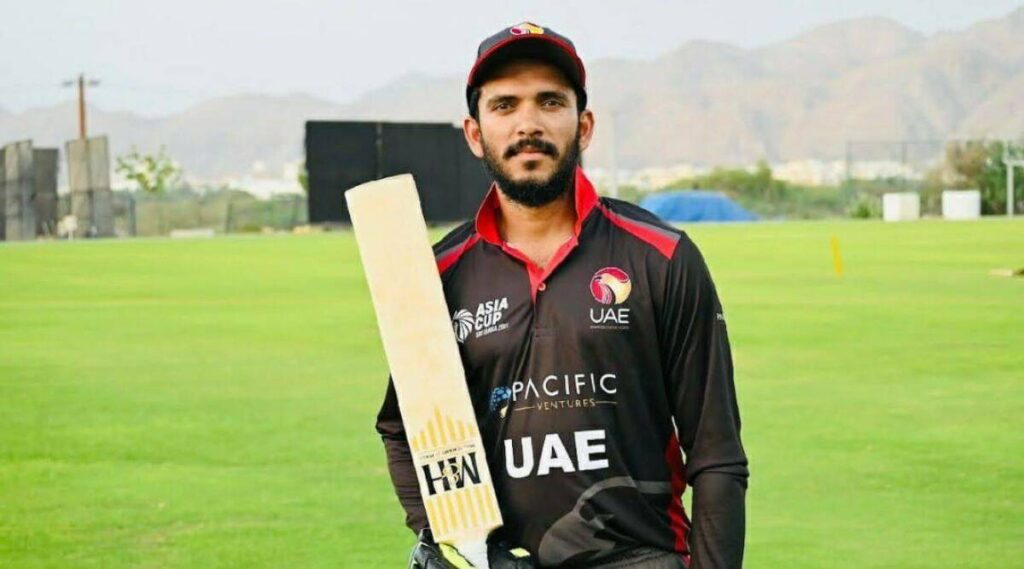
CP Rizwan moved to the UAE in 2014 after not getting a Ranji Trophy game. Will be special if we get to play against India, he says.
From not being able to get a game for his state in the Ranji Trophy to leading a national team, Rizwan’s cricketing fortunes have changed for the better.
CP Rizwan’s cricket career didn’t really take off and the electrical engineer from Kerala, like many from his state, migrated to the gulf after landing a job in Sharjah.
Eight years later, the 34-year-old has made it big – on the field. On Thursday, the Emirates Cricket Board named Rizwan the skipper for the Asia Cup qualifiers. If Rizwan’s United Arab Emirates (UAE) win the qualifiers, they will be in the same group as heavyweights India and Pakistan.
“It will definitely be special if we qualify and get to play against India. But we just want to focus on one step at a time,” Rizwan told The Indian Express The UAE, Kuwait, Hong Kong and Singapore will be fighting for the one spot available in the group stage.
From not being able to get a game for his state in the Ranji Trophy to leading a national team, Rizwan’s cricketing fortunes have changed for the better.
Rizwan, leg-spinner turned batsman, hails from Thalassery, a cricket hub with a history that dates back to the British Raj. He made a name for himself in age-group cricket and represented Kerala in U-19 and U-23 levels. He also toured South Africa with a Kerala team that included the likes of Sanju Samson. But he could not progress further because he took a break from the sport to complete his engineering degree. He tried to make a comeback after completing his studies but was not able to replicate his age-group success at the senior level. He was named in the Ranji Trophy squad but remained on the bench.
Migrating to the UAE for a job also gave Rizwan’s cricket career a new lease of life, and it has reached new heights now. On Sunday, he walked out to lead the UAE against Kuwait in their first qualifier game.
Last year, Rizwan scored his first international century (109) in an ODI against Ireland when the team was under pressure at 51 for 3. He added 184 runs for the fourth wicket along with Muhammad Usman. The two centurions helped the UAE chase down 270 with six wickets in hand and an over to spare.
“I am happy and honoured to lead the UAE national team. We have been doing well in T20 tournaments. Our players play a lot of T20 games here in the domestic circuit also. But having said that, we have to execute the skills in the right way on the given day,” Rizwan said.
In former India all-rounder Robin Singh, the UAE have an experienced coach to guide their newly-appointed skipper.
“We have been working really hard under coach Robin Singh. He is a person with a great work ethic and that quality has rubbed on to the players also. We have been training well and hopefully, everything will fall into place,” Rizwan, who has played 29 ODIs and seven T20Is for UAE, said.
The electrical engineer, who graduated from Cochin University of Science and Technology, had an opportunity to return home when he got a job with the postal department but he decided against moving back.
His performances in the domestic matches in UAE for teams like Yogi Group, Bukhatir XI and Interface, eventually opened the doors to the UAE national team. After fulfilling the requirement of residing in the UAE for four years, Rizwan made his debut for his adopted country in an ODI against Nepal in January 2019.
“Yes, it could be said that my decision (to stay in the UAE) has been vindicated. I just want to say thanks to all the coaches, friends, family and relatives and the almighty who helped me in this journey,” said Rizwan.
Biju George, the former India women’s fielding coach, has seen Rizwan from his under-23 days for Kerala.
“Rizwan is a fully dedicated player. He is a confident and street-smart player, I think, he can be an asset to the UAE team as their captain,” George said.
The UAE opted for split captaincy and Ahmed Raza, who was the captain in all formats, now leads the team in ODIs.
source: http://www.indianexpress.com / The Indian Express / Home> Sports> Cricket / by Narayanan S, Kochi / August 22nd, 2022
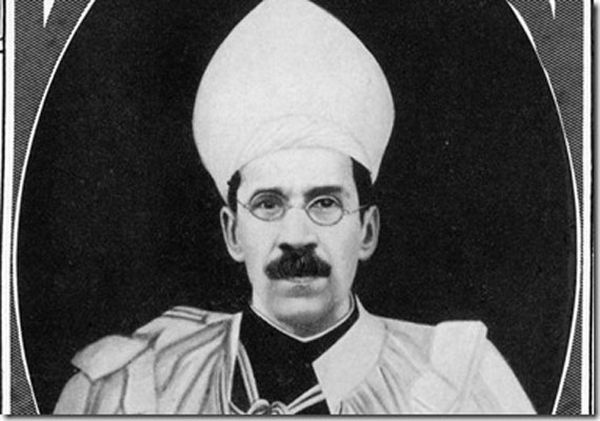
The 7 th and the last Nizam of Hyderabad Nawab Mir Osman Ali Khan (Born: 6-4-1886; Died: 24-2-1967) was said to be the richest man in the world and was known for his noble deeds and rich contributions in various fields such as education, medicine, engineering, social service, architecture, heritage, poetry, art and culture. He ascended the throne on 29 August 1911 at the age of 25 and ruled the Hyderabad State between 1911 and 1948. It is amazing that he used Jacob diamond, a 185 carat gem the size of a lime worth 50 million pounds equal to around Rs. 480.00 crores in Indian currency, as a paperweight. It is said that despite of his enormous wealth, he used to spend very little for his own self and led a simple life. He never indulged in extravaganza and denounced all kinds of luxuries. This couplet reflects the persona of Nizam, a well known poet himself:
“Tumhari umar youn hi raayegaan guzri hai ay Osman Na tum ko dast ghaib aayaa na tum ko keemiya aayee.”
People are benefitted even today with what he left behind him. Be it Osmania University or Osmania Hospital, Charminar Nizamia Tibbi Hospital, NIMS, Assembly building premises, Jubilee Hall, Hyderabad Museum (State Museum), High Court Building, Kacheguda Railway Station, Begumpet Airport, Asafia Library (State Central Library), Moazzamjahi Market, State Bank of Hyderabad (now merged in SBI) , Osman Sagar, Himayat Sagar, Nizam Sagar, Nizam Sugar Factory, etc. He constructed Hyderabad House in Delhi now used for diplomatic meetings by Govt. of India, Rubaat in Saudi Arabia for the convenience of Haj and Umrah pilgrims from Telangana and parts of Karnataka and Maharashtra – part of erstwhile princely State of Hyderabad. He was a great visionary and is called “Architect of Modern Hyderabad.” One would wonder on coming to know that the Nizam had provided financial aid for construction / reconstruction and maintenance of the worship places of not only Muslims but also of Hindus, Sikhs, Christians and Parsees apart from extending monthly honorarium to the priests of a number of temples, churches, Imams and Moazzans of mosques within and outside the country. Notable among them is Balaji Temple in Tirupati of Andhra Pradesh now popularly known as Tirumala Tirupati Devasthanam (TTD), Sitarambagh Temple, Hyderabad, Yadagirigutta temple in Bhongir, Thousand Pillar Temple at Warangal, grand mosques at Makkah and Madinah. He had also extended monetary contribution for construction of Hindu Banaras University, Andhra University, University of London, etc. His farmaans releasing financial aid to these places of worship and Universities are still available with Archives Department in Hyderabad.
It is not known how many devotees or those who are associated with the famous TTD or other such temples today are aware of this fact or for that matter even very few Muslims knows that the Nizam shouldered the maintenance responsibility of Holy mosques of Makkah and Madinah and bore the expenses thereof. King Saud of KSA visited Hyderabad in 1954 to meet the Nizam and thanked him personally for his monetary help. Likewise, it is doubtful whether the products of Banaras Hindu University and Andhra University or those who are associated with these Universities have ever taken pains to know the important contributions of the Nizam for their establishment. He funded for compilation of Indian epic “Mahabharatha”. He sanctioned scholarships to the students pursuing their studies abroad without any discrimination. Sarojini Naidu, freedom fighter was one of the beneficiaries. He sanctioned establishment of Hyderabad Telugu Academy in 1940. People from all walks of life lived together peacefully and happily during his reign. He never discriminated anybody on the basis of religion, caste or creed. He gave equal rights and respect to one and all. The following verses of his poetry endorse this:
“Aish wa ishrath ki hai jo dhoom Dakan mein Osman
Sab ye kahte hain tere bakht ki bedari hai
Zamana kehta hai laag Osman Har ek ko aas hai tere hi dar se.”
It is said that the Nizam was a very kind hearted king, he could not endure the hardship and sufferings of his people. One day he visited Osmania hospital to console a patient where he saw a poor man with no legs crawling over the earth. This miserable condition of the poor man pained him very much. Soon after initiating necessary consultations and discussions in this regard, he immediately purchased the land at Panjagutta and arranged for construction of orthopedic hospital with an estimated cost of Rs. 30 lakhs, now known as Nizam Institute of Medical Sciences (NIMS). Similarly the Great Musi floods of 1908 locally known as “Thugyani Sitambar” (in which about 50,000 people said to have died, the floods razedover 80,000 houses making a fourth of the population shelterless) prompted the Nizam to invite Sir M. Visvesvarayya, an Indian Civil Engineer and a Statesman to advise and assist in the reconstruction of the city and to devise measures for the prevention of the recurrence of such a terrible catastrophe. Thus, the twin lakes of Hyderabad viz. Osman Sagar and Himayat Sagar were built up.
The pity is when he negated the proposal of merging the Princely State of Hyderabad into Indian Union, Operation Polo widely known as “Police Action’ took place in 1948 during the subsistence of “Stand Still Agreement” and none came to his rescue. The Nizam said to be very close to Mahatma Gandhi, but, unfortunately the latter was already gunned down, by then. The Nizam was completely betrayed and left alone. The plight reflects in the following verses of his own poetry (Ghazal) :-
“Is se bhi bud naseeb hai Osman koi bhala Jo shaqs haer pher mein duniya ke rahgaya Osman hamara rang badalta kabhi nahin Paband apni wiza ke apne chalan ke hain Thu jaanta hai unko matlab ke hain ye Osman Aghyaar se tho har aan hashiyaar raha karna Osman thu kar chuka hai hazaron ka imtehaan Besharam hoon jo ke aise bahut kam bashar mile.”
Princely State of Hyderabad amalgamated into Indian Union in September 1948. The Nizam was appointed as Raj Pramukh of Hyderabad State by the Government of India in Jan, 1950. Even after the end of his kingdom, the Nizam continued to support all the social, educational and welfare activities. He donated 5 tons of gold to the Union Government during the war with China in 1965 (Sino-Indian War). Yet, he is termed anti-national, anti-people and discriminative by fascist forces with biased mind. The above are just a few of his priceless and precious achievements and contributions narrated here out of many. Otherwise the list is very huge. Unfortunately, many of his contributions and generous deeds seems to have been suppressed selectively, of which the people obviously are unaware of and projected the Nizam otherwise with distorted facts. Here, the following verses of his poetry stand testimony to the situation:
“Naheen kuch aetebaar ohad wa paymaa Wafa ki kya ummeed is bewafa se Ye housla ye kaleja ye dil hamara hai Ke baare ishq tumhara hamee uthathe hain Andaaz ye sitam ke tujhe the kahan naseeb Meri wafa ne tujhe jafakaar kar diya.”
A demand is made every year to declare September 17 as a ‘Liberation Day’ on the pretext that Telangana is liberated from the clutches of the private army of Razakars led by Qasim Razwi and Nizam’s army who jointly said to have committed excesses on unarmed and innocent citizens of Hyderabad State between 1946 and 1948, which is certainly condemnable. It means prior to and till 1946 ever since he accede the Kingship in September, 1911 i.e. for 35 years of his long rule, there were no complaints. And these disturbances erupted in his last period of tenure perhaps due to various circumstances and factors prevalent during that period in the country and which were beyond control. Indian independent struggle was at peak, widespread riots, rampant bribery and chaos in the Nizam Government weakened the grip of Nizam over administration, the seeds of hatred were being sown under the guise of Arya Samaj Vyayama Shalas in Hyderabad State against the Government to destabilize it which led to communal violence in the hitherto peaceful living people cutting across their religious beliefs and practices which is known for “Ganga Jamuni Tahzeeb”. Coupled with Razakars brutalities then, it has ultimately led to revolt against Nizam and his rule from within the State. However, history is evident that there was no such kingdom in India or elsewhere then, which was spotless and entirely free from such instances of hatred and bloodshed. And not to speak of the World’s largest democracy we are living in today where communal clashes, murders, rapes, large scale robberies, white collar scams and so on have become the order of the day. Gandhi is abused and Godse is praised by the so called nationalists. Nizam was not a foreigner nor had he invaded Hyderabad State. What is going on today, it seems, the Nizam sensed it during his lifetime itself and predicted thus :
“Mizaaje yaar mein jaaniye kya ab samaayee hai
Ke mere roobaru meri buraayee hothi jaathi hai”
In yet another stanza he writes (at the face of the fascists) :
“Na aaya aur kuch hum ko agar aayee wafa aayee
Magar haan tujh ko ay zaalim sitam aaya jafaa aayee
The unparalleled services rendered by the Nizam for the cause of people, society and the nation as a whole can not be ignored under the pretext of the riots perpetrated by Razakars, which neither can be attributed to him in the light of his above multi facet and true secular characteristics with undisputed patriotism.
Narrating an event where Nizam had complied with the Order of the Independent High Court with due respect to the judiciary, which ruled in favour of his family with regard to award of enhanced compensation in some property dispute, the Chief Minister of Telangana, Mr. K. Chandraserkhar Rao, has praised the Nizam on the floor of Assembly and declared that he is proud of his King H.E.H. the Nizam VII Mir Osman Ali Khan for his splendid works done for the welfare of people. However, a real tribute to Nizam’s golden era in recognition of the yeomen services rendered by him for the cause of humanity and the society at large in all spheres of life shall be to observe his birth anniversary the 6 th April of every year at Government level officially, as a mark of respect.
Let me conclude with Jigar Muradabadi’s following couplet of poetry:
“Un ka jo kaam hai’ woh ahle siasat jane: Mera paighaam mohabbat hai jahaan tak pahunche.” (What their job is, let the politicians be bothered about.My message is ‘love’, may it reach the whole world)
***
shaikismail358@gmail.com
Courtesy: Shoukath-e-Osmania, Pundit Sunderlal Committee Report and other source of information.
source: http://www.muslimmirror.com / Muslim Mirror / Home> Indian Muslim> Positive Story / by Shaik Ismail / August 19th, 2022
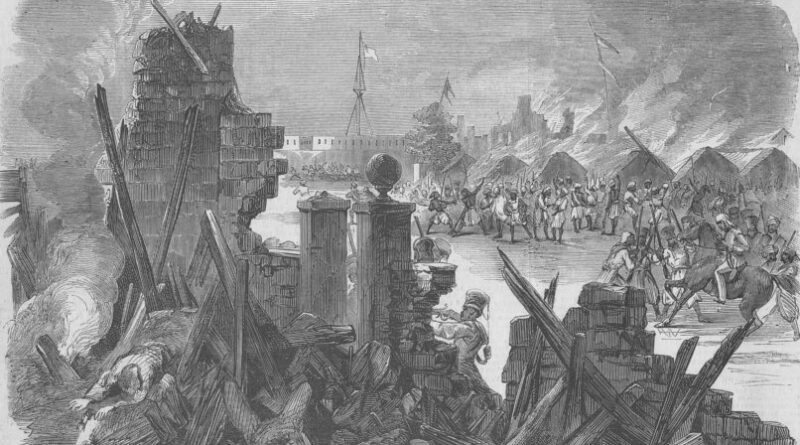
On 24 April, 1857, Colonel G.M.C Smith of 3rd Regiment, Light Cavalry, at Meerut asked his troops to load the cartridges in Enfield rifles. 85 out of the 90 Indian troops of the Regiment declined receiving the cartridges on account of usage of beef or pig fat in those. All the 85 Indians were sentenced to prison and their case was forwarded to Major General Hewit.
We are publishing the name of all these 85 Indian sepoys who defied the English command and thus triggered the first national war of Independence from Meerut.
Mataa-Deen (Havildar)
Naiks:
Sheikh Peer Ali
Ameer Qudrat Ali
Sheikh Hasan ud-Deen
Sheikh Noor Muhammad
Sepoys:
Sheetal Singh
Jehangir Khan
Meer Mosim Ali
Ali Noor Khan
Meer Husain Bakhsh
Muttra Singh
Narain Singh
Lal Singh
Sewdeen Singh
Sheikh Husain Bakhsh
Sahibdad Khan
Bishan Singh
Baldeo Singh
Sheikh Nandoo
Nawab Khan
Sheikh Ramzan Ali
Ali Mohammad Khan
Makhan Singh
Durga Singh
Nasurullah Begh
Meerahib Khan
Durga Singh (2nd)
Nabi Bakhsh Khan
Jurakhan Singh
Nadju Khan
Jurakhan Singh (2nd)
Abdullah Khan
Ehsan Khan
Zabardast Khan
Murtaza Khan
Burjuar Singh
Azimullah Khan
Azimullah Khan (2nd)
Kalla Khan
Sheikh Sadullah
Salar Bakhsh Khan
Sheikh Rahat Ali
Dwarka Singh
Kalka Singh
Raghubir Singh
Baldeo Singh
Darshan Singh
Imdad Husain
Peer Khan
Moti Singh
Sheikh Fazal Imam
Sewa Singh
Heera Singh
Murad Sher Khan
Sheikh Aram Ali
Kashi Singh
Ashraf Ali Khan
Qadardad Khan
Sheikh Rustam
Bhagwan Singh
Meer Imdad Ali
Shiv Baksh Singh
Lakshman Singh
Sheikh Imam Bakhsh
Usman Khan
Maqsood Ali Khan
Sheikh Ghazi Bakhsh
Sheikh Ommaid Ali
Abdul Wahab Khan
Ram Sahai Singh
Parna Ali Khan
Lakshman Dubey
Ramswaran Singh
Sheikh Azad Ali
Shiv Singh
Sheetal Singh
Mohan Singh
Vilayat Ali Khan
Sheikh Muhammad Ewaz
Indar Singh
Fateh Khan
Maiku Singh
Sheikh Qasim Ali
Ramcharan Singh
Daryao Singh
The list is an indication of Hindu Muslim unity during the war of Independence.
source: http://www.heritagetimes.in /Heritage Times / Home> Featured Posts> Freedom Movement / by Mahino Fatima / July 30th, 2021
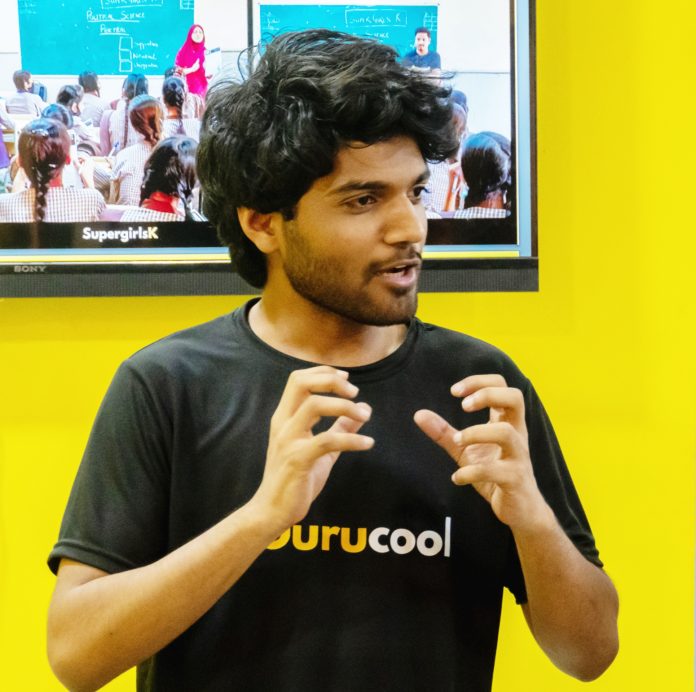
Adil Meraj: Co-founder of Gurucool. | Photo: By arrangement
The Padhai app will provide academic space for learning and to make quality education accessible for the underprivileged.
New Delhi :
Gurucool, a Delhi-based EdTech startup launched the Padhai app on Friday. The app seeks to provide an academic space for learning and to make quality education accessible for the underprivileged by providing more than 3500 curated open-source educational courses offered by platforms like MIT open courseware, Khan Academy, YouTube educators, and many more.
Adil Meraj and Khansa Fahad, the two alumni of Jamia Millia Islamia (JMI) started Gurucool in 2019. Gurucool is an educational networking platform that offers a suite of phygital (physical+digital) tools to connect learners and educators. The founders of Gurucool got into the limelight when they secured pre-seed funding of $150,000 (around 1 crore rupees) in November 2021.
“The Padhai app counters the price-tagged digital education offered by other ed-tech platforms while making digital education accessible and free for all,” Meraj told TwoCircles.net.
“The Padhai app provides information on scholarships, educational short videos similar to YouTube shorts called BITS, and other things of importance to learners. It offers curated courses in 8 regional languages,” Meraj said, adding that the app has live classes, study material, test series and questionnaires for K-12, competitive exams, and the skill India program.
The higher education department of the government of Bihar approved the Padhai app as a pilot project, he said. Conversations are on with several other governments to start the Padhai app on a pilot project basis.
Gurucool is an educational networking platform offering over 25 tools and a vast content pool for educators and learners to learn, network, and have fun with them. Gurucool aims to digitize education while not compromising on the need for physical classrooms. We are making education phygital, said Meraj.
Gurucool got pre-seed funding from the Indian-American angel investor, Parvez Jasani (CEO, Zulie Venture Inc.) and Aqib Hussain of FreeFlow Venture Builders. The ed-tech platform is estimated worth $ 2 million.
“When I spoke to Adil and Khansa for the first time I was super impressed with their vision and passion, and that made me invest in Gurucool instantly”, Parvez Jasani told TwoCircles.net.
Gurucool offers a vast content pool, empowering educators, schools, and colleges with minimal financial support and which are functioning especially among the marginalized groups. The schools and colleges can potentially build their digital infrastructure using Gurucool’s content.
The Ed-Tech platform follows the model of personalized learning by creating educational centres which implement the concept of a conference-based teaching ecosystem that has a 12:1 student-teacher ratio. These education centres have a club system, library, workshops, sessions, and smart classes among other things.
Gurucool aims to launch 50 centres in 15 cities across India in the upcoming year with each centre having an accommodating capacity of 600 students.
www.gurucool.xyz
Mohd. Umair Yunus is a fellow in the SEEDS-TCN mentorship program.
source: http://www.twocircle.net / TwoCircles.net / Home> Lead Story / by Mohd Umair Yunus, TwoCircles.net / August 13th, 2022
“The Musalmans of India are, and have been for many years, a source of chronic danger to the British Power in India.” – W W Hunter, an English official posted in India, in his famous book ‘The Indian Musalmans’, published in 1871.
After 1947, Indian scholars wrote a ‘nationalist’ history of the Indian freedom struggle and for unknown reasons, they excluded Muslims. For the last seven decades, we have been reading a history of the Indian Freedom Struggle that has largely overlooked the contribution of Muslims. The generations brought up over this narrative believe that either the Indian Muslims were pro-British or aloof from the freedom struggle.
Such falsehoods propagated in the name of history should be challenged.
The British imperialism in India was resisted by the Indians right from its outset and the Muslims were the flag bearers of this resistance. The British took over Bengal administratively and economically after defeating the royal armies at the Battle of Plassey (1757) and the Battle of Buxar (1764). With their win over the Nawab of Bengal, the British started exploiting the Indians of Bengal province in an unprecedented fashion. Their ruthless loot resulted in a famine in 1770, which accounted for the deaths of one-third of the total population of Bengal.
No wonder the first popular national resistance to foreign colonial rule arose in Bengal. A united front of Hindu Sanyasis and Muslim Fakirs rose up in arms against the British. The man who led this fight was, Majnu Shah, a Muslim sufi from Kanpur (Uttar Pradesh). Majnu was a devotee of Shah Madar, Kanpur, and took up the cause of poor peasants on the advice of another Sufi saint, Hamiduddin. Almost 2000 Fakirs and Sanyasis, under his command, would loot the treasures of the British and British-backed landlords to distribute the money and food among poor exploited masses. From 1763 till his death in 1786, Majnu was the most dangerous threat to the British Empire in India. Fakir and Sanyasi forces killed several officers and soldiers of the British in guerrilla wars. After his death, Musa Shah took up the leadership of the movement. Hindu Sanyasi leaders, like Bhawani Pathak, were also there and fought alongside but the colonial records considered Majnu as the most threatening leader because under him Hindus and Muslims fought a united war. The ruthless British suppressed this movement a few years after the death of Majnu but the spirit of nationalism could not be killed.
The suppression of the movement led by Fakirs in Bengal did not mean that they accepted defeat. Fakirs changed their strategy and joined Marathas and other anti-British forces at the turn of the 18th century. The first major mutiny by the Indian sepoys of the English East India Company Army in 1806 at Vellore, which is said to be the inspiration behind 1857, was planned by Holkars, sons of Tipu Sultan and brother of Nizam of Hyderabad with the help of Fakirs. In every cantonment in South India, Fakirs propagated the message of nationalism through religious sermons, songs and puppet shows. When the revolt broke out at several places including Vellore the Indian revolutionaries were led by Fakirs like Shaikh Adam, Peerzada, Abdullah Khan, Nabi Shah, and Rustam Ali. Scholar Perumal Chinnian writes, “the Southern conspiracy was supported by Fakirs and other religious mendicants. The conspiracy was established in all the army stations by them.”
Within a few years, the British faced another challenge in the form of three distinct movements led by Syed Ahmad Barelvi, Haji Shariatullah and Titu Mir respectively.
Born in Uttar Pradesh, Syed Ahmad toured a large part of the country and gained followers in Bihar, Bengal, and Maharashtra. His followers took up arms against the British and its allies in the areas adjacent to Afghanistan. The movement posed a challenge to the British for decades. The British painted the movement as a work of religious fanaticism while in reality, Syed Ahmad tried to forge an alliance with Marathas against the foreign rulers. After he died in 1831, Enayat Ali and Wilayat Ali, both from Patna, took up the leadership of the movement. The wars they led in the frontier region caused the death of thousands of soldiers of the British army.
Haji Shariatullah and his son Dudu Miyan took up arms in Bengal to resist the tyranny of rich landlords. They led peasants to revolt against the indigo planters and other British agents. The movement they led is known as Faraizi movement.
Titu Mir also led a movement of poor masses against the British-backed landlords. He formed his army and set up a popular administration. In 1831, Titu was killed during a battle with the British. Hundreds of his supporters were arrested and hanged, including his deputy, Ghulam Masum.
Meanwhile, the Movement started by Syed Ahmad remained a grave danger to British rule in India. Enayat Ali, Wilayat Ali, Karamat Ali, Zainuddin, Farhat Husain, and others led an armed struggle against the British. In Patna, as soon as the news of the revolt of 1857 reached, all the prominent leaders were arrested before they could act. Still, Pir Ali launched a revolt in Patna. Though not a part of the larger movement himself the British believed that he had their support. Pir Ali, Waris Ali, and other Muslim revolutionaries were executed in Bihar during the revolt of 1857.
The First War of the National Independence of 1857 had a long history of planning behind it. In 1838, the English government arrested Mubariz ud-Daula for plotting a nationwide revolt against the foreign rule. The investigations revealed that Raja Ranjit Singh, Gaekwars, Satara, Jodhpur, Bhopal, Patiala, Rohilla Pathans, and several nawabs, rajas and zamindars had agreed upon the plan. Raja Ranjit Singh had actually sent his troops to help Mubariz and contacted Persian and French powers for help. The plan, because of a few traitors leaked out, Mubariz was imprisoned where he died in 1854 and the revolt took place two decades later.
The role of Muslims in 1857 is no secret. The unity of Hindus and Muslims in 1857 threatened the British like never before and they resorted to a policy of divide and rule after that. Maulvi Ahmadullah Shah of Faizabad, Fazl-e-Haq of Khairabadi, Imdadullah Muhajir Makki of Muzaffarnagar, and Azimullah Khan, an associate of Nana Saheb, were prominent in propagating the need of taking up the arms against the colonial rule. For years before 1857, they were propagating these ideas among sepoys as well as civilians.
In Bihar, Kunwar Singh was leading the revolt of 1857. Zulfiqar was one of his most trusted comrades with whom Kunwar was discussing every plan. After liberating Arrah the civil government installed by Kunwar had his most trusted allies and there were several Muslims. The government had “Shaikh Ghulam Yahea as Magistrate. Shaikh Muhammad Azimuddin, an inhabitant of Milky Tola in the town of Arrah, was appointed Jamadar (treasurer) of the eastern thana: Turab Ali and Khadim Ali, sons of Dewan Shaikh Afzal, were made Kotwals (Police officers in charge of a city)”
The revolt did not succeed. Bahadur Shah was exiled to Burma, several were hanged and many more were transported for life to Andamans. But, the zeal for freedom did not die.
In 1863, tribals in North West Frontier Province stormed the British territories and entered into a war. The British, though registered a victory, had to face one of the stiffest military challenges. They lost more than a thousand of its English soldiers. Intelligence reports pointed towards a financier in Ambala. The man was Jafar Thanesri. During the raid police found several letters which established him as the principal financier of the war in NWFP. He channelled money, men and arms from different parts of the country to the war front. Yahya Ali of Patna and nine others were also charged for waging the war against the Queen. What followed was a series of arrests and trials across India.
People were arrested in Ambala, Patna, Malda and Rajmahal. Ahmadullah, Yahya Ali, Jafar, Ibrahim Mandal, Rafique Mandal and others were arrested and transported to Andamans. These revolutionaries celebrated martyrdom over life, hence the British decided not to hang them but to send them to the Andamans. In 1869, Amir Khan and Hashmat Khan were arrested in Kolkata. Norman, the Chief Justice, sentenced them to the Andamans. The sentence was avenged by Abdullah by assassinating Norman in 1871 and after a few months Sher Ali killed the viceroy, Lord Mayo, in the Andamans.
Bipin Chandra Pal, in his autobiography, credited these trials and killings as an important influence on his political career. Another famous revolutionary, Trailokya Chakravarty, noted, “the Muslim revolutionary brothers gave us practical lessons of unbending audacity and inflexible will and also advice to learn from their mistakes”.
In Maharashtra, Ibrahim Khan, a Rohilla leader, and Balwant Phadke launched a guerilla war against the British. They provided a tough resistance through the 1860s and 70s, and threatened the British in south India.
Meanwhile, in 1885, Indian National Congress (INC) was formed to voice the apprehensions of the emerging educated middle class. Badruddin Tayyabji and Rahmatullah Siani were two of the earliest members and presidents of Congress. Later on, M.A Ansari, Hakim Ajmal Khan, Hasrat Mohani, Abul Kalam Azad, and others remained associated with the largest political outfit of India.
In 1907, peasants in Punjab started agitation against the canal colonies. Along with Lala Lajpat Rai and Sardar Ajit Singh, Syed Hyder Raza was one of its prominent leaders. The movement is seen as a precursor to later Ghadar movement.
During the First World War (1914 – 18), the British intercepted three letters written on silk cloth. The letters were written by Maulana Ubaidullah Sindhi to Maulana Mahmood Hasan and pointed towards a global plan to overthrow the British rule in India. Ubaidullah was named as one of the most dangerous Indians for the British in the Rowlatt Committee Report. He formed armed groups, preached anti-British ideas and formed a provisional government in Kabul. The Prime Minister of the government was Maulana Barkatullah. The government had to have an army as well, which would attack India to free it. But, the plan failed because of the leaked silk letters and the end of the World War. The plan was called Silk Letter Movement and 59 freedom fighters, mostly Muslims, were charged for waging the war against the Empire. Maulana Abul Kalam Azad, Abdul Bari Firangi Mahli, Ubaidullah Sindhi, Maulana Mahmood, Husain Ahmad Madni and M.A Ansari were few of them. Maulana Mahmood and Madni were arrested in Makkah and imprisoned in Malta.
Maulana Abul Kalam Azad, who is often seen as a token Muslim in a largely Hindu dominated Congress, was a freedom fighter whom the British feared. His name occurred in different CID reports for planning armed revolutions. At least 1700 freedom fighters took oath to die for the cause of freedom as members of Hizbullah, a revolutionary organisation formed by Azad. Al-Hilal, a paper edited and published by him, was banned for propagating the revolutionary nationalist ideas. Azad established Darul Irshad, a madarsa, to popularise the anti colonial ideas. For his organization, Hizbullah, Jalaluddin and Abdur Razzak were prominent recruiters, who also united Hindu and Muslim revolutionaries of Bengal. No wonder, Azad was jailed many times and was the President of INC when the Quit India Resolution of 1942 was passed.
The Silk Letter Movement was not the only resistance movement during the World War. Ghadar Movement was another movement in which several Muslims took part and attained martyrdom. Rehmat Ali was hanged in Lahore for trying to instigate mutiny among soldiers. The efforts bore fruit in Singapore, when, in February, 1915, 5th Light Infantry consisting mostly Muslims from Punjab revolted. The soldiers captured Singapore for a few days. The revolutionaries were later defeated, captured and shot dead.
Another misconception prevalent among Indians is that the Bengali revolutionaries were Hindus. Interestingly, the revolutionary organizations with Hindu religious overtones, like Jugantar and Anushilan had many active Muslim members. Sirajul Haq, Hamidul Haq, Abdul Momin, Maksuddin Ahmad, Maulvi Ghayasuddin, Nasiruddin, Razia Khatun, Abdul Kader, Wali Nawaz, Ismail, Zahiruddin, Chand Miyan, Altaf Ali, Alimuddin, and Fazlul Kader Chowdhury were few of the Bengali Muslim revolutionaries who took up arms along with Hindus. Many of them were sent to Andamans or killed.
After the World War, the British introduced a draconian Rowlatt Act. The Indians protested against the act and many leaders were arrested. At Jallianwala Bagh people were massacred when they were protesting against the arrest of Saifuddin Kitchlew. The proportion of Muslims killed at Jallianwala was quite high. Around this time, 1919 onwards, Abdul Bari Firangimahli, Mazharul Haque, Zakir Husain, Mohammad Ali, and Shaukat Ali emerged as the mass leaders. Women like Bi Amma, Amjadi Begum, and Nishat al-Nisa also jumped into the freedom struggle.
In Tamil Nadu, Abdul Rahim organised the workers during the 1930s against the oppressive colonial rule. V. M Abdullah, Sharif Brothers, and Abdul Sattar were other prominent Muslim leaders in South India who led nationalist movements and braved torture and imprisonments.
Khan Abdul Ghaffar Khan led pathans posed a non-violent challenge to the British. In 1930, the British fired upon a crowd protesting against the arrest of Ghaffar Khan at Qissa Khwani Bazar, Peshawar. Hundreds of pathans laid their lives for the service of the motherland.
Faqir of Ipi, Mirza Ali Khan, and Pir of Pagaro, Sibghatullah, raised their armies in the 1930s in Waziristan and Sindh respectively to fight the British during the World War. In a larger scheme of things, Subhas Chandra Bose and Axis Powers allied with their armies in order to liberate India.
In 1941, Netaji Subhas Chandra Bose escaped from house arrest. The man who played an important role in the escape was Mian Akbar Shah. Netaji reached Berlin and formed a Free India Legion. Abid Hasan, became his confidant here and served as secretary. Abid was his only associate who accompanied him on a famous submarine journey from Germany to Japan. In 1943, Netaji formed Azad Hind Sarkar and Azad Hind Fauj. Here several Muslims like, Lt. Col. Aziz Ahmad, Lt. Col. M.K Kiani, Lt. Col. Ehsan Qadir, Lt. Col. Shah Nawaz, Karim Ghani, and D.M Khan became ministers with important portfolios. Azad Hind Fauj faced reverses in war and its soldiers were taken prisoners by the British. Rashid Ali’s imprisonment became a symbol of Hindu Muslim unity when Hindus and Muslims across the political affiliations came out on Kolkata road demanding his, and other Azad Hind Fauj soldiers, release in 1946. The police fired upon the protesters killing dozens of Indians. Elsewhere, in Mumbai and Karachi, the Royal Navy revolted in support of Azad Hind Fauj. Anwar Husain was one of the prominent martyrs of this revolt as Colonel Khan led the soldiers in revolt at Mumbai port.
India gained independence on 15 August, 1947. It was a costly affair. The cost was the Indian lives. The lives we paid were neither Hindu, nor Muslim. The lives belonged to the Indians. Those who laid their lives were Indians first, and Hindus or Muslims later. Here again, Muslim leaders like Allah Bux Somroo, K. A. Hamied, Faqir of Ipi, Abdul Qayyum Ansari, Abul Kalam Azad and others fought against the divisive communal politics of Muslim League to stop the partition. Tragically, more than seven decades later people have forgotten this important aspect of our freedom struggle and try to divide this great struggle along petty sectarian lines.
(The article is an updated version of an article published last year.)
source: http://www.awazthevoice.in / Awaz, The Voice / Home> Culture / by Saquib Salim / August 15th, 2022
At the behest of Sheikh Abdullah,Ameen tailor of Gomoh hastily prepared Pathani clothes for Netaji.
Jharkhand:
While turning the pages of history of the Independence Movement, one comes across Gomoh, a small town in Jharkhand’s Dhanbad district, which has a significant association with the legendary freedom fighter Netaji Subhas Chandra Bose.
When Netaji left the country to fulfill his mission to wage an armed struggle for Independence and to establish the Azad Hind Fauj, he spent the last night in Gomoh town.
From Gomoh railway station, Netaji took the Kalka Mail Express and left for Peshawar. At present, Gomoh junction is known as Netaji Subhash Chandra Bose junction.
It was on January 18, 1941, when Netaji, who was placed under house arrest by the British government at his residence on Elgin Road, Kolkata, escaped by deceiving the British police. Despite the strict guard of the British government, his exit from Kolkata was planned by Satya Ranjan Bakshi of Bengali Volunteer. (Bengal Volunteers Corps was an underground revolutionary group against the British rule of India.)
After leaving his Calcutta residence, Netaji reached Gomoh with his nephew Shishir Bose in his ‘Baby Austin’ car (BLA 7169) at 8 p.m. and reached the house of his lawyer friend Sheikh Mohammad Abdullah, who lived in Loco Bazar in Jharkhand. He had shared his plan to visit Peshawar with Sheikh Abdullah where it was decided that Netaji would board the Howrah-Peshawar Mail 63 train from the station by disguising as a ‘Pathan’.
At the behest of Sheikh Abdullah, Ameen tailor of Gomoh hastily prepared Pathani clothes for Netaji. On the same day, Ameen Tailor took Netaji to the station at 1 a.m. where he finally boarded the train from platform number three.
Later, this train came to be known as Kalka Express. In 2021, the Indian Railways renamed this train as Netaji Express. This incident of Subhash Chandra Bose leaving the country is etched in the pages of history as ‘The Great Escape’.
To preserve and keep alive the memories of ‘The Great Escape’, a life-size bronze statue of Netaji has been installed between Platform No. 1-2 of Netaji Subhas Chandra Bose junction in Jharkhand. The tale of ‘The Great Escape’ is also briefly written on a plaque at this junction.
The story behind this heroic tale is that on July 2, 1940, Netaji was arrested under Section 129 of the Indian Defence Act due to the Hallwell Movement. The then Deputy Commissioner John Breen arrested Netaji and sent him to the Presidency Jail.
After going to jail, Netaji observed a fast-unto-death due to which his health deteriorated further. Later, the British government released him on December 5, 1940, on the sole condition that he would be arrested again when he recoverd well. Netaji was released and came to his residence in Elgin Road, Kolkata.
Netaji subhas chandra bose gomoh.
The hearing of the case involving Netaji was scheduled on January 27, 1941. The British government came to know on January 26 that Netaji was not present in Calcutta. Netaji had left for Gomoh eight days before on the night of January 16-17, 1941 at 1 a.m. by changing his appearance.
It is said that after reaching Gomoh with Shishir Bose, he reportedly hid in the forests of Gomoh Hatiatad. He had a secret meeting with freedom fighter Alijan and advocate Chiranjeev Babu in this forest. Later in the evening, Netaji went to meet Sheikh Abdullah in Loco Market, Gomoh.
When Netaji went from Gomoh through Kalka Mail, the Britishers were never able to arrest him again.
In 2009, the Railway Ministry renamed the Gomoh station as Netaji Subhas Chandra Bose Gomoh Junction. On January 23, 2009, the then Union Railways Minister Lalu Prasad inaugurated Netaji’s memorial.
source: http://www.ummid.com / Ummid.com / Home> India> Views & Analysis / by Shambu Nath Choudhary, IANS / August 12th, 2022
Bharova Village (Bhaderwah District) ,JAMMU & KASHMIR:
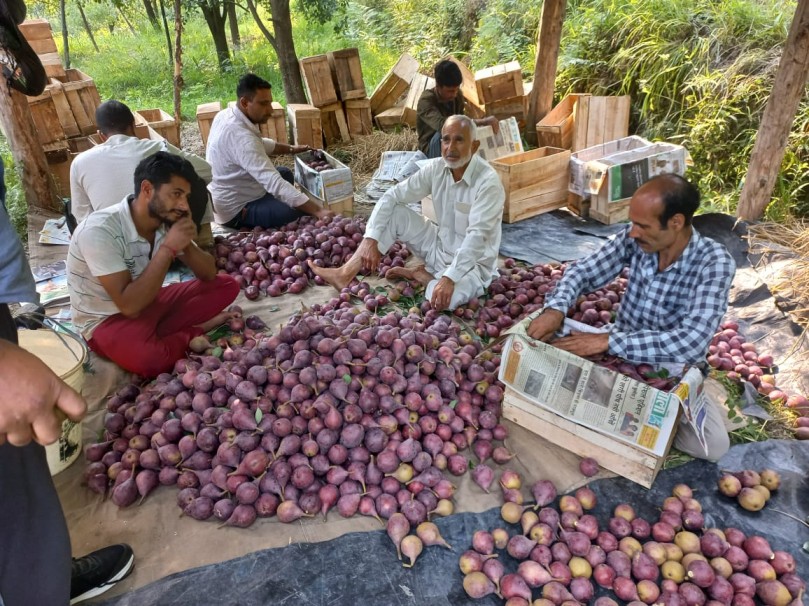
Haji Mohammad Shafi Sheikh from Kashmir quit his job as a contractor in a forest corporation to grow exotic red pears that now fetch him more than Rs 25 lakh a year.
In 1980, Haji Mohammad Shafi Sheikh, a contractor in a forest corporation, was on a routine visit to Kashmir. He was scheduled to meet his younger brother Abdul Rashid Sheikh and cousin Ghulam Nabi, who was pursuing a degree in Engineering at Srinagar’s Engineering College.
The trio decided to explore a few of the tourist destinations. They started their journey with Nishat, a picturesque area of Srinagar, which houses the famed Mughal Garden, home to mighty Chinars.
A road on the outskirts took them to a beautiful garden of green pears, where Shafi and the others spent hours relishing and enquiring about the fruit.
Their interest in the garden grew to the extent that Shafi embarked on a mission to grow a similar orchard in his native village Bharova in Bhaderwah.
Bharova was still oblivious to the existence of these fruits, given its topography and the fact that locals only cultivated maize and fodder to feed their animals.
“The entire area of Bahrova is hilly and maize was the only crop being grown by farmers because of the drought-prone conditions. People were not financially stable due to which they couldn’t explore other options over maize to earn a livelihood,” Shafi says.
In the same year, he took a few saplings of pears and walnuts home and sowed them adjacent to his house to track their growth.
“Surprisingly, plants grew normally and within a few years started bearing fruits. It was very much encouraging for me and my interest grew to sow more plants to give an idea to the people about the scope of horticulture in my area,” Shafi says.
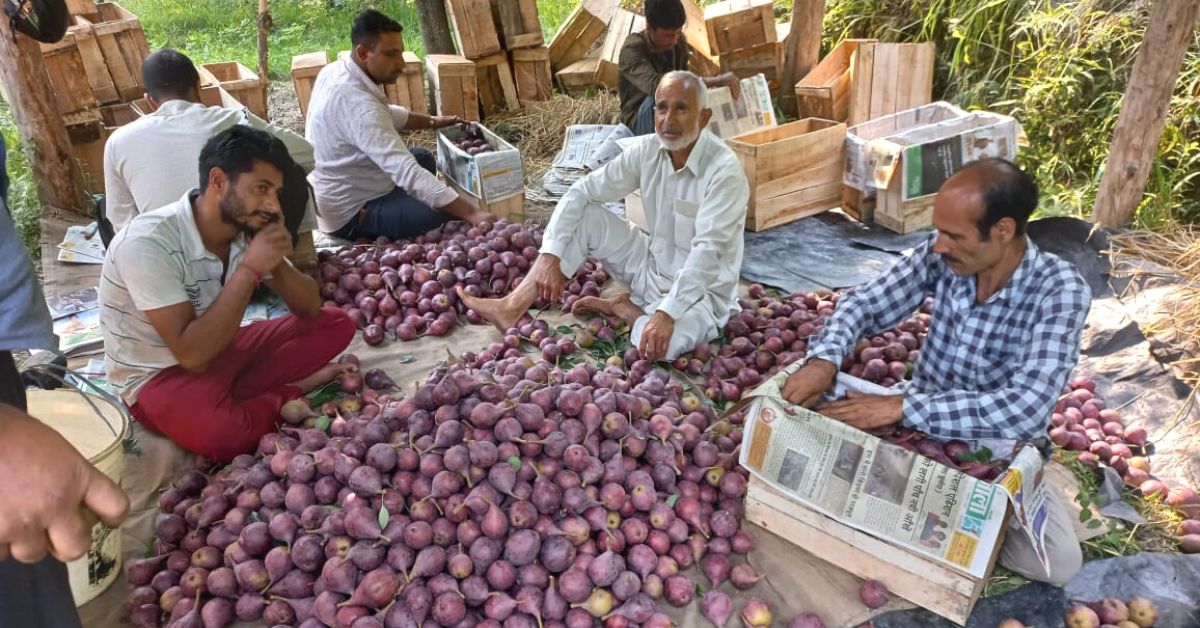
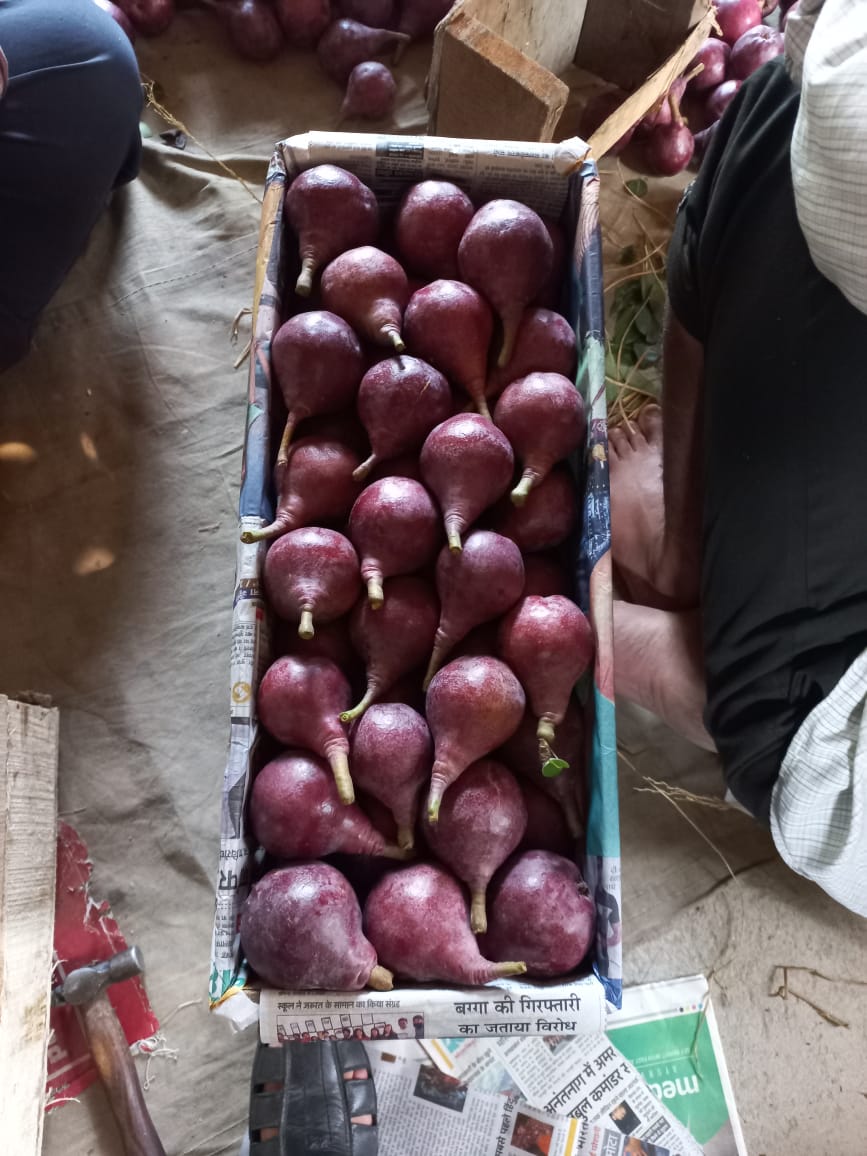
The 74-year-old now annually harvests 3,000 boxes of exotic red pears enough to fetch him more than Rs 25 lakh. “The maize which I grew in my fields would fetch me only Rs 4,000 per annum. Often we suffered crop failures and farmers were becoming poorer. But now, farmers of my area are financially stable,” he says.
Apart from pears and apples, Shafi also harvests 15-20 quintals of walnuts annually.
Horticulture Sheikh of Bhaderwah
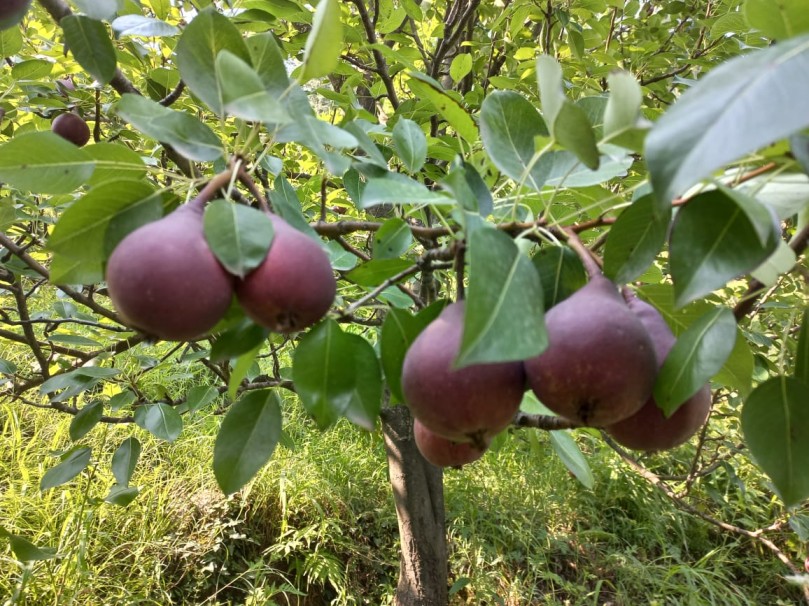
Exotic red pears grown by Shafi Sheikh
The journey of growing pears on land which was confined to just fodder and maize a few decades before was not easy for Shafi. It was indeed a work of patience and determination for him, who would take the help of experts to have disease-free produce.
“In 1993 when I saw my pears growing, I left my job immediately and devoted my entire time to horticulture. I always had a hope that my efforts will change the fate of the people of my village,” he says.
After reaping benefits from his efforts, Shafi finally decided to completely abandon the custom of growing maize in 2002 and shifted to horticulture, despite opposition from his neighbours and family. “It was a very difficult decision for me and people would often question me for giving up maize cultivation. The initial years were full of hardships as plants needed years to bear fruits,” he says.
Growing native pears and walnuts didn’t satisfy his appetite and Shafi finally sought help from Sher-i- Kashmir University of Agriculture Science and Technology Jammu to grow exotic red pears, which he only had heard about till then.
“Seeing my commitment and desire to expand my orchard scientifically during a routine visit by a team of scientists from Krishi Vigyan Kendra, one of the scientists, Dr Vikas Tandon, who is a professor at SKUAST Jammu handed me a few Italian pear seedlings, which was a significant turning point in my path,” he says.
After successfully growing red pears, he grafted green pears plants with red pear fruits to grow high-quality fruits in his orchard. “Now I have some 250 red pear trees and apart from them, I grow green pears, apples and other variety of fruits. For research, I visited Himachal Pradesh and other states to learn technicalities growing exotic fruits in my orchard,” he says.
He is hoping his production increases in the coming years as scores of his plants are ready to bear fruits. “I keep on experimenting with my orchards. From spraying quality pesticides to timely de-weeding, my production will increase in coming years,” he says.
A ray of hope for Bhaderwah farmers
Seeing Shafi’s hard work bearing fruits, his younger brother Abdul Rashid too has shifted to horticulture and has over 2,500 trees of pears in his orchards. His cousin Ghulam Nabi too followed his path and grew pears on his land to get better returns.
“I feel happy that my village is gradually progressing. I can now see a lot of growers, who are dedicated to growing pears and other fruits in our village,” he says.
Not just Bharova, adjacent villages like Khalo and Shanatra too are gaining recognition for growing exotic Italian red pears. These three villages grow nearly 1.5 metric tonnes of red pears annually.
Many farmers are getting inspired by his efforts and taking of horticulture in the hilly district of Bhaderwah. “Our district was only known for its breathtaking landscape a few decades before. Now, with the efforts of Shafi Sahab, we are growing quality exotic pears, which are very unique and have a huge demand in the market,” says Abdul Sattar, a framer.
Today, 165 households from the villages of Bharova, Khalo, and Shanatra have shifted to cultivating fruits, particularly Italian pears, taking their cue from Shafi.
Horticulture, an employment generator
Haji Mohammad Shafi Sheikh now helps other farmers in the region with practising horticulture.
Ever since Shafi took this initiative, the fate of the village has changed. Horticulture has been the employment provider to the village as more youth associate themselves with the growing pears.
During the season he employs almost 25 people in his orchards, who look after spraying, pruning and harvesting of pears. “Initially I had four boys who would look after my orchards. Now almost 25 boys remain associated with me during harvest season,” he says.
Fifty-year-old Krishan Lal, a resident of village Khalu in Bahderwah has been working for over 15 years with Shafi as a packer. He has been earning a decent livelihood and says, “I was working as a farmer before and my earnings were not enough. Now I earn some Rs 30,000 during the season at Shafi sahab’s garden.”
Shashi, a 35-year-old man too has been associated with the trade of red pears. “Horticulture has a great scope in Bhaderwah and scores of the youth are getting employed in this sector,” he says.
Edited by Yoshita Rao
source: http://www.thebetterindia.com / The Better India / Home> English> Agriculture / by Firdous Hassan / August 10th, 2022
A veteran diplomat Talmiz Ahmad provides a rare non-Western narrative of complex undercurrents in West Asia, where inequality, politics over oil and regional rivalries are fuelling tensions
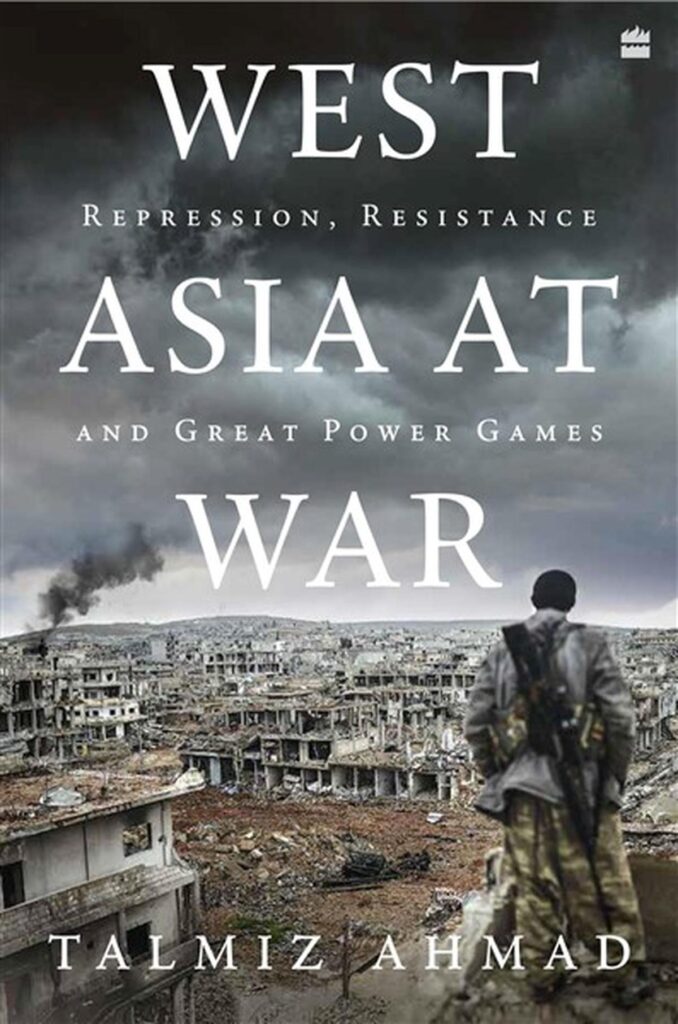
West Asia is a strategically critical region faced with confrontation and conflict amid growing economic prosperity. In his latest book, West Asia at War, Talmiz Ahmad, a former ambassador, brings out the diverse political, religious, military, socio-economic and cultural forces shaping the region. His long diplomatic career with postings there and wide-angled view from the headquarters gave him uncommon insights, which he pieces together in this book providing a rare non-Western view of complex undercurrents.
The exhaustive work traces the origins of the troubled region to the 17th century when Britain and France fiercely fought with each other over resources and zealously guarded their colonial empires. The new states that emerged in the wake of the Ottoman Empire’s fall also fell prey to this contestation. The discovery of large quantities of hydrocarbons at the beginning of the 20th century proved to be the region’s nemesis as it exposed it to outside competition and a rivalry between superpowers.
Internal bickering
Ahmad elaborates on the rise of Arab nationalism after World War II, tracing developments leading to the nationalisation of the Suez Canal by Gamal Abdel Nasser.
He explains how regional rivalries destroyed West Asia from within. The two major Arab powers, Egypt and Saudi Arabia, representing different ideological trends — revolutionary and conservative — played against each other. Further, the Saudi-Iran rivalry deepened Sunni-Shia hostilities. In a bid to fortify its standing in the region, Saudi Arabia’s call for ‘global jihad’ unwittingly propped up Osama bin Laden and Mullah Omar, with disastrous consequences. The Palestine cause unified the Arab world, but the constant internal bickering and feuding weakened their collective resolve for Palestine.
Gulf monarchies and the Muslim Brotherhood fiercely competed for the domination of political Islam. The massive oil revenues strengthened authoritarian regimes, whose economic control often conflated with people’s livelihood issues. With about 66% of 400 million Arabs redundantly poor and 10% controlling 61% of the wealth, the region is one of the most unequal in the world. Beyond the dazzle of Dubai, Doha and Riyadh, the author observes, is pervasive poverty, inequality and injustice that are alienating people and making them susceptible to fundamentalism, drugs, terrorism and extremism, further fuelling tensions within.
Ahmad rips apart the U.S. policy towards West Asia that is anchored in the influential ‘Israeli lobby’. Its twin objectives of securing oil flows and guaranteeing the security of Israel at the cost of Iran are deeply flawed and the much-maligned Iraqi WMD (weapons of mass destruction) programme is grossly exaggerated, he writes. The causal linkage to 9/11 and the injustice meted out to Palestine by Israel, backed by the U.S., are two examples of short-sighted policies which led to Islamophobia and fomented the fictitious idea of a ‘clash of civilisations’ as a living reality in the West.
India’s stand
The evolution of India’s policy towards West Asia is put in context by Ahmad. India’s leadership viewed the Palestine issue and the Suez crisis within the framework of the Arab nationalist struggle against British imperialism. Their common commitment to liberation movements drew them naturally to the Non-Aligned Movement. However, some perceptible changes in the approach in the last two decades stem from India’s newfound confidence as an emerging economy with the ability to buy large supplies of Gulf oil. India’s de-hyphenation of its relations between Palestine and Israel is pragmatic as well as in sync with the changing dynamics in the region. Closer ties with Israel also brought India the backing of the U.S. on several fronts. The strategic depth that our relations attained is attributed to Prime Minister Narendra Modi, who took a personal interest through frequent travels to the region to build solid economic partnerships as well as to secure the interests of our strong resident community.
The ongoing geo-political churn in the region is insightfully covered. Bahrain, Sudan, Morocco and the UAE seeking cautious normalisation of relations with Israel would have a salutary effect on both the regional stability and the survival of Israel. The realisation that Israel’s subversive activities against Iran could neither effect regime change nor completely disrupt its nuclear programme should prompt a dialogue between them.
The Shia-Sunni sectarian binary used for mobilising hostility and rancour is also losing steam. This apart, the author underlines that the prospect of a stable and prosperous West Asia is contingent on real internal reform that goes beyond optics and palliatives.
The perception that disengagement of the U.S. from the affairs of the region would have significant implications for itself and the security of West Asia is indisputable. China-Russia working in tandem and Iran-Turkey aligning their positions pose a serious challenge to U.S. hegemony in the region.
All Gulf countries have upgraded their economic relations with China. Ahmad underscores the point that while India is a natural partner of many in the region, it needs to be diplomatically agile to manage the challenges arising out of these new alignments in West Asia.
West Asia at War; Talmiz Ahmad, HarperCollins, ₹799.
The reviewer is an Indian Foreign Service Officer.
source: http://www.thehindu.com / The Hindu / Home> Books> Reviews> Politics / byDammu Ravi / July 23rd, 2022
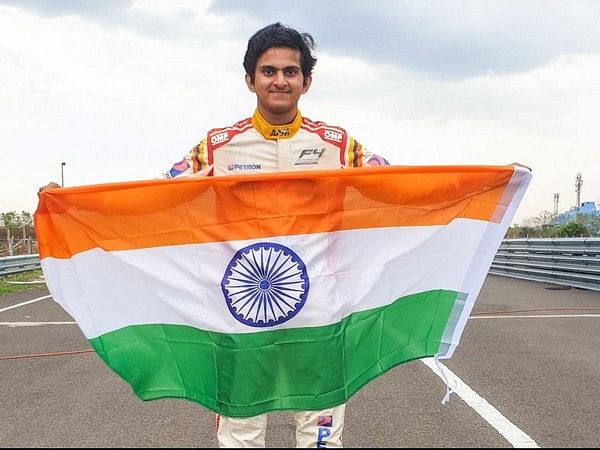
India’s Mohammed Ibrahim secured his place in the final of the first-ever Sim Racing World Cup by finishing second in the Asian Continental Qualifiers.
Ibrahim ended the race impressively with a lap time of 1:33.575 behind Thailand’s Thanathip Tanalapanan, who grabbed the top position after completing the race in 1:33.561.
India’s other participating driver, Davlish Singh, on the other hand, secured the sixth position with a lap time of 1:34.026 at the Qualifiers which saw the participation of 14 top drivers from across Asia, competing for two available spots in the final.
Both Ibrahim and Davlish had won the NESC22 (Simracing), the Indian National Qualifiers which were held in a hybrid mode at Esports Federation of India (ESFI)’s multiplex partner INOX’s Megaplex, Malad, Mumbai.
“Since my childhood, I have been fascinated with racing cars, which developed into a passion for motorsports. It is a surreal feeling to qualify for the grand final of the SRWC. I feel glad to have carried the momentum in the qualifiers after winning the NESC and hope to do so in Monaco as well. It is going to be a challenging experience to compete with the best sim racing drivers from all over the world.” said the jubilant Ibrahim, who already has titles of the Isolation E Championship, McLaren Logitech G Challenge, US F4 Kcr Championship and Ultimate E Championship to his name.
“I will be working on a few minor things to improve my gameplay and perform at the highest level to make my country proud in the finals. Racing is my goal and vision, wish to excel in both Sim as well as on Real Motorsports, and always look for opportunities and support.” said the jubilant Ibrahim, who already has titles of the Isolation E Championship, McLaren Logitech G Challenge, US F4 Kcr Championship and Ultimate E Championship to his name,” he added.
Interestingly, Ibrahim’s finish was also the fifth fastest, globally. Apart from Tanalapanan, only David Toth of Hungary (1:33.197), Slovenia’s Jernej Simonic (1:33.329) and Spain’s Pedro Sanchez (1:33.336), who qualified from the European continent, recorded less time than Ibrahim.
The Continental Qualifiers saw drivers from 39 countries, divided into 5 continents. The final will take place in Monaco from October 23 to 24 as Ibrahim among 12 top drivers will fight for the title.
“Ibrahim has made the entire country proud by making sure India is one of the countries that contests in the inaugural Sim Racing World Cup final. Both Ibrahim and Davlish performed brilliantly against the top drivers from the Asia region. This is a huge achievement for the sim racing community and another step towards further growth of Esports in India. Everyone at ESFI wishes him the best of luck to win the championship.” said Lokesh Suji, Director of Esports Federation of India and Vice President of the Asian Esports Federation.
The first-ever Sim Racing World Cup will be organised by the International Esports Federation in association with Monaco Esports Federation. The tournament features one of the world’s most popular sim racing titles, Assetto Corsa. (ANI)
This report is auto-generated from ANI news service. ThePrint holds no responsibility for its content.
source: http://www.theprint.in / The Print / Home> Sport / ANI / August 06th, 2022
Salima Tete’s goal gave India the lead and they led 1-0 at halftime, paving the way for an entertaining second half.
Birmingham:
The Indian women’s hockey team beat defending champions New Zealand 2-1 in a shootout to win the bronze medal and finish its campaign at the Commonwealth Games on a high note here on Sunday.
Leading 1-0, India conceded a penalty corner with less than 30 seconds to go for the final hooter, as the match went into a shootout after Olivia Merry’s equaliser.
India though held their nerves in the shootout to emerge winners.
Coming off their heartbreaking loss to Australia in a controversial semifinal, India showed the intent to wrap up their campaign with a win and earn a podium finish.
Salima Tete’s goal gave the Indian women’s hockey team the lead and they led 1-0 at halftime, paving the way for an entertaining second half.
Neha Goyal almost doubled the lead after the break, but good defending by New Zealand prevented the Indians from consolidating their position.
New Zealand has had to do a lot of defending and they’ve done quite well to remain disciplined until that Tete’s goal.
source: http://www.eastmojo.com / East Mojo / Home> News / by Press Trust of India / August 07th, 2022